
Faithfulness and Bearing Fruit: The Feast of St. Dominic~The Rev. Frank Bellino, OPI
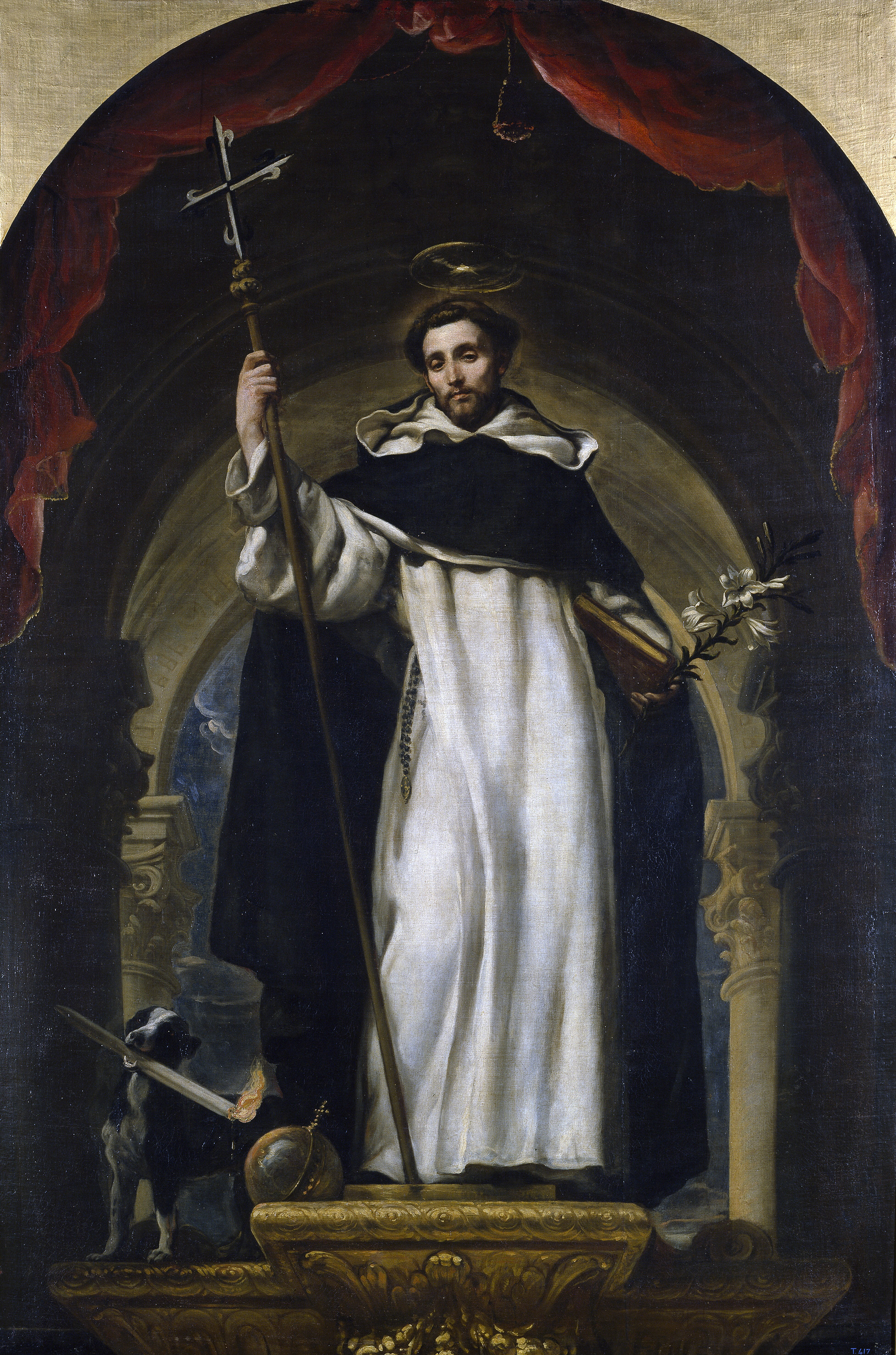
Today is the Feast of St Dominic, the founder of the Order of Preachers. When he was dying, St. Dominic told his brothers that he wanted to be buried in such a manner that the future friars could walk over him.
In the Middle Ages it was the custom to bury people in the abbey. St Dominic did not want to be recognized in a special way. He wanted to rest waiting for the resurrection with his brethren. For him fraternity stretched into heaven.
But St Dominic also wanted to be used.
Every night at the end of Compline, I pray the O Lumen:
O light of the Church, teacher of truth, rose of patience, ivory of chastity, you have freely poured out the waters of wisdom: preacher of grace, unite us to the blessed.
This prayer concludes with:
Pray for us, holy father Dominic. That we may be made worthy of the promises of Christ.
In reciting this prayer, I am reminded that I am a son of St. Dominic. Around the world, thousands of friars, sisters, nuns and lay Dominicans call St. Dominic their holy father, and after 800 years, St. Dominic still continues to bear fruit.
Now the shining example of St. Dominic’s fruitfulness is not something we should simply admire, but it is also something we need to imitate in a way that is proper to our state of life. Indeed, all Christians are called to be fruitful. Sadly, however, many in the Church have deeply failed in this regard. It is very sad that there are many examples of those in Holy Orders who have abandoned their resolve to remain pure for the sake of the kingdom. How many Catholics have become disillusioned with their faith because of such behavior? How many vocations to the priesthood and religious life have been lost? Sexual infidelity is definitely not compatible with Christian fruitfulness.
It is in moments like this, when we struggle with the sin and infidelity that afflicts our Church and society, that we need to turn to the saints such as St. Dominic who exemplified true Christian fruitfulness. Throughout the Bible, fruitfulness is an expression of God’s favor. The very first thing God did after creating Adam and Eve was to bless them and say “be fruitful and multiply.” Likewise, God says to Abraham “I will indeed bless you, and I will multiply your descendants as the stars of heaven.” But these promises of fruitfulness have their true fulfillment in Christ’s life.
On many occasions, Jesus expresses the desire for His disciples to bear fruit. This fruitfulness is manifested in the sacramental life of the Church. Indeed, at the Last Supper, Jesus describes Himself as the true vine; He goes on to tell His disciples “I chose you and appointed you that you should go and bear fruit and that your fruit should abide.” These sayings from St. John’s Gospel account of the Last Supper express the true meaning of the Eucharist. It is in the Eucharist that Christ’s death on the cross is made present, and when we look to the cross, we are to make sense of it in terms of its fruitfulness. Indeed, in the moments before Christ died, with Mary, His mother and the beloved disciple, John, standing before Him, He said to His mother “Woman, behold your son,” and to His beloved disciple “Behold your mother.” Thus, the Virgin Mary who brought Christ to birth in the Incarnation now brings Christ to birth in the beloved disciple and all who see her as their mother. This is indeed the fruit that will stand for eternity.
I hardly believe that St. Dominic knew that his fruit would be still producing 800 years later, and through our faith it will be in heaven.


You must be logged in to post a comment.