
Teacher?~The Rev Frank Bellino, OPI
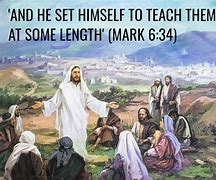
If we do not see the first time, Mark repeats Jesus’ suggestion to the Apostles that they go by themselves ‘to a wilderness place’ to get a break from the crowds (Mark 6:31, 32). By the time they get there a great crowd has arrived and they are like sheep without a shepherd. Moved with compassion — this is one of the places where Mark uses a characteristic term — Jesus begins to teach them ‘many things’.
The desert is where many things are learned, and it is where the sheep are likely to become lost. The prophets spoke about the need for a new kind of shepherd. In today’s first reading, for example, Jeremiah says that God will set shepherds over them who will care for the sheep (23:4). Ezekiel says that God himself will come to seek out and to look after the straying sheep (34:11). The same desert, where the lost sheep wander, and from which they need to be rescued, is also where Israel will learn again what it means to be faithful to her Lord (Hosea 2:14-15).
Is Jesus here setting a trap for the Apostles in order to teach them something about teaching? Just before this, in sending them out two by two, he had not told them to teach or to preach (Mark 6:7-12). He gave them authority over unclean spirits and directions about their lifestyle on the road. We are told, however, that ‘they preached that men should repent’ (6:12) and on their return told Jesus ‘All they had done and taught’ (6:30). They are keen to be like him, and to do all that he is doing, not just casting out demons and healing the sick but, more importantly, teaching people.
Perhaps we can understand what happens next as Jesus saying, ‘you want teaching? I’ll show you teaching’. Leading them away to a desert place by themselves brings them slap bang into the middle of human distress: a great multitude awaits them, whose need evokes in Jesus the divine compassion. Jesus sets about teaching them many things and then says to the Apostles, ‘you give them something to eat’ (Mark 6:37). Their powerlessness is clear for all to see. They do not know what to do. They are unable to meet the needs of the people and have nothing to offer. They cannot be the teachers they want to be. They cannot be the shepherds the people need.
So, what is to happen first? Jesus must teach them the lesson of the cross and they must learn it. Jesus must give them his Spirit and then send them out to preach in the power of that Spirit.
Is it true that to teach people is ‘more profound’ than to cast out demons or to heal the sick? It certainly appears less dramatic, but does that mean it is more effective? Saint Augustine of Hippo believed that only God could properly be said to teach because it involves doing something within human hearts, not just presenting people with what is true but also enabling them to appreciate and to Jesus it as true. Saint Thomas Aquinas asserts that Jesus of Nazareth is ‘the most excellent of teachers’, greater than Socrates, because he can teach interiorly, not just outside as other human teachers do.
When Jeremiah says (again in the first reading) that ‘the Lord is our righteousness’ we can understand this to mean ‘the Lord is the one who gives us our hold on wisdom, justice, and truth’. The Lord is the one who enables or empowers us in regard to these things.
Jesus is the ‘righteous branch’ foretold by Jeremiah who makes peace between Jew and Gentile. He did this by promoting peace to those who were far off and peace to those who were near, the second reading states. That peace, shalom, is made up of wisdom, justice and truth. What made his preaching effective when the preaching of so many others are still ineffective? It is because he is love. When he completes this lesson on the cross it represents the love in His teachings, by dying he breathed forth his spirit’, the spirit of truth who leads those who follow him into all truth, the spirit of love poured into humanity.
Saint Augustine says that on the cross Jesus is like a professor on his chair. The lonely place where the scattered sheep are finally gathered is around the cross of Jesus. The lonely place where ‘many things’ are learned is at the foot of the cross of Jesus. The lesson is about love and truth, but not just as ideas, as reality. In today’s gospel, leading his Apostles to a wilderness place where a restless crowd need teaching, Jesus teaches them that there is a lot more involved in being a teacher like him than they yet realize.
 The Order of Preachers, Independent
You must be logged in to post a comment.