
Category: Dominican Life
The Solemnity of the Most Holy Trinity~The Rev. Frank Bellino, OPI

My dear brothers and sisters in Christ, gathered as we are within the embrace of the Unified Old Catholic Church, and in communion with the universal Body of Christ.
Today is a truly special day, as we gather on the Solemnity of the Most Holy Trinity, and for many, it also coincides with Father’s Day. How fitting it is that on the day we celebrate the profound mystery of God as Father, Son, and Holy Spirit, we also take a moment to honor the fathers and father figures in our lives, those who reflect, however imperfectly, the boundless love of our Creator.
The Trinity, for many, remains the most profound and perhaps the most perplexing mystery of our faith. We speak of one God in three Persons – Father, Son, and Holy Spirit. It’s a truth that defies simple logic, a reality that no human mind can fully grasp or contain within neat categories. And as a Dominican, an Order of Preachers, Independent (OPI), I can tell you that for centuries, holy men and women have wrestled with this very mystery, not to solve it like a riddle, but to plunge ever deeper into its depths, seeking not merely intellectual understanding, but profound encounter.
In a world that prizes clarity, certainty, and immediate answers, the Trinity stands as a divine paradox. Yet, it is precisely in this paradox that we find the most profound truths for our lives today.
Consider, first, God the Father, the source of all being, the Creator. Today, as we celebrate Father’s Day, our minds turn naturally to this ultimate Father. In our fragmented, often anxious world, many feel adrift, searching for meaning and purpose. We are bombarded by information, often contradictory, and sometimes feel disconnected from any fundamental grounding. The Solemnity of the Trinity reminds us that at the heart of all reality is a loving, generative force, a divine Parent who calls us into existence and sustains us with unwavering care. Our search for meaning begins and ends in this foundational love, a love that brought forth the universe and continues to call us into deeper relationship.
And this divine Fatherhood casts a beautiful light on human fatherhood. To all fathers, stepfathers, grandfathers, godfathers, and those who serve as father figures in our lives, we acknowledge your vital role. You are called to reflect the patience, provision, protection, and unconditional love of our Heavenly Father. It is a sacred calling, one often marked by quiet sacrifice, steady guidance, and unwavering presence, even when unseen. We pray for all fathers, that they may be strengthened in their vocation, and for those who yearn to be fathers, and for those who have lost their fathers, as well as those that have no relationship or troubled relationships with their fathers that they may find comfort in God’s eternal embrace.
Then we encounter God the Son, Jesus Christ, the Word made flesh, the perfect revelation of the Father’s love. Jesus’s life was a testament to His intimate relationship with “Abba,” Father. He showed us loving obedience, profound trust, and a boundless love that extended to all of humanity. In our world, where empathy often seems scarce or scorned, and divisions run deep – whether by politics, economics, or identity – Jesus stands as the ultimate reconciler. He walked among us, healed the sick, comforted the afflicted, challenged injustice, and ultimately laid down His life out of selfless love. Today, as we grapple with inequality, suffering, and the yearning for true justice, we are called to look to Christ. He shows us what it means to be truly human, truly divine, and truly in solidarity with one another. He calls us to build bridges, to advocate for the marginalized, and to embody compassion in every interaction, just as He did.
And finally, God the Holy Spirit, the breath of God, the Sanctifier, the bond of love between the Father and the Son, poured out upon us. In a society that often feels isolated, where true community can be elusive despite constant digital connection, the Holy Spirit is the principle of unity. The Spirit breathes life into our Church, into our hearts, and into our world. The Spirit empowers us to move beyond our limitations, to speak truth with charity, to love beyond our comfort zones, and to recognize the divine spark in every person. For us, as a Parish of the Unified Old Catholic Church, our commitment to inclusivity, to the dignity of all God’s people, and to actively living out the Gospel in the world, is truly animated by the Holy Spirit. The Spirit nudges us to open our doors wider, to listen more deeply, and to act more courageously for justice and peace, enabling fathers and families to flourish in grace.
My friends, the Most Holy Trinity is not just a theological formula; it is the very blueprint for abundant life. It is a divine dance of relationship, a perfect communion of love, self-giving, and mutuality. It is the model for what humanity is called to be: a community of people bound by love, seeking the good of one another, and participating in the divine life. This profound truth illuminates the sacred role of fatherhood or what fatherhood should be, inviting all fathers to participate in God’s creative and sustaining love.
So, on this Solemnity, and on this Father’s Day, let us not merely acknowledge the mystery of the Most Holy Trinity, but let us allow it to transform us. Let us pray that the Father’s love sustains us, that the Son’s example guides us, and that the Holy Spirit’s power empowers us to live as true reflections of divine communion in our world today, honoring the fathers who strive to embody that divine love in their own lives.
May the grace of the Lord Jesus Christ, and the love of God, and the communion of the Holy Spirit be with you all. Amen.
Peace Y’all! ~The Rt Rev Michael Beckett OPI
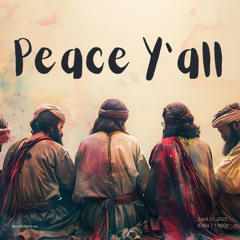
Y’all….. So here’s a little riddle for ya!!! What do a song by recording artist Lynn Anderson, a novel about nuns, and some of the words spoken by Jesus all have in common? I’ll give you a minute.
Ya got nothing? I didn’t figure. So here are a few hints:
Way back, a hundred and ninety-‘leven years ago when I was a wee baby gay, Lynn Anderson sang the hit song, “I Never Promised You a Rose Garden.”
And from the Gospel Reading appointed for today:
Jesus said to his disciples: “Whoever loves me will keep my word, and my Father will love him, and we will come to him and make our dwelling with him. Whoever does not love me does not keep my words; yet the word you hear is not mine but that of the Father who sent me.
“I have told you this while I am with you. The Advocate, the Holy Spirit, whom the Father will send in my name, will teach you everything and remind you of all that I told you. Peace I leave with you; my peace I give to you. Not as the world gives do I give it to you. Do not let your hearts be troubled or afraid.
And finally, from the first page of my very favorite, much beloved, read, and internalized novel, “In This House of Brede” by Rumer Godden, she writes:
The motto was “pax” but the word was set in a circle of thorns. Pax: Peace, but what a strange peace, made of unremitting toil and effort—seldom with a seen result: subject to constant interruptions, unexpected demands, short sleep at nights, little comfort, sometimes scant food: beset with disappointments and usually misunderstood, yet peace all the same, undeviating, filled with joy and gratitude, and love. “it is my own peace I give unto you.’ Not, notice, the world’s peace.
So the answer to the riddle, is this: It’s gonna be OK.
Do y’all remember what the deal was when Jesus was asleep in a boat on the sea nd then it stormed??? Not just your average run of the mill storm, but a STORM…..at sea even. Thunder. BOOM! Lightening. FLASH! Waves so high over the little boat that it was tossed about. CRASH! And to top it off, the boat started filling up with water. SLOSH…..Sink? And Jesus slept on. And on. And on.
And then it happened. The disciples, those stalwart fishermen, panicked; so much so that they wanted Jesus to panic, too. So, they woke him.
Now, I dunno about Jesus, and I’m pretty sure they didn’t have a Keurig on that boat, but anyone who knows me well, knows, that no matter what, one does NOT speak to the Bishop when he first wakes up until after his (at least) first cup of coffee. Can you not see Jesus? He throws the blanket off and says, WHAT?
Y’all….we’re in the midst of a storm now, even as I type. Many of us are fearful and dismayed. Many of us are angry. Many of us are in turmoil. And rightly so. With so much uncertainty on the horizon, many of us feel that we are in danger of sinking. And, I rather suspect, that many of us wonder if God is, indeed, sleeping, or if the Creator exists at all.
The disciples point out the storm, Jesus’s eyes focus, and then he gets it. He understands what all the fuss is about…..and then, like so many of us, he says,
“Really?”
I can just imagine him rolling his eyes, and then saying to the storm, in much the way I talk to our cats, he says, “Stoppit!” The storm quiets, Jesus grumbles about nonbelieving disciples, and goes back to sleep…..and the (nonbelieving) disciples are tripped!
But ya know, I can assure you that God is very much awake, and involved, in our lives. Or at least the Redeemer wants to be. How, you ask?
Remember that reading from the Gospel a minute ago? Here:
Jesus said to his disciples: “Whoever loves me will keep my word, and my Father will love him, and we will come to him and make our dwelling with him. Whoever does not love me does not keep my words; yet the word you hear is not mine but that of the Father who sent me.
So that’s how. By living through and with and in us. By us showing forgiveness. Charity. Good will. Reaching out. Love. By standing up for what is right and good and true. By peacefully protesting. By donating time and money to those who are less fortunate that we ourselves. By examining what we believe, what we hold dear, and comparing that to what Jesus has taught us that we SHOULD hold dear and believe. (For those of you who may be wondering what that is, focus on the Beatitudes and Matthew 25. Oh, and the greatest commandment (hint: it’s not one of the 10.)) Try: Love one another.
This storm is far from over. FAR from over. Before this storm ends, hearts will have to change, attitudes will have to change, laws, rules, regulations, the government, will have to change, society will have to change. And before any of that can happen, WE will have to change. We will, ALL of us, have to examine ourselves carefully, and honestly, to find the roots of our prejudice, our fears of those who are ‘other’ than ourselves. We will have to look with new eyes at all of those with whom we come into contact, ALL of them, EVERY ONE of them, and strive to find the Jesus in each of them. The Jesus in us must reach out to the Jesus in our brothers and sisters, regardless of race, creed, color, gender, gender identity, sexual preference, ability or disability, political affiliation, or any of the other million and one things we use to denigrate, disgrace, and damn our brothers and sisters.
Like the disciples, we will be afraid. Sometimes we may even panic. But I can assure you that, like the disciples, we can go to Jesus. And when we do, he will say to us, “Peace. Be still.” And in the calm and quiet that results from our trust in Him, we will be able, with full hearts, to grow, and to learn to love our neighbors as ourselves.
Christopher West used the words of St Francis to write this hymn:
Make me a channel of your peace.
Where there is hatred let me bring your love.
Where there is injury, your pardon, Lord
And where there’s doubt, true faith in you.
Make me a channel of your peace
Where there’s despair in life, let me bring hope
Where there is darkness, only light
And where there’s sadness, ever joy.
Oh, Master grant that I may never seek
So much to be consoled as to console
To be understood as to understand
To be loved as to love with all my soul.
Make me a channel of your peace
It is in pardoning that we are pardoned
In giving to all men that we receive
And in dying that we’re born to eternal life.
Oh, Master grant that I may never seek
So much to be consoled as to console
To be understood as to understand
To be loved as to love with all my soul.
Make me a channel of your peace
It is in pardoning that we are pardoned
In giving to all men that we receive
And in dying that we’re born to eternal life.
Peace. It’s up to us.
Amen.
My Lord and My God~The Rev Frank Bellino,OPI
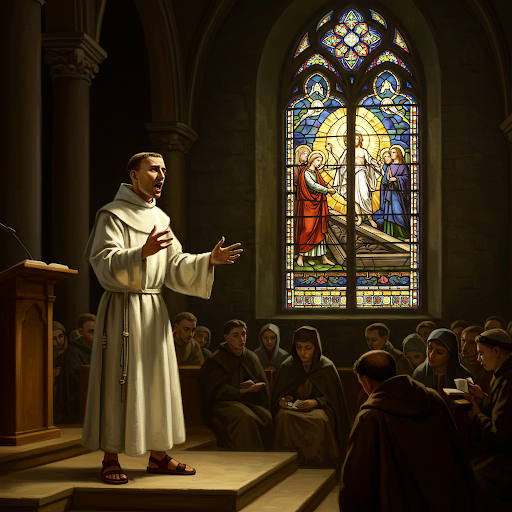
My dear brothers and sisters in Christ, grace and peace be with you on this glorious Second Sunday of Easter, a day we have come to know and love as Divine Mercy Sunday.
Today, as we gather in the radiant light of the Resurrection, our Gospel reading from John (20:19-31) draws us back to those pivotal first days after Christ’s triumph over death. As Dominicans, we are called to contemplate the Truth and to share it with you, and this passage is overflowing with truths that speak directly to our hearts, especially on this day dedicated to God’s boundless mercy.
Imagine, if you will, the scene in the Upper Room on that first Easter night. The Apostles, the very men chosen by Christ to be the pillars of His Church, are huddled together, their hearts gripped by fear. The shadow of Good Friday still looms large. Their Lord, their hope, had been brutally crucified. Now, whispers and rumors of an empty tomb, of fleeting appearances, must have filled them with a mixture of confusion and trepidation. They were likely wrestling with their own failures – the flight, the denial – a heavy burden of guilt weighing upon them.
And then, in the midst of their fear and uncertainty, Jesus appears. He stands among them, and His first words are a balm to their wounded souls: “Peace be with you” – Shalom. But this is no mere greeting, my brothers and sisters. This is the peace that only Christ can give, a peace born of profound reconciliation, a settling of the ultimate debt, the forgiveness of sins won through His sacrifice. This is the dawn of a new era, and He, the risen Lord, is entrusting its beginnings to these very men who had faltered.
And what does He do next? He breathes on them and says, “Receive the Holy Spirit. If you forgive the sins of any, they are forgiven then; if you retain the sins of any, they are retained.” In these powerful words, the Church has long recognized the institution of the Sacrament of Confession, the very sacrament through which we, even today, can encounter that same reconciling and merciful peace offered by the risen Christ. It is a tangible way for us to experience the forgiveness that flows from His wounded side.
But the story doesn’t end there. John then introduces us to Thomas, who was absent during this first encounter. Thomas, a man of honesty and perhaps a touch of stubbornness, voices his doubt with stark clarity. He needs physical proof. He needs to touch the wounds. His skepticism, while seemingly a challenge to faith, also underscores the reality of the Resurrection. This was not a ghost; this was the same Jesus, bearing the marks of His suffering, now gloriously alive.
And so, the Lord, in His infinite patience and mercy, appears again eight days later, on that first Sunday after the Resurrection – the very day we now celebrate as Divine Mercy Sunday. The doors are open, and Thomas is present. Jesus directly addresses his doubt, inviting him to touch His wounds. And in that moment, Thomas’ heart is transformed. His doubt gives way to a powerful profession of faith: “My Lord and my God!”
This exclamation, “My Lord and my God!” is the very heart of Easter faith. It is the recognition of Jesus not just as a man, but as the divine Son of God, the victor over sin and death. And Jesus’ gentle words to Thomas, “Have you believed because you have seen me? Blessed are those who have not seen and yet have believed,” speak directly to us, to the countless generations who have come to faith not through direct encounter, but through the witness of the Apostles, the Church, and the power of the Holy Spirit.
My dear St. Michael’s family, this Gospel is a profound testament to the divine mercy that flows from the heart of the risen Christ. Just as He met the fearful and doubting Apostles in the Upper Room, He meets us in our own moments of fear, doubt, and guilt. Through the Sacrament of Reconciliation, He offers us that same peace, that same forgiveness, that same new beginning.
Thomas’ journey reminds us that it is okay to question, to seek understanding. But ultimately, faith is a gift, a grace that allows us to believe even when we cannot see. And Jesus’ words to those who believe without seeing are a powerful encouragement to us all.
On this Divine Mercy Sunday, let us open our hearts to the boundless mercy of God, a mercy that reached its zenith on the Cross and burst forth in the glory of the Resurrection. Let us embrace the peace that Christ offers, a peace that reconciles and restores. And let us, like Thomas, proclaim with unwavering faith: “My Lord and my God!”
May the mercy of our Risen Lord Jesus Christ fill your hearts and guide you always. Amen.
Suffering, Growing and Living in Faith ~ The Feast of St. Elizabeth Ann Seton~The Very Rev Lady Sherwood, OPI
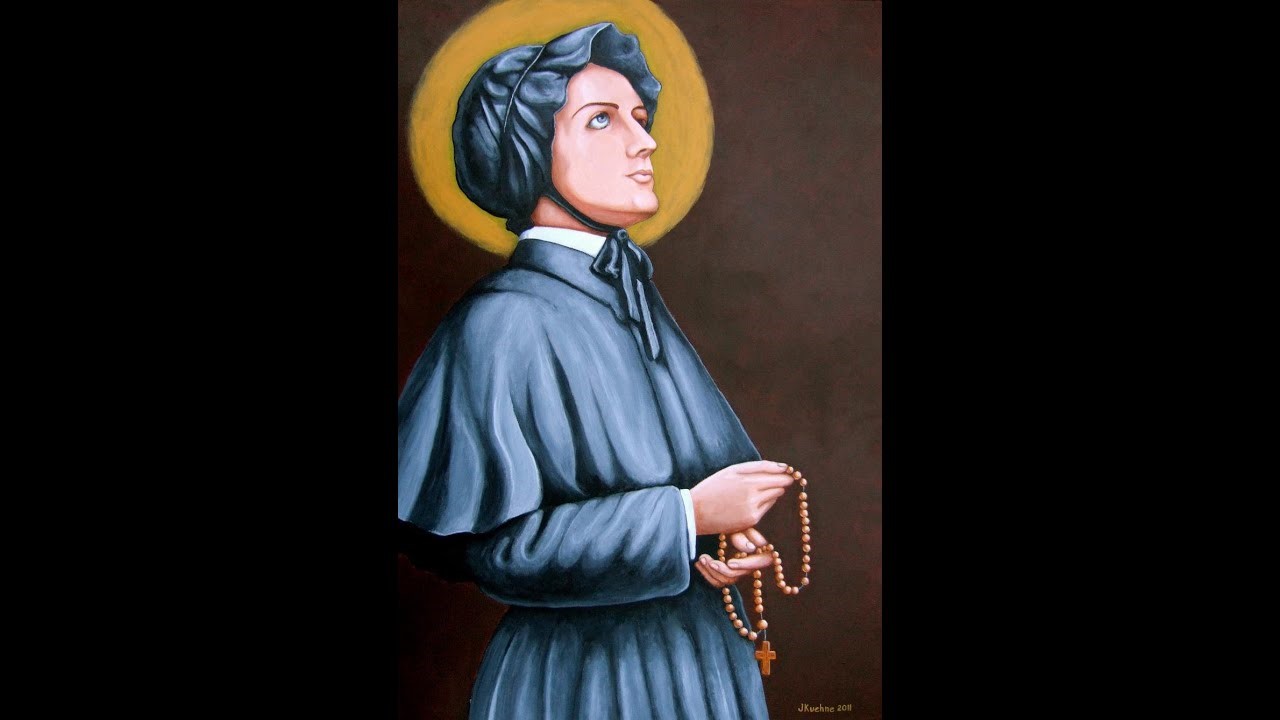
Today we come together as the church to commemorate the Memorial of Saint Elizabeth Ann Seton who is my name saint within the Order of preachers Independent, due to our Prior (and Presiding Bishop) feeling there are similarities between the life of St. Elizabeth Ann Seton and that of my own life
Throughout all of Biblical history and even still in our current times, we sometimes come across people who have endured much within their lives and who, regardless of this, remain strong and devout within their faith. Today we remember St Elizabeth, whom is one such person from whose life, heart and devotion, we can take inspiration within our own spiritual life.
Elizabeth was the first native-born citizen of the United States to be Canonized to sainthood.
Elizabeth was born as Elizabeth Ann Bayley in New York city on the 28th August in the year 1774, and she was a child of the Revolutionary war. She was raised Episcopalian which was the faith of her parents.
Elizabeth married at the tender young age of only nineteen years old, to a man named William Magee Seton. He was a young but wealthy merchant and together they parented a total of five children.
Elizabeth had a very deep devout faith and concern for the poor even as a very young woman and she shared this devotion with her sister-in-law, who was Rebecca Seton, and with whom she became very close friends. Together, Elizabeth and Rebecca undertook various missions for the poor and for the needy of their region and they adopted the name of the ‘Protestant Sisters of Charity` for their mission works.
Elizabeth’s life changed after only the short time of four years of marriage and her life became rather burdensome in nature. Elizabeth and her husband were left with the responsibility for seven half-brothers and sisters of William’s father when he died in the year 1798.
Elizabeth suffered even further in the year 1801, when her own father with whom she had a very close relationship, especially since the loss of her mother at aged only three, himself passed into the care of the Lord.
Then yet again she suffered after only another two years, when both her husband’s business and his health failed. Filing for bankruptcy, Elizabeth and her husband sailed to Italy to help his health and to try to revive his business.
Whilst in Italy, Elizabeth suffered even further, as William’s condition worsened. He was quarantined and subsequently died of Tuberculosis in December of 1803. Elizabeth remained in Italy for several months after his death and during this time, was more fully exposed to the Catholic faith.
Elizabeth returned to New York city in June of 1804, only to suffer yet again with the loss of her dear friend and sister-in=law, Rebecca Seton, in the very next month.
At only the young thirty years of age, Elizabeth had endured the loss of so many who were close to her and she seemed to have the weight of the world upon her shoulders. Even so, throughout all this, Elizabeth still remained fervent in her faith.
The months ahead were life-changing for Elizabeth and she seemed ever more drawn to the Catholic faith and to the Mother Church, much to the horror of her friends and her remaining family who were firmly Protestant.
Elizabeth Ann Seton was received into the Catholic Church on the 4th March 1805. Her conversion cost her dearly in the areas of her friendships and in the support from her remaining family.
Elizabeth relocated to the Baltimore area and there she established a school for girls. She also founded a religious community along with two other young women and she took vows before the Archbishop Carroll as a member of the Sisters of Charity of St Joseph. From this time forward, Elizabeth was known as Mother Seton and she left a legacy of care and education for the poor. She even established the first free Catholic school of the nation.
In so many ways, the journey into the Catholic faith, helped Elizabeth to much more appreciate and to embrace her faith even more profoundly. Elizabeth was willing to endure all things to follow Christ. In her journal, she even wrote, ‘If I am right Thy grace impart still in the right to stay. If I am wrong Oh, teach my heart to find the better way’.
Many of us who have chosen the Catholic faith have experienced some setbacks and have had to endure issues with relationships, but for this brave and devout woman of faith, the cost was even greater.
Elizabeth died aged only 46 on January 4th 1821 from Tuberculosis and she was Canonized on September 14th 1975.
On this your special day, St Elizabeth Ann Seton, Pray for all of us who follow your pathway of faith. Pray that we likewise to yourself will say yes and will accept all that will come to us in the years ahead, and to allow our earthly endurance to further our faith in our Lord Jesus Christ.
Amen.
St Martin de Porres, OP

Blessed Martin de Porres was born in the city of Lima, in the Viceroyalty of Peru, on December 9, 1579, the illegitimate son of a Spanish nobleman and a black former slave. He grew up in poverty; when his mother could not support him and his sister, Martin was confided to a primary school for two years, and then placed with a barber/surgeon to learn the medical arts. This caused him great joy, though he was only ten years old, for he could exercise charity to his neighbor while earning his living. Already he was spending hours of the night in prayer, a practice that increased rather than diminished as he grew older. At the age of 15, he asked for admission to the Dominican Convent of the Rosary in Lima and was received first as a servant boy; as his duties grew, he was promoted to almoner. Eventually he felt the call to enter the Dominican Order, and was received as a tertiary. Years later, his piety
and miraculous cures led his superiors to drop the racial limits on admission to
the friars, and he was made a full Dominican. It is said that when his convent was
in debt, he implored them: “I am only a poor mulatto, sell me.” Martin was deeply
attached to the Blessed Sacrament, and he was praying in front of it one night
when the step of the altar he was kneeling on caught fire. Throughout all the
confusion and chaos that followed, he remained where he was, unaware of what
was happening around him.
When he was 34, after he had been given the habit of a Coadjutor Brother,
Martin was assigned to the infirmary, where he was placed in charge and would
remain in service until his death at the age of sixty. His superiors saw in him the
virtues necessary to exercise unfailing patience in this difficult role, and he never
disappointed them. It was not long before miracles were attributed to him. Saint
Martin also cared for the sick outside his convent, often bringing them healing
with only a simple glass of water. He begged for alms to procure necessities the
Convent could not provide, and Providence always supplied.
One day an aged beggar, covered with ulcers and almost naked, stretched out
his hand, and Saint Martin, seeing the Divine Mendicant in him, took him to his
own bed. One of his brethren reproved him. Saint Martin replied: “Compassion,
my dear Brother, is preferable to cleanliness.”
When an epidemic struck Lima, there were in this single Convent of the Rosary
sixty friars who were sick, many of them novices in a distant and locked section
of the convent, separated from the professed. Saint Martin is said to have passed
through the locked doors to care for them, a phenomenon which was reported in
the residence more than once. The professed, too, saw him suddenly beside
them without the doors having been opened. Martin continued to transport the
sick to the convent until the provincial superior, alarmed by the contagion
threatening the religious, forbade him to continue to do so. His sister, who lived in
the country, offered her house to lodge those whom the residence of the religious
could not hold. One day he found on the street a poor Indian, bleeding to death
from a dagger wound, and took him to his own room until he could transport him
to his sister’s hospice. The superior, when he heard of this, reprimanded his
subject for disobedience. He was extremely edified by his reply: “Forgive my
error, and please instruct me, for I did not know that the precept of obedience
took precedence over that of charity.” The superior gave him liberty thereafter to
follow his inspirations in the exercise of mercy.
Martin would not use any animal as food—he was a vegetarian.
In normal times, Saint Martin succeeded with his alms to feed 160 poor persons
every day, and distributed a remarkable sum of money every week to the
indigent. To Saint Martin the city of Lima owed a famous residence founded for
orphans and abandoned children, where they were formed in piety for a creative
Christian life. This lay brother had always wanted to be a missionary, but never
left his native city; yet even during his lifetime he was seen elsewhere, in regions
as far distant as Africa, China, Algeria and Japan. An African slave who had
been in irons said he had known Martin when he came to relieve and console
many like himself, telling them of heaven. When later the same slave saw him in
Peru, he was very happy to meet him again and asked him if he had had a good
voyage; only later did he learn that Saint Martin had never left Lima. A merchant
from Lima was in Mexico and fell ill; he said aloud: “Oh, Brother Martin, if only
you were here to care for me!” and immediately saw him enter his room. And
again, this man did not know until later that he had never been in Mexico.
Martin was a friend of both Saint John de Massias and Saint Rose of Lima. When
he died in Lima on November 3, 1639, Martin was known to the entire city. Word
of his miracles had made him known as a saint throughout the region. As his
body was displayed to allow the people of the city to pay their respects, each
person snipped a tiny piece of his habit to keep as a relic. It is said that three
habits were taken from the body. His body was then interred in the grounds of
the monastery.
Pope Gregory XVI beatified Martin de Porres in 1837. Nearly one hundred and
twenty-five years later, Blessed Martin was canonized in Rome by Pope John
XXIII on May 6, 1962. His feast day is November 3. He is the Patron Saint of
people of mixed race, innkeepers, barbers, public health and more besides.
In iconography, Martin de Porres is often depicted as a young friar of mixed heritage (he
was a Dominican brother, not a priest, as evidenced by the black scapular and
capuce he wears, while priests of the Dominican order wear all white) with a
broom, since he considered all work to be sacred no matter how menial. He is
sometimes shown with a dog, a cat and a mouse eating in peace from the same
dish.
The Feast of Sts Simon and Jude~Br. Milan Komadina

Consequently, you are no longer foreigners and strangers, but fellow citizens with God’s people and also members of his household, built on the foundation of the apostles and prophets, with Christ Jesus himself as the chief cornerstone. In him the whole building is joined together and rises to become a holy temple in the Lord. And in him you too are being built together to become a dwelling in which God lives by his Spirit.
I like this parable from Ephesians 2/19-22. It shows the importance of being a part of the church, a part of the living congregation. It is true that we are saved by grace through our faith in Jesus Christ. But in order to grow we need to be a part of the church. Jesus does not need the church, but we are those who need it. We need the church in order to be stronger in our faith. If we imagine the church as a material building. In that building Jesus himself is the foundation. Then all the members of the church are like stones and all of us have our role to play. Some might be smaller stones, some might be bigger. Some might be ugly stones built somewhere in the middle away from the visible surface. Some stones might be on the front surface, visible, beautifully designed with decorations. What is important is emphasis that all stones matter. In Ephesians is also written that Jesus is a cornerstone. Builders of the house of God (the church) or believers must not throw away any of stones belonging to this temple. We may be wondering what it means. It means that the church might look like the real temple.
There are people who shine. They are front stones full of decoration. They are pious, they pray every day many times, they are considered to be the “best” Christians. There are stones – people who are barely visible. Inner stones. They come to the church once a month or occasionally. Sometimes more often, sometimes more rarely. There are people who are struggling with some temptation of various type. People who are not as shinny as those standing on the front wall. But what would happen with the church if the church lets only the most beautiful stones standing. If we start throwing away stone by stone for this reason and that reason. The entire building would be destroyed to dust. My message today, based on Ephesians chapter that we quote is love one another as a true family. Accept one another with all strength and weaknesses. Respect the differences between each other. And bear of mind that even though we are all different stones, we all have one foundation and that is Jesus. And we all build the perfect body of Christ.
Two Minute Mendicant~Br. Christian Ventura, OPI

On Preaching: Part I
Historically, when Dominicans are taught to preach, we are *generally* told not to view Holy Scripture as historical documents that necessitate eloquent interpretation. Likewise, we are not supposed to read the Holy Gospels with the intention of discovering a hidden meaning or a novel theological epiphany that hasn’t already been debated by biblical scholars and theolo-gicians throughout the ages. While at first glance this might appear seemingly contrary to the very nature of preaching, it calls us to be attentive to the text in a rather mystically intimate way.
When we prepare to preach at the pulpit, our heart is set on discerning how the living Word is speaking to us in the context of today. We ought not to be surprised if an ancient parable helps inform how we see gun violence, or if the Beatitudes can teach us a thing or two about the ongoing climate crisis.
The Spirit kindles our heart, and our heart informs our mind to articulate aspects of the divine essence in human words. This is the same Spirit that bestowed the gift of speaking the language of the people on the day of Pentecost. The Dominican is first called to contemplate, and then consequently, has a responsibility to share the fruits of our contemplation for the salvation of souls.
Our siblings at the United Church of Christ do an excellent job of nurturing this truth that “God is still speaking”. Furthermore, not only do we interact with the living Word, we believe every Christian has an apostolic call to bear witness to how God authors the Gospel in our everyday life as an extension of our shared priesthood that is gifted to us at baptism. In that same sentiment, if we do not strive with our whole heart to preach the Gospel with our everyday actions— the words that come out of our mouth mean nothing.
~ br c
Sharing Your Gifts~Br. Christian Ventura, Novice
In the Name of Almighty God: ✠ Father, Son, and Holy Spirit.
Amen.
There is an old monastic joke that goes as follows–:
“There are only three things that God doesn’t know:
1. How many Franciscan Friars there are;
2. What in the world the Jesuits are doing;
And 3. What a Dominican Friar is saying when they’re preaching”.
And as for most Dominicans on the day of the Annunciation, (or the day after, in this case) it is hard to not fall into this stereotype, as we are often quick to get excited whenever we have an opportunity to preach on the Blessed Virgin Mary. Afterall, our habits are white to represent our protection under the mantle of our Blessed Mother, (and also because it was the cheapest material at the time), but we don’t lead with that.
We also carry a 15-decade rosary on the left side of our cincture to remind us to take up prayer instead of a sword. And if you didn’t already know, the modern rosary prayed by many today is believed to come from a Marian visitation to St. Dominic in his petition for peace during a time of death and despair. This 5-decade rosary is an abbreviated version inspired by the original 150 beaded Marian psalter given to St. Dominic.
But we aren’t the only monastics to wear a rosary as part of our habit. The Franciscans share this practice, as do many nuns, brothers, and monks of various other orders as well. Although this is usually due to a shared desire to represent our cinctured obedience to almighty God in our vocation(s).
Likewise, you’ll note that the Canticle of Mary or the Magnificat also has its roots in early monasticism. When we pray “my soul proclaims the greatness of the Lord, my spirit rejoices in God my savior” during evening prayer, we join the voices of the benedictine monks in the monastery who have chanted it during evening vespers since the 6th century.
The veneration of Mary the God bearer as influenced by early monasticism is an integral part of our history as Christians, and we know it to begin as early as the story of the Annunciation. Where, an Angel of God visits our mother and says “hail, full of grace, the Lord is with thee: blessed art thou among women”.
But aside from the angelic imagery of this breathtaking event, what personally strikes me the most is Mary’s faithful consent to God in her special vocation. She says “behold the handmaid of the Lord, be it done unto me according to thy word”.
Imagine a world where we all said yes to our callings from God. And even better yet, imagine a world where we supported everyone and their special calls. And no, not necessarily a call to be a monk or a nun, but rather our call to be a brother, a sister, a friend, mother, a beloved child of God. Our call to take up our cross, our call to be imitators of the Word made flesh that dwelt among us.
I urge you to take a moment to think about: what is God calling you to? What experiences, both good and bad, have placed you here– right where you need to be?
And, how can you say “yes!”? Lent is a phenomenal time to discern our own special vocations and deepen our relationship with God: where we fast from our own will to make room for God’s.
How are you called to share your special gifts and talents to help make it on earth as it is in heaven? Are you called to be a teacher, a healer, or a musician? Has God asked you to leverage your career in healthcare, law, hospitality, or leadership to help love your neighbors? Are you an artist? Do you cook? What are you really good at doing, and how can you use it to help bring peace, comfort, or joy to others?
Lent is a time to embrace our callings from God not in spite of our flaws, but partly because of them. Whatever God is calling you to, know that he is calling you in the fullness of who you are now, with the vision of who you will become.
Through the intercession of our Blessed Virgin Mary , Mother of God, may you come to hear your call and find confidence to say “yes”, and may our Loving Father help you bring it to fruition.
The Call ~ The Rev. Frank Bellino, OPI
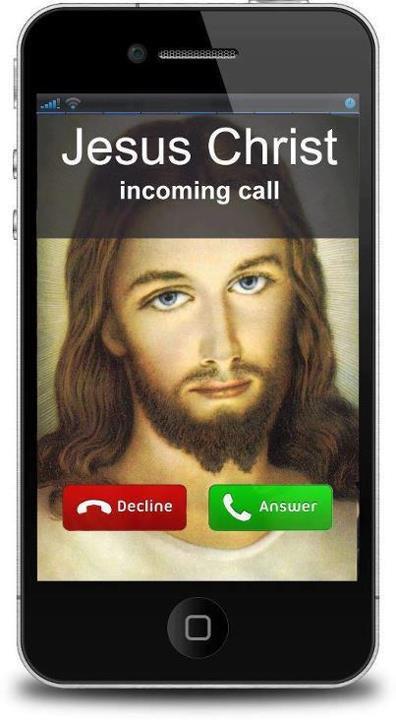
Many of us, at one time or another, dream of leaving everything behind. All the ties and responsibilities that nail us down, all the daily drudge, our half-heartedness about our work or our families, the weight of our past and our failures, all the things which define us.
It would be so simple to simply dump all the baggage of life, disappear, and start again in another place with a new passport and a Swiss bank account. In our fantasies, running away from everything would free us to start again as a new person, to become someone else more intelligent, more successful, popular or better looking.
In the Gospel, four fishermen leave everything behind, all the ties and bonds of work and family, to follow Jesus. But they leave everything in response to a call:
“Follow me, and I will make you fishers of men.” (“Follow Me and I Will Make You | bibleteacher.org”)
Jesus doesn’t offer them a career, as carpenters, soldiers or tax collectors. He isn’t offering them exciting new love affairs, or friendships unencumbered by the weight of failure and misunderstanding.
The call to discipleship isn’t an attempt to recreate a new set of ties and bonds of love and responsibility, to escape all that defines and supplies identity. It is a call to discover that God given identity in a new way, in the crimson dawn of salvation in the words and actions of Jesus. I will make you fishers of men.
The call to follow establishes a relationship between what the disciples are now, and what they are to become. Their ordinary work, drawing sustenance from the darkness of the sea, becomes a sign of a deeper reality, drawing men and women from the darkness of sin and death, into the torrent of wind and flame manifested at Pentecost.
That which defines them now is not bypassed or ignored but becomes the scene of an urgent call to a deeper self-understanding, the call of grace. So, the disciples don’t leave fishing nets and boats upon the shore so that they can escape the daily struggle to make a living. Nor do James and John leave their dad sitting in the boat because they’ve grown tired of him or can’t afford a retirement home.
Grace does not take us from one identity to another but opens out a new and surprising depth of identity in the life of God. The disciples then leave everything behind not to escape, but to discover the true depths of the Spirit’s call. This Spirit, pouring from the Risen Christ, doesn’t replace our natural desires and hopes. Sharing in the Divine life does not mean that we are not called to live a fully human life.
Grace, then, begins to manifest itself in the reality of our lives, in those things which define us, make us who we are: but within these things it sounds an urgent call, a call to discover how much more we are, to understand ourselves in the gracious newness breaking into the world in the risen body of Jesus. For some, like the disciples in the Gospel, this call will require a leaving behind. In religious life, Christian men and women do not go in search of a fantasy life, but a life defined by the bonds and responsibilities of grace, of the new human community of the church formed at Pentecost.
But for most people, the call will not require a complete leaving behind, but an expanded vision of who we are, and our value in God’s plan. The call of Jesus to repent, because the kingdom of heaven is close at hand, is a call not to allow sin, and all the failures of life, to define us. For from our baptism, we have been caught up, hooked into this new age of grace, where we may swim freely.
The urge to escape who we are often weighs very heavily upon us. But there are no real clean slates in this life: who we are is intimately bound up with those we live with, those who have cared for us or hurt us, with the ways of making a living and passing the time we have settled for.
The call of God’s grace doesn’t offer us a new identity, the fantasy life we have always longed for. The call to be a disciple is a call to move to an even deeper understanding of who we are, who we are called to be, in the self-giving of God in the cross of Jesus, and the hurricane of glory which finally transformed simple fishermen into fishers of men.
The Feast of All Dominican Saints~The Rev. Dcn. Scott Brown, OPI
Blessed are the pure in heart, for they shall see God. Mt 5:8
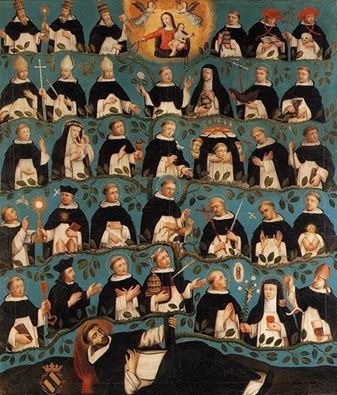
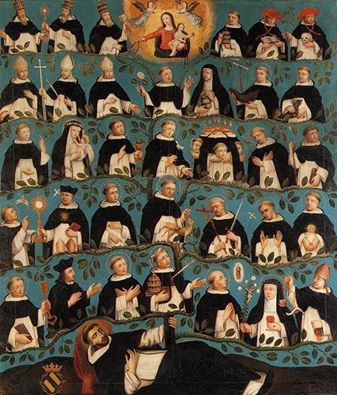
Today we celebrate the Feast of All the Saints of the Dominican Order.
We come together as one Dominican Family today to celebrate not only Our Saints, but also our many Blesseds, Holy Friars, Nuns, Sisters, and Laity who have lived over the past 800 or so years.
We are so privileged to celebrate them as they provide us with an example by which we follow in our religious lives, by their wonderous fellowship in their communion and in their much-needed aid to us by their intercessions to God on our behalf. We celebrate all of those Dominicans who were faithful in their lives lived with great prayer, silence, and penance, those who have educated thousands of souls, and Third Order members who have sanctified the world.
We celebrate in thanks to God on this important feast day for our Order and turn to the examples of our Saints, their lives, and their intercessions for us to that they may guide us on our spiritual journey.
Our Spiritual Father, Saint Dominic left us a wonderous legacy of teaching and preaching by word and example of how we should live our lives. It is, then, joyous and encouraging that so many of our Dominican brothers and sisters have been beatified and canonized.
How fitting that the Gospel appointed for today includes these words spoken by Our Lord:
…..but those who are deemed worthy to attain to the coming age
and to the resurrection of the dead neither marry nor are given in marriage. They can no longer die, for they are like angels; and they are the children of God because they are the ones who will rise. That the dead will rise even Moses made known in the passage about the bush,
when he called out ‘Lord,’ the God of Abraham, the God of Isaac, and the God of Jacob; and he is not God of the dead, but of the living,
for to him all are alive.” (Lk 24: 34-38)
Let us pray then in the example we have been taught to ask our dear saints to intercede for us, and to thank our God for all the saints of our Dominican Order and for the fruits of our order to be pleasing in his sight by joining in the Dominican Order Litany of Saints:
God, the heavenly Father have mercy on us.
God, the Son, Redeemer of the world have mercy on us.
God, the Holy Spirit have mercy on us.
Holy Trinity, one God have mercy on us.
Holy Mary pray for us.
Saint Mary Magdalen pray for us.
Holy Father Dominic pray for us.
Holy Father Dominic pray for us.
Holy Father Augustine pray for us.
Holy Father Francis pray for us.
Blessed Jane of Aza pray for us.
Blessed Reginald pray for us.
Blessed Bertrand pray for us.
Blessed Mannes pray for us.
Blessed Diana pray for us.
Blessed Jordan of Saxony pray for us.
Blessed John of Salerno pray for us.
Blessed William and Companions pray for us.
Blessed Ceslaus pray for us.
Blessed Isnard pray for us.
Blessed Guala pray for us.
Blessed Peter Gonzalezpray for us.
Saint Zdislava pray for us.
Saint Peter of Verona pray for us.
Blessed Nicholas pray for us.
Saint Hyacinth pray for us.
Blessed Gonsalvo pray for us.
Blessed Sadoc and Companions pray for us.
Blessed Giles pray for us.
Saint Margaret of Hungary pray for us.
Blessed Batholomew of Vincenza pray for us.
Saint Thomas Aquinas pray for us.
Saint Raymond of Penyafort pray for us.
Blessed Innocent V pray for us.
Blessed Albert of Bergamo pray for us.
Saint Albert the Great pray for us.
Blessed John of Vercelli pray for us.
Blessed Ambrose pray for us.
Blessed Cecilia pray for us.
Blessed Benvenuta pray for us.
Blessed James of Varazze pray for us.
Blessed James of Bevagna pray for us.
Blessed Jane of Orvieto pray for us.
Blessed Jordan of Pisa pray for us.
Saint Emily pray for us.
Blessed James Salomonio pray for us.
Saint Agnes of Montepulciano pray for us.
Blessed Simon pray for us.
Blessed Margaret of Castello pray for us.
Blessed Augustine Kazotic pray for us.
Blessed James Benefatti pray for us.
Blessed Imelda pray for us.
Blessed Dalmatius pray for us.
Blessed Margaret Ebner pray for us.
Blessed Villana pray for us.
Blessed Peter Ruffia pray for us.
Blessed Henry pray for us.
Blessed Sibyllina pray for us.
Blessed Anthony of Pavonio pray for us.
Saint Catherine of Siena pray for us.
Blessed Marcolino pray for us.
Blessed Raymond of Capua pray for us.
Blessed Andrew Franchi pray for us.
Saint Vincent Ferrer pray for us.
Blessed Clara pray for us.
Blessed John Dominic pray for us.
Blessed Alvarez pray for us.
Blessed Maria pray for us.
Blessed Peter of Castello pray for us.
Blessed Andrew Abellon pray for us.
Blessed Stephen pray for us.
Blessed Peter Geremia pray for us.
Blessed John of Fiesole pray for us.
Blessed Lawrence of Ripafratta pray for us.
Blessed Anthony della Chiesa pray for us.
Saint Antoninus pray for us.
Blessed Anthony Neyrot pray for us.
Blessed Margaret of Savoy pray for us.
Blessed Bartholomew of Cerverio pray for us.
Blessed Matthew pray for us.
Blessed Constantius pray for us.
Blessed Christopher pray for us.
Blessed Damian pray for us.
Blessed Andrew of Peschiera pray for us.
Blessed Bernard pray for us.
Blessed Jane of Portugal pray for us.
Blessed James of Ulm pray for us.
Blessed Augustine of Biella pray for us.
Blessed Aimo pray for us.
Blessed Sebastian pray for us.
Blessed Mark pray for us.
Blessed Columba pray for us.
Blessed Magdalen pray for us.
Blessed Osanna of Mantua pray for us.
Blessed John Liccio pray for us.
Blessed Dominic Spadafora pray for us.
Blessed Stephana pray for us.
Saint Adrian pray for us.
Blessed Lucy pray for us.
Blessed Catherine Racconigi pray for us.
Blessed Osanna of Kotor pray for us.
Saint Pius V pray for us.
Saint John of Cologne pray for us.
Blessed Maria Bartholomew pray for us.
Saint Louis Bertrand pray for us.
Saint Catherine de Ricci pray for us.
Blessed Robert pray for us.
Blessed Alphonsus and Companions pray for us.
Saint Rose pray for us.
Saint Dominic Ibanez and Companions pray for us.
Blessed Agnes of Jesus pray for us.
Saint Lawrence Ruiz and Companions pray for us.
Saint Martin de Porres pray for us.
Blessed Peter Higgins pray for us.
Blessed Francis de Capillas pray for us.
Saint Juan Macias pray for us.
Blessed Terence pray for us.
Blessed Ann of the Angels pray for us.
Blessed Francis de Posadas pray for us.
Saint Louis de Montfort pray for us.
Blessed Francis Gil pray for us.
Saint Matteo pray for us.
Blessed Peter Sanz and Companions pray for us.
Saint Vincent Liem pray for us.
Saint Hyacinth Castaneda pray for us.
Blessed Marie pray for us.
Blessed George pray for us.
Blessed Catherine Jarrige pray for us.
Saint Ignatius and Companions pray for us.
Saint Dominic An-Kham and Companions pray for us.
Saint Joseph Khang and Companions pray for us.
Saint Francis Coll pray for us.
Blessed Hyacinthe Cormier pray for us.
Blessed Pier Giorgio pray for us.
Blessed Bartolo pray for us.
Blessed Michael Czartoryski pray for us.
Blessed Julia Rodzinska pray for us.
Sister Dollie Wilkinson, pray for us.
All holy Dominican brothers and sisters pray for us.
Lamb of God, who takes away the sins of the world, spare us, O Lord.
Lamb of God, who takes away the sins of the world, graciously hear us, O Lord.
Lamb of God, who takes away the sins of the world, have mercy on us.
Let us pray.–
God, source of all holiness, you have enriched your Church
with many gifts in the saints of the Order of Preachers.
By following the example of our brothers and sisters,
may we come to enjoy their company
for ever in the Kingdom of our Lord Jesus Christ,
Your Son, who lives and reigns with You
and the Holy Spirit, one God, for ever and ever.
Amen.
 The Order of Preachers, Independent
You must be logged in to post a comment.