
Category: Dominican Saints
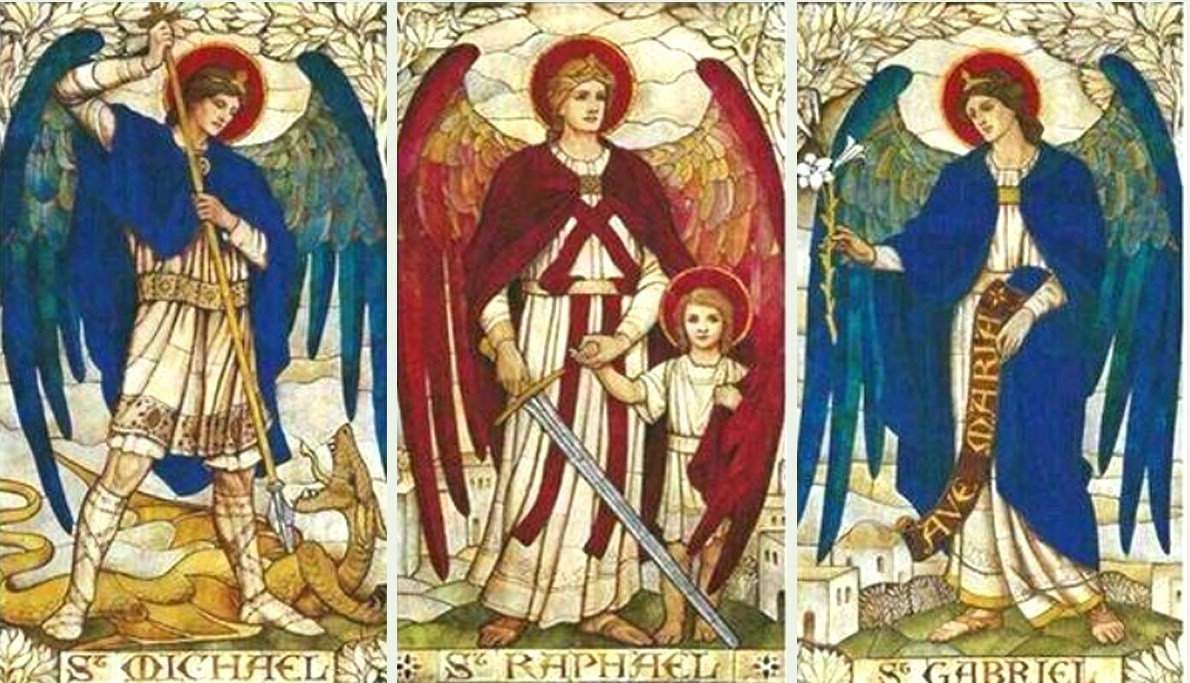
The Feast of the Archangels ~ The Rev. Dcn. Igor Kalinski, OPI
Deacon Igor Kalinski OPI, Marshal Tito 157, #1480 GEVGELIJA, Republic of Macedonia, Dominican Hermitage & Oratory of Sts Sebastian & Peregrine
Homily for 29 September, Feast of the Holy Archangels Rafael, Gabriel and Michael
I’m trying, from one side to say at least one office if I can due my sadness of the loss of our beloved archdeacon and Dominican sister, Dollie Wilkinson OPI. In every office of prayer, I conclude the prayers for petitions of her end on the earthly life, and been rewarded to leave this valley of tears, and serving now the heavenly tabernacle and interceding for the needs that she knows very well, of today’s lack of vocation within the body of Christ, the contemporary church of 21 century. The needs of her brothers and sisters from the Dominican family.
Today we celebrate the feast of the Holy Archangels, very famous of their obedience and ministry of God, that we can see from the Holy Scripture. Sister Dollie strived her best to be an angel of flesh, she has shown that every day of her religious devoted life. I am so blessed that God put me with reason, preparing me to learn from those, who are leaving us, and I have to strive, facing my own demons, allurements of my flesh, and my fallen nature, but is so much hope and peace when I reflect of all that kindness and little roses that she gave us daily through her unique petition prayer that she shared on the social platform. I reflect, and become strengthened to strive and to continue this path to the end of this life. She have been faithful to the fullest, very confidential like a mother or even like a grandmother, she could sister to many of us, or just confident friend, to share sins and problems with her.
Today reading from the book of Deuteronomy, giving me this answer and refreshment of the sacred call and ministry which is not complicated at all, and I referred paraphrasing this, reading from my native Macedonian language bible, pretty the same as many English translations, in chapter 7, verse 9, 10, 13 and 14.
Faithful to God, and God will loves you, remaining faithful to the solemn vows and oath that we take in front of the superior and the altar, god will protects our vow, and we with our faithfulness will be preserved for thousand generations. God will give all his love and blessings, to survive on this earth, with blessed cattle, blessed plants of the ground that can produce food, the womb of the mothers to give birth of children too.
This was all sister Dollie. She remained faithful and vowed to God, to her family, and her life partner, she grow and raise her daughters that are the continuation of her branches of family, she served faithfully her Order and church, she worked hard to earn money and feed her family and home, and all charitable acts of kindness that we will never know, and that she was certainly comforting people while waiting for her bus to drive her to her work, so many things fruitfully happened in her short , but very rich and profound life. She was like this verses that we read in the 7 chapter of Deuteronomy. Maybe she never realized this, doesn’t matter for her, it matter for us, this fullness of Gods promises in his word in the scripture are true picture of how I reflected and remined me of never forgotten beloved sister Dollie.
In Loving Memory of Our Sister, Dollie Wilkinson ~ The Rev. Deacon Igor Kalinski, OPI
Deacon Igor Kalinski OPI, Oratory of Sts Sebastian & Peregrine, Gevgelija, Macedonia
26th Sunday in Ordinary Time
Grief and mourning in the Dominican Hermitage and Oratory. Three days since our beloved and ever missed sister in Christ, family member of the Independent Dominican Order affiliated within the Old Catholic Communion with the Unified Old Catholic Church , serving in West Virginia, as a college, neighbor, deaconess, worker, mother, aunt, sister, grandmother, and wife.
Her service dedicated to the family, the home church, the church, and the work. With her little steps and little acts reminds me of the Little Teresa of Jesus, and sometimes with all ordinaries that make her an extraordinary friend and neighbor.
Since I entered the postulancy 7 years ago, she has said in time of distress and weakness, her sweet peaceful words with love and compassion. She served the church and Order with her amazing example to follow Christ and dedicate the rest for the work, prayer, and family.
The witness, the daily little roses of petitions, are very missed, and she gave me legacy of continuation there where she stopped to continue to serve the heavily altar together with ever missed beloved father Philip Gerboc, IOFM and sister Victoria Williams, IOFM.
Today’s reading from the book of Ezekiel reminds us of the right path of God, the right path that our beloved sister walked daily as servant of Christ and the Mother Church. Because we are all sinned through our ancestry we have the original sin and the prize is that our physical bodies will end its living, and soul will go to God. And is telling us till we breathe and are alive we have a daily possibility to contrite , repent, change our mind and habit, and continue in new life as dedicated to God, church and our neighbor, as our beloved sister Dollie so much strive to live to the rest of her life.
In the last verse 28 of chapter 18, Because that one who sow and refused to live his previous life of sin, will be alive and shall never die.
Our hope and our pillar of our living faith is the everlasting life, and resurrection. Nothing is going to be lost if we have Jesus, our Advocate, and our Redeemer.
I want to end with the prayer for our beloved sister Dollie Wilkinson,
Depart, O Christian soul, out of this world;
In the Name of God the Father Almighty who created you; In the Name of Jesus Christ who redeemed you; In the Name of the Holy Spirit who sanctifies you. May your rest be this day in peace, and your dwelling place in the Paradise of God. Into your hands, O merciful Savior, we commend your
servant Dolle. Acknowledge, we humbly beseech you, a sheep of your own fold, a lamb of your own flock, a sinner of your
own redeeming. Receive him into the arms of your mercy, into the blessed rest of everlasting peace, and into the glorious company of the saints in light. Amen.
May her soul and the souls of all the departed, through the mercy of God, rest in peace. Amen.
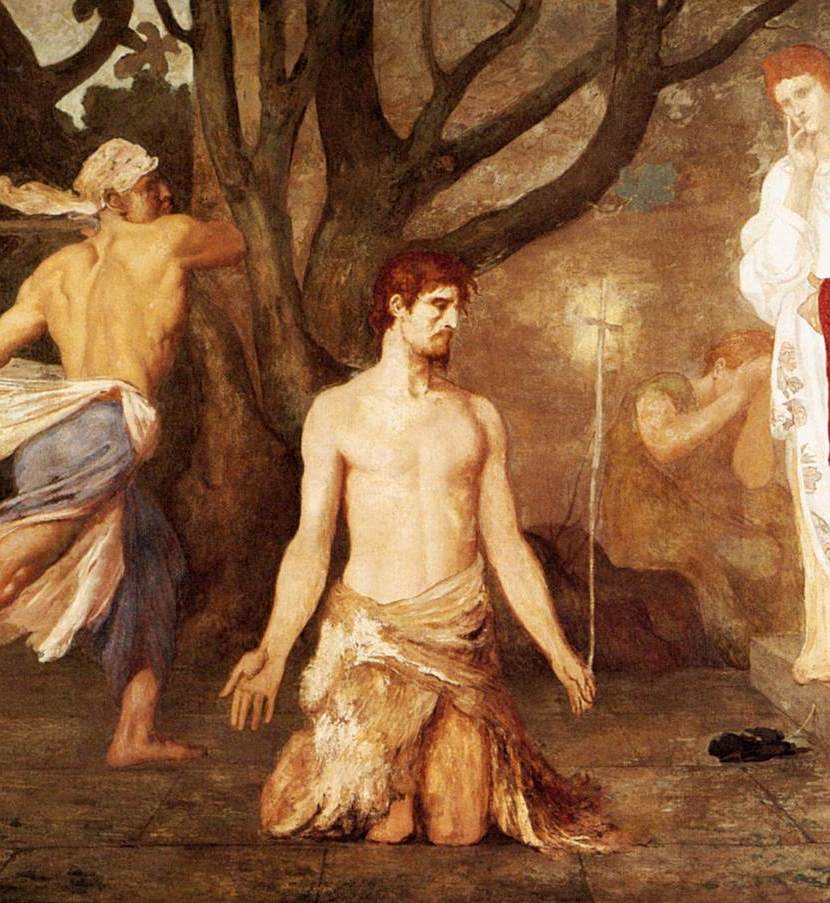
Faith Unto Death: John the Baptist ~ The Very Rev. Lady Sherwood, OPI

Reading 1:1 COR 1:26-31
Responsorial Psalm: 33:12-13, 18-19, 20-21
Gospel: MK 6:17-29
Liturgical colour: Red.
Dearest brothers and sisters in Christ, Today we come together to honour the Passion of St John the Baptist. The life of St. John the Baptist was indeed a very dramatic one. Even in his mother’s womb, he leapt with joy when Mary greeted Elizabeth at the Visitation. At John’s birth, there was an amazing occasion= that of the choosing of his name which was that which restored the power of speech of his father Zechariah, and which also left the astonished local people wondering who he would he grow up to be. John’s appearances at the river Jordan preaching repentance and baptising people earned him the reputation of “the Baptist” and he was even the one who baptised our Lord Jesus himself.
John had a very illustrious ministry. Yet in essence, he was a prophet and his greatest action as a prophet was to point out to all that Jesus was indeed the Lamb of God. And as a prophet, he had fulfilled his ministry mission by proclaiming the ways of the Lord to all, and pointing out to them, their sin and evil ways, and calling for their repentance and for their conversion. St. John the Baptist paid the consequence for pointing out Herod’s sin, as for doing this, he was captured and was imprisoned in Herod’s fortress. If the life of John the Baptist was dramatic and illustrious, his death was equally very dramatic, and it was also a death which was extremely gruesome in it’s nature.
John’s death by being beheaded, reveals the true character of person of Herod, of Herodias, of her daughter, and also of all the guests that were present, as they did nothing and said nothing to stop the heinous act. For a great prophet like St. John the Baptist who had such a dramatic and illustrious life and ministry, his death was so humiliating, yet indeed, so terrible of nature.
Yet, today, we the Church come to honour him. Over and above all else, we honour him for his faithfulness to God and also for his great courage in the acceptance and fulfilment of his mission of being God’s prophet. Even for us, in all the drama of our lives, whether in times of spills and thrills, or whether in times of being mundane and monotonous, what counts for us will be our faithfulness to God. Because in the end, it will be the depth and strength of our faithfulness to God that mattered. This mattered to St. John the Baptist. It also matters to God and it should indeed be what matters to us!
The life and ministry of John the Baptist, and his willingness to die for his faith and devout service to God, is an excellent example of how our lives as Christians, and as children of God should be. There is much we can take from John the Baptist and can and should, live by such within our own lives.
Let us pray:
O God, who willed that St John the Baptist
should go ahead of Your Son
both in his birth and in his death,
grant that, as he died a Martyr for truth and justice,
we, too, may fight hard
for the confession of what You teach.
Through our Lord Jesus Christ, Your Son,
who lives and reigns with You
in the unity of the Holy Spirit,
one God, for ever and ever.
Amen.
Observe and Do ~ The Rev. Dcn Scott Brown, OPI
A Reading from the Prophet Isaiah (56:1,6-7)
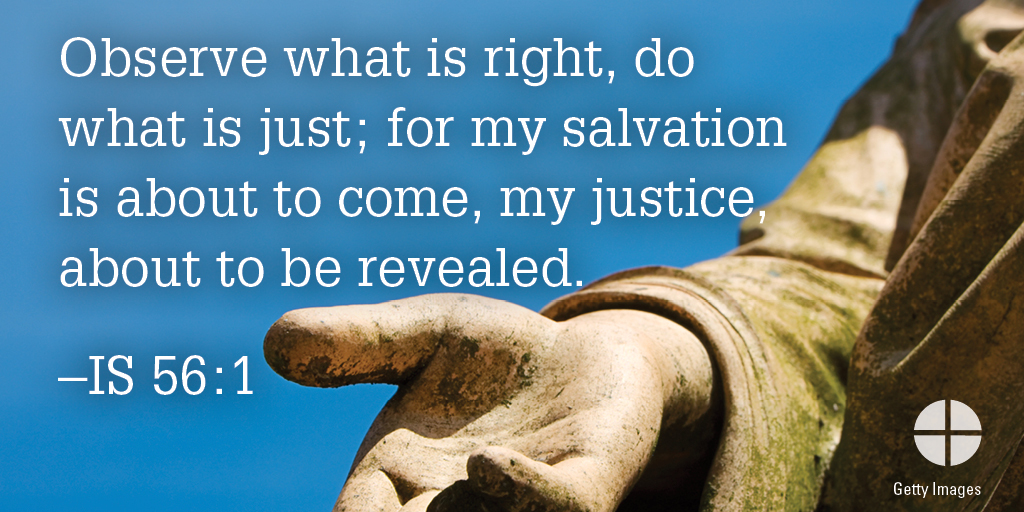
Thus says the LORD: Observe what is right, do what is just; for my salvation is about to come, my justice, about to be revealed. The foreigners who join themselves to the LORD, ministering to him, loving the name of the LORD,
and becoming his servants— all who keep the sabbath free from profanation
and hold to my covenant, them I will bring to my holy mountain and make joyful in my house of prayer; their burnt offerings and sacrifices will be acceptable on my altar, for my house shall be called a house of prayer for all peoples.
Let’s look at this, shall we?
Thus says the LORD: Observe what is right, do what is just; for my salvation is about to come, my justice, about to be revealed.
Well there you have it: the Lord couldn’t make it any clearer than that! Observe what is just and do what is right. In the turbulent times we are living in right now this passage couldn’t be any more fitting. I don’t want this to sound political by any means, only a very select few people know my political views and it will stay that way. But, I believe this passage instructs you to search your own heart and do what is right for the world and for all of God’s children. People are rioting for equal rights and equal justice, people of color are fighting STILL for the right to be treated with the same respect and dignity as other races. We have politicians that want to build walls around our countries and refuse to allow foreigners on our soil. There are politicians who want to tamper with our most sacred process, the election of our leaders, for political and financial gain. Our planet’s environment is in crisis and some of those same politicians are refusing to do what is just, fair, and right for our planet and for future generations for the sake of a fatter wallet.
The Lord promises to return to us in this passage and I for one believe his return is very close. But does that mean that we are beyond hope and we should just give up and let things (forgive me for putting it this way) go to Hell in a handbasket? NO! we as Christians need to stand up against the injustices that are happening in our country and our world today. The most effective thing you can do right now is to be the Jesus that this world needs. Feed the hungry, clothe the naked, shelter the homeless, visit the sick, pray for all the above, and most importantly pray for our country, our world, and especially our leaders. Pray for your family members, pray for the groups that are in distress, pray for your black neighbor, your native American neighbor, your gay neighbor, your straight neighbor, your Muslim neighbor, all your neighbors, and all the people of the world.
The foreigners who join themselves to the LORD, ministering to him, loving the name of the LORD, and becoming his servants— all who keep the sabbath free from profanation and hold to my covenant, them I will bring to my holy mountain and make joyful in my house of prayer.
I think this is truly clear, needing very little explanation but here goes with my interpretation. Those who join with the Lord, praising him, singing joyful songs unto him, and being his faithful and loyal servants, he will bring to his mountain and make them happy in his house. God is simply telling you that if you praise him faithfully, put your trust in Him, and respect his laws, then you will be rewarded with everlasting peace and joy. Well that not asking a lot is it? Is it? I do not think so! Our time on earth is very brief compared to eternity: do not screw it up and forfeit your spot in God’s eternal plan for a spot in Hell.
their burnt offerings and sacrifices will be acceptable on my altar,
The Lord will accept your offering and sacrifices at his altar does not mean that we need to sacrifice a lamb or a goat or a living creature. What this means is that we should sacrifice our time and our abilities to build God’s kingdom and do his work here on earth. Give your time, give your money, give your aid and help to those who need your guidance. Teach others to pray, show others how to live a Christian life, sacrifice your time and your knowledge for the sake of the Lord.
for my house shall be called a house of prayer for all peoples.
Again. here is something that needs very little explanation but here goes cause I’m on a roll here. The front doors to the Lords house are open to everyone, regardless of race, color, creed, ethnicity, sexual orientation, criminal background, or anything that we as humans feel are disqualifiers. God does not disqualify anyone or reject anyone from his house. If you truly have a repentant heart, and love the Lord with all your might, you will be welcome with open arms in the Lords house forever. Period.
Let us pray.
Heavenly Father, teach us to do what is right and just so that we may be brought to Your holy mountain where we may worship and praise you for eternity. Please accept our sacrifices and our offerings, and make us truly thankful for all the blessings you have bestowed upon us. Amen
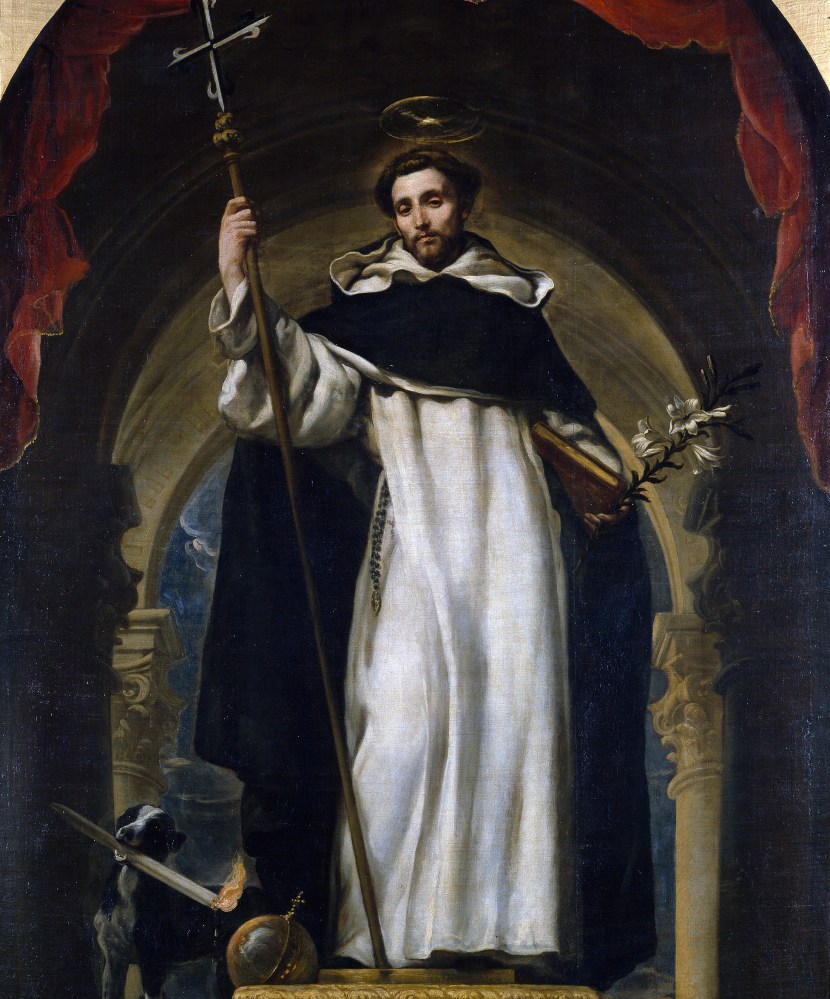
The Feast of Our Holy Father St. Dominic
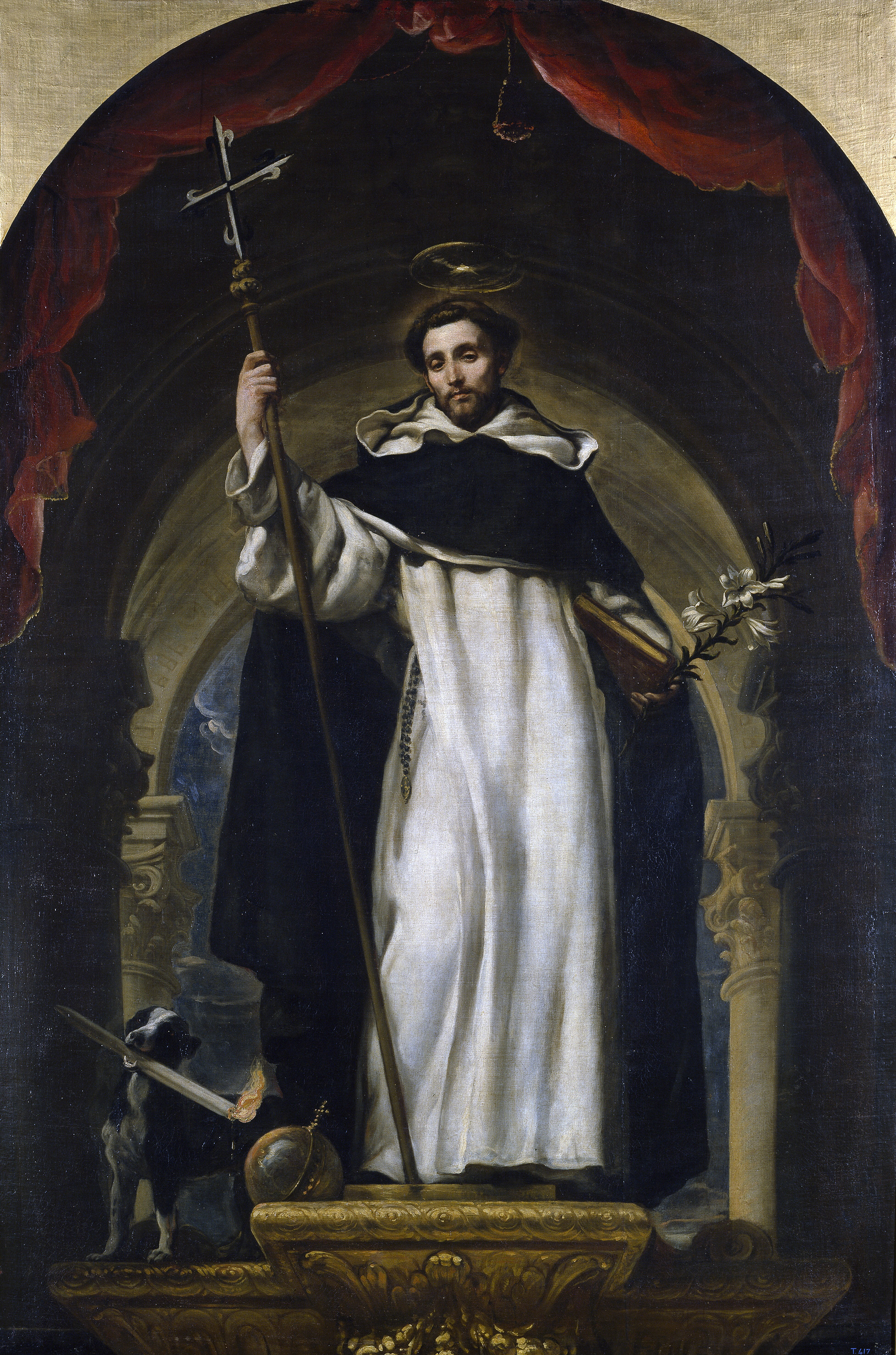
“A man who governs his passions is master of his world. We must either command them or be enslaved by them. It is better to be a hammer than an anvil.”
– Saint Dominic
Founder of the Order of Preachers, commonly known as the Dominican Order; born at Calaroga, in Old Castile, c. 1170; died 6 August, 1221. His parents, Felix Guzman and Joanna of Aza, undoubtedly belonged to the nobility of Spain, though probably neither was connected with the reigning house of Castile, as some of the saint’s biographers assert. Of Felix Guzman, personally, little is known, except that he was in every sense the worthy head of a family of saints. To nobility of blood Joanna of Aza added a nobility of soul which so enshrined her in the popular veneration that in 1828 she was solemnly beatified by Leo XII. The example of such parents was not without its effect upon their children. Not only Saint Dominic but also his brothers, Antonio and Manes, were distinguished for their extraordinary sanctity. Antonio, the eldest, became a secular priest and, having distributed his patrimony to the poor, entered a hospital where he spent his life minis ministering to the sick. Manes, following in the footsteps of Dominic, became a Friar Preacher, and was beatified by Gregory XVI.
The birth and infancy of the saint were attended by many marvels forecasting his heroic sanctity and great achievements in the cause of religion. From his seventh to his fourteenth year he pursued his elementary studies tinder the tutelage of his maternal uncle, the archpriest of Gumiel d’lzan, not far distant from Calaroga. In 1184 Saint Dominic entered the University of Palencia. Here he remained for ten years prosecuting his studies with such ardour and success that throughout the ephemeral existence of that institution he was held up to the admiration of its scholars as all that a student should be. Amid the frivolities and dissipations of a university city, the life of the future saint was characterized by seriousness of purpose and an austerity of manner which singled him out as one from whom great thin might be expected in the future. But more than one he proved that under this austere exterior he carried a heart as tender as a woman’s. On one occasion he sold his books, annotated with his own hand, to relieve the starving poor of Palencia. His biographer and contemporary, Bartholomew of Trent, states that twice he tried to sell himself into slavery to obtain money for the liberation of those who were held in captivity by the Moors. These facts are worthy of mention in view of the cynical and saturnine character which some non-Catholic writers have endeavoured to foist upon one of the most charitable of men. Concerning the date of his ordination his biographers are silent; nor is there anything from which that date can be inferred with any degree of certainty. According to the deposition of Brother Stephen, Prior Provincial of Lombardy, given in the process of canonization, Dominic was still a student at Palencia when Don Martin de Bazan, the Bishop of Osma, called him to membership in the cathedral chapter for the purpose If assisting in its reform. The bishop realized the importance to his plan of reform of having constantly before his canons the example of one of Dominic’s eminent holiness. Nor was he disappointed in the result. In recognition of the part he had taken in converting its members into canons regular, Dominic was appointed sub-prior of the reformed chapter. On the accession of Don Diego d’Azevedo to the Bishopric of Osma in 1201, Dominic became superior of the chapter with the title of prior. As a canon of Osma, he spent nine years of his life hidden in God and rapt in contemplation, scarcely passing beyond the confines of the chapter house.
In 1203 Alfonso IX, King of Castile, deputed the Bishop of Osma to demand from the Lord of the Marches, presumably a Danish prince, the hand of his daughter on behalf of the king’s son, Prince Ferdinand. For his companion on this embassy Don Diego chose Saint Dominic. Passing through Toulouse in the pursuit of their mission, they beheld with amazement and sorrow the work of spiritual ruin wrought by the Albigensian heresy. It was in the contemplation of this scene that Dominic first conceived the idea of founding an order for the purpose of combating heresy and spreading the light of the Gospel by preaching to the ends of the then known world. Their mission having ended successfully, Diego and Dominic were dispatched on a second embassy, accompanied by a splendid retinue, to escort the betrothed princess to Castile. This mission, however, was brought to a sudden close by the death of the young woman in question. The two ecclesiastics were now free to go where they would, and they set out for Rome, arriving there towards the end of 1204. The purpose of this was to enable Diego to resign his bishopric that he might devote himself to the conversion of unbelievers in distant lands. Innocent III, however, refused to approve this project, and instead sent the bishop and his companion to Languedoc to join forces with the Cistercians, to whom he had entrusted the crusade against the Albigenses. The scene that confronted them on their arrival in Languedoc was by no means an encouraging one. The Cistercians, on account of their worldly manner of living, had made little or no headway against the Albigenses. They had entered upon their work with considerable pomp, attended by a brilliant retinue, and well provided with the comforts of life. To this display of worldliness the leaders of the heretics opposed a rigid asceticism which commanded the respect and admiration of their followers. Diego and Dominic quickly saw that the failure of the Cistercian apostolate was due to the monks’ indulgent habits, and finally prevailed upon them to adopt a more austere manner of life. The result was at once apparent in a greatly increased number of converts. Theological disputations played a prominent part in the propaganda of the heretics. Dominic and his companion, therefore, lost no time in engaging their opponents in this kind of theological exposition. Whenever the opportunity offered, they accepted the gage of battle. The thorough training that the saint had received at Palencia now proved of inestimable value to him in his encounters with the heretics. Unable to refute his arguments or counteract the influence of his preaching, they visited their hatred upon him by means of repeated insults and threats of physical violence. With Prouille for his head-quarters, he laboured by turns in Fanjeaux, Montpellier, Servian, Béziers, and Carcassonne. Early in his apostolate around Prouille the saint realized the necessity of an institution that would protect the women of that country from the influence of the heretics. Many of them had already embraced Albigensianism and were its most active propagandists. These women erected convents, to which the children of the Catholic nobility were often sent-for want of something better-to receive an education, and, in effect, if not on purpose, to be tainted with the spirit of heresy. It was needful, too, that women converted from heresy should be safeguarded against the evil influence of their own homes. To supply these deficiencies, Saint Dominic, with the permission of Foulques, Bishop of Toulouse, established a convent at Prouille in 1206. To this community, and afterwards to that of Saint Sixtus, at Rome, he gave the rule and constitutions which have ever since guided the nuns of the Second Order of Saint Dominic.
The year 1208 opens a new epoch in the eventful life of the founder. On 15 January of that year Pierre de Castelnau, one of the Cistercian legates, was assassinated. This abominable crime precipitated the crusade under Simon de Montfort, which led to the temporary subjugation of the heretics. Saint Dominic participated in the stirring scenes that followed, but always on the side of mercy, wielding the arms of the spirit while others wrought death and desolation with the sword. Some historians assert that during the sack of Béziers, Dominic appeared in the streets of that city, cross in hand, interceding for the lives of the women and children, the aged and the infirm. This testimony, however, is based upon documents which Touron regards as certainly apocryphal. The testimony of the most reliable historians tends to prove that the saint was neither in the city nor in its vicinity when Béziers was sacked by the crusaders. We find him generally during this period following the Catholic army, reviving religion and reconciling heretics in the cities that had capitulated to, or had been taken by, the victorious de Montfort. it was probably I September, 1209, that Saint Dominic first came in contact with Simon de Montfort and formed with him that intimate friendship which was to last till the death of the brave crusader under the walls of Toulouse (25 June, 1218). We find him by the side of de Montfort at the siege of Lavaur in 121 1, and again in 1212, at the capture of La Penne d’Ajen. In the latter part of 1212 he was at Pamiers labouring, at the invitation of de Montfort, for the restoration of religion and morality. Lastly, just before the battle of Muret. 12 September, 1213, the saint is again found in the council that preceded the battle. During the progress of the conflict, he knelt before the altar in the church of Saint-Jacques, praying for the triumph of the Catholic arms. So remarkable was the victory of the crusaders at Muret that Simon de Montfort regarded it as altogether miraculous, and piously attributed it to the prayers of Saint Dominic. In gratitude to God for this decisive victory, the crusader erected a chapel in the church of Saint-Jacques, which he dedicated, it is said, to Our Lady of the Rosary. It would appear, therefore, that the devotion of the Rosary, which tradition says was revealed to Saint Dominic, had come into general use about this time. To this period, too, has been ascribed the foundation of the Inquisition by Saint Dominic, and his appointment as the first lnquisitor. As both these much controverted questions will receive special treatment elsewhere in this work, it will suffice for our )resent purpose to note that the Inquisition was in operation in 1198, or seven years before the saint took part in the apostolate in Languedoc, and while ie was still an obscure canon regular at Osma. If he was for a certain time identified-with the operations of the Inquisition, it was only in the capacity of a theologian passing upon the orthodoxy of the accused. Whatever influence he may have had with the judges of that much maligned institution was always employed on the side of mercy and forbearance, as witness the classic case of Ponce Roger.
In the meantime, the saint’s increasing reputation for heroic sanctity, apostolic zeal, and profound learning caused him to be much sought after as a candidate for various bishoprics. Three distinct efforts were made to miss him to the episcopate. In July, 1212, the chapter of Béziers chose him for their bishop. Again, the canons of Saint-Lizier wished him to succeed Garcias de l’Orte as Bishop of Comminges. Lastly, in 1215 an effort was made by Garcias de l’Orte himself, who had been transferred from – Comminges to Auch, to make him Bishop of Navarre. But Saint Dominic absolutely refused all episcopal honours, saying that he would rather take flight in the night, with nothing but his staff, than accept the episcopate. From Muret Dominic returned to Carcassonne, where he resumed his preaching with unqualified success. It was not until 1214 that he returned to Toulouse. In the meantime the influence of his preaching and the eminent holiness of his life had drawn around him a little band of devoted disciples eager to follow wherever he might lead. Saint Dominic had never for a moment forgotten his purpose, formed eleven years before, of founding a religious order to combat heresy and propagate religious truth. The time now seemed opportune for the realization of his plan. With the approval of Bishop Foulques of Toulouse, he began the organization of his little band of followers. That Dominic and his companions might possess a fixed source of revenue Foulques made him chaplain of Fanjeaux and in July, 1215, canonically established the community as a religious congregation of his diocese, whose mission was the propagation of true doctrine and good morals, and the extirpation of heresy. During this same year Pierre Seilan, a wealthy citizen of Toulouse, who had placed himself under the direction of Saint Dominic, put at their disposal his own commodious dwelling. In this way the first convent of the Order of Preachers was founded on 25 April, 1215. But they dwelt here only a year when Foulques established them in the church of Saint Romanus. Though the little community had proved amply the need of its mission and the efficiency of its service to the Church, it was far from satisfying the full purpose of its founder. It was at best but a diocesan congregation, and Saint Dominic had dreamed Of a world-order that would carry its apostolate to the ends of the earth. But, unknown to the saint, events were shaping themselves for the realization of his hopes. In November, 1215, an ecumenical council was to meet at Rome “to deliberate on the improvement of morals, the extinction of heresy, and the strengthening of the faith”. This was identically the mission Saint Dominic had determined on for his order. With the Bishop of Toulouse, he was present at the deliberations of this council. From the very first session it seemed that events conspired to bring his plans to a successful issue. The council bitterly arraigned the bishops for their neglect of preaching. In canon X they were directed to delegate capable men to preach the word of God to the people. Under these circumstances, it would reasonably appear that Dominic’s request for confirmation of an order designed to carry out the mandates of the council would be joyfully granted. But while the council was anxious that these reforms should be put into effect as speedily as possible, it was at the same time opposed to the institution of any new religious orders, and had legislated to that effect in no uncertain terms. Moreover, preaching had always been looked upon as primarily a function of the episcopate. To bestow this office on an unknown and untried body of simple priests s seemed too original and too bold in its conception to appeal to the conservative prelates who influenced the deliberations of the council. When, therefore, his petition for the approbation of his infant institute was refused, it could not have been wholly unexpected by Saint Dominic.
Returning to Languedoc at the close of the council in December, 1215, the founder gathered about him his little band of followers and informed them of the wish of the council that there should be no new rules for religious orders. Thereupon they adopted the ancient rule of Saint Augustine, which, on account of its generality, would easily lend itself to any form they might wish to give it. This done, Saint Dominic again appeared before the pope in the month of August, 1216, and again solicited the confirmation of his order. This time he was received more favourably, and on 22 December, 1216, the Bull of confirmation was issued.
Saint Dominic spent the following Lent preaching in various churches in Rome, and before the pope and the papal court. It was at this time that he received the office and title of Master of the Sacred Palace, or Pope’s Theologian, as it is more commonly called. This office has been held uninterruptedly by members of the order from the founder’s time to the present day. On 15 August, 1217, he gathered the brethren about him at Prouille to deliberate on the affairs of the order. He had determined upon the heroic plan of dispersing his little band of seventeen unformed followers over all europe. The result proved the wisdom of an act which, to the eye of human prudence at least, seemed little short of suicidal. To facilitate the spread of the order, Honorius III, on 11 Feb., 1218, addressed a Bull to all archbishops, bishops, abbots, and priors, requesting their favour on behalf of the Order of Preachers. By another Bull, dated 3 Dec., 1218, Honorius III bestowed upon the order the church of Saint Sixtus in Rome. Here, amid the tombs of the Appian Way, was founded the first monastery of the order in Rome. Shortly after taking possession of Saint Sixtus, at the invitation of Honorius, Saint Dominic begin the somewhat difficult task of restoring the pristine observance of religious discipline among the various Roman communities of women. In a comparatively short time the work was accomplished, to the great satisfaction of the pope. His own career at the University of Palencia, and the practical use to which he had put it in his encounters with the Albigenses, as well as his keen appreciation of the needs of the time, convinced the saint that to ensure the highest efficiency of the work of the apostolate, his followers should be afforded the best educational advantages obtainable. It was for this reason that on the dispersal of the brethren at Prouille he dispatched Matthew of France and two companions to Paris. A foundation was made in the vicinity of the university, and the friars took possession in October, 1217. Matthew of France was appointed superior, and Michael de Fabra was placed in charge of the studies with the title of Lecturer. On 6 August of the following year, Jean de Barastre, dean of Saint-Quentin and professor of theology, bestowed on the community the hospice of Saint-Jaques, which he had built for his own use. Having effected a foundation at the University of Paris, Saint Dominic next determined upon a settlement at the University of Bologna. Bertrand of Garrigua, who had been summoned from Paris, and John of Navarre, set out from Rome, with letters from Pope Honorius, to make the desired foundation. On their arrival at Bologna, the church of Santa Maria della Mascarella was placed at their disposal. So rapidly did the Roman community of Saint Sixtus grow that the need of more commodious quarters soon became urgent. Honorius, who seemed to delight in supplying every need of the order and furthering its interests to the utmost of his power, met the emergency by bestowing on Saint Dominic the basilica of Santa Sabina.
Towards the end of 1218, having appointed Reginald of Orléans his vicar in Italy, the saint, accompanied by several of his brethren, set out for Spain. Bologna, Prouille, Toulouse, and Fanjeaux were visited on the way. From Prouille two of the brethren were sent to establish a convent at Lyons. Segovia was reached just before Christmas. In February of the following year he founded the first monastery of the order in Spain. Turning southward, he established a convent for women at Madrid, similar to the one at Prouille. It is quite probable that on this journey he personally presided over the erection of a convent in connexion with his alma mater, the University of Palencia. At the invitation of the Bishop of Barcelona, a house of the order was established in that city. Again bending his steps towards Rome he recrossed the Pyrenees and visited the foundations at Toulouse and Paris. During his stay in the latter place he caused houses to be erected at Limoges, Metz, Reims, Poitiers, and Orléans, which in a short time became centres of Dominican activity. From Paris he directed his course towards Italy, arriving in Bologna in July, 1219. Here he devoted several months to the religious formation of the brethren he found awaiting him, and then, as at Prouille, dispersed them over Italy. Among the foundations made at this time were those at Bergamo, Asti, Verona, Florence, Brescia, and Faenza. From Bologna he went to Viterbo. His arrival at the papal court was the signal for the showering of new favours on the order. Notable among these marks of esteem were many complimentary letters addressed by Honorius to all those who had assisted the Fathers in their vinous foundations. In March of this same year Honorius, through his representatives, bestowed upon the order the church of San Eustorgio in Milan. At the same time a foundation at Viterbo was authorized. On his return to Rome, towards the end of 1219, Dominic sent out letters to all the convents announcing the first general chapter of the order, to be held at Bologna on the feast of the following Pentecost. Shortly before, Honorius III, by a special Brief, had conferred upon the founder the title of Master General, which till then he had held only by tacit consent. At the very first session of the chapter in the following spring the saint startled his brethren by offering his resignation as master general. It is needless to say the resignation was not accepted and the founder remained at the head of the institute till the end of his life.
Soon after the close of the chapter of Bologna, Honorius III addressed letters to the abbeys and priories of San Vittorio, Sillia, Mansu, Floria, Vallombrosa, and Aquila, ordering that several of their religious be deputed to begin, under the leadership of Saint Dominic, a preaching crusade in Lombardy, where heresy had developed alarming proportions. For some reason or other the plans of the pope were never realized. The promised support failing, Dominic, with a little band of his own brethren, threw himself into the field, and, as the event proved, spent himself in an effort to bring back the heretics to their allegiance to the Church. It is said that 100,000 unbelievers were converted by the preaching and the miracles of the saint. According to Lacordaire and others, it was during his preaching in Lombardy that the saint instituted the Militia of Jesus Christ, or the third order, as it is commonly called, consisting of men and women living in the world, to protect the rights and property of the Church. Towards the end of 1221 Saint Dominic returned to Rome for the sixth and last time. Here he received many new and valuable concessions for the order. In January, February, and March of 1221 three consecutive Bulls were issued commending the order to all the prelates of the Church-. The thirtieth of May, 1221, found him again at Bologna presiding over the second general chapter of the order. At the close of the chapter he set out for Venice to visit Cardinal Ugolino, to whom he was especially indebted for many substantial acts of kindness. He had scarcely returned to Bologna when a fatal illness attacked him. He died after three weeks of sickness, the many trials of which he bore with heroic patience. In a Bull dated at Spoleto, 13 July, 1234, Gregory IX made his cult obligatory throughout the Church.
The life of St. Dominic was one of tireless effort in the, service of god. While he journeyed from place to place he prayed and preached almost uninterruptedly. – His penances were of such a nature as to cause the brethren, who accidentally discovered them. to fear the effect upon his life. While his charity was boundless he never permitted it to interfere with the stern sense of duty that guided every action of his life. If he abominated heresy and laboured untiringly for its extirpation it was because he loved truth and loved the souls of those among whom he laboured. He never failed to distinguish between sin and the sinner. It is not to be wondered at, therefore, if this athlete of Christ, who had conquered himself before attempting the reformation of others, was more than once chosen to show forth the power of God. The failure of the fire at Fanjeaux to consume the dissertation he had employed against the heretics, and which was thrice thrown into the flames; the raising to life of Napoleone Orsini; the appearance of the annals in the refectory of Saint Sixtus in response to his prayers, are but a few of the supernatural happenings by which God was pleased to attest the eminent holiness of His servant. We are not surprised, therefore, that, after signing the Bull of canonization on 13 July, 1234, Gregory IX declared that he no more doubted the saintliness of Saint Dominic than he did that of Saint Peter and Saint Paul.
Born: 1170 at Calaruega, Burgos, Old Castile
Died: August 6, 1221 at Bologna
Beatified: July 13, 1234 by Pope Gregory IX at Rieti, Italy
Patronage: astronomers; astronomy; prelature of Batanes-Babuyanes, Philippines; diocese of Bayombong, Philippines; Dominican Republic; falsely accused people; scientists
Representation: chaplet, Dominican carrying a rosary and a tall cross; Dominican holding a lily; Dominican with dog and globe; Dominican with fire; Dominican with star shining above his head; rosary; star
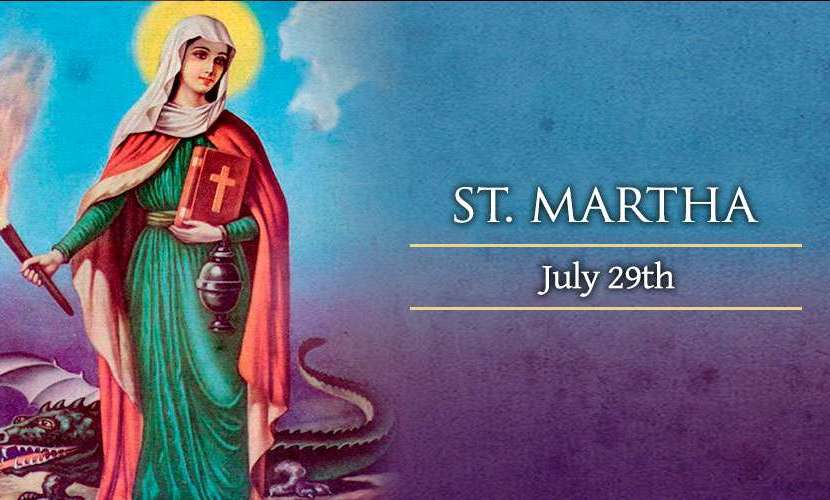
The Feast of St. Martha ~ The Very Rev. Lady Sherwood, OPI
Reading 1: JER 15:10, 16-21
Responsorial Psalm: 59:2-3, 4, 10-11, 17, 18
Gospel: JN 11:19-27
Liturgical colour: White.
Today, we come together to celebrate The Memorial of St Martha.
Let us begin by looking at what the Holy Gospel is telling us today?
JN 11:19-27
Many of the Jews had come to Martha and Mary
to comfort them about their brother [Lazarus, who had died].
When Martha heard that Jesus was coming,
she went to meet him;
but Mary sat at home.
Martha said to Jesus,
“Lord, if you had been here,
my brother would not have died.
But even now I know that whatever you ask of God,
God will give you.”
Jesus said to her,
“Your brother will rise.”
Martha said to him,
“I know he will rise,
in the resurrection on the last day.”
Jesus told her,
“I am the resurrection and the life;
whoever believes in me, even if he dies, will live,
and anyone who lives and believes in me will never die.
Do you believe this?”
She said to him, “Yes, Lord.
I have come to believe that you are the Christ, the Son of God,
the one who is coming into the world.”
The feeling of Sorrow and grief is that dark feeling of trauma and distress that comes to us all after experiencing a loss or tragedy. Such an experience can often be all consuming. As children of God, our hearts ought to be filled with a genuine sense of compassion and care for our troubled brother or sister in their times of suffering and pain. We ought to love them (Rom. 12:10), cry with them (Rom. 12:15) and pray for them (James 5:13).
We have all felt this grief of loss of a dear loved one at some point in our lives. I personally have experienced it so many times. So, we can imagine exactly how Mary and Martha were feeling and the painful heavy grief atmosphere that they were experiencing within their family home. We can also understand their deep yearning that their dear brother would’ve been cured of his illness before it came to the point of his death.
In today’s Holy Gospel, we can clearly see a demonstration of the care Jesus showed toward Mary and Martha in the midst of their grief. When it comes to the death of God’s people the Bible says, “Precious in the sight of the LORD is the death of His saints” (Psalm 116:15).
The loss of a loved one naturally produces much grief and anguish within our hearts. When Martha, the sister of Lazarus and a close friend of Jesus, heard that Jesus was coming to pay his respects for the loss of Lazarus who had by then been dead for 4 days, she immediately went out to meet him before he could get to her house. What was it which compelled Martha to leave their home where Lazarus lay in death in order to seek Jesus out? I personally believe the reason could well have been two=fold in nature. I believe the companionship and consolation of her dear friend who also loved her brother deeply was one reason, as was that Martha recognized in Jesus the hope that God would restore life.
Martha, like many Jews, believed in the eternal life to come. The loss of her brother did not diminish her hope in the resurrection in the least. She even gently chides Jesus for not coming soon enough to save her brother Lazarus from his untimely death. Jesus does something unexpected and remarkable with the intention of both strengthening her faith and hope in the life to come and also to give her a sign of what he was to accomplish through his own death and resurrection. Jesus gave to her belief a new and profound meaning: He came from the Father to defeat all sin and death for us and to restore life to all who believe in him.
Jesus states unequivocally that he himself is the Resurrection and the Life. The life he offers is abundant – life which comes from God the Father himself. And also gives everlasting life – the fullness of life which is without end. Do we truly seek that abundant and eternal life which Jesus offers to all who believe in him?
“Lord Jesus, you are the Resurrection and the Life. Strengthen our faith and hope in your promises that we may radiate the joy of the Gospel to others.”
Psalm 126:1-6 NIV
1 When the Lord restored the fortunes of Sion,
we were like those who dreamed.
2 Our mouths were filled with laughter,
our tongues with songs of joy.
Then it was said among the nations,
“The Lord has done great things for them.”
3 The Lord has done great things for us,
and we are filled with joy.
4 Restore our fortunes, Lord,
like streams in the Negev.
5 Those who sow with tears
will reap with songs of joy.
6 Those who go out weeping,
carrying seed to sow,
will return with songs of joy,
carrying sheaves with them.
Let me finish with The voice of life and joy that awakens the dead, by Athanasius of Alexandria (295-373 AD):
“I am the voice of life that wakens the dead. I am the good odor that takes away the foul odor. I am the voice of joy that takes away sorrow and grief.… I am the comfort of those who are in grief. Those who belong to me are given joy by me. I am the joy of the whole world. I gladden all my friends and rejoice with them. I am the bread of life”
Unity: The Feast of St. Mary Magdalene ~ The Rev. Dcn. Igor Kalinski, OPI
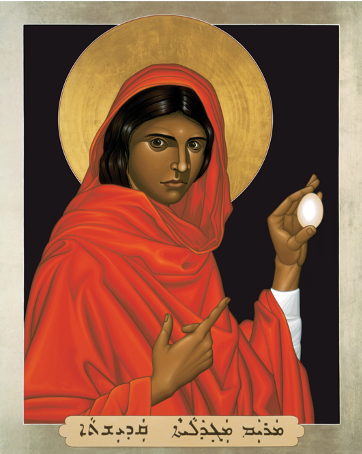
Hello my dear family and friends. You know I am witnessing and living my vocation serving The Old Catholic Unified community in my town Gevgelija and all around Macedonia, serving as a Dominican friar to the poor, marginalized and LGBTQ communities.
As a Dominican friar I want to share that today we celebrate the legacy, the life and the ministry with her example of serving of this holy mother Mary Magdalene, equal to the apostle.
Many centuries ago, the General Chapter of our Order Dominican declared her as a Defender and Protector of our order.
Me living in such a conservative and anti LGBTQ society makes me motivated through her example and intercessions for all of us as a very close friend of Jesus.
She faced daily struggles of rejection, not acceptance and bigotry, because she was honored to be the very first human creation to see the empty tomb and our risen Lord Jesus.
She was the first ever to talk to Jesus on the resurrection morning.
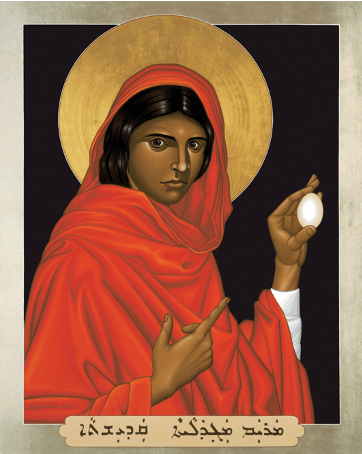
While the humanity in that age treated the woman badly, Jesu embraced her, accepted her, blessed her and gave her authority to preach the gospel even in Rome to the emperor. In the eastern European tradition, she was the first lady to paint a red egg and to announce the resurrection gospel to the world. (Red represents the blood of Christ and it’s the most important color when painting eggs.)
Do you think it was easy in that time? Certainly not easy. It was very difficult, and there was much suffering because of the gender inequality with which she struggle. Even the apostles laughed at her and did not believe her when she told them what she sow and with whom she talked.
Are we not the same today? Racial hatred, LGBTQ phobia, divisions in the nations? This is not t God’s agenda.
Our goal and our agenda is acceptance, integrity, equality and integration.
I have learned a lot through her example and suffering.
I fight daily for improving of this marginalized people toward equality for everyone.
Its still the same today like in that time, people still want us to be put in box, just because they have built themselves to hate. Is that correct?
Is that the Gospel of Jesus?
NO!
Our goal and ministry is to be fully integrated, regardless of gender, sexuality, races. We are taught in Galatians 3:28 that there is “There is neither Jew nor Gentile, neither slave nor free, nor is there male and female, for we are all one in Christ Jesus. We are all equal in Gods eyes.
By the way, Mary Magdalene is considered to be the first woman priest in Christian. This is only a part of the legacy of this great woman who fought hatred in the ancient times. We are called to do the same.
But for God, all genders are equal, and we have to work to be improved this for the better common life. Jesus wants us before we go in heaven, to build heaven in our hearts and our societies.
If we heal division and embrace diversity, and love all our neighbors we can improve all of our common and private lives.
So I pray through her intercession about these divisions, Its time for us to live as true Christians. We are only one human race, and we are all equal. If the church does not preach this is a dead church.
I will never stop fighting for this people, that’s why I’m a Dominican.
St Mary Magdalene pray for us.
The Feast of Sts. Peter and Paul: We Can Be Saints, Too! ~ The Rev. Deacon Igor Kalinski, OPI
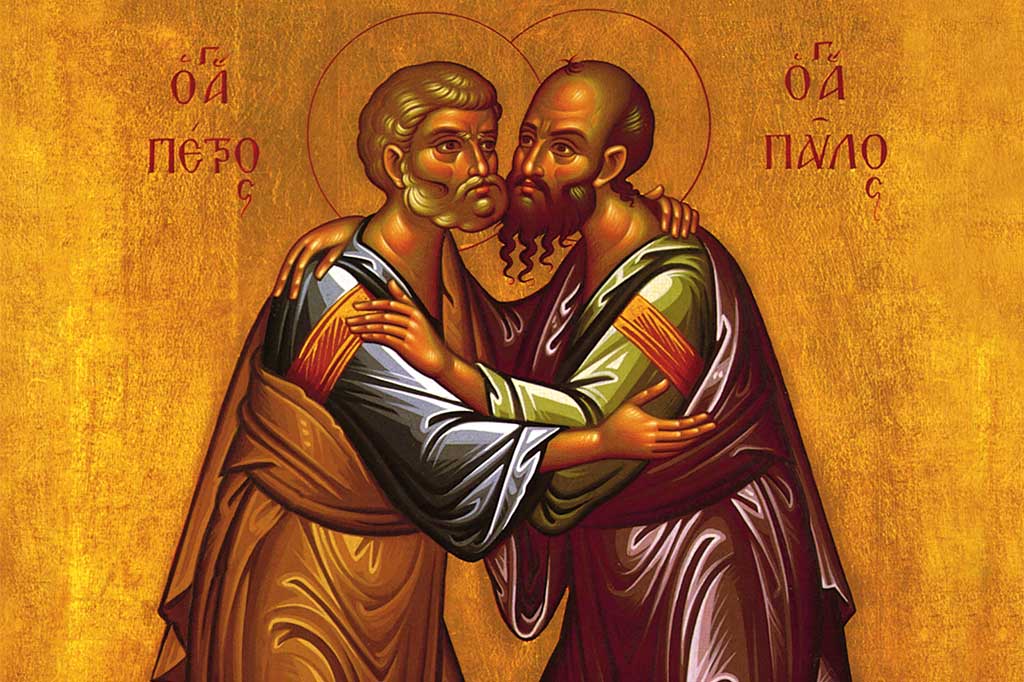
During this month June, in this very difficult year for all the humanity, I have realized how miserable, hypocrite, unfaithful to myself after all that I have passed during this life in a very conservative environment, and above all I found again Jesus , the ultimate love, and that is impossible to please God, if you don’t support all groups of people that share and endure daily struggle of acceptance, bigotry, and the rejection of some leading churches towards liberty and freedom of all people regardless , their color skin, sexual identity.
I realized that is not only that you should stick to the tradition, so that we can worship our heavenly Father, forgetting that “mercy I seek not holocaust” if God is love, and indeed He is, lets follow the example of these greatest among apostles and martyrs for Christ, Saints Peter and Paul.
How many hardships, beatings, arresting, assassinations attempts had occurred to them?
How many time Peter failed?
Paul was training over Christians.
But God revealed to Him in full power and might, in His majesty, then he became blind.
How many times Peter denied Jesus?
Believe me, I am worst sadly of failures, daily denials, and above all not having love for the people as they did all love and lately payed with their lives.
Let us preach the Gospel of the love, the gospel of acceptance, lets strive to bear one another these hardships and struggles, bold as Peter and steady as St Paul.
The bible has many holy books written from St Paul. We can nourish ourselves daily in his epistles, to study and pray, that’s pure Dominican charism, study and later preach from the fruits of your study.
Let us be penitent like St Peter that after he denied Christ and have the repentance and meek heart of Paul, that after sinful evil way of having been a religious fanatic, to become brave barefoot preacher of the nations.
St Peter and Paul apostles pray for us. Amen
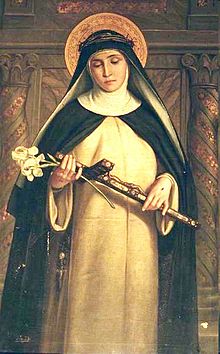
Saint Catherine of Siena
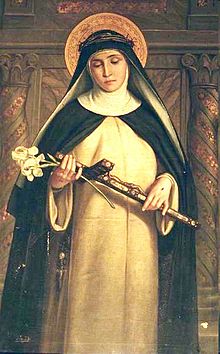
She was the youngest but one of a very large family. Her father, Giacomo di Benincasa, was a dyer; her mother, Lapa, the daughter of a local poet. They belonged to the lower middle-class faction of tradesmen and petty notaries, known as “the Party of the Twelve”, which between one revolution and another ruled the Republic of Siena from 1355 to 1368. From her earliest childhood Catherine began to see visions and to practice extreme austerities. At the age of seven she consecrated her virginity to Christ; in her sixteenth year she took the habit of the Dominican Tertiaries, and renewed the life of the anchorites of the desert in a little room in her father’s house. After three years of celestial visitations and familiar conversation with Christ, she underwent the mystical experience known as the “spiritual espousals”, probably during the carnival of 1366. She now rejoined her family, began to tend the sick, especially those afflicted with the most repulsive diseases, to serve the poor, and to labor for the conversion of sinners. Though always suffering terrible physical pain, living for long intervals on practically no food save the Blessed Sacrament, she was ever radiantly happy and full of practical wisdom no less than the highest spiritual insight. All her contemporaries bear witness to her extraordinary personal charm, which prevailed over the continual persecution to which she was subjected even by the friars of her own order and by her sisters in religion. She began to gather disciples round her, both men and women, who formed a wonderful spiritual fellowship, united to her by the bonds of mystical love. During the summer of 1370 she received a series of special manifestations of Divine mysteries, which culminated in a prolonged trance, a kind of mystical death, in which she had a vision of Hell, Purgatory, and Heaven, and heard a Divine command to leave her cell and enter the public life of the world. She began to dispatch letters to men and women in every condition of life, entered into correspondence with the princes and republics of Italy, was consulted by the papal legates about the affairs of the Church, and set herself to heal the wounds of her native land by staying the fury of civil war and the ravages of faction. She implored the pope, Gregory XI, to leave Avignon, to reform the clergy and the administration of the Papal States, and ardently threw herself into his design for a crusade, in the hopes of uniting the powers of Christendom against the infidels, and restoring peace to Italy by delivering her from the wandering companies of mercenary soldiers. While at Pisa, on the fourth Sunday of Lent, 1375, she received the Stigmata, although, at her special prayer, the marks did not appear outwardly in her body while she lived.
Mainly through the misgovernment of the papal officials, war broke out between Florence and the Holy See, and almost the whole of the Papal States rose in insurrection. Catherine had already been sent on a mission from the pope to secure the neutrality of Pisa and Lucca. In June, 1376, she went to Avignon as ambassador of the Florentines, to make their peace; but, either through the bad faith of the republic or through a misunderstanding caused by the frequent changes in its government, she was unsuccessful. Nevertheless she made such a profound impression upon the mind of the pope, that, in spite of the opposition of the French king and almost the whole of the Sacred College, he returned to Rome (17 January, 1377). Catherine spent the greater part of 1377 in effecting a wonderful spiritual revival in the country districts subject to the Republic of Siena, and it was at this time that she miraculously learned to write, though she still seems to have chiefly relied upon her secretaries for her correspondence. Early in 1378 she was sent by Pope Gregory to Florence, to make a fresh effort for peace. Unfortunately, through the factious conduct of her Florentine associates, she became involved in the internal politics of the city, and during a popular tumult (22 June) an attempt was made upon her life. She was bitterly disappointed at her escape, declaring that her sins had deprived her of the red rose of martyrdom. Nevertheless, during the disastrous revolution known as “the tumult of the Ciompi”, she still remained at Florence or in its territory until, at the beginning of August, news reached the city that peace had been signed between the republic and the new pope. Catherine then instantly returned to Siena, where she passed a few months of comparative quiet, dictating her “Dialogue”, the book of her meditations and revelations.
In the meanwhile the Great Schism had broken out in the Church. From the outset Catherine enthusiastically adhered to the Roman claimant, Urban VI, who in November, 1378, summoned her to Rome. In the Eternal City she spent what remained of her life, working strenuously for the reformation of the Church, serving the destitute and afflicted, and dispatching eloquent letters in behalf of Urban to high and low in all directions. Her strength was rapidly being consumed; she besought her Divine Bridegroom to let her bear the punishment for all the sins of the world, and to receive the sacrifice of her body for the unity and renovation of the Church; at last it seemed to her that the Bark of Peter was laid upon her shoulders, and that it was crushing her to death with its weight. After a prolonged and mysterious agony of three months, endured by her with supreme exultation and delight, from Sexagesima Sunday until the Sunday before the Ascension, she died. Her last political work, accomplished practically from her death-bed, was the reconciliation of Pope Urban VI with the Roman Republic (1380).
Among Catherine’s principal followers were Fra Raimondo delle Vigne, of Capua (d. 1399), her confessor and biographer, afterwards General of the Dominicans, and Stefano di Corrado Maconi (d. 1424), who had been one of her secretaries, and became Prior General of the Carthusians. Raimondo’s book, the “Legend”, was finished in 1395. A second life of her, the “Supplement”, was written a few years later by another of her associates, Fra Tomaso Caffarini (d. 1434), who also composed the “Minor Legend”, which was translated into Italian by Stefano Maconi. Between 1411 and 1413 the depositions of the surviving witnesses of her life and work were collected at Venice, to form the famous “Process”. Catherine was canonized by Pius II in 1461. The emblems by which she is known in Christian art are the lily and book, the crown of thorns, or sometimes a heart–referring to the legend of her having changed hearts with Christ. Her principal feast is on the 30th of April, but it is popularly celebrated in Siena on the Sunday following. The feast of her Espousals is kept on the Thursday of the carnival.
The works of St. Catherine of Siena rank among the classics of the Italian language, written in the beautiful Tuscan vernacular of the fourteenth century. Notwithstanding the existence of many excellent manuscripts, the printed editions present the text in a frequently mutilated and most unsatisfactory condition. Her writings consist of
the “Dialogue”, or “Treatise on Divine Providence”; a collection of nearly four hundred letters; and a series of “Prayers”.
The “Dialogue” especially, which treats of the whole spiritual life of man in the form of a series of colloquies between the Eternal Father and the human soul (represented by Catherine herself), is the mystical counterpart in prose of Dante’s “Divina Commedia”.
A smaller work in the dialogue form, the “Treatise on Consummate Perfection”, is also ascribed to her, but is probably spurious. It is impossible in a few words to give an adequate conception of the manifold character and contents of the “Letters”, which are the most complete expression of Catherine’s many-sided personality. While those addressed to popes and sovereigns, rulers of republics and leaders of armies, are documents of priceless value to students of history, many of those written to private citizens, men and women in the cloister or in the world, are as fresh and illuminating, as wise and practical in their advice and guidance for the devout Catholic today as they were for those who sought her counsel while she lived. Others, again, lead the reader to mystical heights of contemplation, a rarefied atmosphere of sanctity in which only the few privileged spirits can hope to dwell. The key-note to Catherine’s teaching is that man, whether in the cloister or in the world, must ever abide in the cell of self-knowledge, which is the stable in which the traveler through time to eternity must be born again.
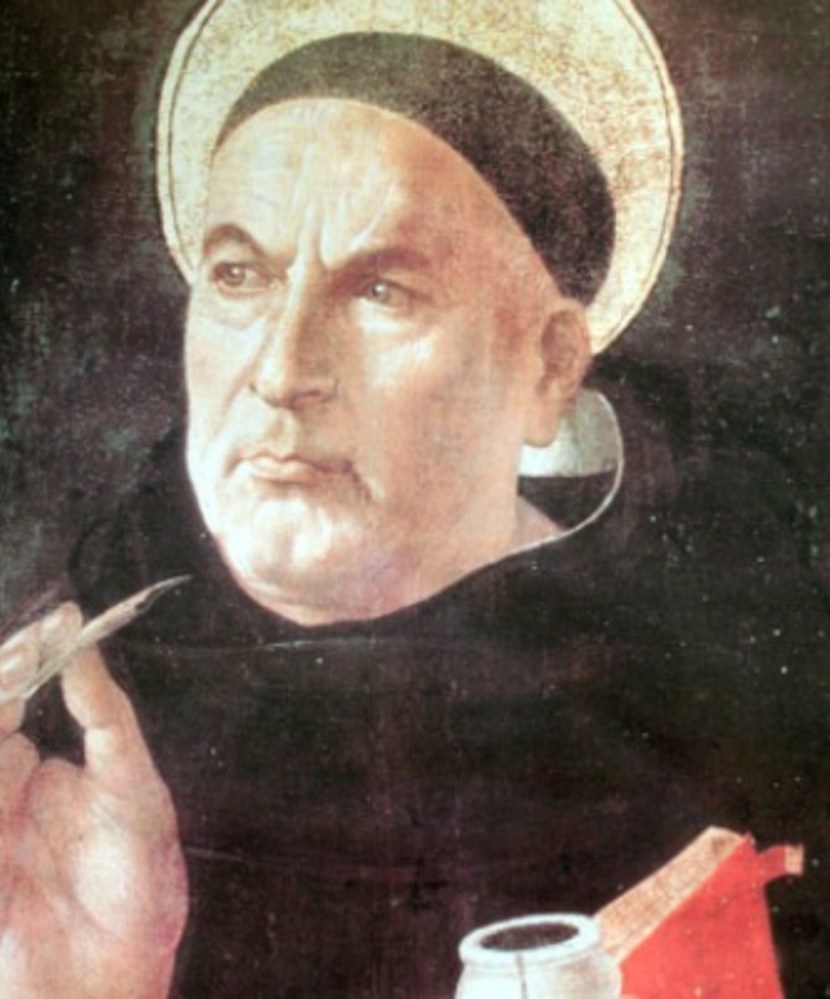
Memorial of St. Thomas Aquinas, Dr. of the Church
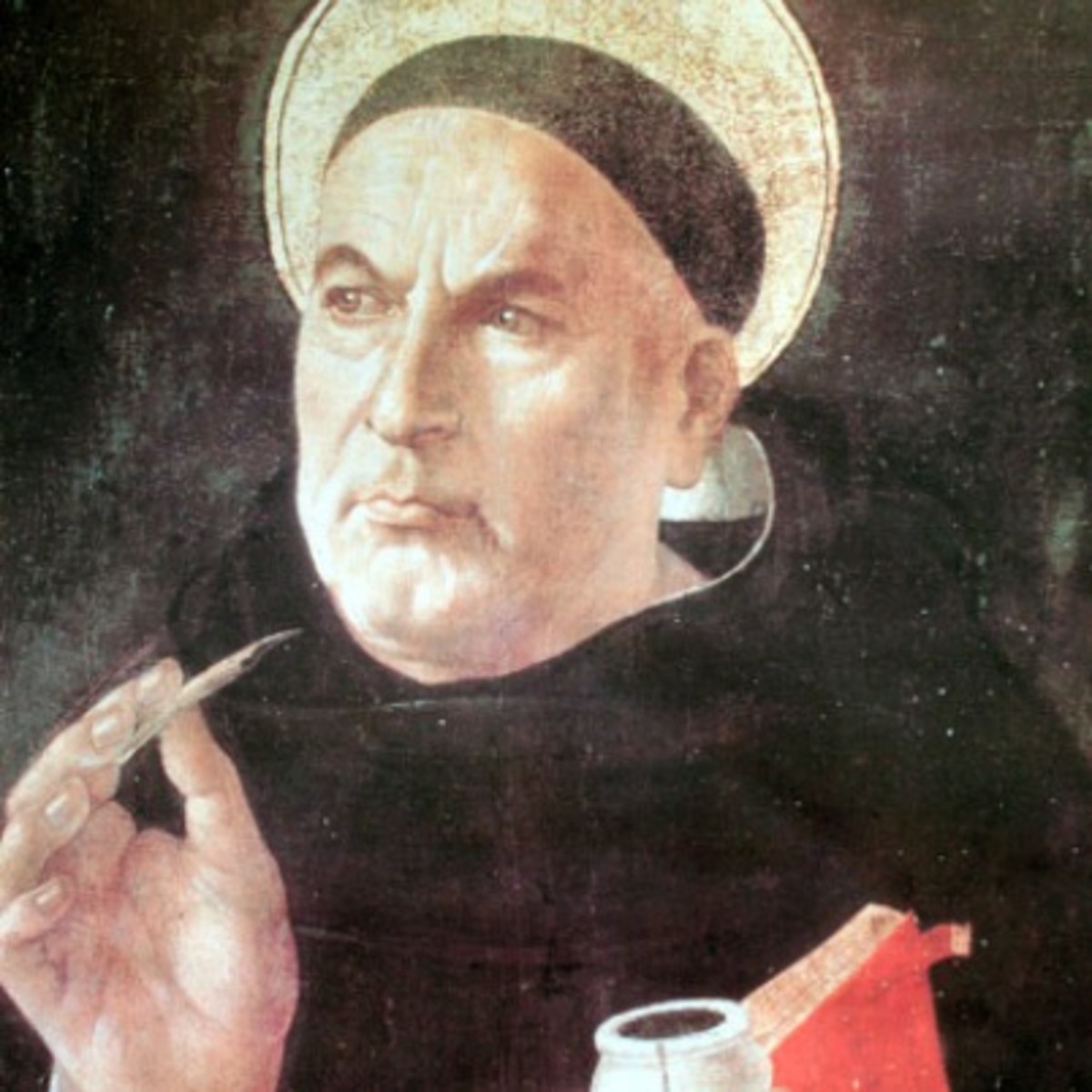
Perhaps the most famous of all the Dominican saints, today is the feast day of St. Thomas Aquinas.
Thomas was born in Roccasecca circa 28 January 1225, in the castle of his father, Count Landulf of Aquino, in Roccasecca, from which the great Benedictine abbey of Montecassino is not quite visible, midway between Rome and Naples, in what is now Sicily. Through his mother, Theodora, Countess of Theate, Thomas was related to the Hohenstaufen dynasty of Holy Roman emperors. His family was related to the Emperors Henry VI and Frederick II, and to the Kings of Aragon, Castile, and France. Calo relates that a holy hermit foretold his career, saying to Theodora before his birth: “He will enter the Order of Friars Preachers, and so great will be his learning and sanctity that in his day no one will be found to equal him.” Landulf’s brother, Sinibald, was abbot of the original Benedictine abbey at Monte Cassino. While the rest of the family’s sons pursued a military career, Thomas was intended to follow his uncle into the abbacy; this would have been a normal career path for the younger son of southern Italian nobility.
At the age of five, Thomas began his early education from the Benedictine monks at Monte Cassino. Diligent in study, he was thus early noted as being meditative and devoted to prayer, and his preceptor was surprised at hearing the child ask frequently: “What is God?”However, after a military conflict broke out between the Emperor Frederick II and Pope Gregory IX spilled into the abbey in early 1239, Landulf and Theodora had Thomas enrolled at the University of Naples, which had been recently established by Frederick.
At Naples his preceptors were Pietro Martini and Petrus Hibernus. The chronicler says that he soon surpassed Martini at grammar, and he was then given over to Peter of Ireland, who trained him in logic and the natural sciences. The customs of the times divided the liberal arts into two courses: the Trivium, embracing grammar, logic, and rhetoric; the Quadrivium, comprising music, mathematics, geometry, and astronomy. Thomas could repeat the lessons with more depth and lucidity than his masters displayed. The youth’s heart had remained pure amidst the corruption with which he was surrounded, and he resolved to embrace the religious life.
It was here that Thomas was introduced to the words of Aristotle, Averroes and Maimonides, all of which would later influence his theological philosophy. It was also during his studies in Naples that Thomas came under the influence of John of St. Julian, a Dominican preacher in Naples, who was part of the active effort by the Dominican order, which had only recently been established, to recruit devout followers.
At the age of nineteen, Thomas resolved to join the Dominican Order. Thomas’s decision to do so did not please his family, who had expected him to become a Benedictine monk. Some time between 1240 and August, 1243, he received the habit of the Order of St. Dominic, being attracted and directed by John of St. Julian, a noted preacher of the convent of Naples. The city wondered that such a noble young man should don the garb of poor friar. His mother, with mingled feelings of joy and sorrow, hastened to Naples to see her son.
In an attempt to prevent Theodora’s interference in Thomas’s choice, the Dominicans arranged for Thomas to be removed to Rome, and then to Paris. However, on the way to Rome, his brothers who were soldiers under the Emperor Frederick, following their mother’s instructions, seized him as he was drinking from a spring near the town of Aquapendente and took him back to his parents, who were then at the castle of Monte San Giovanni Campano. He was held for in the family homes at Monte San Giovanni and Roccasecca in an attempt to prevent him from assuming the Dominican habit, and to convince him to become a Benedictine. Political concerns prevented the Pope from ordering Thomas’s release, which extended his detention, during which he spent tutoring his sisters and communicating with members of the Dominican Order. Family members became desperate to dissuade Thomas, who remained determined to join the Dominicans. At one point, two of his brothers hired a prostitute to seduce him, but he drove her away, wielding a burning stick. According to legend, that night two angels appeared to him as he slept and strengthened his resolve to remain celibate.
The time spent in captivity was not lost. His mother relented somewhat, after the first burst of anger and grief; the Dominicans were allowed to provide him with new habits, and through the kind offices of his sister he procured some books — the Holy Scriptures, Aristotle’s Metaphysics, and the “Sentences” of Peter Lombard. After eighteen months or two years spent in prison, either because his mother saw that the hermit’s prophecy would eventually be fulfilled or because his brothers feared the threats of Innocent IV and Frederick II, he was set at liberty, being lowered in a basket into the arms of the Dominicans, who were delighted to find that during his captivity “he had made as much progress as if he had been in a studium generale.”
Thomas immediately pronounced his vows, and his superiors sent him to Rome. Innocent IV examined closely into his motives in joining the Friars Preachers, dismissed him with a blessing, and forbade any further interference with his vocation. In 1245, Thomas was sent to study at the University of Paris‘s Faculty of Arts where he met Dominican scholar Albertus Magnus, then Chair of Theology at the College of St. James.
The theological program Thomas entered in Paris was a grueling one, with the master’s typically attained in the early thirties. Extensive and progressively more intensive study of the scriptures, Old and New Testament, and of the summary of Christian doctrine called the Sentences which was compiled by the twelfth century Bishop of Paris, Peter Lombard. These close textual studies were complemented by public disputations and the even more unruly quodlibetal questions. With the faculty modeled more or less on the guilds, Thomas served a long apprenticeship, established his competence in stages, and eventually after a public examination was named a master and then gave his inaugural lecture.
When Albertus was sent by his superiors to teach at the new studium generale at Cologne in 1248, Thomas followed him, declining Pope Innocent IV‘s offer to appoint him as abbot of Monte Cassino as a Dominican. Albertus then appointed the reluctant Thomas magister studentium. In the schools Thomas’s humility and taciturnity were misinterpreted as signs of dullness, but when Albert had heard his brilliant defense of a difficult thesis, he exclaimed: “We call this young man a dumb ox, but his bellowing in doctrine will one day resound throughout the world.”
Thomas taught in Cologne as an apprentice professor, instructing students in the books of the Old Testament and writing Expositio super Isaiam ad litteram (Literal Commentary on Isaiah), Postilla super Ieremiam (Commentary on Jeremiah), and Postilla super Threnos (Commentary on Lamentations). Then in 1252, he returned to Paris to study for a master’s degree in theology. He lectured on the Bible as an apprentice professor, and upon becoming a baccalaureus Sententiarum (bachelor of the Sentences); he devoted his final three years of study to commenting on Peter Lombard‘s Sentences. In the first of his four theological syntheses, Thomas composed a massive commentary on the Sentences entitled Scriptum super libros Sententiarium (Commentary on the Sentences). Aside from his master’s writings, he wrote De ente et essentia (On Being and Essence) for his fellow Dominicans in Paris.
In the spring of 1256, Thomas was appointed regent master in theology at Paris, and one of his first works upon assuming this office was Contra impugnantes Dei cultum et religionem (Against Those Who Assail the Worship of God and Religion), defending the mendicant orders which had come under attack by William of Saint-Amour. During his tenure from 1256 to 1259, Thomas wrote numerous works, including Questiones disputatae de veritate (Disputed Questions on Truth), which was a collection of twenty-nine disputed questions on aspects of faith and the human condition and which was prepared for the public university debates he presided over on Lent and Advent. He also wrote Quaestiones quodlibetales (Quodlibetal Questions), a collection of his responses to questions posed to him by the academic audience; and both Expositio super librum Boethii De trinitate (Commentary on Boethius’s De trinitate) and Expositio super librum Boethii De hebdomadibus (Commentary on Boethius’s De hebdomadibus), commentaries on the works of 6th century philosopher Anicius Manlius Severinus Boethius. By the end of his regency, Thomas was working on one of his most famous works, Summa contra Gentiles.
Around 1259, Thomas returned to Naples where he lived until he went to in Orvieto in September 1261. In Orvieto, he was appointed conventual lector, in charge of the education of friars unable to attend a studium generale. During his stay in Orvieto, Thomas completed his Summa contra Gentiles, and wrote the Catena Aurea (The Golden Chain). He also wrote the liturgy for the newly created feast of Corpus Christi and produced works for Pope Urban IV concerning Greek Orthodox theology, e.g. Contra errores graecorum (Against the Errors of the Greeks). In 1265 he was ordered by the Dominican Chapter of Agnani to establish a studium for the Order in Rome at the priory of Santa Sabina. He remained there from 1265 until he was called back to Paris in 1268. It was while in Rome that Thomas began his most famous work, Summa Theologica, and wrote a variety of other works, such as his unfinished Compendium Theologiae and Responsio ad fr. Ioannem Vercellensem de articulis 108 sumptis ex opere Petri de Tarentasia (Reply to Brother John of Vercelli Regarding 108 Articles Drawn from the Work of Peter of Tarentaise). In his position as head of the studium, he conducted a series of important disputations on the power of God, which he compiled into his De potentia.
In 1268 the Dominican Order assigned Thomas to be regent master at the University of Paris for a second time, a position he held until the spring of 1272. Part of the reason for this sudden reassignment appears to have arisen from the rise of “Averroism” or “radical Aristotelianism” in the universities. “Averroisms” was the belief that there is no God, that the soul has two parts, one individual and one eternal; the world is eternal; the soul is not eternal. (During this period in history, Averroism was virtually synonymous with atheism.) In response to these perceived evils, Thomas wrote two works, one of them being De unitate intellectus, contra Averroistas (On the Unity of Intellect, against the Averroists) in which he blasts Averroism as incompatible with Christian doctrine. During his second regency, he finished the second part of the Summa and wrote De virtutibus and De aeternitate mundi, the latter of which dealt with controversial Averroist and Aristotelian beginninglessness of the world. Disputes with some important Franciscans such as Bonaventure and John Peckham conspired to make his second regency much more difficult and troubled than the first. A year before Thomas re-assumed the regency at the 1266–67 Paris disputations, Franciscan master William of Baglione accused Thomas of encouraging Averroists, calling him the “blind leader of the blind”. Thomas called these individuals the murmurantes (Grumblers). In reality, Thomas was deeply disturbed by the spread of Averroism and was angered when he discovered Siger of Brabant teaching Averroistic interpretations of Aristotle to Parisian students. On 10 December 1270, the bishop of Paris, Etienne Tempier, issued an edict condemning thirteen Aristotlelian and Averroistic propositions as heretical and excommunicating anyone who continued to support them. Many in the ecclesiastical community, the so-called Augustinians, were fearful that this introduction of Aristotelianism and the more extreme Averroism might somehow contaminate the purity of the Christian faith. In what appears to be an attempt to counteract the growing fear of Aristotelian thought, Thomas conducted a series of disputations between 1270 and 1272: De virtutibus in communi (On Virtues in General), De virtutibus cardinalibus (On Cardinal Virtues), De spe (On Hope).
In 1272 Thomas took leave from the University of Paris when the Dominicans from his home province called upon him to establish a studium generale wherever he liked and staff it as he pleased. He chose to establish the institution in Naples, and moved there to take his post as regent master. He took his time in Naples to work on the third part of the Summa while giving lectures on various religious topics. On 6 December 1273 Thomas was celebrating the Mass of St. Nicholas when, according to some, he heard Christ speak to him.
Christ asked him what he desired, being pleased with his meritorious life. Thomas replied “Only you Lord. Only you.” After this exchange something happened, but Thomas never spoke of it or wrote it down. Because of what he saw, he abandoned his routine and refused to dictate to his secretary, Reginald of Piperno. When Reginald begged him to get back to work, Thomas replied: “Reginald, I cannot, because all that I have written seems like straw to me,” And he seemed to be seriously ill. What exactly triggered Thomas’s change in behavior is believed to be some kind of supernatural experience of God. After taking to his bed, he did, however, recover some strength.
Looking to find a way to reunite the Eastern Orthodox churches with the Catholic Church (the Eastern Orthodox were excommunicated by the Roman Catholic Church in A.D. 1054 over doctrinal disputes) Pope Gregory X convened the Second Council of Lyon to be held on 1 May 1274 and summoned Thomas to attend. At the meeting, Thomas’s work for Pope Urban IV concerning the Greeks, Contra errores graecorum, was to be presented. On his way to the Council, riding on a donkey along the Appian Way, he struck his head on the branch of a fallen tree and became seriously ill again. He was then quickly escorted to Monte Cassino to convalesce. After resting for a while, he set out again, but stopped at the Cistercian Fossanova Abbey after again falling ill. The Cistercian monks of Fossa Nuova pressed him to accept their hospitality, and he was conveyed to their monastery, on entering which he whispered to his companion: “This is my rest for ever and ever: here will I dwell, for I have chosen it” (Psalm 131:14). The monks nursed him for several days, and as he received his last rites, he prayed: “I receive Thee, ransom of my soul. For love of Thee have I studied and kept vigil, toiled, preached and taught…” He died on 7 March 1274.
When the devil’s advocate at his canonization process objected that there were no miracles, one of the cardinals answered, “Tot miraculis, quot articulis“—”there are as many miracles (in his life) as articles (in his Summa).” Fifty years after the death of Thomas, on 18 July 1323, Pope John XXII, seated in Avignon, pronounced Thomas a saint.
In a monastery at Naples, near the cathedral of St. Januarius, a cell in which he supposedly lived is still shown to visitors. His remains were placed in the Church of the Jacobins in Toulouse in 1369. Between 1789 and 1974, they were held in Basilique de Saint-Sernin, Toulouse. In 1974, they were returned to the Church of the Jacobins, where they have remained ever since.
In the General Roman Calendar of 1962, in the Roman Catholic Church, Thomas was commemorated on 7 March, the day of death. However, in the General Roman Calendar of 1969, even though the norm in the Roman Catholic Church is to remember saints on the day of their death, Thomas’s memorial was transferred to 28 January, the date of the translation of his relics to Toulouse.
Saint Thomas Aquinas is honored with a feast day on the liturgical of the Episcopal Church in the United States of America on 28 January.


You must be logged in to post a comment.