
Category: Lesson
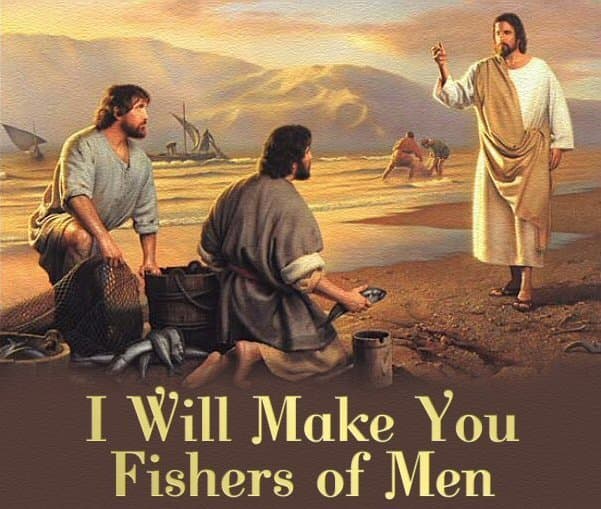
Fishers of……People???? ~ Fr. Shawn Gisewhite, OPI
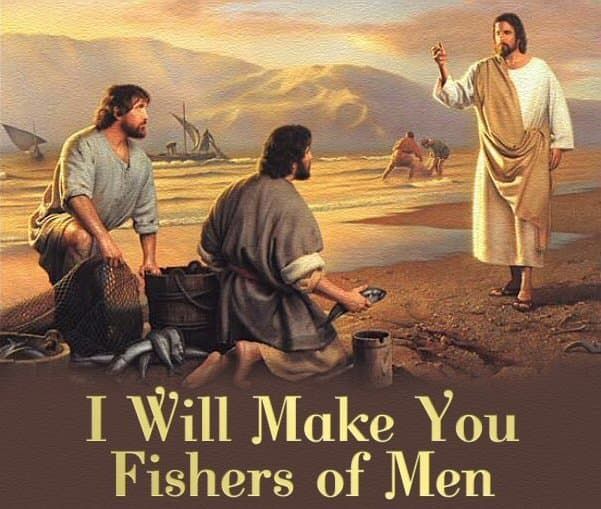
MT 4:12-23
Luke describes the first day of Jesus’ ministry; how Jesus went into the synagogue and took the scroll of Isaiah and read a portion of it and then announced that the Kingdom of God had come – that it was for the here and now: for today. Today, we are looking at Matthew’s version of the start of Jesus’ ministry. Not necessarily the first day of his ministry as Luke offers us, but certainly an insight into the early days and weeks of his ministry. The message that Luke puts on Jesus’ lips, and the message that Matthew puts on Jesus’ lips, may be worded differently: but it’s the same message. In Luke’s Gospel, Jesus says this: “The Spirit of the Lord is upon me, because he has chosen me to bring good news.” In Matthew’s Gospel, Jesus says this: “Turn away from your sins, because the Kingdom of heaven is near!” Now, these may sound very different, but actually the meaning of them is very similar.
Let’s think a bit more deeply about Matthew’s words here: “The Kingdom of heaven is near!”
This is quite a difficult verse, because what does the word ‘near’ actually mean? Does it mean that the kingdom of God is here, now (actually present among us) or that it is almost here, just over the horizon, as it were? If we take an honest look at the state of the world today, let alone 2000 years ago, it would be hard to argue that the kingdom of God is here in its totality, and yet we do want to believe that it is, in some sense, already here.
Perhaps Jesus is not announcing an actual time when the Kingdom of heaven has come, like an hour that can be read on a clock or a date that can be marked in a diary. Perhaps Jesus is instead alerting us to the possibility of encountering the kingdom of God at any given moment in historical time if we repent and believe. Whenever you repent, whenever you believe, the time has come for you, and the Kingdom of heaven has drawn near. That can be a one-off moment, a date marked on the calendar when you became a Christian – but it is also a continuous activity, that we may repeat many times each day, when we continually repent of our wrongdoings, when we continually struggle to believe. And, as we do, the Kingdom of heaven is fulfilled in us as we enter more deeply into the eternal truth of God.
So having proclaimed the essence of this eternal encounter, Jesus is now in a position to approach individuals and ask them to live out that call in their own lives. And so we see this first such encounter, in verse 18, with Simon and Andrew and then, in verse 21, with James and John.
In Matthew’s account of the call of the first disciples, we don’t really learn anything about these four men except that they are fishermen by trade. The social background of these four men is not important. All we see is four men being taken away from their personal and professional lives in response to the call of Jesus upon them.
And what are they called to? Jesus uses a really odd metaphor here. “Follow me and I will make you fish for people.” The older versions of the Bible have it as “I will make you fishers of men”.
We are so used to this phrase, we don’t even think of it as a bit odd, but actually, I think it is…
There is a similar passage in Jeremiah 16:16 – “I am now sending for many fishermen, says the Lord, and they shall catch them”. But in that context, the fishermen are invading armies who will fish for the unfaithful people of Israel and destroy them!
Secondly, what happens to a fish when it is caught? It dies! Does our fishing for people result in their spiritual death? Is the church full of spiritually dead people?
Thirdly, a fish doesn’t want to be caught and is pulled on board the boat unwillingly. So are we to force people into church and force them into a relationship with God through which they will only encounter spiritual death?
When you break this metaphor down, it really is a bit odd and doesn’t really seem to speak of kindness and compassion in evangelism and mission! So let’s try and get below the skin of this call and try to read it with fresh eyes and without all the preconceptions that we bring to it about evangelism and mission. If we read it another way, I think we get a better insight into what follows throughout the Gospel stories.
These first disciples would probably have heard of Jesus: he was, after all, walking round Galilee proclaiming the kingdom of God and as Galilean fishermen, they would probably have either seen him action or at the very least have heard about him. Galilee was a small place and, undoubtedly, Jesus was making a name for himself, so it is very likely that these fishermen would have been aware of him.
They would also, perhaps, have heard of John the Baptist’s proclamation that Jesus was mightier than he was. And, as good Jews, they would probably have been aware of the Jeremiah 16:16 verse where spiritual fishing meant overcoming God’s enemies.
So what would have been going through their heads when they decided to leave all behind and follow this new, radical teacher who had come back to Galilee from out of the wilderness? Power and authority!
These fishermen were powerless men, fairly poor men, looking forward only to a life of daily grind to earn a living under the regime of the Roman Empire. These fishermen weren’t part of the social elite. They weren’t the movers and shakers in society who were able to exercise political power. They weren’t the type of people who had any authority in society whatsoever. And here was a man in their midst, a man declared by John as a mighty judge, now using a phrase that seems to indicate that those who follow him will share in his power and authority and right to judge others.
What an attractive proposition for these powerless fishermen who were grinding out a living under Roman occupation. Perhaps Peter and Andrew, James and John fundamentally misunderstood the call of Jesus. Perhaps they heard it in a completely different way than we read it in today. Perhaps they heard this, in the light of Jeremiah’s prophecy and John the Baptist’s ministry, as a call to a share in authority and believed it to be the way out of their poverty and powerlessness. Here was a call to a new life in which they would have power and authority and would be respected by everyone as a result.
They didn’t really know who Jesus was, and they didn’t understand the implications of his ministry, but they had a hunch that following him would be the way for them to achieve power, authority, glory and respect. And, of course, that was a fundamental misunderstanding that stayed with them throughout the rest of their time with Jesus, as recorded in the Gospels: fighting over who would be sitting on Jesus’ left and right in heaven; refusing to serve others but wanting to be served; not understanding that they had to die in order to live; shooing away the children from Jesus so they could have more time with him; enjoying the entry into Jerusalem on Palm Sunday; rejoicing at the turning over of the tables in the Temple…and then being utterly distraught at the crucifixion; running away from the authorities; refusing to stand with Jesus in his hour of need; going back to their fishing boats after the crucifixion.
Peter and Andrew, James and John were called by Jesus to fish for people and the ambiguity of that phrase led them to fundamentally misunderstand their call and that resulted in the spiritual struggles that they had to work through over the coming years.
I think we need to redeem this passage for what it is rather than just see in it a simplistic call to mission and evangelism, which is what we have turned it into in the modern-day church.
The call of Jesus on our lives is completely counter-cultural; it goes completely against our expectations of what it should be, it turns our whole world on its head. Following Jesus does not take us where we expect to go…
We might think that becoming a Christian or coming to church will result in one way of living, but when we truly give our lives over to Jesus, things often take a different turn altogether.
I don’t think it would be too much to say that there is a certain shock and emotional violence attached to Christian living; something that we see in the lives of so many biblical characters. Jesus is driven out into the wilderness, where he has to encounter emptiness and solitude caught in a space between the beasts and the angels. John the Baptist is violently taken out of the story, first imprisoned and then beheaded, so that Jesus can announce a moment of crisis for each one of us as we have to choose to engage with this moment of fulfillment in our lives that will ultimately turn our world upside down. Heaven and earth unite in the person of Jesus Christ. The heavens are ripped apart in a most unexpected way, just as the curtain in the temple will apart in the most unexpected way a few years later. And the same is true of the disciples, these first four fishermen, who started to follow Jesus because it would give them a share of power and authority.
But power and authority in the Christian life are never on the agenda. Of course, we all want to experience power and authority and be respected for who we are – but we will be taken the way of the cross instead and will be called to die in order to live.
Jesus said, “Follow me, and I will help you fish for people”. The church throughout history has taken this as a call to mission and evangelism – and so it is. But underlying it is the personal challenge that all of us face when we become Christians that Jesus will take us in a direction that we least expect.
This part of Matthew’s Gospel should leave us feeling a little uncomfortable about what it means to be a Christian. We are not called to an easy life, we are not called to power and authority – but to a tough life that will constantly surprise us and challenge us. Jesus constantly calls his disciples, constantly calls each one of us, to a new way of living – and the disciples constantly misunderstand what that means for themselves and perhaps we can be a bit guilty of the same misunderstanding.
And so we are called to constantly assess why we are followers of Christ and what it is that we want to get out of this lifestyle we have chosen.
Are we seeking honor and glory and power and authority and respect? Or are we prepared to walk the way of the cross and all that this will mean for us in our everyday lives?
Amen.
Am I Worthy? ~ Fr. Robert Paresi, Aspirant

There is a great deal of personal reflection that comes with being a priest. Amongst other reasons, this involves a healthy mind, honest and moral cleanliness through daily prayer and discernment. There is a great deal of worthiness that comes along with being a priest, which involves moral living and daily self-reflection through prayer. We were created in His image and we administer the Holy Sacraments of Our Lord and Savior. We are the voice of his word as we share the Good News through our ministry. To be in a position to administer the sacraments is a great honor and one of worth not to be taken lightly.
I am reminded of how John felt the day Christ asked to be baptized. I am reminded of how John saw this as an honor. But John thought of whether he was truly worthy enough. I can imagine John standing in front of Jesus saying. You want me to baptize you? While with that look of awe in his eyes.
Matthew 3: 13-14 Then Jesus came from Galilee to the Jordan to be baptized by John. But John tried to deter his, saying. “I need to be baptized by you, and do you come to me?” For if Jesus thought that John wasn’t worthy or capable, he would have gone to someone else. I mean after all, this was Jesus and he wanted John to baptize him, and John alone. Matthew 3: 15 Jesus replied, “Let us do so now; it is proper for us to do this and to fulfill all righteousness.” Then John consented.
The first time I administered the Sacrament of Holy Baptism was on my granddaughter. I thought for sure I had this. After all, it’s just my granddaughter, what could go wrong? As I began to prepare for this event, I prayed asking God for guidance and asking myself if I was worthy. I kept asking in prayer, do I uphold all of the duties to which I was ordained to uphold? Have I been a good and faithful servant to God and his people? I don’t mind saying that I began to break out into a cold sweat. All along I kept wondering, what’s the big deal behind baptism, or how stressful could it be? Up until this time I had officiated at multiple weddings and a few funerals, and had already celebrated mass, but something told me this was different. I’d be baptizing my granddaughter in the name of the Father and of the Son and of the Holy Spirit. I would anoint her as one of God’s own. Wow! what an undertaking! Me, blessing and anointing Alanna with the Holy Spirit. Me of all people! In the name of God, the Father? I should have been elated but I was scared, and I kept wondering if I was still worthy enough in mind and spirit to undertake something as close and dear to God as to bring one of his new followers into the word with water and oil.
I continued to pray; I continued to sweat; and I continued to shake. I continued to hear the words of John in my mind and I could almost feel his presence. John 1: 26-27 “I baptize you with water.” John replied,” but among you stands one you do not know. He is the one who comes after me, the thongs of whose sandals I am not worthy to untie.” How did John get through this? I finally realized he got through it through his faith. His belief in Christ and he did what he was asked to do. So after all of the worry, I too, did what I was asked to do, and baptized my granddaughter in the name of the Father, and of the Son, and of the Holy Spirit, with faith and assurance in Christ.
John 1: 29-34 the next day John saw Jesus coming toward him and said, “Look, the Lamb of God, who takes away the sin of the world! This is the one I meant when I said, A man who comes after me has surpassed me because he was before me. I myself did not know him, but the reason I came baptizing with water was that he might be revealed to Israel.”
Then John gave this testimony: “I saw the spirit come down from heaven as a dove and remain on him. I would not have known him, except that the one who sent me to baptize with water told me, The man on whom you see the spirit come down and remain is he who will baptize with the Holy Spirit, I have seen and I will testify that this is the Son of God.” In those words, John was assured of his worthiness and the strength of his faith.
- Jesus came to John the Baptist,
In Judea long ago,
And was baptized by immersion
In the River Jordan’s flow.
- “To fulfill the law,” said Jesus,
When the Baptist questioned why,
“And to enter with my Father
In the kingdom up on high.”
- Now we know that we must also
Witness faith in Jesus’ word,
Be baptized to show obedience,
As was Jesus Christ, our Lord.
Let us pray. Heavenly Father, we thank you that by water and the Holy Spirit you have bestowed upon these your servants the forgiveness of sin, and have raised them to the new life of grace. Sustain them, O Lord, in your Holy Spirit. Give them an inquiring and discerning heart, the courage to will and to persevere, a spirit to know and to love you, and the gift of joy and wonder in all your works. Amen
Wearing Your Faith Like a Tattoo ~ The Rev. Deacon Dollie Wilkinson, OPI

Though I barely remember it, I was baptized as a young girl. My Mother wasn’t very religious, but she saw Sunday church, or Vacation Bible school, as a way to get us out of her hair for a bit. The best thing I can remember is the cookies and cherry kool-aid. I’ve attended many churches since. And watched my daughter and nieces get baptized in the same church where I was married. As a Catholic, I have a greater understanding of baptism and how important it is to develop a stronger relationship with God. In Matthew we learn that though John understood his role in baptizing God’s people, but is vexed when Jesus comes to him to be baptized as well.
Matthew 3:13-17 (NIV) “Then Jesus came from Galilee to the Jordan to be baptized by John. But John tried to deter him, saying, “I need to be baptized by you, and do you come to me?” Jesus replied, “Let it be so now; it is proper for us to do this to fulfill all righteousness.” Then John consented. As soon as Jesus was baptized, he went up out of the water. At that moment heaven was opened, and he saw the Spirit of God descending like a dove and alighting on him. And a voice from heaven said, “This is my Son, whom I love; with him I am well pleased.”
Now, Jesus comes into that situation and John says to him, “I need to be baptized by you, and do you come to me (to be baptized)?” (Matthew 3:14). In other words, he makes crystal clear that Jesus does not need this baptism. He does not need to repent. He does not need to confess any sins. So John asks, “why are you here?”.
Jesus gives one sentence in answer, and it is massively important. He says, “Let it be so now, for thus it is fitting for us to fulfill all righteousness” (Matthew 3:15). It is fitting. That is why He is doing it. It is fitting. Well, what is fitting? Fulfilling all righteousness is fitting. Evidently, Jesus saw His life as the fulfillment of all righteousness. The fact that participating in a baptism of repentance even though He had no sins to repent of shows that the righteousness He wanted to fulfill was the righteousness required not of Himself, but of every sinful man.
Peter speaks on the good news of the Baptism of the Lord, and what it means for the salvation of God’s people.
Acts 10:34-38 (NIV)
“Then Peter began to speak: “I now realize how true it is that God does not show favoritism but accepts from every nation the one who fears him and does what is right. You know the message God sent to the people of Israel, announcing the good news of peace through Jesus Christ, who is Lord of all. You know what has happened throughout the province of Judea, beginning in Galilee after the baptism that John preached—how God anointed Jesus of Nazareth with the Holy Spirit and power, and how he went around doing good and healing all who were under the power of the devil, because God was with him.”
But what does baptism really mean? I’m sure most of us think of baptism as just being dunked in water, or having water being poured over our heads. But many Churches and christian denominations each have their own way of baptizing someone. In Christianity, baptism is the sacrament of admission to the church, symbolized by the pouring or sprinkling of water on the head or by immersion in water. The ceremony is usually accompanied by the words “I baptize you in the name of the Father, and of the Son, and of the Holy Spirit.” In the doctrine originated by St. Paul, it signifies the wiping away of past sins and the rebirth of the individual into a new life. Judaism practiced ritual purification by immersion, and the Gospels report that John the Baptist baptized Jesus. Baptism was an important ritual in the early church by the first century, and infant baptisms appeared later. Roman Catholic, Orthodox, and most Protestant churches practice infant baptism. The Anabaptist reformers insisted on adult baptism after a confession of faith; modern Baptists and the Disciples of Christ also practice adult baptism.
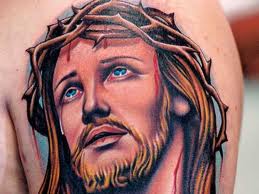
But there is also baptism by blood, usually reserved for martyrs who were not baptized before their death. But we can also think of baptism in another way. While I don’t have any tattoos, I know many who do, including my best friend and my oldest daughter. There are many reasons why people get them. Some represent a special person or place. Others might represent a loss of a loved one, or pet. I’ve seen many tattoos and I always wonder why that particular tattoo. But its for a very personal reason, yet shown usually on a spot on the body seen by anyone.
Which brings me back to the term “baptism”. Most people participate in a baptism to show to the world their acceptance of the Savior in their hearts. It is an outward sign reflecting their faith, and their rebirth. By accepting Christ in to their life, they are then covered by His mercy and grace. It is much like a tattoo. Just as a tattoo is an outward reflection of something meaningful in our lives, so is our baptism. Now we can show the world that we have been reborn in Christ and are covered by His love and grace.
Let us pray.
Father God, we come before you now, asking that you keep us ever mindful of your presence in our lives, and ask that you help us to wear our faith like a tattoo, ever present, ever a reminder of our baptism. We love you, Lord. Amen.
The Epiphany of the Lord ~ Fr. Mike Beatty, Aspirant
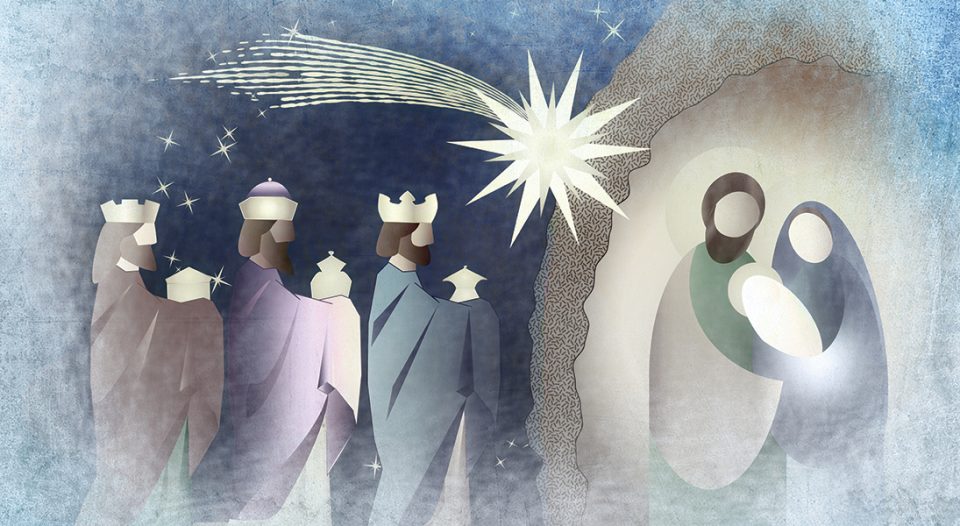
Sunday, January 5, 2020 – Solemnity of the Epiphany of the Lord
Is 60:1-6; Ps 72: 1-2, 7-8, 10-13; Ep 3:2-3a, 5-6; Mt 2:1-12
- Praised be Jesus Christ!
- Now and for ever. Amen.
Dear Brothers and Sisters,
We come today to the formal end of the Christmas season – hard to believe that it’s been 12 days already, eh? You may now throw out your Christmas tree – Father Bluenose says it’s okay. Christmas is over.
The Solemnity of the Epiphany celebrates the “revelation of the (All-)Highest”; that is, God-made-Man, Jesus Christ. Jesus, the Incarnate Word of God, the incarnate Second Person of the Most Holy Trinity, is “revealed” as the All-Highest by the arrival of potentates from the East, about whom I’ll say more in a moment. At the Epiphany, we come, also, to the conclusion of the sequence of revelations which have characterized Our Lord’s earthly ministry from before he was even born. There were three of them – a scripturally- and theologically-significant number! – and the order in which the revelations were made is significant for understanding the identity and ministry of Jesus.
First, He was revealed to Mary, his mother-to-be, in the message of an angel. We need not go over Luke’s majestic account of the Annunciation (Lk 1:26-38); it is one of the best-known passages of the New Testament. Next, He was revealed to Joseph, who was a righteous man (cf. Mt. 1:19) and, as such, a bit straitjacketed mentally. Not being privy to the Annunciation, he determined to be rid of his betrothed, who turned up pregnant without her husband having had the pleasure of impregnating her.
Scarcely had Joseph formed the intent to divorce Mary quietly, when he was visited in a dream by an angel, who basically repeated what the Angel Gabriel had told Mary: that the child Mary was carrying in her womb was the product of a supernatural, divinely-ordered union. Joseph believed, and, being a “righteous man” (we would say he was strengthened by Grace), stepped boldly into his role as the foster-father of Jesus. That is the two-part first revelation of Jesus as the All-Highest.
The second revelation was to the shepherds who were “living in the fields and keeping the night watch over their flock.” (Lk. 2:8) The shepherds represent the Children of Israel; that is, the Hebrew people. They were of the land; a land flowing with milk and honey; a land which God had promised to give to their ancestors, and did give to them. In the interim, their ancestors had displeased God and forfeited their inheritance from Him, been driven off the land, driven into exile, redeemed by a temporal ruler (King Cyrus II the Great of Persia) and prophesied to of a coming Messiah who would Israel to a right relationship with her God. The shepherds were not trained in the Law; they probably could not read at all. But they were humble children of Israel, doing what God had intended the children of Israel to do when He delivered them to the Promised Land: they had entered into and taken possession of the land, and were enjoying the fruits of their labor on that land. It is to them, humble shepherds who “bore the smell of their sheep” – not to the perfumed and powdered Pharisees and scribes, sleeping in comfortable beds in Jerusalem! – to whom the cacophonous, raucous celebration of celebration of Heaven at the Nativity of the Lord revealed, through the message of an angel, that “a child is born to you.”
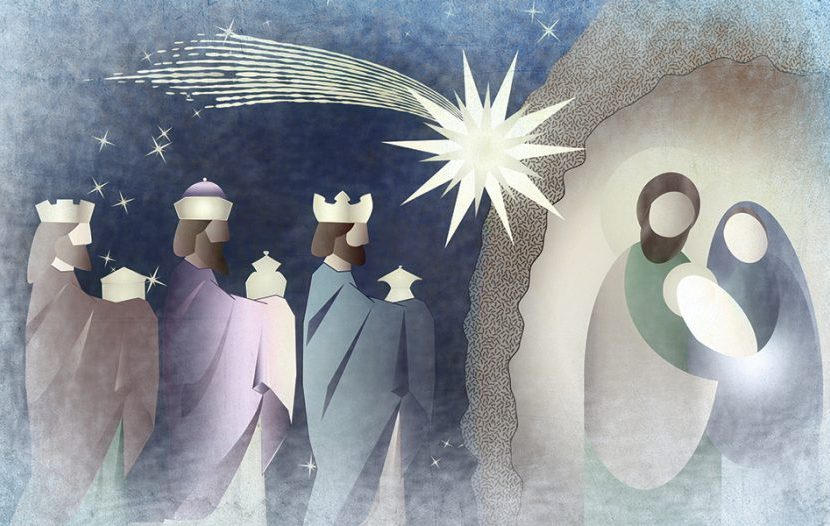
The third revelation is what we commemorate today: the arrival of the pagan, animistic, non-Jewish world, represented by the three (or however many) kings (or whatever they were) bearing gold fit for a king, frankincense “which owns a deity nigh,” and myrrh, the “bitter perfume” that heralded the saving death that the All-Highest would die. These kings, or magicians, came to do homage to the Lord of Creation shortly after His entrance into Creation.
Who were these people? That they were not Jews is clear from the fact that when they arrived in Jerusalem, they asked, “Where is the newborn King of the Jews?” (Mt. 2:2) – not, “Where is our newborn king?” Matthew refers to them as “magi,” which suggests that they were capable of performing “magic” – that is, wonders based on advanced, or arcane knowledge. Other opinions say that they were astronomers, who had predicted the coming of a particularly-bright star, which would herald some great even on earth. Alternately, they have been described as “kings”; the term “magus” may be a corruption of the Latin “magister,” or master, indicating a person of authority. Again, “magi,” in the plural, has a certain relationship to the Arabic word “masjid,” or “majid,” meaning “market,” which suggests that the men were merchants – and, thus, wealthy and cosmopolitan, with ready access to the expensive gifts they brought to lay before the Child.
Whatever their background, whatever their status and role in life, the fact that they came from the East, as Matthew specifies (cf. Mt 2:1) is significant. If we accept the notion that I expressed earlier, that the Magi represent the pagan world coming to do Christ homage, then the journey of the Magi recapitulates, it traces the steps, that Abram (before he was Abraham) took when he came forth from “Ur of the Chaldees,” as the Proclamation of Christmas reminded us 12 days ago. In the same way that Abram, who was not yet the father of nations that he would become, came forth from the Fertile Crescent at the beginning of salvation history, so too do these latter-day devotees of the Living God come from the same area, representing the submission of the non-Jewish world to the King of the Jews.
The arrival of the Magi, the submission of the non-Jewish world to the King of the Jews, completes and perfects the Epiphany; that is, the revelation of the All-Highest. The co-equal and co-eternal Son of God, Jesus, had been revealed, successively, to the specially-graced (first Mary, then Joseph); to the “great unwashed” (the shepherds); and, finally, to the Gentiles. It is fitting and right that we conclude the season of Christmas, which celebrates the coming of the Messiah in the flesh, by celebrating the truth that the Gentile Magi taught: that Jesus is not merely the Son of God, but is God Himself.
What does this mean for us, more than 2,000 years after the fact? How should we respond to the declarations that the Magi made in bringing their gifts: that the Child is a King; that He is God; that He is Victim? We must make our way spiritually to the place where He lay, to receive His visitors. We must see this audience from both perspectives: of God receiving His supplicants, when we understand and share and emulate the adoration and worship that they offered to Him; and of supplicants approaching the Holy of Holies, falling down in worshipful adoration of Him Who above all others is worthy of worship. If we are willing to approach Our Lord and Master with the same humility and joy as the Magi, and to accept the welcome that He offers to us as He offered to them, then we will be able truly to complete and perfect, in our own hearts, the revelation of the All-Highest that is the fit culmination of the Christmas season.
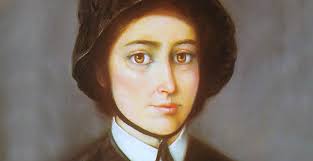
Suffering, Growing, Living in Faith ~ St. Elizabeth Ann Seton ~ The Very Rev. Lady Sherwood, OPI
Reading 1:1 JN 3:7-10
Responsorial Psalm: PS 98:1, 7-8, 9
Gospel: JN 1:35-42
Liturgical colour: White.
Today we come together as a church to commemorate the Memorial of St. Elizabeth Ann Seton who is my name saint within the Order of preachers Independent, due to our Prior (and Presiding Bishop) feeling there are similarities between the life of St. Elizabeth Ann Seton and that of my own.
Throughout Biblical history and even in current times, we sometimes come across people who have endured much within their lives and who, regardless of this, remain strong and devout within their faith. Today we remember St Elizabeth, whom is one such person from whose life, heart and devotion, we can take inspiration within our own spiritual life.
Elizabeth was the first native-born citizen of the United States to be Canonized to sainthood.
Elizabeth was born as Elizabeth Ann Bayley in New York city on the 28th August in the year 1774, and she was a child of the Revolutionary war. She was raised Episcopalian which was the faith of her parents.
Elizabeth married at the tender young age of only nineteen years old, to a man named William Magee Seton. He was a young but wealthy merchant and together they parented a total of five children.
Elizabeth had a very deep devout faith and concern for the poor even as a very young woman and she shared this devotion with her sister-in-law, who was Rebecca Seton, and with whom she became very close friends. Together, Elizabeth and Rebecca undertook various missions for the poor and for the needy of their region and they adopted the name of the ‘Protestant Sisters of Charity` for their mission works.
Elizabeth’s life changed after only the short time of four years of marriage and her life became rather burdensome in nature. Elizabeth and her husband were left with the responsibility for seven half-brothers and sisters of William’s father when he died in the year 1798.
Elizabeth suffered even further in the year 1801, when her own father with whom she had a very close relationship, especially since the loss of her mother at aged only three, himself passed into the care of the Lord.
Then yet again she suffered after only another two years, when both her husband’s business and his health failed. Filing for bankruptcy, Elizabeth and her husband sailed to Italy to help his health and to try to revive his business.
Whilst in Italy, Elizabeth suffered even further, as William’s condition worsened. He was quarantined and subsequently died of Tuberculosis in December of 1803. Elizabeth remained in Italy for several months after his death and during this time, was more fully exposed to the Catholic faith.
Elizabeth returned to New York city in June of 1804, only to suffer yet again with the loss of her dear friend and sister-in=law, Rebecca Seton, in the very next month.
At only the young thirty years of age, Elizabeth had endured the loss of so many who were close to her and she seemed to have the weight of the world upon her shoulders. Even so, throughout all this, Elizabeth still remained fervent in her faith.
The months ahead were life-changing for Elizabeth and she seemed ever more drawn to the Catholic faith and to the Mother Church, much to the horror of her friends and her remaining family who were firmly Protestant.
Elizabeth Ann Seton was received into the Catholic Church on the 4th March 1805. Her conversion cost her dearly in the areas of her friendships and in the support from her remaining family.
Elizabeth relocated to the Baltimore area and there she established a school for girls. She also founded a religious community along with two other young women and she took vows before the Archbishop Carroll as a member of the Sisters of Charity of St Joseph. From this time forward, Elizabeth was known as Mother Seton and she left a legacy of care and education for the poor. She even established the first free Catholic school of the nation.
In so many ways, the journey into the Catholic faith, helped Elizabeth to much more appreciate and to embrace her faith even more profoundly. Elizabeth was willing to endure all things to follow Christ. In her journal, she even wrote, ‘If I am right Thy grace impart still in the right to stay. If I am wrong Oh, teach my heart to find the better way’.
Many of us who have chosen the Catholic faith have experienced some setbacks and have had to endure issues with relationships, but for this brave and devout woman of faith, the cost was even greater.
Elizabeth died aged only 46 on January 4th 1821 from Tuberculosis and she was Canonized on September 14th 1975.
On this your special day, St Elizabeth Ann Seton, Pray for all of us who follow your pathway of faith. Pray that we likewise to yourself will say yes and will accept all that will come to us in the years ahead, and to allow our earthly endurance to further our faith in our Lord Jesus Christ.
Amen.
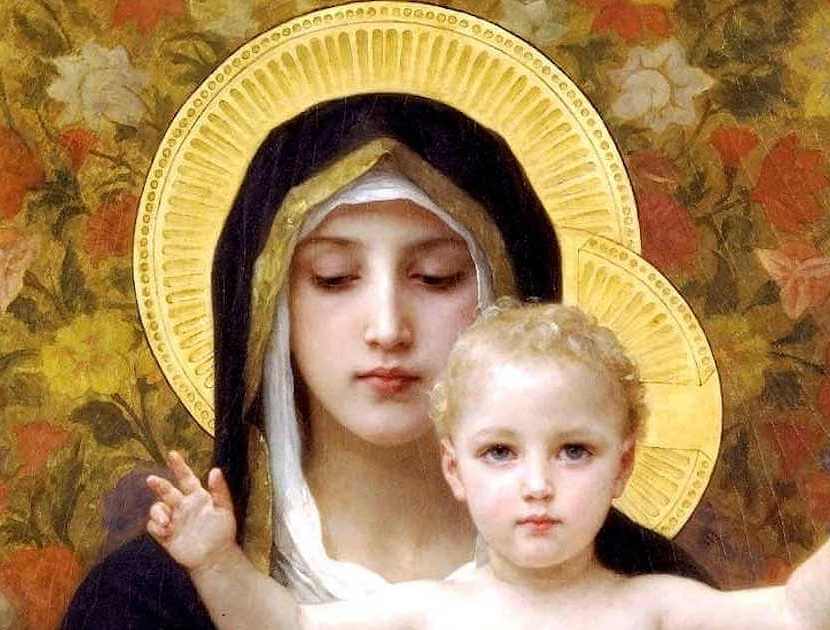
Mary, Mother of God ~ The Rev. Dcn. Dollie Wilkinson, OPI
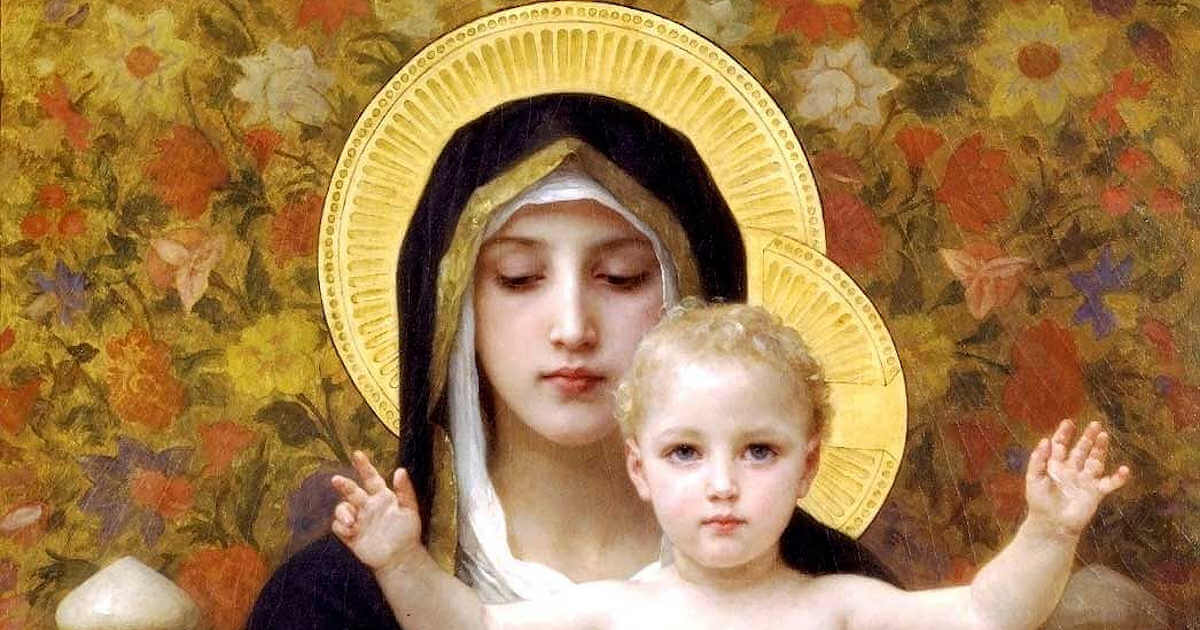
I have two very smart and beautiful daughters. As adults, they daily teach and inspire me. Being their Mom, it is my hope that I have raised them well. Somehow I just knew they would turn out to be strong, independent women. But back in Mary’s time, such reassurances were not readily known. So imagine an angel, appearing out of the blue, telling Mary just how precious her child is, and his role in saving us all. If it happened today, would anyone believe it? Probably not….yet Mary accepted the words of the angel, and treasured them in her heart.
Luke 2:16-21 (NIV)
“So they hurried off and found Mary and Joseph, and the baby, who was lying in the manger. When they had seen him, they spread the word concerning what had been told them about this child, and all who heard it were amazed at what the shepherds said to them. But Mary treasured up all these things and pondered them in her heart. The shepherds returned, glorifying and praising God for all the things they had heard and seen, which were just as they had been told. On the eighth day, when it was time to circumcise the child, he was named Jesus, the name the angel had given him before he was conceived.”
On January 1st, we celebrated the Solemnity of Mary, Mother of God. It is a holy day of obligation for Catholics, meaning that Mass attendance is required (though the Mass obligation is sometimes waived by the Bishop for various reasons. The use of the word “Solemnity” here is a designation used for certain days within the liturgical calendar of the Church. Solemnities are the highest rank of liturgical celebration, higher than feast days or memorials. By celebrating a solemnity dedicated to Mary’s motherhood, the Church highlights the significance of her part in the life of Jesus, and emphasizes that He is both human and divine.
Jesus’ nature as both and equally human and divine is something we may take for granted today. But back in the early days of the church, this dogma of our faith was hotly debated. In 431 A.D. during the Council of Ephesus, the title of “Mary Mother of God,” in Greek “Theotokus,” was defended and defined against the heresy of Nestorius. Nestorius, Bishop of Constantinople, refuted the title of “Theotokus” claiming that Christ had two loosely united natures, and therefore, Mary was only the mother of the human part of Him. Catholic theologians rejected this claim, and defined that Christ indeed has two natures, a divine nature and a human nature definitely united in one divine person, and since Christ’s two natures form one single person, Mary is the mother of the whole Person of Christ.
Therefore, Mary can be properly called “Mother of God,” not in the sense that she came before God or is the source of God, but in the sense that the Person that she bore in her womb is indeed true God and true man.
The Solemnity of Mary Mother of God falls exactly one week after Christmas, the end of the octave of Christmas. It is fitting to honor Mary as Mother of Jesus, following the birth of Christ. When Catholics celebrate the Solemnity of Mary Mother of God we are not only honoring Mary, who was chosen among all women throughout history to bear God incarnate, but we are also honoring our Lord, who is fully God and fully human.
Calling Mary “mother of God” is the highest honor we can give Mary. Just as Christmas honors Jesus as the “Prince of Peace,” the Solemnity of Mary Mother of God honors Mary as the “Queen of Peace.” Pope Paul VI, in his apostolic exhortation Marialis Cultus (1974), called the Solemnity of Mary “a fitting occasion for renewing adoration of the newborn Prince of Peace, for listening once more to the glad tidings of the angels (Lk 2:14), and for imploring from God, through the Queen of Peace, the supreme gift of peace.”
In Galatians 4:4-7 (NIV) we are once again reminded that the gift of a little baby to Mary, is also the most precious gift to us all. Peace ~ Salvation ~ Love
“But when the set time had fully come, God sent his Son, born of a woman, born under the law, to redeem those under the law, that we might receive adoption to sonship. Because you are his sons, God sent the Spirit of his Son into our hearts, the Spirit who calls out, “Father.” So you are no longer a slave, but God’s child; and since you are his child, God has made you also an heir.”
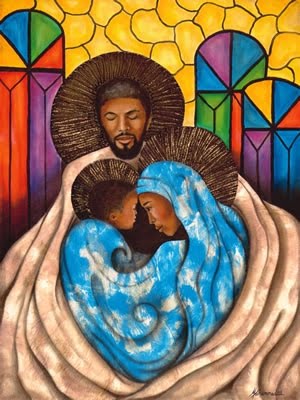
“Family Friendly?” ~ The Feast of the Holy Family ~ The Very Rev. Lady Sherwood, OPI
Reading 1: SIR 3:2-6, 12-14
Responsorial Psalm: PS 128:1-2, 3, 4-5
Reading 2: COL 3:12-21 or: COL 3:12-17
Gospel: MT 2:13-15, 19-23
Liturgical colour: White.
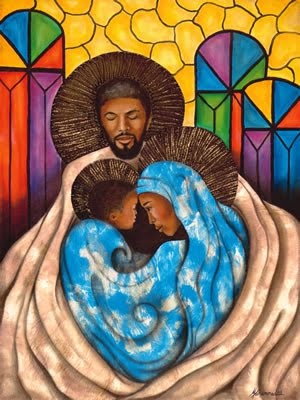
My Dearest brothers and sisters, Today, we come together as a church to celebrate the earthly family of Our Dear Lord and Saviour Jesus Christ. The Holy Family of Mary, Joseph, and of course, of Our Lord Jesus himself. This feast challenges us all to look at what it means to be family. And our eyes turn toward the Christmas nativity scene. During this time of Christmas, we tend to sentimentalize the Holy Family – they often tend become figures of plaster and paper, instead of being of true flesh and blood. But we forget: they weren’t all that different from how we are. They were holy, yes that’s true,. But they were also human just like us.
The life of the Holy Family is a life not always turning out the way in which they would’ve expected. It’s the life story of a teenage mother, who conceived a child before she was married. It’s the life story of an anxious father, who confronted this scandal, and who at first, was planning on divorce. It’s the life story of a family forced to become refugees, living as immigrants in the land that once held their ancestors as slaves. It’s the story of a missing child, and days of anxious worry, stress, and searching by his parents.
But there is even more. It’s the story of our Lord’s violent death by crucifixion – where his mother watched with helplessness and unimaginable sorrow. This family was holy. But it was also a human family. We need these reminders. Especially now.
The Church calendar shows us that the Christmas season is one of light – but it is also of shadow. The day immediately after Christmas day and the joy of the Lord’s birth, we celebrate the feast of the first martyr, St. Stephen. Then a couple days after this, we mark the feast of the Holy Innocents, all the children who were slaughtered by Herod. The joy of Christ’s birth is suddenly tempered by tragic reminders of what the Incarnation cost. And the Holy Family shared in that.
It is just a few steps here from the wood of the manger to the wood the cross. But in so many ways, the two singular events are inseparable. One led inevitably to the other. Joy and sorrow are almost side by side, linked by sacrifice, by faith, and by love. It is the story of our salvation. And it is the story of the Holy Family. he juxtaposition of those two images in this church, the crèche and the crucifix, serves as a powerful lesson for this feast. We realize that when we speak of the Holy Family, we speak of a family that struggled and suffered, like so many of us.
But: this family also knew profound hope. They trusted completely in God. They call all of us to that kind of trust. And they are with us. In our own time, they stand beside all who worry, who struggle, who search, who pray. The Holy Family stands beside parents anxious about their children, worrying for their welfare. They walk with immigrants and refugees separated from those they love. They comfort teenage mothers and single parents. They console the prisoner, the outcast, the bullied, the scorned—and the parents who love them. And they offer solace and compassion to any mother or father grieving over the loss of a child.
The Holy Family shares our burdens. But they also uplift us by their example. Jesus, Mary and Joseph were never alone. They endured through the grace of God. They prayed. They hoped. They trusted in God’s will. We might ask ourselves where we can find that kind of peace and purpose in our own families, in our own lives.
The Holy Family surely must’ve had moments in their life, when living those virtues which they had, when things seemed so desperately hard, or even impossible. But they did things most of us don’t. They listened to the angels who passed them the will of God. They dreamed.
And they gave themselves fully to God.
They made of their lives a prayer.
When we find ourselves overwhelmed, we need to remember where it is that we must focus on today for our guidance and to remember to look toward the Lord’s Nativity, and His Holy Family and their lives. There is our model for living: Jesus, Mary and Joseph. But we need to see them in full, also ensuring that we remember the closeness of the cross. That was their life and it’s our lives too. Yet, through all their hardships, in a time of anxieties, difficulties, of persecution and tragedy—a time to some extent like our own –they showed us how to be people of true faith, people of forgiveness, and people of love.
They show us, in other words, how to be holy in our lives.
The Feast of the Holy Innocents ~ The Rev. Dcn. Scott Brown, OPI
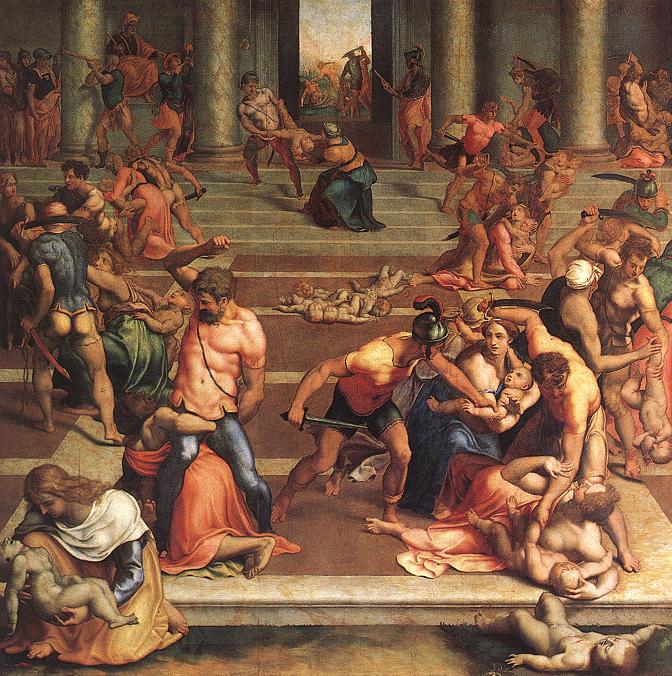
Matthew 2:13-18 New International Version (NIV)
The Escape to Egypt
13 When they had gone, an angel of the Lord appeared to Joseph in a dream. “Get up,” he said, “take the child and his mother and escape to Egypt. Stay there until I tell you, for Herod is going to search for the child to kill him.”
14 So he got up, took the child and his mother during the night and left for Egypt, 15 where he stayed until the death of Herod. And so was fulfilled what the Lord had said through the prophet: “Out of Egypt I called my son.”[a]
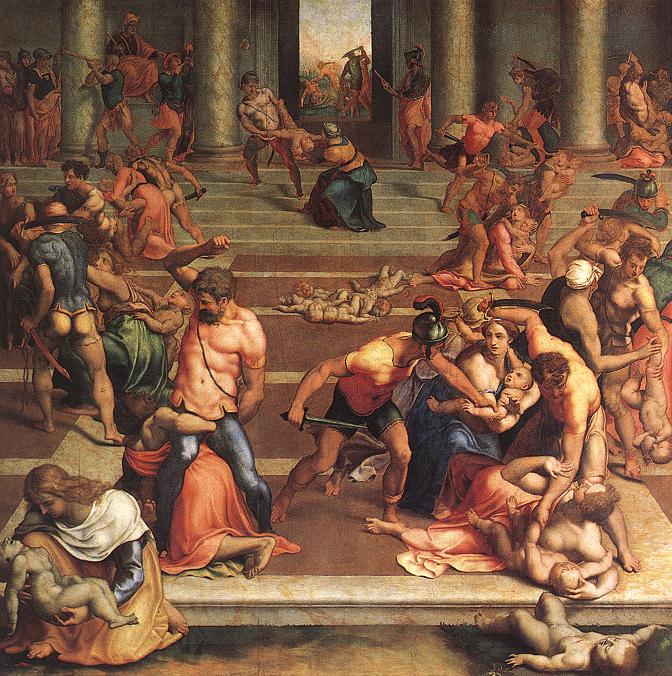
16 When Herod realized that he had been outwitted by the Magi, he was furious, and he gave orders to kill all the boys in Bethlehem and its vicinity who were two years old and under, in accordance with the time he had learned from the Magi. 17 Then what was said through the prophet Jeremiah was fulfilled:
18 “A voice is heard in Ramah,
weeping and great mourning,
Rachel weeping for her children
and refusing to be comforted,
because they are no more.”[b]
Imagine you are a parent, enjoying the toddler years, or as we know them today, the terrible twos, when suddenly your front door is blown open and a soldier slaughters your baby. Your baby was sentenced to death by a tyrannical ruler who is obviously not in his right mind.
To many Christians, King Herod is the bloodthirsty villain of the Bible, the jealous despot who ordered the slaughter of newborn babies throughout his kingdom following the birth of Jesus Christ. To his subjects, he was Herod the Great, the paranoid tyrant who imposed oppressive taxes to fund his massive building projects, and who crushed all opposition. And to his Roman masters, he was little more than a reliably loyal—and wealthy—puppet-king.
Throughout history, opinions of Herod the Great have not been…well, great. Herod was a client king, which means he was subordinate to a larger ruling government. In Herod’s case, that government was Republican Rome. Indeed, Herod wouldn’t have been king of Judea at all had it not been for the Romans: rather than inherit the throne as kings usually do, Herod was declared king by the Roman senate, with the understanding that he would lead Judea in a decidedly pro-Roman direction. With the help of the Romans, Herod was able to put down Antigonus’s revolt. With Phasael (his older brother and Governor of Jerusalem) and Hyrcanus (king of Judea) both killed in the strife, this left Herod as the sole claimant to the throne of Judea. The Romans assented, and Herod claimed the title “basileus,” or king, for himself in 36 BCE.
Though the Romans identified Herod as “King of the Jews,” there is some doubt as to the sincerity of Herod’s faith. By blood, he was an Edomite, an Arabic group who had only recently converted to Judaism. Herod’s frequent clashes with the Sanhedrin, not to mention the observant Pharisees and Sadducees who were his subjects, as well as his pro-Roman attitudes and tolerance of other religions, have led some to allege that Herod was not sincerely Jewish.
Look at what is happening in our country today. We as a country have forgotten how to love one another, we have forgotten how to feed the hungry, how to clothe the naked, and how to shelter the homeless. We are separating children from their parents, locking them up in what are essentially prisons and some of them are even dying in them. These children are the innocents today, just as the murdered babies were in Herod’s time. King Herod was trying to protect his title of King of the Jews by attempting to kill the Son of God. Herod’s ego activated his paranoia, which in turn caused him to go on a murder spree, killing thousands of innocent children.
Possibly the same could be said for our nation and our leaders now. We are not feeding the hungry, clothing the naked, nor are we sheltering the homeless, all because of our (and our elected leaders’) huge egos. In John chapter 13 Jesus gave us one commandment:
33 Little children, I am with you only a little while longer. You will look for Me, and as I said to the Jews, so now I say to you: ‘Where I am going, you cannot come.’ 34A new commandment I give you: Love one another. As I have loved you, so also you must love one another. 35By this all men will know that you are My disciples, if you love one another.”…
We as a nation, we as a people, and we as a world. need to love one another so that all will know that we are His disciples. This wasn’t a suggestion from our Lord – it was a commandment. A commandment given not to just Americans, Europeans, Mexicans, or Indians, but to everyone of all ethnicities, colors and creeds. Closing borders to the hungry and oppressed, is not the way of our Lord. Open our borders, open our hearts, open our minds and obey our Lord’s commandment to love one another and stop murdering innocents as Herod did. Stop feeding the egos of the modern-day King Herods, and obey the commandment Jesus left for us.
Heavenly Father in this season of giving and sharing, open our hearts and minds, take away our egos so that we can love one another. Keep our hearts open so that others will know we are Your disciples by our actions and words. Amen.
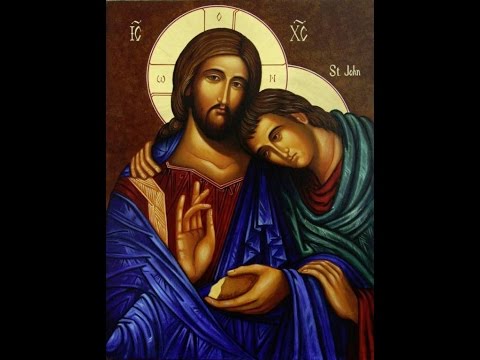
The Big Picture: The Feast of St. John ~ The Rev. Dcn. Scott Brown, OPI
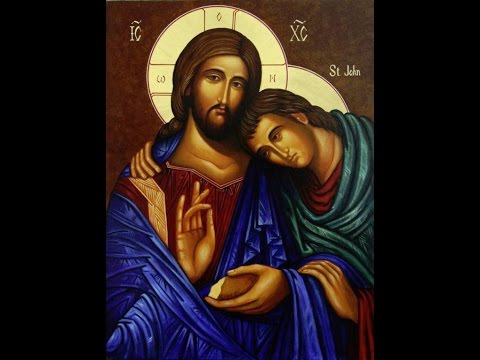
1 John 1:1-4 New International Version (NIV)
1 That which was from the beginning, which we have heard, which we have seen with our eyes, which we have looked at and our hands have touched—this we proclaim concerning the Word of life. 2 The life appeared; we have seen it and testify to it, and we proclaim to you the eternal life, which was with the Father and has appeared to us. 3 We proclaim to you what we have seen and heard, so that you also may have fellowship with us. And our fellowship is with the Father and with his Son, Jesus Christ. 4 We write this to make our[a] joy complete.
What is the history of John the disciple of Jesus?
To learn the history of John, the disciple of Jesus, we begin with his life before he met Jesus. John, his brother James, Peter, and Andrew were all partners in the fishing business before they became disciples of Jesus. John was the son of Zebedee who was also a fisherman in Galilee. John’s mother’s name was Salome and some say that Salome was the sister of Jesus’ mother, Mary. John owned a home in Jerusalem. Shortly before the destruction of Jerusalem by the Romans in 70 AD, John moved to Ephesus.
John pastored a church in Ephesus. He communicated with other churches in the area as stated in the book of Revelation. He advised and counseled many people who would later become believers in Jesus Christ as the Son of God.
By order of the Roman Emperor, Domitian, John was exiled to the island, Patmos. Domitian ordered his exile because he saw John as a threat to his rule. However, his popularity and influence in the Christian community continued through correspondence with all the churches. John wrote the book of Revelation during his exile. When he was released from exile, he returned to Ephesus. John founded and built churches all through Asia until he was old, and died the sixty-eighth year after our Lord’s passion, peacefully in Ephesus.
During his life, John wrote the book of John and the 1st, 2nd and 3rd book of John and the book of Revelation. Near the end of his life, it is said that he constantly repeated the phrase, “Little children, love one another!” He did that because he believed it was the Lord’s most important commandment.
It is easy for us to get so caught up in the details of our work that we lose sight of the big picture.
So it’s very helpful that the Apostle John, in these first four verses, gives us the big picture of God’s purpose, from eternity past to eternity future.
1: The eternal pre-existence of God’s Son
That which was from the beginning” (v. 1) What beginning is John referring to? John means the beginning of all things; the ultimate beginning before time and space existed. The Eternal Son of God enjoyed fellowship with the Father before the creation of the universe and before He appeared on earth as a man. Jesus Christ, the focus of this epistle, was eternally existent as the Son of God. He is Alpha and omega! Before Abraham was, Jesus said “I am!” He is the One who created time, space, matter, and humanity, and therefore He rules over all!
2: The historical revelation of God’s Son.
“The life appeared” (v. 2) What an amazing turnabout: the Eternal entered time, and He appeared to human beings. The Word became flesh and therefore presented Himself to His creatures. This manifestation did not happen in merely a dream or a vision, as other religious figures supposedly appeared. No. God’s Son was perceived and recorded by three senses: hearing, sight, and touch: “which we have heard, which we have seen with our eyes, which we have looked at and our hands have touched.”
Now think about that. If the people of Jesus’ day would have just heard His voice, that would have been impressive, right? But to have heard the Son of God was not enough, for people had heard God’s voice in the OT. Now, to have seen the son of God was even more compelling, though some prophets in the OT also had visions of the pre-incarnate Son of God, or as He was called, the “Angel of the Lord.” But… to have touched the Eternal Son of God, well, that was something else! This was conclusive proof that indeed, the Eternal Son of God did become flesh, and really did live among us!
3: The apostolic proclamation of God’s Son.
“We proclaim to you what we have seen and heard” (v. 3) The historical revelation of God’s Son appearing in time and space was given to the few apostles for the sake of the many. They were charged with declaring Him and the Gospel message to the world. John writes that the manifestation given “to us” (v. 2) became a proclamation declared “to you” (v. 3). Note that this charge involved both a testimony (2) and a proclamation (2, 3). Both words imply an authority, but of differing kinds.
A testimony has the authority of an eyewitness; one must be an eyewitness before he is competent to bear witness. True witnesses speak of what they have personally seen and heard; they do not speak of second-hand information.
But a proclamation indicates the authority of one who has received a commission. It speaks of a higher authority who has given you the charge to speak and herald a message for them. This is what Jesus gave His apostles in Luke 9:2 and what Paul knew he was charged with, in Acts 28:31, namely, to proclaim the Kingdom of God… and they did so with authority.
And these two aspects, of being eyewitness testifiers and apostolic proclaimers of the Lord Jesus Christ, are what drives the writing of the New Testament. The 27 books of the New Testament are the written record of the eyewitness accounts and the divinely charged proclamation of the apostles concerning Jesus Christ, the eternal Son of God who became a man, to die and be raised, for our salvation, and for God’s glory! Think about the implications of this for or assurance of salvation, and for the boldness we should have in telling others about the Lord!
4: Our joyous fellowship with God, His Son, and one another.
“So that you also may have fellowship with us. And our fellowship is with the Father and with his Son, Jesus Christ. 4 We write this to make our joy complete.” (v.4) The proclamation of the apostolic message about Jesus Christ was not an end in itself. No. Its greater purpose was fellowship and joy, both horizontal and vertical; with one another, as fellow believers in Christ, and with God the Father and with God the Son. And as we see from our profession of faith, our chief purpose in life is to glorify God and to enjoy Him forever:
I BELIEVE IN ONE LORD JESUS CHRIST,
THE ONLY BEGOTTEN SON OF GOD,
BORN OF THE FATHER BEFORE ALL AGES.
GOD FROM GOD, LIGHT FROM LIGHT,
TRUE GOD FROM TRUE GOD,
BEGOTTEN, NOT MADE, CONSUBSTANTIAL
WITH THE FATHER;
THROUGH HIM ALL THINGS WERE MADE.
FOR US MEN AND FOR OUR SALVATION
HE CAME DOWN FROM HEAVEN,
AND BY THE HOLY SPIRIT WAS INCARNATE
OF THE VIRGIN MARY,
AND BECAME MAN.
Do you see the big picture of God’s purpose in Jesus Christ?
The eternal Son of God…
Appears as a man on earth…
The apostles are eyewitnesses to His life, death, and resurrection…
They are commissioned by Christ to proclaim the Good News about Him…
So that we might have joyous fellowship with God the Father, Son, and Holy Spirit… and with one another in the body of Christ…..
For all eternity!
Heavenly Father, during this season of Christmas let us remember that it is out duty (nay, our privilege) to testify to and proclaim the love of Jesus Christ. Let us herald the good news of His birth throughout the entire world and to all his people. Amen
The Feast of St. Stephen the Martyr ~ The Very Rev. Lady Sherwood, OPI
Reading 1: ACTS 6:8-10; 7:54-59
Responsorial Psalm: PS 31:3CD-4, 6 AND 8AB, 16BC AND 17
Gospel: MT 10:17-22
Liturgical colour: Red.
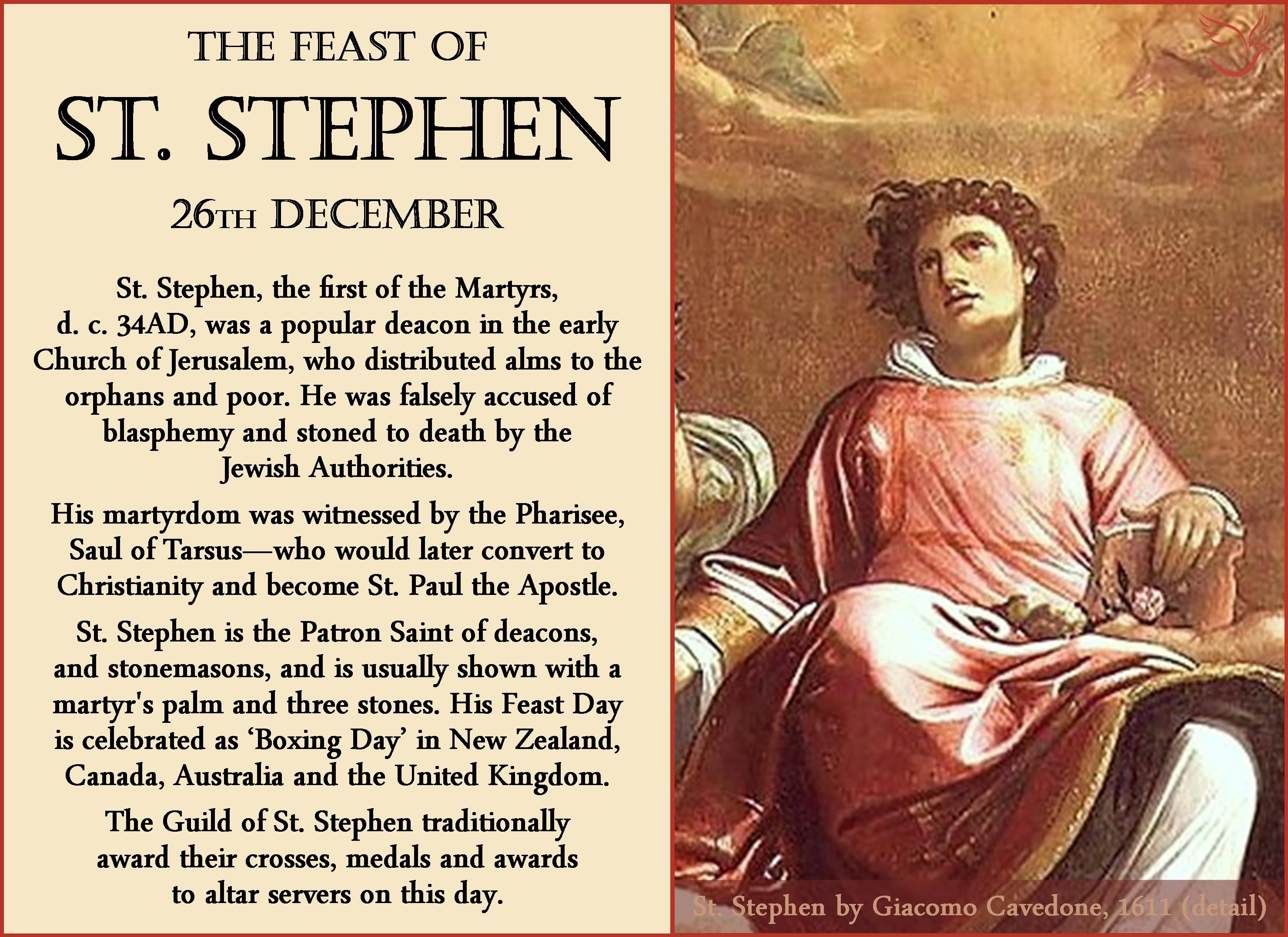
Today, the day after all the joy and celebration of the birth of Our Lord, and after all the traditional enjoyment of the traditional festive food and gift giving, we come in total contrast, to the Feast of St. Stephen the first Martyr.
Throughout the Old Testament we see the faithful persecuted and often even killed by the faithless. But it’s not just an Old Testament phenomenon. This is what humans can do in their natural and unredeemed state. We don’t like our sins pointed out to us. We manage to convince ourselves that we’re really not all that bad. We work hard to justify our sins. We find the really, really sinful people in history—men like Nero or Stalin—and we compare ourselves to them and actually start to feel pretty good about where we stand before God. And that’s when one of God’s faithful workers comes along—someone who, while by no means perfect, is living a life renewed by grace and who is indwelt by the Holy Spirit—and suddenly all the illusions we’ve built up about our own goodness dissolve and we get angry. Like Cain, instead of acknowledging our sins and instead of repenting, we torment, persecute, and sometimes even kill the God’s people when they show us up.
In the Gospel Jesus weeps over Jews, knowing that they will continue to kill his messengers. They’ll be killing Jesus himself in short order too. They won’t heed the warnings. But brothers and sisters, Jesus warns us—the faithful—too. To his disciples he says:
Blessed are those who are persecuted for righteousness’ sake, for theirs is the kingdom of heaven.
Blessed are you when others revile you and persecute you and utter all kinds of evil against you falsely on my account. Rejoice and be glad, for your reward is great in heaven, for so they persecuted the prophets who were before you.
He prepares us for the fact that as we joyfully follow him, as we joyfully do the work of his kingdom, and as we witness the great Christmas joy we’ve found in the manger and at the cross—as we live a life of joy before our King—we will face the persecution of the world. To submit ourselves to that seems nonsensical. How can we find joy in persecution? We find it there, because when we make Christ our Lord, he gives us that eternal perspective we’ve been hearing about through Advent. Suddenly the things of the world are so much less important. Our focus is on Jesus and on building his kingdom. Our focus is on being witnesses of his new life and taking his Good News to the world. And that change in perspective means that if we can effectively communicate the Gospel to someone while being tormented or even killed, well then, so be it. Our joy in living in and sharing Christ is greater than our joy in the things of this world—even in life itself, because we know that our share in eternal life is so much greater. But it’s not just about joy. It’s about love too. That’s another theme that carried through Advent. We saw Love Incarnate in the manger yesterday. And now because God has so changed our perspective by loving us, we start loving as he did—we can’t help it! And it’s not just that we love God’s Church or that we love our brothers and sisters in Christ, but that we even love our enemies and do good to those who persecute us. That’s the hardest command of all for us to obey, but the reason it’s so hard is because we haven’t been perfect in love ourselves. The closer we grow to Christ, the better able we’ll be to live it. But it’s also true that the better we live it, the closer we will be to Christ!
Living that way is hard. We so often get bogged down in the world. We focus more on life here than we do on life in the New Jerusalem. We fall back into living in fear instead of living in faith. The witness of St. Stephen should focus our eyes on our Lord and Saviour and on living the life he has given us. No one knows for sure why this feast falls on the day after Christmas, but one thing I’ve realised is that it’s easy to be excited about grace and to live as Christmas people on Christmas Day. But friends, we’re incredibly fickle, and the next day we forget about being Christmas people and go back to living in fear and faithlessness. We forget our witness. How often do you come to worship God on a Sunday morning, getting excited about grace, and yet even as you drive home someone on the road does something that makes you angry and you forget all about grace; or you get bad service while you’re out having lunch, and you forget all about grace; or you get a bad news the next morning about your job, and you forget all about grace. The Church reminds us today that being Christmas people requires real commitment on our part and that as much as it’s joyful work, it’s hard work and work that requires real faith in the promises of God.
The story of Stephen actually begins in Chapter 6. He was among the group of seven men appointed the first deacons by the apostles. They were the servant-ministers of the Church in Jerusalem. Stephen was excited about his work. Acts 6:8 tells us:
Stephen, full of grace and power, was doing great wonders and signs among the people.
He was doing what he was supposed to do as a Christmas person and he attracted attention. The problem was that he attracted the attention of Jews who didn’t like what he was doing. Now, I say “the problem”. That just shows how our perspective isn’t fully where it should be. We see it as a “problem” when we face persecution. We forget that God is sovereign and that he’s working everything out for the good of his people and the spread of his kingdom. Persecution is hard and painful, but it’s still “good”. Remember, Jesus tells us that we find blessing in it. So it was a “problem” that the Jews were upset by what Stephen was doing, but it wasn’t really a problem. God was still in control. We need to keep that in mind in our own lives: Christians don’t have “problems”, we have “opportunities” to exercise our faith.
And Stephen knew that, even as these angry men dragged him before the Sanhedrin and produced all sorts of false witnesses who attested that he was as a blasphemer. He was on trial and it wasn’t going in his favour. And yet even as these men told lies about him, St. Luke tells us that Stephen sat there with the face of an angel—he was peaceful even in the face of condemnation. The one other place in Scripture we hear a description like this is of the face of Moses after he had been with God. Stephen was close to his Saviour and was experiencing the “peace of the Lord”.
In fact, when the high priest gave Stephen a chance to defend himself, what did Stephen do? He didn’t try to explain away the things he had said and done that he got him into trouble in the first place. No. He took the opportunity to preach the Gospel to the whole Sanhedrin! He addressed them and started with Abraham and told the story of redemption down through Joseph and Moses. He told them the stories of their fathers who were rescued from slavery in Egypt and then again how God cared for them in the wilderness and drove out their enemies in Canaan to give them a home—and he stressed how all these things were made possible by God and were his gifts. And as he told the story, he noted how over and over the people rejected God—gladly claiming the great things he gave them, but never truly receiving God himself. And with that Stephen brings them right down to Jesus and he says:
You stiff-necked people, uncircumcised in heart and ears, you always resist the Holy Spirit. As your fathers did, so do you. Which of the prophets did your fathers not persecute? And they killed those who announced beforehand the coming of the Righteous One, whom you have now betrayed and murdered, you who received the law as delivered by angels and did not keep it. (Acts 7:51-53)
He doesn’t pull any punches. He tells them that in rejecting Christ, they’re doing the same things that their fathers had done before them in rejecting the grace of God and in being disobedient. We don’t have time this morning to read Stephen’s full sermon, but I urge you to read through it—Acts 7—sometime this next week. This was a man who was full of passion for his Lord. He was full of passion to share the Good News, even when he was in the lion’s den. What strikes me is how what Stephen does here runs counter to so much of what the Church today tells us to do in terms of evangelism. We’re told today not to be confrontational; we’re told not to talk too much about sin—or not to talk about it all—because that might turn people off; we’re told to focus on the positive; we’re told to witness the Gospel with our lives and that we might get into trouble sharing it with our mouths. Look at what Stephen does! Not only does he live the Gospel, but he speaks it out loud and clear! He confronts these men right for being the religious hypocrites they are. Stephen didn’t just sit there, quietly and say to himself: “I’m not going to bother with these guys. I’d just be casting my pearls before swine.” No, he shared the Good News with them and he did it peacefully and joyfully. And he did it because he was living in the grace and love of Christmas. He knew that these men might never come to know the Saviour but for his witness, but he also knew that if they were truly reprobate, their rejection of his Gospel sermon would simply confirm to them and to the world their rejection of the Saviour, and God would have greater glory in their condemnation. God’s Word never returns void. Stephen knew that.
St. Luke continues the story and tells us their response:
Now when they heard these things they were enraged, and they ground their teeth at him. But he, full of the Holy Spirit, gazed into heaven and saw the glory of God, and Jesus standing at the right hand of God. And he said, “Behold, I see the heavens opened, and the Son of Man standing at the right hand of God.” But they cried out with a loud voice and stopped their ears and rushed together at him. Then they cast him out of the city and stoned him. And the witnesses laid down their garments at the feet of a young man named Saul. And as they were stoning Stephen, he called out, “Lord Jesus, receive my spirit.” And falling to his knees he cried out with a loud voice, “Lord, do not hold this sin against them.” And when he had said this, he fell asleep. (Acts 7:54-60)
We might read that story and think, “Wow. Stephen certainly had a bad day!” Our eyes are blind to God at his work. Stephen took a faithful stand for his Lord, and even as they got ready to drag him out to be stoned, God granted him a vision of his own glory and of Jesus enthroned beside him. Stephen’s “bad day” was a good day for the Church, because on that day God set Stephen before the rest of us as a witness—a lesson as to what it means to be Christmas people—people of his grace and his love and his power. He showed himself to Stephen so that Stephen could show himself and his faith in Christ to the rest of us.
But Stephen’s story does more than just encourage us to share the Good News and to stand firm in our faith. He reminds us what it means to witness the Gospel in our deeds. Stephen had that vision of the Lord Jesus before his eyes, and so even as these evil men started hurling stones at him, he responded with Christlike love. When Jesus was hanging on the cross, do you remember what he prayed? He said, “Father, forgive them, for they know now what they do.” To the last Jesus was concerned with the souls and with the eternal state of the people around him—even his enemies. He was an evangelist to the end, even when there were no more words to say to his persecutors and murderers, he was praying for them. And Stephen, with his eyes on Jesus, does the same. There was nothing left to say to these men and there was nothing left for him to do, and so he prayed for them: “Lord, do not hold this sin against them.”
Luke tells us that St. Paul was there that day. He was holding coats so that people could do a better job throwing rocks at Stephen. Of course, this is when he was known as Saul—before he met Jesus on the Damascus Road and had his life changed forever. The next verse, 8:1, tells us that Paul approved of Stephen’s execution. What we don’t know is what impact Stephen’s loving and gracious response had on Paul’s future conversion. But Luke certainly included this detail for a reason.
Brothers and sisters, Stephen reminds us that we need to be living as Christmas people, not just on Christmas, but every day. But he also shows us very dramatically what it means to live in the life and grace of Christmas—especially in light of St. Luke’s note that Paul was there that day. We never know who is witnessing us and how those around us may, or may not, be impacted for the Gospel by what we say and what we do and by how we deal with the circumstances of life. Who would have thought on that day that Saul of Tarsus—Hebrew of Hebrews and member of the Sanhedrin, the man who hunted down Christians and brought them to trial before the Jewish authorities—who would have thought that Stephen’s witness of love and grace that day might change the whole course of Church history as Saul later became Paul, the apostle to the gentiles.
And lastly, Stephen teaches us something about the extreme nature of grace and love and forgiveness. These men were more than just run-of-the-mill enemies. These weren’t just men who didn’t like him or were just angry with him. These were men who saw him as a threat to their existence and wanted to kill him—who did kill him. Stephen didn’t reciprocate their anger. No, he saw them as Jesus saw them: sinful men whom he loved and who would face eternal damnation without the Gospel of love and grace. Stephen knew the love that overcomes a multitude of sins and he knew it because he had experienced it himself through Jesus Christ. St. John reminds us that anyone who claims to love God, but hates his brother is a liar—that you can’t have experienced the redeeming love of God and still hold grudges and hate in your heart against those who have wronged you. Friends, to hold a grudge, to resent the sins of others, to fail to show a forgiving spirit, is to be self-righteous—it’s to ignore what God had done for you! Stephen could look on these angry men with love, precisely because he had himself experienced the love of Christ and God’s forgiveness—and he knew that there was nothing these men could do to him that was as bad as even his own smallest offences against God. God had forgiven him so much—and he realise that so well—that it was a “small” thing for him to forgive these men and to show them love. Lest we think that Jesus and John are just speaking in hyperbole when they tell us to love our enemies, St. Stephen shows us how the love of Christ really does work out in our lives—or at least how it should, if we truly claim to love God and to have experienced his grace and forgiveness.
So remember today: We are a Christmas people, living in the grace and love of God. But remember too that God calls us to be Christmas people every day. The joy of Christmas is something that should permeate every aspect of our lives that we might be witnesses, even to our enemies and even to those who would kill us, of the love and grace that God has shown us through his Son. And so we pray, “Grant, O Lord, that in all our sufferings for the testimony of your truth we may look up steadfastly to heaven and see by faith the glory that is to be revealed and, filled with the Holy Spirit, may learn to love and pray for our persecutors as St. Stephen your first martyr prayed for his murderers to you, blessed Jesus, where you stand at the right hand of God to help all who suffer for you, our only mediator and advocate. Amen.”
 The Order of Preachers, Independent
You must be logged in to post a comment.