
Category: Lesson
Sing! ~ The Rev. Robert Paresi, Aspriant
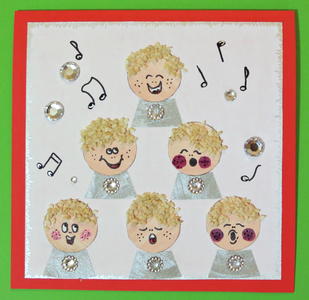
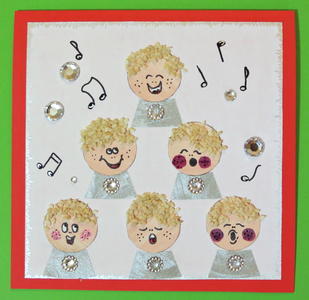
As far back as I can possibly remember, (and I’m in my mid-sixties, I’ve found that the forgettery is better than the memory, and I have probably forgotten more that I can remember,) but as far back as I can remember, music has always been an important part of my life. Music has soothed me, comforted me and got me through a bad day. I am what some may refer to as a frustrated musician. I was never able to master the discipline to play any type of an instrument, but not without a lack of trying; and try I did. The drums; the piano; the organ; the guitar, violin and even the accordion. Psalm 81:1-2 says, “Sing for joy to God our strength; shout aloud to the God of Jacob! Begin the music, strike the tambourine, play the melodious harp and lyre.“ But I realized the only instrument I might ever be able to master would be the CD, or the radio.
My mom raised me to attend St. Andrews Episcopal Church and I sang in the parish choir under the direction of Mr. Charles Johnsons, a man whom I admired for many reasons, especially his ability to master the keyboard of the church’s organ. I remember Mr. Johnson always referring to our voices as instruments. He shared many of his gifts of music and singing with the entire choir. He told us about St Augustine who spoke about the praise of singing and wrote that those who sang prayed twice. “For he that singeth praise, not only praiseth, but praiseth with gladness: he that singeth praise, not only singeth, but also loveth him whom he singeth.” In praise, there is the speaking forth of one confessing; in singing, the affection of one loving.
After singing in the choir for many years it finally dawned on me that I had indeed mastered the ability to play an instrument, even if it was my own voice. So I tried to take care of my instrument and sang many years for what ever reason I felt I was being called to sing. I loved to sing, and sang semi-professionally for many years. One of my greatest memories, was singing “Ave Maria” for the Late Cardinal Terrance Cooke, of New York, who at the time was the Military Vicar. Psalm 95: 1-2 says, “Come, let us sing for joy to the Lord; let us shout aloud to the rock of our salvation. Let us come before him with thanksgiving and extol him with music and song.”
It is my hope that we, like the herald angels in the Christmas carol, will continue to sing praise to our God and King not only during a Holiday season but throughout the year in church or wherever the spirit hits us. Songs of the heart go a long way in healing.
Psalm 47: 5-7, God has ascended amid shouts of joy, the Lord amid the sounding of trumpets. Sing praises to God, sing praises; sing praises to our King, sing praises. For God is the King of all the earth; sing to him a psalm of praise.
Let us pray.
Oh Lord, please bless our music that it might glorify your name. May the talent that you have bestowed upon us be used only to serve you. Let our music be a witness to your majesty and love, and remind us that you are always watching, and listening, from your throne above. May your presence and beauty be found in every note, and may the words that are sung reach the hearts of your people so they will draw closer to you. May your Spirit guide us through every measure so that we might be the instruments of your peace, and proclaim your glory with glad voices. Amen.
Do Not Be Afraid ~ Fr. Shawn Gisewhite, OPI
“Tell me the story of when I was born.” This is a request that Ethan, my friend’s 10 year old son makes whenever we get together: “Tell me the story of when I was born,” he always says.
And so his parents go through the whole story—the town and the house where they lived before his birth, the day or two leading up to that moment, and then the day of the birth. They him of the drive to the hospital, the helpful and not-so-helpful hospital staff, the length of my labor, the thoughts and feelings they had during the hard wait for him to arrive.
All of these things, all of these trivial, important things, build toward the big moment—the moment Ethan appears in the flesh, the moment his parents behold and hold him for the first time, the moment he is first called by his name.
“Tell me the story of when I was born.” Ethan’s request, of course, is not just to hear the facts surrounding his birth. Rather, he wishes to hear again about relationships and identity, to hear how the beginning informs the present and the future. And for his parents telling the story, it’s yet another chance to tell Ethan and anyone else who will listen about how they see the world and what’s important to them.
“Now the birth of Jesus took place in this way” – this is how Matthew begins the story of the Incarnation. And Matthew’s phrasing of it makes us believe, perhaps, that we’re about to hear a detailed telling of Jesus’s birth in the way that Luke might tell it. But Matthew, we will discover, is a different kind of writer than Luke. Luke wants to tell us the story through the experiences of Mary, a young woman without status who carries the son of God within her, and the shepherds, those living in the fields who will be the first to hear of the birth. On the other hand, Matthew wants to tell us about Joseph, a man whose goodness and righteousness take him far, but not all the way, as he prepares for the coming of something completely new: Emmanuel, “God with us.”
But I get ahead of myself.
The evangelist who composed the Gospel of Matthew was probably a Jewish Christian, possibly a scribe. The historical evidence suggests that he wrote between 80 and 90 CE and addressed his work to a community in conflict: Jewish Christians who were being pushed out of larger Jewish communities. These larger Jewish communities were led by Pharisees, Rabbis who assumed leadership of the Jewish people in the aftermath of the destruction of Jerusalem.
And so Matthew is at pains to place his own religious community squarely within its Jewish heritage and to portray a Jesus whose Jewish identity is beyond doubt. He therefore, begins his gospel by tracing Jesus’s genealogy. He could have gotten away with tracing Jesus back to King David, but Matthew takes no chances and traces Jesus’s lineage all the way back to Abraham. For Matthew, Jesus IS a Jew.
It’s within this context, then, that the focus on Joseph appears in Matthew’s story of Jesus’s birth. Joseph embodies the best parts of the Jewish tradition, a tradition that was all about keeping the law as a way to live with God. The law was a tried-and-true pattern of actions that expressed a Jew’s closeness to God and right relationship with others.
In Matthew 1:18–25 we read that during the time of his engagement to Mary, Joseph discovers that she is pregnant. Joseph knows the baby is not his, and he knows that Jewish law would find Mary guilty of adultery, an act that can be punished with death and that is always punishable by shame. The law mandated that Joseph divorce her. However, because Joseph is a righteous man, he also understands another part of his Jewish heritage: he understands that the law is to be tempered with mercy. And so instead of exposing Mary to a public divorce, as the reading says, he decides to dismiss her quietly, in a way that would reduce public inquiry into what has happened.
But as we see, even law tempered with mercy isn’t dramatic enough for Joseph to help usher in Emmanuel who is “God with us.” Something astonishing is needed. Something that goes beyond the old patterns of action that Joseph knows so well. Something that can only come from the shadowy world of dreams. It is in the night, away from the daylight world of the law, past even the late-in-the-day tempering impulse of mercy, that an alternative explanation of what is happening comes. And it’s through this dream that God reaches out and grasps this good and righteous man, this one who is the best that the tried-and-true tradition can offer.
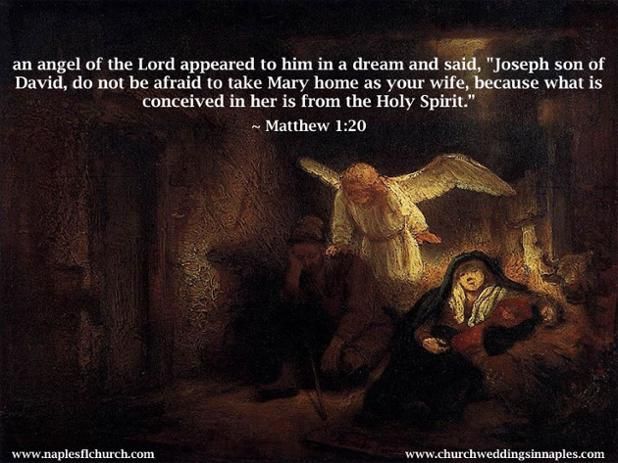
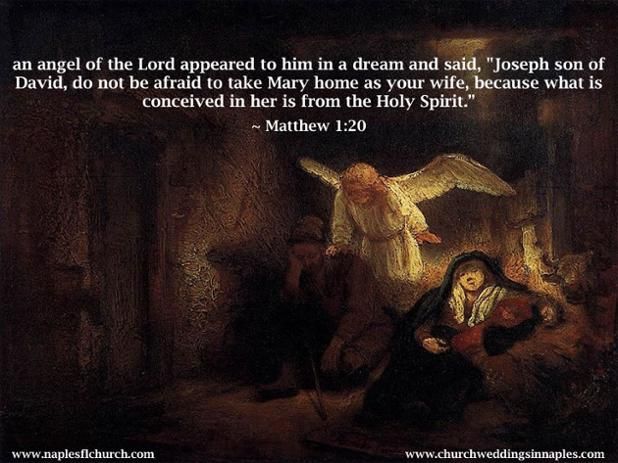
An angel appears to Joseph and speaks the same words that we will hear on Christmas in Luke’s gospel: “Joseph, son of David, do not be afraid. Do not be afraid to do something outrageous in order to bring to fruition something that the law and the prophets have yearned for, do not be afraid to do something that pitches you past any mercy you can imagine—do not be afraid to take Mary as your wife!” (I paraphrased a little for a more dramatic read.) This is a striking moment in Joseph’s life; all of what he knows—his life, his religion, his ethics—is being questioned by an angel in a dream, and that angel is inviting him to forsake all that knowledge and understanding to participate in a larger story.
I believe that we’re all a little like Joseph; we all limit ourselves by our tried-and-true ways of doing things. We each have our own ways of dealing with personal, spiritual, and professional matters. Our own ways of moving through this demanding season of the year. Perhaps there is a voice we’re already dimly aware of from a dark and mysterious place. Perhaps it’s a voice we’re trying to avoid. A voice that is asking us to go beyond those tried-and-true ways in order to surrender more fully to God and to assist in the coming of Emmanuel “God with us” in our own lives and in the life of the world.
But what will going beyond those tried-and-true ways mean? What things that we wish we could dismiss quietly might we be asked to make our own? “Do not be afraid,” the angel is saying to you and to me about making these mysterious things our own. “Do not be afraid.”
It seems that throughout the Bible God is always trying to tell us this—“Do not be afraid, Abraham, when I ask you to leave your homeland and to travel to a new place that will be your own. Do not be afraid, Moses, for I will be with you when you, a slave, speak to Pharaoh, the king of the Egyptians. Do not be afraid of any evil, David, for the Lord will be your shepherd no matter where you are. Do not be afraid, Mary, for you have found grace with God” (Paraphrasing again. Gulty.)
Do not be afraid. Do not be afraid to act.
And this brings us back to Joseph. In Matthew’s story of Jesus’s birth, Joseph is asked to make a leap, to take an action that goes beyond how he would normally understand the law, and in listening to the angel and taking this leap of action, he is doing what some see as quintessentially Jewish. About this, Rabbi Abraham Heschel once wrote, “A Jew is asked to take a leap of action rather than a leap of thought. He is asked to surpass his deeds, to do more than he understands in order to understand more than he does.”
In these last few days of Advent, a season of darkness and the mystery, a season when we need to retrace the stories of new birth and the return of light, may you and I hear a word from that dark place, a word that banishes all fear and encourages us to take one tiny leap of action to draw nearer to something we do not fully understand. Emmanuel is God with us: do not be afraid.
Amen.
Getting Ready (Translated from the Macedonian)~ The Rev. Dcn. Igor Kalinski, OPI
Matthew 11:2-11
Beloved family and friend in Christ our LORD, we start the new liturgical year with Advent season, very special season for me. As we are in the end of this year and preparing for the next, is a blessed opportunity as we remind of the color purple and violet, that we are passing through penitential time, time for reclusive, and contemplating, how we passed, what we’ve missed during last time in behind, how good and how bad we treated those that we have seen, meet or those that have approached us for help or just asked us for a company and chat, so to easy the life of solitude and emptiness.
I have two neighbors’, one an elderly, that lost his wife half year ago, and now he is feeling lonely, and how joyful he is when I go to visit him, talk to him and drink coffee together, make warm company, talk to them, and show them attention.
This season of awaiting the coming of our LORD in the earth, is a time when we can throw our old habitats, and reflect of how this energy, spending can bring even to one lonely person or forgotten from the society, that is worth, with showing our affection, share anything good with them, we can imagine are a many ways how to testify our Gospel into action.
Let us prepare dear brothers and sisters for the Coming pf our Redeemer, in flesh, let us think of modesty, humility, not of wasting of things that satisfy only for a moment, but in charitable works that will lasts forever.
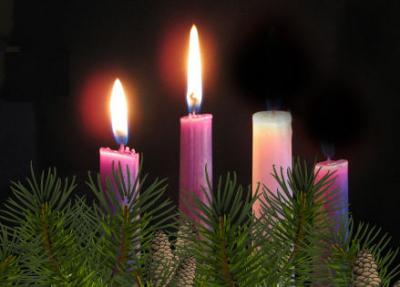
This penitential season is a lent in byzantine rite and penitential in the western rite, the vestments of the priest and deacon or bishop, the violet or purple, the candles with same color violet remind us to reflect of both, the penitent preparation of ourselves, and that purple color is royal, Jesus is King of Kings and lord of Lords.
For such solemn occasion, we should encounter in the beggar, in our poor neiughbour, in the elderly living alone, with our joy, our Christian attitude, with our action, we will find Jesus in them. If we approach closer to them, if we share our time with them, listen to their needs, hear their problems, family tragedies. We could be the lampstand that brings that joyful light of Jesus to the gentiles, the world, to them mankind, to our neighbours, with that we will encounter Jesus.
Let us brothers and sisters, strive to sacrifice our money, our skills, our time for those that have none close to them, let us show them that they are accepted and loved by us and appreciated.
Saint Gregorio Palama have said: “The whole work of His coming in peace, for this He bowed the heavens and came down”
Lets humbly ourselves, so the grace of God came to rest withis us, the Prince of Peace coming in flesh, Word Incarnate. We need to put oil in our lapm, because we don’t know the time of His coming, we need to be vigilant, so the attacks from this world will not shake our expectation eith patient as the todays gospel for the return of our Lord as He promised He will.
While in this world that God gave us this time for preparation for the eternity, we study we examine our conscience, we try to put in our daily routine, all that we read to put in action to those that will need our help.
Most historic event of the Incarnation of the Word, unite us his Bride the Church to celebrate Gods plan to reveal to us through his Son Jesus Christ. He will come again in meantime, we witj contrite hearts to find Him in those that need someone to show them that they are not forgotten, because if we forgot our neioghbours, we forgotten on Jesus.
This Advent Season with those in hospital, hospices, those that day and night don’t see anyoe, and only possibility could be us, showing them love and charity.
Lets brothers and sisters renew ourselves, to clean old bad and negative habitats and strongholds, ands trive to achive peace humility, love and forgiveness, to not forget the beggar that God show us in our daily walk. Amen
St. Lucy, Virgin and Martyr~ The Rev. Deacon Dollie Wilkinson, OPI

We often hear the common phrase, “He/She must be a saint.” when referencing someone who does good for others, or has suffered much but still perseveres. But what is actually required for the Church to declare someone a saint. Evidently this isn’t a quick, or easy, process. There are five important steps to sainthood:
First, the person’s local bishop investigates their life by gathering information from witnesses of their life and any writings they may have written. If the bishop finds them to be worthy of being a saint, then he submits the information that he gathered to the Vatican’s Congregation for the Causes of Saints.
Second, the Congregation for the Causes of Saints can choose to reject the application or accept it and begin their own investigation of the person’s life. If the application is accepted, the person may be called Servant of God.
Third, if the Congregation for the Causes of Saints approves of the candidate, they can choose to declare that the person lived a life heroically virtuous life. This isn’t a declaration that the person is in heaven, but that they pursued holiness while here on earth. If this is indeed found to be the case, the person may be called Venerable.
Fourth, to be recognized as someone in heaven requires that a miracle has taken place through the intercession of that person. The miracle is usually a healing. The healing has to be instantaneous, permanent, and complete while also being scientifically unexplainable. Miracles have to be first verified as scientifically unexplainable by a group of independent doctors, then the person is approved by a panel of theologians, and then the final approval lies with the pope. If this is the case, a person is declared a Blessed.
Note: Besides the number of miracles attributed to them, the difference between is a blessed and a saint is that the scope of devotion for a blessed is narrower – usually limited to a specific group of people or a particular region of the world while a saint is held up for devotion for the universal Church.
Fifth, a second miracle is needed in order to declare someone a Saint. The confirmation of a second miracle goes through the same scrutiny as the first.
The five-step process is a general outline for how someone becomes a saint. There are definitely exceptions to this process and situations that may change the process as well. So how is it, a mere slip of a girl, become a saint? She is one of eight women who, along with the Blessed Virgin Mary, are commemorated by name in the Canon of the Mass. Her feast day, known as Saint Lucy’s Day, is celebrated in the West on December 13th.
St. Lucy was born into a rich noble Roman family. At a very young age she lost her father who was a Christian. Lucy was left behind with a huge dowry. Lucy’s mother wanted Lucy to marry a rich pagan man. Lucy, being a virtuous young woman, did not want to marry a pagan man. Lucy asked her mother to distribute the dowry among the poor. The mother did not agree. As a young teenager, Lucy had already consecrated her virginity and life to God. She was zealously working in the service of God helping the poor.
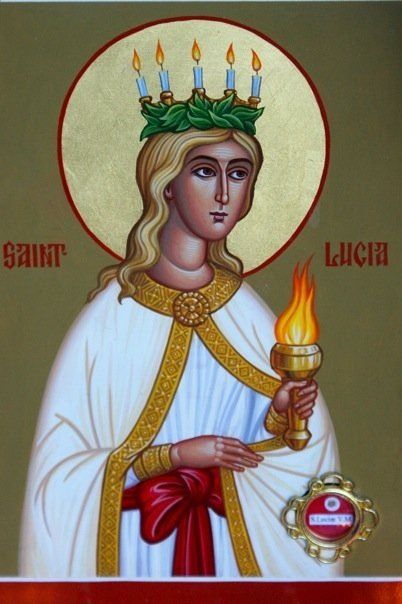
In addition she helped her fellow Catholics hiding in the dark underground catacombs who were at risk of suffering persecution. She would wear a wreath of candles on her head to find her way in the dark, as her hands were full of food and drink for the people. Lucy was also well known for her beautiful eyes. It was said that her eyes radiated her love for Christ.
Lucy’s mother became very ill from a bleeding problem. She had tried many treatments, but failed. Lucy then asked her mother to accompany her to Saint Agatha’s shrine where they both prayed all night. Due to exhaustion, they both fell asleep near St. Agatha’s tomb. St. Agatha had appeared to Lucy in a dream and gave her the good news that her mother was healed. Saint Agatha further informed Lucy that she will be the glory of Syracuse – the city where Saint Lucy lived.
Lucy’s mother, convinced with her miracle cure, then complied with Lucy’s request to distribute their wealth among the poor. The pagan man who proposed to Lucy was furious when he heard the news. He decided to destroy Lucy’s life denouncing her as a Christian to the Governor of Syracuse, Sicily.
That was a time when many Christians were persecuted for their faith. The governor sent his guards to forcibly take Lucy to a brothel house and then insult her in public. When the soldiers came to take her, Lucy was so filled with the Holy Spirit that she could not be moved. They claimed that she was heavier than a mountain. When the Governor questioned her as to how she could stay strong, she claimed that it was the power of Jesus her Lord and God. Finally they tortured Lucy to death and she died as a martyr.
There are two legendary stories about St Lucy’s eyes. As Lucy had beautiful eyes, the pagan man who was proposed to marry Lucy, wanted Lucy’s eyes. One story tells us that Lucy gifted her eyes to the pagan man, and asked him to leave her alone. The second story tells us that during the torture, Lucy’s eyes were taken out and that God had restored her eyes back. Either way, Lucy’s eyes were taken out and God had restored her eyes. That was the reason she became the patron saint for people who are blind and with eye problems.
The most important aspect of her story was that Lucy was such a brave young woman, who was zealous in giving her life to God. She was ready to give her eyes and even her life, but stood strong in her faith at a time where Christians were persecuted for their faith. This is why St. Lucy is venerated as a virgin and martyr. Matthew 6:22 shows us how important is our eyes, when we are in service to the Lord.
“The eye is the lamp of the body; so then if your eye is clear, your whole body will be full of light.”
Lucy sets a good example to our young people today, who are persecuted for their faith at school, at universities and work places. Her message would be, “To stand strong in your faith, no matter how hard the situation may be.”.
St Lucy is also the patron saint of Syracuse. Over the centuries many people have been healed by God through the intercession of St. Lucy. Lucy, whose name can mean “light” or “lucid,” is the patron saint of the blind. She is often seen with the emblem of eyes on a cup or plate. In paintings, she is often depicted with a golden plate holding her eyes and often holds a palm branch, which is a symbol of victory over evil. Lucy, though young, truly exemplified what Paul, in Romans 12:2, strives to tell us all:
“Do not be conformed to this world, but be transformed by the renewal of your mind, that by testing you may discern what is the will of God, what is good and acceptable and perfect.”
St. Lucy’s Prayer:
Saint Lucy, you did not hide your light under a basket, but let it shine for the whole world, for all the centuries to see. We may not suffer torture in our lives the way you did, but we are still called to let the light of our Christianity illumine our daily lives. Please help us to have the courage to bring our Christianity into our work, our recreation, our relationships, our conversation — every corner of our day.
Amen

The Three Trees ~ The Rt. Rev. Michael Beckett, OPI

Before we moved to New Mexico, we had enough Christmas decorations to open a rather large Christmas store. Scott and I both love Christmas, with the lights and the decorations, and the sheer fun of the secular side of things. When we moved, we gave away most of our things, because we decided it was time to ‘downsize’ and make things a little more simple. We went through what we had, kept a lot of his mother’s things and things that meant a something to us, and things we just couldn’t part with. While decorating our Christmas tree, this year, I found an ornament I’d not seen before. It was one of those ‘Hallmark Keepsake Ornaments” depicting “The Story of the Three Trees.” Now, having taught elementary school for a zillion years, and having been an English major with an emphasis on Children’s literature, I’m pretty well acquainted with a great number of folktales from all over the world. This one, however, I seem to have missed. As I read it, several scriptures popped into my head, but the strongest of these were:
Jeremiah 29:11
“I know the plans I have for you,” declares the Lord, “plans to prosper you and not to harm you, plans to give you hope and a future.”
and
Matthew 5:5-8
5 “Blessed are the humble, for they shall inherit the earth. 6 “Blessed are those who hunger and thirst after righteousness, for they shall be filled. 7 “Blessed are the merciful, for they shall obtain mercy. 8 “Blessed are the pure in heart, for they shall see God.
And having said as so, here is the story:
The Three Trees
Once upon a mountain top, three little trees stood and dreamed of what they wanted to become when they grew up. The first little tree looked up at the stars and said: ” I want to hold treasure. I want to be covered with gold and filled with precious stones. I’ll be the most beautiful treasure chest in the world!” The second little tree looked out at the small stream trickling by on it’s way to the ocean. ” I want to be traveling mighty waters and carrying powerful kings. I’ll be the strongest ship in the world! The third little tree looked down into the valley below where busy men and women worked in a busy town. I don’t want to leave the mountain top at all. I want to grow so tall that when people stop to look at me they’ll raise their eyes to heaven and think of God. I will be the tallest tree in the world.
Years, passed. The rain came, the sun shone and the little trees grew tall. One day three wood cutters climbed the mountain. The first wood cutter looked at the first tree and said, “This tree is beautiful. It is perfect for me.” With a swoop of his shining ax, the first tree fell. “Now I shall make a beautiful chest, I shall hold wonderful treasure!” the first tree said.
The second wood cutter looked at the second tree and said, “This tree is strong. It’s perfect for me.” With a swoop of his shining ax, the second tree fell. “Now I shall sail mighty waters!” thought the second tree. ” I shall be a strong ship for mighty kings!”
The third tree felt her heart sink when the last wood cutter looked her way. She stood straight and tall and pointed bravely to heaven. But the wood cutter never even looked up. “Any kind of tree will do for me.” He muttered. With a swoop of his shining ax, the third tree fell.
The first tree rejoiced when the wood cutter brought her to a carpenter’s shop. But the carpenter fashioned the tree into a feed box for animals. The once beautiful tree was not covered with gold, or treasure. She was coated with saw dust and filled with hay for hungry farm animals.
The second tree smiled when the wood cutter took her to a shipyard, but no mighty sailing ship was made that day. Instead the once strong tree was hammered and awed into a simple fishing boat. She was too small and too weak to sail to an ocean, or even a river, instead she was taken to a little lake.
The third tree was confused when the wood cutter cut her into strong beams and left her in a lumberyard. “What happened?” The once tall tree wondered. ” All I ever wanted was to stay on the mountain top and point to God…”
Many days and nights passed. The three trees nearly forgot their dreams. But one night, golden starlight poured over the first tree as a young woman placed her newborn baby in the feed box. “I wish I could make a cradle for him.” Her husband whispered. The mother squeezed his hand and smiled as the starlight shone on the smooth and sturdy wood. ” This manger is beautiful.” She said. And suddenly the first tree knew he was holding the greatest treasure in the world.
One evening a tired traveler and his friends crowded into the old fishing boat. The traveler fell asleep as the second tree quietly sailed out into the lake. Soon a thundering and a thrashing storm arose. The little tree shuddered. She new she did not have the strength to carry so many passengers safely through the wind and the rain. The tired man awoke. He stood up, stretched out his hand, and said, “Peace.” The storm stopped as quickly as it had begun. And suddenly the second tree knew he was carrying the king of heaven and earth.
One Friday morning, the third tree was startled when her beams were yanked from the forgotten wood pile. She flinched as she was carried through an angry jeering crowd. She shuddered when soldiers nailed a man’s hand to her. She felt ugly and harsh and cruel. But on Sunday morning, when the sun rose and the earth trembled with joy beneath her, the third tree knew that God’s love had changed everything. It had made the third tree strong. And every time people thought of the third tree, they would think of God. That was better than being the tallest tree in the world.
The next time you feel down because you didn’t get what you wanted, sit tight and be happy because God is thinking of something better to give you.
May all of you have a blessed second week of Advent!
The Memorial of St. Nicholas ~ Fr. Michael Beatty, Aspirant

Friday of the First Week of Advent: Is. 29:17-24; Ps. 24:1, 4, 13-14; Mt. 9:27-31
(Optional) Memorial of St. Nicholas of Myra, Bishop: Is. 6:1-8; Ps. 40:2, 4, 7-11; Lk. 10:1-9
There is a rhythm to the daily Mass readings, by which the Church reminds us that, while there is “a reason to the season,” there is another, deeper purpose to the season than what lies on the surface. This characteristic of the readings, which is especially prominent during the preparatory/penitential seasons of Advent and Lent, serves to remind us that the point of the season is not merely to prepare us, spiritually, for the coming festive seasons of Christmas and Easter, but to impress upon us that that preparation points toward our mission as Christian disciples. Not infrequently during these periods, a succession of two or three days’s readings will find counterpoint in the next day’s reading, when an alternative vision of the prophetic message – or a view of the realization of the promise that has unfolded over the previous days is shown to come to fulfillment – provides a sense of “what it has all been about” during the earlier part of the week.
It happens occasionally, as today, that when two sets of readings are offered (as under the U.S. Conference of Catholic Bishops’s new scheme for providing proper readings both for the Mass “of the season,” and also for any memorials, either obligatory, or optional, occurring on that day), they provide, among themselves, the sort of counterpoint described above, in a more compact – and hence, more explicit presentation. The readings for Friday of the First Week of Advent tell of the promise of the coming Kingdom of God. Drawn from the prophet Isaiah’s extended meditation on “The Lord Alone, Israel’s and Judah’s Salvation” (chapters 28-33), they foretell a time when the Promised Land shall bloom “like an orchard”; when the deaf shall hear and the blind shall see; when evildoers will be cut off and cast into perdition; when Jacob shall once again venerate and worship the Lord.
The responsorial psalm expresses Jacob’s (and our!) longing for the house of the Lord, our desire to live only in and with and for Him. The Psalmist anticipates Jacob’s return to holiness, which Isaiah prophesied, and calls upon Jacob to be steadfast: “Wait for the Lord with courage; be stouthearted, and wait for the Lord!” (Ps. 24:14). The Gospel reading validates and confirms the typology of the prophetic message from Isaiah; as the Prophet notes, on the day of the Lord, the deaf will hear and the blind will see; in the Gospel, Our Lord cures two blind men, thus indicating that the prophesied day of the Lord (that is, the Kingdom of Heaven) is at hand. The cured men’s gratitude for their healing – they disobey the Lord’s injunction to remain silent about what has happened to them, but rather “went out and spread word of him through all that land” (v. 31) indicates, or foreshadows, how we are to respond to the coming of the Messiah.
The alternate readings provided for the Memorial of St. Nicholas of Myra give us a different perspective on salvation history, and the promise of the coming Messiah. They stand in contrast not only to the readings for the weekday, but for the readings that we have heard all of this first week of Advent. If the readings for Friday of the First Week of Advent show us the promise of how things will be when the Kingdom of God is established (and are of a piece with, and in line with, the daily readings from the whole week just past), the readings for the Memorial of St. Nicholas show us in a particular way how we are to respond to the coming of Christ.
Today’s theme, the theme of St. Nicholas, if you will, should have special resonance for Dominicans, and indeed for all mendicants. It is a comprehensive, clarion call to mission – to being sent forth, and actually going forth.
The Scripture reading is the beginning of “The Book of Emmanuel,” from Isaiah 6. It is the Prophet’s vision of the Kingdom of Heaven (which will be mirrored in the prophecy of Daniel, and the apocalyptic vision of St. John), culminating in the purification of Isaiah’s lips with a burning coal (thus purifying him), and concluding with the Lord’s rhetorical invitation, “Whom shall I send?” – to which Isaiah responds, as we should respond, “Here I am! Send me!” The responsorial psalm echoes, Isaiah’s eager longing to be sent, and recites the Psalmist’s record of steadfast, active ministry on toward, and on behalf of, the People of God.
The Gospel passage from Luke recounts Our Lord’s dispatch of the 72 disciples, two-by-two (a profound influence on St. Dominic’s plan of action for the dispersal of the brethren!), and His instructions as to how they are to act, both while traveling and while ministering in the various towns.
So what is the point of all of this? Why this drawn-out commentary on what-will-be versus being-sent-forth? The point is this: in the midst of our Advent preparations, as we figuratively sweep out our hearts and make all ready for the coming of the Messiah, today’s readings serve as a trenchant reminder that we are not just to sit back and wait for the waves of Emmanuel to wash over us. It is not enough for us to say, “Veni, veni, Emmanuel,” no matter how fervently, and leave it at that.
We are called – at all times, but particularly during the preparatory seasons of Advent and Lent – to go forth to meet Christ, Who comes forth to meet us. Our Mass readings this week have prophesied, through the pen of perhaps the greatest of all of the messianic prophets, of what a blissful era of peace the coming of the Kingdom of God will be. Today’s readings for the Memorial of St. Nicholas are a call to action for us to do our part to make the prophesied Kingdom a reality. It is a call to conversion, and a summons to action.
The coming of the Messiah should not be something that happens to us, or around us, or merely in our presence. It should be – and if we are to obtain the full graces thereof, it must be – something that happens with us, with our cooperation, in greeting Our Lord as He comes to us in the flesh. So on this First Friday of December, the first Friday of Advent – the first Friday of liturgical year 2020, let us take courage. Let us joyfully anticipate the Child Who is to come. Let us look forward with eager anticipation not merely to the coming, but to the establishment of the Kingdom of God. Let us make ourselves ready, interiorly and exteriorly, to receive God-made-Man, Emmanuel. But let us also remember that we are sent and summoned to exercise our own ministries in bringing the Kingdom to life.
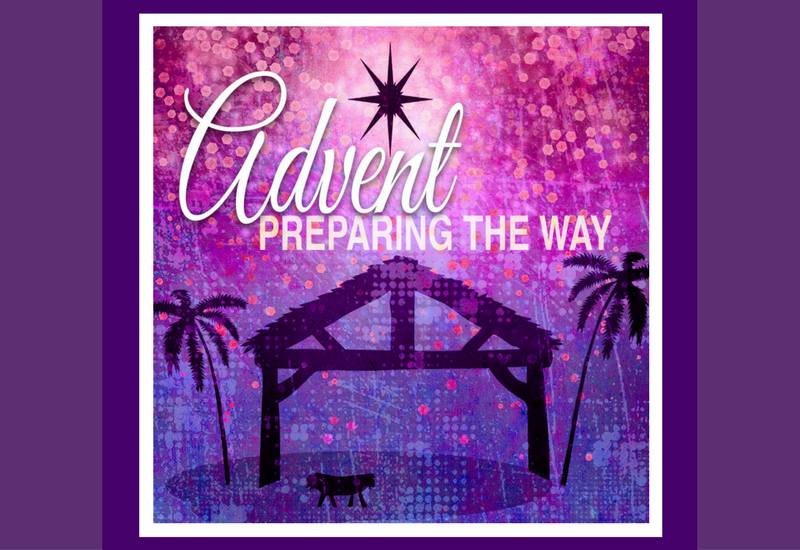
Come Lord Jesus! The Meaning of Advent ~ The Rt. Rev. Michael Beckett, OPI

Within the calendar year, there is another year: the great cycle of the liturgical year, revolving around the life and ministry Christ. Each season of the liturgical year has its own particular focus, feasts, words, and colors, giving us an opportunity to reflect on the meaning of the coming of Jesus, his life, and his commission to His people to be a light to the world.
Since the 900s, Advent has marked the beginning of the church year, and is a season of great anticipation, preparation, and excitement, traditionally focusing on the Nativity of the Christ Child, when Jesus came as our Savior. During Advent, we as Christians also direct our thoughts to His second coming as judge.
The word Advent is from the Latin adventus, meaning “coming,” and is celebrated during the four weeks of preparation for Christmas. Advent always contains four Sundays, beginning on the Sunday nearest the feast of St. Andrew the Apostle, (November 30) and continuing until December 24. It blends together a penitential spirit, very similar to Lent, a liturgical theme of preparation for the Second and Final Coming of the Lord, called the Parousia, and a joyful theme of getting ready for the Bethlehem event.
Thus, Advent is far more than simply marking a 2,000 year old event in history. It is celebrating a truth about God, the revelation of God in Christ whereby all of creation might be reconciled to God. That is a process in which we participate, and the consummation of which we anticipate. Scripture reading for Advent reflect this emphasis on the Second Advent, including themes of accountability for faithfulness at His coming, judgment of sin, and the hope of eternal life.
In this double focus on past and future, Advent also symbolizes the spiritual journey of individuals and a congregation, as they affirm that Christ has come, that He is present in the world today, and that He will come again in power. That acknowledgment provides a basis for holy living, arising from a profound sense that we live “between the times” and are called to be faithful stewards of what is entrusted to us as God’s people. As the church celebrates God’s Incarnation in the physical presence of Jesus Christ, and anticipates a future consummation to that history for which “all creation is groaning awaiting its redemption,” it also confesses its own responsibility as a people commissioned to “love the Lord your God with all your heart” and to “love your neighbor as yourself.”
We celebrate with gladness the great promise of Advent, yet knowing that there is also a somber tone as the theme of final judgment is added to the theme of promise. This is reflected in some of the Scripture readings for Advent, in which there is a strong prophetic tone of accountability and judgment of sin. This is also faithful to the role of the Coming King who comes to rule, save, and judge the world.
Because of the dual themes of judgment and promise, Advent is a time of preparation that is marked by prayer. While Lent is characterized by fasting and a spirit of penitence, Advent’s prayers are prayers of humble devotion and commitment, prayers of submission, prayers for deliverance, prayers from those walking in darkness who are awaiting and anticipating a great light (Isaiah 9).
Historically, the primary color of Advent is Purple. This is the color of penitence and fasting as well as the color of royalty to welcome the Advent of the King. The purple of Advent is also the color of suffering used during Lent and Holy Week. This points to an important connection between Jesus’ birth and death. The nativity, the Incarnation, cannot be separated from the crucifixion. The purpose of Jesus’ coming into the world, of the “Word made flesh” and dwelling among us, is to reveal God and His grace to the world through Jesus’ life and teaching, but also through his suffering, death, and resurrection. To reflect this emphasis, originally Advent was a time of penitence and fasting, much as the Season of Lent and so shared the color of Lent.
In the four weeks of Advent the third Sunday came to be a time of rejoicing that the fasting was almost over (in some traditions it is called Gaudete Sunday, from the Latin word for “rejoice”). The shift from the purple of the Season to pink or rose for the third Sunday Advent candles reflected this lessening emphasis on penitence as attention turned more to celebration of the season.
In recent times, however, Advent has undergone a shift in emphasis, reflected in a change of colors used in many non-Catholic churches. The penitential aspect of the Season has been almost totally replaced by an emphasis on hope and anticipation. Many Protestant churches now use blue to distinguish the Season of Advent from Lent. Royal Blue is sometimes used as a symbol of royalty. Some churches use Bright Blue to symbolize the night sky, the anticipation of the impending announcement of the King’s coming, or to symbolize the waters of Genesis 1, the beginning of a new creation. Some churches, including some Catholic churches, use bluish violet to preserve the traditional use of purple while providing a visual distinction between the purple or red violet of Lent. However, it must be remembered that blue is not an approved liturgical color, for Advent or any other season, and it should not be the primary color in any Catholic liturgical celebration.
This does not eliminate any sense of penitence from the Season. With the focus on the Advent or Coming of Jesus, especially in anticipating His Second Advent, there remains a need for preparation for that coming. Most liturgical churches incorporate confessional prayers into the services of Advent that relate to a sense of unworthiness as we anticipate His Coming. It is appropriate even in more traditional services of worship to incorporate confessional prayers as part of the anticipation and preparation of the Season.
Even with the shift to blue for Advent in many non-Catholic churches, the vast majority of churches retain pink or rose among the Advent colors, and use it on the last Sunday of Advent. In the four weeks of Advent the third Sunday came to be a time of rejoicing that the fasting was almost over (in some traditions it is called Gaudete Sunday, from the Latin word for “rejoice”), and it remains associated with Joy.
The Advent wreath is a popular symbol of the beginning of the Church year in many churches. It is a circular evergreen wreath with five candles, four around the wreath and one in the center. The circle of the wreath itself reminds us of God, His eternal being and endless mercy, which has no beginning or end. The green of the wreath speaks of the hope that we have in God, the hope of newness, of renewal, of eternal life.
The four outer candles represent the period of waiting during the four Sundays of Advent, which themselves symbolize the four centuries of waiting between the prophet Malachi and the birth of Christ.
The center candle is white and is called the Christ Candle. It is traditionally lighted on Christmas Eve or Christmas Day. The central location of the Christ Candle reminds us that the incarnation is the heart of the season, giving light to the world.
The light of the candles becomes an important symbol of the season. The light reminds us that Jesus is the light of the world that comes into the darkness of our lives to bring newness, life, and hope. It also reminds us that we are called to be a light to the world as we reflect the light of God’s grace to others (Isa 42:6). The progression in the lighting of the candles symbolizes the various aspects of our waiting experience. As the candles are lighted over the four week period, it also symbolizes the darkness of fear and hopelessness receding and the shadows of sin falling away as more and more light is shed into the world. The flame of each new candle reminds the worshippers that something is happening, and that more is yet to come. Finally, the light that has come into the world is plainly visible as the Christ candle is lighted at Christmas, and worshippers rejoice over the fact that the promise of long ago has been realized.
The Ultimate Defender ~ The Rev Dcn Dollie Wilkinson, OPI

Luke 21:5-19
“Some of his disciples were remarking about how the temple was adorned with beautiful stones and with gifts dedicated to God. But Jesus said, “As for what you see here, the time will come when not one stone will be left on another; every one of them will be thrown down.” “Teacher,” they asked, “when will these things happen? And what will be the sign that they are about to take place?” He replied: “Watch out that you are not deceived. For many will come in my name, claiming, ‘I am he,’ and, ‘The time is near.’ Do not follow them. When you hear of wars and uprisings, do not be frightened. These things must happen first, but the end will not come right away.” Then he said to them: “Nation will rise against nation, and kingdom against kingdom. There will be great earthquakes, famines and pestilences in various places, and fearful events and great signs from heaven. “But before all this, they will seize you and persecute you. They will hand you over to synagogues and put you in prison, and you will be brought before kings and governors, and all on account of my name. And so you will bear testimony to me. But make up your mind not to worry beforehand how you will defend yourselves. For I will give you words and wisdom that none of your adversaries will be able to resist or contradict. You will be betrayed even by parents, brothers and sisters, relatives and friends, and they will put some of you to death. Everyone will hate you because of me. But not a hair of your head will perish. Stand firm, and you will win life.”.
I cannot remember a time when our country has been so divided over different political views, religious beliefs, and even still the color of one’s skin. Our current President is being impeached because of shady dealings with another country. Though there have been other past presidents who have been impeached, this current impeachment trial has left our nation not knowing who to trust. He is also building a wall between America and Mexico, to stop illegal immigrants from coming into our country. Now families are separated and put in detention centers, with children being the innocent victims. They are left wondering when, or if they will ever see their mom or dad again. We need to remember the words Jesus spoke to His disciples who expressed over what was going to happen. “When you hear of wars and uprisings, do not be frightened.” He further goes on to reassure them. “They will hand you over to synagogues and put you in prison, and you will be brought before kings and governors, and all on account of my name.”. But we need not be afraid of the current upheavals. As He eased the worries of His disciples, He also offers us words of comfort. “For I will give you words and wisdom that none of your adversaries will be able to resist or contradict.”.
I had a doctor’s appointment today for a CT of my lungs. This was only one of the many tests and procedures I’ve had since January. After being diagnosed with a liver disease, there were many who thought I was dying. Even members of my own family were sure I would never make it home. But the main thing that kept me from giving up, was my unwavering faith in the great Healer. God was always right there with me. At one point they tried to stop my heart to get a better picture of what was wrong. Three times they tried, and three times my body refused the medicine. That was a clear sign that I was truly in God’s hands. Just as Jesus promised His disciples, “But not a hair of your head will perish. Stand firm, and you will win life.”. I always knew that God’s got this. I will always stand firm in my faith, knowing the great Healer will never leave me.
He holds us all in His hands….
For All The Saints! ~ The Rt. Rev. Michael Beckett, OPI
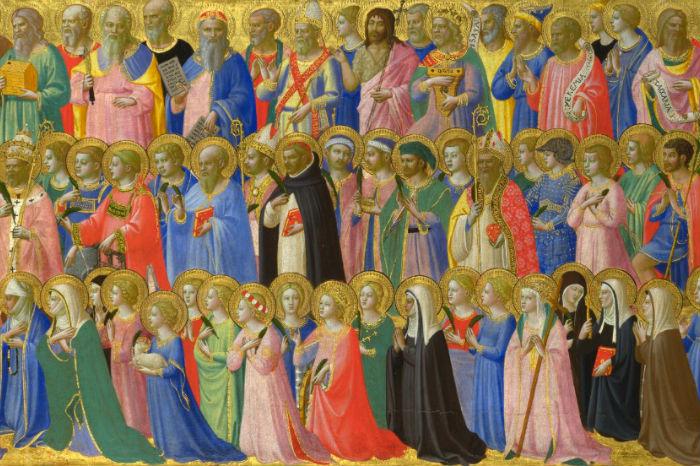
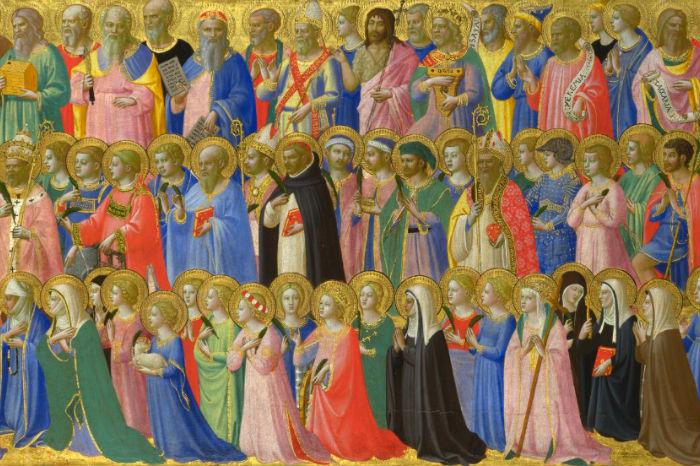
Today we celebrate the Solemnity of All Saints (also called All Saints Day).
All Saints’ Day, All Hallows Day, or Hallowmas is solemnly celebrated on 1 November by many Western Liturgical Churches to honor, literally, all the saints, known and unknown; those individuals who have attained Heaven; all the holy men and women who have lived their lives for God and for his church, who now have attained Beatific vision and their reward of Heaven.
In early Christian history it was usual to solemnize the anniversary of a Martyr’s death for the Lord at the place of their martyrdom. Frequently there were multiple martyrs who would’ve suffered and died on the same day which led to multiple commemorations on the same day. Eventually, the numbers of martyrs became so great that it was impossible for a separate day to be assigned to each individually, but the church feeling that every martyr should be venerated, appointed a feast day to commemorate them all on the same day.
The origin of the festival of All Saints celebrated in the West dates to the month of May in the year 609 or 610, when Pope Boniface IV consecrated the Pantheon at Rome to the Blessed Virgin and all the martyrs. In the 730’s Pope Gregory III moved the Feast of All Saints to 1 November when he founded an oratory in St. Peter’s for the relics of the holy apostles and of all saints, martyrs and confessors, of all the just made perfect who are at rest throughout the world.”
From our Readings today, we hear of the vision of St. John from the Book of Revelation:
After this, I had a vision of a great multitude, which no one could count, from every nation, race, people, and tongue. They stood before the throne and before the Lamb, wearing white robes and holding palm branches in their hands. They cried out in a loud voice:
“Salvation comes from our God, who is seated on the throne, and from the Lamb.”
All the angels stood around the throne and around the elders and the four living creatures. They prostrated themselves before the throne, worshiped God, and exclaimed:
“Amen. Blessing and glory, wisdom and thanksgiving, honor, power, and might be to our God forever and ever. Amen.”
Then one of the elders spoke up and said to me, “Who are these wearing white robes, and where did they come from?” I said to him, “My lord, you are the one who knows.” He said to me, “These are the ones who have survived the time of great distress; they have washed their robes and made them white in the Blood of the Lamb.”
Who are these nameless saints? Their anonymity teaches us that sainthood is not reached through great achievements or rare acts of bravery. Sainthood comes from simply loving God and doing our best to live our lives in a way consistent with Jesus’ commandment. I would dare say that none of the saints actually set out to be saints. They simply loved God and lived their lives to follow Him.
Revelation goes on to remind us that giving our lives over to God will not protect us or insulate us from hardship. Living in, for, with, and through God, however, will make sure that we can and will endure whatever “great distress” comes our way. In this passage of Revelation, John is speaking specifically of those who have given their lives for their faith. Christians throughout the Middle East are being martyred by forces opposed to Christianity, but in reality, it is very unlikely that any of us will be called upon to sacrifice our lives for our faith.
Our challenge, then, is to live for Christ, rather than to die for Christ. Jesus does ask to lay down our lives for Him. Peter said to the Lord, “I will lay down my life for Your sake,” and he meant it (John 13:37). Has the Lord ever asked you, “Will you lay down your life for My sake?” (John 13:38). It is much easier to die than to lay down your life day in and day out with the sense of the high calling of God. We are not made for the bright-shining moments of life, but we have to walk in the light of them in our everyday ways. For thirty-three years Jesus laid down His life to do the will of His Father. “By this we know love, because He laid down His life for us. And we also ought to lay down our lives for the brethren” (1 John 3:16).
If we are true followers of Jesus, we must deliberately and carefully lay down our lives for Him. It is a difficult thing to do, and thank God that it is, for great is our reward. Salvation is easy for us, however, because it cost God so much. But the exhibiting of salvation in our lives is difficult. God saves a person, fills him with the Holy Spirit, and then says, in effect, “Now you work it out in your life, and be faithful to Me, even though the nature of everything around you is to cause you to be unfaithful.” And Jesus says to us, “…I have called you friends….” Remain faithful to your Friend, and remember that His honor is at stake in your bodily life. We are called to remain faithful, despite the reasons the world gives us to not, despite the “great distresses” in our lives.
Who are these dressed in white robes? It is my prayer to be counted among them. What about you?
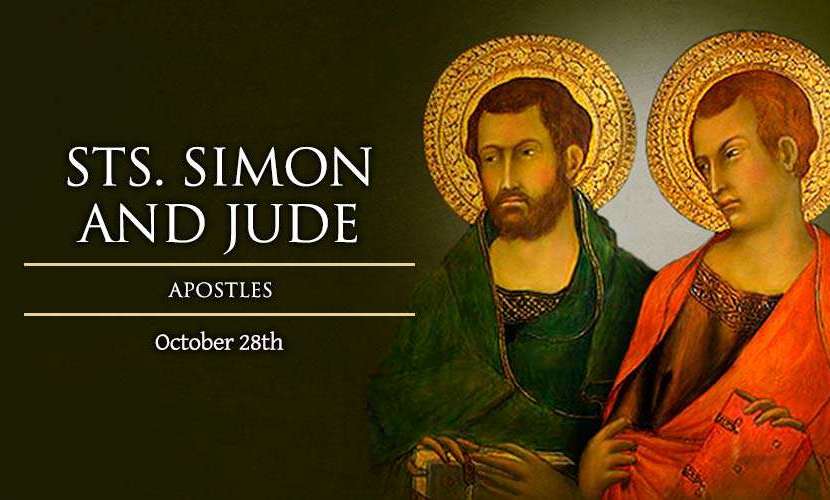
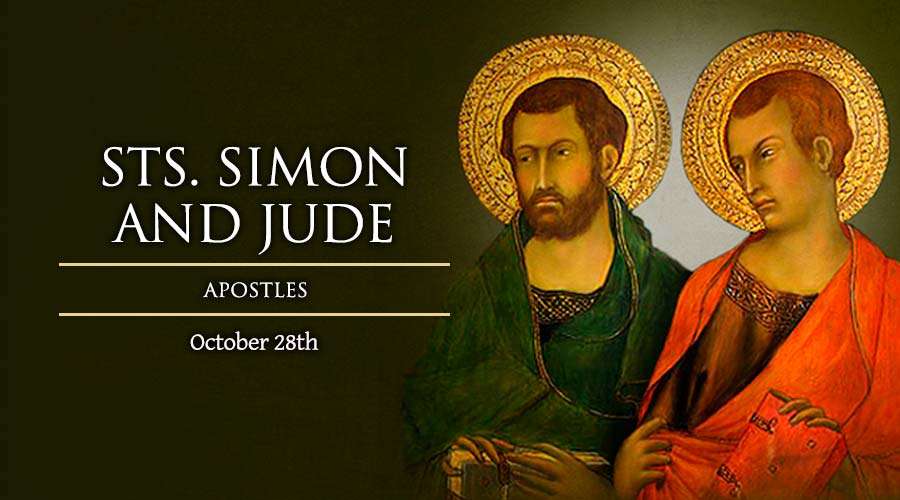
The Feast of Sts Simon and Jude ~ The Very Rev. Lady Sherwood, OPI
Reading 1: EPH 2:19-22
Responsorial Psalm: PS 19:2-3, 4-5
Gospel:LK 6:12-16
Liturgical colour: Red.
My dearest Brothers and sisters=in=Christ:
Today we come together as the church to celebrate the feast day of Saints Simon and Jude. Little is known about either of these saints apart from the fact that they were called by Jesus to be among his band of disciples and were later named amongst the Apostles.
Let us firstly look at Saint Simon:
Simon was a simple Galilean, a brother of Jesus, as the ancients called close relatives in those times, including such as uncles and first cousins. He was one of the Saviour’s four first cousins, together with James, Jude and Joseph. These were all sons of Mary, the wife of Alpheus, or Cleophas, both names being a derivative of the Aramaic Chalphai. According to tradition Cleophas was the brother of Saint Joseph, Jesus earthly father. All the sons of this family were raised at Nazareth, close neighbours of the Holy Family.
All were called by Our Lord to be Apostles: pillars of his Church. Saint Mark tells us that Simon was born in Cana, the place, according to Saint John, of Jesus’ first miracle. Some traditions identify Simon as the bridegroom at that wedding and suggest that he became a disciple as a direct response to witnessing that miracle, a miracle that was, after all, performed, at the request of Mary, to get the newly-weds out of a somewhat embarrassing predicament.
Saint Simon is not mentioned anywhere in the New Testament except in lists of the Apostles’ names.
Tradition has it that Saint Simon preached in Mauretania (an area which approximated to present day north-west Africa and southern Spain), in Egypt and in Libya, leaving behind him the fertile hills of Galilee, where he had been engaged in cultivation of the vineyards and olive gardens. He later rejoined his brother Jude in Persia (modern day Iran) where they laboured and died together, probably martyred, hence the change to a red altar frontal in their honour on this their feast day. At first the Persian king respected them, for they had manifested power over two ferocious tigers that had terrorised the land. With their king, sixty thousand Persians became Christians, and churches rose over the ruins of the idolatrous temples. However, when they visited other parts of the Persian kingdom unconverted, pagan hordes commanded them to offer sacrifices to the Sun god. They prayed for mercy and offered their lives to the living God but the idolaters fell on the two Apostles and massacred them, while they blessed God and prayed for their murders.
Now let us look at Saint Jude:
Saint Jude is also known by a variety of other names. He is called Lebbaeus in Matthew chapter ten and Thaddaeus in Mark chapter three.
In the end of our Bibles, we find The Epistle of Jude. It is a short work of only one chapter containing just 25 verses. Here we are warned against corrupt influences that have crept into the church.
St. Jude is often and popularly referred to as the patron saint of desperate or lost causes, the one who is asked for help when all else fails. Possibly due to prayers for intercession, to be asked of the other Apostles first. Hence, Jude has come to be called ‘the saint of last resort’, the one whom we ask only when desperate.
What, then, can we in today’s world learn from the lives of these two relatively unknown Apostles? Firstly, they, like the rest of the twelve, ‘forsook all and followed Jesus. Can we be accused of doing that? Could we, and should we, give up some of our modern comforts and privileges and live our lives more like our Lord? Secondly, if tradition tells us, St Simon was the recipient of Jesus’ first miracle. We should be reminded that, even two thousand years later, that miracles still happen. We must always be aware that the Holy Spirit is at work in the world and he does not always do things in the way in which we would have him do them.
Thirdly, judging by his epistle, Saint Jude proved to be an avid supporter of gospel truths.
So then, are we truly passionate enough about the tenets and doctrines of our faith? Do we hold fast to the creedal affirmations of the Church?
Both Sts Simon and Jude, spent their lives preaching the gospel to a very pagan world and it is believed that they died a martyr’s death for their faith. We may not be called to be martyrs like they were (hopefully), but we shall be called to make other sacrifices. Are we ready to suffer for the sake of our Lord and Saviour Jesus Christ?
Let us, thank God for the lives of his Apostles Saint Simon and Saint Jude.
Let us pray:
Father,
you revealed yourself to us
through the preaching of your apostles Simon and Jude.
By their prayers,
give your Church continued growth
and increase the number of those who believe in you.
Through our Lord Jesus Christ, your Son,
who lives and reigns with you
in the unity of the Holy Spirit,
one God, for ever and ever.
Amen.
 The Order of Preachers, Independent
You must be logged in to post a comment.