
Category: Lesson
Remembrances and Reminders: The Feast of Corpus Christi ~ The Ven. Fr. Jay Van Lieshout, OPI
Souvenirs, mementos, remembrances, heirlooms, treasures, artifacts, chachkies, knickknacks, memories; tokens of the people, places and memories out of our past which we cling to and carry with us as we move on into the future. Grandma’s handkerchief which she always carried in her purse, granddad’s which still smells of his favorite tobacco, the pressed violets you gave mom for Mother’s Day and she always kept in the family Bible, the note wishing you a good morning from a loved one who has gone home; to others they are just “things” but to you they are the most precious relics in the world. We all have them, some more than others. Personally, I do not like a lot of “stuff” but you would never know it. My home is filled with the bits and pieces of the lives of loved ones who have passed on far to soon. Of course I say I am going to clean out the house and attic and only keep the most important things and I start, but haven’t really made much progress these past few years. It’s difficult; each item brings back memories of good times and laughter, and then comes the tears. Why do we collect these mementos and why are they so hard to part with? After all we always have our memories don’t we?
Memories are how we record our own history and where we keep our loved ones alive. We hold their smiles, laughter, hugs and all the little things close to our heart, letting our mind’s eye relive and cherish them over and over. But, alas, we live in a world created by our senses of touch, smell, sight, sound and even taste; memories are ethereal wisps of images and echoes of sound which blur and fade. Yet, when we hold these most sacred artifacts, our past springs back to life crisp and clear. The faint sweet smell of granddad’s pipe transports us back to sitting on his knee while he told his silly stories. Or the texture of grandma’s kerchief as we hold it against our cheek elicits the click of her purse opening up and the wafting smell of peppermint candies and face powder. Yes, these seemingly simple objects are perform miracles in our hands, they erase the years, veil the present, allowing us to revisit our past and bringing our loved ones back to us as if they had never even left.
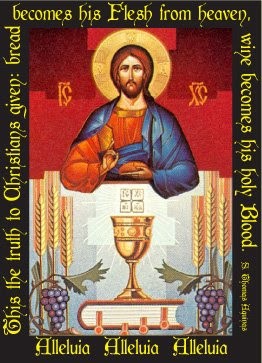
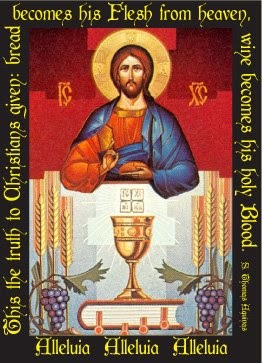
On this 2nd Sunday of Pentecost, we commemorate Corpus Christi-the solemnity of the most Holy Body and Blood of our Lord Jesus Christ. It may seem odd to have a day set aside for that which we celebrate at each and every Eucharist, but it is important to remind us of the gift which we have been given. We call to mind His promises, “I tell you truly that if two of you on the earth agree about anything you ask for, it will be done for you by My Father in heaven. For where two or three gather together in My name, there am I with them” (Matthew 18:20) and “be sure of this: I am with you always, even to the end of the age” (Matthew 28:20). Jesus is with us always, our constant companion, our guide and protector; we carry Him inside us, in our hearts and minds for He is part of who we are as Christians. Each Sunday we relive these promises in the sacrament of His Body and Blood, we hold Him in our hands, we see Him in the Bread and His blood in the Wine and we taste His presence on our tongues; and then, all too quickly, the reality of His presence fades and the Mass ends. Unlike the saints, and the moments of our past, there are no relics of our Lord to cling to, no concrete evidence of Him once walking among us; He ascended into the sacred realm and, though still with us spiritually, we long for a physical presence. Today, we bring to the forefront the reality of God’s covenant, the promise of the real presence of the Son of Man in the ritual of the Eucharist, the living presence of God in the flowing of our blood and His life giving spirit breathing life into us. Today we do more than just eat the bread of life and drink from the cup of the new covenant, we stop, gaze upon, contemplate, adore and most importantly we remember the good news he brought us and gift we have been given in breaking of His body, the surrender of His blood, the redemption in His sacrifice and the hope in His resurrection: Our Lord is with us here, now and always!
The Neglected Feast ~ The Rt. Rev. Michael Beckett, OPI
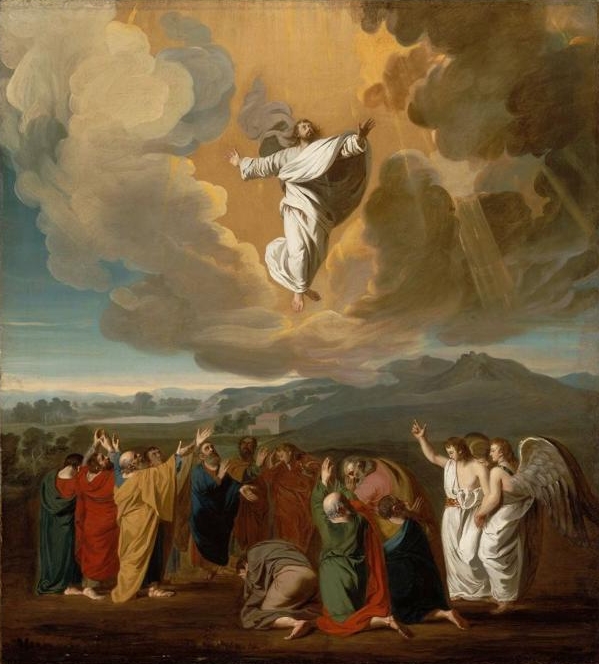
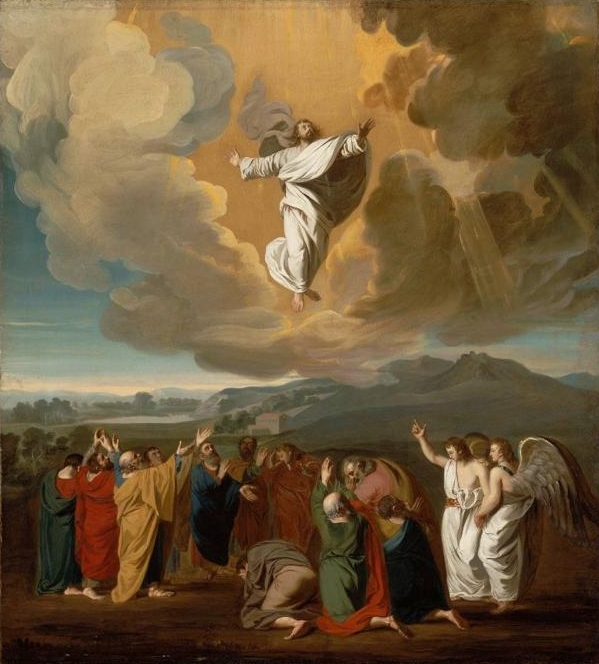
While Ascension Day is a Day of Holy Obligation, it is one of the most neglected feast days of the Christian church. This is sad enough in itself, but in ignoring this festival, the opportunity is lost for reflecting on what the Ascension means. Maybe we tend to ignore Ascension Day because it falls on a weekday. Is this the reason it doesn’t get the attention it deserves? This is a pity because it is full of significance in the historical life of Jesus when on Earth – and his continuing ministry for us in heaven. As a weekday event it reminds us that Christianity isn’t just something for Sunday – it’s an experience for every day. As Christians, we are to celebrate Our Lord every day, every second of our being. If we gloss over its truth we rob ourselves of a most important doctrine, for without the Ascension, the work of Christ would be incomplete. Because we do not place as much emphasis on the Ascension, we miss its tremendous truth.
St. Augustine, the great fifth century theologian, called the Ascension the most important Christian festival of the year, more important than Christmas, more important than Pentecost, even more important than Easter. For the Ascension reminds us just how high Jesus was raised, and what that means:
‘This is that festival which confirms the grace of all the festivals together, without which the profitableness of every festival would have perished. For unless the Saviour had ascended into heaven, his Nativity would have come to nothing…and his Passion would have borne no fruit for us, and his most holy Resurrection would have been useless.’
What Saint Augustine says here resonates with the passage in Ephesians 4:10, where Saint Paul says that ‘He who descended is he who also ascended far above all the heavens, that he might fill all things’ – i.e.; that by ascending into Heaven, and taking our human nature up with Him into the heavenly places, He completed the process of redemption by reclaiming His place as rightful sovereign of the universe, so that He might be present to us in a different way. If He had not so returned, the process would not have been completed, and as Jesus said in John 16:7, ‘it is to your advantage that I go away, for if I do not go away, the Counselor will not come to you; but if I go, I will send him to you’.
The gospel writer Luke is renowned as a careful historian. When he recorded the birth of Jesus he rooted the event in its historical setting within the Roman Empire. He continues that same preciseness at the end of our Lord’s earthly ministry by recalling the place of the Ascension – at Bethany. He dates the event – 40 days after the resurrection on Easter Day. He emphases the presence of eyewitnesses – the Ascension took place he writes “before their very eyes” (Acts 1:9). Yes, the Ascension was a real event of history.
Some people are puzzled as to why Jesus waited around on Earth 40 days after his resurrection, but that period is no accident, and Jesus had things to do. Jesus had endured the Devil’s temptation for 40 days in the wilderness at the beginning of his public ministry, but now the tables were turned. In the period after Jesus’ resurrection, He triumphantly paraded his victory over the Satan. During this time, the conqueror of death displayed his supremacy before his faithful followers so that they might share in the joy of his victory. But there was another reason. Those 40 days of his appearing after the resurrection were of immense value to the believers for they established the reality of his lordship. A single sighting of the risen Christ may have been open to question, but his continuous encounters with the disciples would remove the doubts of the most skeptical among them and assure them of his power and authority.
The resurrection of Jesus marked the ending of a chapter in his earthly life. Things could never be the same again and it was essential that there should be a clear-cut event to bring the chapter to a close. It’s true that Jesus was making a series of appearances to his followers, but they couldn’t go on forever. It would have been odd if Jesus’ post-resurrection appearances had grown fewer until finally they just stopped – that would only cause confusion and even loss of faith. No, there had to be a single, miraculous occurrence, separating the time when the Jesus of Earth would become the Christ of heaven. The Ascension was the only fitting conclusion to the life of Jesus on Earth.
Luke tells us of the disciples with their eyes straining to catch the last glimpse of the cloud bearing up their Lord. But then they were quickly brought back to earth. It would seem that with their eyes heavenward they didn’t notice the two heavenly beings that slipped quietly alongside them until they spoke: “Men of Galilee, why do you stand looking unto heaven?,” as if to remind the disciples of the work that they had been given to do. The angels, for angels they were, had to tell the disciples to get to business.
And so it is with us. Ascension Day reminds us of the Mystery of Faith: “Christ has died, Christ is risen, Christ will come again.” Christ will come again. And as we await the “coming again” of Christ, we, like the disciples, have a job to do, business to attend to. Although we live in the time between Jesus’ Ascension and his coming again, we have something to do now. In Matthew 28:18-20, Jesus says, “Go to the people of all nations and make them my disciples. Baptize them in the name of the Father, the Son, and the Holy Spirit, and teach them to do everything I have told you. I will be with you always, even until the end of the world.”
Where do we start? Jesus has the answer for that, too. In John 13 Jesus says to us, “ But I am giving you a new command. You must love each other, just as I have loved you. If you love each other, everyone will know that you are my disciples.” We are to continue to change the world in the work that Jesus has given us to do by helping others to see Jesus through and in us, by showing that love that he demonstrated, by bringing that love to everyone.
Jesus told us to love everyone. Love. Everyone. Period. Not just those whose politics are the same as ours. Not only those whose religion is the same as ours, not only those whose lifestyles are the same as ours.
Love. Everyone. Period.
We would all of us do well to pray:
“Lord, make me an instrument of thy peace.
Where there is hatred, let me sow love;
Where there is injury, pardon;
Where there is doubt, faith;
Where there is despair, hope;
Where there is darkness, light;
Where there is sadness, joy.
Love. Everyone. Period.
Come Lord Jesus.
Amen.
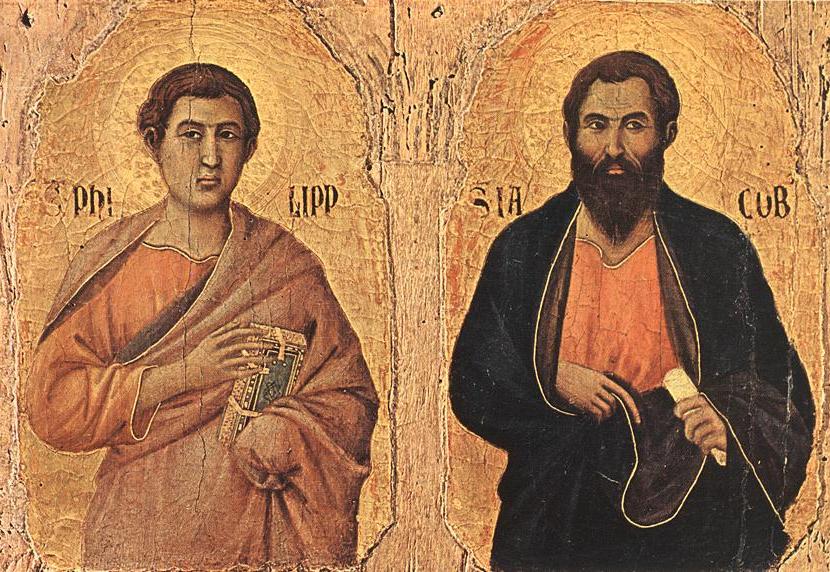
The Feast of Sts. Philip and James ~ The Rev. Lady Sherwood, OPI

Today as a church and as Christians we celebrate the double feast of the Apostles St. Philip and St. James.
St. Philip
Philip was born in Bethsaida, Galilee. He may have been a disciple of John the Baptist and is mentioned as one of the Apostles in the lists of Matthew, Mark, Luke, and in Acts. Aside from the lists, he is mentioned only in John in the New Testament. He was called by Jesus Himself and brought Nathanael to Christ. Philip was present at the miracle of the loaves and fishes, when he engaged in a brief dialogue with the Lord, and was the Apostle approached by the Hellenistic Jews from Bethsaida to introduce them to Jesus. Just before the Passion, Jesus answered Philip’s query to show them the Father, but no further mention of Philip is made in the New Testament beyond his listing among the Apostles awaiting the Holy Spirit in the Upper Room. According to tradition he preached in Greece and was crucified upside down at Hierapolis under Emperor Domitian.
St. James
St. James the Less, the author of the first Catholic Epistle, was the son of Alphaeus of Cleophas. His mother Mary was either a sister or a close relative of the Blessed Virgin, and for that reason, according to Jewish custom, he was sometimes called the brother of the Lord. The Apostle held a distinguished position in the early Christian community of Jerusalem. St. Paul tells us he was a witness of the Resurrection of Christ; he is also a “pillar” of the Church, whom St. Paul consulted about the Gospel.
According to tradition, he was the first Bishop of Jerusalem, and was at the Council of Jerusalem about the year 50. The historians Eusebius and Hegesippus relayed that St. James was martyred for the Faith by the Jews in the Spring of the year 62, although they greatly esteemed his person and had given him the surname of “James the Just.”
Tradition has always recognised him as the author of the Epistle that bears his name. Internal evidence based on the language, style, and teaching of the Epistle reveals its author as a Jew familiar with the Old Testament, and a Christian thoroughly grounded in the teachings of the Gospel. External evidence from the early Fathers and Councils of the Church confirmed its authenticity and canonicity. The date of its writing cannot be determined exactly. According to some scholars it was written about the year 49 A.D. Others, however, claim it was written after St. Paul’s Epistle to the Romans (composed during the winter of 57-58 A.D.). It was probably written between the years 60 and 62 A.D.
St. James addresses himself to the “twelve tribes that are in the Dispersion,” that is, to Christians outside Palestine; but nothing in the Epistle indicates that he is thinking only of Jewish Christians. St. James realises full well the temptations and difficulties they encounter in the midst of paganism, and as a spiritual father, he endeavours to guide zero direct them in the faith. Therefore, the burden of his discourse is an exhortation to practical Christian living.
Both St. Philip and St. James have their joint feast day on May 3rd.
Let us pray:
As we remember the apostles Philip and James we are reminded that God calls us all and sends us out into the world to be his hands and his feet. We thank you Jesus for the tasks you have entrusted to us. Help us each day to become more aware of our calling to serve you.
Lord in your mercy – hear our prayer
We pray for the needs of the world, remembering particularly those parts of the world where people live in daily fear of violence and oppression. We call to mind those parts of the world particularly on our hearts today.
Lord in your mercy – hear our prayer
We remember that Philip opened the scriptures to the Ethiopian eunuch helping to bring him to Christ. Let us also bring others to the full knowledge and love of Christ.
Amen.
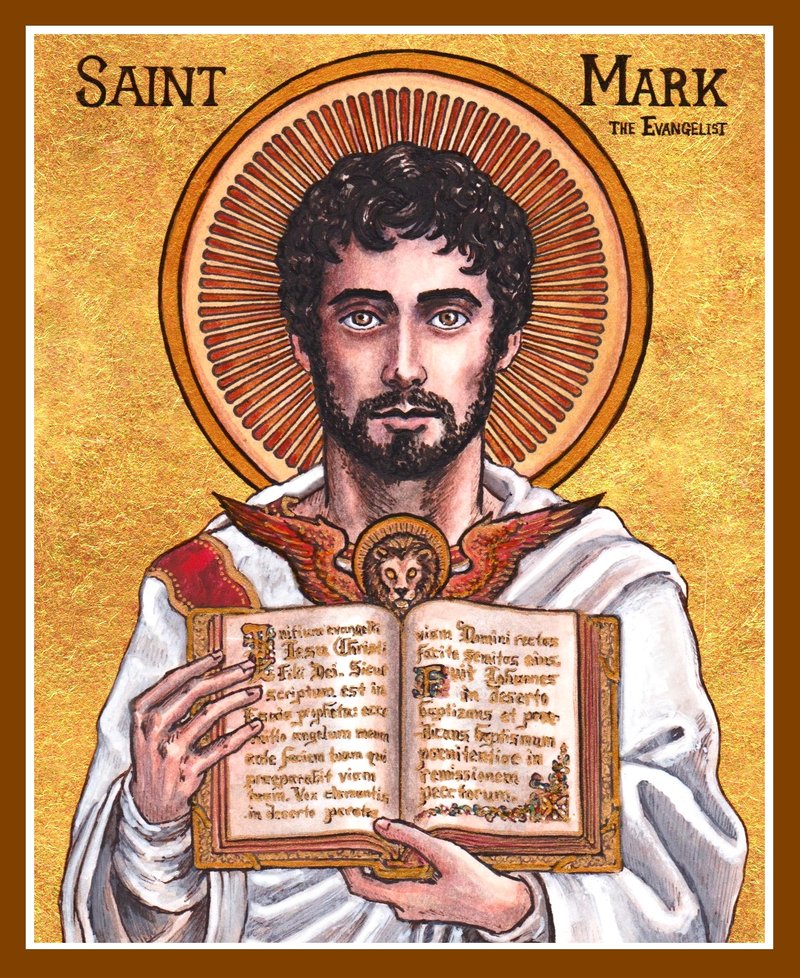
St. Mark the Evangelist ~ The Rev. Lady Sherwood, OPI
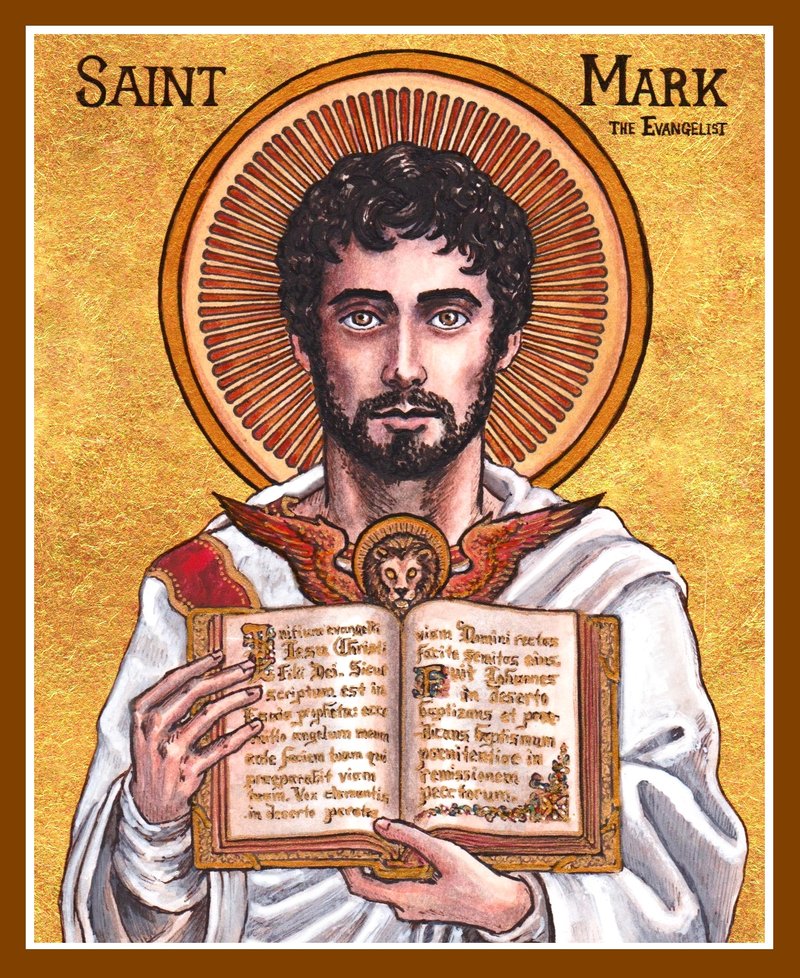
St Mark was one of the disciples of Jesus and an Evangelist who was the author of the Second Gospel in the New Testament (The Gospel of Mark). This is believed to been written by Mark (also sometimes named in the scriptures as John Mark), probably in Rome before the year 60 AD. Mark was an African and was born in Cyrene in Libya and was the child of Jewish parents who belonged to the Levites tribe. They lived in Cyrene until they were attacked by some barbarians which resulted in the loss of their property. So his parents and their son John Mark moved to Jerusalem (Acts 12:12, 25; 15:37). Mark received a good background education and became conversant in the languages of Greek, Latin as well as Hebrew.
Mark came from a very religious family and they had a close relationship with our Lord Jesus. Mark`s cousin was Barnabas and Peter was his father`s cousin.
Mary, Mark`s mother, was an important person in the development of the early days of the church in Jerusalem. It is believed that it was Mary`s upper room that became the first Christian church and was also the place where our Lord Jesus Christ himself instituted the Holy Eucharist (Mk 14:12=26). This was also the place in which the Lord appeared to his disciples after his resurrection and where the Holy Spirit came upon them.
Mark is mentioned in the scriptures in several events including that he was present at the wedding of Cana of Galilee and he was also the jar carrier when two disciples went to prepare a place for the feast of Passover (Mk 14:13=14, Lk 22:11). At first, Mark accompanied Peter on his missionary journeys inside the regions of Jerusalem and Judea. Later, he accompanied both Peter and Barnabas on their first missionary journey to Antioch, Cyprus and Asia Minor but for some reason Mark left them and returned home (Acts 13:13).
When Peter and Barnabas were due to travel on their second journey, Peter refused for Mark to travel with them due to his leaving them on their previous journey, so Barnabas decided to travel with Mark to Cyprus where Barnabas was called home to the Lord and was buried by Mark.
Later, Mark was needed by Paul so both he and Paul traveled and preached together in Colosse (Col 4:10), Rome (Phil 24:2, Tim 4:11) and also possibly, though this not certain, to Venice. Mark had his real labours in Africa. He left Rome and traveled to Pentapolis and after planting there the seed of faith and performing several miracles, he proceeded to Egypt and then on to Alexandria.Upon returning to Alexandria in 65 AD, Mark finding his people firm in faith, revisited Pentapolis where he spent two years preaching, performing miracles, ordaining both bishops and priests as well as winning more converts into faith.
Finally, Mark once again returned to Alexandria and there he was overjoyed to find that the number of Christians had flourished to the extent that they were able to build a considerably sized church in the suburban district of Baucalis.
In 68 AD, Easter fell on the same day as the Seraphis feast and an angry mob descended upon the Christians who had gathered in the Seraphis temple. The mob seized Mark and dragged him by a rope through the streets of the city before throwing him into prison at nightfall. Whilst in the prison Mark saw the vision of an angel and this strengthened him. The next day, again Mark was taken and dragged through the streets of the city, this time until his death. Christians stole his body and secretly buried him in a grave under the altar of the church.
Mark was an evangelist for our Lord. He traveled and preached the Good news of Our Lord Jesus Christ far and wide. As Children of God and as Christians, we can take the example of the life of St. Mark and also become the evangelists for the Lord that we indeed ought to be. As the Word of the Lord himself tells us in Mk 16:15, He said to them, “Go into all the world and preach the gospel to all creation.”
Let us pray:
Lord, help us to follow in the footsteps of St Mark and to love you so totally and completely, desiring only your will in our lives. Help us to hear your voice and to be guided by the Holy Spirit to do all that you ask of us. Amen.
Through the prayer and intercession of St. Mark on our behalf, may the Lord Jesus Christ have mercy on us. Amen.

WHERE IS THE LOVE, Y’ALL??? ~ Br. Michael Marshall, Novice

There was a song that was released in 2003 which quickly became very popular nearly over night. This song is “Where Is The Love?” by the Black Eyed Peas. The key lyrics are as follows:
What’s wrong with the world, mama
People livin’ like they ain’t got no mamas
I think the whole world addicted to the drama
Only attracted to things that’ll bring you trauma
Overseas, yeah, we try to stop terrorism
But we still got terrorists here livin’
In the USA
But if you only have love for your own race
Then you only leave space to discriminate
And to discriminate only generates hate
And when you hate then you’re bound to get irate, yeah
Madness is what you demonstrate
And that’s exactly how anger works and operates
Now, you gotta have love just to set it straight
Take control of your mind and meditate
Let your soul gravitate to the love, y’all, y’all
People killin’, people dyin’
Children hurt can you hear them cryin’?
Can you practice what you preach?
And would you turn the other cheek?
Father, Father, Father help us
Send us some guidance from above
‘Cause people got me, got me questionin’
Where is the love? (Love)
Where is the love (the love)
Where is the love (the love)
Where is the love
The love, the love?
Even though the song was written and released back in 2003, speaking about the issues happening in the world at that time, the relevance transcends time. It is still relevant today, as much as it is also relevant in the time of the Jesus and the Early Church.
In the Gospel for today, this is exactly what Jesus was addressing to his disciples! “I give you a new commandment: love one another. As I have loved you, so you also should love one another.
This is how all will know that you are my disciples, if you have love for one another.” (John 13: 34-35) I do not know if Jesus could have been any clearer, yet for some reason humanity has continued to somehow ignore this commandment; Christians and non-Christians, alike! And it saddens me to say that I find it sickening that oppression, condemnation, and hatred have continued to exist, ESPECIALLY when people have justified it in the name of God! Like, HELLO PEOPLE!!! Why have we not (myself included) got the memo, even 2000 years later???
In Revelation, John tells of his vision of a new heaven where all of this bad stuff going on today does not exist. Yet, how can that place exist if humanity cannot turn away from what we are doing here on Earth? Do people think that as long as they preach portions of The Gospel, while not living other parts of it, this so-called “Rapture” is going to occur? There is a huge disconnect from this new commandment that Jesus gave us, and we are blind to it!
I encourage everyone reading this sermon to look up the song “Where Is The Love?” on the Internet (YouTube, iTunes, Spotify, etc.) and really listen to the words. Even though it is a secular song, Jesus is speaking to us in the lyrics, just as he was instructing his disciples. And I also ask all of ourselves if we are loving one another. If not, are we going to do something about it???
Credits:Songwriters: GEORGE JR PAJON, JUSTIN TIMBERLAKE, MICHAEL FRATANTUNO, PRINTZ BOARD, ALLAN PINEDA, WILL ADAMS, JAIME GOMEZ
© Sony/ATV Music Publishing LLC, Warner/Chappell Music, Inc., Universal Music Publishing Group
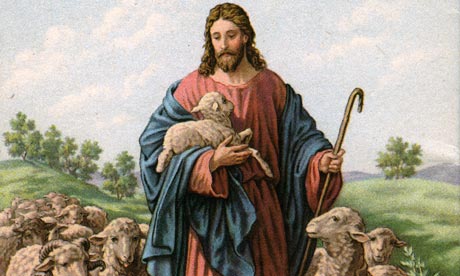
The Shepherd ~ The Rev. Dcn. Sister Dollie Wilkinson, OPI
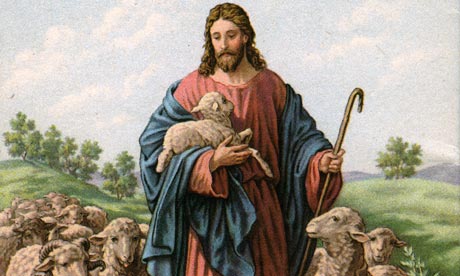
We all know the twenty-third Psalm, the Psalm of David. I imagine most of us can recite it almost word for word. But, have you ever thought about what it really means, what it is really saying? It seems with our fast paced, frantic world, people are feeling increasingly stressed, depressed, or lost. And while there are drugs, and therapy to help us deal with any issues we may face, there is also a very powerful tool, a special gift that our heavenly Father has given us – Psalm 23. Let’s take it line by line, and explore how just by reciting, and praying, on each part, it will provide us with a way to cope with the stresses of this world.
Psalm 23 (KJV)
“The Lord is my shepherd; I shall not want.”
What is the purpose of a shepherd? To guide his flock of sheep, to gather any little ones who wander astray. He also must make sure they are well fed, and cared for, to insure they live a long life, so their purpose is assured (the gift of their wool). Isn’t this exactly what God does? He provides us with all of our needs, even if we don’t realize at times what exactly we need. Even if we ask Him for nothing, He still provides. We can be assured that will shall never want. He is our Shepherd!
“He maketh me to lie down in green pastures”
I tend to go throughout my day as if it’s a race. I have a mental to-do list in my head, and on top of that I also care for my ailing husband, babysit my granddaughter once a week, and most days run errands, such as go to the store. So you can imagine, I get pretty tired and worn down. Though my best friend cautions me to rest, I don’t always listen. But just as a shepherd knows that his flock must rest at times, so too does our heavenly Father. I’ve noticed that sometimes it takes a major illness, or injury, to get us to stop, to get that much needed rest. And there should be no shame in slowing down at times, and allowing our body, and mind, to recuperate.
“he leadeth me beside the still waters.”
If you know anything about sheep, they are timid creatures. And just like all God’s creatures, they get thirsty. But, they are afraid of fast moving streams. So the shepherd will lead them to a calm pool of water. He doesn’t make fun of the sheep for being afraid, he doesn’t push them in to a place where they are not comfortable. Our Shepherd does the same for us. If we are afraid, He makes a way to calm our fears. He leads us in to the calm pool, and away from the rapids of life.
“He restoreth my soul”
I had a chaotic childhood. My parents divorced when I was little, my mother committed suicide, and now I care for my ailing husband. It has taken me many years to learn to trust people, and to trust myself. When a shepherd takes his flock out for the day, when they pause to rest, I imagine the sheep wander close to the shepherd, maybe for a snack, but I also believe for just a simple ear scratch, or to be petted. This makes the sheep feel loved and cherished, it makes them happy. We cannot be happy all the time, because life has a way of knocking us down. Our soul can feel crushed in the midst of all life’s troubles. But just like the sheep who come to the shepherd for love and care, so too can we go to our Father. He will help restore what has been broken in us.
“he leadeth me in the paths of righteousness for his name’s sake.”
Imagine a flock of sheep, on a farm, beside a busy street. What would happen if there were no shepherd? Sheep tend to wander off, if left on their own. Well aren’t we the same? How many times have you made a decision, that on looking back, you realized that was not the best decision at the time. But we have a Shepherd, just like the sheep, who will lead us down the right path.
“Yea, though I walk through the valley of the shadow of death, I will fear no evil: for thou art with me”
This one line provides so much comfort, if you will only hear the message. Talking to many people who suffer from depression, or other mental illness, they almost always describe their illness as a black hole, a dark place. And don’t we always fear the dark, the night, at times? I imagine sheep are the same way. But think of the shepherd’s light, which guide the sheep at night, as God’s love and protection, leading us out of the darkness. When you feel darkness, gloom, the bad stuff, all around you, recite this simple prayer. And know, you are never alone in that darkness, because He is always near.
“thy rod and thy staff they comfort me.”
I love the pictures of baby sheep (lambs)! They are so cute, but also so helpless. When we see pictures of shepherds, usually they carry a staff. Have you ever wonder why it is curved at the top? When the sheep, or lamb, has wondered off, possibly fallen down a hill, the curved end of a shepherd’s staff allows him to grasp the lamb who is out of arm’s reach. And bring it to safety. Our Father carries a rod and staff, so to speak. The rod is to protect us against harm, the staff is used to rescue us when we stray.
“Thou preparest a table before me in the presence of mine enemies”
How does the shepherd know where the best grasses are, to graze for his flock? What would happen if he wasn’t as vigilant, and they became poisoned by something? We are not always as careful as we should be, in where we go, what we eat, who we meet, etc. As parents, we always, always try to guard our children from the dangers of life. This isn’t always easy. But, because we have a constant Shepherd who goes before us, preparing a way which is safe from our enemies, we, and our children, can continue to come to no harm.
“thou anointest my head with oil; my cup runneth over.”
At the end of the day, I imagine as the shepherd brought his herd inside the barn, he checked each one for any cuts or scrapes. My granddaughter will be the first to tell you if she has a boo-boo. She then demands I kiss it first, as if that had some magical healing properties. Then the offending cut is anointed with medicine, and bandaged. Just as I imagine the shepherd does for any hurt ones in his flock. Like the sheep, and my granddaughter, we all need medicine when we are sick. But we also need the anointing grace of our loving God. Only then are we healed, and our cup of blessings will overflow.
“Surely goodness and mercy shall follow me all the days of my life”
I’m a worry-wart! I can take a mole hill, and make it a huge mountain. Does what I picture in my mind, actually happen? Most days the answer is NO. But it doesn’t stop me from worrying. We all carry pictures in our head of what we think may happen. For some reason, we always picture the worst. But in this humble verse, we are reminded that God’s goodness and mercy is always with us. It does not leave ya all, so when you feel yourself picturing the worst that could happen, remember you are promised His love and mercy, for “all the days of your life”.
“and I will dwell in the house of the Lord for ever.”
I love this simple declaration by David. He doesn’t say maybe I will, or I hope I will. He declares, “I will!” He gets it, he knows who his shepherd is. Just as the sheep put their absolute trust in the shepherd, so does David put his trust in the Lord. As we should do also, because like sheep in the field, we would be lost without our Shepherd.
Psalm 23:
“The Lord is my shepherd; I shall not want.
He maketh me to lie down in green pastures: he leadeth me beside the still waters.
He restoreth my soul: he leadeth me in the paths of righteousness for his name’s sake.
Yea, though I walk through the valley of the shadow of death, I will fear no evil: for thou art with me; thy rod and thy staff they comfort me.
Thou preparest a table before me in the presence of mine enemies: thou anointest my head with oil; my cup runneth over.
Surely goodness and mercy shall follow me all the days of my life: and I will dwell in the house of the Lord for ever.”

Got Doubts? ~ The Rev. Dcn. Michael Scott Brown, OPI

After the resurrection Jesus appears to his disciples, but Thomas was not there. When he does join his fellow disciples, they tell him that they have seen Jesus, yet Thomas has reservations about what they have told him. “Unless I see the nail holes and put my hands into his wounds I will not believe.” Jesus did not reappear to the disciples for another week; this time Thomas is with them. The week between Jesus’ appearances brands Thomas as a doubter and a skeptic. This wasn’t altogether fair to Thomas since Peter and John did not believe Jesus had been resurrected, and had to see the empty tomb for themselves. Perhaps Thomas just wanted to see if Jesus was true to his word, or maybe he wanted to prove his friends wrong. So he waited in the darkness of his own disbelief.
Maybe we have Thomas all wrong, maybe we should label him as Thomas the Bold, or Thomas the Brave, because earlier in John’s gospel Thomas is the only one to speak up and agree that Jesus should return to Bethany to mourn the death of his friend Lazarus. The other disciples were afraid that doing so would result in the death of them all. Thomas stands with Jesus and says: “Let us go with him so that we may die with him.” Are these the words of a doubter? These are the words of a believer and follower of Christ. Whenever Jesus speaks of his coming death, his disciples try to talk him out of it, and one time Jesus rebukes Peter and calls him “not the rock upon whom the church was built, but his adversary. “Get behind me Satan” Jesus says to Peter. In any event. Thomas’ willingness to die for Jesus casts his doubts in a different light.
So Thomas chose to sit in a room full of believers with a head full of doubt. Maybe we should be just a little bit more like Thomas from time to time. Perhaps if we just believed in what the Lord wants us to believe, teach what the Lord wants us to teach, and go where the Lord wants us to go as Thomas did, our faith would grow stronger. Jesus was not upset that Thomas had doubts about the resurrection, Jesus simply allowed Thomas to do what was necessary to prove to Thomas that he was the Christ and that he had come back from the dead. Jesus did not love Thomas less because he had doubts, Jesus simply took away those doubts that were filling Thomas’ head. Jesus will not condemn you for having doubts either. Just open your hearts and allow Jesus to take away those doubts and fears, He will if you just give him the chance to just like Thomas did.
Most merciful Lord, take away our doubts as you did Thomas’ doubts, guide us and lead us with our sins forgiven so that we may stand with you as Thomas did. Keep us under your loving grace, and show us the path you want us to follow. We believe in you, we love you, and we praise you for your mercy and patience with us. In Jesus’ name we pray. Amen.
What Now? ~ The Rt. Rev. Michael Beckett, OPI
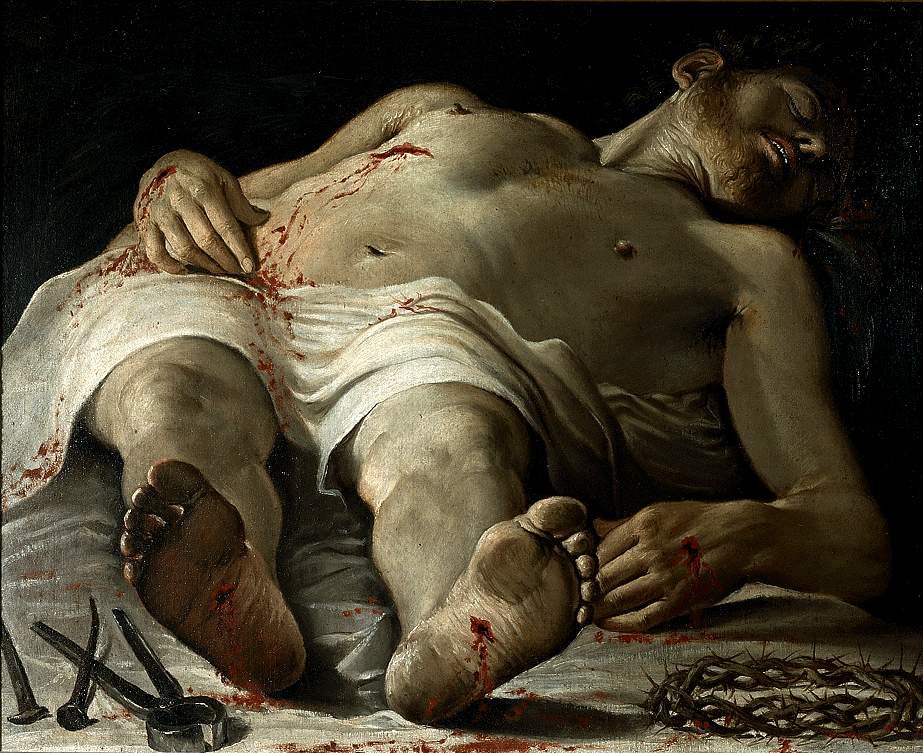
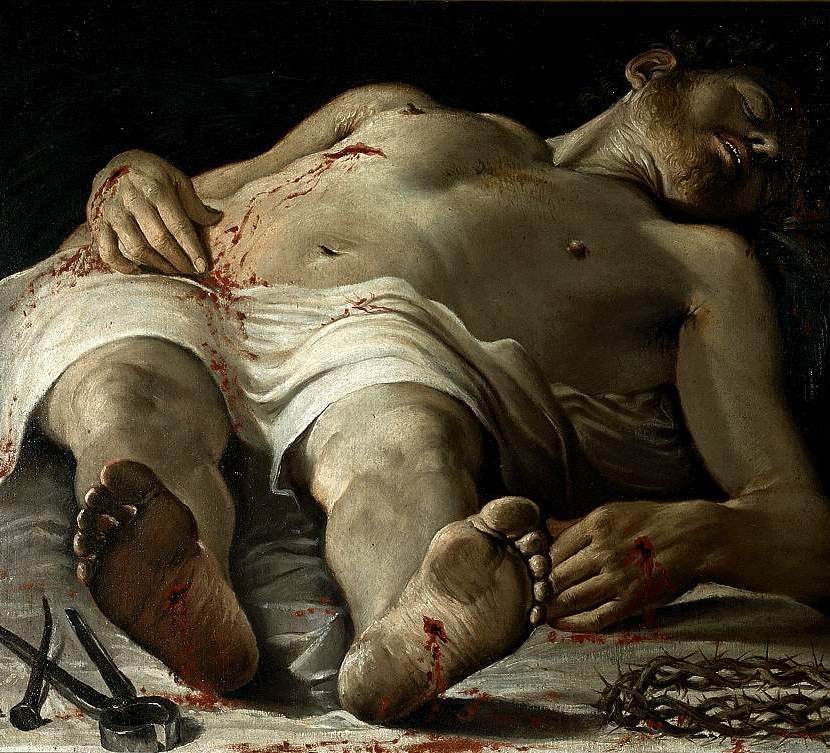
When it was evening, there came a rich man from Arimathea, named Joseph, who was also a disciple of Jesus. He went to Pilate and asked for the body of Jesus; then Pilate ordered it to be given to him. So Joseph took the body and wrapped it in a clean linen cloth and laid it in his own new tomb, which he had hewn in the rock. He then rolled a great stone to the door of the tomb and went away. Mary Magdalene and the other Mary were there, sitting opposite the tomb. The next day, that is, after the day of Preparation, the chief priests and the Pharisees gathered before Pilate and said, “Sir, we remember what that impostor said while he was still alive, ‘After three days I will rise again.’ Therefore command the tomb to be made secure until the third day; otherwise his disciples may go and steal him away, and tell the people, ‘He has been raised from the dead,’ and the last deception would be worse than the first.” Pilate said to them, “You have a guard of soldiers; go, make it as secure as you can.” So they went with the guard and made the tomb secure by sealing the stone. (Matthew 27: 57-66_
I went back to the cemetery the day after Daddy was buried and just sat on the ground beside his grave, trying to absorb the enormity of what had happened. He was gone. This man who had been so strong, so faith filled, so always there to make things better, whose piercing blue eyes communicated for than his voice ever did. He was gone. The man who held the reins in our family, our rock, our hero. Could this have really happened? How could this man die? We thought he was invincible. What now?
How much more so did the Disciples feel, those men and women whose lives had been totally centered around Jesus? How could this have happened? In spite of raising the dead, in spite of healing lepers and changing water into wine and feeding thousands of people with a couple of fish, in spite of the belief that he was the Messiah, that he was believed to be the son of God, that he was supposed to be invincible, he was gone…
Emptiness.
Confusion.
Fear.
Emptiness.
And this is where we are today. All of us have experienced “Holy Saturdays” in our lives.
Holy Saturday is the in between time. The tragedy of the crucifixion is past but the glories of the resurrection are not yet here. We are neither here nor there. We are stuck in the middle. What was is no more and what will be is not yet clear or known. It feels as if there is nowhere to go and nothing to do.
Holy Saturday comes to us in many ways but it always seems to involve death; the death of Jesus, the death of a loved one, the death of a relationship, the death of hopes and dreams. In the church calendar Holy Saturday is only one dreaded day a year. Not so in life. Those of you us who have suffered the death of a loved one know that you do not move from Good Friday to Easter Sunday in just one day. Holy Saturday can last months, years, even a lifetime. Holy Saturday calls us to the tomb. Where else is there to go?
That’s where Mary Magdalene and the other Mary are today. Joseph of Arimathea took Jesus’ body wrapped it in a clean linen cloth, laid it in the tomb, rolled a great stone to the door of the tomb, and went away. He left. Some will do that in the Holy Saturday of life. They will close up the tomb and walk away as if there is nothing there, no possibilities for anything new. The two women, however, Mary Magdalene and the other Mary, are sitting opposite the tomb. They are silent. There is not much to say on Holy Saturday. What can be said? There are no answers.
Emptiness.
Confusion.
Fear.
Emptiness.
Holy Saturday is a day of silence and stillness, waiting and wondering, remembering and hoping. Perhaps that is what faithfulness looks like on Holy Saturday. There is not much to do except be present to what is, to sit beside the tomb.
“Media vita in morte sumus ; quem quaerimus adjutorem, nisi te Domine, qui pro peccatis nostris juste irasceris? Sancte Deus, sancte fortis, sancte et misericors Salvator, amarae morti ne tradas nos.”
“In the midst of life we are in death: of whom may we seek for succour, but of thee, O Lord, who for our sins art justly displeased? Yet, O Lord God most holy, O Lord most mighty, O holy and most merciful Saviour, deliver us not into the bitter pains of eternal death.”
Holy Saturday is a difficult day. We so much want joy to replace sorrow. That’s not what Jesus does. Instead, sorrow is transformed into joy, the tomb becomes a womb, and death gives birth to new life. Christ’s triumph is not apart from death but within death. Christ is trampling down death by death and giving life to those in the tombs.
The two women of Holy Saturday will become the first people Jesus greets on Easter Sunday. So trust the silence and the waiting. Be still. Remember, wonder, hope. Pray. It is Holy Saturday and your Lord who loves you is at work.
Good Friday: The Day Death Died ~ The Rev. Lady Sherwood, OPI

Today`s readings:
1st Reading: Isaiah 52:13-53:12
Responsorial Psalm: 31: 2,6,12-13,15-16,17, 25
2nd Reading: Hebrews 4: 14-16, 5:7-9
Gospel Reading: JN 18:1-19:42
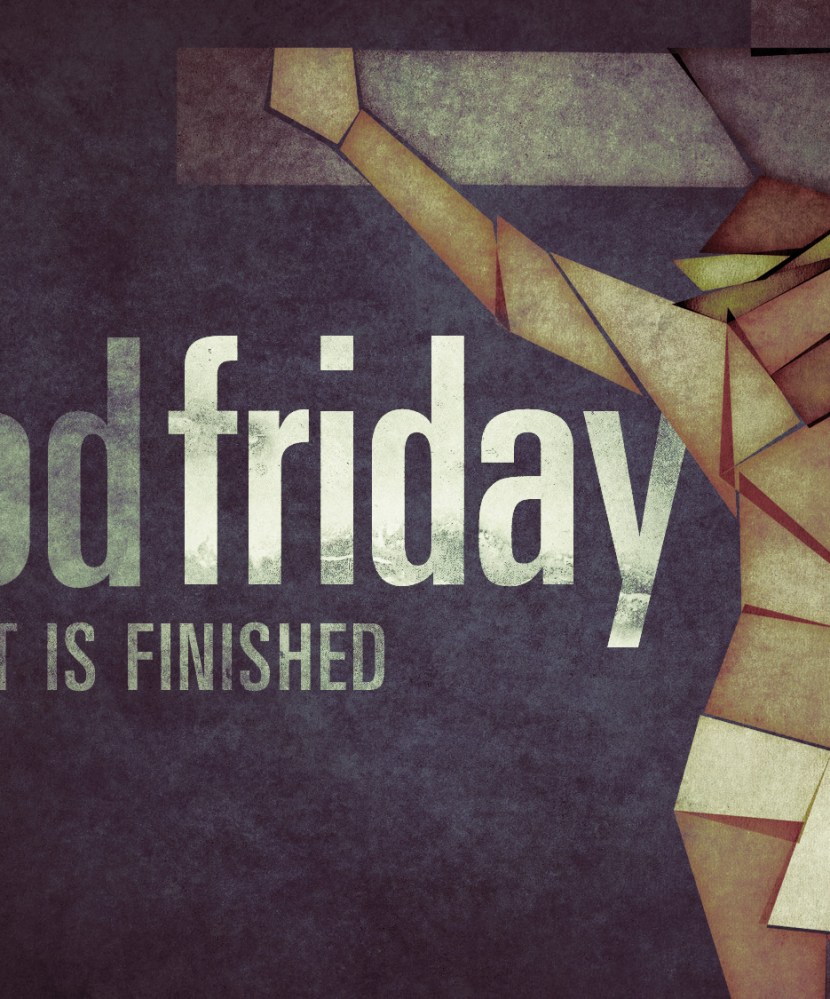
Today we are called to remember the Passion of our dear Lord Jesus Christ. Today, he took the sins of the whole world upon his shoulders and out of his love for each and every one of us, he gave himself willing as the ultimate sacrifice. Our dear Lord suffered beyond our human comprehension. He was totured by scourging and beating, he was spat upon, mocked and humiliated, he had a crown of thorns pushed deep into his head and he suffered death nailed upon the cross so that our sins may be forgiven and that we may have the chance of eternal life.
Let us now spiritually accompany our Lord on this his sacrifice of ultimate love.
Jesus Is Tried by the Sanhedrin:
After Jesus was betrayed by Judas in the Garden of Gethsemane, he was taken to the house of the High priest Caiaphas. Even though Peter had vowed to Jesus that he would never desert him, Jesus said to him, “Before the rooster crows you will deny me three times.” When Jesus was arrested and taken to the house of the High priest,all the disciples fled in fear except for Peter, who followed to the courtyard at a distance. It was there that three people recognised him as one of Jesus` disciples, but each time Peter strongly denied the fact. Then a rooster crowed, and Peter remembered what Jesus had told him. Peter felt very ashamed of what he had done and he began to cry.
The High priest, together with the chief priests, the elders and the scribes were at the High priests house waiting. This was a meeting of the Jewish ruling council-the Sanhedrin-which had been called to put Jesus on trial. The trial was to be anything but a fair trial as the religious leaders had the agenda of looking for evidence to justify sentencing Jesus to death. However hard they tried, the leaders were unable to find any evidence against Jesus and although many witnesses were called to testify against Jesus,none of them were able to agree with each other.
Eventually the High priest demanded to Jesus, “Tell us if you are the Messiah, the Son of God.” To this Jesus replied, “I am, and you will see me, the Son of Man, sitting at God`s right hand and coming back on clouds of heaven.” To this response the High priest said, “You have just heard this blasphemy! why do we need anymore witnesses?” He asked the leaders for their verdict and they all shouted, “He deserves death!” Then they spat on Jesus` face and beat him.
Jesus is Tried by Pilate:
In their mockery of a trial, the religious leaders had agreed that Jesus should be put to death. However under Roman law, they did not have the authority to put anyone to death so they took Jesus to the Roman Governor, Pontius Pilate. To Pontius Pilate, the leaders falsely accused Jesus of treason against the Roman Empire for claiming to be the King of the Jews and for urging people not to pay their taxes. Pilate could see that Jesus was innocent of any crime and wanted to release him but he didnt want any problems with the religious leaders so he asked Jesus, “Are you the King of the Jews?” Jesus replied, “My kingdom is not of this world. If it were, my followers would have fought to prevent my arrest by the Jewish leaders. But my kingdom is from another place.”
At that time, it was the governor`s custom to release one prisoner at the Passover Feast-anyone the people chose to be released. The Jewish religious leaders knew this, so they had persuaded the gathered people to demand the release of Barabbas and to demand the crucifixion of Jesus. Pilate asked the crowd of people who they wanted to be released and this was answered by shouts for Barabbas. Pilate then asked the crowd what he should do with Jesus and this was met with yells of “Crucify him, crucify him!” So Pilate ordered the Roman soldiers to crucify Jesus.
Jesus is crucified:
Crucifixion was a very cruel form of execution reserved both for criminals and for slaves. First Jesus was beaten and scourged by the Roman soldiers and he had a crown of the sharpest thorns forced around his head. Then weak from his scourging and from hunger, he was made to carry his own cross to the place of his crucifixion. Jesus was obviously far too weak from the scourging and beatings to carry the cross all the way himself, and after Jesus fell several times on the journey to his death, the soldiers forced a man named Simon of Cyrene to carry it the rest of the way. Jesus`s cross was placed between two convicted criminals who were also to be crucified alongside him. The soldiers nailed Jesus to the cross and left him hanging there to die. They put a sign on the cross to mock Jesus that said, “Jesus of Nazareth, the King of the Jews.”
Around noon, darkness came over the land for three hours. Then finally, Jesus cried out, “Father, into your hands I commend my Spirit”, and with that Jesus died.
One of Jesus` followers, a man from Arimathea named Joseph, went to Pilate and asked for the body of Jesus. He took Jesus`body and hastily placed it in a new tomb carved out of rock and he rolled a large stone into the opening to seal it. Jesus` death was an essential part of God`s plan for our salvation. Jesus was the ultimate sacrifice to atone for the sins of all people.
Through the death of Jesus, we are freed from the deadly grip of sin and from death.
Without the death of Jesus upon the cross for our sins, no-one would have eternal life. “No one comes to the Father except through me”(JN 14:6).
In this statement, Jesus is telling us the reason for his birth, death and resurrection-to provide the way to heaven for sinful mankind, who could never manage to get their by themselves.
As a result of our past sins, all mankind is subject to both physical and eternal death by virtue of our sinful nature. But Jesus came and willingly died to become the ultimate perfect and unblemished sacrifice for our sins (Col 1:22, 1 peter1:19). Through him, the promise of eternal life with God becomes effective through faith to all who believe in Jesus.
“So that what was promised, being given to those who believe”(Gal 3:22). It is through our believing in the shed blood of Christ for our sins that death is forever banished and that we receive eternal life.
Let us pray:
Remember your mercies, O Lord, and with your eternal protection sanctify your servants for whom Christ your Son, by shedding of his Blood, established the Paschal Mystery.
Who lives and reigns for ever and ever.
Amen.
Lent and Noah and Reflections ~ The Rev. Jay Van Lieshout

Lent, a time according to the church where we fast, pray, focus on works of love and charity all as a solemn remembrance of the time Jesus spent alone in the wilderness. A time where we are to prepare ourselves for the ministry of God’s Word and where we prepare ourselves to not only preach the Gospels but to live the Gospels just as Jesus did some 2000 years ago. For me, lent this year has been less about the fasting, or the prayer, or the contemplative repentance and loving charity and more a wandering in my own wilderness of emotions, changes and preparation of ministry.
My 2015 was a year of dynamic change, growth, accomplishments, tragic losses, grief and renewal. I began my life as a transitional deacon and my ministry to others and was ordained to priesthood later in the year. I also progressed from postulate to novice and finally to brother in the Dominican Order. I watched my partner and soul mate deteriorate both physical and mentally as he lost his battle with mortality. I cared for my mother as she lay bedridden, her mind becoming confused and spending more and more time in the past until she suddenly and unexpectantly left this plain without saying good bye. I lost one church family, then another only to renew the prior again. I sat lonely, grieving losses, to paralyzed to move forward and rebuild, to hurt to let anyone else in. In the end, I found strength in new beginnings, God gave me someone new to heal my hurt and strength to grow again. This is all what I have reflected on, relived, grieved and celebrated this Lenten season.
As I ponder my Lenten journey, I do not feel as if I have missed the meaning of or failed to journey “the path” to renewal in the death and resurrection of Jesus. In fact, I believe I have walked the path that is the essence of the Lenten journey! Life, like nature’s seasons, is cyclic. The renewal of spring, the growth, hard work and joy of summer, the bounty of the harvest and celebrations of fall, and winter’s waning of life, ending of festivals and hope of spring’s renewal. The end of winter is cold, dark, and dreary. The bounties of the harvest dwindle, holidays are fewer, we hunker down in our homes, nesting in the darkness and think of the past as we wait for the break of spring. Late winter and so too Lent about “me time”; a time to process all that has happen in the previous months, a time to heal, a time to focus on those around us in our nest and a time to plan and change for the new season of growth.
We are told Jesus spent 40 days alone in the wilderness of the desert. It is hard to say if He was truly alone in the “wasteland” of the desert or if he was perhaps just wandering unknown cities, with unknown people, without His friends, family or support network. In either case He was alone with His thoughts, alone with His God, alone with His memories, His knowledge, His experiences, His losses, His wins, His experiences and His emotions. So much learned, so much seen, so many questions, so much hard work to get ready for His ministry; He was baptized and it was time to begin His work, but what did it all mean?
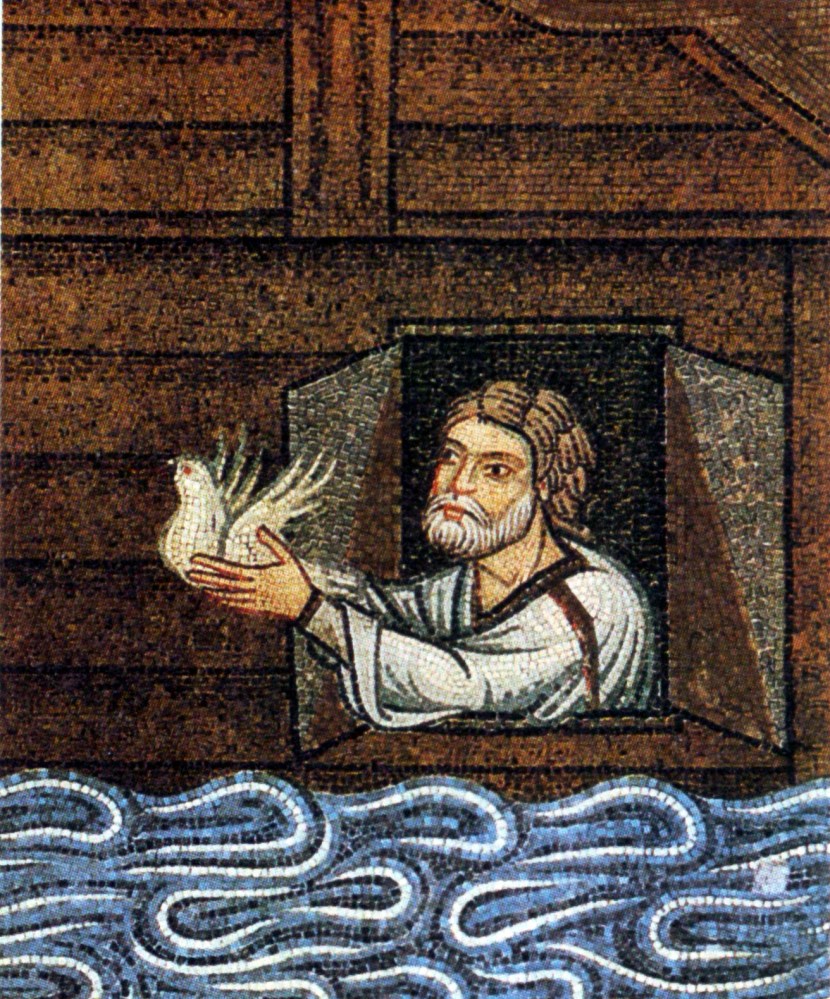
I wonder if Jesus looked to Noah for inspiration. Here was a man with a similarly daunting call from the Creator: “Noah, I want you to build a huge ark, the biggest thing ever build by a human. It must be designed so as to hold a pair of each of the creatures on Earth. You will have to build it with little help while others mock you and think you are crazy. You are to give your life to Me for through you I will save many and renew the Earth.” What torment Noah (and his family) went through to do God’s will, how they must have been derided by others, seen as crazy, trouble makers and even feared by those in power. The agony Noah must have endured as he closed up ship and watch everyone and everything he knew disappear in the chaotic waters. The fear and struggles his family faced as they floated on the vast waters, subject to the winds and currents with no control over their journey and no idea of their destination. The loss of hope as hours became days, days turned into weeks, and weeks extended beyond a month. The wear of daily drudgeries in caring for the ship, the animals, each other and the ever growing “cabin fever”. Will we ever reach land? What will it be like? How will we restart everything? Maybe we are just crazy, perhaps God has forgotten us and will end up just dying alone on this ship. 40 days alone, to think, to exist, to possibly loose hope or loose oneself in the darkness of our own souls.
I wonder if Jesus felt akin to Noah as He walked alone in the confusion of His own journey of questioning, growing and establishing His own faith in God. 40 days of struggling, thinking, arguing, looking temptation and despair in the eye over and over again. Looking out over the chaotic waters of His baptism into the Ministry of God’s word, looking for the simple sign of peace and hope carried in on the wings of the Holy Spirit. 40 long and lonely days and there, on the horizon, hope comes, the sign that God is with Him and His new life is about to begin. The seeds are ready to plant, the work is ready to be done and the harvest will indeed be the reward. It will not be easy, life rarely is, but there is hope, purpose and God will take care of the rest.
This is the truth in Lent. We all struggle, our candle flames flicker in the storms of life, the light seemingly dims as if about to go out but soon flashs back to full brilliance. Like the seasons, our lives wax and wane and wax again; it is an integral part of being human and no one can escape the ebb and flow of the chaotic waters. Noah lived it, the Son of Man lived it and we live it; but just like Noah and Jesus, we are never truly alone. God is always with us, guiding us, caring for us, providing us with people who love us and with whom we can share our lives and who give us hope for the new beginnings. This is the truth in our Lenten journey, it is the hope given us in the word of God, it is the message written in seasonal changes, and is the significance of our liturgical year.
 The Order of Preachers, Independent
You must be logged in to post a comment.