
Category: Lesson
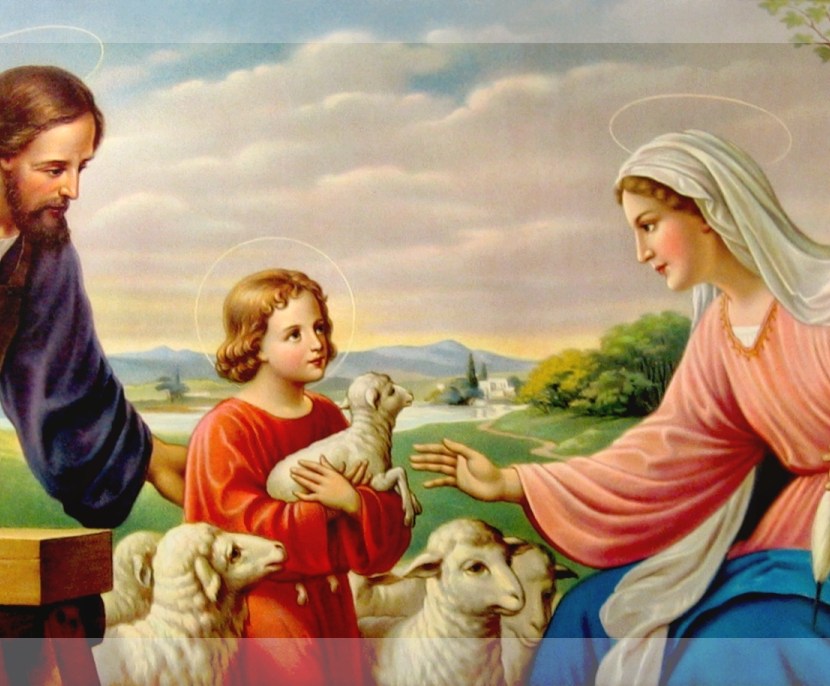
Feast of the Holy Family ~ The Rev. Lady Sherwood, OPI
The Holy Family of Jesus, Mary and Joseph
Reading 1:SIR 3:2-6, 12-14
Responsorial Psalm:PS 128:1-2, 3, 4-5
Reading 2:COL 3:12-21
Gospel:LK 2:22-40
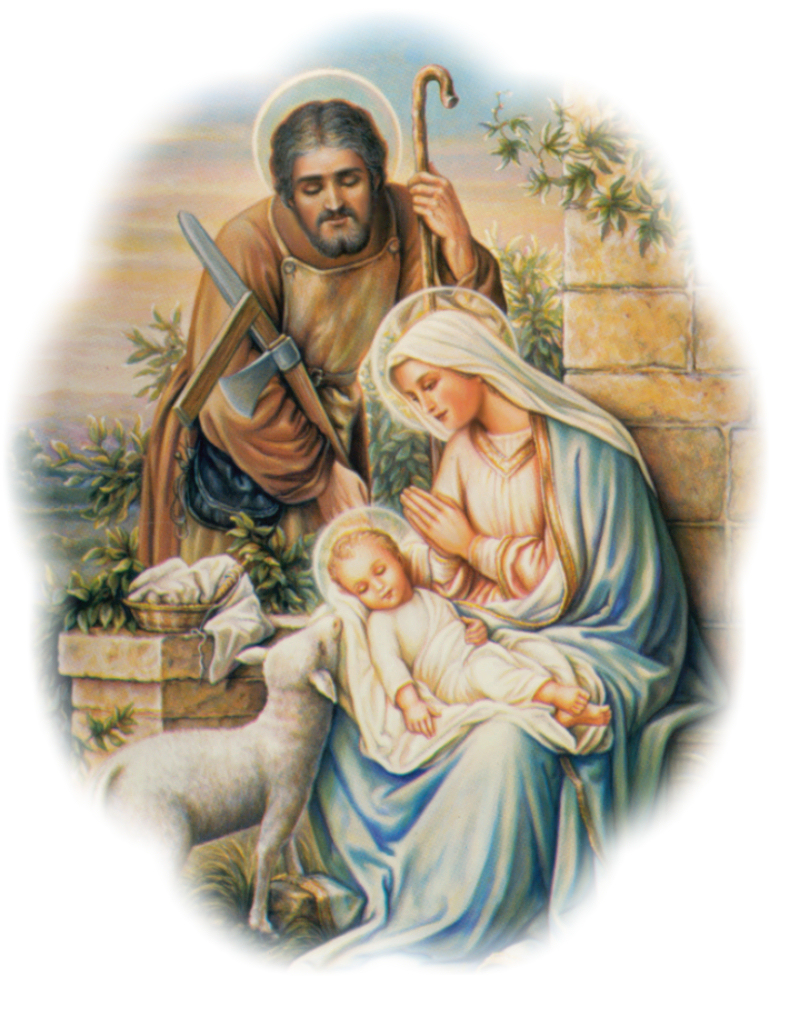
Today, we come together as churches and as children of the Lord to celebrate the Feast of the Holy Family. The Holy family of the Blessed Mary, of Joseph her spouse, and of course of our Lord Jesus Christ together as a full family. Now, we all come from families and we know as about both the joys and issues and difficulties family life can bring. Families are made of individuals, and individuals often have crosses to bear. Even as part of a family, even in the church family, we all have our crosses in life to carry. The Holy family, though indeed very blessed and Holy, were also still human and had their crosses of life to carry.
The crosses that were borne by the Holy family come to mind when reading the scriptures. Now just imagine what it must’ve been like when Mary and Joseph had to tell others how Mary had been conceived by the Holy Spirit alone? I sincerely doubt many people at first sincerely believed and accepted the truth of the situation. Yes, there was probably talking behind their backs, mocking, and those who would’ve just seen it as merely untruthful. How misunderstood both Mary and Joseph indeed must have been! Can you can you imagine how they would feel? We have all been misunderstood or not believed at times and it isn’t a good feeling at all! Even Mary, at the beginning of her pregnancy, was misunderstood by Joseph who was considering putting her away quietly, before an Angel intervened in a dream and reassured Joseph of the truth of the situation. At that time Mary’s pregnancy would have been seen as acceptable by others, and Joseph was concerned how it would be seen and how it would be taken. Can you imagine how this must have felt to both Mary, and indeed to Joseph?
When Mary and Joseph arrived in Bethlehem for Jesus’s birth, there was no room and all they could find was an animal’s shelter because Bethlehem at that time was so crowded. Can you imagine not finding anywhere to give birth? Not nice at all! After the birth of Jesus, Both Mary and Joseph had to flee because Jesus’s life was in danger from King Herod, who was killing all newborn babies and those very young in an attempt to kill Jesus as Herod saw him as a very severe threat. How this must’ve felt to both Mary and to Joseph! The fear for their son’s safety, the sadness, the confusion…the suffering!!
Mary and Joseph suffered the awful experience of losing Jesus for three days when he was twelve years old and the only satisfaction they got from him was that he had to be about his Father’s business.
We do not hear of Joseph any more so we presume that before Jesus began his public ministry in Galilee Joseph had died – The Holy Family suffering the greatest pain of all families, the pain of bereavement and separation through death.
Jesus’ public ministry must have taken its toll on Mary. Simeon had predicted in the Temple that a sword of sorrow would pierce Mary’s soul. We can imagine one such occasion as we read in Mark 3:21 that when Jesus returned to Nazareth. One day his relatives came to take him by force, convinced that he was out of his mind. Not a very pleasant experience for any family, no matter how holy.
There were so many other crosses this Holy family had to endure, but the saddest and the one which must’ve felt like Mary’s heart was being torn from her chest, was when Mary had to watch her only son die by crucifixion upon the cross for our salvation…oh what pain and sorrow!!!
All this suffering, pain and sadness this family has had to endure yet they stayed together and extremely strong throughout, and even kept their sanity…but how?
It was their sheer strength in their never-ending love both for God our Heavenly Father, and for each other, and for their endless faith and trust in God that enabled them to come through absolutely. So what holds us and our own families together in times of trauma, or suffering? We usually stay together because of our love and forgiveness of each other. We may at times have disagreements or words, but in the end true love keeps us in good stead. We should take notice always in the way we live our lives in the message that we get from the lives of the Holy Family, and that message is that no matter how hard we may feel our lives become, we must give all our love, faith, and trust to the Lord who will never ever fail us!! Let us pray to ask that we and all our families may live with the love, faith and true trust of the Lord in our lives!!
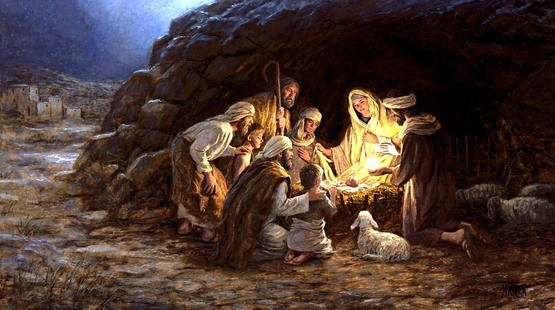
He Is Born!!!!!!!!!

Luke 2
The Birth of Jesus
2 In those days a decree went out from Caesar Augustus that all the world should be enrolled. 2 This was the first enrollment, when Quirin′i-us was governor of Syria. 3 And all went to be enrolled, each to his own city. 4 And Joseph also went up from Galilee, from the city of Nazareth, to Judea, to the city of David, which is called Bethlehem, because he was of the house and lineage of David, 5 to be enrolled with Mary, his betrothed, who was with child. 6 And while they were there, the time came for her to be delivered. 7 And she gave birth to her first-born son and wrapped him in swaddling cloths, and laid him in a manger, because there was no place for them in the inn.
The Shepherds and the Angels
8 And in that region there were shepherds out in the field, keeping watch over their flock by night. 9 And an angel of the Lord appeared to them, and the glory of the Lord shone around them, and they were filled with fear. 10 And the angel said to them, “Be not afraid; for behold, I bring you good news of a great joy which will come to all the people; 11 for to you is born this day in the city of David a Savior, who is Christ the Lord. 12 And this will be a sign for you: you will find a babe wrapped in swaddling cloths and lying in a manger.” 13 And suddenly there was with the angel a multitude of the heavenly host praising God and saying,
14 “Glory to God in the highest,
and on earth peace among men with whom he is pleased!”
15 When the angels went away from them into heaven, the shepherds said to one another, “Let us go over to Bethlehem and see this thing that has happened, which the Lord has made known to us.” 16 And they went with haste, and found Mary and Joseph, and the babe lying in a manger. 17 And when they saw it they made known the saying which had been told them concerning this child; 18 and all who heard it wondered at what the shepherds told them. 19 But Mary kept all these things, pondering them in her heart. 20 And the shepherds returned, glorifying and praising God for all they had heard and seen, as it had been told them.

Blessed Margaret of Savoy
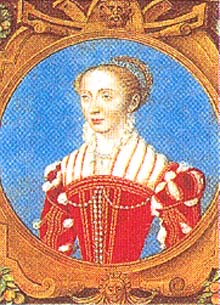

Margaret of Savoy, daughter of Duke Amadeo II, is one of three royal princesses who wore the Dominican habit and were beatified. In the 15th century, she was the glory of a family that has given several beati to the Church.
Born into the royal house of Savoy, Margaret grew up in a household in which piety and wealth were ordinary. Her own parents died when she was small, and she was educated by an uncle, who arranged an early marriage for her to the Marquis of Montferrat, Theodore Paleologus.
As queen of her fairly large domain, Margaret was the model of Christian rulers. She felt that it was her duty to exceed in charity and humility in the proportion that she was wealthier than those around her, and she devoted all of her time to God and to her neighbors. Her husband was a widower with two children, to whom she gave the greatest care. The hundreds of dependents on the large estates came to her for charity and instruction.
Disaster stuck Savoy several times in the years when she was wife and mother. Famine and plague came, making great demands on her time and her courage. Unhesitatingly, she went out to nurse the plague-stricken with her own hands, and she sent out food and clothing from her husband’s stores until it was doubtful if anything would be left. After this crisis passed, war hovered over the kingdom, and she prayed earnestly that they would be delivered from the horrors of invasion.
In 1418, the marquis died. His young widow was one of the most eligible women in Europe. Margaret sorrowed for her husband, but she made it clear to her relatives that they need not plan another marriage for her, as she was going to enter a convent. In order to live a life of complete renunciation, she decided to found a convent of her own at Alba in Liguria that would follow the ancient rule of Saint Dominic. Accordingly, she took over a cloister which had fallen into ruin, having only a few poor inhabitants, and rebuilt it for Dominican use. She dedicated the house to St. Mary Magdalen.
There is one very delightful story told of her sojourn in the convent. When she had been there many years, she one day had a young visitor; he was the son of one of her step-children. Hunting nearby, he had killed a doe, and he brought her the motherless fawn to tend. It was a pretty little animal, and it soon grew to be a pet. One legend was that the fawn was able to go and find any sister she would name, and, for several years, the animal had free rein of the halls and cells of the sisters. Perhaps it was true, though, since the house confessor told her that the deer must go. She took it to the gate and told it to go. It fled into the forest, and returned only when Margaret was about to die.
Margaret attained a high degree of contemplative prayer. One time Our Lord appeared to her and asked her whether she would rather suffer calumny, sickness, or persecution. Margaret generously accepted all three. Her offer was taken, and for the remaining years of her life she suffered intensely from all three sorrows (Dorcy). It should be noted that Saint Vincent Ferrer influenced Margaret to join the Dominican tertiaries (Benedictines).
Blessed Sebastian Maggi
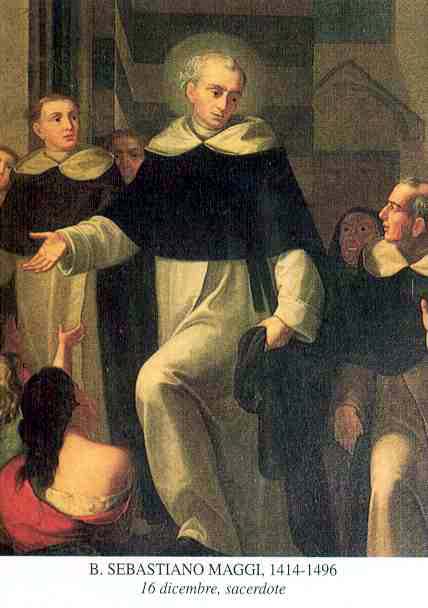
Sebastian Maggi lived in a colorful and troubled age, the time of Savonarola; he was, in fact, a friend of the friar of Ferrara and always staunchly defended him.
Sebastian entered the Dominican Order as Brescia as soon as he was old enough. His early years were remarkable only for his devotion to the rule, for the purity of his life, and the zeal with which he enforced religious observance. He was superior of several houses of the order, and finally was made vicar of the reformed congregation of Lombardy, which made him the superior of Jerome Savonarola, the dynamic reformer around whom such a tragic storm was brewing.
Perhaps, if Sebastian Maggi had lived, he might have saved Savonarola from the political entanglements that sent him to his death. Sebastian was his confessor for a long time, and always testified in his favor when anyone attacked the reformer’s personal life. It is hard to say just where he stood politically in the long and complex series of events concerning the separation of Lombard province from the province of Italy. But all that has been written of him conveys the same impression: he was a kind and just superior, who kept the rule with rigid care, but was prudent in exacting it of others.
Several times Sebastian Maggi was sent on missions of reform, and he died on one of these. On his way to a convent for visitation, he became ill at Genoa and died there in 1496. His body is incorrupt at the present time (1963) (Benedictines, Dorcy).
Born: 1414 at Brescia, Italy
Died: 1496 at Genoa, Italy of natural causes; body was still incorrupt in 1963
Beatified: April 15,1760 by Pope Clement XIII (cultus confirmed)
Our Lady of Guadalupe ~ Br. Michael Marshall

Our Lady of Guadalupe is known as the Patroness of the Americas. In December of 1531, the Blessed Virgin appeared to an Aztec Indian Man by the name of Juan Diego on Tepeyac Hill, outside of what is now known as Mexico City. This was a very significant event in the history of religion in Latin America because the Aztec culture and religion was centered on the gods, while the Conquistadors brought Catholicism; there was a clash between the two for a number of years, and eventually the Indian religions disappeared. Many Indian folks converted to Catholicism due to missionary presence in Latin America.
Our Lady of Guadalupe appeared to Juan Diego, as an indigenous woman, asking that a church be built at that location. She told Juan Diego to go to his bishop to tell of this request. His story was only believed after the fourth apparition. Castilian roses appeared on the hill where Our Lady appeared; roses which do not grow in that region, or in December for that matter. To prove that the Virgin had appeared again, he cut the roses and put them in his cloak to show the bishop. When Juan Diego addressed the bishop, the image of Our Lady of Guadalupe appeared in the cloak after the roses fell on the ground. The fifth and last apparition was to Juan Diego’s uncle who was ill. Juan Diego was worried about his uncle and the Virgin told him that his ill uncle who was on his deathbed would return to good health.
Images of Our Lady of Guadalupe show her wearing a dress with jasmine flowers and a mantle which has stars. These have reference to the Aztec culture and the Winter Solstice, as she appeared to Juan Diego as an indigenous woman. The impact of her apparition was a huge event because this was a turning point in which the indigenous people connected with Catholicism, instead of through the influence from the Europeans.
First Reading: Revelation 11:19a; 12:1-6a, 10ab
God’s temple in heaven was opened,
and the ark of his covenant could be seen in the temple.
A great sign appeared in the sky, a woman clothed with the sun,
with the moon under her feet,
and on her head a crown of twelve stars.
She was with child and wailed aloud in pain as she labored to give birth.
Then another sign appeared in the sky;
it was a huge red dragon, with seven heads and ten horns,
and on its heads were seven diadems.
Its tail swept away a third of the stars in the sky
and hurled them down to the earth.
Then the dragon stood before the woman about to give birth,
to devour her child when she gave birth.
She gave birth to a son, a male child,
destined to rule all the nations with an iron rod.
Her child was caught up to God and his throne.
The woman herself fled into the desert
where she had a place prepared by God.
Then I heard a loud voice in heaven say:
“Now have salvation and power come,
and the Kingdom of our God
and the authority of his Anointed.”
Responsorial Psalm: Judith 13:18bcde, 19
- (15:9d) You are the highest honor of our race.
Blessed are you, daughter, by the Most High God,
above all the women on earth;
and blessed be the LORD God,
the creator of heaven and earth.
R. You are the highest honor of our race.
Your deed of hope will never be forgotten
by those who tell of the might of God.
R. You are the highest honor of our race.
Gospel: Luke 1:26-38
The angel Gabriel was sent from God
to a town of Galilee called Nazareth,
to a virgin betrothed to a man named Joseph,
of the house of David,
and the virgin’s name was Mary.
And coming to her, he said,
“Hail, full of grace! The Lord is with you.”
But she was greatly troubled at what was said
and pondered what sort of greeting this might be.
Then the angel said to her,
“Do not be afraid, Mary,
for you have found favor with God.
Behold, you will conceive in your womb and bear a son,
and you shall name him Jesus.
He will be great and will be called Son of the Most High,
and the Lord God will give him the throne of David his father,
and he will rule over the house of Jacob forever,
and of his Kingdom there will be no end.”
But Mary said to the angel,
“How can this be,
since I have no relations with a man?”
And the angel said to her in reply,
“The Holy Spirit will come upon you,
and the power of the Most High will overshadow you.
Therefore the child to be born
will be called holy, the Son of God.
And behold, Elizabeth, your relative,
has also conceived a son in her old age,
and this is the sixth month for her who was called barren;
for nothing will be impossible for God.”
Mary said, “Behold, I am the handmaid of the Lord.
May it be done to me according to your word.”
Then the angel departed from her.
Waking up at 3 o’clock in the morning to go to Church… Who in the world does that? It seems so strange, doesn’t it? I understood why when I lived in Chicago and ministered to the Mexican immigrant population. One of the parishes at which I spent time ministering was named Our Lady of Guadalupe, and every December 12th the community would go to church early in the morning to serenade the Blessed Virgin. This serenade was known to the Mexican people as Mañanaitas; mañana being morning in Spanish. This event is an expression of love for Mary, as her apparition had a significant impact on religion in Mexico.
In the Gospel we find Mary confused as to why she would be chosen to be the mother of the Son of God, but she recognized it was her calling from the Lord. Juan Diego was also confused as to why Mary would ask him to approach the bishop to have a church built, but he did as she asked; and the miracle proved why he was chosen.
People called to ministry sometimes feel unworthy to take on something which is asked of them because it is outside of the box of everyday ministry. Here is an example… A priest knows they are good at preaching because someone affirmed this ministerial gift, but then the archbishop sees potential in leadership of a diocese; so they are chosen to become a bishop. The priest may not feel worthy but understands that they have been chosen for a purpose. It is important for anyone to listen to what is being asked of us in ministry. There is a reason why, and something great will result if willing to accept it.
Gifts

What you are is God’s gift to you.
What you become is your gift to God.
During this time of the year, many of our thoughts turn to gifts: giving and receiving, what we want to give, what we want to receive, what will please those we love, the shopping, the ordering, the wrapping, the general hustle and bustle of the Christmas season centering around gifts ad infinitum, donating to the people with the red kettles and bells so the less fortunate can have gifts…..
And then there’s the practice of ‘re-gifting,’ passing along that unwanted or unusable gift that we were given, to someone else, so that they will have SOMETHING, and so that they too, can possibly pass that pink and orange and green plaid scarf along, re-gifting it themselves to someone else who won’t use it either….and sometimes by some freak chance that unwanted item comes back to us several years later….and not much too worse for the wear…. And is re-gifting, as amusing (and cheap) as it may seem, necessarily a bad thing?
Why all this focus on gift-giving and gift-receiving at this time of year? The union of Christmas and gift giving was a gradual one; actually, the full story of the bright packages beneath the tree, like most of our Christmas customs, begins in the days before the birth of Christ. In ancient Rome, gifts were exchanged during the New Year’s celebrations. At first these gifts were simple, such as a few twigs from a sacred grove and small items of food. Many gifts were in the form of vegetables in honor of the fertility goddess Strenia. During the Northern European Yule, (yep, the yuletide season is a pagan thing) fertility was celebrated with gifts made of wheat products, such as bread and alcohol.
Like many of the old and pagan customs, exchanging gifts was difficult to get rid of even as Christianity spread and gained official status. Early church leaders tried to outlaw the custom, but the people cherished it too much to let it go. St. John Chrysostom urged no compromise with heathen abominations, but he, too, failed in this tenacity of hanging on to the tradition of gift giving. Since there was no general agreement about the exact date of the birth of Jesus, it must have seemed helpful to have it supersede the Saturnalia, so the rebirth of the sun became instead the birth of the Son of God, and the church leaders looked for a Christian justification for the practice of all this gift giving. This justification was found in the Magi’s act of bearing gifts to the infant Jesus, and in the concept that Christ was a gift from God to the world, bringing in turn the gift of redemption and everlasting life.
What you are is God’s gift to you.
What you become is your gift to God.
Wikipedia defines a gift as the transfer of something without the expectation of receiving something in return. Although gift-giving might involve an expectation of reciprocity, a gift is meant to be free. By extension the term “gift” can refer to anything that makes the other happier or less sad, especially as a favor, including forgiveness and kindness.
God’s gifts to us are free and clear. He has given us the gift of His Son, Our Lord and Savior Jesus Christ. He has given us the gift of eternal life: “For the wages of sin is death, but the gift of God is eternal life in Christ Jesus our Lord.” Romans 6:23 (NIV); The gift of salvation: “For it is by grace you have been saved, through faith—and this is not from yourselves, it is the gift of God.” Ephesians 2:8 (NIV); And the gifts that are unique to each of us: “We each of us have our own individual gifts: But each of you has your own gift from God; one has this gift, another has that.” 1Corinthians 7:7 (NIV)
Besides the obvious gift of His Son, and the forgiveness that we receive through Him whom we receive by faith, what other gifts has God given specifically to you? What talents have you received? What blessings have been given to you?
We learn about the 7 Gifts of the Spirit in Isaiah 11:2-3: “2 The Spirit of the LORD will rest on him— the Spirit of wisdom and of understanding, the Spirit of counsel and of might, the Spirit of the knowledge and fear of the LORD— 3 and he will delight in the fear of the LORD. He will not judge by what he sees with his eyes, or decide by what he hears with his ears;” (NIV)
And more importantly, what are you doing with those gifts? What are you giving back to God? What are you “becoming” as you use your gifts and talents? Which of the gifts that you have been given are you “regifting?” In other words, when we’ve received a gift from God, do we share that gift with others? Do we “regift?” We are told in 1 Peter 4:10, “Each one should use whatever gift he has received to serve others, faithfully administering God’s grace in its various forms.” (NIV) Jesus himself addresses this very thing in the parable of the talents in Matthew 25:14-30. By using our gifts, they multiply and we bring others to know God, and by recognizing what we have been given and using them for God’s glory, we are giving back to God.
What is the most precious thing we can give to God? The most precious gift we can give is what God wants the most. God wants us to make the fervent attempt to repent, get right with Him, and not lead a double life, trying to follow two contradictory paths, but living our lives according to His will. God simply wants us to give ourselves to Him. This is the best gift we can give! Our gift to Him is how we respond to the gifts He has given us which are the gifts of life and of grace. We can best do this when we are headed in His direction, following His precepts with a grateful, willing heart and mindset, and by striving to be the best that we can be by becoming what it is that He wants us to be.
Barbara Streisand sings in “The Best Gift:”
The best gift
That I ever got
Didn’t really weigh a lot
It didn’t have a ribbon ’round
And it sometimes made a terrible sound
The best of all it seems to me
It wasn’t ‘neath the Christmas tree
And yet, I guess I’d have to say
That it made all the other presents twice as gay
The best gift that I’ve ever known
I’d always wanted most to own
Yet in my dreams of sugar and spice
I never thought it could be so nice
The best gift that I ever get
Was sometimes dry and sometimes wet
Was usually pink but oftentimes red
As it lay so innocently in it’s bed
The best gift of the year to me
The one I hold most dear to me
A gift that simply drove me wild
Was a tiny new born child…
As we celebrate the birth of THE tiny newborn Child, God’s greatest and best Gift to us, let us strive to make ourselves the best gift we can give to others, and to God. Amen.
Patience is a Virtue, Advent II ~ Rev. Archdeacon Sr. Dollie Wilkinson, OPI

Patience-the capacity to accept or tolerate delay, trouble, or suffering without getting angry or upset.
After a recent conversation with my granddaughter, where she declared, “I get Christmas first!”, because of course being only three, she could not imagine being patient in waiting for Christmas. To the very young, the actual word “patience”, has very little meaning. But in 2 Peter 3:8-15a, we are cautioned to do just that.
“But do not ignore this one fact, beloved, that with the Lord one day is like a thousand years, and a thousand years are like one day. The Lord is not slow about His promise, as some think of slowness, but is patient with you, not wanting any to perish, but all to come to repentance. But the day of the Lord will come like a thief, and then the heavens will pass away with a loud noise, and the elements will be dissolved with fire, and the earth and everything that is done on it will be disclosed. Since all these things are to be dissolved in this way, what sort of persons ought you to be in leading lives of holiness and godliness, waiting for and hastening the coming of the day of God, because of which the heavens will be set ablaze and dissolved, and the elements will melt with fire? But, in accordance with His promise, we wait for new heavens and a new earth, where righteousness is at home. Therefore, beloved, while you are waiting for these things, strive to be found by Him at peace, without spot or blemish; and regard the patience of our Lord as salvation. So also our beloved brother Paul wrote to you according to the wisdom given him.”
Here we are cautioned to be patient, in waiting on the Lord’s mercy and favor. Just as the Lord is patient with us, so too should we be patient in waiting on His promises. How often have we prayed, expecting a quick answer to what seems to us an imminent dilemma? But as Peter states, “ with the Lord one day is like a thousand years, and a thousand years are like one day”. Meaning, what to us may seem like a dire concern, to the Lord, it is crucial only if it aides in bringing His children to salvation.
So many times I have heard the trite saying, “Patience is a virtue”. But what does this mean, and where does this saying come from?
“The first known publishing of the quote “Patiences is a virtue” comes from the poem “Piers Plowman” written between the years 1360 and 1387. Typical of texts from the 14th century, authorship can be debated though literary historians normally attribute most of the text to William Langland. However, there are multiple versions of this poem written at different times with sections believed to be authored by different, unknown people. “Piers Plowman” is a poem about a man, the poet and first narrator, in search of Catholicism and faith according to medieval standards. He does this by having dream visions after falling asleep. The poem is allegorical, meaning the characters are symbolic and also satirical. However, the allegory isn’t vague or abstract. The various characters include Truth (God), Wrong (Devil), Holy Church, Thought, Wit, Study, Conscience, Liar, Reason, Dowel (do well), Dobet (do better) and Dobest (do best) and others, including the seven deadly sins. Later, the characters are lead on a quest by Piers Plowman who also becomes the narrator. The Plowman is chosen as the guide due to his seemingly innocent and truthful nature.”
So in the allegorical poem by William Langland, we learn patience is a critical virtue,
highly prized by our Lord, “ regard the patience of our Lord as salvation.” And thus the key to our salvation. But in our fast paced, hurry up world, how can we practice patience? Are we just like the child, eager for Christmas day, the frenzied opening of presents? Or can we do as our Father commands us, practicing patience, knowing the ultimate gift isn’t found under an evergreen tree. But in the patient, loving presence of our heavenly Father. And is this not the bestest gift of all?!!!

Merry Christmas OR Happy Holidays?? X that!!!
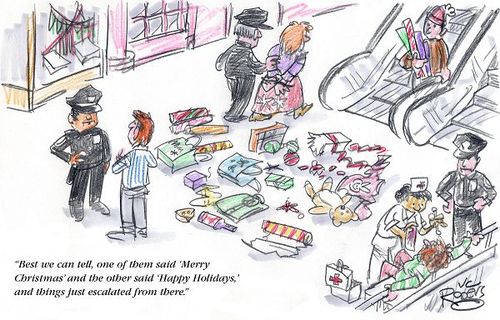
It’s that time of year again. The time for all and sundry to argue the finer points of holiday greetings: Merry Christmas versus Happy Holidays. At the risk of being seen as a non-Christian priest, or a politically correct one, and abandoning or at least not defending my faith and my Lord, I feel compelled for some odd reason, to offer a treatise on the use of Happy Holidays. So here goes….
“Happy Holidays.” Now really, what’s wrong with that? It’s a pleasant wish that encompasses good wishes for an entire month and a half long season. Granted, that “season” is usually meant to be the period between Thanksgiving and New Year’s Day, and is usually understood to include only Christmas and New Year’s Day. However, in that time period, what other holidays are there? “Happy Holidays” is a collective and inclusive wish for the period encompassing Thanksgiving, Kwanzaa, Hanukkah, the Immaculate Conception of the Blessed Virgin Mary, the Feast of Our Lady of Guadalupe, the Winter solstice, Christmas Day (The Nativity of the Lord), Boxing Day and St. Stephen’s Day, St. John’s Day, the New Year and Epiphany, and it would take me forever to get through the list, if I could remember the list at all, just to give a pleasant hello to someone! “Happy Holidays” is just easier! Most of the aforementioned holidays ARE Christian holidays, though, so what’s wrong with “Happy Holidays?”
Leaving those “Happy Holidays” that are in the Christian calendar for a few minutes; let’s look at the ones that aren’t Christian holidays. Granted, I don’t really consider the Winter solstice a holiday and don’t think I know any Wiccans personally, so I can omit that one altogether and not feel too bad about it. Kwanzaa is celebrated by our African American brothers and sisters and is not a substitute for Christmas, nor is it a religious holiday. Wishing someone a happy Kwanzaa does nothing to deny Christianity, but it’s a holiday that I personally don’t celebrate, since I’m not African American. I DO have many African American friends, however, and most certainly wish them all a happy and joyous Kwanzaa, as well as Merry Christmas!
Hanukkah is a Jewish festival, celebrating a miracle that occurred way back in the 2nd century BCE. Also known as the Festival of Lights, it is an eight-day Jewish holiday commemorating the rededication of the Holy Temple (the Second Temple) in Jerusalem at the time of the Maccabean Revolt. The story of Hanukkah is alluded to in the book of 1 Maccabees and 2 Maccabees, but Hanukkah is not specially mentioned; rather, a story similar in character, and obviously older in date, is the one alluded to in 2 Maccabees 1:18, according to which the relighting of the altar fire by Nehemiah was due to a miracle which occurred on the 25th of Kislev, and which appears to be given as the reason for the selection of the same date for the rededication of the altar by Judah Maccabee. Now, 1 and 2 Maccabees are not considered canonical books by most Protestants, but are included in the Apocrypha, which IS in Catholic and Orthodox Bibles. So while Hanukkah is not a Christian holiday, per se, it can be considered Biblical. And since it celebrates the lighting of the rededication of the Temple and is celebrated with lights, and Christ is “the Light of the World,” and the fact that Christianity has its roots in Judaism, Happy Hanukkah to my Jewish friends!
The day after Christmas is Boxing Day, which is celebrated in the Commonwealth countries. The tradition of Boxing Day has long included giving money and other gifts to those who are needy and in service positions, and this European tradition has been dated to the Middle Ages. Shouldn’t we, as Christians, do this year round, and not just during the “holidays”?
New Years Day: Now, there’s a pagan holiday for you! The Romans dedicated this day to Janus, the god of gates, doors, and beginnings. The month of January was named after Janus, who had two faces, one looking forward and the other looking backward. It is from this Roman custom that we get the making of New Year’s resolutions: looking backward, we resolve to not do something or other, and looking forward, we resolve TO do something or other. Among the 7th century pagans of Flanders and the Netherlands, it was the custom to exchange gifts at the New Year. So, I guess I’m asking, should we as Christians NOT celebrate the new year and not wish everyone a “Happy New Year”? If this is the case, then we should certainly avoid making New Year’s resolutions, too. (Especially those that include diets and exercise!)
And then, there are the religious holidays that most Christians don’t really celebrate, and some don’t even know about. The Feast of Saint Stephen, who was the first Christian martyr on 26 December, the Feast of St. John who was the “Beloved Disciple” on 27 December, the Immaculate Conception of the Blessed Virgin Mary on 8 December, and the Feast of Our Lady of Guadalupe on 12 December have already been mentioned.
Finally, there is Epiphany, which is perhaps one of the most important holidays of the liturgical or church year. It is the last day of the Twelve Days of Christmas of which we sing in the (often-denigrated) Christmas carol, and which is overlooked by most non-liturgical churches. Epiphany, which falls on January 6, is a Christian feast day that celebrates the revelation of God the Son as a human being in Jesus Christ. Western Christians commemorate principally (but not solely) the visitation of the Biblical Magi to the Baby Jesus, and thus Jesus’ physical manifestation to the Gentiles. The early Christian Fathers fixed the date of the feast on January 6. Ancient liturgies noted Illuminatio, Manifestatio, Declaratio (Illumination, Manifestation, Declaration) taken from Matthew 3:13–17; Luke 3:22; and John 2:1–11; where the Baptism and the Marriage at Cana were dwelt upon. Western Christians have traditionally emphasized the “Revelation to the Gentiles” mentioned in Luke, where the term Gentile means all non-Jewish peoples. The Biblical Magi, who represented the non-Jewish peoples of the world, paid homage to the infant Jesus in stark contrast to Herod the Great (King of Judea), who sought to kill him. In this event, Christian writers also inferred a revelation to the Children of Israel. Saint John Chrysostom identified the significance of the meeting between the Magi and Herod’s court: “The star had been hidden from them so that, on finding themselves without their guide, they would have no alternative but to consult the Jews. In this way, the birth of Jesus would be made known to all.” The earliest reference to Epiphany as a Christian feast was in A.D. 361, by Ammianus Marcellinus. St. Epiphanius says that January 6 is hemera genethlion toutestin epiphanion (Christ’s “Birthday; that is, His Epiphany”). He also asserts that the Miracle at Cana occurred on the same calendar day, and it was on this day, too, that John the Baptist baptized Jesus in the Jordan River. So on 6 January, after all the Christmas trimmings have been put away, the gifts exchanged, New Years resolutions have been made (and some broken already), and the kids are back in school, we can still say, with all feeling, “Happy Holidays.”
Honestly, don’t you think “Happy Holidays” is so much easier? And besides, I really like Bing Crosby’s Christmas carol, “Happy Holidays!”
Now, What about that pesky “Xmas” that annoys so many people?
To begin: Look around in your churches, my friends, especially those of you from a liturgical background, and see how many X’s you can find.
“Xmas” is a common abbreviation of the word “Christmas“. The “-mas” part is from the Latin-derived Old English word for “Mass“, while the “X” comes from the Greek letter Chi, which is the first letter of the Greek word Χριστός, translated as “Christ“. There is a common misconception that the word Xmas is a secular attempt to remove the religious tradition from Christmas by taking the “Christ” out of “Christmas”. While “Xmas” is considered to be an informal abbreviation, and should never be used in formal writing, it is historically correct.
The word “Christ” and its compounds, including “Christmas”, have been abbreviated in English for at least the past 1,000 years, long before the modern “Xmas” was commonly used. “Christ” was often written as “XP” or “Xt”; there are references in the Anglo-Saxon Chronicle as far back as AD 1021. This X and P arose as the uppercase forms of the Greek letters χ and ρ used in ancient abbreviations for Χριστος (Greek for “Christ”), and are still widely seen in many Eastern Orthodox icons depicting Jesus Christ. The labarum, an amalgamation of the two Greek letters rendered as ☧, is a symbol often used to represent Christ in Catholic, Protestant, and Orthodox Christian Churches.
The Oxford English Dictionary (OED) and the OED Supplement have cited usages of “X-” or “Xp-” for “Christ-” as early as 1485. The terms “Xpian” and “Xtian” have also been used for “Christian”. The dictionary further cites usage of “Xtianity” for “Christianity” from 1634. According to Merriam-Webster’s Dictionary of English Usage, most of the evidence for these words comes from “educated Englishmen who knew their Greek”.
In ancient Christian art, χ and χρ are abbreviations for Christ’s name. In many manuscripts of the New Testament and icons, Χ is an abbreviation for Χριστος, as is XC (the first and last letters in Greek, using the lunate sigma); compare IC for Jesus in Greek.
Thus, really and truly, the use of the “X” isn’t taking Christ out of Christmas at all. And instead of protesting the use of “X” during the Christmas season, wouldn’t we ALL be better people, the world be a better place, and Christ be better served, if we kept that “X” in our words and deeds every day of the year? Should we not celebrate Him always, 24/7/365?
So, having said all of the above, Happy Holidays (all of them) to all of you, and may you keep Christ, not only in Christmas, but also in your hearts and minds and lives, every day and always. Amen.
Blessed John of Vercelli

John Garbella was born early in the 13th century, somewhere near Vercelli. He studied at Paris and was ordained priest before 1229. He taught canon law at the University of Paris. While he was professor there, Jordan of Saxony (who was a friend of Saint Albert the Great) came to Paris, and John saw one after another of his best pupils desert their careers to join the Dominicans. He seems to have considered them quite objectively, without reference to himself, until one day he had an interior voice that spoke to him that it was God’s will for him to join the Dominicans. No one can say that John did not respond with alacrity; he dropped everything and ran down the street. (“Let me go; I am on my way to God!”) Jordan received him happily and gave him the habit.
In 1232, John was sent to Vercelli to establish a convent there. He built this and several other convents in Lombardy as houses of regular observance. While provincial of Lombardy, he also became inquisitor. It was a particularly difficult moment. His brother in religion, Peter of Verona, had just been killed by the heretics in Como. The entire countryside was in a state of war, with roving bands of heretics and robbers. It was the task of the new inquisitor to try to bring order out of this chaos, and what John did was remarkable, considering the situation. In spite of his heavy labors, which included the supervision of 600 friars in 28 different cities (he reached them only by walking), John of Vercelli established the ideals of study and regular observance in all of his houses.
It was the good fortune of John of Vercelli to live in an age that was well peopled by saints. He formed a close friendship with Saint Louis, the king of France. Several of his tasks in the order, particularly the Commission on the Program of Studies, he shared with Saint Albert the Great, Saint Thomas Aquinas, and Peter of Tarentaise (the future Pope Innocent V). In such company one would need to have a superior set of talents; John did.
In 1264 the chapter of the order met at Paris. Blessed Humbert had resigned as master general of the order. John went to the chapter hoping that he could resign as provincial of Lombardy. Instead of escaping one office, he fell heir to a still more difficult one. He was elected master general in 1264 and served in that capacity until 1283. John was then a man in his sixties and was, moreover, handicapped by a crippled leg. However, he accepted the office which would require him to walk, not only all over Lombardy, but all over Europe. It took a brand of courage and obedience that was little short of heroic.
During the generalate of John of Vercelli, the relics of Saint Dominic were transferred to the new tomb that had been prepared for it by Nicholas of Pisa. When the transfer was made, John of Vercelli fixed his seal on the tomb; the seals were still intact on their examination in 1946. During the translation of the relics, according to the account in the Vitae Fratrum, when the body of Saint Dominic was exposed to view, the head was seen to turn towards John of Vercelli. John, embarrassed, moved to another part of the church and gave his place to a cardinal. Whereupon, the head of Saint Dominic was seen by all to turn again in John’s direction.
On the death of Clement IV, John of Vercelli was very nearly elected pope. Being warned of the possibility, he fled in fright. However, his good friend Cardinal Visconti, was elected and took the name Gregory X. He appointed John as legate on several different missions.
He was commissioned by the pope to draw up the Schema for the second ecumenical council of Lyons in 1274–that council to which Saint Thomas Aquinas was hurrying when death found him on the road. At the council John distinguished himself for his assistance by offering to the council the talents of his best men. At the council, he accepted for the Dominican Order the special commission of promoting reverence for the Holy Name of Jesus and fighting blasphemy, which was, in that day as in ours, a prevalent vice. He can thus be considered the founder of the Holy Name Society, even though the Confraternity was not formed until 1432.
Several precious relics were suitably enshrined by John of Vercelli. These included several thorns from the Crown of Our Lord, which had been given him by Saint Louis of France. The cord of Saint Thomas, with which he had been guided by the angels and which he had worn until death, was given into the care of the master general, who gave it to the convent of Vercelli for safe keeping.
John’s career was rapidly reaching its end. In 1279, he presided over the famous chapter of Paris at which the order made the doctrine of Saint Thomas officially its own. The following year he laid the foundations of the Church of Santa Maria Sopra Minerva. One of his last official acts was to provide for a work on the instruction of novices (Benedictines, Dorcy).
Born: 1205 at Mosso Santa Maria, Italy as John Garbella
Died: September 1283 at Montpelier, France of natural causes; buried at the Dominican convent at Montpelier; his tomb was desecrated by Calvinists in 1562, and his body disappeared.
Beatified: 1903 by Pope Pius X (cultus confirmed), 1909 elevated him to the honors of the altar
Blessed James Benefatti

James is known as the Father of the Poor. He was a Dominican at Mantua, Italy in 1290, and was a Doctor of theology and a priest. He was also a friend and brother friar of Nicholas Boccasino who later became Pope Benedict XI, and for whom James held several support offices including papal legate. He was the Bishop of Mantua in 1303, and noted for his devotion to the poor. James rebuilt his cathedral and refurbished churches and was appointed Papal legate for Pope John XXII. He died 19 November 1332 at Mantua, Italy of natural causes. His body was found incorrupt when exhumed both in 1480 and 1604. He was beatified in 1859 by Pope Pius IX.
 The Order of Preachers, Independent
You must be logged in to post a comment.