
Category: Lesson
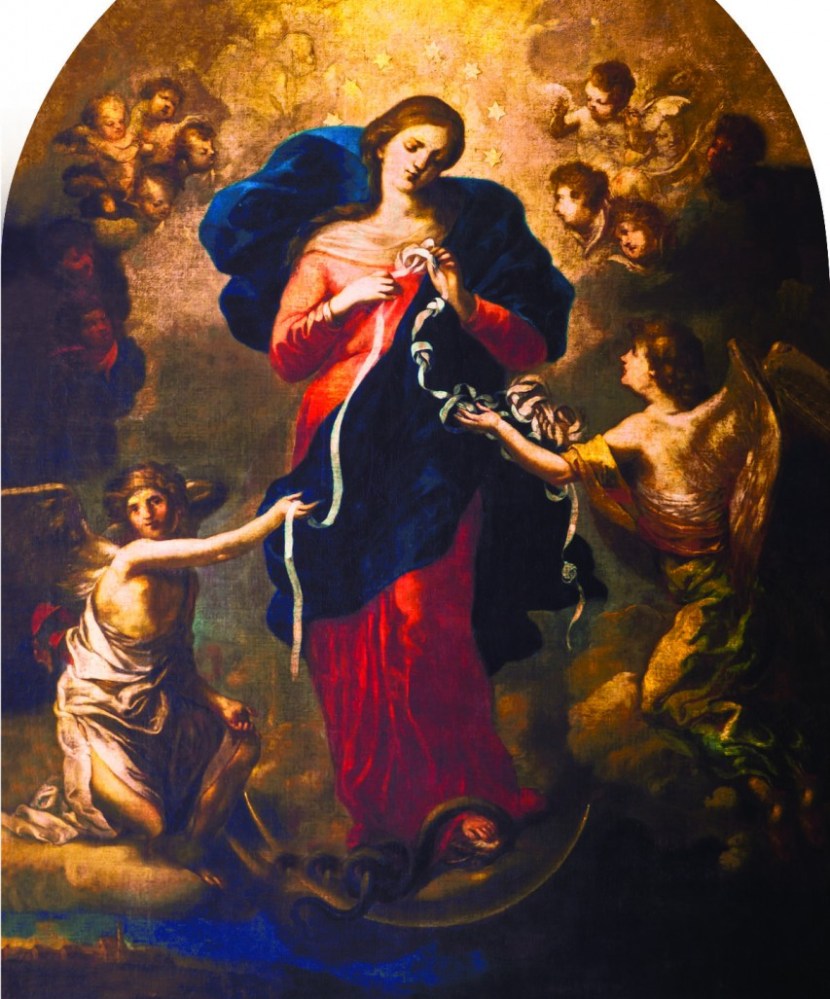
Got Knots? The Feast of Our Lady, Undoer of Knots ~ Br. Dominic Ferrante, Novice
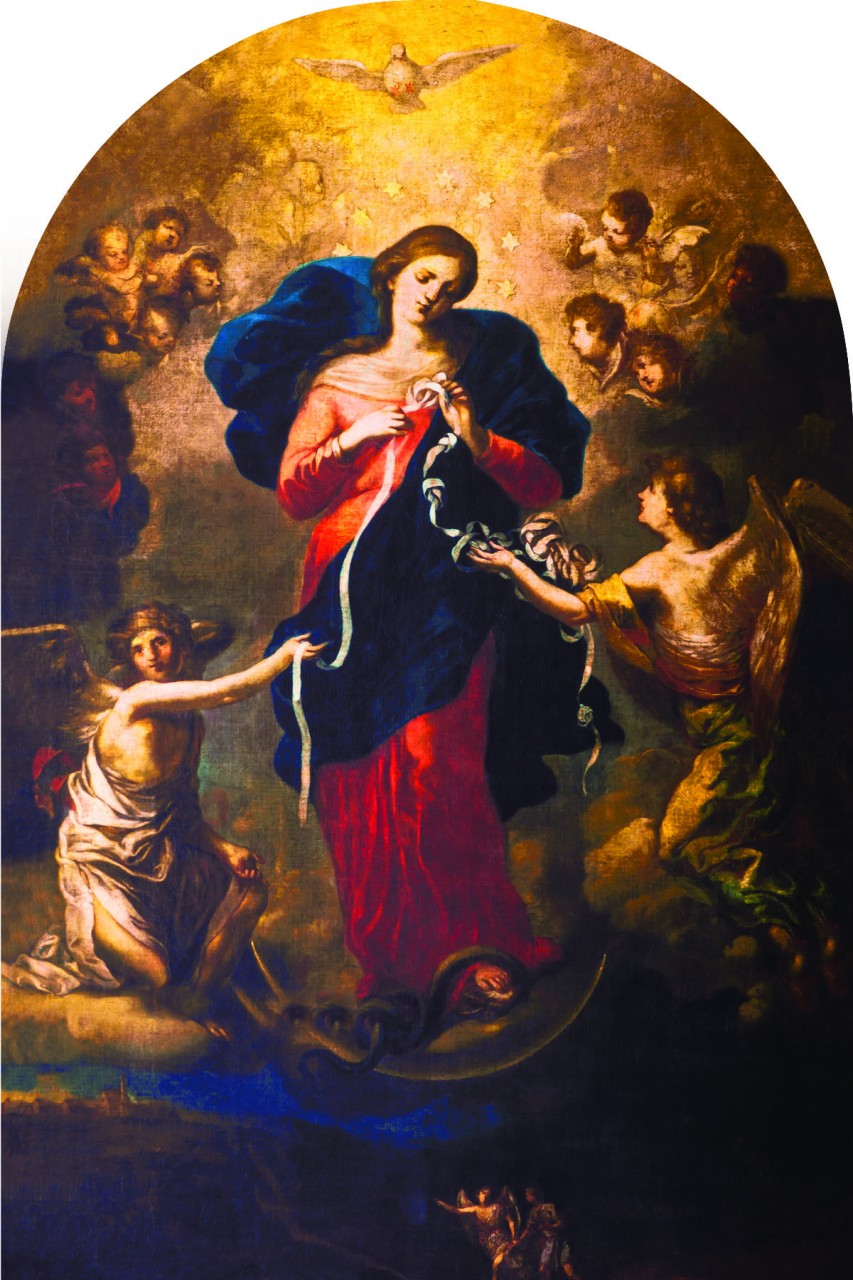
Commemoration of Our Patriarch, Saint Dominic, in Soriano
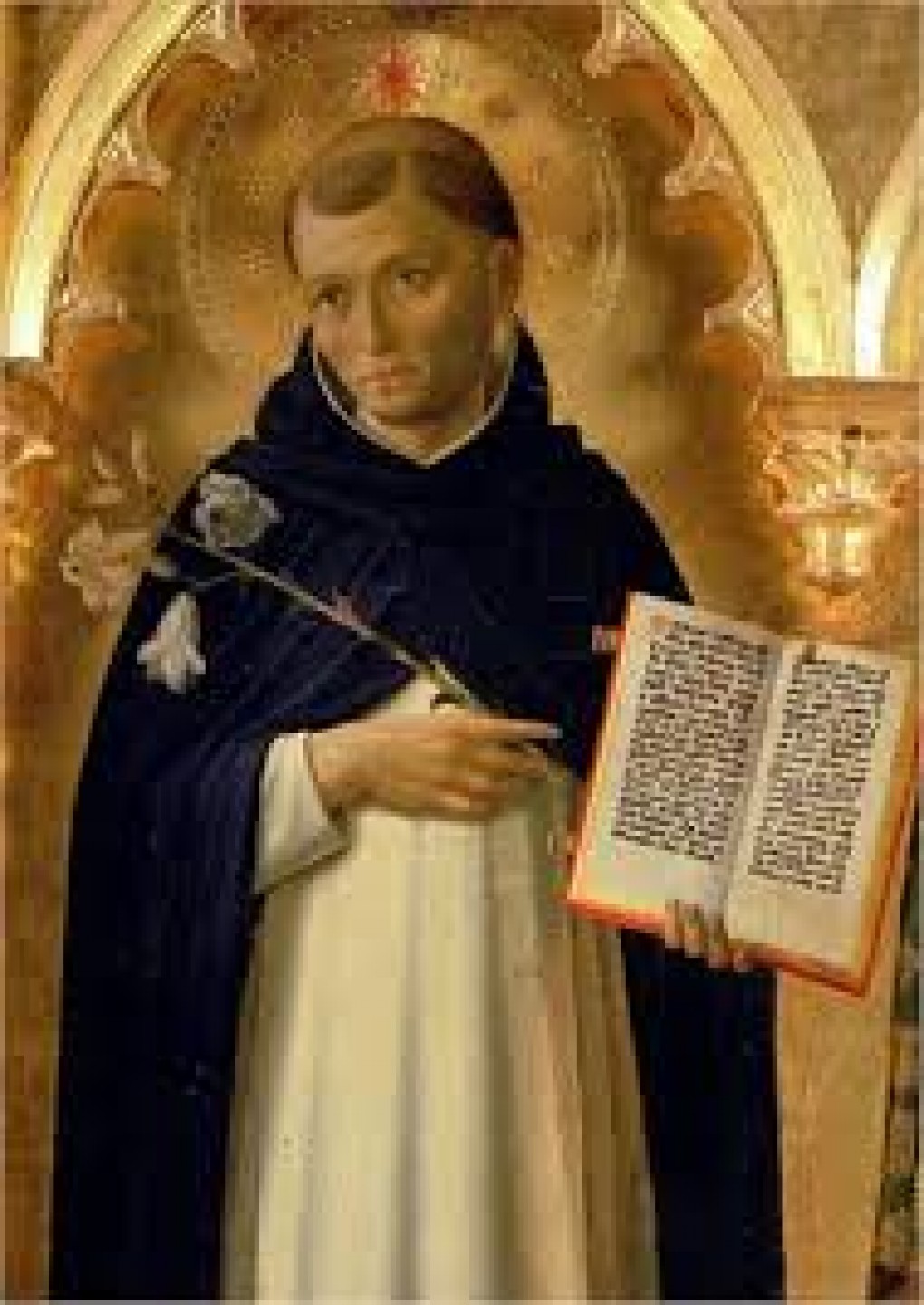 The event commemorated in this festival is the appearance in the Dominican Convent of Soriano, in the extreme south of Italy, of a miraculous picture of Saint Dominic, which is still preserved, and is held in the utmost veneration even in our own day. A certain Father Vincent of Catanzara in Calabria, in the year 1510, was thrice commanded by Saint Dominic in vision to found a Convent of the Order at Soriano, a work which he accomplished in spite of considerable obstacles which were not overcome without miraculous intervention. It had been decided that the Convent should be built on the plain, but the cross which had been planted to mark the destined site was found to have been mysteriously removed in the night to the hill on which the building was eventually erected, and where it still stands. Several years later, on September 15, A.D. 1530, just as the religious were assembling to chant Matins at midnight, the Sacristan suddenly beheld three ladies of majestic aspect enter the church, which he knew he had left locked before retiring to rest. One of them addressed him, asking to whom the church was dedicated and whether it contained a picture of its patron. The Friar replied that the church was dedicated to Saint Dominic, but that, owing to the great poverty of the Community, only a badly painted fresco of the Saint was to be found upon its walls. Then the unknown lady put into his hands a roll of canvas, which till then she had carried in her hand, and bade him take it to his Superior, who bore the title of Vicar, the little Convent not having yet been erected into a Priory. The Vicar, astonished at the sight of the picture, which proved to be a portrait of Saint Dominic, hastened to the church to thank the giver, but all three mysterious visitors had disappeared, though the outer doors still remained locked. The following night Saint Catharine of Alexandria appeared to one of the Fathers, who had a great devotion to her, and told him, in answer to his prayers, that the donor of the picture was no other than the Blessed Virgin, and that the two who had accompanied her were the patronesses of the Order, Saint Mary Magdalen and herself.
In obedience to the express command given by Our Lady to the Sacristan when bestowing the picture, it was placed over the High Altar; but, as the wall against which it hung was extremely damp, the Fathers afterwards decided on removing it to another altar, near the door of the church. The following morning, however, the picture was again found hanging over the High Altar. The Vicar, believing that it had been removed thither by the Sacristan from a desire to execute to the letter the orders given him by the Mother of God, severely reproved him, and had the picture carried back to the altar agreed upon. The next day, it once more appeared over the High Altar. Again the Sacristan was charged with obstinacy and disobedience. In vain he protested that he had never touched the picture. The Vicar ordered it to be replaced near the door, and on the following night locked the church himself and kept the keys in his own possession. Nevertheless on the third morning it was again discovered over the High Altar. Convinced at length that its removal was the work of no human hand, the Vicar allowed it to remain in the spot which Our Lady had chosen for it, and where it has ever since remained, miraculously preserved from being injured by the damp.
When the picture was exposed to public veneration, a multitude of prodigies took place, the account of which fills volumes. No less than sixteen hundred of these miracles, juridically attested, took place within the space of seventy-eight years. Pope Innocent XII., in the year 1644, granted a festival in commemoration of this event and of the vast number of miracles vouchsafed before the holy picture. On September 15,1870, just five days before the sacrilegious occupation of Rome by the troops of Victor Emmanuel, a new prodigy took place at Soriano. A wooden statue of our holy Father, Saint Dominic, of life-size, had been exposed in the sanctuary on occasion of the festival, and was to be carried in procession in the evening. This statue was suddenly seen to move like a preacher in the pulpit ; it advanced and drew back ; the right arm rose and fell; the countenance became animated, sometimes assuming a severe and threatening aspect, at other times appearing sad, or again full of sweetness and reverence as it turned towards the picture of our Lady of the Rosary. This extraordinary spectacle lasted for an hour and a half, and was witnessed by about two thousand persons. Some of the bystanders, to satisfy themselves that there was no trickery in the matter, removed all the surroundings of the statue and completely stripped the table on which it was standing. These measures only served to place the miraculous nature of the occurrence beyond the possibility of a doubt. A juridical inquiry was held by order of the Bishop of Mileto, in whose diocese Soriano is situated, and the extraordinary event was announced to the Order in a circular letter by the Most Reverend Father Alexander Vincent Jandel, who was then General. In a private letter written by his Paternity shortly afterwards he says : ” I think our holy Father, Saint Dominic, meant to warn us of the impending scourges, and to summon us to do penance; but this warning is in itself an act of mercy on the part of Him who strikes only to heal.”
Prayer
O God, who hast vouchsafed to enlighten Thy Church by the merits and teachings of Thy blessed Confessor, our holy Father, Saint Dominic, grant at his intercession that it may never be destitute of temporal help, and may always increase in spiritual growth. Through Christ our Lord. Amen.
Commemorations
First Vespers:
Ant. O great Father, Saint Dominic, at the hour of death take us to thyself and while here regard us always graciously.
- Pray for us Blessed Dominic,
- That we may be made worthy of the promises of Christ.
Lauds:
Ant. The body of a virgin, the mind of a martyr, the labors of an apostle, have at the end of thy course purchased for thee, O Mendicant of Christ, the reward of life.
- The just man shall blossom like the lily.
- And shall flourish forever before the Lord.
Second Vespers:
Ant. O light of the Church, doctor of patience, ivory of chasity, freely hast thou dispensed the water of wisdom: herald of grace, unite us to the blessed.
- Pray for us Blessed Dominic,
- That we may be made worthy of the promises of Christ.
Prayer:
Let us Pray: O God, who didst vouchsafe to enlighten Thy Church by the merits and teachings of Blessed Dominic, Thy Confessor and our Father, grant through his intercession, that it may never be destitute of temporal help, and may always increase in spiritual growth. through Christ our Lord. Amen.

Pop Quiz Time! ~ Sister Dollie Wilkinson, OPoc
 In a recent conversation with my husband one morning, while we were discussing what to fix for dinner, the thought never occurred to me that there would be no food to fix that evening. Despite food stuff in my cabinet and freezer, I knew that a quick trip to the store would surely provide items that I could turn in to a tasty meal. But what if there were no pantry staples, no meats, or no fresh fruits or vegetables in my fridge? What if I had no money to buy items at the store, or there were no stores around, and all my neighbors or friends also had no food to eat or share? Sounds almost like a plot for an apocalypse movie, where mankind has suffered a crisis, and the modern conveniences we once took for granted were gone. Now also imagine that everything you own, you must carry on your back. Men, women, children…….no one is spared from this hardship. And you are told this is for your salvation, as a means to end suffering and save your people. After walking for a few days, with very little food, would you grumble and complain? This is just what the Israelites did in Exodus 16:2-15:
“The whole congregation of the Israelites complained against Moses and Aaron in the wilderness. The Israelites said to them, “If only we had died by the hand of the LORD in the land of Egypt, when we sat by the fleshpots and ate our fill of bread; for you have brought us out into this wilderness to kill this whole assembly with hunger.” Then the LORD said to Moses, “I am going to rain bread from heaven for you, and each day the people shall go out and gather enough for that day. In that way I will test them, whether they will follow my instruction or not. On the sixth day, when they prepare what they bring in, it will be twice as much as they gather on other days.” So Moses and Aaron said to all the Israelites, “In the evening you shall know that it was the LORD who brought you out of the land of Egypt, and in the morning you shall see the glory of the LORD, because he has heard your complaining against the LORD. For what are we, that you complain against us?” And Moses said, “When the LORD gives you meat to eat in the evening and your fill of bread in the morning, because the LORD has heard the complaining that you utter against him–what are we? Your complaining is not against us but against the LORD.” Then Moses said to Aaron, “Say to the whole congregation of the Israelites, ‘Draw near to the LORD, for he has heard your complaining.'” And as Aaron spoke to the whole congregation of the Israelites, they looked toward the wilderness, and the glory of the LORD appeared in the cloud. The LORD spoke to Moses and said, “I have heard the complaining of the Israelites; say to them, ‘At twilight you shall eat meat, and in the morning you shall have your fill of bread; then you shall know that I am the LORD your God.'” In the evening quails came up and covered the camp; and in the morning there was a layer of dew around the camp. When the layer of dew lifted, there on the surface of the wilderness was a fine flaky substance, as fine as frost on the ground. When the Israelites saw it, they said to one another, “What is it?” For they did not know what it was. Moses said to them, “It is the bread that the LORD has given you to eat.”
Kind of an ungrateful lot, them Israelites! They were led out of Egypt, so they would be saved. And here they are complaining because they don’t have enough to eat. Are we not the same though? How many of us go about our day, whining and complaining over something which turns out to be minor? I know that I do, until I stop and realize how many blessings there are in my life. So, did Moses’ people stop, and praise the Lord for all they have to be grateful for? No, just the opposite. They whined to Moses, saying maybe it would have been better to stay in Egypt, where at least they had food. But our Father, in His infinite mercy, heard their complaints and told Moses, “I am going to rain bread from heaven for you, and each day the people shall go out and gather enough for that day.”. So though the people did not bring their petitions to the Lord, he heard their cries and provided food enough for them to eat, but only for one day. Why just the one day? To test the Israelites, to see if they were ready to follow and obey His commandments. So the Lord sent birds in the evening, and manna in the morning,
“In the evening quails came up and covered the camp; and in the morning there was a layer of dew around the camp. When the layer of dew lifted, there on the surface of the wilderness was a fine flaky substance, as fine as frost on the ground. When the Israelites saw it, they said to one another, “What is it?” For they did not know what it was. Moses said to them, “It is the bread that the LORD has given you to eat.””
So why did God test these people? Remember when you were in school? What was the most dreaded part of your day? I’m guessing for many of you, it was knowing you had a test that day. For me, I always detested having a pop quiz. You know that test that teachers like to randomly give you, with no warning and thus no way to study and prepare for. Well, this is what the Lord is doing for the people Moses led out of Egypt. He gave them a pop quiz……a test of faith. How many of us could have passed that test? If we go back to the movie scenario, and you find yourself wandering in the wilderness, no food, very little water, and the only things you own you carry on your back, would you complain to each other, or would you have a strong enough faith to seek help from the Lord?
Every day of your life is a pop quiz from God! We wake in the morning, some with an agenda set in stone, others with a more flexible schedule. And because we are human, inevitably there are going to be problems and issues that trouble our day. How do we handle these perplexing problems? We could complain to a co-worker, a friend (I do this one quite a lot), or a family member, or…….we could take our worries and troubles to the Lord in prayer. We may not be wandering in the wilderness, but we are still our Father’s children. He will take care of us, if we only have the courage to ask.
Jesus’ Cross: Barbaric Baggage or Blessed Beacon? ~ Br. Jay Van Lieshout, Postulant
 Symbols: since the dawning of human society, we have used symbols to convey thoughts, ideas and concepts. We have developed a whole system by which we can pass on ideas and information from person to person, from generation to generation: spoken language where complex patterns of sounds recreate the stories and emotions of our daily lives, the written word where lines and squiggles are phonic representations and signals of rhythm and inflection. We humans have filled our universe with the echoes of our history, our knowledge, our emotions, our joys, our pain, our hate and our love; from sounds fading into the ether to our graffiti marks in the hard surfaces of our environment or on leaflets of skin and cellulose. But still the greatest and most powerful, and often the simplest, of all human symbols is the image. Whether it is a handprint on the wall of a subterranean cavern to say “I was here”, or an emoticon of a smiling face, recognition is immediate and the attached emotions are clear and powerful.
For Christians, the most powerful of all symbols is a simple set of two lines intersected to form a cross. Simple, elegant in design and filled with emotion; one simple icon that conveys more in a single flash of viewing than has been scribbled in 2000 years; or is it? During his homily for the Feast of the Exultation of the Holy Cross, the Arch Bishop talked about a new offshoot of Christian teaching in which the cross is stripped of much of its power and is relegated to nothing more than a barbaric symbol of execution; no more fulfilling of prophecy, no more sacrificial lamb of salvation, no more looking to the cross, being healed and given life- just a symbol of meaningless death and the potential death of a symbol.
Needless to say I was appalled and my mind filled with screams of “what about” this or that; for a moment I felt like Peter staring at Jesus after hearing one of His parables. Once the dust settled it was time to contemplate, to stare at the cross and ask “ok, so why should you be so important to a Christian, why should you be so venerated, why should you be such a powerful symbol of our faith?”
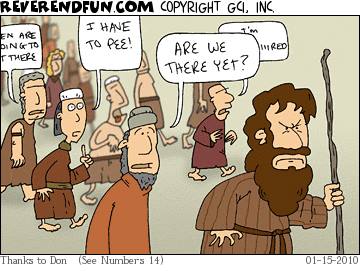
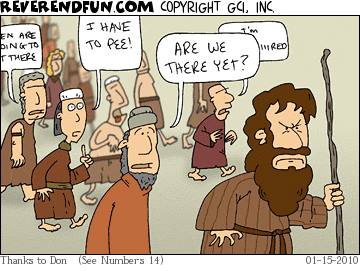
Our journey begins with the Old Testament reading for the feast. A typical Moses in the wilderness story, God is leading the Israelites to the promised land, Moses is co piloting, the masses are in the proverbial back seat whining “I’m hungry, I’m thirsty, she’s touching me, it’s hot, are we there yet, when are we gonna get there?” God the Father gets mad, sends some venomous snakes, cleans house and then tells Moses to make a bronze serpent, put it on a pole and if anyone gets bitten, they are to look at the serpent and live. Seemingly another old story which doesn’t really fit anywhere so let’s just attached to one of the Sundays and hope no one notices. But is it really just that? Instant message from God: “ Think Symbols”.
This recount of the journey of the Israelites is more than just a simple story if you think in terms of the symbolic. We have the people of God wandering the desert looking for the Promised Land, the Eden here on earth where the people and God live in harmony. This is a straight forward enough analogy of our daily spiritual journey where each of us seeks to be closer to God and find the joy and freedom from our transgressions. There is Moses, God’s man on Earth, trying to teach and lead God’s people to this Earthly Eden, a man with power and knowledge who is often at his wits end on what to do with this stubborn flock of well meaning but unruly sheep. Then there are the serpents, a symbol for yetzer ha-ra,, the Hebrew version of Satan, the provocateur sent by God, but unlike the modern Christian view of Satan, this is a minion under God’s control, it is the ambition in each human and hot desire in each of us, the DRIVE with which we can do great things for the good of all as God so desires, or by which we can do evil and so turn away from God; it’s our choice for He has given us free will. And lastly there is the Serpent on a Stick (it almost sounds almost like some ancient fast food delicacy), a Hebrew version of the caduceus, the rod of Alcepius, the Greek god of healing, seen in most medical offices today, and for the Hebrew a symbol which when looked upon restores life to the bitten.
The stage is set, the symbols defined, it’s time for lights, camera, and action! Moses is attempting to lead his people along the path of righteousness; back to God, to the promised ancestral homeland, to Eden on earth, all the while God the Father is watching the trials and tribulations from a good distance. Enter stage left, yetzer ha-ra whose venomous bit leads some people astray and they become lost, confused, crazed. God then tells Moses to erect a standard, a serpent on a pole for the people to see. Some people choose to turn their back to this desert lighthouse, they wander away and by their actions separated from God and die. Others who look on this symbol, this beacon from God are healed, are redirected toward the right path, returning to God and the life that the Father gives to his people; they have been saved. And cut. And thus the message has been delivered, turn your eyes from God, choose sin and die or look to God, see His light, follow the path of righteousness and LIVE.
And so let us return our focus on the cross, this symbol of Christianity; how does veneration of the cross of Christ relate to Moses’ serpent on a stick? Like Moses, Jesus was sent by the Father to guide His people back along the path of righteousness; Moses’ standard had been destroyed, the people were wandering like lost sheep. Yetzer ha-ra had filled their hearts with ambition and they ran about in a frenzied state as if they had been bitten by venomous vipers. Jesus called out to these sheep and some saw and heard his call and so followed Him out of the wilderness, others ignored his call and wandered farther and farther away, only to fall prey to the poison and die. Now Jesus knew there still were other lost sheep who did not hear his call; and He also knew that the sound of his voice would echo and fade into the ether with time. So God the Father told him to erect a standard that would stand for all time as a beacon to guide the lost sheep back to His flock. I sign post to the Promised Land where the flock may safely graze on the fine grasses of Eden. A sign where the fires of yetzer ha-ra are soothed with a healing balm of love so great that the ultimate gift of a life for the life of another life is given. And so Jesus does as His Father willed, and willingly was nailed to a post, was erected and hung for all to see His choice to yetzer ha-ra’s temptations: to shed his blood and give his life so that all who look to him may be healed and LIVE.
So is veneration of the cross important to the followers of Christ or is it just a remnant of some barbaric medieval church tradition? The cross is a reminder of our free will, of our choices in life, of our transgressions we have committed, of those we might commit and of the grace of God given to use when we repent and not only seek forgiveness, but give it in equal and overflowing measure. The cross is the symbol of what we need to be reminded of each and every minute of each and every day. To me the spirit of the cross is best reflected by the words of Kierkegaard “Father in Heaven! Hold not our sins up against us but hold us up against our sins so that the thought of You when it wakens in our soul, and each time it wakens, should not remind us of what we have committed but of what You did forgive, not of how we went astray but of how You did save us!” The cross, like the brass serpent on a pole IS the fundamental symbol of Christ’s mission, of God’s gift to His people, the perfect example of how we are to live, a statement that we are so loved that Christ gave his life so that we might look to him and find life everlasting! So I ask each and everyone one of you, should we as Christians, bitten by yetzer ha-ra, look to the cross as THE symbol of our faith? Verily I tell you only if you wish to LIVE!
The Feast of OUR LADY OF SORROWS ~ Rev. Deacon Br. Joshua Hatten, OPoc
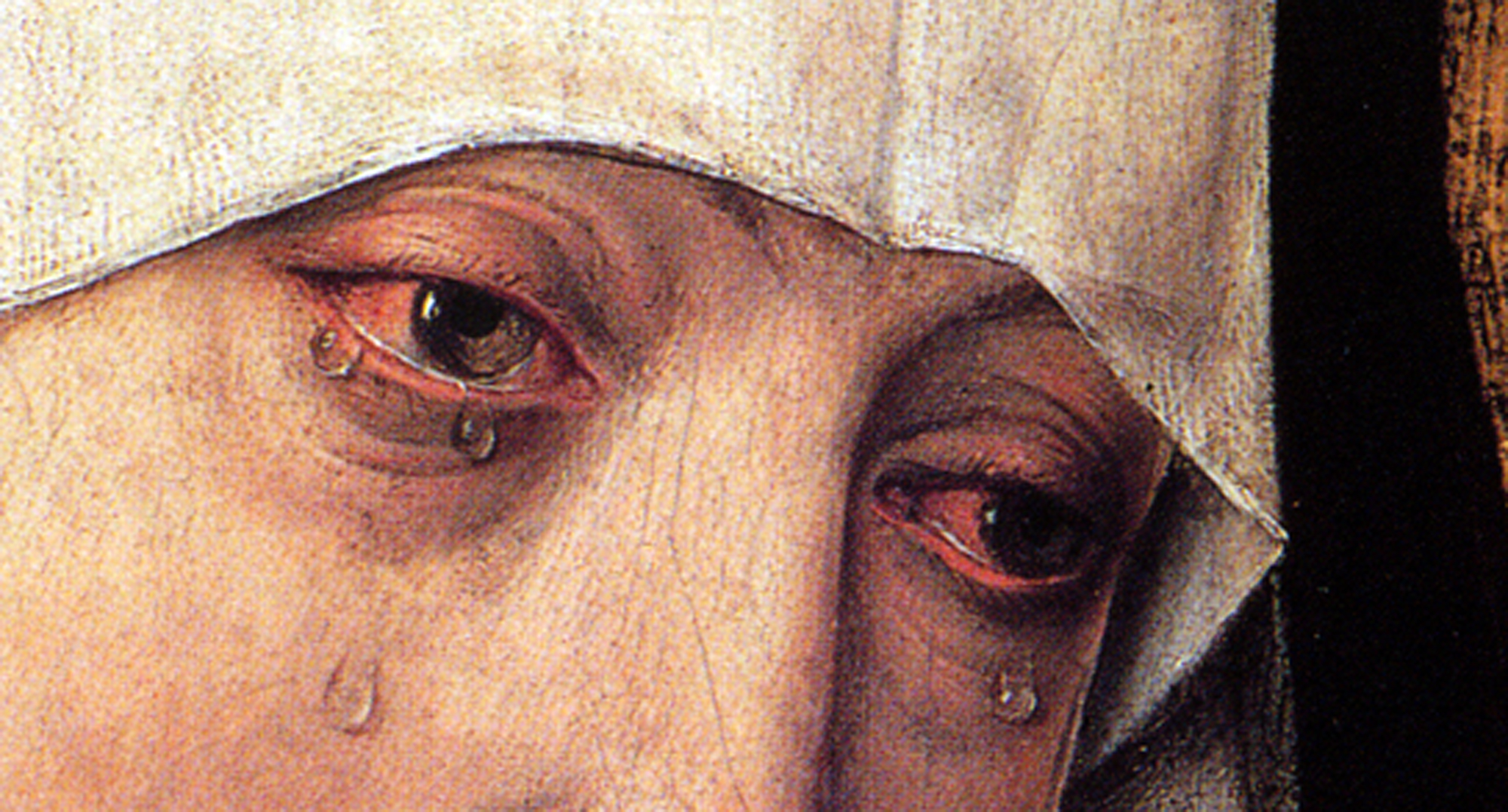 My beloved friends, the reason we call to mind and celebrate this feast is for us to take the time to reflect upon, and to call to mind, the great sufferings of our Mother, our Lady, the Mother of God, The Blessed Virgin Mary, which she endured with great compassion.
Traditionally, the church recognizes the SEVEN GREAT SORROWFUL EVENTS the Blessed Virgin Mary had to face with a martyrdom of spirit. They are:
1) The Prophecy of St. Simeon when our Lord was presented at the temple.
2) The Holy Family’s flight into Egypt.
3) The three days that our Lord was missing, before finding him in HIS FATHER’S HOUSE.
4) Our Mother meeting her Son, Our Lord, on his was to Calvary.
5) Our Lady, with St John and St Mary Magdelene at the foot of the cross – watching her son’s physical agony and physical death.
6) The taking of our Lord down from the Cross of Redemption.
7) And our Lord’s entombment and burial.
These are but seven events that we recognize in our Lady’s life… but can we begin to fathom those things she pondered in her heart over the 33 years of being Jesus Christ’s mother?? Can you imagine your child, being destined to save the world by HIS DEATH? Can you place your mind in our Lady’s mind as the years passed, filled with motherly love and at the same time knowing what was to come?
St Simeon was certainly right when he told Mary “and a sword shall pierce your own heart, too.” My dear!! What a sword indeed!! Her only son, GOD ALMIGHTY – and Mary, knowing all that was to come, gives us, in my opinion, the greatest example of total faith in Christ. When at the wedding at Cana, she gives us the penultimate instruction: “DO WHATEVER HE TELLS YOU.”
Take the time today, and every day, to remind yourself that our Lady not only had a motherly love for Jesus – but she also loved and adored and believe on Him as her Lord and Savior. Her God, the Almighty.
Personally, I believe that as much as we may love anyone – family, friends and even foes, it cannot be greater than the love of the Blessed Virgin Mary for Jesus – her son, her redeemer and her God. So, on this feast day, let us open our minds and our hearts to take time to solemnly reflect upon these, albeit unfathomable, sorrows of our intercessor and Mother.
Let us ponder these events in our own hearts. let us keep in mind this sword that pierced our Lady’s own soul. (Saint Luke 2:33). And let us pray for our Mother to intercede for us during our own great sufferings – something she too well understands, and because of which, extends her hands toward us to offer her intercession, her holy prayers and mother love for even us who are sinners. For Mary truly can say “Look around and see… is any suffering like my suffering?” (Lamentations 1:12)
In spite of her trials and tribulations, and the unimaginable fears and horrors that she faced, Our Lady NEVER lost hope. She never faltered in her love, compassion and complete faith in her God and her Son.
She is truly our greatest example in following Christ, no matter HOW HEAVY THE CROSSES WE MUST BEAR. Remember her words: “DO WHATEVER HE TELLS YOU.”
O Mary, conceived without sin, pray for us who have recourse to thee. O most holy Virgin, Mother of our Lord Jesus Christ: by the overwhelming grief you experienced when you witnessed the martyrdom, the crucifixion, and death of your divine Son, look upon me with eyes of compassion, and awaken in my heart a tender commiseration for those sufferings, as well as a sincere detestation of my sins, in order that being disengaged from all undue affection for the passing joys of this earth, I may sigh after the eternal Jerusalem, and that henceforward all my thoughts and all my actions may be directed towards this one most desirable object. Honor, glory, and love to our divine Lord Jesus, and to the holy and immaculate Mother of God. Amen.
May God bless you. +
A Holy Cross~by Fr. Bryan Wolf
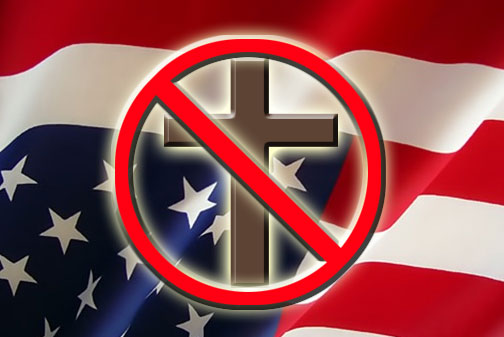
 Today we celebrate The Exaltation of the Holy Cross. Symbolic of the discovery of the Cross upon which Christ was crucified by St. Helena in 326, today is a holy day which transcends many Christian denominations. Catholics, Anglicans, Lutherans, and Eastern Orthodox among others, proclaim the significance of the Holy Cross. For Christians the Cross becomes the symbol in which to reconcile ourselves to God. The Catholic practice of “making the sign of the Cross” itself becomes a prayer. Indeed, there is no other more recognizable symbol of Christianity than the Cross. From car bumper stickers, to jewelry, to cemetery markers and gravestones; even to ornate and sublime churches of every kind- we can easily know who is Christian. Is this becoming a problem?
In the beginning of Christianity many suffered for their belief and faith in Christ. Many became martyrs, and eventually, saints. Throughout history, even to modern times, many have been persecuted for their Christian faith. During World War II, more than 2600 Catholic priests were executed in the Dachau Nazi Concentration Camp alone. Rebel organizations throughout Central America have used the kidnapping and execution of vowed religious as a means of intimidation. Coptic Christians in Egypt have recently witnessed their churches being damaged, looted and burned. Most recently extremist there paraded three captured nuns from a Franciscan school they burned, like prisoners of war. So dire are the circumstances in Egypt, that for the first time in 1600 years this past August, prayers and Mass were suspended at the Virgin Mary Monastery for fear of violence.
Now horrifically, the world is confronted by ISIL. Before I continue, I need to convey a little research here. This Islamic terrorist organization, is just that- a terrorist organization. It is not representative of Islamic peoples or the message of their founding prophet Muhammad; for even he considered Jesus a fellow prophet of God and Muhammad preached peace. First known as ISIS (The Islamic State of Iraq and Syria), they desire now to be referred to as ISIL- the Islamic State of Iraq and the Levant (the Levant being an old French term which refers to all the lands of the Eastern Mediterranean region.) – or to be simple known as The Islamic State. Their means of influence are barbaric and brutal; so much so that even al-Qaeda, as reported by The Washington Post, has distanced themselves and severed political ties. According to the Human Rights Watch, “they (ISIL) stand to a global jihadist principle for the purification of Islamic and Muslims lands, even to the point of excess for their defense.”
“Open Doors”, a world wide Christian organization based in The Netherlands, tracks Christian persecution throughout the world. Releasing their 2014 list of countries in which Christians are at risk of biased attacks all, except for North Korea, are in Islamic countries. At the top of the list- Syria, Iraq, Iran, Afghanistan, Yemen, Egypt and Sudan. To dispel the appearance of a “holy war against Christians” ISIL itself maintains “Christians have options”, as reported by Catholics Online. “To avoid death, Christians may convert to Islam or pay a jizya.” A Jizya, is a monetary tax under Islamic law which allows “infidels” (someone who does not profess Islam) to remain in an Islamic country. Usually their homes are marked with a red cross, which itself can bring violence.
Without dispute, we have all witnessed the violence and brutality of late. From the barbaric beheading of journalists to the marched execution of Syrian soldiers in the desert. There indeed does seem to be a holy war brewing. Or more exactly in the words of a Bishop friend of mine, “an unholy war”.
What does this all have to do with The Exaltation of the Holy Cross? It is a stark reminder of what may need be endured for our Christian faith. Each day we must affirm our faith and evangelize for our faith. To live by and profess the message of our Lord, Jesus Christ. Whether it is in the face of radical Islamic extremists or radical Christian extremists, such as the Westboro Baptist Church. There are fundamental extremists in all denominations who have lost the basic message of their religions- God is peace.
At all peril, we must hold true to the message of the Cross. We must carry our own individual crosses, as Christ carried his before us, (and he helps us carry ours now.) There is indeed a war brewing. A war in which we will be challenged to the foundation of our faith. We pray for God’s mercy and peace. We pray for God’s justice. Indeed, we may find ourselves being God’s instrument of intervention for those who are persecuted and oppressed. For today, it is becoming more apparent that that is the reality behind The Holy Cross.
“Onward Christians soldiers, marching as to war. With the Cross of Jesus, going on before.”
“Blessed are those who are persecuted because of righteousness, for theirs is the kingdom of heaven. Blessed are you when people insult you, persecute you and falsely say all kinds of evil against you because of me. Rejoice and be glad, because great is your reward in heaven; for in the same way the prophets were persecuted who were before you.” Matthew 5:10-12

Saint John Chrysostom
 John was born in Antioch, Syria in 349 to Greco-Syrian parents. Pope Benedict XVI describes his mother, Anthusa, as a Christian, and his father as a high ranking military officer. John’s father died soon after his birth and he was raised by his mother, who instilled in him a very human sensitivity and a deep Christian faith.[i]
He was baptized in 368 or 373 and tonsured as a reader (one of the minor orders of the Church). As a result of his mother’s influential connections in the city, John began his education under the pagan teacher Libanius. From Libanius, John acquired the skills needed for a career in rhetoric, as well as a love of the Greek language and literature. As he grew older, however, he became more deeply committed to Christianity and went on to study theology under Diodore of Tarsus, founder of the re-constituted School of Antioch.[ii] He lived with extreme asceticism and became a hermit in about 375; he spent the next two years continually standing, scarcely sleeping, and committing the Bible to memory. He continued living in this way for six years. As a consequence of these practices, his stomach and kidneys were permanently damaged and poor health forced him to return to Antioch.[iii]
He was ordained as a deacon in 381 by Saint Meletius of Antioch. Further, he was ordained as a priest in 386 by Bishop Flavian I of Antioch who was also not then in communion with Rome. Over the course of twelve years, he gained popularity because of the eloquence of his public speaking, especially his insightful expositions of Bible passages and moral teaching. The most valuable of his works from this period are his homilies on various books of the Bible, whose aim was induce repentance and conversion.[iv] He emphasized charitable giving and he was concerned with the spiritual and temporal needs of the poor. He also spoke out against abuse of wealth and personal property
One incident that happened during his service in Antioch illustrates the influence of his homilies. When Chrysostom arrived in Antioch, the bishop of the city had to intervene with Emperor Theodosius I on behalf of citizens who had gone on a rampage mutilating statues of the Emperor and his family. During the weeks of Lent in 387, John preached twenty-one homilies in which he entreated the people to see the error of their ways. These made a lasting impression on the general population of the city: many pagans converted to Christianity as a result of the homilies.[v]
In 397, John was requested, against his will, to take the position of Archbishop of Constantinople. He deplored the fact that Imperial court protocol would now assign to him access to privileges greater than the highest state officials. During his time as Archbishop he adamantly refused to host lavish social gatherings, which made him popular with the common people, but unpopular with wealthy citizens and the clergy. His reforms of the clergy were also unpopular with these groups. He told visiting regional preachers to return to the churches they were meant to be serving, and he set about to be an example: the austerity of the episcopal residence was meant to be an example for all: clergy, widows, monks, courtiers, and the rich.[vi]
His time in Constantinople was more tumultuous than his time in Antioch. Theophilus, the Patriarch of Alexandria, wanted to bring Constantinople under his sway and opposed John’s appointment to Constantinople. Being an opponent of Origen‘s teachings, he accused John of being too partial to the teachings of Origen.
Theophilus had excommunicated four Egyptian monks, known as “the Tall Brothers,” over their support of Origen’s teachings. They fled to. and were welcomed by, John. He made another enemy in Aelia Eudoxia, the wife of the eastern Emperor Arcadius, who assumed (perhaps with justification) that his denunciations of extravagance in feminine dress, and extravagance, were aimed at herself, and he considered such to be pagan.[vii]
Depending on one’s outlook, John was either tactless or fearless when denouncing offences in high places. An alliance was soon formed against him by Eudoxia, Theophilus and others of his enemies. They held a synod in 403 (the Synod of the Oak) to charge John, in which his connection to Origen was used against him. It resulted in his deposition and banishment.[viii]
He was called back by Arcadius almost immediately, as the people became “tumultuous” over his departure. There was also an earthquake the night of his arrest, which Eudoxia took for a sign of God‘s anger, prompting her to ask Arcadius for John’s reinstatement.
The peace was short-lived. A silver statue of Eudoxia was erected near his cathedral. John denounced the dedication ceremonies. He spoke against her in harsh terms. Once again he was banished, in 404, this time to the Caucasus in Armenia.[ix]
Faced with exile John Chrysostom wrote an appeal for help. Pope Innocent I protested at this banishment, but to no avail. Innocent sent a delegation to intercede on behalf of John in 405, but he was unable to prevail against the emperor.[x]
In Armenia, John continued to win fame for his preaching and his counsel, further enraging his enemies. This convinced the emperor to send him further into exile, into a deeper wilderness on the Black Sea. Never in good health, he was forced to march long distances under horrible weather conditions, and it was in route to this more distant exile, in the city of Comana, at the age of sixty, that he died in 407. There his relics remained until 438 when, thirty years after his death, they were transferred to Constantinople during the reign of the Empress Eudoxia‘s son, the Emperor Theodosius II (408–450). Theodosius went to greet John’s coffin upon its entry into Constantinople, and begged forgiveness for his mother.[xi] As a result of his death, the pope and the Western Church broke off communion with the sees that had persecuted John, and restored this communion only when they had repented.[xii]
John came to be venerated as a saint soon after his death. His disciple, Saint Proclus, Patriarch of Constantinople (434-447), during services in the Church of Hagia Sophia, preached a homily praising his teacher. He said, “O John, your life was filled with sorrow, but your death was glorious. Your grave is blessed and reward is great, by the grace and mercy of our Lord Jesus Christ, O graced one, having conquered the bounds of time and place! Love has conquered space, unforgetting memory has annihilated the limits, and place does not hinder the miracles of the saint.”
These homilies helped to mobilize public opinion, and the patriarch received permission from the emperor to return Chrysostom’s relics to Constantinople, where they were enshrined in the Church of the Holy Apostles.
Most of John’s relics were looted from Constantinople by Crusaders in 1204 and taken to Rome, but some of his bones were returned to the Orthodox Church on 27 November 2004 by Pope John Paul II.[xiii] They are now enshrined in the Church of St. George, Istanbul.
However, the skull of Saint John, having been kept at the Vatopedi Monastery on Mount Athos in northern Greece, was not among the relics that were taken by the crusaders in the 13th century. In 1655, at the request of Tsar Alexei Mikhailovich, the skull was taken to Russia, for which the monastery was compensated in the sum of 2000 rubles. In 1693, having received a request from the Vatopedi Monastery for the return of Saint John’s skull, Tsar Peter the Great ordered that the skull remain in Russia, but that the monastery was to be paid 500 rubles every four years. The Russian State Archives document these payments up until 1735.
The skull was kept at the Moscow Kremlin, in the Cathedral of the Dormition of the Mother of God, until 1920, when it was confiscated by the Soviets and placed in the Museum of Silver Antiquities. In 1988, in connection with the 1000th Anniversary of the Baptism of Russia, the head, together with other important relics, was returned to the Russian Orthodox Church and kept at the Epiphany Cathedral, until being moved to the Cathedral of Christ the Savior after its restoration.
However, today, the Vatopedi Monastery posits a rival claim to possession of the skull of Saint John Chrysostom, and there a skull is venerated by pilgrims to the monastery as that of St John.
The right hand of Saint John is preserved on Mount Athos, and numerous smaller relics are scattered throughout the world.
Churches of the Western tradition, including the Roman Catholic Church, some Anglican provinces, and parts of the Lutheran Church, commemorate him on 13 September. Some Lutheran and many Anglican provinces commemorate him on the traditional Eastern feast day of 27 January. The Coptic Orthodox Church of Alexandria also recognizes John Chrysostom as a saint (with feast days on 16 Thout and 17 Hathor). The Eastern Orthodox Church commemorates him as a “Great Ecumenical Teacher”, together with Basil the Great and Gregory the Theologian. These three saints, in addition to having their own individual commemorations throughout the year, are commemorated together on 30 January, a feast known as the Synaxis of the Three Hierarchs.
There are several feast days dedicated to him:
27 January, Translation of the relics of Saint John Chrysostom from Comana to Constantinople
30 January, Synaxis of the Three Great Hierarchs
13 September, Repose of Saint John Chrysostom
13 November, Saint John Chrysostom the Archbishop of Constantinople
Saint John Chrysostom is remembered because of his eloquence in preaching and public speaking, and was given the name “Chrysostom” because of it. The name “Chrysostom” is Greek for “golden-mouthed.” His writings bear witness to this today. An anonymous copyist left in writing that his writings “cross the whole globe like flashes of lightening.”[xiv] John is known in Christianity chiefly as a preacher, theologian and liturgist. Among his homilies, eight directed against Judaizing Christians remain controversial for their impact on the development of Christian anti-Semitism.[xv] His straightforward understanding of the Scriptures – in contrast to the Alexandrian tendency towards allegorical interpretation – meant that the themes of his talks were practical, explaining the Bible’s application to everyday life.
John’s homilies have been one of his greatest lasting legacies.[xvi] Chrysostom’s extant homiletical works are vast, including many hundreds of exegetical homilies on both the New Testament (especially the works of Saint Paul) and the Old Testament (particularly on Genesis). Among his extant exegetical works are sixty-seven homilies on Genesis, fifty-nine on the Psalms, ninety on the Gospel of Matthew, eighty-eight on the Gospel of John, and fifty-five on the Acts of the Apostles.[xvii] The homilies were written down by the audience and subsequently circulated, revealing a style that tended to be direct and greatly personal, but was also formed by the rhetorical conventions of his time and place. In general, his homiletical theology displays much characteristic of the Antiochian school (i.e., somewhat more literal in interpreting Biblical events), but he also uses a good deal of the allegorical interpretation more associated with the Alexandrian school.[xviii]
John’s social and religious world was formed by the continuing and pervasive presence of paganism in the life of the city. One of his regular topics was the paganism in the culture of Constantinople, and in his homilies he thunders against popular pagan amusements: the theatre, horse races, and the revelry surrounding holidays.[xix]
John’s homilies on Saint Paul‘s Epistles proceed linearly, methodically treating the texts verse by verse, often going into great detail. He shows a concern to be understood by laypeople, sometimes offering colorful analogies and practical examples. At other times, he offers extended comments clearly intended to address the theological subtleties of a heretical misreading, or to demonstrate the presence of a deeper theme.
One of the recurring features of John’s homilies is his emphasis on care for the needy.[xx] Echoing themes found in the Gospel of Matthew, he calls upon the rich to lay aside materialism in favor of helping the poor, often employing all of his rhetorical skills to shame wealthy people to abandon conspicuous consumption:
It is not possible for one to be wealthy and just at the same time. Do you pay such honor to your excrements as to receive them into a silver chamber-pot when another man made in the image of God is perishing in the cold?[xxi]
Beyond his preaching, the other lasting legacy of John is his influence on Christian liturgy. Two of his writings are particularly notable. He harmonized the liturgical life of the Church by revising the prayers and rubrics of the Divine Liturgy, or celebration of the Holy Eucharist. To this day, Eastern Orthodox and Eastern Catholic Churches of the Byzantine Rite typically celebrate the Divine Liturgy of St. John Chrysostom as the normal Eucharistic liturgy, although his exact connection with it remains a matter of debate among experts.[xxii] These same churches also read his Catechetical Homily (Hieratikon) at every Easter, the greatest feast of the Church year.[xxiii]
John’s influence on church teachings is interwoven throughout the current Catechism of the Catholic Church (revised 1992). The Catechism cites him in eighteen sections, particularly his reflections on the purpose of prayer and the meaning of the Lord’s Prayer:
Consider how [Jesus Christ] teaches us to be humble, by making us see that our virtue does not depend on our work alone but on grace from on high. He commands each of the faithful who prays to do so universally, for the whole world. For he did not say “thy will be done in me or in us”, but “on earth”, the whole earth, so that error may be banished from it, truth take root in it, all vice be destroyed on it, virtue flourish on it, and earth no longer differ from heaven.[xxiv]
Christian clerics, such as R.S. Storr, refer to him as “one of the most eloquent preachers who ever since apostolic times have brought to men the divine tidings of truth and love”, and the 19th-century John Henry Newman described John as a “bright, cheerful, gentle soul; a sensitive heart.” [xxv]
The Orthodox and Eastern Catholic Churches honor him as a saint and count him among the Three Holy Hierarchs, together with Basil the Great and Gregory Nazianzus. He is recognized by the Eastern Orthodox Church and the Catholic Church as a saint, and at the Council of Chalcedon in 451 he was named as a Doctor of the Church. Pope St. Pius X, in the twentieth century, named him patron of preachers.[xxvi]
[i] Pope Benedict XVI, Church Fathers, (San Francisco, CA: Ignatius Press, 2008) p. 98.
[ii] Pope Benedict XVI, Church Fathers, (San Francisco, CA: Ignatius Press, 2008) p. 98.
[iii] Pope Benedict XVI, Church Fathers, (San Francisco, CA: Ignatius Press, 2008) p. 98.
[iv] Pope Benedict XVI, Church Fathers, (San Francisco, CA: Ignatius Press, 2008) p. 99.
[v] Pope Benedict XVI, Church Fathers, (San Francisco, CA: Ignatius Press, 2008) p. 99.
[vi] Pope Benedict XVI, Church Fathers, (San Francisco, CA: Ignatius Press, 2008) p. 102.
[vii] Pope Benedict XVI, Church Fathers, (San Francisco, CA: Ignatius Press, 2008) p. 103.
[viii] Pope Benedict XVI, Church Fathers, (San Francisco, CA: Ignatius Press, 2008) p. 103.
[ix] Aquilina, Mike, The Fathers of the Church, (Huntington, IN: Our Sunday Visitor, Inc., 1999) p. 178.
[x] Aquilina, Mike, The Fathers of the Church, (Huntington, IN: Our Sunday Visitor, Inc., 1999) p. 178.
[xi] Aquilina, Mike, The Fathers of the Church, (Huntington, IN: Our Sunday Visitor, Inc., 1999) p. 179.
[xii] Aquilina, Mike, The Fathers of the Church, (Huntington, IN: Our Sunday Visitor, Inc., 1999) p. 179.
[xiii] Pope John Paul II. “Letter to the Ecumenical Patriarch of Constantinople, His Holiness Bartholomew I. Available online. Accessed 14 October 2011.
[xiv] Pope Benedict XVI, Church Fathers, (San Francisco, CA: Ignatius Press, 2008) p. 97.
[xv] Laqueur, Walter Laquer, The Changing Face of Antisemitism: From Ancient Times To The Present Day, (Oxford, U.K.: Oxford University Press, 2006) p. 48.
[xvi] Pope Benedict XVI, Church Fathers, (San Francisco, CA: Ignatius Press, 2008) p. 99.
[xvii] Catholic Encyclopedia
[xviii] Pope Benedict XVI, Church Fathers, (San Francisco, CA: Ignatius Press, 2008) p. 99.
[xix] Aquilina, Mike, The Fathers of the Church, (Huntington, IN: Our Sunday Visitor, Inc., 1999) p. 181.
[xx] Aquilina, Mike, The Fathers of the Church, (Huntington, IN: Our Sunday Visitor, Inc., 1999) p. 181.
[xxi] Aquilina, Mike, The Fathers of the Church, (Huntington, IN: Our Sunday Visitor, Inc., 1999) p. 181.
[xxii] Parry, David; David Melling (eds.) The Blackwell Dictionary of Eastern Christianity. (Oxford: Blackwell Press, 2011).
[xxiii] Parry, David; David Melling (eds.) The Blackwell Dictionary of Eastern Christianity. (Oxford: Blackwell Press, 2011).
[xxiv] Newman, John Henry, “St. Chrysostom” in The Newman Reader (Rambler:1859) available online (see esp. chapter 2). retrieved October 13, 2011.
[xxv] Newman, John Henry, “St. Chrysostom” in The Newman Reader (Rambler:1859) available online (see esp. chapter 2). retrieved October 13, 2011.
[xxvi] Aquilina, Mike, The Fathers of the Church, (Huntington, IN: Our Sunday Visitor, Inc., 1999) p. 179.

Jesus, Our Lord and Optician ~ Br. Jay Van Lieshout, Postulant

Jesus told his disciples a parable:
“Can a blind person guide a blind person? Will not both fall into a pit? No disciple is superior to the teacher; but when fully trained, every disciple will be like his teacher.
Why do you notice the splinter in your brother’s eye, but do not perceive the wooden beam in your own? How can you say to your brother,
‘Brother, let me remove that splinter in your eye,’ when you do not even notice the wooden beam in your own eye? You hypocrite! Remove the wooden beam from your eye first;
then you will see clearly to remove the splinter in your brother’s eye.”
Jesus loved parables; and rightfully so, they are an excellent way of teaching, of conveying concepts and are a continuation of the techniques in the Torah. Today’s gospel shows how well this teaching technique can be used to present ideas in a way that withstands the cloudy nature of time. But there is another side to parables, a side again well used in this gospel: you can critique people without ever pointing a finger or mentioning names and yet it will be clear about who or what the parable is referencing; it is in this manner that Jesus aims strip us of our arrogant ways so that we may begin to walk in his footsteps.
Jesus has found the perfect “teaching moment” for his disciples and one that they and all of us need if we hope to spread the good news. We know that Jesus thought of the practices of the Pharisees and Sadducees, and one can imagine that his disciples would gossip and lambaste the church leaders among themselves as well as to those they encountered. We also know that this type of behavior is contrary to Jesus’ methods of conflict resolution and the path to salvation. Thus, we have the parable of the blind leading the blind. It’s important to note that Jesus prefaces this parable with teachings on loving one’s enemies and the perils of judging and condemning others the result of which will be return judgment and condemnation. But if you love your enemy and forgive them their transgressions, this favor will be returned and “A good measure, pressed down, shaken together and running over, will be poured into your lap. For with the measure you use, it will be measured to you.”
Now the parable begins with Jesus rhetorically asking his disciples “Can the blind lead the blind? Will they not both fall into a pit?” On the surface this seems to be an almost comic image about the visually impaired, but underneath the disciples understood Jesus was referencing the blind of faith, those who know and enforce the law but are blinded to their own transgressions, such as the Pharisees and Sadducees, and the pit isn’t a hole in the ground, but is the eternal grave that such arrogance digs here on Earth. It is very likely that the disciples immediately understood the implications of this parable and, before one of them could utter the standard “but Rabbi” , Jesus turns his attention to his followers and says “No disciple is superior to the teacher; but when fully trained, every disciple will be like his teacher.” This is clearly meant quell their growing self righteousness and remind them they still have a long journey, much to learn and even more to change before they are ready to fill his shoes.
I surmise that there must have been some discussion and perhaps even rumblings among the disciples after Jesus so aptly adjusted their attitudes, though any such parlay has was not recorded by the writer of Luke. Yet the next few stanzas of this gospel are a pointed critique and chastisement of one or more of his student’s seemingly lofty and pretentious behavior. “Why do you notice the splinter in your brother’s eye, but do not perceive the wooden beam in your own? How can you say to your brother, ‘Brother, let me remove that splinter in your eye,’ when you do not even notice the wooden beam in your own eye? You hypocrite! Remove the wooden beam from your eye first; then you will see clearly to remove the splinter in your brother’s eye.” I imagine the wide eyed and astonished look on his disciples faces in response to this stern tongue lashing by their Mentor. But, like all of us now and then, they needed to learn an important message if they ever hoped to emulate their teacher: don’t judge other’s behavior until you are sure that your behavior is above reproach!
We all must consider how our actions are perceived in the eyes of those around us. To them we are no better than the way we act and if our actions do not reflect our words we are no better than a liar and a fraud. Jesus is reminding us that we must focus on KNOWING and CHANGING ourselves on the inside and only then could we be like the teacher and lead by example. Jesus finishes this lesson with a charge to his disciples to actively respond to his words for “someone who listens and does nothing is like the man who built a house on soil, with no foundations; as soon as the river bore down on it, it collapsed; and what a ruin that house became!”
Like the original disciples, we must see our own flaws, hear the words of Jesus and with them build a foundation of love and mercy, of openness, forgiveness and unity and equality. Only then will our eyes be clear enough to guide the blind in faith past the perilous pit and follow in the footsteps of our Lord and Teacher.
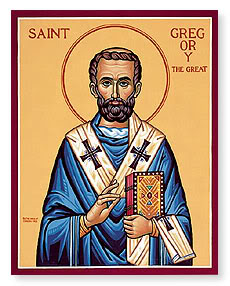
Saint Pope Gregory I (the Great) ~ Br. Michael Marshall, Postulant
Pope Gregory I, celebrated as Saint Gregory the Great, is a Doctor of the Church, and was born in 540 A.D. He was consecrated as Pope on September 3, 590 to become the 64th Pope. Even though he was a pope he preferred monastic life, after all he was a Benedictine monk. He held important the foundation of monasteries and influenced the shape of the papacy during the early medieval period in the midst of corruption, and was able to consolidate all the land under papacy. He also was responsible for liturgical reform and said to be the originator of the Gregorian Chant.
That being said, in the midst of the church politics and founding new monasteries, he felt it was important to reach out to the poor and the sick, especially those who suffered from the abuse of corruption. His life was truly ministry, and it sets an example for how we should serve in ministry. As we read the Scripture for today, it is very evident that Saint Gregory lived his true calling as a follower of Jesus, whether as a monk or as Pope.
1 Corinthians 3:1-9 Brothers and sisters, I could not talk to you as spiritual people, but as fleshly people, as infants in Christ. I fed you milk, not solid food, because you were unable to take it. Indeed, you are still not able, even now, for you are still of the flesh. While there is jealousy and rivalry among you, are you not of the flesh, and walking according to the manner of man? Whenever someone says, “I belong to Paul,” and another, “I belong to Apollos,” are you not merely men? What is Apollos, after all, and what is Paul? Ministers through whom you became believers, just as the Lord assigned each one. I planted, Apollos watered, but God caused the growth. Therefore, neither the one who plants nor the one who waters is anything, but only God, who causes the growth. He who plants and he who waters are one, and each will receive wages in proportion to his labor. For we are God’s co-workers; you are God’s field, God’s building.
Luke 4:38-44 After Jesus left the synagogue, he entered the house of Simon. Simon’s mother-in-law was afflicted with a severe fever, and they interceded with him about her. He stood over her, rebuked the fever, and it left her. She got up immediately and waited on them. At sunset, all who had people sick with various diseases brought them to him. He laid his hands on each of them and cured them. And demons also came out from many, shouting, “You are the Son of God.” But he rebuked them and did not allow them to speak because they knew that he was the Christ. At daybreak, Jesus left and went to a deserted place. The crowds went looking for him, and when they came to him, they tried to prevent him from leaving them. But he said to them, “To the other towns also I must proclaim the good news of the Kingdom of God, because for this purpose I have been sent.” And he was preaching in the synagogues of Judea.
As I reflect upon the Scripture, and the life of Gregory the Great, I recall an experience I had roughly 10 years ago. I had the opportunity to go on a mission trip to Jamaica, and while I was there I spent two days visiting a community served by the Missionaries of the Poor. The religious brothers bathed and fed the poorest of the poor in Jamaica. The founder, Father Ho Lung, believes that the poor must be looked out for because it is what Jesus calls for us to do. The whole time I was visiting, I expressed that I had so much admiration for the brothers because it is not something I could be doing day in and day out. I see a saint in Father Ho Lung because he cared about what mattered, while serving as a pastor of a parish in Papine, Jamaica. He balanced the ministries of administrator, founder, and being hands-on, just as Saint Gregory was as pope. All of his work has been because the focus being on Jesus as the focus.
Like Father Ho Lung, and like Gregory the Great, we must work to further the kingdom of our Lord. God calls us to ministries that might be undesirable to others, even possibly to us at first. Yet when we understand what the purpose of that ministry is, we are able to truly engage with and help those in need and people will possibly see the saint in us.
Spend, Spend, Spend ~ The Very Rev. Lady Sherwood, OPoc
Isaiah 55:1-5 55:1 Ho, everyone who thirsts, come to the waters; and you that have no money, come, buy and eat! Come, buy wine and milk without money and without price. 55:2 Why do you spend your money for that which is not bread, and your labor for that which does not satisfy? Listen carefully to me, and eat what is good, and delight yourselves in rich food. 55:3 Incline your ear, and come to me; listen, so that you may live. I will make with you an everlasting covenant, my steadfast, sure love for David. 55:4 See, I made him a witness to the peoples, a leader and commander for the peoples. 55:5 See, you shall call nations that you do not know, and nations that do not know you shall run to you, because of the LORD your God, the Holy One of Israel, for he has glorified you.
I was looking around the town the other day and many sights and thoughts came to my attention. I passed an real estate agent’s office so decided to look at the houses and prices to see what was on offer. There were a wide range of properties with varying sizes, rooms and amenities, but yet the one thing in common between them all were the thousands of pounds (even hundreds of thousands) that we as people spend on these items. Further down the road there was a car showroom with red, blue, yellow, and other various coloured types of shiny new cars for sale, again at very expensive prices which we seem happy to pay to attain them. I passed clothes shops galore with all the very latest fashions of all different shapes, sizes and designs, and saw the prices of what many people see as ‘must haves’.
It was then that John passed by me. John is a well known homeless gentleman with only one set of clothing to his name. The thing I notice often when coming across John, is his happy demeanor. Even in his poor circumstances, he is always smiling and always greets everyone with a happy and polite greeting. John, I know, is a Christian, who despite being poor and homeless gets his true happiness from his love, trust and faith in God. He never asks for anything but always wants others to have a blessed day. He doesn’t feel that he “needs” the things others do.
Houses, cars, holidays, clothes and other earthly materialistic items, and money do not bring true happiness, although to some they may get an extremely temporary period of satisfaction. As the Lord quite clearly tells us, we should not live a life of spending money or buying earthly things as these things are fleeting and will surely pass away. The only way to eternal happiness is from the bread and wine, gifts of the body and blood of true life, and by hearing, understanding and living the word of God! Anything which we truly need, the Lord will provide for us when the Lord sees it is time to do so. Some may be happy to spend, spend, spend on earthly things but as for me, I choose the only true happiness and salvation of our Heavenly Father to fill my life. I choose to use my money to show the Lords love to others who are in need instead of for unrighteous materialistic things that hold no hope of true happiness!!
What about you? On what do you spend your money? Do you really need that new outfit? A bigger house? How many people could be fed by what you spend on that new gadget? So what is your choice? On what, or whom, will you spend, Spend, Spend?
 The Order of Preachers, Independent
You must be logged in to post a comment.