
Category: Member Posts
The Humble Triumph~The Very Rev Lady Sherwood,OPI
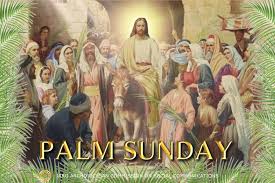
My dearest Brothers and sisters in Christ,
As we stand at the threshold of Holy Week in 2026, the image of Jesus entering Jerusalem on a donkey remains a radical subversion of power. While the crowds expected a conqueror draped in the traditional finery of a Roman triumph, they were met with the “Prince of Peace” riding a beast of burden. This deliberate choice reminds us that the Kingdom of God does not operate on the currency of worldly status or military might, but through the transformative power of humility and sacrificial love.
The palm branches laid on the dusty road were symbols of victory, yet the victory Christ sought was not over a political regime, but over the internal darkness of the human heart. We often find ourselves caught in the same “Hosannas,” cheering for the divine when it aligns with our desires, only to grow silent when the path leads toward the cross. Palm Sunday challenges us to look beyond the momentary excitement and ask if we are prepared to follow the Lord into the quiet, difficult spaces of service and surrender that define the days to follow.
As we carry our own palms today, let them be more than decorative keepsakes. Let them be signs of a renewed commitment to walk the Way of the Cross with integrity. In a world often obsessed with loud proclamations and fleeting fame, the silent dignity of Christ’s entry calls us to a deeper, more enduring faithfulness. May we have the courage to welcome Him not just as a king of history, but as the living Lord of our present lives.
As we transition from the shouts of “Hosanna” to the quiet of the Garden, let us bring our petitions before the Lord.
For the Universal Church: That we may follow Christ with courage, laying down our pride as he laid down his life.
For Global Leaders: That they may seek the peace of the Heavenly Kingdom rather than the power of earthly ones.
For the Marginalized: That those stripped of dignity may find strength in the One who was stripped for our sake.
For This Congregation: That this Holy Week may not be a mere memory, but a transformative journey of faith.
Lord, in your mercy, hear our prayer.
Almighty and ever-living God,
We thank You for the witness of Your Son, Jesus Christ, who entered the holy city with humility to fulfill Your will. Grant us the grace to follow His example of patient suffering and selfless love. As we hold these branches, may our hearts be open to His reign, and may our lives reflect the peace He brings. Strengthen us for the journey ahead, that we may remain steadfast at the foot of the cross and rejoice in the glory of the resurrection.
Amen.
Truth in the Tomb~The Rev Frank Bellino,OPI
How many times have we heard the story of Lazarus? For many of us, the number is likely in the hundreds. We know the characters: the grieving sisters, the confused disciples, and the Jesus who weeps before he works. But if we treat this as a 2,000-year-old “magic trick,” we lose the Veritas—the Truth—that this Gospel is trying to breathe into us today. If it is just a miracle from the past, it’s a museum piece. If it’s just a “fortune-telling” of the Resurrection, it’s a trailer for a movie we’ve already seen. Through Dominican eyes, we must ask: What is the Truth of this story for a man or woman living in 2026?
Let’s look at this through a lens we rarely consider: the perspective of Lazarus himself. We often think of this as a “happily ever after” for him but think about that for a moment. Lazarus was on the doorstep of the Kingdom. He had passed through the veil; he was at rest. And yet, he is called back. He is made to “turn around” and re-enter a world of dust, pain, and eventually, a second death.
Why? Because the Truth is that our life is not our own. Lazarus was not raised for his own comfort; he was raised for the Mission. He became a living, breathing sermon—a walking protest against the finality of death. His very existence from that day forward forced everyone who looked at him to confront a reality they weren’t prepared for: that the stones we roll in front of our hearts are not permanent. Sometimes, God calls us back into difficult situations—into “stinky” circumstances—not to punish us, but because our presence there is the only way others will believe that light can penetrate the darkness.
Martha warns Jesus, “Lord, by now there will be a stench.” This is perhaps the most honest line in the New Testament. It acknowledges that some situations have gone on too long to be fixed by human hands. We all have “stinky” parts of our lives—addictions we can’t shake, bitterness we’ve nursed for decades, or a paralyzing fear of the future. The world tells us to leave those things behind the stone. The world tells us that once something starts to decay, it’s over.
But Christ stands at the mouth of our personal tombs and demands that the stone be rolled away. He isn’t afraid of the stench. The Dominican Truth is that God meets us exactly where we are “rotting.” He does not wait for us to get cleaned up before He calls us out. He calls us while we are still bound.
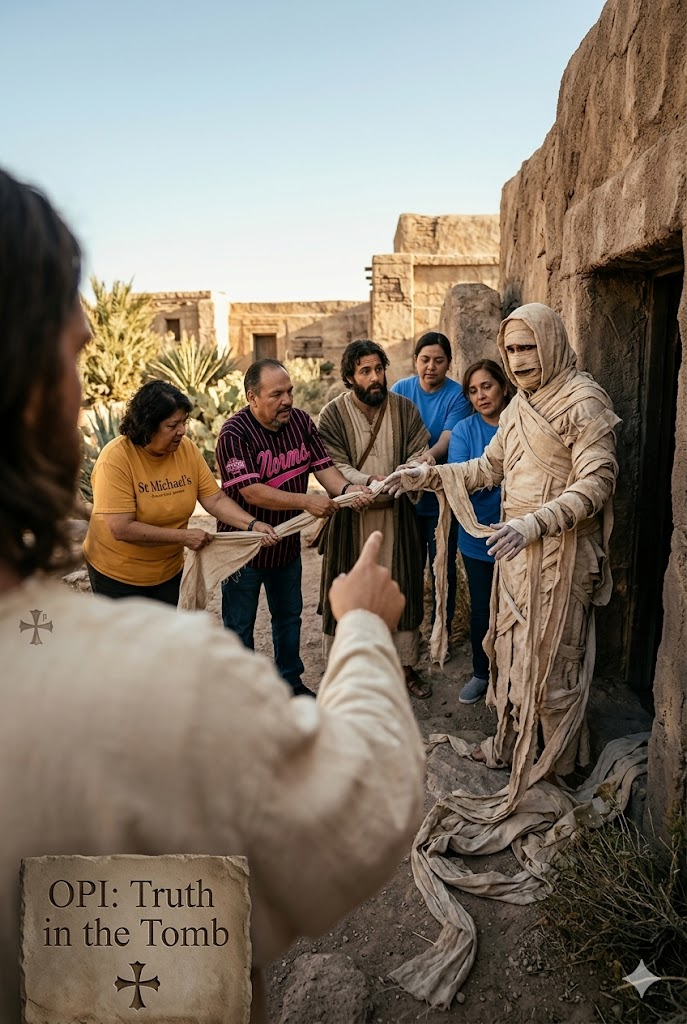
Perhaps the most profound Truth for us as a parish and an Order is what happens after the miracle. Jesus says the words that give life, but then He turns to the community and gives a command: “Untie him and let him go.” Notice that Jesus did not wave a hand and make the burial cloths vanish. He required the community to get their hands dirty. This is the mandate for St. Michael’s Catholic Parish/Unified Old Catholic Church. Christ provides the life-giving grace, but we are the ones called to the “Ministry of Unbinding.”
There are people sitting in these pews, or living in our neighborhoods, who have been “raised”—they have heard the call of God—but they are still walking around in burial cloths. They are bound by the labels the world has put on them, bound by the shame of their past, or bound by a lack of hope. As Dominicans and as followers of Christ, our job is to reach out and help peel back those bandages. We are called to be the hands that untie the knots of despair so that our brothers and sisters can truly walk in freedom.
As we move into Passiontide, we realize that the raising of Lazarus was the final catalyst for the death of Jesus. By giving Lazarus life, Jesus sealed His own earthly end. He traded His life for ours.
Today, let us ask ourselves: What stone are we keeping firmly in place? What “tomb” are we hiding in? The Voice that called Lazarus is calling you today. Not just to “live,” but to join the mission. To be a witness to the Truth that in Christ, nothing is ever truly “over.”
The Feast of St Joseph, Spouse of the Virgin Mary~The Very Rev Lady Sherwood, OPI
My dearest Brothers and sisters in Christ,
Today, we come together as the Church to commemorate St. Joseph, the Spouse of The Blessed Virgin Mary, and the foster Father of our Lord and Saviour,Jesus, when he became one of us here upon the Earth.
In the same way in which God, our Heavenly Father, who gives each of us as his children, unconditional love, care, stability and who sets us the standard with which we should strive to live our lives with his holy word in the scriptures, a true Father to each and every single one of us, who only ever wants the very best for all his children. St. Joseph follows our Father’s example, as both husband and foster father. He gives us examples which men should follow in their lives. Joseph cared for and provided for the Holy Household. There are many qualities that Joseph had which we could use to be the role model for Christian husbands and fathers. Joseph was a very compassionate man. We can see an example of this when he suspected his wife of infidelity; he planned to divorce her quietly rather than denounce her publicly and expose her to public shame and penalty.
Joseph was always obedient to God and did what he knew was God’s will without thought or hesitation. Examples of this are that he kept Mary as his wife; he protected and provided for his family when they had to flee to foreign lands to protect them from danger.
Joseph led a life of deep prayer and was in communion with God, and would always seek out that which was God’s will. God often told Joseph his will using dreams.
Joseph was a provider of care, When Jesus’s life was threatened, Joseph would take them out of danger. He took his family to Egypt and only returned when it was safe to do so, and when Jesus went missing at aged twelve, Joseph went searching for him because obviously, both parents were obviously extremely worried about Jesus’s safety.
Joseph also brought much more to Jesus’s life, he taught him his trade which Jesus worked in for about twenty years, he gave Jesus the love and stability he as any child needs, and was his earthly male role model, which was and still is vitally important for a good father to give any child.
He was a man with a firm faith in God coupled with a resilient personality, who did not complain and was not appalled nor distressed in the midst of trials and tribulations, St. Joseph knew how to face, carry and solve the burden of his vocation, of life’s difficulties and responsibilities with serenity, with complete faith and love, entrusting himself totally and unconditionally to God’s plans.
Sadly not all children are brought up in such a way today, but husbands and fathers truly should seek to follow this sincere man of God in the way they run their lives. Are you married? Do you give all the love, trust and respect to your spouse? Or with stresses and strains do you always argue or not truly make time for each other? If you have children, do you know where they are and if they are safe, or who they might be talking to online? Do you give emotional stability, patience and unconditional love? Do your children see you as the role model they need in a Father? We should always strive to be as our heavenly Father is to each of us, whether that be to our spouses, to our children, and in fact to all as our brothers and sisters.
While the Gospels do not shed much light on St. Joseph’s life, it is believed that he died before Jesus’ public ministry.
St. Joseph is the patron of fathers, spouses, priests and seminarians. But also, St. Joseph teaches us so much by his silent example of his life, and just how we should love God faithfully and obediently.
Let us pray:
Blessed St. Joseph, husband of Mary,
be with us this day.
You protected and cherished the Virgin;
loving the Child Jesus as your Son,
you rescued Him from the danger of death.
Defend the Church,
the household of God,
purchased by the Blood of Christ.
Guardian of the Holy Family,
be with us in our trials.
May your prayers obtain for us
the strength to flee from error
and wrestle with the powers of corruption
so that in life we may grow in holiness
and in death rejoice in the crown of victory.
Amen.
Mountains, Valleys, and Light~The Rev Frank Bellino,OPI
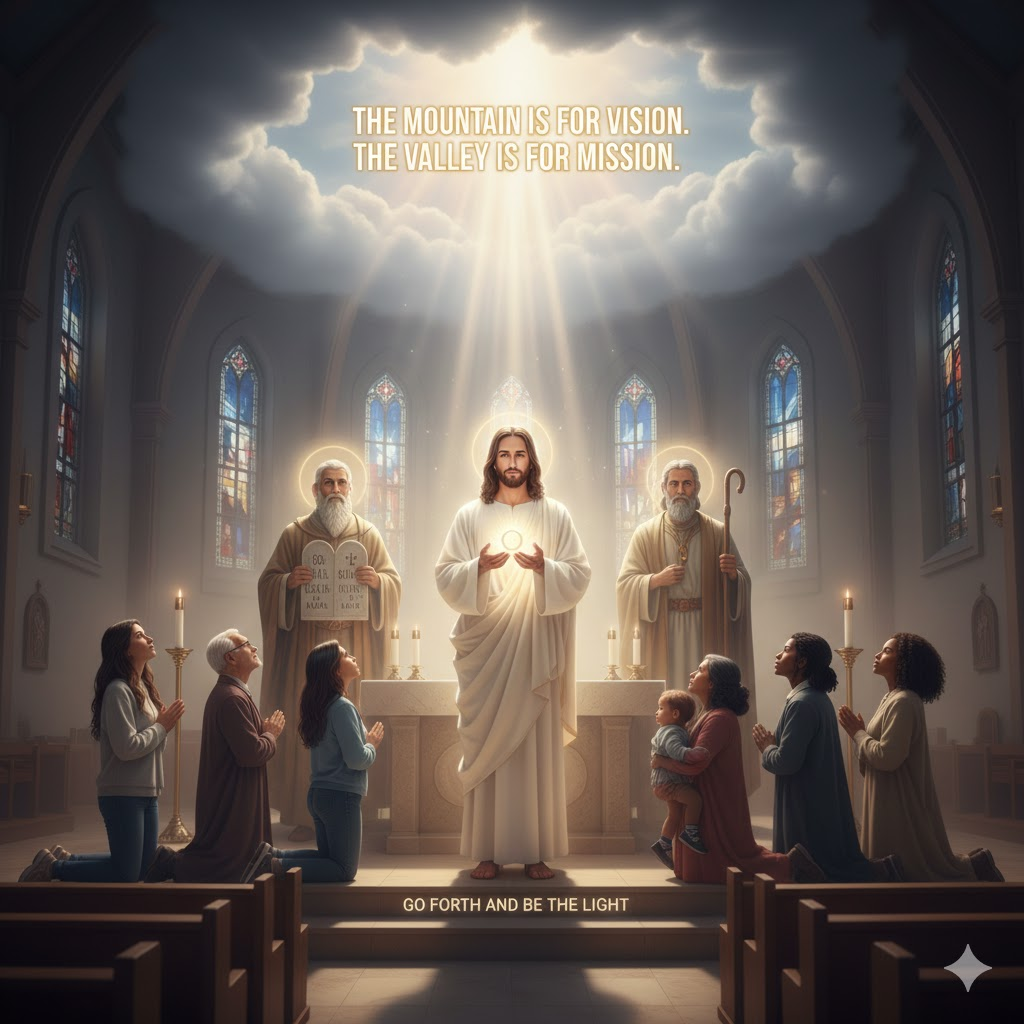
As we ascend the spiritual slopes of this Second Sunday of Lent, we encounter the Transfiguration—a moment where the Veritas we seek in our Dominican study ceases to be an abstract concept and becomes a visible, blinding reality. We immediately face the striking selectivity of this event: why did Jesus leave the nine at the base of the mountain and bring only Peter, James, and his brother John? In a modern culture obsessed with a hollow version of “inclusion” that demands everyone get a participation trophy, the economy of Grace works with a more rugged logic. Jesus chose these three not for their comfort, but for their coming trials. He brought this “Inner Circle” to the summit because they were the leaders destined to carry the heaviest burdens of the infant Church; they were being given a “preventative grace,” a spiritual anchor to hold them steady when the sky would eventually turn black over Calvary. To those of you today who feel you are being tested more than your neighbor—who feel the weight of leadership in your families, your careers, or your community—we must realize that the Lord often allows a deeper “Tabor moment” precisely for those He knows must endure the greatest weight of the Cross. This vision was not a reward for their status, but a necessary foundation for their survival in a world that was about to try and break them.
This encounter with the Divine, however, was not one of easy consolation, as evidenced by the disciples falling prostrate in terror. This is the Timor Domini—the Fear of the Lord—which serves as a vital correction to a 21st-century world that tries to domesticate the Divine, reducing God to a “life coach,” a cosmic vending machine, or a convenient political ally. They were afraid because the “Raw Truth” of our Dominican tradition is naturally overwhelming to the human ego; to stand in the presence of the Transfigured Christ is to realize with jarring clarity that we are not the center of the universe. In an age where the “self” is marketed as the ultimate authority, this fear is a healthy reality check. Yet it is in this very moment of holy dread that we see the essence of the Gospel: Jesus reaches out to touch them, saying, “Rise, and do not be afraid.” At St. Michael’s, we do not worship a distant, cold light, but a Majesty that reaches into the dust of our human frailty to lift us up. This balance of awe and intimacy is exactly what our modern world lacks—we have replaced the awe of God with the anxiety of the world. We must rediscover the scale of God so that we can truly appreciate the radical humility of His touch in our daily lives.
This depth of experience leads to the often-confusing command of the “Messianic Secret,” where Jesus instructs them to remain silent until after the Resurrection. In our age of “instant sharing,” where we are tempted to post every spiritual impulse on social media before it has had ten minutes to settle in our hearts, Jesus’s command is a radical call to discipline. He understands that glory without the Cross is a dangerous delusion. If the disciples had descended the mountain preaching only of glowing garments and ancient prophets, they would have been peddling a “cheap grace” that skips the sacrifice of Friday, the kind of “feel-good” spirituality that collapses the moment real life gets hard. As Dominicans, we are bound by the principle of Contemplata Aliis Tradere—to contemplate and then hand on the fruits of that contemplation—and that requires the discipline of silence. We cannot truly speak of the Transfiguration until we have stood at the foot of the Cross, for the silence Jesus demands is the time required for Truth to mature in the soul. Our world is saturated with noise, yet our calling within the Unified Old Catholic Church is to a deeper, more disciplined quiet—one where the Word is digested before it is proclaimed to a world starving for something substantial.
Ultimately, the Transfiguration offers a blueprint for our lives between the mountain and the valley. We do not gather at the Altar to escape the world’s problems or to hide in a “religious bubble.” We come to the mountain of the Eucharist to be “re-visioned” by the light of Christ so that we may have the eyes to recognize His hidden, suffering presence in the poor, the marginalized, and the broken whom we encounter in the plain below. The mountain is for the vision, but the valley is for the mission. Like Abraham in our first reading, who was told to leave everything he knew and “Go forth,” we are called to move. we leave this sacred space today not merely with a memory of a miraculous light, but with the fortitude to face our own personal Fridays. We rise, we cast off our fear, and we walk back into our neighborhoods and our workplaces, certain that the light we witnessed on the mountain is a glory that the darkness of this 21st-century world can never, and will never, overcome.
The Urgency of the Desert~The Rev Frank Bellino,OPI
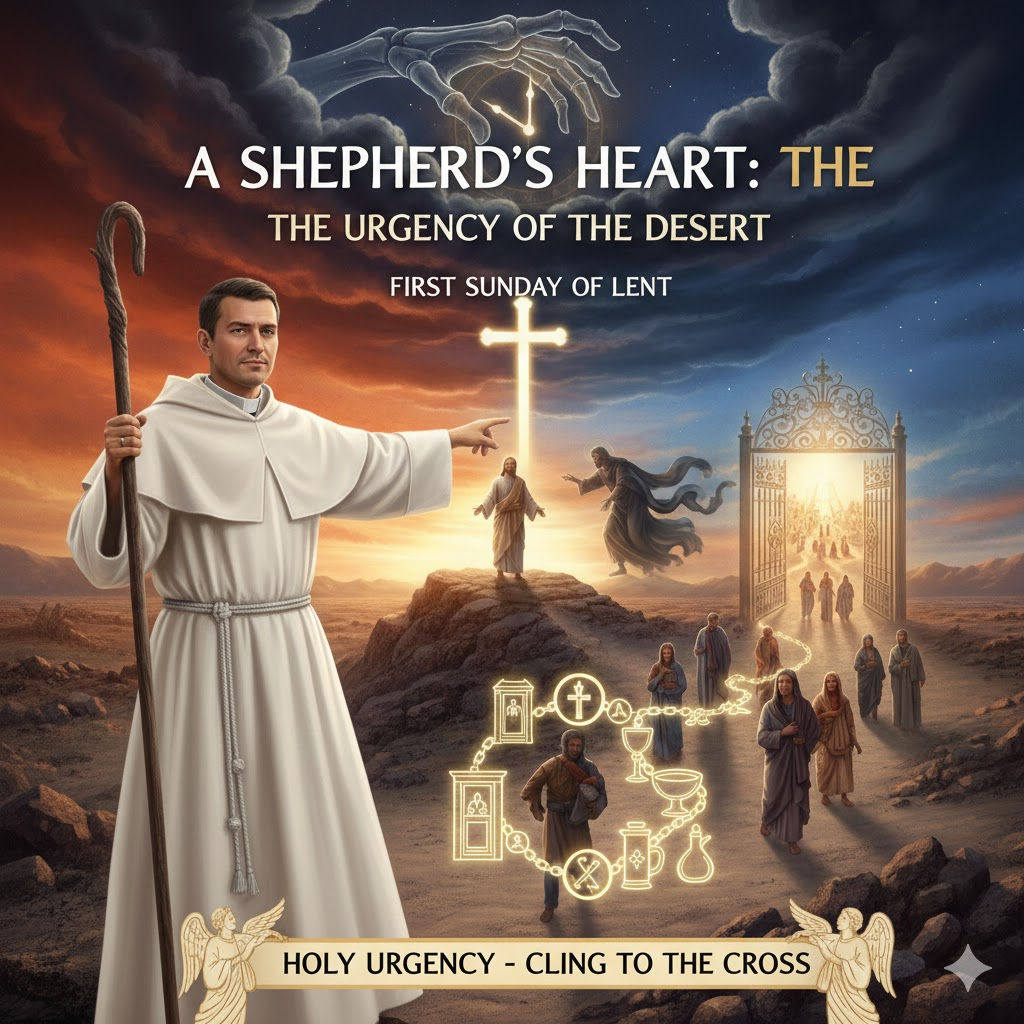
When we look at Matthew 4:1-11, we aren’t just reading a historical account of Jesus in the wilderness; we are looking at a roadmap for our own survival. As your Priest, I don’t talk about the “desert” or the discipline of Lent because I want to fill your calendar with more “church work.” I talk about it because I have stood at enough bedsides and seen enough of life’s fragility to know one absolute truth: Life is short, and eternity is forever. My deepest desire—the very reason I wear this collar—is to ensure that when your earthly pilgrimage ends, you are counted among the saints, reunited with your loved ones in the presence of God.
The devil didn’t tempt Jesus with obvious “evil”; he tempted him with shortcuts. He offered bread to the hungry, protection from pain, and power without sacrifice. Today, he does the same to us. He tells us we have “plenty of time” to get right with God, or that the Sacraments aren’t necessary if we are “good people.” But as a Dominican, I am bound to the Truth (Veritas), and the truth is that we are in a spiritual battle for our very souls. If Jesus—the Sinless One—was targeted by the tempter, what makes us think we can navigate this life safely without the armor of the Church?
We have the Sacraments and prayer not as “tasks,” but as medicine for a terminal condition. Confession isn’t about shame; it’s about clearing the wreckage so you can walk through the gates of Heaven. The Eucharist isn’t just a ritual; it is the “food for the journey” that sustains your soul when the world tries to starve it. We use these tools now because we do not know if we have tomorrow.
Our call to action this Lent is to live with a “Holy Urgency.” I challenge you to look at your life through the lens of eternity. Stop delaying the reconciliation you know you need—whether it is with God in the Confessional or with a family member you haven’t spoken to in years. Make the Sacraments the non-negotiable anchor of your week, recognizing that every time you receive the Eucharist, you are practicing for the Heavenly Banquet. Let us use these forty days to strip away the distractions that convince us we are immortal, and instead, cling to the Cross. Our goal is simple but infinite: to finish this race well so that we may see each other again in the Kingdom where there are no more departures, only the joy of being home with Jesus. Amen
The Discipline of Dust~The Rev Frank Bellino,OPI
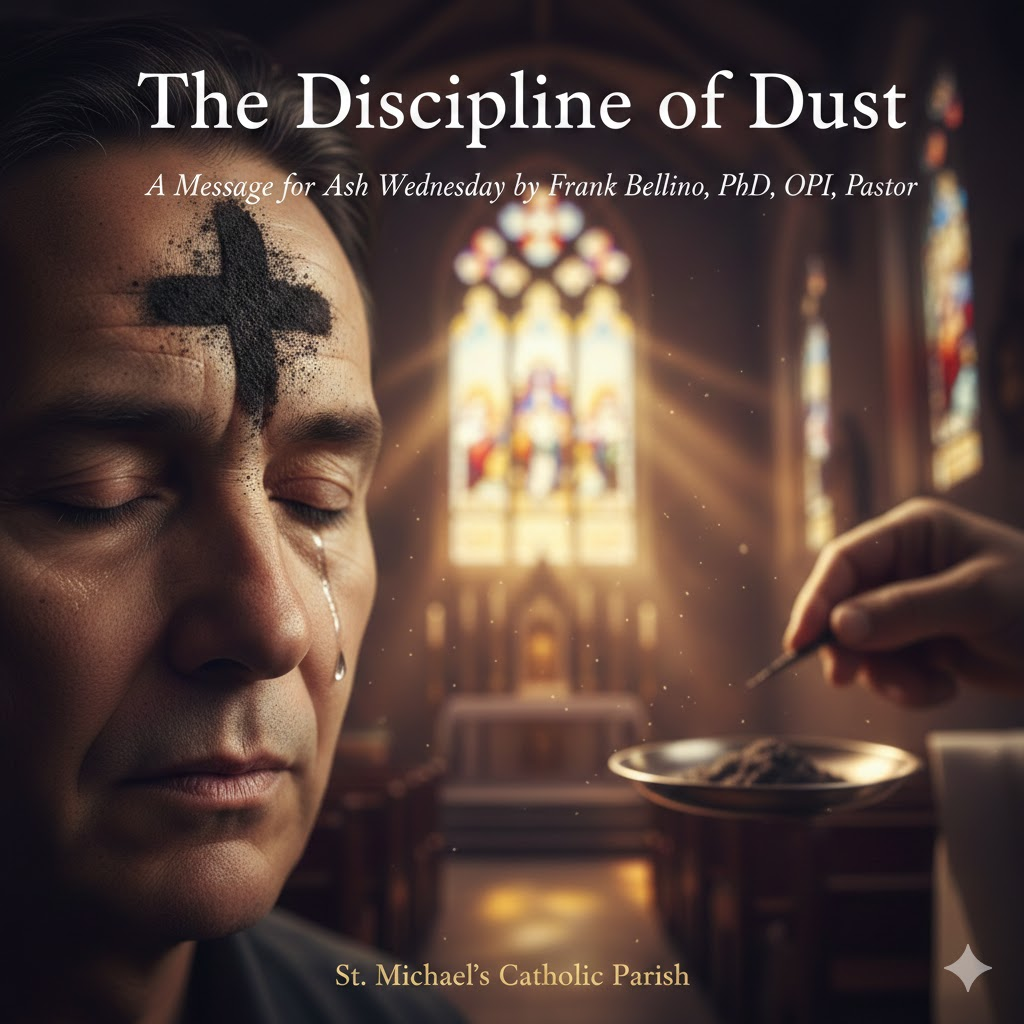
For over a thousand years, the Church has gathered on this day to perform a ritual that
the modern world often finds jarring. We take the remains of last year’s victory—the
palms of Palm Sunday—and we burn them into a gray, lifeless powder. In the ancient
world, to “sit in sackcloth and ashes” was the ultimate sign of a soul stripped bare; it
was the mark of the exile and the public penitent. As we begin this holy season,
we must realize that the Prophet Joel’s ancient call to “blow the trumpet in
Zion” is not a call to celebration, but a declaration of a spiritual emergency. These ashes
are the “uniform” of those who recognize that the world is broken, and more importantly,
that we are part of that brokenness.
The theological heart of this day lies in the uncompromising command: Memento
Mori—”Remember that you are dust, and to dust you shall return.” This is the “Law of
the Garden” from the Book of Genesis. It serves as a stark reminder that despite our
ranks, our titles, or our years of service, we are contingent beings who do not own our
next breath. Ash Wednesday is the Great Equalizer of the liturgical year. Whether you
are a student, a retiree, a first responder, or a priest, we all receive the same smudge of
dust. It is a necessary confrontation with our mortality, intended to strip away the illusion
that we are the masters of our own destiny. We are creatures in desperate need of a
Creator, and we have forty days to re-align our lives with that reality.
The Prophet Joel challenges us to “rend your hearts, not your garments.” In the Hebrew
tradition, tearing one’s clothes was a sign of extreme grief, but God sees through the
theater of outward signs. He is looking for a strategic rupture in the soul—a deep,
internal surrender. A “strong” Lent is not defined by the quantity of our sacrifices, but by
the quality of our conversion. We fast to prove to our bodies that our souls are in
charge; we pray to prove to our egos that God is in charge; and we give alms to prove
to our hearts that we do not own the world. This is why we commit to forty days—the
biblical timeframe required for the “old man” to die so that the “new man” can be born.
As we embark on this campaign of Christian service, let us not wear these ashes as a
badge of holiness, but as a confession of our need. History teaches us that those who
forget they are dust eventually attempt to act like gods, a path that always leads to ruin.
I invite the community of the Unified Old Catholic Church to enter this season with
discipline and clear eyes. The orders for the journey ahead are simple yet profound:
Repent, believe in the Gospel, and remember who you truly are in the eyes of God. The
campaign has begun.
The Higher Standard~The Rev Frank Bellino,OPI
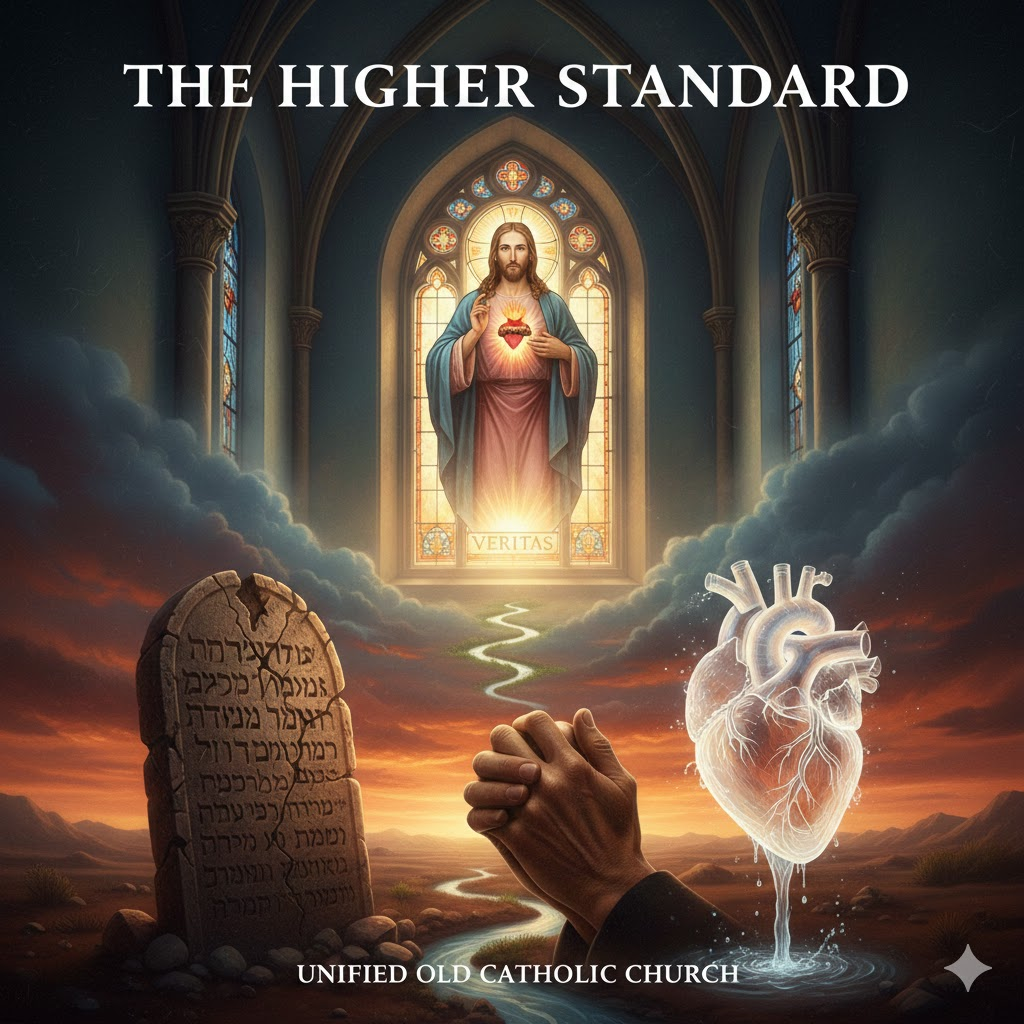
In the Gospel of Matthew, our Lord Jesus Christ issues a decree that challenges the
very foundation of our spiritual comfort. He declares that He has not come to abolish the
Law and the Prophets, but to fulfill them. For the believer, this fulfillment is not a
relaxation of requirements, but an intensification of the heart. As we seek Veritas—the
Truth—we must confront the reality that external compliance with a set of rules is not
the same as salvation. St. Thomas Aquinas famously noted that the New Law is
primarily the very grace of the Holy Spirit given to those who believe. Therefore, the
“minimum” is no longer an option for the Christian. It is not enough to refrain from the
act of murder if we harbor the fire of anger or the poison of insults toward our neighbor.
It is not enough to avoid the act of adultery if our minds remain a sanctuary for lust and
objectification. Jesus Christ is not calling us to be “good citizens” who stay within the
legal lines of society; He is calling us to be disciples whose every thought and “Yes” is a
definitive alignment with the Cross.
This “Law of the Heart” demands a radical integrity that bridges the gap between our
Sunday worship and our daily conduct. If we approach the altar to offer our gift while
holding onto a grudge or refusing to reconcile with those we have hurt, our sacrifice is
hollow. The Truth dictates that our faith must be more than a spectator sport. Every one
of us has been equipped by God with specific gifts—be they financial, physical, or
spiritual—intended for the building up of His Kingdom. To possess these gifts and refuse
to use them is to choose the “fire” of self-interest over the “water” of sacrificial life. The
economy of the Kingdom of Heaven operates on a principle of divine generosity: when
we offer back to God the labor of our hands and the integrity of our souls, He returns it
to us in “good measure, pressed down, shaken together, and running over.”
As we move through the cycles of the liturgical year, let us remember that the “Higher
Standard” of Christ is not a burden meant to crush us, but a guardrail meant to guide us
toward true freedom. True freedom is found when our internal character matches our
external profession. We are invited to strip away the “internal noise” of resentment and
half-heartedness, replacing it with a discipline of reverence and service. Let us stop
looking at the Law as a list of constraints and start seeing it as the path to the Ruler of
our hearts. May we choose this day to move beyond the letter of the Law and embrace
the Spirit that gives life, building a Church that is defined not by its rules, but by the
transformative power of its Truth.
Let Your Light So Shine~The Rt Rev Michael Beckett,OPI
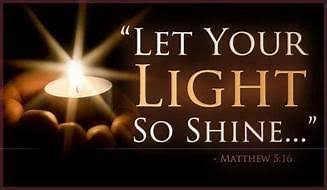
Y’all……. The United States is frequently characterized as a “light to the world” or a “shining beacon,” symbolizing a global model for liberty, democracy, and economic opportunity. Founded on ideals of equality and individual rights, the U.S. has served as a beacon for freedom, offering an, at times, unique, and evolving society. The concept of being a “light to the nations” stems from biblical traditions regarding an example of righteousness, which some interpret as applying to the nation’s historical mission of promoting freedom and, to a lesser extent, religious, liberty.
Religious Liberty. I’m sure that you have noticed that here in recent months, there has been a great cry among a certain segment of our population to restore Christianity into the United States, and that is has been said that there is a war on Christianity. The president of the United States said, at a Rose Garden event on the National Day of Prayer in May, “We’re bringing back religion in our country. His faith adviser, pastor Paula White-Cain, proclaimed that in his administration, faith “has been brought back to where it always belongs, and that is center.” He has even gone so far as to establish a Task Force Against Anti-Christian Bias.
Well…..yay? I think not. While all of this sounds good and wholesome and right, when, in reality, it is far, far, far from anything good; as far as east is from west. It would seem that many today actively espouse things that are far and away from anything Jesus taught. He kinda summed it up when he said, in Matthew 23:27-28:
27 “Woe to you, teachers of the law and Pharisees, you hypocrites! You are like whitewashed tombs, which look beautiful on the outside but on the inside are full of the bones of the dead and everything unclean. 28 In the same way, on the outside you appear to people as righteous but on the inside you are full of hypocrisy and wickedness.
If the powers that be were truly interested in furthering Christ’s message, well, the Scripture’s appointed for today would be a great place to start. From Isaiah:
Thus says the LORD:
Share your bread with the hungry, shelter the oppressed and the homeless; clothe the naked when you see them, and do not turn your back on your own. Then your light shall break forth like the dawn, and your wound shall quickly be healed; your vindication shall go before you, and the glory of the LORD shall be your rear guard. Then you shall call, and the LORD will answer, you shall cry for help, and he will say: Here I am! If you remove from your midst oppression, false accusation and malicious speech; if you bestow our bread on the hungry and satisfy the afflicted; then light shall rise for you in the darkness, and the gloom shall become for you like midday.
I really haven’t seen much of that on the national news lately, have you? But then again, that’s the “Old Testament” and we are supposed to be New Testament people, no? So, let’s check out the Gospel Reading for today:
Jesus said to his disciples: “You are the salt of the earth. But if salt loses its taste, with what can it be seasoned? It is no longer good for anything but to be thrown out and trampled underfoot. You are the light of the world. A city set on a mountain cannot be hidden. Nor do they light a lamp and then put it under a bushel basket; it is set on a lampstand, where it gives light to all in the house. Just so, your light must shine before others, that they may see your good deeds and glorify your heavenly Father.” Matthew 5:13-16
Well now. It seems to me that we, this country, each of us, needs to work on letting our lights shine. Really and truly shine. We need to light up the darkness in this world. And reckon wonder how do we do that? Wonder of wonders, Jesus tells us! Again from Matthew:
‘Come, you who are blessed by my Father; take your inheritance, the kingdom prepared for you since the creation of the world. For I was hungry and you gave me something to eat, I was thirsty and you gave me something to drink, I was a stranger and you invited me in, I needed clothes and you clothed me, I was sick and you looked after me, I was in prison and you came to visit me.’
“Then the righteous will answer him, ‘Lord, when did we see you hungry and feed you, or thirsty and give you something to drink? When did we see you a stranger and invite you in, or needing clothes and clothe you? When did we see you sick or in prison and go to visit you?’
“The King will reply, ‘Truly I tell you, whatever you did for one of the least of these brothers and sisters of mine, you did for me.’ Mt 34-40
The “least of these.” Who are the “least of these”?
So…are the people and policies in place now actively shining this kind of light? What’s more important though, is the question, are YOU shining on the folks around you? Jesus wasn’t playing when he said, “‘Love the Lord your God with all your heart and with all your soul and with all your mind.’ This is the first and greatest commandment. And the second is like it: ‘Love your neighbor as yourself.’ All the Law and the Prophets hang on these two commandments.” Mt 22:36-40
When we were wee, we were taught the song, “This Little Light of Mine, I’m Gonna Let it Shine,” and we sang it with gusto! Now, as adults, we have come to the point in our lives that we have to decide if we are, indeed, gonna let our lights shine, or are we gonna support, vote for, and continue to hide in the darkness? Amen.
Fright, Fires, and Faith~The Rt Rev Michael Beckett,OPI

Y’all…… Like many of you, I’m struggling right now. I am trying very, VERY hard to not be angry. To not be afraid. To not be accusatory. But it’s not easy. I know that most of the folks I know are good people. I have to believe some of them are just way, way misguided. But still……. My father was a man of few words, and great wisdom. When Daddy spoke, we listened. And learned, which was his entire point. And here in the past few days, one particular convo with my father has been on repeat in my mind. Now, I have not the first clue as to what the particular situation was that caused this conversation, or even who Daddy was talking to, but someone had been killed/murdered, and whoever Daddy was talking to wasn’t particularly bothered/concerned about it and had actually made some off-hand comment about it being a good-not-necessarily-bad thing. And here’s the kicker: Daddy said, and I will never forget this, he said, “If you support this and agree with it, you are no better than the man who pulled the trigger and did the killin’. And what do you think Jesus would say about that?” Boom! My Daddy knew how to make a point.
And so I can’t help but think about the folks whose votes and politics are supportive of what’s going on in our world today, and the things they’ve said. From “I like what he says about immigration” to “Christian America belongs to white people.” And yes, these are things that I have actually had said to me by people who are supposed to know and believe better. Or at least I thought they knew and believed better than that. I continue to hope and pray that hearts will be changed and these folks will actually realize how misguided they are. I pray for their “light bulb moment.”
One of the greatest joys of any teacher is when their kids have a “light bulb moment,” and suddenly the kids understand whatever concept they’ve been struggling with. You can actually see the change in the kids’ faces when they “get it.”. It’s an awesome thing! I had one of those lightbulb moments of my own recently. For the biggest part of my life, one of the most mysteriously difficult things for me to understand in Jesus’s life was when He wept over Jerusalem. I mean, intellectually, yeah, ok, but it never really hit me in the feels. Ya see, Jesus had just ridden into Jerusalem on the back of a donkey to the acclaim of the masses. They had yelled their hosannas and waved their palm branches, and they still didn’t get just who Jesus was and what he represented. And this bothered him. So he popped up into the hills, as Jesus was wont to do when he needed a break, and as he looked over Jerusalem, he foresaw the city’s impending destruction by Rome and mourned the spiritual blindness of the people who rejected him. He cried. His tears reflected deep compassion for their refusal to accept the peace and salvation he offered, and he knew that refusal would lead to severe judgment. He grieved over their consistent rejection of God’s prophets and, finally, the rejection of the Son of God. It kinda broke his heart, ya know?
And I just didn’t quite understand. Couldn’t identify…..until now. Watching the news, listening to folks talk and say some really, really dreadfully misguided things….. Well, I get it now.
Long before Jesus was weeping over Jerusalem, he had kicked off his ministry with, perhaps, the wokest of the woke sermons Jesus ever preached; The Sermon on the Mount, which brings us to the Gospel Reading appointed for today. The Beatitudes:
When Jesus saw the crowds, he went up the mountain,
and after he had sat down, his disciples came to him.
He began to teach them, saying:
“Blessed are the poor in spirit, for theirs is the kingdom of heaven.
Blessed are they who mourn, for they will be comforted.
Blessed are the meek, for they will inherit the land.
Blessed are they who hunger and thirst for righteousness, for they will be satisfied.
Blessed are the merciful, for they will be shown mercy.
Blessed are the clean of heart, for they will see God.
Blessed are the peacemakers, for they will be called children of God.
Blessed are they who are persecuted for the sake of righteousness, for theirs is the kingdom of heaven.
Blessed are you when they insult you and persecute you and utter every kind of evil against you falsely because of me. Rejoice and be glad, for your reward will be great in heaven.”
Jesus called those folks, and is calling us, to be peacemakers, merciful, honest, meek, and to love one another. He called those folks, and is calling us, to be righteous, to stand up for what is right and true and good and loving. Yes, here we are now, more than 2000 years later, still being called and still trying to get his message to the folks who need to hear it, still trying to convince folks that he meant what he said. Still calling truth to power and believing that the world can be changed if folks just try. Jimi Hendrix, one of the greatest and most influential guitarists of all time, William Ewart Gladstone, a 19th century British Prime Minister, and Sri Chinmoy, the spiritual teacher, are all given credit in one place or another for the quote, “When the Power of Love overcomes the love of power, only then will there be peace on earth.” Just because it’s kinda cliché doesn’t make it any less true.
Almost 40 years ago, that great musician, Billy Joel, was having a conversation with a friend and they were discussing the dumpster fire that was the world at the time. He then later wrote the song, “We Didn’t Start the Fire.” In it, he lists some of the terrible, horrible, no good, very bad things that have happened in the past hundred years or so, and the chorus goes like this: “We didn’t start the fire, but the world’s been burnin’ since the world’s been turnin’. We didn’t start the fire, No, we didn’t light it, but we tried to fight it.”
And we’re fighting it still. Jesus has told us how to fight it. Mercy. Justice. Peace. Righteousness. Acceptance. Compassion. Empathy. Love. If we are truly the Jesus People we claim to be, can we be any less? If we are to be the example for the rest of the world, can we be any less? Can we DO any less? Maybe, just maybe, if we listen to Jesus, and do as he has asked, no, commanded, us to do, we can make a difference. YOU can make a difference.
So the question remains, are you gonna be one of those who pulls the trigger, or are you gonna help put out that dumpster fire, and replace it with The Light of the World? Amen.
Read the Red Words~The Rt Rev Michael Beckett,OPI

Y’all………It’s not often that I focus on the Epistle reading appointed for the day, rather than the Gospel reading….nor am I a fan of Paul. Paul was a pretty decent guy, but folks have taken him WAY out of context and twisted his words and meanings into something that he probably wouldn’t even recognize, but I digress. ANYWAY, today is one of those unusual times when I focus on what Paul said, so here we go. In his first letter to the Church at Corinth, Paul says, “I urge you, brothers and sisters, in the name of our Lord Jesus Christ, that all of you agree in what you say, and that there be no divisions among you,but that you be united in the same mind and in the same purpose. For it has been reported to me about you, my brothers and sisters, by Chloe’s people, that there are rivalries among you. I mean that each of you is saying, “I belong to Paul,” or “I belong to Apollos,” or “I belong to Cephas,” or “I belong to Christ.”
Is Christ divided?
Was Paul crucified for you?
Or were you baptized in the name of Paul?” ( Corinthians 1:10-13, 17)
Pretty apt for today’s times, huh? There are SO many folks who claim to be “Christian”, who can spout scripture on command to justify whatever it is that they’re preaching, and who purposefully twist the words found in the Bible to meet their own unfortunate beliefs. You know who knows the Bible better than anyone? Who can use those holy words to back up whatever he is selling? Da devil. (But that’s a whole ‘nother sermon, so hold that thought.)
What Paul is telling us is that we need to focus on Jesus and when HE said. A couple of weeks ago, I changed my Facebook banner to one that said, “Read the Red Words.” It sparked some questions and discussions. Way back in the dark ages, when I was but a wee lad, my parents bought me my first Bible. It was a “Red Letter Edition.” For those of you who are not familiar, a Red Letter Edition of the Bible is one where every word Jesus is supposed to have said is in red. And I think, today more than ever in our lifetimes, today we need to be hyper-focused on The Red Words. The rest of the words written in the Bible aren’t worth a hill of beans if they are not read, understood, and applied through the lens of what Jesus said. When Paul wrote about those saying, ““I belong to Paul,” or “I belong to Apollos,” or “I belong to Cephas,” he was, in today’s jargon, saying, “I am a Republican!” “I belong to the Democrats!” “I’m conservative!” “I’m a proud liberal!” And nowhere, NOWHERE in that is an “I belong to Jesus.”
Now, Jesus knew this was gonna happen and he spoke about causing division, most notably in Luke 12:51-53: Do you think I came to bring peace on earth? No, I tell you, but division. From now on there will be five in one family divided against each other, three against two and two against three. They will be divided, father against son and son against father, mother against daughter and daughter against mother, mother-in-law against daughter-in-law and daughter-in-law against mother-in-law.”
But does it have to be that way? That would be a big ol’ NOPE. Not. Notty not not. In this, like everything else in this world that we do, say and believe, we have a choice. We can, like Joshua of the Hebrew Bible said, “Choose this day whom ye will serve.” Now, this will cause great consternation among the troops, coz it requires all of us to examine what we do, what we believe, and who we are. If any part of us, if anything in our behavior contradicts the Red Words, we need to make some serious adjustments. And in a nutshell, what do those Red Words say? Imma tell ya. Jesus’s main message centered on the Kingdom of God—God’s rule and reign—calling people to repent and believe the good news of his coming kingdom, emphasizing love for God and neighbor as the guiding principles, and demonstrating this kingdom through healing, compassion, and serving the oppressed. His teachings called for radical love, mercy, and seeking God’s kingdom above all else, both in present life and anticipating what is yet to come.
His greatest commandments were, after all, “‘You must love the Lord your God with all your heart, all your soul, and all your mind.’ This is the first and greatest commandment. A second is equally important: ‘Love your neighbor as yourself.’ The entire law and all the demands of the prophets are based on these two commandments.” Matthew 22:37–40 So it bears repeating: We are to demonstrate healing, compassion, and serving the oppressed. His teachings called for radical love and mercy. If what you see on the news and what you read in da papers isn’t doing that, then you are witnessing the exact opposite of what Jesus was talking about. If what you are cheering on whilst watching the news and reading in da papers isn’t doing that, then YOU are doing the exact opposite of what Jesus was talking about.
So, choose this day whom ye will serve. And if there’s any questions about it, read the Red Words.
Amen.
 The Order of Preachers, Independent
You must be logged in to post a comment.