
Category: Member Posts
The Feast of Our Lord Jesus Christ King of Universe~Br. Milan Komadina
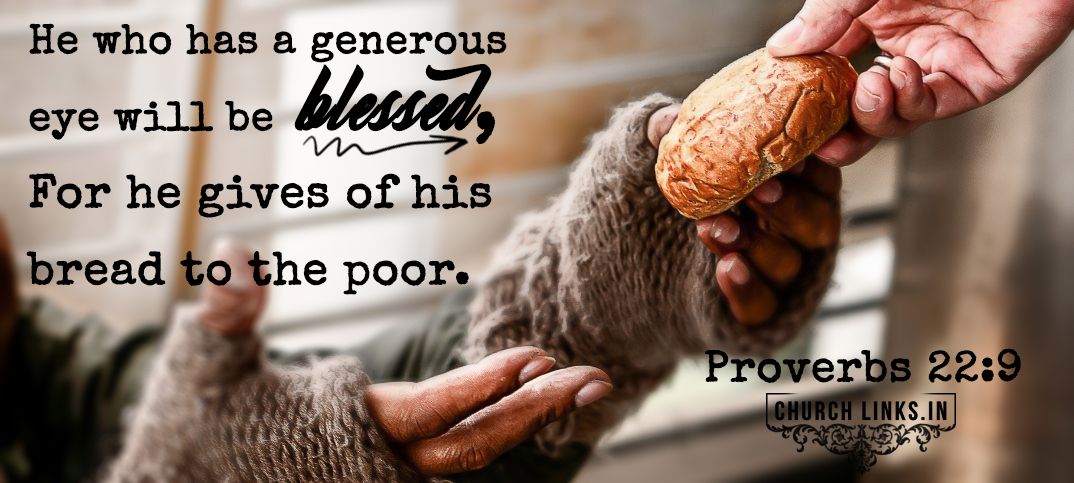
The war in Ukraine is still going on. It has been almost two years since the first
Russian bombs fell down on the Ukrainian ground. Many people were killed, civilians,
children, women and men, young and old… Now there is another war happening
parallel. Palestinian terrorist organization attacked Israel. Then Israel started defense.
Unfortunately now we see that the defense turns into big destruction where many
innocent people are killed. There are victims on both sides. It is really sad that wars are
happening in the world. But also there are many sad destinies in many countries
worldwide in countries where people do not have war. There are many poor people,
people who are hungry, thirsty, people who do not have enough money for every day
needs. People who do not have normal clothes or do not even have a place to live. Our
responsibility is to help everyone if we could help. In today’s reading in Matthew 25:31-
46 we read about the Final Judgment. And we can found out what would for Jesus be
the most important. He will not ask us if we lit many candles or brought the most
beautiful flowers into the church, He would not ask us if we prayed 10 or 100 or 1000
rosaries, He would not even ask us if we had only one or multiple sexual partners. I am
giving these examples because it seems that today’s churches pay much more attention
to sexual life of their believers which is wrong than providing support to people. What
Jesus will ask us is how we were treating others? People around us – those who are
hungry and thirsty not only for material food but also hungry and thirsty for friendships,
hugs, understanding, listening and talking. We don’t even need to be baptized or
believers to provide what will Jesus ask us about. And who would be justified? A non-
believer who never went to church but spent his entire life in helping people in need,
feeding them and providing them all that they need? Or the person who was properly
baptized, properly confirmed, who read Bible 1000 times and were very often a church
visitor if that person was not generous. Generosity will be required from us. Because
Jesus is in all people who suffer. And the way we treat them Jesus will treat us too. My
prayer for all of us is to live in accordance to what we read in today`s Gospel of Matthew
25:31-46. To provide always mercy to others, mercy in love, hugs, understanding,
support, money and donations of any kind and to try to be full with empathy as Jesus
was. To Him be glory forever. Amen.
Matthew 25:31-46
31 “When the Son of Man comes in his glory, and all the angels with him, then he will sit on his glorious throne. 32 Before him will be gathered all the nations, and he will separate people one from another as a shepherd separates the sheep from the goats. 33 And he will place the sheep on his right, but the goats on the left. 34 Then the King will say to those on his right, ‘Come, you who are blessed by my Father, inherit the kingdom prepared for you from the foundation of the world. 35 For I was hungry and
you gave me food, I was thirsty and you gave me drink, I was a stranger and you welcomed me, 36 I was naked and you clothed me, I was sick and you visited me, I was in prison and you came to me.’ 37 Then the righteous will answer him, saying, ‘Lord, when did we see you hungry and feed you, or thirsty and give you drink? 38 And when did we see you a stranger and welcome you, or naked and clothe you? 39 And when did we see you sick or in prison and visit you?’ 40 And the King will answer them, ‘Truly, I say to you, as you did it to one of the least of these my brothers, you did it to me.’
41 “Then he will say to those on his left, ‘Depart from me, you cursed, into the eternal fire prepared for the devil and his angels. 42 For I was hungry and you gave me no food, I was thirsty and you gave me no drink, 43 I was a stranger and you did not welcome me, naked and you did not clothe me, sick and in prison and you did not visit me.’ 44 Then they also will answer, saying, ‘Lord, when did we see you hungry or thirsty or a stranger or naked or sick or in prison, and did not minister to you?’ 45 Then he will
answer them, saying, ‘Truly, I say to you, as you did not do it to one of the least of these, you did not do it to me.’ 46 And these will go away into eternal punishment, but the righteous into eternal life.”
Giving Thanks In Times of Trouble~The Rt Rev Michael Beckett, OPI

Thanksgiving was my mother’s favorite holiday, and today will be full of memories of her, my father, and memories of holidays past. This Thanksgiving will also be a first for many of my friends as they struggle with broken relationship, broken health, and broken dreams, and grief. With all of the things going on in this world today, in this country today, some, many, might ask, for what do we have to be thankful? As I sit and ponder the losses and struggles of the past, and the tragedies and difficulties of the present, I am reminded by St. Paul that we are to “in everything give thanks; for this is God’s will for you in Christ Jesus.”
Giving thanks is, in troubled times, quite a difficult thing to do. However, we are taught that throughout our trials and tribulations, we should, nonetheless, give thanks.
Ephesians 5:20 says we are to be “giving thanks always for all things unto God and the Father in the name of our Lord Jesus Christ.” Trouble may bring a correcting ministry.
Romans 8:28 teaches us that “All things work for the good for those who love the Lord and are called according to His purpose. “ Even though we often wonder what good can come of some of the situations with which we are faced, we learn through Holy Scripture that good WILL come of our troubles.
Hebrews 12:6 says, “For whom the Lord loveth He chasteneth, and scourgeth every son whom He receiveth.” And Hebrews 12:11 tells us, “Now no chastening for the present seemeth to be joyous, but grievous: nevertheless afterward it yieldeth the peaceable fruit of righteousness unto them which are exercised thereby.”
Troubles bring us to Jesus so that we might depend more upon Him. The apostle Paul had a thorn in his flesh and he said, “For this thing I besought the Lord thrice, that it might depart from me. And He said unto me, My grace is sufficient for thee: for My strength is made perfect in weakness. Most gladly therefore will I rather glory in my infirmities, that the power of Christ may rest upon me” (2 Corinthians 12:8-9). If your trouble causes you to depend more upon God, can’t you realize why we are to thank Him for it?
Trouble may bring a confirming testimony. Paul knew much sorrow and he said, “Blessed be God, even the Father of our Lord Jesus Christ, the Father of mercies, and the God of all comfort; Who comforteth us in all our tribulation, that we may be able to comfort them which are in any trouble, by the comfort wherewith we ourselves are comforted of God” (2 Corinthians 1:3-4). If you didn’t have tribulation, you wouldn’t need comfort and God so graciously gives that comfort.
Trouble may bring an increasing maturity. God’s Son was without sin, but not without suffering. James 1:4 says, “But let patience have her perfect work, that ye may be perfect and entire, wanting nothing.” The word “perfect” does not mean sinless, it means mature. The word “patience” means endurance. You’re not going to be mature until you learn patience. And the only way that you can learn patience is to have something to endure. You don’t sharpen an axe on a pound of butter.
Trouble may bring excelling glory. 1 Peter 4:12-14 says, “Beloved, think it not strange concerning the fiery trial which is to try you, as though some strange thing happened unto you: But rejoice, inasmuch as ye are partakers of Christ’s sufferings; that, when His glory shall be revealed, ye may be glad also with exceeding joy. If ye be reproached for the name of Christ, happy are ye; for the spirit of glory and of God resteth upon you: on their part He is evil spoken of, but on your part He is glorified.” How would you like the Spirit of glory and of God to rest on you? How would you like to undergo a fiery trial? But, you see, it is the fiery trial that brings the Spirit of glory upon you. Acts 6:5 describes Stephen as “a man full of faith and of the Holy Ghost.” While he was being stoned, the Bible says that his face shone like the face of an angel (see Acts 6:15). If your trouble causes you to know God’s glory, shouldn’t we thank Him for it?
Trouble may bring baffling mystery, and this is really hard for me at times. Isaiah 55:8-9 says, “For My thoughts are not your thoughts, neither are your ways my ways, saith the LORD. For as the heavens are higher than the earth, so are My ways higher than your ways, and My thoughts than your thoughts.” God will give you enough to know to obey Him. Friend, there are some things we may not understand and we don’t have to understand them in order to thank God, because God is good.
And most important of all, we find that trouble will bring eternal victory. Romans 8:18 says, “For I reckon that the sufferings of this present time are not worthy to be compared with the glory which shall be revealed in us.” Paul was not saying the glory offsets the sufferings. Instead, he was saying that there’s no comparison. What a day that will be when He turns every tear to shouts of joy! And then we understand that He has not forsaken us.
Now since all of these things are true, then can we not give thanks in everything? I give thanks for the lives of those I have lost, that my life was blessed by their presence in my life. I give thanks for the wisdom and knowledge that troubled times have taught me. I give thanks for the Grace of Jesus Christ who has made it possible for me to deal with life at its worst. I give thanks for the multitude of blessings in this life: my husband, my friends, my health, home, critters, and for each of you.
In all things, give thanks. No matter what your circumstances and trials, this Thanksgiving, truly, truly give thanks.
I wish you all a most blessed and happy Thanksgiving.
+Michael, OPI
The Future? ~ The Rev. Frank Bellino, OPI
For many of us time is not a friend. We seem to be increasingly busy, rushing from one job to the next, with little time to slow down and reflect on what we are doing. Nevertheless, there are those who find the amount of time stretching out before they are incredibly stressful. One of the most challenging aspects of recovering from an illness or injury is boredom; how do you fill all the hours of the day when you are confined and don’t have the energy for much activities?
This Sunday’s Gospel passage is the middle one of three parables, all of which are concerned with time. The first parable is that of the ten maidens: five foolish and five wise waiting for the bridegroom. The third is the familiar parable of the sheep and the goats; the judgement at the end of time ‘when the Son of man comes in his glory’.
In today’s parable Jesus describes how a man entrusts his property to his servants before going on a journey. Like the first parable, this is a story about waiting; how do we prepare for the return of the Lord and what will his judgement be when he appears in glory?
The first two servants are given five talents and two talents, a large amount of money and they go ahead to double them through trade. The third servant, however, who receives one talent, digs a hole and buries it out of fear that he might lose it. The first two servants have used their time well, while the third has made little use of the time given to him as he waits for his master to return.
For the third servant time is not a friend, but each moment is filled with dread and fear at the thought of losing the talent that he has been given. Rather than awaiting the return of the master in joy, seeing each moment as transformed in anticipation of this future happiness, this servant’s life is filled with anxiety about what tomorrow will bring.
In many ways it’s easier to identify with this fearful servant than with the two who make such a great success of things. All of us are anxious about the future. No matter how secure we feel ourselves to be in this life who can say with absolute certainty what tomorrow will bring?
I recently heard that each day the average life expectancy in the US increases by six minutes. We are living longer and have a day-to-day security that our ancestors (and many people today in the world) could only have dreamed about. Yet for all this the future still remains uncertain. So, we battle against time trying to bring it under our control or try to escape it by putting ourselves into a state of oblivion.
Jesus knew what the future held for him:
Behold, we are going up to Jerusalem; and the Son of man will be delivered to the chief priests and the scribes, and they will condemn him to death (Matt 20:18)
However, he did not try to avoid this future, but allowed himself to be delivered to death. The future offered him pain and suffering, yet in his immense courage he embraced this future on the cross, so that we might no longer live in fear of what tomorrow will bring.
We know that no matter what the future brings, the risen Christ is with those who hope in him, leading them to the joy of his eternal kingdom.
Servanthood~The Rev Frank Bellino, OPI
Although he was a great preacher, St Paul did not give up his day job — at least that is his claim. and it is a claim he is proud of:
You remember how hard we worked, brothers and sisters; we worked night and day, so that we might not burden any of you while we proclaimed to you the gospel of God.
Paul continues to assert that his actions were always in keeping with the message he preached, that was his way. He would never have been content to say one thing and do another. His life was a sermon just as much as his words.
In fact, he even went so far as to say:
I urge you to imitate me (1 Cor. 4:16), if you want to understand how to respond to the good news. His message was not ‘watch my lips’ but ‘watch my life’.
That takes a lot of confidence, but confidence was not something that Paul lacked in his early days. As he grew older, he became more conscious of his own failings and perhaps also more patient with the failings of others. But he never lost the confidence that his life as well as his preaching was presenting the Christ who was living in him.
It would be easy to draw parallels from this for Christian life today, but it is probably more appropriate for individuals to draw their own parallels about how their lives can show others what they hold as important.
A more subtle task would be to build for everyone something of that immense confidence that Paul seemed to have. Some of it, I think, came from Paul’s own personality — some people just seem to be more buoyant than others. But most of it seems to have grown out of his love for what he was doing.
He loved the Jesus who had disrupted his life of the road to Damascus. He loved the people among whom he lived and to whom he preached. So deeply do we care for you that we are determined to share with you not only the gospel of God but also our own selves.
Love was his driving force. History is full of examples of people who have done for others they loved things they would never have believed themselves capable of.
But what of Paul’s determination to earn his own keep? The book of the Acts of the Apostles suggests that he was a tent-maker by trade (Acts 18:3) — not a nine to five job, but he would still have had to work hard to make a living.
So, why did he think it was important, part of his expression of love, to continue? Here are just two of the many points that could be made.
Paul’s determination to keep working seems to suggest that he did not believe that working was taking him away from his preaching. Preaching is not something different from living. Everything about life contributes to it. Doing his work well and earning his keep were just as much part of preaching as talking to large crowds in the synagogues or market places.
In Paul’s terms, no one should think they cannot preach, either because they are not good at talking or because they do not have the time after their work. For him the work itself was a sermon, one not beyond the capacity of anyone.
The second point is more of a question. Paul did not expect that his preaching in the more formal sense would take up all his time. He could still continue his trade. And yet we now expect those who preach and minister to the gospel to be available twenty-four hours a day.
I do not suggest that the heroism of many of those who do so is in any way in vain. But in the light of the shortage of volunteers for this total apostolate, it may be worth considering an apostolate which, like St Paul’s, recognizes the workplace as a place of preaching which can be integrated with the more formal or liturgical proclamation of the gospel message.
St Martin de Porres, OP

Blessed Martin de Porres was born in the city of Lima, in the Viceroyalty of Peru, on December 9, 1579, the illegitimate son of a Spanish nobleman and a black former slave. He grew up in poverty; when his mother could not support him and his sister, Martin was confided to a primary school for two years, and then placed with a barber/surgeon to learn the medical arts. This caused him great joy, though he was only ten years old, for he could exercise charity to his neighbor while earning his living. Already he was spending hours of the night in prayer, a practice that increased rather than diminished as he grew older. At the age of 15, he asked for admission to the Dominican Convent of the Rosary in Lima and was received first as a servant boy; as his duties grew, he was promoted to almoner. Eventually he felt the call to enter the Dominican Order, and was received as a tertiary. Years later, his piety
and miraculous cures led his superiors to drop the racial limits on admission to
the friars, and he was made a full Dominican. It is said that when his convent was
in debt, he implored them: “I am only a poor mulatto, sell me.” Martin was deeply
attached to the Blessed Sacrament, and he was praying in front of it one night
when the step of the altar he was kneeling on caught fire. Throughout all the
confusion and chaos that followed, he remained where he was, unaware of what
was happening around him.
When he was 34, after he had been given the habit of a Coadjutor Brother,
Martin was assigned to the infirmary, where he was placed in charge and would
remain in service until his death at the age of sixty. His superiors saw in him the
virtues necessary to exercise unfailing patience in this difficult role, and he never
disappointed them. It was not long before miracles were attributed to him. Saint
Martin also cared for the sick outside his convent, often bringing them healing
with only a simple glass of water. He begged for alms to procure necessities the
Convent could not provide, and Providence always supplied.
One day an aged beggar, covered with ulcers and almost naked, stretched out
his hand, and Saint Martin, seeing the Divine Mendicant in him, took him to his
own bed. One of his brethren reproved him. Saint Martin replied: “Compassion,
my dear Brother, is preferable to cleanliness.”
When an epidemic struck Lima, there were in this single Convent of the Rosary
sixty friars who were sick, many of them novices in a distant and locked section
of the convent, separated from the professed. Saint Martin is said to have passed
through the locked doors to care for them, a phenomenon which was reported in
the residence more than once. The professed, too, saw him suddenly beside
them without the doors having been opened. Martin continued to transport the
sick to the convent until the provincial superior, alarmed by the contagion
threatening the religious, forbade him to continue to do so. His sister, who lived in
the country, offered her house to lodge those whom the residence of the religious
could not hold. One day he found on the street a poor Indian, bleeding to death
from a dagger wound, and took him to his own room until he could transport him
to his sister’s hospice. The superior, when he heard of this, reprimanded his
subject for disobedience. He was extremely edified by his reply: “Forgive my
error, and please instruct me, for I did not know that the precept of obedience
took precedence over that of charity.” The superior gave him liberty thereafter to
follow his inspirations in the exercise of mercy.
Martin would not use any animal as food—he was a vegetarian.
In normal times, Saint Martin succeeded with his alms to feed 160 poor persons
every day, and distributed a remarkable sum of money every week to the
indigent. To Saint Martin the city of Lima owed a famous residence founded for
orphans and abandoned children, where they were formed in piety for a creative
Christian life. This lay brother had always wanted to be a missionary, but never
left his native city; yet even during his lifetime he was seen elsewhere, in regions
as far distant as Africa, China, Algeria and Japan. An African slave who had
been in irons said he had known Martin when he came to relieve and console
many like himself, telling them of heaven. When later the same slave saw him in
Peru, he was very happy to meet him again and asked him if he had had a good
voyage; only later did he learn that Saint Martin had never left Lima. A merchant
from Lima was in Mexico and fell ill; he said aloud: “Oh, Brother Martin, if only
you were here to care for me!” and immediately saw him enter his room. And
again, this man did not know until later that he had never been in Mexico.
Martin was a friend of both Saint John de Massias and Saint Rose of Lima. When
he died in Lima on November 3, 1639, Martin was known to the entire city. Word
of his miracles had made him known as a saint throughout the region. As his
body was displayed to allow the people of the city to pay their respects, each
person snipped a tiny piece of his habit to keep as a relic. It is said that three
habits were taken from the body. His body was then interred in the grounds of
the monastery.
Pope Gregory XVI beatified Martin de Porres in 1837. Nearly one hundred and
twenty-five years later, Blessed Martin was canonized in Rome by Pope John
XXIII on May 6, 1962. His feast day is November 3. He is the Patron Saint of
people of mixed race, innkeepers, barbers, public health and more besides.
In iconography, Martin de Porres is often depicted as a young friar of mixed heritage (he
was a Dominican brother, not a priest, as evidenced by the black scapular and
capuce he wears, while priests of the Dominican order wear all white) with a
broom, since he considered all work to be sacred no matter how menial. He is
sometimes shown with a dog, a cat and a mouse eating in peace from the same
dish.
The Day After Halloween~The Rt Rev Michael Beckett, OPI
Today is the day that drives elementary teachers nuts because most of the kids are on a sugar high. Today is the day that Halloween stuff comes down….and in many instances, Christmas stuff goes up.
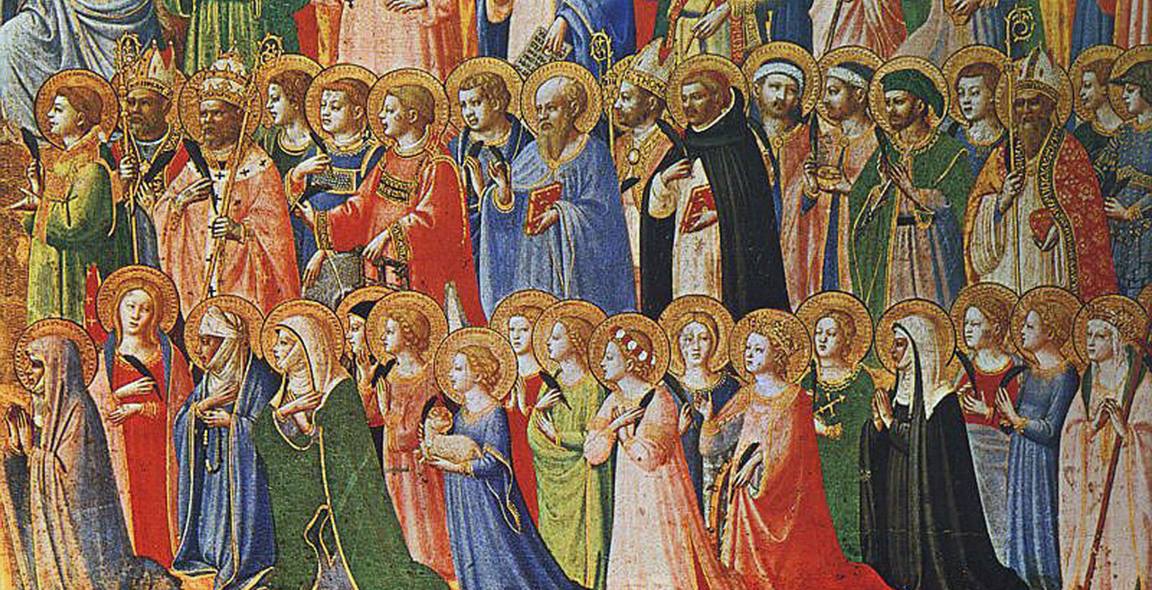
And today is a holiday! The entire reason we had Halloween (All Hallows Eve) yesterday. Today we celebrate the Solemnity of All Saints (also called All Saints Day).
All Saints’ Day, All Hallows Day, or Hallowmas is solemnly celebrated on 1 November by many Western Liturgical Churches to honor, literally, all the saints, known and unknown; those individuals who have attained Heaven; all the holy men and women who have lived their lives for God and for his church, who now have attained Beatific vision and their reward of Heaven.
In early Christian history it was usual to solemnize the anniversary of a Martyr’s death for the Lord at the place of their martyrdom. Frequently there were multiple martyrs who would’ve suffered and died on the same day which led to multiple commemorations on the same day. Eventually, the numbers of martyrs became so great that it was impossible for a separate day to be assigned to each individually, but the church feeling that every martyr should be venerated, appointed a feast day to commemorate them all on the same day.
The origin of the festival of All Saints celebrated in the West dates to the month of May in the year 609 or 610, when Pope Boniface IV consecrated the Pantheon at Rome to the Blessed Virgin and all the martyrs. In the 730’s Pope Gregory III moved the Feast of All Saints to 1 November when he founded an oratory in St. Peter’s for the relics of the holy apostles and of all saints, martyrs and confessors, of all the just made perfect who are at rest throughout the world.”
From our Readings today, we hear of the vision of St. John from the Book of Revelation:
After this, I had a vision of a great multitude, which no one could count, from every nation, race, people, and tongue. They stood before the throne and before the Lamb, wearing white robes and holding palm branches in their hands. They cried out in a loud voice:
“Salvation comes from our God, who is seated on the throne, and from the Lamb.”
All the angels stood around the throne and around the elders and the four living creatures. They prostrated themselves before the throne, worshiped God, and exclaimed:
“Amen. Blessing and glory, wisdom and thanksgiving, honor, power, and might be to our God forever and ever. Amen.”
Then one of the elders spoke up and said to me, “Who are these wearing white robes, and where did they come from?” I said to him, “My lord, you are the one who knows.” He said to me, “These are the ones who have survived the time of great distress; they have washed their robes and made them white in the Blood of the Lamb.”
Who are these nameless saints? Their anonymity teaches us that sainthood is not reached through great achievements or rare acts of bravery. Sainthood comes from simply loving God and doing our best to live our lives in a way consistent with Jesus’ commandment. I would dare say that none of the saints actually set out to be saints. They simply loved God and lived their lives to follow Him.
Revelation goes on to remind us that giving our lives over to God will not protect us or insulate us from hardship. Living in, for, with, and through God, however, will make sure that we can and will endure whatever “great distress” comes our way. In this passage of Revelation, John is speaking specifically of those who have given their lives for their faith. Christians throughout the Middle East are being martyred by forces opposed to Christianity, but in reality, it is very unlikely that any of us will be called upon to sacrifice our lives for our faith.
Our challenge, then, is to live for Christ, rather than to die for Christ. Jesus does ask to lay down our lives for Him. Peter said to the Lord, “I will lay down my life for Your sake,” and he meant it (John 13:37). Has the Lord ever asked you, “Will you lay down your life for My sake?” (John 13:38). It is much easier to die than to lay down your life day in and day out with the sense of the high calling of God. We are not made for the bright-shining moments of life, but we have to walk in the light of them in our everyday ways. For thirty-three years Jesus laid down His life to do the will of His Father. “By this we know love, because He laid down His life for us. And we also ought to lay down our lives for the brethren” (1 John 3:16).
If we are true followers of Jesus, we must deliberately and carefully lay down our lives for Him. It is a difficult thing to do, and thank God that it is, for great is our reward. Salvation is easy for us, however, because it cost God so much. But the exhibiting of salvation in our lives is difficult. God saves a person, fills him with the Holy Spirit, and then says, in effect, “Now you work it out in your life, and be faithful to Me, even though the nature of everything around you is to cause you to be unfaithful.” And Jesus says to us, “…I have called you friends….” Remain faithful to your Friend, and remember that His honor is at stake in your bodily life. We are called to remain faithful, despite the reasons the world gives us to not, despite the “great distresses” in our lives.
Who are these dressed in white robes? It is my prayer to be counted among them. What about you?
What About Love? The Rt Rev Michael Beckett, OPI

Close the border. Build a wall. Use razor wire. Deport those foreigners as soon as possible.
America is a Christian nation. Our faith, the church, should guide our country, our schools.
End social security. Stop ‘entitlement’ programs.
America is a Christian nation. Our faith, the church, should guide our country, our schools.
Higher education loan forgiveness is wrong and not fair.
America is a Christian nation. Our faith, the church, should guide our country, our schools.
The Bible should be taught in schools. Bring back Christian prayer in schools.
Well…..OK.
But……I have a teeny little problem with all of the above coz it kinda seems to me that every one of the above statements are diametrically opposed to each other. Check this out. The scriptures appointed for today include handy dandy little commandments like this:
Thus says the LORD: “You shall not molest or oppress an alien, for you were once aliens yourselves in the land of Egypt. You shall not wrong any widow or orphan. If ever you wrong them and they cry out to me, I will surely hear their cry. My wrath will flare up, and I will kill you with the sword; then your own wives will be widows, and your children orphans. “If you lend money to one of your poor neighbors among my people, you shall not act like an extortioner toward him by demanding interest from him. If he cries out to me, I will hear him; for I am compassionate.” Exodus 22
So there’s that.
And then, Jesus kinda compounds the whole issue when he says problematic things in situations like this:
When the Pharisees heard that Jesus had silenced the Sadducees,they gathered together, and one of them, a scholar of the law tested him by asking, “Teacher, which commandment in the law is the greatest?” He said to him, “You shall love the Lord, your God, with all our heart, with all your soul, and with all your mind. This is the greatest and the first commandment. The second is like it: You shall love your neighbor as yourself. The whole law and the prophets depend on these two commandments.” (Matthew 22)
Now, I certainly don’t claim to be an expert in much of anything, especially theology, politics and current affairs, and I’m certainly not one to take a lot of things in the Bible literally, but…..doesn’t Jesus make it pretty clear as to what he expects of us as Christians, and anyone who would dare to say: “America is a Christian nation. Our faith, the church, should guide our country, our schools.”
Some of the same folks who espouse the “America is a Christian nation” mantra are also all about having the Ten Commandments posted in schools and government buildings and courtrooms. Except for violating the First Amendment’s Establishment Clause, making it illegal, I don’t see the harm. But being me, I gotta ask, if America is a Christian nation, wouldn’t it be more Christ-like to post something that Christ actually said, stressed, and preached about? Like say, the Beatitudes? Especially these:
Blessed are the meek, for they will inherit the earth. Blessed are those who hunger and thirst for righteousness, for they will be filled. Blessed are the merciful, for they will be shown mercy. Blessed are the pure in heart, for they will see God. Blessed are the peacemakers, for they will be called children of God.
Y’all have heard me talk about the United States most definitely NOT being founded as a Christian nation, so I’m not gonna go there right now, but, it would seem to me that, if indeed that were the case, and we actually practiced what is preached when we claim that it is so, the country would be a much better place. Don’tcha think? As it stands now, it would seem that we, all of us, should remember, as Stephen Mattson has said, “Sometimes, being a good Christian meant being a bad Roman. So before you accuse someone of being unpatriotic, ask yourself which empire they’re actually serving.”
Russell Moore, former leader in the Southern Baptist Convention and now Editor of ‘Christianity Today’ told this story in an interview with NPR:
Multiple pastors had told him they would quote the Sermon on the Mount, specifically the part that says to “turn the other cheek,” when preaching. Someone would come up after the service and ask, “Where did you get those liberal talking points?”
“What was alarming to me is that in most of these scenarios, when the pastor would say, ‘I’m literally quoting Jesus Christ,’ the response would not be, ‘I apologize.’ The response would be, ‘Yes, but that doesn’t work anymore. That’s weak,’” Moore said. “When we get to the point where the teachings of Jesus himself are seen as subversive to us, then we’re in a crisis.”
I love this country. I do. But Joshua said it best when he said, ‘As for me and my house, we will serve the Lord.’ Sometimes serving the Lord means making difficult choices. Sometimes serving the Lord means changing our thinking. Sometimes serving the Lord means facing hard truths about ourselves, our beliefs, and our supposed faith. Isn’t it time we start asking ourselves those hard questions? Isn’t it time we decide which empire we’re gonna serve? Amen.
The Feast of Sts Simon and Jude~Br. Milan Komadina

Consequently, you are no longer foreigners and strangers, but fellow citizens with God’s people and also members of his household, built on the foundation of the apostles and prophets, with Christ Jesus himself as the chief cornerstone. In him the whole building is joined together and rises to become a holy temple in the Lord. And in him you too are being built together to become a dwelling in which God lives by his Spirit.
I like this parable from Ephesians 2/19-22. It shows the importance of being a part of the church, a part of the living congregation. It is true that we are saved by grace through our faith in Jesus Christ. But in order to grow we need to be a part of the church. Jesus does not need the church, but we are those who need it. We need the church in order to be stronger in our faith. If we imagine the church as a material building. In that building Jesus himself is the foundation. Then all the members of the church are like stones and all of us have our role to play. Some might be smaller stones, some might be bigger. Some might be ugly stones built somewhere in the middle away from the visible surface. Some stones might be on the front surface, visible, beautifully designed with decorations. What is important is emphasis that all stones matter. In Ephesians is also written that Jesus is a cornerstone. Builders of the house of God (the church) or believers must not throw away any of stones belonging to this temple. We may be wondering what it means. It means that the church might look like the real temple.
There are people who shine. They are front stones full of decoration. They are pious, they pray every day many times, they are considered to be the “best” Christians. There are stones – people who are barely visible. Inner stones. They come to the church once a month or occasionally. Sometimes more often, sometimes more rarely. There are people who are struggling with some temptation of various type. People who are not as shinny as those standing on the front wall. But what would happen with the church if the church lets only the most beautiful stones standing. If we start throwing away stone by stone for this reason and that reason. The entire building would be destroyed to dust. My message today, based on Ephesians chapter that we quote is love one another as a true family. Accept one another with all strength and weaknesses. Respect the differences between each other. And bear of mind that even though we are all different stones, we all have one foundation and that is Jesus. And we all build the perfect body of Christ.
The Feast of St Luke~The Very Rev. Lady Sherwood, OPI
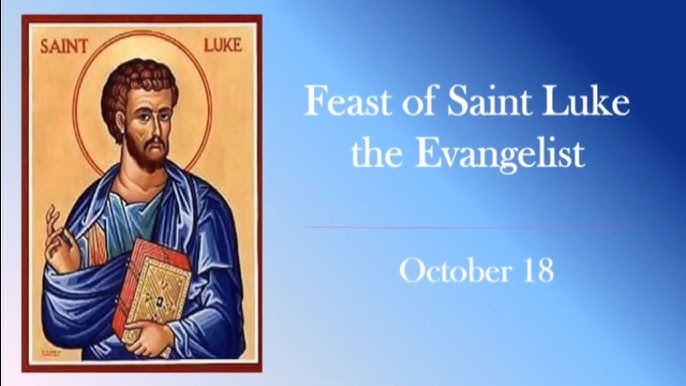
Today we come together as the church to commemorate St. Luke the Evangelist. St Luke is the Patron saint of Physicians. Luke, from his perspective, records for us in his Gospel writings, the life of Jesus=from His birth at Bethlehem, all the wayvthrough His earthly ministry and His many miracles and healings. How Jesus heals the blind, the deaf, and the lame.
Luke tells us of the peace which Jesus speaks to all of us, because Jesus is indeed the saving peace and healing of God, at that time here on earth with us in human form. That is why in Luke 10, Jesus tells the 72, to say, “Peace be with this house”, as he sends them out as apostles of his peace.
Jesus gives us his spiritual healing and peace which forgives our sins, and which reconciles us with God, our Heavenly Father, by His death upon the cross for every single one of us.
Jesus is truly the physician of our Soul! He knows all too well, that we are sick with sin, but it deters him not. Each and every one of us, is precisely why He came to earth to be amongst us, the reason he lived with us upon the earth, and why he suffered, bled, was tortured, and died for all our sakes.
Jesus came down from Heaven to our world, to take from us our dark sickness of sin and of death, and to heal us, to bring us true life and eternal salvation. He took all upon himself for us upon the cross, our sickness and death, died with the Lord, to all who truly believe, love and follow Him. We are forgiven, we are healed, we are saved, we are at peace.
If we truly examine our lives, we will see our constant need for healing of the sins of this world. As with the body, if we are sick, we see our dr for diagnosis and treatment, that’s why today, we give thanks to God for His servant, Luke, the Evangelist. It’s Luke’s role to bring Jesus, His healing and peace to each of us through the living and active word of God.
The word of God is the scalpel of Jesus our physician and saviour. With total precision, Jesus’ laws cuts us and ‘kills’ the sickness of the human condition, so that he can heal us, and give us true life.
Each of the commandments of Jesus is a precise incision of his law. We have failed to fear, love, and trust God above all else as we ought to do. We have failed to use God’s name as we should, and to call upon him as our Father, as his children when in every trouble or need, or to give him worthy thanks and praise. We have ignored God’s Holy word and preaching, we have not loved our neighbour, or helped to eased their needs. We have been bad stewards of earthly material things such as money, or possessions. We have failed in giving kindness and forgiveness to our brothers and sisters.
So indeed, our human sickness of sin is dire=without Jesus as our Lord, our Saviour, and physician, the diagnosis is terminal.
But Jesus is merciful, he does not delight in punishment. Jesus our physician of our soul, cuts with His law in order to heal us with His Gospel. The Lord heals the broken hearted and binds up their wounds (PS 147:3). Jesus has kept on our behalf, all those commandments, which we have failed to truly follow.
If we want to call our doctor, we pick up the phone, and wait for an appointment to become available. But Jesus as our physician for our souls, is contactable 24 hrs per day, every single day with no exception. He is contactable easily anytime, day or night, by the important communication of prayer.
So let’s end today with the simplest but most important prayer of all, to our Saviour and physician of our soul:
Lord Jesus Christ, Son of God, have mercy on me, a sinner.
Amen.
Come to the Wedding! ~ The Rev. Frank Bellino, OPI

Today’s gospel passage seems straightforward enough to understand, if we compare the characters in the parable to key figures in the history of salvation.
We have the king and his son, who stand for God and Jesus. The wedding can be compared to God’s own invitation to us all to follow him and his way, entering into communion with him just as wedding guests participate in the festivities.
The messengers that were sent out to announce the wedding — they stand for the prophets. Similarly, to many of the prophets working for the Church, these messengers were also badly treated by the people to whom they were sent.
What of the people themselves, those who declined the wedding invitation? They stand for the people to whom the original invitation to follow God was given — and even more people in real life turned away from God for whatever reason so they did in the parable.
So, enter the other people, those who were found at the crossroads. Jesus is referring to any group of people who did not make up a polite society in those days, and letting his listeners know that the message of the Kingdom of God is now open to everyone. After all, we read that the servants went out to collect together ‘everyone they could find, bad and good alike’.
Although the ‘proper’ people had been invited at first, due to their refusal of sinners are now invited. This gives us hope — both for today, when we know ourselves to be at odds with the Gospel message (and therefore sinners) at times, and also in those times — for perhaps there were those hearing the invitation who took it to heart and acted appropriately.
Once we have accepted the call to follow God, we cannot stop there just resting on our laurels, saying, “I have been invited by God to the Kingdom of Heaven. And that’s it!” Once we are in a relationship with God, we are called to go deeper into a relationship with Him, and that implies that we do not and cannot sit still, doing nothing.
Is it fair enough — but what about the other part of the parable? If someone has been called and accepted by God, just as the guests eventually joined the wedding banquet and joined in all the feasting, wouldn’t that be the case? No, no, is the answer.
The key word here is “wedding-garment”. For in the days when this parable was first told, whatever state of life you found yourself to be in carried certain obligations – correct behavior or observance of wedding customs applying to all, no matter what.
This guest has no wedding attire. In other words, he is not bothering to do something fundamental to his state in life, not bothering to observe the customs he should, neither growing nor pursuing a closer relationship with God in his life.
So, it was with the king at the wedding feast. He had put himself out for the guests, but that meant that they should put themselves out for him. Not doing so, and not even addressing or apologizing shows a lack of concern or desire to follow what God has asked us to do.
Compare that with daily life, and you will see that God’s call is clear — it is not enough to be called and accept that call, but there is the obligation to follow it in whatever way we are called to do. We are recognizing what God has done for us, and we are doing whatever we are called to do in return.
In other words, not only have we been called, but also (as a result of our actions) we are being chosen by God to share in his eternal wedding feast in heaven.
 The Order of Preachers, Independent
You must be logged in to post a comment.