
Category: Member Posts
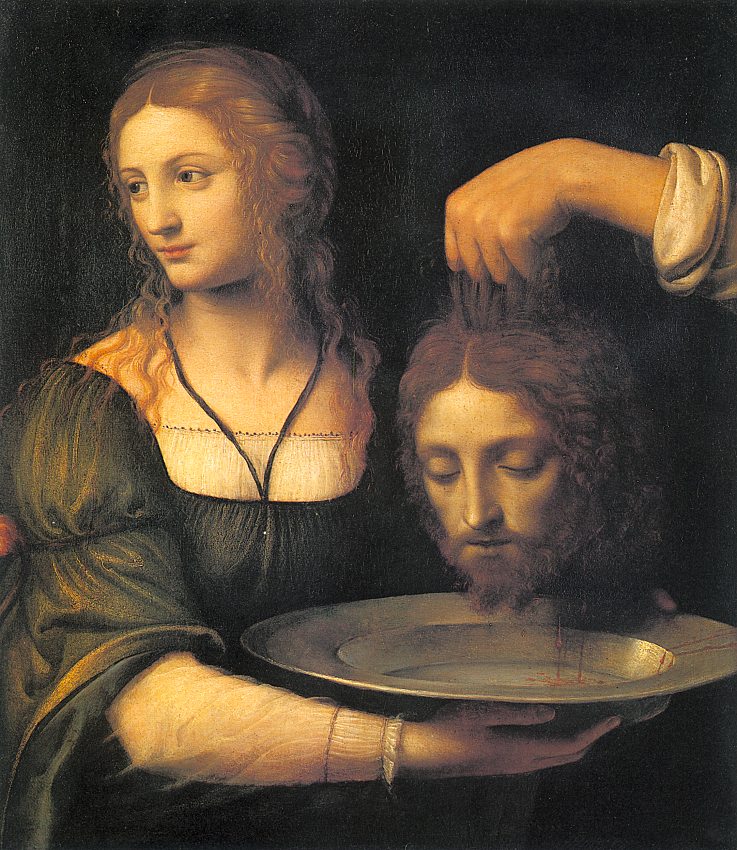
Beheading of John the Baptist~ The Rev. Dcn. Dollie Wilkinson, OPI
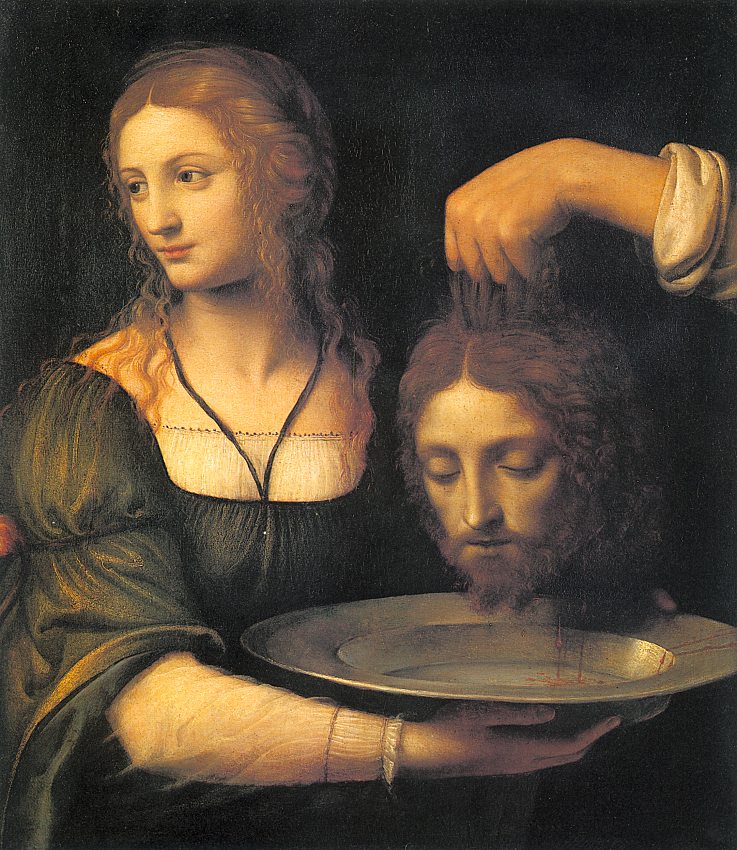
While reading of the beheading of John the Baptist, I am reminded of such violence that occurs today. While not widely accepted, there are still individuals being beheaded. This may be by random violence (such as murder), or acts committed by individuals who are following a particular religious or cultural belief. But even in this digital age of violent video games, movies, and television shows, beheadings are still viewed as a gruesome spectacle. Can you imagine how such a thing was perceived during the time of Jesus? Yet this is what occurred, all to appease the whims of a young girl.
Mark 6:17-29 (KJV)
“For Herod himself had sent forth and laid hold upon John, and bound him in prison for Herodias’ sake, his brother Philip’s wife: for he had married her. For John had said unto Herod, It is not lawful for thee to have thy brother’s wife. Therefore Herodias had a quarrel against him, and would have killed him; but she could not: For Herod feared John, knowing that he was a just man and an holy, and observed him; and when he heard him, he did many things, and heard him gladly. And when a convenient day was come, that Herod on his birthday made a supper to his lords, high captains, and chief estates of Galilee; And when the daughter of the said Herodias came in, and danced, and pleased Herod and them that sat with him, the king said unto the damsel, Ask of me whatsoever thou wilt, and I will give it thee. And he swore unto her, Whatsoever thou shalt ask of me, I will give it thee, unto the half of my kingdom. And she went forth, and said unto her mother, What shall I ask? And she said, The head of John the Baptist. And she came in straightway with haste unto the king, and asked, saying, I will that thou give me by and by in a charger the head of John the Baptist. And the king was exceeding sorry; yet for his oath’s sake, and for their sakes which sat with him, he would not reject her. And immediately the king sent an executioner, and commanded his head to be brought: and he went and beheaded him in the prison. And brought his head in a charger, and gave it to the damsel: and the damsel gave it to her mother. And when his disciples heard of it, they came and took up his corpse, and laid it in a tomb.”
Here we have Herod Antipas, smiling and nodding with approval, as his step-daughter swayed and twirled in front of him and his birthday party guests, her graceful figure filling them with longing. When her performance was done, Herod and the guests applauded. What a dance! So entranced by her perforrmance and the mood of the moment, Herod cried, “Ask me what you want, up to half my kingdom, and it is yours!” And he swore a great oath to confirm his promise. As a Tetrarch (ruler of one quarter of a Roman province) Herod was more than able to provide a handsome gift even by first century standards. Would his step daughter ask for a jeweled necklace? A dowry? A house? Herod and the guests waited to hear her request. The girl herself hesitated. Uncertain what to ask for, she whispered with her mother.
Down in the dungeons of Herod’s fortress (named Machaerus) a man’s fate was about to be decided. John the Baptizer was under lock and key in one of those gloomy holds. The cause was this: he had rebuked Herod for stealing another man’s wife, namely Herodias. This woman had been married to Herod’s quiet half brother, Phillip. Herodias was furious, and convinced Herod to arrest John. Herod was only too willing because he was suspicious of the large crowds John attracted.
However, once Herod got John in his lockup, he talked with him and found he liked the guy. He didn’t understand what John was saying about holiness and salvation, but it seemed to be something he should hear. Instead of executing John, he gave him visitation privileges. Execution would be a bad idea anyway. John had a lot of followers; why make them mad and risk rebellion?
Having made up her mind, Herod’s stepdaughter approached him. The guests and the king turned to hear what she would ask. “Give me now the head of John the Baptizer on a platter!” said the girl. Even the reckless, hardened lot must have drawn sharp breaths at the gruesome request. How quickly the indulgent mood melted. Did Herod’s face change? Here was an awkward demand! Used to thinking of people as objects, used to beheading men at a whim, it never occurred to him to say, “An incorruptible prophet like John the Baptizer is worth more than my whole kingdom.” Looking around at his guests, he saw only one thing. If he was to save face, he must fulfill his promise. He ordered the execution.
According to a long-standing tradition, John was beheaded on this day, August 29, probably around the year A.D. 28. What happened to John’s head, we do not know. His disciples came and buried the body. Remains alleged to be his were later taken to Alexandria, Egypt and placed in a specially built church. When John’s cousin Jesus heard the news, we imagine it hit him as hard as it would any of us. He tried to get away by himself for a time. John, who had preached Christ’s coming and prepared for His messianic ministry was needlessly dead in the prime of his life.
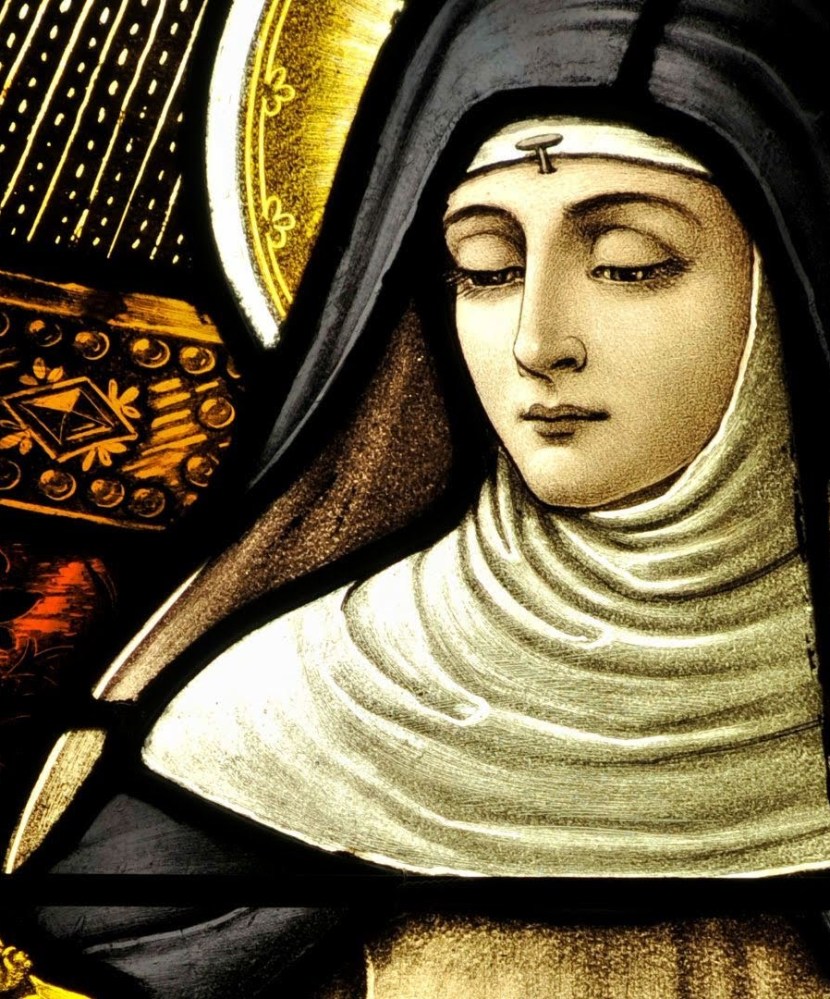
All in God’s Time ~ The Feast of St. Monica ~ The Rev. Lady Sherwood, OPI
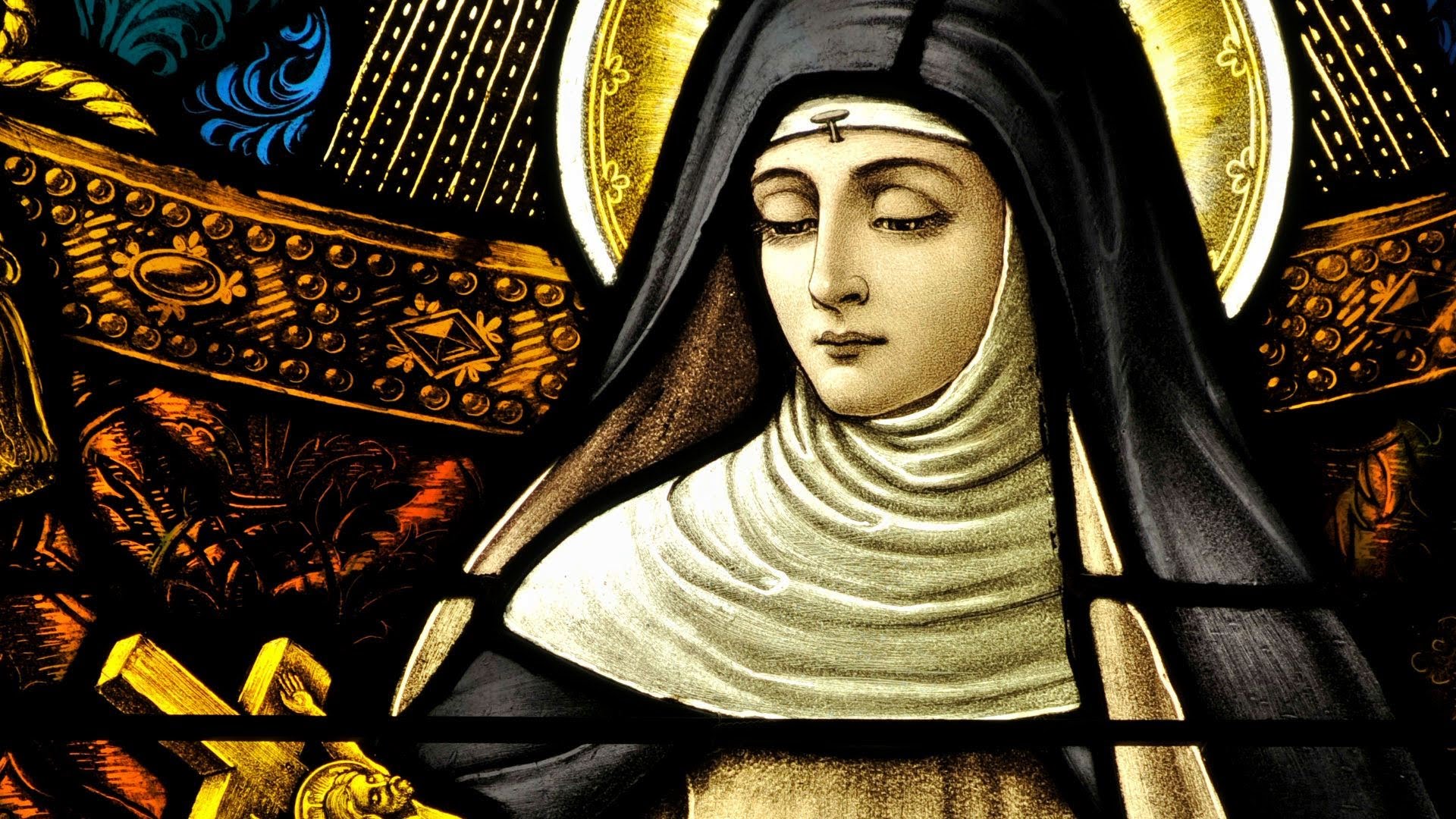
St. Monica.. All in God’s Time
Today we celebrate the Memorial of St. Monica. Although she is usually mainly thought of as the Mother of St. Augustine, who we celebrate tomorrow, Monica is truly a Saint in her own right. Her life clearly shows us why she is known as one of the Patron Saints of tolerance and patience. We can all definitely learn from the example of St. Monica within our lives.
Monica’s life shows us the true realism that still exists in many families even today. She could be seen by some as an obsessive, overbearing mother who drove her son crazy chasing after him until he would convert. She would’ve probably driven her bishop crazy with all her tears. The example of Monica’s life and her tolerance and patience clearly shows us how we should ourselves be living for a more full and true relationship with God Our Father. We need to stop wanting a personal genie, or instant answers to the prayers we send when we feel we need help or change within our lives. The Lord does listen to all of our prayers and will always do that which is best for us, even if not the response we may be seeking. However, God our Father answers in His own time and not in ours.
When most people think of St. Monica, several things probably come to mind: Her determination in prayer, her amazing dedication as a mother, her patient, long-suffering as the wife of an adulterous pagan with a mean-spirited pagan mother-in-law.
St Monica reminds me of the persistent widow in the gospel of Luke 18:1-8:
And he told them a parable to the effect that they ought always to pray and not to lose heart. 2. He said, “In a certain city there was a judge who neither feared God nor respected man. 3. And there was a widow in that city who kept coming to him and saying,
‘Give me justice against my adversary.’ 4 For a while he refused, but afterward he said to himself, ‘Though I neither fear God nor respect man, 5 yet because this widow keeps bothering me, I will give her justice, so that she will not beat me down by her continual coming.’” 6 And the Lord said, “Hear what the unrighteous judge says.7 And will not God give justice to his elect, who cry to him day and night? Will he delay long over them? 8 I tell you, he will give justice to them speedily. Nevertheless, when the Son of Man comes, will he find faith on earth?”
So with this in Our Minds, let us pray:
St. Monica,
troubled wife and mother,
many sorrows pierced your heart during your lifetime.
Yet, you never despaired or lost faith.
With confidence, persistence, and profound faith,
you prayed daily for the conversion
of your beloved husband, Patricius,
and your beloved son, Augustine;
your prayers were answered.
Grant us that same fortitude, patience,
and trust in the Lord.
Intercede for us, dear St. Monica,
and grant us the grace to accept His Will in all things,
through Jesus Christ, our Lord,
in the unity of the Holy Spirit,
one God, forever and ever.
Amen.

Book Review: The Bible Doesn’t Say That ~ The Rev. Dcn. Dollie Wilkinson, OPI

The Bible Doesn’t Say That: 40 Biblical Mistranslations, Misconceptions, and Other Misunderstandings
By Dr. Joel M. Hoffman
When I first began reading this book, I really had no idea what to expect. It was a relatively easy read (on my Kindle), though some chapters read more like a history book. But that’s what the Bible is, isn’t it, a history book? Or is like any other non-fiction book written by man, just a collection of personal stories and eye witness accounts, but only with parables, stories, embellishments, thrown in? And there is the first mistake I believe modern readers of the Bible make, and which Dr. Hoffman points out in this book. While most of the Bible is factual, meaning it did happen, it is still a personal account of who did what when. And as with any personal testimonies, there will be conflicting reports among various individuals. Also, we modern English readers tend to forget that the Bible wasn’t initially written in English. In its many translations, from Hebrew to Greek, to Latin, and finally to English, there surely must have been some things changed, and some things may have been lost in the various translations.
Dr. Hoffman details five ways the Bible gets distorted: culture gap, mistranslation, ignorance, accident, and misrepresentation; and two common elements that they share: misapplying tradition and missing the context. Some of the ideas explored in Dr. Hoffman’s book include definition of marriage, aging (how long people lived), homosexuality, polygamy, and the conflicting accounts of the creation story (Adam and Eve), just to name a few. Amazon offers this review:
“The Bible Doesn’t Say That” explores what the Bible meant before it was misinterpreted over the past 2,000 years. Acclaimed translator and biblical scholar Dr. Joel M. Hoffman walks the reader through dozens of mistranslations, misconceptions, and other misunderstandings about the Bible. In forty short, straightforward chapters, he covers morality, life-style, theology, and biblical imagery, including:
*The Bible doesn’t call homosexuality a sin, and it doesn’t advocate for the one-man-one-woman model of the family that has been dubbed “biblical.”
*The Bible’s famous “beat their swords into plowshares” is matched by the militaristic, “beat your plowshares into swords.”
*The often-cited New Testament quotation “God so loved the world” is a mistranslation, as are the titles “Son of Man” and “Son of God.”
*The Ten Commandments don’t prohibit killing or coveting.
What does the Bible say about violence? About the Rapture? About keeping kosher? About marriage and divorce? Hoffman provides answers to all of these and more, succinctly explaining how so many pivotal biblical answers came to be misunderstood.”
While at times I did feel like I was reading a history book, I honestly found this book to be very informative. The Bible has been picked apart, used as a weapon, mistranslated and misquoted, so much so that we forget why it was written in the first place. When we take just one passage, one parable, one story, and use it for a singular purpose, we miss the whole reason these words were written down. Dr. Hoffman’s seeks to remind us that the Bible is a book, written by men a long time ago. And as with any book, should be studied in-depth, and not be quoted randomly to suit this or that purpose.

Will Only a Few Be Saved? ~ The Very Rev. Jay Van Lieshout, OPI

“Will only a few be saved”? How this question must have annoyed Jesus! Here He was speaking of the good news of God’s love and revealing the path to God’s kingdom here on Earth and this bean counter wants to talk numbers; well not really numbers, this man wanted to know who will be saved and more specifically was he probably included in the saved group. From Jesus’ reply it is evident that He saw right through the veiled question and deep into the man’s self righteous heart. So, instead of answering the question, Jesus gives allegorical directions then a warning of the outcome if one fails to take His advice and, of course, a description of the reward for those who do walk the righteous path.
Jesus tells the man, and those listening to “strive to enter through the narrow gate”. The word translated as strive in the Greek is agonizesthe, meaning to contend for. So just like an Olympian who struggles to surmount all obstacles to win the gold we too must rise up to the challenge and it will not be easy to get through this narrow gate. Why is passing through this gate so challenging? Is it really, really narrow or perhaps has some complicated lock? Remember ancient cities were protected by walls, and in these walls were openings, the gates which were closed at night and during battle. The main gate was large and allowed carts of merchandise, people riding donkeys or horses and crowd of people to easily enter or exit. The main gate was also where the triumphant and royal would process in or out as a form of spectacle. The narrow or pedestrian gate was small and had sharp turns which made it difficult to navigate in armor let alone to draw ones sword and attack; this was the gate for the common people, the beggar, the slave to use. And when these gates are closed, as say during attack, entrance to the city is impossible, you are stuck out in the open, a victim to the raiding army.
But WHY must we agonize and struggle to enter the pedestrian gate, can’t we just walk in? Think about any adventure movie you have ever seen. After hauling all their precious equipment past impediments along the way, fighting off competitors and then finding the treasure, reaching the apex of the adventure the glorious moment always falls apart. After all their struggles and perils, our team of adventurers must hasten to escape or they will surely die; the only means of escape requires them to abandon their treasure, leave their evidence of victory and shed everything but the scraps of clothes on their back in order to survive. Inevitably there is one member who refused to leave the treasure behind, who agonizes over whether to relinquish the riches and fame and flee to safety or hold one to them and hope for the best.
This is the moment Jesus is speaking of, this is the struggle we must face if we wish to walk the path to the Father. We must be willing to divest ourselves of the baggage that weighs us down, holds us back, blocks us from escaping the impending trials of what life throws at us: greed, hate, envy, gluttony, the fear that we might lose out and someone else might beat us. It is a competition, but one where we only battle our own flaws and insecurities. We must always be ready to open our hands and let things go when we face life’s choices; release our treasures for not only our own sake but for the benefit of those around us, those in need, who have less and ask for little. Here too, we might be willing to let those people go who cannot escape the grip of their own fears, those who drag us down instead of lifting us and others up. In essence we must set ourselves free from the worldly desires to be at the top, first in line, best in show, greatest of all, so that we, like the adventurers in the movies, the heroes and heroines of book and film, might escape and find a different sort of reward in telling the stories of our journey’s true success. For it is only when we take a more humble place in line and allow others to go first that’s we begin to shed the armor of our own fears and desires in lieu of a more ignoble and simple garment of altruism, forgiveness and love which easily slips through that narrow gate into the God’s kingdom.

St. Bernard of Clairvaux ~ Br. Chip Noon, Novice

Today is the Memorial of St. Bernard of Clairvaux. He was born in 1090 in France, and died there in 1153. He was the abbot of a monastery in what became known as Clairvaux, a confessor, and a Doctor of the Church. From our vantage point today, looking back 800 years, we recognize that he was a man of sincere beliefs, a lover of God and the Blessed Mother, a mediator and salesman for the Roman Catholic Church, and a man of contradictions.
First, let us look at the reading from today’s Mass, Ezekiel, Chapter 43, Verses 1 through 7.
The angel led me to the gate which faces the east,
and there I saw the glory of the God of Israel
coming from the east….
It continues to describe the vision he had of the temple, and of the calamities befalling the Holy Land and its inhabitants, and in this passage illustrates the temple itself and what happened to him there. God was speaking to him: “…here I will dwell among the children of Israel forever.”
And in the Responsorial Psalm, we see the echo of these words:
- The glory of the Lord will dwell in our land.
The LORD himself will give his benefits;
our land shall yield its increase.
Justice shall walk before him,
and salvation, along the way of his steps.
How fitting that these readings should be found in the memorial mass of St. Bernard.
Isn’t it true that we tend to look backwards in time and see only a few highlights? Don’t we think of the early Middle Ages as a time of kings and queens and knights and pages and wars and the beginnings of the crusading spirit? Don’t we see it as a time fixed in amber, with what we consider “history” encapsulating a small insect or artifact representing the whole era?
In reality, St. Bernard lived in a time about as tumultuous as our own. Yes, there were kings and queens and all the characters of our historical novels and movies. But just as today, there were disputes over territory, the wording of Bible passages, the meaning of life…all the issues we face but with considerably more complexity since the forms of governance and separation of powers and cultural norms were not nearly as codified as we know them today.
And in this mix is St. Bernard, a man of God who had all the temptations and misdirections and questions we have. He was a man of such intellect, charisma, and organizational expertise that the monastery he founded at Clairvaux grew so rapidly that they had to send out monks to other parts of Europe to relieve the overflow in the founding house.
He travelled around France and Italy and Sicily to garner support for the legitimacy of Pope Innocent II, disputed with Peter Abelard, and preached the Second Crusade, among his many activities. His disagreement with Abelard centered on what he said was the application of logic where logic didn’t belong and was therefore illogical. Admittedly, this is a major condensation of the argument, but it points to an important contribution of St. Bernard to the time.
St. Bernard was not one to close his eyes to the new applications of philosophical thinking, but with Abelard showed that while reason and logic were valuable to the growth of our intellect, there are certain truths, embodied in the teachings of Jesus and the scriptures that should not be disputed “logically.” One example of this kind of thinking can be found in his complete devotion to the Blessed Mother. St. Bernard referred to her as the Mediatrix, but did not believe in the Immaculate Conception. Faith and reason residing in the same person. It was his desire to bring order and sense to the tumult which was the 12th Century that resonates with the first reading where Ezekiel is showing God’s desire to set things aright after a period of chaos.
Which brings me to today’s Gospel.
To me, this completely encapsulates St. Bernard’s life and work. All worldly show, all human knowledge, all accomplishments and discoveries, in fact, everything that humans strive for are nothing as compared to the love of God and one’s neighbor. Whatever we show to the world and desire from the world must be put to this test: “You have but one teacher, and you are all brothers.” So no matter how learned he was, how fervent in his warlike desire to protect the Holy Land, how partisan he was in backing one pope over another, beneath all this he was a servant of man and of God. And he remained true to this devotion to Jesus and Mary to the end of his life.
Would that we could all be like this.
Lord, move in us the desire to search out new vistas, new knowledge, new advancements. But keep us always mindful of your humility and grace, and give us the courage and logic of St. Bernard that after 800 years still holds truth as that precious artifact within the gemstone of amber.
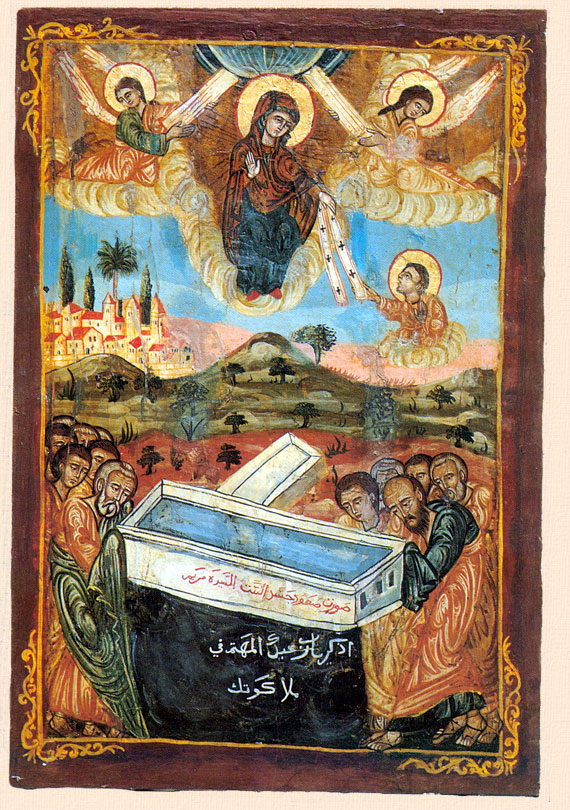
Assumption of the Blessed Virgin Mary ~ Br. Michael Marshall, Novice

As human beings, we are able to think about the future and make plans, we can remember past events, and we even have the ability to be creative and be problem solvers. But more importantly, we are created in God’s image; and because we are made in His own image, we possess the understanding of spirituality; and that God has a plan for each of us, even before we are born. That being said, I need to point out that even though God has a plan for each of us, He does not choose who gets an illness, and who does not; but rather there is a mission given to each of us. We often do not understand what it is, but we all have one.
And so as we celebrate the Solemnity of the Assumption, we need to understand that Mary too had received a mission even before she was conceived. She had not understood that mission until later. God was already thinking of her, and as some believe, was conceived without original sin, which is one of the reasons it was so fitting for God to assume her directly into heaven when her earthly mission was finished, as we celebrate today. She is part of the plan for our salvation. Just as the death on the cross is an act of love for us, Mary has a special place in the ongoing history of salvation, because he wants to tell us something about his love for us. Like the love that our birth mother provides us, God’s love is gentle, patient, and always watching over us.
A lot of people get caught up in the image of a woman which is described in Revelation and with whom we associate with Mary; the twelve stars and all of that stuff. Yet more importantly, another thing which is special about Mary is her faith and devotion through prayer. This is evident within the Gospel reading, as we read about Mary’s visit to Elizabeth. When Mary hears Elizabeth tells Mary that there is somebody special within her womb, she praises God in prayer; a prayer which we recite during Evening Prayer every evening:
“My soul proclaims the greatness of the Lord;
my spirit rejoices in God my Savior
for he has looked with favor on his lowly servant.
From this day all generations will call me blessed:
the Almighty has done great things for me
and holy is his Name.
He has mercy on those who fear him
in every generation.
He has shown the strength of his arm,
and has scattered the proud in their conceit.
He has cast down the mighty from their thrones,
and has lifted up the lowly.
He has filled the hungry with good things,
and the rich he has sent away empty.
He has come to the help of his servant Israel
for he has remembered his promise of mercy,
the promise he made to our fathers,
to Abraham and his children forever.”
In this prayer, she has a conversation with God, which this great faith, along with accepting God’s will for us, is one of the reasons Mary was rewarded the Assumption. She teaches us that we need to also have a prayerful life in order to understand and accept our mission which God has called us to fulfill. It is not easy to pray always, especially when we do not know how to pray or are facing trials which seem overwhelming. But she is a model in which we need to follow in order to build a good relationship with God. The question is whether we are going to follow her example or not.
Lord, may we look to Mary as a model and example of how to trust God through our faith, and build our relationship with you with prayer. We ask this through Christ, Our Lord. Amen.

On Being an Ostrich ~ Br. Chip Noon, Novice

Nobody wants to hear bad news. We think that maybe if we don’t hear it, whatever it is won’t come true. The old trick of the ostrich. How long can we ignore it? It seems some of us can ignore bad news and stories of impending disaster for a very long time.
So just imagine Jeremiah’s frustration, as we hear in today’s first reading. Time and again he has warned the king and his subjects that the good times are ending and the bad times are coming. “Yeah, but what proof do you have, Mr. Jeremiah?” they all wanted to know. “You see,” they thought, “if we ignore your warnings, maybe they won’t come true.”
But Jeremiah was prophesying that the people would be between a rock and a hard place. He foresaw that the kingdom was to be overcome by the Babylonians, which was bad enough. But he also said that if they resist they will be annihilated, but that if they surrender, they will be spared.
Not a great choice there – in fact, a true dilemma.
But instead of ignoring Jeremiah this time, they ask the king if they might deal with him in their own way. And as further evidence that the whole system was breaking down, King Zedekiah lets them haul Jeremiah off, not wanting to incite their ire.
A weak king, a weak kingdom, weak-willed advisors and populace, and a man who was fearless in the service of God…something’s got to give.
In the Responsorial Psalm, though, we get the solution: The Lord heard my cry. He drew me out of the pit of destruction. And this is immediately followed by the second reading from Hebrews with the same message: Just as Jesus gave himself up for us and suffered and died, so we too, living his own example, can endure opposition from sinners, running the race until we cross the finish line which is our God.
But then we listen to today’s Gospel. What a message! Has Jeremiah returned to badger us with lamentations? I have come to set the earth on fire… Do you think that I have come to establish peace on the earth?
Now wait a minute! Yes, we are taught that Jesus came to establish peace on earth. So now what is Jesus saying here?
He is echoing Jeremiah in the first reading. He is saying that we’re not getting out of this life alive, but that if we take the choice of submission, then we will have eternal life. Yes, there will be problems. There will be troubles. There will be divisions and conflict. We can’t just sit back and hope that nothing bad is going to come our way. It’s already here. But what use is fighting against it? We can resist and be mowed down, or we can submit and be spared.
Some people just acquiesce, thinking that if they play the game, all will turn out well. Like King Zedekiah: to get along, go along. Isn’t this the old trick of the ostrich all over again? Today’s Gospel comes from Luke Chapter 12, which opens with Jesus saying, “Be on your guard against the yeast of the Pharisees, which is hypocrisy. There is nothing concealed that will not be disclosed, or hidden that will not be made known. What you have said in the dark will be heard in the daylight, and what you have whispered in the ear in the inner rooms will be proclaimed from the roofs.” So we can get down there in the sand all we want. Somebody, whether the court official, Ebed-melech who tells King Zedekiah that he’s been discovered allowing one of his subjects to be harmed, or whether it is Jesus who knows what is in the Pharisee’s hearts, or God who knows our innermost thoughts, as we read in Psalm 139, Lord, you have examined me and know all about me.
This world is a perplexing place. We are buffeted on all sides by adversity. We have numerous opportunities to give in and let the winds blow us where they will. But if we truly listed to the Lord, we know that that kind of cowardice or indifference will avail us nothing. Then why not submit? Why not just trust in God who loves us, sinners as we are? What have we got to lose?
Lord, help us today to put our whole life in your hands. Help us to see that the struggle is fruitless if it is not centered on you and your message of love and peace. Help us to “Let go and let God.”

Book Review: Hillbilly Elegy: A Memoir: Br. Chip Noon, Novice

Hillbilly Elegy: A Memoir of a Family and Culture in Crisis
- D. Vance
HarperCollins Publishers
June 28, 2016
ISBN: 9780062300546
I grew up in Lutherville, Maryland in the 1950’s. My parents moved there in 1947 after my father returned from Europe and World War II.
Lutherville was a quiet suburb of Towson, which was 8 miles north of Baltimore. We had our “good sections” of the town and the other sections, several of which were “colored sections.” We had a variety of neighbors, from the Japanese man up the street, Mr. Bridge, who changed his name because America had just finished a vicious war with his native country; to the Thomases and the Skinners whose parents came from West Virginia and Kentucky during the war for the plentiful work at the Glenn L. Martin aircraft factory and other wartime industries in Baltimore; to the Webbs from Georgia, the Maiones from New York, and next door, the Daums from Baltimore. Quite a mix when you take in all the other people. Lutherville grew exponentially after the war because the automobile, which was now in reach financially for the middle class, allowed people to live away from the factories and offices of the big city.
Not a mile from my house, on Lincoln Avenue of all places, one of the “colored sections” didn’t get town water and sewer until 1957. They still used a communal water pump at one end of the street.
I didn’t go to a “desegregated school,” one that taught both black and white kids in the same building, until 1958. Lutherville was a town that embodied the post-war prosperity of the 1950’s while living in genteel proximity to the anti-bellum society of the 1850’s. There was a class of cultures, not always peaceful.
While reading Hillbilly Elegy, I was startled to recognize, and remember, those many people who had migrated to Maryland from the hills of Kentucky and West Virginia, and other parts of the deep South. I can’t say that this was always the case, but quite a few of our new neighbors were instantly recognizable as “hillbillies” (a term we frequently used ourselves) by the old appliances, rusting 1930 automobiles, household trash, and, indeed, often swarms of chickens in the yards…the front yards too!
But while the outward appearances were telltale, in fact at school, there seemed to be no difference among any of the children’s societal backgrounds, as far as I could tell. We all knew what rung of the upward-mobility ladder we inhabited, but in school, and in sports after school, we were mostly pegged by our abilities.
Not so for the parents, though. One example that Hillbilly Elegy reminded me of was when one of my neighbor kids had been threatening me and some of my friends on the school bus. My father took me over to his house where we met with his father, out in the street. My father described the problem to a grim, unfriendly man, who proceeded to scream across the yard for his son to come over to us. He asked the son if he had done what we described and when the son admitted it, the father promptly slapped the boy on his bare back so hard that the red print of his hand was immediately visible and the boy lurched over and started crying. My father tried to intervene and the boy’s father said, “Mind yer own business. This here’s muh whelp an’ I’ll do whut ah want tuh him.” I was so shocked that I cannot remember what happened after that.
These people were from a world I never knew existed. But here they were, having escaped the grinding poverty of back home for a middle class life in the suburbs…with some having a little trouble amalgamating into it. And as I said, this type of family could be seen throughout the town and the surrounding towns.
- D. Vance was born into, and grew up in that region of the country and that culture that I saw transplanted to suburban Baltimore, only his people went to Ohio along Rt. 23, otherwise known as the “hillbilly highway.” Millions of them left in a great migration that de-populated whole towns in Appalachia. But as one of his characters said, “You can take the boy out of Kentucky, but you can’t take Kentucky out of the boy.” His story is the continuing saga of what happens to people during this type of mass exodus and re-alignment of society and the economy.
It is not a pretty story, as he says. But it is not without its virtues, mostly embodied by a fierce patriotism, loyalty to family and heritage, and toughness.
But what do people do when confronted by a brave new world that seems to make no sense to them? How do they cope? What happens to the children? This book is the story of that revolution, but without the pat answers and pop-psychological nostrums. It is a story that is resonating still, all across our country: What ever happened to the good old days? Who are all these foreigners? Why can’t they speak English? How come they get free stuff when I just have to work and work?
Of course, this phenomenon is nothing new. In Ecclesiastes 7:10 we read, Do not say, “Why were the old days better than these?” For it is not wise to ask such questions. The difference may be that today, so very many people are asking these questions. And although Vance never mentions him, it is obvious that the Republican candidate for President in 2016, Donald J. Trump, attracts these people to his rallies, gives them a voice, and promises them a return to those better days of yesteryear.
All through the book, Vance describes self-destructive behavior, fear of “the other”, disdain for knowledge and rules, and the disintegration of the family. It is a mirror of what is happening to some African-American and Native American communities, yet as is often the case, these people do not think they are so bad because, as one of my southern friends used to say, “At least we ain’t niggers.”
But this is not a book with a Democratic or left-wing bent. Vance is still not convinced that government should play a large part in fixing society’s ills. For example he writes that although his schools were not great, they were adequate. But what kept him from concentrating in school was his chaotic home life, a situation all too many kids face today.
But what comes across so cruelly is that Vance’s people think that nothing they do themselves will improve their lot in life. The game is rigged against them and they have no power to overcome it, to break through to the other side.
Changing these attitudes will not happen through government intervention, or some new program out of Washington. Turning this mind-set around will involve much more, yet Vance gives no answers. What he does do, and extremely well, is show us what’s going on and keeping our nose to the window until we actually see our fellow human being suffering and despairing, not just “those hillbillies.”
To change what’s happening in all of our marginal communities and societies will take a major awakening of the people in our country. Hillbilly Elegy is the opening sermon in what I hope will become a new tent revival of hope and peace.
Chip Noon
August 4, 2016
St. Clare, Virgin, Foundress of the Poor Clares ~ The Rev. Dcn Dollie Wilkinson, OPI

The Lady Clare, “shining in name, more shining in life,” was born in the town of Assisi about the year 1193. Her mother was to become Blessed Ortolana di Fiumi. Her father is said to have been Favorino Scifi, Count of Sasso-Rosso, though whether he came of that noble branch of the Scifi family is not certain. Concerning Clare’s childhood we have no reliable information. She was eighteen years old when St. Francis, preaching the Lenten sermons at the church of St. George in Assisi, influenced her to change the whole course of her life. It is likely that a marriage not to her liking had been proposed; at any rate, she went secretly to see Friar Francis and asked him to help her to live “after the manner of the Holy Gospel.” Talking with him strengthened her desire to leave all worldly things behind and live for Christ. On Palm Sunday of that year, 1212, she came to the cathedral of Assisi for the blessing of palms, but when the others went up to the altar-rails to receive their branch of green, a sudden shyness kept Clare back. The bishop saw it and came down from the altar and gave her a branch.
The following evening she slipped away from her home and hurried through the woods to the chapel of the Portiuncula, where Francis was then living with his small community. He and his brethren had been at prayers before the altar and met her at the door with lighted tapers in their hands. Before the Blessed Virgin’s altar Clare laid off her fine cloak, Francis sheared her hair, and gave her his own penitential habit, a tunic of coarse cloth tied with a cord. Then, since as yet he had no nunnery, he took her at once for safety to the Benedictine convent of St. Paul, where she was affectionately welcomed.
When it was known at home what Clare had done, relatives and friends came to rescue her. She resisted valiantly when they tried to drag her away, clinging to the convent altar so firmly as to pull the cloths half off. Baring her shorn head, she declared that Christ had called her to His service, she would have no other spouse, and the more they continued their persecutions the more steadfast she would become. Francis had her removed to the nunnery of Sant’ Angelo di Panzo, where her sister Agnes, a child of fourteen, joined her. This meant more difficulty for them both, but Agnes’ constancy too was victorious, and in spite of her youth Francis gave her the habit. Later he placed them in a small and humble house, adjacent to his beloved church of St. Damian, on the outskirts of Assisi, and in 1215, when Clare was about twenty-two, he appointed her superior and gave her his rule to live by. She was soon joined by her mother and several other women, to the number of sixteen. They had all felt the strong appeal of poverty and sackcloth, and without regret gave up their titles and estates to become Clare’s humble disciples. Within a few years similar convents were founded in the Italian cities of Perugia, Padua, Rome, Venice, Mantua, Bologna, Milan, Siena, and Pisa, and also in various parts of France and Germany. Agnes, daughter of the King of Bohemia, established a nunnery of this order in Prague, and took the habit herself.
The “Poor Clares,” as they came to be known, practiced austerities which until then were unusual among women. They went barefoot, slept on the ground, observed a perpetual abstinence from meat, and spoke only when obliged to do so by necessity or charity. Clare herself considered this silence desirable as a means of avoiding the innumerable sins of the tongue, and for keeping the mind steadily fixed on God. Not content with the fasts and other mortifications required by the rule, she wore next her skin a rough shirt of hair, fasted on vigils and every day in Lent on bread and water, and on some days ate nothing. Francis or the bishop of Assisi sometimes had to command her to lie on a mattress and to take a little nourishment every day.
Discretion, came with years, and much later Clare wrote this sound advice to Agnes of Bohemia: “Since our bodies are not of brass and our strength is not the strength of stone, but instead we are weak and subject to corporal infirmities, I implore you vehemently in the Lord to refrain from the exceeding rigor of abstinence which I know you practice, so that living and hoping in the Lord you may offer Him a reasonable service and a sacrifice seasoned with the salt of prudence.”
Francis, as we know, had forbidden his order ever to possess revenues or lands or other property, even when held in common. The brothers were to subsist on daily contributions from the people about them. Clare also followed this way of life. When she left home she had given what she had to the poor, retaining nothing for her own needs or those of the convent. Pope Gregory IX proposed to mitigate the requirement of absolute poverty and offered to settle a yearly income on the Poor Ladies of St. Damien. Clare, eloquent in her determination never to break her vows to Christ and Francis, got permission to continue as they had begun. “I need,” she said, “to be absolved from my sins, but I do not wish to be absolved from my obligation to follow Jesus Christ.” In 1228, therefore, two years after Francis’ death, the Pope granted the Assisi sisterhood a Privilegium paupertatis, or Privilege of Poverty, that they might not be constrained by anyone to accept possessions. “He who feeds the birds of the air and gives raiment and nourishment to the lilies of the field will not leave you in want of clothing or of food until He come Himself to minister to you for eternity.” The convents in Perugia and Florence asked for and received this privilege; other convents thought it more prudent to moderate their poverty. Thus began the two observances which have ever since been perpetuated among the Poor Clares, as they later came to be called. The houses of the mitigated rule are called Urbanist, from the concession granted them in 1263 by Pope Urban IV. But as early as 1247 Pope Innocent IV had published a revised form of the rule, providing for the holding of community property. Clare, the very embodiment of the spirit and tradition of Francis, drew up another rule stating that the sisters should possess no property, whether as individuals or as a community. Two days before she died this was approved by Pope Innocent for the convent of St. Damian.
Clare governed the convent continuously from the day when Francis appointed her abbess until her death, a period of nearly forty years. Yet it was her desire always to be beneath all the rest, serving at table, tending the sick, washing and kissing the feet of the lay sisters when they returned footsore from begging. Her modesty and humility were such that after caring for the sick and praying for them, she often had other sisters give them further care, that their recovery might not be imputed to any prayers or merits of hers. Clare’s hands were forever willing to do whatever there was of woman’s work that could help Francis and his friars. “Dispose of me as you please,” she would say. “I am yours, since I have given my will to God. It is no longer my own.” She would be the first to rise, ring the bell in the choir, and light the candles; she would come away from prayer with radiant face.
During her life and after her death there was disagreement at intervals between the Poor Clares and the Brothers Minor as to their correct relations. The nuns maintained that the friars were under obligation to serve their needs in things both spiritual and temporal. When in 1230 Pope Gregory IX forbade the friars to visit the convents of the nuns without special license, Clare feared the edict might lead to a complete severing of the ties established by Francis. She thereupon dismissed every man attached to her convent, those who served their material needs as well as those who served them spiritually; if she could not have the one, she would not have the other. The Pope wisely referred the matter to the minister general of the Brothers Minor to adjust. After long years of sickness borne with sublime patience, Clare’s life neared its end in the summer of 1253. Pope Innocent IV came to Assisi to give her absolution, remarking, “Would to God I had so little need of it!” To her nuns she said, “Praise the Lord, beloved daughters, for on this most blessed day both Jesus Christ and his vicar have deigned to visit me.” Prelates and cardinals gathered round, and many people were convinced that the dying woman was truly a saint. Her sister Agnes was with her, as well as three of the early companions of Francis-Leo, Angelo, and Juniper. They read aloud the Passion according to St. John, as they had read it at the death-bed of Francis twenty-seven years before. Someone exhorted Clare to patience and she replied, “Dear brother, ever since through His servant Francis I have known the grace of our Lord Jesus Christ, I have never in my whole life found any pain or sickness that could trouble me.” To herself she was heard to say, “Go forth without fear, Christian soul, for you have a good guide for your journey. Go forth without fear, for He that created you has sanctified you, has always protected you, and loves you as a mother.”
Pope Innocent IV and his cardinals assisted at the funeral of the abbess. The Pope would have had her canonized immediately had not the cardinals present advised against it. His successor, Alexander IV, canonized her after two years, in 1255, at Anagni. Her body, which lay first in the church of St. George in Assisi, was translated to a stately church built to receive it in 1260. Nearly six hundred years later, in 1850, it was discovered, embalmed and intact, deep down beneath the high altar, and subsequently removed to a new shrine in the crypt, where, lying in a glass case, it may still be seen. In 1804 a change was made in the rule of the Poor Clares, originally a contemplative order, permitting these religious to take part in active work. Today there are houses of the order in North and South America, Palestine, Ireland, England, as well as on the Continent. The emblem of St. Clare is a monstrance, and in art she is frequently represented with a ciborium.
Saint Clare, Virgin, Foundress of the Poor Clares. Celebration of Feast Day is August 12th by the pre-1970 liturgical calendar and August 11th (the actual date of her death) by the present one.

Are We Prepared? ~ The Rev. Lady Sherwood, OPI

Jesus said to his disciples: “Do not be afraid any longer, little flock, for your Father is pleased to give you the kingdom. Sell your belongings and give alms. Provide money bags for yourselves that do not wear out, an inexhaustible treasure in heaven that no thief can reach nor moth destroy. For where your treasure is, there also will your heart be. “Gird your loins and light your lamps and be like servants who await their master’s return from a wedding, ready to open immediately when he comes and knocks. Blessed are those servants whom the master finds vigilant on his arrival. Amen, I say to you, he will gird himself, have them recline at table, and proceed to wait on them. And should he come in the second or third watch and find them prepared in this way, blessed are those servants. Be sure of this: if the master of the house had known the hour when the thief was coming, he would not have let his house be broken into. You also must be prepared, for at an our you do not expect, the Son of Man will come.”
Then Peter said, “Lord, is this parable meant for us or for everyone?” And the Lord replied, “Who, then, is the faithful and prudent steward whom the master will put in charge of his servants to distribute the food allowance at the proper time? Blessed is that servant whom his master on arrival finds doing so. Truly, I say to you, the master will put the servant in charge of all his property.but if that servant says to himself, ‘My master is delayed in coming,’ and begins to beat the menservants and the maidservants, to eat and drink and get drunk, then that servant’s master will come on an unexpected day and at an unknown hour and will punish the servant severely and assign him a place with the unfaithful. That servant who knew his master’s will but did not make preparations nor act in accord with his will shall be beaten severely; and the servant who was ignorant of his master’s will but acted in a way deserving of a severe beating shall be beaten only lightly. Much will be required of the person entrusted with much, and still more will be demanded of the person entrusted with more.”
If we look at today’s Gospel reading, we are being instructed that we need to prepare and to be in readiness for the Lord Jesus’s return. Despite many preachers having given exact dates for the return of our Lord, which were not correct, the Holy Scriptures tell us that Jesus will return soon.
None of us knows when this blessed event will occur and therefore, we need to be found in readiness.
So when we look at our lives can we say that we are truly prepared should Our Lord Jesus return today? We need to ask ourselves what should we truly be doing? What changes should we be making in our daily lives?
If we look at what we are told in Matt 24:3, we are indeed in the “last days” of civilisation as we have come to know and understand it. Jesus has informed us about the signs to watch for in regard to the last days before his return. False Prophets, wars, famine, disease, earthquakes and as we are well aware, these things are already well under way. Also under way, is the breakdown of decent society which was described to us by the Apostle Paul in 2 Tim 3:1-5.
People are lovers of themselves, lovers of money and of worldly material things. the boasters, the proud, the blasphemers, the disobedient ,the unthankful, the unholy, the unforgiving, the despisers of good and those who love worldly pleasures instead of lovers of God our Father and Our Lord Jesus.
So what should we be doing to ensure we will be fully prepared and not found wanting when Jesus returns?
We must truly repent and turn away from self-indulgence and worldly lifestyles, we must ask God our Father to help us to sincerely change all and any unholy ways that will hinder our readiness.
We need to more fully rekindle our faith as many of us seem to become only luke-warm in our faith lives.
Many of us have not attended church; Bible reading and prayer seems not to be being learned as it once was.
We need to get the fullness of our relationship with the Father back on track.
We need to listen and understand more what the Lord is telling us in the holy scriptures. We must ensure the teachings of our lord are not just read but are also lived out in all aspects of our lives and only then will we be truly prepared.
We must proclaim the gospel around the world, the good news of the love and salvation our God brings. We need not only to prepare ourselves but also to give the truth of the lord to all so that they also may get themselves into readiness.
Let us pray:
Father God, I come to you to repent of my sins and confess them before you Please forgive me. I have decided to shun the lures of sin and the love of the world. Help me to recognize deception and to resist every lying spirit sent by the devil to derail my faith in you. Help me to remain true and obedient to your command. I ask for divine wisdom to understand and believe your word and to act on it. I have made up my mind to come and to stay and walk with you.
Amen.


You must be logged in to post a comment.