
Category: Member Posts

Shhhhh!!! ~ Br. Chip Noon, Novice


“Filled with the Holy Spirit, Jesus returned from the Jordan
and was led by the Spirit into the desert for forty days…”
In today’s Gospel, Jesus has just been baptized in the Jordan River by John. Next, he goes into the desert to fast and pray. These are two very visible actions, which all can see. They are meant for public observation. They are symbols of piety and faith.
But then, Jesus goes alone into the desert.
How then do we reconcile the first reading, bringing the first fruits and presenting them publicly in the Temple, with our Lord’s teaching:
“Whenever you fast, do not look dismal, like the hypocrites, for they disfigure their faces so as to show others that they are fasting.” (Mt. 6:16)
And:
“So when you give to the needy, do not announce it with trumpets, as the hypocrites do in the synagogues and on the streets, to be honored by men. I tell you the truth, they have received their reward in full.”
And:
And when you pray, do not be like the hypocrites, for they love to pray standing in the synagogues and on the street corners to be seen by men. I tell you the truth, they have received their reward in full. But when you pray, go into your room, close the door and pray to your Father, who is unseen. Then your Father, who sees what is done in secret, will reward you.
There is a time for everything under the heaven, we are told, but the time that we spend in Lent should be between us and our Lord. And the prayer, fasting, and almsgiving that we are taught to perform are to help us to learn to speak more directly, more honestly with God. It is not just a period of giving something up or performing certain acts, but a time when we can learn to hear the word of God.
And as the Quakers say, the word of God is a still, small voice within…and sometimes we are being spoken to but cannot hear because of the intrusions of the world.
In the second reading, Paul tells us that “the word is near you, in your mouth and in your heart.” Again, a solitary state of being…us and God. And what do we have to do to be saved and justified? Confess with our mouths and believe with our hearts. Alone, meaning with no one around; and alone, meaning that’s all that’s necessary.
During this Lenten season we can take up the time-honored practices and abstain, give, and pray. These are disciplines that are done in preparation. Practices that resemble an athlete’s muscle-memory exercises to train the body to strive more completely.
But we can also stop, concentrate, focus, and search for that still, small voice within that is the voice of God.
For that is what Lent is about in one sense: teaching us how to be athletes of our Lord, able to bear hardships, pain, trials and tribulations so that we can win the laurel wreath of peace and salvation. For hardships do and will come and our time in the desert of these 40 days will train our souls, our bodies, our minds to persevere even unto death as we await the blessed hope and the coming of our Savior, Jesus Christ.
Today Lord, help us to train ourselves for your resurrection, that we can experience it with all the joy that your followers knew when they saw the fulfillment of your promise on the Sunday of Easter. Amen.
The What’s and Why’s of Lent ~ The Rev. Lady Sherwood, OPI

Lent is a Christian season that is a period of prayer, preparation, fasting and Alms-giving which leads us to Holy Week and Easter. It recalls the 40 day fast in the desert of our Lord Jesus Christ. Catholic Lent begins on Ash Wednesday and lasts through to the evening Masses of Holy Thursday, although Lenten penance continues until Holy Saturday. The purpose of the Lenten season is for Christians a time of fasting, self-denial, prayer, spiritual growth and simplicity.
The word Lent comes from the Teutonic (German) word meaning `springtime,` and it can be viewed as a Christian time of spiritual deep-cleaning. It is a season when we as Christians take a spiritual inventory of our lives and of our faith and then the cleansing of those things which only serve to hinder us in our personal relationship with our Lord Jesus Christ and also our service to him. This being the case, it is fitting and significant that we begin the Lenten season with the symbol of repentance: that of placing ashes mixed with oil on our foreheads on Ash Wednesday.
We must remember however, that our disciplines throughout Lent are supposed to ultimately transform our entire person: Our body, our soul and our Spirit and to help us to become more like our Lord Jesus Christ. St. Athansius, describes this as `becoming by grace what God is by nature. The idea of fasting during Lent is so that we learn to control particular parts of our lives which require self-discipline and this helps us to be able to sustain this after the Lenten season is ended.
Lent is a very important season and I personally see it as walking the journey together with Christ as part of Christ. I feel it is a blessing to walk with our dear Lord, and to suffer in some ways no matter how small just as our dear Lord suffered for the benefit of each and every single one of us.
I pray that this Lenten season may bring each of us to that closer relationship with our Lord for which all of us as true Christians yearn.

From Death to Ashes to Abundance ~ Br. Michael Marshall, Novice

Reading 1: Joel 2:12-18
Even now, says the LORD, return to me with your whole heart, with fasting, and weeping, and mourning; Rend your hearts, not your garments, and return to the LORD, your God. For gracious and merciful is he, slow to anger, rich in kindness, and relenting in punishment. Perhaps he will again relent and leave behind him a blessing, Offerings and libations for the LORD, your God.
Blow the trumpet in Zion! proclaim a fast, call an assembly; Gather the people, notify the congregation; Assemble the elders, gather the children and the infants at the breast; Let the bridegroom quit his room and the bride her chamber. Between the porch and the altar let the priests, the ministers of the LORD, weep, And say, “Spare, O LORD, your people, and make not your heritage a reproach, with the nations ruling over them! Why should they say among the peoples, ‘Where is their God?’”
Then the LORD was stirred to concern for his land and took pity on his people.
Reading 2: 2 Corinthians 5:20 – 6:2
Brothers and sisters: We are ambassadors for Christ, as if God were appealing through us. We implore you on behalf of Christ, be reconciled to God. For our sake he made him to be sin who did not know sin, so that we might become the righteousness of God in him. Working together, then, we appeal to you not to receive the grace of God in vain. For he says:
In an acceptable time I heard you, and on the day of salvation I helped you.
Behold, now is a very acceptable time; behold, now is the day of salvation.
Gospel: Matthew 6:1-6, 16-18
Jesus said to his disciples: “Take care not to perform righteous deeds in order that people may see them; otherwise, you will have no recompense from your heavenly Father.
When you give alms, do not blow a trumpet before you, as the hypocrites do in the synagogues and in the streets to win the praise of others.
Amen, I say to you, they have received their reward. But when you give alms, do not let your left hand know what your right is doing, so that your almsgiving may be secret.
And your Father who sees in secret will repay you.
“When you pray, do not be like the hypocrites, who love to stand and pray in the synagogues and on street corners so that others may see them.
Amen, I say to you, they have received their reward. But when you pray, go to your inner room, close the door, and pray to your Father in secret. And your Father who sees in secret will repay you.
“When you fast, do not look gloomy like the hypocrites. They neglect their appearance, so that they may appear to others to be fasting. Amen, I say to you, they have received their reward.
But when you fast, anoint your head and wash your face, so that you may not appear to be fasting, except to your Father who is hidden. And your Father who sees what is hidden will repay you.”
I recently went to a funeral for the father of a family friend out of respect for our friend, even though I never met the gentleman. He was cremated, and as I am sitting in the pew looking at the urn, I am trying to picture the man through the few stories I heard about him during the eulogy and pastor’s sermon, yet I was also thinking about that there were just ashes in that beautiful wood box, while the memories in those stories lived on. The body became ashes… a box full of charred particles in a form of dust after the gentleman passed away. Thinking about the ashes did not mean I was not listening to the stories about the man. Everything that was shared by the family and pastor spoke to how the gentleman exemplified the word and action of love. He was always helping those in need, even up to the day that his health no longer permitted him to be active. People around him saw that he was loving and helping not because he expected anything in return or wanted to be noticed, but rather merely doing it because it was the right thing to do. This is what the Gospel for today is all about. Jesus instructs his disciples to live and carry out their faith without having to boast about what they are doing, because God already sees the actions. Going to the funeral helped me understand Ash Wednesday a little differently, as it was roughly two weeks away.
When ashes are placed on our forehead by the priest or deacon, the words that are usually said are “Remember that dust you are, and to dust you shall return.” (Coming from Genesis 3:19) Humanity was created out of dust, and just like the father of our family friend, we will become dust regardless of being buried or cremated. Sure, placing ashes in the shape of a cross on our forehead is an outward sign showing others we profess our faith. That might seem in contradiction with what we are instructed by Jesus, but it really is not! That cross is also a reminder for our selves. Certain aspects of our self must die in order to truly follow Jesus. Ash Wednesday is the beginning of Lent; a season of preparation and conversion, and a time when those ashes cause us to think about becoming a better person. Hopefully at the end of those forty days of Lent, it has not been about giving up candy or just praying more because it is Lent, but hopefully become a better person forever.
I recognize areas in which I need to change and grow, and I can only hopefully become more like the father of our family friend through this growth process. When receiving ashes on my forehead, I am going to think about that gentleman who was all about love, instead of it just being a cross on my forehead for others to see that I am beginning my Lenten journey. When you receive those ashes, what will it be about for you? Will it be an outward sign, or a reminder that some aspects of us must die in order to more closely follow Jesus?
“So let us pray… Father, as we embark on our Lenten journey, help us wear our ashes as symbols of desiring to more closely follow your Son. Through that same Son, Jesus Christ, who lives and reigns with You and the Holy Spirit, now and for ever; Amen.”
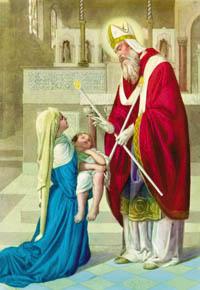
St. Blaise ~ The Rev. Lady Sherwood, OPI

St. Blaise was born in Sebastia in historical Armenia, now Sivas in Turkey. According to tradition, he was born from a noble family although we don`t know much about his life. What we do is that from being a healer of bodily ailments he became a physician of souls, and he retired for a time, by divine inspiration, to a cave where he remained in prayer.
St. Blaise was Bishop of Sebastea and he instructed his people as much by his example as he did by his words, and he has many miracles attributed to him as from all areas people came flocking to him for the cure of bodily and spiritual ills. In 316, the governor of Cappodocia and Lesser Armenia, Agricolaus began a persecution of christians by the order of the Emperor Licinius and Saint Blaise was seized. He endured interrogation and a severe scourging before he was hurried off to prison where he was subsequently beheaded.
The legendary Acts of St. Blaise were written in Greek 400 years later and as given in the Grande Encylopedie says as follows:
“Blaise, who had studied Philosophy in his youth, was a doctor in Sebaste in Armenia, the city of his birth, who exercised his art with miraculous ability, good=will, and piety. When the bishop of the city died, he was chosen to succeed him, with the acclaimation of all the people. His holiness was manifest through many miracles:from all around, people came to find him to find cures for their spirit and body; even wild animals came in herds to receive his blessing. In 316, Agricola, the governor of Cappadocia and of Lesser Armenia, having arrived in Sebastia at the order of the Emperor Licinius to kill the christians, arrested the bishop. As he was being led away to Jail, a mother set her only son, who was choking to death on a fish=bone, at his feet, and the child was cured straight away. Regardless, the governor unable to make Blaise renounce his faith, beat him with a stick, ripped his flesh with iron combs and then beheaded him.”
Consequently, Saint Blaise is invoked for his intercession and protection against illnesses and injuries of the throat.
The Blessing of St. Blaise
In many places around the world on the day of the Feast of St. Blaise (3rd Feb), the blessing of St. Blaise is given: two candles are consecrated, usually by prayer, these candles are then held in a crossed position by a priest and are either held over the heads of the faithful, or alternatively, the faithful are touched on the throat with them.
At the same time the following blessing is given: “May Almighty God at the Intercession of St. Blaise, Bishop and Martyr, preserve you from infections of the throat and from all other afflictions”. Finally the priest makes the sign of the cross over the faithful.

The Memorial of Sts. Timothy and Titus ~ The Rev. Dcn. Scott Brown, OPI
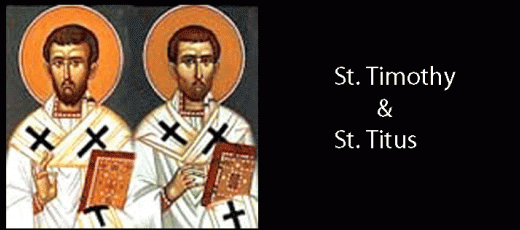
What we know from the New Testament of Timothy’s life makes it sound like that of a modern harried bishop. He had the honor of being a fellow apostle with Paul, both sharing the privilege of preaching the gospel and suffering for it.
Timothy had a Greek father and a Jewish mother named Eunice. Being the product of a “mixed” marriage, he was considered illegitimate by the Jews. It was his grandmother, Lois, who first became Christian. Timothy was a convert of Paul around the year 47 and later joined him in his apostolic work. He was with Paul at the founding of the Church in Corinth. During the 15 years he worked with Paul, he became one of his most faithful and trusted friends. He was sent on difficult missions by Paul—often in the face of great disturbance in local churches which Paul had founded.
Timothy was with Paul in Rome during the latter’s house arrest. At some period, Timothy himself was in prison (Hebrews 13:23). Paul installed him as his representative at the Church of Ephesus.
Timothy was comparatively young for the work he was doing. (“Let no one have contempt for your youth,” Paul writes in 1 Timothy 4:12a.) Several references seem to indicate that he was timid. And one of Paul’s most frequently quoted lines was addressed to him: “Stop drinking only water, but have a little wine for the sake of your stomach and your frequent illnesses” (1 Timothy 5:23).
Titus has the distinction of being a close friend and disciple of Paul as well as a fellow missionary. He was Greek, apparently from Antioch. Even though Titus was a Gentile, Paul would not let him be forced to undergo circumcision at Jerusalem. Titus is seen as a peacemaker, administrator, great friend. Paul’s second letter to Corinth affords an insight into the depth of his friendship with Titus, and the great fellowship they had in preaching the gospel: “When I went to Troas…I had no relief in my spirit because I did not find my brother Titus. So I took leave of them and went on to Macedonia…. For even when we came into Macedonia, our flesh had no rest, but we were afflicted in every way—external conflicts, internal fears. But God, who encourages the downcast, encouraged us by the arrival of Titus…” (2 Corinthians 2:12a, 13; 7:5-6).
When Paul was having trouble with the community at Corinth, Titus was the bearer of Paul’s severe letter and was successful in smoothing things out. Paul writes he was strengthened not only by the arrival of Titus but also “by the encouragement with which he was encouraged in regard to you, as he told us of your yearning, your lament, your zeal for me, so that I rejoiced even more…. And his heart goes out to you all the more, as he remembers the obedience of all of you, when you received him with fear and trembling” (2 Corinthians 7:7a, 15).
The Letter to Titus addresses him as the administrator of the Christian community on the island of Crete, charged with organizing it, correcting abuses and appointing presbyter-bishops.

Evangelism 101: Parts is Parts. ~ The Rev. Jay Van Lieshout, OPI

“Have you been saved?” “Are you born again?” “Have you found Jesus?” “Have you accepted Jesus as your personal savior?” I think we all have been addressed by such “evangelistic” greetings while we were at work or shopping or even at social gatherings. I may be alone in this, but I find these phrases to be cliché, disingenuous, annoying and counterproductive. It is not that I am embarrassed to be a follower of Christ, or to proclaim His Gospel out in the world (after all I do wear a habit as a sign of my faith and God has all but given me a tonsure), it is more that such phrases imply that you do not know Jesus or the good news. To my ears they are saying “I know Jesus better than you do, let me save you or you will go to hell”. Now, I know this is a bit crass, but conversations that begin with “Have you…” always seem to progress to stories of how great their church is, how Paul said this or that, how they are helping the lost sinners like homosexuals or how they helped bring some poor family over from a developing nation and let them cut their lawn or work on the church. And during these “conversations” I often wonder, “where is the good news? Where is the Gospel of God’s love for everyone, and our call to love each other?”
Jesus asked us to go out to the entire world and spread the good news, teach the Gospel to all people; this is the call to evangelize. But asking someone if they are “saved”, or “found Jesus”, this seems to miss the point. The Gospels tell us that God so loved us His children He sent the Son of Man to fulfill the old law, establish a new covenant based on altruism and forgiveness, to preach the truth and then to be sacrificed so that All HUMANITY should be saved. If the Gospels were a Hallmark card they would read “I love you, I forgive you, all I ask is you do the same to each other as a sign that you love Me too. Love, your Creator”.
There are many places throughout the Word of God where the faithful to whom the light of the word is given and are blind to it, while those “not chosen” see it as bright as day. This season of Epiphany exemplifies such realization of the Messiah to the “gentiles” amidst the ignorance of the chosen people. John so poetically tells us:
“He was in the world, and though the world was made through him, the world did not recognize him. He came to that which was his own, but his own did not receive him. Yet to all who did receive him, to those who believed in his name, he gave the right to become children of God— children born not of natural descent, nor of human decision or a husband’s will, but born of God. The Word became flesh and made his dwelling among us. We have seen his glory, the glory of the one and only Son, who came from the Father, full of grace and truth.” (John 1:10-14) What a glorious message, the Son came not for those chosen by race, or by declaration of man nor even lineage (for we are all God’s children), but for all those who open their hearts to the truth and live the Word. In another example, Luke tells us that Jesus read from Isaiah in His home town synagogue:
“The Spirit of the Lord is upon me, because he has anointed me to bring glad tidings to the poor. He has sent me to proclaim liberty to captives and recovery of sight to the blind, to let the oppressed go free, and to proclaim a year acceptable to the Lord.” And said to those present: “Today this Scripture passage is fulfilled in your hearing.” (Luke 4: 18-19, 21) Again what great news Jesus shared to those who proclaim to believe in the word, and how said such news fell on deaf ears and whose eyes had been blind to his light.
A few days ago, while shopping at the local big box grocery, a lady came up and inquired about my habit. She said “I know you are a man of God, please tell me what this means and about your church”. And so I shared about being a Dominican, about being an Old Catholic, about our church’s foundation being the Gospels, about how we strive to accept everyone and anyone just as Jesus did. She then asked “what about homosexuals?” I replied “We are all children of God, EVERYONE is accepted, especially those marginalized by the mainstream. We do not judge others as that is NOT our job, only God knows what is in a person’s heart and we trust that God will take care of His own.” She then asked “Do you believe that people who commit suicide go to hell?” I said “I believe in God’s grace and mercy, He knows what is in the heart of those suffering, those with mental illness, those in the dark depths of depression and pain, He would not forsake one of His own”. She finally smiled and told me her husband took his own life, she and her son were the ones who found him. She struggles with a rare neurological condition, she has tried to end it many times, her children are struggling with it all and she feels now that God is calling her to share her trials, her message to help others. I agreed and encouraged her to find a place, any place and to share her journey and her discoveries not only to help her heal, but to help others find a path to healing and that this is what God wants and this is why she is still here.
A moment of my time to listen, a few words exclaiming the good news to one who really needed it, an acknowledgement of her pain, suffering and stumbles in life with a reassuring it’s ok, that’s a lot for anyone to deal with, followed by the guarantee of God’s grace, forgiveness and love, and rounding it up with a firm “you matter, you have a gift and calling from God and you will make a difference in someone else’s life”. For me, this is evangelism as Jesus would have it done: to live s Paul says, we are all of one body, no single part is the body, but the body is made of all the parts, and if one part is sick, the body is sick; to heal the part is to heal the whole body. No body can be complete without all its parts and, therefore, no part is any greater or lesser than the other. Hence, evangelization is not saying “I am already part of a magnificent body, don’t you think you should join me and be great too”, but, instead the message is “Truly you are valued part of a magnificent and great body, we are blessed by you and hope that you too are blessed by us. Come; let us rejoice with all other parts so that none may ever be forgotten.”
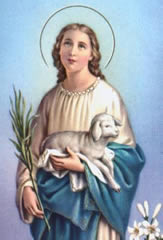
St. Agnes, Virgin and Martyr ~ The Rev. Dcn Dollie Wilkinson, OPI

ST. AGNES, VIRGIN AND MARTYR
FEAST DAY – JANUARY 21
St. Agnes is one of the most glorious saints in the calendar of the Roman Church. The great Church Fathers vied with one another in sounding her praise and glory. St. Jerome writes: “All nations, especially their Christian communities, praise in word and writing the life of St. Agnes. She triumphed over her tender age as well as over the merciless tyrants. To the crown of spotless innocence she added the glory of martyrdom.” St. Agnes is said to have suffered martyrdom at age 12. The cruelty that did not spare so young a child was hateful, but the power of faith in the child was greater.
Our saint’s name should be traced to the Greek hagne – the pure, rather than to the Latin agna – lamb. But the Latin derivation prevailed in the early Church. The reason may have been that eight days after her death Agnes appeared to her parents with a train of virgins, and a lamb at her side. St. Augustine knew both derivations. “Agnes”, he writes, “means ‘lamb’ in Latin, but in Greek it denotes ‘the pure one’. The Latin interpretation occasioned the yearly blessing of the St. Agnes lambs; it takes place on this day in the Church of which she is patron, and the wool is used in weaving the palliums worn by archbishops and, through privilege, by some bishops. In the church built by the Emperor Constantine over the saint’s grave, Pope Gregory the Great preached a number of homilies. Reliable details concerning the life of St. Agnes are very few. The oldest material occurs in St. Ambrose’s De Virginibus, parts of which are read today at Matins.
From such liturgical sources we may construct the following “life of St. Agnes”. These legends tell that Agnes was a beautiful and soon-to-be-marriageable young woman. But the stories are rooted in actual events and convey kernels of truth about her. One day when Agnes, then thirteen years old, was returning home from school, she happened to meet Symphronius, a son of the city prefect. At once he became passionately attracted to her and tried to win her by precious gifts. Many eager young men pursued her, but she rebuffed them because she had consecrated her virginity to Christ. This spurned suitor took revenge by reporting to the authorities that Agnes was a Christian. She was brought before a judge who tried to persuade her to recant. He threatened her with fire and torture, but she did not flinch. Then he had her stripped at a brothel and urged young men to seduce her. “You may stain your sword with my blood,” she said, “but you will never profane my body that I have consecrated to Christ.” All were so stunned by her presence that only one boy tried to touch her. Legend says he was struck blind, and that Agnes healed him. Then a light enveloped her and blinded all who tried to approach. Another judge condemned her to the stake because the pagan priests accused her of sorcery.
“Surrounded by flames she prayed with outstretched arms: “I beseech You, Father almighty, most worthy of awe and adoration. Through Your most holy Son I escaped the threats of the impious tyrant and passed through Satan’s filth with feet unsullied. Behold, I now come to You, whom I have loved, whom I have sought, whom I have always desired.” She gave thanks as follows: “O You, the almighty One, who must be adored, worshiped, feared – I praise You because through Your only begotten Son I have escaped the threats of wicked men and have walked through the filth of sin with feet unsullied. I extol You with my lips, and I desire You with all my heart and strength.” After the flames died out, she continued: “I praise You, Father of my Lord Jesus Christ, because by Your Son the fire around me was extinguished”. And now she longed for union with Christ: “Behold, what I yearned for, I already see; what I hoped for, I already hold in embrace; with Him I am united in heaven whom on earth I loved with all my heart”.”
—The Church’s Year of Grace, Pius Parsch.
Her wish was granted; the judge ordered her beheaded. Exasperated and egged on by her first accuser, the governor ordered her execution. Agnes was taken to the Stadium of Domitian, where she courageously faced a nervous soldier who hacked her to death with his sword. Was there room for a wound in that small body? The sword could barely strike her, yet she had the inner strength to strike back. Now girls her age usually can’t even bear a parent’s angry glance. Or they usually cry at the slightest wound or abrasion. Agnes, however, faced her persecutors fearlessly. She was not fazed by the heavy weight of the chains they wrapped around her. And she freely offered her body to the executioner’s sword.
St. Agnes’s death was “a new kind of martyrdom!” She taught us adults the meaning of valor while she was still a child. Agnes hurried to the place of her execution more joyfully than a bride goes to her wedding. And she was adorned not with plaited hair, but with Christ himself. Over the centuries the little virgin martyr became one of the most popular saints in Christian history.
St Agnes is the patron saint of: betrothed couples, chastity, crops, engaged couples, gardeners, Girl Scouts, girls, rape victims, and virgins.

Jesus,The Internet and The Devil ~ The Rev. Lady Sherwood, OPI

He said, “Go into the world and proclaim the gospel to every creature. (Mark 16:15 NABRE)
We as Christians are commanded by the Lord to spread his word around the world, and with today’s modern technology and the use of the internet, websites such as Facebook are a very useful ministry tool that helps enable us to do just that.
By today’s modern technology, we are able to use the internet to spread the true word and the good news of the Lord’s salvation to many people throughout the world who otherwise may not be in the position to receive this in their lives.
Using this technology, we as servants of God are able to preach the Holy Word, to offer prayer, to give advice, love and support to people around the world enabling us to better serve those who may live in countries or other places where we couldn’t possibly serve them in person.
So whilst posting online certainly has its positive advantages, as we are made clearly aware in 1 Peter 5:8, that the devil is always prowling around. Let us look again at what we are told:
“Be sober and vigilant. Your opponent the devil is prowling around like a roaring lion looking for [someone] to devour. (1 Peter 5:8 NABRE).
We must be always on our guard as, like we as Christians can use online technology to spread the word and the true love and salvation of God, the devil can also use it to deceive and mislead us. Not all things that may appear to be Christian posted online is truly of holy nature, and may be merely a trick of the devil.
Posts such as the variety we see almost daily on pages such as Facebook, where blessings are supposedly given if we `like and share` are an example of such unholy works because God’s blessings are granted from his grace, and out of his love for us and this does not depend on whether we have liked and shared online postings.
We must also realise that posts offering blessings of money or other materialistic things are not true Christian works and are devil led.
The Lord our God is not our personal magician, or a magical Genie who is there to grant our earthy wishes and wants of materialism.
Our God and Father is there out of his pure and unconditional love for us and out of his grace and mercy as he wants to give us that true and full relationship with him that will lead to our salvation.
Be watchful online as well as in our daily lives for the deceit and lies of the devil and do not give him the foothold which he so desperately seeks.

An Address from the Presiding Bishop: Out of the Ashes ~ The Rt. Rev. Michael R. Beckett, OPI

In Greek mythology, a phoenix is a long-lived bird that is regenerated or reborn. Associated with the sun, a phoenix obtains new life from the ashes of its predecessor. According to some sources, the phoenix dies in a show of flames and combustion, and a young bird arises, new, strong, and vibrant from the ashes. The Phoenix is also an important Christian symbol which symbolizes the death of Christ and His resurrection from the dead. The following reference to the Phoenix as a symbol is in the Bible:
“Then I thought, ‘I shall die in my nest, and I shall multiply my days like the phoenix.’ ”
(Job 29:18)
Also, Clement of Alexandria uses the phoenix as a symbol of the resurrection of Christ in his First letter to the Corinthians when the church there was having difficulties. He told the Corinthian church that out of strife comes growth. I believe that this applies to The Unified Old Catholic Church.
Through many trials and tribulations, hurt and bewilderment, and out of the ashes of broken relationships, a year ago today The Unified Old Catholic Church emerged. In the course of the past year, we have experienced rebirth, resurrection if you will, and have become an example of what can happen when a group of people is truly focused on our Lord and Savior, Jesus Christ.
Because we are truly ‘unified’ in our purpose, we touch more lives that we can possibly imagine. According to the “End of Year Statistics Report for 2015,” our posts have reached over 14,000 people in 112 countries. We have members and clergy in 22 states and 13 countries. The message of Christ’s love is preached in English, Spanish, French, Macedonian, Bulgarian, and Swedish.
We have several active Facebook groups, each of whose posts touch lives daily, not to mention those posts of our individual members. Our Franciscan and Dominican Orders are actively involved in teaching, preaching, and seeking justice for all in the name of Christ, and we are blessed with both podcast and video ministries.
Our motto is “One Vision.” In that vision, we believe in the unity of all Christian believers and part of our vocation is to help others understand and grow in a direction that they may see the love that God has for all of us. We are a church where all of God’s children are welcome. Working together for our Lord, and keeping in mind that we pray ‘that we all may be one,’ we are in an intercommunion agreement with 4 other jurisdictions through Transfiguration Sacramental Community. We have signed a Concordat with The Self-Ruled Old Catholic Church, the Church of Ireland in the Americas, The Anglican Church of the Caribbean and Granada, and The United States Old Catholic Church. We have friends in many other jurisdictions, and we live as proof that jurisdictions in the Independent Catholic Movement can, indeed, work together.
While all of the above is certainly wonderful, and we have reached many milestones on our collective journeys, and it truly sounds as if we have a very successful church, we must ask ourselves, “Have we arrived? Have we ‘made it’ to where we need and want to be?” Hardly. While we have had our successes, we are certainly not where we need to be.
In our secular lives, most of the “milestones’ that one reaches in life are not signals of arrival, but signals of new beginnings: a baby’s first steps; entrance into Kindergarten or First Grade; a driver’s license; a first job; high school graduation and going to college. If our successes are seen as “having arrived,” and if this kind of thinking is mistaken as success as regards normal everyday life, it is even more mistaken when applied to the religious life. Religious life, to be lived to its fullest, is one of ongoing formation, no matter how old one may be, regardless of one’s experiences or education. There is never a time when we are fully formed. Milestones mark the roads that we have traveled in our lives on our journey. The journey to where? Why, to the next major milestone, of course! What then, is that “next major milestone?” For some of us, it will be ordination into Holy Orders, planting a church, becoming fully a professed religious, going into full time ministry, developing our own personal ministries. And then, will we have “arrived’? Hardly.
Living a life fully devoted to Christ, following Him in this gift of our vocation, our faith, this way of life that we have been given, is full of milestones. Do we ever “arrive?” No. The gift of this life is a gift that must be continually renewed and offered, again and again, daily, over the course of a lifetime. It is this constant renewal which brings us joy, for we are daily new creatures in Him.
Over the past year, we have made mistakes. Over the past year we have all learned much. We have learned to love more completely, to trust our Lord more fully, and have come to realize that we have much, much more to learn. We have come to learn that we have much, much more to do.
So where do we go from here? We continue to take this journey of milestones, praying for and with each other, holding each other’s hands along the way, and sharing our joys, sorrows, successes, and failures. We continue to build each other up, to help each other in our Christian walks of faith, and above all, continue learning from, leaning on, loving and trusting our Lord and Savior Jesus Christ.
I close with the words of Henry Wadsworth Longfellow:
“As torrents in summer, Half dried in their channels, Suddenly rise, though the Sky is still cloudless,
For rain has been falling Far off at their fountains;
So hearts that are fainting Grow full to o’erflowing, And they that behold it Marvel, and know not
That God at their fountains Far off has been raining!
“Stronger than steel Is the sword of the Spirit; Swifter than arrows The light of the truth is,
Greater than anger Is love, and subdueth!
“The dawn is not distant, Nor is the night starless; Love is eternal! God is still God, and
His faith shall not fail us; Christ is eternal!” (As Torrents In Summer)
Thank you, my brothers and sisters, for taking this journey of milestones with me, for your prayers, your dedication, for holding my hand along the way, and for being a part of my world. I ask your continued prayers for me, for our church, and for each other. Amen.
Online Ordination-The facts
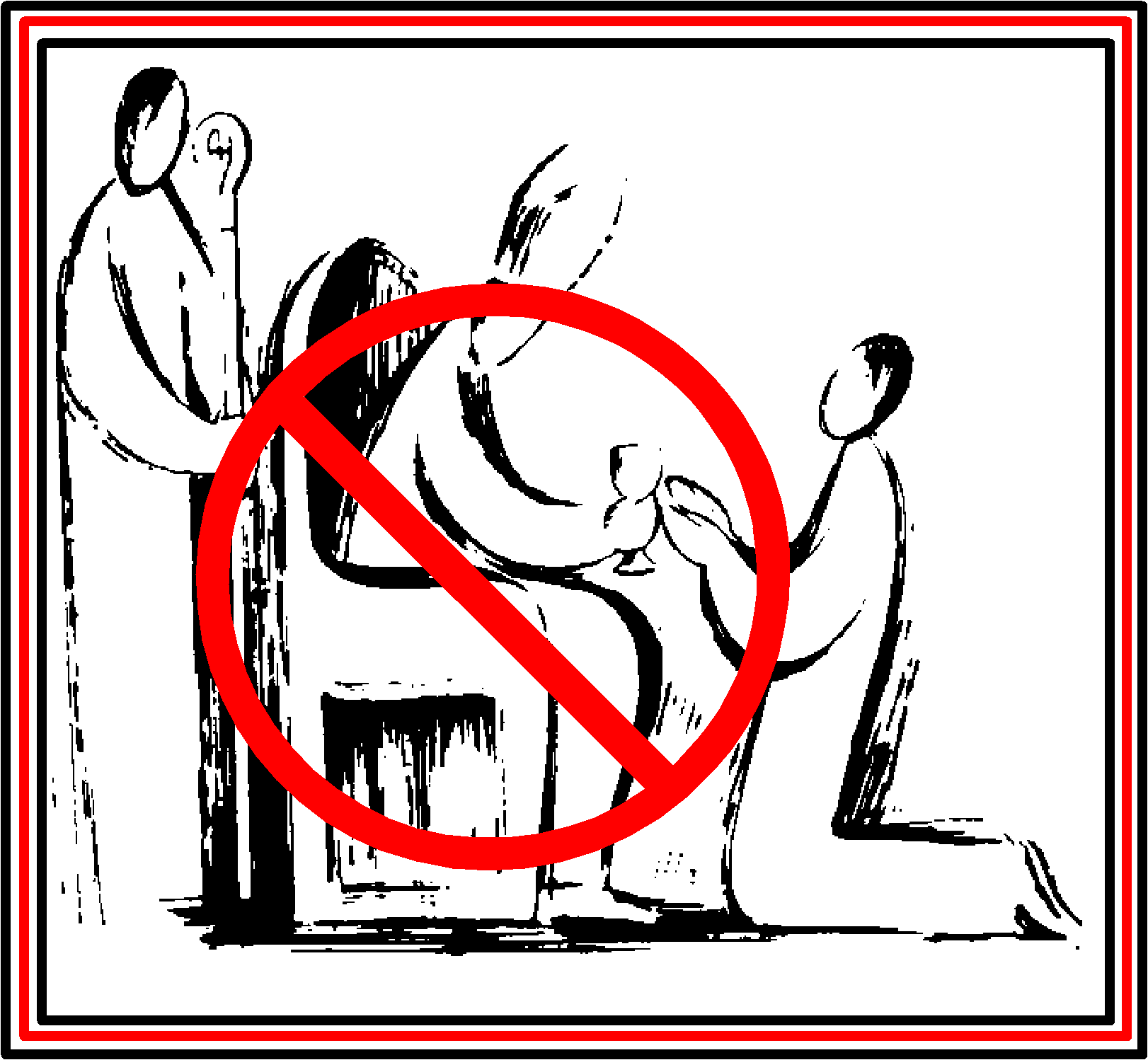
Based on Second Timothy 1:6-8, 13-14
Today I wish to address the subject of online ‘ordination’ and issues that surround the subject.
So sitting at my desk with my laptop or mobile phone in hand it is so easy to see on the internet just how many so-called online ordained ministries there actually are. I find a site and quickly apply by ticking a few boxes. So this means a person who takes all of five minutes is validly ordained then does it? Well in actual fact, online ordinations are NOT valid ordinations and most if not all true Churches of God would refuse to accept this type of ‘ordination’.
In today’s world of modern technology, it seems all too easy for people who do not have a genuine calling from the Lord Our God in their hearts and in their lives to become online ‘ordained’ via the internet or by simply sending an email.
True ordination is not something to be taken lightly and is a lifelong vocation of service to God and to his people which needs knowledge, formation and discernment and thus ordination takes much time to realise and this can often take years and which is definitely not able to be done online or via email.
When God calls us in our hearts to his service, he is calling all that we are, heart, mind, and our very soul to serve him with our whole lives.
We are called to be shepherds to God’s people, we represent the Lord on earth until he comes again in Glory. We are called to teach and to guide the Lord’s people to have a fuller and loving relationship with God our Father so enabling them to gain the salvation that only God can give.
Online ordination is not done by the laying on of hands in Apostolic Succession and not to be ordained by Apostolic succession means the person is not receiving the necessary gifts of blessing, sanctification and grace that is passed to us through the Holy spirit.
Let us look at what we are told in Second Timothy 1:6-8, 13-14:
6. That is why I am reminding you now to fan into a flame the gift of God that you possess through the laying on of hands. 7. God did not give us spirit of timidity, but the spirit of power, love and self-control. 8. So you are never to be ashamed of witnessing to our Lord, or ashamed of me for being his prisoner; but share in my hardships for the sake of the gospel, relying on the power of God. 13. Keep as your pattern the sound teaching you have heard from me, in the faith and love that are in Christ Jesus. 14. With the help of the Holy spirit who dwells in us, look after that precious thing given in trust. We are given the gift and blessing of the Holy Spirit through the act of the laying on of hands in Apostolic succession in trust and this blessing and gift is most wondrous and must never be belittled or taken for granted and we need to be in a personal place of true readiness to receive this most wonderful blessing and this is why ordination requires knowledge, formation and true devotion before we even attempt this wondrous, trusted and vital role of the service as the voice of God within the world.
Simply getting ‘ordained’ online usually entails either none or very little training and formation and hence does not give the vital preparation that is necessary and is an issue that can cause danger to the people we are sent to serve. Another very dangerous issue with this type of invalid ordination is the fact that we often serve very vulnerable people who it is our duty to care for and to protect and there are no criminal background or other checks in place so that even those with dangerous backgrounds can use their so called `clergy status` to cause harm to those who are most often those who need us most.
If anyone is online ordained and feels they are truly called into the Lord’s service, contact a true church who will help you to do it correctly.


You must be logged in to post a comment.