
Category: Sermon
A Better World: The Feast of St. Barnabas ~ Fr. Shawn Gisewhite, OPI
Do you ever wonder what it would take to make the world a better place. Less rotten? Less foolish? Less stupid? Less tasteless? Less dark?
I do. People at large would come up with a range of suggestions. Some people put their confidence in the political system. The government is there to improve things, and once a decade we change who is in power because we’re not convinced the current lot are fixing things well enough, so we try somebody else.
Others would say that capitalism is the answer. A video was put on the internet in November. It starts with a picture of a girl running in a field. The voice-over runs like this. “This child was born in the past year. She is expected to live to at least the age of 70. If she had been born just two centuries earlier, she would not have been expected to survive beyond her 30th birthday. The almost miraculous increase in life expectancy of the past two centuries is mainly the result of capitalism. By making life healthier, easier and better, capitalism has made life longer for billions of people around the world. Capitalism has given each of us a future, the chance to experience all that life offers. To defend and advance capitalism is to defend and advance our lives and those of our loved ones. What could be more important?” Get the world to embrace capitalism, things will improve further.
Others don’t like that, so they protest against capitalism, as if anti-capitalism were the answer.
Christians by and large reach for some better answers. Some would say that society will improve if we go back to the traditional values that we’ve lost. If the next generation can grow up once again knowing the Lord’s Prayer and the Ten Commandments, things might be a little less hopeless. Others would say that religion in general holds the key. Others would say that God can make things better. Others would be more precise still, and say that the answer is Jesus.
Jesus tells us in these verses from Matthew’s gospel what it will take to make the world a better place. The answer is surprising. It’s not God, or Jesus. It’s the Christian church. It’s groups of disciples. It’s ordinary Christians. It’s you, and it’s me.
But it’s not automatic. If the Christian church is to be God’s answer to improve a world that is frequently dark, rotten and lacking taste, two things must happen.
First, we must not lose our distinctiveness.
The first thing that needs to happen is this: We must not lose our distinctiveness. We must not lose our distinctiveness.
Verse 13: “You are the salt of the earth, but if salt has lost its taste, how shall its saltiness be restored? It is no longer good for anything except to be thrown out and trampled under people’s feet.”
Jesus compares us to salt. He says we are like salt. You are the salt of the earth. What point is he making?
In the ancient world, there were two main uses for salt. It was used as a preservative. People didn’t have fridges, so they would put salt on meat to stop it from going bad. If that is what Jesus means, he is saying that the world will go rotten all by itself, just as surely as a sirloin steak won’t smell or taste good after a day in the hot sun. We are the salt that stops the rot. Today, he might have said (although there would be problems with saying it): You are the deep freeze of the earth. When society goes rotten, we shouldn’t criticize society in pious “letters to the editor”, but ask why the salt was not applied. It’s not the meat’s fault if it goes bad if nobody put it back in the fridge.
The other use for salt was to flavor things, a use it still has today. If that is what Jesus means, he is saying that we are in society to make it a better place, to give the place a little more taste.
Jesus doesn’t tell us which he means. Perhaps he’s being deliberately ambiguous, so that we think of it from both angles. In any case, the exact way in which the salt helps isn’t his point. He tells us that we are like salt so that he can say one thing: The salt must not lose its saltiness. Literally, it must not lose its taste, or it must not become foolish.
How does salt lose its saltiness? Like this. In the ancient world, they didn’t have beautifully white refined table salt. They used something a bit like rock-salt. You remember the recent snow? There were footpaths that looked like they were gritted but the snow was still settling. That was salt that had lost its saltiness. The water and snow had leached the actual salt out of it. What you had left you might still call salt, but it had no actual salt in it.
So that is what he is saying. We are here to have an influence on the world of some kind. There’s some positive influence involved, as we improve the flavor of the world. There’s some negative influence involved, as we stop the rot. But we can’t do either of those things if we have lost the distinctive thing that we are supposed to contribute to society. And without that, there is no hope. The word “You” at the start of this is emphatic. “You are the salt of the earth”, and I mean “only you”.
So we must not lose our distinctiveness. Those qualities we thought about last time, Jesus’ portrait of what makes the follower of his different from other people: They really matter.
Sadly, though, the salt often loses its saltiness. The history of the Christian church contains many episodes where Christians compromised. Where they looked little to no different to the world around them.
Instead of being a source of influence, preventing decay and working for good, the church merely adopts the world around. It takes its culture, its morals and its values from the world. Sometimes this has been so much so, that the church has actually promoted the world’s values, when in fact it should have been standing against them.
It’s not just the church, considered corporately, that can lose its saltiness. Which of us does not feel this pressure individually as well. We feel the pressure to have the same standards of living as those around us, to drink the same amount at a party, to have the same standard of truthfulness when it comes to our expenses claims or our taxes, to have the same casual attitude to the speed limit, and so on. And then we adopt the world’s standards rather than living the way Jesus set out last time: We too quickly become proud, self-satisfied, glib, brutal and self-indulgent.
The pressure is on for us to lose our saltiness, to lose it as a church, and to lose it individually. But we must not. Because we are the salt of the earth. We must not lose our distinctiveness.
Secondly, we must not hide our discipleship
The second thing that must happen if we are to be God’s agent to improve the world, is that we must not hide our discipleship. We must not hide our discipleship.
Verse 14: “You are the light of the world. A city set on a hill cannot be hidden. Nor do people light a lamp and put it under a basket, but on a stand, and it gives light to all in the house. In the same way, let your light shine before others, so that they may see your good works and give glory to your Father who is in heaven.”
Jesus has changed his picture. He’s no longer comparing us to salt. Now we are light.
Light is a big Old Testament image. We remember it from those readings we get at Christmas time from Isaiah. The people walking in darkness have seen a great light. In the Old Testament, darkness is frequently an expression of God’s judgment, whereas light is an expression of his favor and blessing.
Jesus came to fulfill those Old Testament promises. He came to bring the light of God’s blessing. He even said: “I am the light of the world”. And so it is that those who follow him live in the light of God’s favor. They are blessed by God. The start of this chapter, remember, told us again and again how blessed we are to follow Jesus.
What Jesus is saying in these verses is that the light that we have been given needs to shine, so that others can see that we are in Jesus’ kingdom, and that we are among those God is blessing. And the reason we are to shine in this way is so that God gets the glory.
Thirdly, we must not hide our discipleship.
One detail we must notice is that the light here is corporate. Jesus is saying “We must not hide our discipleship”, not “I must not hide my discipleship”. The “you” is plural.
Jesus develops this picture of a city on a hill. That seems like an abrupt change of subject. One minute, he’s talking about us being lights, and then he takes about a prominent city. It stands out like a sore thumb… until you see that what he’s talking about is the visibility of a city on a hill at night, in a country with no electric lighting. Here’s the point: The city is so bright, because it is a beacon made up of lots and lots of little lights.
The church is made up of many lights. We are that city. When people look at our church, they will see the brightness that is the cumulative shine of all of our lights. We must not hide our discipleship.
You may know the old chorus – I won’t sing it! The first verse goes like this: Jesus bids us shine with a pure, clear light, like a little candle burning in the night in this world of darkness So let us shine— You in your small corner, and I in mine.
That is not what Jesus is saying here. He’s not saying we’ll all stay in our own small corners, and shine into the dark world. He’s saying that each of us has experienced God’s blessing individually. And when we come together, we are the light of the world. We must not hide our discipleship.
You’ve doubtless heard of sea pollution, and you’re used to the idea that beaches can be polluted or clean. Well until recently, I hadn’t heard of light pollution. There’s an organization called the International Dark Sky Association that aims to reduce light pollution. And just as the EU can declare a beach to be clean, so they can designate a place a “Dark Sky Park”, meaning it’s free of artificial light – you can see the stars at night. There is currently one of these in the UK, its Galloway Forest Park in South-West Scotland. Exmoor National Park is working to get its recognition.
From what I read of studies, in the South-East they have no chance. Kemsing for example has no street lights, but they are too near to Sevenoaks and to London. Go to Galloway, and on a cloudy, moonless night, you can’t see your own hand. But all you need is one major town with electric light, and it bounces off the clouds, and for tens or hundreds of miles the night sky is no longer black.
That is what the Christian church is. It’s that city on the hill. But we must let the light shine. We must not hide our discipleship.
We must not hide it as individuals. Jesus has already said that we will fail to influence the world around us or to spread the kingdom if there is nothing distinctive about us. But we will also fail if we are distinctive, but that is so hidden that nobody would ever know!
Here are some of the questions we could ask ourselves: So when you’re at work, are you a Christian? Or is it too well hidden for anyone to know? Do you talk about your faith, or does shame or the fear of rejection mean that you stay quiet? How about at home: Are you a Christian? Do people know that the reason you are distinctive is because you are a follower of Jesus Christ, or is that detail buried?
We mustn’t hide it as individuals, but we also mustn’t hide it corporately. Remember the city on the hill. Just as our life together must be salty and distinctive, so it needs to shine out. It’s no use keeping it hidden.
It’s no use expecting people to come to us to hear the good news of the kingdom; we need to take it to them. That is one reason why I’m so keen that we have at least one, if not several, open-air services during the Festival in September. Recently, someone in the church said to me, “Where else in the village can we take the church?”
You probably know that the basket Jesus refers to in verse 15 is called a “bushel”. It was a measure, used for measuring grain. We could paraphrase Jesus: “Don’t light a lamp, and put it under a measuring jug”. Now, this building makes an excellent bushel. It’s no use reforming our worship to make it God-honoring in every way we can, it’s no use having excellent relationships with each other, being supportive, and living the life Christ called us to, if we then place this bushel of a church building over the top, and contain it and hide it away.
When we meet here, we look at the face of God in Jesus Christ. We confess our failures, and we find forgiveness. We hear God’s word, that is an active, shaping word, and we get brighter. But it’s when we go out of here that the light can shine.
So if you, like me, long to see this world a better place, a brighter place, a wiser place, a less rotten place, then we need Jesus to point us in the right direction. You are the salt of the earth. You are the light of the world. God wants us to be the means he uses to brighten this world with his kingdom. To be that, Jesus calls us to follow him. Then he tells us that as salt, we must not lose our saltiness, and, as light, we must not be hidden.
Amen.
Is That All There Is? ~ Br. Chip Noon

Transitions are often hard to live through, aren’t they?
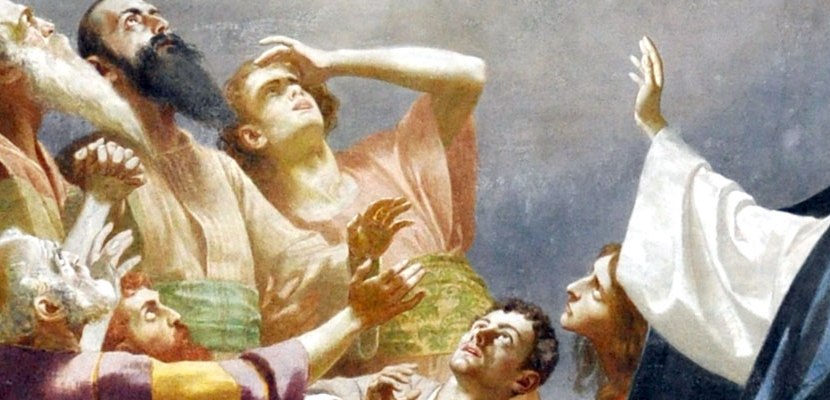
Today we celebrate probably one of the toughest transitions that human beings had to suffer: The Ascension of our Lord. I remember as a kid thinking about this day, and feeling with the disciples, that they had really lost a great friend and source of strength. I also imagined myself in their place and staring up into the sky, looking into the clouds. One of my personal traumas as a child was watching my father storm out of the house when he was angry. So I acutely identified with the disciples on this day.
Now today our family is going through a particularly poignant transition. We have been told by my mother-in-law’s nursing home staff, and by our own observations, that she is in the last stage of her life. She is 93 and has been bedridden for the past nine months. She has also prayed every day for God to take her home. Particularly heart-wrenching prayers to accompany her physical sufferings.
But what did Jesus tell us, over and over, about times like this? He said that this is not all there is, didn’t he? Even as he was ascending, he promised that the disciples would receive some gift in the future. The gift of the power of the Holy Spirit.
And yet, even at these last moments, his disciples continued to show that somehow, they were not really getting the message. “It is not for you to know the times or seasons that the Father has established by his own authority…”
But as we watch Irene in her nursing home bed, I sense around the room a true feeling for her that this is not all there is. Yes, there is sadness and anxiety, but as her oldest daughter said, “I think Mom is continuing on the path to her new life.”
You see, time and again in these days after Easter we hear Jesus telling us, “I am with you always, until the end of the world.” It is in today’s Alleluia. It is in the 2nd Reading: “…the fullness of the one who fills all things in every way.” It is in the 1st Reading: “This Jesus…will return in the same way as you have seen him going into heaven.” The Promise. The Prize. The knowledge that while we may suffer today, mourn today, and weep today, that is not all there is.
Yes, Jesus had to tell his disciples many times, sometimes in exasperation, that his kingdom is not of this earth, but also that his kingdom is indeed all around us. Again, this sounds like a Zen koan, “the identity of opposites” as the Buddhist monk and teacher says.
But that is what I was seeing in Irene’s room…her children and grandchildren recognizing that while their parent and grandparent was lying peacefully in bed, there was the realization that this mortal coil was unwinding to a grander and incomprehensible shape.
And that’s what Jesus was telling his apostles. Don’t worry, I may be physically gone, but all that I have taught you will finally be made clear through the power of the holy spirit.
Now I suppose that these people who had close daily contact with the person of Jesus, whom most of them could barely understand, would need an overt presentation of this comforting concept by the physical descent of the Holy Spirit. But we, who have been immersed in this salvation story all our lives, may just need the echoes of the Gospel, the readings, the Psalms, and the teachings of our ministers.
That’s what was in Irene’s room, at least for many of us. We could see her slowly slipping away from us, yes. But the thought was expressed – and silent – that she was going to the promised land and would soon be rid of her constant physical torments.
One final thought for today. This isn’t just a holy story out of our Bible and preachers’ mouths. This is much more. This is a call from Jesus show to the next generation, and those around us, that there is more to come than anything we could expect. “…you will be my witnesses in Jerusalem, throughout Judea and Samaria, and to the ends of the earth.”
There it is.
Yes, the kingdom is at hand. There is more than our physical senses. There is something beyond what we know and see every day. So let’s rejoice! Let’s sing and dance! Let’s laugh and cry with joyful expectation.
But mark my words, let’s all go out and tell the whole world this story. It doesn’t belong just to us who have gotten the message. It belongs to everyone.
Go forth and proclaim the Good News!
Amen.
Father, help us to proclaim your word. Help us to share our joy. And help us to see your kingdom all around us as we profess it. And may Irene rest in peace.
Amen.

Hardships and Heaven ~ Br. Chip Noon

“It is necessary for us to undergo many hardships to enter the kingdom of God.”
Today’s First Reading from the Acts of the Apostles is from the story of Paul and Barnabas who were spreading the good news to the Gentiles. It comes directly after the end of their first mission.
One of the things they said to the disciples of Lystra, Iconium, and Antioch was the quote “I started with hardships.” In Paul’s case, one hardship was that he had just been stoned in Lystra, a town in the center of what is now Turkey. Stoned! And still Paul and Barnabas believed in Jesus and continued to spread the good news, even with the wounds of the stoning.
Let us put ourselves in Paul’s place. A stone is thrown at us and hits us in the arm. Then another in the stomach. As we curl up and turn our backs, more stones are thrown and strike us in the back, buttocks, and legs. And eventually one or more hit us in the head. I have a lot of trouble imagining that. I have never had that kind of beating. But it had to be brutal, since the people stoning him thought Paul was dead, so they dragged him out of the city.
But Paul got up when the disciples gathered around him. He got up!
I don’t know about you, but I’m felled by a cold, in agony over a stubbed toe, laid low by spinal stenosis. Yet Paul was almost stoned to death! I cannot even imagine what he went through. Or what Jesus went through during his passion.
And in the Second Reading, I find what strengthened Paul. “He will wipe every tear from their eyes, and there shall be nor more death or mourning, wailing or pain.” Paul was not living in this world. He was living the world of Heaven, the world of God because the new Jerusalem had already come down to him.
This past week I went to one of my physical therapy sessions. The pain of spinal stenosis I mentioned before has got me in its grasp. And the therapist said to me, “You can’t give in to it. You must move on. You can’t get down because of the pain.”
What? My physical therapist is preaching the Gospel to me! “You can’t get down.” Is that how Paul was handling his pain? He was living in the new Jerusalem. He was spreading the good news. He was loving the people as Jesus had loved him. If Paul is living like that, does he have room to consider the pain? Does he have time to worry about his back? Or the slashes in his skull? Or the bruising of his legs?
“For the old order has passed away.” The “old order.” And Paul and Barnabas have moved on. As Mark says: “If anyone will not welcome you or listen to your words, leave that home or town and shake the dust off your feet.” And if I may be a little more up to date, as Jimmy Dugan says to Evelyn in the movie A League of Their Own, “There’s no crying. There’s no crying in baseball!”
We are not taught that once we become Christians there will be no more pain. Of course, there is pain. This is the world. But we can live in this world, or, as Paul did, we can live in the new Jerusalem. But believe me, I can talk about that, recommend that, suggest that, preach that…but ask me if I have found the open gate to the new Jerusalem. Go ahead, ask. I ask myself that every day.
The answer is no, I haven’t. But I can see it. I can almost feel it. No more death or mourning, wailing or pain. It takes that step through the gate, and try as I might, my feet stumble.
But I have God to lean on, and my patron saints to pray for me, and my community to say to me, You must move on.” I can taste it. I can smell it. I can almost feel it. I can remember what Jesus told us, “I have loved you.” And in the loving of others, I can knock on the gate and be sure that eventually it will be opened to me.
So the answer? I can try to be “not of this world.” I can watch the new Jerusalem constantly coming down to earth, to replace earth, to offer us the way of God. I can work every day to remember that there is no crying in baseball.
Brothers and sisters, as I look into your eyes, I can see a new heaven and a new earth. Talk to me of your love.
Lord, let us continue to look above and move forward, shaking the dust off our sandals and stepping into your glory.
Amen.
Divine Mercy Sunday ~ Fr. Shawn Gisewhite, OPI
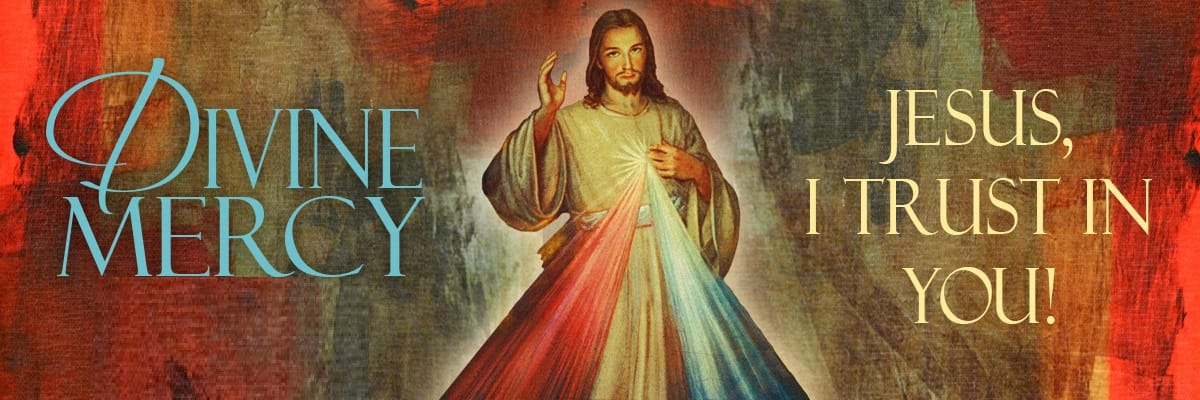
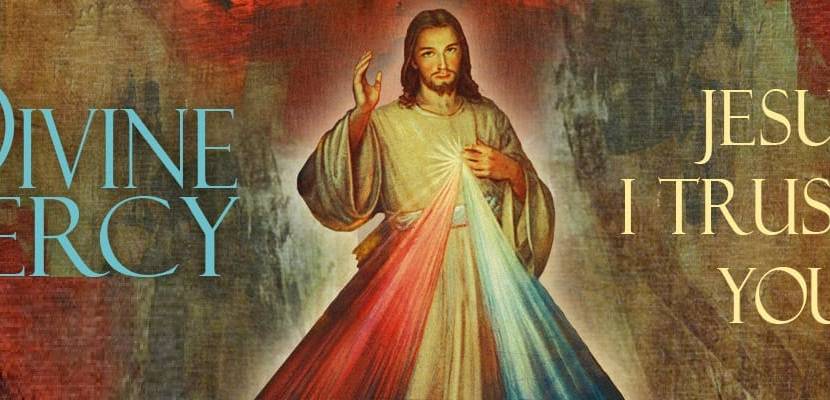
Today we celebrate Divine Mercy Sunday. If you have listened carefully to the prayers and readings, you will realize why the Second Sunday of Easter has that title. The opening prayer addresses the Father as “God of Mercy.” In the Psalm we repeated several times, “His mercy endures forever.” Besides mentioning the word, our readings illustrate mercy in action. But before going into the Scripture lessons, we need to ask this question: What does “mercy” mean?
To understanding the meaning of mercy, it will help if we examine its etymology. Our English word, mercy, goes back to the Latin: misericordia, which is composed of two words. “Cordia” is familiar to us from such words as “cardiologist” and “cardiac.” It means heart. The first part, “miseri” refers to suffering. Mercy, then, means to have a heart for those who suffer or, more precisely, to have a heart willing to suffer for others.
Today’s readings reveal that kind of heart in Christ and in his followers. When Jesus appeared to his disciples that first Easter, he said, “Peace be with you.” As you can imagine, that greeting meant more than “hello” or “good morning.” Jesus, in fact, desired to communicate to them something of great value. The peace which Jesus won for us had cost him his blood, his very life. What that peace involved, Jesus tells us clearly: “Receive the Holy Spirit. Whose sins you forgive are forgiven them…” To his apostles Jesus communicates the Holy Spirit with the power to free men from their sins. That freedom or absolution comes through the Sacrament of Reconciliation.
From the Acts of the Apostles we glimpse mercy in action. The early Christians were so filled with the Holy Spirit that “no one claimed any of his possessions as his own.” Rather, they “distributed to each according to his need.” It was not Karl Marx who invented the principle: “from each according to his ability, to each according to his need.” Marx lifted it from the New Testament, but made the mistake of thinking that it could happen by political coercion. His followers created a human inferno, but their failure should not cause us to reject the ideal. Part of mercy involves the effort to provide every human being with access to this world’s blessings.
The reading from Acts, then, calls our attention to the corporal works of mercy: feed the hungry, clothe the naked, shelter the homeless and so on. St. John’s letter, on the other hand, focuses on what are called the spiritual works of mercy such as: convert the sinner, counsel the doubtful and bear wrongs patiently. By doing those things we fulfill Christ’s commandments and help to extend his victory. “Whoever is begotten by God conquers the world. And the victory that conquers the world is our faith.”
Ultimately mercy results not so much from human effort as from God’s free gift. As Shakespeare said, “It droppeth as the gentle rain from heaven.” During this time of Easter, we ask God to open our hearts so that we might receive into our hearts his Mercy – his Holy Spirit.
Easter Math…Christ Is Risen ~ The Rt. Rev. Jay Van Lieshout, OPI
Greetings my brothers and sisters on this day of our Lord’s breaking of the bonds of death and resurrection. Christ is Risen!
Yes, the Lord is risen indeed!
It seems as if it was just yesterday that we donned our sack cloth and inscribed on our foreheads a reminder of our own mortality; that ashen cross which reminds humanity that the Creator fashioned each of us from star dust and by the grace of the Holy Spirit’s breath we came into being. Then, just as the ashes were place on our heads, they began to fade with the day’s toil; so, too, do our lives slowly fade away under the wear of our trials and tribulations till we once again return to the dust from which we were created. But it is not just our lives which suffer such attenuation, the weight of our transgressions and the trespasses of others slowly eat away at our souls, a process which can lead the greatest and least among us to an inevitable spiritual death. But today we rejoice as the sting all death is eradicated, the tight fetters are loosed, the ashes of our sins have been washed away, and our souls set free from captivity!
From Ash Wednesday and throughout Lent, I have preached about how the ashen cross is not just a reminder of our human mortality, it is an open invitation to the Heavenly Banquet which bears the our Lord’s charge bring with us a guest, a “+1” if you will. It is not merely enough to show up to the feast, even if we bring gifts of finest gold, frankincense and myrrh. No, we are called to gather those who may not have received the invite, those who feel unworthy or unwelcome, the ostracized, the poor, the hungry, the dirty, the abandoned and lost, for as St. Lawrence taught us, these as the true treasures of Christ’s church!
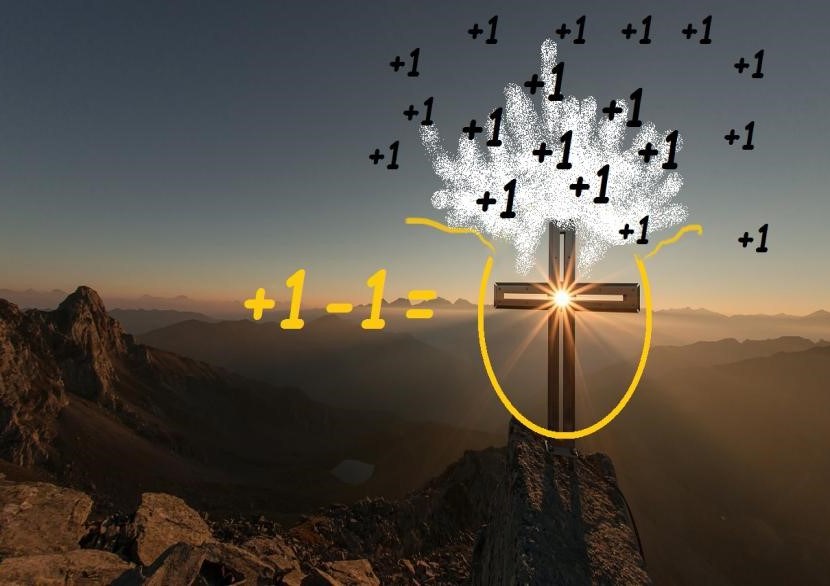
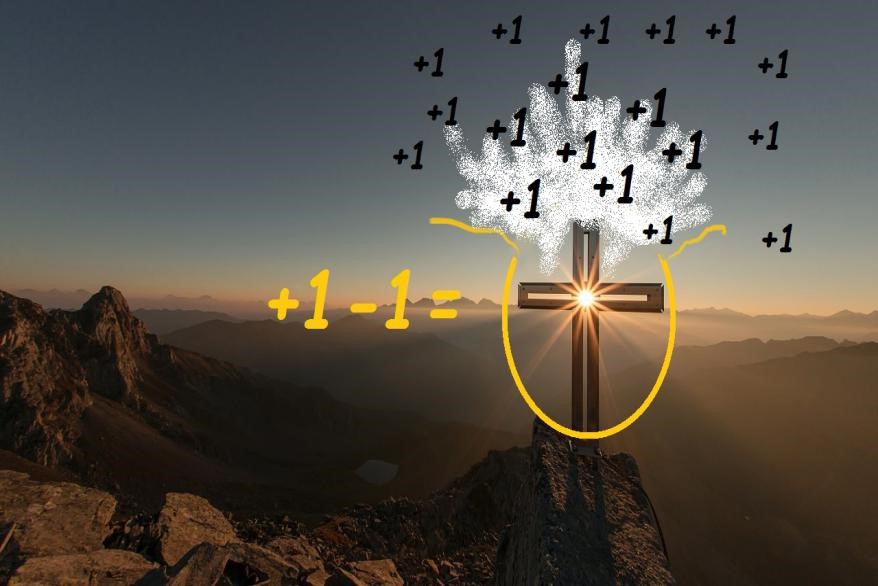
It is basic ecclesiastical math. The Creator has made each of us a single an unique creation, a gift brought forth from the Earth; therefore each of us begins as the Creator’s “+1”. By the nature of our imperfections, our lives slowly ebb away, a fraction here and a jot there, the sum of which adds up to negative one “-1”. Every child knows that subtracting 1 from 1 results in zero, the null number (+1-1=0). Each human lives this life equation, we come to earth in birth and eventually are place in the null set tomb of death.
It grieves me so that for many of our brothers and sisters, the same withering and eventual emptiness plagues their spiritual life as well; they are born, soul brightly burning in the image of the Creator’s endless love, the travails of life choke this flame with the ashes of remorse and regret, while others, because of their own imperfections and darkness in heart, seek to further suppress or extinguish the light of those around them in hopes that this might make their light seem brighter. The final outcome are our brothers and sisters who feel as if they are worthless; like the proverbial number zero, they represent nothing and have no value, the light of God’s love has been replaced by endless sorry and darkness.
On this day of our Lord’s Resurrection, I tell you my brothers and sisters, God’s light can NOT be extinguished but only hidden. God has not and will NEVER abandon any of us, we have just been blinded to the truth by the wickedness of others!
The grace, compassion and love of our Creator has no limit. Our cries have been heard. In one benevolent act of mercy, the world received the ultimate gift of the Son of Man; the perfect “+1” born to bring the light of truth back into the world, the “+1” who brings the scriptures to fruition , the one who came to deliver us a from the oppressive bonds of our sins and the Good News to all of humanity. And this man, Yeshua, this manna come down from heaven, allowed Himself to be tempted, pursued, betrayed, imprisoned, whipped, weighed down with the burden of His sentence, mocked, reviled, stripped, tortured and ultimately succumbed to death in order that He might serve as the atoning sacrifice for all our sins. Yes, like all humans, Jesus carried out the full life equation from beginning to the end, from alpha to omega, birth to death, womb to tomb: +1-1=0 for each and every one of us.
Yet Jesus was no ordinary man, He was the Creator’s Son, the Christ, and our Creator lives and not even the bands of death can hold the Son! In three days the great mystery unfolded: Christ has died and Christ has risen and we know He will come to each of us again! On this Holy Easter and on every Sunday we celebrate Christ’s rewriting of the life equation. The stone blocking the entrance to the tomb has been rolled away, the shackles of spiritual death are broken and so our sack cloth of mourning is replaced with the finest white linen of rejoicing. The Son of Man has erased the debt cause by our transgressions and now our souls have been resurrected our spiritual light shines in brilliant reflection of His Victory over death! By the “+1” of His life and the “-1” His death on the cross we have been forgiven. By His Resurrection the zero is broke open, spiritual emptiness and death has been overcome, and an infinite amount Grace and a limitless number of “+1” places at the banquet table have sprung forth. No longer is the cross to be a symbol of suffering and pain, it is now an emblem of God’s invitation to boundless grace and mercy; not a reminder of what we have committed but of all that He has forgiven!
At the start of Lent we were inscribed with a cross of ashes on our foreheads to remind us that we are all born out of dust and no matter how rich or how powerful, to dust we all will return. Now we are called to wear this this emblem as an outward sign to others, an invitation to take our hand so that we might lift others up out of the dust, a promise to untie the bonds of injustice, a light to guide others safely around the pitfalls of life, a commitment to feed our brothers and sisters who are hungry, clothe them when they are naked, and comfort them when they are alone or grieving. This cross we bear is no longer a reminder of our mortal shortcomings, it is the invitation Christ has extended to all humanity to attend the Heavenly banquet, the gift of His Resurrection emblazoned on us so that we may always be an invitation to all those we meet to be our “+1”.
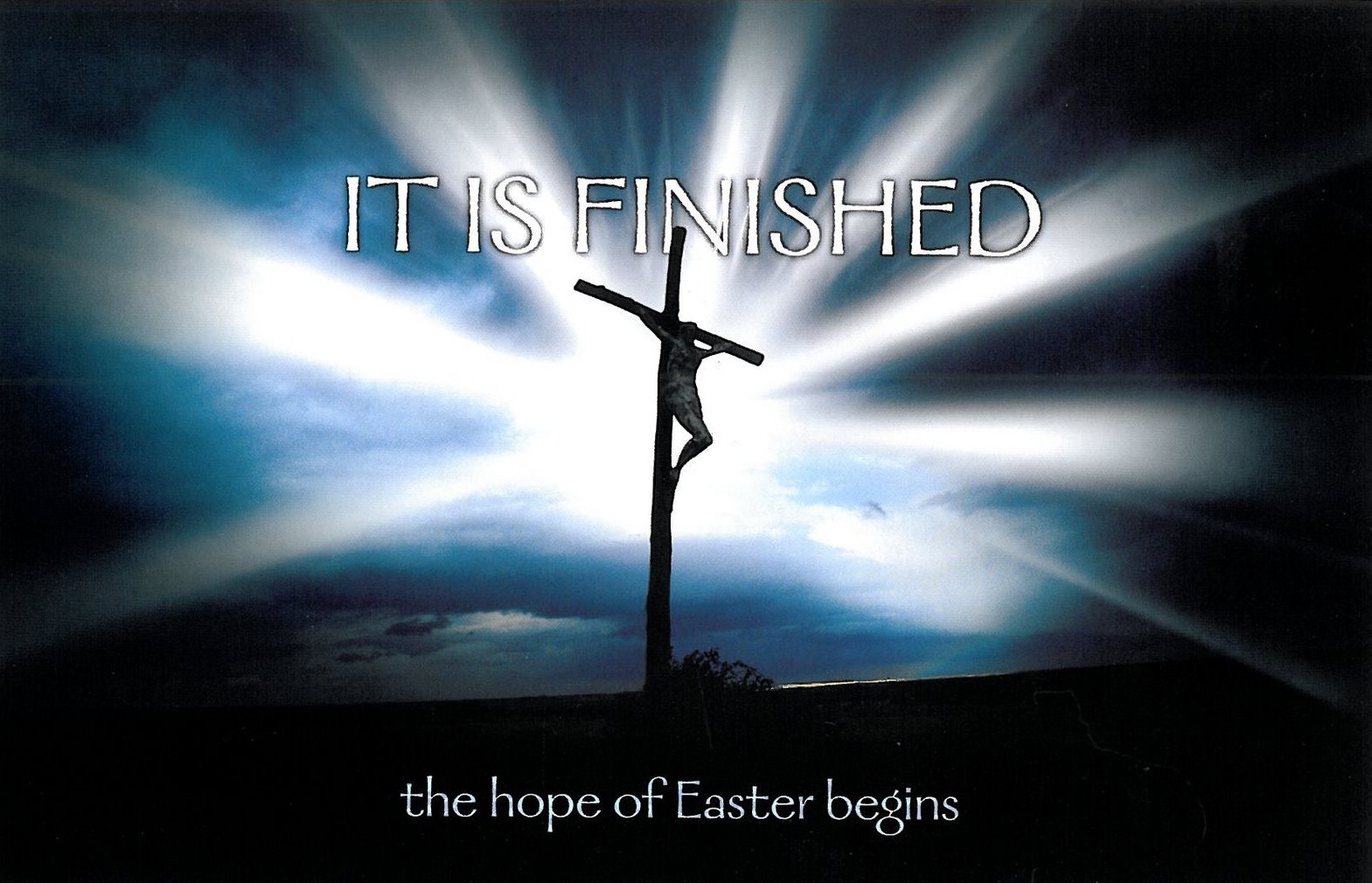
It Is Finished ~ The Very Rev. Lady Sherwood, OPI
Reading 1: IS 52:13—53:12
Responsorial Psalm: PS 31:2, 6, 12-13, 15-16, 17, 25
Reading 2: HEB 4:14-16; 5:7-9
Gospel: JN 18:1—19:42
Liturgical colour: Red.
Roman crucifixion was designed to produce a slow, agonizing death. It involved as much suffering and shame as possible. This excruciating form of public execution was bloody, violent and extremely repulsive. The Jews believed if you were crucified, you were under God’s curse (Deuteronomy 21:23). It was on a Roman cross that Our dear Lord Jesus, who knew no sin, bore the sacrificial price for all of our sin.
Before His crucifixion, Jesus was repeatedly mocked, he was spat upon and he was flogged. His body was beaten so severely, He was hardly recognizable. Soldiers stripped Him and led Him outside the city to die a criminal’s death. While on the cross, passersby hurled insults at Him. The religious leaders taunted Him as they attacked His power to save. Even the two thieves who were being crucified beside Him heaped insults on Jesus.
For a short while, I want you to think about what Jesus has done for us all through his death on the cross. Visualise in our minds our suffering Saviour. Think about the love that God has for each and every one of us, and offer him our profound and sincere thanks. Let us each ask God to wrap us tightly in his love – forgiving us, watching over us, guiding us. If anyone feels that Jesus and his love for them are not real for a large part of their life, simply ask for his help, he will always answer your call.
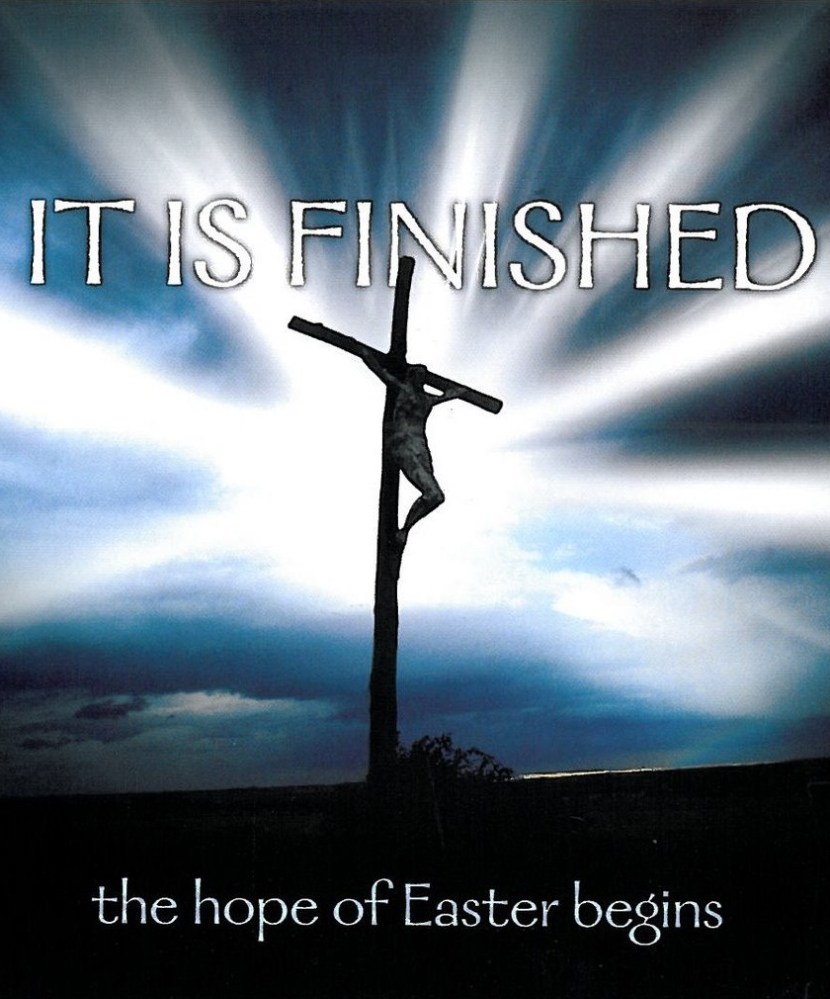
Jesus died on the cross to get rid of the power of sin that condemned us. His death bridged the deep gulf between God and us. “It is finished”, Jesus cried. But by saying this, Jesus didn’t mean he was finished? NO! He is now sat at the Right hand of God the Father, and will come again in Glory to judge the living and the dead. By Jesus’s statement of “It is finished!”, Our Lord meant that the restoration of the friendship between God and humanity had been finished. The task for which God’s Son came to earth had been completed.
He has won forgiveness and the possibility salvation for all people.
Nothing else needed to be done.
Salvation is complete. “It is finished”.
We call today “Good Friday”. It certainly was the farthest from being a good day for Our Lord Jesus. He endured excruciating pain, soul-wrenching agony, hanging by the nails in his hands, feet and side for hours, death on that rough wooden cross, for all of our sakes. We call today “Good Friday” because the cross is sure and definite proof of the powerful and ultimate love that God has for each of us. Here we see a love that was prepared to endure the ultimate in order to rescue us.
Paul writes, “God has shown us how much he loves us—it was while we were still sinners that Christ died for us! … We were God’s enemies, but he made us his friends through the death of his Son.” (Romans 5:8,10). That’s how much God loves us – Jesus died for us even though we don’t deserve it. His death has made us God’s children.
Jesus’ announcement, “It is finished” is clear and simple. Jesus has completed his task. The reason why he came as a human amongst us has been fulfilled. He came so that you and I can have forgiveness and salvation. He came to give us the victory over death. He came to ensure that we could enter his kingdom and live with Him forever.
Let us pray:
Dear Heavenly Father,
We remember today, the pain and suffering of the cross, and all that your Son, Our Lord Jesus was willing to endure, so we could be set free. He paid the price, such a great sacrifice, to offer us the gift of eternal life.
Help us never to take for granted this huge gift of love on our behalf. Help us to be reminded of the price that was paid for our sin. Forgive us for being too busy, or distracted by other things, for not fully recognizing what your Son freely gave to fulfill your will for us, for the sacrifice that was done for us.
Amen.
Journey With Jesus: Palm Sunday ~ The Very Rev. Lady Sherwood, OPI
Reading I: IS 50:4-7
Responsorial Psalm: PS 22:8-9, 17-18, 19-20, 23-24.
Reading 2: PHIL 2:6-11
Gospel: LK 22:14—23:56
Liturgical colour: Red.
As most people who probably know me well are aware, I am a person who likes to travel on journeys, whether for ministry or to visit sacred or beautiful places of the Lord’s creation. But the journey undertaken on Palm Sunday, which we celebrate today, was a journey of both joy and celebration, but also of suffering.
Dearest brothers and sisters in Christ, today we celebrate Palm Sunday. Today all those years ago, Jesus rode into Jerusalem on the back of a donkey. Jesus was totally devoted to following the will of the God his Father. Jesus was dedicated to doing whatever it took to fulfil the mission his father had for Him. Jesus prayed in the garden of Gethsemane, He asked God to let this cup pass from Him, but not MY will but yours oh Lord. Jesus was committed to the work of God and to fulfil his will as was predestined.
In John 12:13, we read that they broke palm branches from the trees and lined the streets in front of Jesus Christ as He made His triumphant entry into the city of Jerusalem. ‘‘Many people….took branches of palm trees, and went forth to meet him and cried, ‘‘Hosanna: Blessed is the King of Israel that cometh in the name of the Lord.’’
They correctly called Jesus the King of Israel, for He was presenting Himself as their king. This was Jesus most popular hour. There were many times, when Jesus was misunderstood and rejected by His own, but here is one of those moments in His earthly ministry that has been called by many His most popular hour. We read that on this occasion a great multitude said, ‘‘Who is this?’’ (Matt. 21:10) We read that even the enemies of Jesus said, ‘‘….the world is gone after him.’’
(John 12:19) The occasion of Palm Sunday took place one week before His resurrection from the grave. While in a little village called Bethphage Jesus said to his disciples, ‘‘Go to a certain corner where two ways meet: there will be a home. You will find a colt tied. Bring that beast of burden. I am going to ride it into the city today.’’
So, we can see that Palm Sunday is a day of great rejoicing because of the coming of the King amongst his people.
But amongst all the rejoicing, this next week, is full of so many twists and turns far beyond our comprehension …a rollercoaster of events for Our dear Lord Jesus, preordained by God the Father and accepted willingly by our lord Jesus for sakes and for our salvation.
However, amongst the rejoicing crowds shouting ‘Hosanna!’ were also the Pharisees and Jesus knew that this journey would also lead to his death for our salivation, only five days later. This was certainly an extremely important journey and was filled by both the rejoicing and waving of palm with the shouting of ‘Hosanna!’, and the suffering of our dear Lord Jesus knowing that these very people who today rejoiced as he entered Jerusalem would also be the people who would condemn him to physical death on the cross. Jesus knew this was the will and plan of his Heavenly Father for our salvation from sin and death, he knew what had to happen and our Lord accepted this.
Palm Sunday starts the week with joy and rejoicing, but within this one same week, we see our Lord betrayed, we see him arrested, we see him put to trial without crime before Pontius Pilate, we see him tortured, humiliated, and then crucified upon a cross at Calvary, all for the forgiveness of our sins, so that we may be be saved. Then we see the return of joy, as our Lord is resurrected from the grave..victorious over death, our sins paid for by his most blessed innocent sacrifice on our behalf.
Palm Sunday is the day which starts the week which finishes our Lord’s earthly ministry, the week where Our Lord gains salvation for us by his sacrifice of the purest love. This week both starts and ends in joy, but also leaves us with the joyful expectation for when Our Lord will once again, return in Glory.
Of course, there are many types of journeys that we can undertake in our lives, but no journey of ours can ever compare to this journey of our dear Lord and Saviour.
Taking a journey may not always mean travelling, a kind of journey can also be something unexpected which we deal with in our lives and situations in which we may find ourselves. Faith and trust in the Lord is also a kind of journey.
Where is your journey taking you? Is Jesus going with you?
Let us pray:
Father,
Thank you for sending your Son and paving the way for our lives to be set free through Jesus’ death on the cross. Thank you for what this day stands for – the beginning of Holy Week, the start of the journey towards the power of the cross, the victory of the Resurrection, and the rich truth that Jesus truly is our King of Kings.
“Hosanna! Blessed is He who comes in the name of the Lord…”
We give you praise and honour for your ways are righteous and true. We give you worship for you are holy and just. We will declare that your love stands firm forever. For your loving kindness endures forever.
Amen.
The Feast of St. Joseph ~ The Very Rev. Lady Sherwood, OPI
Liturgical Colour: White.
Reading 1: 2 SM 7:4-5A, 12-14A, 16
Responsorial Psalm: PS 89:2-3, 4-5, 27 AND 29
Reading 2: ROM 4:13, 16-18, 22
Gospel: MT 1:16, 18-21, 24A or: LK 2:41-51A
My dear brothers and sisters in Christ,
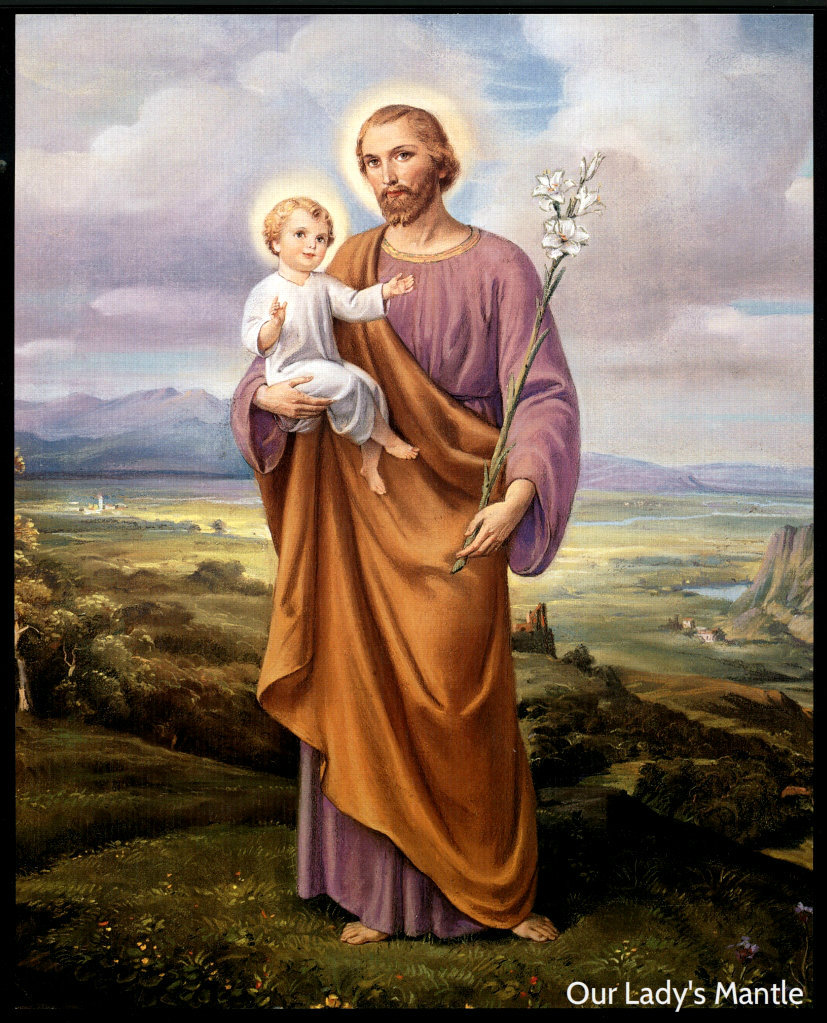
Today, we come together as the Church to commemorate St. Joseph, the Spouse of The Blessed Virgin Mary, and the foster Father of our Lord and Saviour,Jesus, when he became one of us here upon the Earth.
In the same way in which God, our Heavenly Father, who gives each of us as his children, unconditional love, care, stability and who sets us the standard with which we should strive to live our lives with his holy word in the scriptures, a true Father to each and every single one of us, who only ever wants the very best for all his children. St. Joseph follows our Father’s example, as both husband and foster father. He gives us examples which men should follow in their lives. Joseph cared for and provided for the Holy Household. There are many qualities that Joseph had which we could use to be the role model for Christian husbands and fathers. Joseph was a very compassionate man. We can see an example of this when he suspected his wife of infidelity; he planned to divorce her quietly rather than denounce her publicly and expose her to public shame and penalty.
Joseph was always obedient to God and did what he knew was God’s will without thought or hesitation. Examples of this are that he kept Mary as his wife; he protected and provided for his family when they had to flee to foreign lands to protect them from danger.
Joseph led a life of deep prayer and was in communion with God, and would always seek out that which was God’s will. God often told Joseph his will using dreams.
Joseph was a provider of care, When Jesus’s life was threatened, Joseph would take them out of danger. He took his family to Egypt and only returned when it was safe to do so, and when Jesus went missing at aged twelve, Joseph went searching for him because obviously, both parents were obviously extremely worried about Jesus’s safety.
Joseph also brought much more to Jesus’s life, he taught him his trade which Jesus worked in for about twenty years, he gave Jesus the love and stability he as any child needs, and was his earthly male role model, which was and still is vitally important for a good father to give any child.
He was a man with a firm faith in God coupled with a resilient personality, who did not complain and was not appalled nor distressed in the midst of trials and tribulations, St. Joseph knew how to face, carry and solve the burden of his vocation, of life’s difficulties and responsibilities with serenity, with complete faith and love, entrusting himself totally and unconditionally to God’s plans.
Sadly not all children are brought up in such a way today, but husbands and fathers truly should seek to follow this sincere man of God in the way they run their lives. Are you married? Do you give all the love, trust and respect to your spouse? Or with stresses and strains do you always argue or not truly make time for each other? If you have children, do you know where they are and if they are safe, or who they might be talking to online? Do you give emotional stability, patience and unconditional love? Do your children see you as the role model they need in a Father? We should always strive to be as our heavenly Father is to each of us, whether that be to our spouses, to our children, and in fact to all as our brothers and sisters.
While the Gospels do not shed much light on St. Joseph’s life, it is believed that he died before Jesus’ public ministry.
St. Joseph is the patron of fathers, spouses, priests and seminarians. But also, St. Joseph teaches us so much by his silent example of his life, and just how we should love God faithfully and obediently.
Let us pray:
Blessed St. Joseph, husband of Mary,
be with us this day.
You protected and cherished the Virgin;
loving the Child Jesus as your Son,
you rescued Him from the danger of death.
Defend the Church,
the household of God,
purchased by the Blood of Christ.
Guardian of the Holy Family,
be with us in our trials.
May your prayers obtain for us
the strength to flee from error
and wrestle with the powers of corruption
so that in life we may grow in holiness
and in death rejoice in the crown of victory.
Amen.
We pray to God through your powerful intercession for all the fathers and spouses in the world so that they may imitate you in your faith, love and fidelity to God and your family.
We entrust to you as well all the families in the world so that they may imitate the virtues lived by the Holy Family of Nazareth and become its faithful image.
Through your intercession, may God shower more vocations to His Church, especially the vocation to priesthood, and may all priests and future priests strive be holy, faithful and apostolic ministers of Christ.

Be Still My Soul~ Br. Chip Noon, Novice
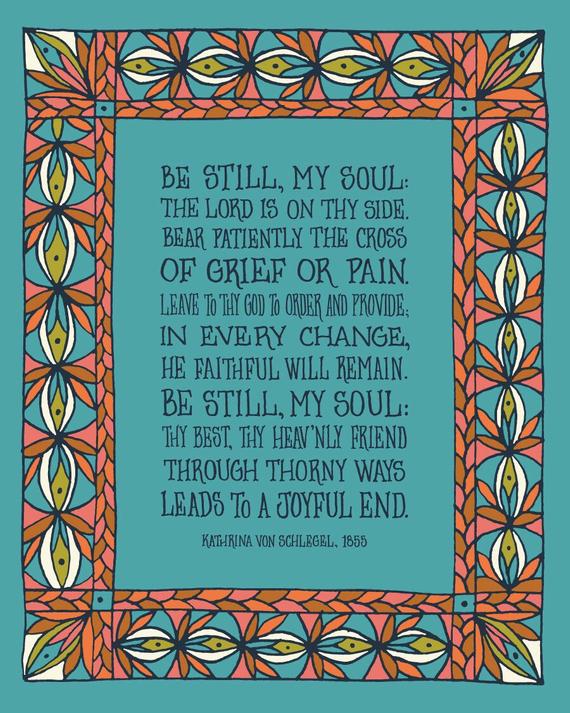
Be still my soul! The Lord is on thy side….
Lent and Advent seem to be mirrors of what we do all day, every day, all year, every year: We are waiting, waiting on the Lord. And it also seems like everyone, from Abram in today’s First Reading to you and me, we have been waiting forever.
Now some of us, like myself, are going to say, “OK, I can wait a little longer, if you don’t mind…”, but that is because we believe the words of the hymn that I started with:
Be still my soul! The Lord is on thy side;
Bear patiently the cross of grief or pain.
Leave to they God to order and provide;
In every change He faithful will remain.
Be still my soul! thy best, they heav’nly Friend
Thro’ thorny ways leads to a joyful end.
Because we have faith that there will be a peaceful end and a heavenly homeland. Well, most of the time we believe this. Sometimes we…or should I more properly say “I”…mostly believe this. Yes, admittedly, there are days when I have my doubts. Do you? These are day that are usually filled with some physical or emotional travail. Some pain or sorrow that I don’t seem to be able to get away from. And it comes upon me like a dead weight, a frightening phantom, an empty abyss.
Oh it is hard to get away from these terrors.
Abram seemed to need quite a lot of convincing that the Lord was on his side, over much of his life. Today we hear that he had to be shown all the stars in the firmament, five animals to sacrifice, a flaming torch, and God making a covenant with him. And this was God speaking directly to him!
In today’s Psalm, the prophet is on the one hand expressing his belief in God and on the other, bucking himself up to be stouthearted and courageous in the face of anguish. And the Apostle Paul is telling the Philippians, again as he says, to “stand firm in the Lord.”
So it seems as though everyone in the Bible and scriptures needs constant pep-talks, constant reminders of what they believe and what is in store for them.
And isn’t that true in our own lives? We, and almost everyone we know, need pep-talks at one time or another…sometimes many times or another! Throughout literature, history, current affairs, our heroes and we are buoyed up by some one or some thing and we are buoying up our friends and family. It seems like a constant endeavor. Maybe because it is in our makeup to ride the roller coaster of feelings. I know I am cursed – or blessed – with this phenomenon. I can recount many, many times that I have either needed or given encouragement, with the emphasis on “courage.”
Helping others, this act of friendship which we call comfort or reassurance, is deep-rooted in society, especially in societies such as religious orders. And yes, it is found throughout the New Testament. For example, in 1 Thessalonians Paul says, “Therefore encourage on another and build each other up, just as in fact you are doing.” And Peter: “Above all, keep loving one another earnestly, since love covers a multitude of sins. Show hospitality to one another without grumbling. As each has received a gift, use it to serve one another, as good stewards of God’s varied grace.” And again Paul, in that famous passage: “Let the word of Christ dwell in you richly, teaching and admonishing one another in all wisdom, singing psalms and hymns and spiritual songs, with thankfulness in your hearts to God.”
And so, in the days of Lent, each day can be a lesson for us, with the Resurrection as the prize. And we should not be hesitant to anticipate that prize, because look, in today’s Gospel, Peter, John, and James were initiated in a way into the divinity of Jesus and as we know, it was not until after the Resurrection that they truly understood and believed, through the power of the Holy Spirit.
Even the Transfiguration and the spirits of Moses and Elijah were not enough for them; so much so that they did not tell anyone what they had seen. I’ve always thought that it was so fantastical to them that they were afraid to be thought of as foolish.
But don’t lets us be foolish. Let us remember past Lenten days and past Easters and remember those times God has spoken to us in the quiet of our souls and sing again the old hymn “Be still my soul! The Lord is on thy side….”
Lord, thank you for being on our side. As we go through this Lenten season, help us to remember these words every day.
Amen.
A Holy Lent: Ash Wednesday~The Rev. Shawn Gisewhite, OPI
Although it can be a little grim, I love the Ash Wednesday service. More than any other single service in the entire Christian year, it expresses the two great truths of our faith.
First, we acknowledge our mortality and our sin. We are marked with ashes and reminded that we are dust and to dust we shall return. Then comes Psalm 51 and the long “litany of penitence” in which we confess the many ways we fail to live as we should in the short time allotted to us.
There is something refreshingly honest in that. Even if we mostly try not to think about it, we all know that we will die someday, and we all know that we do not always act the way we should.
But, if we stopped there, we would be left without hope. Thankfully, our service continues with the words of God’s forgiveness and love, and the sacrament that unites us to Jesus Christ in his death and resurrection.
And that, in a nutshell, is our faith. We move(or rather, we are moved) from sin and death…to life and love.
Just like Ash Wednesday, Lent, which begins right now, is all about the move from sin and death to life and love.
During the service, the Priest will invite you all, in the name of the Church, to the observance of a holy Lent. some of the things we can do in order to observe a holy Lent are: Self-examination and repentance. Prayer, fasting, and self-denial. Reading and meditating on God’s holy Word.
Now, those are all good things to do anytime. But more than any other season in the Christian year, Lent is a time for us to be brutally honest with ourselves about where we stand in our relationship with God.
Lent invites us to reflect on our priorities. I don’t mean what we say we value. I mean the priorities that are reflected in the way we live, how we spend our money, where we put our emotional energy. What would the people who know us best say is important to us? What would they say about our love of God and neighbor?
For me, I suspect for most of us, answering those questions can be painful.
Sin is bad enough. The fact is, I do things I ought not to do. I leave undone things I ought to do. I sin against God and neighbor in thought and word and deed.
It is even worse to think about my own death or the death of the people I love. One of the hardest things for us to do as Priests is saying Last Rites. I did so for a woman who died a few hours later. As I prayed for her, it hit me that someday I will be the one lying there.
Those are hard truths, and most of the time we turn away from them. Perhaps that is as it should be. But we cannot really escape the hard truths of our own lives, not indefinitely. At some point, we have to turn and face our sin and our mortality. Lent is the season when the Church invites us to face those hard truths, beginningg with this service.
And so we work at self-examination and repentance and the other Lenten disciplines.
But as in this service, so in the rest of Lent, there is the good news. Even in Lent, we hear the word of God’s forgiveness and love! Even in Lent, we hear the good news of Christ’s victory! Even in Lent, we hear the good news of God’s kingdom of justice and mercy and love!
Indeed it is the good news of God’s love for us that makes it possible for us to face the hard truths of our lives with courage and faith and hope. We can acknowledge our sin, because we know that in Jesus Christ we are forgiven. We can acknowledge that we will die, because we know that someday we will live again with Christ our Lord.
I am grateful for the good news that we hear even in Lent. But we should not hurry too quickly to the good news of Easter. Nor should we linger too long with our sin and mortality. Rather, Lent is about the move from one to the other.
What Lent adds to the lessons of Ash Wednesday is time: time to practice, time to grow, time to come closer to God, time to experience that move from sin and death to love and life.
I have a friend who is currently on one of those new fad diets. For now, my friend is eating no gluten and no processed food and no sugar and no alcohol and hardly any fruit or carbohydrates. It all sounds grim to me, and she says I am right.
Her plan is to stay on this diet for a few weeks while she gets all the toxins out of her body.
Lent is like a spiritual version of that diet. For a few weeks, we adopt practices that help to purify our spiritual systems. To the degree that we can, we avoid sin and live right. We give up those things that sdistract us from God. We take on practices that support our efforts to grow in the knowledge and love of God.
And because Lent is just six weeks, we can commit to things that we might not be able to sustain indefinitely. I am giving up soda, tea and beef. Come Easter, I intend to return to all three! But I can give them up for a while.
But a kind of spiritual detox, important as it is, does not exhaust the meaning of Lent. The goal of Lent is for us to draw closer to God permanently.
This, too, is a little like my friend’s diet. For now, she is giving up everything that makes eating worthwhile. After a few weeks, she will relax and eat some of that stuff again. But her long-term hope is that this diet will change how she eats in an ongoing way. Going forward, she will eat some carbohydrates, for example, but not as much as she used to.
Lent is like the strict period of my friend’s diet. But coming out of Lent, we can hopefully have developed new and spiritually healthy habits.
So, for example, if you do not have a morning prayer routine, you might try saying the service of Morning Prayer every day during Lent. It takes about fifteen minutes. Then, if that is too much, and it may well be, you could continue after Lent ends with a scaled down prayer routine. You are spending a few minutes in prayer every morning.
All of this is one long way of saying that I encourage you to take the invitation to a holy Lent seriously, to spend time prayerfully reflecting on what you could do in this holy season to grow closer to God, and to reflect prayerfully on habits that you could begin to form that will draw you closer to God in an ongoing way.
And I urge this in the name of Jesus Christ, the pioneer and perfecter of our faith. Amen.


You must be logged in to post a comment.