
Category: Sermon
Ashes Thou Art ~ Ash Wednesday ~ Br. Brent Whetstone

Birds and Flowers and Faith ~ Br. Chip Noon, Novice

“Do not worry about tomorrow; tomorrow will take care of itself.
Sufficient for a day is its own evil.” This is from today’s Gospel.
The last several weeks have been a particular trial for me…physically and emotionally. It has seemed like there is no anchorage. I felt helplessly adrift, even having fleeting thoughts of calling my mother for advice…my mother who has been gone these last six years.
I, who usually know exactly what I’m doing and what I will do, I who have been asked innumerable times during my life, “So what is your advice here, Chip?”
Adrift and alone in an endless ocean with no lighthouses, harbor buoys, or navigation by the stars.
And then, in preparation for this homily, I turn to the USCCB site for the readings for February 26th and what do I find? “I will never forget you,” says the Lord.
“He only is my rock and my salvation, my stronghold.”
“Therefore do not make any judgment before the appointed time…”
“The word of God is living and effective;
discerning reflections and thoughts of the heart.”
“Do not worry about tomorrow; tomorrow will take care of itself.
Sufficient for a day is its own evil.”
And as has happened so many times before, a mantel of serenity descended upon me and left me comforted.
Every single one of today’s readings has the same message: I am loved and all I need do is trust in God.
Then why do we kick against the traces? How is it we are lured down the path of worry and anxiety? What does being ill at ease gain us?
Well, in my case, if I examine the past few weeks, I think, and erroneously, that that path will lead me to something or someone who will say, “It’s OK, Chip.” I suppose when times get tough, we may get going but we also look for comfort from external sources: spouses, parents, friends, strong leaders. We can’t help it…we’re human, after all. I remember reading several biographies of General George S. Patton from World War II. He was tough, competent, aggressive, and yet he constantly had to tell himself, “Do not take counsel of your fears.” We are all children at our core.
But that’s a biological truth. We are all children. Even to our dying day. We are all seeking comfort, peace, protection. So if that’s the case, that we are all like this, then it must be a gift…or a curse…from God. A curse if we don’t pay attention to what God tells us time and time again: “Quit worrying…I’ve got your back.”
But a gift if we do pay attention, if we adopt a daily exercise of admitting our childhood state, then it’s a part of that exercise to ask God for help. “I’m your child. I need your help.”
There, how hard is that? “I’m your child. I need your help.”
Oh…there’s one other part of the exercise…we have to wait for God’s help with all trust and anticipation. Because as he tells us, “…for behold, the kingdom of God is within you.”
Lord, make us like little children who want to be held. Help us to turn our will over to you who provide all things for all of us. And Lord, help us to seek first your kingdom and find it everywhere we are.
Amen.
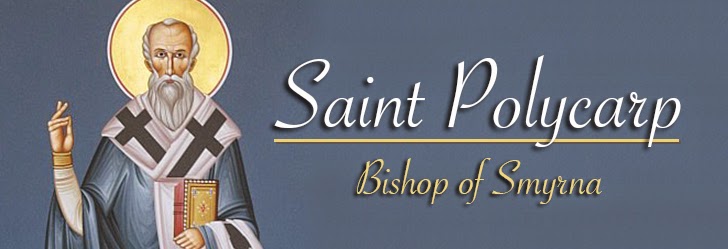
St. Polycarp: Counting the Cost ~ The Very Rev. Lady Sherwood, OPI
Reading 1: SIR 5:1-8
R psalm: PS 1:1-2, 3, 4+6
Gospel: MK 9:41-50
Do not be afraid of those who kill the body but cannot kill the soul. Rather, be afraid of the one who can destroy both body and soul in hell.(MT 10:28 NIV)
We are not of this world if we are of Christ, and are only temporarily passing through. The world does not understand us and has hate for us. To be truly of Christ means that like he did, we must take up our crosses and follow him no matter what the world thinks of us. The minimum we are likely to get is to be called heretic, but at the worst, we could be called to suffer death to follow our Lord, and this is what happened to St Polycarp who we commemorate today.
Polycarp was a disciple of John the Apostle and it was John who consecrated Polycarp as Bishop of Smyrnia. Together with Clement of Rome and Ignatius of Antioch, Polycarp is regarded as one of the three chief Apostolic Fathers.
Polycarp was 86 years old when he was called to give his life for the Lord. It was a time in Rome, when the Roman Emperor was seen as a God and was worshipped, but Polycarp refused to denounce Christ and to follow this false God.
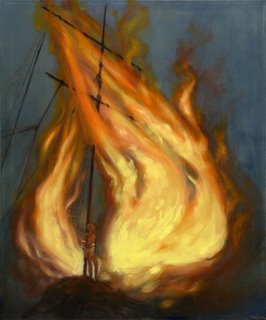
Polycarp was threatened by the men of Caesar that he would be thrown into a pit of wild animals if he did not denounce Christ, but Polycarp refused to budge. He escaped and hid on a farm and it was there that he had a dream about his pillow catching fire, and he knew it meant the Lord’s will for him was to be burned alive. Polycarp was resigned to his fate and in prayer, he even thanked God and praised him.
Polycarp was found, arrested, tied, and the fire was lit to burn him, but the flames formed an arch over him and his body was untouched. Instead of the expected look and smell of burning flesh, Polycarp glowed like golden baking bread and the fragrance was sweet like perfume. Because the fire didn’t touch him, they then stabbed Polycarp with a dagger, he succumbed to bodily death, and his blood poured and extinguished the flames of the fire.
After the death of Polycarp, his bones were stolen from the remains of the fire to celebrate his martyrdom. Polycarp gained the Crown of martyrdom on February 23rd 156.
Polycarp is an excellent example of living for God, accepting his will and trusting in him completely. He knew that Christ by giving his own earthly life for our salvation, meant that whilst the body may be harmed, the Spirit is eternal for a true follower of God and that there is nothing to fear.
Let us take the example of Polycarp into our lives, and fully live the will of God without complaint and with joy of thanks and praise to our heavenly Father.
Let us pray:
Saint Polycarp, sometimes Christ seems so far away from us. Centuries have passed since he and the Apostles walked upon the earth. Help us to realize that he is close to us always and that we keep him close by imitating his life as you did.
Amen.
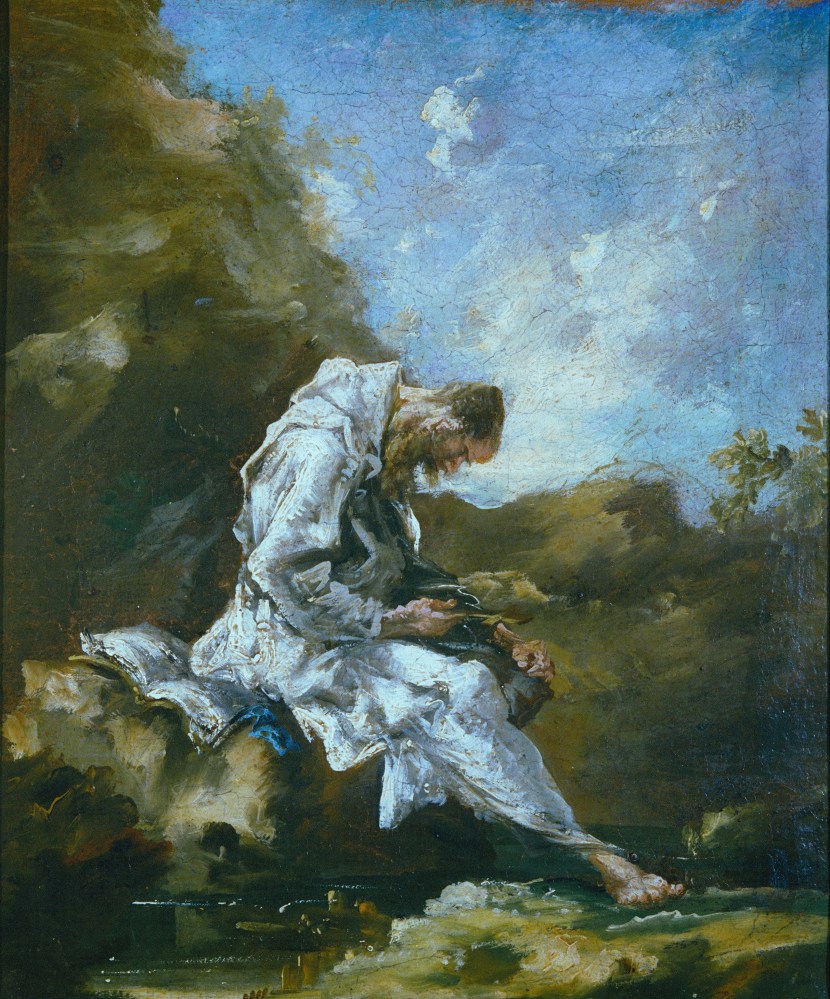
Perfection Through Perfect Love ~ Br. Brenden Humberdross, Novice

Open our ears, O Lord, to hear your word and know your voice. Speak to our hearts and strengthen our wills that we may serve you now and always. Amen.
Anyone perusing the stories of the Old Testament for the first time will quickly come to realise that the history of Israel is full of stories of violence, revenge and bitter rivalries. In numerous places Israel is allowed to take revenge for the wrongs done to them and in today’s Gospel reading Jesus highlights this fact twice by saying:
“You have heard that it was said,
An eye for an eye and a tooth for a tooth” and
“You have heard that it was said,
You shall love your neighbor and hate your enemy”
To the Jew of Christ’s time these would have been familiar ideas, and principles that their lives have been lived by. In hearing Christ use these words those listening would have likely been awaiting to hear a discourse of the righteous judgements of Israel and their right to punish those who have wronged them and to resists the evils perpetrated against them. However, in His typical style the message that the Saviour delivers to the gathered crowd is absolutely counter to their cultural experience.
In the words of Jesus those of us who are called to follow His path are called not to lives of vengeance and righteous retribution but to love, and this love extends to all of humanity, friend and enemy alike. This life of love is not only transformative for the world and people around us but is an essential part of the path that will lead to our salvation.
I’m sure that each and every one of us has been faced with a situation where we’ve been treated badly or someone’s done something to hurt us. If we allow our minds to wonder through these events and are honest with ourselves I’m sure we’d find that our first thoughts are often of how to even the score, how to get our own back and level the playing field. It seems that there’s nothing more natural than for a person to want what’s often seen as natural justice to occur, for the thief to have to return their spoils and have their freedom stolen through imprisonment, for the violent individual to be the recipient of violence or for the murderer to receive the punishment of State sanctioned execution.
I‘ve even heard Christians justify their convictions in these matters by quoting the very Old Testament scriptures that Jesus did in today’s Gospel. It seems that when we’re faced with hurt that the most natural human state is revenge, however, Jesus clearly points out to us that this seeking of revenge and “natural justice” is far from natural at all and is in fact part of our fallen condition.
In fact the Saviour points out to us that the most natural and perfect state for the hurt and the wronged is the exact opposite of revenge and hate; it’s love! In the reading this morning Jesus tells us directly that when we encounter evil we’re not to resist it, that we should welcome it and “turn the other cheek” to take a double portion of the evil being delivered.
It seems so counter intuitive to me to do this, why on earth would we ever let someone strike us a second time? Why would we let a thief not only take the expensive watch from our wrist but, unprompted, take the wallet from our pocket and give that to them to? It’s because of that higher law that I spoke of last week, the law of love. I have heard our Eastern Brethren share a story of the Desert Fathers to illustrate this point.
One day a Desert Father is away from his shack wandering the deserted paths, praying and contemplating. When he returns home he finds that there are strangers there stripping his dwelling of what few possessions he has. The Father is perturbed and concerned and falls to his knees in the corner of his small dwelling and instead of praying for deliverance, he begins to pray for the thieves, their safety and their wellbeing. At this the thieves are confused and worried, so they grab the last of the things from the dwelling and get out of there.
The story doesn’t end here though, on rising from his prayers for the thieves the Father notices that his walking stick has been left behind. He moves over to it, picks it up, and sets off out the door. Instead of going to find one of his fellow hermits and lament his position he sets off in pursuit of the thieves. It takes the Desert Father many days to catch up to the thieves and when he does, instead of chastising them he hands them his walking stick and tells them they forgot it.
The thieves are perplexed by this ragged old man of the desert and his actions but they are touched by his love. Instead of fighting them off, he prayed for them, instead of chasing them and demanding the return of his possessions the Desert Father gives them his last earthly good. The Desert Father has given himself over totally to loving humanity as God does and through this action these thieves are converted to Christ.
And so it can be with each and every one of us; loving our neighbours and our enemies isn’t about flowery, abstract feelings, it’s about real life decisions and actions. It’s about deciding to look on our fellow human beings through the eyes of God. It’s about taking the love that God has given us and letting it well up and overflow through us onto fallen humanity.
If each and every one of us committed to freeing ourselves from hate, sadness and anger can you imagine the impact that we could have on the world? How many of those that come in contact with us would be touched by the transformative love of God if we chose to reject evil and its outward manifestations and impacts? Now don’t get me wrong, I’m not saying that this is an easy path, or one that I have even begun to master, but it’s the path that each and every one of us, as followers of Christ are called to tread.
Each one of us is called to be a vessel of the perfect Love of God; one of Jesus’ greatest wishes was that we could all be perfect as God is perfect. The start of the path that leads to this perfection is the rejection of the resistance of evil that Christ speaks about today. If we can begin now to empty ourselves of hate, of sadness and of our anger we can begin to be filled with the perfect love of God and be ready to unite ourselves with God and become one with him in the perfect bonds of salvation!
It’s my prayer this day, for each and every one of us, that we can recognise within ourselves those times when we are giving ourselves over to hate and anger and begin to deliver ourselves from these and create a world of love paving the way for not only our own salvation but for the salvation of the whole world.
In the name of the Father, and of the Son and of the Holy Spirit. Amen.
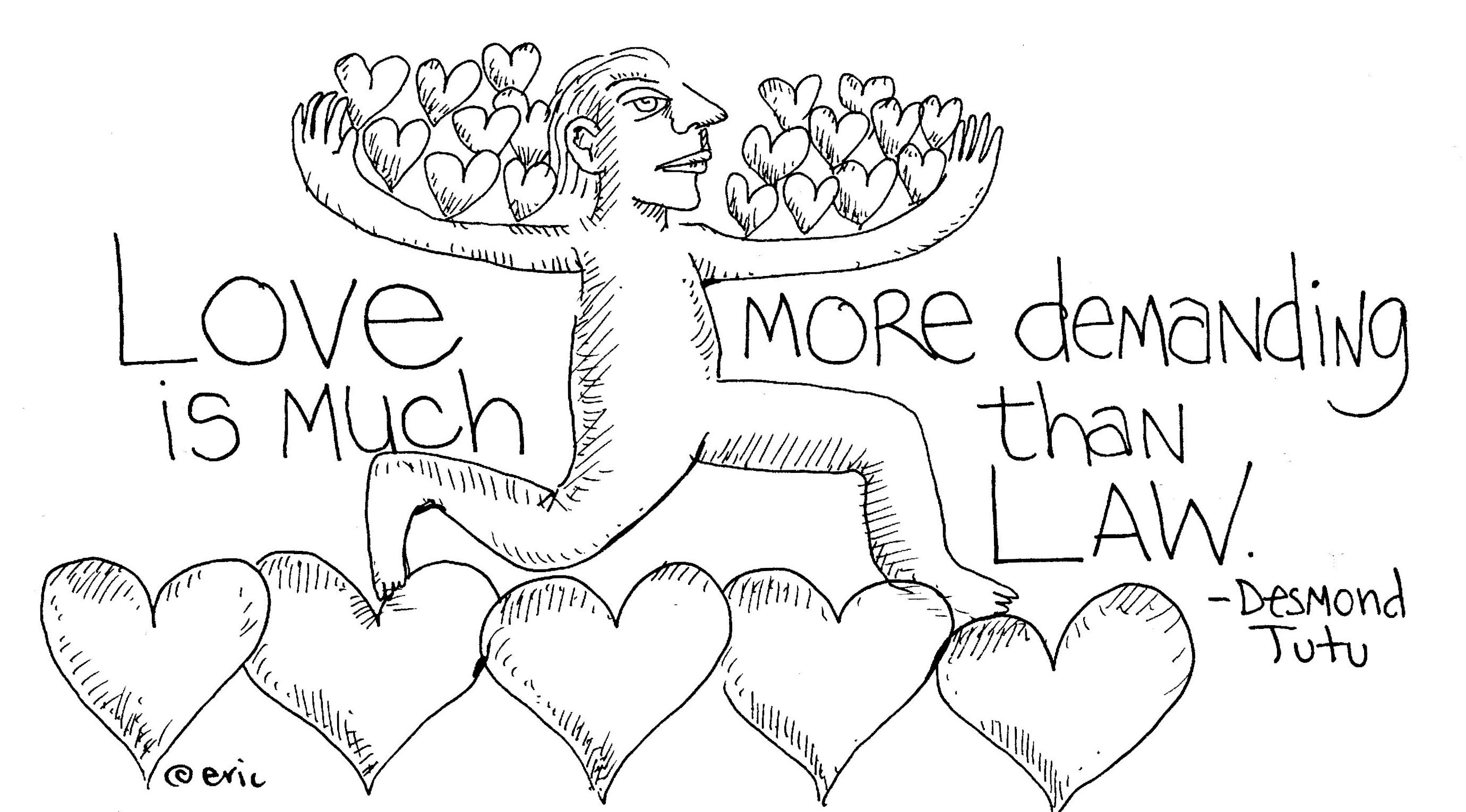
Relationship Over Law ~ Br. Mark Dickson-Patrick, Novice
Reading 1 – Sirach 15:15-20
If you choose you can keep the commandments, they will save you; if you trust in God, you too shall live; he has set before you fire and water to whichever you choose, stretch forth your hand.
Before man are life and death, good and evil, whichever he chooses shall be given him. Immense is the wisdom of the Lord; he is mighty in power, and all-seeing. The eyes of God are on those who fear him; he understands man’s every deed. No one does he command to act unjustly, to none does he give license to sin.
Responsorial Psalm – Psalm 119:1-2, 4-5, 17-18, 33-34
(1b) Blessed are they who follow the law of the Lord!
- Blessed are they whose way is blameless, who walk in the law of the LORD. Blessed are they who observe his decrees, who seek him with all their heart.
R. Blessed are they who follow the law of the Lord!
You have commanded that your precepts be diligently kept. Oh, that I might be firm in the ways of keeping your statutes!
R. Blessed are they who follow the law of the Lord!
Be good to your servant, that I may live and keep your words. Open my eyes, that I may consider the wonders of your law.
R. Blessed are they who follow the law of the Lord!
Instruct me, O LORD, in the way of your statutes, that I may exactly observe them. Give me discernment, that I may observe your law and keep it with all my heart.
R. Blessed are they who follow the law of the Lord!
Reading 2 – 1 Corinthians 2:6-10
Brothers and sisters: We speak a wisdom to those who are mature, not a wisdom of this age, nor of the rulers of this age who are passing away. Rather, we speak God’s wisdom, mysterious, hidden, which God predetermined before the ages for our glory, and which none of the rulers of this age knew; for, if they had known it, they would not have crucified the Lord of glory.
But as it is written: What eye has not seen, and ear has not heard, and what has not entered the human heart, what God has prepared for those who love him, this God has revealed to us through the Spirit. For the Spirit scrutinizes everything, even the depths of God.
Gospel – Matthew 5:17-37
Jesus said to his disciples: “Do not think that I have come to abolish the law or the prophets. I have come not to abolish but to fulfill. Amen, I say to you, until heaven and earth pass away,
not the smallest letter or the smallest part of a letter will pass from the law, until all things have taken place. Therefore, whoever breaks one of the least of these commandments and teaches others to do so will be called least in the kingdom of heaven. But whoever obeys and teaches these commandments will be called greatest in the kingdom of heaven. I tell you, unless your righteousness surpasses that of the scribes and Pharisees, you will not enter the kingdom of heaven.
“You have heard that it was said to your ancestors, You shall not kill; and whoever kills will be liable to judgment. But I say to you, whoever is angry with his brother will be liable to judgment;
and whoever says to his brother, ‘Raqa,’ will be answerable to the Sanhedrin; and whoever says, ‘You fool,’ will be liable to fiery Gehenna. Therefore, if you bring your gift to the altar, and there recall that your brother has anything against you, leave your gift there at the altar, go first and be reconciled with your brother, and then come and offer your gift. Settle with your opponent quickly while on the way to court. Otherwise your opponent will hand you over to the judge, and the judge will hand you over to the guard, and you will be thrown into prison. Amen, I say to you,
you will not be released until you have paid the last penny. “You have heard that it was said, You shall not commit adultery. But I say to you, everyone who looks at a woman with lust has already committed adultery with her in his heart. If your right eye causes you to sin, tear it out and throw it away. It is better for you to lose one of your members than to have your whole body thrown into Gehenna. And if your right hand causes you to sin, cut it off and throw it away. It is better for you to lose one of your members than to have your whole body go into Gehenna. “It was also said, Whoever divorces his wife must give her a bill of divorce. But I say to you, whoever divorces his wife – unless the marriage is unlawful – causes her to commit adultery, and whoever marries a divorced woman commits adultery. “Again you have heard that it was said to your ancestors, Do not take a false oath, but make good to the Lord all that you vow. But I say to you, do not swear at all; not by heaven, for it is God’s throne; nor by the earth, for it is his footstool; nor by Jerusalem, for it is the city of the great King. Do not swear by your head, for you cannot make a single hair white or black. Let your ‘Yes’ mean ‘Yes,’ and your ‘No’ mean ‘No.’ Anything more is from the evil one.”
“It is better to be feared than to be loved.” These words by Niccolo Macchiavelli describe clearly his theory of the duties of a leader. He believed that a leader was to impart rules on his or her subjects, and to impart fear into them that they might follow the rules that he or she had put in place. This, Macchiavelli believed, was the pinnacle of true leadership.
This was seen as true, too, in the Old Testament understanding of God. Throughout the Old Testament, we see the Jews following the law which had been put in place for the Jewish people, in order that they might live according to the commands of God. Faithful Jews followed the Law, took their sacrifices to the Temple, honored the priests and the Sabbath, according to the letter of the Law of God.
In our Gospel for this 6th Sunday in Ordinary Time, we hear Jesus, considered by many in the ruling priestly class to be a radical in His understanding (or seeming misunderstanding) of the Law of God, teaching His disciples and us today a very important lesson. We hear Jesus taking very important prescriptions of the Law, and does He abolish them? No! He takes them even further, taking the word or letter of the Law to its heart. Jesus makes it clear that following God and living in accord with His commands is not about following the letter of the Law, but about living in relationship with one another. We see this very clearly in the Gospel. Jesus says “You have heard that it was said, ‘You shall not commit adultery’…” This was the prescription of the Law. Instead of dropping this prescription, He instead says “But I say to you, everyone who looks at a woman with lust has already committed adultery with her in his heart.” Why is that so? It is because in the very act of looking with lust that the person has tainted the way in which he RELATES with her, not only in his mind, but in his actions. Jesus is talking about relationship.
There are many today who believe still that if they follow the letter of the Law, of a Law that was given to them either from a church authority or from within themselves, they will find true salvation. Nonsense! Legalism breeds scrupulosity, and scrupulosity breeds sin. We look at the spirit of the law which leads us to our ever-loving, all-powerful God, who loves us and sees us as His own.
In looking at the spirit of the law, Jesus reminds us that God desires a relationship, and that the living out of the Gospel message is a living out of a radical relationship with God and with our fellow men and women. He desires us to treat one another with respect, and not do anything sinful which might ruin the way in which we relate with one another.
God does not desire us to be afraid of Him, but rather that we come to Him Who can do all, Who knows every fiber of our being. He asks that we seek and serve Him in others in everything that we do. God desires to be loved, not feared.
Let us stay true to the Gospel message, in living out our relationship with God and one another. Let us keep ourselves and our relationships pure, that we might work together for the bringing about of the Kingdom of God. Let us love one another as God loves us, for we are His beloved children.
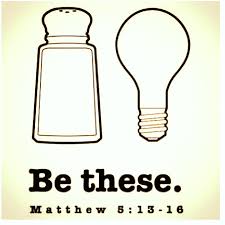
Salt, Light, and Us ~ The Rev. Dcn. Scott Brown, OPI
Gospel
MT 5:13-16 Jesus said to his disciples:”You are the salt of the earth. But if salt loses its taste, with what can it be seasoned? It is no longer good for anything but to be thrown out and trampled underfoot. You are the light of the world. A city set on a mountain cannot be hidden. Nor do they light a lamp and then put it under a bushel basket; it is set on a lampstand, where it gives light to all in the house. Just so, your light must shine before others, that they may see your good deeds and glorify your heavenly Father.”
Ready? OK – here goes!
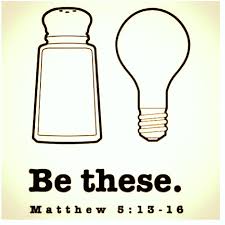
In Jesus’ first parable he compares us to salt. “You are the salt of the earth, but if salt loses its taste, with what can it be seasoned?” This means that although salt has many uses, its primary use is as a seasoning to enhance the flavor of other foods. Jesus is telling us here that we are the seasoning that enhances the rest of the world. People put salt on watermelon and tomatoes, however they very seldom ever say “That watermelon makes that salt taste great.” The job of salt is to make you realize how great the salt is, but how great the salted food is.
Some other uses of salt:
1: Antiseptic to cleanse wounds. We can be the antiseptic for the world and cleanse the wounds of those who are hurting, broken or damaged. The only problem with using salt as an antiseptic is that it can be painful. Hence the phrase “pouring salt in an open wound”. Salt has a bite to it, but sometimes that is what we need to help us heal from the infection of sin.
2: Preservative to keep foods fresh. As Christians, we can be the preservative of our faith. By preserving our faith, we keep it attractive so that others are not put off by it and are drawn to it.
3: Fertilizer to condition soil and help crops grow healthy and strong. Jesus would want us to cultivate or faith as if it were a crop that farmers grow for sustaining life. One of the myths that surround fertilizers is that the salts they contain are “harsh” on the biology of the soil. The reality is that salt is essential to all of life. Either too much or too little can harm.
4: Catalyst: cat·a·lyst (Websters definition)
noun
a substance that increases the rate of a chemical reaction without itself undergoing any permanent chemical change.
- a person or thing that precipitates an event.
We should be the catalysts that Jesus wanted us to be. We should precipitate events that direct souls to our Lord.
Can you live without salt? This is the answer from the Johns Hopkins website:
No, life cannot exist without salt. It’s the sodium in salt that causes most of the problems. The human body can’t live without some sodium. It’s needed to transmit nerve impulses, contract and relax muscle fibers (including those in the heart and blood vessels), and maintain a proper fluid balance.
In verse 14-16 Jesus says, “You are the light of the world. A city set on a mountain cannot be hidden. Nor do they light a lamp and then put it under a bushel basket.” This one is very simple – we are to spread the light of His love to the rest of the world. Sin is dark and keeps the world smothered in darkness. Jesus commands us to cover up that dark sin with the light of his love and forgiveness. The world is lost and without direction without the light of Jesus’s love. Imagine this – you are blindfolded and taken to a place you have never been before. When the blindfold is removed, you find yourself in a totally dark room, but you don’t know what else is in the room. There could be furniture, but you don’t know for sure. There could be stairs, but you don’t know for sure. There could be windows, but you don’t know for sure because you can’t see anything. You are going to have a hard time moving around safely and confidently because you can’t see where you are headed, or what is in front of you. You are given instructions to find your way out of the dark room. This would be a daunting task since you have no idea where the door is, where anything is. Imagine the chaos as you bump into furniture and chairs, as you trip over small objects. As you are feeling your way around the dark room, you find what feels like a flashlight and switch it on. The dark room is the world full of sin, and the we as Christians are the flashlight. Once the flashlight is switched on we have a path to follow and we know where all the obstacles are.
“A city set on a hill cannot be hidden” In Jesus’ day there was no air conditioning. The only air conditioning they had was the breeze. Anybody who has ever lived in West Virginia knows that when you live in a valley there is no breeze, but when you put your single wide on the top of the hill you always have a nice breeze blowing. They built their cities on top of the hills for this reason, and because cities are on hills are easier to defend than ones built in valleys. Jesus’ point, however, is not a city’s defense, but its visibility because of its elevated position. Most cities in Jesus’ day were constructed largely of white limestone and placed on a hilltop to reflect the bright sun rays, allowing visibility from miles away. At night, the white marble mirrored both the moonlight and burning lamps, acting as a beacon for directing travelers toward the city. Similarly, as disciples our light ought to make it easier for people to find their way to God. We are a city set on a hill that should be elevated and easily visible so that all the world can see the Jesus in us.
“Nor do they light a lamp and then put it under a bushel basket; it is set on a lampstand, where it gives light to all in the house. Just so, your light must shine before others, that they may see your good deeds and glorify your heavenly Father.” This needs little explanation but I will try to elaborate as much as I can here. You wouldn’t turn on a lamp in a dark room and then cover it with a basket and block out the light. That would be a waste of time, energy, and electricity. In Jesus’ day lamp oil was very expensive and was not to be wasted, much like electricity today. So, what Jesus meant was that we should be beacons of His love in all that we do. Don’t hide the fact that we are Christians, proclaim it in everything we do and everywhere we go. In our daily lives at work, in school, and in our social situations we should be showing our God off to everyone we meet.
Lord: in your mercy please show us how to be better Christians, brighter lights of your love, and cities with open and welcoming gates. Show us how to remove the basket from our lights so that our beams may shine farther and brighter. In Jesus name, Amen.
The Presentation of the Lord ~ Br. Chip Noon, Novice
©Photo. R.M.N. / R.-G. Ojéda
Lord, now let your servant depart in peace…
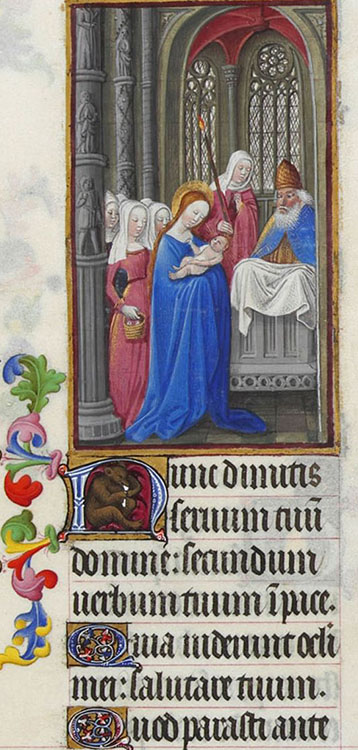
In today’s feast, we have a recently born baby being recognized as the Light of the World by a man who will soon depart this life. And we have the first real acknowledgment of the end of the old order and the beginning of the new.
How is this?
Jesus was presented in the temple on this day, 40 days after his birth, in fulfillment of the Mosaic law as we read in Exodus 13:13–16: “Every firstborn of man among your sons, you shall redeem.” This act was supposed to occur on the 31st day after the birth, but for various reasons the Church Fathers attributed it to the 40th day. The first born was to be “redeemed.” That is, through the payment of 5 shekels, the firstborn male child was to be freed from his obligation to serve the Lord as a priest, according to ancient Hebrew practice.
You’ll have to read about the Golden Calf and the refusal of the Tribe of Levi to participate in this abomination to get the full meaning of this idea.
But here, we have Mary and Joseph obliged by the Law of Moses coming to Jerusalem to present their son in the temple. Which is contrary to what the author of Hebrews tells us in today’s second reading:
…therefore, he had to become like his brothers and sisters
in every way,
that he might be a merciful and faithful high priest before God
to expiate the sins of the people.
So even though Jesus had been redeemed from priestly functions shortly after his birth, we now know him as a priest, one who redeemed us from our sin by becoming a sacrifice himself. Why did he become a high priest? Wasn’t he redeemed from this obligation by the ceremony celebrated today?
The Feast of the Presentation of the Lord acts as a crossroads for us and for the world. It is foretold in today’s second reading from Malachi: “But who will endure the day of his coming? And who can stand when he appears….Then the sacrifice of Judah and Jerusalem will please the Lord.” It is where Simeon realizes that God’s promise to him that he would not come to the end of his days before seeing the Messiah, who is a newborn baby just starting his life, has been fulfilled. And Anna, also in the temple that day, prophesies the redemption of Jerusalem. And the law is upended since the redeemed firstborn of Mary and Joseph is actually a high priest in the line of Melchizedek. And the world is made new now and forever, as we read in 2 Corinthians 5:17: “Therefore, if anyone is in Christ, the new creation has come: The old has gone, the new is here!”
And by this, I think St. Paul means that with each person coming to Jesus, there is a new creation and a further erosion of the old order.
So although all this is not realized until the establishment of the Eucharist and the Resurrection, it is here, on this feast day, The Presentation of the Lord in the temple that the funnel of the old world closes down to its narrowest point and the trumpet of the new creation sounds out the clarion call for us all: “Repent! The Kingdom of God is at hand.”
Let me go back to Simeon’s idea that Jesus was to be a sign that will be contradicted. Listen to Psalm 24 from today:
Lift up your heads, O ye gates; and be ye lift up, ye everlasting doors; and the King of glory shall come in.
Who is this King of glory? The LORD strong and mighty, the LORD mighty in battle.
Lift up your heads, O ye gates; even lift them up, ye everlasting doors; and the King of glory shall come in.
Who is this King of glory? The LORD of hosts, he is the King of glory.
On the one hand, we have Jesus, gentle and mild. On the other, Jesus the lord of armies. If this isn’t a contradiction, what is?
My brothers and sisters, this will also have to wait for another sermon. Along with references to Candlemas and Groundhog Day which are also celebrated today.
But finally, we know that Jesus was taken back to Nazareth by his mother and father and there he grew in wisdom and strength. In one month we will enter the Lenten season. Then we shall know the real meaning of the end of today’s second reading:
Because he himself was tested through what he suffered,
he is able to help those who are being tested.
Lord, help us to recognize our salvation which you have prepared in our sight. Help us to revel in his glory and bring that light to the rest of our world.
Amen.

Holding Fast to the Faith ~ The Feast of St. Thomas Aquinas ~ Br. Brent Whetstone, Novice

The Church is faced with a dilemma. We are losing people to modernism in droves and the church has a decision to make: change who you are to conform to society or hold fast to the teachings of the Faith. Unfortunately may mainline denominations are doing the latter, they are changing to conform to the pressures that society is putting on them to change. They have stopped talking about the crucifixion, the resurrection, and the redemptive power of Christ. They deny the miracles we are told of in sacred scripture and have compromised the very foundations of Christianity. Bishops and Archbishops are on television preaching universalism and offering alternatives to salvation, through everything from Wicca to Islam to nothing at all. So the church has a choice. Change who you are or hold fast to the Faith. As a Dominican the answer is crystal clear to me. We hold on to the Faith and teach the Faith like our lives depended on it, because not only do our lives depend on it, but our souls do as well, and what better an appropriate time to talk about faith, and reason, than on the feast day of our Holy Brother and Teacher Saint Thomas Aquinas.
At the young age of five, Thomas was sent to live at the Benedictine monastery at Monte Cassino, as was the custom of the time. His parents’ hope was that he would chose the Benedictine life and eventually become abbot. In 1239 he was sent to Naples where he was to complete his studies and it was then that he was introduced to Aristotle’s philosophy. By 1243, however Thomas abandoned his family’s plans for him and it is then that he joined the Dominicans.
Once with the Dominicans Thomas traveled to Paris where he would finish his studies under Albert the Great, and he would live at the court of Pope Urban IV. He would direct the Dominican school in Rome, but his greatest contribution to the Church was the fact that he showed us that we could reconcile faith and reason. Because even then people were struggling with how this was possible and Saint Thomas was able to give us timeless teachings that we as Christians can use today.
Thomas believed that the existence of God could be proven in five ways. First by observing movement in the world as proof of God, the “Immovable Mover.” Second by observing cause and effect and identifying God as the cause of everything. Third by concluding that the impermanent nature of beings proves the existence of a necessary being, God, who originates only from within himself. Fourth by noticing varying levels of human perfection and determining that a supreme, perfect being must therefore exist, and fifth by knowing that natural beings could not have intelligence without it being granted to them it by God..
Thomas used faith and reason to establish his arguments, something that we must do as well. As Christians we are called to evangelize, a task that is met with much criticism and one that many people shy away from simply because they are not prepared to counter some of the very same arguments that Saint Thomas has already provided us with a foundation to argue.
As a Dominican I am committed to sharing the Word of God, I am committed to sharing it boldly and I am committed to sharing it from a place of faith and reason, being able to meet people where they are on their journey. But the greatest gift that we have because of Aquinas is that when we wrestle with doubt and when we wrestle with uncertainty, we have the example that he has set for us. We know that we can approach faith with reason to find our answers, we know that they complement each other not cancel each other out. Because of that we can grow stronger in our faith and be bold to proclaim the saving message of Christ.
We do not need to change who we are as a Church, we do not need to deny basic tenets of the Faith to be popular with the skeptics, instead we need to meet our skeptics with knowledge not only of faith but faith combined with reason so that their eyes may be opened to the truth of God. Let us pray:
O God, who made Saint Thomas Aquinas outstanding in his zeal for holiness
and his study of sacred doctrine, grant us, we pray, that we may understand what he taught
and imitate what he accomplished. Through our Lord Jesus Christ, your Son,
who lives and reigns with you in the unity of the Holy Spirit, one God, for ever and ever. Amen.
*Another great hymn from the great St. Thomas Aquinas. This version of the hymn does not include the 3rd or 4th verses. The art is “The temptation of St. Thomas Aquinas” by Diego Velazquez; “Triumph of St. Thomas Aquinas over the heretics” by Filippino Lippi; “The Apotheosis of Thomas Aquinas” by Francisco de Zurbaran. License Standard YouTube License Music “Adoro Te Devote” by Richard Proulx
Moments With Mother ~ The Very Rev. Lady Sherwood, OPI
Click the link above to be taken to today’s installment of Moments With Mother!

Christ, Our Identity; Who Are You? ~ Br. Mark Dickson-Patrick, Novice

Reading 1 – Isaiah 8:23—9:3
First the Lord degraded the land of Zebulun and the land of Naphtali; but in the end he has glorified the seaward road, the land west of the Jordan, the District of the Gentiles. Anguish has taken wing, dispelled is darkness: for there is no gloom where but now there was distress. The people who walked in darkness have seen a great light; upon those who dwelt in the land of gloom a light has shone. You have brought them abundant joy and great rejoicing, as they rejoice before you as at the harvest, as people make merry when dividing spoils. For the yoke that burdened them,
the pole on their shoulder, and the rod of their taskmaster you have smashed, as on the day of Midian.
Responsorial Psalm – Psalm 27:1, 4, 13-14
(1a) The Lord is my light and my salvation.
The LORD is my light and my salvation; whom should I fear? The LORD is my life’s refuge; of whom should I be afraid?
R. The Lord is my light and my salvation.
One thing I ask of the LORD; this I seek: To dwell in the house of the LORD all the days of my life, That I may gaze on the loveliness of the LORD and contemplate his temple.
R. The Lord is my light and my salvation.
I believe that I shall see the bounty of the LORD in the land of the living. Wait for the LORD with courage; be stouthearted, and wait for the LORD.
R. The Lord is my light and my salvation.
Reading 2 – 1 Corinthians 1:10-13, 17
I urge you, brothers and sisters, in the name of our Lord Jesus Christ, that all of you agree in what you say, and that there be no divisions among you, but that you be united in the same mind and in the same purpose. For it has been reported to me about you, my brothers and sisters, by Chloe’s people, that there are rivalries among you. I mean that each of you is saying, “I belong to Paul,” or “I belong to Apollos,” or “I belong to Cephas,” or “I belong to Christ.” Is Christ divided? Was Paul crucified for you? Or were you baptized in the name of Paul? For Christ did not send me to baptize but to preach the gospel, and not with the wisdom of human eloquence, so that the cross of Christ might not be emptied of its meaning.
Gospel – Matthew 4:12-23
When Jesus heard that John had been arrested, he withdrew to Galilee. He left Nazareth and went to live in Capernaum by the sea, in the region of Zebulun and Naphtali, that what had been said through Isaiah the prophet might be fulfilled: Land of Zebulun and land of Naphtali, the way to the sea, beyond the Jordan, Galilee of the Gentiles, the people who sit in darkness have seen a great light, on those dwelling in a land overshadowed by death a light has arisen. From that time on, Jesus began to preach and say, “Repent, for the kingdom of heaven is at hand.” As he was walking by the Sea of Galilee, he saw two brothers, Simon who is called Peter, and his brother Andrew, casting a net into the sea; they were fishermen. He said to them, “Come after me, and I will make you fishers of men.” At once they left their nets and followed him. He walked along from there and saw two other brothers, James, the son of Zebedee, and his brother John. They were in a boat, with their father Zebedee, mending their nets. He called them, and immediately they left their boat and their father and followed him. He went around all of Galilee, teaching in their synagogues, proclaiming the gospel of the kingdom, and curing every disease and illness among the people.
Have you ever had an identity crisis? Like a full-on, genuine, “Who am I?” and “What is it about me that makes me, me?” I believe that many of us have had this at least once in our lives when we genuinely question who it is that we are and who it is that God has created us to be and what it is that makes us truly unique.
In our second reading today from the first letter to the Corinthians, St. Paul is dealing with this very issue with the Church at Corinth. Paul had heard reports from others that the Church at Corinth had been divided, claiming that “I belong to Paul” or “I belong to Cephas” or “I belong to Apollos” according to who came and brought the message of the Gospel to them. This so divided the Church at Corinth that they had an identity crisis, forgetting who it is that we worship and who we celebrate and who we follow in being Christians. They were creating division among themselves based upon trivial differences which made no difference at all to the status of their salvation. They touted the source of their learning of the Gospel, and not the Word Himself, in whom there is all unity and truth.
But it’s a good thing that this doesn’t happen to us in the modern Church, right? WRONG! How often do we hear quarrels and squabbles amongst the Christian people saying “I belong to Pope Francis,” “I belong to Franklin Graham,” or “I belong to (Archbishop of Canterbury) Justin Welby.” We focus on the silly and paltry divisions and do not look at what it is that makes us all one: we are brothers and sisters in Christ, just as Paul tells the Church at Corinth. We are all Christians, in whom we find our identity. For we do not find our identity as Christians in Francis, Franklin, Justin, or even Michael. We find our identity as Christians in Jesus Christ, the perfect Lamb of God who came to take away the sins of the world and to bring us to the Father.
If you notice, in the Gospel passage, Jesus says to Simon and Andrew, “Come after ME, and I will make you fishers of men.” He does not say “Follow after Pope Francis, and he will make you fishers of men.” He does not say “Follow after Franklin Graham, and he will make you fishers of men.” He does not say “Follow after Justin Welby, and he will make you fishers of men.” NO! He says, simply and clearly, “Come after ME, and I will make you fishers of men.”
In our world, I would recommend that we all take a look at our own identity crisis, for it is in Christ that we find our identity. In our world that turns more uncertain and precarious by the day, let us look to Christ as our identity, as the one who claims us as His own, in whom we live, move, and have our being. It is only then that we will be sure of who we are, and it is only then that we will be able to work together as the Body of Christ to make effective work for the Kingdom of God.
 The Order of Preachers, Independent
You must be logged in to post a comment.