
Category: Sermon

A Servant of Many ~ Br. Michael Marshall, Novice

First Reading – Isaiah 49:3, 5-6
The LORD said to me: You are my servant, Israel, through whom I show my glory. Now the LORD has spoken who formed me as his servant from the womb, that Jacob may be brought back to him and Israel gathered to him; and I am made glorious in the sight of the LORD, and my God is now my strength! It is too little, the LORD says, for you to be my servant, to raise up the tribes of Jacob, and restore the survivors of Israel; I will make you a light to the nations, that my salvation may reach to the ends of the earth.
Responsorial Psalm – Psalm 40:2, 4, 7-8, 8-9, 10
(R.) Here am I, Lord; I come to do your will.I have waited, waited for the LORD,
and he stooped toward me and heard my cry. And he put a new song into my mouth, a hymn to our God.
(R.) Here am I, Lord; I come to do your will.
Sacrifice or offering you wished not, but ears open to obedience you gave me. Holocausts or sin-offerings you sought not; then said I, “Behold I come.”
(R.) Here I am, Lord; I come to do your will.
“In the written scroll it is prescribed for me, to do your will, O my God, is my delight, and your law is within my heart!”
(R.) Here am I, Lord; I come to do your will.
I announced your justice in the vast assembly; I did not restrain my lips, as you, O LORD, know.
(R.) Here am I, Lord; I come to do your will.
Second Reading – 1 Corinthians 1:1-3
Paul, called to be an apostle of Christ Jesus by the will of God, and Sosthenes our brother, to the church of God that is in Corinth, to you who have been sanctified in Christ Jesus, called to be holy,
with all those everywhere who call upon the name of our Lord Jesus Christ, their Lord and ours. Grace to you and peace from God our Father and the Lord Jesus Christ.
Gospel – John 1:29-34
John the Baptist saw Jesus coming toward him and said,”Behold, the Lamb of God, who takes away the sin of the world. He is the one of whom I said, ‘A man is coming after me who ranks ahead of me because he existed before me.’ I did not know him, but the reason why I came baptizing with water was that he might be made known to Israel.” John testified further, saying, “I saw the Spirit come down like a dove from the sky and remain upon him. I did not know him, but the one who sent me to baptize with water told me, ‘On whomever you see the Spirit come down and remain, he is the one who will baptize with the Holy Spirit.’ Now I have seen and testified that he is the Son of God.”
The term servant often has a negative “definition”, especially here in the United States because of our unfortunate history. People often think of a servant being a slave to a master. But that is not the only “definition” for a servant. In fact, a servant does not have to be subject to a master, but a servant can be of assistance with positive results. We find this theme being a servant in the Readings for today.
Despite all of the unfortunate circumstances that the Israelites faced, especially their exile and slavery, Isaiah comes to the people as a servant of the Lord to explain that God does have favor with the people even though they faced so much adversity. In the response for the Psalm, we read, “Here am I, Lord; I come to do your will.” David recognizes his purpose. In the First Letter to the Corinthians, Paul is addressing the people of Corinth, setting up the message which he has to share; as he states his mission is to spread the message of Jesus, called upon by Jesus to do so. In the Gospel, John the Baptist had been going around speaking of the “coming of the Lord” in his ministry. And so, along comes Jesus who John the Baptist acknowledges as the one who takes away the sins of the world. John’s purpose was to prepare the way of the Lord.
This is where things get interesting though; because God takes on human flesh as Jesus, only to end up being crucified. How does the death of Jesus present positive results, as I mentioned being a servant can be of assistance with positive results? The answer is this. Jesus knew his mission was to serve the Father, to spread God’s message; through parables and other methods of teaching. The night before his death on the cross, he sat in the garden knowing that in order to be a “servant to save humanity from sin” he had to do God’s will. So ultimately, John the Baptist was sharing with the people present at the baptism of Jesus who this servant was.
How do we apply all of this to our lives? Each of us has been called by God to do something. We are a servant with a mission and purpose. It may take longer for some of us to know what that mission and purpose is than it takes others, but we have to accept the call once we understand what we have been called to do. W all have various gifts and talents given to us, BUT we have to use them! If we do not accept the call, then we are not going to reach those who need to hear the message of the Gospel. We are servants of the Lord!
Father, may we come to recognize our gifts and talents in order to fulfill our mission and purpose you have asked of us, just as people before us have fulfilled their mission. This we ask through Christ, Our Lord. Amen.
The Baptism of Our Lord By Fr. Matt Pepple
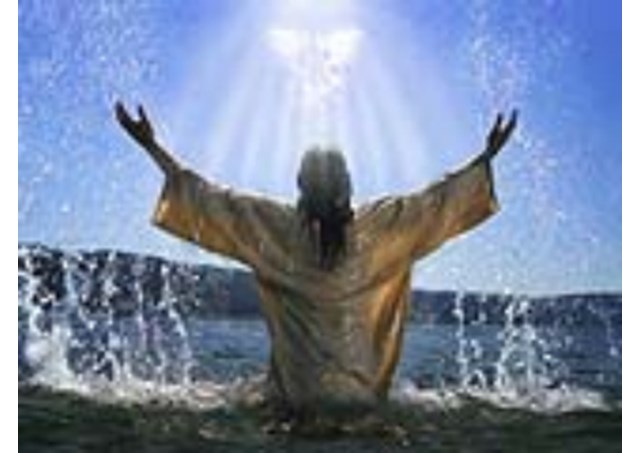
On this day, the church commemorates the Solemnity of the Baptism of Our Lord, Jesus. This concludes the Christmas season. This was the day in which Jesus descended into the River Jordan and was baptized with water by John.
Water was extremely important to the Hebrews. There are places all throughout Jerusalem, some still being excavated to this day that are the Hebrew ritual baths, called Mikvahs. It was believed these were in use by John the Baptizer’s followers. By the use of water, John was paving the way for what was yet to come. Jesus. Just imagine the glory and power of that day Jesus was baptized by John in the Jordan. And what followed after with the appearance of the Trinity. This was the only occurrence in the New Testament that all three persons of the Trinity were thus manifested: The voice of God the Father, the Holy Spirit as a Dove, and Jesus the Son. For anyone who might have been blessed to experience this, probably left everyone in awe of what was transpiring. It also served as a commencement of Jesus’ earthly ministry, which was taking shape.
It is interesting to note here, that this is the first instance of Jesus’ relationship with water. Water was, indeed, a pivotal element of Jesus ministry. St. John 4:13-14 he writes, “Jesus answered and said unto her, whosoever drinketh of this water shall thirst again. But whosoever drinketh of the water that I shall give him shall never thirst; but the water that I shall give him shall be in him a well of water springing up into everlasting life.” It was also said that blood and water came out of Jesus’ side when he was pierced while hanging from the cross.
During the Feast of the Baptism of the Lord, we encounter the truth of Jesus’ incarnation and His manifestation as the anointed One, Christ. There is much strength and power expressed when St. John proclaimed, “Behold the Lamb of God, behold Him Who takes away the sin of the world.”
In our scripture readings today, in Genesis 1: 1-5, we are reading the Creation story, the story of the very beginning. “In the beginning God created the heavens and the earth, and the earth was without form, a void which darkness covered the face of the deep, while the wind (breath of God) swept over the face of the waters. God, in his magnificence proclaimed, “Let there be light;” and there was light. And God saw that the light was good; and God separated the light from the darkness. God called the light Day, and the darkness he called the Night, and thus was evening and then morning, the very first day.”
Then follows Psalm 29, “Ascribe to the LORD, O heavenly beings, ascribe to the LORD glory and strength. Ascribe to the LORD the glory of his name; worship the LORD in holy splendor. The voice of the LORD is over the waters; the God of glory thunders, the LORD, over mighty waters. The voice of the LORD is powerful; the voice of the LORD is full of majesty. The voice of the LORD breaks the cedars; the LORD breaks the cedars of Lebanon. He makes Lebanon skip like a calf, and Sirion like a young wild ox. The voice of the LORD flashes forth flames of fire. The voice of the LORD shakes the wilderness; the LORD shakes the wilderness of Kadesh. The voice of the LORD causes the oaks to whirl, and strips the forest bare; and in his temple all say, “Glory!” The LORD sits enthroned over the flood; the LORD sits enthroned as king forever. May the LORD give strength to his people! May the LORD bless his people with peace!” There is so very much that the Lord can do, power and majesty are his forevermore.
In Acts 19: 1-7, we learn that Apollos was in the Corinth; and that St. Paul had passed through the inner areas to Ephesus, where he located some disciples. Paul asks the disciples, “Did you receive the Holy Spirit when you became believers?” They answered, “No, we have not even heard that there is a Holy Spirit.” Paul asks, “Into what then were you baptized?” They answered, “Into John’s baptism.” Paul says, “John baptized with the baptism of repentance, telling the people to believe in the one who was to come after him, that is, in Jesus.” After hearing this, they were baptized in the name of the Lord Jesus. The Holy Spirit came upon them after Paul had laid his hands on them, and they spoke in tongues and prophesied, altogether there were about twelve of them.”
And in Mark 1: 4-11 John the baptizer was in the wilderness, announcing a baptism of repentance for the forgiveness of sins. Citizens from the whole Judean countryside and the residents of Jerusalem went out to him and were baptized by him in the river Jordan, and confessing their sins. John wore camel’s hair and a leather belt around his waist and ate locusts and honey. He declared, “The one who is more powerful than I is coming after me; I am not worthy to stoop down and untie the thong of his sandals. I have baptized you with water; but he will baptize you with the Holy Spirit.” Jesus came from Nazareth of Galilee and was baptized by John in the Jordan. As Jesus was coming up out of the water, he perceived the heavens were torn apart and the Spirit descending as a dove on him. And then a great voice came from heaven, “You are my Son, the Beloved; with you I am well pleased.”
The water is purity at its core meaning. And thus, when we are baptized; we are purifying ourselves to belong to God. We are, in a symbolic sense, becoming more Christ-like. What happened at our baptism is figurative of what happened at Jesus’ baptism. When Jesus was baptized, the Holy Spirit came down upon him; and at our baptism the Trinity took up residence in our soul. At Jesus’ baptism, the Father spoke, and proclaimed, “This is my son, of who I am well pleased,” and at our baptism we become the adopted sons and daughters of God. The heavens were opened at Jesus’ baptism, at ours, Heaven became available to us.
What do you think of when you think of baptism? Perhaps some of you may even remember your baptism. Some of us were sprinkled as babies, or if we came to the Lord later in life, were baptized as adults. There are several methods of baptism, some people are baptized by a vessel that pours out water over their heads in a baptismal font, and others may be immersed or “dunked” bodily. It’s more than just a sprinkling of water. Regardless of the method, something very profound happens. Heaven becomes available to you. If you were baptized as an infant, you may go through confirmation at a later time to help the cement the foundation that was laid for you, if you were baptized later in life, perhaps your life has found a new meaning, as you declare Jesus as your Lord and you His follower.
Perhaps some of you reading this have never been baptized. Or maybe you are considering baptizing your children. Please take into thoughtful meditation the significance of the Lord’s baptism during your own or your children’s. As much as it involves getting wet, the inner self must be prepared for the transformation as well. May the peace of our Lord and Savior be with you all of your days. Amen.

Risky Business and Magicians: Epiphany ~ The Rt. Rev. Michael R. Beckett, OPI

In the time of King Herod, after Jesus was born in Bethlehem of Judea, wise men from the East came to Jerusalem, asking, “Where is the child who has been born king of the Jews? For we observed his star at its rising, and have come to pay him homage.”
When King Herod heard this, he was frightened, and all Jerusalem with him; and calling together all the chief priests and scribes of the people, he inquired of them where the Messiah was to be born.
They told him, “In Bethlehem of Judea; for so it has been written by the prophet: ‘And you, Bethlehem, in the land of Judah, are by no means least among the rulers of Judah; for from you shall come a ruler who is to shepherd my people Israel.'”
Then Herod secretly called for the wise men and learned from them the exact time when the star had appeared. Then he sent them to Bethlehem, saying, “Go and search diligently for the child; and when you have found him, bring me word so that I may also go and pay him homage.”
When they had heard the king, they set out; and there, ahead of them, went the star that they had seen at its rising, until it stopped over the place where the child was. When they saw that the star had stopped, they were overwhelmed with joy. On entering the house, they saw the child with Mary his mother; and they knelt down and paid him homage. Then, opening their treasure chests, they offered him gifts of gold, frankincense, and myrrh.
And having been warned in a dream not to return to Herod, they left for their own country by another road. Matthew 2:1-12 (NIV)
Today we mark the end of the Christmas season – the Day of Epiphany. We celebrate this day to reflect on the visit of the Magi – the wise men – to Jesus and the giving of their gifts. We reflect on the meaning of this visit of those wise ones to see Jesus.
Epiphany is about Jesus and his message being available and relevant to people of every age and race. Jesus isn’t just a Jewish prophet with an exciting message, but God made present amongst us and available to all of us to worship and follow. God’s love reaches beyond the everyday barriers of race and class; something the Magi didn’t quite get at first.
So Who Were the Magi?
We don’t know much about the Magi from Scripture. All Saint Matthew tells us is that they were “Magi from the East”. Some translations have “Wise men from the East”. The word in Greek refers to priests of the Zoroastrian religion. They came from Persia, the countries now known as Iran and Iraq, and they saw meaning in the movement of the stars. Their visit fits an Eastern pattern of great births being accompanied by momentous events in the sky. Certainly we know of a comet in 11BCE in Gemini with its head towards Leo, seen by many as a symbol of Judah. We also know of planetary conjunctions in both 7 BCE and 6 BCE which would have added to a sense that momentous happenings were on the way. The Magi would have noticed these things and taken them seriously. But who were they?
One commentator, Brian Stoffregen puts it like this;
“Originally in Persia, Magi were dream- interpreters. By Jesus’ time, the term referred to astronomers, fortune-tellers, or star-gazers. They were horoscope fanatics – a practice condemned by Jewish standards. We might compare them to people in fortune – telling booths, or people on the “psychic hotline” or other “occupations” that foretell the future by stars, tea leaves, Tarot cards etc. They were magicians, astronomers, star-gazers, pseudo-scientists, fortune tellers…”
Another writer, Nathan Nettleton, puts it like this;
“They were the speakers of the sacred words at the pagan sacrifices. At worst, the term referred to a magician or sorcerer, or even a deceiver. Magi were people whose activities were repeatedly condemned and prohibited throughout the scriptures and were completely anathema to the people of Israel.”
Whilst in English we get the words “magic” and “magician” from Magi, the Zoroastrian religion forbade sorcery. They clearly were looking for a new king and had found meaning in the movement of the planets and stars which led them to come to Israel to greet the new-born king. They journeyed from their homes in Persia to Bethlehem in search of this baby. Instead of angels and visions, we have the image of the Magi following a sign in the skies – in nature – and for a long period of time. The magi see the intentions of God in the skies. This is not new: Psalm 19 tells us that the heavens themselves declare who God is, and that his handiwork is seen in created nature. “We observed his star at its rising”. The magi know that there is something significant happening.
When did they come?
The Gospel of Saint Luke doesn’t mention the Magi and holds that the Holy Family returned to Nazareth after the presentation of Jesus at the Temple where he was circumcised. It’s probable that Saint Luke didn’t know of this episode in Jesus’ early life. Saint Matthew seems to place the visit of the Magi some time after Jesus’ birth. The Holy Family are in a “house” not in the stable of the inn. Herod kills all the newborn boys under the age of two years. So it’s likely that the Holy Family had stayed for some time in Bethlehem and the Magi came some time after Jesus’ birth, perhaps as long as two years after.
WHY did they come?
Clearly, the Magi were searching. The Magi recognized much of the truth of Jesus, who he was and what he would become. The Magi had a general idea of this God and this King of the Jews, but they didn’t really know who or what they were looking for. Bono and U2 were criticized some years ago by some supposedly orthodox Christians when they produced a song entitled, “I Still Haven’t Found What I’m Looking For,” which is about searching for fulfillment. You see, the example of the Magi was that they were searchers, not really knowing what or who they were looking for. They didn’t claim to have it all but they saw their lives as a journey of discovery. And they were willing to take risks. They were willing to leave all that they had, all that they new, and risk it all for the sake of seeking out this child, this new king. And in that they are an example to us. We don’t know it all. But if we, like them, are prepared to be diligent seekers, then, like them, we may be graced by God’s light, by our own Epiphany. If we are willing to take the risk, the risk maybe of being shunned at work, the risk of condemnation by our friends and family, the risk of paying the price for following Christ….well…..When the wise men finally found Jesus, we are told that their first response was joy – “they were overwhelmed with joy”. That is what happens when we find Jesus. This is what awaits us at the end of the journey if we take that risk. Next, they paid him homage – they worshiped him and acknowledged Him as King. After the joy comes the worship. That means acknowledging Jesus as King. Jesus as the center. Jesus as Lord. And then, after joy and after worship, comes offering of their gifts. In response to who Jesus is and the joy He gives, we offer ourselves and our gifts to Him.
So my message for today is to dare, like them, to take the risk of seeking, and God may well bless us with our own Epiphanies which transform us, as doubtless the Magi were transformed by what must have been a surprising experience for them as they knelt before the infant Jesus.
So how do you find Jesus? Maybe you can start out like the Magi – with a general idea of God, and a general idea that He is guiding you. Like the Magi, we need to turn to the scriptures. If you don’t read them, you will never really get the specific directions that God is trying to give you. Approach them with the right spirit, the right purpose. Ask for help along the way – the church, we, God’s people, are meant to help you along that way. The wise men knew when they needed to ask someone else for help. And pray. Ask God. When you find Jesus, rejoice. After all, He is God. Put Him in the center of your life. Ask yourself whether what you are doing honors him a King. Offer to him what you have, who you are.
Where can this Jesus be found? He is with you now. Won’t you seek Him? Won’t you recognize Him? Won’t you let Him fill YOUR life with joy? Amen.
What’s In a Name? – Memorial of the Most Holy Name of Jesus ~ Br. Michael Marshall, Novice

If you consider that God is righteous, you also know that everyone who acts in righteousness is begotten by him. See what love the Father has bestowed on us that we may be called the children of God. Yet so we are. The reason the world does not know us is that it did not know him. Beloved, we are God’s children now; what we shall be has not yet been revealed. We do know that when it is revealed we shall be like him, for we shall see him as he is. Everyone who has this hope based on him makes himself pure, as he is pure. Everyone who commits sin commits lawlessness, for sin is lawlessness. You know that he was revealed to take away sins, and in him there is no sin. No one who remains in him sins; no one who sins has seen him or known him. 1 John 2:29-3:6
John the Baptist saw Jesus coming toward him and said, “Behold, the Lamb of God, who takes away the sin of the world. He is the one of whom I said, ‘A man is coming after me who ranks ahead of me because he existed before me.’ I did not know him, but the reason why I came baptizing with water was that he might be made known to Israel.” John testified further, saying, “I saw the Spirit come down like a dove from the sky and remain upon him. I did not know him, but the one who sent me to baptize with water told me, ‘On whomever you see the Spirit come down and remain, he is the one who will baptize with the Holy Spirit.’ Now I have seen and testified that he is the Son of God.” John 1:29-34
In William Shakespeare’s story Romeo and Juliet we find the quote “What’s in a name? That which we call a rose by any other name would smell as sweet.” We also can look up any name to find its meaning; such as Michael meaning “one who is like God, or Elizabeth meaning “my God is abundance”. So essentially each name, whether it is an object or a person has significance in this world. We especially can find this to be true in the readings for today.
As much as the historical tradition in Judaism is that one cannot speak the name of God, who they refer to as YHWH, because it is considered to use His name in vain or shows disrespect toward the Almighty Powerful One; we see in the first reading that John the Evangelist is explaining to the community at large who God is, even using the name “God”. He mentions that there is a purpose for a lifestyle in order to have a relationship with God, and encourages the people to keep in mind why this relationship is important.
Throughout the Gospels, we can find many references to Jesus being called the Son of God. We can find it in other Gospels as early as the angel Gabriel visiting Mary telling her that she will bear a son – the Son of the Most High. We also find reference to Jesus being called the Prince of Peace, but one of the most significant names of all is Emmanuel which means “God with us.”
We read in the Gospel that John the Baptist identifies Jesus as two very important names; identifying Him as the Lamb of God, and the Son of God. These names are important because they directly point to the purpose of why Jesus existed on Earth, as well as why He still exists today after the Resurrection. What does the Lamb of God point toward? In Jewish tradition, the sacrifice of a lamb is part of Passover Feast; an event remembering and thanking God for sparing the firstborn. We as Christians refer to Jesus’ last Passover as the Last Supper, at which Jesus explains to His disciples that He would suffer and die as a sacrifice for humanity in order for us to have a right relationship with God.
In the Gospel lesson for today the important thing for our discussion here is to take note here is how John the Baptist witnessed a dove descending down upon Jesus, which was a fulfillment of a prophecy from Isaiah 11 explaining that a dove would descend down upon the Son. So, we know the purpose of Jesus was to be the Savior of the World to free us from sin; regardless of being called the Lamb of God or Son of God. In the end, just as God in heaven is Holy, SO IS Jesus – hence we celebrate this Memorial of the Most Holy Name of Jesus.
What are we to take from the readings and this educational lesson to apply to our own lives? John the Evangelist cannot be any clearer… Our unholy actions and behaviors distance us from God.
We need to always remember that, regardless of God desiring to have a right relationship with us through the sacrifice of His son, and that He will never give up on us, AND we need to do our part in that relationship. AND WHAT IS OUR PART??? Calling upon the Holy Name of Jesus… For example, when we feel discouraged about life, we should ask Jesus to help us instead of turning to unhealthy habits to deal with the issues. When we feel tempted by Satan, we need to call out to Jesus to help us fight off Satan.
Heavenly Father, help us keep in mind our actions and behaviors, and may we recognize when we have put distance between ourselves and you. We ask this through Christ, your Holy Son, our Lord. Amen.

The Solemnity of Mary, the Mother of God ~ Br. Brent Whetstone, OPI
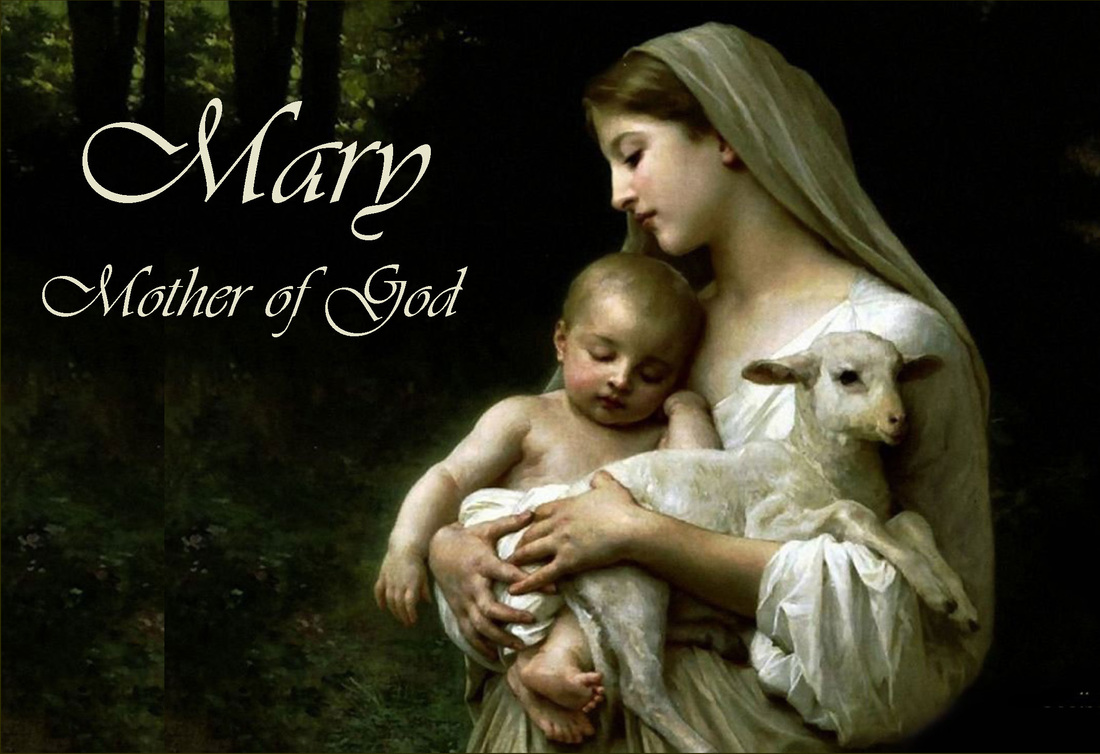
In the name of the Father, and of the Son and of the Holy Spirit. Amen.
Today is a very special feast day for me, as a Dominican Friar, and someone who is reading for Holy Orders. Today is the day we celebrate our special patroness, the patroness of the Dominican Order, and my personal patroness: someone I have devoted my ministry to. Our Lady has found favor with the Order of Preachers because at her core she exemplifies everything that we as Dominicans hold dear. We wear her scapular, we pray her rosary and we daily seek her intervention on our behalf every night when we close evening prayer with the Salve Regina!
Salve Regina, Mater Misericordiae,
vita, dulcedo, et spes nostra, salve!
Ad te clamamus, exsules filii Hevae,
ad te suspiramus, gementes et flentes,
In hac lacrimarum valle.
Eja ergo, Advocata nostra,
Illos tuos misericordes oculos ad nos converte
Et Jesum, benedictum fructum ventris tui,
Nobis, post hoc exilium, ostende,
O clemens, O pia, O dulcis Virgo Maria.
Hail Holy Queen, Mother of mercy our life, our sweetness and our hope! To thee do we cry, poor banished chidren of Eve, To thee do we send up our sighs, Mourning and weeping in this valley of tears. Turn, then, o most gracious advocate, Thine eyes of mercy toward us and after this our exile Show unto us the blessed fruit of thy womb, Jesus. O clement, o loving, o sweet Virgin Mary.
I was reading a book the other day by one of my favorite Catholic Theologians, Dr. Scott Hahn, called Hail Holy Queen: the Mother of God in the Word of God, and in it Dr Hahn talks about the many Marian types in the Old Testament. He says that:
“Marian types abound in the Old Testament. We find Mary prefigured in Eve, the mother of all living; In Sarah, the wife of Abraham, who conceived her child miraculously; in the queen mother of Israel’s monarchy, who interceded with the king on behalf of the people of the land; and in many other places, in many other ways (for example, Hannah and Ester). The type addressed most explicitly in the New Testament, the ark of the covenant….as the ancient ark was made to bear the old covenant, so the Virgin Mary was created to bear the new covenant.”
It is because of this that we celebrate Our Lady today. The Blessed Virgin Mary is the God Bearer, the Theotokos, and what a responsibility it was for her to take on the role of the ark of the new covenant. Imagine with me, if you will, your life as a 13 or 14 year old: not much responsibility, school, maybe a part time job working for you family, but mostly a care free life. Then one day it all changes. Not many teenagers would be up for the challenge, and not many would willingly say “yes” to such an awesome task being placed upon their shoulders. But Mary did. She did so in faith, and she did so willingly trusting her God. She knew the stigma that would be placed on her. She knew the possibility that her fiancé would leave her, and she would be left to raise a child on her own. But she also knew that God was there by her side.
It was because of this one act of obedience that Salvation was brought to the world. It was because a young girl was willing to put aside her own will and walk in the will of God. That is what we celebrate today. We celebrate an act of obedience that changed the world. We celebrate her today: Mary, the Mother of God, the Queen of Heaven, and our greatest advocate before her Son.
Each year on this day, I recommit myself to my Dominican vocation, as I recount her willingness to freely give herself to God. I too, willingly give myself to God through my vocation, so that I may be able to praise, to bless and to preach God’s message of salvation to the world.
Let us pray:
O God, you willed that the Order of Preachers be founded for the salvation of souls under the special patronage of the Blessed Virgin Mary, and that the Order be filled with her unfailing gifts. Grant to us who call upon you, protected by the aid of her whose feast we celebrate, that we may be brought to the glory of heaven. Through our Lord Jesus Christ, your Son, who lives and reigns with you in the unity of the Holy Spirit, one God, for ever and ever.
—Collect for the Patronage of the Blessed Virgin Mary over the whole Order of Preachers
Tis the Season….For the Family! ~ Br. Matt Pepple, Novice
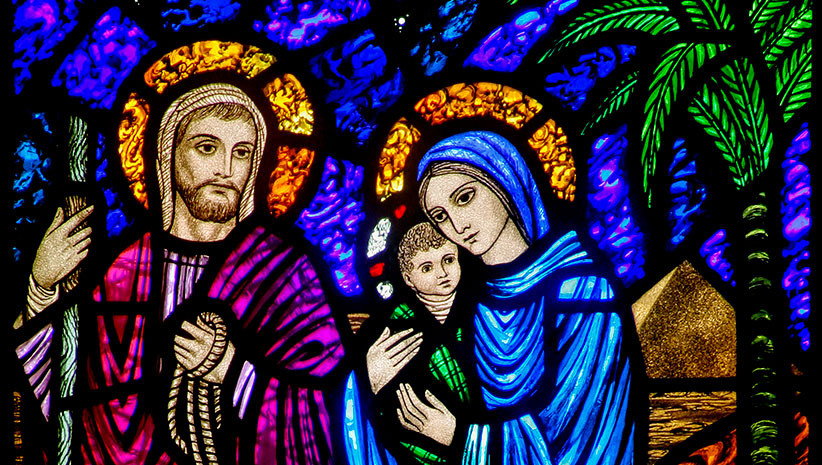
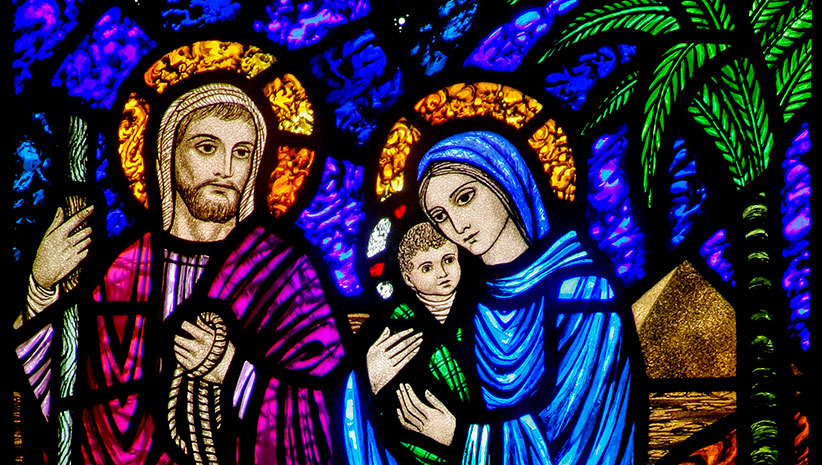
The “Holy Family” is the designation given to the family unit of Jesus Christ. It is comprised of Jesus Christ – The Divine Son of God, The Virgin Mary – the Mother of Christ, and Jesus’ Earthly “Adoptive” father, Joseph. The canonical Gospels do not speak much of the Holy Family, just primarily the birth of Jesus, the flight into Egypt, and when Mary and Joseph find Jesus in the Temple. While the precise facts of the day-to-day life of the Holy Family might be shrouded in mystery, we can still absorb a lot from the stories we do have. Devotion to the Holy Family is a more current development. The love of Jesus and his Family is something that grows naturally.
The Feast of the Holy Family became really popular in the 17th century, where several religious organizations were founded under this label. It was also depicted in art works during this time. On October 26th, 1921 the Congregation of Rites led by Pope Benedict the 15th, introduced the Feast of the Holy Family into the Latin Rite common calendar. Before that time it was observed provincially. Popes before Benedict the 15th such as Leo the 13th sponsored the feast as a way to counter the dissolution of the family unit. The church today observes the Feast on the Sunday between Christmas and New Year’s Day. Before 1969, the Feast was held on the first Sunday following the Epiphany.
In our Reading today from Hebrews 2:10-18, the writer of Hebrews is stating that in bringing children to glory will make their development of redemption perfect through suffering; that the one who consecrates and those who are sanctified all have one unifying Father and because of this, Jesus is not ashamed to call us all brothers and sisters. He states, “I will declare your name to my brothers and sisters, in the center of the churchgoers I will praise you.” And also, “I will put my trust in him.” And “Here am I and the offspring whom God has given me.” Since, then, the children share flesh and blood, he himself similarly shared the same things, so that through death he might end the one who has the control of death, that is, the devil, and permit those who all their lives were seized in bondage by the fear of death. For it is clear that he did not come to aid angels, but the children of Abraham. So he had to become like his brothers and sisters in every aspect, so that he might be a compassionate and faithful high priest in the service of God, to make a sacrifice of compensation for the sins of the people. As he himself was tried by what he suffered, he is able to aid those who are being tried and tested.
And in Matthew 2:13-23, the adoptive father of Jesus, Joseph is given a remarkable vision in a dream by the angel of the Lord and is telling Joseph to take the baby Jesus and his mother Mary into Egypt, because King Herod is seeking the boy to kill him. They all travel by night into Egypt. There they remained until Herod died and was so fulfilled by the prophet, “Out of Egypt I have called my son.” Herod was tricked by the wise men and in his anger; killed all the children in the proximity of Bethlehem who were two years old or under, thus fulfilling what the prophet Jeremiah spoke: “A voice was heard in Ramah, wailing and loud lamentation, Rachel weeping for her children; she refused to be consoled, because they are no more.” After the death of Herod, the angel again visited Joseph in a dream and told him to take Jesus and his mother Mary back to the land of Israel, for those who were seeking to kill the boy are now dead. After Joseph learned that Archelaus was now ruler of Judea in Herod’s place, he felt great fear, and after being advised in a dream, he went to a district of Galilee. He made their home in Nazareth, so that the words of the prophets would be fulfilled, “He will be called a Nazarene.”
Sometimes family can be a really daunting thing. We may not all get along well with our family; brothers and sisters have disagreements, perhaps you may have grown up in a family of all brothers or all sisters. We may not all work like a well-oiled machine. Sometimes Mothers and Fathers go through seasons where they do not mesh effectively. Maybe you grew up in a unit that was not like a “typical” family. Each person may be going through something that could make connections a bit difficult. Parents could be struggling at work, with work, children dealing with their own struggles in school with friends or teachers or homework. One thing to remember during this holiday season is that our differences really aren’t that different. It’s not that difficult to relate to something a parent faces as much as it is observing a child in their day to day life.
When we think about the hardships of the Holy Family, how Mary and Joseph struggled in their travels from Nazareth to Bethlehem, or going into Egypt by night, it’s not really much different than what most families go through either once or many times. If a parent gets a new job and the entire family has to relocate, that means new schools for the children. One thing that weighed heavily on the Holy Family was that the entire journeys were done on foot, even atop a donkey is not much easier. Joseph had a great responsibility to protect this child, the baby Jesus, and his wife, Mary. Just imagine what it must have been to have known that there were people out there seeking this child’s life! And for Mary, a woman of whom had just given birth, keeping on the move for miles and miles.
During this time of the year, when you are spending time with your family, think of your family, think of the sacrifices your parents or guardians made to help get you where you are in life. As a parent or guardian, take time to reflect on the children that you have raised, to the great kids that they are or fantastic adults that they have become. Give thanks for each other during this time of year and be open with one another. If your family is not one to spend a lot of time together, give them a call, send them an e-mail, break open the fog of silence and start communicating. Family is an integral part to the community aspect of being a Dominican. So, work past your differences, and forgive often! Spend time with friends, rejoice with them through all the good times, and be with them during the hard times. Spend quality family time during this time of meals and merriment. It really is a season of growing together as a family. Amen.
Feast of the Holy Innocents ~ Br. Brent Whetstone, OPI
In the name of The Father, and of The Son, and of the Holy Spirit. Amen.
Lully, lullay, thou little tiny child,
Bye bye, lully, lullay.
Lully, lullay, thou little tiny child,
Bye bye, lully, lullay.
O sisters too, how may we do
For to preserve this day
This poor youngling for whom we sing,
“Bye bye, lully, lullay”?
Herod the king, in his raging,
Chargèd he hath this day
His men of might in his own sight
All young children to slay.
That woe is me, poor child, for thee
And ever mourn and may
For thy parting neither say nor sing,
“Bye bye, lully, lullay.” * (Link below)
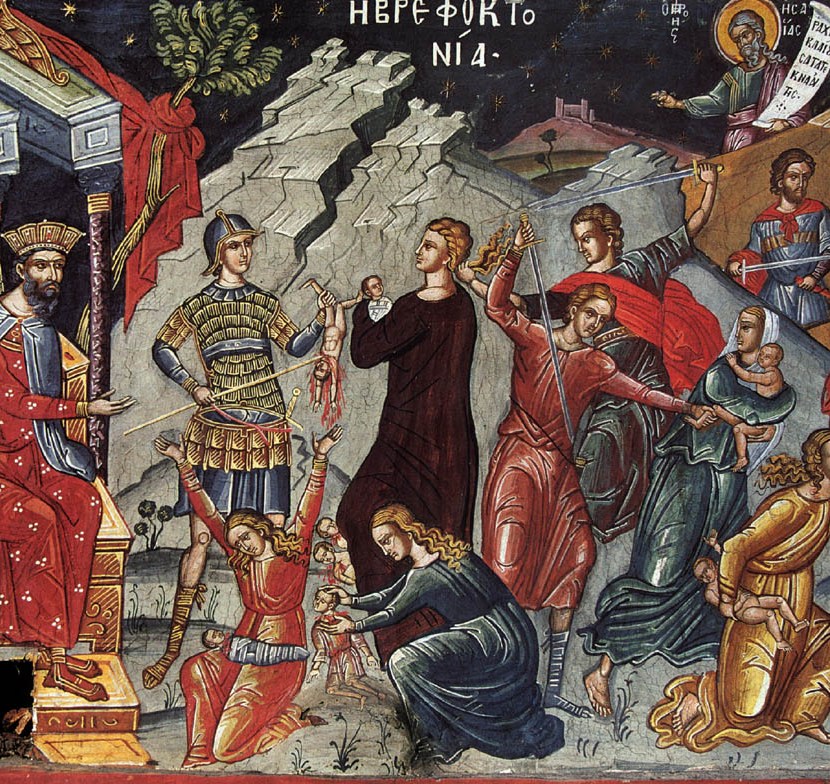
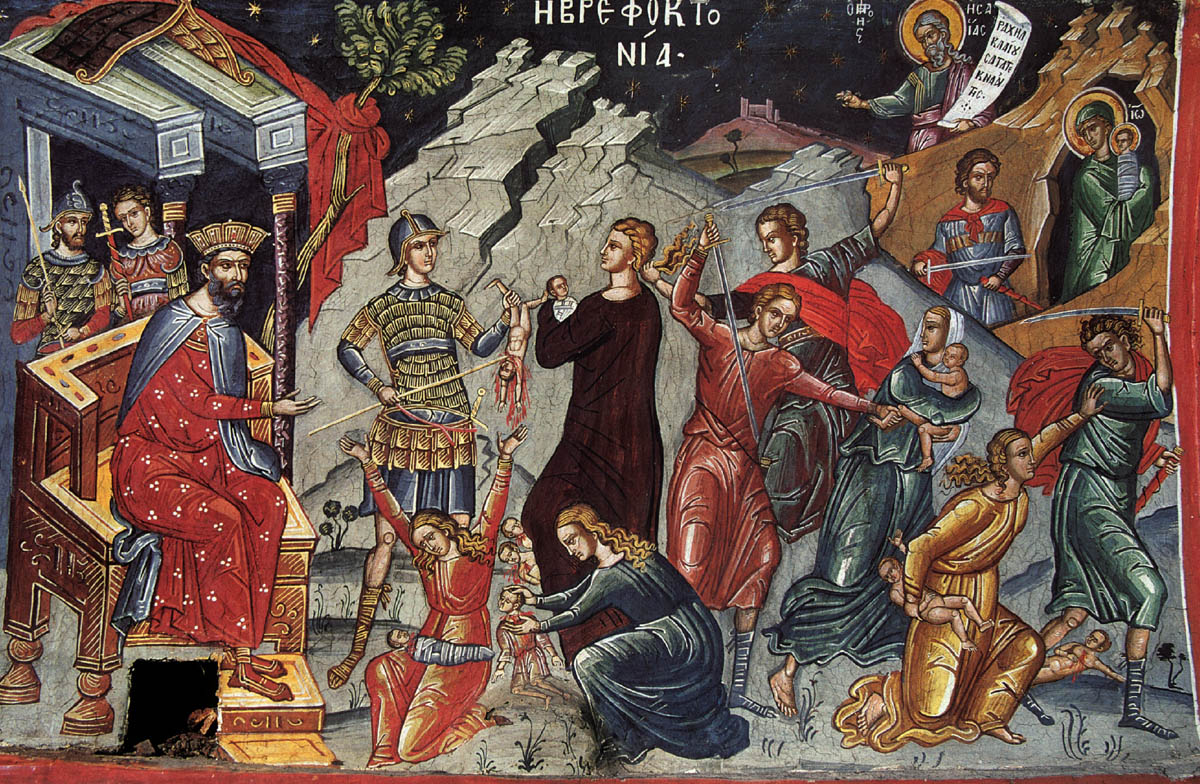
These haunting words come from a song called the Coventry Carol. The “Coventry Carol” is an English Christmas carol dating from the 16th century. The carol was traditionally performed in Coventry in England as part of a mystery play called The Pageant of the Shearmen and Tailors. The play depicts the Christmas story from chapter two in the Gospel of Matthew: the carol itself refers to the Massacre of the Innocents, in which Herod ordered all male infants under the age of two in Bethlehem to be killed, and takes the form of a lullaby sung by mothers of the doomed children.
Now here we are on the fourth day of Christmas. In the midst of a time of happiness and joy and celebration and family and friends. A time where we forget about all the negativity in the world and celebrate the things that we have, and yet on our liturgical calendar we have a reminder of a great tragedy that occurred around the time of the birth of our Lord.
This tragedy sets the stage for what will become a common theme in Christianity, and that is the persecution of the Church. Today we set aside our celebrations to pause and pray and to remember those who have come before us and who have faced persecution for their belief in Christ and for those who are currently part of the persecuted Church.
According to a recent CNN report, 2015 was the most violent year for Christian persecution in modern history. More than 7,100 Christians were killed for their faith; that is up 3,000 from the previous year, and this year alone, according to Open Door, a watchdog organization that follows Christians persecution worldwide, in 2016 there were 322 Christians killed each month. In addition to the loss of life, each month there were 214 churches and Christian-owned properties destroyed; there were 722 acts of violence committed on Christians, ranging from abductions to rape. That is each month.
It is hard for us to imagine in the United States what it is like for our brothers and sisters who are in predominately Muslim countries where a majority of this persecution occurs. We have the opportunity to attend church on Sunday, usually without fear of anything happening to us or our loved ones, we can safely walk the streets and not worry about being harassed because of our faith. But our brothers and sisters are not so fortunate.
I believe that today we are called to remember those who are part of the persecuted church. I think that it is important to leave you with a few ideas on what you can do to help our brothers and sisters who are facing this persecution.
First we must understand that we are called to support our brothers and sisters. In Saint Paul’s First letter to the church at Corinth he says that, “we are one body. If one part suffers, every part suffers with it; if one part is honored, every part rejoices with it.” We must support organizations that help our brothers and sisters in these areas of persecution.
Second, we must bring awareness to the fact that the persecuted church does, in fact, exist. Talk to your friends and family and church leaders and see what you can collectively do together to support our brothers and sisters, especially in the Middle East.
Finally and most importantly, we must pray. Make prayer for the persecuted church part of your daily devotion. There is power in prayer and by praying and putting your faith into action. With prayer we can see miracles take place as we saw in November, when the Church of the Immaculate Conception in Qaraqosh celebrated its first mass in two years.
This is what we are called to do as Christians, to take action and to pray. To always remember the persecuted who have come before us and the persecuted who part of the Church today.
Let us pray:
O God, whom the Holy Innocents confessed and proclaimed on this day, not by speaking but by dying, grant, we pray, that the faith in your which we confess with our lips may also speak through our manner of life. Through our Lord Jesus Christ, your Son, who lives and reigns with you in the unity of the Holy Spirit, one God, for ever and ever. Amen.
* https://www.youtube.com/watch?v=QIvH5GdY4JE
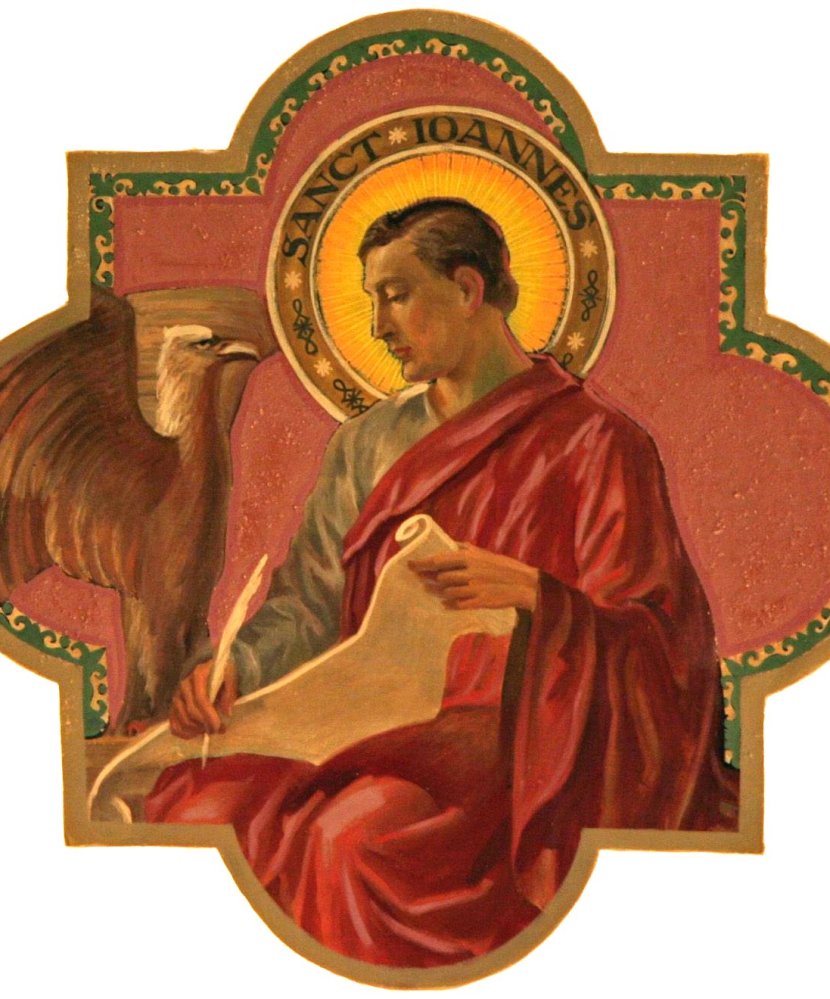
St. John the Evangelist – Proclaiming Through Experience ~ Br. Mark Dickson-Patrick – Novice
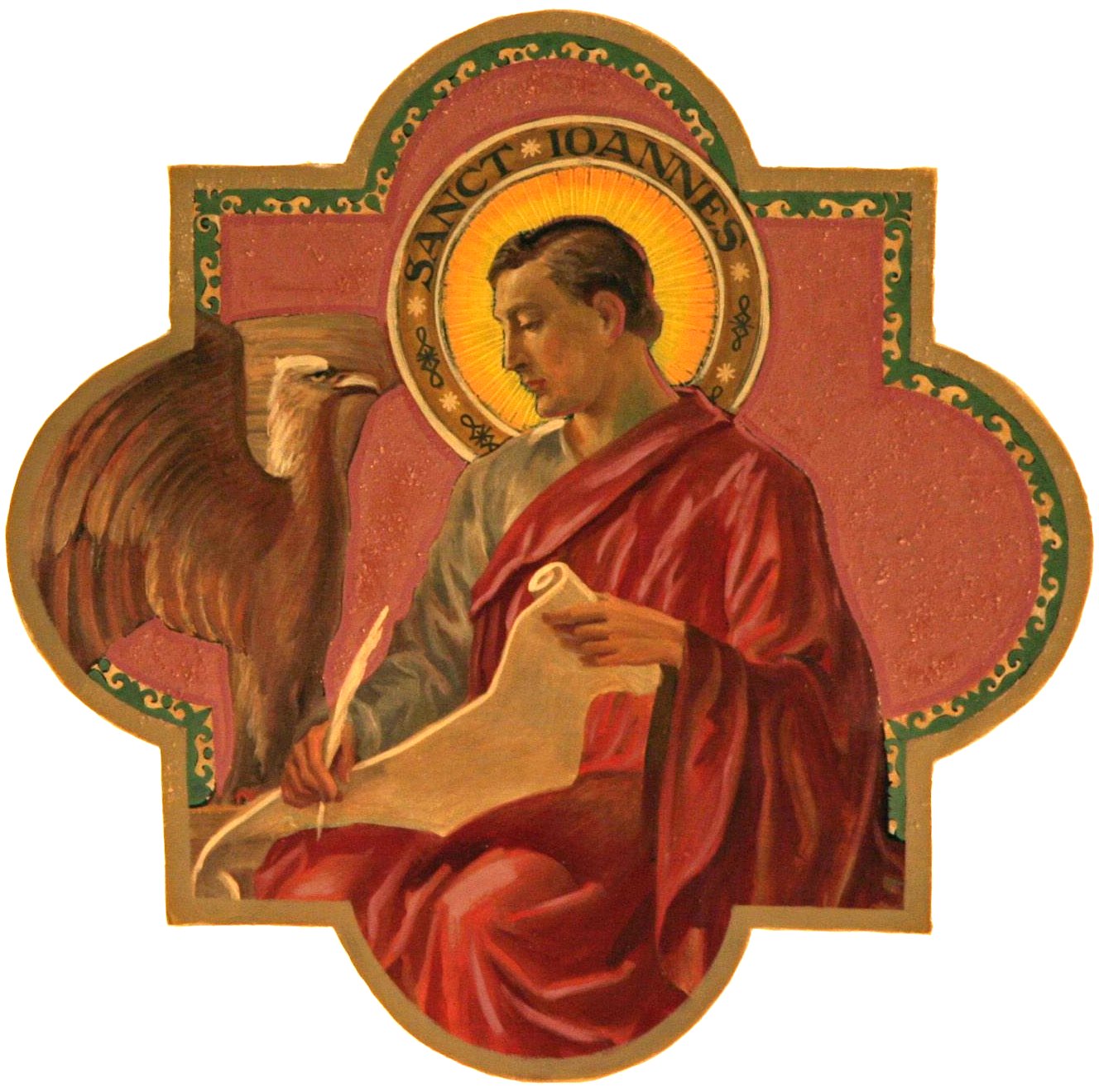
Today the Church celebrates the feast of St. John the Evangelist, the “Beloved Disciple,” who is traditionally believed to be the author of the Gospel of John. John was a historical figure, one of the “pillars” of the church in Jerusalem following Jesus’ death and resurrection. Around 95 AD, he is believed to have been exiled to the island of Patmos, where he wrote the book of Revelation and taught various believers who came to visit him in exile. He is the only one of the original 12 apostles to not have been killed for his faith and died in old age around the year 100 AD. Depicted in art as a young man, John is also represented by an eagle, which is one of the figures envisioned by the prophet Ezekiel and in John’s Revelation.
Have you ever gone on a long trip or ever moved away from your dear family and friends, and desired so much to be with them, to spend time with them, to talk to them and enjoy their company? Oftentimes, we pick up the phone and we can hear the voices of our loved ones. We in our modern world use video chat services like FaceTime and Skype to see and interact with them on a deeper level. That, however, is very rarely enough to satisfy our desire to be with one another, to learn from our elders and relatives and to laugh and be silly with our friends. Being with them gives an added sense of love and friendship and guidance and comfort that indirect means of communication cannot do.
In our first reading for this great feast, we read John’s own words discussing what he had the immense blessing in his life to experience with regard to the message of the Gospel. John, as one of the original 12 apostles, got to walk with Jesus, hear the message of the Good News of salvation from His mouth, see the miracles He worked, and even see the salvation of the world as his Teacher, his Master, hung dying on the cross with the weight of the world’s sins past, present, and future, on his shoulders. John says that what he does in preaching the Gospel is because of “what we have heard, what we have seen with our eyes, what we have looked at and touched with our hands, concerning the word of life” (1John 1:1). John was in a very special place to witness these miracles, as Scripture calls him “the beloved disciple,” “the disciple whom Jesus loved,” and he is the one to whom Jesus gave his mother to be taken care of. In preaching the Good News of salvation, and in his writings to the Christians who came to hear him, he is preaching what he himself has personally witnessed and is passing on to the readers of his letter, even down to us today. How truly blessed was he who touched the feet which bore the wounds which brought us salvation! How truly blessed to experience the miracles, the healings, and the walking on the water. How truly blessed to preach from his own experience that Jesus is Lord.
Sometimes in our Christian journey, it feels like we have to connect to the Lord through indirect means, like we would be connected with one another through FaceTime or Skype, or even the phone. Because we can’t physically touch Jesus, physically hear His voice as He speaks words of grace, of healing, of miracle, we may feel disconnected from Him and the work that He does in the world. We sometimes can feel like our prayer isn’t getting through and that we aren’t having the relationship with Jesus that we so desperately feel called to have. While it may feel that we can only connect to Him through indirect means we too, like John, can have those direct experiences with the mercy and grace and goodness of God. While in our life’s journey we become distracted, we should take a breath and look around and see the blessings, the graces, and the miracles that our Lord is working around us each and every day. Look at the beauty of the created world and the blessing of faith, and like John, share it. Like John, let us proclaim Jesus Christ, for “this life was revealed, and we have seen it and testify to it, and declare to you the eternal life that was with the Father and was revealed to us” (1John 1:2). We don’t need technology to feel connected to the Lord. We need only look around us, listen for His voice, and share His goodness and love, and the Good News of salvation.
St. John the Evangelist, the Beloved Disciple, pray for us.
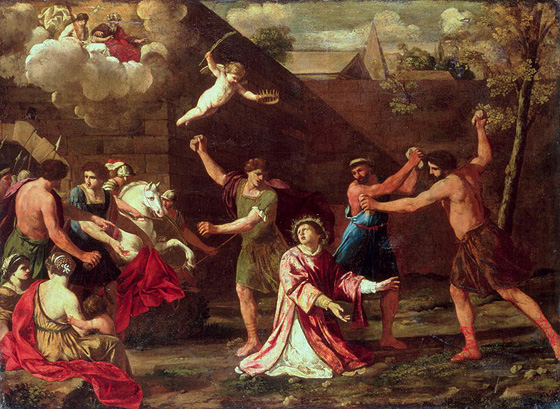
The Feast of St. Stephen the Martyr ~ The Rev. Lady Sherwood, OPI
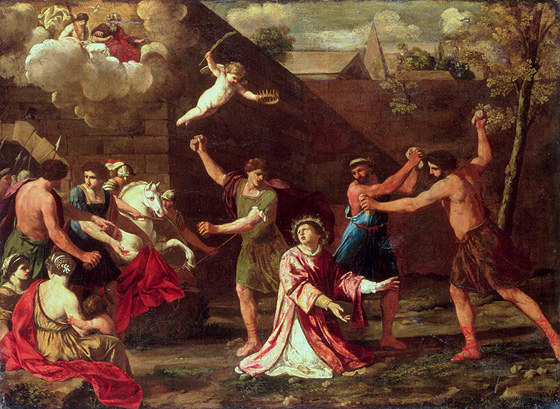
St. Stephen the Martyr=The link with Jesus’s birth
Reading 1:Acts 6:8-10, 7:54-59
Psalm:PS 31: 3CD-4, 6 & 8AB, 16BC & 17
Gospel: MT 10:17-22
Yesterday, we celebrated Christmas, the birth of Our Lord and Saviour Jesus Christ. We contemplated the newly born baby Jesus lying in a stable manager, we sang carols, feasted, and heard the tidings of peace and joy for the whole world. Although we are still very much in a festive mood, with the carols still ringing in our ears and the feasting still bloating us, today’s Feast of St Stephen the first Martyr, is a stark contrast to that of yesterday, but there is indeed a true deep link between the birth of Our Lord Jesus and Today’s Feast of martyrdom.
We all too easily forget among all the joyous festivities of Christmas, that our Lord Jesus was born amongst us, into a hard, cold, and violent world. Our dear Lord Jesus, the Son of God, was born not in a fancy palace or building. No, of all places,he was born in a manger within a simple stable. Not long after his birth, King Herod was looking to have him killed. This was only the very beginning of the violence and persecution which our Lord Jesus was going to face in his life upon the earth, and this would ultimately lead to to his execution upon the cross, paying the ultimate price for our sins and to gain for us eternal life and salvation.
So, when we truly reflect upon both the joy of Christmas and Today’s martyrdom of St Stephen, we can see the deep connection between the divine love and tenderness and human violence and persecution. Our Lord Jesus Christ came to heal our human hate and violence with his divine tenderness and love for us. This was expressed in mercy and by Forgiveness, this was also witnessed to us by the martyrdom of St Stephen. Just as Stephen believed and showed to us, let us also believe the truth, that ugliness and the evil of human hate and violence can only truly be changed with the divine tenderness of love and Forgiveness.
It is only through God’s mercy, love and Forgiveness and of our showing it as servants of our Lord Jesus Christ, just as St Stephen did, that hardened hearts will be turned into loving hearts.

What’s On Your Plate? ~ The Rev. Dcn. Scott Brown, OPI

Having a full plate. Too much on your plate. Just what does this idiom mean? Imagine a plate of food so full that some food might fall off. We don’t have to imagine it; we’ve all seen guy at the all you can eat buffets. The idioms dealing with a “full plate” refer to the same kind of thing, except instead of food, our imaginary plates are filled with anxiety, work, things to do, problems that need to be solved. We have much on our plates and Joseph had much on his. Let’s read the Gospel for today:
This is how the birth of Jesus Christ came about. When his mother Mary was betrothed to Joseph, but before they lived together, she was found with child through the Holy Spirit.
Joseph her husband, since he was a righteous man, yet unwilling to expose her to shame, decided to divorce her quietly. Such was his intention when, behold, the angel of the Lord appeared to him in a dream and said, “Joseph, son of David, do not be afraid to take Mary your wife into your home. For it is through the Holy Spirit that this child has been conceived in her. She will bear a son and you are to name him Jesus, because he will save his people from their sins.” All this took place to fulfill what the Lord had said through the prophet: Behold, the virgin shall conceive and bear a son, and they shall name him Emmanuel, which means “God is with us.” When Joseph awoke, he did as the angel of the Lord had commanded him and took his wife into his home.
MT 1:18-24
Let’s look at what was placed on Joseph’s plate.
Joseph must have had huge doubts about Mary when she was found to be pregnant. Joseph and Mary had not lived together (consummated the marriage), so Joseph had every right to believe Mary had been unfaithful to him, until an Angel of the lord appeared to him in a dream. The angel spoke to Joseph, assuring him that Mary had not been unfaithful, rather she was carrying the Son of God. What a trusting man Joseph must have been! How would you react? Wouldn’t that seem a little too far-fetched to be believable? Wouldn’t you just think that a dream is a dream and nothing more? Joseph didn’t: he had faith that what he had been told by the Angel was fact. I would like to think that if placed in the same situation, I would be able to react with faith as Joseph did. But most likely I would still be skeptical of the validity of the whole situation.
What do we know about Joseph? Not much actually, other than he was betrothed to Mary, which means that his marriage to Mary had been arranged by his and her parents; it is believed my many theologians that he was young, probably 16 or 17. We know that he was a devout man, a carpenter by trade, and he was from Bethlehem, but lived in Nazareth. Not a lot of detail about the man who would raise Jesus to adulthood.
We know that he was “pledged to be married” to Mary. What newer versions of the Bible call “pledged to be married,” the older versions call “betrothed.” This refers to an ancient Jewish marriage custom. In those days, most marriages were arranged by the parents–with or without the children’s approval. The two sets of parents would meet and draw up a formal marriage contract. When the contract was signed, the man and woman were legally “pledged” to each other other. This period of betrothal would last up to a year, at the end of which period they were formally married in a public wedding ceremony. Now that sounds like our practice of engagement, but there were some major differences. In the first place, the “pledge” was considered as sacred as marriage itself. During that year, the couple were called husband and wife but they did not live together. If the man died during that year, the woman would be considered a widow even though the wedding ceremony had never taken place. The only way to break the betrothal was through a legal divorce. In essence, to be “pledged” to each other was the same thing as being married, except that you could not live together until the wedding ceremony took place. The whole idea was that the one-year waiting period was meant to be a time for testing commitment and faithfulness.
Now Mary turns up pregnant. Joseph only knows one thing for sure. He’s not the father. What words describe a man at a time like this? Anger … Confusion … Frustration … Embarrassment … Shame … Rage … Disappointment. What did he say to her? What did she say to him? Did she tell him about the angel Gabriel? If she did, can you blame him for not believing her? Did he say to her, “Mary, how could you? You were pledged to me. We were going to get married. I think Joseph cried harder that day than he had ever cried in his life.
I shudder to think that if this situation happened today it might end in an abortion. Thankfully, Joseph and Mary didn’t have that option. Abortion was very rare in ancient Israel and Planned Parenthood hadn’t opened up a clinic in Nazareth yet. Joseph’s dilemma was of a different variety. He was an observant Jew and under the Law he had the right to divorce Mary for unfaithfulness. In fact, the Law forbade him to marry her under those circumstances. Here is the greatness of Joseph. Because Joseph her husband was a righteous man (that means he wanted to do what was right in the eyes of God) and did not want to expose her to public disgrace (that means that he although he thought she had been unfaithful, he still didn’t want to humiliate her) , he had in mind to divorce her quietly. In those days, a man could get a divorce in two ways: First, he could get a public divorce by going before a judge at the gate of the city. That would mean that the whole town would know about Mary’s shame. Second, he could get a private divorce by giving her the papers in the presence of two witnesses. It is entirely to Joseph’s credit that he chose to do it privately and thus spare Mary the humiliation of a public divorce. Having made his decision … he didn’t do it. He had every legal and moral right to divorce Mary but he just couldn’t do it. He hesitated, waited, thought long and hard. Day after day he pondered the matter. Time was running out. With each passing day, it became more obvious that Mary was pregnant.
He had a dream and in the dream God spoke to him. An angel of the Lord appeared to him in a dream and said, “Joseph, son of David, do not be afraid to take Mary home as your wife, because what is conceived in her is from the Holy Spirit.” To us, this seems strange. But not to Joseph. God often spoke to people through dreams in the Bible. It was one way he used in those ancient days of communicating to his people. He couldn’t marry Mary until he was sure it was all right. He had to know the truth. God met him at the point of his need at exactly the right moment. He told Joseph the one thing he most wanted to hear: “Joseph, son of David, do not be afraid to take Mary as your wife.” The angel explains just enough and nothing more. The baby is “from the Holy Spirit” and thus not of man. Nothing more is said. We are not told precisely how the virginal conception of Jesus in the womb of Mary took place. It remains one of the great mysteries of the Christian faith. After 2000 years of debate, we know nothing more about it than Joseph did.The angel added a detail about who this baby will be. His name is Jesus, which means “Savior.” His mission is to save his people from their sins.
We give more attention to Mary and rightly so. But Joseph deserves his credit, too. He is a model of the man of faith, struggling with his doubts, persuaded to believe what God has said and ultimately acting upon his persuasion.
In these days of confusion, Joseph is a wonderful model of what a godly man looks like:
He was tough when he could have been weak.
He was tender when he could have been harsh.
He was thoughtful when he could have been hasty.
He was trusting when he could have doubted.
He was temperate when he could have indulged himself.
Joseph had much on his plate. And he accepted it and met it with faith. What about you? What’s on your plate? How do you handle what life throws at you?
Let us pray:
Loving God, Help us to be more like Joseph, trusting, tender, thoughtful and temperate. Give us the strength to accept the situations before us and make the appropriate decisions for each situation. Amen.
 The Order of Preachers, Independent
You must be logged in to post a comment.