Lent and Noah and Reflections ~ The Rev. Jay Van Lieshout

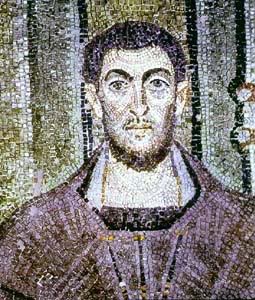
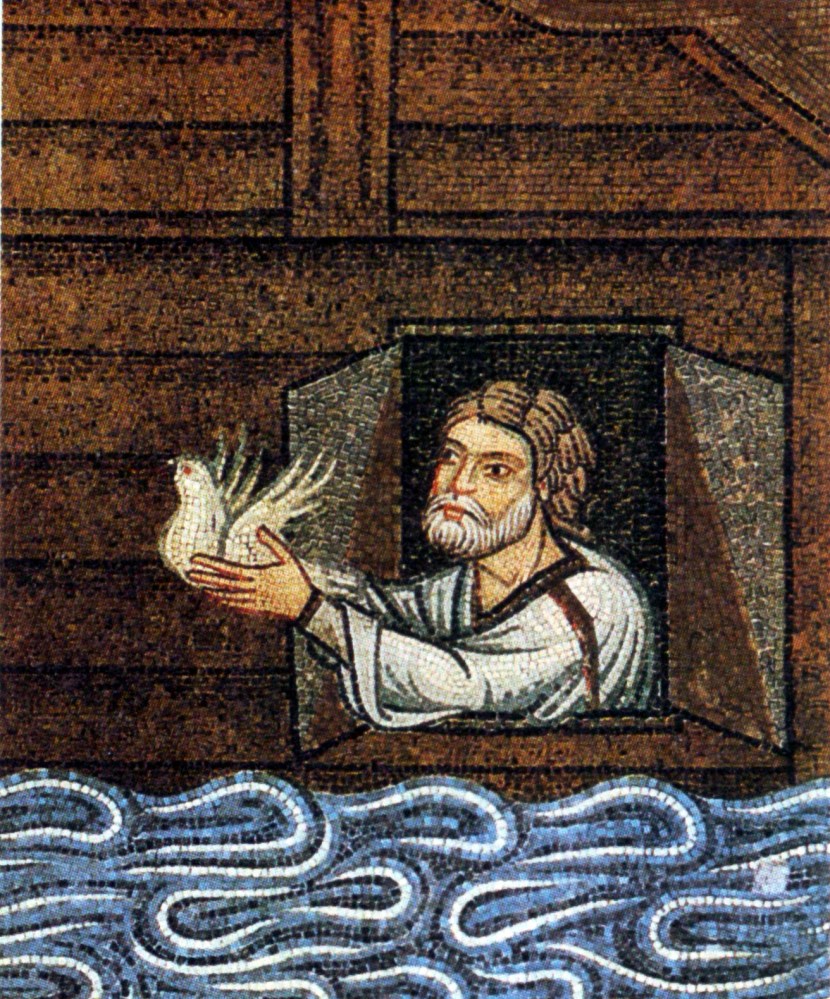
Noah_mosaic

Lent, a time according to the church where we fast, pray, focus on works of love and charity all as a solemn remembrance of the time Jesus spent alone in the wilderness.  A time where we are to prepare ourselves for the ministry of God’s Word and where we prepare ourselves to not only preach the Gospels but to live the Gospels just as Jesus did some 2000 years ago.  For me, lent this year has been less about the fasting, or the prayer, or the contemplative repentance and loving charity and more a wandering in my own wilderness of emotions, changes and preparation of ministry.

My 2015 was a year of dynamic change, growth, accomplishments, tragic losses, grief and renewal.  I began my life as a transitional deacon and my ministry to others and was ordained to priesthood later in the year.  I also progressed from postulate to novice and finally to brother in the Dominican Order.  I watched my partner and soul mate deteriorate both physical and mentally as he lost his battle with mortality.  I cared for my mother as she lay bedridden, her mind becoming confused and spending more and more time in the past until she suddenly and unexpectantly left this plain without saying good bye.  I lost one church family, then another only to renew the prior again.  I sat lonely, grieving losses, to paralyzed to move forward and rebuild, to hurt to let anyone else in.  In the end, I found strength in new beginnings, God gave me someone new to heal my hurt and strength to grow again.  This is all what I have reflected on, relived, grieved and celebrated this Lenten season.

As I ponder my Lenten journey, I do not feel as if I have missed the meaning of or failed to journey “the path” to renewal in the death and resurrection of Jesus.  In fact, I believe I have walked the path that is the essence of the Lenten journey!    Life, like nature’s seasons, is cyclic.  The renewal of spring, the growth, hard work and joy of summer, the bounty of the harvest and celebrations of fall, and winter’s waning of life, ending of festivals and hope of spring’s renewal.  The end of winter is cold, dark, and dreary. The bounties of the harvest dwindle, holidays are fewer, we hunker down in our homes, nesting in the darkness and think of the past as we wait for the break of spring.  Late winter and so too Lent about “me time”; a time to process all that has happen in the previous months, a time to heal, a time to focus on those around us in our nest and a time to plan and change for the new season of growth.

We are told Jesus spent 40 days alone in the wilderness of the desert.  It is hard to say if He was truly alone in the “wasteland” of the desert or if he was perhaps just wandering unknown cities, with unknown people, without His friends, family or support network.  In either case He was alone with His thoughts, alone with His God, alone with His memories, His knowledge, His experiences, His losses, His wins, His experiences and His emotions.  So much learned, so much seen, so many questions, so much hard work to get ready for His ministry;  He was baptized and it was time to begin His work, but what did it all mean?

I wonder if Jesus looked to Noah for inspiration.  Here was a man with a similarly daunting call from the Creator: “Noah, I want you to build a huge ark, the biggest thing ever build by a human.  It must be designed so as to hold a pair of each of the creatures on Earth.  You will have to build it with little help while others mock you and think you are crazy.  You are to give your life to Me for through you I will save many and renew the Earth.”   What torment Noah (and his family) went through to do God’s will, how they must have been derided by others, seen as crazy, trouble makers and even feared by those in power.  The agony Noah must have endured as he closed up ship and watch everyone and everything he knew disappear in the chaotic waters.  The fear and struggles his family faced as they floated on the vast waters, subject to the winds and currents with no control over their journey and no idea of their destination.  The loss of hope as hours became days, days turned into weeks, and weeks extended beyond a month.  The wear of daily drudgeries in caring for the ship, the animals, each other and the ever growing “cabin fever”.   Will we ever reach land?  What will it be like?  How will we restart everything?  Maybe we are just crazy, perhaps God has forgotten us and will end up just dying alone on this ship.  40 days alone, to think, to exist, to possibly loose hope or loose oneself in the darkness of our own souls.

I wonder if Jesus felt akin to Noah as He walked alone in the confusion of His own journey of questioning, growing and establishing His own faith in God.  40 days of struggling, thinking, arguing, looking temptation and despair in the eye over and over again.  Looking out over the chaotic waters of His baptism into the Ministry of God’s word, looking for the simple sign of peace and hope carried in on the wings of the Holy Spirit.  40 long and lonely days and there, on the horizon, hope comes, the sign that God is with Him and His new life is about to begin.  The seeds are ready to plant, the work is ready to be done and the harvest will indeed be the reward.  It will not be easy, life rarely is, but there is hope, purpose and God will take care of the rest.

This is the truth in Lent.  We all struggle, our candle flames flicker in the storms of life, the light seemingly dims as if about to go out but soon flashs back to full brilliance.  Like the seasons, our lives wax and wane and wax again; it is an integral part of being human and no one can escape the ebb and flow of the chaotic waters.  Noah lived it, the Son of Man lived it and we live it; but just like Noah and Jesus, we are never truly alone.  God is always with us, guiding us, caring for us, providing us with people who love us and with whom we can share our lives and who give us hope for the new beginnings.  This is the truth in our Lenten journey, it is the hope given us in the word of God, it is the message written in seasonal changes, and is the significance of our liturgical year.
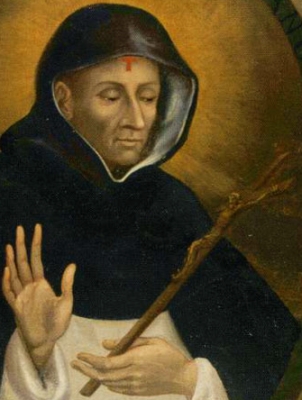
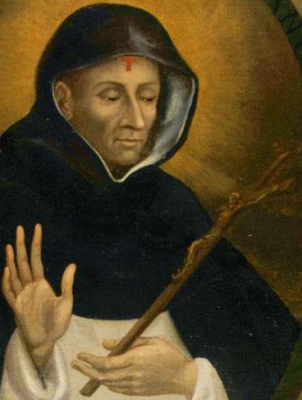
 

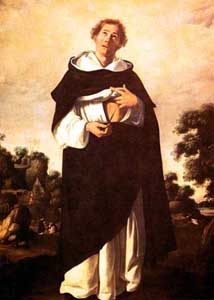
Blessed Jordan of Pisa

img-Blessed-Jordan-of-Pisa

At a time when scholars believed that no colloquial tongue could ever replace Latin as a gentleman’s language, Jordan worked to make Italian the beautiful tongue that it is today. That’s not the reason he was beatified by the Church but it’s interesting and sometimes overlooked.

Jordan attended the University of Paris where he first encountered the Dominican friars in 1276. Four years later, probably after obtaining his degrees, he returned to Italy and took the habit. He began a long teaching career there as soon as he was qualified to do so.

Because of the excellence of his preaching in Florence, Jordan was appointed first lector there in 1305. He seems to have been fascinated with the whole question of preaching as an apostolic tool, and to have been one of the first to make a scientific study of it. He pointed out that the Greek church was “invaded by a multitude of errors,” because the Greeks had no preachers; he could never say enough in praise of Saint Dominic’s farsightedness in establishing an order specifically for preaching.

Jordan studied methods of making sermons more effective, both by using examples that would reach the people, and by the use of the vernacular. This latter was a much-disputed subject in his day (they had Dan Amon’s then, too); Jordan was considered a daring innovator. Because it was controversial, he strove to make Italian a beautiful instrument on which he could play the melodies of the Lord.

Blessed with an extraordinary memory, Jordan is supposed to have known the breviary by heart, as well as the missal, most of the Bible (with its marginal commentary), plus the second part of the Summa. This faculty of memory he used in his sermons, but he was quick to point out to young preachers that learning alone can never make a preacher. By the holiness of his own life he made this plain, and continually preached it to those he was training to preach.

Jordan of Pisa had two great devotions–to Our Blessed Mother and to Saint Dominic. Once he was favored with a vision of Our Lady; she came into the fathers’ refectory and served at table. Jordan, who was the only one who could see her, could barely eat for excitement. He spoke often of her in his sermons, and also of Saint Dominic. He founded a number of confraternities in Pisa, one of which has lasted until now.

Jordan died on his way to Paris to teach at Saint Jacques. His body was returned from Piacenza, where death overtook him, to rest in the church at Pisa (Benedictines, Dorcy).

Born:1255 at Pisa, Italy

Died: August 19, 1311 at Piacenza of natural causes while on his way to teach in Paris; relics venerated at the church of Saint Catalina at Pisa, Italy

Beatified: August 23, 1833 (cultus confirmed) by Pope Gregory XVI; 1838 (beatification)

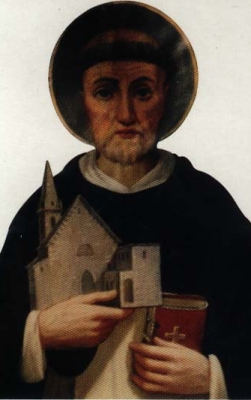
Blessed Henry of Suso

img-Blessed-Henry-Suso

His father belonged to the noble family of Berg; his mother, a holy woman from whom he took his name, to a family of Sus (or Süs). When thirteen years of age he entered the Dominican convent at Constance, where he made his preparatory, philosophical, and theological studies.

From 1324 to 1327 he took a supplementary course in theology in the Dominican studium generale at Cologne, where he sat at the feet of Johann Eckhart, “the Master”, and probably at the side of Tauler, both celebrated mystics. Returning to Constance, he was appointed to the office of lector, from which he seems to have been removed some time between 1329 and 1334. In the latter year he began his apostolic career. About 1343 he was elected prior of a convent, probably at Diessenhofen. Five years later he was sent from Constance to Ulrn where he remained until his death.

Suso’s life as a mystic began in his eighteenth year, when giving up his careless habits of the five preceding years, he made himself “the Servant of the Eternal Wisdom”, which he identified with the Divine essence and, in a concrete form, with the personal Eternal Wisdom made man. Henceforth a burning love for the Eternal Wisdom dominated his thoughts and controlled his actions. He had frequent visions and ecstasies, practised severe austerities (which he prudently moderated in maturer years), and bore with rare patience corporal afflictions, bitter persecutions and grievous calumnies.

He became foremost among the Friends of God in the work of restoring religious observance in the cloisters. His influence was especially strong in many convents of women, particularly in the Dominican convent of Katherinenthal, a famous nursery of mysticism in the thirteenth and fourteenth centuries, and in that of Toss, where lived the mystic Elsbeth Stagel, who turned some of his Latin into German, collected and preserved most of his extant letters, and drew from him the history of his life which he himself afterwards developed and published.

In the world he was esteemed as a preacher, and was heard in the cities and towns of Swabia, Switzerland, Alsace, and the Netherlands. His apostolate, however, was not with the masses, but rather with individuals of all classes who were drawn to him by his singularly attractive personality, and to whom he became a personal director in the spiritual life.

It has often been incorrectly said that he established among the Friends of God a society which he called the Brotherhood of the Eternal Wisdom. The so-called Rule of the Brotherhood of the Eternal Wisdom is but a free translation of a chapter of his “Horologium Sapientiae”, and did not make its appearance until the fifteenth century.

HIS WRITINGS

The first writing from the pen of Suso was the “Büchlein der Wahrheit”, which he issued while a student at Cologne. Its doctrine was unfavourably criticized in some circles — very probably on account of its author’s close relations with Eckhart, who had just been called upon to explain or to reject certain propositions — but it was found to be entirely orthodox.

As in this, so in his other writings Suso, while betraying Eckhart’s influence, always avoided the errors of “the Master”. The book was really written in part against the pantheistic teachings of the Beghards, and against the libertine teachings of the Brethren of the Free Spirit. Father Denifle considers it the most difficult “little book” among the writings of the German mystics.

Whereas in this book Suso speaks as a contemplative and to the intellect, in his next, “Das Büchlein der ewigen Weisheit”, published early in 1328, he is eminently practical and speaks out of the fullness of his heart to “simple men who still have imperfections to be put off”. Bihlmeyer accepts Denifle’s judgment that it is the “most beautiful fruit of German mysticism”, and places it next to the “Homilies” of St. Bernard, and the “Imitation of Christ” by Thomas à Kempis. In the second half of the fourteenth and in the fifteenth century there was no more widely read meditation book m the German language.

In 1334 Suso translated this work into Latin, but in doing so added considerably to its contents, and made of it an almost entirely new book, to which he gave the name “Horologium Sapientiae”. Even more elevating than the original, finished in language, rich in figure, rhythmic in movement, it became a favourite book in the cloisters at the close of the Middle Ages, not only in Germany, but also in the Netherlands, France, Italy, and England.

To the same period of Suso’s literary activity may belong “Das Minnebüchlein” but its authenticity is doubtful.

After retiring to Ulm Suso wrote the story of his inner life (“Vita” or “Leben Seuses”), revised the “Büchlein der Wahrheit”, and the “Büchlein der ewigen Weisheit”, all of which, together with eleven of his letters (the “Briefbüchlein”), and a prologue, he formed into one book known as the “Exemplar Seuses”.

Suso is called by Wackernagel and others a “Minnesinger in prose and in the spiritual order.” The mutual love of God and man which is his principal theme gives warmth and colour to his style. He used the full and flexible Alamannian idiom with rare skill, and contributed much to the formation of good German prose, especially by giving new shades of meaning to words employed to describe inner sensations. His intellectual equipment was characteristic of the schoolmen of his age. In his doctrine there was never the least trace of an unorthodox tendency.

For centuries he exercised an influence upon spiritual writers. Among his readers and admirers were Thomas à Kempis and Bl. Peter Canisius.

The Catholic Encyclopedia, Volume VII
Nihil Obstat, June 1, 1910, Remy Lafort, S.T.D., Censor
Imprimatur. +John Cardinal Farley, Archbishop of Ne

Born: March 21, 1295 at Uberlingen, Germany as Heinrich von Berg

Died: January 25, 1361 at Ulm, Germany

Beatified: 1831 by Pope Gregory XVI

Representation: Dominican with the Holy Name on his chest

Works: Book of the Eternal Wisdom, The Thirst of God

Blessed Christopher of Milan

img-blessed-christopher-of-milan

Nothing is known of the early years of Blessed Christopher. He received the Dominican habit in the convent of San Eustorgio in Milan, Italy, in the early 15th century. He is recorded as being “holy and abstemious, humble and studious”–the ordinary virtues that we have come to take for granted among the beati; there is nothing to indicate the type of person Christopher was, or what peculiar circumstances might have led him to the Dominicans. He is noted especially for his preaching and for his gift of prophecy.

The age in which Christopher lived was a rough and dangerous one, and a time for prophets and penitents to thrive. He was himself an apostolic preacher throughout Liguria and the Milanese, famous for the impact of his sermons on sinners. He had a vivid power of description and this, coupled with his gift of prophecy, made his sermons unforgettable.

Christopher worked in many parts of Italy, but his name is particularly venerated in Taggia, where he spent many years. As a result of his preaching, the people of Taggia built a monastery and church dedicated to Our Lady of Mercy and Christopher became its first abbot. A great wave of spiritual revival was felt in Taggia during his tenure, but he was not optimistic about the future.

In a vision he saw that most of the population would be carried off by plague. Twenty years before anyone was paying any attention to the Turks, he told the people of Taggia that Turks would invade the city, and they did, as he had prophesied. A disastrous flood swept the area, fulfilling another of his prophesies. He wrote four volumes of sermon aids, containing scriptural examples and quotations from the Fathers of the Church.

In 1484, when he was absent from Taggia preaching a mission, Christopher fell ill and knew that he was about to die. He insisted on returning to his own monastery at Taggia. There he received the last sacraments and immediately died (Benedictines, Dorcy).

Born: In the early part of the 15th century

Died: 1484 at Our Lady of Mercy convent, Taggia, Italy of natural causes

Beatified: 1875 by Pope Pius IX

If It Weren’t for Bad Luck… ~ The Rev. Jay Van Lieshout, OPI

life

“If it weren’t for bad luck, I’d have no luck at all!”   Who has not cried this out in a fit of despair at one time or another?  How many of us may even be thinking such a thought at this very moment?   Feeling at times as if we are plagued by misfortune is really part of being human.  Things sometimes just go wrong and, though events sometimes go without a hitch ending on a happy note, we as humans tend to focus on and hold tight to those events that are less than perfect events in our lives.  Remembering when our actions produced undesirable  results can be a good thing; it is how we learn what to avoid, what not to do or to say, etc; in fact, failures can often lead to  successful and rewarding outcomes.  Yes, we view our failures as bad luck or feel we are cursed in spite of all the good we have in our lives.  Being raised in a Calvinist family I was taught if something goes wrong it was because I was a sinner and God was punishing me.  The larger the mishap, the more dreadful a child I was, for what you sow is what you reap.  From the smallest paper cut to being in pain with kidney stones, it was all part of God’s plan to punish my wickedness; God was vengeful and mean because of our sins and Jesus came to point that out to us.  What a horrible teaching for a child, and what a horrible teaching that still continues today in too many a “Christian” denomination or church.

Such misconceptions of God are not new to modern times; Luke tells us Jesus dealt with similar misguided thoughts and teachings.  When asked about Pilate’s slaughter of some Galileans as they were conducting ritual sacrifices (the implication being they might have been guilty in the eyes of God), Jesus asked if they thought the victims were “greater sinners” than the all other Galileans?  Without delay, Jesus rebuked them saying “I say to you no!  But I tell you, if you do not repent, you will all perish as they did!” (Luke 13:2-3)  Similarly, Jesus asked if the deaths of the 18 killed when the tower of Siloam collapsed was the result of the victims indebtedness exceeding that of the rest of the men in Jerusalem?  Again without delay, Jesus rebuked them saying “I say to you no!  But I tell you, if you do not repent, you will all perish as they did!” (Luke 13:4-5)  Two horrendous events: one the murder of innocent people as a result of hate and bigotry, another, the tragic loss of innocent lives as the result of an accident; in neither was God punishing the victims (and Jesus would know if He was), both were just random tragedies, examples of “crap happens”.  Yet both revealed the delicate and fleeting nature of human life as well as how easily one can suffer a spiritual death over mundane worldly things; Jesus warns to repent now, for tomorrow may not come.

So is all lost?  If we stumble and then quickly die before we can repent and ask for forgiveness, is there no hope?  To quote Jesus, “I say to you no!”    God is our father, and though He can be stern, His love for us in unchanging, unending and boundless.  Luke continues with Jesus telling a parable in which a fig tree has failed to yield fruit for 3 years.  The owner has no patience and instructs the gardener to cut it down.  The gardener knows that sometimes “crap happens” and offers to tend to the tree for a year using a little manure, a little extra attention and, hence, he is giving the tree another chance to bear fruit (with a little help).  This is how God works us in His garden, he sent the Son of  Man to be our gardener, to spare us from the saw, to intercede for us, nurture us with the Word of the Creator, cultivate our souls and help us turn the “crap” that happens in life into fruit for the Father’s Harvest.

Yes, bad things happen to me, to you, to everyone.  Part of being human and being alive is “crap happens”; this is a fundamental fact of life.  What we all must realize is this is not God punishing us, it is not some divine retribution, and it surely is not a canonical license to condemn others or withhold compassion to those suffering “because they are sinners and deserve their misfortune”.  I say to you nobody is undeserving of our compassion and forgiveness.  In fact, many of those who have suffered some of the most horrendous crap life can muster, have turn out to be our most beloved and respected saints-and one even died so that all of humanity could, in turn, live!  So the next time you feel you are getting more than your share of manure just remember, the only difference between a saint and a sinner is a saint will not sling the manure at others, but instead, they use it as fertilizer for the tree of Jesse so that it might bare the largest and sweetest of fruit.

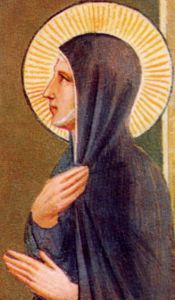
Blessed Villana

545

Blessed Villana was the daughter of Andrew de’Botti, a Florentine merchant, and was born in 1332. When she was thirteen she ran away from home to enter a convent but her attempts were unsuccessful and she was forced to return. To prevent any repetition of her flight, her father shortly afterwards gave her in marriage to Rosso di Piero. After her marriage she appeared completely changed; she gave herself up to pleasure and dissipation and lived a wholly idle and worldly life. One day, as she was about to start for an entertainment clad in a gorgeous dress adorned with pearls and precious stones, she looked at herself in a mirror. To her dismay, the reflection that met her eyes was that of a hideous demon. A second and a third mirror showed the same ugly form.

Thoroughly alarmed and recognizing in the reflection the image of herself sin-stained soul, she tore off her fine attire and, clad in the simplest clothes she could find, she betook herself weeping to the Dominican Fathers at Santa Maria Novella to make a full confession and to ask absolution and help. This proved the turning point of her life, and she never again fell away. Before long Villana was admitted to the Third Order of St. Dominic, and after this she advanced rapidly in the spiritual life. Fulfilling all her duties as a married woman, she spent all her available time in prayer and reading. She particularly loved to read St. Paul’s Epistles and the lives of the saints. At one time, in a self-abasement and in her love for the poor, she would have gone begging for them from door to door had not her husband and parents interposed. So completely did she give herself up to God that she was often rapt in ecstacy, particularly during Mass or at spiritual conferences; but she had to pass through a period of persecution when she was cruelly calumniated and her honor was assailed.

Her soul was also purified by strong pains and by great bodily weakness. However, she passed unscathed through all these trials and was rewarded by wonderful visions and olloquies with our Lady and other saints. Occasionally the room in which she dwelt was filled with supernatural light, and she was also endowed with the gift of prophecy. As she lay on her deathbed, she asked that the Passion should be read to her, and at the words “He bowed His head and gave up the ghost”, she crossed her hands on her breast and passed away. Her body was taken to Santa Maria Novella, where it became such an object of veneration that for over a month it was impossible to proceed with the funeral.

People struggled to obtain shreds of her clothing, and she was honored as a saint from the day of her death. Her bereaved husband use to say that, when he felt discouraged and depressed, he found strength by visiting the room in which his beloved wife had died.

Born: 1332 in Florence, Italy

Died: December of 1360 of natural causes; body taken to Santa Maria Novella; the Fathers were unable to bury her for a month due to the constant crowd of mourners

Beatified: March 27 1824 (cultus confirmed) by Pope Leo XII


Serving God? Serving Man?

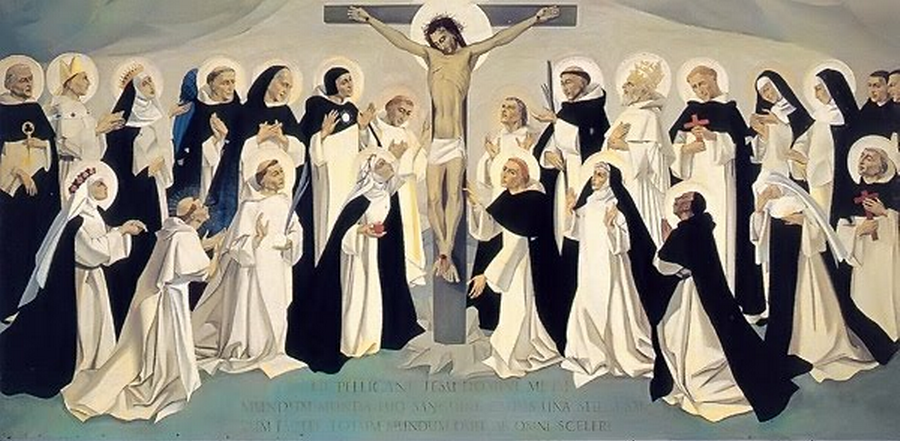
dominicans at the cross

Do you have a call to serve?  Do you long to share your faith?  Do you enjoy study?  Do you wish to further your prayer life?  Do you have a vocation to become a religious?  If so, then perhaps the Order of Preachers, Independent, is a good fit for you.  Becoming a member of the Order of Preachers, Independent is not an arduous or complicated task, however it does take some time, some determination, an abundance of study, a great deal of prayer, and a modicum of spunk.

The real beginning of the process takes place before one ever contacts us. It begins with the candidate’s own struggle to discern if he or she has a call to the religious life or not. This can take place over a number of years, and usually involves some help from others, especially a confessor or spiritual director. The dynamic here should be noted: it is a personal call from God to the individual, but the recognition and understanding of that call normally requires the help of others. This dynamic continues throughout the following, more formal stages of formation: the candidate continues to struggle to understand and give shape to his or her call under the guidance and direction of others. Nor should it be surprising to us that this is the case. God always enlightens us, teaches us, and sanctifies us through the Body of Christ, his Church. His grace for us, in other words, is always ministered to us through others. The grace of a vocation is made incarnate in the service, education, and training that others give in order to bring that vocation to life.

If you feel you may have a vocation, if you are interested, if you would like to discuss this with us, then do please contact us via the  Comment Section of the “Contact us” on our website!  God bless you!

Blessed Constantius

420

Constantius Bernocchi is as close to a ‘sad saint’ as it’s possible for a Dominican to get; he is said to have had the gift of tears. However, that is not his only claim to fame. Constantius had a remarkable childhood, not only for the usual signs of precocious piety, but also for a miracle that he worked when he was a little boy. Constantius had a sister who had been bedridden most of her nine years of life. One day, the little boy brought his parents in to her bedside and made them pray with him. The little girl rose up, cured, and she remained well for a long and happy life. Naturally, the parents were amazed, and they were quite sure it had not been their prayers that effected the cure, but those of their little son.

Constantius entered the Dominicans at age 15, and had as his masters Blessed Conradin and Saint Antoninus. He did well in his studies and wrote a commentary on Aristotle. His special forte was Scripture, and he studied it avidly. After his ordination, he was sent to teach in various schools in Italy, arriving eventually at the convent of San Marco in Florence, which had been erected as a house of strict observance. Constantius was eventually appointed prior of this friary that was a leading light in the reform movement. This was a work dear to his heart, and he himself became closely identified with the movement.

Several miracles and prophecies are related about Constantius during his stay in Florence. He one day told a student not to go swimming, because he would surely drown if he did. The student, of course, dismissed the warning and drowned. One day, Constantius came upon a man lying in the middle of the road. The man had been thrown by his horse and was badly injured; he had a broken leg and a broken arm. All he asked was to be taken to some place where care could be given him, but Constantius did better than that–he cured the man and left him, healed and astonished.

Constantius was made prior of Perugia, where he lived a strictly penitential life. Perhaps the things that he saw in visions were responsible for his perpetual sadness, for he foresaw many of the terrible things that would befall Italy in the next few years. He predicted the sack of Fabriano, which occurred in 1517. At the death of Saint Antoninus, he saw the saint going up to heaven, a vision which was recounted in the canonization process.

Blessed Constantius is said to have recited the Office of the Dead every day, and often the whole 150 Psalms, which he knew by heart, and used for examples on every occasion. He also said that he had never been refused any favor for which he had recited the whole psalter. He wrote a number of books; these, for the most part, were sermon material, and some were the lives of the blesseds of the order.

On the day of Constantius’s death, little children of the town ran through the streets crying out, “The holy prior is dead! The holy prior is dead!” On hearing of his death, the city council met and stated that it was a public calamity.

The relics of Blessed Constantius have suffered from war and invasion. After the Dominicans were driven from the convent where he was buried, his tomb was all but forgotten for a long time. Then one of the fathers put the relics in the keeping of Camaldolese monks in a nearby monastery, where they still remain (Benedictines, Dorcy, Encyclopedia).

Born: Born in the early part of the 15th century in Fabriano, Marches of Ancona, Italy

Died: 1481 of natural causes; the local senate and council assembled at the news of his death, proclaimed it a “public calamity”, and voted to pay for the funeral

Beatified: 1821 (cultus confirmed) by Pope Pius VII

And Now, For a Change… ~ The Rev. Dcn. Dollie Wilkinson, OPI

change-ahead

As we first entered the Lenten season, the focus almost always seemed to be about change. Questions such as, “What am I to give up for Lent?” or even, “What task or new habit can I incorporate in to my daily life?”. As we all know, change, though scary at times, is almost always good. Just as the change that came over Jesus in Luke 9:28-36.

“Now about eight days after these sayings Jesus took with him Peter and John and James, and went up on the mountain to pray. And while he was praying, the appearance of his face changed, and his clothes became dazzling white. Suddenly they saw two men, Moses and Elijah, talking to him. They appeared in glory and were speaking of his departure, which he was about to accomplish at Jerusalem. Now Peter and his companions were weighed down with sleep; but since they had stayed awake, they saw his glory and the two men who stood with him. Just as they were leaving him, Peter said to Jesus, “Master, it is good for us to be here; let us make three dwellings, one for you, one for Moses, and one for Elijah” — not knowing what he said. While he was saying this, a cloud came and overshadowed them; and they were terrified as they entered the cloud. Then from the cloud came a voice that said, “This is my Son, my Chosen; listen to him!” When the voice had spoken, Jesus was found alone. And they kept silent and in those days told no one any of the things they had seen.”

Peter, John and James witnessed a rare sight, the Transfiguration or change, of Jesus. Just as we experience change during these days of Lent, so did Jesus on top of the mountain. But what I find interesting is that these men still recognized Jesus as, well, Jesus. Though He was clothed in “dazzling white”. He was the same teacher, and friend, that these gentlemen had always known. They recognized Him still, and were humbled by the change that manifested in Him at the time.

Often times we fear change because we wonder, “Will my friends and family still love me?”. Or those around us may even question the changes, fearing this new person we have become, will not be as welcoming to those around us. But Jesus changed, and did Peter, John or James flee in fear? No, actually after Peter witnessed Jesus speaking with Moses and Elijah, he wanted to literally roll out the welcome mat. Not entirely understanding what was happening, but trusting Jesus, Peter wanted to build a dwelling for all three. He was so excited to be a witness to this special occasion, he sought some way to preserve the moment. If such an occurrence happened now, I can almost guarantee every one of us would want to do the same. But instead of constructing tents, we would quickly be updating our status on Facebook, or posting like a gazillion pics on Instagram. Or just as likely, our fingers would quickly be flying across our keyboards, sending out Tweets about what an awesome time we had hanging out with Jesus.

So, we know Peter, John and James had this life-changing experience on the mountain. They witnessed Jesus’ Transfiguration, as well as a booming voice in the cloud declaring exactly who Jesus is, and are instructed to listen to Him. When I first became a Christian, and was walking on wobbly stones in my faith, I often asked God, “Give me a sign, show me you are You”. Well as you can imagine, that didn’t happen. And honestly, if it had, I wouldn’t be so sure that I could have even believed my own eyes. Yet, don’t we all strive too witness the true face of God, to see with our own eyes that He really is just who He says He is, and can do what He unequivocally declares to be done? Yet as we read in the Bible, true visitations by our heavenly Father are rare. But, He is still just as real to us today as He was so long ago on top of that mountain.

As we use this time to manifest changes in ourselves, as we strive to develop a deeper relationship with our blessed Father, let us never forget that He is right here with us. He is sitting at the kitchen table as you sip that first cup of coffee. He is standing in the check out line at the store. He is in the car on our daily commute home in the evening. And, He is there when we finally decide to put our daily cares to rest, and before we close our eyes at night, whispering “Thank you God for another day.”.

Transfiguration Prayer:

Lord,

You met with Moses on the top of a mountain,

And when he descended his face was shining

And in your power he brought your laws to a needy people.

You met with Christ on top of a mountain

And he was transformed with brightness

And descended with renewed strength.

Lord, we want to meet with you and be transformed by you

And to bring your transformation to the world around us.

Help us to bring your presence to the lives of those burdened with sickness or pain,

And those weighed down with confusion or grief.

Bring your healing touch to those lives today,

And let us support those we know in need with a constant friendship.

Help us to bring your change to a troubled society,

Where people are unsure of so much and where change comes so fast.

Give us the grace to understand people’s problems and anxieties

And the strength to tackle difficult issues head on.

Help us to work together to transform a needy world,

Whether through giving or educating or leading by example.

Give us the wisdom to see through big and complex issues

And the love that will keep us going when problems are overwhelming.

Help us to always be a beacon for you,

Individually and together.

We don’t stand on any lofty mountain

But we have a God who is changing us every day

And through whom we can reach out to change a broken world.

Be with us today Lord and help us take whatever step is next for us.

We ask this through the power of your love.

Amen


Blessed Alvarez of Cordova

beato-alvaro-de-zamora

Blessed Alvarez is claimed by both Spain and Portugal. He received the habit in the convent of Saint Paul in Cordova in 1368, and had been preaching there for some time in Castile and Andalusia when Saint Vincent Ferrer began preaching in Catalonia. Having gone to Italy and the Holy Land on a pilgrimage, Alvarez returned to Castile and preached the crusade against the infidels. He was spiritual advisor to the queen-mother of Spain, Catherine daughter of John of Gaunt, and tutor to her son John II. Alvarez had the work of preparing the people spiritually for the desperate effort to banish the Moors from Spain. He also opposed the Avignon pope Peter de Luna.

Blessed Alvarez is probably best remembered as a builder of churches and convents, an activity which was symbolic of the work he did in the souls of those among whom he preached. He founded, in one place, a convent to shelter a famous image of Our Lady, which had been discovered in a miraculous manner. Near Cordova he built the famous convent of Scala Coeli, a haven of regular observance. It had great influence for many years. His building enterprises were often aided by the angels, who, during the night, carried wood and stones to spots convenient for the workmen.

The austerities of Alvarez were all the more remarkable in that they were not performed by a hermit, but by a man of action. He spent the night in prayer, as Saint Dominic had done; he wore a hairshirt and a penitential chain; and he begged alms in the streets of Cordova for the building of his churches, despite the fact that he had great favor at court and could have obtained all the money he needed from the queen. He had a deep devotion to the Passion, and had scenes of the Lord’s sufferings made into small oratories in the garden of Scala Coeli.

On one occasion, when there was no food for the community but one head of lettuce left from the night before, Blessed Alvarez called the community together in the refectory, said the customary prayers, and sent the porter to the gate. There the astonished brother found a stranger, leading a mule; the mule was loaded with bread, fish, wine, and all things needed for a good meal. The porter turned to thank the benefactor and found that he had disappeared.

At another time, Blessed Alvarez was overcome with pity at a dying man who lay untended in the street. Wrapping the man in his mantle, he started home with the sufferer, and one of the brothers asked what he was carrying. “A poor sick man,” replied Alvarez. But when they opened the mantle, there was only a large crucifix in his arms. This crucifix is still preserved at Scala Coeli.

Blessed Alvarez died and was buried at Scala Coeli. An attempt was made later to remove the relics to Cordova, but it could not be done, because violent storms began each time the journey was resumed, and stopped when the body was returned to its original resting place.

Founded Escalaceli (Ladder of Heaven), a Dominican house of strict observance in the mountains around Cordova; it became a well known center of piety and learning. Alvarez spent his days there preaching, teaching, begging alms in the street, and spending his nights in prayer. In the gardens of the house he set up a series of oratories with images of the Holy Lands and Passion, similar to modern Stations of the Cross.

A bell in the chapel of Blessed Alvarez, in the convent of Cordova, rings of itself when anyone in the convent, or of special not in the order, is about to die (Benedictines, Dorcy).

There are many wonderful stories attached to Alvarez, which include:

Angels are reported to have helped built Escalaceli, moving stone and wooden building materials to the site during the night, placing them where workmen could easily get them during the day.
Once when the entire food stocks for the house consisted of a single head of lettuce, he gathered all the brothers at table, gave thanks for the meal, and sent the porter to the door; the porter found a stranger leading a mule loaded with food. After unloading the mule, the stranger and the animal disappeared.
Alvarez once found a beggar dying alone in the street. He wrapped the poor man in his own cloak, and carried him back to Escalaceli. When he arrived at the house and unwrapped the cloak, instead of man, he found a crucifix. It still hangs in Escalaceli.
A bell in the chapel with Alvarez’s relics rings by itself just before the death of anyone in the house.
Attempts were made to move Alvarez’s relics to Cordova, but each try led to violent storms that kept the travelers bottled up until they gave up their task, leave the bones where they are.

Born: Born about the middle of the 14th century in Cordova, Spain

Died: 1420

Beatified: Cultus confirmed September 22 by Benedict XIV in 1741