Blessed Lawrence of Ripafratta

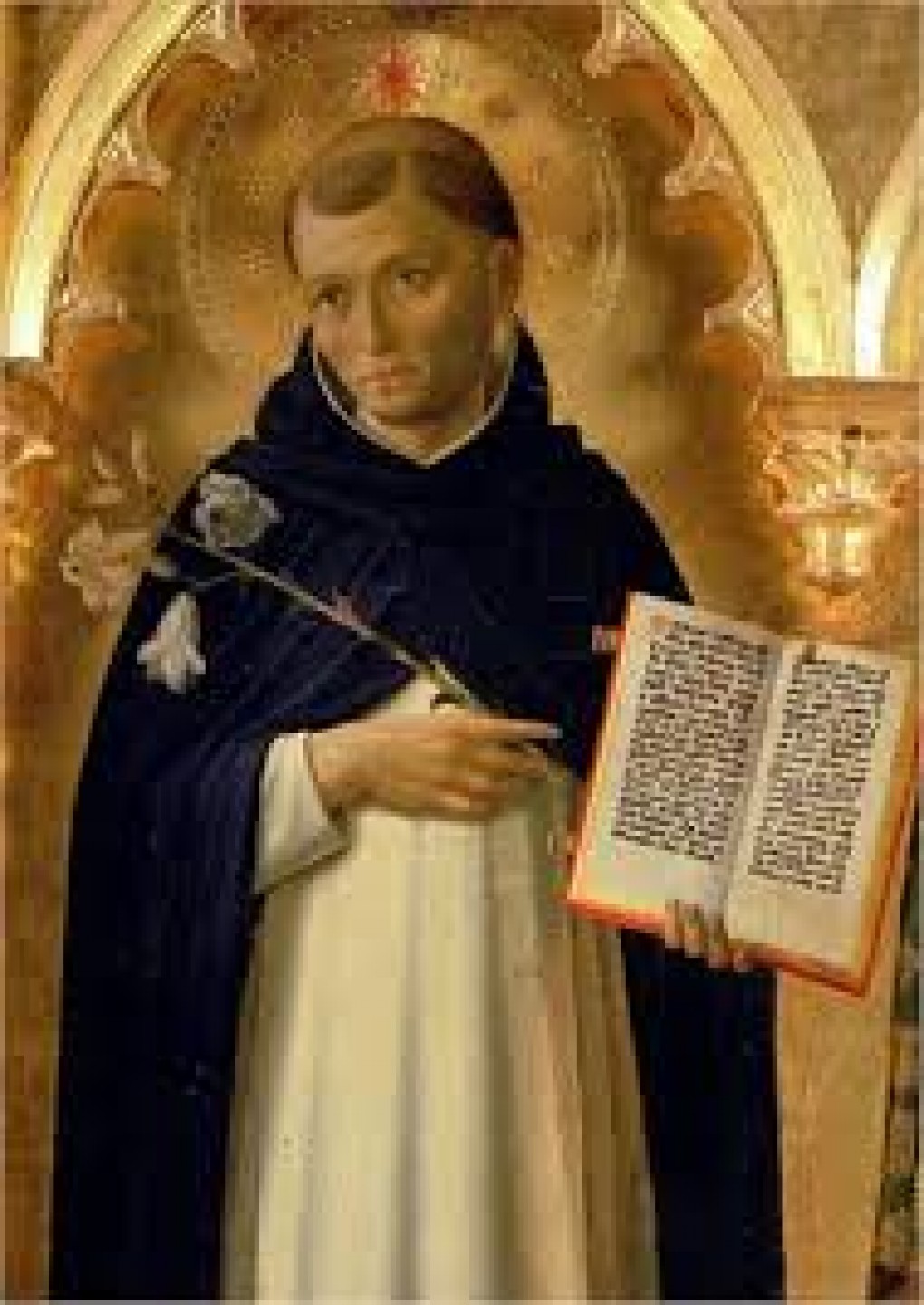
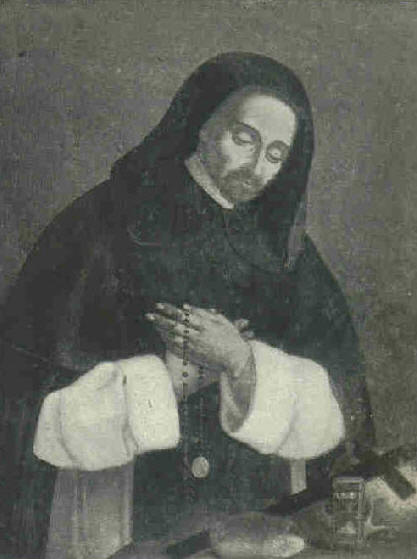
our_saints_and_blessedsOne of the outstanding characters in the Dominican reform of the late fourteenth century was Blessed Lawrence of Ripafratta, who was novice-master of several saints and blesseds of our Order.

Lawrence was born in the fortified city of Ripafratta, in 1359. His noble family had the duty of guarding the outer defenses of the city of Pisa against the depredations of its powerful neighbor cities. It was a warlike place and time to come into the world, but Lawrence gave early evidence of being a man of peace. At the age of twenty, after innocent and promising youth, he entered the convent of Saint Catherine, in Pisa. He made rapid progress, both in prayer and in study, and busied himself with the works of the Order for several years before being called upon to help in the reform movement that was headed by Blessed John Dominici.

In 1402, Lawrence was made novice-master in the novitiate of the reformed congregation of Tuscany, in Cortona. Here the novices were to be trained in the primitive rigor of the Order, in an attempt to by-pass the destructive elements of the past half century, which had reduced religious observance to an alarming state of indifference. Plague and schism had taken toll both in numbers and quality of the religious orders, and the remaining houses were living under a relaxed observance of the rule, in a struggle for survival. John Dominici, under the inspiration of Raymond of Capua, felt that the time had come to tighten up the observance once more and return to the first practices of penance and silence. His suggestions were not popular among those who lived in the relaxed convents. The only alternative was to begin again, with a new novitiate, and hope that the idea would take hold gradually and effect internal reform among the other houses.

Excellent novices soon made their appearances at Cortona: Saint Antoninus and Blessed Peter Capucci, and the artist brothers, Fra Angelico and Fra Benedetto. Several others who were to attain fame in the order came under Lawrence’s influence and were shaped by him and to saintly and useful members of the apostolate, not all in the same fashion- Saint Antoninus was to become Archbishop of Florence, Fra Angelico and his brother made San Marco world famous for its art. Blessed Lawrence is, indeed, an interesting study; a severe and exacting man when it came to keeping the rule, a man of broad vision and great resourcefulness in carrying out the work of preaching. He was obviously not at all afraid of talented people going astray if they were allowed to use their talents for God, and he displayed great insight into the development of each of his novices as individuals.

Eventually, Blessed Lawrence was appointed vicar-general of the reformed congregation and moved to the convent of St. Dominic of Pistoia. Here he preached almost continually, and had a reputation for compassion to the poor whom he tended, taught and visited, even in time of plague.

Lawrence of Ripafratta lived to be ninety-eight, and in his old age we have a touching picture of his novices-now men of distinction and authority- coming back to consult him about this or that detail of their work. He wrote often to St. Antoninus, perhaps feeling that being archbishop of Florence was a job with many worries.

Lawrence of Ripafratta died in 1457, and was beatified, after a long history of miracles at his tomb in 1851.

Born: in Ripafratta in 1359

Died: He died at Pistoia in his 98th year in 1457

Beatified: Pope Gregory XVI confirmed his cult in 1851


Got Knots? The Feast of Our Lady, Undoer of Knots ~ Br. Dominic Ferrante, Novice

Undoer of KnotsAs children we depended on our mothers to undo the “knots” that popped up in our young lives everything from the impossible literal knots in our shoe laces to the figurative knots in our daily lives such as what to wear to school, homework, and the personal crisis’s we thought were so insurmountable   at our young age.  As we have grown to adulthood the knots have often become more difficult for us to unravel on our own.  Work pressures, financial instability, and marriage or relationship problems are much more complex then what we faced as children.  At these times it is important for us to rely on our spiritual Mother the Virgin Mary for guidance and assistance.The Blessed Mother loves each and every one of us as if we were her own children.  She is always watching over us and willing to help us in our time of need.  All we need to do is ask. By laying our problems at her feet through prayer we give her the opportunity to do what most mothers would do which is to take our problems on as her own and to help unravel the knots of our difficulties and sin. She is always there by our side to listen to us and to assist us when we call upon her.  She truly shows us what a mothers love is supposed to be.  By praying to the holy mother to assist us and to untangle the strings of our lives we give her every opportunity to help. Her guidance, love and compassion can truly help us to work through our problems to live a more peaceful christian life.  Thank you Dear Mother for standing with us, loving us unconditionally and helping to make our lives less tangled and knotted.

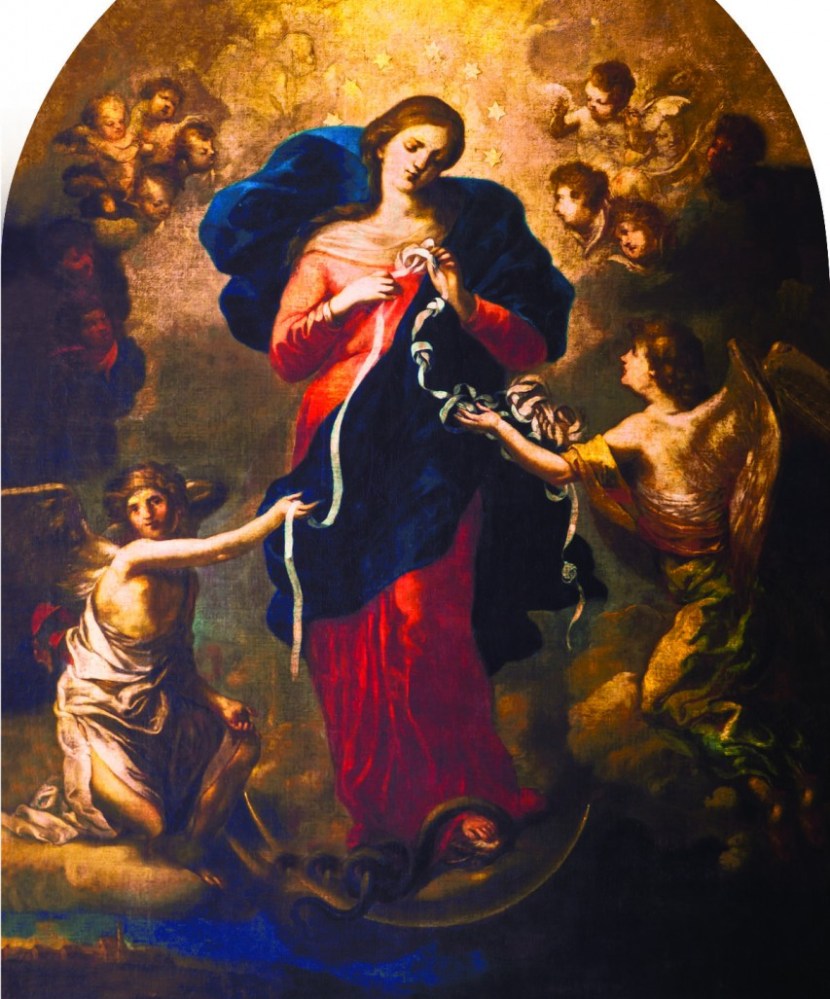
The story of the Devotion to Mary, Untier of Knots begins with the German nobleman Wolfgang Langenmantel (1568-1637).  For some years, he had been married to the noblewoman Sophie Imoff, but by the year 1612 the couple was on the verge of a divorce.  To save their marriage, Wolfgang decided to pay a visit to Father Jakob Rem, a Jesuit priest who lived at the monastery and university of Ingolstadt, located seventy kilometers north of Augsburg.

Over a period of 28 days, Wolfgang visited Father Rem four times and received advice from the holy priest, who was honored for his wisdom, piety and extraordinary intelligence.   In fact, Father Rem was believed to have experienced an apparition of Mary in the course of which she appeared to him under the title of “Mother Thrice Admirable.”

During their meetings, Wolfgang and Father Rem would pray together and venerate the Virgin Mary.  On the day of their last visit together, September 28th, 1615, Father Rem had been praying in the chapel of the monastery before an image of the Virgin Mary under the title of “Our Lady of the Snows.”  When the two men met, Wolfgang gave his wedding ribbon to Father Rem.  (In the marriage ceremony of that time and place, the maid of honor joined together the arms of the bride and groom with a ribbon in order to represent their invisible union for the rest of their lives.)  In a solemn ritual act, Father Rem took Wolfgang’s wedding ribbon and lifted it up, while at the same time untying the knots of the ribbon one by one.  As Father Rem smoothed out the ribbon, it became intensely white.  Because of this happening, Wolfgang and Sophie were able to avoid a divorce and continue their marriage.

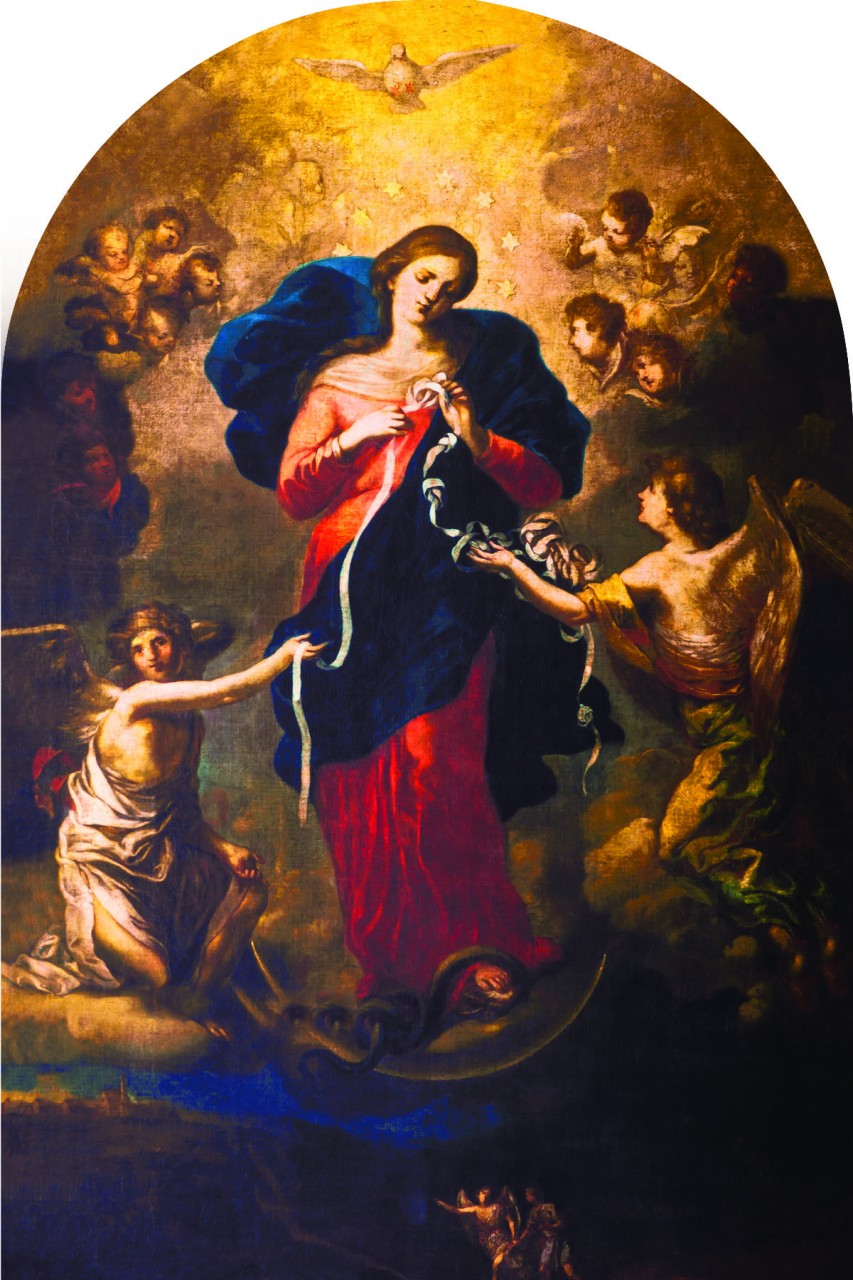
Some years later, Wolfgang’s grandson Hieronymus Ambrosius Langenmantel (Canon of St. Peter’s 1666-1709), who was himself a priest and canon law doctor, decided to donate a family altar to the Church of St. Peter am Perlach in Augsburg in commemoration of the turn of the century in the year 1700.  Such donations were a common tradition at the time. The altar piece was dedicated to “the Blessed Virgin of Good Counsel” and Father Hieronymus wanted it to represent the history of the Langenmantel family.

A painter, Johann Melchior Georg Schmittdner, was commissioned to provide a painting for the family altar.  He decided to base his painting on the story of Wolfgang, Sophie and Father Rem.  Therefore, Schmittdner depicts the Virgin Mary as she is untying the knots of the ribbon of married life.  The crushing of the serpent illustrates that Mary is the Immaculate Conception, since she as the one exempt by special grace from all stain of original sin is the serpent’s eternal opponent. The dove is a reference to Mary as the Bride of the Holy Spirit.  Angels assist the Blessed Mother; one presents the knots of our lives to her, while another angel presents the ribbon, freed from knots, to us.  Underneath Mary, the worried noble Wolfgang, accompanied by the Archangel Raphael, walks towards a monastery.

Eventually, the story of the Langenmantel family disappeared from history.  However, through the following centuries the painting remained as an antique in the Church of St. Peter am Perlach in Augsburg.  For some years the painting was located in the Discalced Carmelite Convent of the same city of Augsburg.  The painting, which has survived wars, revolutions and secular opposition, still adorns the St. Peter Church today.

Although the reference to Mary as one who unites knots goes back to St. Irenaeus in the second century, the devotion to Mary Untier of Knots was not well known until recently.  In the 1980’s it was brought to Argentina by Archbishop Jorge Mario Bergoglio, S.J. (now Pope Francis), where it remains particularly popular.  The devotion has also spread through the efforts of Brother Mario H. Ibertis Rivera, according to whom the Vatican has authorized the use of the image for Vatican publishing.

Because of the spread of the devotion, thousands of followers of the Virgin Mary Untier of Knots now come to the St. Peter am Perlach Church to ask for her intercession regarding all their problems (knots).  Besides marriage difficulties, these so-called knots include a range of other problems of unusual diversity.  People come to Mary for assistance regarding health, work, disputes, family complications, personal problems, and conflicts both in the community and internationally.  Many government officials, business people, Catholic groups and individual pilgrims have already placed themselves under the protection of the Virgin Mary Untier of Knots.

– Richard Lenar

Blessed Dalmatius Moner

arms-of-the-dominican-orderThis Dominican Blessed, who was noted particularly for his observance of poverty, lived in the early years of the Order and helped to establish the high reputation of the Spanish religious.

Blessed Dalmatius was born in Aragon, in 1291, and we know nothing else about his life before he entered the Order. He was a member of the province of Aragon and gave a perfect example of strict observance of the rule and the spirit of religious detachment from things of earth. All that we know about him, are a few anecdotes, none of which can be fixed with certainty as to date or place.

We read that his spirit of poverty was so extreme that he never wore a habit or cappa that was not in tatters. He picked up his wardrobe from the cast-offs of his brethren, and, since the spirit of poverty was quite rigid in this providence, the cast-off clothes must have looked a sight. Dalmatius seemed to make a virtue of this, since all the records we have make mention of it. As to food, he never ate fish or eggs, and lived on a diet of hard bread and unseasoned vegetables, to which he added a few ashes during Lent. The beds in the house were hard enough for most people, but not for him. He slept on the bare earth when he could not get into the church to pray and take an occasional nap, his head rested on the altar step.

Dalamtius is credited with several miracles, which included healing and spiritual assistance. At one time, a novice was tempted to leave the Order. Dalmatius, going about it without being told, sought out the novice and solved his difficulties. At another time, a mother whose small child had a serious eye disease came looking for Dalmatius to heal her child. The friar refused, because, he said, this affliction would save her child from serious sin, and that God was waiting till some time in the future to heal him.

During the last forty years of his life, Dalmatius lived in the cave of Saint Mary Magdalene, in the south of France, where he had gone on a pilgrimage of devotion. Here he was favored with numerous ecstasies and great spiritual insight. One time, while he was in the cave, a group of friars from his own province where lost in the woods in a bad storm. They prayed to him to help them, and a young man came with a lantern and guided them home.

Dalmatius died in his own convent in the presence of all the friars and provincials who had gathered for a chapter. He was declared blessed in 1721.

Born: in 1291 near Gerona in Spain

Died: 1341

Beatified: Pope Innocent XIII confirmed his cult in 1721

Commemoration of Our Patriarch, Saint Dominic, in Soriano

cropped-black-st-dominic.jpgThe event commemorated in this festival is the appearance in the Dominican Convent of Soriano, in the extreme south of Italy, of a miraculous picture of Saint Dominic, which is still preserved, and is held in the utmost veneration even in our own day. A certain Father Vincent of Catanzara in Calabria, in the year 1510, was thrice commanded by Saint Dominic in vision to found a Convent of the Order at Soriano, a work which he accomplished in spite of considerable obstacles which were not overcome without miraculous intervention. It had been decided that the Convent should be built on the plain, but the cross which had been planted to mark the destined site was found to have been mysteriously removed in the night to the hill on which the building was eventually erected, and where it still stands. Several years later, on September 15, A.D. 1530, just as the religious were assembling to chant Matins at midnight, the Sacristan suddenly beheld three ladies of majestic aspect enter the church, which he knew he had left locked before retiring to rest. One of them addressed him, asking to whom the church was dedicated and whether it contained a picture of its patron. The Friar replied that the church was dedicated to Saint Dominic, but that, owing to the great poverty of the Community, only a badly painted fresco of the Saint was to be found upon its walls. Then the unknown lady put into his hands a roll of canvas, which till then she had carried in her hand, and bade him take it to his Superior, who bore the title of Vicar, the little Convent not having yet been erected into a Priory. The Vicar, astonished at the sight of the picture, which proved to be a portrait of Saint Dominic, hastened to the church to thank the giver, but all three mysterious visitors had disappeared, though the outer doors still remained locked. The following night Saint Catharine of Alexandria appeared to one of the Fathers, who had a great devotion to her, and told him, in answer to his prayers, that the donor of the picture was no other than the Blessed Virgin, and that the two who had accompanied her were the patronesses of the Order, Saint Mary Magdalen and herself.

In obedience to the express command given by Our Lady to the Sacristan when bestowing the picture, it was placed over the High Altar; but, as the wall against which it hung was extremely damp, the Fathers afterwards decided on removing it to another altar, near the door of the church. The following morning, however, the picture was again found hanging over the High Altar. The Vicar, believing that it had been removed thither by the Sacristan from a desire to execute to the letter the orders given him by the Mother of God, severely reproved him, and had the picture carried back to the altar agreed upon. The next day, it once more appeared over the High Altar. Again the Sacristan was charged with obstinacy and disobedience. In vain he protested that he had never touched the picture. The Vicar ordered it to be replaced near the door, and on the following night locked the church himself and kept the keys in his own possession. Nevertheless on the third morning it was again discovered over the High Altar. Convinced at length that its removal was the work of no human hand, the Vicar allowed it to remain in the spot which Our Lady had chosen for it, and where it has ever since remained, miraculously preserved from being injured by the damp.

When the picture was exposed to public veneration, a multitude of prodigies took place, the account of which fills volumes. No less than sixteen hundred of these miracles, juridically attested, took place within the space of seventy-eight years. Pope Innocent XII., in the year 1644, granted a festival in commemoration of this event and of the vast number of miracles vouchsafed before the holy picture. On September 15,1870, just five days before the sacrilegious occupation of Rome by the troops of Victor Emmanuel, a new prodigy took place at Soriano. A wooden statue of our holy Father, Saint Dominic, of life-size, had been exposed in the sanctuary on occasion of the festival, and was to be carried in procession in the evening. This statue was suddenly seen to move like a preacher in the pulpit ; it advanced and drew back ; the right arm rose and fell; the countenance became animated, sometimes assuming a severe and threatening aspect, at other times appearing sad, or again full of sweetness and reverence as it turned towards the picture of our Lady of the Rosary. This extraordinary spectacle lasted for an hour and a half, and was witnessed by about two thousand persons. Some of the bystanders, to satisfy themselves that there was no trickery in the matter, removed all the surroundings of the statue and completely stripped the table on which it was standing. These measures only served to place the miraculous nature of the occurrence beyond the possibility of a doubt. A juridical inquiry was held by order of the Bishop of Mileto, in whose diocese Soriano is situated, and the extraordinary event was announced to the Order in a circular letter by the Most Reverend Father Alexander Vincent Jandel, who was then General. In a private letter written by his Paternity shortly afterwards he says : ” I think our holy Father, Saint Dominic, meant to warn us of the impending scourges, and to summon us to do penance; but this warning is in itself an act of mercy on the part of Him who strikes only to heal.”

Prayer

O God, who hast vouchsafed to enlighten Thy Church by the merits and teachings of Thy blessed Confessor, our holy Father, Saint Dominic, grant at his intercession that it may never be destitute of temporal help, and may always increase in spiritual growth. Through Christ our Lord. Amen.

Commemorations

First Vespers:

Ant. O great Father, Saint Dominic, at the hour of death take us to thyself and while here regard us always graciously.

  1. Pray for us Blessed Dominic,
  2. That we may be made worthy of the promises of Christ.

Lauds:

Ant. The body of a virgin, the mind of a martyr, the labors of an apostle, have at the end of thy course purchased for thee, O Mendicant of Christ, the reward of life.

  1. The just man shall blossom like the lily.
  2. And shall flourish forever before the Lord.

Second Vespers:

Ant. O light of the Church, doctor of patience, ivory of chasity, freely hast thou dispensed the water of wisdom: herald of grace, unite us to the blessed.

  1. Pray for us Blessed Dominic,
  2. That we may be made worthy of the promises of Christ.

Prayer:

Let us Pray: O God, who didst vouchsafe to enlighten Thy Church by the merits and teachings of Blessed Dominic, Thy Confessor and our Father, grant through his intercession, that it may never be destitute of temporal help, and may always increase in spiritual growth. through Christ our Lord. Amen.


Blessed Mark of Modena

dogMark was born in Modena and entered the convent of the order there in young manhood. He observed the rules with great fidelity, and became noted both for his learning and his holiness, which is a sentence that would fit into nearly every Dominican biography written, and tells us nothing in particular about Mark as a person. However, when we recall the times in which he lived , it becomes clearer to us that anyone who kept the Dominican Rule in its entirety is truly to our notice . The abuses which stirred Savonarola to thundering speech in the pulpits of Ferrara and Florence could not have been absent from all of Italy. It look solid virtue to hold out against the opulent worldliness of the times, and Mark of Modena apparently did a thorough job of it, since he has been beatified.

Mark was made prior of the convent of Pesaro, and the only miracle we have on record (he is supposed to have performed many) took place at his convent. A woman’s little boy had died, and she pleaded with Mark to restore the child’s life. After praying for awhile, Mark turned to her and said, “Madam, your little boy is in paradise. Do not try to get him back again, for his second loss will be worse than this one.” However, she insisted on his working the miracle, and he did so. The child returned to life, and, ten years later, covered with disgrace and opprobrium, died a second time, leaving his mother in worse grief than ever.

Mark of Modena died in 1498, the year that the city of Florence burned Savonarola at the stake. It was a time of terrible happenings in Italy and all Europe. The people of Modena mourned the death of Mark, and went to pray at his tomb. Many of their needs were answered there, and a number of prodigies were reported in connection with the translation of his relics to the Rosary chapel of the church. The bells were said to have rung by themselves, and sweet perfume filled the air. Until recently, his relics were still exposed yearly for veneration during the week of Whitsunday.

Born: in Modena at the beginning of the 15th century

Died: in at Pesaro in 1498

Beatified: by Pope Pius IX in 1857

Pop Quiz Time! ~ Sister Dollie Wilkinson, OPoc

popquizIn a recent conversation with my husband one morning, while we were discussing what to fix for dinner, the thought never occurred to me that there would be no food to fix that evening. Despite food stuff in my cabinet and freezer, I knew that a quick trip to the store would surely provide items that I could turn in to a tasty meal. But what if there were no pantry staples, no meats, or no fresh fruits or vegetables in my fridge? What if I had no money to buy items at the store, or there were no stores around, and all my neighbors or friends also had no food to eat or share? Sounds almost like a plot for an apocalypse movie, where mankind has suffered a crisis, and the modern conveniences we once took for granted were gone. Now also imagine that everything you own, you must carry on your back. Men, women, children…….no one is spared from this hardship. And you are told this is for your salvation, as a means to end suffering and save your people. After walking for a few days, with very little food, would you grumble and complain? This is just what the Israelites did in Exodus 16:2-15:

“The whole congregation of the Israelites complained against Moses and Aaron in the wilderness. The Israelites said to them, “If only we had died by the hand of the LORD in the land of Egypt, when we sat by the fleshpots and ate our fill of bread; for you have brought us out into this wilderness to kill this whole assembly with hunger.” Then the LORD said to Moses, “I am going to rain bread from heaven for you, and each day the people shall go out and gather enough for that day. In that way I will test them, whether they will follow my instruction or not. On the sixth day, when they prepare what they bring in, it will be twice as much as they gather on other days.” So Moses and Aaron said to all the Israelites, “In the evening you shall know that it was the LORD who brought you out of the land of Egypt, and in the morning you shall see the glory of the LORD, because he has heard your complaining against the LORD. For what are we, that you complain against us?” And Moses said, “When the LORD gives you meat to eat in the evening and your fill of bread in the morning, because the LORD has heard the complaining that you utter against him–what are we? Your complaining is not against us but against the LORD.” Then Moses said to Aaron, “Say to the whole congregation of the Israelites, ‘Draw near to the LORD, for he has heard your complaining.'” And as Aaron spoke to the whole congregation of the Israelites, they looked toward the wilderness, and the glory of the LORD appeared in the cloud. The LORD spoke to Moses and said, “I have heard the complaining of the Israelites; say to them, ‘At twilight you shall eat meat, and in the morning you shall have your fill of bread; then you shall know that I am the LORD your God.'” In the evening quails came up and covered the camp; and in the morning there was a layer of dew around the camp. When the layer of dew lifted, there on the surface of the wilderness was a fine flaky substance, as fine as frost on the ground. When the Israelites saw it, they said to one another, “What is it?” For they did not know what it was. Moses said to them, “It is the bread that the LORD has given you to eat.”

Kind of an ungrateful lot, them Israelites! They were led out of Egypt, so they would be saved. And here they are complaining because they don’t have enough to eat. Are we not the same though? How many of us go about our day, whining and complaining over something which turns out to be minor? I know that I do, until I stop and realize how many blessings there are in my life. So, did Moses’ people stop, and praise the Lord for all they have to be grateful for? No, just the opposite. They whined to Moses, saying maybe it would have been better to stay in Egypt, where at least they had food. But our Father, in His infinite mercy, heard their complaints and told Moses, “I am going to rain bread from heaven for you, and each day the people shall go out and gather enough for that day.”. So though the people did not bring their petitions to the Lord, he heard their cries and provided food enough for them to eat, but only for one day. Why just the one day? To test the Israelites, to see if they were ready to follow and obey His commandments. So the Lord sent birds in the evening, and manna in the morning,

“In the evening quails came up and covered the camp; and in the morning there was a layer of dew around the camp. When the layer of dew lifted, there on the surface of the wilderness was a fine flaky substance, as fine as frost on the ground. When the Israelites saw it, they said to one another, “What is it?” For they did not know what it was. Moses said to them, “It is the bread that the LORD has given you to eat.””

So why did God test these people? Remember when you were in school? What was the most dreaded part of your day? I’m guessing for many of you, it was knowing you had a test that day. For me, I always detested having a pop quiz. You know that test that teachers like to randomly give you, with no warning and thus no way to study and prepare for. Well, this is what the Lord is doing for the people Moses led out of Egypt. He gave them a pop quiz……a test of faith. How many of us could have passed that test? If we go back to the movie scenario, and you find yourself wandering in the wilderness, no food, very little water, and the only things you own you carry on your back, would you complain to each other, or would you have a strong enough faith to seek help from the Lord?
Every day of your life is a pop quiz from God!  We wake in the morning, some with an agenda set in stone, others with a more flexible schedule. And because we are human, inevitably there are going to be problems and issues that trouble our day. How do we handle these perplexing problems? We could complain to a co-worker, a friend (I do this one quite a lot), or a family member, or…….we could take our worries and troubles to the Lord in prayer. We may not be wandering in the wilderness, but we are still our Father’s children. He will take care of us, if we only have the courage to ask.

Blessed Francis Posadas

Seal_of_the_Dominican_OrderFew Dominicans have had more difficulty getting into the Order than Blessed Francis de Posadas, and he was one of the glories of the convent of the Scala Coeli, in Cordova. It is embarrassing for us to read that the reason for his exclusion was plain and simple snobbery on the part of the superiors of the convent of St. Paul, in Cordova.

Francis was born of a poor young couple who were war refugees, and who had been shunted from place to place until, when Francis was very small, his father’s health failed, and he died in Cordova. The young widow tried several types of work, and finally she was reduced to selling eggs and vegetables at a street stand. She tried to educate her child, for she knew he was very talented, but, without money, it simply was not possible to send him to school. She encourage him to go to the Dominican Church of St. Paul, and he served Mass there every morning from the time he was six or seven years old.

While he was still a very tiny child, he used to gather the other children together for rosary processions or other devotions. The smile of God seemed to rest upon him. For all his poverty, he was a very happy and attractive child, like by everyone; and he was a natural leader among his fellows. Twice during his childhood, he was miracuously saved from death. This fact and his undoubted piety, should have seemed sufficient reason for admitting him into a religious order. However, by the time Francis was old enough, there were two reasons to make his entry difficult: his mother had remarried, and the step-father would not permit him to enter. The Dominicans, moreover, would not have him. They said that they did not want the son of a street peddler.

Francis had friends in the Order, but the prior of the house he wished to enter took a violent dislike to him. It was several years before the young man could overcome the resistance of this man, who, having some influence with the provincial, was stubbornly determined that Francis should not be allowed to enter. Even when the fathers in the convent of Scala offered to take the boy and train him in Latin- so that he could qualify for clerical studies-the vindictive dislike of the prior followed him and almost prevented his acceptance.

Francis was finally accepted, made his novitiate, and gradually overcame all dislike and distrust by his charming manner and his unquestioned talents as student and preacher. After his ordination, he was sent out to preach, and he earned the reputation of being a second St, Vincent Ferrer. His talents as a preacher were rivaled only by his gifts as a confessor. He not only could read hearts and discover sins that had been willfully concealed, but sometimes he was called to one place or another by an interior spirit and shown someone badly in need of the sacraments.

Francis hated the thought of holding authority in the Order. When appointed prior of one of the convents, he remarked that he would much sooner be sentenced to the galleys. He twice refused a bishopric, and he skillfully eluded court honors.

Several remarkable conversions are credited to Francis Posadas. His last tears were a series of miracles wrought in the souls of his penitents. People followed him about to hear him preach, regarding him as a saint and miracle worker. One of his most noted converts was a woman more than one hundred years old- a Moor- with no intention of deserting Mohammedanism.

Francis of Posadas was the author of a number of books which he wrote to assist him in his apostolate. One was a life of St. Dominic. and several were biographies of other saintly people.

After a life filled with miracles, Francis died in 1713. Being forewarned of his death, he made private preparations, but to the last minute he was busy in the confessional before dying suddenly. By the time of his death, not only the Dominicans of Cordova, but the people of all Spain were happy to have him as a fellow countryman. He was beatified a century after his death, in 1818.

Born: Cordona in Spain in 1644

Died: In 1713 of natural causes

Beatified: He was declared Blessed by Pius VII in 1818

Blessed John of Massias

John Masias was born in Ribera, in Spain, and, when very small, he was left as orphan. He was adopted by a kindly uncle who set him to heJohn of Massiasrding his sheep. The little boy was naturally pious, and passed his spare time in sayingthe Rosary. Our Lady and the Christ Child appeared to him several times, and he was often visited by his patron, St. John the Eveangelist, who once showed him a vision of heaven, telling him: “This is my country.”

When John was about twenty, he went to Mass in the church of the Dominicans in a neighboring city. For the moment, it seemed to him that vocation was joining the Friars Preachers now, but St. John appeared to him, telling him he must go elsewhere. In 1619 he embarked for the Indies, where many Spaniards were going, either to convert the natives or to seek a fortune. After a long and hazardous journey, he arrived in Lima.

There were at the time four convents of the Friar Preachers in Lima: the College of St. Thomas; the house of St. Rose, where Sister Rose of St. Mary had died just five years before; Santo Domingo or Holy Rosary, where the holy lay brother, Martin de Porres, was performing such astounding miracles; and the convent of St. Mary Magdalen, which was small and poor. John decided to enter St. Mary Magdalen and, in 1622, he received the habit of a lay brother there. On the night of his profession, devils appeared to tempt and reproach him. He was attacked bodily, and, although he was called on Jesus, Mary and Joseph for help, the demons continued what was to become twelve years of torture, by actually throwing him from one cloister to another.

John was appointed assistant to the porter, and lived in the gatehouse. There the poor came for food, and the rich for advice. He became adept at begging for the poor, always managing to find enough for the more than two hundred people who came daily for help. He had little use for the wealthy and curious, and would sometimes baffle them by simply disappearing while they were looking at hi,. Also, legend relates that he had a little burro that he would send out by itself, with a note asking for what was needed in one of the empty panniers on its back. Told where to go, the burro made his route faithfully; and if the rich man on whom he called was ungracious, or even hid himself to avoid giving alms, the little burro made quite a noise, and it quickly brought the desired results.

Rays of light streamed from the blessed’s face as he taught the catechism to the poor, or prayed by himself in the gatehouse. He said an amazing number of rosaries and made no less than twenty daily visits to the Blessed Sacrament. He is said to have liberated more than a million souls in purgatory, many of whom came back , while he was at prayer , to thank him for his help.

One day a certain ship captain came to the gatehouse and asked to look around. John took him by the arm and led him to the crucifix, warning him to look well on it and think of his sin. Terrified, the captain fell to his knees, confessing that he was an apostate religious, thirty years away from the sacraments, and he begged for a priest. On another occasion, the brothers were building a flight of steps and, having measured a beam wrong, they were annoyed because it did not fit. John took the beam in his hands and stretched it to fit their needs. These, and many other miracles, led people to venerate him as a saint during his lifetime. His recreation was to talk of the things of God with the other holy lay brother, Martin de Porres

At the time of his death, Our Lady, St. Dominic, his patron, St. John and many other saints, came to accompany him to heaven. They were seen by some of the brothers.

Born: March 2, 1585 at Ribera del Fresno, Estramadura, Spain

Died: September 16, 1645 in Lima, Peru of natural causes

Beatified: In 1837 by Pope Gregory XVI

Jesus’ Cross: Barbaric Baggage or Blessed Beacon? ~ Br. Jay Van Lieshout, Postulant

are we there yetSymbols: since the dawning of human society, we have used symbols to convey thoughts, ideas and concepts.  We have developed a whole system by which we can pass on ideas and information from person to person, from generation to generation: spoken language where complex patterns of sounds recreate the stories and emotions of our daily lives, the written word where lines and squiggles are phonic representations and signals of rhythm and inflection.  We humans have filled our universe with the echoes of our history, our knowledge, our emotions, our joys, our pain, our hate and our love; from sounds fading into the ether to our graffiti marks in the hard surfaces of our environment or on leaflets of skin and cellulose.  But still the greatest and most powerful, and often the simplest, of all human symbols is the image.  Whether it is a handprint on the wall of a subterranean cavern to say “I was here”, or an emoticon of a smiling face, recognition is immediate and the attached emotions are clear and powerful.

For Christians, the most powerful of all symbols is a simple set of two lines intersected to form a cross. Simple, elegant in design and filled with emotion;  one simple icon that conveys more in a single flash of viewing than has been scribbled in 2000 years; or is it?  During his homily for the Feast of the Exultation of the Holy Cross, the Arch Bishop talked about a new offshoot of Christian teaching in which the cross is stripped of much of its power and is relegated to nothing more than a barbaric symbol of execution; no more fulfilling of prophecy, no more sacrificial lamb of salvation, no more looking to the cross, being healed and given life- just a symbol of meaningless death and the potential death of a symbol.

Needless to say I was appalled and my mind filled with screams of “what about” this or that; for a moment I felt like Peter staring at Jesus after hearing one of His parables.  Once the dust settled it was time to contemplate, to stare at the cross and ask “ok, so why should you be so important to a Christian, why should you be so venerated, why should you be such a powerful symbol of our faith?”

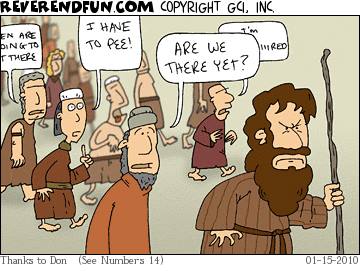
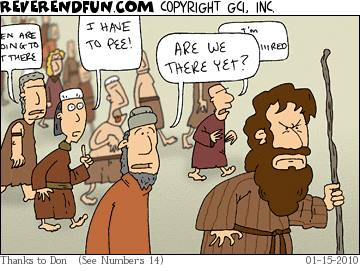
Our journey begins with the Old Testament reading for the feast.  A typical Moses in the wilderness story, God is leading the Israelites to the promised land, Moses is co piloting, the masses are in the proverbial back seat whining “I’m hungry, I’m thirsty, she’s touching me, it’s hot, are we there yet, when are we gonna get there?”  God the Father gets mad, sends some venomous snakes, cleans house and then tells Moses to make a bronze serpent, put it on a pole and if anyone gets bitten, they are to look at the serpent and live.  Seemingly another old story which doesn’t really fit anywhere so let’s just attached to one of the Sundays and hope no one notices.  But is it really just that?    Instant message from God: “ Think Symbols”.

This recount of the journey of the Israelites is more than just a simple story if you think in terms of the symbolic.  We have the people of God wandering the desert looking for the Promised Land, the Eden here on earth where the people and God live in harmony.  This is a straight forward enough analogy of our daily spiritual journey where each of us seeks to be closer to God and find the joy and freedom from our transgressions.  There is Moses, God’s man on Earth, trying to teach and lead God’s people to this Earthly Eden, a man with power and knowledge who is often at his wits end on what to do with this stubborn flock of well meaning but unruly sheep.  Then there are the serpents, a symbol for yetzer ha-ra,, the Hebrew version of Satan, the provocateur sent by God, but unlike the modern Christian view of Satan, this is a minion under God’s control, it is the ambition in each human and hot desire in each of us, the DRIVE with which we can do great things for the good of all as God so desires, or by which we can do evil and so turn away from God; it’s our choice for He has given us free will.    And lastly there is the Serpent on a Stick (it almost sounds almost like some ancient fast food delicacy), a Hebrew version of the caduceus, the rod of Alcepius, the Greek god of healing, seen in most medical offices today, and for the Hebrew a symbol which when looked upon restores life to the bitten.

The stage is set, the symbols defined, it’s time for lights, camera, and action!  Moses is attempting to lead his people along the path of righteousness; back to God, to the promised ancestral homeland, to Eden on earth, all the while God the Father is watching the trials and tribulations from a good distance.  Enter stage left, yetzer ha-ra whose venomous bit leads some people astray and they become lost, confused, crazed.  God then tells Moses to erect a standard, a serpent on a pole for the people to see.   Some people choose to turn their back to this  desert lighthouse, they wander away and by their actions separated from God and die.  Others who look on this symbol, this beacon from God are healed, are redirected toward the right path, returning to God and the life that the Father gives to his people; they have been saved.  And cut.  And thus the message has been delivered, turn your eyes from God, choose sin and die or look to God, see His light, follow the path of righteousness and LIVE.

And so let us return our focus on the cross, this symbol of Christianity; how does veneration of the cross of Christ relate to Moses’ serpent on a stick?  Like Moses, Jesus was sent by the Father to guide His people back along the path of righteousness; Moses’ standard had been destroyed, the people were wandering like lost sheep.   Yetzer ha-ra had filled their hearts with ambition and they ran about in a frenzied state as if they had been bitten by venomous vipers.  Jesus called out to these sheep and some saw and heard his call and so followed Him out of the wilderness, others ignored his call and wandered farther and farther away, only to fall prey to the poison and die.  Now Jesus knew there still were other lost sheep who did not hear his call; and He also knew that the sound of his voice would echo and fade into the ether with time.  So God the Father told him to erect a standard that would stand for all time as a beacon to guide the lost sheep back to His flock.  I sign post to the Promised Land where the flock may safely graze on the fine grasses of Eden.   A sign where the fires of yetzer ha-ra are soothed with a healing balm of love so great that the ultimate gift of a life for the life of another life is given.  And so Jesus does as His Father willed, and willingly was nailed to a post, was erected and hung for all to see His choice to yetzer ha-ra’s temptations: to shed his blood and give his life so that all who look to him may be healed and LIVE.

So is veneration of the cross important to the followers of Christ or is it just a remnant of some barbaric medieval church tradition?  The cross is a reminder of our free will, of our choices in life, of our transgressions we have committed, of those we might commit and of the grace of God given to use when we repent and not only seek forgiveness, but give it in equal and overflowing measure.  The cross is the symbol of what we need to be reminded of each and every minute of each and every day.  To me the spirit of the cross is best reflected by the words of Kierkegaard “Father in Heaven! Hold not our sins up against us but hold us up against our sins so that the thought of You when it wakens in our soul, and each time it wakens, should not remind us of what we have committed but of what You did forgive, not of how we went astray but of how You did save us!”  The cross, like the brass serpent on a pole IS the fundamental symbol of Christ’s mission, of God’s gift to His people, the perfect example of how we are to live, a statement that we are so loved that Christ gave his life so that we might look to him and find life everlasting!  So I ask each and everyone one of you, should we as Christians, bitten by yetzer ha-ra, look to the cross as THE symbol of our faith?  Verily I tell you only if you wish to LIVE!

 

The Feast of OUR LADY OF SORROWS ~ Rev. Deacon Br. Joshua Hatten, OPoc

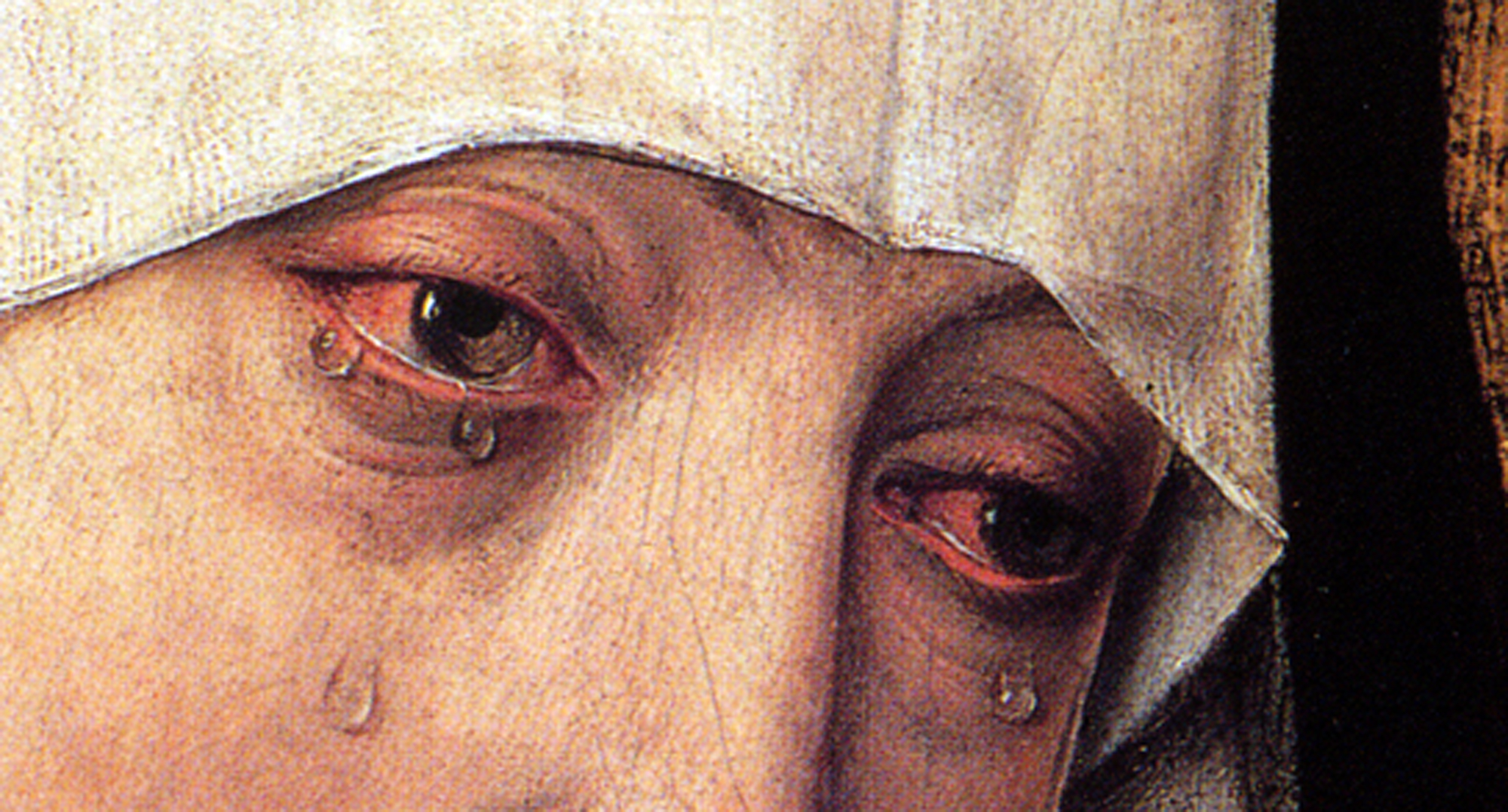
eyes crying Our Lady of SorrowsMy beloved friends, the reason we call to mind and celebrate this feast is for us to take the time to reflect upon, and  to call to mind, the great sufferings of our Mother, our Lady,  the Mother of God, The Blessed Virgin Mary, which she endured with great compassion.

Traditionally, the church recognizes the SEVEN GREAT SORROWFUL EVENTS the Blessed Virgin Mary had to face with a martyrdom of spirit.  They are:

1) The Prophecy of St. Simeon when our Lord was presented at the temple.

2) The Holy Family’s flight into Egypt.

3) The three days that our Lord was missing, before finding  him  in HIS FATHER’S HOUSE.

4) Our Mother meeting her Son, Our Lord, on his was to Calvary.

5) Our Lady, with St John and St Mary Magdelene at the foot of the cross – watching her son’s physical agony and physical death.

6) The taking of our Lord down from the Cross of Redemption.

7) And our Lord’s entombment and burial.

These are but seven events that we recognize in our Lady’s life… but can we begin to fathom those things she pondered in her heart over the 33 years of being Jesus Christ’s mother??  Can you imagine your child, being destined to save the world by HIS DEATH?  Can you place your mind in our Lady’s mind as the years passed, filled with motherly love and at the same time knowing what was to come?

St Simeon was certainly right when he told Mary “and a sword shall pierce your own heart, too.”  My dear!!  What a sword indeed!!  Her only son, GOD ALMIGHTY – and Mary, knowing all that was to come, gives us, in my opinion, the greatest example of total faith in Christ.  When at the wedding at Cana, she gives us the penultimate instruction:  “DO WHATEVER HE TELLS YOU.”

Take the time today, and every day, to remind yourself that our Lady not only had a motherly love for Jesus – but she also loved and adored and believe on Him as her Lord and Savior.  Her God, the Almighty.

Personally, I believe that as much as we may love anyone – family, friends and even foes, it cannot be greater than the love of the Blessed Virgin Mary for Jesus – her son, her redeemer and her God.  So, on this feast day, let us open our minds and our hearts to take time to solemnly reflect upon these, albeit unfathomable, sorrows of our intercessor and Mother.

Let us ponder these events in our own hearts.  let us keep in mind this sword that pierced our Lady’s own soul. (Saint Luke 2:33).   And let us pray for our Mother to intercede for us during our own great sufferings – something she too well understands, and because of which, extends her hands toward us to offer her intercession, her holy prayers and mother love for even us who are  sinners.  For Mary truly can say “Look around and see… is any suffering like my suffering?” (Lamentations 1:12)

In spite of her trials and tribulations, and the unimaginable fears and horrors that she faced, Our Lady NEVER lost hope.  She never faltered in her love, compassion and complete faith in her God and her Son.

She is truly our greatest example in following Christ, no matter HOW HEAVY THE CROSSES WE MUST BEAR.  Remember her words:  “DO WHATEVER HE TELLS YOU.”

O Mary, conceived without sin, pray for us who have recourse to thee.  O most holy Virgin, Mother of our Lord Jesus Christ: by the overwhelming grief you experienced when you witnessed the martyrdom, the crucifixion, and death of your divine Son, look upon me with eyes of compassion, and awaken in my heart a tender commiseration for those sufferings, as well as a sincere detestation of my sins, in order that being disengaged from all undue affection for the passing joys of this earth, I may sigh after the eternal Jerusalem, and that henceforward all my thoughts and all my actions may be directed towards this one most desirable object. Honor, glory, and love to our divine Lord Jesus, and to the holy and immaculate Mother of God. Amen.


May God bless you.  +