St. Catherine of Siena~The Very Rev. Lady Sherwood, OPI

Lady Sheila Tracie Sherwood

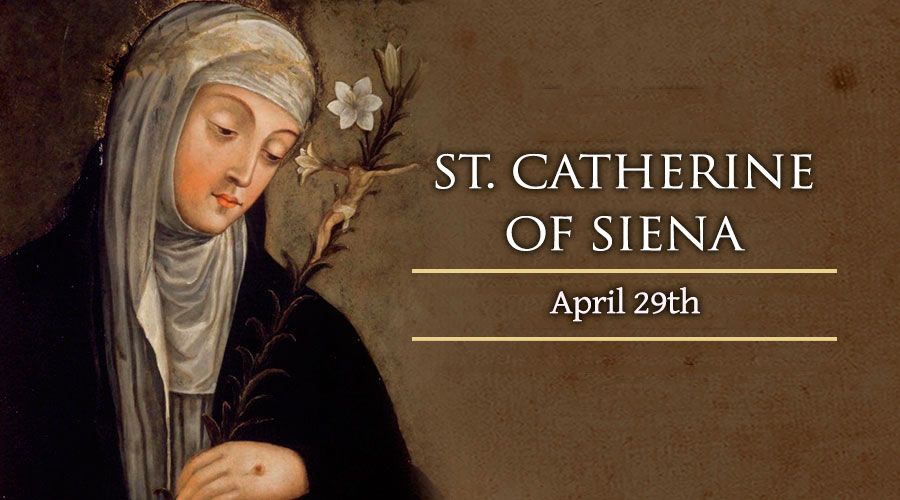
Saint Catherine of Siena, Virgin and Doctor of the Church St Catherine of Sienna did not have any advantages in her life other than having a very deep love for and therefore a closeness to Jesus. She always remained humble, but obeyed what God directed of her. She learned from Jesus through prayer. She was very attentive to God. Let us follow her example in our lives. We often identify holiness with great service or leadership But in St Catherine of Sienna we see, as in Paul, something that is quite different. She was characterized by humility and quiet prayer and her public influence was more thrust upon her than her looking for it. Her life was lived among many limitations It was a relatively short life, even for the 14th century -living to only 33 years old. She was not well educated and her literacy was at best limited and basic. And whilst yet a community gathered around her, she was not in a prominent ecclesiastical position She suffered both physically in her body, including from fasting and vigils and from her travel at Christ’s behest, and suffered spiritually from knowing about the state of the Church. She lived what she read or what was read to her in Paul, “in my flesh I complete what is lacking in Christ’s afflictions for the sake of his body, that is, the Church.” She was very attentive to God She was very attentive to the reading of the Holy scriptures and also attentive to those conversing about God or preaching the scriptures. This attentiveness and reflective spirit laid the groundwork for God’s use of her life. From meditation and contemplation she knew “the mystery hidden for ages and generations but now made manifest to his saints. . . . which is Christ in you, the hope of glory.” Not all people receive such visions and raptures as she received, but in some form those who assiduously seek God are taught by him. She experienced what Jesus taught, “My teaching is not mine, but his who sent me.” She drank deeply from Jesus whom she loved so dearly: “If any one thirst, let him come to me and drink. . . . ‘Out of his heart shall flow rivers of living water.’ ” She drank from his heart as from the river from the new Temple. whilst she was humble, she still boldly did what God directed of her. She obeyed God and went to France to see the Pope, a significant trip, and there she could have said, “Him we proclaim, warning every man and teaching every man in all wisdom, that we may present every man mature in Christ.” I do not think we reflect enough on what a woman’s calling the Pope to move back to Italy meant in those days. She continued to advise popes – in an era of multiple popes – but only when consulted. Mostly she would pray for them. She dictated her various writings, especially her life, because God gave her the impulse to do so. She was not seeking influence, but seeking him. Let us, then, make St Catherine of Sienna, an example to guide us in our lives. She points us on to the deep usage of prayer. She will not despise our education – she was a Dominican tertiary not a Franciscan – but will point us to lay it at the feet of Jesus in prayer and to draw our direction from communion with Jesus. And she will show us how to trust Jesus, not letting our apparent limitations stop us from doing all that Jesus calls us to do – not health nor age nor education or situation will stop us. From out of a simple and unknown cloistered group came forth a doctor and wisdom and direction for the Church, but it was a position given by Jesus full of his wisdom to a woman whose only desire was to draw closer to him and to see him heal his Church.Thus, Doctor saint Catherine’s remedy for the sins of the Church was to look to her own sins, and to repent and to change her ways. Because she knew that the only soul she could change and cause to co-operate with God’s grace, to conform to Christ’s will, was her own. So, reform of Christ’s Church comes through each of us as members of the Body of Christ striving to be faithful to Christ and our Christian vocation; each of us allowing Christ the divine Doctor to heal us so that we can play our proper part within his holy Body. Hence, through the “prayers, sweat and tears” of the saints, Christ himself will purify and reform his Bride; it is his Church. With this fundamental knowledge and faith in Christ, and love for Christ’s Mystical Body, St Catherine became a saint, and so can we today. May she pray for us, for God’s Holy Church, and for lay Dominicans for whom she is patroness.

Farmer God~The Rt Rev Michael Beckett, OPI

Did you know that God is a farmer?

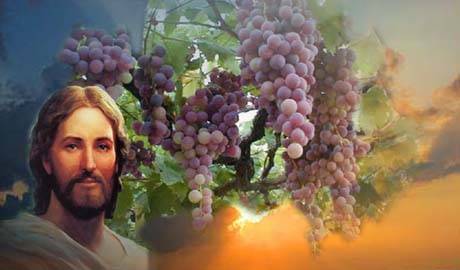
Jesus said to his disciples:  “I am the true vine, and my Father is the vine grower.  He takes away every branch in me that does not bear fruit, and every one that does he prunes so that it bears more fruit.  You are already pruned because of the word that I spoke to you.  Remain in me, as I remain in you.  Just as a branch cannot bear fruit on its own unless it remains on the vine, so neither can you unless you remain in me.  I am the vine, you are the branches.  Whoever remains in me and I in him will bear much fruit, because without me you can do nothing.  Anyone who does not remain in me will be thrown out like a branch and wither;  people will gather them and throw them into a fire and they will be burned.  If you remain in me and my words remain in you, ask for whatever you want and it will be done for you.  By this is my Father glorified, that you bear much fruit and become my disciples.”

God has planted people. We are his garden, and he wants to produce fruit. You and I were created by God for a purpose—to produce fruit for God. But what kind of fruit is God looking for? He is looking for obedience, righteousness, worship, and glory from his creation. But if we are God’s garden, and if we are created to produce fruit for him, we arrive at a fundamental question: How can we be sure that God is pleased with our fruit?

Each and every religion has a different way of answering that question. What will it take for us to be acceptable to God? Do we need to follow a strict set of rules and regulations? Do we need to perform certain sacrifices and rituals? What do we do with the nagging feeling that we do not measure up?

Let’s talk about that.

In verse 1 of our reading today, Jesus says, “I am the true vine, and my Father is the vine grower.” Did you notice the “the” in there? Jesus did not say, “I am like a vine.” He is not just comparing himself to a vine. He is the vine. Similarly, he doesn’t say, “I am a vine,” as though there were many vines, and he is just one of them. No, Jesus says, “I am the vine,” the one and only vine.

But that is not all. Instead of simply saying, “I am the vine,” he says, “I am the true vine.” But what does that mean? How can a vine be true? The word true is the whole point. We then ask the question: If Jesus is the true vine, who or what is the untrue vine?

In today’s world, there are many “untrue vines:”  money, popularity, power.  All of these produce fruit.  But is it fruit that matters?

Jesus is the vine, and He said that we are the branches. In verse 5 Jesus tells his disciples, “I am the vine, and you are the branches.” Jesus makes it clear that there are two different kinds of branches: fruitful branches and unfruitful branches.

Which one are you? Are you a fruitful branch? Do you produce what is pleasing to God? Or are you an unfruitful branch? How can you be sure of which one you are? This passage tells us there is only one difference between the two. Fruitful branches abide in the vine. Verses 5 and 6 explain this clearly:

Whoever abides in me and I in him, he it is that bears much fruit, for apart from me you can do nothing. If anyone does not abide in me he is thrown away like a branch and withers; and the branches are gathered, thrown into the fire, and burned.

So the secret of the fruitful branches is that they abide in Jesus. What does it mean to abide? Abide basically means “to remain,” “to stay put,” “to linger in one place,”  “to dwell,” “to stay connected.”  The most important thing for a branch to do is to stay connected to the vine. Only a branch that receives life-giving sap from the vine will live and bear fruit.

And so it is with us.  Are you connected to Jesus?  Picture a lamp.   What is the purpose of a lamp?  What is the “fruit” of the lamp?  Light.  What has to happen before that lamp can work?   It has to have a bulb.  It has to be turned on.  It has to be connected to a power source.  And you say to me, Bishop, what does this have to do with vines?  Let me tell you.  The bulb of the lamp is our soul, our faith.   We have to turn on our faith by prayer and study….but does that shed any light? Not if the lamp isn’t plugged in it doesn’t.  In order for the lamp to work properly, or at all, it must be plugged in to the power source.  Like us.  We must be “plugged in” to Jesus.  Before we can bear any fruit at all, we must be connected to Jesus.  He must be our Power, our Strength, our Source.

And what, exactly, is our fruit to be?  We are told in Paul’s letter to the Galatians, Chapter 5, verses 22-23, “But the fruit of the Spirit is love, joy, peace, patience, kindness, goodness, faithfulness, gentleness and self-control.” The fruit of the Holy Spirit is the result of the Holy Spirit’s presence in the life of a Christian.  And so, what is it that our Christ expects of us?  He was pretty specific about it.  In Matthew 22: 36-40, Jesus says, “’Love the Lord your God with all your heart and with all your soul and with all your mind.’ This is the first and greatest commandment. And the second is like it: ‘Love your neighbor as yourself.’ All the Law and the Prophets hang on these two commandments.”

How can you, how DO you, show the world Christ’s love?  How do you show the world that our Christ IS love?  DO you produce fruit?  What kind of branch are you?

Father God, You are indeed the Supreme Gardener.  We ask that you tend to us, nurture us, help us to grow and to bear fruit for You, that the world might see your love, and that we may bring others to the Light of your Salvation.  Through Christ our Lord, Amen.

He Knows His Sheep~The Rev Frank Bellino, OPI


The early Church portrayed Christ as a young shepherd
lovingly caring for his sheep. In today’s Gospel of John, we discover this
image once more. Christ, the Good Shepherd, is the person who lays down his
life for his flock. This contrasts with a helper who abandons the sheep,
leaving them vulnerable to the dangers at hand.

On this Fourth Sunday of Easter, we are reminded that it is
Christ, who knows each of us, and that knowing brings us a new life. He knows
us, and he knows the Father who loves us. This echoes the great command to love
God and love our neighbor.

In this context, the understanding of Christ is one that
binds us together. All those who listen to his voice are drawn in unity to that
one flock that knows the one true Shepherd. Our understanding of Christ makes
us one. We are not hired individuals.

The first reading, from Acts, also presents this concept of
understanding. Peter preaches that Jesus Christ is the keystone in our world,
as he explains. However, there is a twist. Peter wants us to know the danger,
that of rejecting Jesus Christ in our lives. As Christ knows us and loves us,
we cannot accept and refuse to acknowledge Christ in our lives.

Most of us would be horrified to think of ourselves as
rejecting Christ, of rejecting our faith. However, there are other lesser ways
in which we reject Christ as the keystone of our lives. The truth is that we
are unable to comprehend the light of Christ. In our hectic life, we often
forget all too often. We neglect to devote time to prayer, or attend a class or
retreat, or read a book or article on the Christian faith.

These are all ways to enhance our understanding of Christ
that we take for granted. Other people also assist us in identifying Christ in
our lives. Who are the people in your life that show you the face of Christ? Do
we recognize how Christ is present to us even now? It may be a parent or
grandparent that showed you the love of Christ. For many of us, our list will
include a priest, a sister, or a brother. They have all been people who
listened to the Good Shepherd and shared that voice with us in our lives. Their
vocations help us to become more aware of Christ. This Sunday, Good Shepherd
Sunday, is in many dioceses, a day designated as ‘Vocations Sunday’, God’s
calling in our lives.

Clearly, each of us, as a Christian, has a message that was
born from the font of our baptism. Unfortunately, we may take this role as a
Christian for granted. If so, we must once again hear the Shepherd’s voice calling
to us amid our daily concerns and the loud drone of all our activities.

The vocation to marriage, with its unique call to
parenthood, takes on its wealthier meaning when we, as spouse or as family,
together hear God’s words in our lives. When we engage in worship at Mass, or
at prayer in our homes, we hear the Shepherd’s call in our hearts. Today, when
the clamor of this world rejects Christ, how do people hear God’s call, that
unique sense of who I am in God’s heart?

If you hear God speaking to your heart, don’t disregard such
gentle voices. I don’t believe that God suddenly stopped calling people to a
religious vocation. Rather, today we can easily put God in the background or
flat out refuse to hear His voice.

You might be at the start of your career and still a voice speaks to you. God calls us, but we for our part, must hear his voice. Don’t

reject the cornerstone of your life, don’t refuse Christ’s calling for you. Explore
and discover if a religious activity is a part of you.

At the end of the day, listening to this message is not a
waste of time. For the early Church, the image of the youthful Christ
shepherding his flock reflected hope, let that same hope be yours. Listen to
the Shepherd’s voice speaking to you.

Told Ya! ~ The Rt Rev Michael Beckett, OPI

Do you remember when we were kids and our parents would tell us to not do that thing because if we did, we would cause all manner of problems AND get into trouble?  And because we were us, we went right ahead and did that thing and we caused all manner of problems and got into trouble.  And our parents said, “I told you so.”

And, poor Scott.  Sometimes I feel so bad for him.  He has it rough.  You see, he lives with me.  And one of my very, very, very favorite things to say to him is, “I told you so.”  (Scott is much smarter and a heckuva lot wiser than I am, but do you think I’d let HIM know that?  Uh unh.  I ain’t doin’ it.)

And of course, there are those (infrequent, oh so very infrequent!) times Scott gets to say to me, “I told you so.”  (I hate that.)

So why do we not listen?  Why do we not accept what we are told?  Why must we, in our (self-centeredness) have to learn the hard way that what God says, He means?  Or do we ever learn?  As many of you know, Jeremiah 29:11 and Romans 8:28 are two of my very favorite verses of Scripture.  Both of them give us assurance that God has things well in hand and that we really don’t need to worry about things.  And God has proved himself over and over and over and over ad infinitum in my life.  He has cared for me when I had nothing else.  He has shown Himself faithful and true and proved to me that I have no need to worry.  So WHY do I worry?  Why can I not get it through my head that I have no need to worry, I have no need to doubt?  I would dare say that many of you have had similar experiences. 

Whatever the answer to that question is, we are in good company.    Over and over and over again, throughout the Hebrew and Christian scriptures both, we continually hear God tell us, “Have I not told you…  I told you….”  In the Gospel reading for today, when Cleopas and another disciple are on their way to Emmaus, Jesus appears to them and teaches them and says to them (are you ready) “I told you so.”  (Well, actually, according the NIV  He said, “ “How foolish you are, and how slow to believe all that the prophets have spoken! Luke 24:25)  They recognized Jesus and he disappeared and then they hightailed it back to Jerusalem, straight to the disciples.  And as they were telling the disciples what had happened, Jesus appeared to them all. They were, of course, amazed, frightened, excited!!!!!  And what did Jesus say?  He said, “I told you so.”  (NIV:  “These are my words that I spoke to you while I was still with you, that everything written about me in the law of Moses and in the prophets and psalms must be fulfilled.”Luke 24:44)  Now, these weren’t your every day, run of the mill, ordinary disciples.  These were THE DISCIPLES;  hand picked by Jesus, his closest companions.  They who had witnessed miracles first hand.  And they had trouble getting with the program and believing.  But ya know, Jesus then gave them yet another chance, kinda started from the beginning again, and did a reteach.  (NIV:  Then he opened their minds to understand the Scriptures.  And he said to them, “Thus it is written that the Christ would suffer and rise from the dead on the third day and that repentance, for the forgiveness of sins, would be preached in his name to all the nations, beginning from Jerusalem.  You are witnesses of these things.” Luke 24:45-48) 

How awesome is that?  Even after all the things the disciples had seen, had witnessed, had had first- hand experience with, Jesus taught them yet again.  And so it is with us.  When we truly desire to increase our faith, when we truly seek another chance to learn the lessons that Christ teaches us, He will always, always give us another chance to try again.  It is up to us to continually open ourselves to learning those lessons.  The hymnist, Clara H. Scott certainly had the words right when she wrote in 1895: 

Open my eyes, that I may see
Glimpses of truth Thou hast for me;
Place in my hands the wonderful key
That shall unclasp and set me free.

Silently now I wait for Thee,
Ready my God, Thy will to see,
Open my eyes, illumine me,
Spirit divine!

Open my ears, that I may hear
Voices of truth Thou sendest clear;
And while the wave notes fall on my ear,
Everything false will disappear.

Silently now I wait for Thee,
Ready my God, Thy will to see,
Open my ears, illumine me,
Spirit divine!

Open my mind, that I may read
More of Thy love in word and deed;
What shall I fear while yet Thou dost lead?
Only for light from Thee I plead.

Silently now I wait for Thee,
Ready my God, Thy will to see,
Open my mind, illumine me,
Spirit divine!

Open my mouth, and let me bear,
Gladly the warm truth everywhere;
Open my heart and let me prepare
Love with Thy children thus to share.

Silently now I wait for Thee,
Ready my God, Thy will to see,
Open my heart, illumine me,
Spirit divine!

It is my hope and prayer that each of us open ourselves to learn the lessons that God teaches us, and that we do our utmost to learn, and to live those lessons.  Amen

No Doubt About That!~The Rt Rev Michael Beckett, OPI

If you were going to be famous for one thing, what would it be?  I can think of a host of reasons for which I’d like to be famous.  Curing cancer.  Discovering how to teleport.  Ending world hunger.   I suppose the list goes on.  There are folks who are famous, or infamous, for doing that one thing that they prolly shouldn’t oughta have done.  Typhoid Mary.  Mrs. O’Leary and her cow.  Jim Jones.  Brutus.  Whoever designed the Ford Pinto.

And Doubting Thomas.  Thomas the Apostle—often referred to as “Doubting Thomas”—was one of the twelve main disciples of Jesus Christ. In the Gospel of John, Thomas famously doubted Jesus’ resurrection, telling the other disciples, “Unless I see the nail marks in his hands and put my finger where the nails were, and put my hand into his side, I will not believe” (John 20:25).

Jesus then appeared and offered to let him do just that.

So our boy, Thomas, is most noted for one thing, and one thing only.  He doubted that Jesus had been resurrected, and wanted proof.  He had to see it to believe it.  Just for the heck of it, I’m gonna share with you some “fun facts” about Thomas:  Thomas is mentioned a total of eight times between the four gospels and Acts. Most of what we learn about him comes from the Gospel of John—the only book of the New Testament that gives him any specific role.  And dig this:  In three of the times Thomas is mentioned, the Bible notes that he was called “didymos,” a Greek word meaning “twin,” which was often used as a name. Unless your name is Thomas, it may surprise you to learn that the modern name “Thomas” comes from the Aramaic word tĕʾomâ, which means . . . twin.

Yup. The Apostle Thomas doesn’t even have an actual name in the Bible. Poor guy!  Everyone literally just refers to him as “the twin.” Interestingly, tĕʾomâ is just a description in Aramaic—it doesn’t appear to be used as a name—but didymos was used as both a description and a name.  And The Bible never mentions who Thomas’ twin is. 

So there ya have it, St. Thomas the Apostle in a nutshell.  Now, let’s talk about this “doubting” thing he had goin’ on.  The bummer here, for Thomas anyway, is that, again, he’s known as the “doubter.”  But, y’all, he wasn’t the only one!  Remember when Mary Magdalene and company went to the tomb last week, found it empty, and ran back to tell the disciples that Jesus was risen?  Did they believe her.  Big ol’ nope.  The thing about Thomas though, is he got a “special appearance” by Jesus Himself:  Though the doors were locked, Jesus came and stood among them and said, ‘Peace be with you!’ Then he said to Thomas, ‘Put your finger here; see my hands. Reach out your hand and put it into my side. Stop doubting and believe.’

Thomas said to him, ‘My Lord and my God!’

Then Jesus told him, ‘Because you have seen me, you have believed; blessed are those who have not seen and yet have believed.’” —John 20:24–29

So, where does that leave us?   There’s this:  Give a man a fish, and you feed him for a day. Teach a man to fish, and you feed him for a lifetime.   And when I was in teacher training many years ago, it was hammered into our heads, “Show, don’t tell.” And “If you want a behavior, teach it.” 

Same thing goes for our lives and showing the world what and who Jesus is.  Jesus ain’t gonna pop up wherever we are and say, “Yo, look!  Here I am!”  We have to show that.  We have to teach that.  We have to do that.  Us.  You’ve heard me say it at least a zillion and one times:  You are the only Jesus some folks will ever see and the only Bible some folks will ever read.  We spread the Good News by living as Jesus has commanded us to.  (Remember that “mandate” thing I talked about on Maundy Thursday?)  We love.  Regardless of sex.  Regardless of gender, or gender identity.  Regardless of sexual preference.  Regardless of politics.  Regardless of socio-economic status.  Regardless of anything else that might separate us, divide us, or causes us to see people as “other.”  There is no one on this planet who God doesn’t love.  There is no one on this planet who Jesus didn’t die for.  Period.  Love.  One.  Another. 

No, it’s not always easy.  Were it so, Jesus wouldn’t have told us to love our enemies.  Wouldn’t have said to ‘turn the other cheek.’  Wouldn’t have said “bless those who persecute you.”  Remember that song, “And they’ll know we are Christians by our love?”  That.   We gotta do that.  Be known for that.

During this Eastertide, let us all examine our hearts, our lives, our attitudes.  We, all of us, need to check ourselves, ask ourselves, “Is what I’m doing/saying/being something that Jesus would say/be proud of/want?”  If the answer is even a tiny little negative, then maybe/perhaps/probably we need to do a bit of changing of our ways.  Again, you are the only Jesus some folks will ever see, the only Bible some folks will ever read.  We gotta do better.  We have to show the world.

Let there be no doubt about that.

Conspiracy Theory~The Rt Rev Michael Beckett, OPI

Ya know what irritates me?  Well, yeah, plenty, but….Scratch that.  Lemme start over. 

Conspiracy theories abound in our world today.  The bridge coming down in Baltimore was orchestrated by….  Jewish Space Lasers are responsible for……  Every jet in the sky is seeding the world with…….  And they are nothing new.  After Jesus was raised from the dead on Easter…oh boy.  The Spin was alive and well……  his body was moved….stolen…..reburied somewhere else….put out to sea…..he was never dead in the first place…..and on and on and on and on……..

And folks then, like today, drank the Kool-aid and believed what they wanted to believe.  I’m sure that Mary Magdalene was irritated out of her skull when, after meeting Jesus in the garden, and having a little chat with him, she, all excited, runs to the disciples and says:

I have seen the Lord!

And they, of course, didn’t believe her.

Doesn’t it bug the crap out of you when you KNOW something to be true and no one believes you?  And usually it’s a pretty important ‘something.’ 

I have seen the Lord! 

What a testimony! 

Mary Magdalene went to the disciples with the news: “I have seen the Lord!” And she told them what he had said to her.

What wouldn’t we give to be able to say those words?  And yet, Mary was greeted with disbelief.  No one expected Jesus to rise from the dead.  In fact, one of the common elements of the resurrection stories across the gospels is that NO ONE expects the resurrection. Even though Jesus predicted his death … and resurrection … several times across his ministry, no one greets the news that God has raised Jesus from the grave and defeated death and the devil by saying, “Praise God!” No one shouts “Hallelujah” when they hear that their friend and Lord has been raised to life. And absolutely no one, upon hearing the news that death itself could not hold the Lord of Glory captive, says, “I knew it – just like he said!”

How often do we do the same?  We, like the disciples, actually deny the resurrection.  How so you ask?  We deny the resurrection every time we talk poorly about someone, refuse to serve our neighbor, refuse eye contact with someone who is different, fail to smile at a stranger…..every time we lose our patience, get frustrated when someone doesn’t get what we’re saying right off the bat, every time we spread something as truth when it isn’t, every time we act with less than love.

That’s right – we do that. 

However, like the disciples, we can change that.  In the Resurrection Story, no one expects the resurrection and no one, quite frankly, believes it at first. This is true, as I said, across the gospels, and it is certainly apparent in Luke. The women come to the tomb expecting to anoint Jesus’ dead body. That is, they have no expectation that he has been raised. In fact, only when they are reminded by the “two men in dazzling clothes,” do they recall Jesus’ promise.

Energized by this encounter, they run back to tell the rest of the disciples … who greet their tale with utter skepticism. In fact, Luke says that those who received the testimony of the women regarded their message as an “idle tale.” That’s actually a fairly generous translation of the Greek work leros. That word, you see, is the root of our word “delirious.” So in short, they thought what the women said was crazy, nuts, utter nonsense.

Resurrection, in other words, throws off the balance, upsets the apple cart, and generally turns our neat and orderly lives totally out of whack. Which is why I think that if you don’t find resurrection at least a little hard to believe, you probably aren’t taking it very seriously! And, truth be told, I suspect that’s where most of us – we’ve heard the story of resurrection so often it hardly makes us blink, let alone shake with wonder and surprise. Which is rather sad, when you think about it, because this promise, as difficult as it may be to believe initially, is huge, and when it sinks in and lays hold of you, absolutely everything looks a little different.

And isn’t seeing the world a little differently what being a Christian is supposed to be all about? 

We, who take the name of Christ, Christians as it were, are COMMANDED, to do things differently.  We are to love, regardless of whatever divides us.  We are to love, in spite of the fact that people irritate us.  We are to love.  Period.  We are to be like Jesus.  And what does this mean?  Chris Kratzer said it well when he wrote: 

Being Jesus will get you hated, mocked, demonized, betrayed, bullied, and even killed.  Be like
                Jesus anyway.  Loving unconditionally, defending the oppressed, favoring the outcast, Protecting the vulnerable, fostering equality, championing inclusivity, speaking truth to power, resisting
                the religious, and extending radical compassion.  If we’re not getting flogged, are we even
   following?

If then, if Jesus has been raised, and is alive to us and in us, who are we to not follow his command to let that love that Jesus talked so frequently about actually be alive through us.  In other words, if we are, indeed, to be like Christ, we cannot do other than to model Christ for others, to BE Christ for others. If Jesus has been raised, and is alive to us and in us, and through us, then we must remember, in the words of St. Teresa of Avila (1515–1582):

Christ has no body but yours,
No hands, no feet on earth but yours,
Yours are the eyes with which he looks
Compassion on this world,
Yours are the feet with which he walks to do good,
Yours are the hands, with which he blesses all the world.
Yours are the hands, yours are the feet,
Yours are the eyes, you are his body.
Christ has no body now but yours,
No hands, no feet on earth but yours,
Yours are the eyes with which he looks
compassion on this world.
Christ has no body now on earth but yours.

Like the disciples, like the women at the tomb, let us proclaim the resurrection by living our lives so that others see that we are, in reality, living the fact that the Lord is Risen!  The Lord is Risen indeed!

Amen

Hosanna? ~ The Rt Rev Michael Beckett, OPI

Funny, isn’t it?  How Holy Week is kind of a mirror of our lives as Christians. 

Today is Palm Sunday.  Today we are all about welcoming Christ, waving our palm branches and shouting Hosanna!  Today Jesus is king!  Today Jesus is the best thing going since sliced bread!  Today we are all about loving Jesus! 

But Thursday and Friday are coming….

Jesus will be arrested, tried, convicted, and executed.  And don’t we do the same?  We proclaim Jesus, proclaim ourselves to be Christians, and then….  We, like the crowd before Pilate, scream for Jesus to be crucified.  We fail to welcome the stranger.  We fail to feed the hungry.  We fail to house the homeless.  We fail to love as He loved us.  We, like Peter, deny Jesus.  We, like the Roman soldiers, pound those nails into Jesus’s flesh, every time we fail to do what our Christ has taught us to do.  Turn the other cheek???  Nope.  Pound!  Spread stories that are not true???  Yep.  Pound!  Make snide and cutting comments???  Yep.  Pound!  How often do we crucify Jesus, over and over and over again???

But Sunday is coming, just as assuredly as Thursday and Friday….

And Jesus will rise again.

We, as Christians, proclaim ourselves to be “Easter People,” all about resurrection.  All about a new life in Christ.  And we pray for forgiveness, humble ourselves, and start over again. 

As Holy Week begins, let us remember that we reenact Jesus’s triumphal entry into Jerusalem every time we proclaim Christ.  Let us remember that we reenact Jesus’s crucifixion every time we act in a manner that is in opposition to Christ.  Let us remember and celebrate that Jesus died that we might be forgiven, and every time we are forgiven, Jesus reenacts our own personal Easter.  Forgiven.  Resurrected.  Risen again. 

I wish each of you a most blessed Holy Week, one in which you spend time reflecting on just what makes this week holy.  What makes this week life-changing.  And how we can, indeed make changes to our lives, in order to live as Christ has taught us to live.  Amen.

The Solemnity of St Joseph, Spouse of The Blessed Virgin Mary~The Very Rev Lady Sherwood, OPI

My dearest Brothers and sisters in Christ,

Today, we come together to commemorate St Joseph, the Spouse of the Blessed Virgin Mary. Joseph was both a very humble and Holy man. He was chosen by God our heavenly Father, to be the earthly step-father, guardian and protector, alongside Mary, of his only Begotten Son, our Lord Jesus Christ.

Although we know little about the life of Joseph, we know that by occupation that he was a carpenter, for it tells us in Matt 13.55, about people asking of Jesus, “Is this not the carpenter’s Son?”

Both the Gospels of Matthew and Luke, tell us that Joseph’s ancestry was of David. (Matt 1:1=16 and LK 3:23-38).

Joseph supported Mary when he found out she was pregnant. He did not wish to disgrace her, so decided to divorce her quietly, but he had a dream from an Angel who reassured him about Mary’s pregnancy and that she was pregnant by the Holy Spirit, and the child would be the Son of God. Joseph accepted the news from the angel and accepted both Mary and the then Unborn baby and after Jesus was born, Joseph brought him up as his own

Joseph was the embodiment of true faith and without question he was obedient to all that the heavenly Father asked of him.

When an angel visited Joseph a second time after the birth of Jesus, to tell him of the danger his family was in, he immediately obeyed, left everything he owned and took his family to the strange land of Egypt, where they remained until an angel visited a third time to tell Joseph it was safe for the family to return. (Matt 2:12=23).

Can you imagine when in LK 2:41=52, when Jesus was found in the Temple after going missing, how anxious and worried Joseph (as well as Mary), must truly have been? Here was Joseph, who had spent many years moving his family and hiding them to keep Jesus safe, only to suddenly find him missing on an annual Passover? I can well imagine very mixed feelings upon finding him, relief, and joy to name just two!!

Joseph represents the true meaning of faith, of integrity, obedience, and of the vital role of fatherhood that God had entrusted to him.

As Joseph is not mentioned in the Holy Word of God during Jesus’ public ministry, we can only assume that Joseph had died prior to this time. We don’t know when Joseph was born or died, but we do know about his character :”He was a righteous man” (Matt 1:18).

Joseph is a perfect example of fatherhood and there is much we can learn from him about how to bring up our children in a righteous way, as well as learning in our lives  from his examples of faith and obedience.

Joseph is the Patron Saint of Fathers, carpenters and Social justice, he is also classed as the Father of the Universal church, and the Patron Saint of the dying.

Let us pray:

O God, Who didst choose Blessed St Joseph to be the spouse of Thy most holy Mother, grant, we beseech Thee, that he whom we venerate as a protector on earth may be our intercessor in Heaven. Who lives and reigns forever and ever. Amen.

And So It Begins~The Rev. Frank Bellino, OPI

Today’s Gospel sets the stage for the forthcoming drama of Holy Week. Jesus is speaking to his disciples both that his ministry of preaching is over and also that a final cosmic battle with Satan is about to begin. This battle will result in his death, but that death will be unimaginably beneficial in defeating evil and granting his followers access to eternal life.

What is the reason behind this dramatic declaration is something quite ordinary, the significance of which only Jesus comprehends. Some Greeks arrive and desire to see Jesus. He appears to not be interested in them. These are not Greek-speaking Jews but gentile Greeks.  A meeting with them would certainly be an opportunity for Jesus to expand his ministry. But he does not have any interest in talking to them. Philip and Andrew must have been bewildered by His response.

The arrival of these Greeks is the sign that Jesus has been waiting for – His message is beginning to spread to gentile territories. This means that His earthly ministry must now cease – just as it is beginning to show promising signs of growth. Nevertheless, there are potential converts – so why does Jesus neglect them?

It is difficult for us today to comprehend that Jesus’ immediate ministry was primarily directed to his own people, the Jews. There is a very good reason for this.  They are His people and God’s chosen people.  It is from them that He has been born and this is part of a divine plan which has been unfolding over the centuries, a plan in which the descendants of Israel are called to a two-fold witness – to witness in their faith to the one true God and in their manner of living, to be examples of fidelity to God’s commandments.  Like all human beings, the chosen people did not always maintain their faith in being a holy people. However, their failures were only meant to highlight God’s love for them and His infinite mercy. The prophet Jeremiah reminds us of this mercy, and he foretells a new era when God will recreate His chosen people by planting His law in their hearts.

Jesus is in this new era. He is a son of David and the Son of God. In Him, a human will has fully embraced God’s law that it is a perfect expression of the Father’s own will. His first priority, then, is to create his own people by living among them and acting as a source of the Father’s love for them. He will sacrifice all to show them how to respond to the God who is our Father. If Jesus recognizes the privileged place of his own people in the divine plan, he also recognizes that there is a place in that divine plan for the rest of humanity. As He tells us in this Gospel passage, by being ‘lifted up from the earth’, in other words by dying on the cross, he will draw everyone, Jew and gentile, to himself.  After his resurrection, He will send his disciples to accomplish the second stage of His mission, which will be to the whole of the gentile nation.

There is a difficult pill to swallow in this Gospel because being drawn to Christ will require ‘hating our life in this world’. To serve Jesus means to follow Him; and to follow Him means to follow Him to the cross, because that is where He is now headed. The letter to the Hebrews provides us with a further perspective on the human condition: that we all learn to obey God through suffering. Jesus’ passion and death demonstrates the need for’ suffering as a way to obedience’.

Most of us are cautious to avoid anything that might involve difficulty or suffering. We are tempted to surround ourselves with comforts, says Blessed John Henry Newman, but these comforts detract from our hearts and deprive us of God. It’s just part of wanting to have things our own way and to be the center of the world.

Yet, when we think about it, suffering is an ever present and important part of growing as a human being.  The transformation from a child to a mature adult is not easy. So, it should not surprise us that suffering, and sacrifice are also the way to grow in holiness.  The main objective is not to fear sacrifice and to be willing to begin here and now to embrace the will of God in every moment of our lives.

You may say, ‘Easier said than done’ and you would be right. However, it is not all about us. It is the grace of Christ’s work within us that will refashion our will and transform our rebellious human spirit into loving and regular obedience. We only have to ask for that grace.

Enlightenment~The Rev Frank Bellino, OPI

Within each of us, there is a longing that draws us beyond ourselves. We reach out to something that is calling us. There is a sense of belonging to something that is greater, something or someone that gives us a sense of meaning.

In our desperate attempts to identify what it is we desire to belong to, we call it God, Jehovah, Allah, Yahweh. We believe that this Divine being created us for a purpose, and we are a reflection or image of the Divine. This God is our Lord, and we are His people. We believe that this One God, the Creator of all that is good.

We are fortunate that we possess sacred writings, Scriptures, which unfold for us some of the mysteries of this God of ours. They tell us something about the relationship between our God and his people. The Scriptures are an essential part of our understanding of God. These holy books are not straightforward histories that can be read and understood as we would read the Fall and Rise of the Roman Empire. It is not something that can be made simple; it is not something that can be comprehended. This is where our search for the unknowable God, which we believe in, becomes difficult.

There is a danger in reading Scripture in a literalistic manner that was never intended. The fact that these holy books were written at a certain point in time places them within a different period of thought than our own. The most effective approach to reading Scripture is the fundamentalist approach. I believe this approach is easy because it is the unthinking approach to Scripture. It is also the safe way to read Scripture because we do not restrict the mystery of God to something we can comprehend. We confine the infiniteness within the limits of the books we hold as holy. But the God we discover is a God created in our image, not the God who is, was and will be.

In today’s passage from the Gospel of John, we discover a fascinating encounter between two teachers; or at least we discover the end of that encounter. In the preceding verses, we encounter a private conversation between Nicodemus and Jesus. Nicodemus strives to understand what is behind the miracles that Jesus has performed. The darkness hides their conversation from those who would not understand. As a leading Pharisee, it would be foolish for him to be seen with Jesus, but as a searcher for the truth, he takes this opportunity.

Jesus tries to explain to him the mystery as one teacher to another, but Nicodemus cannot comprehend the secrets that have been revealed only to him who has descended from above. How can he possibly comprehend that which is not of this world unless he believes in the testimony of the One who has knowledge? Jesus contrasts life and light with darkness and evil. It is in the darkness that two men encounter, yet it is in the search for enlightenment that Nicodemus has come. It is by being enlightened by God that we are transformed beyond the confines of our mortal state. It is only then that we can emerge from the darkness of ignorance and the hidden repercussions of our lives where evil is present.

The path we take leads us from darkness to light, from evil and death to life. It leads us to a knowledge of the God who created us and transforms us from this life to the endless life. However, with this growing knowledge of God, there is a growing sense of self-awareness. This is the cause of rebirth, as we allow ourselves to be transformed by God. This is the difficult journey we are on, the road of uncertainty in the present. This is the struggle between understanding the God in whose image we are created rather than confining God to the image we desire to possess. It is the difference between the God of the fundamentalist reduced to pages of a Sacred text and the God who raises us beyond what our eyes can perceive, and our ears can hear.

As we read through the passage from 2 Chronicles, many images may emerge from our minds in these days. However, beware of taking the easy path. For God to be our God, we must first let God be our God. Only then can we dare summon his name and open ourselves up to his merciful judgement.