The Devil Made Me Do It~The Rt.Rev.Michael Beckett, OPI

Flip Wilson as Geraldine
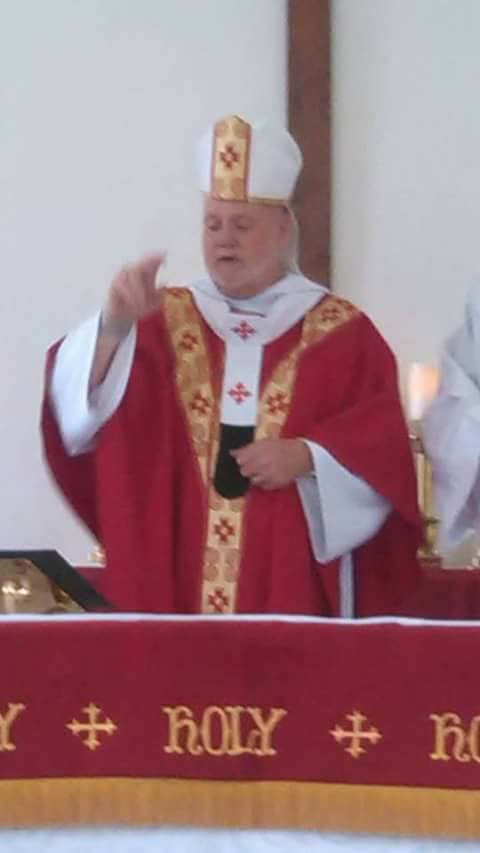
The Rt Rev Michael Beckett, OPI

Those of you who are “of an age” will remember the comedian, Flip Wilson and his alter-ego, Geraldine.  Back in the 1960s and ‘70s,  Wilson turned “the Devil made me do it” into a meme.  He was a hoot!  Momma loved him.  Wilson made frequent TV appearances in the 1960s before starring on his own Emmy Award-winning network TV show in 1970. He also made a slew of comedy albums, if you can remember what those were. You know, records. Vinyl.

Anyway, Wilson would do something outrageous in plain sight, then grin into the camera and say, “The Devil made me do it.” The audience would howl because everyone was in on the joke. We all knew that Flip was exploiting a bit of theology to avoid taking responsibility for his bad behavior. All you had to do was say, “The Devil made me do it,” and you got off the hook with your parents, your boss, your teacher, or your partner. It was a “Get out of Jail Free” card and Flip used it week after week.   (Except in our house.   No matter how many times my brother or I said, “The devil made me to it,” we still got into trouble. Le sigh….)

Wilson’s routine got us all to laugh at the idea that someone could acknowledge that they had done something terrible, but dodge responsibility by making a theological claim. Whether the subject had robbed a bank, cheated on his wife, or played hooky from school and gone joyriding with his friends, it was all the same. It wasn’t his fault because—all together now—“the Devil made me do it.”

This kind of devil-based theology includes an important but unstated message: When I’m a good boy (or girl), you can attribute my good acts directly to me and my sterling character. But if I behave in horrible, irresponsible ways, just blame it on the Devil, who is running the show.

Language is a powerful influence in our lives, not only in how our words affect others, but also in how our words affect US. Words affect the hearer; words affect the speaker. Our vocabulary very much becomes of a part of how we see the world. What we can put into words contributes to our forming a picture of what we see.

We chuckle at Wilson’s emphasizing that the devil made him do it, but we can be just as capable of blaming something or someone else for our attitudes or behavior. “He makes me so mad,” we might hear, or “that makes me so happy” a friend will bubble. The words reflect a worldview that things outside of us control our thinking. The words confirm our belief that things outside of us make us behave one way or another.

However……  There’s this little thing called “free will” or choice.  We all have it.  The ability to choose.  And there’s thing concept called Choice Theory.Choice theory was created by Dr. William Glasser. Choice theory emphasizes the individual’s control over his or her feelings and actions.  Conflict arises because we can only control our own behavior.  The William Glasser theory teaches the concept that all behavior is chosen. 

Choice theory reminds us that other people or circumstances don’t make us do anything. Circumstances may influence our decisions, but ultimately we choose a behavior that we think will best work for us at that moment. Choice theory also reminds us that the words we commonly use can help or hinder our mental health.

This is why Glasser loved verbs, even changing nouns to verbs as part of his desire to make a point. Instead of anger or being angry, Glasser explained how it is better to say “I am angering” or “I am choosing to anger.”   WAIT!  WHAT???  It is interesting how powerful our words can be and how much they can influence our perception of things. Choice theory accepts that angering is an option, we just need to accept responsibility for it and not blame someone or something outside of us for our attitude.

In the Gospel appointed for today, Jesus is being tempted by “the devil.”  Over and over and over again, until Jesus says to Satan, “”Get away, Satan!  It is written:  The Lord, your God,  shall you worship  and him alone shall you serve.”   And so it is with us.  The devil can “present allurements” and can “entice,” but although Flip Wilson says otherwise, the devil can’t make us do anything.

He certainly can’t separate us from God. That’s on us.  Sin is anything that we CHOOSE to do or say that separates us from God.  In the past few weeks, how many of us have said/posted/read/agreed with things that would most definitely not be considered Christ-like?   How many of us have let our personal political beliefs get in the way of acting like the “little Christ” we are called to be?  Sure we can disagree, often vehemently, but under no circumstances can we allow ourselves to allow those differences of opinions to get in the way of our witness for our Lord.  (You gotta remember that even Peter and Paul argued, but they didn’t let that stand in the way of building Christ’s Kingdom.)

Let us not forget that in many cases, we are the only Bibles that many folks will ever read, and we are the only Jesus that some folks will ever see.  It is up to us to see the Jesus in everyone, regardless of political belief, race, creed, color, sexual orientation, whether we cheer for Duke or for Clemson, or anything thing else that can be used to divide us.  We are all of us HIS people, the sheep of HIS pasture, and we have far more in common than we do the things that divide us, if we truly identify as HIS.

As Christians, have we lost our focus of what is truly important?  Regardless of politics, of whether we are ‘blue’ or ‘red’ or ‘rainbow,’ we are to remain focused on the one thing that really matters in this world and the next:  Spreading and sharing the love of and for our Lord and Savior Jesus Christ.  No matter what our politics are, our job, our mission, our focus, has not changed and will not change:  We are called to love and to serve the Lord with gladness and singleness of heart.  We are called to care of each other, regardless of our politics.  We are commanded to ‘bless those who persecute us,’ and we are called to ‘pray for our enemies.’  We are called to feed the hungry, clothe the naked, house the homeless. (Matthew 25:31-46). 

So what’s it gonna be?  Joshua says it best, I think:  “Choose this day whom you will serve.  But as for me and my house, we will serve the Lord.”

I wish you a holy and blessed Lent.  Amen.

Ashes to Ashes~The Very Rev. Lady Sherwood, OPI

Reading 1: Jl 2:12-18

Responsorial Psalm:’51:3-4, 5-6ab, 12-13, 14 and 17

Reading II:’2 Cor 5:20—6:2

Verse Before the Gospel: See Ps 95:8

Gospel:’Mt 6:1-6, 16-18

Liturgical Colour: Violet.

Mtr. Lady Sherwood, OPI

Today, we come to Ash Wednesday, the first day of the Lenten season.

On Ash Wednesday, I am always reminded of the words used at the committal

part of the Funeral service which goes, “Therefore we commit his/her

body to the ground, earth to earth, ashes to ashes, dust to dust”

A type of form of those words were spoken for the very first time in the

garden of Eden, after Adam and Eve had eaten of the tree of the

knowledge of good and evil.  God said to them – “Dust thou art,

and to dust thou shall return.”

Dust to dust, ashes to ashes.  A very stark reminder of from where we

Came and to where we shall eventually

return.  We are all  without God in our lives, by our human nature, and by our deeds – merely a walking, talking,

thinking, doing package of dust and ashes. 

There is not much value in dust and ashes.  Gardeners would know that fact but

they can be used to help grow plants – but basically for other than this, they are

worthless. 

And without the love,  Grace, and Mercy of God, we likewise are worthless.

So then why do we bother today in the wearing of ashes upon our foreheads?  Why

do we gather and remember exactly what we are?

Well – the answer is that while we gather to remember who we are,

we also gather to remember who God is – and all that God Our Father and creator has done for

us in and through Our Lord Jesus.

God has given us a way out of our plight of “ashes to ashes, dust

to dust”.  The ONLY way-  That is the way of the Cross.   The death of Jesus was

God’s way of placing a sign of infinite value upon each of us and without this,

we would all otherwise have been worthless.  Today it is for each of us to know and

to realise that God has chosen to give us a a totally different life than that

which leads to the dust heap and the ash pit. 

And all that God asks of us in return is that we accept his love, Grace and mercy,

that we remember that we are indeed all sinners, and that we truly repent and believe in his

Son, Our Lord and Saviour Jesus Christ.

And he asks us too that we try to practice a piety that is based

on his love – instead of being motivated by thoughts of human

praise or reward, that we try to show a righteousness that is

based on His goodness  – instead of being motivated by thoughts

of demonstrating  our human virtue.

God has committed himself to each and every single one of us – and has given to us a sign of that commitment – the cross.  Today, we come to take upon ourselves

that sign – we come to recommit ourselves to God and the way that

his Son has shown us. 

We come to remember the words of the committal service, the words

that do not stop with “earth to earth, ashes to ashes, dust to

dust”, but continue on to say “trusting in God’s great mercy by

which we have been born anew to a living hope through the

resurrection of Jesus Christ from the dead.”

These are words that we need to always remember – for we are born anew to a

living hope through the resurrection of Jesus Christ – a hope

that comes to us all because of the mercy and the love of God for his

people; a hope that comes because God has acted in and through

Jesus to open the way to new life to all who repent and believe

in the good news that he proclaimed.

Thanks be to God who gives us this victory.

Let us pray:

Blessed are You O Lord

 who gives us life and all things. 

Lead us into repentance and

 renew our lives with your grace. 

May the crosses of ashes that mark our

 foreheads be a reminder that we belong to your Son. 

May our worship and prayer be sustained

 throughout these days of Lent. 

We ask this through Christ our Lord.

Amen. 

Justice and Love~ Br. Milan Komadina, Novice

Reading the Bible is very important for every one of us. It could give us strength, encouragement, love, hope, enlarge our faith and also is a way of communicating with God. Often, when we read the Bible we tend to read the New Testament. It seems that in the New Testament we could find more stories about love and forgiveness. This is why I believe more people rather read the New Testament. However, it is good to remember that the New Testament was written based on the Old Testament. And even though in the Old Testament one could read more about things that are related to rituals, knowing the Commandments of God, sacrificing and punishing for sins and it seems that The Old one is a bit harder to read, we could also find some interesting chapters talking about the importance of love and forgiveness. In today`s reading we read Leviticus 19:17/18:

”Do not hate a fellow Israelite in your heart. Rebuke your neighbor frankly so you will not share in their guilt. Do not seek revenge or bear a grudge against anyone among your people, but love your neighbor as yourself. I am the Lord.”

Love your neighbor as yourself. These are words from the Old Testament. It was not only mentioned to love our neighbor which would be also a strong Commandment. It was written to love our neighbor as our own selves. As we live in the time when modern psychology teaches us to be only self-oriented and maybe even a bit selfish, it may be hard for a modern human to love others the way they love their selves. But this is what Bible says. Bible is teaching us to love and forgive. And through love and forgiveness we might also experience peace. Sometimes we may feel that our neighbor is not doing fair enough to us. We may even have an evil neighbor who is envious, jealous or who even make some problems to us. Bible also teaches us to forgive. Here is another challenge for modern human. We usually tend to seek justice and when someone causes us pain or does something unjust we would like to revenge. But life could often teach us that God is the one who sees everything and God is just. In Matthew 5:38-48 it is written:

“You have heard that it was said, ‘Eye for eye, and tooth for tooth.’ But I tell you, do not resist an evil person. If anyone slaps you on the right cheek, turn to them the other cheek also. And if anyone wants to sue you and take your shirt, hand over your coat as well. If anyone forces you to go one mile, go with them two miles. Give to the one who asks you, and do not turn away from the one who wants to borrow from you. You have heard that it was said, ‘Love your neighborand hate your enemy.’ But I tell you, love your enemies and pray for those who persecute you,that you may be children of your Father in heaven. He causes his sun to rise on the evil and the good, and sends rain on the righteous and the unrighteous. If you love those who love you, what reward will you get? Are not even the tax collectors doing that? And if you greet only your own people, what are you doing more than others? Do not even pagans do that? Be perfect, therefore, as your heavenly Father is perfect.”

As we read the New Testament goes even one step further. It does not only teaches us to love our neighbors but it also teaches us to love our enemies. This is a really hard lesson but we have the greatest teacher, the Lord Himself, Jesus who showed us how that love could work. When he was on the cross, dying in pains he did not condemn his enemies, but he prayed for them. This is useful to remember every time when we feel depressed or when it seems that the life is unjust, painful or when we feel that we cannot deal with our daily hardships. We all have our crosses, but God will never give us the cross that we could not bear. Sometimes some hardships or unjust situations may be good lessons to make us better person. Or those could be only one step to some good things that God is preparing for us. We should trust God and rely on Him because everything that is happening to us is happening with a reason. God has a personalized approach to each one of us. Through the years I learnt one important lesson. God is always leading us and sometimes when we think that something is not good for us, God knows why it actually is good because he sees the future and he knows the outcome.

With my wish and prayer for you all to learn about God`s wisdom and grace, to let Him guide your life and being trustful and faithful may He bless you all in the name of the Father, the Son and the Holy Spirit. Amen.

Salt~James M. Taylor, Novice

Isaiah 58:7-10 I Corinthians 2:1-5 Matthew 5:13-16

SALT:

In addition to other spices, salt serves to enhance the flavor of food. And yet when it is used alone it is able to prolong the distinctiveness of foods for later consumption.

[In Leviticus we read “And every offering of your grain offering you shall season with salt. You shall not allow the salt of the covenant of your God to be lacking from your grain offering.”]

The value of salt in small qualities [appear to have been known] in ancient times for use in arid places to help retain moisture, destroy weeds, make stubborn soil easier to till, and make sour grass sweeter and more appealing to cattle. [add a statement introducting how salt relates in the old covenant to our relationship to God.

Leviticus 2:13 reads: “And every offering of your grain offering you shall season with salt; you shall not allow the salt of the covenant of your God to be lacking from your grain offering.”

In the New Testament, sacrifices seasoned with salt speaks of covenant fellowship with God, which we have in the Mass can you clarify Mass, all parts, the eucharist? source of the idea which then leads to the next statement. Living the Mass is about “the unbending truthfulness of that self-surrender to the Lord embodied in the sacrifice of Christ, by which impurity and hypocrisy are repelled.” Source??

Salt was can also be a symbol of a curse. If you recall in the story of Lot and his wife recorded in Genesis 19:24, the Lord rained down fire and brimstone on Sodom and Gomorrah. God chose to spare Lot and his family, warning them of

the impending destruction and commanding them to leave and not look back., While Lot and his family were fleeing the city, his wife looked back and she became a pillar of salt

Why did she defy a direct order from God when He specifically told them not to look back? St. Luke interprets her action as the manifestation of the unwillingness to relinquish everything at the time of judgment and serves to warn Jesus’ followers ( that is US) against misplaced values. source

What I am reminded of with this incident involving Lot’s wife, is the end of one’s life and how it could happen as quickly as it did for Lot’s wife. Even though she was told not to turn back, she did and immediately, her life was over- there was no time to repent or plea for forgiveness The Son of Man may return at a time when we least expect it. It helps to be ready. In his sermon on the mount, Jesus tells his followers “You are the salt of the earth, but if salt has lost its taste, how shall its saltiness be restored? It is no longer good for anything except to be thrown out and trodden underfoot by men.” Matthew 5:13

Salt’s purpose is not for itself; it is for preserving and seasoning food. In the same way, His disciples are there not for themselves but for spreading God’s truth, the Gospel to all people, and we are supposed to do the same. We are no longer our own the moment we surrender our lives to God Almighty. From that moment, He places His hand on us and calls us into a world of “seasonless” lives. It is our responsibility to be the Salt of the earth for eachother; through Christ, of course.

An illustration that I like to use is this:

In A Peanuts cartoon, Peppermint Patty talking to Charlie Brown said,

“Guess what, Chuck.

The first day of school and I got sent to the principal’s office. It was your fault, Chuck.”

He said, “My fault? How could it be my fault? Why do you say everything is my fault?”

She said, “You’re my friend, aren’t you, Chuck?

You should have been a better influence on me.”

Charlie brown should have been more Like salt; after all, what are we if we are like peanuts without salt?

Amen.

Pure In Heart~The Rev. Frank Bellino, OPI

Today the Gospel reading is one of the most famous in St Matthew’s Gospel: The Beatitudes, or ‘blessings’, which open Jesus’ Sermon on the Mount. Faced by having to choose between trying to say something about all the Beatitudes in a small space or focusing on one of them, I am going for the second option.

Happy the pure in heart: they shall see God.

This is surely the most often misunderstood of the Beatitudes. It is not, as so many people think, about sex. Purity of heart means something much more than just sexual purity. It means singleness of heart, integrity.

Devout Jews every day recite the Shema, the verse from the book of Deuteronomy:

You shall love the Lord with all your heart.

And in the psalms, we say:

Blessed are those who keep the Lord’s testimonies, who seek him with their whole heart. If you look at somebody lustfully, yes, it is a sin against ‘purity of heart’, it is so because doing that is failing to give yourself entirely to a person, not giving yourself to a person ‘with your whole heart’ is not serving God ‘with your whole heart’. If anything is more important than your fellowship with God fits just as well.

The good person is the person, who is wholly consecrated to the service of God and is about doing God’s will. As Jesus says later in the Sermon on the Mount,

Do not lay up for yourselves treasures on earth but lay up for yourselves treasures in heaven. “For where your treasure is, there will your heart be also.” (“Matthew 6:21 KJV”)

The opposite of a ‘pure’ heart is a divided heart. (“Blessed Are the Pure in Heart | Open the Bible”) As we are told in the letter of St James, purify your hearts, you men of double mind.

And how often we are men – and women – ‘of double mind’! Quite a lot of our lives, in fact! Jews of Jesus’ time thought that what divides the heart is the evil inclination … something implanted in us by God and so far, good, but when not controlled, something divisive.

It can be very frightening to realize that one bit of yourself is working against the other bit, that your feelings and your ideals, your desires and your beliefs, are pulling in opposite directions … to realize that (to use the well-known biblical phrase) you are trying to serve God and Mammon. And these days it’s more difficult than ever not to end up doing just that very thing.

Jesus says that it’s the person with singleness of heart who will see God … which means that the people who are best prepared to share God’s life, to enter heaven, are not necessarily the people we would think – they are not necessarily the people who have busied themselves doing piles and piles of virtuous things, but are very conscious that they have done them, nor the people who have spent their lives metaphorically flicking the dust off their shoulders, the people who’ve never done anything wrong because they’ve never taken the risk that’s often involved in trying to do something right.

The people who are best prepared to share God’s life are, rather, the people who have singleness of heart: who are simple not in the sense of being stupid but in the sense that they are not full of contradictions – who have their priorities right and quietly listen to God.

What the Catholic doctrine of purgatory basically says to us is that, if really deep down we are friends of God, God will share his life with us, but entering God’s life means being separated from all in us that’s alien from God … and that can be painful, for we often want to cling to those things in us which are unlike God.

The people for whom journeying into Heaven is not something painful as long as the people who go to meet God are travelling light – not with a whole pile of ungodly clutter.

And those are the people who are ‘pure in heart’. Let’s pray that we may become people who are ‘pure in heart’.

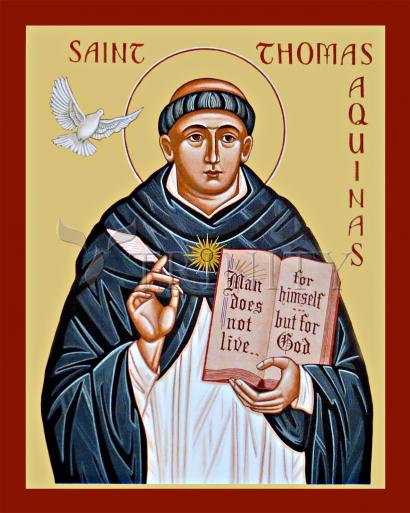
St. Thomas Aquinas, Memorial~Br. Milan Komadina, Novice

Today we commemorate Saint Thomas Aquinas. He was born in Italy in 1225 (only four years after Saint Dominic’s death). In 1244, he entered the Dominicans and in 1245, he moved to Paris (and later to Naples, Rome, and Cologne) to study, teach and write. Written toward the end of his life, Thomas Aquinas’s most noted work is the Summa Theologica, in which he posits five arguments for the existence of God. But, Saint Thomas’s genius is attributed to much more than a single work. He is honored as a Doctor of the Church, and is the patron saint of scholars, schools, and students. Nearly eight-hundred years after his death, his legacy continues to teach much about grappling with truth, learning, and how both are essential to faith.

Today we read in Hebrews 11 about the importance of having faith. In our everyday life we encounter many problems. These problems could be health issues, financial or job insecurity problems, having a bad relationship with some friends or family members and so on and so forth. However, there is one thing that we, as Christians share and it could help us a lot in those hardships. This is called Faith. Faith in God does not only mean that we believe that there is God who created us. It also means that we believe that God is still present everywhere and at any time in our life. He is timeless and he has no limitation in existing at the same time in the past in the present and in the future. Sometimes we see that in the present the things in our life are not as we would like them to be. We hope we deserve better and we feel that our cross might be a bit bigger that we could carry. In those situations it is good to remember Hebrew 11:8-19 saying about Abraham who trusted God and who had full faith which means that he know that all the hardships he was struggling with were there for some reason. He moved to the Promised Land even though he could not know what this new land would bring him. But he trusted that God is in control of the future and he trusted that God had a plan. This chapter reminds us that God also has a plan for every single person. Especially the verses 11 and 12 –

And by faith even Sarah, who was past childbearing age, was enabled to bear children because she considered him faithful who had made the promise. And so from this one man, and he as good as dead, came descendants as numerous as the stars in the sky and as countless as the sand on the seashore.

This is what we could call the Faith in Action. I guess that we all have struggles with having strong faith in absolutely every period of the life. Sometimes we feel unjust, or we feel hurt or we feel that we do not deserve the things that are happening to us. But still, it is important to remember also that Job was the most righteous man of his time and God allowed the devil to make many temptations, loss and hardship to his life. Yes we know the past, and sometimes it can be hard to remember it, yes, we also live our present and we could sometimes feel blue about it, but what we do not know is the future. God is in the future and he knows why we have certain hardships or temptations. But he gave us the Bible and he thought us that we will always have the cross that we can carry. He gave us the faith and he thought us through Abraham what having faith means. As a perfect example of faith is the readiness of Abraham to sacrifice his own son. As we read in verses 17, 18 and 19 –  

 By faith Abraham, when God tested him, offered Isaac as a sacrifice. He who had embraced the promises was about to sacrifice his one and only son,even though God had said to him, “It is through Isaac that your offspring will be reckoned.”Abraham reasoned that God could even raise the dead, and so in a manner of speaking he did receive Isaac back from death.

A God example of perfect faith is that Abraham knew that God could even get Isaac back from the death. The lesson about Abraham and the importance of strong faith is the lesson that we all should repeat in our everyday life. People tend to lose or minimize their faith in the moments of hardships. Many years after Abraham, Our Lord Jesus also experienced the lack of faith of his followers when he was sleeping on the boat while there was a storm coming. As we read in Mark 4:35-41. In verse 38 they asked –

“Teacher, don’t you care if we drown?”

This is the sentence we probably often ask when struggling with the storms of our everyday problems. We are not used to let us be guide by Jesus and trust him. But happy news are that we could always rely on Him because he was the one killing down the wind and calming the storm. And he wants us to be always reminded about the question he asked in verse 40 –

He said to his disciples, “Why are you so afraid? Do you still have no faith?”

My prayer for today is that we all could have the faith as Jesus thought us. The faith strong as the one that Abraham had. And to always remember that God is in control. Amen.

The Call ~ The Rev. Frank Bellino, OPI

Many of us, at one time or another, dream of leaving everything behind. All the ties and responsibilities that nail us down, all the daily drudge, our half-heartedness about our work or our families, the weight of our past and our failures, all the things which define us.

It would be so simple to simply dump all the baggage of life, disappear, and start again in another place with a new passport and a Swiss bank account. In our fantasies, running away from everything would free us to start again as a new person, to become someone else more intelligent, more successful, popular or better looking.

In the Gospel, four fishermen leave everything behind, all the ties and bonds of work and family, to follow Jesus. But they leave everything in response to a call:

“Follow me, and I will make you fishers of men.” (“Follow Me and I Will Make You | bibleteacher.org”)

Jesus doesn’t offer them a career, as carpenters, soldiers or tax collectors. He isn’t offering them exciting new love affairs, or friendships unencumbered by the weight of failure and misunderstanding.

The call to discipleship isn’t an attempt to recreate a new set of ties and bonds of love and responsibility, to escape all that defines and supplies identity. It is a call to discover that God given identity in a new way, in the crimson dawn of salvation in the words and actions of Jesus. I will make you fishers of men.

The call to follow establishes a relationship between what the disciples are now, and what they are to become. Their ordinary work, drawing sustenance from the darkness of the sea, becomes a sign of a deeper reality, drawing men and women from the darkness of sin and death, into the torrent of wind and flame manifested at Pentecost.

That which defines them now is not bypassed or ignored but becomes the scene of an urgent call to a deeper self-understanding, the call of grace. So, the disciples don’t leave fishing nets and boats upon the shore so that they can escape the daily struggle to make a living. Nor do James and John leave their dad sitting in the boat because they’ve grown tired of him or can’t afford a retirement home.

Grace does not take us from one identity to another but opens out a new and surprising depth of identity in the life of God. The disciples then leave everything behind not to escape, but to discover the true depths of the Spirit’s call. This Spirit, pouring from the Risen Christ, doesn’t replace our natural desires and hopes. Sharing in the Divine life does not mean that we are not called to live a fully human life.

Grace, then, begins to manifest itself in the reality of our lives, in those things which define us, make us who we are: but within these things it sounds an urgent call, a call to discover how much more we are, to understand ourselves in the gracious newness breaking into the world in the risen body of Jesus. For some, like the disciples in the Gospel, this call will require a leaving behind. In religious life, Christian men and women do not go in search of a fantasy life, but a life defined by the bonds and responsibilities of grace, of the new human community of the church formed at Pentecost.

But for most people, the call will not require a complete leaving behind, but an expanded vision of who we are, and our value in God’s plan. The call of Jesus to repent, because the kingdom of heaven is close at hand, is a call not to allow sin, and all the failures of life, to define us. For from our baptism, we have been caught up, hooked into this new age of grace, where we may swim freely.

The urge to escape who we are often weighs very heavily upon us. But there are no real clean slates in this life: who we are is intimately bound up with those we live with, those who have cared for us or hurt us, with the ways of making a living and passing the time we have settled for.

The call of God’s grace doesn’t offer us a new identity, the fantasy life we have always longed for. The call to be a disciple is a call to move to an even deeper understanding of who we are, who we are called to be, in the self-giving of God in the cross of Jesus, and the hurricane of glory which finally transformed simple fishermen into fishers of men.

Behold! ~ Br Christian Ventura~Novice

In the ✠ Name of the Father, and of the Son, and of the Holy Spirit.

Amen.

If you are a regular catholic churchgoer, you likely are familiar with the general outline of the holy mass. Shortly after we boldly join in reciting our Lord’s prayer, the celebrant will fraction the consecrated host, confer a sign of peace, turn to us, holding the Body of our Lord Jesus Christ in their hands while firmly proclaiming: “Behold the Lamb of God: behold Him that taketh away the sins of the world.” If you speak liturgicalese, you know this to be called the Agnus Dei, where we give reverence to the Son’s  title: “Lamb of God”. In most catholic masses, the celebrant may then go on to say: “Blessed are those called to the supper of the Lamb”, which is in reference to a passage from Revelation.

The word “behold” appears over 1200 times in most english translations of the Bible, and, in the New Testament, is derived from the Greek word “eido” which is often translated as a command to see, or, to look intently. It is translated most literally as, “be sure to see”.

We can assume this is the sentiment John the Baptist carries in today’s Holy Gospel when he says to the disciples “behold”. In the presence of our Lord, he calls the disciples to take notice, to look carefully.

But that’s not all he says, isn’t it? He says, “Behold, the Lamb of God, who takes away the sin of the world!” Now the language here is especially important and worth paying attention to. When John says “takes away”, he doesn’t just mean get rid of, nullify, or set aside, like when a mother might take away a child’s toy for misbehaving. In this context, John says “airōn”, which in ancient Greek is closer to meaning “bearing up what was laid down”. 

In the Holy Sacrifice of the mass, we celebrate in tremendous awe the real presence of Christ in the Blessed Sacrament, and remember through Christ’s passion the forgiveness of our sins. We remember in adoration that Jesus Christ laid down His life for us, so that we may be forgiven. The catholic faith has historically been incredibly adamant about the remission of sins through consumption of the Body and Blood of Christ, that the Holy See ex cathedra has declared absolutions of venial sins for all those who rightfully partake in communion.

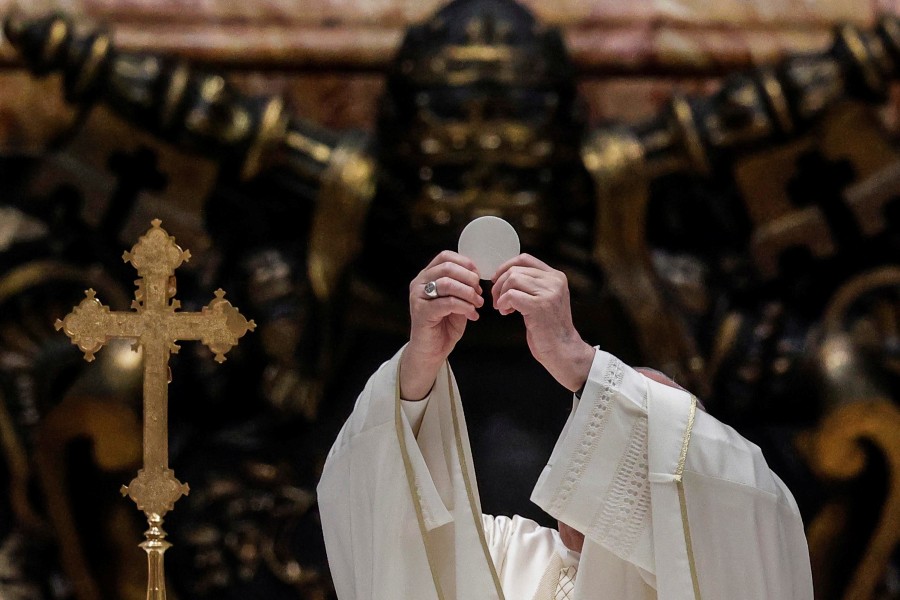
The breaking of bread isn’t the first time the people of the Church see the consecrated Host in the order of the holy mass, however. In fact, it occurs when the priest lifts up the Host in what we call, the elevation. Most times, the elevation is accompanied by three bell chimes, followed by a genuflection by the presiding clergy. The most important role played during the elevation is not by the clergy, but actually, the people! The priest lifts up the Body and Blood of Christ in view of everyone for the purpose of solemn adoration. When the priest raises the elements, they acclaim with their whole heart, “Behold the Lamb of God. Behold Him who takes away the sins of the world!”.

So the next time you find yourself at mass, I encourage you to lift your head high when you hear the sound of the bells, and intentionally look at the raised Body and Blood of Christ that was shed just for you, out of the abundance of love from our Almighty God.

Lastly, I’ll end with the prayer I usually say before the celebration of the Holy Eucharist, if you find it helpful for your own devotion. “Be present, be present, O Jesus our great High Priest, as you were present with your disciples in the upper room, and be known to us in the breaking of bread through Christ our Lord. Amen.”

The Feast of the Epiphany~The Rev.Dcn Scott Brown, OPI

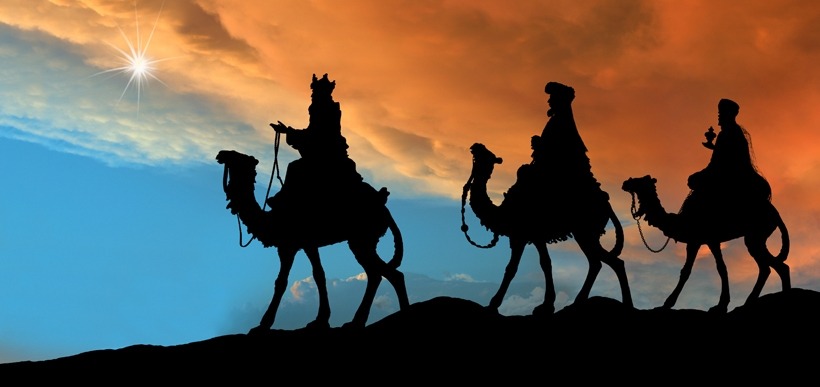
Today we mark the end of the Christmas season – the Day of Epiphany.  We celebrate this day to reflect on the visit of the Magi – the wise men – to Jesus and the giving of their gifts. We reflect on the meaning of this visit of those wise ones to see Jesus.

Epiphany is about Jesus and his message being available and relevant to people of every age and race. Jesus isn’t just a Jewish prophet with an exciting message, but God made present amongst us and available to all of us to worship and follow. God’s love reaches beyond the everyday barriers of race and class; something the Magi didn’t quite get at first.

So Who Were the Magi?

We don’t know much about the Magi from Scripture. All Saint Matthew tells us is that they were “Magi from the East”. Some translations have “Wise men from the East”. The word in Greek refers to priests of the Zoroastrian religion. They came from Persia, the countries now known as Iran and Iraq, and they saw meaning in the movement of the stars. Their visit fits an Eastern pattern of great births being accompanied by momentous events in the sky. Certainly we know of a comet in 11BCE in Gemini with its head towards Leo, seen by many as a symbol of Judah.  We also know of planetary conjunctions in both 7BCE and 6 BCE which would have added to a sense that momentous happenings were on the way. The Magi would have noticed these things and taken them seriously. But who were they?

One commentator, Brian Stoffregen puts it like this;

“Originally in Persia, Magi were dream- interpreters. By Jesus’ time, the term referred to astronomers, fortune-tellers, or star-gazers.   They were horoscope fanatics – a practice condemned by Jewish standards. We might compare them to people in fortune – telling booths, or people on the “psychic hotline” or other “occupations” that foretell the future by stars, tea leaves, Tarot cards etc. They were magicians, astronomers, star-gazers, pseudo-scientists, fortune tellers..”

Another writer, Nathan Nettleton, puts it like this;

“They were the speakers of the sacred words at the pagan sacrifices. At worst, the term referred to a magician or sorcerer, or even a deceiver. Magi were people whose activities were repeatedly condemned and prohibited throughout the scriptures and were completely anathema to the people of Israel.”

Whilst in English we get the words “magic” and “magician” from Magi, the Zoroastrian religion forbade sorcery. They clearly were looking for a new king and had found meaning in the movement of the planets and stars which led them to come to Israel to greet the new-born king. They journeyed from their homes in Persia to Bethlehem in search of this baby. Instead of angels and visions, we have the image of the Magi following a sign in the skies – in nature – and for a long period of time. The magi see the intentions of God in the skies. This is not new: Psalm 19 tells us that the heavens themselves declare who God is, and that his handiwork is seen in created nature.  “We observed his star at its rising”. The magi know that there is something significant happening.

When did they come?

The Gospel of Saint Luke doesn’t mention the Magi and holds that the Holy Family returned to Nazareth after the presentation of Jesus at the Temple where he was circumcised. It’s probable that Saint Luke didn’t know of this episode in Jesus’ early life. Saint Matthew seems to place the visit of the Magi some time after Jesus’ birth. The Holy Family are in a “house” not in the
stable of the inn.  Herod kills all the newborn boys under the age of two years. So it’s likely that the Holy Family had stayed for some time in Bethlehem and the Magi came some time after Jesus’ birth, perhaps as long as two years after.

WHY did they come?

Clearly, the Magi were searching.  The Magi recognized much of the truth of Jesus, who he was and what he would become.  The magi had a general idea of this God and this King of the Jews, but they didn’t really know who or what they were looking for.  Bono and U2 were criticized some years ago by some supposedly orthodox Christians when they produced a song entitled, “I still haven’t found what I am looking for.”  I can’t see the problem with that especially given the spiritual depths in many of their songs. You see, the example of the Magi was that they were searchers, not really knowing what or who they were looking for.  They didn’t claim to have it all but they saw their lives as a journey of discovery. And in that they are an example to us. We don’t know it all. But if we like them are prepared to be diligent seekers, then like them we may be graced by God’s light, by our Epiphany.  When the wise men finally found Jesus, we are told that their first response was joy – “they were overwhelmed with joy”. That is what happens when we find Jesus. This is what awaits us at the end of the journey. Next, they paid him homage – they worshiped him and acknowledged Him as King. After the joy comes the worship. That means acknowledging Jesus as King. Jesus as the center. Jesus as Lord. And then, after joy and after worship, comes offering of their gifts. In response to who Jesus is and the joy He gives, we offer ourselves and our gifts to Him.

So my message for today is to dare, like them, to take the risk of seeking, and God may well bless us with our own Epiphanies which transform us as doubtless the Magi were transformed by what must have been a surprising experience for them as they knelt before the infant Jesus.

So how do you find Jesus? Maybe you can start out like the Magi – with a general idea of God, and a general idea that He is guiding you. Like the Magi, we need to turn to the scriptures. If you don’t read them, you will never really get the specific directions that God is trying to give you. Approach them with the right spirit, the right purpose. Ask for help along the way – the church, God’s people, are meant to help you along that way. The wise men knew when they needed to ask someone else for help. And pray. Ask God. When you find Jesus, rejoice. After all, He is God. Put Him in the center of your life. Ask yourself whether what you are doing honors him a King. Offer to him what you have, who you are.

Where can this Jesus be found?  He is with you now.  Won’t you seek Him?  Won’t you recognize Him?  Won’t you let Him fill YOUR life with joy?  Amen. 

Elizabeth Ann Seton~The Very Rev. Lady Sherwood, OPI

Reading 1: 1 Jn 3:7-10

Responsorial Psalm: Ps 98:1, 7-8, 9

Alleluia: HEB 1:1-2

Gospel: Jn 1:35-42

Liturgical colour: White.

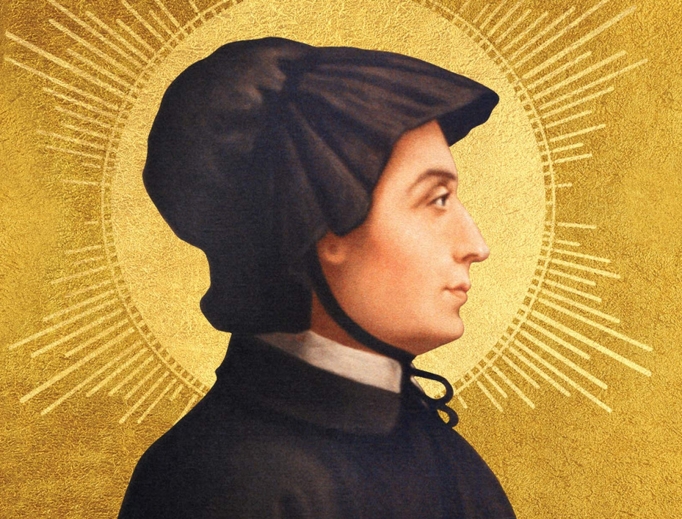
Today we  come together as a church and as children of God, to commemorate the Memorial of St. Elizabeth Ann Seton who is my name saint within the Order of preachers Independent, due to our Prior (and Presiding Bishop) feeling there apparently , many  similarities between the life of St. Elizabeth  Ann Seton and that of my own life.

Throughout Biblical history and even in current times, we sometimes come across people who have endured much within their lives and who, regardless of this, remain strong and devout within their faith. Today we remember St Elizabeth, whom is one such person from whose life, heart and devotion, we can take inspiration within our own spiritual life.

Elizabeth was the very first native-born citizen of the United States to be Canonized to sainthood.

Elizabeth was born as Elizabeth Ann Bayley in New York city on the 28th August in the year 1774, and she was a child of the Revolutionary war. She was raised Episcopalian which was the faith of her parents.

Elizabeth married at the  tender young age of only nineteen years old, to a man named William Magee Seton. He was a young but wealthy merchant and together they parented a total of five children.

Elizabeth had a very deep devout faith and concern for the poor even as a  very young woman and she shared this devotion with her sister-in-law,  who was Rebecca Seton, and with whom she became very close friends. Together, Elizabeth and Rebecca undertook various missions for the poor and for the needy of their region and they adopted the name of the ‘Protestant Sisters of Charity` for their mission works.

Elizabeth’s life changed after only the short time of four years of marriage and her life became rather burdensome in nature. Elizabeth and her husband were left with the responsibility for seven half-brothers and sisters of William’s father when he died in the year 1798.

Elizabeth suffered even further in the year 1801, when her own father with whom she had a  very close relationship, especially since the loss of her mother at aged only three,   himself passed into the care of the Lord.

Then yet again she suffered after only another two years, when both her husband’s business and his health failed. Filing for bankruptcy, Elizabeth and her husband sailed to Italy to help his health and to try to revive his business.

Whilst in Italy, Elizabeth suffered even further, as William’s condition worsened. He was quarantined and subsequently died of Tuberculosis in December of 1803. Elizabeth remained in Italy for several months after his death and during this time, was more fully exposed to the Catholic faith.

Elizabeth returned to New York city in June of 1804, only to suffer yet again with the loss of her dear friend and sister-in=law, Rebecca Seton, in the very next month.

At only the young thirty years of age, Elizabeth had endured the loss of so many who were close to her and she seemed to have the weight of the world upon her shoulders. Even so, throughout all this, Elizabeth still remained fervent in her faith.

The months ahead were life-changing for Elizabeth and she seemed ever more drawn to the Catholic faith and to the Mother Church, much to the horror of her friends and her remaining family who were firmly Protestant.

Elizabeth Ann Seton was received into the Catholic Church on the 4th March 1805. Her conversion cost her dearly in the areas of her friendships and in the support from her remaining family.

Elizabeth relocated to the Baltimore area and there she established a school for girls. She also founded a religious community along with two other young women and she took vows before the Archbishop Carroll as a member of the Sisters of Charity of St Joseph. From this time forward, Elizabeth was known as Mother Seton and she left a legacy of care and education for the poor. She even established the first free Catholic school of the nation.

In so many ways, the journey into the Catholic faith, helped Elizabeth to much more appreciate and to embrace her faith even more profoundly. Elizabeth was willing to endure all things to follow Christ. In her journal, she even wrote, ‘If I am right Thy grace impart still in the right to stay. If I am wrong Oh, teach my heart to find the better way’.

Many of us who have chosen the Catholic faith have experienced some setbacks and have had to endure issues with relationships, but for this brave and devout woman of faith, the cost was even greater.

Elizabeth died aged only 46 on January 4th 1821 from Tuberculosis and she was Canonized on September 14th 1975.

On this your special day, St Elizabeth Ann Seton, Pray for all of us who follow your pathway of faith. Pray that we likewise to yourself will say yes and will accept all that will come to us in the years ahead, and to allow our earthly endurance to further our faith in our Lord Jesus Christ.

Amen.