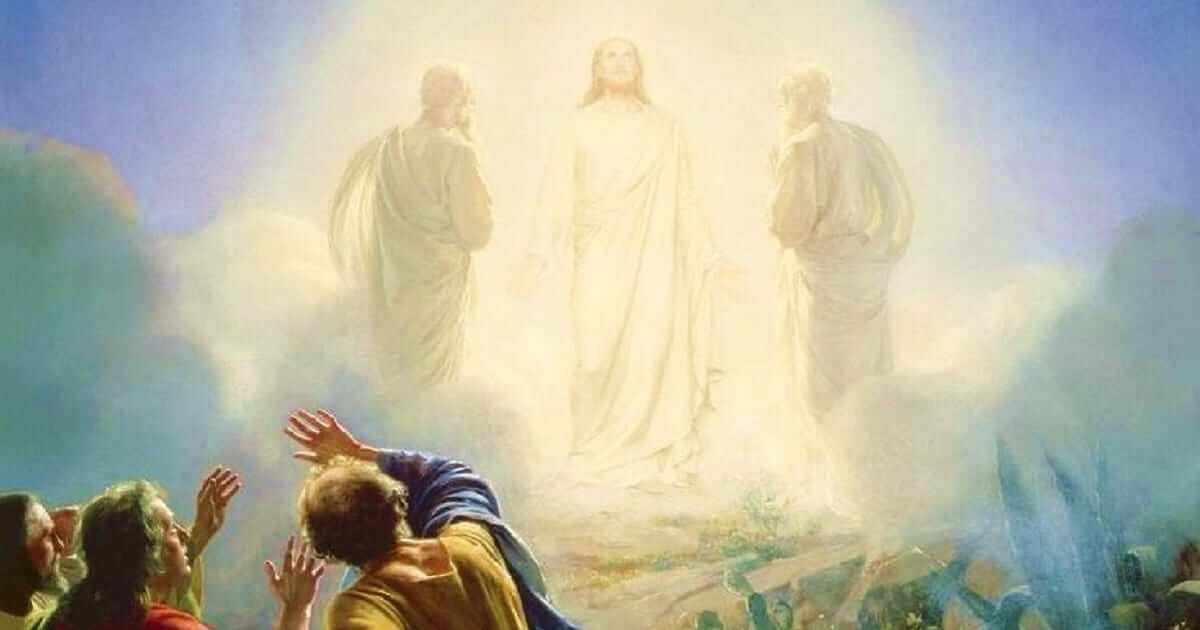
It Is Well With My Soul~The Rt. Rev. Michael Beckett, OPI

Oh, Y’all……   What a week for so many people.  The devastation and loss of life because of that hurricane.  Wow.  And then a couple of friends of mine got some not so great news health-wise; another friend is battling cancer…..  And THEN, yesterday I was looking at the scriptures appointed for today (coz that’s kinda what I do, ya know) and the Reading from the Book of Habakkuk in the Hebrew Scriptures (Old Testament dontcha know) included this:

How long, O LORD?  I cry for help
 but you do not listen!
 I cry out to you, “Violence!”
 but you do not intervene.
 Why do you let me see ruin;
 why must I look at misery?
 Destruction and violence are before me;
 there is strife, and clamorous discord.   

Wow, huh?  So many times we feel that God just doesn’t care.  That he has abandoned us.  That we’re alone in our struggles and there is no help to be had. 

Sometimes we want to give up, and we get despondent.  And ANGRY.   And we hurt.   And we wonder WHY in THUNDER God made this happen, or LET this happen.  Just like Habakkuk.

Lemme tell ya about my Daddy.   Daddy was a man of great faith.  Daddy was our family’s pillar of strength.  Our hero.  There wasn’t a thing he couldn’t fix, be it a boo boo in need of a band-aid, my dryer that only worked when Daddy was at my house, (I hated that dryer) or any vehicle made in his lifetime.  And then he got sick.  Way sick.  Terminally ill.  Cancer.  Mesothelioma.  Daddy couldn’t fix it.  The doctors couldn’t fix it.  And my father, being the man he was, said, “It is well with my soul.”  And he started to teach us. 

He taught us that God does not ‘give’ us the terrible, horrible, no good, very bad things that happen in our lives.  Life happens.  Crap happens.  People make poor choices.  Natural disasters occur.  We get sick.  Nowhere does Holy Writ support the claim that any of these things is God’s doing.  What kind of God would we worship if he, indeed, sent us all the trials and tribulations and suffering and horror for which He is blamed?

Many Christians have suffered to the point of death at the hands of executioners, (consider the Holy Martyrs.) Many suffer to the point of death at their own hands. All we can say is that “the sufferings of this present time are not worth comparing with the glory that is to be revealed to us” (Romans 8:18). This may not solve our depression, but it does give us perspective. Even if our depression has caused us enormous doubt, this can be helpful. 

When “bad” things happen to any of God’s children, God is grieved and suffers with us, and this was experienced most vividly in the hurt and suffering of Jesus Christ for all humanity. Any “bad” thing which happens is never the last word. Rather, God is the deepest and last word, and that word is love and eternal life with God.

The Bible clearly teaches that God does not cause us to suffer. For example, the Bible says that when we go through trials, it would be a mistake to say: “I am being tried by God.” Why? Because “with evil things God cannot be tried, nor does he himself try anyone.” (James 1:13) In other words, God never causes the trials we face or the suffering that follows. To do so would be wicked, but “God does not act wickedly.” (Job 34:12.)

If God does not cause us to suffer, then who or what does? Sadly, humans are often victimized by other imperfect humans. (Ecclesiastes 8:9) Additionally, we may face calamities because of “unexpected events”—that is, because of simply being in the wrong place at the wrong time. (Ecclesiastes 9:11) The Bible teaches that ultimately “the ruler of this world,” Satan the Devil, is responsible for human suffering, for “the whole world is lying in the power of the wicked one.” (John 12:31; 1 John 5:19) It is Satan—not God—who causes people to suffer.

God is aware of our suffering. From the very start of human suffering, not a single teardrop has gone unnoticed by our loving Father, whose “watchful eyes” see everything. (Psalm 11:4; 56:8) For example, when his worshippers in ancient times were being oppressed, God said: “I have certainly seen the affliction of my people.” But was he only vaguely aware of their pain? No, for he added: “I well know the pains they suffer.” (Exodus 3:7) Many people have found comfort in that truth alone—the thought that God is aware of everything we suffer, even the trials that we or others may not be aware of or fully understand. (Psalm 31:7; Proverbs 14:10.)

God feels for us when we suffer. Our Heavenly Father is not only aware of human suffering but also deeply moved by it. For example, God was sincerely troubled when his ancient worshippers faced trials. “During all their distress it was distressing to him,” says the Bible. (Isaiah 63:9) Although God is vastly superior to humans, he feels empathy for those who suffer—as if their pain were in his heart! Indeed, “Our Heavenly Father is very compassionate and merciful.” (James 5:11) Additionally, Our Heavenly Father helps us to bear our suffering. (Philippians 4:12, 13.)

We must also remember that our Lord Jesus knows what it is to suffer, to mourn.  He wept at the grave of Lazarus, he wept over Jerusalem, and he suffered horrifically during His Passion.

God will end all human suffering. According to the Bible, God will bring an end to the suffering of every human on the planet. By means of His Heavenly Kingdom, God will drastically change the human condition—for the better. Regarding that time, the Bible promises that God “will wipe out every tear from their eyes, and death will be no more, neither will mourning nor outcry nor pain be anymore. The former things have passed away.” (Revelation 21:4) What about those who have already died? God will bring them back to life here on earth so that they too can enjoy life free from suffering. (John 5:28, 29) Will anyone be plagued by painful memories of past suffering? No, for Our Heavenly Father promises: “The former things will not be called to mind, nor will they come up into the heart.” (Isaiah 65:17.)

When he was first diagnosed, Daddy said that, if he got better, he got more time with Momma.  If he didn’t, he got to see Jesus.  It was a win/win for him.   And he said, “It is well with my soul.”

Let me share the lyrics to “It Is Well With My Soul” with you.

It Is Well With My Soul  (Song by Bob Kauflin and Sovereign Grace Music)

When peace like a river attendeth my way

When sorrows like sea billows roll

Whatever my lot, Thou hast taught me to say

It is well, it is well with my soul

It is well With my soul

It is well, it is well with my soul

Though Satan should buffet, though trials should come

Let this blest assurance control

That Christ has regarded my helpless estate

And has shed His own blood for my soul

It is well With my soul

It is well, it is well with my soul

My sin, oh the bliss of this glorious thought

My sin, not in part, but the whole

Is nailed to the cross, and I bear it no more

Praise the Lord, praise the Lord, O my soul

It is well With my soul

It is well, it is well with my soul

And Lord, haste the day when my faith shall be sight

The clouds be rolled back as a scroll

The trump shall resound, and the Lord shall descend

Even so, it is well with my soul

It is well With my soul

It is well, it is well with my soul

‘Cause of You, Jesus, it is well

It is well With my soul

It is well, it is well with my soul

Songwriters: Christopher C. C. Stafford / Philip Paul Bliss

It Is Well With My Soul lyrics © Bethel Music Publishing, Capitol CMG Publishing, Integrity Music, Universal Music Publishing Group, Walt Disney Music Company, Warner Chappell Music, Inc

I guess what my point here is, no matter what happens to us, God is with us.  We may not see him.  We may not hear him.  But he is there for us to give us peace.  To comfort us.  To help us say, “It is well with my soul.”

Amen.
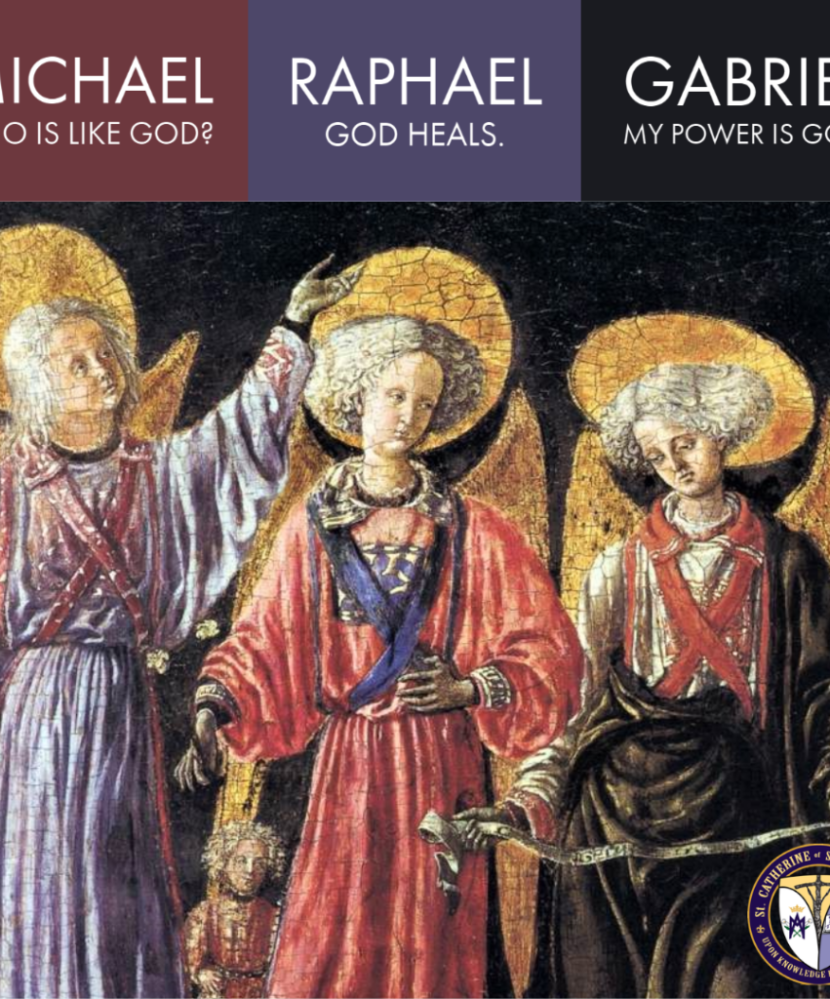
The Feast of the Archangels~Br. Milan Komadina,Novice

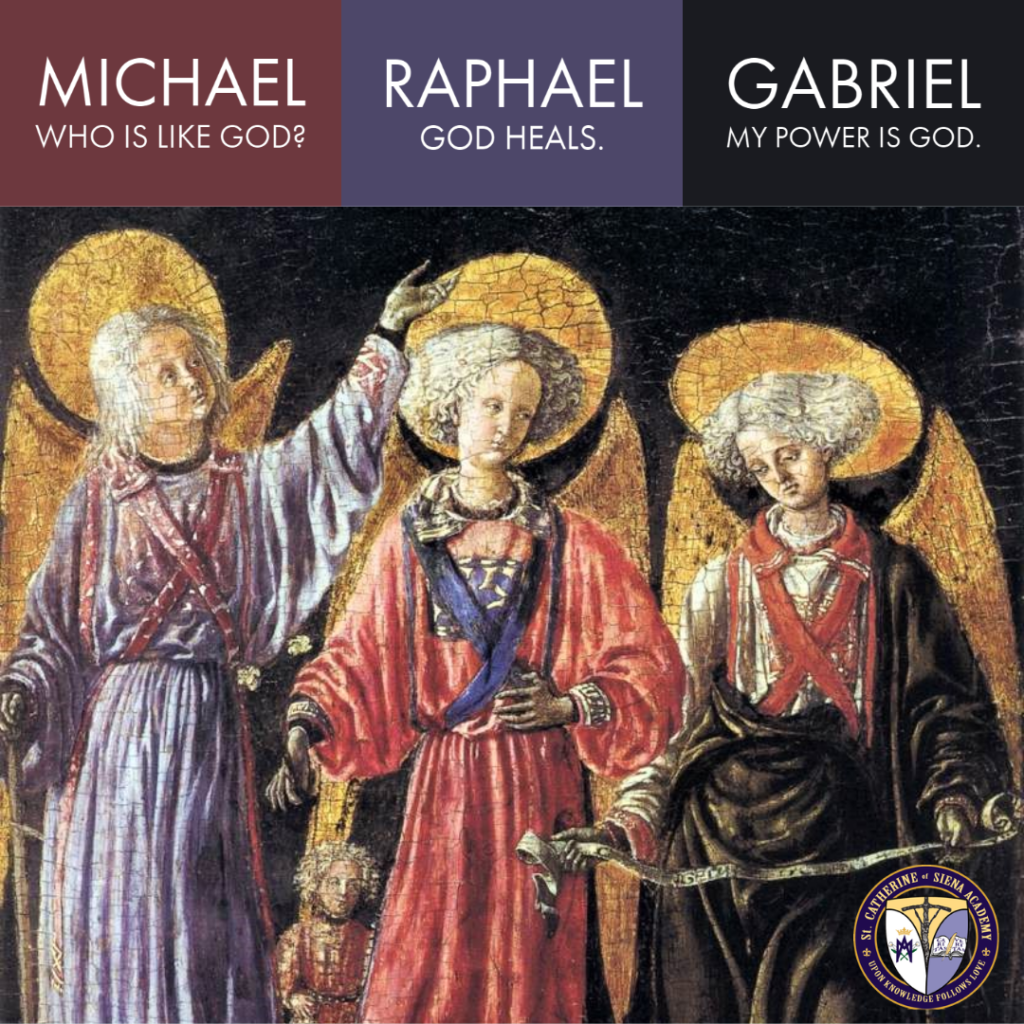
Today we commemorate archangels Michael, Gabriel and Raphael. In the past I didn’t know much about them. And in order to write this sermon I investigated and I found out interesting information that is useful for all of us who are Christian. In my native country, however, people celebrate Saint Archangel Michael as a special saint. There is a tradition called – Slava which is the day when family celebrate a saint or an angel believing that they are their family protector. My grandparents also celebrate Slava in commemoration of Saint Archangel Michael. Let me say a bit more about this custom. Slava (Serbian Cyrillic: Слава, lit. ‘Glory, Celebration’, pronounced [ˈslâʋa]) is a tradition of the ritual of glorification of one’s family’s patron saint, found mainly among Serbian Orthodox Christians. The family celebrates the Slava annually on the saint’s feast day. During the year there are hundreds of saints, but the most of the Slava celebrations occur during the winter. Dates and saints that are most common are: November 8th Sveti Dimitrije (St. Demetrius ), November 21th Sveti Arhanđel Mihailo (St. Archangel Michael), December 19th Sveti Nikola (St. Nicolas). This custom of honoring a family patron saint, celebrated chiefly by the Serbs, but also by some Macedonians, Montenegrins, Bulgarians and Gorani. If we look further, angels are not only celebrated in Orthodox Church. They are celebrated worldwide. If we investigate more we can find out more details in Christian sources about angels and demons.

Who are angels in Christianity?

Angels are represented throughout Christian Bibles as spiritual beings intermediate between God and humans: “Yet you have made them [humans] a little lower than God, and crowned them with glory and honor.” (Psalms 8:4–5). Christians believe that angels are created beings, based on (Psalms 148:2–5; Colossians 1:16). There are 4 types of angels: First Sphere, Seraphim, Cherubim and Thrones. However, chapter 20 of the Book of Enoch mentions seven holy angels who watch, that often are considered the seven archangels: Michael, Raphael, Gabriel, Uriel, Saraqael, Raguel, and Remiel. The Life of Adam and Eve lists the archangels as well: Michael, Gabriel, Uriel, Raphael and Joel. It is also good to know about bad (fallen) angels who are called demons. 7 fallen angels are named after entities from both Christian and Pagan mythology, such as Moloch, Chemosh, Dagon, Belial, Beelzebub and Satan himself. Following the canonical Christian narrative, Satan convinces other angels to live free from the laws of God, thereupon they are cast out of heaven. Some medieval scholars of demonology ascribed to a hierarchy of seven archdemons the seven deadly sins: Lucifer (Pride); Mammon (Avarice); Asmodeus (Lechery); Satan (Anger); Beelzebub (Gluttony); Leviathan (Envy); and Belphegor (Sloth).

In today reading we read: Daniel 7:9-10, 13-14, Revelation 12:7-12 and John 1:47-51 where angels and archangels are mentioned, too. I would like to share these verses in order to let us learn more about the Bible prospect of angels.

Daniel 7:9-10, 13-14

I beheld till the thrones were cast down, and the Ancient of days did sit, whose garment was white as snow, and the hair of his head like the pure wool: his throne was like the fiery flame, and his wheels as burning fire. A fiery stream issued and came forth from before him: thousand thousands ministered unto him, and ten thousand times ten thousand stood before him: the judgment was set, and the books were opened.

In my vision at night I looked, and there before me was one like a son of man, coming with the clouds of heaven. He approached the Ancient of Days and was led into his presence. He was given authority, glory and sovereign power; all nations and peoples of every language worshiped him. His dominion is an everlasting dominion that will not pass away, and his kingdom is one that will never be destroyed.

Revelation 12:7-12

Now war arose in heaven, Michael and his angels fighting against the dragon. And the dragon and his angels fought back, but he was defeated, and there was no longer any place for them in heaven. And the great dragon was thrown down, that ancient serpent, who is called the devil and Satan, the deceiver of the whole world—he was thrown down to the earth, and his angels were thrown down with him. And I heard a loud voice in heaven, saying, “Now the salvation and the power and the kingdom of our God and the authority of his Christ have come, for the accuser of our brothers has been thrown down, who accuses them day and night before our God. And they have conquered him by the blood of the Lamb and by the word of their testimony, for they loved not their lives even unto death. Therefore, rejoice, O heavens and you who dwell in them! But woe to you, O earth and sea, for the devil has come down to you in great wrath, because he knows that his time is short!

John 1:47-51

When Jesus saw Nathanael approaching, he said of him, “Here truly is an Israelite in whom there is no deceit.” “How do you know me?” Nathanael asked. Jesus answered, “I saw you while you were still under the fig tree before Philip called you.” Then Nathanael declared, “Rabbi, you are the Son of God; you are the king of Israel.” Jesus said, “You believe because I told you I saw you under the fig tree. You will see greater things than that.” He then added, “Very truly I tell you, you will see heaven open, and the angels of God ascending and descending on the Son of Man.

I would like to conclude that in one hand we have fallen angels who are tempting us. Many sins that we commit we do with demons` help even though we might not be aware of it. Here are their names and sins they help us to commit – : Lucifer (Pride); Mammon (Avarice); Asmodeus (Lechery); Satan (Anger); Beelzebub (Gluttony); Leviathan (Envy); and Belphegor (Sloth). But as Christians we are blessed with angels and archangels who are also praying for us and helping us in doing well. As mentioned in chapter 20 of the Book of Enoch there are seven holy angels who watch, that often are considered the seven archangels: Michael, Raphael, Gabriel, Uriel, Saraqael, Raguel, and Remiel. This means that we should also pray to archangels and angels the same way that we pray to saints and Holy Mary in order to pray for us and to help us in our daily life. Wishing you a blessed celebration of archangels in the name of the Father and of the Son and of the Holy Spirit. Amen.

Prayer to Your Guardian Angel

Angel of God,

my guardian dear,

To whom God’s love

commits me here,

Ever this day,

be at my side,

To light and guard,

Rule and guide.

Amen.

(‘From infancy to death human life is surrounded by their (the angels) watchful care and intercession. Beside each believer stands an angel as protector and shepherd leading him to life. Already here on earth the Christian life shares by faith in the blessed company of angels and men united to God. ‘ – from the Catechism of the Catholic Church; 336.)

You Have Time? ~ The Rev. Frank Bellino, OPI

There were two major league baseball players, a catcher and a pitcher. They were not only good friends but also men of faith. They both loved baseball so much, that they could not imagine being happy in heaven if there were no baseball there. So, they made a pact that whoever would die first would try to come back and report whether there was baseball in heaven or not.

Shortly after this agreement, the catcher suddenly died and entered his eternal reward. A couple months later, being a man of his word, he appeared in a dream to his friend. “I have good news and I have bad news,” he said. “Which do you want to hear first?” The pitcher responded, “I’ll take the good news”. “Well, the good news is this: there definitely is baseball in heaven. The field is perfect, the crowd is always supportive, and I play every day.” “Wonderful,” said his friend. “What’s the bad news?” “Well, the bad news is, I’m looking at the line-up for tomorrow’s game, and you are scheduled to pitch.”

It is going to happen to all of us sooner or later, with warning or unexpectedly. We will need to pass from this life to the next and make an account of the life we have lived. That is why it would be wise for us to listen to Jesus’ teaching in today’s parable. In this disturbing but important parable we hear how a rich man did not reach eternal life, even though he had been abundantly blessed.

Why did he fail? There is nothing in the parable that shows he was a dishonest man or a mean man. Nothing that says he was unthankful for what he received. He seemed to be a person who enjoyed life and who shared what he had with his family and friends as he feasted sumptuously every day. Nor is there anything in the parable that shows that he mistreated the poor man Lazarus who was at his gate. He did not insult him or abuse him. In fact, it seems that he never even noticed him.

This is what I would suggest is the failure of the rich man: he did not notice Lazarus at his gate. The two of them did not live far apart. Lazarus was sitting at his very door. Yet the rich man lived his life isolated from the poor man. There was a gap between them. The rich man lived his life without noticing the poor man who was close at hand. After his death, the rich man certainly noticed Lazarus. Not only did he notice him, but he wanted to bridge the gap between them. He begged that Lazarus would bring but a bit of water to cool his tormented tongue. But after death we discover that the gulf becomes a chasm, and it is no longer possible to cross it.

Obviously then, the point of the parable is to notice Lazarus at our door and to reach out to him while there is still time.

Lazarus is at our gate. He is one of the more than one million children who are homeless in America, who sleep every night on our streets. He is one of the many fellow Americans who are afflicted with and dying from AIDS. Lazarus is at our door. She is one of the millions of Americans who have no access to health care, who must choose between buying her heart medicine and putting food on her table. Lazarus is at our gate. He is an acquaintance who lost his job through downsizing and has just taken out a second mortgage. She is an elderly woman who is in a nursing home now for ten years where no one visits.

Lazarus is at our door. He is the person in our school or in our office that cries out for respect but must face ridicule every day. She is the person struggling with mental illness who comes off a bit odd and is discounted as a person of value. He is our next door neighbor who recently lost his wife of forty years and hangs around the driveway as we come home, looking for company.

Jesus calls us to notice Lazarus at our door, and to reach out and cross the gulf that isolates us from him. He calls us to do this in a very personal and specific way. It is important to notice in the parable that the rich man did not ignore all the beggars in Israel, but only Lazarus who was closest to him.

We cannot be expected to reach out to the millions of people without health care or the tens of millions who are dealing with grief. But we can be expected to notice the Lazarus who sits at our gate. Who is he? What is her name?  You know it. The name is coming to your mind right now. That person is the person that the gospel calls you to recognize, to notice, and to touch. Do not ignore him or her. Do not pretend that the need of one so near to you is not your concern.

There is good news and bad news in today’s gospel. The bad news is that we are very likely ignoring people who are close to us and who are in need. The good news is that there is still time to change. Lazarus is at our door. Jesus calls us to notice him and let our love have influence. Reach out, cross the gulf that presently separates you from him. After death, it will be too late.

Serving Two Masters~The Rev. Frank Bellino, OPI

Today the Mormon Church no longer practices polygamy, but at the end of the nineteenth century there were plural marriages in Utah. The great American humorist Mark Twain was having a lively discussion with a Mormon about the practice of polygamy. The Mormon challenged Twain to come up with any Bible passage that expressly forbade a man to have two wives. “Nothing easier,” Twain replied, “No man can serve two masters.” (“Mark Twain | Bible.org”)

 In today’s Gospel of Luke, we hear Jesus challenge us to ask ourselves if we are serving two masters. Are we serving God or money? Which one is our master? Jesus tells a story that teaches us we cannot serve two masters – God and money. We have to choose one.

 Over the past few weeks, we have been hearing some very challenging parables and instructions from Jesus about how we are to live and relate to one another. Don’t invite people to a party who will invite you in return.

Rather invite those who can’t repay – the poor, the needy, the marginalized. Time and again we see him being showing partiality to the poor or associating with tax collectors and sinners and recommending that others do the same. Many would say that what Jesus is proposing is revolutionary, or so idealistic that it could not possibly be done. And when he adds such outrageous statements as “No one can be my disciple who does not hate father, mother, brother, sister, even his own life,” we might be tempted to ask, as I’m sure the apostles were, “Where is he coming from? What’s it all about? And does he really mean it?”

 Well, he is coming from God, and it’s all about the Kingdom of God, and yes, he does really mean it. The question is, just what is it that he really means? What he really means is to set up a new world order, a really new world order. What he means is to change the world. That’s why he came, and he is telling us that we have to do radical things to accomplish that. Does he really want us to hate our parents? No, that’s just a concrete way of saying that nothing in this world is more important than following him, than joining the work of establishing the kingdom.

 He was not the first to talk this way, to say things that shook people up. The prophets did the same thing. In our first reading today, we hear the prophet Amos say some harsh things about certain practices of his time. Amos has been called the prophet of social justice because he is always calling attention to injustices in his society, particularly the treatment of the poor. And today it’s about cheating. He castigates merchants who fix scales and devalue money so the poor will have to pay more than the goods they are buying are worth. He is fierce in his denunciation of such tactics. He winds up saying, “The Lord has sworn by the pride of Jacob, never will I forget a thing they have done,” a statement that seems to foresee dire things for people who grow rich on the backs of the poor.

 Then in the Gospel passage Jesus tells a story about someone who cheats. A steward has been growing rich by mishandling his master’s property. Sounds pretty contemporary. But when he is found out and threatened with punishment, he is very wily in finding ways to assure his security for the future. Surprisingly when the employer returns to settle matters and finds how clever the steward has been in dealing with the debtors, he praises him and so, it seems, does Jesus. This, of course, raises all sorts of problems for us who read it today, as it did when Luke wrote his Gospel. Is the employer and is Jesus praising this man for his dishonesty?

That could hardly be the case. Indeed, to prevent misunderstanding, Jesus says, “The children of this world are more prudent in dealing with their own generation than are the children of light.”  Jesus is using the story then not to tell us to imitate the steward in his dishonesty but in his prudence and cleverness in taking care of himself. We, however, should do it not for material gain, but to do our part in furthering the Kingdom of God.

 A few weeks ago, in the Gospel Jesus told the crowds who were traveling with him, and he told us as well, that nothing less than complete commitment on our part will satisfy him. And he warned them, and us, that we should know what we are getting into if we accept the challenge. I am sure it was not easy to be a committed follower of Jesus in the first century when Luke wrote his Gospel. And it certainly is no easier today.

Christian commitment means trying to change the world, and when we consider all the crises we face in our world today, our temptation is to throw up our hands and say, “What’s the use? What can I do to try to change things?”

 Well, it’s true. Alone we are pretty helpless. But the good news is that we are not alone. We are not simply individuals trying to carry out the impossible. First of all, we are members of the Body of Christ. We have one another; we have all those who profess, not only the Catholic faith, but anyone who claims to be a Christian. Together there is much that we can do that we could not do alone. And even more important than that, we have Jesus as our leader.

Following in the footsteps of St, Dominic we share a common call to spread the Gospel of Jesus Christ. St. Peter encouraged us to “place our gifts at the service of one another” (1 Peter 4:10) so our call is expressed in many different ways and in many different ministries depending on individual gifts.

The Exaltation of The Holy Cross~The Very Rev Lady Sherwood, OPI

Reading I: Nm 21:4b-9

Responsorial Psalm: 78:1bc-2, 34-35, 36-37, 38

Reading II: Phil 2:6-11

Gospel: Jn 3:13-17

Liturgical Colour: Red.

Today, we come together to commemorate the feast of the exaltation of the Holy Cross. We celebrate this feast day  on September 14th of each year.

Today’s Feast day was originally established to commemorate the anniversary of the finding of the True Cross of Jesus in Jerusalem on September 14, 326 by St.Helen, who was the mother of the Emperor Constantine.

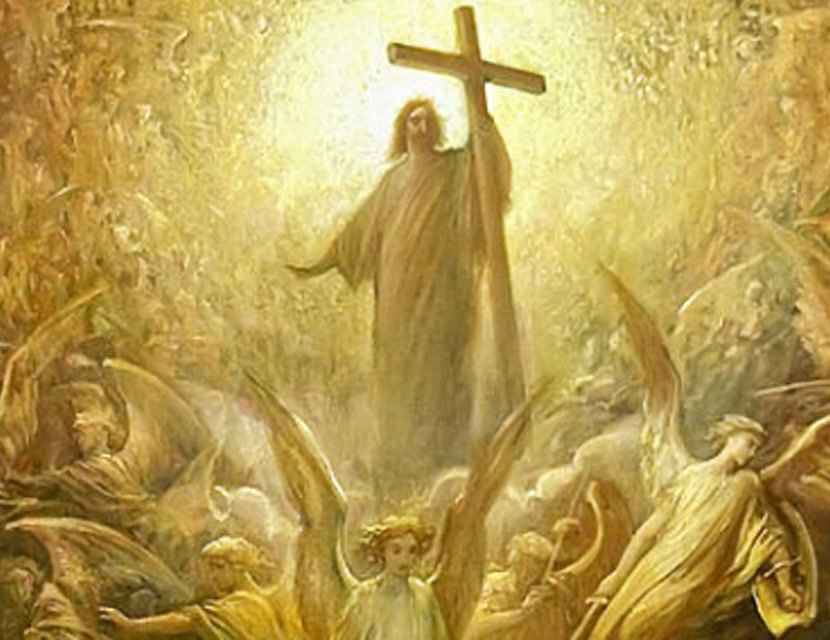
The cross is an amazing and wondrous symbol of contradiction.  The cross has become the most recognised religious symbol in the entire world, it is the ultimate symbol of God’s love, forgiveness and redemption. In the ancient Roman world, historically, the cross was the symbol of degradation, suffering, of torture, and execution. Death by crucifixion was extremely brutal. Now the cross is the ultimate symbol of God’s love and of our salvation.

Today the Church gives all of us the place at which we ought to stand – by the cross of Our  Lord and Saviour, Jesus Christ.

And from there we can move not only the earth, but can storm heaven as well!

From the cross of our Lord, the gates of hell are shattered, the devil and his angels are disarmed of their power and eternal death is totally destroyed.

From the cross- the people who dwell in darkness see a great light – the glory of God shining forth from the face of Christ;

From the cross – a host of captives are set free and the ancient gates are lifted up high.

From the cross- sin will be removed from our hearts and our minds lifted to heaven.

So must the son of man be lifted up, so that everyone who believes in him may have eternal life (Jn: 3:15)

In our first reading today, we get the description of how God healed the complaining Israelites through the brazen serpant. In the second reading, we see how St.Paul explains how God Exalted Jesus for his self-emptying on the cross for our salvation by granting him resurrection.

In todays Gospel, answering the question raised by Nicodemus, Jesus explains how he is going to save the world by his death on the cross. Jesus cites the example of how brazen serpant raised by Moses representing the healing power of God, saved the Israelites in the desert from snake bites.

So comparing his cross to the serpent of bronze lifted up by Moses, Jesus tells us that those who are bitten by the serpant of sin can be healed by a look of faith to the ever forgiving cross.

At the cross of Jesus there were three men looking at him: two sinners, the criminals hanging in crucifixion near him, and an unbeliever, the centurion. One of the criminals asked him: “ Aren’t you the Messiah? Then save yourself and us. “ But the other one rebuked him: “ Have you no fear of God, seeing you are under the same sentence? We deserve it after all. We are paying the price for what we’ve done, but this man has done nothing wrong”. The he said: “Jesus remember me when you enter upon your reign”. And Jesus replied this: I assure you; this day you will be with me in paradise”. Notice the two looks: the look of the impenitent and the look of the repentant. The third one who looked at Jesus on the cross was the centurion. We read in the Gospel according to saint mark: “ the centurion who stood guard over him, on seeing the manner of death, declared: ‘clearly this man was the son of God” ( Mk 15:39)

The feast of the exaltation of the cross provides us with the opportunity to remember, in a special way, Jesus’ passion, and the significance of his death for us upon the cross. Through the Holy Cross, God has entered into our suffering. The good news is that when we suffer those earthly trials and crosses from which it is humanly impossible for us to escape, Jesus our Lord is intimately there with us in the midst of all our sufferings.

The cross is the eternal hope of Christians. The cross is the staff for the lame. The cross is the deposing of the proud. The cross is the hope of those who despair.  The cross is the haven for the bestormed. The cross is comfort for those who mourn. The cross is the glory of all of mankind. The cross is the crown of elders. The cross is the light for those who sit in darkness. The cross is freedom for slaves, it is the wisdom for the ignorant. The preaching of prophets and the joy of priests. The foundation of the church. The cleansing of the lepers, the rehabilitation of the enfeebled. Bread for those who hunger, a fountain for the worst of thirsts.

How splendid and wonderful is the cross of Christ!

It brings life, not death

Light, not darkness.

Paradise, not its loss.

It is the wood on which Our Lord and Saviour, like the greatest of warriors, was wounded in hands and feet and side , but who thereby healed all our wounds.

A tree destroyed us in the beginning and, a tree has now brought us salvation from death.

Say What? ~ The Rev. Frank Bellino, Novice

Sometimes Jesus says the most startling things. When you hear them, you want to stop and say, “Does he really mean that?” You know that business about loving your enemies, doing good to those who hurt you, or turning the other cheek if someone slaps you on one cheek? Or even worse: “If your right eye scandalizes you, pluck it out. If your right hand scandalizes you, cut it off.” And in today’s Gospel passage, “Unless you hate your father, mother, brothers, and sisters, and even your own life, you can’t be my disciple.”

 I can just imagine those who were following him looking at one another in amazement, especially Peter and the others who were so close to him, and saying to themselves, “Where is he coming from? What’s it all about, and does he really mean it?”

 Well, he is coming from the Father and it’s all about the Kingdom of God and yes, he does really mean it. The question is: what is it that he really means?  Love your enemies? Well, your enemies are human beings, too, so treat them that way. As much as it may go against the grain. Maybe you’ll find that they cease to be enemies and become friends. Turn the other cheek? Don’t return violence for violence. The only thing that does is create more violence. Don’t we have plenty of examples of that throughout history and especially in our world today? Is Jesus saying we should just passively accept whatever harm or injustice someone or even society commits against us? No, not at all. What he is urging is that we do our best to be creative and find some non-violent way to deal with unjust situations.

 So, what about our Gospel? Hating father, mother, brothers, and sisters? Well, by this time it should be clear that Jesus uses overemphasis and concrete language, first of all to catch our attention and then to say in concrete language what we would put in more abstract terms: there is nothing in this world that is more important than responding to the call to follow Jesus. And be aware that he is not just talking to the apostles or those who might have a special vocation. Luke tells us that great crowds were following him. So not only does he really mean it, he means it for everybody. Everybody is called to be a disciple. And Jesus pulls no punches in letting us know that accepting to be a disciple, accepting to follow him means letting nothing stand in the way. It also means a willingness to suffer with him and to be quite clear about what the cost will be.

 It seems pretty clear that what Jesus is trying to do with these very startling statements is produce change: change in the way people think; then change in the way people act; and finally change in the way the world works. When you put this passage together with the one we heard last week about taking the lower place at a banquet and inviting to our own parties not those who can repay us but the poor, the weak, the lame, those who cannot afford to return the favor, we find a Jesus who is trying to create a new world order, a really new world order. One that is based, as we saw last week, on humility, and the courage to turn accepted social structures upside down, and complete devotion to the person and cause of Jesus.  So, Jesus was looking for a change. But so were those great crowds that were traveling with him. They wanted a change, too. There were the hungry who wanted to be fed; the sick who wanted to be healed; the poor who wanted to be rich; the zealots and revolutionaries who wanted to be rid of the Roman occupiers and to set up a new kingdom of Israel.

 But Jesus was thinking of something different. Oh, he was thinking of a kingdom all right, the kingdom of God, and he was asking for a radical response.  Paul gives us a good example of that kind of radical response. He has given up everything to answer the call of Christ. In our second reading today, he is writing from prison where he is suffering for the sake of the Gospel. But he writes this letter to Philemon on behalf of Onesimus, Philemon’s slave, who has been a fellow prisoner with Paul. Paul speaks to Philemon about receiving the slave, Onesimus, as a brother in the Lord. It’s a good illustration of how this new Kingdom, this new family of God, crosses lines of status and power, making all members brothers and sisters in Christ, children of the same God.

 When Jesus speaks about family ties and possessions in the Gospel passage, he is primarily asking for a change in mindset. All of us can begin to think differently. And then we can begin to act differently. We can be less consumerist, simpler in our tastes. We can begin to find room for others. We can find more time to serve the less fortunate. The doors of our homes and of our hearts begin to be more open. Prayer becomes more real in our lives. It may mean less television and more conversation. It may mean less money for recreation and more for God’s poor. Like Paul we begin to see, perhaps not slaves these days, but at least other races, colors, nationalities, sexual orientation, we begin to see them as our brothers and sisters. And with a certain amount of courage, we may ask others to do the same. This is how we work with God’s grace to establish the Kingdom here on earth. Jesus is asking each and every one of us to work with him, to struggle with him in the work that he has begun but that he left it to us to finish. It’s a noble enterprise, a noble vocation, one that is given to all of us if we want to follow Christ, to really follow Christ.

On Humility~Br. Milan Komadina, Novice

In today`s sermon I would like to say a few words about humility and the importance of being humble in our life. In Sirach 3:17-18 we read wise words saying:

My son, perform your tasks in meekness;
    then you will be loved by those whom God accepts.
The greater you are, the more you must humble yourself;
    so you will find favor in the sight of the Lord.

This is the lesson that I have learnt in my life and that I experience in some way. Last month I moved to Germany (Frankfurt). And I started working a very difficult job at the factory. This was a big life lesson for me to learn how to be humble and modest in terms of being able to do anything regardless of our qualification. My friends know how hard I was studying to be the best student for 5 years. Gaining my bachelor degree, specialist degree and at last master degree. I was hoping to get a good job based on my qualifications. I am 35 years old now and in my home country, Serbia, the life is very hard and youngsters usually finish universities and cannot find a job afterwards. This is why I had to move in another country seeking for a better life and a job. Unfortunately my language level of German is momentarily very basic and I cannot find a job which is for my qualification but the job for people without any qualification. Such as cleaning or production at the factory.

You can guess, this is very difficult for a highly educated person who was usually working in the office and with a laptop and a pen in his hands. But for us, who are Christians, we know that in God`s eyes all people are the same. He does not see people through their qualifications but through the perspective of what kind of person they are. He does not look at the diploma that we have, but he rather looks straight to our hearts. This is why I would like to share how being modest and humble is very important for all of us. Jesus is the example of the greatest humbleness. And we should always follow his example. But there is always hope that if we are humble in our life we could expect to be at the better place in the future. And this is what I also believe. Today we also read Luke 14. And there is a place which is in relation with humbleness that I would like to share with you also. Verses 7 to 14:

When he noticed how the guests picked the places of honor at the table, he told them this parable: “When someone invites you to a wedding feast, do not take the place of honor, for a person more distinguished than you may have been invited. If so, the host who invited both of you will come and say to you, ‘Give this person your seat.’ Then, humiliated, you will have to take the least important place. 10 But when you are invited, take the lowest place, so that when your host comes, he will say to you, ‘Friend, move up to a better place.’ Then you will be honored in the presence of all the other guests. 11 For all those who exalt themselves will be humbled, and those who humble themselves will be exalted.” 12 Then Jesus said to his host, “When you give a luncheon or dinner, do not invite your friends, your brothers or sisters, your relatives, or your rich neighbors; if you do, they may invite you back and so you will be repaid. 13 But when you give a banquet, invite the poor, the crippled, the lame, the blind, 14 and you will be blessed. Although they cannot repay you, you will be repaid at the resurrection of the righteous.”

How we could know that we are on the right place? Simply by reading and obeying carefully what is written in the Bible. Normally, we all want to be at the better place and to be in better position. Today I gave my own personal example through my job position. But we can apply this to everything else. A relationship with our partner, friends, family members, colleagues. Sometimes being humble is not easy. But if we are humble we are Christ-like. Because Jesus was humble. And this is what he teaches us. I pray that these words from Luke and from Sirach will be useful to all of you reading this sermon and I would like you to think for a moment about some situation from your own life when you were humble and later you saw how good was it and worthy. God bless you and let us all be humble like Jesus. Amen.

The Narrow Door~The Rev. Frank Bellino

Jesus passed through towns and villages,
teaching as he went and making his way to Jerusalem.
Someone asked him,
“Lord, will only a few people be saved?”
He answered them,
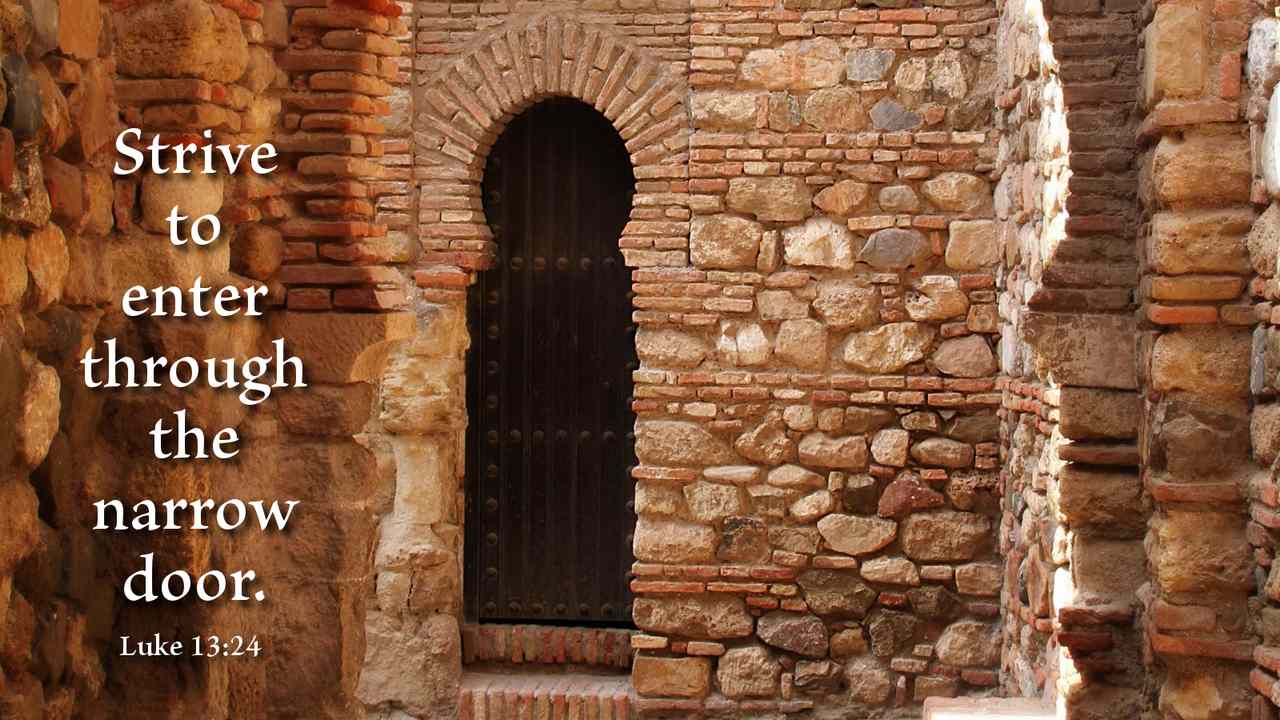
“Strive to enter through the narrow gate,
for many, I tell you, will attempt to enter
but will not be strong enough.
After the master of the house has arisen and locked the door,
then will you stand outside knocking and saying,
‘Lord, open the door for us.’
He will say to you in reply,
‘I do not know where you are from.
And you will say,
‘We ate and drank in your company and you taught in our streets.’
Then he will say to you,
‘I do not know where you are from.
Depart from me, all you evildoers!’
And there will be wailing and grinding of teeth
when you see Abraham, Isaac, and Jacob
and all the prophets in the kingdom of God
and you yourselves cast out.
And people will come from the east and the west
and from the north and the south
and will recline at table in the kingdom of God.
For behold, some are last who will be first,
and some are first who will be last.”

Jesus says, “Try to come in through the narrow door.” Well, once we get to that narrow door, what will be waiting for us on the other side? In other words, what is heaven like? That’s a question we would all like to have answered, wouldn’t we? In the Gospel passage we just heard, Jesus actually gives some indication of what heaven will be like. He speaks as usual in homely pictures. There will be feasting; we will meet with our ancestors; and there will be some surprises.

There will be feasting. That’s not a new idea with Jesus. Isaiah the prophet had said the same thing. He had said that there would be abundance of food and drink and all the world would come to God’s holy mountain to live in peace and happiness where there would be no more war, not even preparation for war. It was a beautiful picture and Jesus picks it up to describe heaven in other places as a wedding feast or a great banquet. Everyone who comes through that narrow door will enjoy all that a feast conjures up: good company, relaxation, satisfaction, the mood of celebration. All in all, a wonderful time to be had by all.

Then we will be with our ancestors. The people Jesus was talking to had a strong sense of ancestry and so he offers them the very appealing picture of meeting up with their great ancestors in the faith, Abraham, Isaac, Jacob, the prophets. It offers us the hope of meeting again our own departed family and friends as well as our forebears who passed on to us the gifts of life and faith down through the centuries. I don’t know about you, but I look forward to meeting many of these people. I find it exciting to think I’ll be able to talk with Cesar and Marcus Aurelius, St. Thomas Aquinas and St. Rita, and of course, Jesus and his mother Mary and our patron, Saint Mary Magdalene. I can’t wait to see St. Dominic the founder of my order.

 I have questions for all of them and it will probably take all eternity just to listen to them all and enjoy what they have to say.  But then there is that third picture. Jesus tells us there will be some surprises there. We may find ourselves sitting down at that heavenly banquet next to people we never expected to see, and on the other hand there may be some who do not make it through that narrow door. What Jesus says is not a threat. It’s a warning. He tells us not to be complacent, not to be too sure of ourselves, and particularly not to judge others. God alone can read the heart and the deepest motives of the mind. God alone can perfectly judge the response we have made to the graces offered and the difficult circumstances that had to be overcome. Many who seem to be first in their manifestation of piety and church-going may be far back in the line when it comes to genuine charity – and charity is the only question in the final test. Love of neighbor.

And we know, don’t we, what the questions will be to see if we qualify to go through that narrow door, to get our passport to heaven, as it were. God is not going to ask us about our sex life or any of those things that seem to preoccupy us in this culture. God isn’t even going to ask us how often we missed Mass on Sunday. Instead, the questions we will hear will go something like this: Did you feed the hungry? Did you give drink to the thirsty? Did you clothe the naked? Did you take in the ones you saw sleeping on the street? Did you visit the imprisoned? Those are the questions we will be asked. And we know that, don’t we? The problem is we tend to get things mixed up. And that’s why we hear those words of warning, “Some who are last will be first and some who are first will be last.” Again, not a threat, just a warning. But it’s a warning that should not upset us or make us sad or worried.

 Jesus wants us to live a life that is full and happy, investing all we have in this human life of ours and that of others, living soberly and simply, generously and carefully, but above all living! That’s what Jesus did on his way to Jerusalem, walking that narrow road, the road less traveled, to that narrow gate of the cross and to the life and the glory to follow. And he invites us to come along, are you ready?

It Is Good~The Feast of the Transfiguration~The Rev. Frank Bellino

A week before the Transfiguration, Jesus had promised to His disciples: “I tell you the truth, some who are standing here will not taste death before they see the kingdom of God come with power.”

The Transfiguration is now part of the fulfilment of this promise which would really be fulfilled at Jesus’ resurrection. The disciples were experiencing a foretaste of the glory and power of God’s kingdom. God gave them this experience to strengthen their faith and to assure them that the Man of Nazareth was really His beloved Son, the promised Messiah.

Peter became so excited with this experience that he wanted to perpetuate that moment. He didn’t want to go down the mountain anymore, back to the problems and challenges of the daily life. He wanted to stay there: “It is good for us to be here! Let us put up three shelters – one for you, one for Moses and one for Elijah.”

It is usually accepted that Mark wrote his Gospel based on the reports he heard from Peter. I can imagine Peter telling Mark about the Transfiguration! It was a unique experience for him, and it touched him deeply. He wrote about the Transfiguration in his first letter as well, confirming the voice they had heard from the Father and the brightness of the light that shone around them.

We are children of God of the new covenant. We know how the story ended with the resurrection and ascension of Christ. We know that Jesus established His kingdom among us. We know that Jesus is now in glory with the Father ad with Moses, Elijah and all other saints. We believe that we will all be there by God’s grace. But for the disciples it was not as easy as it is for us. They couldn’t understand what was to happen: Jesus’ suffering and death. They couldn’t even understand when Jesus spoke about His resurrection! Therefore, Peter wanted to stay there, in glory with Jesus, Moses and Elijah, and his fellows John and James. “It is good for us to be here.”

I – It is good for us…

A) It is good for us to be with Jesus too. This one hour that we spend together in Service is a blessed hour in communion with Jesus! Away from the daily rush, we sit quiet and worship our God. We listen to His voice and partake in His Holy Meal. We believe and confess that Jesus is the Beloved Son of God, our Savior. We sing with angels and archangels: “Holy, Holy Holy!” – The same happens when we read the Bible and pray at home, alone or with our family. It is a moment of peace and of fellowship with God. It is good to be with Jesus!

B) It is good for us to be with Moses too. We need to hear the Commandments, who call us to repentance and show us how to walk according to God’s will. We cannot just take some sweet drink; but we must accept some bitter medicine as well. If people would listen to the 10 Commandments more, the world wouldn’t be as bad as it is. For us it is good to be with Moses; it gives us security; because Moses is not alone, but he comes with Jesus, who reaches His hand to help us as we are unable to obey 100% the Commandments.

C) It is good for us to be with Elijah, the prophet. Elijah called the king and the people of his time back to the true faith. Elijah and the other prophets pointed to the Messiah; and we know that those prophecies were done in Jesus. God is faithful in what He promises. We can be sure about what He promises to us as well. And the biggest promises were done in Jesus promises of forgiveness and eternal life.

D) It is good for us to be with Peter, James and John. They were eyewitnesses of the life, death and resurrection of Jesus. When we read what they wrote in the Bible, it is like to be with them and to enjoy their telling the stories and sharing with us their faith and life experiences. Peter wrote (2 Peter 1:16-18): “For we did not follow cleverly devised stories when we told you about the coming of our Lord Jesus Christ in power, but we were eyewitnesses of his majesty. He received honor and glory from God the Father when the voice came to him from the Majestic Glory, saying, “This is my Son, whom I love; with him I am well pleased.” We ourselves heard this voice that came from heaven when we were with him on the sacred mountain.” This gives us confidence that the Bible is really the Word of God!

II – The end has not come yet

It is good for us to be with Jesus, Moses, Elijah and the apostles, to be strengthened in our faith and in our life. After the Transfiguration Moses and Elijah went back to the glory of God, where all our blessed beloved ones and ancestors are. But the glorious end has not yet come to us. After being with Jesus and His fellows for a while, we must go down the mountain, like Jesus and the disciples after the Transfiguration. Jesus had to face suffering and death, as we will remember it during the Lent Season, which begins this week on Ash Wednesday. We have to face Lent Season in our lives as well. Not like Jesus, because He did the most for us and on our behalf on the cross. But we know that life is not easy. Every one of us has temptations and sufferings to carry. But after being with Jesus and His fellow prophets and apostles, we know and believe that we can lift up our eyes from the darkness and dirt of this world to the glory of the Resurrected Jesus! Like the apostles were comforted in hope remembering the experience on the Transfiguration Mountain, like they were facing persecutions and sufferings, we are also comforted in hope by the glory of the living Christ! Don’t miss the opportunities to be with Jesus and to kneel at His table with your Christian family. God said in our Gospel: “This is my Son, whom I love. Listen to Him!” As we enjoy being here and always with Jesus, He will never forsake us, according to His promise.

In good and in bad times of our lives, He will reach His hand to us and hold us firm, until we will be with Him, with Moses, Elijah, the apostles and all the saints for ever and ever. Then He will accept our wish when we say: Lord, it is good to be here. And He will answer: “Good and faithful servant. Come and share your Master’s happiness!” (Matthew 25:23). Amen.

You Can’t Take It With You~The Rev. Frank Bellino

I once had a conversation with a man, upset with the pro-life movement, who said, “Father, I have a right to die.” Without missing a beat, I replied, “Don’t worry. You won’t miss out on the experience.”

Jesus said something similar in today’s Gospel. “You fool, this night your life will be demanded of you…” (Lk 12:20) Death is not an event we can measure. It measures us. The past two Sundays I have referred to the beginning of our human existence. Today’s readings focus our attention on the end.

We should keep the end of our life before us – always. I’d like to tell you about four men who did this in an extraordinary way. They were World War II Chaplains on a ship called the “U.S.A.T. Dorchester.” None of course wanted to die, but as chaplains they spoke to soldiers about preparation for the eternal life.

On February 3, 1943, as they crossed the North Atlantic Ocean, a torpedo from a German U-boat, struck the Dorchester. In panic, the soldiers scrambled from their beds to the main deck leaving their life-jackets below. Only a few of the lifeboats worked and as the shipped listed, some fell into the icy water.

One of the survivors talked about landing in the water near the ship. Realizing that the ship would soon sink and could drag him under, he swam for all his might. His life preserver had a small red light, which a life boat saw and hauled him aboard. He told about looking back at the ship and seeing other small red lights “like a Christmas tree.” At the bow of the ship stood four dimly outlined figures – none of them showed the characteristic red light. It was reported the four chaplains had given their life jackets to others.

Above the noise of the waves, the soldiers began to hear music. It came from the direction of the four figures. The Jewish rabbi was chanting a prayer in Hebrew. Then a soldier heard a Latin hymn – the Catholic priest, he said, had a beautiful Irish voice. The Protestant ministers sang a soft Gospel hymn. The four chaplains had locked arms. They sang and prayed to encourage the others. Of the 904 men aboard the Dorchester, over six hundred died that night – including the four chaplains.  These chaplains were Methodist minister George L. Fox, Reformed Church in America minister Clark V. Poling, Roman Catholic priest John P. Washington and Rabbi Alexander B. Goode

Some people say they would prefer to die in their sleep. My dad died that way – no sign of struggle when we found his body the next morning. But there is much to be said for the way those four chaplains died – fully awake, opening their hearts to meet God. My grandmother died that way – receiving Holy Communion as Viaticum, minutes before she died. I personally pray for that kind of death.

But, to be honest, none of us knows how or when he will die. Jesus reminds us to be prepared: Of any person – of you or me – this very day, this very night, God may call one’s soul.

Many wish control over their own death. A few years ago, our southern states passed laws allowing physician-assisted suicide. What started out as the right to die quickly morphed into the obligation to die. According to the Oregon Health Division, 63 percent of those who looked for and received physician-assisted suicide gave as their reason that they feared being a burden to their family.

That fear springs from how we define human value. In our culture we see our worth in two ways. First by our ability to enjoy life – and a terminal disease effectively destroys that ability. Secondly by productivity. A dying man does not do things for other people. Instead, he often consumes an enormous number of resources.

But is our worth solely in terms of ability to produce and enjoy? Gilbert Meilaender challenges that utilitarian philosophy with a delightful essay: I Want to Be a Burden to My Children! People chuckle when I mention the article, but it holds a deep truth. I have friends who say that caring for a terminally ill loved one was the most profound experience of their lives. It prompted them to ask, why are we here? What is the source of my value?

The author of Ecclesiastes addressed those questions without flinching. He was a man who had everything: wealth, intelligence, admiration of his colleagues – not to mention attractive women. Yet, speaking in the third person, he declares:

All his days are full of pain, and his work is a vexation, even in the night his mind does not rest. (“Ecclesiastes 2:23 RSV)

These words do not come from a man down on his luck. Like the Buddha, the author of Ecclesiastes belonged to the upper class. Qoheleth possessed a fine intellect, which he devoted to studies. His fellow men esteemed him. But also, like Gautama, he recognized this world cannot satisfy human longing. The more we strive, the more we suffer. No matter how carefree one might be at any moment, we cannot avoid aging, sickness and death.

When feeling dejected, I gain a strange comfort from reading Qoheleth. Perhaps the experience is something like that of a Buddhist meditating on the Four Noble Truths. That kind of resignation holds a deep attraction. Jesus himself calls for it in today’s Gospel. Still, he invites us to one further step: Instead of storing treasures for oneself to grow “rich in what matters to God.” (Lk 12:21)

Once an elderly lady approached a priest. She told him that her husband had recently died, and she was going to make a significant donation to the parish. She then revealed her plan to give the bulk of her estate to the Church. The priest was grateful, but also curious. He mentioned that most people usually will everything to the children. “I know they do,” said the woman. Then she smiled, “but I want my children to be sad when I die!”

Each person of course has to decide what to do with their estate, but one thing is clear. As Jesus points out today, none of us can take it with us. I have done a few funerals, but I have never seen a hearse with U-Haul following it. As Job said, “naked I came into this world and naked I shall depart.”

That is a simple, obvious truth – yet so hard for us to really believe. In the parable Jesus speaks about a man who thought that his riches could bring him security. You and I may not be particularly rich, but we could say things like, “Well, I have my home paid for. I’ve got social security, a small pension. I guess I can relax and enjoy myself.” Jesus might say to us, “tonight your life will be demanded of you.”