
Power! ~ The Rev. Frank Bellino, OPI
There is a story of two politicians engaged in conversation, and one asks the other, ‘But how do you know for sure you’ve got power, unless you abuse it?’ It is clear that this story is intended to illustrate a certain image of politicians.
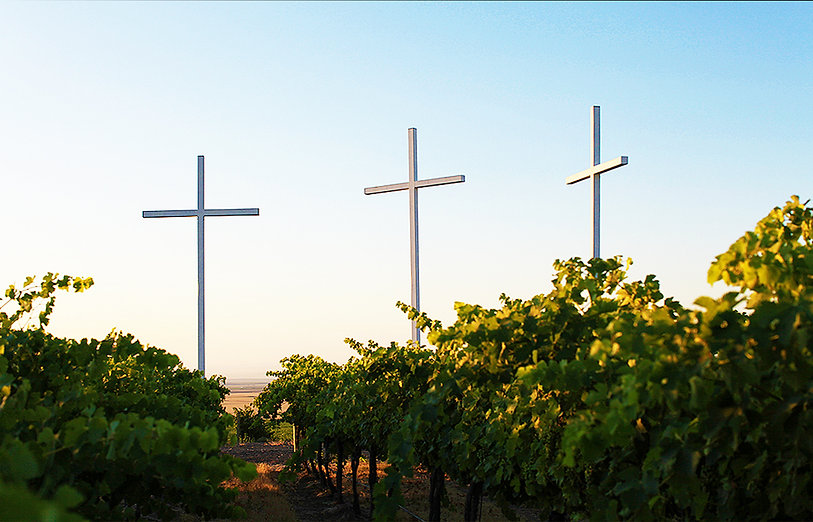
However, it also mentions how we understand the power of God, an issue that is central to Christianity. For Christians to preach a strange Gospel about power: that the power of God was once the most visible in a naked man dying on a tree. If that is the case, then what Christians refer to as ‘power’ must be transformed in the light of this.
What we often understand by ‘power’ is more the misuse of power, using it in ways we should not. The Christian power is that capacity, that openness to love, depicted in the life of Christ, not something to be understood in terms of domination, manipulation, adulation or force. A sign of the depth of our Christianity is how that approach of looking at things has become part of our own lives and how we act.
To love freely and honestly is power because it takes a great deal of effort to not be swayed from loving by circumstances that come our way, or impulses within ourselves. It takes guts. It took immense courage to die on a cross out of love for us. That was powerful. It took immense courage for people throughout the centuries not to give in to inhuman forces.
The history of history is filled with such stories. Edith Stein, a Carmelite nun of Jewish origin, who, when summoned by the Nazis and greeted by the commandant with the words, “Heil Hitler!” replied, “Jesus Christ be praised!” That also was power. It may have caused her delivery to Auschwitz, perhaps the most notorious example we have of how badly we misunderstand what power is.
Today’s Gospel is about the power and the abuse of power. The vineyard is the House of Israel, the servants are the prophets who were sent to Israel; and the delivery of the landowner’s son, referring to the coming of Christ. The tenants are for those who mistreated them, Christ and the prophets, even to the extent of death.
However, the merest reflection should be sufficient to remind us that the themes of this story of violence and abuse of power remain very much part of our present day world. Part of this contemporary story is the power struggles that occur across the globe, as well as the violence we encounter in our neighborhoods and towns.
We must also examine our own attitudes towards the misuse of power. It is easy to shift the attention towards others, as though these issues are not part of our lives. They are. Our lives are filled with the consequences of this: broken and damaged relationships, a loss of ability to hear what others are saying to us, and a deafness to the voice of God in our daily lives.
This may sound sober, but it is actually a story of the greatest hope. It appears depressing when we forget what power really is. When we do this, we consider the tenants in today’s Gospel as powerful. In the light of the Christian faith’s understanding of power, what gives hope is that they are not really powerful, but they are severely weak. They practice the misuse of power, not its exercise. If the consequence of their actions is destruction, then the Christian must respond by proclaiming that the consequence of real power is a victory of the deepest level.
This is to reduce our expectations. However, Christianity does that. At its core, it is the story of a man who died that seemed to be a failure, yet who was vindicated by his Father raising him up. If that is true of Jesus Christ, “the first-born of many brothers and sisters,” then it is true for us also. We view the life of great people like Edith Stein as a triumph, not only because we admire her courage, but because we see in it a powerful overcoming of what is wrong with our world and with ourselves.
What makes this victory an ultimate one, an example of real power, is that we believe that this overcoming will be eternally a result of this victory.
That is our Christian hope, and just one example of how the world looks very different, and for the better, when seen in the light of the death and Resurrection of Jesus Christ.
 The Order of Preachers, Independent
You must be logged in to post a comment.