
No Borrowed Oil at Midnight~The Rev Frank Bellino,OPI
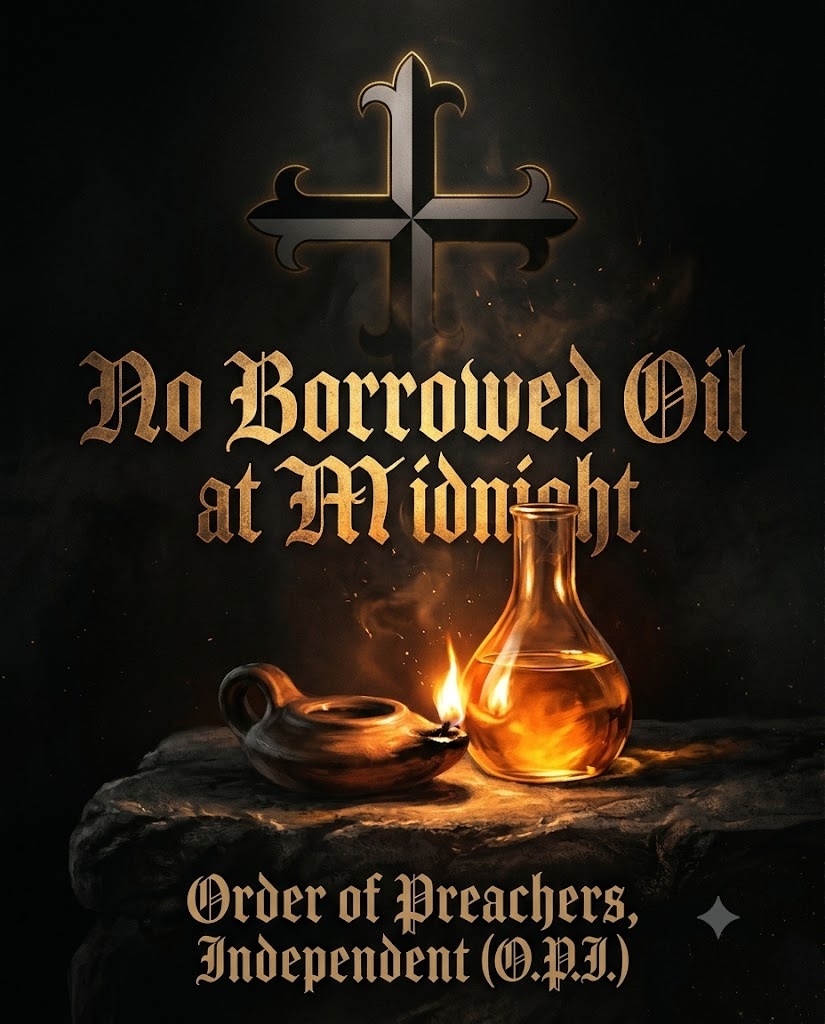
Look at where we are on the calendar. We’re winding down the liturgical year, and the Church always does this on purpose. She forces us to stop looking down at our shoes and look straight ahead at the finish line—at our final destination and the reality of eternity. Today we get the parable of the ten virgins: five who were prepared, and five who got caught completely flat-footed. Now, when most folks hear this Gospel, the first thing they think is: Why didn’t the prepared ones just share? On the surface, it sounds selfish. It sounds uncharitable. But to understand what the Lord is really getting at here, you’ve got to step back into the ancient world and understand what a wedding actually looked like.
Back then, a wedding wasn’t forty-five minutes in a chapel and a quick reception. It was a week-long celebration that stopped the whole village. The big moment happened at night. The groom and his friends would walk over from his house to fetch his bride from her parents. These young attendants were stationed along the road, and their job was simple, but critical: when the groom approached, they were supposed to light the way with torches, making noise, singing, and escorting the bride and groom into the banquet. Those torches weren’t flashlights with long battery lives. They were small lamps or oil-soaked rags on sticks, and they burned through fuel fast. If the groom got delayed—and in those days, between family negotiations and the journey, the groom was always delayed—that oil would run dry. Carrying an extra flask of oil wasn’t extra credit; it was the baseline duty of the assignment.
So when midnight rolled around, the cry went up, and the foolish ones started begging, “Give us some of your oil,” the answer wasn’t cruel, it was just the hard, honest truth: you cannot borrow oil at midnight. In Scripture, that oil stands for something very specific. It stands for a life of good works, personal obedience, repentance, and faithful duty before Almighty God. And folks, that is one thing you cannot borrow from anyone else. When you stand before the judgment seat of Christ, nobody else can step in and stand in that line for you. You can’t borrow your spouse’s prayer life. You can’t skate in on your mother’s faith or your grandparents’ good deeds. You can’t present somebody else’s resume of charity and claim it as your own. When that door opens, the readiness of your soul is strictly between you and Jesus Christ.
Look at how the other readings back this up. In the Book of Wisdom, we’re told that wisdom is clear, unfading, and readily found by anyone who actually seeks it out. Those five wise maidens weren’t geniuses; they simply possessed practical spiritual wisdom. They didn’t just hope for the best; they planned for the wait. They knew true wisdom looks past today’s comfort and gets ready for the long haul. And in Thessalonians, Saint Paul tells a grieving community not to mourn like people who have no hope. Christ conquered the grave. The trumpet will sound. The dead in Christ will rise. This isn’t meant to scare the daylights out of us; it’s meant to shake us awake and give us solid, unshakable hope.
Now, bring that right into our world today. We live in a society where everything is on demand. If you run out of milk, gas, or batteries, you swing into a 24-hour convenience store, or you tap an app on your phone, and somebody drops it on your porch in an hour. We’ve been conditioned to believe that you can leave everything to the last minute and fix it with a quick transaction. The spiritual life does not work on an app. You cannot live six days a week completely distracted, lukewarm, and detached from God, and then expect to have an abundance of oil in your lamp when the Bridegroom knocks. That oil is built up drop by drop, quietly, every single day in the morning prayer you offer before your feet even hit the floor, in having the discipline to swallow your pride and forgive someone who doesn’t deserve it, in doing your duty to your family, your parish, and your neighbor when nobody is handing out medals for it, and in showing up at the Sacraments, letting the Lord forgive your sins and replenish your soul with His grace. Every single time you choose fidelity over laziness, you put another drop of oil in the flask.
So as we walk out these doors today, let’s cut through all the noise and ask ourselves one direct question: If that shout came rolling down your street tonight at midnight—“Behold, the Bridegroom is here! Come out to meet Him!” what would the Lord find inside the vessel of your heart? Would He find an abundance of quiet fidelity, daily prayer, and real love, trimmed and burning, ready to walk into the feast? Or would He find an empty jar full of excuses and good intentions that we kept putting off for tomorrow? Keep your lamps trimmed. Keep your oil full. And stay ready.


You must be logged in to post a comment.