
Category: Dominican Life
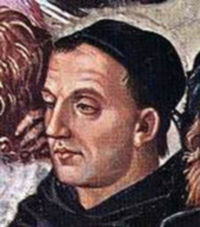
Fra Angelico
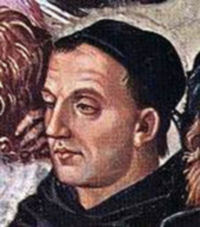
Born Guido di Pietro, Fra Angelico was an Early Italian Renaissance painter described by Vasari in his Lives of the Artists as having “a rare and perfect talent”. He was known to his contemporaries as Fra Giovanni da Fiesole (Brother John from Fiesole) and by Vasari as Fra Giovanni Angelico (Brother John the Angelic One).
Fra Angelico is known in Italy as il Beato Angelico, the term “Il Beato” (“Blessed One”) being already in use during his lifetime or shortly thereafter, in reference to his skills in painting religious subjects. In 1982 Pope John Paul II conferred beatification, in recognition of the holiness of his life, thereby making this title official. Fiesole is sometimes misinterpreted as being part of his formal name, but it was merely the name of the town where he took his vows as a Dominican friar, and was used by contemporaries to separate him from other Fra Giovannis. He is listed in the Roman Martyrology as Beatus Ioannes Faesulanus, cognomento Angelicus—”Blessed Giovanni of Fiesole, nicknamed Angelico”.
Vasari wrote of Fra Angelico: But it is impossible to bestow too much praise on this holy father, who was so humble and modest in all that he did and said and whose pictures were painted with such facility and piety.
Early life, 1395–1436
Fra Angelico was born Guido di Pietro at Rupecanina,[7] in the Tuscan area of Mugello, near Fiesole towards the end of the 14th century and died in Rome in 1455. Nothing is known of his parents. He was baptized Guido or Guidolino. The earliest recorded document concerning Fra Angelico dates from October 17, 1417 when he joined a religious confraternity at the Carmine Church, still under the name of Guido di Pietro. This record also reveals that he was already a painter, a fact that is subsequently confirmed by two records of payment to Guido di Pietro in January and February 1418 for work done in the church of Santo Stefano del Ponte. The first record of Angelico as a friar dates from 1423, when he is first referred to as Fra Giovanni, following the custom of those entering a religious order of taking a new name. He was a member of the Dominican community at Fiesole. Fra, an abbreviation of frate (from the Latin frater), is a conventional title for a friar or brother.
According to Vasari, Fra Angelico initially received training as an illuminator, possibly working with his older brother Benedetto who was also a Dominican and an illuminator. San Marco in Florence holds several manuscripts that are thought to be entirely or partly by his hand. The painter Lorenzo Monaco may have contributed to his art training, and the influence of the Sienese school is discernible in his work. He had several important charges in the convents he lived in, but this did not limit his art, which very soon became famous. According to Vasari, the first paintings of this artist were an altarpiece and a painted screen for the Carthusian Monastery of Florence; none such exist there now.[2]
From 1408 to 1418 Fra Angelico was at the Dominican friary of Cortona where he painted frescoes, now destroyed, in the Dominican Church and may have been assistant to or follower of Gherardo Starnina. Between 1418 and 1436 he was at the convent of Fiesole where he also executed a number of frescoes for the church, and the Altarpiece, deteriorated but restored. A predella of the Altarpiece remains intact in the National Gallery, London which is a superb example of Fra Angelico’s ability. It shows Christ in Glory, surrounded by more than 250 figures, including beatified Dominicans.
San Marco, Florence, 1436–1445
In 1436 Fra Angelico was one of a number of the friars from Fiesole who moved to the newly-built Friary of San Marco in Florence. This was an important move which put him in the centre of artistic activity of the region and brought about the patronage of one of the wealthiest and most powerful members of the city’s Signoria, Cosimo de’ Medici, who had a large cell (later occupied by Savonarola) reserved for himself at the friary in order that he might retreat from the world. It was, according to Vasari, at Cosimo’s urging that Fra Angelico set about the task of decorating the monastery, including the magnificent Chapter House fresco, the often-reproduced Annunciation at the top of the stairs to the cells, the Maesta with Saints and the many smaller devotional frescoes depicting aspects of the Life of Christ that adorn the walls of each cell.
In 1439 he completed one of his most famous works, the Altarpiece for St. Marco’s, Florence. The result was unusual for its times. Images of the enthroned Madonna and Child surrounded by saints were common, but they usually depicted a setting that was clearly heavenlike, in which saints and angels hovered about as divine presences rather than people. But in this instance, the saints stand squarely within the space, grouped in a natural way as if they were able to converse about the shared experience of witnessing the Virgin in glory. Paintings such as this, known as Sacred Conversations, were to become the major commissions of Giovanni Bellini, Perugino and Raphael.
The Vatican, 1445–1455
In 1445 Pope Eugenius IV summoned him to Rome to paint the frescoes of the Chapel of the Holy Sacrament at St Peter’s, later demolished by Pope Paul III. Vasari claims that at this time Fra Angelico was offered by Pope Nicholas V the Archbishopric of Florence, and that he refused it, recommending another friar for the position. While the story seems possible and even likely, if Vasari’s date is correct, then the pope must have been Eugenius and not Nicholas. In 1447 Fra Angelico was in Orvieto with his pupil, Benozzo Gozzoli, executing works for the Cathedral. Among his other pupils were Zanobi Strozzi.
From 1447 to 1449 he was back at the Vatican, designing the frescoes for the Niccoline Chapel for Nicholas V. The scenes from the lives of the two martyred deacons of the Early Christian Church, St. Stephen and St. Lawrence may have been executed wholly or in part by assistants. The small chapel, with its brightly frescoed walls and gold leaf decorations gives the impression of a jewel box. From 1449 until 1452, Fra Angelico was back at his old convent of Fiesole, where he was the Prior.
Death and beatification
In 1455 Fra Angelico died while staying at a Dominican Convent in Rome, perhaps in order to work on Pope Nicholas’ Chapel. He was buried in the church of Santa Maria sopra Minerva.
When singing my praise, don’t liken my talents to those of Apelles.
Say, rather, that, in the name of Christ, I gave all I had to the poor.
The deeds that count on Earth are not the ones that count in Heaven.
I, Giovanni, am the flower of Tuscany.
—Translation of epitaph
Pope John Paul II beatified Fra Angelico on October 3, 1982 and in 1984 declared him patron of Catholic artists.
Angelico was reported to say “He who does Christ’s work must stay with Christ always”. This motto earned him the epithet “Blessed Angelico”, because of the perfect integrity of his life and the almost divine beauty of the images he painted, to a superlative extent those of the Blessed Virgin Mary.
—Pope John Paul II
From various accounts of Fra Angelico’s life, it is possible to gain some sense of why he was deserving of canonization. He led the devout and ascetic life of a Dominican friar, and never rose above that rank; he followed the dictates of the order in caring for the poor; he was always good-humored. All of his many paintings were of divine subjects, and it seems that he never altered or retouched them, perhaps from a religious conviction that, because his paintings were divinely inspired, they should retain their original form. He was wont to say that he who illustrates the acts of Christ should be with Christ. It is averred that he never handled a brush without fervent prayer and he wept when he painted a Crucifixion. The Last Judgment and the Annunciation were two of the subjects he most frequently treated.
—William Michael Rossetti

Blessed Peter Geremia
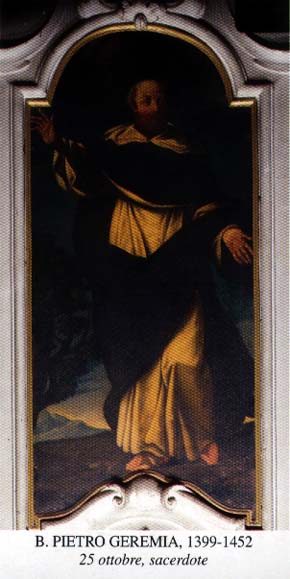
God has a mission for each of us and has given us the gifts to successfully complete the purpose for which He created us. Our job is to discern our role in His creation. The gifts He has given us can be the instrument of our damnation when used against His purposes; when we discern correctly through prayer and spiritual direction these same talents and abilities can sanctify us and those around us. It’s not too late to seek God’s will for your life–in fact, we should attempt to understand His will for our every action, each day, using all the gifts his has given us.
Peter Geremia was unusually gifted. He was sent early to the University of Bologna, where he passed his studies brilliantly, and attracted the attention and praise of all. On the brink of a successful career as a lawyer, he experienced a sudden and total conversion.
Having retired one night, he was pleasantly dreaming of the honors that would soon come to him in his work, when he heard a knock at the window. As his room was on the third floor, and there was nothing for a human to stand on outside his window, he sat up, in understandable fright, and asked who was there.
A hollow voice responded that he was a relative who had just died, a successful lawyer who had wanted human praise so badly that he had lied to win it, and now was eternally lost because of his pride. Peter was terrified, and acted at once upon the suggestion to turn, while there was still time, from the vanity of public acclaim. He went the next day to a locksmith and bought an iron chain, which he riveted tightly about him. He began praying seriously to know his vocation.
Soon thereafter, God made known to him that he should enter the Dominican Order. He did so as soon as possible. His new choice of vocation was a bitter blow to his father, who had gloried in his son’s achievements, hoping to see him become the most famous lawyer in Europe. He angrily journeyed to Bologna to see his son and demanded that he come home. The prior, trying to calm the excited man, finally agreed to call Peter. As the young man approached them, radiantly happy in his new life, the father’s heart was touched, and he gladly gave his blessing to the new undertaking.
Peter’s brilliant mind and great spiritual gifts found room for development in the order, and he became known as one of the finest preachers in Sicily. He was so well known that Saint Vincent Ferrer asked to see him, and they conversed happily on spiritual matters. He always preached in the open air, because there was no church large enough to hold the crowds that flocked to hear him.
Being prior of the abbey, Peter was consulted one day when there was no food for the community. He went down to the shore and asked a fisherman for a donation. He was rudely refused. Getting into a boat, he rowed out from the shore and made a sign to the fish; they broke the nets and followed him. Repenting of his bad manners, the fisherman apologized, whereupon Peter made another sign to the fish, sending them back into the nets again. The records say that the monastery was ever afterwards supplied with fish.
Peter was sent as visitator to establish regular observance in the monasteries of Sicily. He was called to Florence by the pope to try healing the Greek schism. A union of the opposing groups was affected, though it did not last. Peter was offered a bishopric (and refused it) for his work in this matter.
At one time, when Peter was preaching at Catania, Mount Etna erupted and torrents of flame and lava flowed down on the city. The people cast themselves at his feet, begging him to save them. After preaching a brief and pointed sermon on repentance, Peter went into the nearby shrine of Saint Agatha, removed the veil of the saint, which was there honored as a relic, and held it towards the approaching tide of destruction. The eruption ceased and the town was saved.
This and countless other miracles he performed caused him to be revered as a saint. He raised the dead to life, healed the crippled and the blind, and brought obstinate sinners to the feet of God. Only after his death was it known how severely he had punished his own body in memory of his youthful pride (Benedictines, Dorcy).
Born: Palermo, Sicily, Italy, in 1381
Died: March 7, 1432
Beatified: Pius VI confirmed cultus in 1784
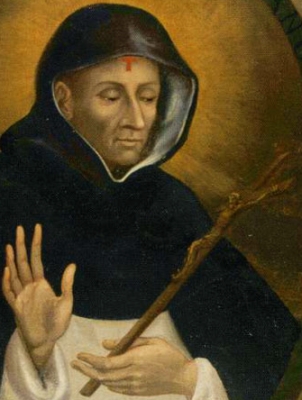
Blessed Jordan of Pisa
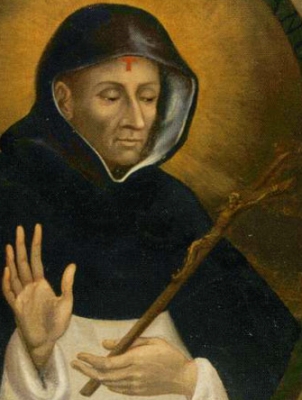
At a time when scholars believed that no colloquial tongue could ever replace Latin as a gentleman’s language, Jordan worked to make Italian the beautiful tongue that it is today. That’s not the reason he was beatified by the Church but it’s interesting and sometimes overlooked.
Jordan attended the University of Paris where he first encountered the Dominican friars in 1276. Four years later, probably after obtaining his degrees, he returned to Italy and took the habit. He began a long teaching career there as soon as he was qualified to do so.
Because of the excellence of his preaching in Florence, Jordan was appointed first lector there in 1305. He seems to have been fascinated with the whole question of preaching as an apostolic tool, and to have been one of the first to make a scientific study of it. He pointed out that the Greek church was “invaded by a multitude of errors,” because the Greeks had no preachers; he could never say enough in praise of Saint Dominic’s farsightedness in establishing an order specifically for preaching.
Jordan studied methods of making sermons more effective, both by using examples that would reach the people, and by the use of the vernacular. This latter was a much-disputed subject in his day (they had Dan Amon’s then, too); Jordan was considered a daring innovator. Because it was controversial, he strove to make Italian a beautiful instrument on which he could play the melodies of the Lord.
Blessed with an extraordinary memory, Jordan is supposed to have known the breviary by heart, as well as the missal, most of the Bible (with its marginal commentary), plus the second part of the Summa. This faculty of memory he used in his sermons, but he was quick to point out to young preachers that learning alone can never make a preacher. By the holiness of his own life he made this plain, and continually preached it to those he was training to preach.
Jordan of Pisa had two great devotions–to Our Blessed Mother and to Saint Dominic. Once he was favored with a vision of Our Lady; she came into the fathers’ refectory and served at table. Jordan, who was the only one who could see her, could barely eat for excitement. He spoke often of her in his sermons, and also of Saint Dominic. He founded a number of confraternities in Pisa, one of which has lasted until now.
Jordan died on his way to Paris to teach at Saint Jacques. His body was returned from Piacenza, where death overtook him, to rest in the church at Pisa (Benedictines, Dorcy).
Born:1255 at Pisa, Italy
Died: August 19, 1311 at Piacenza of natural causes while on his way to teach in Paris; relics venerated at the church of Saint Catalina at Pisa, Italy
Beatified: August 23, 1833 (cultus confirmed) by Pope Gregory XVI; 1838 (beatification)
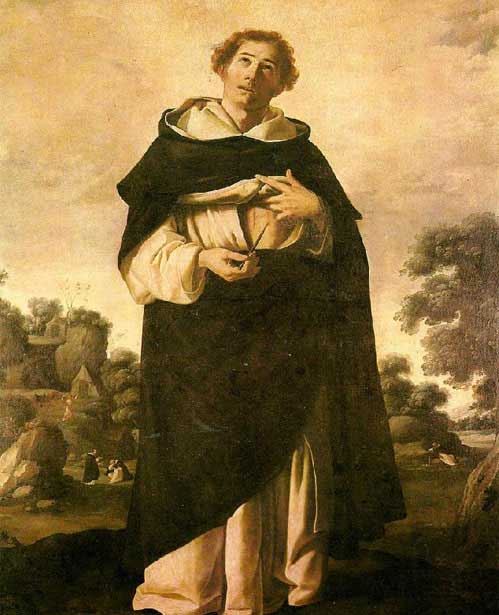
Blessed Henry of Suso ~ Servant of the Eternal Wisdom

His father belonged to the noble family of Berg; his mother, a holy woman from whom he took his name, to a family of Sus (or Süs). When thirteen years of age he entered the Dominican convent at Constance, where he made his preparatory, philosophical, and theological studies.
From 1324 to 1327 he took a supplementary course in theology in the Dominican studium generale at Cologne, where he sat at the feet of Johann Eckhart, “the Master”, and probably at the side of Tauler, both celebrated mystics. Returning to Constance, he was appointed to the office of lector, from which he seems to have been removed some time between 1329 and 1334. In the latter year he began his apostolic career. About 1343 he was elected prior of a convent, probably at Diessenhofen. Five years later he was sent from Constance to Ulrn where he remained until his death.
Suso’s life as a mystic began in his eighteenth year, when giving up his careless habits of the five preceding years, he made himself “the Servant of the Eternal Wisdom”, which he identified with the Divine essence and, in a concrete form, with the personal Eternal Wisdom made man. Henceforth a burning love for the Eternal Wisdom dominated his thoughts and controlled his actions. He had frequent visions and ecstasies, practised severe austerities (which he prudently moderated in maturer years), and bore with rare patience corporal afflictions, bitter persecutions and grievous calumnies.
He became foremost among the Friends of God in the work of restoring religious observance in the cloisters. His influence was especially strong in many convents of women, particularly in the Dominican convent of Katherinenthal, a famous nursery of mysticism in the thirteenth and fourteenth centuries, and in that of Toss, where lived the mystic Elsbeth Stagel, who turned some of his Latin into German, collected and preserved most of his extant letters, and drew from him the history of his life which he himself afterwards developed and published.
In the world he was esteemed as a preacher, and was heard in the cities and towns of Swabia, Switzerland, Alsace, and the Netherlands. His apostolate, however, was not with the masses, but rather with individuals of all classes who were drawn to him by his singularly attractive personality, and to whom he became a personal director in the spiritual life.
It has often been incorrectly said that he established among the Friends of God a society which he called the Brotherhood of the Eternal Wisdom. The so-called Rule of the Brotherhood of the Eternal Wisdom is but a free translation of a chapter of his “Horologium Sapientiae”, and did not make its appearance until the fifteenth century.
HIS WRITINGS
The first writing from the pen of Suso was the “Büchlein der Wahrheit”, which he issued while a student at Cologne. Its doctrine was unfavourably criticized in some circles — very probably on account of its author’s close relations with Eckhart, who had just been called upon to explain or to reject certain propositions — but it was found to be entirely orthodox.
As in this, so in his other writings Suso, while betraying Eckhart’s influence, always avoided the errors of “the Master”. The book was really written in part against the pantheistic teachings of the Beghards, and against the libertine teachings of the Brethren of the Free Spirit. Father Denifle considers it the most difficult “little book” among the writings of the German mystics.
Whereas in this book Suso speaks as a contemplative and to the intellect, in his next, “Das Büchlein der ewigen Weisheit”, published early in 1328, he is eminently practical and speaks out of the fullness of his heart to “simple men who still have imperfections to be put off”. Bihlmeyer accepts Denifle’s judgment that it is the “most beautiful fruit of German mysticism”, and places it next to the “Homilies” of St. Bernard, and the “Imitation of Christ” by Thomas à Kempis. In the second half of the fourteenth and in the fifteenth century there was no more widely read meditation book m the German language.
In 1334 Suso translated this work into Latin, but in doing so added considerably to its contents, and made of it an almost entirely new book, to which he gave the name “Horologium Sapientiae”. Even more elevating than the original, finished in language, rich in figure, rhythmic in movement, it became a favourite book in the cloisters at the close of the Middle Ages, not only in Germany, but also in the Netherlands, France, Italy, and England.
To the same period of Suso’s literary activity may belong “Das Minnebüchlein” but its authenticity is doubtful.
After retiring to Ulm Suso wrote the story of his inner life (“Vita” or “Leben Seuses”), revised the “Büchlein der Wahrheit”, and the “Büchlein der ewigen Weisheit”, all of which, together with eleven of his letters (the “Briefbüchlein”), and a prologue, he formed into one book known as the “Exemplar Seuses”.
Suso is called by Wackernagel and others a “Minnesinger in prose and in the spiritual order.” The mutual love of God and man which is his principal theme gives warmth and colour to his style. He used the full and flexible Alamannian idiom with rare skill, and contributed much to the formation of good German prose, especially by giving new shades of meaning to words employed to describe inner sensations. His intellectual equipment was characteristic of the schoolmen of his age. In his doctrine there was never the least trace of an unorthodox tendency.
For centuries he exercised an influence upon spiritual writers. Among his readers and admirers were Thomas à Kempis and Bl. Peter Canisius.
The Catholic Encyclopedia, Volume VII
Nihil Obstat, June 1, 1910, Remy Lafort, S.T.D., Censor
Imprimatur. +John Cardinal Farley, Archbishop of Ne
Born: March 21, 1295 at Uberlingen, Germany as Heinrich von Berg
Died: January 25, 1361 at Ulm, Germany
Beatified: 1831 by Pope Gregory XVI
Representation: Dominican with the Holy Name on his chest
Works: Book of the Eternal Wisdom, The Thirst of God

Holding Fast to the Faith ~ The Feast of St. Thomas Aquinas ~ Br. Brent Whetstone, Novice

The Church is faced with a dilemma. We are losing people to modernism in droves and the church has a decision to make: change who you are to conform to society or hold fast to the teachings of the Faith. Unfortunately may mainline denominations are doing the latter, they are changing to conform to the pressures that society is putting on them to change. They have stopped talking about the crucifixion, the resurrection, and the redemptive power of Christ. They deny the miracles we are told of in sacred scripture and have compromised the very foundations of Christianity. Bishops and Archbishops are on television preaching universalism and offering alternatives to salvation, through everything from Wicca to Islam to nothing at all. So the church has a choice. Change who you are or hold fast to the Faith. As a Dominican the answer is crystal clear to me. We hold on to the Faith and teach the Faith like our lives depended on it, because not only do our lives depend on it, but our souls do as well, and what better an appropriate time to talk about faith, and reason, than on the feast day of our Holy Brother and Teacher Saint Thomas Aquinas.
At the young age of five, Thomas was sent to live at the Benedictine monastery at Monte Cassino, as was the custom of the time. His parents’ hope was that he would chose the Benedictine life and eventually become abbot. In 1239 he was sent to Naples where he was to complete his studies and it was then that he was introduced to Aristotle’s philosophy. By 1243, however Thomas abandoned his family’s plans for him and it is then that he joined the Dominicans.
Once with the Dominicans Thomas traveled to Paris where he would finish his studies under Albert the Great, and he would live at the court of Pope Urban IV. He would direct the Dominican school in Rome, but his greatest contribution to the Church was the fact that he showed us that we could reconcile faith and reason. Because even then people were struggling with how this was possible and Saint Thomas was able to give us timeless teachings that we as Christians can use today.
Thomas believed that the existence of God could be proven in five ways. First by observing movement in the world as proof of God, the “Immovable Mover.” Second by observing cause and effect and identifying God as the cause of everything. Third by concluding that the impermanent nature of beings proves the existence of a necessary being, God, who originates only from within himself. Fourth by noticing varying levels of human perfection and determining that a supreme, perfect being must therefore exist, and fifth by knowing that natural beings could not have intelligence without it being granted to them it by God..
Thomas used faith and reason to establish his arguments, something that we must do as well. As Christians we are called to evangelize, a task that is met with much criticism and one that many people shy away from simply because they are not prepared to counter some of the very same arguments that Saint Thomas has already provided us with a foundation to argue.
As a Dominican I am committed to sharing the Word of God, I am committed to sharing it boldly and I am committed to sharing it from a place of faith and reason, being able to meet people where they are on their journey. But the greatest gift that we have because of Aquinas is that when we wrestle with doubt and when we wrestle with uncertainty, we have the example that he has set for us. We know that we can approach faith with reason to find our answers, we know that they complement each other not cancel each other out. Because of that we can grow stronger in our faith and be bold to proclaim the saving message of Christ.
We do not need to change who we are as a Church, we do not need to deny basic tenets of the Faith to be popular with the skeptics, instead we need to meet our skeptics with knowledge not only of faith but faith combined with reason so that their eyes may be opened to the truth of God. Let us pray:
O God, who made Saint Thomas Aquinas outstanding in his zeal for holiness
and his study of sacred doctrine, grant us, we pray, that we may understand what he taught
and imitate what he accomplished. Through our Lord Jesus Christ, your Son,
who lives and reigns with you in the unity of the Holy Spirit, one God, for ever and ever. Amen.
*Another great hymn from the great St. Thomas Aquinas. This version of the hymn does not include the 3rd or 4th verses. The art is “The temptation of St. Thomas Aquinas” by Diego Velazquez; “Triumph of St. Thomas Aquinas over the heretics” by Filippino Lippi; “The Apotheosis of Thomas Aquinas” by Francisco de Zurbaran. License Standard YouTube License Music “Adoro Te Devote” by Richard Proulx

The Solemnity of Mary, the Mother of God ~ Br. Brent Whetstone, OPI
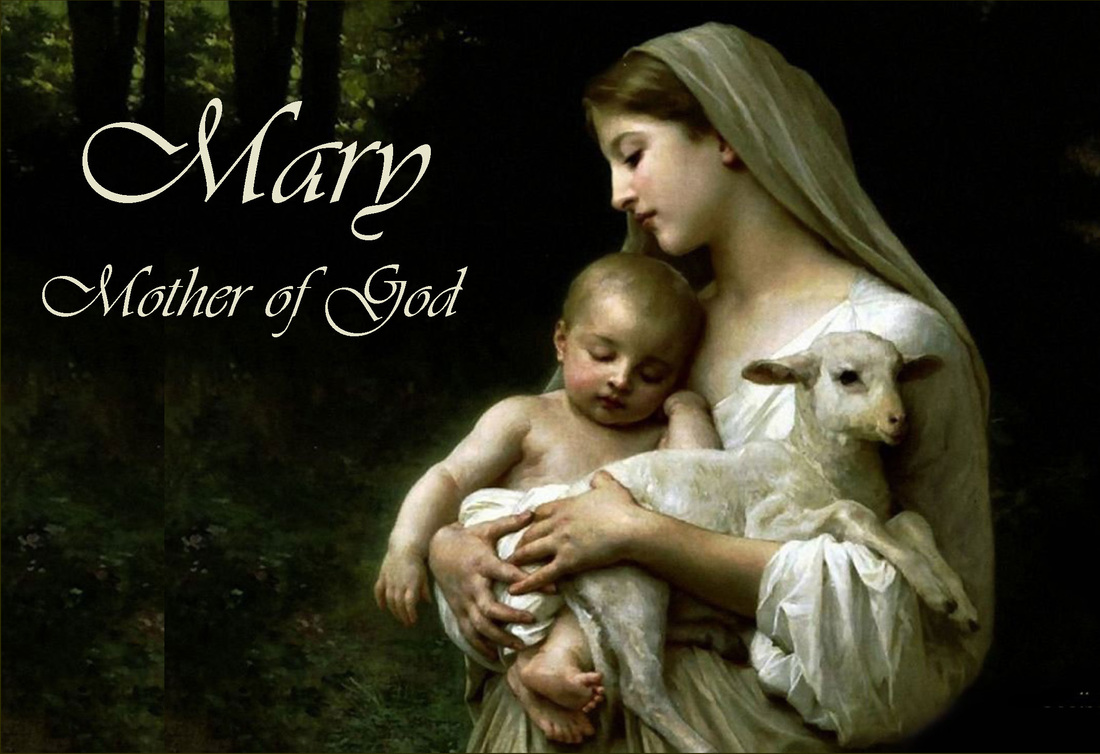
In the name of the Father, and of the Son and of the Holy Spirit. Amen.
Today is a very special feast day for me, as a Dominican Friar, and someone who is reading for Holy Orders. Today is the day we celebrate our special patroness, the patroness of the Dominican Order, and my personal patroness: someone I have devoted my ministry to. Our Lady has found favor with the Order of Preachers because at her core she exemplifies everything that we as Dominicans hold dear. We wear her scapular, we pray her rosary and we daily seek her intervention on our behalf every night when we close evening prayer with the Salve Regina!
Salve Regina, Mater Misericordiae,
vita, dulcedo, et spes nostra, salve!
Ad te clamamus, exsules filii Hevae,
ad te suspiramus, gementes et flentes,
In hac lacrimarum valle.
Eja ergo, Advocata nostra,
Illos tuos misericordes oculos ad nos converte
Et Jesum, benedictum fructum ventris tui,
Nobis, post hoc exilium, ostende,
O clemens, O pia, O dulcis Virgo Maria.
Hail Holy Queen, Mother of mercy our life, our sweetness and our hope! To thee do we cry, poor banished chidren of Eve, To thee do we send up our sighs, Mourning and weeping in this valley of tears. Turn, then, o most gracious advocate, Thine eyes of mercy toward us and after this our exile Show unto us the blessed fruit of thy womb, Jesus. O clement, o loving, o sweet Virgin Mary.
I was reading a book the other day by one of my favorite Catholic Theologians, Dr. Scott Hahn, called Hail Holy Queen: the Mother of God in the Word of God, and in it Dr Hahn talks about the many Marian types in the Old Testament. He says that:
“Marian types abound in the Old Testament. We find Mary prefigured in Eve, the mother of all living; In Sarah, the wife of Abraham, who conceived her child miraculously; in the queen mother of Israel’s monarchy, who interceded with the king on behalf of the people of the land; and in many other places, in many other ways (for example, Hannah and Ester). The type addressed most explicitly in the New Testament, the ark of the covenant….as the ancient ark was made to bear the old covenant, so the Virgin Mary was created to bear the new covenant.”
It is because of this that we celebrate Our Lady today. The Blessed Virgin Mary is the God Bearer, the Theotokos, and what a responsibility it was for her to take on the role of the ark of the new covenant. Imagine with me, if you will, your life as a 13 or 14 year old: not much responsibility, school, maybe a part time job working for you family, but mostly a care free life. Then one day it all changes. Not many teenagers would be up for the challenge, and not many would willingly say “yes” to such an awesome task being placed upon their shoulders. But Mary did. She did so in faith, and she did so willingly trusting her God. She knew the stigma that would be placed on her. She knew the possibility that her fiancé would leave her, and she would be left to raise a child on her own. But she also knew that God was there by her side.
It was because of this one act of obedience that Salvation was brought to the world. It was because a young girl was willing to put aside her own will and walk in the will of God. That is what we celebrate today. We celebrate an act of obedience that changed the world. We celebrate her today: Mary, the Mother of God, the Queen of Heaven, and our greatest advocate before her Son.
Each year on this day, I recommit myself to my Dominican vocation, as I recount her willingness to freely give herself to God. I too, willingly give myself to God through my vocation, so that I may be able to praise, to bless and to preach God’s message of salvation to the world.
Let us pray:
O God, you willed that the Order of Preachers be founded for the salvation of souls under the special patronage of the Blessed Virgin Mary, and that the Order be filled with her unfailing gifts. Grant to us who call upon you, protected by the aid of her whose feast we celebrate, that we may be brought to the glory of heaven. Through our Lord Jesus Christ, your Son, who lives and reigns with you in the unity of the Holy Spirit, one God, for ever and ever.
—Collect for the Patronage of the Blessed Virgin Mary over the whole Order of Preachers
Blessed Magdalen dei Panattieri

One hears so much about the detachment necessary for sanctity that it is refreshing to read about someone beatified who unblushingly loved her family, her country, her friends, and all little children.
Magdalen Pannatieri was born at Trino, near Vercelli, in 1443, of deeply religious parents. She was a devout child, who made a vow of virginity while she was quite young. Before she was twenty years old, she took her vows as a Dominican Tertiary, an exceptional circumstance, showing that she was held in high esteem. The Tertiary chapter was made up principally of widows and older woman who centered their apostolate of active charities around the Dominican Church. Magdalen fitted into this work with ease, and she brought to the chapter a spirit of penance that few of her companions could match . The delightful part of it all was that her penances never rendered her dreary; she was a cheerful, resourseful person to have around. People drew as much good from her spirit of joy as from any other feature of her spirtuality.
Magdalen had a special fondness for little children, and what we now call baby-sitting, and used her influence witht he children to bring their parents to a better way of life. Childless women won her sympathy , and several times her prayers brought the blessing of motherhood to such people. She taught catechism to children, and gradually the older folk of her acquaintance began to sit in on her classes. She was quite unaware that she had great powers of description and could make the truths of religion clear to simple people. The Dominican fathers allowed her to use a large room attached to the church for a class room, and the class grew. Not only the parents of the children and the simple folk of the neighborhood, but also a number of priest and religious were attending regularly.
When the reform movement started by Blessed Raymond of Capua got underway, Magdalen Parnatieri promoted it in Trino. Though her influence, Blessed Sebastian Maggio was invited to preach there, and he accomplished great good.
Magdalen was considered the protectress of the city of Trino. Whatever disaster threatened it, the citizens expected her to look out for their interests, and she usually did. In her life there is no mention of a “dark night of the soul” or of grim detachment from all things of earth. Her love of God kept her from attaching herself to any illegitimate pleasures, but she thoroughly enjoyed the lawful ones- she loved her family and her townspeople and was happy in their company. Her favorite brother was a good-for-nothing- he was always in trouble. When his conduct had gone beyond the patience of everyone but Magdalene, she threw herself on her knees in front of her crucifix, and she stayed there until our Lord assured her that He would take a hand with the black sheep: ” I cannot refuse you anything,” He said.
The Dominican fathers received her solitude when they were persecuted by a wealthy man of the town. This person carried his hatred so far that he was finally excommunicated for persecuting the Church. there was of course, a good deal of blood shed before the affair was over, and one of the reprobate’s followers made the mistake of hitting Magdalene and calling her names. Before the irate townspeople could deal out justice to him, God did; the man died a violent death.
God revealed to Magdalen the coming political troubles of Italy: the French invasion of the country. She did not live to see this prophecy accomplished, but she persistently asked God’s mercy for her people. During the violent quarrels and bloodshed of the time, Trino was always spared, though the villages all around were in a shambles. The townsfolk unhesitatingly gave credit to Magdalen.
Born: Trino, diocese of Vercelli, Piedmont, Italy, in 1443
Died: 1503
Beatified: beatified by Leo XIII

Zen Master!!! ~ Br. Chip Noon, Novice
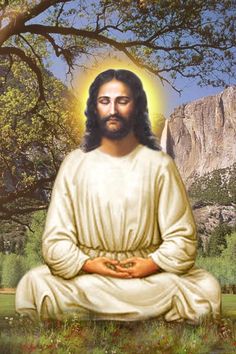
I have always been struck by the similarities of Jesus’ teachings to the koans of the Zen Masters, who were so popular in my youth. “Two hands clap and there is a sound. What is the sound of one hand?” (Hakuin Ekaku) But this one is immediately applicable to today’s readings: “If you meet the Buddha, Kill Him.” (Linji).
Jesus was a Zen Master of his time.
In the first reading, we have the makings of a typical koan:
Elisha left the oxen, ran after Elijah, and said,
“Please, let me kiss my father and mother goodbye,
and I will follow you.”
Elijah answered, “Go back!
Have I done anything to you?”
As we know, Old Testament scripture pre-figured the life and teachings of Jesus, so here we see the Master saying, “Once you start along my path, there is no going back.” It took a simple question to put Elisha on the right path.
In the Koan, the Master Linji is saying that we are always searching for a tangible presence. But Zen teaches that there is no duality: there is no “here” nor “there”; or, there is no “I am searching for enlightenment” nor “I have found enlightenment.” There is no way to describe enlightenment to ourselves or to others. When we reach it, we will know it…and then have no need to discuss it.
Doesn’t Jesus imply the same as Luke records:
“When asked by the Pharisees when the kingdom of God would come, Jesus replied, “The kingdom of God will not come with observable signs. Nor will people say, ‘Look, here it is,’ or ‘There it is.’ For you see, the kingdom of God is in your midst.””
So in today’s Gospel we encounter several other koans. In the first, someone tells Jesus he will follow him wherever he goes. And Jesus answers he has nowhere to go.
Then he says to another, “Follow me.” But the man says he has sacred obligations, that is, to bury his father. Jesus says, “Let the dead bury their dead.”
And the third man asks leave to say goodbye to his family, at which point Jesus says, in metaphor, if you look behind, you will lose your way. Keep your eyes ahead to the Kingdom. In other words, you can only plow a straight furrow if you keep your eyes on your work.
To us today, with all that we have absorbed and been taught about our catholic faith, these scripture readings are somewhat intelligible. Some of us have to work at them, others get the meaning immediately. But imagine the followers of Jesus as they hear these off-the-wall comments from their Rabbi. What must they have thought? We know that some went away confused, and we know that some understood and followed.
But we also know that with the descent of the Holy Spirit, the Apostles and Jesus’ followers were given the answers to these mysterious koans. Would that we could have the answers like that!
But wait! What does the Apostle Paul say in today’s reading to the Galatians?
“I say, then: live by the Spirit
and you will certainly not gratify the desire of the flesh.
For the flesh has desires against the Spirit,
and the Spirit against the flesh;
these are opposed to each other,
so that you may not do what you want.
But if you are guided by the Spirit, you are not under the law.”
Isn’t he saying what the Zen Master said? You can search all you want in this physical realm for God, you can long for heaven in some far off corner of the sky, you can follow all the rules you want, but The Kingdom of God is right here, right now, within, without…in fact, you are the Kingdom of God.
But finally, there is a corollary to these readings. And that is, “Take up your cross and follow me.” In other words, not only are you expected to forget the past, keep your eyes on the prize, and steer straight for the Promised Land. But you are also expected to do some work along the way. As James tells us: “In the same way, faith by itself, if it is not accompanied by action, is dead.”
Then what about that business of “my yoke is easy and my burden is light”? It seems to me the difference here between what Jesus teaches us and how Zen is practiced is that Zen is focused on the individual’s path to enlightenment. Jesus is telling us we have to bring others along on this path.
How appropriate, then, for Dominicans! If the Kingdom is right here, right now, then we are tasked with showing this truth to everyone we meet, right here, right now. There is no holiday, no time off. As Christians we must live our faith, not simply express it. And when you come to think of it, how hard is that? What kind of burden is it to live in the “now” of our faith and knowledge of God’s magnificent goodness as taught to us by the Son and as impelled by the Holy Spirit?
Lord, as we contemplate the meaning of the lessons of scripture, help us to remember that the Kingdom of God is at hand and that all we have to do is stretch out our hands and grasp it.
Amen.
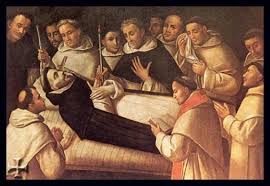
Feast of the Translation of our Holy Father Saint Dominic
The body of the holy patriarch, Saint Dominic, had been laid to rest, according to his own desire, in the Church of Saint Nicholas at Bologna, beneath the feet of his Brethren, and, in spite of continual prodigies and Divine favors granted to the faithful who prayed day and night at his tomb, his children allowed the sacred deposit to remain under the plain flagstone originally laid over it and took no steps for obtaining his canonization. Lest they should be thought to be seeking their own emolument under the appearance of piety, the Friars even broke and threw away the votive offerings brought by the people and would not permit any exterior marks of devotion to be exhibited. It was necessity which at length compelled them to undertake the first translation of the sacred relics. The ever-increasing numbers of the Community obliged them to enlarge the Convent, and to pull down the old church and build a new and more spacious one. To do this the tomb of Saint Dominic would have to be disturbed. They accordingly applied for the requisite permission to Pope Gregory IX., who was no other than the Saint’s old friend, Cardinal Ugolino. He joyfully granted the petition, at the same time administering a sharp rebuke to the Friars for their long negligence.
The solemn translation accordingly took place on Whit-Tuesday, May 24, 1233 A.D., during the General Chapter, which was held that year at Bologna. The Pope wished to have attended in person, but, being prevented from doing so, he deputed the Archbishop of Ravenna to represent him, in company with a number of other distinguished prelates. Three hundred Friars Preachers from all countries assembled to assist at this function, not without a secret fear on the part of some as to the state in which the sacred remains might be found, as they had long been exposed to rain and heat, owing to the dilapidated condition of the church. The opening of the tomb took place before daybreak, in the presence of Blessed Jordan, then Master-General of the Order, and the fathers of the Chapter, together with the Bishops, Prelates and Magistrates who were to assist at the ceremony. All stood round in silence while the Procurator, Father Rodolph of Faenza, raised the stone. Hardly had he begun to remove the earth and mortar that lay beneath an extraordinary odor became perceptible , which increased in power and sweetness as they dug deeper, until at length, when the coffin appeared and was lifted out of the grave , the whole church was filled with the perfume as though from the burning of some rich and precious gums. The bystanders knelt on the pavement, shedding tears and emotion as the lid was raised, and the exposed to their eyes.
It was the Master-General who raised the body of his beloved father and reverently laid it in a new coffin. The faithful were then admitted, and the Archbishop of Ravenna sang the Mass of the day, while the fragrance diffused from the open coffin flooded the whole of the sacred edifice. Blessed Jordan in his circular letter to the Order thus described the solemn function: “As the choir intoned the Introit, ‘Receive the joy of your glory, giving thanks to God, who was called you to the celestial kingdom,’ the Brethren in their gladness of heart took the words as if spoken from heaven. The trumpets sounded, the people displayed a countless multitude of tapers; and, as the procession moved along, there everywhere resounded the words, ‘Blessed be Jesus Christ!” He goes on to speak of the vast number of miraculous graces which were poured forth both before and after the ceremony. ‘Sight “he says , “was granted to the blind, power of walking to the lame, soundness to the paralyzed, speech to the dumb…..I myself saw Nicholas, an Englishman, who had long been paralyzed, leaping at this solemnity.”
The coffin was then laid in the marble tomb prepared for it. But eight days later, to satisfy the devotion of some distinguished persons who had not been present on the previous occasion. The holy remains were again exposed to view. Then it was that Blessed Jordan, taking the sacred head between his hands, kissed it, while tears of tenderness flowed from his eyes; and, so holding it, he desired all the fathers of the Chapter to approach and gaze at it for the last time. One by one they came and kissed the venerable relics. All were conscious of the same extraordinary fragrance; it remained on the hands and clothes of those who touched or came near the body. Nor was this the case merely when the grave was first opened. The tomb remained unclosed for fifteen days, during which interval it was guarded by officers appointed by the city magistrates; and all this times the same exquisite odor was sensible to all who visited the spot; and Flaminius, who lived three hundred years later, thus writes (1527 A.D.): “This divine odor adheres to the relics even to the present day.”
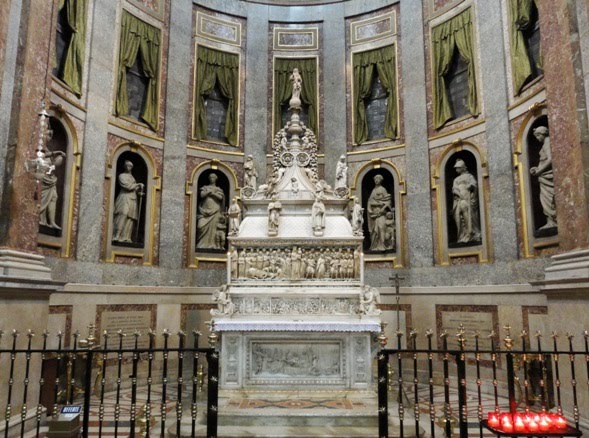
A second translation of Saint Dominic’s relics took place in the year 1267 A.D., when the holy body was removed to amore richly ornamented tomb. This translation, like the first, was made at a time of the General Chapter; and the head of the Saint, after being devoutly kissed by the Brethren and several Bishops who were present, was exposed to the veneration of the people from a lofty stage erected outside the Church of Saint Nicholas. The tomb was again opened in 1383 A.D., when apportion of the head was placed in a silver reliquary, in order the more easily to satisfy the devotion of the faithful. Finally, 1469 A.D., the remains of the Saint were deposited in the magnificently sculptured shrine in which they now rest, which is regarded as the masterpiece of Nicholas Pisano.
Blessed Jane of Portugal

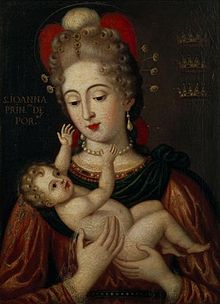
Joanna, a child of many prayers, was born heiress to the throne of her father, King Alphonsus V, at a time when Spain and Portugal had divided the colonial wealth of the earth between them. Her sickly brother Juan was born three years later, and soon after this their mother, Queen Elizabeth of Coimbra, died. Joanna was left to the care of a wise and pious nurse, who cultivated the child’s natural piety. By age five the little princess had exceeded her teacher in penitential practices. She fasted and prayed, rose at night to take the discipline, and wore a hairshirt under her glittering court apparel.
Although Joanna would not inherit the throne of Portugal while her brother was alive, a wise marriage would do much to increase her father’s power. Accordingly, he began early to arrange for her marriage. Joanna, whose knowledge of court intrigue was as good as his own, skillfully escaped several proposed matches. She had treasured the desire to enter the convent, but, in view of her father’s plans, her desires met with violent opposition. She was flatly refused for a long time; finally, her father gave his reluctant consent, but he withdrew it again at her brother’s insistence.
She was regent of Portugal when her father and brother went to war against the Moors, and when they defeated the Moors in 1471, her father, in the first flush of victory, granted her request to take the veil. Joanna and one of her ladies-in-waiting had long planned to enter the Dominican cloister at Aveiro, which was noted for its strict observance. But when her father finally gave consent for her to enter religion, he did not allow her to enter that Dominican convent. She had to go to the nearby royal abbey of the Benedictines at Odivellas. Here she was besieged by weeping and worldly relatives who had only their own interests at heart. After two months of this mental torture, she returned to the court.
The rest of Joanna’s life is a story of obedience and trials. Her obligations of obedience varied. She was required to bend her will to a wavering father, who never seemed able to make a decision and abide by it; to bishops, swayed by political causes, who forced her to sign a paper that she would never take her solemn vows; and to doctors, who prescribed remedies that were worse than the maladies they tried to cure. The trials came from a jealous brother, from ambitious and interfering relatives, from illness, and from cares of state.
After 12 years of praying and hoping, Joanna finally received the Dominican habit at Aveiro in 1485. Once, she was deprived of it by an angry delegation of bishops and nobles, and, at another time, her brother tore the veil from her head. Despite the interruptions of plague, family cares, and state troubles, Joanna lived an interior and penitential life. She became an expert at spinning and weaving the fine linens for the altar, and busied herself with lowly tasks for the love of God. She used all her income to help the poor and to redeem captives.
Her special devotion was to the Crown of Thorns, and, in early childhood, she had embroidered this device on her crest. To the end of her life she was plagued by the ambition of her brother, who again and again attempted to arrange a marriage for her, and continually disturbed her hard-won peace by calling her back to the court for state business.
On one of these trips to court, Joanna was poisoned by a woman–a person she had rebuked for leading an evil life. The princess lived several months in fearful pain, enduring all her sufferings heroically. She died, as it says in an old chronicle, “with the detachment of a religious and the dignity of a queen,” and with the religious community around her.
Born: Born in Lisbon, Portugal, 1452
Died: died at Aveiro, Portugal, in 1490
Beatified: April 4, 1693 by Pope Innocent XII (cultus confirmed)
 The Order of Preachers, Independent
You must be logged in to post a comment.