
Category: Dominican Life
If It Weren’t for Bad Luck… ~ The Rev. Jay Van Lieshout, OPI
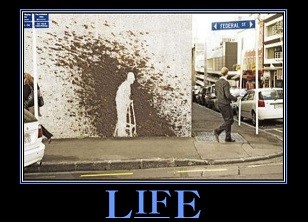
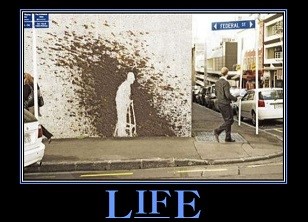
“If it weren’t for bad luck, I’d have no luck at all!” Who has not cried this out in a fit of despair at one time or another? How many of us may even be thinking such a thought at this very moment? Feeling at times as if we are plagued by misfortune is really part of being human. Things sometimes just go wrong and, though events sometimes go without a hitch ending on a happy note, we as humans tend to focus on and hold tight to those events that are less than perfect events in our lives. Remembering when our actions produced undesirable results can be a good thing; it is how we learn what to avoid, what not to do or to say, etc; in fact, failures can often lead to successful and rewarding outcomes. Yes, we view our failures as bad luck or feel we are cursed in spite of all the good we have in our lives. Being raised in a Calvinist family I was taught if something goes wrong it was because I was a sinner and God was punishing me. The larger the mishap, the more dreadful a child I was, for what you sow is what you reap. From the smallest paper cut to being in pain with kidney stones, it was all part of God’s plan to punish my wickedness; God was vengeful and mean because of our sins and Jesus came to point that out to us. What a horrible teaching for a child, and what a horrible teaching that still continues today in too many a “Christian” denomination or church.
Such misconceptions of God are not new to modern times; Luke tells us Jesus dealt with similar misguided thoughts and teachings. When asked about Pilate’s slaughter of some Galileans as they were conducting ritual sacrifices (the implication being they might have been guilty in the eyes of God), Jesus asked if they thought the victims were “greater sinners” than the all other Galileans? Without delay, Jesus rebuked them saying “I say to you no! But I tell you, if you do not repent, you will all perish as they did!” (Luke 13:2-3) Similarly, Jesus asked if the deaths of the 18 killed when the tower of Siloam collapsed was the result of the victims indebtedness exceeding that of the rest of the men in Jerusalem? Again without delay, Jesus rebuked them saying “I say to you no! But I tell you, if you do not repent, you will all perish as they did!” (Luke 13:4-5) Two horrendous events: one the murder of innocent people as a result of hate and bigotry, another, the tragic loss of innocent lives as the result of an accident; in neither was God punishing the victims (and Jesus would know if He was), both were just random tragedies, examples of “crap happens”. Yet both revealed the delicate and fleeting nature of human life as well as how easily one can suffer a spiritual death over mundane worldly things; Jesus warns to repent now, for tomorrow may not come.
So is all lost? If we stumble and then quickly die before we can repent and ask for forgiveness, is there no hope? To quote Jesus, “I say to you no!” God is our father, and though He can be stern, His love for us in unchanging, unending and boundless. Luke continues with Jesus telling a parable in which a fig tree has failed to yield fruit for 3 years. The owner has no patience and instructs the gardener to cut it down. The gardener knows that sometimes “crap happens” and offers to tend to the tree for a year using a little manure, a little extra attention and, hence, he is giving the tree another chance to bear fruit (with a little help). This is how God works us in His garden, he sent the Son of Man to be our gardener, to spare us from the saw, to intercede for us, nurture us with the Word of the Creator, cultivate our souls and help us turn the “crap” that happens in life into fruit for the Father’s Harvest.
Yes, bad things happen to me, to you, to everyone. Part of being human and being alive is “crap happens”; this is a fundamental fact of life. What we all must realize is this is not God punishing us, it is not some divine retribution, and it surely is not a canonical license to condemn others or withhold compassion to those suffering “because they are sinners and deserve their misfortune”. I say to you nobody is undeserving of our compassion and forgiveness. In fact, many of those who have suffered some of the most horrendous crap life can muster, have turn out to be our most beloved and respected saints-and one even died so that all of humanity could, in turn, live! So the next time you feel you are getting more than your share of manure just remember, the only difference between a saint and a sinner is a saint will not sling the manure at others, but instead, they use it as fertilizer for the tree of Jesse so that it might bare the largest and sweetest of fruit.
Serving God? Serving Man?
Do you have a call to serve? Do you long to share your faith? Do you enjoy study? Do you wish to further your prayer life? Do you have a vocation to become a religious? If so, then perhaps the Order of Preachers, Independent, is a good fit for you. Becoming a member of the Order of Preachers, Independent is not an arduous or complicated task, however it does take some time, some determination, an abundance of study, a great deal of prayer, and a modicum of spunk.
The real beginning of the process takes place before one ever contacts us. It begins with the candidate’s own struggle to discern if he or she has a call to the religious life or not. This can take place over a number of years, and usually involves some help from others, especially a confessor or spiritual director. The dynamic here should be noted: it is a personal call from God to the individual, but the recognition and understanding of that call normally requires the help of others. This dynamic continues throughout the following, more formal stages of formation: the candidate continues to struggle to understand and give shape to his or her call under the guidance and direction of others. Nor should it be surprising to us that this is the case. God always enlightens us, teaches us, and sanctifies us through the Body of Christ, his Church. His grace for us, in other words, is always ministered to us through others. The grace of a vocation is made incarnate in the service, education, and training that others give in order to bring that vocation to life.
If you feel you may have a vocation, if you are interested, if you would like to discuss this with us, then do please contact us via the Comment Section of the “Contact us” on our website! God bless you!
Feast of All Souls ~ The Rev. Dn., Sister Dollie Wilkinson
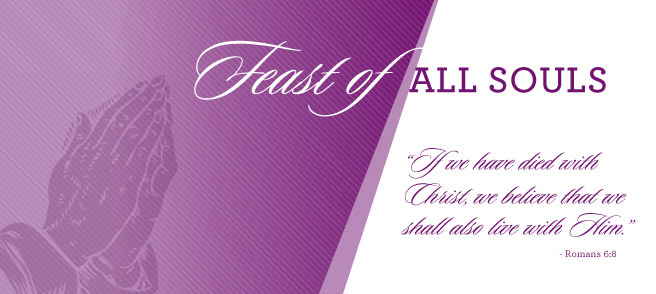
Is death the last sleep? No–it is the last and final awakening.
-Sir Walter Scott
“As (Saint) Dominic lay on his deathbed surrounded by his sorrowful brethren, he consoled them saying, “Do not weep. I will be of more use to you in Heaven.” Dominic’s words offered deep hope, extending beyond his death to the death of each member of the Order. “
We all have lost loved ones, some so early in their life, others who had been with us for a good long while. But for those left behind, the sense of loss can be almost too much to bear. Yet we know in our hearts that we shall see our loved ones again, that we will all be reunited with each other—in our heavenly Father’s kingdom. So until that time, we remember them with love, and offer up prayers for their soul.
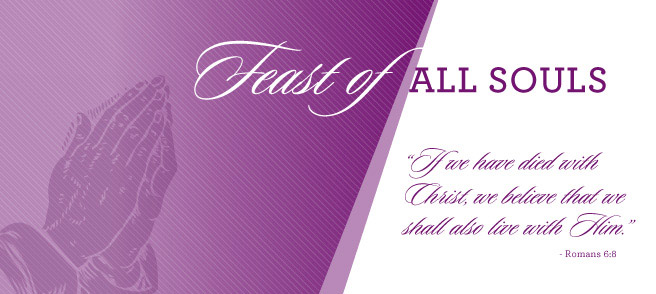
Today, November 2nd, we celebrate the Feast of All Souls. On the day after All Saints, the Church reminds us of those who have not yet achieved the goal of their pilgrimage, the Kingdom of Heaven. As part of the communion of saints, they need our prayers. Today’s feast is an opportunity for us to pray in unity for our relatives and friends and for those who have no one to pray for them. All Soul’s Day (sometimes called the “Day of the Dead”) is always November 2 (November 3rd if the 2nd falls on a Sunday).
All Soul’s Day is a Roman Catholic day of remembrance for friends and loved ones who have passed away. This comes from the ancient Pagan Festival of the Dead, which celebrated the Pagan belief that the souls of the dead would return for a meal with the family. Candles in the window would guide the souls back home, and another place was set at the table. Children would come through the village, asking for food to be offered symbolically to the dead, then donated to feed the hungry.
The day purposely follows All Saint’s Day in order to shift the focus from those in heaven to those in purgatory. It is celebrated with Masses and festivities in honor of the dead. While the Feast of All Saints is a day to remember the glories of Heaven and those there, the Feast of All Souls reminds us of our obligations to live holy lives and that there will be purification of the souls of those destined for Heaven.
Upon death, it is believed that souls have not yet been cleansed of sin. Praying for souls of loved ones helps to remove the stain of sin, and allow the souls to enter the pearly gates of heaven. Through prayer and good works, living members of the church may help their departed friends and family. There are three Requiem Masses that are said by the clergy to assist the souls from Purgatory to Heaven: one for the celebrant, one for the departed, and one for the pope. One such reading for the Mass is included in the Book of Wisdom:
“The souls of the just are in the hand of God
and no torment shall touch them.
They seemed, in the view of the foolish, to be dead;
and their passing away was thought an affliction
and their going forth from us, utter destruction.
But they are in peace.
For if before men, indeed, they be punished,
yet is their hope full of immortality;
chastised a little, they shall be greatly blessed,
because God tried them
and found them worthy of himself.
As gold in the furnace, he proved them,
and as sacrificial offerings he took them to himself.
In the time of their visitation they shall shine,
and shall dart about as sparks through stubble;
they shall judge nations and rule over peoples,
and the Lord shall be their King forever.
Those who trust in him shall understand truth,
and the faithful shall abide with him in love:
because grace and mercy are with his holy ones,
and his care is with his elect.”
The traditions of the Feast of All Souls began independently of the Feast of All Saints. The Feast of All Souls owes its beginning to seventh century monks who decided to offer the mass on the day after Pentecost for their deceased community members. In the late tenth century, the Benedictine monastery in Cluny chose to move their Mass for their dead to November 2, the day after the Feast of all Saints. This custom spread and in the thirteenth century, Rome put the feast on the calendar of the entire Church. The date remained November 2 so that all in the Communion of the Saints might be celebrated together.
Other customs have arisen over time in the celebration of All Souls Day. The Dominicans in the 15th century instituted a custom of each priest offering three Masses on the Feast of All Souls. Pope Benedict XIV in 1748 approved this practice, and it rapidly spread throughout Spain, Portugal and Latin America. During World War I, Pope Benedict XV, recognizing the number of war dead and the numerous Masses that could not be fulfilled because of destroyed Churches, granted all priests the privilege of offering three Masses on All Souls Day: one for the particular intention, one for all of the faithful departed, and one for the intentions of the Holy Father.
Many more customs are associated with The Days of the Dead celebration. In the home an altar is made with an offering of food upon it. It is believed that the dead partake of the food in spirit and the living eat it later. The offerings are beautifully arranged with flowers such as marigolds, which are the traditional flower of the dead. There is a candle placed for each dead soul, and they are adorned in some manner. Incense is also often used, and mementos, photos, and other remembrances of the dead also adorn the offerings. Traditional Catholics still honor customs related to the relief of the souls suffering in purgatory. One custom is for persons to pray six Our Fathers, Hail Mary’s and Glory Be’s for the intentions of the Pope in a church, and thereby, receive a plenary indulgence for a soul in purgatory. This action may be repeated for another soul, by leaving the church and re-entering it to repeat the prayers.
All Soul’s Day lives on today, particularly in Mexico, where All Hallows’ Eve, All Saint’s Day and All Soul’s Day are collectively observed as “Los Dias de los Muertos” (The Days of the Dead). First and foremost, the Days of the Dead is a time when families fondly remember the deceased. But it is also a time marked by festivities, including spectacular parades of skeletons and ghouls. In one notable tradition, revelers lead a mock funeral procession with a live person inside a coffin.
As we all know, death is never final. We will be reunited with our loved ones. And for those in purgatory, let us pray for their souls to be cleansed, so we shall all live again in our Father’s house.
A prayer for all our departed brothers and sisters:
Merciful Father,
hear our prayer
and console us.
As we renew
our faith in Your Son,
whom You raised from the dead,
strengthen our hope
that all our departed brothers and sisters
will share in His resurrection,
who lives and reigns
with You and the Holy Spirit,
one God, for ever and ever.
Amen
Invocation for the Souls in Purgatory:
My God,
bestow Thy blessings and Thy mercies
on all persons
and on those souls in Purgatory,
for whom I am in charity, gratitude, or friendship bound
and have the desire to pray.
Amen
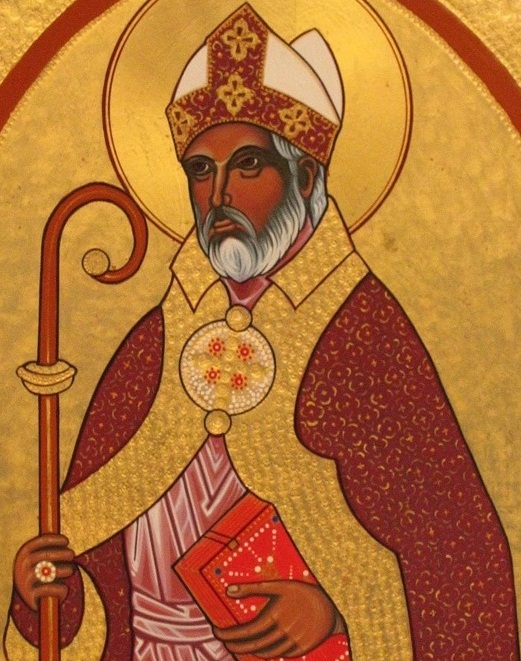
Memorial of Saint Augustine ~ Br. Michael Marshall, Novice
Augustine of Hippo lived from 354 to 430, and was an early Christian theologian and philosopher whose writings influenced the development of Western Christianity and Western philosophy. He was the bishop of Hippo Regius. He is viewed as one of the most important Church Fathers in Western Christianity for his writings in the Patristic Era. Among his most important works are City of God and Confessions. In the Catholic Church and the Anglican Communion, he is a saint, a preeminent Doctor of the Church, and the patron of the Augustinians. His memorial is celebrated on 28 August, the day of his death. He is the patron saint of brewers, printers, theologians, the alleviation of sore eyes, and a number of cities and dioceses. Many Protestants, especially Calvinists, consider him to be one of the theological fathers of the Protestant Reformation due to his teachings on salvation and divine grace.
In the summer of 386, at the age of 31, after having heard and been inspired and moved by the story of Ponticianus’s and his friends’ first reading of the life of Saint Anthony of the Desert, Augustine converted to Christianity. As Augustine later told it, his conversion was prompted by a childlike voice he heard telling him to “take up and read” which he took as a divine command to open the Bible and read the first thing he saw. Augustine read from Paul’s Epistle to the Romans – the so-called “Transformation of Believers” section, consisting of chapters 12 through 15 – wherein Paul outlines how the Gospel transforms believers, and the believers’ resulting behavior.
In 391 Augustine was ordained a priest and became a famous preacher (more than 350 preserved sermons are believed to be authentic), and was noted for combating the Manichaean religion, to which he had formerly adhered.
In 395 he was made coadjutor Bishop of Hippo, and became full Bishop shortly thereafter, hence the name “Augustine of Hippo”; and he gave his property to the church of Thagaste. He remained in that position until his death in 430. He wrote his autobiographical Confessions in 397-398. His work The City of God was written to console his fellow Christians shortly after the Visigoths had sacked Rome in 410. Augustine worked tirelessly in trying to convince the people of Hippo to convert to Christianity. Though he had left his monastery, he continued to lead a monastic life in the episcopal residence. He left a regula for his monastery that led to his designation as the “patron saint of regular clergy.”
Shortly before Augustine’s death the Vandals, a Germanic tribe that had converted to Arianism, invaded Roman Africa. The Vandals besieged Hippo in the spring of 430, when Augustine entered his final illness. According to Possidius, one of the few miracles attributed to Augustine, the healing of an ill man, took place during the siege. According to Possidius, Augustine spent his final days in prayer and repentance, requesting that the penitential Psalms of David be hung on his walls so that he could read them. He directed that the library of the church in Hippo and all the books therein should be carefully preserved. He died on 28 August 430. Shortly after his death, the Vandals lifted the siege of Hippo, but they returned not long thereafter and burned the city. They destroyed all of it but Augustine’s cathedral and library, which they left untouched. Augustine was canonized by popular acclaim, and later recognized as a Doctor of the Church in 1298 by Pope Boniface VIII. His feast day is 28 August, the day on which he died. His prominence as a Doctor of the Church is mostly due to the many topics in which he took a theological stance. Here is a list of key topics: Creation, ecclesiology, eschatology, just war, Mariology, natural knowledge and biblical interpretation, original sin, free will, sacramental theology, and views on sexuality.
1 Thessalonians 4:1-8
Brothers and sisters,
we earnestly ask and exhort you in the Lord Jesus that,
as you received from us
how you should conduct yourselves to please God–
and as you are conducting yourselves–
you do so even more.
For you know what instructions we gave you through the Lord Jesus.
This is the will of God, your holiness:
that you refrain from immorality,
that each of you know how to acquire a wife for himself
in holiness and honor, not in lustful passion
as do the Gentiles who do not know God;
not to take advantage of or exploit a brother or sister in this matter,
for the Lord is an avenger in all these things,
as we told you before and solemnly affirmed.
For God did not call us to impurity but to holiness.
Therefore, whoever disregards this,
disregards not a human being but God,
who also gives his Holy Spirit to you.
Matthew 25:1-13
Jesus told his disciples this parable:
“The Kingdom of heaven will be like ten virgins
who took their lamps and went out to meet the bridegroom.
Five of them were foolish and five were wise.
The foolish ones, when taking their lamps,
brought no oil with them,
but the wise brought flasks of oil with their lamps.
Since the bridegroom was long delayed,
they all became drowsy and fell asleep.
At midnight, there was a cry,
‘Behold, the bridegroom! Come out to meet him!’
Then all those virgins got up and trimmed their lamps.
The foolish ones said to the wise,
‘Give us some of your oil,
for our lamps are going out.’
But the wise ones replied,
‘No, for there may not be enough for us and you.
Go instead to the merchants and buy some for yourselves.’
While they went off to buy it,
the bridegroom came
and those who were ready went into the wedding feast with him.
Then the door was locked.
Afterwards the other virgins came and said,
‘Lord, Lord, open the door for us!’
But he said in reply,
‘Amen, I say to you, I do not know you.’
Therefore, stay awake,
for you know neither the day nor the hour.”
The familiar image of an angel and the devil sitting on a person’s shoulders has been shown in movies and television many times. An angel and the devil have not literally sat on my shoulders, but I can identify with that image. A thought of wanting to do something that may not be the best idea comes to my mind… I think about it, and I hear the devil say to me something like, “Life’s short, do it!” Then look over at the angel which is waving its finger at me and saying, “Oh no! You know better than that!!!” I eventually weigh the consequences of both actions, and 99% of the time I do the right thing because I know what is responsible and right.
The readings for today speak to the subject of responsibility and doing what is right. Paul is instructing the Thessalonians on how to live according to how God intends humanity to live if they truly are to follow the teachings of Jesus. Following Jesus means letting go of any immoral behavior. The parable which Jesus tells is about being responsible enough to take time to be prepared, knowing that negative consequences will result if one is not prepared. This preparedness is about living a life in which one desires to follow God instead of going astray.
We know that God loves us unconditionally, but it is our responsibility to live according to his commandments and teachings given to us through Jesus. We cannot allow the devil sitting on our left shoulder tell us it is okay to do things which we know are not of God. When the angel is saying, “You know better!” we need to listen to the angel.
How do we do the right thing? We do not put ourselves in a position which presents the opportunity for the devil to convince us that it is okay to do something; we spend time around positive and responsible people, we take time to read Scripture, we pray, we recognize our vices in life and stay away from them. Are you doing the right thing?
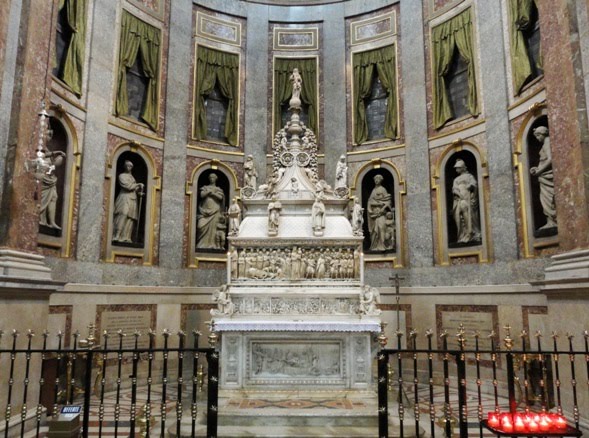
Feast of our Holy Father Saint Dominic
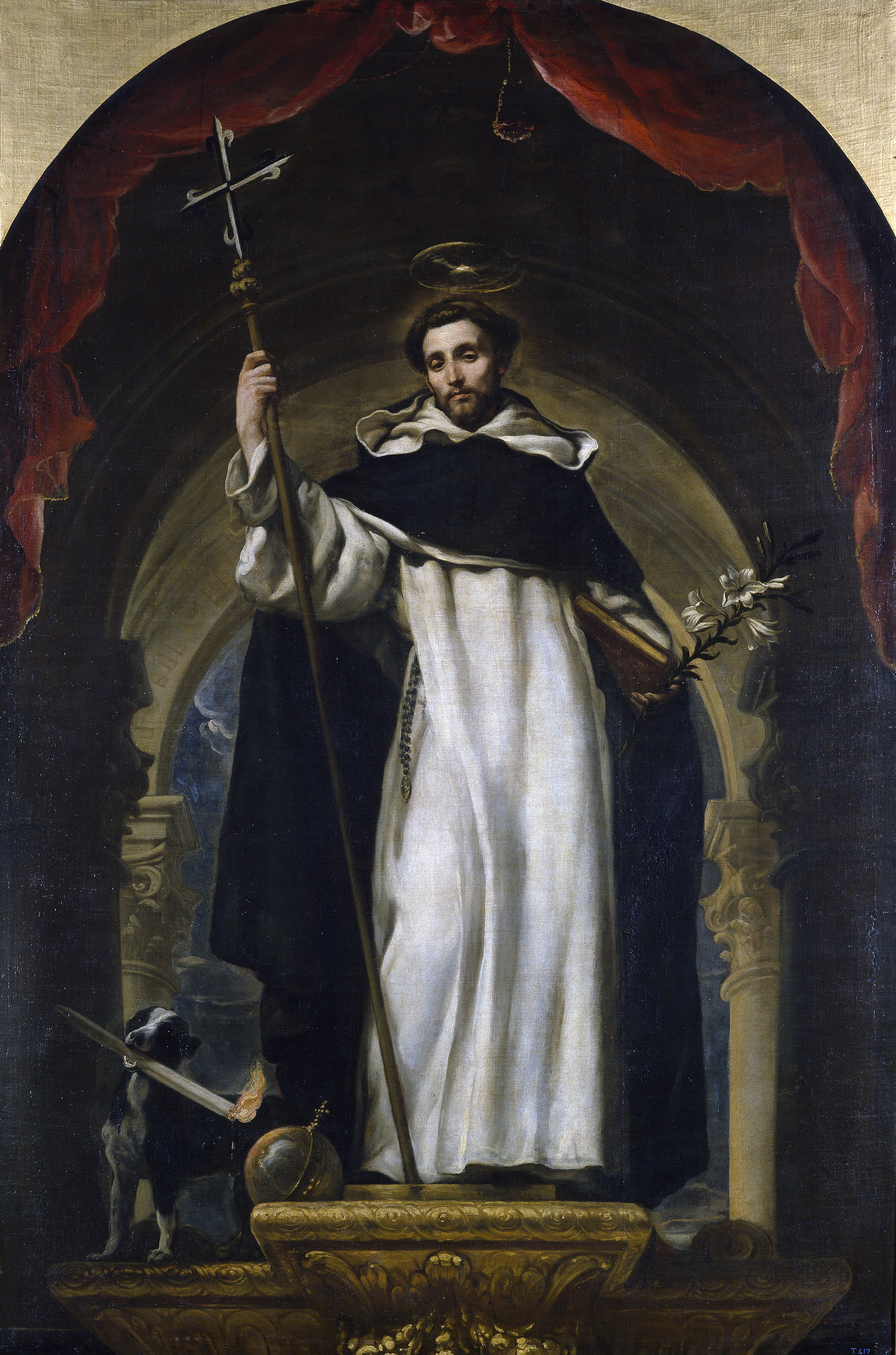 Founder of the Order of Preachers, commonly known as the Dominican Order; born at Calaroga, in Old Castile, c. 1170; died 6 August, 1221. His parents, Felix Guzman and Joanna of Aza, undoubtedly belonged to the nobility of Spain, though probably neither was connected with the reigning house of Castile, as some of the saint’s biographers assert. Of Felix Guzman, personally, little is known, except that he was in every sense the worthy head of a family of saints. To nobility of blood Joanna of Aza added a nobility of soul which so enshrined her in the popular veneration that in 1828 she was solemnly beatified by Leo XII. The example of such parents was not without its effect upon their children. Not only Saint Dominic but also his brothers, Antonio and Manes, were distinguished for their extraordinary sanctity. Antonio, the eldest, became a secular priest and, having distributed his patrimony to the poor, entered a hospital where he spent his life minis ministering to the sick. Manes, following in the footsteps of Dominic, became a Friar Preacher, and was beatified by Gregory XVI.
The birth and infancy of the saint were attended by many marvels forecasting his heroic sanctity and great achievements in the cause of religion. From his seventh to his fourteenth year he pursued his elementary studies tinder the tutelage of his maternal uncle, the archpriest of Gumiel d’lzan, not far distant from Calaroga. In 1184 Saint Dominic entered the University of Palencia. Here he remained for ten years prosecuting his studies with such ardour and success that throughout the ephemeral existence of that institution he was held up to the admiration of its scholars as all that a student should be. Amid the frivolities and dissipations of a university city, the life of the future saint was characterized by seriousness of purpose and an austerity of manner which singled him out as one from whom great thin might be expected in the future. But more than one he proved that under this austere exterior he carried a heart as tender as a woman’s. On one occasion he sold his books, annotated with his own hand, to relieve the starving poor of Palencia. His biographer and contemporary, Bartholomew of Trent, states that twice he tried to sell himself into slavery to obtain money for the liberation of those who were held in captivity by the Moors. These facts are worthy of mention in view of the cynical and saturnine character which some non-Catholic writers have endeavoured to foist upon one of the most charitable of men. Concerning the date of his ordination his biographers are silent; nor is there anything from which that date can be inferred with any degree of certainty. According to the deposition of Brother Stephen, Prior Provincial of Lombardy, given in the process of canonization, Dominic was still a student at Palencia when Don Martin de Bazan, the Bishop of Osma, called him to membership in the cathedral chapter for the purpose If assisting in its reform. The bishop realized the importance to his plan of reform of having constantly before his canons the example of one of Dominic’s eminent holiness. Nor was he disappointed in the result. In recognition of the part he had taken in converting its members into canons regular, Dominic was appointed sub-prior of the reformed chapter. On the accession of Don Diego d’Azevedo to the Bishopric of Osma in 1201, Dominic became superior of the chapter with the title of prior. As a canon of Osma, he spent nine years of his life hidden in God and rapt in contemplation, scarcely passing beyond the confines of the chapter house.
In 1203 Alfonso IX, King of Castile, deputed the Bishop of Osma to demand from the Lord of the Marches, presumably a Danish prince, the hand of his daughter on behalf of the king’s son, Prince Ferdinand. For his companion on this embassy Don Diego chose Saint Dominic. Passing through Toulouse in the pursuit of their mission, they beheld with amazement and sorrow the work of spiritual ruin wrought by the Albigensian heresy. It was in the contemplation of this scene that Dominic first conceived the idea of founding an order for the purpose of combating heresy and spreading the light of the Gospel by preaching to the ends of the then known world. Their mission having ended successfully, Diego and Dominic were dispatched on a second embassy, accompanied by a splendid retinue, to escort the betrothed princess to Castile. This mission, however, was brought to a sudden close by the death of the young woman in question. The two ecclesiastics were now free to go where they would, and they set out for Rome, arriving there towards the end of 1204. The purpose of this was to enable Diego to resign his bishopric that he might devote himself to the conversion of unbelievers in distant lands. Innocent III, however, refused to approve this project, and instead sent the bishop and his companion to Languedoc to join forces with the Cistercians, to whom he had entrusted the crusade against the Albigenses. The scene that confronted them on their arrival in Languedoc was by no means an encouraging one. The Cistercians, on account of their worldly manner of living, had made little or no headway against the Albigenses. They had entered upon their work with considerable pomp, attended by a brilliant retinue, and well provided with the comforts of life. To this display of worldliness the leaders of the heretics opposed a rigid asceticism which commanded the respect and admiration of their followers. Diego and Dominic quickly saw that the failure of the Cistercian apostolate was due to the monks’ indulgent habits, and finally prevailed upon them to adopt a more austere manner of life. The result was at once apparent in a greatly increased number of converts. Theological disputations played a prominent part in the propaganda of the heretics. Dominic and his companion, therefore, lost no time in engaging their opponents in this kind of theological exposition. Whenever the opportunity offered, they accepted the gage of battle. The thorough training that the saint had received at Palencia now proved of inestimable value to him in his encounters with the heretics. Unable to refute his arguments or counteract the influence of his preaching, they visited their hatred upon him by means of repeated insults and threats of physical violence. With Prouille for his head-quarters, he laboured by turns in Fanjeaux, Montpellier, Servian, Béziers, and Carcassonne. Early in his apostolate around Prouille the saint realized the necessity of an institution that would protect the women of that country from the influence of the heretics. Many of them had already embraced Albigensianism and were its most active propagandists. These women erected convents, to which the children of the Catholic nobility were often sent-for want of something better-to receive an education, and, in effect, if not on purpose, to be tainted with the spirit of heresy. It was needful, too, that women converted from heresy should be safeguarded against the evil influence of their own homes. To supply these deficiencies, Saint Dominic, with the permission of Foulques, Bishop of Toulouse, established a convent at Prouille in 1206. To this community, and afterwards to that of Saint Sixtus, at Rome, he gave the rule and constitutions which have ever since guided the nuns of the Second Order of Saint Dominic.
The year 1208 opens a new epoch in the eventful life of the founder. On 15 January of that year Pierre de Castelnau, one of the Cistercian legates, was assassinated. This abominable crime precipitated the crusade under Simon de Montfort, which led to the temporary subjugation of the heretics. Saint Dominic participated in the stirring scenes that followed, but always on the side of mercy, wielding the arms of the spirit while others wrought death and desolation with the sword. Some historians assert that during the sack of Béziers, Dominic appeared in the streets of that city, cross in hand, interceding for the lives of the women and children, the aged and the infirm. This testimony, however, is based upon documents which Touron regards as certainly apocryphal. The testimony of the most reliable historians tends to prove that the saint was neither in the city nor in its vicinity when Béziers was sacked by the crusaders. We find him generally during this period following the Catholic army, reviving religion and reconciling heretics in the cities that had capitulated to, or had been taken by, the victorious de Montfort. it was probably I September, 1209, that Saint Dominic first came in contact with Simon de Montfort and formed with him that intimate friendship which was to last till the death of the brave crusader under the walls of Toulouse (25 June, 1218). We find him by the side of de Montfort at the siege of Lavaur in 121 1, and again in 1212, at the capture of La Penne d’Ajen. In the latter part of 1212 he was at Pamiers labouring, at the invitation of de Montfort, for the restoration of religion and morality. Lastly, just before the battle of Muret. 12 September, 1213, the saint is again found in the council that preceded the battle. During the progress of the conflict, he knelt before the altar in the church of Saint-Jacques, praying for the triumph of the Catholic arms. So remarkable was the victory of the crusaders at Muret that Simon de Montfort regarded it as altogether miraculous, and piously attributed it to the prayers of Saint Dominic. In gratitude to God for this decisive victory, the crusader erected a chapel in the church of Saint-Jacques, which he dedicated, it is said, to Our Lady of the Rosary. It would appear, therefore, that the devotion of the Rosary, which tradition says was revealed to Saint Dominic, had come into general use about this time. To this period, too, has been ascribed the foundation of the Inquisition by Saint Dominic, and his appointment as the first lnquisitor. As both these much controverted questions will receive special treatment elsewhere in this work, it will suffice for our )resent purpose to note that the Inquisition was in operation in 1198, or seven years before the saint took part in the apostolate in Languedoc, and while ie was still an obscure canon regular at Osma. If he was for a certain time identified-with the operations of the Inquisition, it was only in the capacity of a theologian passing upon the orthodoxy of the accused. Whatever influence he may have had with the judges of that much maligned institution was always employed on the side of mercy and forbearance, as witness the classic case of Ponce Roger.
In the meantime, the saint’s increasing reputation for heroic sanctity, apostolic zeal, and profound learning caused him to be much sought after as a candidate for various bishoprics. Three distinct efforts were made to miss him to the episcopate. In July, 1212, the chapter of Béziers chose him for their bishop. Again, the canons of Saint-Lizier wished him to succeed Garcias de l’Orte as Bishop of Comminges. Lastly, in 1215 an effort was made by Garcias de l’Orte himself, who had been transferred from – Comminges to Auch, to make him Bishop of Navarre. But Saint Dominic absolutely refused all episcopal honours, saying that he would rather take flight in the night, with nothing but his staff, than accept the episcopate. From Muret Dominic returned to Carcassonne, where he resumed his preaching with unqualified success. It was not until 1214 that he returned to Toulouse. In the meantime the influence of his preaching and the eminent holiness of his life had drawn around him a little band of devoted disciples eager to follow wherever he might lead. Saint Dominic had never for a moment forgotten his purpose, formed eleven years before, of founding a religious order to combat heresy and propagate religious truth. The time now seemed opportune for the realization of his plan. With the approval of Bishop Foulques of Toulouse, he began the organization of his little band of followers. That Dominic and his companions might possess a fixed source of revenue Foulques made him chaplain of Fanjeaux and in July, 1215, canonically established the community as a religious congregation of his diocese, whose mission was the propagation of true doctrine and good morals, and the extirpation of heresy. During this same year Pierre Seilan, a wealthy citizen of Toulouse, who had placed himself under the direction of Saint Dominic, put at their disposal his own commodious dwelling. In this way the first convent of the Order of Preachers was founded on 25 April, 1215. But they dwelt here only a year when Foulques established them in the church of Saint Romanus. Though the little community had proved amply the need of its mission and the efficiency of its service to the Church, it was far from satisfying the full purpose of its founder. It was at best but a diocesan congregation, and Saint Dominic had dreamed Of a world-order that would carry its apostolate to the ends of the earth. But, unknown to the saint, events were shaping themselves for the realization of his hopes. In November, 1215, an ecumenical council was to meet at Rome “to deliberate on the improvement of morals, the extinction of heresy, and the strengthening of the faith”. This was identically the mission Saint Dominic had determined on for his order. With the Bishop of Toulouse, he was present at the deliberations of this council. From the very first session it seemed that events conspired to bring his plans to a successful issue. The council bitterly arraigned the bishops for their neglect of preaching. In canon X they were directed to delegate capable men to preach the word of God to the people. Under these circumstances, it would reasonably appear that Dominic’s request for confirmation of an order designed to carry out the mandates of the council would be joyfully granted. But while the council was anxious that these reforms should be put into effect as speedily as possible, it was at the same time opposed to the institution of any new religious orders, and had legislated to that effect in no uncertain terms. Moreover, preaching had always been looked upon as primarily a function of the episcopate. To bestow this office on an unknown and untried body of simple priests s seemed too original and too bold in its conception to appeal to the conservative prelates who influenced the deliberations of the council. When, therefore, his petition for the approbation of his infant institute was refused, it could not have been wholly unexpected by Saint Dominic.
Returning to Languedoc at the close of the council in December, 1215, the founder gathered about him his little band of followers and informed them of the wish of the council that there should be no new rules for religious orders. Thereupon they adopted the ancient rule of Saint Augustine, which, on account of its generality, would easily lend itself to any form they might wish to give it. This done, Saint Dominic again appeared before the pope in the month of August, 1216, and again solicited the confirmation of his order. This time he was received more favourably, and on 22 December, 1216, the Bull of confirmation was issued.
Saint Dominic spent the following Lent preaching in various churches in Rome, and before the pope and the papal court. It was at this time that he received the office and title of Master of the Sacred Palace, or Pope’s Theologian, as it is more commonly called. This office has been held uninterruptedly by members of the order from the founder’s time to the present day. On 15 August, 1217, he gathered the brethren about him at Prouille to deliberate on the affairs of the order. He had determined upon the heroic plan of dispersing his little band of seventeen unformed followers over all europe. The result proved the wisdom of an act which, to the eye of human prudence at least, seemed little short of suicidal. To facilitate the spread of the order, Honorius III, on 11 Feb., 1218, addressed a Bull to all archbishops, bishops, abbots, and priors, requesting their favour on behalf of the Order of Preachers. By another Bull, dated 3 Dec., 1218, Honorius III bestowed upon the order the church of Saint Sixtus in Rome. Here, amid the tombs of the Appian Way, was founded the first monastery of the order in Rome. Shortly after taking possession of Saint Sixtus, at the invitation of Honorius, Saint Dominic begin the somewhat difficult task of restoring the pristine observance of religious discipline among the various Roman communities of women. In a comparatively short time the work was accomplished, to the great satisfaction of the pope. His own career at the University of Palencia, and the practical use to which he had put it in his encounters with the Albigenses, as well as his keen appreciation of the needs of the time, convinced the saint that to ensure the highest efficiency of the work of the apostolate, his followers should be afforded the best educational advantages obtainable. It was for this reason that on the dispersal of the brethren at Prouille he dispatched Matthew of France and two companions to Paris. A foundation was made in the vicinity of the university, and the friars took possession in October, 1217. Matthew of France was appointed superior, and Michael de Fabra was placed in charge of the studies with the title of Lecturer. On 6 August of the following year, Jean de Barastre, dean of Saint-Quentin and professor of theology, bestowed on the community the hospice of Saint-Jaques, which he had built for his own use. Having effected a foundation at the University of Paris, Saint Dominic next determined upon a settlement at the University of Bologna. Bertrand of Garrigua, who had been summoned from Paris, and John of Navarre, set out from Rome, with letters from Pope Honorius, to make the desired foundation. On their arrival at Bologna, the church of Santa Maria della Mascarella was placed at their disposal. So rapidly did the Roman community of Saint Sixtus grow that the need of more commodious quarters soon became urgent. Honorius, who seemed to delight in supplying every need of the order and furthering its interests to the utmost of his power, met the emergency by bestowing on Saint Dominic the basilica of Santa Sabina.
Towards the end of 1218, having appointed Reginald of Orléans his vicar in Italy, the saint, accompanied by several of his brethren, set out for Spain. Bologna, Prouille, Toulouse, and Fanjeaux were visited on the way. From Prouille two of the brethren were sent to establish a convent at Lyons. Segovia was reached just before Christmas. In February of the following year he founded the first monastery of the order in Spain. Turning southward, he established a convent for women at Madrid, similar to the one at Prouille. It is quite probable that on this journey he personally presided over the erection of a convent in connexion with his alma mater, the University of Palencia. At the invitation of the Bishop of Barcelona, a house of the order was established in that city. Again bending his steps towards Rome he recrossed the Pyrenees and visited the foundations at Toulouse and Paris. During his stay in the latter place he caused houses to be erected at Limoges, Metz, Reims, Poitiers, and Orléans, which in a short time became centres of Dominican activity. From Paris he directed his course towards Italy, arriving in Bologna in July, 1219. Here he devoted several months to the religious formation of the brethren he found awaiting him, and then, as at Prouille, dispersed them over Italy. Among the foundations made at this time were those at Bergamo, Asti, Verona, Florence, Brescia, and Faenza. From Bologna he went to Viterbo. His arrival at the papal court was the signal for the showering of new favours on the order. Notable among these marks of esteem were many complimentary letters addressed by Honorius to all those who had assisted the Fathers in their vinous foundations. In March of this same year Honorius, through his representatives, bestowed upon the order the church of San Eustorgio in Milan. At the same time a foundation at Viterbo was authorized. On his return to Rome, towards the end of 1219, Dominic sent out letters to all the convents announcing the first general chapter of the order, to be held at Bologna on the feast of the following Pentecost. Shortly before, Honorius III, by a special Brief, had conferred upon the founder the title of Master General, which till then he had held only by tacit consent. At the very first session of the chapter in the following spring the saint startled his brethren by offering his resignation as master general. It is needless to say the resignation was not accepted and the founder remained at the head of the institute till the end of his life.
Soon after the close of the chapter of Bologna, Honorius III addressed letters to the abbeys and priories of San Vittorio, Sillia, Mansu, Floria, Vallombrosa, and Aquila, ordering that several of their religious be deputed to begin, under the leadership of Saint Dominic, a preaching crusade in Lombardy, where heresy had developed alarming proportions. For some reason or other the plans of the pope were never realized. The promised support failing, Dominic, with a little band of his own brethren, threw himself into the field, and, as the event proved, spent himself in an effort to bring back the heretics to their allegiance to the Church. It is said that 100,000 unbelievers were converted by the preaching and the miracles of the saint. According to Lacordaire and others, it was during his preaching in Lombardy that the saint instituted the Militia of Jesus Christ, or the third order, as it is commonly called, consisting of men and women living in the world, to protect the rights and property of the Church. Towards the end of 1221 Saint Dominic returned to Rome for the sixth and last time. Here he received many new and valuable concessions for the order. In January, February, and March of 1221 three consecutive Bulls were issued commending the order to all the prelates of the Church-. The thirtieth of May, 1221, found him again at Bologna presiding over the second general chapter of the order. At the close of the chapter he set out for Venice to visit Cardinal Ugolino, to whom he was especially indebted for many substantial acts of kindness. He had scarcely returned to Bologna when a fatal illness attacked him. He died after three weeks of sickness, the many trials of which he bore with heroic patience. In a Bull dated at Spoleto, 13 July, 1234, Gregory IX made his cult obligatory throughout the Church.
The life of St. Dominic was one of tireless effort in the, service of god. While he journeyed from place to place he prayed and preached almost uninterruptedly. – His penances were of such a nature as to cause the brethren, who accidentally discovered them. to fear the effect upon his life. While his charity was boundless he never permitted it to interfere with the stern sense of duty that guided every action of his life. If he abominated heresy and laboured untiringly for its extirpation it was because he loved truth and loved the souls of those among whom he laboured. He never failed to distinguish between sin and the sinner. It is not to be wondered at, therefore, if this athlete of Christ, who had conquered himself before attempting the reformation of others, was more than once chosen to show forth the power of God. The failure of the fire at Fanjeaux to consume the dissertation he had employed against the heretics, and which was thrice thrown into the flames; the raising to life of Napoleone Orsini; the appearance of the annals in the refectory of Saint Sixtus in response to his prayers, are but a few of the supernatural happenings by which God was pleased to attest the eminent holiness of His servant. We are not surprised, therefore, that, after signing the Bull of canonization on 13 July, 1234, Gregory IX declared that he no more doubted the saintliness of Saint Dominic than he did that of Saint Peter and Saint Paul.
Born: 1170 at Calaruega, Burgos, Old Castile
Died: August 6, 1221 at Bologna
Beatified: July 13, 1234 by Pope Gregory IX at Rieti, Italy
Patronage: astronomers; astronomy; prelature of Batanes-Babuyanes, Philippines; diocese of Bayombong, Philippines; Dominican Republic; falsely accused people; scientists
Representation: chaplet, Dominican carrying a rosary and a tall cross; Dominican holding a lily; Dominican with dog and globe; Dominican with fire; Dominican with star shining above his head; rosary; star

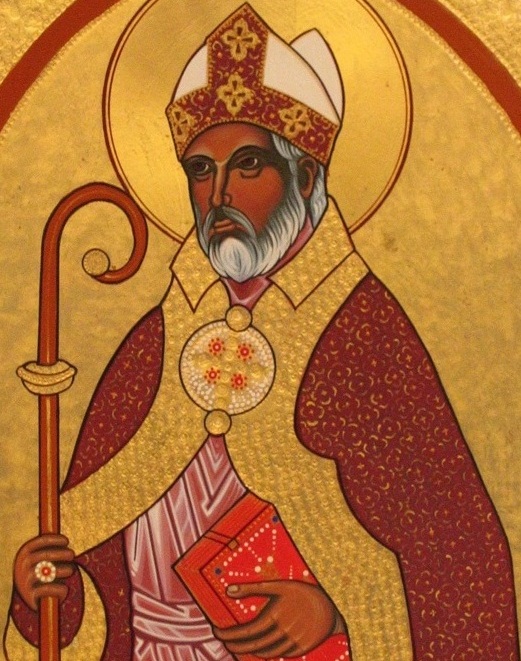
Blessed Augustine Fangi of Biella

Miracles around the tomb of Augustine of Biella led to his beatification in 1878, after he had long been forgotten by everyone, except the residents of the little town at the foot of the Alps where he lived. His is another example of a life noted for piety and regularity, but quite unremarkable for unusual events or venturesome projects.
Augustine’s father was a member of the Fangi family, who were wealthy and noble, and, because of this, he had planned a secular career for his son. But when the Dominicans came to Biella, his plans were changed, for Augustine was completely charmed by their way of life and begged to be admitted. He entered, while quite young, the new convent that the Dominicans had built at Biella.
Augustine’s had a reputation for penance, even at a time when people were not as squeamish as they are today. Not only did he inflict harsh penances upon himself, he also bore with patience whatever pain and annoyance life granted him gratuitously. At one time he was required to undergo a surgical operation without, of course, any anesthetic. He did so without making the slightest outcry. In fact, he said afterwards that his mind was so intensely focused on something else that he hardly noticed what was being done to him. His mind was on that “something else” most of the time, for he prayed continually.
In 1464, Augustine was made prior at Soncino. Several of his best known miracles were performed there. At one time, a deformed child, who had died without baptism, was restored to life, by Augustine’s prayer, long enough to be baptized. At another time, when he was passing down the street, he met a little boy who was crying bitterly, because he had broken a jug of wine. Augustine gathered up the shards and put them back together again. Then, with a prayer, he refilled the jug and handed it back to the startled child. Still another time, through his intercession, a woman was delivered from possession of five devils.
Augustine spent his last ten years in the convent in Venice, and he died there on the Feast of Saint Mary Magdalene. He was buried in a damp place. Forty years later, on the occasion of some repairs to the church, his coffin, found floating on water, was opened. His body and habit were still intact. This did much to promote interest in his cause. Nevertheless, it was more than three centuries before he was finally beatified.
Born: at Biella, Italy, 1430
Died: feast of Saint Mary Magdalen 1493 at Venice, Italy; in the 1530s, workmen found his coffin floating in the water that had seeped into the burial chamber – when opened, Augustine’s body and clothing were found to be incorrupt
Cultus Confirmed: in 1872 by Pope Pius IX
Beatified: in 1878 by Pope Leo XIII
Blessed Pope Benedict XI

Nicholas Boccasini was born into a poor family of which we know little else, though there are several different traditions concerning it. One claims that his father was a poor shepherd. Another that he was an impoverished nobleman. Whichever he was, he died when Nicholas was very small, and the little boy was put in the care of an uncle, a priest at Treviso.
The child proved to be very intelligent, so his uncle had him trained in Latin and other clerical subjects. When Nicholas was ten, his uncle got him a position as tutor to some noble children. He followed this vocation until he was old enough to enter the Dominican community at Venice in 1254. Here, and in various parts of Italy, Nicholas spent the next 14 years, completing his education. It is quite probable that he had Saint Thomas Aquinas for one of his teachers.
Nicholas was pre-eminently a teacher at Venice and Bologna. He did his work well according to several sources, including a testimonial from Saint Antoninus, who said that he had “a vast store of knowledge, a prodigious memory, a penetrating genius, and (that) everything about him endeared him to all.” In 1295, he received the degree of master of theology.
The administrative career of Nicholas Boccasini began with his election as prior general of Lombardy and then as the ninth master general of the Order of Preachers in 1296. His work in this office came to the notice of the pope, who, after Nicholas had completed a delicate piece of diplomacy in Flanders, appointed him cardinal in 1298.
The Dominicans hurried to Rome to protest that he should not be given the dignity of a cardinal, only to receive from the pope the mystifying prophecy that God had reserved an even heavier burden for Nicholas. As papal legate Nicholas traveled to Hungary to try to settle a civil war there.
Boniface VIII did not always agree with the man he had appointed cardinal-bishop of Ostia and dean of the sacred college. But they respected one another, and in the tragic affair that was shaping up with Philip the Fair of France, Cardinal Boccasini was to be one of only two cardinals who defended the Holy Father, even to the point of offering his life.
Philip the Fair, like several other monarchs, discovered that his interests clashed with those of the papacy. His action was particularly odious in an age when the papal power had not yet been separated completely from temporal concerns.
The French monarch, who bitterly hated Boniface, besieged the pope in the Castle of Anagni, where he had taken refuge, and demanded that he resign the papacy. His soldiers even broke into the house and were met by the pope, dressed in full pontifical vestments and attended by two cardinals, one of whom was Cardinal Boccasini. For a short time it looked as though the soldiers, led by Philip’s councilor William Nogaret, might kill all three of them, but they refrained from such a terrible crime and finally withdrew after Nicholas rallied the papal forces and rescued Boniface from Anagni.
Cardinal Boccasini set about the difficult task of swinging public opinion to the favor of the pope. Successful at this, he stood sorrowfully by when the pontiff died, broken-hearted by his treatment at the hands of the French soldiers. On October 22, 1303, at the conclave following the death of Boniface, the prophesied burden fell upon the shoulders of the cardinal-bishop of Ostia, who took the name Benedict XI.
The reign of Benedict XI was too short to give him time to work out any of his excellent plans for settling the troubles of the Church. Most of his reign was taken up with undoing the damage done by Philip the Fair. He lifted the interdict on the French people that had been laid down by his predecessor and made an uneasy peace with Philip. He worked to reconcile warring parties in Europe and the Church and to increase spirituality. His reign, short though it was, was noted for its leniency and kindness.
There are few personal anecdotes regarding Benedict, but at least one worth telling. Once, during his pontificate, his mother came to the papal court to see him. The court attendants decided that she was too poorly dressed to appear in the presence of the Holy Father, so they dressed her up in unaccustomed finery before allowing her to see her son. Benedict, sensing what had happened, told them he did not recognize this wealthy woman, and he asked them where was the little widow, pious and poorly dressed, whom he loved so dearly.
Benedict XI died suddenly in 1304. He had continued to the end with his religious observances and penances. Some people believed that he had been poisoned, but there has never been any evidence that this was the case. Many miracles were performed at his tomb, and there were several cures even before his burial.
Born: Born in Treviso, Italy, 1240
Papal Ascension: 1303
Died: died in Perugia, Italy, April 25, 1304
Beatified: beatified by Pope Clement XII in 1736
Representation: In art, Pope Benedict wears a Dominican habit and papal tiara, while holding the keys. He is venerated in Perugia.
Blessed Innocent V

Peter of Tarentaise was barely 10 years old when he was admitted to the Dominican Order by Blessed Jordan of Saxony as a boy-novice and sent to Paris to study. Like Saint Thomas Aquinas, Blessed Ambrose of Siena, and other luminaries of the 13th century, he fell under the masterly tutelage of Saint Albert the Great.
He received his master’s degree in theology in 1259, then he taught for some years in Paris, where he contributed a great deal to the order’s reputation for learning. He wrote a number of commentaries on Scripture and the Commentary on the Sentences of Peter Lombard, but he devoted most of his time to the classroom. He soon became famous as a preacher and theologian, and in 1259, with a committee including his friend Thomas Aquinas, composed a plan of study that is still the basis of Dominican teaching.
At age 37, Peter began the long years of responsibility in the various offices he was to hold in his lifetime as prior provincial of France. He visited on foot all Dominican houses under his care, and was then sent to Paris to replace Thomas Aquinas at the University of Paris. Twice provincial, he was chosen archbishop of Lyons in 1272 and administered the affairs of the diocese for some time, though he was never actually consecrated for that see.
The next year Peter was appointed cardinal-archbishop of Ostia, Italy, while still administering the see of Lyons. With the great Franciscan, Saint Bonaventure, assumed much of the labor of the Council of Lyons to which Saint Thomas was hastening at the time of his death. To the problems of clerical reform and the healing of the Greek schism the two gifted friars devoted their finest talents. Before the council was over, Bonaventure died, and Peter of Tarentaise preached the funeral panegyric.
In January 1276, Peter was with Blessed Pope Gregory X when the latter died at Arezzo. The conclave was held in the following month. On January 21, 1276, Peter of Tarentaise received every vote except his own. With a sad heart, he left the seclusion of his religious home to ascend the Fisherman’s Throne as Pope Innocent V.
The reign of the new pope, which promised so much to a harassed people, was to be very brief. But, imbued with the spirit of the early apostles, he crowded a lifetime into the short space given him.
He instigated a new crusade against the Saracens and began reforms in the matter of regular observance. He actually succeeded in solving many of the questions of the Greek schism and in establishing a short-lived truce. He struggled to reconcile the Guelphs and Ghibellines, restored peace between Pisa and Lucca, and acted as mediator between Rudolph of Hapsburg and Charles of Anjou. He restored the custom of personally assisting at choral functions with the canons of the Lateran, and he inspired all with the love that animated his heart.
Had the measures begun by Innocent V had time to be fully realized, he might have accomplished great good for the Church; he did at least open the way for those who were to follow him. Death stopped the hand of the zealous pope when he had reigned only five months. Like his friends Saint Thomas and Saint Bonaventure, he was untouched by the honors and dignity with which he had been favored, and death found him exactly what he had been for more than 40 years–a simple, humble friar.
Born: 1245 at Tarentaise, Burgundy, France as Petrus a Tarentasia
Papal Ascension: 1276
Died: 1277 at Rome of natural causes
Beatified: cult was confirmed by Leo XIII in 1898

Blessed Hosanna of Mantua
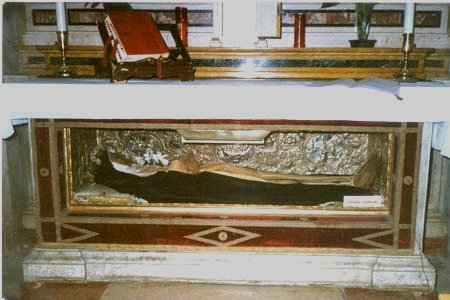
Osanna Andreassi was the daughter of the wealthy patrician Andreasio. She experienced visions from her early childhood, but kept the experiences to herself. At the age of six, she saw the Child Jesus carrying a cross and wearing a crown of thorns. He told her that He has a special love of children and purity. She was so impressed, as we all would be, that she immediately consecrated her entire life to God.
Osanna begged her father to allow her to learn to read so that she might be able to pray the Divine Office. He refused her request because it was a waste for a woman who was expected simply to raise a family. Osanna couldn’t explain why she wanted to learn; she couldn’t reveal her plans to him. When she was 14 and knew that he was arranging a marriage for her, she furtively went to the Dominican church and received the habit of its tertiaries. When she appeared at home in her religious garb, she explained that she had made a vow and must wear it until she had fulfilled her promise.
Now, this should not be understood as condoning deceit, but it served God’s purpose. Her pious father accepted her explanation for a time. As the months passed he began to suspect what had happened. He had already refused to give her permission to enter the convent, and he was displeased that she should try to live as a tertiary in his own home. Eventually, his father’s heart melted and he allowed Osanna to continue her routine of prayer, penance, and charity for the rest of her life. She was not professed until a few months before her death forty-two years later.
After the early death of both her parents, Osanna spent her fortune in the service of the poor. Her house became a center for people to discuss spiritual matters, for the needy and the sick, for the wealthy and the noble.
It is said that like Saint Catherine, she miraculously learned to read. One day she saw a piece of paper with two words and said, “Those words are ‘Jesus’ and ‘Mary.'” From that time she could read anything pertaining to spiritual matters. By the same sort of favor, she also learned to write.
At age 28 (1477), Osanna received the mark of the wound in Jesus’ side, caused by a long nail. For the next year various of the sacred wounds would appear, including the crown of thorns. Others saw them only on Wednesdays, Fridays, and during Holy Week, but it appears that they were visible to her and caused both pain and joy.
At this time Osanna felt the need for a spiritual director and prayed for one with wisdom, patience, and understanding. She found him during Mass when an interior voice said to her, “That’s the one you need, the one who is saying Mass.” Osanna thought he was too young, but, upon meeting him in the confessional a few days later, all doubts were erased.
Before her death, the soul of Blessed Columba of Rieti, another Dominican tertiary, appeared to her and told Osanna to prepare for death.
Born: January 17, 1449 at Mantua, Italy
Died: 1505 of natural causes
Beatified: November 24, 1694 Pope Innocent XII (cultus confirmed)
Representation: In art, Osanna is a Dominican tertiary wearing a crown of thorns, surrounded by rays of light (not the halo of a saint), a lily, a broken heart with a crucifix springing from it, the devil under her feet, two angels (one with a lily, one with a cross). This is similar to the image of Saint Catherine of Siena, who has a halo. Osanna is the patroness of school girls.
Blessed Stephen Bandelli
Stephen Bandelli was born into a noble family. Little is known of his early years except that he applied for admission to the Dominicans in his hometown and received the habit while still very young.
Stephen earned a degree in canon law and a master’s degree in theology, and lectured at the University of Pavia. He was a man of superior intellect and a careful student. Tradition holds that he was “another Saint Paul,” and that his sermons were effective in bringing many Christians to a more fervent life and many sinners back into the fold. Aside from this, one reads only the traditional assurances–that he was prayerful, penitential, had a spirit of poverty, was charitable, and was a model religious.
When Stephen died, he was buried in the Dominican church of Saluzzo. Many miracles were worked at his tomb, and the citizens of Saluzzo invoked him, in 1487, when the town was attacked by one of their neighbors. Their preservation was attributed to Stephen’s intercession, as it was claimed that he had appeared in the sky above them while they were fighting. An annual feast was kept there in his honor for many years.


You must be logged in to post a comment.