
Category: Dominican Saints
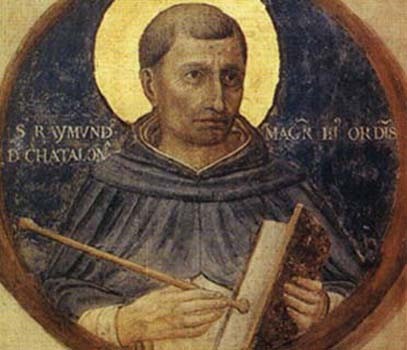
Saint Raymund of Pennafort

From the bull of his canonization, by Clement VIII in 1601, and his life, written by several Spanish, Italian and French authors. See Fleury, b. 78, n. 55, 64, and chiefly Touron Hommes Illustres de l’Ordre de S. Domin. t. 1, p. I
The house of Pegnafort, or, as it is pronounced, Pennafort, was descended from the counts of Barcelona, and nearly allied to the kings of Aragon. Raymund was born in 1175, at Pennafort, a castle in Catalonia, which in the fifteenth century was changed into a convent of the order of St. Dominick. Such was his rapid progress in his studies, that at the age of twenty he taught philosophy at Barcelona, which he did gratis, and with so great reputation, that he began then to be consulted by the ablest masters. His principal care was to instil into his scholars the most perfect maxims of a solid piety and devotion, to compose all differences among the citizens, and to relieve the distressed. He was about thirty years of age when he went to Bologna, in Italy, to perfect himself in the study of the canon and civil law, commenced Doctor in that faculty, and taught with the same disinterestedness and charity as he had done in his own country. In 1219 Berengarius, bishop of Barcelona, who had been at Rome, took Raymund home with him, to the great regret of the university and senate of Bologna; and, not content with giving him a canonry in his church, made him his archdeacon, grand vicar, and official. He was a perfect model to the clergy, by his innocence, zeal, devotion, and boundless liberalities to the poor, whom he called his creditors. In 1222 he took the religious habit of St. Dominick at Barcelona, eight months after the death of the holy founder, and in the forty-seventh year of his age. No person was ever seen among the young novices more humble, more obedient, or more fervent. To imitate the obedience of a Man-God, who reduced himself to a state of subjection to his own creatures, to teach us the dangers and deep wound of self-will, and to point out to us the remedy, the saint would depend absolutely on the lights of his director in all things. And it was upon the most perfect self-denial that he laid the foundation of that high sanctity which he made the object of his most earnest desires. The grace of prayer perfected the work which mortification had begun. In a spirit of compunction he begged of his superiors that they would enjoin him some severe penance, to expiate the vain satisfaction and complacency which he said he had sometimes taken in teaching. They indeed imposed on him a penance, but not such a one as he expected. It was to write a collection of cases of conscience for the instruction and conveniency of confessors and moralists. This produced his Sum the first work of that kind. Had his method and decisions been better followed by some later authors of the like works, the holy maxims of Christian morality had been treated with more respect by some moderns than they have been, to our grief and confusion.
Raymund joined to the exercises of his solitude the functions of an apostolic life, by laboring without intermission in preaching, instructing, hearing confessions with wonderful fruit, and converting heretics, Jews, and Moors Among his penitents were James, king of Aragon, and St. Peter Nolasco, with whom he concerted the foundation of the Order of the B. Virgin of mercy for the redemption of captives. James, the young king of Aragon had married Eleonora of Castile within the prohibited degrees, without a dispensation. A legate was sent by Pope Gregory IX. to examine and judge the case. In a council of bishops of the two kingdoms, held at Tar rayon, he declared the marriage null, but that their son Don Alphonso should be reputed lawfully born, and heir to his father’s crown. The king had taken his confessor with him to the council, and the cardinal legate was so charmed with his talents and virtue, that he associated him in his legation and gave him a commission to preach the holy war against the Moors. The servant of God acquitted himself of that function with so much prudence, zeal, and charity, that he sowed the seeds of the total overthrow of those infidels in Spain. His labors were no less successful in the reformation of the manners of the Christians detained in servitude under the Moors which were extremely corrupted by their long slavery or commerce with these infidels. Raymund showed them, by words full of heavenly unction and fire, that, to triumph over their bodily, they must first conquer their spiritual enemies, and subdue sin in themselves, which made God their enemy. Inculcating these and the like spiritual lessons, he ran over Catalonia, Aragon, Castile, and other countries. So general a change was wrought hereby in the manners of the people, as seemed incredible to all but those who were witnesses of it. By their conversion the anger of God was appeased, and the arms of the faithful became terrible to their enemies. The kings of Castile and Leon freed many places from the Moorish yoke. Don James, king of Aragon, drove them out of the islands of Majorca and Minorca, and soon after, in 1237, out of the whole kingdom of Valentia. Pope Gregory IX. having called St. Raymund to Rome in 1230, nominated him his chaplain, (which was the title of the Auditor of the causes of the apostolic palace,) as also grand penitentiary. He made him likewise his own confessarius, and in difficult affairs came to no decision but by his advice. The saint still reserved himself for the poor, and was so solicitous for them that his Holiness called him their father. He enjoined the pope, for a penance, to receive, hear, and expedite immediately all petitions presented by them. The pope, who was well versed in the canon law, ordered the saint to gather into one body all the scattered decree of popes and councils, since the collection made by Gratian in 1150. Raymund compiled this work in three years, in five books, commonly called the Decretals, which the same pope Gregory confirmed in 1234. It is looked upon as the best finished part of the body of the canon law; on which account the canonists have usually chosen it for the texts of their comments. In 1235, the pope named St. Raymund to the archbishopric of Tarragon, the capital of Aragon: the humble religious man was not able to avert the storm, as he called it, by tears and entreaties; but at length fell sick through anxiety and fear. To restore him to his health, his Holiness was obliged to consent to excuse him, but required that he should recommend a proper person. The saint named a pious and learned canon of Gironne. He refused other dignities with the like constancy.
For the recovery of his health he returned to his native country, and was received with as much joy as if the safety of the whole kingdom. and of every particular person, had depended on his presence. Being restored again to his dear solitude at Barcelona, he continued his former exercises of contemplation, preaching, and administering the sacrament of penance. Except on Sundays, he never took more than one very small refection in the day. Amidst honors and applause he was ever little in his own eyes: he appeared in the schools like a scholar, and in his convent begged the superior to instruct him in the rules of religious perfection, with the humility and docility of a novice. Whether he sung the divine praises with his brethren, or prayed alone in his cell, or some corner of the church, ho poured forth an abundance of tears; and often was not able to contain within himself the ardor of his soul. His mildness and sweetness were unalterable. The incredible number of conversions of which he was the instrument, is known only to Him who, by his grace, was the author of them. He was employed frequently in most important commissions, both by the holy see and by the king. But he was thunderstruck by the arrival of four deputies from the general chapter of his order at Bologna, in 1238, with the news that he was chosen third general, Jordan of Saxony being lately dead. He wept and entreated, but at length acquiesced in obedience. He made the visitation of his order on foot, without discontinuing any of his penitential austerities, or rather exercises. He instilled into his spiritual children a love of regularity, solitude, mortification, prayer, sacred studies, and the apostolic functions, especially preaching. He reduced the constitutions of his order into a clearer method, with notes on the doubtful passages. This his code of rules was approved in three general chapters. In one held at Paris in 1239, he procured the establishment of this regulation, that a voluntary demission of a superior, founded upon just reasons, should be accepted. This he contrived in his own favor; for, to the extreme regret of the order, he in the year following resigned the generalship, which he had held only two years. He alleged for his reason his age of sixty-five years. Rejoicing to see himself again a private religious man, he applied himself with fresh vigor to the exercises and functions of an apostolic life, especially the conversion of the Saracens. Having this end in view he engaged St. Thomas to write his work ‘Against the Gentiles;’ procured the Arabic and Hebrew tongues to be taught in several convents of his order; and erected convents, one at Tunis, and another at Murcia, among the Moors. In 1256, he wrote to his general that ten thousand Saracens had received baptism. King James took him into the island of Majorca. The saint embraced that opportunity of cultivating that infant church. This prince was an accomplished soldier and statesman, and a sincere lover of religion, but his great qualities were sullied by a base passion for women. He received the admonitions of the saint with respect, and promised amendment of life, and a faithful compliance with the saint’s injunctions in every particular; but without effect. St. Raymund, upon discovering that he entertained a lady at his court with whom he was suspected to have criminal conversation, made the strongest instances to have her dismissed, which the king promised should be done, but postponed the execution. The saint, dissatisfied with the delay, begged leave to retire to his convent at Barcelona. The king not only refused him leave, but threatened to punish with death any person that should undertake to convey him out of the island. The saint, full of confidence in God, said to his companion, “A king of the earth endeavors to deprive us of the means of retiring; but the King of heaven will supply them.” He then walked boldly to the waters, spread his cloak upon them, tied up one corner of it to a staff for a sail, and having made the sign of the cross, stepped upon it without fear, while his timorous companion stood trembling and wondering on the shore. On this new kind of vessel the saint was wafted with such rapidity, that in six hours he reached the harbor of Barcelona, sixty leagues distant from Majorca. Those who saw him arrive in this manner met him with acclamations. But he, gathering up his cloak dry, put it on, stole through the crowd, and entered his monastery. A chapel and a tower, built on the place where he landed, have transmitted the memory of this miracle to posterity. This relation is taken from the bull of his canonization, and the earliest historians of his life. The king became a sincere convert, and governed his conscience, and even his kingdoms, by the advice of St. Raymund from that time till the death of the saint. The holy man prepared himself for his passage to eternity, by employing days and nights in penance and prayer. During his last illness, Alphonsus, king of Castile, with his queen, sons, and brother; and James, king of Aragon, with his court, visited him, and received his last benediction. He armed himself with the last sacraments; and, in languishing sighs of divine love, gave up his soul to God, on the 6th of January, in the year 1275, and the hundredth of his age. The two kings, with all the princes and princesses of their royal families, honored his funeral with their presence: but his tomb was rendered far more illustrious by miracles. Several are recorded in the bull of his canonization, published by Clement VIII. in 1601. Bollandus has filled fifteen pages in folio with an account of them. His office is fixed by Clement X. to the 23d of January.
The saints first learned in solitude to die to the world and themselves, to put on the spirit of Christ, and ground themselves in a habit of recollection and a relish only for heavenly things, before they entered upon the exterior functions even of a spiritual ministry. Amidst these weighty employments, not content with reserving always the time and means of frequent retirement for conversing with God and themselves, in their exterior functions by raising their minds to heaven with holy sighs and desires, they made all their actions in some measure an uninterrupted prayer and exercise of divine love and praise. St. Bonaventure reckons it among the general exercises of every religious or spiritual men, “that he keep his mind always raised, at least virtually, to God: hence, whensoever a servant of God has been distracted from attending to him for ever so short a space, he grieves and is afflicted, as if he was fallen into some misfortune, by having been deprived of the presence of such a friend who never forgets us. Seeing that our supreme felicity and glory consists in the eternal vision of God, the constant remembrance of him is a kind of imitation of that happy state: this the reward, that the virtue which entitles us to it. Till we are admitted to his presence, let us in our exile always bear him in mind: every one will behold him in heaven with so much the greater joy, and so much the more perfectly, as he shall more assiduously and more devoutly have remembered him on earth. Nor is it only in our repose, but also in the midst of our employments, that we ought to have him present to our minds, in imitation of the holy angels, who, when they are sent to attend on us, so acquit themselves of the functions of this exterior ministry as never to be drawn from their interior attention to God. As much as the heavens exceed the earth, so much larger is the field of spiritual meditation than that of all terrestrial concerns.”
(Taken from Vol. I of “The Lives or the Fathers, Martyrs and Other Principal Saints” by the Rev. Alban Butler, the 1864 edition published by D. & J. Sadlier, & Company)
Blessed Francis of Capillas, O.P.

The 17th century was a period of great missionary activity. Many martyrs shed their blood on distant shores. Dominicans and Jesuits contributed a great share to the blood of martyrs. Among this glorious company, the Dominican Francis de Capillas has become the type and exemplar of them.
Francis was born in 1608 in Old Castile, Spain. Nothing is known of his childhood. He entered the Dominicans at Valladolid at age 17. The Spain of his youth was still ringing with the missionary zeal of Saints Louis Bertrand, Philip de las Casas, and Francis Xavier; the report of the martyrdom of Alphonsus Navarette (June 1), in Japan, was news at the time. Perhaps the bravery of these men helped to fire the young Francis with apostolic longing, for he volunteered for the Philippine mission while he was a deacon. In 1631 at the age of 23, he left Spain and was ordained in Manila. Here, at the gateway to the Orient, the Dominicans had founded a university in 1611, and the city teemed with missionaries traveling throughout the Orient.
The young priest labored for 10 years in the province of Cagayan, the Philippines, where heat, insects, disease, and paganism made life very hard. But it was not hard enough for Francis. He begged for a mission field that was really difficult; perhaps, like many of the eager young apostles of that time, he was hoping for an assignment in Japan, where the great persecution was raging. He was sent to Fukien, China, where he worked uneventfully for some years. Then a Tartar invasion put his life in jeopardy. He was captured by a band of Tartars and imprisoned as a spy.
Francis was subjected to a mock trial. Civil, military, and religious officials questioned him, and they accused him of everything from political intrigue to witchcraft. He was charged with disregarding ancestor worship, and, finally, since they could “find no cause in him,” he was turned over to the torturers.
He endured the cruel treatment of these men with great courage. Seeing his calmness, the magistrates became curious about his doctrines. They offered him wealth, power, and freedom, if he would renounce his faith, but he amazed and annoyed them by choosing to suffer instead. They varied the tortures with imprisonment, and he profitably used the time to convert his jailor and fellow prisoners. Even the mandarin visited him in prison, asking Francis if he would renounce his faith or would he prefer to suffer more. Being told that he was glad to suffer for Christ, the mandarin furiously ordered that he be scourged again “so he would have even more to be glad about.”
Francis was finally condemned, and was beheaded on 15 January 1640. He was beatified on 2 May 1919 by Pope Pius X.
The Feast of St. Elizabeth Ann Seton~ The Very Rev. Lady Sherwood, OPI
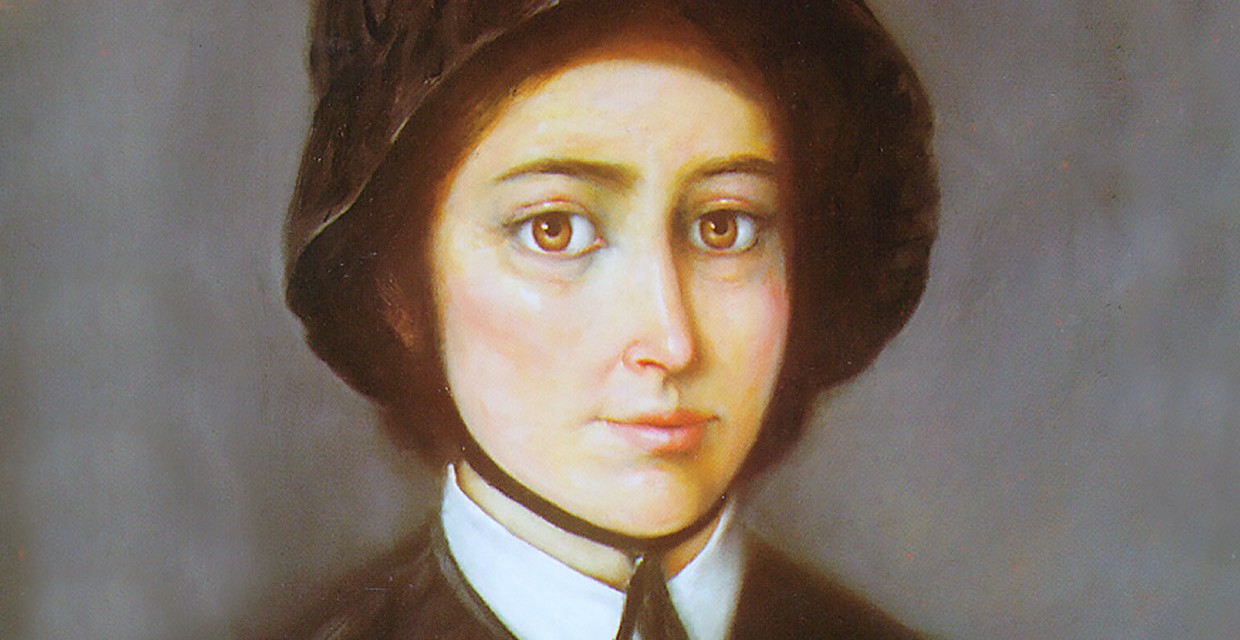
Memorial of St. Elizabeth Ann Seton.
Liturgical colour: White.
Reading 1: 1 JN 3:7-10
Responsorial Psalm: PS 98:1, 7-8, 9
Gospel: JN 1:35-42
Today we come together as a church to commemorate the Memorial of St. Elizabeth Ann Seton, my order Name Saint. Throughout Biblical history and even throughout the world still today, we come across people who endure much suffering within their lives and who, regardless of this, remain strong and devout in their faith. Today we remember St Elizabeth, whom is one such person from whose life, heart and devotion, we can take much inspiration and use it as an example within our own spiritual lives.
Elizabeth was the first native-born citizen of the United States to be Canonized to sainthood.
Elizabeth was born as Elizabeth Ann Bayley in New York city on the 28th August in the year 1774, and she was a child of the Revolutionary war. She was raised Episcopalian which was the faith of her parents.
Elizabeth married at the young age of only nineteen, to William Magee Seton, who was a young but wealthy merchant and together they parented five children.
Elizabeth had a very deep faith and concern for the poor even as a young woman and she shared this devotion with her sister-in-law, Rebecca Seton, with whom she became very close friends. Together, Elizabeth and Rebecca would undertake various missions for the poor and needy of their region and they adopted the name of the ‘Protestant Sisters of Charity` for their mission work.
Elizabeth’s life changed after only four years of marriage and became rather burdensome in nature. Elizabeth and her husband were left with the responsibility for seven half-brothers and sisters of William’s father when he died in the year 1798.
Elizabeth suffered further in the year 1801, when her own father with whom she had a close relationship, especially since the loss of her mother at aged only three, himself passed onto the care of the Lord.
Then yet again she suffered after only a further two years, when both her husband’s business and health failed. Filing for bankruptcy, Elizabeth and her husband sailed to Italy to help his health and to try to revive his business.
Whilst in Italy, Elizabeth suffered even further, as William’s condition worsened. He was quarantined and subsequently died of Tuberculosis in December of 1803. Elizabeth remained in Italy for several months after his death and during this time, was more fully exposed to the Catholic faith.
Elizabeth returned to New York city in June of 1804, only to suffer yet again with the loss of her dear friend and sister-in=-aw, Rebecca Seton, the very next month.
At only thirty years of age, Elizabeth had endured the loss of so many who were close to her and she seemed to have the weight of the world upon her shoulders. Even throughout all this, Elizabeth still remained fervent in faith.
The months ahead were life-changing for Elizabeth and she seemed ever more drawn to the Catholic faith and to Mother Church, much to the horror of her friends and remaining family who were firmly Protestant.
Elizabeth Ann Seton was received into the Catholic Church on the 4th March 1805. Her conversion cost her dearly in the areas of friendship and in support from her remaining family.
Elizabeth relocated to the Baltimore area and there she established a school for girls. She also founded a religious community along with two other young women and she took vows before the Archbishop Carroll as a member of the Sisters of Charity of St Joseph. From this time forward, Elizabeth was known as Mother Seton and she left a legacy of care and education for the poor. She even established the first free Catholic school of the nation.
In so many ways, the journey into the Catholic faith, helped Elizabeth to much more appreciate and to embrace her faith even more profoundly. Elizabeth was willing to endure all things to follow Christ. In her journal, she even wrote, ‘If I am right Thy grace impart still in the right to stay. If I am wrong Oh, teach my heart to find the better way’.
Many of us who have chosen the Catholic faith have experienced some setbacks and have had to endure issues with relationships, but for this brave and devout woman of faith, the cost was even greater.
Elizabeth died aged 46 on January 4th 1821 from Tuberculosis and was Canonized on September 14th 1975.
On this your special day, St Elizabeth Ann Seton, Pray for us!
O God, who crowned with the gift of true faith Saint Elizabeth Ann Seton’s burning zeal to find you, grant by her intercession and example that we may always seek you with diligent love and find you in daily service with sincere faith. Through our Lord Jesus Christ, your Son, who lives and reigns with you in the unity of the Holy Spirit, one God, for ever and ever.
Amen.
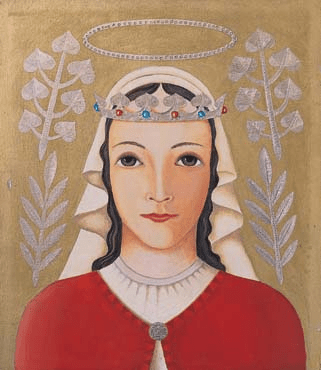
Blessed Zedislava, O.P.

Born of a warrior race to noble parents in the diocese of Litomerici, Bavaria , Zedislava lived in a fortified castle on the borders of Christendom, in an age when the fierce Mongol hordes were the world’s worst menace. Her whole life was spent surrounded by the sounds of clashing arms, and the moans of the dying. The gentleness and purity of her life stand out in surprising beauty against the dark background of a warlike and materialistic people.
Zedislava learned Christian charity early in life from her mother, who taught her not only the secrets of preparing medicinal herbs but also the healing balm of prayer. Going each day to the castle gates with alms and medicines for the poor and the wretched who crowded there for help, she was soon well acquainted with human misery. Cheerful, prayerful, and alert to see the sorrows of others, the child became a light of hope to the miserable. Because of her sweetness and natural charm, she was able to teach many lessons to those about her.
As a child, she is said to have fled from her home for a time to live as a hermit, but she returned to live a more normal life that included an early marriage to a soldier, the duke of Lemmberk, who, like her own father, was a rich nobleman in command of a castle on the frontier. The couple produced four children. Zedislava cared judiciously for her own family and lavished great care on the poor, especially the fugitives and victims of the Tartar invasions.
Her husband was a good man, but a rough and battle-hardened soldier who liked nothing better than the clash of swords. He may have treated Zedislava badly and he certainly tried his young wife’s patience and obedience in a thousand ways. He insisted that she dress in her finest gowns and attend the long and barbarous banquets that pleased him so. (In return, she tried his patience because of her generosity towards the poor.)
Being of a retiring disposition and much given to prayer–and having a family and a large castle to care for–she found this a real sacrifice. However, obedience and patience had been an important part of her training, and she taught herself to spiritualize the endless trials that would beset the mother of four children in a medieval fortress.
The Polish missionaries, Saint Hyacinth and Blessed Ceslaus, brought Zedislava the first knowledge of the new religious order which had begun but a few years before. Saint Dominic, had met them in Italy, where he had gone to have his order approved. Zedislava was the first Slavic Tertiary of the Dominican Order.
Enchanted with the possibilities of an order that allowed her to share in its benefits and works while caring for her family, Zedislava threw herself into the new project with enviable zeal. She encouraged her husband to build a hostel for the many poor pilgrims who came homeless to the gate. She visited the prisoners in the frightful dungeons, and used her influence to obtain pardons from the severe sentences meted out to them. She fed and cared for the poor, taught catechism to the children of the servants, and showed all, by the sweetness of her life, just what it meant to be a Christian lady and a Dominican Tertiary. On the occasion of a Mongol (Tartar) attack, when homeless refugees poured into the castle stronghold, her calm, invincible charity was a bulwark of strength to all.
With her own funds, Zedislava determined to build a church (Priory of Saint Lawrence) where God might be fittingly worshipped. As an act of zeal and penance, she herself carried many of the heavy beams and materials that went into the building. She did this at night so that no one would know of her hard work. Zedislava experienced visions and ecstasies during this time. She also received Holy Communion nearly every day in an age when this was not customary.
Her death came soon after the completion of the church in 1252. The mourning people who knelt by her deathbed could see evidence of her strong Christian virtues in the monuments she had left: her children, her church, and the inspiration of a saintly wife and mother. She consoled her husband in life and appeared to him in glory after death, which strongly encouraged his desire for conversion. Numerous miracles are ascribed to Saint Zedislava, including the raising of the dead to life. She was beatified in 1907 by Pope Pius X.
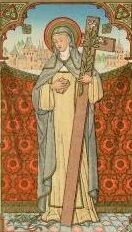
Memorial of Blessed Stephanie of Quinzanis
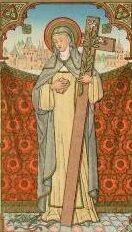
Born to pious parents in 1457 in Soncino, Italy, her father became a Dominican tertiary while Stephana was very young. She was taught the catechism by the stigmatic Blessed Matthew Carrieri who lived at the nearby Dominican convent. Even though she was too small to understand, he told her that she was to be his spiritual heiress. She began receiving visions of Dominican saints from age seven, at which point she made vows of poverty, chastity and obedience. Carrieri died when Stephana was 14, and soon after he appeared to her in a vision and she received the stigmata.
She became a Dominican tertiary at Soncino at age 15, and was devoted to caring for the poor and sick. She founded a community of Third Order sisters in Soncino, and served as its first abbess. Her counsel was sought by many, including Saint Angela Merici, Blessed Augustine of Biella, and Blessed Osanna of Mantua.
Although she had no formal theological training, she could discuss mystical theology at the most profound level. She could read the hearts and minds of the people around her, and had the gift of prophesy and healing. She lived in a nearly continuous fast, and inflicted severe penances on herself. Stephana accurately predicted the date of her own death. She died of natural causes on 2 January 1530, and was beatified 14 December 1740 by Pope Benedict XIV.
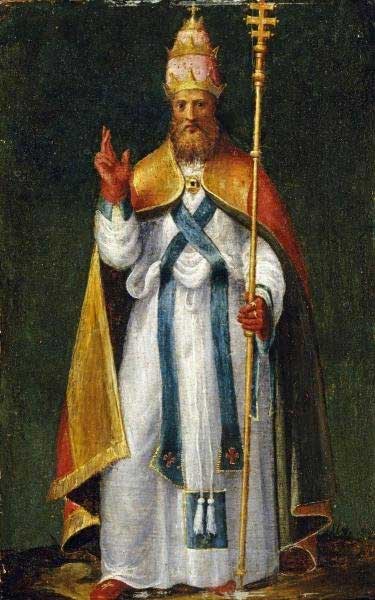
The Scourge of God! St. Leo the Great ~ Fr. Shawn Gisewhite, OPI
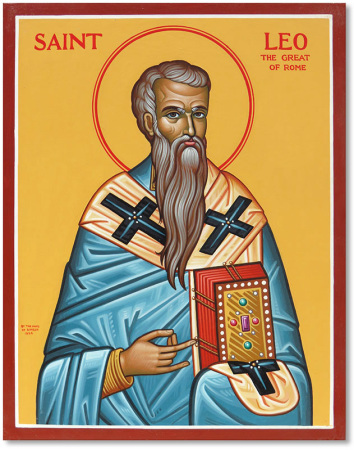
In the November 10th, 2014 edition of “Catholic Exchange,” Sean Fitzpatrick wrote the following article on St. Leo the Great.
He was called the Scourge of God—Attila the Hun.
He raged with his barbarian horde through Italy like fire, leaving devastation and death behind him. Cruel in torture, ravenous in plunder, and insatiable in effrontery, he razed and ravaged and rushed upon Rome in the year 452.
Out from the ancient gates of Rome passed a white-haired ancient in resplendent raiment. A harmless old man come to meet the savage; prepared to parley, and, God willing, to save his flock. The aged Pope of Rome himself hobbled forth to hold conference with the wild Hun while all the world watched; and this, according to legend, is what the Pope said:
“The people of Rome, once conquerors of the world, now kneel conquered. We pray for mercy and deliverance. O Attila, you could have no greater glory than to see suppliant at your feet this people before whom once all peoples and kings lay suppliant. You have subdued, O Attila, the whole circle of the lands granted to the Romans. Now we pray that you, who have conquered others, should conquer yourself. The people have felt your scourge. Now they would feel your mercy.”
So spoke the venerable bishop under the gaze of the vicious tyrant. Then suddenly, Attila’s disbelieving eyes beheld two towering giants flanking the pontiff, one on his right and the other on his left. The apostles Peter and Paul appeared, wielding swords of flame over the gray head of the pope, who knelt in an attitude of humble submission. Back flew the invader in terror, when he then caught sight of a gleaming, glorious army—ten thousand times greater than his own—ranked in rows of flashing fire against the night sky. The pope’s plea echoed in his ears like a command, and he raved as one gone mad. Attila the Hun raised the pope to his feet, swore to an enduring truce, and fled away with his legions across the Danube.
The title “Great” was not first given to Pope Leo for small reason.
Pope Leo the Great held the Chair of St. Peter from 440 to 461, and from it proclaimed and projected the elect holiness of Rome, calling it a royal city and, by virtue of the See of St. Peter, the head of the world, ruling by moral faith and religion rather than military force and dominion. The voice of Leo was the voice of the eternal city, and it was the roar of a lion and a king: “Though enlarged by many victories, you have spread the authority of your rule over land and sea. What your warlike labors have attained for you is less than what the Christian peace has brought you.” Rome was, and yet is, the heart of the Kingdom of God on earth, and Leo thundered its praises despite the riches and renown of the fallen Constantinople, defending it as the Supreme Pontiff of Christ’s Church—as a lion with its peaceful poise, confirmed in supremacy, in papal and Petrine primacy.
Though his might was manifested in meekness at his famous embassy with Attila the Hun, Pope Leo’s assertive strength as the Vicar of Christ was a theological force during his remarkable pontificate. In 451, he gathered the largest group of bishops in history for the Council of Chalcedon: a council to muster strength and strategy against an epidemic of heresies arising from the East. Leo took up the destiny of the Church with a will that evoked a rare and robust trust in God and with such broadness of vision—as a lion overlooking his golden realm—that he is remembered not only as a guardian of the Faith but also as a savior of Western civilization. At the Council of Chalcedon, the existence of Jesus Christ’s dual nature in one Divine Person was defined, and finally dogmatized in Pope Leo’s magnificent epistle, called the Tome, which was read aloud at the Council. Upon this inspired articulation of the hypostatic union, the bishops reported, “Behold, this is the Faith of the Fathers. This is the Faith of the Apostles. This we believe. Peter has spoken through Leo.”
The Council, though a solidifying of truth within the Church, poured fuel on the growling fires of the East, where many bishops were yet chafing under the rise of Rome over Constantinople and resisting orthodox teaching with persistent and even rebellious heresy and schism. Pope Leo rejected the attempts of the Eastern Church to affirm its errors upon the Universal Church. The subsequent rivalry between Constantinople and Rome led to violent uprisings and the persecution and martyrdom of holy bishops in Alexandria and Egypt. But mobs or militia could not drown out the roar of Leo. He ever proved an inflexible adversary of heresy. Pope Leo gave instruction and assistance to the reeling government in Constantinople to suppress religious rebels. In the end, the imperial battalions were fortified and the heretics were overthrown.
The word “leo” means “lion” in Latin and “king” in Greek. St. Leo was both, and that is why he is called Great. Leo’s indomitable spirit and profound mind has ever continued to influence and inform the Roman Catholic Church throughout the centuries after his death on November 10, 461, when he was buried, according to his wishes, as close to the bones of Peter as possible. His sermons and Christological writings have been read for well over a thousand and a half years on the most beautiful and signal feasts of the Faith: Christmas, Epiphany, Pentecost, and the Ascension. Leo was a regal saint, a doctor of the Roman Church, a kingly pope serving the King of kings, and a Lion of God who roared out the glory of God—and his roar still echoes through the grandeur of Rome to this day.
My friends, think about the last line of this article. St. Leo the Great was called “Great” because he was a Papal King who served the “King of Kings”, and a “Lion of God” who roared out the glory of God.
Less than a week ago, We, the American People voted to elect leaders to represent us as Citizens. To represent our needs, our rights, our beliefs and our morals. For thousands of years world leaders have been called “great.” But for what reasons? Americans speak of great men such as George Washington, Alexander Hamilton, Thomas Jefferson and Abraham Lincoln. In Europe they speak of great monarchs going back to Charlemagne or as recent as Queen Elizabeth II. Why are these men, and women, considered “great?” Mostly it is because of their accomplishments. How many battles they have won. How many peoples were subject to their rule. How many cathedrals, libraries, palaces or colleges they built. Or for their contribution to government and the freedoms that government ensures. These are indeed reasons to call one great, yet they are not the reasons in the case of St. Leo.
St. Leo is a model for us today as to how we should live our lives. How we too can be “great!” Leo was great NOT because he was a fierce ruler, but because he was a King who SERVED the King of Kings and Lord of Lords. He was great not because of his ferocity on the battlefield, but for his mighty roar of evangelism. St. Leo was proud to be a Christian. He was proud to serve the Lord. He was proud to defend Christian beliefs and Orthodoxy. He was a servant who became a leader. These are the types of leaders we should elect in our time. Godly men and women who stand up for what is right, stand up for Orthodoxy, and are not afraid to share the Good News of Jesus Christ with a mighty roar!
Let us always look to the example made by St. Leo the Great, and strive to live our lives in that greatness.
O Champion of Orthodoxy, and teacher of holiness,
The enlightenment of the universe and the inspired glory of true believers.
O most wise Father Leo, your teachings are as music of the Holy Spirit for us!
Pray that Christ our God may save our souls!
Amen.
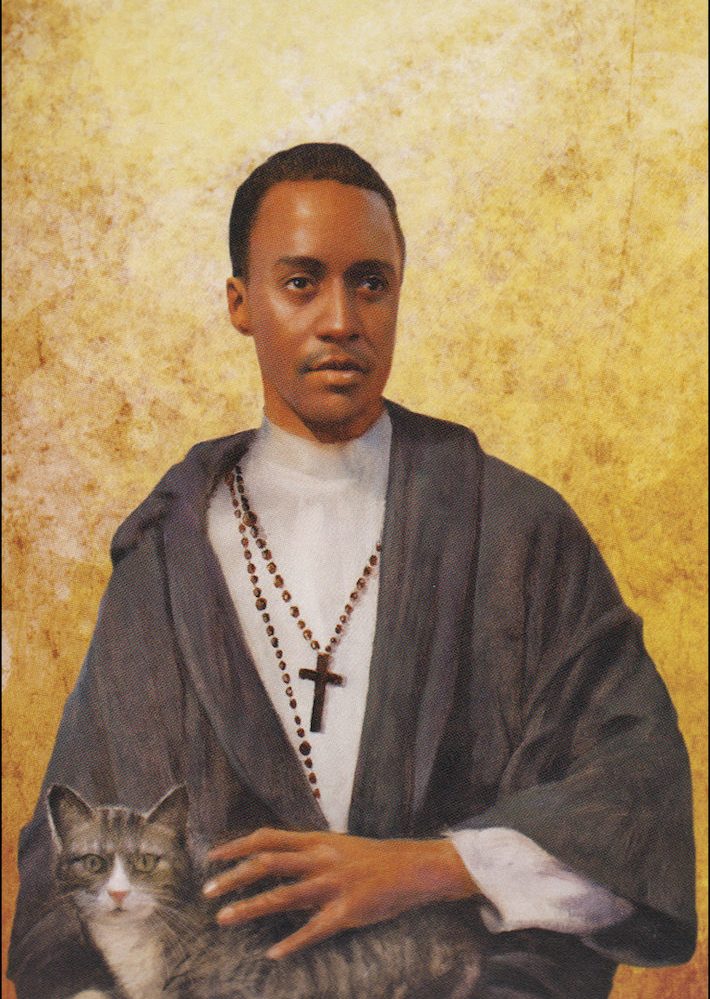
St. Martin de Porres, OP ~ The Rev. Dcn Dollie Wilkinson, OPI
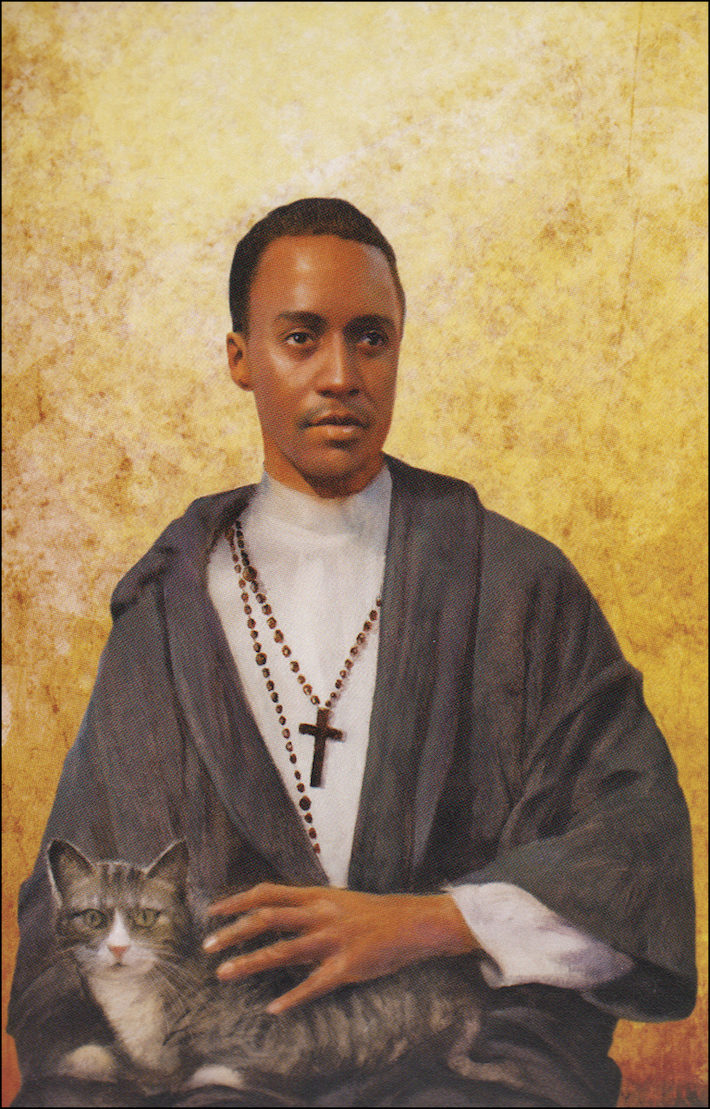
I have a mixed race granddaughter. She is so bright, curious, and sweet that all who meet her cannot help but be charmed. I cannot imagine any child born now to mixed race parents being shunned, especially by their father or mother. But that was not always so. Imagine a social worker’s case that goes something like this: two mixed race children are abandoned by their father. The children’s food and clothing are inadequate. The older child, a boy, is made to go out and do the shopping and the household chores. The mother, distraught with grief at being abandoned, subjects the boy in particular to verbal and physical abuse, telling him that he is responsible for his father’s leaving. Yet the child is found to be sweet-natured, intelligent and obliging, tirelessly eager to please the mother who seems not to want him. What would you make of the situation? The boy just described, whose heroic charity was evident from the time he was young, grew up to become one of the Dominican Order’s most beloved saints: Martin de Porres.
Martin was eventually able to leave behind the greatest cross of his childhood when his father, a Spanish nobleman serving as a provincial official in Peru, finally acknowledged his dark skinned twelve year old son as legitimate and apprenticed Martin to a barber surgeon. Martin quickly acquired a following of patrons due to his charity and his skill in medical care. However, after several years, Martin discerned Jesus calling him to enter the Dominican Order in Lima. He shared two strong devotions dear to the Order and its saints: devotion to the Rosary and to the Queen of the Most Holy Rosary, and a powerful love of the Eucharist. Martin did not aspire to be a preaching friar, nor even a lay brother, but asked for the lowest position in the convent as a “helping” brother. After nine years and significant contributions to the community, he would go on to make solemn vows as a lay brother.
Martin was put to work doing menial chores, work that he welcomed and never complained of doing. On the contrary, he regarded his chores as if they were the highest honors. The community also used Martin’s previous training as a barber and a surgeon, eventually assigning him to the infirmary due to his remarkable expertise in healing. Stories abound of his cures: of his coaxing a sick friar’s appetite by miraculously producing out-of-season fruit, and of life-threatening fevers and infections instantly abating at the mere touch of Martin’s hand. It is said that he knew ahead of time whether a friar would recuperate or die. St. Martin could well be called the “St. Francis of Assisi” of the Dominican Order for his love of animals. The story of his relocation of a large number of destructive mice, while incredible, is regarded as true. Recognizing the havoc the rodents were causing, He was seen escorting an orderly line-up of several hundred mice out of the convent and into the garden where they were promised a daily feeding by their kindhearted benefactor.
Perhaps with his own childhood in mind, Martin had a great love for street urchins, orphans and unwanted babies in Lima. It became known that Martin would accept unwanted children born out of wedlock. At first he placed them with his sister Juana, but numbers grew so great that a separate home became necessary. By his own efforts, Martin built the Orphanage of the Holy Cross from the ground up. The orphanage still exists in Lima today as the Colegio de Santa Cruz.
Martin literally lived the Last Will and Testament of St. Dominic: “Have charity, guard humility, make your treasure out of voluntary poverty.” His love of poverty was unaffected; he had been poor all his life, and would have nothing to do with what he considered “luxuries.” Martin wore the most ancient habit in the convent, yet never allowed it to look shabby. He preferred old shoes to new ones. He served as an example of humility, as described by the parable told by Jesus in Luke 14:7-11:
“When he noticed how the guests picked the places of honor at the table, he told them this parable: “When someone invites you to a wedding feast, do not take the place of honor, for a person more distinguished than you may have been invited. If so, the host who invited both of you will come and say to you, ‘Give this person your seat.’ Then, humiliated, you will have to take the least important place. But when you are invited, take the lowest place, so that when your host comes, he will say to you, ‘Friend, move up to a better place.’ Then you will be honored in the presence of all the other guests. For all those who exalt themselves will be humbled, and those who humble themselves will be exalted.””
Martin died a holy death surrounded by the friars of the Holy Rosary Convent chanting the Salve Regina. His symptoms were the same as those that defined St. Dominic’s last moments. In fact, toward the end, when asked, Martin indicated that his holy father was actually present, along with St. Vincent Ferrer. When he was canonized in 1962 by St. John XXIII, the Pope observed in the canonization ceremony, “Martin was not an academic but possessed ‘the true science that ennobles the spirit,’ the ‘light of discretion’ of which St. Catherine of Siena speaks.” Guy Bedouelle adds that “the Church… has need of authentic intellectuals [but] looks first for holiness of attitude, the fruit of humility.” St. Martin preached Christ through his charity, humility and poverty. He stands as a holy reminder that, in a religious order known for glorifying God by intellectual achievement, “the greatest of these is love.”
The Best is Yet to Come! The Feast of All Souls ~ The Rt. Rev. Michael Beckett, OPI
Today we celebrate the Feast of All Souls. Yesterday we celebrated the Feast of All Saints. What’s the difference?” you might ask. Well, I’m here to tell you!
The Feast of All Saints celebrates all of those holy men and women who we are assured have reached Heaven. The Feast of All Souls celebrates those Christian men and women who haven’t quite made it to Heaven yet, but who are certainly working their way there.
Huh?
Let me explain. We as Catholic Christians believe in the Communion of the Saints. This “communion” is made up of three distinct groups: The Church Militant, The Church Penitent, and The Church Triumphant. The Church Militant consists of all of us Christians who are living in the world today, who are trying to bring the world to Christ. The Church Triumphant consists of those Christians who have died and reached the ultimate goal of Heaven. The Church Penitent consists of those souls who are in Purgatory.
“Ah ha!,” you say, “I don’t believe in Purgatory!” Well, OK, you are certainly allowed your beliefs, but let me tell you a few things about why we, as Catholic Christians, believe in Purgatory. It’s Biblical:
The term purgatory arose after the time of the apostles, as did the terms Trinity, Christianity, Second Coming, and Bible. But the idea of purgatory was already present before Jesus was born. We find a Jewish hero named Judas Maccabeus, about a century and a half before Jesus, praying for the dead and specifically asking they be forgiven their sins after they have died (2 Macc. 12:43–45). This practice, known as the kaddish, was well established among Jews in Jesus’ own time. (Jews have historically believed, and many still believe, that the souls of the faithful departed undergo a period of purification which may be aided by the prayers and charity of the living. The Kaddish Foundation is a modern example of this ancient belief in action.)
Consider this reading from The Book of Wisdom:
The souls of the just are in the hand of God,
and no torment shall touch them.
They seemed, in the view of the foolish, to be dead;
and their passing away was thought an affliction
and their going forth from us, utter destruction.
But they are in peace.
For if before men, indeed, they be punished,
yet is their hope full of immortality;
chastised a little, they shall be greatly blessed,
because God tried them
and found them worthy of himself.
As gold in the furnace, he proved them,
and as sacrificial offerings he took them to himself.
In the time of their visitation they shall shine,
and shall dart about as sparks through stubble;
they shall judge nations and rule over peoples,
and the LORD shall be their King forever.
Those who trust in him shall understand truth,
and the faithful shall abide with him in love:
because grace and mercy are with his holy ones,
and his care is with his elect. (Wisdom 3:1-9)
Likewise, we find the New Testament frequently assuming the existence of purgatory. Jesus, during his time in the grave, is said by Peter to have “preached to the spirits in prison, who formerly did not obey” (1 Pet. 3: 18–20). Similarly, Jesus teaches that certain sins—notably unforgiveness—will be liable to judgment and imprisonment in the next. But he also implies this punishment is not necessarily eternal: “Truly I say to you, you will never get out until you have paid the last penny” (Matt. 5:21–26). Such imagery fits neither heaven—where there are no prisons—nor hell, where there is neither repentance nor “getting out” and therefore no point in preaching. It does, however, fit purgatory.
Jesus also implies the existence of purgatory or “forgiveness in the age to come” when he tells his disciples, “Whoever says a word against the Son of Man will be forgiven; but whoever speaks against the Holy Spirit will not be forgiven, either in this age or in the age to come” (Matt. 12:32). The Church after Jesus did not, therefore, “invent” purgatory. On the contrary, it simply repeated and clarified what Jesus and the apostles had taught them concerning the promise of hope for the afterlife.
So there’s that.
This is also why we pray for the dead. We believe that the purification of the souls in Purgatory can be hastened by the actions of the faithful on earth. This teaching is based also on the practice of prayer for the dead mentioned as far back as 2 Maccabees 12:42–46. In the West there is ample evidence of the custom of praying for the dead in the inscriptions of the catacombs, with their constant prayers for the peace of the souls of the departed and in the early liturgies, which commonly contain commemorations of the dead. Tertullian, Cyprian and other early Western Fathers witness to the regular practice of praying for the dead among the early Christians. The theological basis for the feast is the doctrine that the souls which, on departing from the body, are not perfectly cleansed from venial sins, or have not fully atoned for past transgressions, are debarred from the Beatific Vision, and that the faithful on earth can help them by prayers, alms deeds and especially by the sacrifice of the Mass. Because Purgatory is outside of time and space, it is not necessarily accurate to speak of a location or duration in Purgatory.
So what does Purgatory mean for us today? It means what it has always meant: hope. Purgatory is the assurance that there will, in the end, be absolutely nothing to dim the mirror of our lives from reflecting the glory of God. We who have been captive to sin for so long will be released. Moreover, as sharers in the life of Christ, we have an extraordinary promise from him. For he tells us, “Truly, truly, I say to you, he who believes in me will also do the works that I do; and greater works than these will he do, because I go to the Father” (John 14:12).
In other words, we not only receive grace from him, we do his works of grace with him, for we are “fellow workers” with Christ (1 Cor. 3:9). This means among other things that, as he prays for us, so we can pray for one another with his power and authority. And such prayers can be made not only for the living but for the dead as well. We can, therefore, help those in purgatory who are still being purified, just as we can help those on earth—by our prayers and offerings of love, especially in the Mass.
As Paul tells us, “We, though many, are one body in Christ, and individually members one of another” (Rom. 12:5). That unity with God and with each other is not severed by death. We can continue to pray for those who have died with the hope of Christ that our prayers will be of real help to them as we “bear one another’s burdens, and so fulfill the law of Christ” (Gal. 6:2).
So, having said as much, I wish each of you a most blessed and holy All Soul’s Day and ask that you continue to pray for me and for mine, The Church Triumphant, The Church Militant, and The Church Penitent. Amen.
Got a White Robe? ~ The Feast of All Saints ~ The Rt. Rev. Michael Beckett, OPI
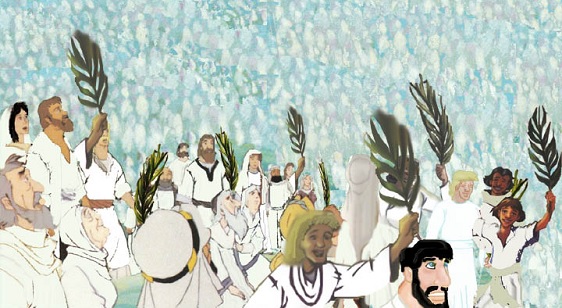
Today we celebrate the Solemnity of All Saints (also called All Saints Day).
All Saints’ Day, All Hallows Day, or Hallowmas is solemnly celebrated on 1 November by many Western Liturgical Churches to honor, literally, all the saints, known and unknown; those individuals who have attained Heaven; all the holy men and women who have lived their lives for God and for his church, who now have attained Beatific vision and their reward of Heaven.
In early Christian history it was usual to solemnize the anniversary of a Martyr’s death for the Lord at the place of their martyrdom. Frequently there were multiple martyrs who would’ve suffered and died on the same day which led to multiple commemorations on the same day. Eventually, the numbers of martyrs became so great that it was impossible for a separate day to be assigned to each individually, but the church feeling that every martyr should be venerated, appointed a feast day to commemorate them all on the same day.
The origin of the festival of All Saints celebrated in the West dates to the month of May in the year 609 or 610, when Pope Boniface IV consecrated the Pantheon at Rome to the Blessed Virgin and all the martyrs. In the 730’s Pope Gregory III moved the Feast of All Saints to 1 November when he founded an oratory in St. Peter’s for the relics of the holy apostles and of all saints, martyrs and confessors, of all the just made perfect who are at rest throughout the world.”
From our Readings today, we hear of the vision of St. John from the Book of Revelation:
After this, I had a vision of a great multitude, which no one could count, from every nation, race, people, and tongue. They stood before the throne and before the Lamb, wearing white robes and holding palm branches in their hands. They cried out in a loud voice:
“Salvation comes from our God, who is seated on the throne, and from the Lamb.”
All the angels stood around the throne and around the elders and the four living creatures. They prostrated themselves before the throne, worshiped God, and exclaimed:
“Amen. Blessing and glory, wisdom and thanksgiving, honor, power, and might be to our God forever and ever. Amen.”
Then one of the elders spoke up and said to me, “Who are these wearing white robes, and where did they come from?” I said to him, “My lord, you are the one who knows.” He said to me, “These are the ones who have survived the time of great distress; they have washed their robes and made them white in the Blood of the Lamb.”
Who are these nameless saints? Their anonymity teaches us that sainthood is not reached through great achievements or rare acts of bravery. Sainthood comes from simply loving God and doing our best to live our lives in a way consistent with Jesus’ commandment. I would dare say that none of the saints actually set out to be saints. They simply loved God and lived their lives to follow Him.
Revelation goes on to remind us that giving our lives over to God will not protect us or insulate us from hardship. Living in, for, with, and through God, however, will make sure that we can and will endure whatever “great distress” comes our way. In this passage of Revelation, John is speaking specifically of those who have given their lives for their faith. Christians throughout the Middle East are being martyred by forces opposed to Christianity, but in reality, it is very unlikely that any of us will be called upon to sacrifice our lives for our faith.
Our challenge, then, is to live for Christ, rather than to die for Christ. Jesus does ask to lay down our lives for Him. Peter said to the Lord, “I will lay down my life for Your sake,” and he meant it (John 13:37). Has the Lord ever asked you, “Will you lay down your life for My sake?” (John 13:38). It is much easier to die than to lay down your life day in and day out with the sense of the high calling of God. We are not made for the bright-shining moments of life, but we have to walk in the light of them in our everyday ways. For thirty-three years Jesus laid down His life to do the will of His Father. “By this we know love, because He laid down His life for us. And we also ought to lay down our lives for the brethren” (1 John 3:16).
If we are true followers of Jesus, we must deliberately and carefully lay down our lives for Him. It is a difficult thing to do, and thank God that it is, for great is our reward. Salvation is easy for us, however, because it cost God so much. But the exhibiting of salvation in our lives is difficult. God saves a person, fills him with the Holy Spirit, and then says, in effect, “Now you work it out in your life, and be faithful to Me, even though the nature of everything around you is to cause you to be unfaithful.” And Jesus says to us, “…I have called you friends….” Remain faithful to your Friend, and remember that His honor is at stake in your bodily life. We are called to remain faithful, despite the reasons the world gives us to not, despite the “great distresses” in our lives.
Who are these dressed in white robes? It is my prayer to be counted among them. What about you?

The Feast of St. Francis ~ An Enduring Friendship ~ St. Francis and St. Dominic
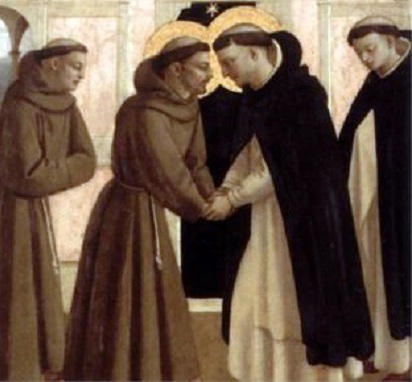
“Francis is the easiest saint to understand and love, while Dominic is the most difficult,” thus saith Chesterton.
This is sadly true for many Catholics and non-Catholics alike. When we think of St. Francis of Assisi: a joyful ever-smiling beggar standing in a lush garden, surrounded by birds, rabbits, and a tame wolf. Everything about Francis has been positive: his preaching to the birds, Canticles of the Sun, and even the newfound love for Pope Francis has propagated this pleasant image of the humble saint.
But then, there is St. Dominic. Who is he? Many, many people have no idea. Isn’t he that stern-faced preacher wearing a regal black-and-white robe who always carries a book? Didn’t the start the Inquisition? He must have been a real piece of work. Maybe he was pretty smart and all, but he doesn’t sound like a real great guy. Was he?
Unknown to many, St. Francis and St. Dominic were, in reality, contemporaries and friends. Surprise!!!! We read the following story:
One summer night in 1215, during his stay in Rome, Francis had a vision: he saw Our Lord prepared to unleash the most terrible chastisements upon the world. His Most Holy Mother was making an effort to placate Him, asking His mercy and forgiveness. For this purpose, she presented two men who would labour for the conversion of the world and return a countless number of lost sheep to the fold. Francis recognised himself as one of these apostles. He did not recognise the other one, however.
The following day, he was in one of the churches of Rome when suddenly an unknown person came up to him, embraced him, and said: “You are my companion, we will work together, supporting one another toward the same end, and no one will prevail against us.” Francis recognised him as the other man in the vision. It was St. Dominic, who had also received a similar vision before the meeting. When he saw Francis in that church, he immediately went to greet him, inspired by the Holy Spirit.
While in reality Dominic loved peace and the poor as much as Francis did (Dominic sold his expensive and rare theology books to feed the victims of famine!), and both had a profound Marian devotion, Francis and Dominic were indeed two very different personalities, and consequently they infused these different characters into their respective orders. The Franciscan Order is known for their simplicity in approach to life and faith. The great conversions of the Franciscans came about through the consideration of the Wounds of Our Lord, His Passion, His poverty and spirit of sacrifice. They preach with zest directly from their fiery souls, for they aim to move the will through the heart.
Meanwhile, the Order of Preachers, the Dominican Order, is the “scholarly order”; to his friars Dominic always emphasised study, because he believed that solid evangelisation wouldn’t be possible if they hadn’t studied first. The Dominican mission is an intellectual work, that is, the study and teaching of philosophy, theology, and apologetics. St. Dominic was known to spend sleepless vigils poring over his books, and later in life these study sessions transformed into nights of thorough preaching and conversions. Indeed, the Dominicans move the will by appealing to the mind.
A great similarity leads to friendship, but so also does a great dissimilarity when it is not the dissimilarity of opposition, but rather one that is complementary. One had something that the other was lacking. Together they constituted a harmonic ensemble. For this reason, they admired one another. These two holy men embraced each other and were enthusiastic for each other’s mission, because although they had different approaches, their end was essentially the same: the conversion of souls and the building of the Kingdom.
To this day, the two orders enjoy a unique and special relationship. The Franciscans celebrate St. Dominic with a Feast, and likewise the Dominicans honour St. Francis of Assisi in their calendar of saints. A Dominican event can be led by a Franciscan friar, and likewise a Franciscan ceremony may be led by a Dominican. Even in the Litany of the Saints: the names of St. Francis and St. Dominic are mentioned together!
Today, we as a Dominican Order not only celebrate our father, St. Francis, we also celebrate our centuries old friendship with the Franciscan Order. We wish you all a very blessed Feast Day!


You must be logged in to post a comment.