
Category: Dominican Saints
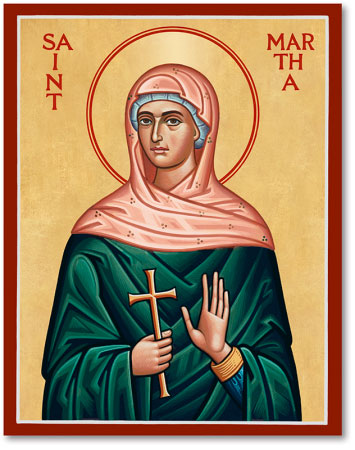
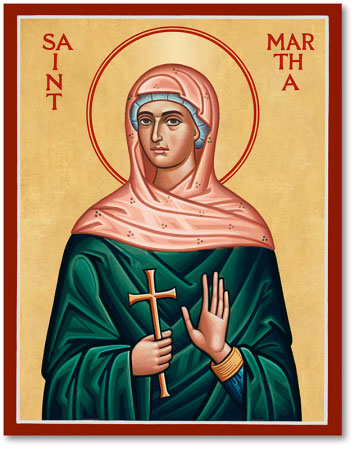
Memorial of Saint Martha 2017 Br. Brenden Humberdross, OPI
May the words of my mouth and the meditations of our hearts be always acceptable to you O Lord, our God and Our Creator.
Today the Church celebrates the life of Saint Martha who is often remembered alongside her sister Mary. Martha doesn’t appear to play a central role in the biblical narrative, we see her only twice mentioned in scripture; once complaining about her sister and the other when her brother Lazarus is raised from the dead. Today I’d like to take the liberty of discussing both of these episodes with you and what they mean to me and how they can help shape and guide our understanding of our Christian walk.
The first time we see Martha in our Bibles is in the Gospel according to Luke where we read:
Jesus entered a village
where a woman whose name was Martha welcomed him.
She had a sister named Mary
who sat beside the Lord at his feet listening to him speak.
Martha, burdened with much serving, came to him and said,
“Lord, do you not care
that my sister has left me by myself to do the serving?
Tell her to help me.”
The Lord said to her in reply,
“Martha, Martha, you are anxious and worried about many things.
There is need of only one thing.
Mary has chosen the better part
and it will not be taken from her.”
An interesting thought occurred to me when I read this scripture in preparation for this sermon that had never occurred to me before. Jesus entered the village and was welcomed by Martha; he wasn’t welcomed by a crowd, he wasn’t welcomed by Mary and Martha but instead by Martha alone who invited the Saviour to her home. When she got home she got busy preparing a meal and taking care of Christ’s needs and what happened? Mary, her sister, got all of the attention from the guest.
Have you ever brought a friend home and found that your family or a sibling took all of their attention? This is the situation Martha found herself in. When I think about this situation and my own reactions to it I can see that Martha’s actions in this scripture aren’t that out of the Ordinary and they case them in a different light for me.
In the past I have often looked at this incident and seen in Martha a certain negative, unwarranted jealousy that is rebuked by Jesus. However, when I think of the incident in the new terms I’ve highlighted I’m not sure that is really the case. I don’t believe that Martha is necessarily jealous of Martha in the usual sense, instead I think that she invited an honoured guest to her home and was expecting that she would labour to make him comfortable and receive his praise and attention for it. However, that’s not what happens and so she is upset that Mary, who has not laboured in His service yet, is getting the attention.
In this light the rebuke from Jesus is not necessarily about her jealousy or Mary’s having chosen the better method of service. Rather it is a rebuke of Martha’s being distracted, worried and troubled that she was not receiving the expected praise for her active service of God. In fact Jesus suggests that Mary’s service at his feet is just as important as Martha’s active service.
The lesson that I believe we can all take from this, and that I know I will take personally, is not to look at the way that others are serving God and to judge our service by it. We are each called to different forms of service in His name and each are just as valid as another. If we are serving God in our own way that is what is important. He who reigns above sees into our hearts and knows our desire to serve and will reward that loving service that we render in His name in due time.
The second place we see Martha (and her sister Mary) is in the Gospel of John when Jesus arrives at the tomb of their brother Lazarus:
Many of the Jews had come to Martha and Mary
to comfort them about their brother [Lazarus, who had died].
When Martha heard that Jesus was coming,
she went to meet him;
but Mary sat at home.
Martha said to Jesus,
“Lord, if you had been here,
my brother would not have died.
But even now I know that whatever you ask of God,
God will give you.”
Jesus said to her,
“Your brother will rise.”
Martha said to him,
“I know he will rise,
in the resurrection on the last day.”
Jesus told her,
“I am the resurrection and the life;
whoever believes in me, even if he dies, will live,
and anyone who lives and believes in me will never die.
Do you believe this?”
She said to him, “Yes, Lord.
I have come to believe that you are the Christ, the Son of God,
the one who is coming into the world.”
This incident is somewhat reminiscent of the incident in Luke; Mary and Martha both react very differently to Jesus’ appearance at Lazarus’ tomb. Martha, having a more active style of service immediately rushes out to meet Jesus whilst Mary waits to be called by the Saviour.
Again in this meeting it is easy to take a very negative view of Martha and her words, however if we contemplate a little deeper and let the incident unfold to our spirits a new perspective on Martha can develop before our eyes.
At first glance it appears that Martha simply lacks faith; she essentially seems to be rebuking Christ and claiming that it is pointless his being there as there is nothing He can do. Now whilst this is true, that IS what she is saying, her words actually display great faith. Martha positively shows us that she has total faith that Jesus can heal from illness and even bring a person back from the brink of death. Instead of a lack of faith Martha shows a lack of understanding of who Christ is.
Martha’s response to the arrival of Christ shows that she is not aware of the full role and divinity of Christ. She knows that Lazarus will be raised from the dead in the resurrection but does not see that full divinity rests in Christ and that He can perform all that is within God’s power.
Jesus positively asserts His divinity in response to Martha’s misunderstanding removing any shadow of a doubt that He is God incarnate. As we know Jesus then goes on to show all present that He is “the resurrection and the life” by raising Lazarus from the grave.
Do you have total faith in Christ and in His divine nature? I know at times it is easy to be caught up in the daily work of the world, our ministry, our families, and Jesus can become an abstract ideal to us. However, we need to not fall into Martha’s trap and let our faith become an “it’ll be fixed when we meet God” or “when Jesus returns” type attitude. Jesus is real and alive today, He has the ability to perform great and glorious wonders this very day just as he did in the biblical narrative. We must all search the scriptures, search our hearts and take Martha as an example for us in ministry and developing our faith.
Let us pray together:
Generous God, whose Son Jesus Christ enjoyed the friendship and hospitality of Martha of Bethany: Open our hearts to love you, our ears to hear you, and our hands to welcome and serve you in others, through Jesus Christ our risen Lord; who with you and the Holy Spirit lives and reigns, one God, for ever and ever. Amen.
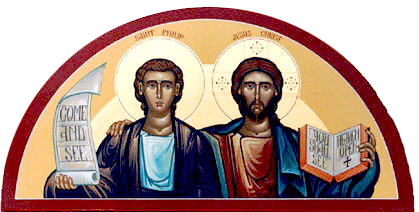
Sts Philip and James, Apostles ~ Br. Chip Noon, Novice
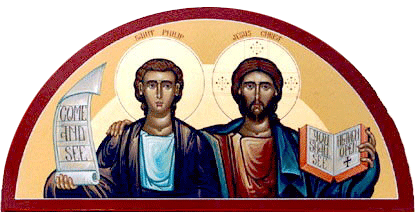
Today is the feast of Saints Philip and James, Apostles.
During this time between Easter and Pentecost, we continue to see that the Apostles still were unsure of what was happening in their lives. At the Last Supper, Philip continues to pester Jesus about his ministry. “Master, show us the Father, and that will be enough for us.” Of course, he lumps the others Apostles in to this plea, perhaps as a way of strengthening his argument. And we do know from other Gospel passages that they really were not sure of their ultimate mission.
But Jesus says to him,
“Have I been with you for so long a time
and you still do not know me, Philip?
Whoever has seen me has seen the Father.
How can you say, ‘Show us the Father’?
Do you not believe that I am in the Father and the Father is in me?”
And let’s look at the first reading from Paul’s Epistle to the Corinthians. He gives them a version of the Creed, and then lists those to whom Jesus appeared after his death, ending with himself. He says, “I am reminding you…” It’s as if he is reciting known facts in order to strengthen his preaching as well as recapping a message, all the better to strengthen his audience’s understanding.
Similarly, in the Responsorial Psalm, there is a teaching from heaven to all the earth, declaring the glory of God.
For me, this day of Saints Philip and James is like the overture to an opera. Little pieces of the whole, presented as a warm-up to the opening of the curtain and the glorious theatrical production. And isn’t that also what this time between Easter and Pentecost is? Time and again, we are told that certain things happened with Jesus and the Apostles after the Resurrection, but it never really takes hold, the Apostles continue to have doubts and anxieties. We hear themes, we get snippets of the whole, we recognize the very beginnings of the church that Jesus is presenting.
We don’t know much about Philip…some stories in the Gospels, some traditions that he preached in Greece, Syria, and Phrygia, that he was martyred on a cross, upside down, and only recently, that his tomb may have been discovered in Turkey. We know that James, called James the Lesser, became the bishop of Jerusalem and wrote one of the epistles in the New Testament.
But we do know, and especially from today’s Gospel, that eventually all the Apostles and many of the disciples all went out into the world after Pentecost and did what Jesus said: “…whoever believes in me will do the works that I do…”
And we do know that we have thirty-two days before Pentecost. And we do know that during this time, we can gather as many of the tools that we can to do what James says in his epistle, that we may have faith, but we also must have good works.
And so, while we listen to the stories of the overture, we can use them all as review sessions for what we have been, as Christians, chosen to do: “Go ye into all the world, and preach the gospel to every creature.”
Lord, help us in these days of Easter to prepare ourselves for your kingdom. Help us to ask of you the things that we need to complete your mission on earth. And help us to store up in heaven the riches of your word and your blessings. In Jesus’ name.
Amen.
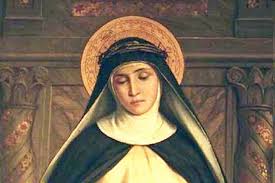
Saint Catherine of Siena
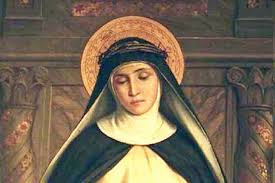
She was the youngest but one of a very large family. Her father, Giacomo di Benincasa, was a dyer; her mother, Lapa, the daughter of a local poet. They belonged to the lower middle-class faction of tradesmen and petty notaries, known as “the Party of the Twelve”, which between one revolution and another ruled the Republic of Siena from 1355 to 1368. From her earliest childhood Catherine began to see visions and to practice extreme austerities. At the age of seven she consecrated her virginity to Christ; in her sixteenth year she took the habit of the Dominican Tertiaries, and renewed the life of the anchorites of the desert in a little room in her father’s house. After three years of celestial visitations and familiar conversation with Christ, she underwent the mystical experience known as the “spiritual espousals”, probably during the carnival of 1366. She now rejoined her family, began to tend the sick, especially those afflicted with the most repulsive diseases, to serve the poor, and to labor for the conversion of sinners. Though always suffering terrible physical pain, living for long intervals on practically no food save the Blessed Sacrament, she was ever radiantly happy and full of practical wisdom no less than the highest spiritual insight. All her contemporaries bear witness to her extraordinary personal charm, which prevailed over the continual persecution to which she was subjected even by the friars of her own order and by her sisters in religion. She began to gather disciples round her, both men and women, who formed a wonderful spiritual fellowship, united to her by the bonds of mystical love. During the summer of 1370 she received a series of special manifestations of Divine mysteries, which culminated in a prolonged trance, a kind of mystical death, in which she had a vision of Hell, Purgatory, and Heaven, and heard a Divine command to leave her cell and enter the public life of the world. She began to dispatch letters to men and women in every condition of life, entered into correspondence with the princes and republics of Italy, was consulted by the papal legates about the affairs of the Church, and set herself to heal the wounds of her native land by staying the fury of civil war and the ravages of faction. She implored the pope, Gregory XI, to leave Avignon, to reform the clergy and the administration of the Papal States, and ardently threw herself into his design for a crusade, in the hopes of uniting the powers of Christendom against the infidels, and restoring peace to Italy by delivering her from the wandering companies of mercenary soldiers. While at Pisa, on the fourth Sunday of Lent, 1375, she received the Stigmata, although, at her special prayer, the marks did not appear outwardly in her body while she lived.
Mainly through the misgovernment of the papal officials, war broke out between Florence and the Holy See, and almost the whole of the Papal States rose in insurrection. Catherine had already been sent on a mission from the pope to secure the neutrality of Pisa and Lucca. In June, 1376, she went to Avignon as ambassador of the Florentines, to make their peace; but, either through the bad faith of the republic or through a misunderstanding caused by the frequent changes in its government, she was unsuccessful. Nevertheless she made such a profound impression upon the mind of the pope, that, in spite of the opposition of the French king and almost the whole of the Sacred College, he returned to Rome (17 January, 1377). Catherine spent the greater part of 1377 in effecting a wonderful spiritual revival in the country districts subject to the Republic of Siena, and it was at this time that she miraculously learned to write, though she still seems to have chiefly relied upon her secretaries for her correspondence. Early in 1378 she was sent by Pope Gregory to Florence, to make a fresh effort for peace. Unfortunately, through the factious conduct of her Florentine associates, she became involved in the internal politics of the city, and during a popular tumult (22 June) an attempt was made upon her life. She was bitterly disappointed at her escape, declaring that her sins had deprived her of the red rose of martyrdom. Nevertheless, during the disastrous revolution known as “the tumult of the Ciompi”, she still remained at Florence or in its territory until, at the beginning of August, news reached the city that peace had been signed between the republic and the new pope. Catherine then instantly returned to Siena, where she passed a few months of comparative quiet, dictating her “Dialogue”, the book of her meditations and revelations.
In the meanwhile the Great Schism had broken out in the Church. From the outset Catherine enthusiastically adhered to the Roman claimant, Urban VI, who in November, 1378, summoned her to Rome. In the Eternal City she spent what remained of her life, working strenuously for the reformation of the Church, serving the destitute and afflicted, and dispatching eloquent letters in behalf of Urban to high and low in all directions. Her strength was rapidly being consumed; she besought her Divine Bridegroom to let her bear the punishment for all the sins of the world, and to receive the sacrifice of her body for the unity and renovation of the Church; at last it seemed to her that the Bark of Peter was laid upon her shoulders, and that it was crushing her to death with its weight. After a prolonged and mysterious agony of three months, endured by her with supreme exultation and delight, from Sexagesima Sunday until the Sunday before the Ascension, she died. Her last political work, accomplished practically from her death-bed, was the reconciliation of Pope Urban VI with the Roman Republic (1380).
Among Catherine’s principal followers were Fra Raimondo delle Vigne, of Capua (d. 1399), her confessor and biographer, afterwards General of the Dominicans, and Stefano di Corrado Maconi (d. 1424), who had been one of her secretaries, and became Prior General of the Carthusians. Raimondo’s book, the “Legend”, was finished in 1395. A second life of her, the “Supplement”, was written a few years later by another of her associates, Fra Tomaso Caffarini (d. 1434), who also composed the “Minor Legend”, which was translated into Italian by Stefano Maconi. Between 1411 and 1413 the depositions of the surviving witnesses of her life and work were collected at Venice, to form the famous “Process”. Catherine was canonized by Pius II in 1461. The emblems by which she is known in Christian art are the lily and book, the crown of thorns, or sometimes a heart–referring to the legend of her having changed hearts with Christ. Her principal feast is on the 30th of April, but it is popularly celebrated in Siena on the Sunday following. The feast of her Espousals is kept on the Thursday of the carnival.
The works of St. Catherine of Siena rank among the classics of the Italian language, written in the beautiful Tuscan vernacular of the fourteenth century. Notwithstanding the existence of many excellent manuscripts, the printed editions present the text in a frequently mutilated and most unsatisfactory condition. Her writings consist of the “Dialogue”, or “Treatise on Divine Providence”; a collection of nearly four hundred letters; and a series of “Prayers”.
The “Dialogue” especially, which treats of the whole spiritual life of man in the form of a series of colloquies between the Eternal Father and the human soul (represented by Catherine herself), is the mystical counterpart in prose of Dante’s “Divina Commedia”.
A smaller work in the dialogue form, the “Treatise on Consummate Perfection”, is also ascribed to her, but is probably spurious. It is impossible in a few words to give an adequate conception of the manifold character and contents of the “Letters”, which are the most complete expression of Catherine’s many-sided personality. While those addressed to popes and sovereigns, rulers of republics and leaders of armies, are documents of priceless value to students of history, many of those written to private citizens, men and women in the cloister or in the world, are as fresh and illuminating, as wise and practical in their advice and guidance for the devout Catholic today as they were for those who sought her counsel while she lived. Others, again, lead the reader to mystical heights of contemplation, a rarefied atmosphere of sanctity in which only the few privileged spirits can hope to dwell. The key-note to Catherine’s teaching is that man, whether in the cloister or in the world, must ever abide in the cell of self-knowledge, which is the stable in which the traveler through time to eternity must be born again.
Born: March 25, 1347 at Siena, Tuscany, Italy
Died: April 29, 1380 of a mysterious and painful illness that came on without notice, and was never properly diagnosed
Canonized: July 1461 by Pope Pius II
Representation: cross; crown of thorns; heart; lily; ring; stigmata
Patronage: against fire, bodily ills, diocese of Allentown, Pennsylvania, USA, Europe, fire prevention, firefighters, illness, Italy, miscarriages, nurses, nursing services, people ridiculed for their piety, sexual temptation, sick people, sickness, Siena Italy, temptations
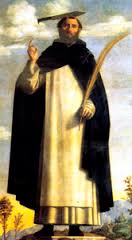
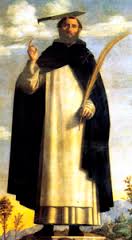
Saint Peter of Verona
Saint Peter’s parents belonged to the heretical sect of the Cathari, theological descendants of the Manichees. Miraculously, he became Catholic, regardless of his heresy believing parents. Because of his Catholic convictions, he was ridiculed for his faith throughout his youth, it was preserved in purity and he became a Dominican. His father sent him to a Catholic school for a good early education, thinking that the heretical environment at home would keep Peter from being “deceived” by the teachings of the Catholic Church.
Nevertheless, one of the first things Peter learned there was the Apostle’s Creed, which the Cathari abhorred. Making conversation on day, his uncle asked him his lesson. The boy recited the creed and explained it in the Catholic sense, especially in those words: Creator of heaven and earth. In vain his uncle tried to persuade him it was false. He said that it was not God, but the evil principle that made all things that are visible; the Cathari viewed the physical world as ugly and bad, which is inconsistent with the concept of an infinitely perfect being. The boy’s resolute steadiness concerned his uncle, but his father laughed at his brother’s fears believing that the world would influence his son into his beliefs.
When he was 15, Peter was sent to the University of Bologna, a hotbed of licentiousness. There he met Saint Dominic, and instantly threw himself at the saint’s feet to beg admission to the Order of Friar Preachers. Peter was present at the death of the founder soon after, and shared in the primitive zeal and courage of the sons of a saint.
While still a student, Peter experienced a severe trial. He was publicly reprimanded and punished because a brother, passing Peter’s cell late at night, thought he had heard women’s voices in his room. The voices were those of angels, who frequently visited the saint: but in his humility, he thought it better to accept the punishment and say nothing about the favors God had granted him. He was sent to the remote little Dominican convent of Jesi, in the marquisate of Ancona, to do penance, and his ordination was delayed.
Peter found great strength in prayer. Nevertheless, he was human and felt the sting of the disgrace. One day he complained to the Lord: “Lord, You know that I am innocent of this: Why do you allow them to believe it?” A sorrowful voice replied from the crucifix: “And I, Peter, what have I done that they should do this to Me?” Peter complained no more. The truth was eventually discovered, and Peter resumed his studies and was ordained to the priesthood.
Peter soon became a celebrated preacher throughout northern and central Italy, and, in 1232, an inquisitor to fight against the heresy that had infected his family and others in Lombardy. Many miracles (filling 22 pages in folio in the Acta Sanctorum) were worked through his prayers, to the rage of the heretics. Crowds nearly pressed him to death many times: some to ask his blessing, others to offer the sick to him to be cured, others to receive his holy instructions.
In one city, a prominent man had been won to heresy, because the devil, taking the form of the Blessed Virgin, appeared at the heretics’ meetings and encouraged him to join them. Peter, determined to win the man back to the truth, went to the meeting and, when the devil appeared in his disguise, held up a small pox in which he had placed a consecrated Host. “If you are the Mother of God,” cried Peter, “adore your Son!” The devil fled in dismay and many were converted.
Among other miracles, he predicted that he would be murdered by heretics, who indeed waylaid him on the road between Como and Milan. Peter went to his death singing the Easter Sequence, and fell unprotesting beneath the blows of his assassins. Carino cut his head with an ax, and then his companion Dominic stabbed him. As Peter rose to his knees and commended himself to God, Carino killed him with a blow of his axe to Peter’s side. One of his murderers, “Blessed” Carino, was touched by grace at the sight of a saint, was converted, and eventually became a Dominican at Forli. To him as to us, Peter had pointed out the way to heaven when he traced on the dust of the road, in his own blood, the creed that had lighted his path: “Credo in unum Deum.”
Peter’s body was ceremoniously buried in the Dominicans’ church dedicated to St. Eustorgius, in Milan, where he still rests. His head is kept separately in a crystal and gold case. So many miracles were worked at his shrine that many of the Cathari asked to be admitted to the Catholic Church.
Born: Verona, Italy, 1206
Died: Martyred April 6, 1252
Canonized: canonized by Pope Innocent IV in 1253–a single year after his death.
Patronage: Peter is the patron of midwives and inquisitors and venerated in Verona.
Representation: In art, Saint Peter is a Dominican with a gash or knife in his head. Occasionally, the knife is in his shoulder. Sometimes he is portrayed (1) with his finger on his lips; (2) writing credo in unum deum in the dust as he dies; (3) stabbed in the forest with his companion; or (4) with the Virgin and four female saints appearing to him
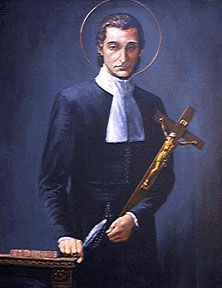
Saint Lewis Mary Grignon De Montfort
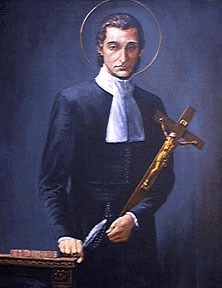
Louis’ parents were poor, hard-working people who raised eight children, the oldest of whom was Louis. In the normal course of events, Louis would have learned a trade and helped to educate his siblings, but early in his life his mother recognized that he was destined for the priesthood. At the pleading of her and his teacher, he was allowed to begin his studies. Some charitable people provided the funds for his education.
As a very young child, Louis had organized Rosary societies, preached sermons, told stories of the saints, and led the Rosary with groups of neighborhood children. He was particularly devoted to Our Lady, and he took her name in confirmation. As a student with the Jesuits at Rennes, he continued his devotions; he joined the sodality, and became an exemplary member. When he had completed his studies, he left for Paris in 1693 to begin his studies for the priesthood. He walked the 130 miles in the rain, sleeping in haystacks and under bridges, and, on arriving in Paris, he entered a poverty-stricken seminary in which the students had scarcely enough to eat, which caused him serious illness. On the verge of ordination, his funds were withdrawn by his benefactor, and it looked as though Louis would have to return home. He was taken in by a kindly priest, however.
Louis was ordained in 1700, and, after saying his first Mass in the Lady Chapel of Saint Sulpice, he was sent as chaplain to a hospital in Poitiers where mismanagement and quarreling were a tradition. He endeared himself to the patients, and he angered the managers of the hospital when he reorganized the staff. Consequently, he was sent away, but not before he had laid the foundation of what was later to be a religious congregation of women known as the Institute of the Daughters of Divine Wisdom at Poitiers, to nurse the sick poor and conduct free schools.
This rebuff was not the first Louis had to suffer; in the seminary, his superiors had exhausted themselves in trying his patience– making him seem to be a fool. All his life he was to meet the same stubborn opposition to everything he tried to do. Many of the clergy, even some of the bishops, were infected with Jansenism, and they fought him secretly and openly. In his work giving missions, his moving from one place to another was occasioned as often by the persecution of his enemies as it was by the need of his apostolate. Going to Rome, he begged Pope Clement XI to be sent on the foreign missions, but he was refused and sent back to Brittany, France, as missionary apostolic. He returned in his usual spirit of buoyant obedience, even though he knew that several bishops had already forbidden him to set foot in their dioceses.
For the rest of his life, Louis gave flamboyant missions in country parishes, some of which had been without the care of a priest for generations. Ruined churches were repaired, marriages rectified, children baptized and instructed, and Catholicity rebuilt. He joined the third order of Dominicans, and everywhere he went, he established the Rosary devotion. People who came to his missions out of curiosity, remained, and his preaching did much to renew religion in France.
His enemies were as busy as he was, however. They gave false reports to the bishops, drove him from place to place, and, in one case, succeeded in poisoning him. The poison was not fatal, and it had an unforeseen result. While he recuperated from its evil effects, he wrote True devotion to the Blessed Virgin, which he himself prophesied would be hidden away by the malice of men and the devil. After nearly 200 years, the manuscript was rescued from its hiding place, and, only a few years ago, it was given the publicity that it deserved.
In 1715, Louis founded a second religious congregation to train helpers in his forceful methods of preaching called the Missionaries of the Company of Mary.
Born: January 13, 1673 at Montfort-La-Cane, Brittany, France
Died: 1716 at Saint-Laurent-sur-Sovre, France
Canonized: 1947 by Pope Pius XII
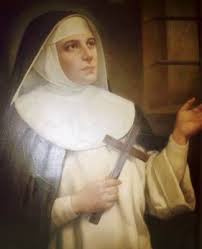
Blessed Hosanna of Catharo
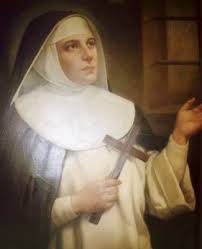
Catherine Kosic (Cosie) was baptized in the Greek Orthodox Church. As a young girl, when tending her family’s sheep; thus, left alone for long periods of time, she developed a habit of contemplative prayer. One day while watching the flocks, she saw a pretty child lying asleep on the grass. Attracted by its beauty, she went to pick up the baby, but it disappeared, leaving Catherine with a feeling of great loneliness.
She told her mother about the incident but received little understanding; her mother told her that God didn’t appear to such poor people, and that the Christ Child was simply a figment of her imagination. After several more apparitions of which she wisely said nothing, Catherine developed a desire to visit Cattaro because there were several churches there in which she felt that she could pray better. Her mother thought this urge was unreasonable, but she finally arranged for Catherine to go to Cattaro as a servant of a wealthy woman. Her mother gave little thought to the fact that the woman was a pious Catholic, but the girl rejoiced in her good luck. At the age of 12, Catherine settled down as a servant to the kindly woman who made no objection to the fact that Catherine’s errands invariably led her past the church, where she would stop for a visit.
After a few years of the pleasant life, Catherine consulted her spiritual director about becoming a recluse. He thought her too young, but she continued to insist. After much prayer and discussion, they decided that she should follow the life of a hermit. In the Middle Ages, it was common for every church or place of pilgrimage to have one or more cells in which solitaries dwelt in prayer and penance. Such a cell was built near the Saint Bartholomew’s in Cattaro. It had a window through which the anchorite could hear Mass and another tiny window to which people would come occasionally to ask for prayers or to give food. Catherine was conducted to her cell in solemn ceremony, and, after making promises of stability, the door was sealed.
In response to a vision, she was later transferred to a cell at the Church of St. Paul, where she followed the rule of the tertiaries of Saint Dominic for 52 years. Upon becoming a Dominican, she chose the name Osanna, in honor of Blessed Osanna of Mantua, a Dominican tertiary who had died in 1505. The life of an anchorite is barren of comforts and replete with penances. Even without the spiritual punishments that she endured, it was a rugged life. Osanna wore the coarsest of clothes, ate almost nothing, and endured the heat and cold and misery of enclosure in a small space for half a century. Her tiny cell, however, was often bright with heavenly visitors. Our Lord appeared to her many times, usually in the form of the beautiful baby she had seen while tending her flocks. Our Lady visited, too, with several of the saints, as well as demons who attempted to distract her from prayer. Once the devil appeared to her in the form of the Blessed Virgin and told her to modify her penances. By obedience to her confessor, she managed to penetrate this clever disguise and vanquish her enemy.
Although she lived alone, there was nothing selfish about Osanna’s spirituality. A group of her Dominican sisters, who considered her their leader, consulted her frequently and sought her prayers. A convent of sisters founded at Cattaro regarded her as their foundress, because of her prayers, although she never saw the place. When the city was attacked by the Turks, the people ran to her for help, and they credited their deliverance to her prayers. Another time, her prayers saved them from the plague.
Born: 1493 at Kumano, Montenegro as Catherine Cosie
Died: 1565 of natural causes
Beatified: 1928 (cultus confirmed); 1934 (beautified)
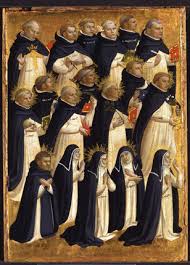
Blessed Gregory & Blessed Dominic
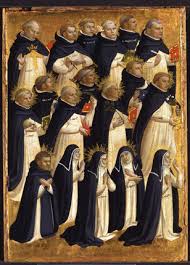
Very little is known about these two Dominican preachers. Their legend tells us that they evangelized the mountainous Somontano region of Moorish Spain near Barbastro, Aragon. One day they were caught in a storm as they traveled from one village to another. The storm loosed the rocks of the cave in which they had sought shelter and they were buried in a landslide. The bells of Perarúa rang out of their own accord, indicating that something remarkable was afoot, and villagers, who ventured out after the storm, found the cave surrounded by lights and angelic music. Digging into the rubble, they found the two Dominicans crushed to death. Miracles surrounded their burials and their tombs at Besians in the diocese of Barbastro, where pilgrims came to pray, especially against the danger from storms. Formerly on Rogation days, and in times of drought, their relics were carried in procession.
Born: 11th Century
Died: Martyred about 1300
Beatified: Pius IX approved their cult in 1854
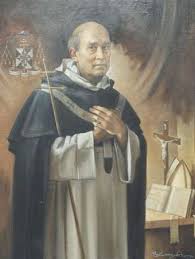
Blessed Bartholomew Cerveri
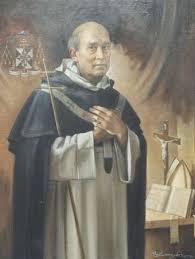
Carrying on the glorious tradition of death in the cause of truth. Blessed Bartholomew of Cerveri was the fourth Dominican inquisitor to win his crown in Piedmont, in the stronghold of thee Catharists, who had taken the lives of Peter of Verona, Peter of Ruffia, and Anthony of Pavonio.
Bartholomew was born at Savigliano, in 1420 , and, even in his early years, displayed precocious solemnity and piety. He entered the Order in the convent of his native town, and progressed rapidly in his studies. on May 8th , 1452, he distinguished he himself by obtaining the licentiate, the doctorate and master’s degree from the capital university of Turin; the only time in the history of the university that anyone had acquired three degrees in one day.
Bartholomew taught for a year at the university, and then he was made prior of the convent at Savigilano. In his short apostolate of 12 years, he converted many heretics and worked steadfastly to eradicate heresy. He was appointed inquisitor in Piedmont, which made it clear to him that a martyr’s death was marked out for him. Being a Dominican in Lombardy was a dangerous business, at best; too be appointed inquisitor meant the heretics were given a target for their hatred.
In many ways the murder of Bartholomew and his companions repeats the martyrdom of Peter of Verona. Bartholomew knew beforehand that he was to die, and he made a general confession before starting out on his last trip. He remarked to his confessor, “They will call me , Bartholomew of Cerverio, though I have never set foot there. Today I go there as a inquisitor and there I must die.” On the road entering Cerverio, he and his party were attacked by five heretics. His companions were wounded, but escaped. Bartholomew died, riddled with dagger wounds, before they could get help.
Some people of Savigliano saw a bright light in the sky over Cerverio and surmised what had happened. They went out and brought home the relics, marveling back, despite all the wounds, the martyr had not bled. Laying him down in the church of the Dominicans, they saw his wounds bleed, and the hastily rescued the blood for relics. He was buried n a Dominican Church of Savigliano, and , later, when the church was ruined by revolution, the relics were moved to the parish church.
A chapel was built at the sight of the martyrdom and richly decorated with narrative frescoes. Processions were made there several times a year by the people of Savigliano and Cerverio, invoking Bartholomew against thunder and hail especially. At The same place a fig tree was honored for many years for its connection with Capital Blessed Bartholomew; it was supposed to have sprung up at the time of the martyrdom, at the very place the martyr fell.
Born: 1420
Died: Martyred in 1466
Beatified: Pope Pius IX beatified Bartholomew of Cerverio in 1853
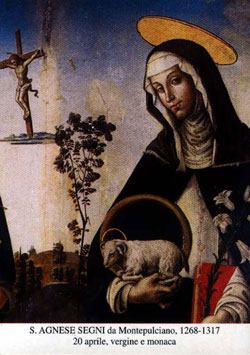
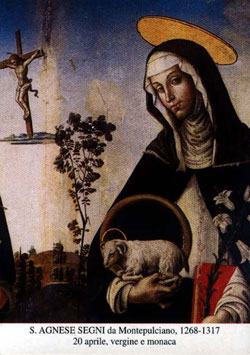
Saint Agnes of Montepulciano
Agnes was not a child martyr like her Roman patroness but she exhibited the same simplicity, and some of her best-known legends concern her childhood. Her birth into the wealthy de Segni family was announced by great lights surrounding the house where she was born. From her infancy she was especially marked for dedication to God: she would spend hours reciting Pater Nosters and Ave Marias on her knees in the corner of some room.
By the time Agnes was six, she was already urging her parents to let her enter the convent. When they assured her that she was much too young, she begged them to move to nearby Montepulciano, so she could make frequent visits to the convent. Because of the local political instability, her father was unwilling to move from his safe haven but did allow his little girl to visit with the sisters occasionally.
On one of these visits an event occurred that all the chroniclers record as being prophetic. Little Agnes was traveling in Montepulciano with her mother and the women of the household, and, as they passed a hill on which stood a bordello, a flock of crows swooped down and attacked the girl. Screaming and plunging, they managed to scratch and frighten her badly before the women drove them away. Upset by the incident, but devoutly sure of themselves, the women said that the birds must have been devils, and that they resented the purity and goodness of little Agnes, who would one day drive them from that hilltop. Agnes did, in fact, build a convent there in later years.
When she was nine, Agnes insisted that the time had come to enter the convent del Sacco. She was allowed to go to a group of Franciscans in Montepulciano, whose dress was the ultimate in primitive simplicity: they were known, from the cut of the garment, as the Sacchine or ‘sisters of the sack.’ The high-born daughter of the Segni was not at all appalled at the crude simplicity with which they followed their Father Francis; she rejoiced in it. Her religious formation was entrusted to an experienced older sister named Margaret, and Agnes soon edified the whole house by her exceptional progress. For five years she enjoyed the only complete peace she would ever have; she was appointed bursar at the age of 14, and she never again was without some responsibility to others.
During this time Agnes reached a high degree of contemplative prayer and was favored with many visions. One of the loveliest is the one for which her legend is best known: the occasion of a visit from the Blessed Virgin. Our Lady came with the Holy Infant in her arms, and allowed Agnes to hold Him and caress Him. Unwilling to let Him go, Agnes hung on when Our Lady reached to take Him back. When she awakened from the ecstasy, Our Lady and her Holy Child were gone, but Agnes was still clutching tightly the little gold cross He had worn on a chain about His neck. She kept it as a precious treasure.
Another time, Our Lady gave her three small stones and told her that she should use them to build a convent some day. Agnes was not at the moment even thinking about going elsewhere, and said so, but Our Lady told her to keep the stones–three, in honor of the Blessed Trinity–and one day she would need them.
Some time after this, a new Franciscan convent opened in Procena, near Orvieto, and the sisters there asked the ones of Montepulciano to send them a mother superior. Sister Margaret was selected, but stipulated that Agnes must be allowed to come to help her in the foundation of the new community. There Agnes served as housekeeper–a highly responsible position for a 14-year-old! Soon many other girls joined the convent at Procena simply became they knew that Agnes was there.
To the distress of young Agnes, she was elected abbess. Since she was only 15, a special dispensation was needed–and provided by Pope Nicholas IV–to allow her to take the office. On the day when she was consecrated abbess, great showers of tiny white crosses fluttered down on the chapel and the people in it. It seemed to show the favor of heaven on this somewhat extraordinary situation.
For 20 years, Agnes lived in Procena, happy in her retreat and privileged to penetrate the secrets of God in her prayer. She was a careful superior, as well as a mystic; several times she worked miracles to increase the house food supply when it was low. The nun’s self-discipline was legendary. She lived on bread and water for fifteen years. She slept on the floor with a stone for a pillow. It is said that in her visions angels gave her Holy Communion.
Once her visions of Christ, the Blessed Virgin, and angels had become known, the citizens of Montepulciano called her back for a short stay. She went willingly enough, though she hated leaving the peace of her cloister for the confusion of traveling. She had just settled down, on her return, with the hope that she had made her last move and could now stay where she was, when obedience again called her back to Montepulciano–this time to build a new convent. A revelation had told her that she was to leave the Franciscans, among whom she had been very happy, and that she and her future sisters should become Dominicans.
In 1306, Agnes returned to Montepulciano to put the Lord’s request into action: she was to build a convent on the former site of the brothels. All she had for the building of the convent were the three little stones given her by the Blessed Virgin, and Agnes–who had been bursar and knew something about money–realized that she was going to have to rely heavily on the support of heaven in her building project.
After a long quarrel with the inhabitants of the hilltop she wanted for her foundation, the land was finally secured, and the Servite prior laid the first stone, leaving her to worry about from where the rest of the stones would come. Agnes saw the project to its completion. The church and convent of Santa Maria Novella were ready for dedication in record time, and a growing collection of aspirants pleaded for admittance to the new convent.
Agnes had become convinced that the community must be anchored in an established Rule in order to attain permanence. She explained that the rule was to be Dominican, not Franciscan. All the necessary arrangements were made, she was established as prioress, the Dominicans agreed to provide chaplains and direction, and the new community settled down. They had barely established the regular life when one of the walls of the new building collapsed. It was discovered that the builders had cheated, and that the whole convent was in danger of falling on top of them. Agnes met the new problem with poise. She had many friends in Montepulciano by this time, and they rallied to rebuild the house.
When the convent was once again completed, and had become, as hoped, a dynamo of prayer and penance, Agnes decided to go to Rome on pilgrimage. It is interesting to note that Second Order convents of the 14th century were so flexible in the matter of enclosure. She made the trip to Rome and visited the shrines of the martyrs. The pope was at Avignon, so she did not have the happiness of talking to him. But she returned to Montepulciano full of happiness for having seen the holy places of Rome.
At the age of 49, Agnes’s health began to fail rapidly. She was taken for treatment to the baths at Chianciano–accompanied, as it says in the rule, by ‘two or three sisters’–but the baths did her no good. She did perform a miracle while there, restoring to life a child who had fallen into the baths and drowned.
Agnes returned to Montepulciano to die in the night. When she knew she was dying after a long and painful illness, Agnes told her grieving nuns that they should rejoice, for, she said, “You will discover that I have not abandoned you. You will possess me for ever.” The children of the city wakened and cried out, “Holy Sister Agnes is dead!” She was buried in Montepulciano, where her tomb soon became a place of pilgrimage.
One of the most famous pilgrims to visit her tomb was Saint Catherine of Siena, who went to venerate the saint and also, probably, to visit her niece, Eugenia, who was a nun in the convent there. As she bent over the body of Saint Agnes to kiss the foot, she was amazed to see Agnes raise her foot so that Catherine did not have to stoop so far!
In 1435, her incorrupt body was translated to the Dominican church at Orvieto, where it remains today. Clement VIII approved her office for the use of the order of St. Dominic, and inserted her name in the Roman Martyrology.
Many stories grew up around Agnes.
Her birth was announced by flying lights surrounding her family’s house.
As a child, while walking through a field, she was attacked by a large murder of crows; she announced that they were devils, trying to keep her away from the land; years later, it was the site of her convent.
She was known to levitate up to two feet in the air while praying.
She received Communion from an angel, and had visions of the Virgin Mary.
She held the infant Jesus in one of these visions; when she woke from her trance she found she was holding the small gold crucifix the Christ child had worn.
On the day she was chosen abbess as a teenager, small white crosses showered softly onto her and the congregation.
She could feed the convent with a handful of bread, once she’d prayed over it.
Where she knelt to pray, violets, lilies and roses would suddenly bloom.
While being treated for her terminal illness, she brought a drowned child back from the dead.
At the site of her treatment, a spring welled up that did not help her health, but healed many other people.
Born:1268 at Gracchiano-Vecchio, Tuscany, Italy
Died: at Montepulciano, Tuscany, on April 20, 1317. Legend says that at the moment of her death, all the babies in the region, no matter how young, began to speak of Agnes, her piety, and her passing; miracles reported at her tomb; body incorrupt; relics translated to the Dominican church at Orvieto in 1435
Beatified: 1534
Canonized:1726 by Pope Benedict XIII
Representation: In art, Saint Agnes is a Dominican abbess (white habit, black mantle) with a lamb, lily, and book. She might also be portrayed (1) gazing at the Cross, a lily at her feet, (2) with the Virgin and Child appearing to her; (3) with the sick healed at her tomb (Roeder); (4) with Saint Catherine of Siena; or (5) as patroness of Montepulciano, of which she holds a model in her hand. Tiepolo presents Agnes as one of the saints surrounding the Blessed Virgin in the Jesuit church at Venice, Italy. She is venerated at Montepulciano.
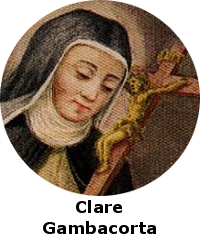
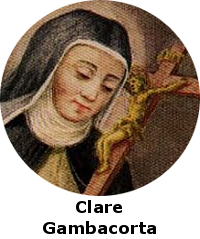
Blessed Clare Gambacorta
Clare, baptized Victoria, was the only daughter of the pre-eminent family of Pisa, which was in political exile at the time of her birth. When Victoria was seven, the family returned triumphantly to Pisa, and her father, Peter Gambacorta, was installed as chief magistrate of the city, a position full of both glory and uncertainty.
Victoria, a pretty and pious child, used to gather the children together to recite the Rosary. She was both devout and penitential; therefore, she did not relish the marriage her father had arranged for her. Nevertheless, as a dutiful daughter she married and became a dutiful, loving wife. When her young husband died of the plague just three years after their marriage, Victoria was grief-stricken. She did truly love him. But now that she was free, she determined that no one was going to urge her to marry again.
In the first year of her marriage, when she was 13, Victoria had met the famous and saintly Catherine of Siena, who had come to Pisa to talk to Victoria’s father about he league of cities. The saint had advised the lovely young bride to give her heart to God and her husband.
Now that he was dead, Catherine wrote to the 15-year-old widow saying: “Strip yourself of self. Love God with a free and loyal love.” Victoria knew that another marriage was being arranged for her, and before the contract could be concluded she fled to the Poor Clares and took the habit and the religious name Sister Clare.
Her brothers forcibly took her home. They locked her up in a dark little room in her own home. For five months she could neither talk to her friends nor receive the sacraments, but she retained the name Clare, and she wore the Franciscan habit.
The pretty, young prisoner was a daughter of her times, and she managed to get errands done by her friends. One by one, her jewels were sent out and sold, and the money was given to the poor. It was the only active charity she could manage from a prison cell. Finally, on Saint Dominic’s day, when her father and brothers were away, her mother got her out and took her to Mass. It was the first time in months that she had been able to receive Communion.
Shortly thereafter, a Spanish bishop came to visit the family, and Clare’s father asked him to try to talk some sense into the girl. He apparently did not know that the Spaniard had been confessor to Saint Bridget of Sweden, and that he was highly in sympathy with women who wished to dedicate themselves to God. In the end, Clare’s family relented and allowed her to make plans to enter a convent. Her contact with Saint Catherine had convinced her that she could be nothing but a Dominican, so she took refuge with the local community until she could build a convent of her own.
Due to the ravages of plague and schism, many convents, including that of the Dominicans of Pisa, were weak in observance and did not live the common life. Clare wanted a strictly religious form of life, and, within four years, with the help of her stepmother, the new convent was built for her and Blessed Mary Mancini. It was first blessed in 1385, and a strict canonical cloister was imposed upon it, forbidding any man but the bishop and the master general from entering.
Eight years later, this strict enclosure was to cost Sister Clare a terrible loss. Her father was betrayed by a man who had always been his friend, and the volatile public turn against him and killed him in the street outside her convent. One of her brothers also fell in the fight, and a second, wounded, begged to be let into the convent. Clare had to tell him, through the window, that she could not open the door to him. While she watched in horror, he was dragged away and killed.
Some time after this, Sister Clare fell seriously ill and was thought to be dying. She made a curious request: some food from the table of the man who had betrayed and killed her father and brothers. The wife of the guilty man sent a basket of bread and fruit; Sister Clare ate the bread and was cured. Shortly afterwards the man who had seized the power unjustly was killed himself, and she offered sanctuary to his widow and daughters.
Clare’s brother, Peter, who had fled from the court to become a hermit about the time she went to the Poor Clares, converted a band of highwaymen and began a community of hermits. When his father and brothers were murdered, he wished to go back to secular life and seek revenge, and Clare talked him out of it.
Clare Gamacorta died after a holy life. Many prodigies were reported at her tomb, and there is an interesting little legend to the effect that every time a sister in her house is about to die, the bones of Blessed Clare rattle in her coffin. This gives the sister warning.
Born: in Venice(?), Italy, in 1362;
Died: 1419
Beatified: by Pope Pius VIII in 1830.


You must be logged in to post a comment.