
Category: Dominican Saints
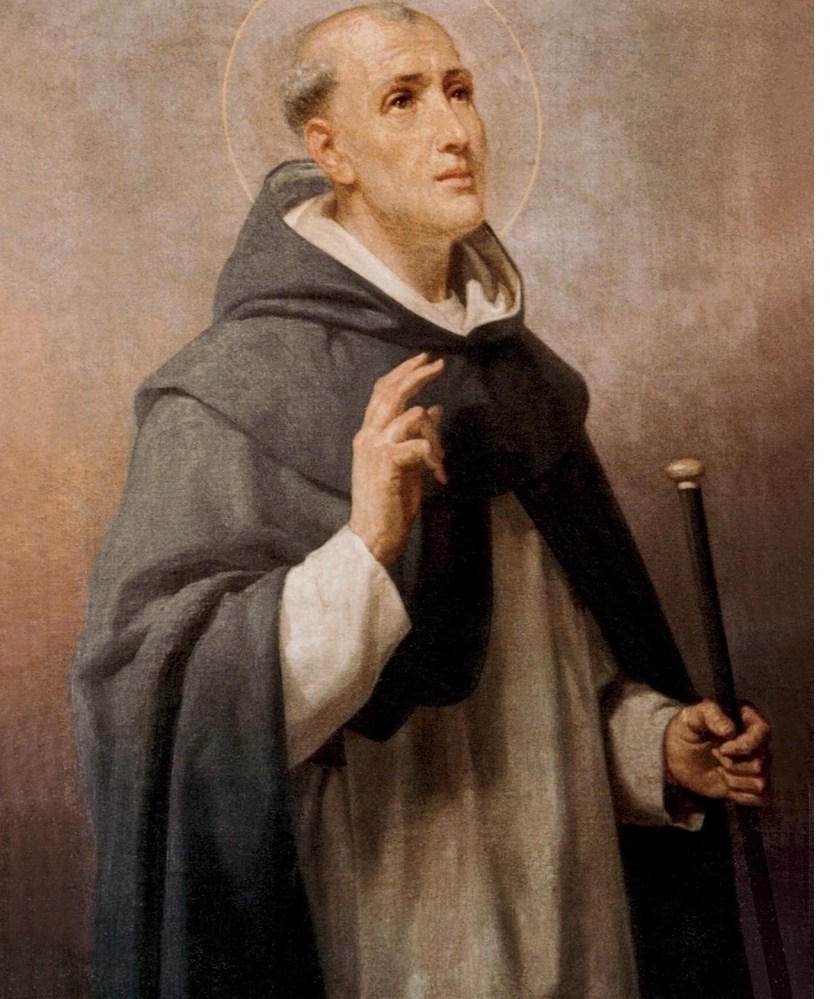
Blessed John of Vercelli
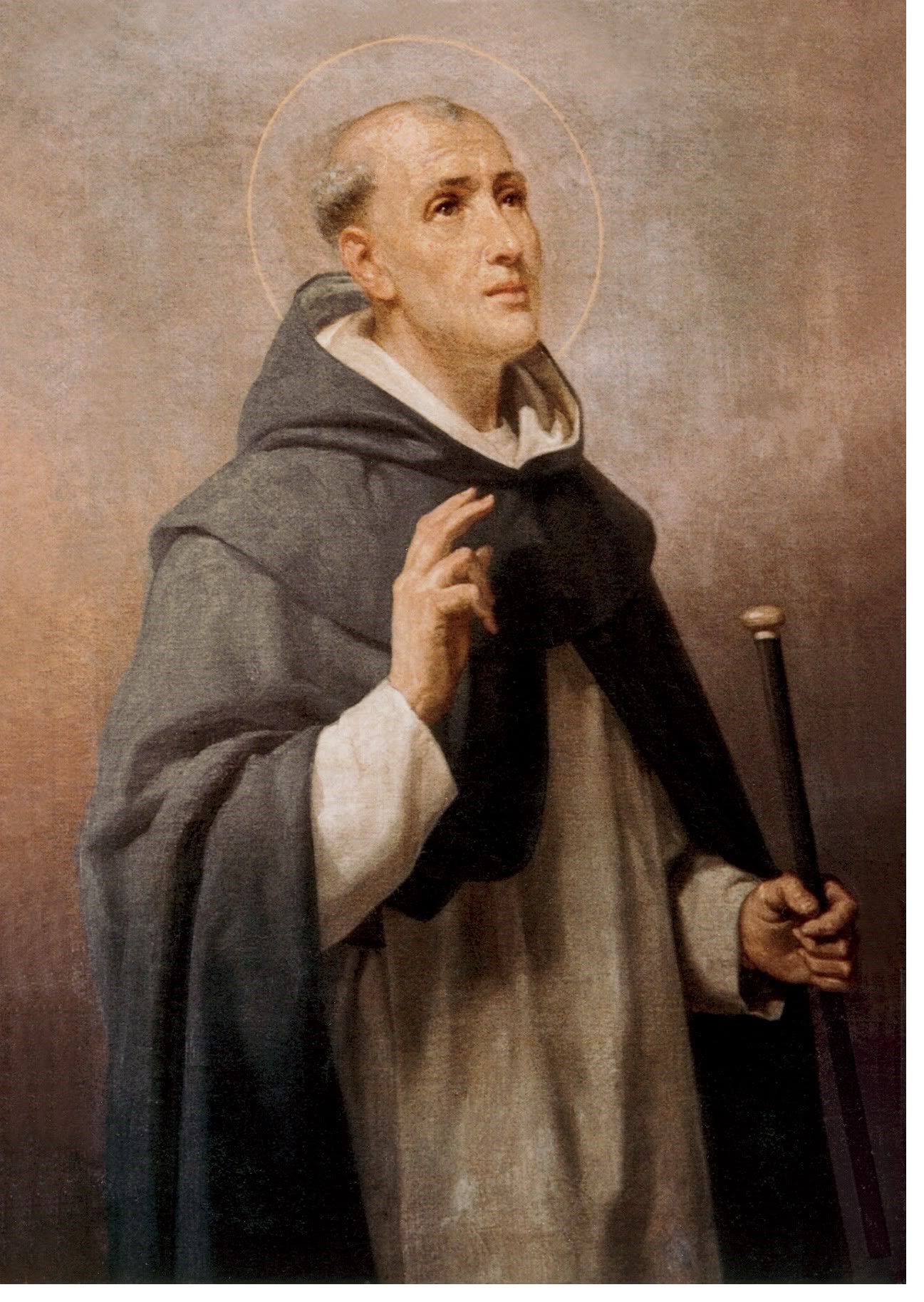
John Garbella was born early in the 13th century, somewhere near Vercelli. He studied at Paris and was ordained priest before 1229. He taught canon law at the University of Paris. While he was professor there, Jordan of Saxony (who was a friend of Saint Albert the Great) came to Paris, and John saw one after another of his best pupils desert their careers to join the Dominicans. He seems to have considered them quite objectively, without reference to himself, until one day he had an interior voice that spoke to him that it was God’s will for him to join the Dominicans. No one can say that John did not respond with alacrity; he dropped everything and ran down the street. (“Let me go; I am on my way to God!”) Jordan received him happily and gave him the habit.
In 1232, John was sent to Vercelli to establish a convent there. He built this and several other convents in Lombardy as houses of regular observance. While provincial of Lombardy, he also became inquisitor. It was a particularly difficult moment. His brother in religion, Peter of Verona, had just been killed by the heretics in Como. The entire countryside was in a state of war, with roving bands of heretics and robbers. It was the task of the new inquisitor to try to bring order out of this chaos, and what John did was remarkable, considering the situation. In spite of his heavy labors, which included the supervision of 600 friars in 28 different cities (he reached them only by walking), John of Vercelli established the ideals of study and regular observance in all of his houses.
It was the good fortune of John of Vercelli to live in an age that was well peopled by saints. He formed a close friendship with Saint Louis, the king of France. Several of his tasks in the order, particularly the Commission on the Program of Studies, he shared with Saint Albert the Great, Saint Thomas Aquinas, and Peter of Tarentaise (the future Pope Innocent V). In such company one would need to have a superior set of talents; John did.
In 1264 the chapter of the order met at Paris. Blessed Humbert had resigned as master general of the order. John went to the chapter hoping that he could resign as provincial of Lombardy. Instead of escaping one office, he fell heir to a still more difficult one. He was elected master general in 1264 and served in that capacity until 1283. John was then a man in his sixties and was, moreover, handicapped by a crippled leg. However, he accepted the office which would require him to walk, not only all over Lombardy, but all over Europe. It took a brand of courage and obedience that was little short of heroic.
During the generalate of John of Vercelli, the relics of Saint Dominic were transferred to the new tomb that had been prepared for it by Nicholas of Pisa. When the transfer was made, John of Vercelli fixed his seal on the tomb; the seals were still intact on their examination in 1946. During the translation of the relics, according to the account in the Vitae Fratrum, when the body of Saint Dominic was exposed to view, the head was seen to turn towards John of Vercelli. John, embarrassed, moved to another part of the church and gave his place to a cardinal. Whereupon, the head of Saint Dominic was seen by all to turn again in John’s direction.
On the death of Clement IV, John of Vercelli was very nearly elected pope. Being warned of the possibility, he fled in fright. However, his good friend Cardinal Visconti, was elected and took the name Gregory X. He appointed John as legate on several different missions.
He was commissioned by the pope to draw up the Schema for the second ecumenical council of Lyons in 1274–that council to which Saint Thomas Aquinas was hurrying when death found him on the road. At the council John distinguished himself for his assistance by offering to the council the talents of his best men. At the council, he accepted for the Dominican Order the special commission of promoting reverence for the Holy Name of Jesus and fighting blasphemy, which was, in that day as in ours, a prevalent vice. He can thus be considered the founder of the Holy Name Society, even though the Confraternity was not formed until 1432.
Several precious relics were suitably enshrined by John of Vercelli. These included several thorns from the Crown of Our Lord, which had been given him by Saint Louis of France. The cord of Saint Thomas, with which he had been guided by the angels and which he had worn until death, was given into the care of the master general, who gave it to the convent of Vercelli for safe keeping.
John’s career was rapidly reaching its end. In 1279, he presided over the famous chapter of Paris at which the order made the doctrine of Saint Thomas officially its own. The following year he laid the foundations of the Church of Santa Maria Sopra Minerva. One of his last official acts was to provide for a work on the instruction of novices (Benedictines, Dorcy).
Born: 1205 at Mosso Santa Maria, Italy as John Garbella
Died: September 1283 at Montpelier, France of natural causes; buried at the Dominican convent at Montpelier; his tomb was desecrated by Calvinists in 1562, and his body disappeared.
Beatified: 1903 by Pope Pius X (cultus confirmed), 1909 elevated him to the honors of the altar
Blessed James Benefatti
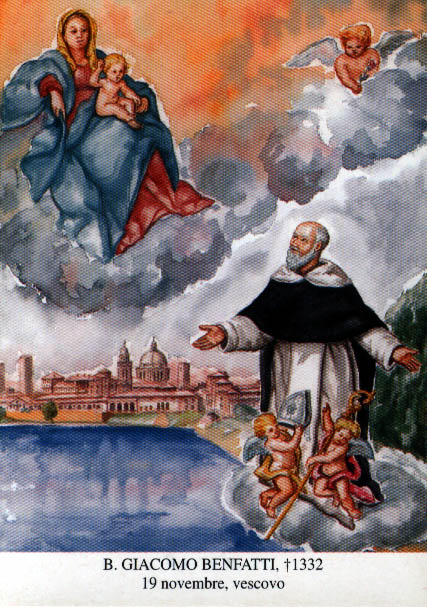
Blessed James Benefatti, James is known as the Father of the Poor. He was a Dominican at Mantua, Italy in 1290, and was a Doctor of theology and a priest. He was also a friend and brother friar of Nicholas Boccasino who later became Pope Benedict XI, and for whom James held several support offices including papal legate. He was the Bishop of Mantua in 1303, and noted for his devotion to the poor. James rebuilt his cathedral and refurbished churches and was appointed Papal legate for Pope John XXII. He died 19 November 1332 at Mantua, Italy of natural causes. His body was found incorrupt when exhumed both in 1480 and 1604. He was beatified in 1859 by Pope Pius IX.
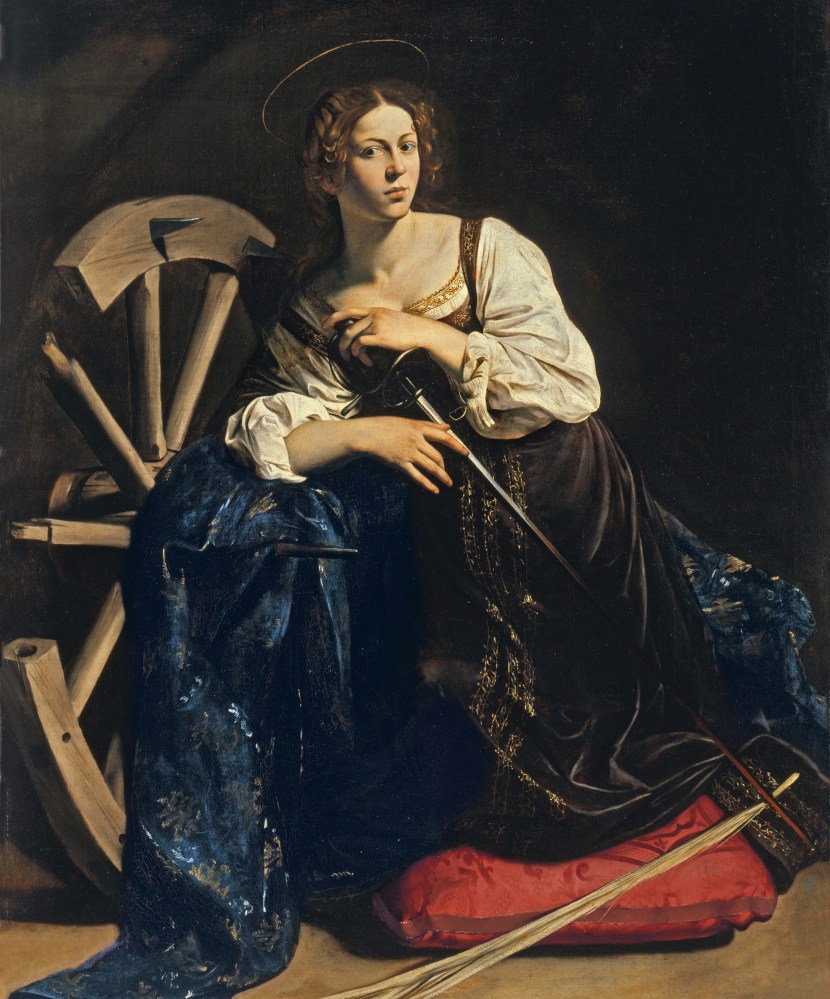
Saint Catherine of Alexandria
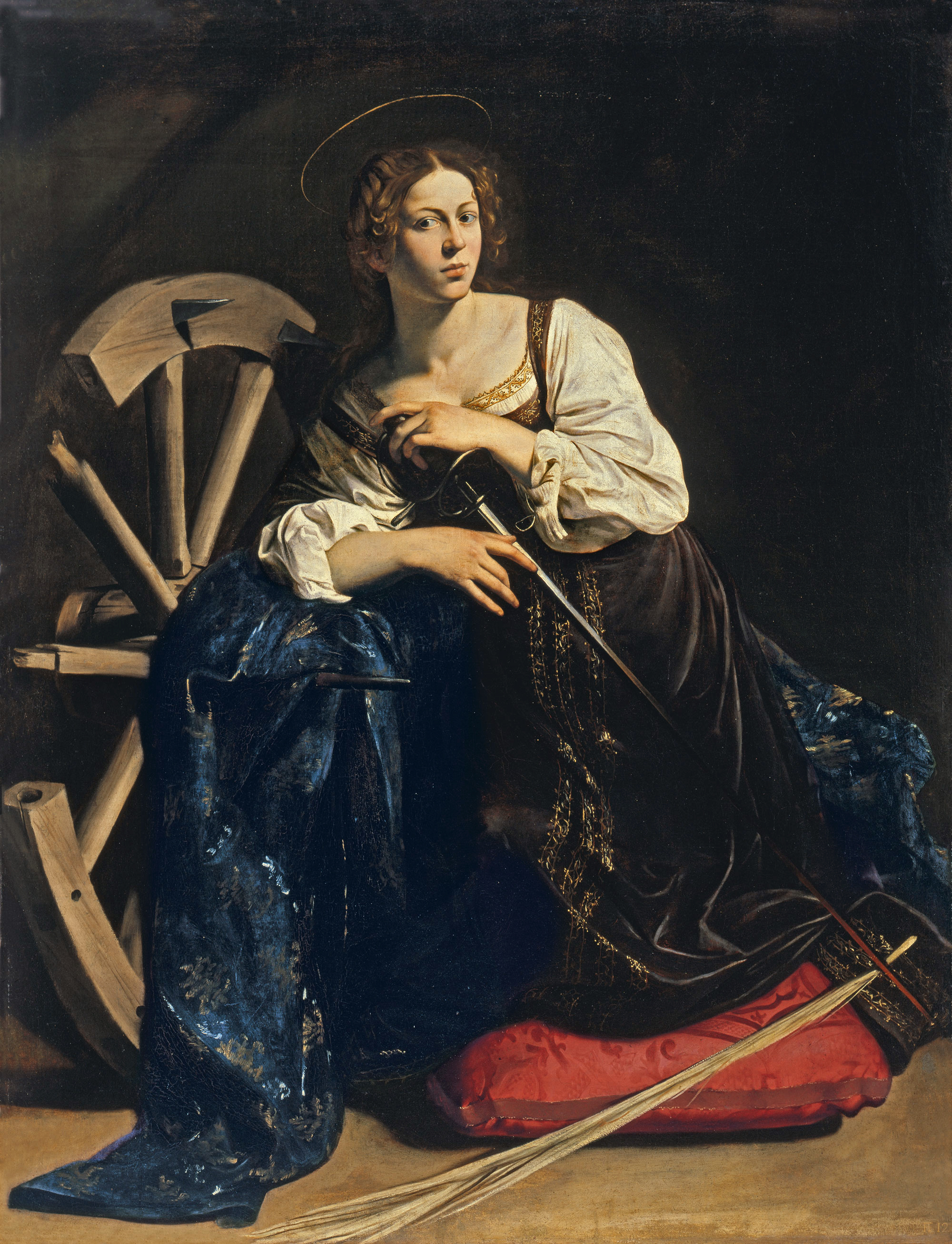
According to the traditional story, Catherine was the daughter of Costus, a pagan governor of Alexandria, where she was born. She is said to have announced to her parents that she would only marry someone who surpassed her in beauty, intelligence, wealth, and social status. This has been interpreted as an early foreshadowing of her eventual discovery of Christ. “His beauty was more radiant than the shining of the sun, His wisdom governed all creation, His riches were spread throughout all the world.” Though raised a pagan, she converted to Christianity in her late teens. It is said that she visited her contemporary, the Roman Emperor Maximinus Daia, and attempted to convince him of the moral error in persecuting Christians. She succeeded in converting his wife, the Empress, and many pagan philosophers whom the Emperor sent to dispute with her, all of whom were subsequently martyred. Upon the failure of the Emperor to win Catherine over, he ordered her to be put in prison; and when the people who visited her converted, she was condemned to death on the breaking wheel, an instrument of torture. According to legend, the wheel itself broke when she touched it, so she was beheaded.
According to Christian tradition, angels carried her body to Mount Sinai, where, in the 6th century, the Eastern Emperor Justinian established Saint Catherine’s Monastery, Mount Sinai, the church being built between 548 and 565 in Saint Catherine, Egypt, on the Sinai peninsula. Saint Catherine’s Monastery survives, a famous repository of early Christian art, architecture and illuminated manuscripts that is still open to visiting scholars. The historian Harold T. Davis says that Catherine’s story dates only from the 10th century AD, and that “assiduous research has failed to identify Catherine with any historical personage”; Davis suggests that the invention of Catherine may have been inspired by the story of the martyred pagan philosopher Hypatia of Alexandria. She did certainly form an exemplary counterpart to Hypatia in the medieval mindset; and it has been suggested that she was invented specifically for that purpose. Like Hypatia, she is said to have been highly learned (in philosophy and theology), very beautiful, sexually pure, and to have been brutally murdered for publicly stating her beliefs. The story of Catherine is placed a hundred years before Hypatia’s death, but there are no contemporary sources for her life.
Because of the fabulous character of the account of her martyrdom and the lack of reliable documentation, the Roman Catholic Church in 1969 removed her feast day from the Calendar. But she continued to be commemorated in the Roman Martyrology on November 25. In 2002, her feast was restored to the General Roman Calendar as an optional memorial.
The 1908 Catholic Encyclopedia describes the historical importance of the belief in her as follows:
Ranked with St Margaret and St Barbara as one of the fourteen most helpful saints in heaven, she was unceasingly praised by preachers and sung by poets. It is believed that Jacques-Benigne Bossuet dedicated to her one of his most beautiful panegyrics and that Adam of St. Victor wrote a magnificent poem in her honour: Vox Sonora nostri chori, etc. In many places her feast was celebrated with the utmost solemnity, servile work being suppressed and the devotions being attended by great numbers of people. In several dioceses of France it was observed as a Holy Day of Obligation up to the beginning of the seventeenth century, the splendor of its ceremonial eclipsing that of the feasts of some of the Apostles. Numberless chapels were placed under her patronage and her statue was found in nearly all churches, representing her according to medieval iconography with a wheel, her instrument of torture. Meanwhile, owing to several circumstances in his life, Saint Nicholas of Myra was considered the patron of young bachelors and students, and Saint Catherine became the patroness of young maidens and female students. Looked upon as the holiest and most illustrious of the virgins of Christ after the Blessed Virgin Mary, it was natural that she, of all others, should be worthy to watch over the virgins of the cloister and the young women of the world. The spiked wheel having become emblematic of the saint, wheelwrights and mechanics placed themselves under her patronage. Finally, as according to tradition, she not only remained a virgin by governing her passions and conquered her executioners by wearying their patience, but triumphed in science by closing the mouths of sophists, her intercession was implored by theologians, apologists, pulpit orators, and philosophers. Before studying, writing, or preaching, they besought her to illumine their minds, guide their pens, and impart eloquence to their words. At the beginning of the fifteenth century, it was rumored that she had spoken to Joan of Arc and, together with St. Margaret, had been divinely appointed Joan’s adviser.
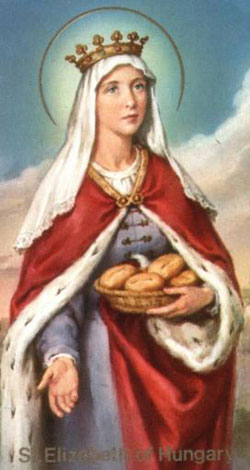
St. Elizabeth of Hungary~The Rev. Dcn Dollie Wilkinson, OPI
(1207 – November 17, 1231)
“She opens her arms to the poor and extends her hands to the needy.” Proverbs 31:20
In her short life, Elizabeth manifested such great love for the poor and suffering that she has become the patroness of Catholic charities and of the Secular Franciscan Order. The daughter of the King of Hungary, Elizabeth chose a life of penance and asceticism when a life of leisure and luxury could easily have been hers. This choice endeared her in the hearts of the common people throughout Europe.
She was born in Hungary in 1207, the daughter of Andrew, King of Hungary. From the beginning of her life, she was ridiculed by people who were jealous of her. They noticed that she was always trying to be holy. As she would play games with the other children, she would always contrive little ways to sneak into the chapel and have a visit with Jesus.
Betrothed to Louis of Thuringia at four years of age, Elizabeth married the 21-year-old Louis when she was 14 years old. Later, they had three children Herman, Sophia and Gertrude. Early in their marriage, Louis rebuked Elizabeth because she was always serving people. Although Elizabeth was Queen, she longed to live the life of poverty she heard about through the Franciscans. She constantly gave her jewels and best clothes to the poor. Sometimes she gave everything away and had nothing to wear, but Jesus always provided for her. When she emptied the castle storehouses of grain for the poor, Jesus would miraculously fill them up again. “That’s no work for a Queen,” Louis reprimanded her. Once he demanded to know what she was carrying in her cloak. When he pulled it open, instead of finding provisions for the poor as he expected, out cascaded lovely red and white roses. Louis knew then that she was indeed a holy woman and from that point on he dedicated his life to sharing her ministry.
After only six years of marriage, Louis died of the plague while on a crusade and Elizabeth was devastated. Louis’ greedy brother, Henry, drove Elizabeth and her children out of Wartburg Castle the winter Louis died. She suffered great hardships until she was taken in by her uncle, the Bishop of Bamberg, who wanted her to remarry. Elizabeth refused, having promised Louis that she would not marry again.
Seeing that her children were taken care of by relatives, Elizabeth entered the Order of St. Francis. Master Conrad of Marburg, who was assigned to be her mentor and confessor, was very strict and harsh with her. But, Elizabeth continued her works of charity among the poor, the sick and the homeless. She fished at the river to earn more money to help them. Elizabeth was especially concerned about the orphans and the elderly and built hospitals with her own funds to take care of them. She had so much compassion toward them that she herself tended to their needs, cleaning their homes and spinning yarn for their clothes.
Elizabeth lived with great austerity and worked continually in her hospice and in the homes of the poor. Saint Elizabeth of Hungary, or Thuringia, is the first royal Franciscan tertiary to be canonized. She died at only twenty-four years old, and the world lost of one of the most pious women to ever live. Within four short years, Pope Gregory IX named her a Saint (in May of 1235). She is most remembered for her gentle, charitable nature and complete devotion to God’ s will. Her popularity was immediate, with most of her followers living in the regions in and around Germany and Hungary. Because St. Elizabeth’s dedication to the poor, the sick and the homeless so closely exemplifies the work of Catholic Charities, she was chosen to be its patroness saint.
St. Elizabeth is the patron saint of bakers, countesses, death of children, falsely accused, the homeless, nursing services, tertiaries, widows, and young brides. Her symbols are alms, flowers, bread, the poor, and a pitcher.
Prayer to St. Elizabeth:
O God, by whose gift Saint Elizabeth of Hungary recognized and revered Christ in the poor, grant, through her intercession, that we may serve with unfailing charity the needy and those afflicted. Through our Lord Jesus Christ, your Son, who lives and reigns with you in the unity of the Holy Spirit, one God, for ever and ever.
Amen.
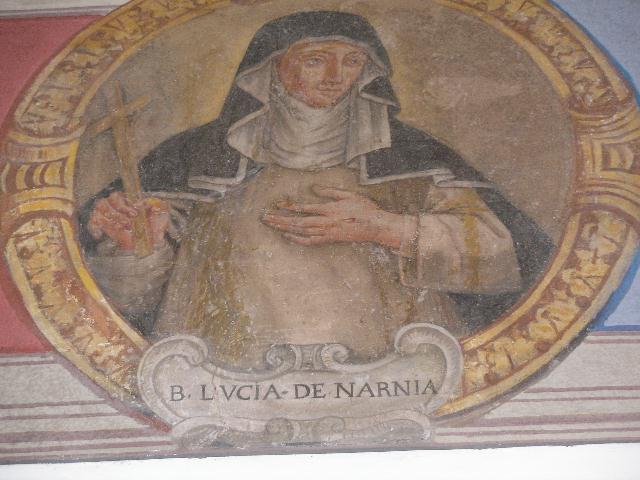
Blessed Lucy of Narni
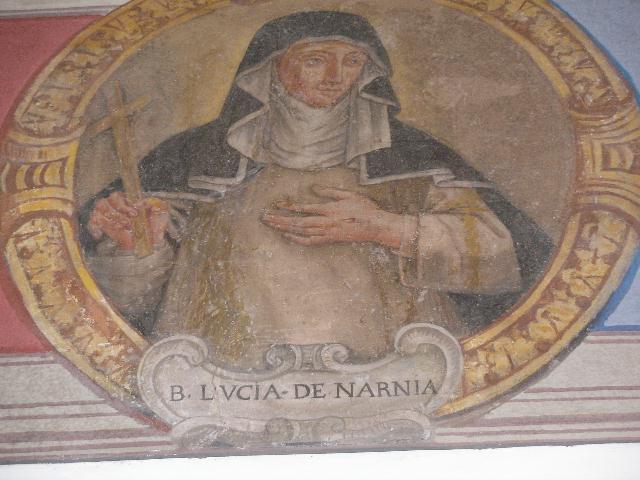
Blessed Lucy of Narni was the eldest of eleven children of Bartolomeo Broccadelli and Gentilina Cassio. When she was only five years old, she had a vision of the Virgin Mary. Two years later, she had another vision, this time of the Virgin Mary accompanied by Saint Dominic. Dominic is said to have given her the scapular at this time. When she was twelve years old, Lucy made a private vow of chastity, and determined to become a Dominican nun.
Circumstances, however, changed to make doing so difficult. The next year her father died, leaving her in the care of an uncle. This uncle determined that the best course of action he could take would be to get Lucy married as quickly as possible.
He made several attempts to do so. One of these included holding a large family party. He had invited the man he had chosen as Lucia’s husband to the party, with the intention of having the couple publicly betrothed. He however had not informed Lucia of his intentions. The suitor made an attempt to put a ring on Lucia’s finger, only to be slapped repeatedly for his efforts by Lucia.
A later attempt involved Count Pietro de Alessio of Milan, an acquaintance of the family. Lucia was actually quite fond of him, but felt her earlier vow to become a nun made the possibility of marriage impossible. The strain Lucia felt as a result of the conflicting feelings made her seriously ill. During this time, the Virgin Mary and Saint Dominic again appeared to her, this time accompanied by Catherine of Siena. They reportedly advised Lucia to contract a legal marriage to Pietro, but to explain that her vow of virginity would have to be respected and not violated. Pietro agreed to the terms, and the marriage was formalized.
In 1491 Lucia became Pietro’s legal wife and the mistress of his household, which included a number of servants and a busy social calendar. Despite her busy schedule, Lucia made great efforts to instruct the servants in Christianity and soon became well known locally for her charity to the poor.
Pietro observed Lucia’s behavior, and occasional quirks, quite indulgently. He never objected when she gave away clothing and food nor when she performed austere penances, which included regularly wearing a hair shirt under her garments and spending most of the night in prayer and acting to help the poor. He also seemed to have taken in stride the story he was told by the servants that Lucia was often visited in the evenings by Saint Catherine, Saint Agnes, and Saint Agnes of Montepulciano who helped her make bread for the poor.
However, when one of the servants came up to him one day and told him that Lucia was privately entertaining a handsome young man she appeared to be quite familiar with, he did react. He took up his sword and went to see who this person was. When he arrived, he found Lucia contemplating a large crucifix. The servant told him that the man he had seen Lucia with looked like the figure on the crucifix.
Lucia left one night for a local Franciscan monastic community, only to find it closed. She returned home the following day, stating that she had been led back by two saints. That was enough for Pietro. He had her locked away for the bulk of one Lenten season. She was only visited by servants who brought her food. When Easter arrived, however, she managed to escape from Pietro back to her mother’s house and on 1494 May 8 became a Dominican tertiary. Pietro expressed his disapproval of this in a rather dramatic form, by burning down the monastery of the prior who had given her the habit.
In 1495 Lucia went to Rome and joined a group of Third order Dominican tertiaries. The next year she was sent to Viterbo and here she found she was frequently the object of unwanted attention. It was here, on February 25, 1496 that she is reported to have received the stigmata. Lucia did her best to hide these marks, and was frequently in spiritual ecstasy. The house had a steady stream of visitors who came to speak to Lucia, and, often, just look at her. Even the other nuns were concerned about her, and at one point called in the local bishop who watched Lucia go through the drama of the Passion for twelve hours straight.
The bishop would not make a decision on Lucia, and called in the local inquisition. Reports here vary, some indicating that he referred the case directly to the Pope, who is said to have spoken with her and, with the assistance of Columba of Rieti, ultimately decided in her favor, telling her to go home and pray for him. Other sources question the accuracy of these reports.
At that time Pietro also came to her, making a final plea to persuade Lucia to return with him as his wife. She declined, and Pietro left alone. He would himself later become a Franciscan monk and a famous preacher.
When Lucy returned to the convent in Viterbo, she found that the Duke of Ferrara, Ercole d’Este I, had determined to build a convent in Ferrara and that, having heard of her, he determined that she would be its prioress. In summer of 1497, he invited her to be the founder of this new monastery. Lucia herself, the Dominican order, and the Pope all agreed quickly to the new proposal. The municipal council of Viterbo, however, objected, not wanting to lose Lucy. Lucia had been praying for some time for a way to create a new convent of strict observance, and agreed to go to the new convent.
Lucia’s departure precipitated a conflict between Ferrara and Viterbo which would continue for two years. Viterbo wanted to keep the famous mystic for themselves, and the duke wanted her in Ferrara. After extensive correspondence between the parties, on April 15, 1499 Lucia escaped secretly from Viterbo and was officially received in Ferrara on May 7, 1499. Thirteen young girls immediately applied for admission to her new community; the construction of the monastery began in June and was completed two years later, in August 1501. It contained 140 cells for sisters and the novices, but to fill it with suitable vocations proved to be very difficult. Lucia expressed the wish to have there some of her former friends from Viterbo and Narni. Duke Ercole, in September 1501 sent his messenger to Rome asking for the help of the pope’s daughter Lucrezia Borgia, who was preparing to marry Duke’s son Alfonso. She collected all eleven candidates Lucia had indicated and sent them, as a special wedding present to Lucia and to the Duke, a few days ahead of her bridal party. She herself solemnly entered Ferrara on February 2, 1502.
The Duke petitioned the local bishop for some help for Lucia in governing her new community, and he sent ten nuns from another community to join Lucia’s convent. Unfortunately, these ten nuns were members of the Dominican second order, who were canonically permitted to wear black veils, something Lucia and the members of the Dominican third order community were not allowed to do.
Tensions were heightened when one of these veiled outsiders, Sister Maria da Parma, was made the prioress of the convent on September 2, 1503. When Duke Ercole died on January 24, 1505 the new prioress quickly found Lucia to be guilty of some unrecorded transgression, most probably of the support for the Savonarolan church reform, and placed her on a strict penance. Lucia was not allowed to speak to any person but her confessor, who was chosen by the prioress. The local provincial of the Dominican order would also not permit any member of the order to see Lucia. There are records that at least one Dominican, Catherine of Racconigi, did visit her, evidently by bilocation, and that Lucia’s earlier visitation by departed saints continued. In response to Lucia’s insistent prayer her stigmata eventually disappeared, which caused some of the other nuns to question whether they had ever been there at all. When Lucia finally died, in 1544, many people were surprised to find that she had not died years earlier.
Then suddenly everything changed. When her body was laid out for burial so many people wanted to pay their last respects that her funeral had to be delayed by three days. Her tomb in the monastery church was opened four years later and her perfectly preserved body was transferred to a glass case. When Napoleon in 1797 suppressed her monastery the body was transferred to the Cathedral of Ferrara; and on 1935 May 26 – to the Cathedral of Narni.
Lucia was beatified by Pope Clement XI on March 1, 1710
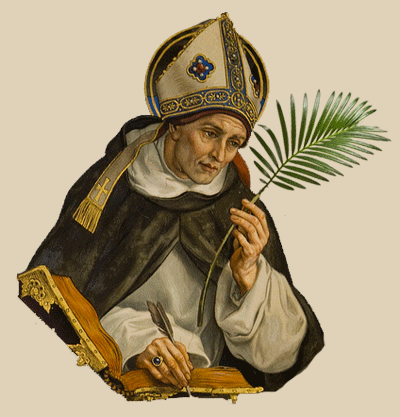
Saint Albert the Great
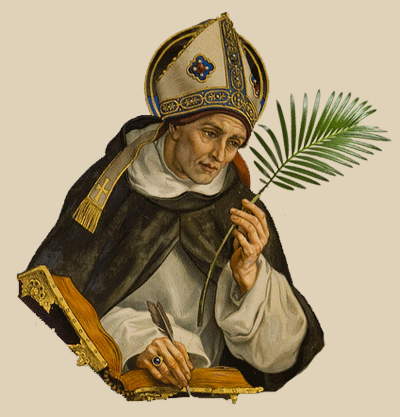
Saint Albert the Great was born sometime between 1193 and 1206, to the Count of Bollstädt in Lauingen in Bavaria. Contemporaries such as Roger Bacon applied the term “Magnus” to Albertus during his own lifetime, referring to his immense reputation as a scholar and philosopher. Albertus was educated principally at Padua, where he received instruction in Aristotle’s writings. A late account by Rudolph de Novamagia refers to Albertus’ encounter with the Blessed Virgin Mary, who convinced him to enter Holy Orders. In 1223 (or 1221) he became a member of the Dominican Order, against the wishes of his family, and studied theology at Bologna and elsewhere. Selected to fill the position of lecturer at Cologne, Germany, where the Dominicans had a house, he taught for several years there, at Regensburg, Freiburg, Strasbourg and Hildesheim. In 1245 he went to Paris, received his doctorate, and taught for some time as a master of theology with great success. During this time Thomas Aquinas began to study under Albertus.
In 1254, Albertus was made provincial of the Dominican Order, and fulfilled the arduous duties of the office with great care and efficiency. During his tenure he publicly defended the Dominicans against attacks by the secular and regular faculty of the University of Paris, commented on St. John, and answered what he perceived as errors of the Arabian philosopher Averroes.
In 1260, Pope Alexander IV made him Bishop of Regensburg, an office from which he resigned after three years. During the exercise of his duties he enhanced his reputation for humility by refusing to ride a horse—in accord with the dictates of the Dominican order—instead walking back and forth across his huge diocese. This earned him the affectionate sobriquet, “boots the bishop,” from his parishioners. After his stint as bishop, he spent the remainder of his life partly in retirement in the various houses of his order, yet often preaching throughout southern Germany. In 1270, he preached the eighth Crusade in Austria. Among the last of his labors was the defense of the orthodoxy of his former pupil, Thomas Aquinas, whose death in 1274 grieved Albertus. After suffering a collapse of health in 1278, he died on November 15, 1280, in Cologne, Germany. His tomb is in the crypt of the Dominican church of St. Andreas in Cologne, and his relics at the Cologne Cathedral.
Albertus was beatified in 1622. He was canonized and proclaimed a Doctor of the Church in 1931 by Pope Pius XI. St Albert’s feast day is celebrated on November 15.
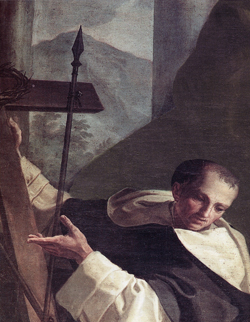
Blessed John Licci

Blessed John Licci, born to a poor farmer, his mother died in childbirth. His life from then on, all 111 years, was a tale of miracles. His father, who fed the baby on crushed pomegranates, had to work the fields, and was forced to leave the infant alone. The baby began crying, and a neighbor woman took him to her home to feed him. She laid the infant on the bed next to her paralyzed husband – and the man was instantly cured. The woman told John’s father of the miracle, but he was more concerned that she was meddling, and had taken his son without his permission. He took the child home to feed him more pomegranate pulp. As soon as the child was removed from the house, the neighbor’s paralysis returned; when John was brought back in, the man was healed. Even John’s father took this as a sign, and allowed the neighbors to care for John.
A precocious and emotional child, John began reciting the Daily Offices before age 10. While on a trip to Palermo, Italy at age 15, John went to Confession in the church of Saint Zita of Lucca where his confession was heard by Blessed Peter Geremia who suggested John consider a religious life. John considered himself unworthy, but Peter pressed the matter, John joined the Dominicans in 1415, and wore the habit for 96 years, the longest period known for anyone.
He founded the convent of Saint Zita in Caccamo, Italy. Lacking money for the construction, John prayed for guidance. During his prayer he had a vision of an angel who told him to “build on the foundations that were already built.” The next day in the nearby woods he found the foundation for a church called “Saint Mary of the Angels,” a church that had been started many years before, but had never been finished. John assumed this was the place indicated, and took over the site.
During the construction, workmen ran out of materials; the next day at dawn a large ox-drawn wagon arrived at the site. The driver unloaded a large quantity of stone, lime and sand – then promptly disappeared, leaving the oxen and wagon behind for the use of the convent. At another point a well got in the way of construction; John blessed it, and it immediately dried up; when construction was finished, he blessed it again, and the water began to flow. When roof beams were cut too short, John would pray over them, and they would stretch. There were days when John had to miraculously multiply bread and wine to feed the workers. Once a young boy came to the construction site to watch his uncle set stones; the boy fell from a wall, and was killed; John prayed over him, and restored him to life and health.
John and two brother Dominicans who were working on the convent were on the road near Caccamo when they were set upon by bandits. One of the thieves tried to stab John with a dagger; the man’s hand withered and became paralyzed. The gang let the brothers go, then decided to ask for their forgiveness. John made the Sign of the Cross at them, and the thief‘s hand was made whole.
One Christmas a nearby farmer offered to pasture the oxen that had come with the disappearing wagon-driver. John declined, saying the oxen had come far to be there, and there they should stay. Thinking he was doing good, the layman took them anyway. When he put them in the field with his own oxen, they promptly disappeared; he later found them at the construction site, contentedly munching dry grass near Father John.
While he did plenty of preaching in his 90+ years in the habit, usually on Christ’s Passion, he was not known as a great homilist. He was known, however, for his miracles and good works. His blessing caused the breadbox of a nearby widow to stay miraculously full, feeding her and her six children. His blessing prevented disease from coming to the cattle of his parishioners. A noted healer, curing at least three people whose heads had been crushed in accidents, he was Provincial of Sicily, and Prior of the abbey on several occasions.

The Feast Day of All Dominican Saints
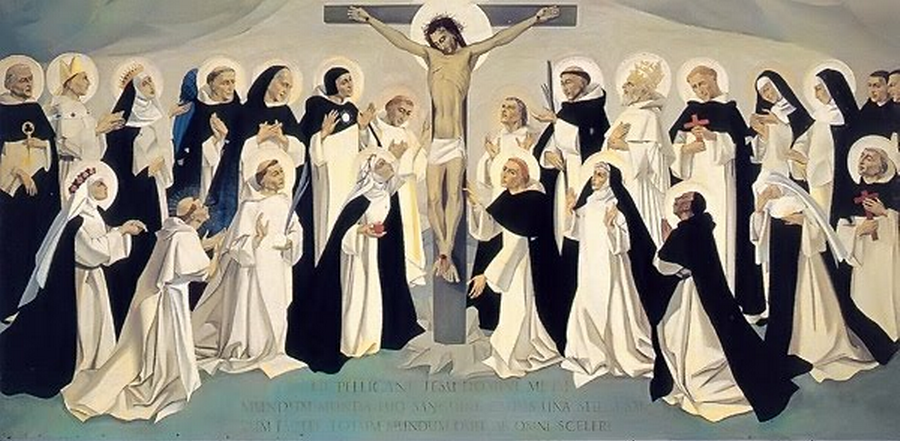
“Blessed are the pure in heart, for they shall see God.” (Mt. 5:8)
Why do we celebrate our Saints?
We come together as one Dominican Family today to celebrate not only Our Saints, but also our many Blesseds, Holy Friars, Nuns, sisters and Laity who have lived over the past 800 years.
We are so privileged to celebrate them as they provide us with an example by which we follow in our religious lives, by their wondrous fellowship in their communion and in their much needed aid to us by their intercessions to God on our behalf.
We include in our celebrations also all the “forgotten” saints because according to the General Chapter of Valencia in 1337, there were 13,370 martyrs between 1234 and 1335. There were another 26,000 in the 16th century alone. Martyrs, confessors, virgins, and holy men and women all have their place of honour in the Order. Friars, worn down through constant contemplation, study, and preaching; nuns who lived lives of great prayer, silence, and penance; sisters who educated 1000s of souls; and third order members who sanctified the world.
We celebrate our thanks to God on this important feast day for our Order and turn to the examples of our Saints, their lives and their intercessions for us so that they may guide us on our spiritual Dominican life’s journey.
Our Order’s Father, Saint Dominic left us a wonderous legacy of teaching and preaching by word and example of how we should live our lives.It is, then, joyous and encouraging that so many of our Dominican brothers and sisters have been beatified and canonized.
Let us pray then in the example we have been taught to ask our dear saints to intercede for us, and to thank our God for all the saints of our Dominican Order and for the fruits of our order to be pleasing in his sight…..
God, the heavenly Father have mercy on us.
God, the Son, Redeemer of the world have mercy on us.
God, the Holy Spirit have mercy on us.
Holy Trinity, one God have mercy on us.
Holy Mary
pray for us.
Holy Mother of God
pray for us.
Holy Virgin of Virgins
pray for us.
All you holy angels and archangels
pray for us.
All you holy Patriarchs and Prophets
pray for us.
All you holy Apostles and Evangelists
pray for us.
All you holy martyrs
pray for us.
All you holy virgins and widows
pray for us.
All you holy men and women
pray for us.
Saint Michael
pray for us.
Saint Gabriel
pray for us.
Saint Raphael
pray for us.
Saint Joseph
pray for us.
Saint John the Baptist
pray for us.
Saint Mary Magdalen
pray for us.
Holy Father Augustine
pray for us.
Holy Father Francis
pray for us.
Blessed Jane of Aza
pray for us.
Blessed Reginald
pray for us.
Holy Father Dominic
pray for us.
Holy Father Dominic
pray for us.
Blessed Bertrand
pray for us.
Blessed Mannes
pray for us.
Blessed Diana
pray for us.
Blessed Jordan of Saxony
pray for us.
Blessed John of Salerno
pray for us.
Blessed William and Companions
pray for us.
Blessed Ceslaus
pray for us.
Blessed Isnard
pray for us.
Blessed Guala
pray for us.
Blessed Peter Gonzalez
pray for us.
Saint Zdislava
pray for us.
Saint Peter of Verona
pray for us.
Blessed Nicholas
pray for us.
Saint Hyacinth
pray for us.
Blessed Gonsalvo
pray for us.
Blessed Sadoc and Companions
pray for us.
Blessed Giles
pray for us.
Saint Margaret of Hungary
pray for us.
Blessed Batholomew of Vincenza
pray for us.
Saint Thomas Aquinas
pray for us.
Saint Raymond of Penyafort
pray for us.
Blessed Innocent V
pray for us.
Blessed Albert of Bergamo
pray for us.
Saint Albert the Great
pray for us.
Blessed John of Vercelli
pray for us.
Blessed Ambrose
pray for us.
Blessed Cecilia
pray for us.
Blessed Benvenuta
pray for us.
Blessed James of Varazze
pray for us.
Blessed James of Bevagna
pray for us.
lessed Jane of Orvieto
pray for us.
Blessed Jordan of Pisa
pray for us.
Saint Emily
pray for us.
Blessed James Salomonio
pray for us.
Saint Agnes of Montepulciano
pray for us.
Blessed Simon
pray for us.
Blessed Margaret of Castello
pray for us.
Blessed Augustine Kazotic
pray for us.
Blessed James Benefatti
pray for us.
Blessed Imelda
pray for us.
Blessed Dalmatius
pray for us.
Blessed Margaret Ebner
pray for us.
Blessed Villana
pray for us.
Blessed Peter Ruffia
pray for us.
Blessed Henry
pray for us.
Blessed Sibyllina
pray for us.
Blessed Anthony of Pavonio
pray for us.
Saint Catherine of Siena
pray for us.
Blessed Marcolino
pray for us.
Blessed Raymond of Capua
pray for us.
Blessed Andrew Franchi
pray for us.
Saint Vincent Ferrer
pray for us.
Blessed Clara
pray for us.
Blessed John Dominic
pray for us.
Blessed Alvarez
pray for us.
Blessed Maria
pray for us.
Blessed Peter of Castello
pray for us.
Blessed Andrew Abellon
pray for us.
Blessed Stephen
pray for us.
Blessed Peter Geremia
pray for us.
Blessed John of Fiesole
pray for us.
Blessed Lawrence of Ripafratta
pray for us.
Blessed Anthony della Chiesa
pray for us.
Saint Antoninus
pray for us.
Blessed Anthony Neyrot
pray for us.
Blessed Margaret of Savoy
pray for us.
Blessed Bartholomew of Cerverio
pray for us.
Blessed Matthew
pray for us.
Blessed Constantius
pray for us.
Blessed Christopher
pray for us.
Blessed Damian
pray for us.
Blessed Andrew of Peschiera
pray for us.
Blessed Bernard
pray for us.
Blessed Jane of Portugal
pray for us.
Blessed James of Ulm
pray for us.
Blessed Augustine of Biella
pray for us.
Blessed Aimo
pray for us.
Blessed Sebastian
pray for us.
Blessed Mark
pray for us.
Blessed Columba
pray for us.
Blessed Magdalen
pray for us.
Blessed Osanna of Mantua
pray for us.
Blessed John Liccio
pray for us.
Blessed Dominic Spadafora
pray for us.
Blessed Stephana
pray for us.
Saint Adrian
pray for us.
Blessed Lucy
pray for us.
Blessed Catherine Racconigi
pray for us.
Blessed Osanna of Kotor
pray for us.
Saint Pius V
pray for us.
Saint John of Cologne
pray for us.
Blessed Maria Bartholomew
pray for us.
Saint Louis Bertrand
pray for us.
Saint Catherine de Ricci
pray for us.
Blessed Robert
pray for us.
Blessed Alphonsus and Companions
pray for us.
Saint Rose
pray for us.
Saint Dominic Ibanez and Companions
pray for us.
Blessed Agnes of Jesus
pray for us.
Saint Lawrence Ruiz and Companions
pray for us.
Saint Martin de Porres
pray for us.
Blessed Peter Higgins
pray for us.
Blessed Francis de Capillas
pray for us.
Saint Juan Macias
pray for us.
Blessed Terence
pray for us.
Blessed Ann of the Angels
pray for us.
Blessed Francis de Posadas
pray for us.
Saint Louis de Montfort
pray for us.
Blessed Francis Gil
pray for us.
Saint Matteo
pray for us.
Blessed Peter Sanz and Companions
pray for us.
Saint Vincent Liem
pray for us.
Saint Hyacinth Castaneda
pray for us.
Blessed Marie
pray for us.
Blessed George
pray for us.
Blessed Catherine Jarrige
pray for us.
Saint Ignatius and Companions
pray for us.
Saint Dominic An-Kham and Companions
pray for us.
Saint Joseph Khang and Companions
pray for us.
Saint Francis Coll
pray for us.
Blessed Hyacinthe Cormier
pray for us.
Blessed Pier Giorgio
pray for us.
Blessed Bartolo
pray for us.
Blessed Michael Czartoryski
pray for us.
Blessed Julia Rodzinska
pray for us.
All holy Dominican brothers and sisters
pray for us.
Lamb of God, who takes away the sins of the world,
spare us, O Lord.
Lamb of God, who takes away the sins of the world,
graciously hear us, O Lord.
Lamb of God, who takes away the sins of the world,
have mercy on us.
Let us pray.–
God, source of all holiness, you have enriched your Church
with many gifts in the saints of the Order of Preachers.
By following the example of our brothers and sisters,
may we come to enjoy their company
for ever in the Kingdom of our Lord Jesus Christ,
Your Son, who lives and reigns with You
and the Holy Spirit, one God, for ever and ever.
Amen.
Blessed Jerome, Valentine, Francis, Hyacinth & Companions (Martyrs of Tonkin)
Blessed Jerome, Valentine, Francis, Hyacinth & Companions (Martyrs of Tonkin) Between the arrival of the first Portuguese missionary in 1533, through the Dominicans and then the Jesuit missions of the 17th century, the politically inspired persecutions of the 19th century, and the Communist-led terrors of the twentieth, there have been many thousands upon thousands murdered for their faith in Vietnam. Some were priests, some nuns or brothers, some lay people; some were foreign missionaries, but most were native Vietnamese killed by their own government and people.
Jerome Hermosilla, a Dominican missionary to Manila, Philippines, and a priest, he went as a missionary to Vietnam in 1828 where he was the Vicar Apostolic of Eastern Tonking, Vietnam and titular bishop of Miletopolis. H was martyred with Saint Valentin Faustino Berri Ochoa.
Valentin Faustinao Berri Ochoa. Born in the Basque country, and ordained on June 14, 1851, Valentin was a missionary to the Philippines and then to Vietnam. He was appointed coadjutor vicar apostolic of Central Tonking, (the modern diocese of Bùi Chu) Vietnam and titular bishop of Centuria on December 25, 1857. He was martyred with Saint Jerome Hermosilla.
Francis Gil de Frederich was educated in Barcelona, Spain where he joined the Dominicans. He was a missionary to the Philippines first and then a missionary to Vietnam in 1732. He spent nine years in prison for his faith during which time he converted fellow prisoners and supervised evangelists on the outside.
Hyacinth Castaneda was a Dominican Priest and missionary to China. He then was sent as a missionary to Vietnam. He was beheaded for his faith in 1773 in Vietnam
Blessed Simon Ballachi

Blessed Simon Ballachi was born to the nobility in 1240, the son of Count Ballachi. His family had a close association with the Church clergy; two of his uncles became archbishops of Rimini, Italy, and a younger brother was a priest. Trained as a soldier and in administration, he was expected to take over the family estates. Against his family wishes, he joined the Dominicans as a lay brother at age 27.
Assigned to work in the garden of his friary, something he knew nothing about but which he loved instantly. He saw God in everything, and prayed constantly as he worked. Noted for his simple life, his strict adherence to the Dominican Rule, and his excellent work as a catechist to children. A visionary, Simon was visited by the devil, by Saint Catherine of Alexandria, Saint Dominic de Guzman, Saint Peter Martyr, and the Blessed Virgin Mary; other brothers saw his cell glowing, and heard angelic voices. Blinded at age 57, he was nearly helpless during the last years of his life; he never despaired, and used the extra free time for prayer. He died on 5 November in 1391.
 The Order of Preachers, Independent
You must be logged in to post a comment.