
Category: Dominican Saints
The Feast of Sts. Simon and Jude~The Very Rev Lady Sherwood,OPI
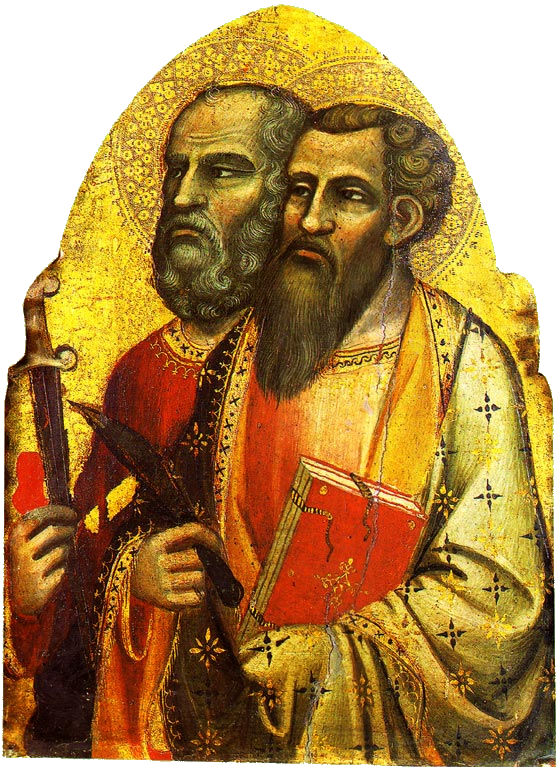
My dearest Brothers and Sisters in Christ:
Today we come together as the church to celebrate the joint feast day of two Saints, those being Sts Simon and Jude. Not much really is known about either of these saints apart from the fact that they were called by Jesus to be among his band of disciples and were later named amongst the Apostles.
Let us firstly take a look at what is known about Saint Simon:
Simon was a simple Galilean, a brother of Jesus, as the ancients called close relatives in those times, including such as uncles and first cousins. He was one of the Saviour’s four first cousins, together with James, Jude and Joseph. These were all sons of Mary, the wife of Alpheus, or Cleophas, both names being a derivative of the Aramaic Chalphai. According to tradition Cleophas was the brother of Saint Joseph, Jesus earthly father. All the sons of this family were raised at Nazareth, close neighbours of the Holy Family.
All were called by Our Lord to be Apostles: pillars of his Church. Saint Mark tells us that Simon was born in Cana, the place, according to Saint John, of Jesus’ first miracle. Some traditions identify Simon as the bridegroom at that wedding and suggest that he became a disciple as a direct response to witnessing that miracle, a miracle that was, after all, performed, at the request of Mary, to get the newly-weds out of a somewhat embarrassing predicament.
Saint Simon is not mentioned anywhere in the New Testament except to be included in the lists of the Apostles’ names.
Tradition has it that Saint Simon preached in Mauretania (an area which approximated to present day north-west Africa and southern Spain), in Egypt and in Libya, leaving behind him the fertile hills of Galilee, where he had been engaged in cultivation of the vineyards and olive gardens. He later rejoined his brother Jude in Persia (modern day Iran) where they laboured and died together, probably martyred, hence the change to a red altar frontal in their honour on this their feast day. At first the Persian king respected them, for they had manifested power over two ferocious tigers that had terrorised the land. With their king, sixty thousand Persians became Christians, and churches rose over the ruins of the idolatrous temples. However, when they visited other parts of the Persian kingdom unconverted, pagan hordes commanded them to offer sacrifices to the Sun god. They prayed for mercy and offered their lives to the living God but the idolaters fell on the two Apostles and massacred them, while they blessed God and prayed for their murders.
Now let us take a look at Saint Jude:
Saint Jude is also known by a variety of other names. He is called Lebbaeus in Matthew chapter ten and Thaddaeus in Mark chapter three.
In the backs of our Bibles, we find The Epistle of Jude. It is a short work of only one chapter containing just 25 verses. Here we are warned against corrupt influences that have crept into the church.
St. Jude is often and popularly referred to as the patron saint of desperate or lost causes, the one who is asked for help when all else fails. Possibly due to prayers for intercession, to be asked of the other Apostles first. Hence, Jude has come to be called ‘the saint of last resort’, the one whom we ask only when desperate.
What, then, can we in today’s world learn from the lives of these two relatively unknown Apostles? Firstly, they, like the rest of the twelve, ‘forsook all and followed Jesus. Can we be accused of doing that? Could we, and should we, give up some of our modern comforts and privileges and live our lives more like our Lord? Secondly, if tradition tells us, St Simon was the recipient of Jesus’ first miracle. We should be reminded that, even two thousand years later, that miracles still happen. We must always be aware that the Holy Spirit is at work in the world and he does not always do things in the way in which we would have him do them.
Thirdly, judging by his epistle, Saint Jude proved to be an avid supporter of gospel truths.
So then, are we truly passionate enough about the tenets and doctrines of our faith? Do we hold fast to the creedal affirmations of the Church?
Both Sts Simon and Jude, spent their lives preaching the gospel to a very pagan world and it is believed that they died a martyr’s death for their faith. We may not be called to be martyrs like they were (hopefully), but we shall be called to make other sacrifices. Are we ready to suffer for the sake of our Lord and Saviour Jesus Christ?
Let us, thank God for the lives of his Apostles Saint Simon and Saint Jude.
Brothers and sisters now Let us pray:
Father,
you revealed yourself to us
through the preaching of your apostles Simon and Jude.
By their prayers,
give your Church continued growth
and increase the number of those who believe in you.
Through our Lord Jesus Christ, your Son,
who lives and reigns with you
in the unity of the Holy Spirit,
One God, for ever and ever.
Amen.
The Feast of St Luke, Evangelist~The Very Rev Lady Sherwood,OPI
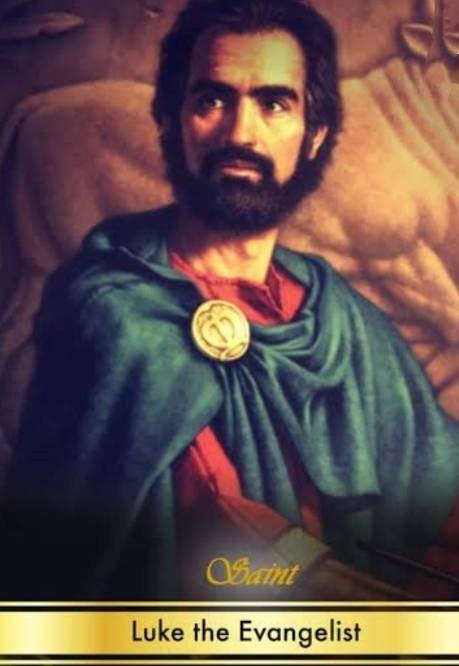
My dearest Brothers and sisters in Christ, Today we come together as the church to commemorate St. Luke the Evangelist, Patron saint of Physicians.
Luke, from his perspective, records for us in his Gospel writings, the life of Jesus=from His birth at Bethlehem, through His ministry and His many healings. How Jesus heals the blind, the deaf, and the lame.
Luke tells us of the peace which Jesus speaks to all, because Jesus is indeed the peace and healing of God, then in human form. That is why in Luke 10, Jesus tells the 72, to say, “Peace be with this house”, as he sends them out as apostles of his peace.
Jesus gives us spiritual healing and peace which forgives our sins, and which reconciles us with God, our Heavenly Father, by His death upon the cross for us.
Jesus is truly the physician of our Soul. He knows all too well, that we are sick with sin, but it deters him not. Each and every one of us, is precisely why He came to earth to be amongst us, the reason he lived with us upon the earth, and why he suffered, bled, was tortured, and died for all our sakes.
Jesus came down from Heaven to our world, to take from us our dark sickness of sin and of death, and to heal us, to bring us true life and salvation. He took all upon himself for us upon the cross, our sickness and death, died with the Lord, to all who truly believe, love and follow Him. We are forgiven, we are healed, we are saved, we are at peace.
If we truly examine our lives, we will see our constant need for healing of the sins of this world. As with the body, if we are sick, we see our dr for diagnosis and treatment, that’s why today, we give thanks to God for His servant, Luke, the Evangelist. It’s Luke’s role to bring Jesus, His healing and peace to each of us through the living and active word of God.
The word of God is the scalpel of Jesus our physician and saviour. With total precision, Jesus’ laws cuts us and ‘kills’ the sickness of the human condition, so that he can heal us, and give us true life.
Each of the commandments of Jesus is a precise incision of his law. We have failed to fear, love, and trust God above all else as we ought to do. We have failed to use God’s name as we should, and to call upon him as our Father, as his children when in every trouble or need, or to give him worthy thanks and praise. We have ignored God’s Holy word and preaching, we have not loved our neighbour, or helped to eased their needs. We have been bad stewards of earthly material things such as money, or possessions. We have failed in giving kindness and forgiveness to our brothers and sisters.
So indeed, our human sickness of sin is dire=without Jesus as our Lord, our Saviour, and physician, the diagnosis is terminal.
But Jesus is merciful, he does not delight in punishment. Jesus our physician of our soul, cuts with His law in order to heal us with His Gospel. The Lord heals the broken hearted and binds up their wounds (PS 147:3). Jesus has kept on our behalf, all those commandments, which we have failed to truly follow.
If we want to call our doctor, we pick up the phone, and wait for an appointment to become available. But Jesus as our physician for our souls, is contactable 24 hrs per day, every single day with no exception. He is contactable easily anytime, day or night, by the important communication of prayer.
So let’s end today with the simplest but most important prayer of all, to our Saviour and physician of our soul:
Lord Jesus Christ, Son of God, have mercy on me, a sinner.
Amen.
Faith and Ministry:The Passion of St John the Baptist~The Very Rev Lady Sherwood,OPI
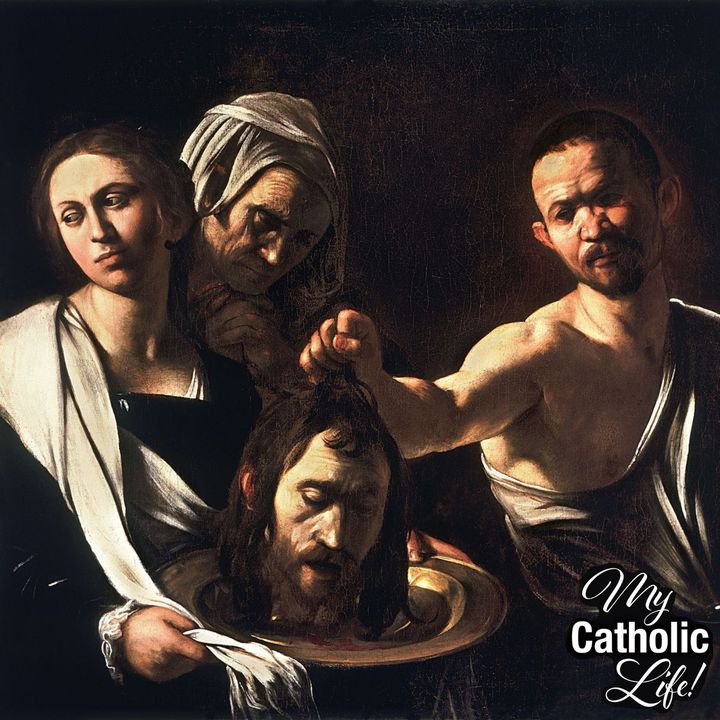
Dearest brothers and sisters in Christ, Today we come together to honour the Passion of St John the Baptist. The life of St. John the Baptist was indeed a very dramatic and eventful one. It definitely could never have been classed as boring or mundane that’s for sure!! Even in his mother’s womb, he leapt with joy when Mary greeted Elizabeth on the occasion of the Visitation. At John’s birth, there was an amazing occasion= that being of the choosing of his name which was that which restored the power of speech of his father Zechariah, and which also left the astonished local people wondering who he would he grow up to be. John’s appearances at the river Jordan preaching repentance and baptising people earned him the reputation of “the Baptist” and he was even the one who baptised our Lord Jesus himself in the River Jordan.
John indeed had an extremely illustrious ministry. Yet in essence, he was a prophet and his greatest action as a prophet was to point out to all that Jesus was indeed the Lamb of God. And as a prophet, he had fulfilled his ministry mission by proclaiming the ways of the Lord to all, and pointing out to them, their sin and their evil ways, and calling for their repentance and for their conversion. St. John the Baptist paid the consequence for pointing out Herod’s sin, as for doing this, he was captured and was imprisoned in Herod’s fortress and was beheaded. If the life of John the Baptist was dramatic and illustrious, his death was equally extremely dramatic, and it was also a death which was extremely gruesome in it’s nature.
John’s death by being beheaded, reveals the true character of the person of Herod, of Herodias, of her daughter, and also of all the guests that were present, as they did nothing and said nothing to stop the heinous act. For a great prophet like St. John the Baptist who had such a dramatic and illustrious life and ministry, his death was so humiliating, yet indeed, so terrible of nature.
Yet, today, we the Church come to honour him. Over and above all else, we honour him for his faithfulness to God and also for his great courage in the acceptance and fulfilment of his mission of being God’s prophet. Even for us, in all the drama of our lives, whether in times of spills and thrills, or whether in times of being mundane and monotonous, what counts for us will be our faithfulness to God. Because in the end, it will be the depth and strength of our faithfulness to God that mattered. This mattered to St. John the Baptist. It also matters to God and it should indeed be what matters to us!
The life and ministry of John the Baptist, and his willingness to die for his faith and devout service to God, is an excellent example of how our lives as Christians, and as children of God should be. There is much we can take from John the Baptist and can and should, live by such within our own lives.
Let us pray:
O God, who willed that St John the Baptist
should go ahead of Your Son
both in his birth and in his death,
grant that, as he died a Martyr for truth and justice,
we, too, may fight hard
for the confession of what You teach.
Through our Lord Jesus Christ, Your Son,
who lives and reigns with You
in the unity of the Holy Spirit,
one God, for ever and ever.
Amen.
The Feast of our Holy Father, St. Dominic~The Rev Frank Bellino,OPI
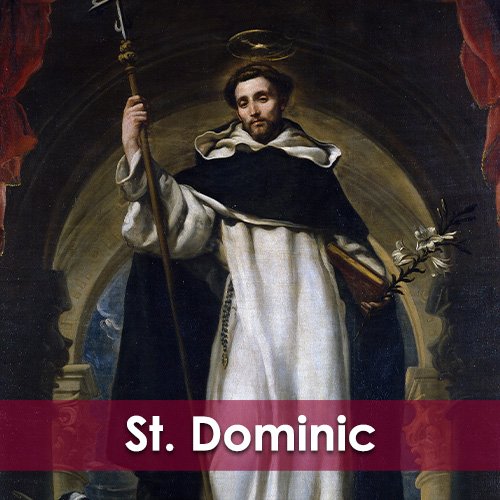
My dear brothers and sisters in Christ,
Today, as we gather, our hearts and minds turn to a towering figure in our Church’s history: Saint Dominic de Guzman, whose feast we celebrate. Born in 12th-century Spain, Dominic lived in a time of great intellectual ferment and spiritual challenge, much like our own. He was a man consumed by a singular passion: the salvation of souls and the proclamation of God’s truth. As we reflect on his life and virtues, we will discover that St. Dominic is not merely a historical figure, but a profound inspiration and a relevant guide for us in today’s complex world.
Who was this remarkable saint? Dominic was a canon regular who, on a journey through southern France, encountered the widespread Albigensian heresy. This dualistic belief system denied the goodness of creation, the Incarnation of Christ, and the value of human life. Dominic quickly realized that the prevailing methods of combating this error were ineffective. He saw that the heretics, though misguided, lived lives of apparent austerity, which contrasted sharply with the often-wealthy lifestyle of some Church leaders.
Inspired by the apostolic life, Dominic chose a radical path: to preach the Gospel with intellectual rigor, profound poverty, and fervent prayer. He gathered a small band of followers, and with papal approval, founded the Order of Preachers – the Dominicans – a mendicant order dedicated to Veritas, to Truth, and to the salvation of souls through preaching.
Let us consider some of the virtues that shone so brightly in St. Dominic, and how they speak to us today:
First, and perhaps most central, was his zeal for souls and his unwavering commitment to Truth. Dominic literally wept for sinners, driven by an ardent desire for everyone to know and embrace the saving truth of Christ. In an age rife with misinformation, relativism, and competing narratives, Dominic’s passion for Veritas is a powerful beacon. He understood that true freedom and authentic human flourishing are found only in the truth. Today, we are called to be seekers and proclaimers of truth, not with arrogance or condemnation, but with the same compassionate zeal that characterized Dominic, engaging in dialogue and persuasion, just as he did with the innkeeper who became his first convert.
Second, Dominic embodied profound poverty and simplicity. He sold his precious, hand-annotated books to feed the starving, famously declaring that he could not study on “dead skins” when people were dying of hunger. He traveled barefoot, embraced austerity, and insisted that his friars live simply, depending on God’s providence. In our consumer-driven society, where material possessions often define worth and happiness, Dominic’s radical detachment challenges us. His example reminds us that true richness lies not in what we accumulate, but in our relationship with God and our solidarity with the poor. His spirit calls us to examine our own priorities and to live with greater freedom from worldly attachments, advocating for justice for the marginalized, as Dominicans continue to do today on issues of economic inequality, racism, and human dignity.
Third, St. Dominic placed immense emphasis on study and intellectual formation. He established houses of study near the great universities of his time, like Paris and Bologna, ensuring that his preachers were not only fervent but also well-educated in theology and contemporary issues. In our rapidly changing and intellectually diverse world, an informed faith is more crucial than ever. Dominic teaches us that faith and reason are not opposed but balancing. We are called to deepen our understanding of our faith, to engage with the world’s questions, and to articulate the Gospel message intelligently and persuasively.
Finally, Dominic’s life was rooted in deep prayer and contemplation. He famously said he would “speak only of God or with God.” His active ministry flowed from his profound union with Christ in prayer. He spent countless hours in vigil, often weeping, interceding for the world. In our fast-paced, often noisy lives, Dominic reminds us of the indispensable need for quiet contemplation. It is in prayer that we encounter the living God, receive strength, and discern His will. From this wellspring of prayer, we are then empowered to “pass on the fruits of contemplation” (contemplata tradere) to a world desperately in need of Christ’s light.
My brothers and sisters, St. Dominic’s legacy is not confined to the pages of history. His virtues – zeal for truth, radical poverty, intellectual pursuit, and profound prayer – are not relics of a bygone era. They are urgent calls to action for us, here and now.
May we, like St. Dominic, be consumed by a passion for the salvation of souls, courageously proclaiming the truth of Christ in word and deed. May we embrace simplicity and work for justice in a world fractured by inequality. May we dedicate ourselves to lifelong learning, deepening our faith with both heart and mind. And above all, may our lives be rooted in constant prayer, so that, like Dominic, we may truly be “hounds of the Lord,” setting the world ablaze with the fire of God’s love.
St. Dominic, pray for us. Amen.
The Feast of St Mary Magdalene~The Rev Frank Bellino,OPI

My dear brothers and sisters in Christ,
Today, as we gather to celebrate the Feast of Saint Mary Magdalene, my heart is particularly full. For those of us in The Order of Preachers Independent, she is our beloved patron saint, a beacon of faith and perseverance. And for me, personally, Mary Magdalene has been a profound inspiration, long before I ever joined this holy order.
In today’s Gospel, we hear of Mary Magdalene, a woman often misunderstood yet profoundly loved by Christ. Her story is one of unwavering devotion, a story that unfortunately, for centuries, was obscured by a grievous error. For too long, a wrongful label, tragically perpetuated by a Pope, cast her as a “sex worker.” This singular, incorrect designation fueled wild rumors and misconceptions, diminishing her true significance in the early Church. It’s crucial for us to understand that this was a human mistake, a historical misattribution that does not align with the scriptural accounts of her life. Mary Magdalene was not the sinful woman; she was a woman of means who supported Jesus and his disciples, a devoted follower who stood at the foot of the cross when others fled.
It is true that Mary Magdalene, the one depicted in the Gospels, whom we honor today. She is rightly celebrated as the “Apostle to the Apostles,” a title she earned through her extraordinary fidelity and courage. While the male disciples were still grappling with fear and confusion, Mary Magdalene, driven by an unyielding love, did not sleep in. After the horror of the crucifixion, as soon as it was permissible, she went to the tomb. Imagine her grief, her broken heart, yet her determination to show one last act of devotion to her Lord.
She probably faced ridicule from the Roman centurions guarding the tomb. Perhaps they scoffed at her tear-stained face, her solitary vigil. But something, or someone—the Holy Spirit—was urging her to make history. And she said “yes.” She said “yes” to that inner prompting, “yes” to her deep love, “yes” to the unknown.
And because of that “yes,” because of her unwavering presence at the tomb, she was granted the most sublime privilege: she was the very first person to see the Risen Christ! Not Peter, not John, but Mary Magdalene. And not only did she witness the Resurrection, but Christ himself commissioned her to spread the good news. She became the very first evangelist, the first to proclaim, “I have seen the Lord!” She ran back to the disciples, her heart bursting with joy, to share the incredible, life-altering news.
What an example she is for us, especially for us Dominicans, members of The Order of Preachers Independent. Our calling is to preach the truth, to seek out those who are marginalized or misunderstood, and to proclaim the Good News of Jesus Christ with courage and conviction. Her importance to our church, The Order of Preachers Independent, lies precisely in this apostolic zeal and her unwavering pursuit of truth amidst misrepresentation. She embodies the spirit of inquiry and the courage to challenge falsehoods, which are hallmarks of our Dominican charism. Just as she sought the Risen Christ and proclaimed His truth against all odds, we are called to seek and preach the Truth of the Gospel, particularly to those who have been overlooked or misrepresented. Mary Magdalene teaches us that true apostleship isn’t about status or gender, but about a heart aflame with love for Christ, a willingness to go where others fear to tread, and the courage to speak the truth, even when it challenges prevailing narratives.
Let us ask Saint Mary Magdalene, the Apostle to the Apostles, our patron, to intercede for us. May her steadfast faith inspire us to seek Christ with an unquenchable desire, to embrace our own call to evangelization, and to courageously proclaim His resurrection in our words and deeds. May we, like her, always say “yes” to the whisper of the Spirit, making history in our own small ways for the glory of God.
Amen.
Different, But Parallel: The Feast of Sts Peter and Paul~The Very Rev Lady Sherwood, OPI

Today we both as a church and as Christian brothers and sisters, come together to commemorate The Apostles Sts Peter and Paul.
Many, when thinking about the early church, mistakenly believe that in the historical times of Peter and Paul, that the church was only filled with love, respect and agreement; but in fact, it was Parallel in many ways to the experiences we have within our own churches even today. It wasn’t all loving Christian actions, there was also turmoil, dissension, and disagreements. In the times of Peter and Paul, it was even more difficult than we have it today to iron these things out, and to come to an agreement that it is for us today, as we have two thousand years of experience to assist us to deal with issues within the church. In the time of Peter and Paul they didn’t have history to draw upon to assist them.
Let us look at Peter and Paul. Both Peter and Paul were very gifted church leaders, however both came from entirely different backgrounds. They each had different educational backgrounds and distinct personalities. Due to this, some of the churches, mostly in Corinth, were divided into rival parties depending on whether they preferred Peter or Paul.
What made them so different from each other, these two great church leaders and Apostles?
Peter was a person who had much less education than Paul. He was a fisherman by trade and was married with a family. Peter had the blessed privilege of having both known and worked alongside Jesus during his earthly ministry. Peter was a simple man, who our Lord Jesus chose to lead the other Apostles, but he was also a rather impulsive by nature and would often speak and act without thinking first.
Peter was passionately sincere in his love of our Lord, but seemed to find it difficult to put things into writing and this can be seen if you compare his letters with those of Paul.
Paul, by contrast, was a graduate of the universities of that day. He had been tutored by Gamaliel, who was a famous leader of a school of Rabbis. Largely due to this, Paul knew the scriptures inside-out and was a person who lived strictly by Jewish law. He was fluent in Greek, and knew enough Latin to get by. Paul had spent his early years persecuting Christians, so because of his experience, he was able to see things both from the Jewish and the Christian perspectives.
Because of their differences, Peter and Paul didn’t always get along of agree with each other and we know from Paul’s letter to the Galatians that the two had a major row in Antioch about the question of whether Jews who had converted to Christianity could eat separately from their Gentile brethren.
Paul was firmly in favour of the principle that both Jews and Gentiles should eat together, because he saw that unless this happened, it would lead to two separate Eucharists, one for the Jews and a separate one for the Gentiles in each church and that from there it would only be a short step to rebuilding the division which Our Lord Jesus, through his cross and resurrection had broken down.
Peter, however, felt differently. He felt sorry for the Jewish Christians because they were expected to leave behind the habits they had done all their lives upon becoming Christian. So, he agreed to eat with the Jews separately and even persuaded Paul’s friend, Barnabas to join him.
So although both Peter and Paul had the best of intentions, they both came to see each other as one who was letting the side down.
However, years later, both Peter and Paul were able to make up their differences.
Even in our churches today we see similar issues. We have the people like St Peter, who are kind and generous, and who want the church to be a welcoming place where everyone gets on happily together, but in doing so, are a bit too lenient and cause the message of Christ’s salvation to be blurred.
Then we have people like St Paul, who realise that if the truth which is in Jesus is allowed to be obscured or rejected in the cause of kindness, generosity and inclusion, that the church could end up more like a club of kind people and less like the living Body of Christ on earth, losing the message of salvation.
From their disagreement, we can see that, regardless of our personal beliefs, there are specific truths to which we must cling in order to fully serve the Lord. As our Lord prayed, so do we: That we all may be one, as Christ and the Father are One.
Both Peter and Paul were put to death in a great persecution that had broken out in Rome under the Emperor Nero, following a great fire in AD 64, which Nero probably started and blamed upon the Christians.
We know that before this, Peter had wrote his second letter and had come to realise the importance of Paul, just as Paul had also realised the importance of Peter.
Grant, we pray, O Lord our God, that we may be sustained by the intercession of the blessed Apostles Peter and Paul, that, as through them you gave your Church the foundations of her heavenly office, so through them you may help her to eternal salvation. Through our Lord Jesus Christ, your Son, who lives and reigns with you in the unity of the Holy Spirit, one God, for ever and ever. Amen
The Feast of The Nativity of St John the Baptist~The Very Rev Lady Sherwood,OPI

Today, we as come together as the church to commemorate the Nativity of St John the Baptist, who is often referred to as the ‘Forerunner’.
John was the son of Zechariah and Elizabeth. In the Gospel of Luke, we are informed that Zechariah was told beforehand about the birth, and that he was to be named John. The meaning of the name John is “God is Gracious” (LK 1 :8=2:3).
John whilst still forming within his mother’s womb, instantly recognised the presence of Our Lord Jesus, who was also still in his mother’s womb, when Mary went to visit her cousin Elizabeth (LK 1 :41). John lept for joy in Elizabeth’s womb as soon as Mary and Elizabeth met, and this is when John was cleansed of original sin. This came to pass just as the Angel Gabriel had previously promised Zechariah in LK 1 :15.When John was older, he left the home of his parents and went to live in the desert. He wore only a garment made of camel skin and only had Locusts and wild honey to eat. John would preach in the desert (MK 1:6; Matt 3:4).
John went about preaching and proclaiming about the Kingdom of God and of a time of coming judgement. He invited those who wanted to repent, to accept him to baptise them as a sign of their repentance.
John, just like the prophets, disturbed the comfortable and gave much comfort to the disturbed. The message of John spread far and wide. The Gospel of Mark tells us that all peoples of both Jerusalem and Judea travelled to him and confessed their sins as John baptised them in the river Jordan (MK 1:5).
John clearly shows his humility because he never wanted attention for himself, he always directed people to Jesus. Some wondered if John was the Messiah, but John reassured them that indeed he wasn’t and he declared that his ministry was merely for to prepare for the coming of the Messiah. John said, “I have baptised you with water, but He will baptise you with the Holy Spirit.” (MK 1:8)
Then Jesus himself came to John to be baptised and John immediately recognised Jesus as the Messiah and he declared, “This is the Lamb of God who takes away the sins of the world”. (JN 1 :29). This statement from John is still used in Mass prayer today, when the Priest holds up the sacred Host as we prepare for the Holy Eucharist, as the Priest says, “This is the Lamb of God who takes away the sins of the world…”.
It was after being baptised by John, that our Lord Jesus began his Earthly ministry. When John had been baptised by John, John again showed his humility as again, he turned his attention to Jesus, declaring, “He must increase, I must decrease”(JN 3:30).
St John the Baptist is an excellent example that we as Christians should take much notice of within our lives of faith. Just as John always showed his humility by turning his attention away from himself and towards our Lord Jesus, we too, also need to show this same humility if we are truly to serve and follow the Lord. We also, must turn attention away from ourselves and towards Jesus. Just as John himself declared, “He must increase, I must decrease”.
Let us pray:
O glorious St John the Baptist, greatest prophet among those born of woman, although you were sanctified in your mother’s womb and lived a most innocent life, nevertheless, it was your will to live in the wilderness of the desert, there to devote yourself to the practice of austerity, penance and humility;
Obtain for us by your intercession, the grace of the Lord to be wholly detached within our hearts, from earthly goods and self attention. Increasing our humility and service, by making ourselves far lesser and in the never ending increasing, to be ever greater within our hearts and lives.
Amen.
The Feast of St Barnabas, the Son of Encouragement~The Very Rev Lady Sherwood, OPI
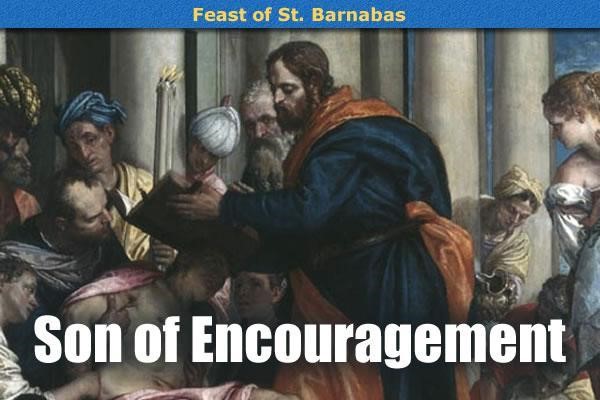
The Book of Acts tells the story of a man called Barnabas, which translates to, “son of Encouragement. We come together as the church today to commemorate his Feast day.” Barnabas’ gift of encouragement shows us five ways in we can encourage others in the world today.
Firstly, Barnabas encouraged others by practicing stewardship.
In Acts 4:36, We read that Barnabas sold his property and then he gave all the profits from that sale to the Church. He decided to meet the needs of others with the resources which God had blessed him, no matter what the personal cost was to himself. Encouragers like Barnabas understand that each and every person has something they are able to give. Encouragers find needy people and enrich them, whether it’s by their money, by giving of their time, or by their service.
Secondly, Barnabas encouraged others by extending the hand of friendship.
After the Apostle Paul’s conversion, Barnabas was despised by his old colleagues, and was feared by his new brothers and sisters in Christ. He was a man who needed a friend; Barnabas found him and became a friend to this very lonely new disciple. A lot of new Christians need somebody to find and to befriend them. We must seek out the lonely and the neglected and the vulnerable, put our outstretched arms around them, and bring them into the Lord’s fold.
Thirdly, Barnabas encouraged others by building partnerships with others.
In Acts 11, the Gospel was spreading quickly, and new believers were sprouting up everywhere. There were some concerns that some of them were not truly sincere. But Barnabas’s encouragement validated and affirmed those who were misunderstood by others.
Fourthly, Barnabas encouraged others by developing leaders within the Lord’s church.
He found the hidden gifts and talents within the new followers of the Lord and he helped them to develop these gifts and talents. Our churches are full of very talented people with abilities vast array of blessed abilities which are waiting to be discovered and to be developed. But it takes a person who encourages such as “Barnabas” to find them.
Finally, Barnabas encouraged others by rebuilding relationships.
After the disciple Mark ran away from his calling, Barnabas sought him out and gave him a second chance. This young disciple went on to write the Gospel of Mark. Thank God for the encouragers in our churches and in our world, who see second chances in us when no one else seems to be able to.
We should apply the examples given to us in the life of Barnabas within our own lives today.
Barnabas was indeed a good man, who was filled with the Holy Spirit; it was God who acted within Him. We can all be encouragers like Barnabas. We need to ask God the Father to fan the Holy Spirit within us to meet the needs of others, to befriend the lonely, to affirm the misunderstood, to develop disciples, and to offer people second chances.
Let us pray:
St. Barnabas, you who were known as the ‘son of encouragement,’ We ask for your intercession. Help us to find strength and perseverance in our faith, especially when we feel discouraged or weary. May we be like you, a source of comfort and hope to others, and may we have the courage to stand up for what is right. Help us to be a beacon of light and love in this world. Pray for us, that we may live a life of faith and devotion, just as you did.
Amen.”
The Feast of Saints Philip and James, Apostles~The Very Rev Lady Sherwood,OPI

My dearest brothers and sisters in Christ, today we come together to celebrate the feast of not just one, but two of Christ’s Twelve Apostles, these being, St. Philip and St. James. Both of these Apostles worked tirelessly for the sake of the people of God, and just as the other Apostles had done, they spread the Good News to many.
St. Philip is also known as Nathanael, he was a learned and a wise man of Israel. He was told he needed to be fluent in Greek, and eventually he went on to preach about the Lord and His truth in regions of Greece and of Roman Asia, he went from city to city, preaching to the masses and he gained for the Church many new converts and members.
St. Philip even managed to convert the wife of the proconsul of a region where he ministered, by his miracles and from his preaching. The proconsul was enraged and ordered St. Philip to be arrested, and he together with the other Apostle, St. Bartholomew, and other disciples were crucified upside down. And St. Philip preached to the crowd gathering there from his execution cross, in such a way, that they wanted to release him, but St. Philip refused to allow this.
The other Apostle which we celebrate today, St. James the Greater, was the brother of St. John the Apostle, a fisherman along the Lake of Galilee, whom Jesus called together with His other Apostles, St. Peter, St. Andrew and St. John his brother. St. James played an important role in the early Church, spreading the Good News of God’s salvation after Christ’s resurrection and ascension into heaven.
St. James went to preach the Good News to faraway regions such as the province of Iberia in what today we know as the country of Spain, where he spread the Gospel to the people there and helped to establish the Church far from its origins in Jerusalem. He was renowned especially in the region known as Santiago de Compostela, where his body lies buried, because it was there where he apparently did his works of evangelisation.
king Herod arrested St. James when he returned to the Holy Land, and in order to please the Jewish authorities, the Pharisees and the chief priests, had him executed. St. James was among the first of the Apostles to meet his end on earth through martyrdom.
The tireless works and commitment to the salvation of mankind of St. James and St. Philip can still be felt as making an impact even today. Like these Apostles of the Lord, we need more and more people who are willing to commit themselves to the Lord’s service, and to walk in His path just as these two Apostles did.
Truly, it will not be an easy task for us, as there is worldly opposition against all those who are faithful in the Lord’s service and who keep their faith. But Jesus reminds us yet again in the Gospel, that we who believe in Him, have seen the Lord Himself through Jesus, and by our faith in Him, we have been justified. And because we know the Lord, we will also be obedient to Him, we would be blessed and saved.
During the last remaining part of the season of Eastertide, let us reflect on our own lives, and on how we have acted in our lives so far. Have we been fully committed to our Lord, and have we been truly faithful to Him? Can we call truly ourselves Christians? Do we not only believe in the Lord through our mere words, but also through our actions?
The examples of the lives and service of the Apostles St. Philip and St. James show us that there are still many things that we can do as the followers of Christ in order to fulfil the commands which our Lord has given us, within our lives in His service. Both these Apostles served with tireless zeal and with vigour, and despite the challenges and the difficulties that faced them, these did not prevent them from carrying out the missions which the Lord had entrusted to them.
Let us all therefore look forward, and as we soon will celebrate the Solemnity of Pentecost Sunday, let us all recommit ourselves, and rediscover the true gifts of the Holy Spirit which have been given to us, and to make use of these gifts in order to help those who are still in darkness, by showing them the love of God manifested through each and every one of us as the faithful servants of our Lord, so that more and more souls may see the light of God and be saved.
The Memorial of St Elizabeth Ann Seton~The Very Rev Lady Sherwood, OPI

Today is the Memorial of my Dominican Order Name Saint, that being St. Elizabeth Ann Seton.
This particular Saint was given as my order Name Saint because my Bishop noticed there seemed to be many similarities between the life of St Elizabeth Ann Seton and the life of myself. We both share the fact that we have both overcome many life traumas and adversities, but yet, we both always have remained strong of faith regardless of the things life has thrown at us.
Mother Seton founded the first American religious community for women, named the sisters of charity, and so she was a keystone of the American Catholic church. Mother Seton also opened the first American parish school, and the first American Catholic orphanage. All this, she had accomplished by the age of 46, whilst also raising her own five children.
Mother Seton is a true daughter of the American Revolution, she was born on Aug 28th 1774, which was only two years prior to the declaration of Independence.
By both birth and marriage, Mother Seton was linked to the first families of New York and enjoyed the rich fruits of high society, but this situation wasn’t to last.
Mother Seton suffered the early deaths of both her mother in 1777, and of her baby sister in 1778, but far from letting it get her down, she faced each new ‘holocaust’ as she called it, with a hopeful cheerfulness.
At only aged 19, she married a handsome wealthy businessman named William Magee Seton and they had five children together. But William’s business failed, and he died of Tuberculosis when Elizabeth was aged 30, leaving her widowed, penniless and with five young children to support. Many of her family and friends rejected her when she converted to the Catholic faith in March 1805.
As a means to support her children, mother Seton opened a school in Baltimore which always followed a religious community pathway and her religious order of the sisters of charity was officially founded in 1807.
The thousands of letters of Mother Seton reveal the development of her Spiritual life from that of a person of Ordinary goodness, to one of heroic sanctity. She suffered many great trials within her life yet with her strong faith, she overcame them all. Trials of sickness, of misunderstanding, the deaths of her loved ones (mother, baby sister, husband, and even two of her own children), and the heartache of having a wayward son.
St Elizabeth Anne Seton died on January 4th 1821, she became the first American=born citizen to be beatified in 1963, then Canonized in 1975. She is buried in Emmitsburg in Maryland.
Let us pray:
O Father, the first rule of our dear Saviour’s life was to do your will. Let His Will of the present moment be the first rule of our daily life and work, with no other desire but for it’s complete accomplishment. Help us to follow it faithfully, so that doing your Will may be pleasing in your sight.
Amen.


You must be logged in to post a comment.