
Category: Guest Post
GUEST POST: The Root Command~The Rev Seminarian Donna Rex Geist
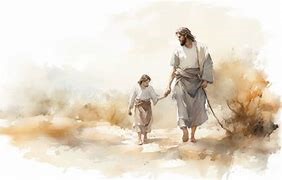
John 15:9-17
“As the Father has loved me, so I have loved you; abide in my love. If you keep my commandments, you will abide in my love, just as I have kept my Father’s commandments and abide in his love. I have said these things to you so my joy may be in you, and that your joy may be complete.
This is my commandment that you love one another as I have loved you. No one has greater love than this, to lay down one’s life for one’s friends. You are my friends if you do what I command you. I do not call you servants any longer, because the servant does not know what the Master is doing; but I have called you friends, because I have made known to you everything that I have heard from my Father. You did not choose me, but I chose you and I appoint you to go and bear fruit, fruit that will last, so that the Father will give you whatever you ask him in my name. I am giving you these commands so that you may love one another.”
These verses in John are so simple yet hold so much power. All Jesus is asking for, for His friends, is that we “love one another.” Sounds easy on the surface, except life happens, and we are not as kind as we should be, or that He wants us to be, to others. Smile at that stranger on the street, hold the door open for someone, just be kind.
Once we can hand over our struggles to God, lay them at his feet and lighten our load, it gets easier to stop thinking about us and we can start caring for and thinking about others. We need to put our trust in Jesus, pray, be still, and listen for Him to answer. He loves us so much with his unconditional parental love. Does that mean we will not have struggles? Of course there will be challenges, bumps in the road, bad days, but if we can keep our focus on Jesus, he will guide us through the tough times.
My faith journey has been growing for the past 25 years. I have watched how God has worked through me, grown in me, and is still molding me into the person He wants me to be. But there have been struggles. This January I lost a son to cancer. It was a 6-year battle. The last three months of his life were very difficult to watch. My best friend had been visiting from out of state the weekend that he passed. She asked me, knowing that I am in seminary, “aren’t you mad at God?” My response was why? What would that accomplish? Steve will still be gone. My love for Jesus helps me let go of some of that pain. Instead, I am grateful that God gave me such a wonderful gift to have and to love for over 40 years. I will miss my son, will miss his hugs, his smiles, but I have those memories locked away in my heart. My love for God and my gratitude for all of the blessings he gives me daily helps ease the pain of losing a child. But it also shows me the pain that God must have felt as he lost his son.
As a parent we should love our children unconditionally, the way Jesus loves us. It does not mean we might not disappoint Him from time to time, just like our children can disappoint us, but we do not stop loving them. We love them through hard things, so we can mold them to be kind loving adults. So, they can grow up and love Jesus and others the way Jesus loves us. Never stop teaching your children about Gods love and His commandments and keep molding your children to be kind loving adults that care for others. Be kind to one another.
The Rev. Seminarian Donna Rex Geist, The Affirming Catholic Church of Christ
Guest Post: The Rev. Seminarian Donna Geist
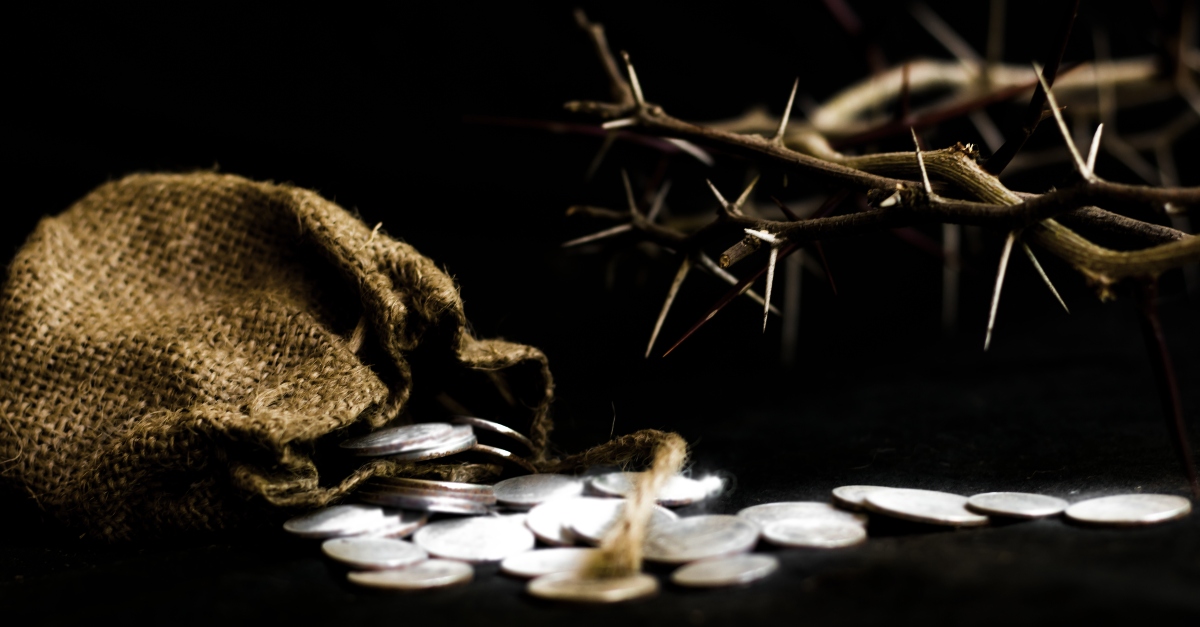
Matthew 26:14-25
Then one of the twelve, who was called Judas Iscariot, went to the chief
priests and said, “what will you give me if I betray him to you?” They paid
him 30 pieces of silver. And from that moment he began to look for an
opportunity to betray him.
On the first day of Unleavened Bread the disciples came to Jesus, saying
“where do you want us to make the preparations for you to eat the
Passover?” He said, ʻGo into the city to a certain man, and say to him “The
teacher says, My time is near; I will keep the Passover at your house with
my disciples.” So the disciples did as Jesus directed them, and they
prepared the Passover meal.
When it was evening, He took his place with the twelve; and while they
were eating , he said “Truly i tell you, one of you will betray me.ʼ And they
became greatly distressed and began to say to him one after another,
ʻSurely not I, Lord?ʼ He answered, “The one who has dipped his hand into
the bowl with me. The Son of Man goes as it is written of him, but woe to
that one by whom the Son of Man is betrayed! It would have been better for
that one not to have been born.ʼ Judas who betrayed him, said, “Surely not
I, Rabbi?ʼ He replied, “You have said so.ʼ
Betrayal by one of His own
Betrayal according to Merriam-Webster is: the violation of a personʼs trust
or confidence, of a moral standard, etc.
Betrayal is hard to accept, but even harder is when it is someone close to
you, someone you thought you could trust. Jesus is betrayed by Judas, for
a mere 30 pieces of silver, todays value a little less then $265. In John 12:6
we also find out that he was stealing from the money bag, as he was the
one in charge of it. So Judas is portrayed as an unsavory character. Still it
is hard to believe that he could do this to the Son of Man, for so little. We
do not know why Judas betrayed Jesus, there are speculations, Barclay
says Judas misunderstood Jesus, the Gospels says Satan entered him, I
have heard maybe jealousy, but the reason he did it does not matter since
we knew it had to happen.
Has anyone ever betrayed you?Lied to you? Hurt you? was that someone
a close friend, family member, co-worker? How did that make you feel? Did
you forgive them? We all have experienced some kind of betrayal and I
know for me it was very hurtful. We can forgive and should forgive, but if
we were hurt really bad we probably will not forget. But we can learn from
that and know if it is someone we want to trust with something we value.
Not saying that the person who betrayed you can never be trusted again,
but people can change and grow, but they will have to earn that trust back.
Jesus knows that this is going to happen. He knew his time was near, and
also knew that it was one of His chosen who would betray him. We see
further on in Chapter 26 that Judas tells the chief priests “the one I will kiss
is the man; arrest him”. Judas comes up to Jesus and says “greetings
Rabbi” and kissed him. Jesus says to him “friend do what you are here to
do.” But we do not see Jesus getting angry, He knew his dying would fulfill
the prophecy. In Matthew 26:53-54 Jesus says “Do you think that I cannot
appeal to my Father, and he will at once send me more then 12 legions of
angels? But then how would scripture be fulfilled, which say it must happen
this way.” Jesus seems to take it in stride, He had to have been hurt, yet
he just as easily forgives Judas.
In Matthew 27 we meet a remorseful Judas who gives back the 30 pieces
of silver and says he has sinned by betraying an innocent blood. After that
he went and hung himself. Guilt can be a heavy burden to bear.
Guest Post: The Solemnity of St. Joseph~The Rev. Seminarian Peri Jude Radecic of The Affirming Catholic Church
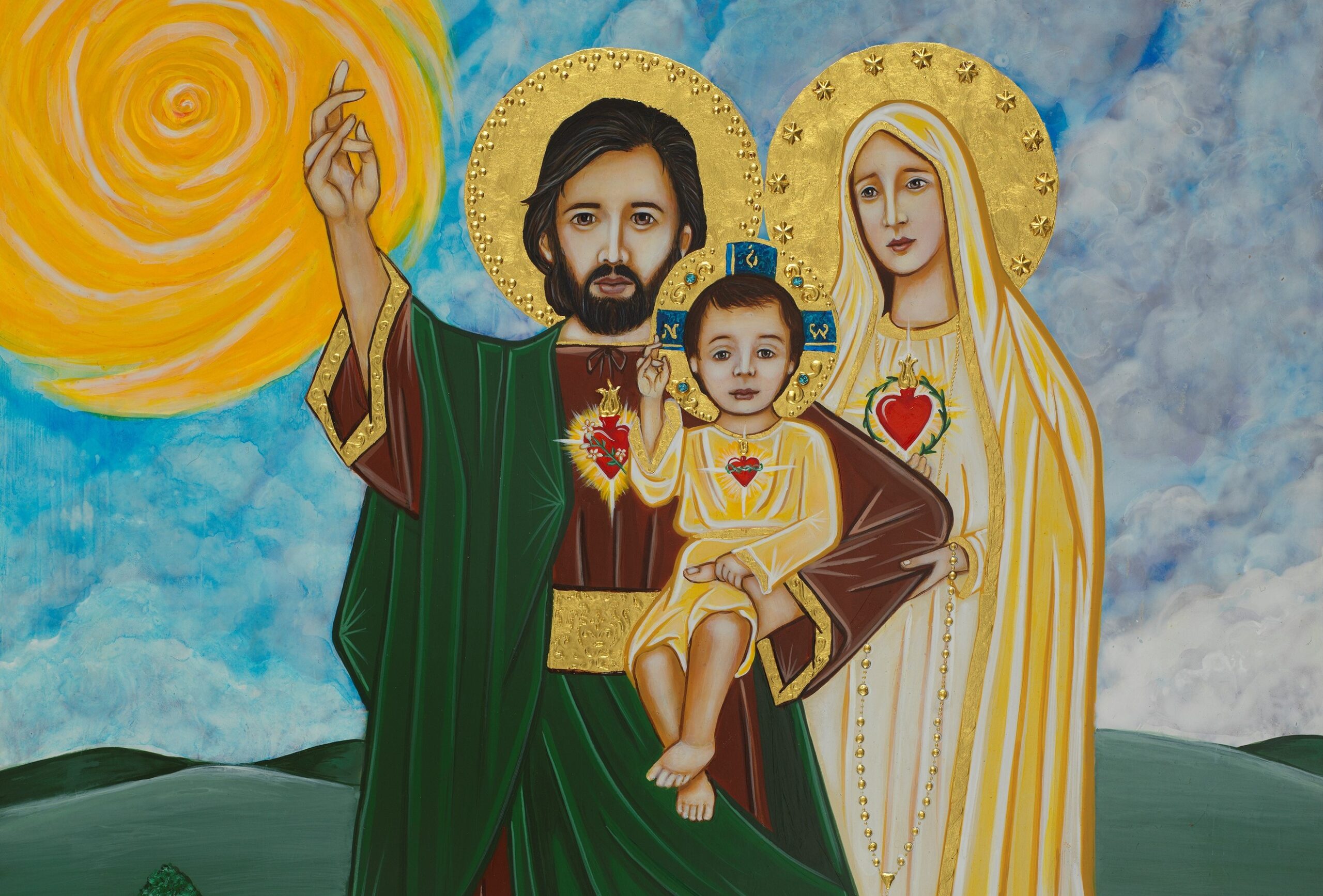
“When Joseph awoke from sleep, he did as the angel of the Lord commanded.”
Today, we celebrate the Solemnity of Saint Joseph, the husband of Mary and the legal father of Jesus. As we reflect on the Gospel of Matthew, specifically Matthew 1:16, 18-21, 24a, we delve into the life of this remarkable yet humble man, whose quiet strength and unwavering faith played a pivotal role in the story of Jesus and of our salvation.
In Matthew 1:16, we reach the culmination of Jesus’ genealogy, where Joseph is established as a descendant of the house of David, fulfilling the old prophecies and underscoring Jesus’ rightful place as the Savior of Israel. It is here in Matthew where Joseph is named as the husband of Marcy, of who Jesus was born and is called the Messiah or Christ.
The birth of Jesus, as narrated in Matthew’s Gospel, is uniquely told through the eyes of Joseph. Here we come to find that Joseph is a righteous man. He is faced with a dilemma. He is engaged to Mary and discovers she is with child, not by him, but by the Holy Spirit. This is a society where such news could lead to public disgrace at best or even death for Mary. We find Joseph has a heart of compassion when he resolves to dismiss her quietly, again representing his deep care and righteousness.
The story in Matthew continues when God reveals a different plan to Joseph. Joseph thinks he has this figured out, but God intervenes. God sends an angel to appear to him in a dream and reveal the true and divine nature of Mary’s pregnancy. The angel instructs Joseph not to fear taking Mary as his wife, for the child she carries is conceived by the Holy Spirit. The angel tells him to name the child Jesus.
Joseph’s response to this divine message is immediate and faithful. Upon waking, he does as the angel commands, embracing his role in God’s plan with humility and obedience. Here, we witness faith in action—a testament to Joseph’s character and his willingness to trust in God’s will, even when it defies human understanding.
Saint Joseph’s story is a celebration of humble service and strength. Despite being an ordinary man—a carpenter promised to Mary—God chose him for an extraordinary purpose. Joseph’s life exemplifies how God often selects the ordinary to achieve the extraordinary. His example of humility, obedience, and unwavering faith serves as a model for us all.
As the patron saint of carpenters, the dying, and workers, Joseph’s legacy extends beyond his earthly life. With God’s grace, he responded to his call, reminding us that, like him, we too can respond to God’s direction with grace and faith, even when faced with difficult tasks.
In his apostolic letter on the 150th anniversary of the proclamation of St. Joseph as the patron of the universal Church, Pope Francis describes Joseph as a beloved, tender, and loving father—a creatively courageous father who worked in the shadows. This description encapsulates the essence of Joseph’s role in the life of Jesus and the Church.
Let us pray for St. Joseph’s intercession, asking him to watch over us and grant us the courage and strength to follow God’s will, just as he did. May we find inspiration in his example, allowing his humility and obedience to guide us in our own journeys of faith.
St. Joseph, watch over us today and every day. Amen.
Guest Post: The Very Rev Gabriel Allen” of The Affirming Catholic Church

Based on Luke 11:29-32
When I read this passage in the Gospel of Luke, the cynical side of me can’t help but envision an exasperated, eye rolling Jesus saying to the Israelites (in the style of Southern comedian, Bill Engvall)… “Here’s your sign.”
We are a week in from Ash Wednesday, where we had the sign of the cross placed on our foreheads in ashes reminding us of our mortality, to turn away from our sins and turn to Christ, and also to be a sign to those around us that we are Christians. That is a powerful sign… but in this generation, did anyone “see” this sign? Did we?
In this passage, Luke links passages from verses 14-36. These are based on controversies about the source of Jesus’ kingdom power. In verse 16 preceding this text, the religious leaders ask for a sign from heaven to test him; though in reality they really didn’t care for any sign but simply wanted Jesus to submit to their signs and symbols of authority. They foolishly say they just need to see more but the truth is that they had already observed several miracles and did not believe.
Their demands are turned down flat, for the very Word of God, their Sign had come to them and they and showed how little they desired it. So Jesus contrasts the Jewish religious leadership with two examples; both of whom are pagan in origin and who were considered outsiders, but both of whom were able to read the signs of the time and accept the truth, unlike the Jewish authorities. Even though God had revealed so much to the chosen people of Israel, these who knew so little were the ones who were responsive.
The first is the example of Jonah. Jonah was an Old Testament prophet who lived nearly 800 years before Christ and was sent to the pagan people in Nineveh (adjoining the current city of Mosul in Iraq). Jesus is comparing and contrasting the people of Nineveh with the people of His generation.
Unlike the related passage in Matthew, where the focus is on Jonah in the belly of the whale, Luke’s focus has to do with Jonah’s preaching of God’s word as the sign of repentance that was preached to the people, which as a consequence led to repentance of the pagan people of Nineveh. The people of Jesus’ generation don’t and didn’t. repent. They weren’t showing hearts of receptivity but of resistance. It becomes clear that they weren’t looking for a reason to believe, they were, in reality, looking for a reason NOT to believe. They were flat out choosing not to see their Sign. How often do we see this in our generation today? How often do we even see this in our own lives at times?
The second example Jesus used is that of the Queen of the South, better known as the Queen Sheba. Sheba is believed to refer to an area of modern day Yemen in Arabia or Ethiopia in northern Africa. This queen of great education and wealth travelled from far away because she heard of the unusual wisdom of Solomon the King of Israel. When she met Solomon, she was blown away. She saw Solomon as the display of God’s justice, love, mercy, and righteousness in the world and she was amazed. This pagan queen praised God because of Solomon’s great wisdom.
Jesus is making a point. When the Queen of Sheba heard of King Solomon there was something in her that resonated, she recognized the wisdom that he had to offer, and she longed for that wisdom enough to travel with caravans and gifts from afar just to seek out such wisdom. She saw the Sign. Have we opened up the eyes of our hearts to see the signs God places before us every day? Have we responded to those signs?
Here in lies the condemnation of the people at the time of Jesus who rejected his message. Their condemnation would be all the more complete because their privileges were even more great as compared to the people of Nineveh or the Queen of Sheba. Their Sign, Jesus, was right before them and they chose to ignore and try to find reasons not to see and not to believe. Let us never forget that both privilege and responsibility go ever hand in hand. Let us remember, we are Christ’s hands and feet in this world. We are co-workers with Christ and called to be a sign of God’s love, mercy, justice, and grace to ALL people in this tired and hurting world. Let us go out into the world sharing and showing that we are seen, we are heard, we are loved.
So maybe it’s not so much of hearing, “Here’s your sign,” but more of realizing, “He’s your sign.”
Guest Post: When the Rules Get In the Way~The Rev James Snyder, OFI
Mark 7:14-23New International Version
14 Again Jesus called the crowd to him and said, “Listen to me, everyone, and understand this. 15 Nothing outside a person can defile them by going into them. Rather, it is what comes out of a person that defiles them.”17 After he had left the crowd and entered the house, his disciples asked him about this parable. 18 “Are you so dull?” he asked. “Don’t you see that nothing that enters a person from the outside can defile them? 19 For it doesn’t go into their heart but into their stomach, and then out of the body.” (In saying this, Jesus declared all foods clean.) 20 He went on: “What comes out of a person is what defiles them. 21 For it is from within, out of a person’s heart, that evil thoughts come—sexual immorality, theft, murder, 22 adultery, greed, malice, deceit, lewdness, envy, slander, arrogance and folly. 23 All these evils come from inside and defile a person.”
When The Rules Get in The Way.
A reflection on Mark 7: 14-23
In order to understand what Jesus is trying to get at in our text for today, we need to understand what is going on prior to it. The seventh chapter of Mark begins with the Pharisees and some religious scholars questioning why the disciples did not wash their hands prior to eating. (the idea of ritual handwashing and proper cleanliness is what sparks the conversation we have in our text for today)
For the Hebrew people, religion was more about following the law, which consisted of two main things, the Ten Commandments and the Pentateuch (Genesis, Exodus, Leviticus, Numbers and Deuteronomy). In addition, the Scribes, legal experts of the law, would break down and amplify or explain the law leading to “traditions” that were used to prevent the people from breaking the law.
Cleanliness was a large part of the law, and this is where our text starts today. The disciples where not following the law as written by the Scribes. And Jesus responds to them with a text from Isaiah: “These people come near to me with their mouth and honor me with their lips, but their hearts are far from me. Their worship of me is based on merely human rules they have been taught.” (29 vs13)
I like the translation that we find in The Message for verse 13-14 The Master said:
“These people make a big show of saying the right thing, but their hearts aren’t in it.
Because they act like they’re worshiping me but don’t mean it,…
The wise ones who had it all figured out will be exposed as fools.
The smart people who thought they knew everything will turn out to know nothing.”
The religious leaders of the Old Testament believed that as long as they carried out the ritualistic end of the religion, it did not matter whether they disliked their neighbor or had hate in their heart. To them, all that mattered was following the ritual: saying your prayers every morning, noon and night, going to church every day, reading the scripture. And as long as you observed the ritual it did not matter if you have hate in your heart or discontentment toward your neighbor because it was the ritual that was important.
To show them the difference between their understanding of religion and the good news that Jesus was bringing, he uses the example of what you put into your body, doesn’t go to your heart, I goes to the stomach and is discharged through your bowels or you vomit it back up.
What comes out of your heart is what comes out of your souls or your spirit, your true self. That is where religion is centered. So the question is asked, is your heart centered on God and toward the efforts of helping others or is your heart centered on yourself and filled with bitterness, grudges, jealousy, and pride?
The point is simply this, Religion, following Christ, is not about following all the man-made rules of that they impede on the ability to follow the greatest command that Christ gives us.
“‘Love the Lord your God with all your heart and with all your soul and with all your mind.’ … ‘Love your neighbor as yourself.’” Matthew 23:37-39.
We must be aware that we never follow the rules that would paralyze the claims of love. No rule that would prevent us from helping someone else would ever be approved by God.
So, we must ask ourselves today, are we like the Pharisees and scribes who only want to do what is ritualistic and have no feelings towards God and God’s people? Or are we following the call of our hearts and the call of God to take care of the other, the widow, the orphan, the downtrodden, the outcast, and the hungry?
https://www.facebook.com/profile.php?id=100093346840732
 The Order of Preachers, Independent
You must be logged in to post a comment.