
Category: Lesson
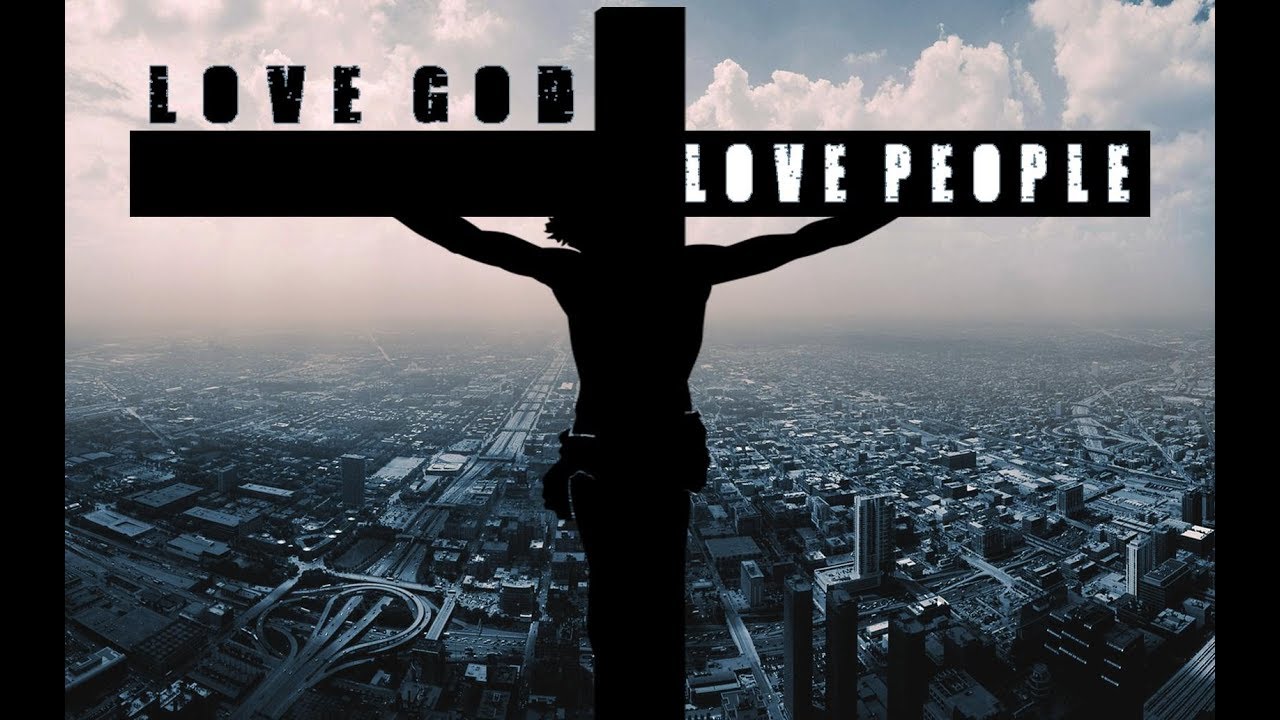
Love God. Love People. Say What? ~ The Rt. Rev. Michael R Beckett, OPI
Our Old Testament Reading today comes from the book of Wisdom, or as some call it, The Wisdom of Solomon. Now, most scholars agree that King Solomon, did not, in fact, write this book, but say that it was written in honor of him, using things he did write and things he said. During the Reformation, Martin Luther discarded this book of the Bible, along with others, whilst the more Liturgical churches retained them. Melito of Sardis in the 2nd century AD, Augustine (c. 397 AD) and Pope Innocent I (405 AD) considered Wisdom of Solomon as part of the Old Testament. Athanasius writes that the Book of Wisdom along with three other deuterocanonical books, while not being part of the Canon, “were appointed by the Fathers to be read”. In Matthew 12 Jesus quotes from this book. SO….having said all that, this is today’s reading:
There is no god besides you who have the care of all, that you need show you have not unjustly condemned. For your might is the source of justice; your mastery over all things makes you lenient to all. For you show your might when the perfection of your power is disbelieved; and in those who know you, you rebuke temerity. But though you are master of might, you judge with clemency, and with much lenience you govern us; for power, whenever you will, attends you. And you taught your people, by these deeds, that those who are just must be kind; and you gave your children good ground for hope that you would permit repentance for their sins. WIS 12:13, 16-19
At the risk of being accused of “cherry picking,” I want to focus on these verses: For your might is the source of justice, you judge with clemency, and with much lenience you govern us; And you taught your people, by these deeds, that those who are just must be kind;
So let’s think about that. The author(s) of the Book of Wisdom, in praising God have said that God judges with clemency, he judges with leniency, and has taught us that those who are just must be kind.
Well now…….Three key words: clemency, leniency, kindness. Clemency is defined as “mercy.” Leniency is defined as “quality of being more merciful or tolerant than expected.” Kindness is defined as “the quality of being friendly, generous, and considerate.”
How many times must it be repeated? Be merciful. Be kind. Show love. It’s pretty much one of the key recurring factors of Jesus’s ministry. Love God. Love people. Love God. Love people.
Jesus tells us in John 13:34-35, “A new commandment I give to you, that you love one another: just as I have loved you, you also are to love one another. By this all people will know that you are my disciples, if you have love for one another.” How do we show that love? Again, Jesus tell us, and again, very specifically in Matthew 25:35-45: For I was hungry and you gave me something to eat, I was thirsty and you gave me something to drink, I was a stranger and you invited me in, I needed clothes and you clothed me, I was sick and you looked after me, I was in prison and you came to visit me.’ “Then the righteous will answer him, ‘Lord, when did we see you hungry and feed you, or thirsty and give you something to drink? When did we see you a stranger and invite you in, or needing clothes and clothe you? When did we see you sick or in prison and go to visit you?’ “The King will reply, ‘Truly I tell you, whatever you did for one of the least of these brothers and sisters of mine, you did for me.’ “Then he will say to those on his left, ‘Depart from me, you who are cursed, into the eternal fire prepared for the devil and his angels. For I was hungry and you gave me nothing to eat, I was thirsty and you gave me nothing to drink, I was a stranger and you did not invite me in, I needed clothes and you did not clothe me, I was sick and in prison and you did not look after me.’ “They also will answer, ‘Lord, when did we see you hungry or thirsty or a stranger or needing clothes or sick or in prison, and did not help you?’
45 “He will reply, ‘Truly I tell you, whatever you did not do for one of the least of these, you did not do for me.’
The least of these….who then, are ‘the least of these’ in today’s society? Probably those who make many of us uncomfortable. The homeless? People who are a different color? People who are of a different color? Sexual orientation? Ethnicity? Who are “the least of these” to you?
Stephen Mattson writes:
Throughout his ministry, Jesus showed that he did, indeed, love everyone, even to the point of dying for their sins, but you know, he went out of his way to intentionally help specific groups of people — the alienated, mistreated, and those facing injustice. Throughout his earthly ministry:
Jesus said, “Samaritan lives matter.”
Jesus said, “Children’s lives matter.”
Jesus said, “Gentile lives matter.”
Jesus said, “Jewish lives matter.”
Jesus said, “Women’s lives matter.”
Jesus said, “Lepers’ lives matter.”
Christians must recognize that our society today is filled with numerous groups and communities facing systemic oppression, and we must act. We must be willing to admit and address the complex realities within our world that create such problems, and avoid the spiritual laziness that tempts us to rely on generic excuses and solutions.
Christians do a disservice to the gospel message by removing the cultural context from Jesus’s ministry and watering down his message to one of religious platitudes. We like to generalize the words of Jesus and transform his life into a one-size-fits-all model that can apply to all of humanity. He intentionally, purposefully, and passionately addressed very specific causes. He radically addressed the diverse and complicated conflicts of the time and shattered the status quo. Are we, as Christians, not called to do the same? By addressing racism, immigration, gender equality, and a litany of other issues, we are following in the steps of Jesus.
Justice. Mercy. Kindness. Love God. Love people.
Amen.
Faith and Doubt: The Feast of St. Thomas ~ The Very Rev. Lady Sherwood, OPI
Reading 1: EPH 2:19=22
R psalm: Mark 6:15
Gospel: JN 20:24=29
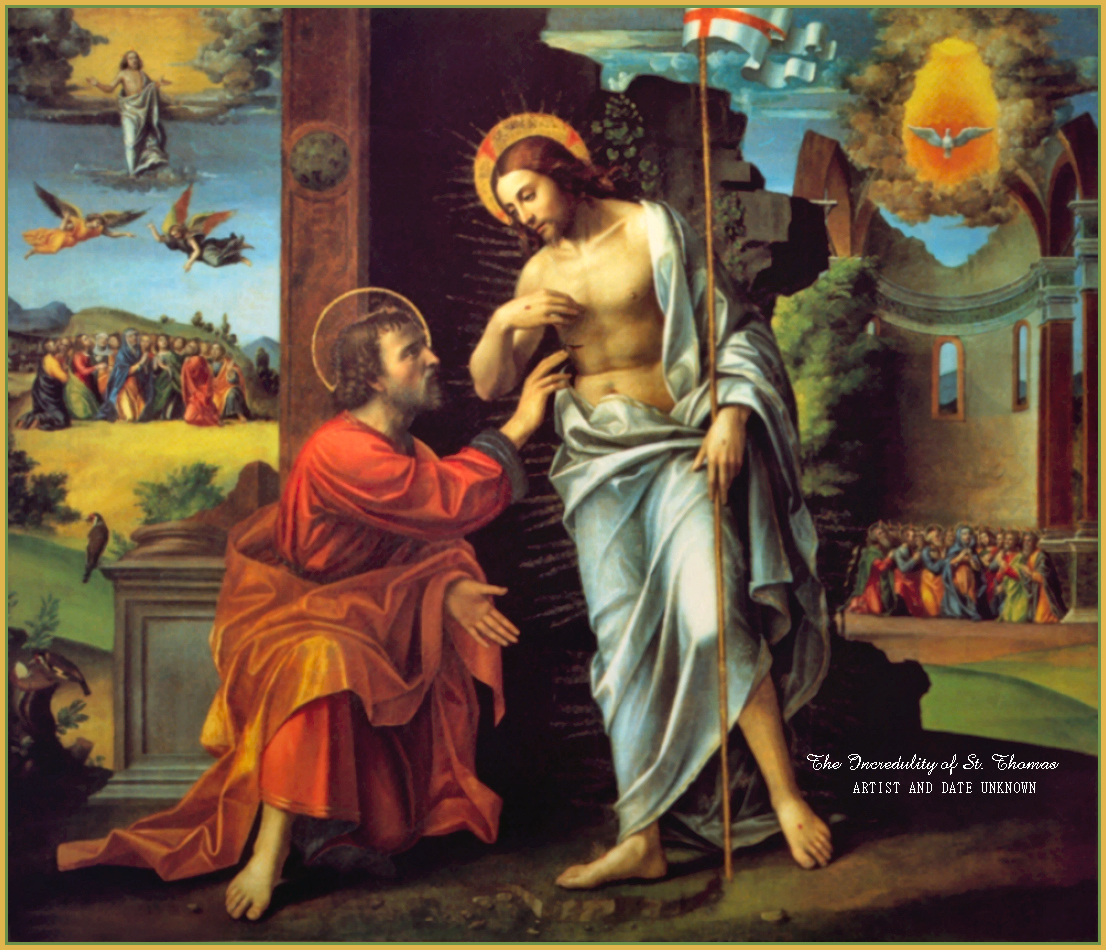
Today’s we come together to commemorate the Feast of St Thomas the Apostle, often nicknamed ‘Doubting Thomas’,because on Easter Sunday after Mary had seen Jesus, he went to the room where the disciples were and suddenly appears to them despite locked doors and they could clearly see the wounds to His hands and side. Jesus tells them, “Peace be with you”. The disciples believed.
Thomas however, wasn’t with the other Apostles when Jesus had appeared to them, and when Thomas arrived after Jesus had left them, the other disciples told Thomas about Jesus visiting them, but Thomas didn’t believe, he told them, “Unless I see Jesus for myself, and can touch His wounds, I won’t believe.” I can easily imagine that Thomas may have thought the other apostles were teasing him; or why wouldn’t Jesus have stayed long enough until he had managed to arrive?
The next week however, the disciples are gathered together again, this time Thomas was with them. Jesus suddenly appeared and told Thomas to put his hands on His and to feel his wounds. Thomas does so, and Jesus asked Thomas, “Do you believe because you have seen me?” and he tells him, “Blessed are those who do not see yet believe.”
Can you imagine what it would be like to be mainly remembered by many because of our greatest moment of doubt? Haven’t we all doubted at one time or another? I can tell you that I have once or twice. Thomas therefore, is the disciple to whom all of us can relate. Most of us have experienced what it is to live between faith and doubt at some point.
Most people tend to think that Faith and doubt are opposites, but in true fact, it is often a part of our faith journey. It is a stop, or a bump in the road that most of us would’ve made more than once on our journey. This doesn’t make us bad Christians or believers. Indeed, rather, it can be seen as a sign that we take our relationship with God seriously that we allow ourselves to walk the journey of faith without knowing for certain through what we will be travelling.
Christian tradition tells us that Thomas set sail for India and indeed was the first to spread Christianity there. He is the Patron Saint of India.
The doubt that Thomas previously had, was what brought him faith and that faith was such that he brought the message of Christ to many.
We all have times of doubt, at least all of us that see faith as a true journey, not a one=time stop gap. Doubt can actually propel us to faith, and can be what gives us the shake up we may at times need. It can be what sends us out of our comfort zones and into a new and better world. Doubt can act like a ticket that starts us truly on our journey to a whole new life of faith. It can be a sign of not the absence of God as many may think, but rather of God working within us to do something new.
Let us pray:
O Glorious St Thomas, your grief for Jesus was such that it wouldn’t allow you to to believe that he had risen until you saw him and touched his wounds. But your love for Jesus was equally great and it led you to give up your life for Him.
Pray for us, that we may grieve for our sins which were the cause of Christ’s sufferings. Help us to spend our lives in His service and so to be Blessed, which Our Lord Jesus applied to those who would believe in Him without seeing Him.
Amen.
The Feast of Sts. Peter and Paul: We Can Be Saints, Too! ~ The Rev. Deacon Igor Kalinski, OPI
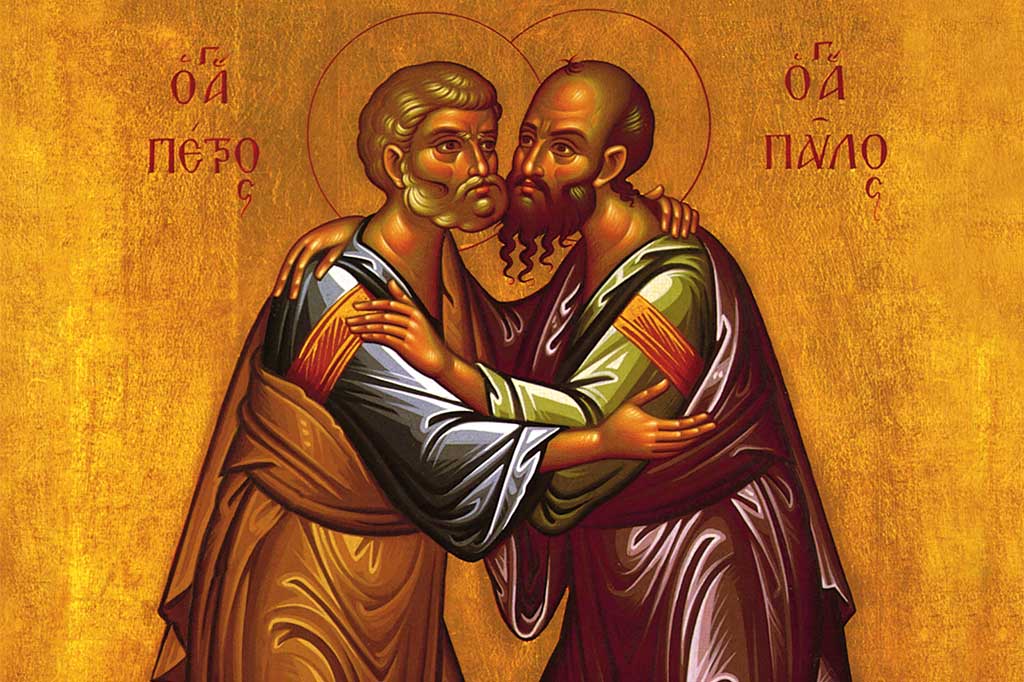
During this month June, in this very difficult year for all the humanity, I have realized how miserable, hypocrite, unfaithful to myself after all that I have passed during this life in a very conservative environment, and above all I found again Jesus , the ultimate love, and that is impossible to please God, if you don’t support all groups of people that share and endure daily struggle of acceptance, bigotry, and the rejection of some leading churches towards liberty and freedom of all people regardless , their color skin, sexual identity.
I realized that is not only that you should stick to the tradition, so that we can worship our heavenly Father, forgetting that “mercy I seek not holocaust” if God is love, and indeed He is, lets follow the example of these greatest among apostles and martyrs for Christ, Saints Peter and Paul.
How many hardships, beatings, arresting, assassinations attempts had occurred to them?
How many time Peter failed?
Paul was training over Christians.
But God revealed to Him in full power and might, in His majesty, then he became blind.
How many times Peter denied Jesus?
Believe me, I am worst sadly of failures, daily denials, and above all not having love for the people as they did all love and lately payed with their lives.
Let us preach the Gospel of the love, the gospel of acceptance, lets strive to bear one another these hardships and struggles, bold as Peter and steady as St Paul.
The bible has many holy books written from St Paul. We can nourish ourselves daily in his epistles, to study and pray, that’s pure Dominican charism, study and later preach from the fruits of your study.
Let us be penitent like St Peter that after he denied Christ and have the repentance and meek heart of Paul, that after sinful evil way of having been a religious fanatic, to become brave barefoot preacher of the nations.
St Peter and Paul apostles pray for us. Amen
Who Comes First?~ The Rt. Rev. Michael R. Beckett, OPI
Saint Dominic carried the Gospel of Matthew with him wherever he went. That is the reason that we see a book in most of the representations of St. Dominic, both in statue and paintings. Our Gospel today comes from the Gospel According to St. Matthew:
Jesus said to his apostles: “Whoever loves father or mother more than me is not worthy of me,
and whoever loves son or daughter more than me is not worthy of me; and whoever does not take up his cross and follow after me is not worthy of me. Whoever finds his life will lose it, and whoever loses his life for my sake will find it.
“Whoever receives you receives me, and whoever receives me receives the one who sent me. Whoever receives a prophet because he is a prophet will receive a prophet’s reward, and whoever receives a righteous man because he is a righteous man will receive a righteous man’s reward. And whoever gives only a cup of cold water to one of these little ones to drink because the little one is a disciple—amen, I say to you, he will surely not lose his reward.” Matthew 10:37-42
So, just what is Jesus saying here? When you get right down to it and boil it down to its most simple terms, Our Lord is saying what he says in Matthew 22:36-40:
“You shall love the Lord your God with all your heart and with all your soul and with all your mind. This is the great and first commandment. And a second is like it: You shall love your neighbor as yourself.
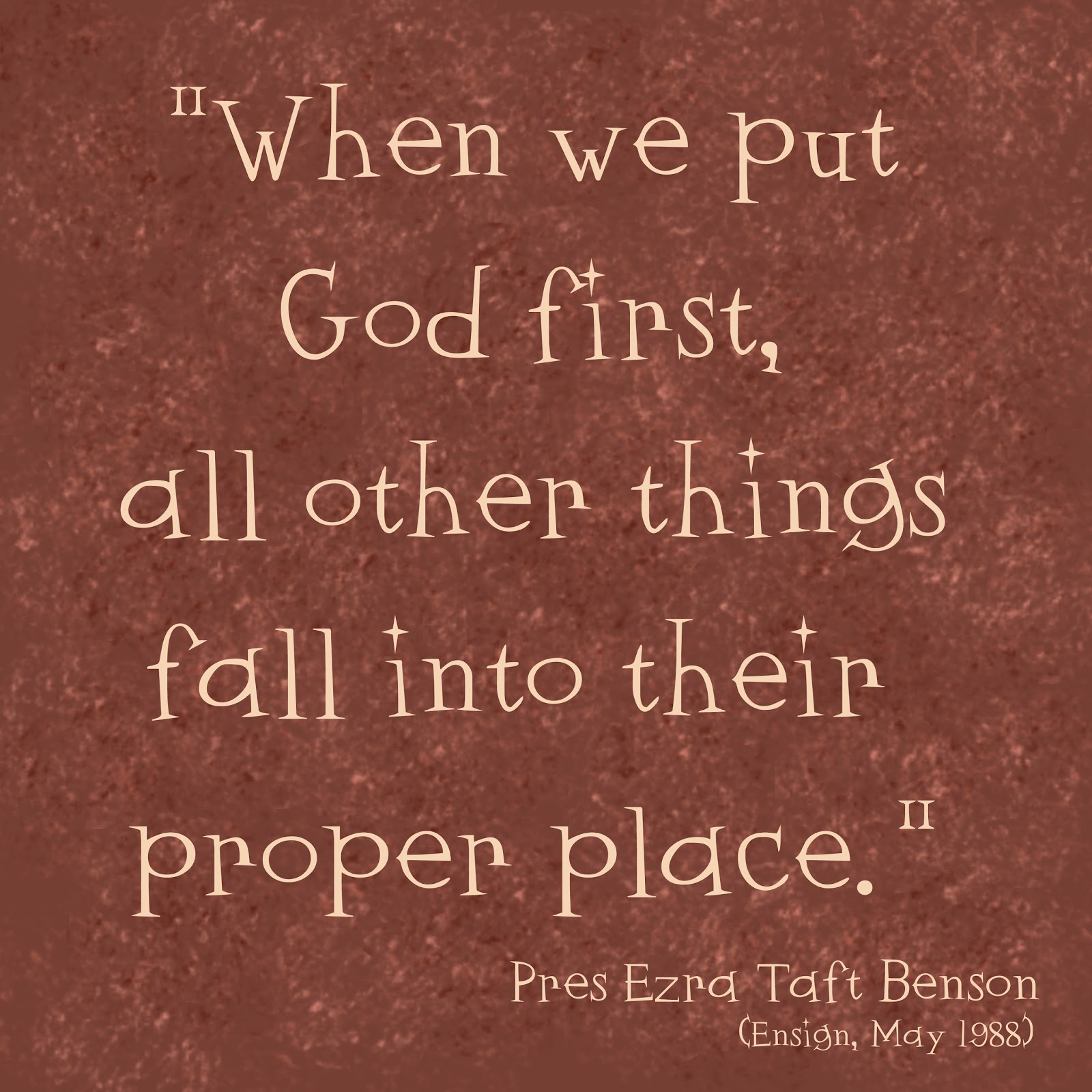
There you have it. Put God first. Love people. It kind of reminds me of that old comedy skit, “Whose On First?” Only now, the question tends to be, “Who do you serve first?” Sounds simple, right? God first, right? Then people. Umm…not so much. In today’s world, with a global pandemic, racial tensions and protests, what are we doing to show who we love best? God? Our politics? Our nation? What people believe our Constitution says? What we want to believe? Or, again, does our God come first?
Again, Our Lord speaks to us in Matthew 25:
34 “Then the King will say to those on his right, ‘Come, you who are blessed by my Father; take your inheritance, the kingdom prepared for you since the creation of the world. 35 For I was hungry and you gave me something to eat, I was thirsty and you gave me something to drink, I was a stranger and you invited me in, 36 I needed clothes and you clothed me, I was sick and you looked after me, I was in prison and you came to visit me.’ 37 “Then the righteous will answer him, ‘Lord, when did we see you hungry and feed you, or thirsty and give you something to drink? 38 When did we see you a stranger and invite you in, or needing clothes and clothe you? 39 When did we see you sick or in prison and go to visit you?’ 40 “The King will reply, ‘Truly I tell you, whatever you did for one of the least of these brothers and sisters of mine, you did for me.’ 41 “Then he will say to those on his left, ‘Depart from me, you who are cursed, into the eternal fire prepared for the devil and his angels. 42 For I was hungry and you gave me nothing to eat, I was thirsty and you gave me nothing to drink, 43 I was a stranger and you did not invite me in, I needed clothes and you did not clothe me, I was sick and in prison and you did not look after me.’ 44 “They also will answer, ‘Lord, when did we see you hungry or thirsty or a stranger or needing clothes or sick or in prison, and did not help you?’ 45 “He will reply, ‘Truly I tell you, whatever you did not do for one of the least of these, you did not do for me.’ 46 “Then they will go away to eternal punishment, but the righteous to eternal life.”
Can we not apply these words to what is going on in our country today? Perhaps if Jesus were in the middle of us here, he would be saying, “You saw me oppressed and discriminated against and did nothing. You saw me vulnerable and refused to follow health guidelines”
We were, all of us, created with that pesky little thing called ‘free will,’ that allows us to choose how to behave, how to act. God is not going to force any of us to do anything, just as He does not force us to believe in Him, worship Him, or follow Him. It is time to stop giving lip service to our faith and actually live it. If we truly believe that God comes first in our lives, then it is time for us to, as they say, “put up or shut up.” It is up to each of us to conduct ourselves in a manner fitting our faith. We cannot profess to be a Christian and then sit back and do nothing to heal our nation, our society, and our brothers and sisters.
How, you ask?
Lobby for changes to discriminatory laws. Actively seek out social justice. Keep the conversation going. Educate yourself. Make your voice heard. Donate. Protest. Don’t avoid the discomfort you’re feeling. The past few weeks have been uncomfortable. We are supposed to be uncomfortable. Recognize that the ability to quickly move past the feelings that have been brought up in response to the things happening in our country and world is an absolute privilege, one that many people don’t have. The people who move past them are those who don’t harbor continual fear over the same thing happening to themselves or to their loved ones. Systematic injustices can only become invisible if they don’t affect you. Sit with the discomfort you’re feeling instead of ignoring it. Reflect on your own privilege and how you can do better for ALL people in the future. And then decide which actions you’re going to take going forward.
Ask yourself, what comes first, your politics, your race, your nationalism, your guns, or your God?
“But,” you say, “if I do those things, what if I make some people mad? What if I lose friends?” Again, I will refer you to what our Lord says: “Whoever loves father or mother more than me is not worthy of me, and whoever loves son or daughter more than me is not worthy of me; and whoever does not take up his cross and follow after me is not worthy of me. Whoever finds his life will lose it, and whoever loses his life for my sake will find it. “
Isn’t it time that we, as Christians, start putting Christ first, start putting his people first? Isn’t it time that we as true followers of the Jesus that we proclaim learn to treasure what we have been given? Work for justice. Work for peace. Work for understanding. Fred Kaan, the lyricist, has written a hymn that is especially meaningful for today:
Put peace into each other’s hand and like a treasure hold it;
protect it like a candle flame, with tenderness enfold it.
Put peace into each other’s hand with loving expectation;
be gentle in your words and ways, in touch with God’s creation.
Put peace into each other’s hand like bread we break for sharing;
look people warmly in the eye: Our life is meant for caring.
Give thanks for strong yet tender hands, held out in trust and blessing.
Where words fall short, let hands speak out, the heights of love expressing.
Put peace into each other’s hand he is love’s deepest measure;
in love make peace, give peace a chance and share it like a treasure.
Let us pray:
God, we pray that Your Spirit may rule over all things. May Your Spirit rule over kings and presidents over prime ministers and generals over CEOs and party bosses over the legislature and over the bureaucrats over all citizens. May Your Spirit guide us on the way of peace on the way of honest dialogue on the way of reconciliation between peoples on the way of disarmament and justice on the way of freedom and life for all.
May Your Spirit lead us on the journey of blessings shared with all on the journey of educational opportunity for all our children on the adventure of research and study that helps all men and women on the road to meaningful work for all people on the path of solidarity and love between all our brothers and sisters.
May Your Spirit help us to speak up with courage to share what we have and what we are to challenge the powers that be to offer a message of liberation and life. We make this prayer through Christ, our Lord. Amen
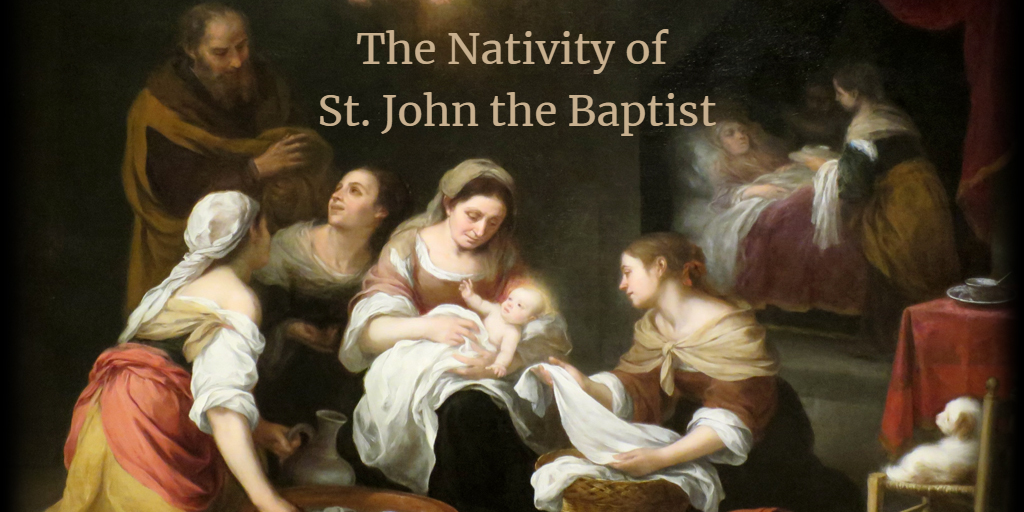
The Nativity of St. John the Baptist ~ The Very Rev Lady Sherwood, OPI
Reading 1: IS 49:1-6
Responsorial Psalm: 139:1B-3, 13-14AB, 14C-15
Reading 2: ACTS 13:22-26
Gospel: LK 1:57-66, 80
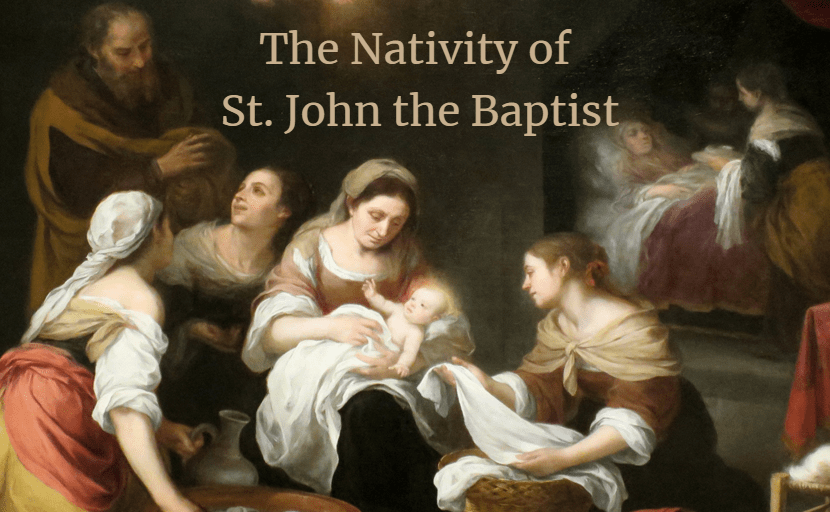
Today, we as a church come together to commemorate the birth of St John the Baptist, often called the ‘Forerunner’.
John was the son of Zechariah and Elizabeth. In the Gospel of Luke, we are told that Zechariah was told beforehand about the birth, and that he was to be named John. The name John means “God is Gracious” (LK 1 :8=2:3).
John whilst still within his mother’s womb, instantly recognised the presence of Our Lord Jesus, who was also still in his mother’s womb, when Mary went to visit her cousin Elizabeth (LK 1 :41). John leapt for joy in Elizabeth’s womb as soon as Mary and Elizabeth met, and this is when John was cleansed of original sin. This came to pass just as the Angel Gabriel had previously promised Zechariah in LK 1 :15.
When John was older, he left the home of his parents and went to live his life in the desert. He wore only a garment made from camel skin and only had Locusts and wild honey to eat. John would preach in the desert (MK 1:6; Matt 3:4).
John went about preaching and proclaiming about the Kingdom of God and of a time of upcoming judgement. He invited those who wanted to repent, to allow him to baptise them as a sign of their repentance.
John, just like the prophets, disturbed the comfortable and gave much comfort to the disturbed. The message of John soon spread far and wide. The Gospel of Mark tells us that all peoples of both Jerusalem and Judea travelled to him to confess their sins as John baptised them in the river Jordan (MK 1:5).
John shows his humility clearly to us because he never wanted any attention for himself, he always directed people to Jesus. Some wondered if John was the Messiah, but John reassured them that indeed he wasn’t the messiah, and he declared that his ministry was merely a preparation for the coming of the Messiah. John said, “I have baptised you with water, but He will baptise you with the Holy Spirit.” (MK 1:8)
Then Jesus himself came to John to be baptised and John immediately recognised Jesus as the Messiah and he declared, “This is the Lamb of God who takes away the sins of the world”. (JN 1 :29). This statement from John is still used in Mass prayer today, when the Priest holds up the sacred Host as we prepare for the Holy Eucharist, as the Priest says, “This is the Lamb of God who takes away the sins of the world…”.
It was after being baptised by John, that our Lord Jesus began his Earthly ministry. When John had been baptised by John, John again showed his humility as again, he turned his attention to Jesus, declaring, “He must increase, I must decrease”(JN 3:30).
St John the Baptist is an excellent example that we as Christians should take much notice of within our lives of faith. Just as John always showed his humility by turning his attention away from himself and towards our Lord Jesus, we too, also need to show this same humility if we are truly to serve and follow the Lord. We also, must turn attention away from ourselves and towards Jesus. Just as John himself declared, “He must increase, I must decrease”.
Let us pray:
O glorious St John the Baptist, greatest prophet among those born of woman, although you were sanctified in your mother’s womb and lived a most innocent life, nevertheless, it was your will to live in the wilderness of the desert, there to devote yourself to the practice of austerity, penance and humility;
Obtain for us by your intercession, the grace of the Lord to be wholly detached within our hearts, from earthly goods and self attention. Increasing our humility and service, by making ourselves far lesser and in the never ending increasing, to be ever greater within our hearts and lives.
Amen.
Guest Post: Fear Is the Greater Evil Than Evil Itself ~ The Rev. Shawn Gisewhite, ThB

Scripture Reference: Mt. 10:26-33
In the Name of God; Father, Son, and Holy Spirit. Amen.
FEAR. A word we can all relate to, especially now. Fear if you are a woman. Fear if you are black. Fear if you are Gay. Fear if you are an “illegal alien.” The list goes on and on.
St. Francis de Sales said, “Fear is a greater evil than the evil itself.” (“Letters to Persons in the World”, 6, 12) How true this is. Although fear is our body’s natural reaction to the bad things all around us, God tells us we are not to fear. As we are more often than not, not able to do anything about what we fear in the first place, why be afraid at all? God is in control. Even if we fear that terrible things will happen to us, God is there to keep us safe.
Listen to today’s Gospel.
26 “So have no fear of them; for nothing is covered that will not be revealed or hidden that will not be known.
27 What I tell you in the dark, utter in the light; and what you hear whispered, proclaim upon the housetops.
Nothing that man can conjure up in the dark, hidden from the eyes of men, is hidden from the eyes of God. God will take care of you and me. The day will come when we will see all evil for what it is, a passing vapor of terror, then, it will be no more. The eyes of faith will see this. The deeds of darkness will be uttered in the light.
Again, it is St. Francis de Sales who said, “It will be quite enough to receive the evils which come upon us from time to time, without anticipating them by the imagination.” (“Letters to Persons in Religion,” 4, 2) How true this is, as it echoes the words of Jesus in the sermon on the mount.
28 And do not fear those who kill the body but cannot kill the soul; rather fear him who can destroy both soul and body in hell.
Many fear those with guns and clubs and swords. We see the most dangerous things as those things which can hurt our human bodies. Nevertheless, Jesus calls us to a higher understanding. Yes, the body is important, and we would not want to say that it is not important, because we are a whole creature, body and soul together. Yet, some people are more concerned about the body than their eternal souls!
Jesus says, “do not fear those who kill the body but cannot kill the soul; rather fear him who can destroy both soul and body in hell.” That is, we should not have a false fear, a fear of only those who may kill our bodies, but, a true fear (standing in awe of God), who alone can cast the body and soul into Hell. Our fear of God should be the “fear” of “respect” for our King. (St. Matthew)
Why is this so? Because, God cares for you and for me.
29 Are not two sparrows sold for a penny? And not one of them will fall to the ground without your Father’s will.
30 But even the hairs of your head are all numbered. 31 Fear not, therefore; you are of more value than many sparrows.
Of sparrows there are many. God numbers these. Jesus says that not one of them dies, or falls to the ground, that the Father does not know of… and you and I are of more value than a whole flock of sparrows. Jesus is mercy toward us. John 3:16; Philippians 2 — these are the passages that declare how much God so loved the world (humankind).
Most of us have hair on our heads. Yet, there are some, like myself, who seem to suffer a loss of hair every day. Yet, God numbers the hairs of our heads. God CARES for us with or without hair!
God looks most closely to the hearts of people. How do we acknowledge (confess) God before men?
Do we do so fearfully, thinking we may suffer a loss of our social standing, if we are too “extreme” in our view and confession of Jesus Christ as our Lord and our Savior? Well, Jesus has something to say about our confession of Him before other people.
32 So every one who acknowledges me before men, I also will acknowledge before my Father who is in heaven;
33 but whoever denies me before men, I also will deny before my Father who is in heaven.
This is an important issue for us. We take an interesting quote from the Roman Breviary, Feasts of Confessors (Ambrosian, 6th century):
“Jesu, eternal Truth sublime,
Through endless years the same!
Thou crown of those who through all time
Confess Thy Holy Name.”
How important this is for all of us to remember the passionis, mortis et resurrectionis Jesu Christi (passion, death and resurrection of Jesus Christ)!
It is my purpose to CONFESS (acknowledge) Jesus before all men. I fear no one, because I know that God is faithful, that God cares for me.
Let us take up this Cross with Jesus, our Great Confessor!
“This confessor of the Lord Whose triumph
Now all the faithful celebrate, with gladness,
Erst on this feast day merited to enter into His glory.
Saintly and prudent, modest in behavior,
Peaceful and sober, chaste was He, and lowly,
While that life’s vigor, coursing through His members,
Quickened His being.”
(From Roman Breviary, Feasts of Confessors, Hymn Iste confessor Domini colentis, 8th century)
May we be like Him!
Amen.
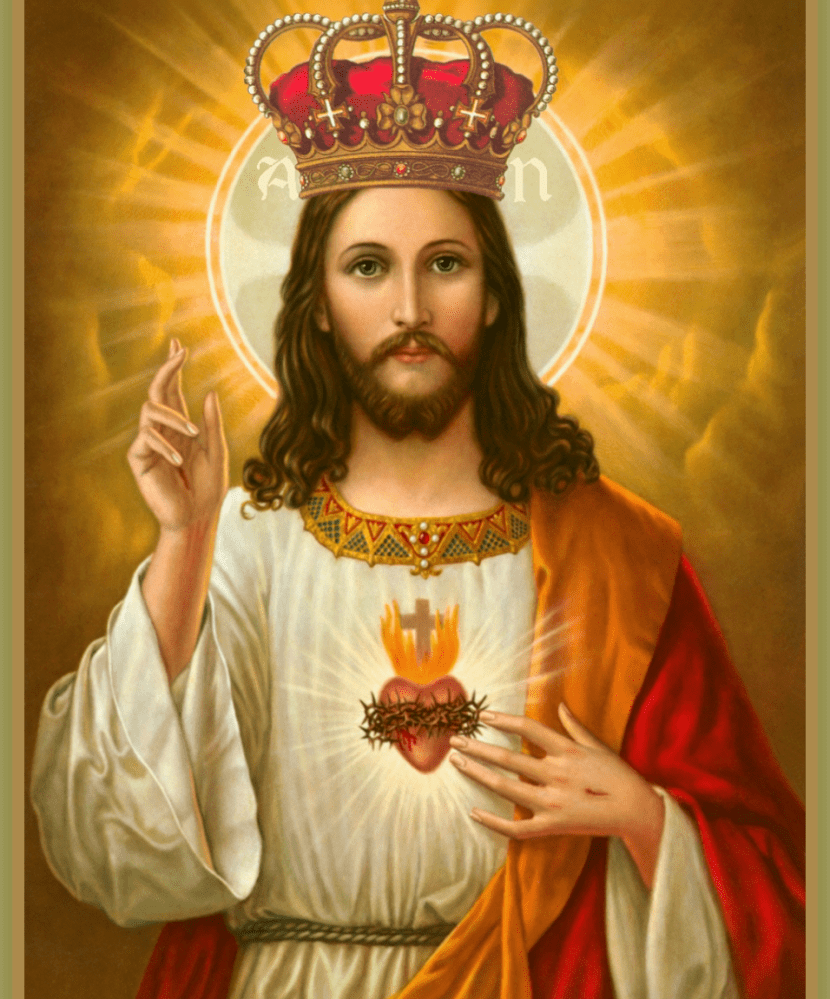
The Sacred Heart ~ The Rev. Dcn. Sister Dollie Wilkinson, OPI
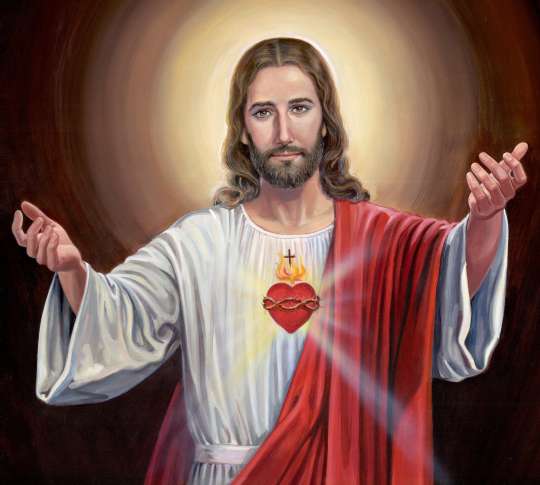
Everyone everywhere knows that the “heart” is a symbol of love. So it is with the Sacred Heart of Jesus. The Sacred Heart is the greatest symbol of love there is. And today, it is the Feast of the Sacred Heart of Jesus. As a Catholic, you’ve seen the image of Jesus depicted in many ways–kneeling in prayer, surrounded by children, as a child in the arms of St. Anthony, and dying on the cross. One of the most recognizable images is the image of the Sacred Heart of Jesus. It’s the image of Jesus with His heart exposed, surrounded by thorns, with flames and a cross emerging from the top. This image of Jesus is striking and powerful. In honor of the Feast of the Sacred Heart of Jesus, let’s take a look at the meaning of this image. What does it symbolize? Why do we celebrate the Feast of the Sacred Heart of Jesus? Also, who was Margaret Mary Alacoque and what was her connection to the Sacred Heart of Jesus?
The sacred heart of Jesus Christ is a symbol that entered the world through the mystical experiences of several Roman Catholic nuns to whom the pierced Heart of the Savior appeared in visions. Yet it was Saint Mary Alocoque who perceived, through many supernatural visions of Christ’s passion, the symbol of the inflamed pierced heart, encircled with thorns. This vision is known as the “great apparition”, which occurred during the octave of Corpus Christi, in June of 1675.
In this vision Jesus entrusted Saint Mary with the mission of propagating the new devotion. Jesus continued to appear to Margaret Mary and made revelations to her until 1675. It wasn’t until 1856, that Pope Pius IX decreed that the feast should be regularly celebrated throughout the world.
What Does the Sacred Heart Symbolize?
Catholics (and people in general) are visual people. Jesus knows this about us that’s why in addition to using parables to give us messages, He uses images to convey His messages. Seeing an image of the Heart of Jesus with thorns and the cross and flames certainly grabs our attention and speaks to us. He is saying, look at My Heart and see what I am feeling. The thorns around His heart are a representation of our sins and how our sinning pierces His heart. The flames and the cross serve as a reminder of the suffering He endured for our salvation and of His burning love for us. The dripping blood represents the blood Jesus shed for our salvation. That’s a pretty powerful message! But let’s explore this image in depth, to understand it fully.
The Sacred Heart is often depicted in Christian art as a flaming heart shining with divine light, pierced by the lance-wound, encircled by the crown of thorns, surmounted by a cross, and bleeding. Sometimes the image is shown shining within the bosom of Christ with his wounded hands pointing at the heart.
Elements:
Heart: The heart is the center of being, both physical and spiritual. The heart represents compassion, understanding, love and charity. It also represents the temple of God, His Divine Center and dwelling place. The heart is the spiritual center of a being. The pierced and bleeding heart alludes to the manner of Jesus’ death and reveals to us Christ’s goodness and charity through his wounds and ultimate sacrifice.
Crown of thorns: A crown is a symbol that represents sovereignty, victory, honor, dignity, reward, the highest attainment, dedication, completeness, the circle of time, of continuity and endless duration. For Christians it is also a symbol of the righteous, blessing and favor, and victory over death. Yet the crown that was placed on Christ’s head was made of thorns to deliberately parody the crown of roses worn by the Roman Emperor. The crown of thorns has thus become the symbol of the Passion and martyrdom of Jesus Christ.
Cross: In Christianity, the cross is a symbol of salvation through Christ’s sacrifice. It is redemption, atonement, suffering and a symbol of faith.
Flames or Fire: Transformation, purification, renewal of life, power, strength, energy. Fire facilitates change or passage from one state to the other. Fire manifested as flame symbolizes spiritual power and forces. Fire and flame both represent truth and knowledge as consumers of lies, ignorance, illusion and death.
Light: Light is a symbol of life, truth, illumination and a source of goodness. Radiance emitted by light symbolizes new life from divinity and the power of dispelling evil and the forces of darkness. It also embodies the aspects splendor, glory and joy. When illustrated the straight line usually represents light and the undulating line is symbolically heat; light and heat are symbolically complementary and polarize the element of fire.
In conclusion:
The sacred heart is a symbol of great self sacrifice and unconditional divine love for all beings captured in the actions and deeds of Jesus Christ. When our love and compassion overcomes and sacrifices our own ego, our spirit will be liberated and transform our entire being into a holy one. If we align ourselves with meaning of the Sacred Heart and the liberating vibration of Christ consciousness, this great symbol can become a gateway for us to change the world through our expression of unequivocal, genuine love. So, let us love one another unconditionally.
As my Father has loved Me, so have I loved you. — John 15:8
Jesus, Our Daily Food and Nourishment~ The Very Rev. Lady Sherwood, OPI
Reading 1: DT 8:2-3, 14B-16A
Responsorial Psalm:PS 147:12-13, 14-15, 19-20
Reading 2: 1 COR 10:16-17
Gospel: JN 6:51-58
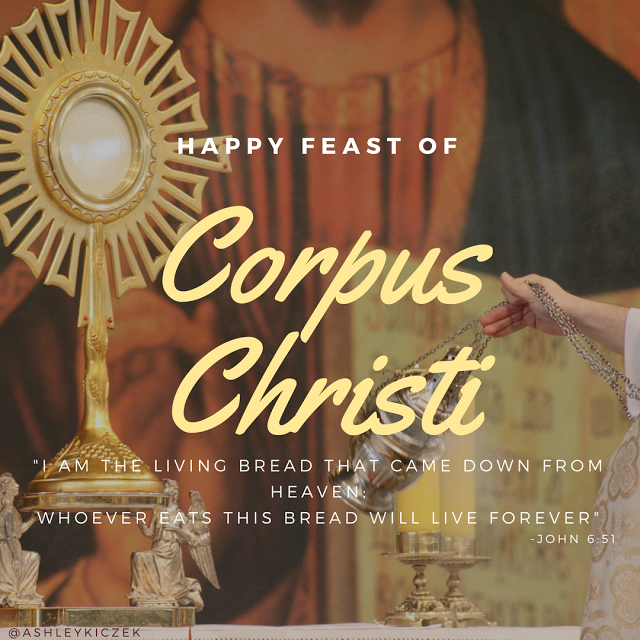
Today we celebrate the Most Holy Body and Blood of Our Lord and Saviour, Jesus Christ.
Jesus is the heavenly food and Nourishment which we all need.
The thing about food is that not only do we need it to live, we need it each and every single day. This truth helps us to understand today’s gospel, because Jesus presents himself to us as food, as the living bread. Throughout the gospel of John, Jesus applies images to himself in order to convey his purpose in our lives. In John 8:12 , Jesus says, “I am the light of the world.” As light, Jesus is telling us that we need him to see what is good and what is true. In John 10:11, Jesus says, “I am the good shepherd.” A shepherd takes care of the sheep. As shepherd, Jesus is showing us that we need him to be safe. In today’s Holy gospel reading, Jesus says, “I am the bread that has come down from heaven.” As bread, Jesus is revealing to us that we need him for life and that we need him each and every single day. As bread, Jesus is saying it is not enough to turn to him when we need to be protected or when we need guidance. We need to turn to him every single day, because he is our food. He is our Nourishment.
So how can we be fed by our Lord Jesus each and every day? There are some great and obvious ways. The most glorious way is in the one that we celebrate today, of The Body and Blood of Our Lord: the Holy Eucharist. We, as Catholics, believe that when the bread and wine are blessed on the altar, they become for us the real presence of Jesus: his body, his blood, his soul, and his divinity. When we receive the body and blood of Christ, Jesus feeds us and shares his power and grace with us. But we are fed not only by the Holy Eucharist, but also by the word of God in the holy scriptures. Each time we read from the Bible and seek its meaning, Our Lord nourishes us.
Clearly both the Holy Eucharist and the Holy scriptures are both very crucial ways for us to be fed. But few of us receive the Eucharist or read the scriptures in the bible every single day. So, how then can we be fed by Christ daily? We can adopt the habit of prayer into our daily lives. Now when I speak of prayer, I am not talking about saying prayers, although saying prayers is important. If we are able to say the rosary or to set aside fifteen minutes for meditation each day, that would be valuable to do so. But the prayer I am advising is much more simple. I am talking about connecting regular events in our lives to Christ. For example, when we open your eyes in the morning, why not commit ourselves to make that moment a prayer. It can be a simple “Thank you, Lord, for this day,” In that moment of prayer, Christ will feed us. When we say goodnight to our children or to our spouse if we have them, why not make that moment a prayer. We can choose to thank God for the blessing of the people who make our life worth living. In that blessing, Christ will nourish us. When we see a funeral procession, we can stop and say a prayer for the person who has died and ask Christ to increase our belief in eternal life. By pausing to do that, Christ will strengthen our faith. When we see something that is wrong in the world, whether it be in our family, at work, at school, or anywhere else in the world, we should stop and ask Christ to show us how we might make it better. In that prayer and the service that flows from it, Christ will be our bread.
We need to be fed by Christ every day. Our food is the Holy Eucharist, together with the scriptures, and simple prayer at the key moments of life. How often do we need to be fed? More than once each day is a must. If Christ is our food, we must find a way to be fed by Christ daily. We should make him our breakfast, lunch, and dinner—and perhaps, a snack or two in the day, and also before we go to sleep each and every single day of our lives.
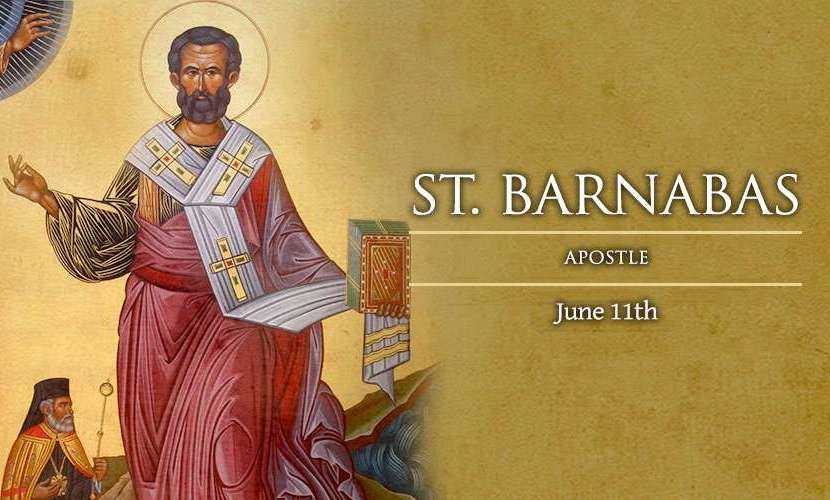
The Feast of St. Barnabas ~ The Rev Dcn Dollie Wilkinson, OPI
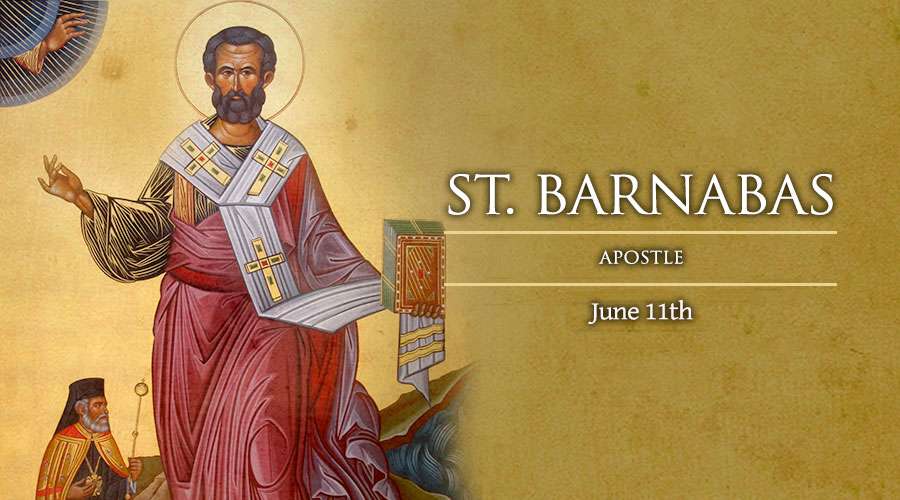
Saint Barnabas, Apostle was born in Cyprus and died in Salamis in the 1st century. The Acts of the Apostles describes Barnabas as ‘a good man, full of the Holy Spirit and of faith’ (Acts 6:24). His Jewish parents called him Joseph, but when he sold all his goods and gave the money to the apostles in Jerusalem, they gave him a new name: Barnabas, which means ‘son of consolation’ or ‘man of encouragement.’ Although Barnabas was not among the original Twelve, he is traditionally thought to have been among the 72 commissioned by Jesus to preach; thus, he is given the honorary title of Apostle.
Barnabas the Levite lived with the earliest Christians in Jerusalem. He was one of the first to welcome Saint Paul, the former persecutor of the early Church, and his former schoolmate. He persuaded the Christians of Jerusalem to accept Paul’s claim that he was now a believer in Jesus (Acts 9:26-30). Barnabas was sent to Antioch, Syria, to investigate the community of non-Jewish believers there, and brought Paul there from Tarsus. It was in Antioch that the followers of The Way were first called Christians. With Paul he took the Antiochean donation to Jerusalem community during a famine.
Thereafter he, his cousin John Mark, and Paul returned to Antioch before setting out together on the first missionary journey of the Christian church ” Acts 11:22-26
“Then tidings of these things came unto the ears of the church which was in Jerusalem: and they sent forth Barnabas, that he should go as far as Antioch. Who, when he came, and had seen the grace of God, was glad, and exhorted them all, that with purpose of heart they would cleave unto the Lord. For he was a good man, and full of the Holy Ghost and of faith: and much people was added unto the Lord. Then departed Barnabas to Tarsus, for to seek Saul. And when he had found him, he brought him unto Antioch. And it came to pass, that a whole year they assembled themselves with the church, and taught much people. And the disciples were called Christians first in Antioch.Acts. They went first to Cyprus, Barnabas’ native land, and for this reason Barnabas is honored as the founder of the Cypriot church. Then they continued on to Perga (whence John Mark returned to Jerusalem), Antioch in Pisidia (where they were so violently opposed by the Jews that they decided to preach to the pagans), and Iconium (where they were stoned). At Lystra in Lycaonia, they were thought to be gods because of the miracles they worked and the physical beauty of Barnabas “.
After being taken as pagan gods, they were stoned out of the city, and fled back to Antioch in Syria. When a dispute arose regarding the observance of the Jewish laws and customs, Paul and Barnabas returned to Jerusalem for the council that decided that non-Jews would not have to be circumcised to be baptized.
When they returned to Antioch, Barnabas wanted Paul and John Mark to continue their travels with him, but Paul fell out with John Mark–perhaps because John Mark had abandoned them at Perga. In spite of Paul’s extremely forceful character, Barnabas took Mark’s side, demonstrating that he was a man of considerable determination and courage. The Acts of the Apostles says, “There arose a sharp contention between them. Barnabas took Mark with him and sailed away to Cyprus”. Paul chose a new ally, Silas, and went elsewhere to strengthen the churches. Little more is heard of Barnabas though it is believed that the rift with Paul was healed because we read about Barnabas later in 1 Corinthians 9:6). (Paul also discusses his relationship to Barnabas in his letter to the Galatians.)
Tradition says that Barnabas preached in Alexandria and Rome, and was stoned to death at Salamis about 61 AD. He is considered the founder of the Cypriot Church. Barnabas is spoken of simply as one who dedicated his life to the Lord. He was a man “filled with the Holy Spirit and faith. Thereby, large numbers were added to the Lord.” Even when he and Paul were expelled from Antioch in Pisidia—modern-day Turkey—they were “filled with joy and the Holy”.
God our Father, you filled Saint Barnabas with faith and the Holy Spirit. and sent him to convert the nations. Help us to proclaim the gospel by word and deed. Through our Lord Jesus Christ, your Son, who lives and reigns with you. in the unity of the Holy Spirit, one God, for ever and ever.
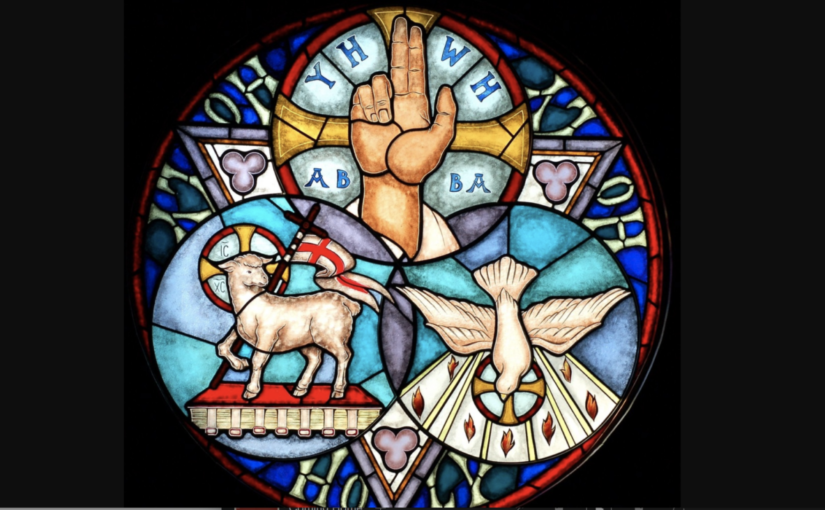
The Feast of the Most Holy Trinity ~ Christopher Sedlmeyer, Aspirant

Liturgical Context:
First Reading: Genesis 1:1-2:4a
Responsorial Psalm: Ps 8:1-9
Second Reading: 2 Cor 13:11-13
Gospel: Matt: 28:16-20
Homily:
Soon after my twins started their catechesis this fall, they learned the Sign of the Cross:
“In the Name of the Father and of the Son and of the Holy Spirit”. They were so excited that
they could finally participate in at least one of the many incomprehensible things about the Mass
they attended each week. Slowly, they were beginning to do the things the grownups and older
kids were doing—they were becoming part of the community. Soon after, I got the inevitable
question: “What is the Father and the Son and the Holy Spirit?” The only thing sadder than my
struggle to explain the Trinity to an 8-year-old was their attempt to understand what I was
saying. In the end, they let me off easy and chalked it up to something that would become
clearer as they got older. But, as we adults know, it is not quite that easy.
The Trinity. It is the most fundamental dogma of the Catholic faith and yet the most
difficult to understand. We cannot truly follow Christ until we know who He truly is, and we
cannot know who He truly is until we understand the Trinity. For those unfamiliar with the dogma
of the Trinity or who have not been formed in the Christian faith, the Trinity seems like a useless
theological parlor game. Three persons in one God, each distinct but all part of a single Deity:
distinct, equal, inseparable. Why is it necessary to make God so complicated? What difference
does the Trinity make to our salvation and to our faith in Jesus? The answer is, like the Trinity
itself, deceptive simple. God is love, as John 4:7-21 says. God is love. And if God is love, then
the Trinity is Love. God is one love expressed in three persons, three kinds of loving
relationships. Our Second Reading from 2 Corinthians 13:13 expresses this so succinctly: “The
grace of the Lord Jesus Christ, the love of God, and the communion of the Holy Spirit be with all
of you”. We will use Paul’s summation of the Trinity to guide us through our reflection on the
Father, Son, and Holy Spirit.
Our reading from Corinthians speaks of the “love of God”. We believe the first “person”
of the Trinity is God the Father. So, let’s start here. Scripture tells us that God created us from
his own spirit. Genesis says, “And the Lord God formed man of the slime of the earth: and
breathed into his face the breath of life, and man became a living soul” (2:7). So, the Father’s
love is one of giving us life from His own breath, His own essence. Maybe more important for
us living as sinners on this earth, is the fact that God the Father not only created us from His
own essence, but he also created us from His own goodness. Genesis 1:31 tells us that after
God the Father made the universe, He “saw all the things that he had made, and they were very
good.” (Gen 1:31). And to emphasize this creative love and goodness, God the Father gave us
another gift: His son, our Lord Jesus Christ. John 3:16 tells us in that famous passage: “For
God so loved the world, as to give his only begotten Son; that whosoever believeth in Him, may
not perish, but may have life everlasting”. So God the Father gave us another creation, the
Incarnation of Jesus Christ, the Word made Flesh for us; another free gift that had within it not
only God the Father’s creative love but also the very epitome of his creative goodness.
The second “person” of the Trinity is God the Son, Jesus Christ. In His Son Jesus, God
the Father makes His redemptive love, His sacrificial love, manifest in a new way. I want to be
clear here, God the Father has always had a redemptive and sacrificial love for humanity—this
is not a new love. Jesus Christ, who was with the Father since the beginning, does not undo
what His Father created; He only creates a new way for us to make relationship with the same
old love God the Father had for the Israelites throughout the Old Testament. Our reading
speaks of the “grace of the Lord Jesus Christ”, part of this grace Jesus imparts to us as a free
gift is his wonderful new commandment. Remember the 10 Commandments in the Old
Testament? These don’t go away, but Jesus sums them up in a new way in John 13:34: “A new
commandment I give unto you: That you love one another, as I have loved you, that you also
love one another”. But, one might say, God the Father gave commandments and covenants all
through the Old Testament and the Israelites kept breaking them, how is this new
commandment any different? The answer is that this new commandment did not come down
written on tablets of stone but came down written on the Sacred Heart of Jesus Himself. Jesus
died for us. He willingly surrendered his divine self so that he could be the least of us, the poor,
the scorned, the unfairly accused, the beaten, the tortured, the executed. Jesus, the living gift
of God the Father, freely chooses to give us His own gift, the gift of His death and resurrection.
From this supreme gift, we have the gift of the Sacrament of Reconciliation, which re-creates us
in the original love and goodness of the Father and allows us to preserve the bond of grace and
love we have with God, despite our faults and failures.
The third “person” of the Trinity is the Holy Spirit. To understand the Holy Spirit, we can
go back to the passage from our Gospel reading where Jesus says in Matthew 28:20, “and
behold I am with you all days, even to the consummation of the world”. Jesus makes this
promise because He intends to ask the Father to send a comforter, who will stay with humanity
in in all times and in all places. In John 14:16, Jesus says: “And I will ask the Father, and he
shall give you another Paraclete, that he may abide with you forever”. As we have seen, God
the Father gave us life and the Law and His only begotten Son. God the Son gave us His new
commandment of love, his life and resurrection, and the Holy Spirit. But what does the Holy
Spirit give? The Holy Spirit gives us the free gift of grace of belonging, that gift that allow us to
live in the love and goodness of God and serve Him. This is the “communion of the Holy Spirit
that our reading from Corinthians speaks about. Paul says it best in 1 Corinthians 12, 7-13:
“Now there are diversities of graces, but the same Spirit… And the manifestation
of the Spirit is given to every man unto profit. To one indeed, by the Spirit, is
given the word of wisdom: and to another, the word of knowledge, according to
the same Spirit;…But all these things one and the same Spirit worketh, dividing
to every one according as he will…For in one Spirit were we all baptized into one
body, whether Jews or Gentiles, whether bond or free; and in one Spirit we have
all been made to drink.
So, the Holy Spirit gives us the grace of serving others and the grace of being served by others.
And so the Trinity is Love. A gift of love that keeps giving until the end of time. It is
God’s embarrassment of riches in His desire to love us. It is a love that creates us in goodness,
loved by the Father; redeems us in goodness, loved by the Son, and keeps us in the grace of
belonging to that supreme goodness that is the Church, loved by the Holy Spirit. The Trinity is
one God and one love expressed in three “Persons” that invite us to three different relationships
with love and with each other. And so, as I think about it: I do have an answer for children who
ask what the Trinity is and for those, young at heart, who still care enough to question: The
Trinity is God’s loophole of love—in an irrepressible and unrelenting passion for us, God defies
His own laws of physics to love us three times as much with one heart. And this is the love that
Jesus commands us to impart in our Gospel when he invites us to “Go therefore, teach ye all
nations; baptizing them in the name of the Father, and of the Son, and of the Holy Ghost. (Matt.
28:19).
 The Order of Preachers, Independent
You must be logged in to post a comment.