
Category: Lesson
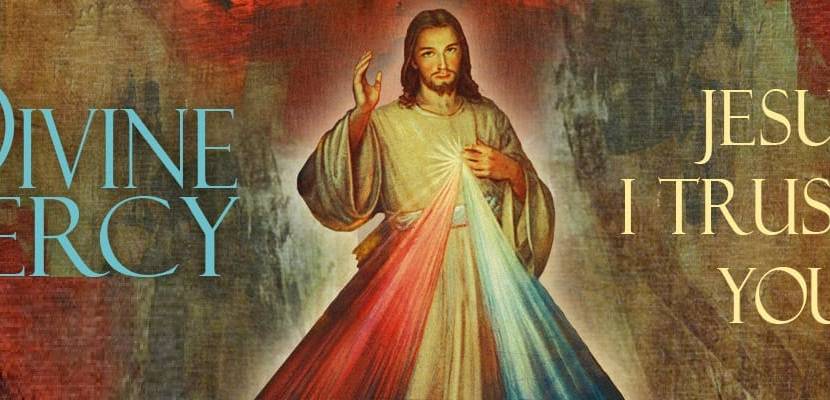
Divine Mercy Sunday ~ Fr. Shawn Gisewhite, OPI
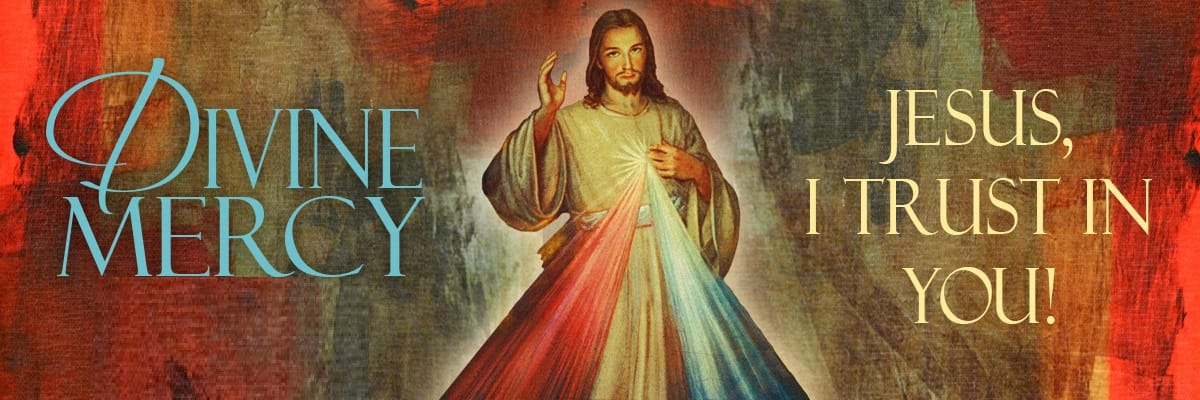
Today we celebrate Divine Mercy Sunday. If you have listened carefully to the prayers and readings, you will realize why the Second Sunday of Easter has that title. The opening prayer addresses the Father as “God of Mercy.” In the Psalm we repeated several times, “His mercy endures forever.” Besides mentioning the word, our readings illustrate mercy in action. But before going into the Scripture lessons, we need to ask this question: What does “mercy” mean?
To understanding the meaning of mercy, it will help if we examine its etymology. Our English word, mercy, goes back to the Latin: misericordia, which is composed of two words. “Cordia” is familiar to us from such words as “cardiologist” and “cardiac.” It means heart. The first part, “miseri” refers to suffering. Mercy, then, means to have a heart for those who suffer or, more precisely, to have a heart willing to suffer for others.
Today’s readings reveal that kind of heart in Christ and in his followers. When Jesus appeared to his disciples that first Easter, he said, “Peace be with you.” As you can imagine, that greeting meant more than “hello” or “good morning.” Jesus, in fact, desired to communicate to them something of great value. The peace which Jesus won for us had cost him his blood, his very life. What that peace involved, Jesus tells us clearly: “Receive the Holy Spirit. Whose sins you forgive are forgiven them…” To his apostles Jesus communicates the Holy Spirit with the power to free men from their sins. That freedom or absolution comes through the Sacrament of Reconciliation.
From the Acts of the Apostles we glimpse mercy in action. The early Christians were so filled with the Holy Spirit that “no one claimed any of his possessions as his own.” Rather, they “distributed to each according to his need.” It was not Karl Marx who invented the principle: “from each according to his ability, to each according to his need.” Marx lifted it from the New Testament, but made the mistake of thinking that it could happen by political coercion. His followers created a human inferno, but their failure should not cause us to reject the ideal. Part of mercy involves the effort to provide every human being with access to this world’s blessings.
The reading from Acts, then, calls our attention to the corporal works of mercy: feed the hungry, clothe the naked, shelter the homeless and so on. St. John’s letter, on the other hand, focuses on what are called the spiritual works of mercy such as: convert the sinner, counsel the doubtful and bear wrongs patiently. By doing those things we fulfill Christ’s commandments and help to extend his victory. “Whoever is begotten by God conquers the world. And the victory that conquers the world is our faith.”
Ultimately mercy results not so much from human effort as from God’s free gift. As Shakespeare said, “It droppeth as the gentle rain from heaven.” During this time of Easter, we ask God to open our hearts so that we might receive into our hearts his Mercy – his Holy Spirit.
Easter Math…Christ Is Risen ~ The Rt. Rev. Jay Van Lieshout, OPI
Greetings my brothers and sisters on this day of our Lord’s breaking of the bonds of death and resurrection. Christ is Risen!
Yes, the Lord is risen indeed!
It seems as if it was just yesterday that we donned our sack cloth and inscribed on our foreheads a reminder of our own mortality; that ashen cross which reminds humanity that the Creator fashioned each of us from star dust and by the grace of the Holy Spirit’s breath we came into being. Then, just as the ashes were place on our heads, they began to fade with the day’s toil; so, too, do our lives slowly fade away under the wear of our trials and tribulations till we once again return to the dust from which we were created. But it is not just our lives which suffer such attenuation, the weight of our transgressions and the trespasses of others slowly eat away at our souls, a process which can lead the greatest and least among us to an inevitable spiritual death. But today we rejoice as the sting all death is eradicated, the tight fetters are loosed, the ashes of our sins have been washed away, and our souls set free from captivity!
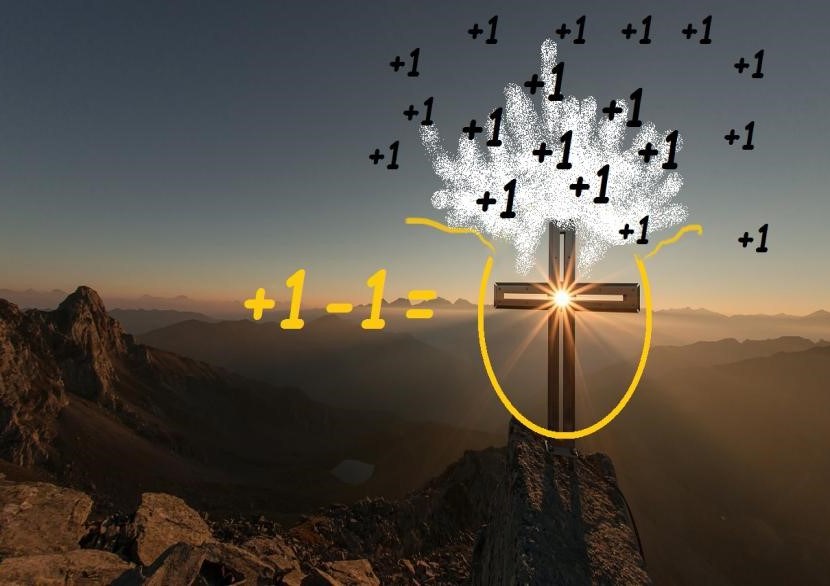
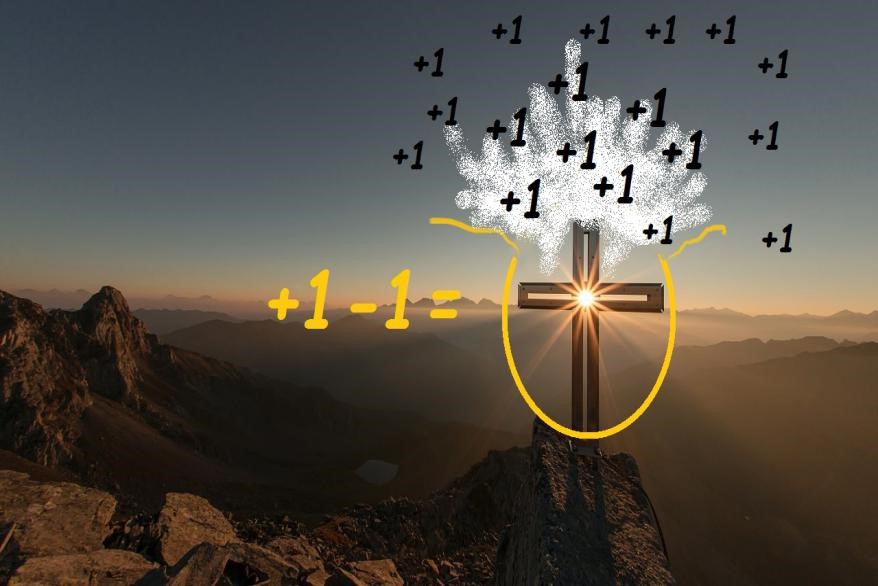
From Ash Wednesday and throughout Lent, I have preached about how the ashen cross is not just a reminder of our human mortality, it is an open invitation to the Heavenly Banquet which bears the our Lord’s charge bring with us a guest, a “+1” if you will. It is not merely enough to show up to the feast, even if we bring gifts of finest gold, frankincense and myrrh. No, we are called to gather those who may not have received the invite, those who feel unworthy or unwelcome, the ostracized, the poor, the hungry, the dirty, the abandoned and lost, for as St. Lawrence taught us, these as the true treasures of Christ’s church!
It is basic ecclesiastical math. The Creator has made each of us a single an unique creation, a gift brought forth from the Earth; therefore each of us begins as the Creator’s “+1”. By the nature of our imperfections, our lives slowly ebb away, a fraction here and a jot there, the sum of which adds up to negative one “-1”. Every child knows that subtracting 1 from 1 results in zero, the null number (+1-1=0). Each human lives this life equation, we come to earth in birth and eventually are place in the null set tomb of death.
It grieves me so that for many of our brothers and sisters, the same withering and eventual emptiness plagues their spiritual life as well; they are born, soul brightly burning in the image of the Creator’s endless love, the travails of life choke this flame with the ashes of remorse and regret, while others, because of their own imperfections and darkness in heart, seek to further suppress or extinguish the light of those around them in hopes that this might make their light seem brighter. The final outcome are our brothers and sisters who feel as if they are worthless; like the proverbial number zero, they represent nothing and have no value, the light of God’s love has been replaced by endless sorry and darkness.
On this day of our Lord’s Resurrection, I tell you my brothers and sisters, God’s light can NOT be extinguished but only hidden. God has not and will NEVER abandon any of us, we have just been blinded to the truth by the wickedness of others!
The grace, compassion and love of our Creator has no limit. Our cries have been heard. In one benevolent act of mercy, the world received the ultimate gift of the Son of Man; the perfect “+1” born to bring the light of truth back into the world, the “+1” who brings the scriptures to fruition , the one who came to deliver us a from the oppressive bonds of our sins and the Good News to all of humanity. And this man, Yeshua, this manna come down from heaven, allowed Himself to be tempted, pursued, betrayed, imprisoned, whipped, weighed down with the burden of His sentence, mocked, reviled, stripped, tortured and ultimately succumbed to death in order that He might serve as the atoning sacrifice for all our sins. Yes, like all humans, Jesus carried out the full life equation from beginning to the end, from alpha to omega, birth to death, womb to tomb: +1-1=0 for each and every one of us.
Yet Jesus was no ordinary man, He was the Creator’s Son, the Christ, and our Creator lives and not even the bands of death can hold the Son! In three days the great mystery unfolded: Christ has died and Christ has risen and we know He will come to each of us again! On this Holy Easter and on every Sunday we celebrate Christ’s rewriting of the life equation. The stone blocking the entrance to the tomb has been rolled away, the shackles of spiritual death are broken and so our sack cloth of mourning is replaced with the finest white linen of rejoicing. The Son of Man has erased the debt cause by our transgressions and now our souls have been resurrected our spiritual light shines in brilliant reflection of His Victory over death! By the “+1” of His life and the “-1” His death on the cross we have been forgiven. By His Resurrection the zero is broke open, spiritual emptiness and death has been overcome, and an infinite amount Grace and a limitless number of “+1” places at the banquet table have sprung forth. No longer is the cross to be a symbol of suffering and pain, it is now an emblem of God’s invitation to boundless grace and mercy; not a reminder of what we have committed but of all that He has forgiven!
At the start of Lent we were inscribed with a cross of ashes on our foreheads to remind us that we are all born out of dust and no matter how rich or how powerful, to dust we all will return. Now we are called to wear this this emblem as an outward sign to others, an invitation to take our hand so that we might lift others up out of the dust, a promise to untie the bonds of injustice, a light to guide others safely around the pitfalls of life, a commitment to feed our brothers and sisters who are hungry, clothe them when they are naked, and comfort them when they are alone or grieving. This cross we bear is no longer a reminder of our mortal shortcomings, it is the invitation Christ has extended to all humanity to attend the Heavenly banquet, the gift of His Resurrection emblazoned on us so that we may always be an invitation to all those we meet to be our “+1”.
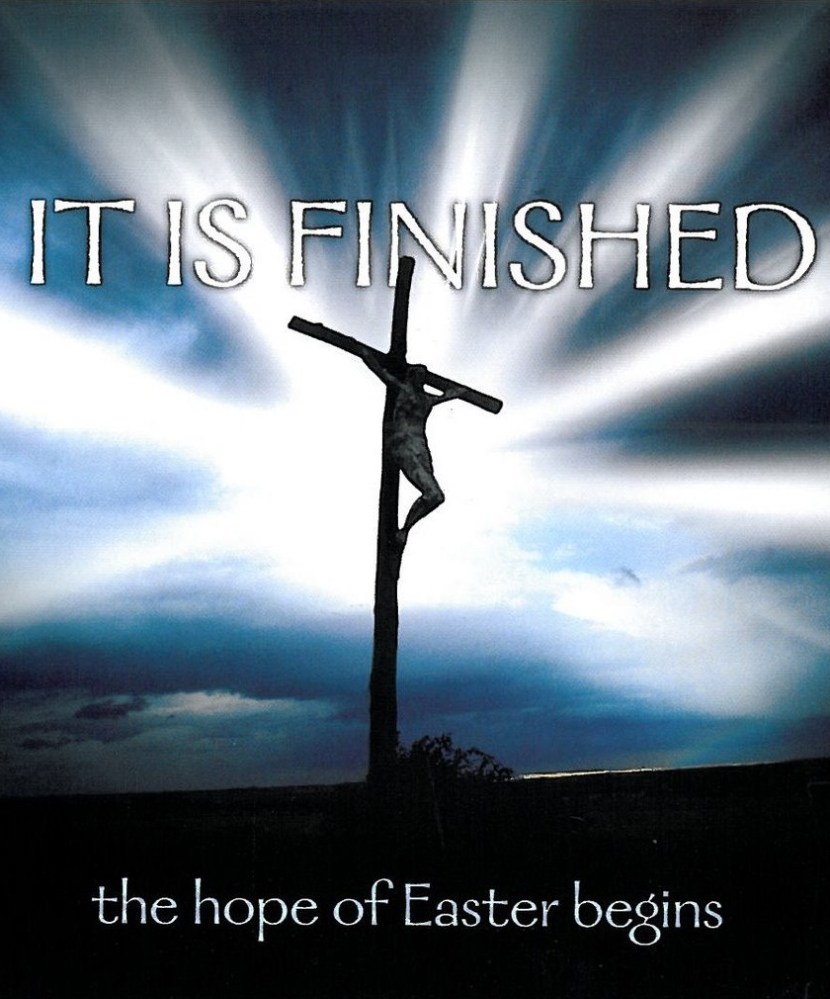
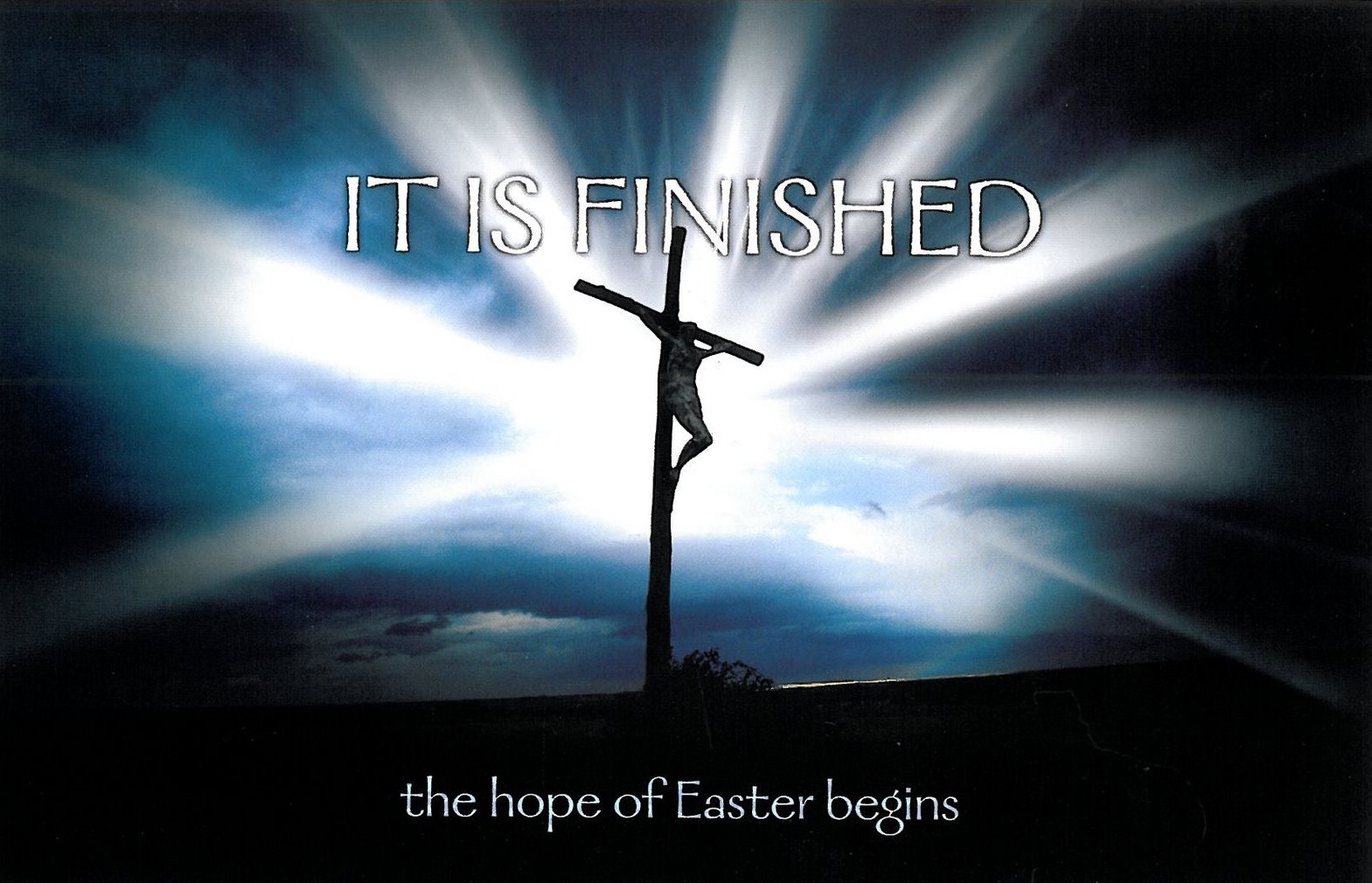
It Is Finished ~ The Very Rev. Lady Sherwood, OPI
Reading 1: IS 52:13—53:12
Responsorial Psalm: PS 31:2, 6, 12-13, 15-16, 17, 25
Reading 2: HEB 4:14-16; 5:7-9
Gospel: JN 18:1—19:42
Liturgical colour: Red.
Roman crucifixion was designed to produce a slow, agonizing death. It involved as much suffering and shame as possible. This excruciating form of public execution was bloody, violent and extremely repulsive. The Jews believed if you were crucified, you were under God’s curse (Deuteronomy 21:23). It was on a Roman cross that Our dear Lord Jesus, who knew no sin, bore the sacrificial price for all of our sin.
Before His crucifixion, Jesus was repeatedly mocked, he was spat upon and he was flogged. His body was beaten so severely, He was hardly recognizable. Soldiers stripped Him and led Him outside the city to die a criminal’s death. While on the cross, passersby hurled insults at Him. The religious leaders taunted Him as they attacked His power to save. Even the two thieves who were being crucified beside Him heaped insults on Jesus.
For a short while, I want you to think about what Jesus has done for us all through his death on the cross. Visualise in our minds our suffering Saviour. Think about the love that God has for each and every one of us, and offer him our profound and sincere thanks. Let us each ask God to wrap us tightly in his love – forgiving us, watching over us, guiding us. If anyone feels that Jesus and his love for them are not real for a large part of their life, simply ask for his help, he will always answer your call.
Jesus died on the cross to get rid of the power of sin that condemned us. His death bridged the deep gulf between God and us. “It is finished”, Jesus cried. But by saying this, Jesus didn’t mean he was finished? NO! He is now sat at the Right hand of God the Father, and will come again in Glory to judge the living and the dead. By Jesus’s statement of “It is finished!”, Our Lord meant that the restoration of the friendship between God and humanity had been finished. The task for which God’s Son came to earth had been completed.
He has won forgiveness and the possibility salvation for all people.
Nothing else needed to be done.
Salvation is complete. “It is finished”.
We call today “Good Friday”. It certainly was the farthest from being a good day for Our Lord Jesus. He endured excruciating pain, soul-wrenching agony, hanging by the nails in his hands, feet and side for hours, death on that rough wooden cross, for all of our sakes. We call today “Good Friday” because the cross is sure and definite proof of the powerful and ultimate love that God has for each of us. Here we see a love that was prepared to endure the ultimate in order to rescue us.
Paul writes, “God has shown us how much he loves us—it was while we were still sinners that Christ died for us! … We were God’s enemies, but he made us his friends through the death of his Son.” (Romans 5:8,10). That’s how much God loves us – Jesus died for us even though we don’t deserve it. His death has made us God’s children.
Jesus’ announcement, “It is finished” is clear and simple. Jesus has completed his task. The reason why he came as a human amongst us has been fulfilled. He came so that you and I can have forgiveness and salvation. He came to give us the victory over death. He came to ensure that we could enter his kingdom and live with Him forever.
Let us pray:
Dear Heavenly Father,
We remember today, the pain and suffering of the cross, and all that your Son, Our Lord Jesus was willing to endure, so we could be set free. He paid the price, such a great sacrifice, to offer us the gift of eternal life.
Help us never to take for granted this huge gift of love on our behalf. Help us to be reminded of the price that was paid for our sin. Forgive us for being too busy, or distracted by other things, for not fully recognizing what your Son freely gave to fulfill your will for us, for the sacrifice that was done for us.
Amen.
Journey With Jesus: Palm Sunday ~ The Very Rev. Lady Sherwood, OPI
Reading I: IS 50:4-7
Responsorial Psalm: PS 22:8-9, 17-18, 19-20, 23-24.
Reading 2: PHIL 2:6-11
Gospel: LK 22:14—23:56
Liturgical colour: Red.
As most people who probably know me well are aware, I am a person who likes to travel on journeys, whether for ministry or to visit sacred or beautiful places of the Lord’s creation. But the journey undertaken on Palm Sunday, which we celebrate today, was a journey of both joy and celebration, but also of suffering.
Dearest brothers and sisters in Christ, today we celebrate Palm Sunday. Today all those years ago, Jesus rode into Jerusalem on the back of a donkey. Jesus was totally devoted to following the will of the God his Father. Jesus was dedicated to doing whatever it took to fulfil the mission his father had for Him. Jesus prayed in the garden of Gethsemane, He asked God to let this cup pass from Him, but not MY will but yours oh Lord. Jesus was committed to the work of God and to fulfil his will as was predestined.
In John 12:13, we read that they broke palm branches from the trees and lined the streets in front of Jesus Christ as He made His triumphant entry into the city of Jerusalem. ‘‘Many people….took branches of palm trees, and went forth to meet him and cried, ‘‘Hosanna: Blessed is the King of Israel that cometh in the name of the Lord.’’
They correctly called Jesus the King of Israel, for He was presenting Himself as their king. This was Jesus most popular hour. There were many times, when Jesus was misunderstood and rejected by His own, but here is one of those moments in His earthly ministry that has been called by many His most popular hour. We read that on this occasion a great multitude said, ‘‘Who is this?’’ (Matt. 21:10) We read that even the enemies of Jesus said, ‘‘….the world is gone after him.’’
(John 12:19) The occasion of Palm Sunday took place one week before His resurrection from the grave. While in a little village called Bethphage Jesus said to his disciples, ‘‘Go to a certain corner where two ways meet: there will be a home. You will find a colt tied. Bring that beast of burden. I am going to ride it into the city today.’’
So, we can see that Palm Sunday is a day of great rejoicing because of the coming of the King amongst his people.
But amongst all the rejoicing, this next week, is full of so many twists and turns far beyond our comprehension …a rollercoaster of events for Our dear Lord Jesus, preordained by God the Father and accepted willingly by our lord Jesus for sakes and for our salvation.
However, amongst the rejoicing crowds shouting ‘Hosanna!’ were also the Pharisees and Jesus knew that this journey would also lead to his death for our salivation, only five days later. This was certainly an extremely important journey and was filled by both the rejoicing and waving of palm with the shouting of ‘Hosanna!’, and the suffering of our dear Lord Jesus knowing that these very people who today rejoiced as he entered Jerusalem would also be the people who would condemn him to physical death on the cross. Jesus knew this was the will and plan of his Heavenly Father for our salvation from sin and death, he knew what had to happen and our Lord accepted this.
Palm Sunday starts the week with joy and rejoicing, but within this one same week, we see our Lord betrayed, we see him arrested, we see him put to trial without crime before Pontius Pilate, we see him tortured, humiliated, and then crucified upon a cross at Calvary, all for the forgiveness of our sins, so that we may be be saved. Then we see the return of joy, as our Lord is resurrected from the grave..victorious over death, our sins paid for by his most blessed innocent sacrifice on our behalf.
Palm Sunday is the day which starts the week which finishes our Lord’s earthly ministry, the week where Our Lord gains salvation for us by his sacrifice of the purest love. This week both starts and ends in joy, but also leaves us with the joyful expectation for when Our Lord will once again, return in Glory.
Of course, there are many types of journeys that we can undertake in our lives, but no journey of ours can ever compare to this journey of our dear Lord and Saviour.
Taking a journey may not always mean travelling, a kind of journey can also be something unexpected which we deal with in our lives and situations in which we may find ourselves. Faith and trust in the Lord is also a kind of journey.
Where is your journey taking you? Is Jesus going with you?
Let us pray:
Father,
Thank you for sending your Son and paving the way for our lives to be set free through Jesus’ death on the cross. Thank you for what this day stands for – the beginning of Holy Week, the start of the journey towards the power of the cross, the victory of the Resurrection, and the rich truth that Jesus truly is our King of Kings.
“Hosanna! Blessed is He who comes in the name of the Lord…”
We give you praise and honour for your ways are righteous and true. We give you worship for you are holy and just. We will declare that your love stands firm forever. For your loving kindness endures forever.
Amen.
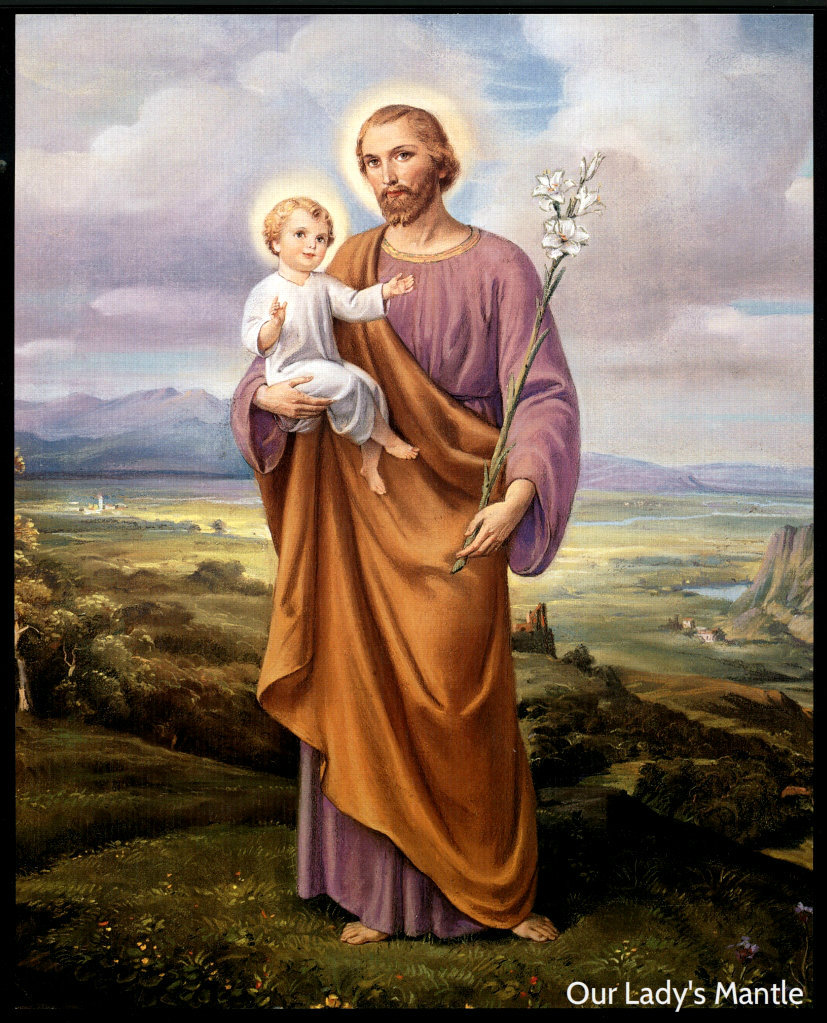
The Feast of St. Joseph ~ The Very Rev. Lady Sherwood, OPI
Liturgical Colour: White.
Reading 1: 2 SM 7:4-5A, 12-14A, 16
Responsorial Psalm: PS 89:2-3, 4-5, 27 AND 29
Reading 2: ROM 4:13, 16-18, 22
Gospel: MT 1:16, 18-21, 24A or: LK 2:41-51A
My dear brothers and sisters in Christ,
Today, we come together as the Church to commemorate St. Joseph, the Spouse of The Blessed Virgin Mary, and the foster Father of our Lord and Saviour,Jesus, when he became one of us here upon the Earth.
In the same way in which God, our Heavenly Father, who gives each of us as his children, unconditional love, care, stability and who sets us the standard with which we should strive to live our lives with his holy word in the scriptures, a true Father to each and every single one of us, who only ever wants the very best for all his children. St. Joseph follows our Father’s example, as both husband and foster father. He gives us examples which men should follow in their lives. Joseph cared for and provided for the Holy Household. There are many qualities that Joseph had which we could use to be the role model for Christian husbands and fathers. Joseph was a very compassionate man. We can see an example of this when he suspected his wife of infidelity; he planned to divorce her quietly rather than denounce her publicly and expose her to public shame and penalty.
Joseph was always obedient to God and did what he knew was God’s will without thought or hesitation. Examples of this are that he kept Mary as his wife; he protected and provided for his family when they had to flee to foreign lands to protect them from danger.
Joseph led a life of deep prayer and was in communion with God, and would always seek out that which was God’s will. God often told Joseph his will using dreams.
Joseph was a provider of care, When Jesus’s life was threatened, Joseph would take them out of danger. He took his family to Egypt and only returned when it was safe to do so, and when Jesus went missing at aged twelve, Joseph went searching for him because obviously, both parents were obviously extremely worried about Jesus’s safety.
Joseph also brought much more to Jesus’s life, he taught him his trade which Jesus worked in for about twenty years, he gave Jesus the love and stability he as any child needs, and was his earthly male role model, which was and still is vitally important for a good father to give any child.
He was a man with a firm faith in God coupled with a resilient personality, who did not complain and was not appalled nor distressed in the midst of trials and tribulations, St. Joseph knew how to face, carry and solve the burden of his vocation, of life’s difficulties and responsibilities with serenity, with complete faith and love, entrusting himself totally and unconditionally to God’s plans.
Sadly not all children are brought up in such a way today, but husbands and fathers truly should seek to follow this sincere man of God in the way they run their lives. Are you married? Do you give all the love, trust and respect to your spouse? Or with stresses and strains do you always argue or not truly make time for each other? If you have children, do you know where they are and if they are safe, or who they might be talking to online? Do you give emotional stability, patience and unconditional love? Do your children see you as the role model they need in a Father? We should always strive to be as our heavenly Father is to each of us, whether that be to our spouses, to our children, and in fact to all as our brothers and sisters.
While the Gospels do not shed much light on St. Joseph’s life, it is believed that he died before Jesus’ public ministry.
St. Joseph is the patron of fathers, spouses, priests and seminarians. But also, St. Joseph teaches us so much by his silent example of his life, and just how we should love God faithfully and obediently.
Let us pray:
Blessed St. Joseph, husband of Mary,
be with us this day.
You protected and cherished the Virgin;
loving the Child Jesus as your Son,
you rescued Him from the danger of death.
Defend the Church,
the household of God,
purchased by the Blood of Christ.
Guardian of the Holy Family,
be with us in our trials.
May your prayers obtain for us
the strength to flee from error
and wrestle with the powers of corruption
so that in life we may grow in holiness
and in death rejoice in the crown of victory.
Amen.
We pray to God through your powerful intercession for all the fathers and spouses in the world so that they may imitate you in your faith, love and fidelity to God and your family.
We entrust to you as well all the families in the world so that they may imitate the virtues lived by the Holy Family of Nazareth and become its faithful image.
Through your intercession, may God shower more vocations to His Church, especially the vocation to priesthood, and may all priests and future priests strive be holy, faithful and apostolic ministers of Christ.

Be Still My Soul~ Br. Chip Noon, Novice
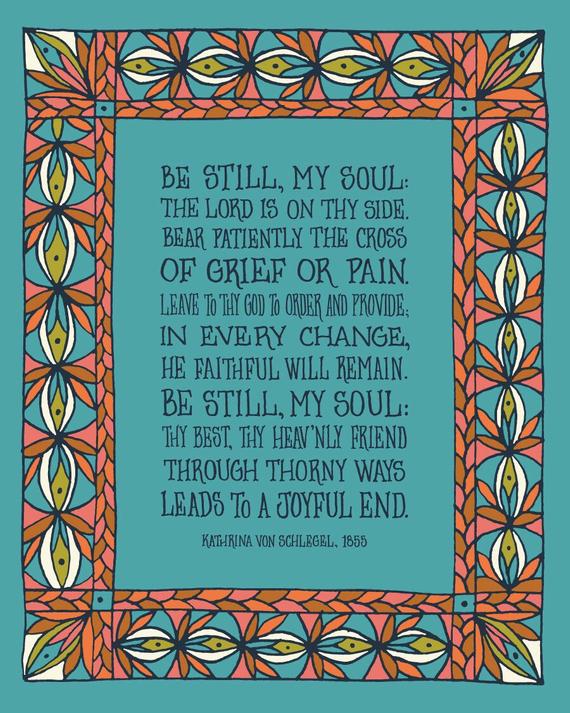
Be still my soul! The Lord is on thy side….
Lent and Advent seem to be mirrors of what we do all day, every day, all year, every year: We are waiting, waiting on the Lord. And it also seems like everyone, from Abram in today’s First Reading to you and me, we have been waiting forever.
Now some of us, like myself, are going to say, “OK, I can wait a little longer, if you don’t mind…”, but that is because we believe the words of the hymn that I started with:
Be still my soul! The Lord is on thy side;
Bear patiently the cross of grief or pain.
Leave to they God to order and provide;
In every change He faithful will remain.
Be still my soul! thy best, they heav’nly Friend
Thro’ thorny ways leads to a joyful end.
Because we have faith that there will be a peaceful end and a heavenly homeland. Well, most of the time we believe this. Sometimes we…or should I more properly say “I”…mostly believe this. Yes, admittedly, there are days when I have my doubts. Do you? These are day that are usually filled with some physical or emotional travail. Some pain or sorrow that I don’t seem to be able to get away from. And it comes upon me like a dead weight, a frightening phantom, an empty abyss.
Oh it is hard to get away from these terrors.
Abram seemed to need quite a lot of convincing that the Lord was on his side, over much of his life. Today we hear that he had to be shown all the stars in the firmament, five animals to sacrifice, a flaming torch, and God making a covenant with him. And this was God speaking directly to him!
In today’s Psalm, the prophet is on the one hand expressing his belief in God and on the other, bucking himself up to be stouthearted and courageous in the face of anguish. And the Apostle Paul is telling the Philippians, again as he says, to “stand firm in the Lord.”
So it seems as though everyone in the Bible and scriptures needs constant pep-talks, constant reminders of what they believe and what is in store for them.
And isn’t that true in our own lives? We, and almost everyone we know, need pep-talks at one time or another…sometimes many times or another! Throughout literature, history, current affairs, our heroes and we are buoyed up by some one or some thing and we are buoying up our friends and family. It seems like a constant endeavor. Maybe because it is in our makeup to ride the roller coaster of feelings. I know I am cursed – or blessed – with this phenomenon. I can recount many, many times that I have either needed or given encouragement, with the emphasis on “courage.”
Helping others, this act of friendship which we call comfort or reassurance, is deep-rooted in society, especially in societies such as religious orders. And yes, it is found throughout the New Testament. For example, in 1 Thessalonians Paul says, “Therefore encourage on another and build each other up, just as in fact you are doing.” And Peter: “Above all, keep loving one another earnestly, since love covers a multitude of sins. Show hospitality to one another without grumbling. As each has received a gift, use it to serve one another, as good stewards of God’s varied grace.” And again Paul, in that famous passage: “Let the word of Christ dwell in you richly, teaching and admonishing one another in all wisdom, singing psalms and hymns and spiritual songs, with thankfulness in your hearts to God.”
And so, in the days of Lent, each day can be a lesson for us, with the Resurrection as the prize. And we should not be hesitant to anticipate that prize, because look, in today’s Gospel, Peter, John, and James were initiated in a way into the divinity of Jesus and as we know, it was not until after the Resurrection that they truly understood and believed, through the power of the Holy Spirit.
Even the Transfiguration and the spirits of Moses and Elijah were not enough for them; so much so that they did not tell anyone what they had seen. I’ve always thought that it was so fantastical to them that they were afraid to be thought of as foolish.
But don’t lets us be foolish. Let us remember past Lenten days and past Easters and remember those times God has spoken to us in the quiet of our souls and sing again the old hymn “Be still my soul! The Lord is on thy side….”
Lord, thank you for being on our side. As we go through this Lenten season, help us to remember these words every day.
Amen.

Blessings and Woes ~ The Rt. Rev. Jay VanLieshout, OPI

Blessings and Woes
Luke 6:17-26
Like St. Matthew’s Sermon on the mount, St. Luke’s Sermon on the plain also tells of Jesus teaching His disciples an unexpected litany of who is blessed (the Beatitudes); though unlike St. Matthew’s version, St. Luke includes a list of 4 woes (vaes). It is, therefore, understandable that more people gravitate towards St. Matthew’s rendition, after all, the beatitudes make us feel good about ourselves while the woes, not so much. Of course Jesus’ teachings often juxtaposed the good with the bad, the ups with the downs, the expected with the unexpected, God’s kingdom with the world, and these lessons were as challenging for the disciples then as they are for us today.
I often think about what Jesus’ message was to the disciples and those people who gathered about when He spoke of those who were blessed as well as those who inspired His woes. Through the millenia , the church’s interpretation, and indeed general consensus on the meaning of being “blessed” is one of happiness and contentment; we use the term blessings to refer to those worldly situations and possessions which are thought to bring about the state of happiness. Yet, as Jesus spoke to the diverse crowds of rich and poor, healthy and sick, popular and pariah, content and wanting, it seems that happiness would not have been such a universal truth. In fact, to those who were poor, hungry, weeping, hated and excluded, insulted and denounced, it is doubtful they would describe their plight as being a state of happiness. And to the rich, satisfied, cheerful, loved and accepted, praised and exalted, surely they would not described their lives as woeful. But the scripture is clear, the former are described as “blessed “and woe is given to the latter.
In this light to be “blessed” must imply something deeper, more spiritual, more meaningful then worldly happiness. Clearly, the blessings that the Creator has laid upon those who are the world’s most afflicted do not involve the worldly ideals of riches and contentment but, instead, some state of being in an enviable relationship with God. I liken this state to the relationship of a gravely ill child with their parent. Though parents may equally and unconditionally love all their children, for those who bear illnesses or challenges beyond that of normal childhood, there is a special parent-child bond, a special celebration of existence which transcends the child’s corporal affliction. To be blessed by God then, is to be part of this unique Creator-creation bond, a bond of unconditional love that is envied by all others. When we are weighed down by our own plight, when the world seeks to subjugate us for our differences and humanity has abandoned us as unworthy of existence casting our frail bodies out into the dust of the streets, it is there that find ourselves in the arms of our Creator. In the depths of human need and frailty, it is our heavenly Father who loves and provides for us and the Holy Spirit who fills our breasts with life, hope, strength and perseverance. We are cleansed with holy tears shed by the Redeemer, our transgressions are washed away by the blood of God’s lamb and our inequities are erased by the most loving and gracious of sacrifices. It is there in the Earth’s dust from which we were fashioned that we open our eyes to see the one who created us, the smiling face of our heavenly parent who sees through the veil of our imperfect physical shell seeing only the magnificence that is His creation.
It is no wonder Jesus said woe to those who have found happiness in worldly riches and power. How He must have grieved to see those given so much by the world, always striving with each step to reach the apex of their ivory towers –steep rocky steps built on pride, greed, desire for power and concern for wordly acceptance. Alas, if only they could find the humility to reach down and lift up those who lay in the dust, or break bread with those who had none or share a kind word and moment of recognition with the ostracized, then they might understand what it truly means to be “blessed”.
How can we receive God’s love and be so “blessed”? Does our heavenly Father wish us to become like the poor, hungry, weeping, hated and excluded, insulted and denounced before we might receive His love? Of course not! Like any parent, our Father does not wish that we His children should suffer such a plight, but He does wish us to humble ourselves and reach out to those who are ignoble; to reach out to them, touch them, hold them, lift them up and so stand together as brothers and sisters.
There is a little story which I have stumbled upon that goes:
The old Rabbi said, “In olden days there were men who saw the face of God.”
“Why don’t they any more?” a young student asked.
“Because, nowadays no one stoops so low,” he replied.
Oh How true! Remember Moses went up the mountain, only to be near God when he knelt down in front of a burning bush and the disciples only began to see the true light of Jesus when they looked down as He washed their feet! So we too must stoop down low, lower than those we once called our servants, and be servants to them, washing their feet, caring for their needs above our own, healing their wounds and comforting their souls. For when we lower ourselves so that we might raise up others, it is then that we allow the blessings of God to flow through us and into others and in so doing we too become “blessed”.

Let Down Your Net Into the Water ~ The Rev. Dcn. Scott Brown, OPI

Gospel LK 5:1-11
While the crowd was pressing in on Jesus and listening
to the word of God,
he was standing by the Lake of Gennesaret.
He saw two boats there alongside the lake;
the fishermen had disembarked and were washing their nets.
Getting into one of the boats, the one belonging to Simon,
he asked him to put out a short distance from the shore.
Then he sat down and taught the crowds from the boat.
After he had finished speaking, he said to Simon,
“Put out into deep water and lower your nets for a catch.”
Simon said in reply,
“Master, we have worked hard all night and have caught nothing,
but at your command I will lower the nets.”
When they had done this, they caught a great number of fish
and their nets were tearing.
They signaled to their partners in the other boat
to come to help them.
They came and filled both boats
so that the boats were in danger of sinking.
When Simon Peter saw this, he fell at the knees of Jesus and said,
“Depart from me, Lord, for I am a sinful man.”
For astonishment at the catch of fish they had made seized him
and all those with him,
and likewise James and John, the sons of Zebedee,
who were partners of Simon.
Jesus said to Simon, “Do not be afraid;
from now on you will be catching men.”
When they brought their boats to the shore,
they left everything and followed him.
As Christians we face many challenges in these uncertain times. We want to enjoy life, we want to do things that provide us pleasure and act as if we answer to no one. Unless we are spiritually dead we also experience that vague feeling that we should be doing something that makes a difference in the world, something that lightens someone else’s burden or somehow indicates that we are Christians and care about our fellow man. Our drive to enjoy life and our drive to help our fellow man come together and challenge us to think about what is important to us. On the surface Luke’s story is about fishing, but I believe it is telling us to move out of our comfort zone and sail into uncharted waters for the sake of Christ and his Kingdom. Jesus instructed the fishermen to take their boats to deeper water and cast their nets out for a catch. These fishermen have been fishing all night with nothing to show for their effort, they were tired, and the last thing they needed was fishing advice from a carpenter. These times were much simpler than today, no fish meant no food to these people. They obeyed Jesus and were pleasantly surprised to catch so many fish that their nets were starting to tear. We assume they were greatly pleased.
You may think of this as one of Jesus’s miracles, but in reality, this is more of a physical lesson than a miracle. The lesson I believe he wished to teach us is that we need to leave our comfort zone (the shallow waters) and venture out into the deeper waters to bring people to Jesus. We like to fish in the shallow familiar waters, seeking like minded people, people who have similar experiences, and share our thoughts and feelings. Jesus wants us to venture into the deeper waters and minister to the people who are on the edge of society, those who are under water and feel as if they are drowning in life. As the song “Let Down Your Net, Down into The Water” says:
Verse: 1
There is some of you diseased and afflicted
and sickness reigns in your mind,
you’ve let the prophets of doubt and unbelief convince you
that Jesus don’t heal the sick and blind.
Jesus does heal the sick and the blind, we just need to find them, take their hands and lead them to the Lord. Where do we find the sick and the blind? Look around you while swimming in the deeper water. You can most likely find them already in your everyday life, at work, at school, or even in your church. Yes some people are just going through the motions, and hoping they are doing it correctly by attending church. Take their hands, answer their questions, listen to their concerns and lead them to our Lord.
Verse: 2
Your soul is so thirsty, your so battle weary
your body’s weak and tired from the pain,
well it’s time to get up stand up on the bible
he’s pouring out that latter rain.
Come to the lord and be refreshed, be rejuvenated, and be replenished. The Lord will fill your soul with joy and peace, quench that thirst and take away your pain once and for all.
Don’t worry about the water being too deep, Jesus is your lifesaver!
Lord, in your mercy guide us to the deeper water so that we, with your guidance, may bring others to know your love and peace. Allow us to make ourselves available to you so that you can work miracles through us. Help us to make your church flourish by making us into a lighthouse in our community, guiding others to you. Amen
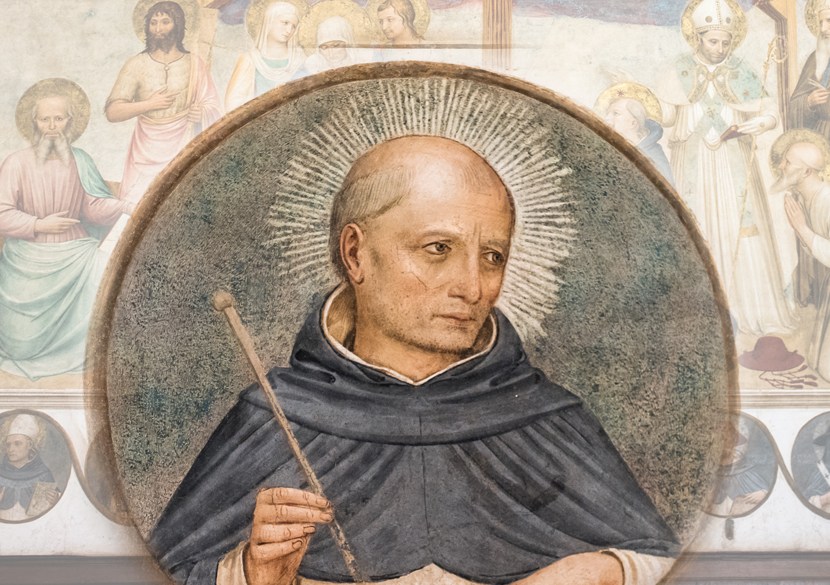
Blessed Jordan of Saxony
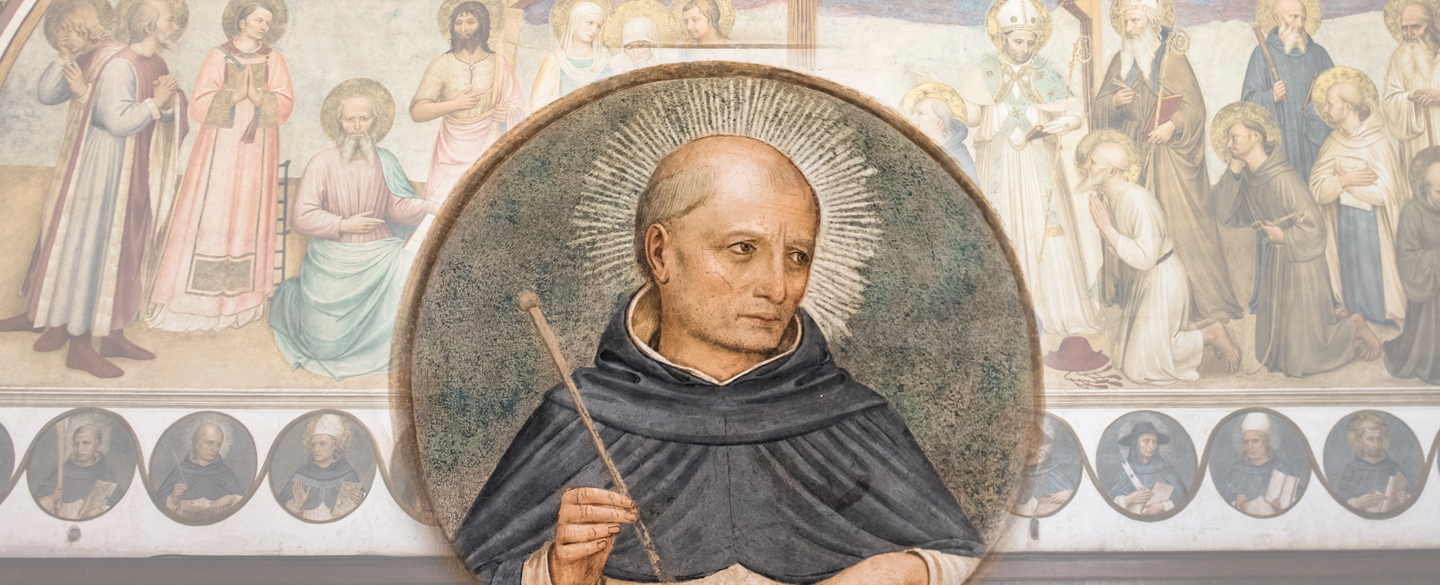
Men prayed for strength to resist Jordan’s burning eloquence, and mothers hid their sons when Master Jordan came to town. Students and masters warned each other of the fatal magnetism of his sermons. The sweetness of his character and the holiness of his life shone through his most casual words in a flame that drew youth irresistibly to the ideal to which he had dedicated his own life. In his 16 years of preaching, Jordan is said to have drawn more than a thousand novices to the Dominican Order, among whom were two future popes, two canonized saints (e.g., Albert the Great), numerous beati, and countless intellectual lights of his dazzling century.
Of Jordan’s childhood, nothing is known, except that he was born of a noble family. He was drawn to the order in 1220 by the preaching of Blessed Reginald, the beloved son of Dominic, brought back from death by Dominic’s and Our Lady’s prayers. Jordan was at that time about 30, a student at the University of Paris, and his reputation for sanctity had preceded him into the order.
He had worn the habit for only two months when he was sent to Bologna as a delegate to the first general chapter of the order. The following year he was elected provincial of Lombardy, Italy, and on the death of Saint Dominic, succeeded him as master general.
The Order of Preachers was only six years old when Jordan became master general. He carried out the yet untried plans of Dominic, who had hurried off to heaven when many of his dreams were just beginning to open out into realization, and still more vistas beckoned beyond. Under him the new order advanced apace, spreading throughout Germany and into Denmark. Jordan will always be remembered for his work in increasing the manpower of the order, but his contribution to its quality should never be forgotten.
He added four new provinces to the eight already in existence; he twice obtained for the order a chair at the University of Paris and helped found the University of Toulouse; and he established the first general house of studies of the order. He was a spiritual guide to many, including Blessed Diana d’Andalo; and somewhere in his busy lifetime he found time to write a number of books, including a life of Saint Dominic.
Jordan was regarded as a menace by the professors of universities where he recruited novices. He emptied classrooms of their most talented students, stole their most noted professors. Young men by the hundreds besieged the order for admittance. Some were mere children, some famous lawyers and teachers, and some were the wealthy young bearers of the most famous names in Christendom. One and all, they were drawn to a life of perfection by this man who preached so well, and who practiced what he preached with such evident relish.
All the old writers speak of the kindness and personal charm of Jordan. He had the ability to console the troubled and to inspire the despondent with new hope. At one time, a discouraged student was busily saying the Office of the Dead when Master Jordan sat down beside him and began alternating verses with him. When he came to the end of Psalm 26, Jordan said the verse with emphasis: “Oh, wait for the Lord!” Wherewith the sorrows of the young man departed. Another student was rid of troubled thoughts by the mere imposition of Jordan’s hands. To bring peace to the brothers who were being annoyed by the devil, Jordan established the beautiful custom of singing the Salve Regina after Compline each night.
Jordan was shipwrecked and drowned when returning from a pilgrimage to the Holy Land (Benedictines, Dorcy).
Born: 1190 at Padberg Castle, diocese of Paderborn, Westphalia, old Saxony; rumoured to have been born in Palestine while his parents were on a pilgrimage, and named after the River Jordan, but this is apparently aprochryphal
Died: Drowned 1237 in a shipwreck off the coast of Syria while on a pilgrimage to the Holy Land
Beatified: 1825 (cultus confirmed) by Pope Leo XII
Canonized: University of Santo Tomas Faculty of Engineering

Easy Yoke, Light Burden ~ Br. Chip Noon, Novice

Today’s Readings and Gospel follow a specific pattern that speaks to us as Christians and particularly as Dominicans.
The First Reading is God’s hortatory address to Jeremiah but is to be accepted as directed to us as keepers of the flame, or simply as messengers of God’s word…as prophets to the nations. So who are we to hold back? Why do we quaver? “…for I am with you to deliver you, says the Lord.”
The Responsorial Psalm describes how we are to imitate Jesus. Having accepted the mission to spread the Gospel, this is a prayer to our Master to give us the strength, tools, and courage we need to go forth and relay his message. In the psalm, we pray to God that we will be worthy of the task because he is with us, protecting and guiding us. It is like a pep-talk before the big game, a sales meeting before we hit the road.
The Second Reading is a run-through of our mission, touching all the bases, but most especially the whole point of our work: to show the world that God is Love, that we revel in that Love, and that we are passing on the means to our own and the world’s salvation: Love. We, along with Jesus, put up the demons and one-by-one knock them down to replace them with the one honest-go-God’s Truth: Love. And as a bonus, we are given, and we give, the gifts of Faith and Hope, the companions and the servants of Love.
The Alleluia reminds us, in no uncertain terms, that while we are bestowing God’s message we really ought to remember to whom we are truly speaking: the poor, captives, those who most need God’s grace.
And finally, in the Gospel, Jesus tells us exactly what’s probably going to happen to us. We are going to be reviled and rejected. But, like Jesus, if we are true to our calling, and with God’s grace, we will pass through the midst of our tormentors and go on to those who will benefit from our teaching, and thank us for bringing it.
Well. There we are. An easy yoke and a light burden.
Wait a minute, though. Let me go back and think this through again. In today’s Mass we have the preacher’s lesson: God is on our side, we acknowledge our task and pray for success, we give our message as best we can, not forgetting who may need it most, and we prepare ourselves not only for people to heed God’s word, but also for people to scoff at us and drive us away.
These are the readings that we need to memorialize and memorize. I do, anyway.
These are the readings that lay out the simple mission and that show us exactly how it is to be accomplished.
Not bad.
But in fact, frightening as all get-out at times.
And that is exactly why we are expected to become completely familiar with Holy Scripture. Because therein, hidden as well as in plain sight, we have all we need to represent Jesus on earth. In fact, he’s not asking us to perform healing mysteries or loaves and fishes miracles. If we just take today’s Mass to heart, and to soul, we will have all we need to fulfill our vows.
Yes, there will be stumbling blocks. I’ve climbed over (and honestly gone around) many so far. But just as Jesus showed us, we can and we will walk through the negativity and away from the precipice over which some would like to toss us.
So yes, it can be, at times, a frightening path.
For have we not been told in Psalm 126, “ Those who go out weeping, carrying seed to sow, will return with songs of joy, carrying sheaves with them.
Lord may it be so for us, that with your help, we will reap a rich harvest. In Jesus’s name.
Amen.
 The Order of Preachers, Independent
You must be logged in to post a comment.