
Category: Lesson

Which Team Do You Choose? ~ The Very Rev. Lady Sherwood, OPI

The 21st Sunday of Ordinary Time.
Liturgical Colour: Green.
Reading 1: JOS 24:1-2A, 15-17, 18B
Responsorial Psalm: PS 34:2-3, 16-17, 18-19, 20-21
Reading 2: EPH 5:21-32 OR 5:2A, 25-32
Gospel: JN 6:60-69
As a child in the care system, I loved to release pent up energy by playing the sport of Rounders. One thing I remember about playing that game,is that when we gathered to play, we would choose two Captains, one for each side (one team for batting and the other for fielding, until all the batters were out and the teams would change team positions). Each of the captains would choose their team players from among those who were available for the game. It like in many sports and games, involved the picking of sides. To win at the end of the game depended so much on the choices of players made by the team captains before the commencement of the game.
I am reminded of this scenario In the first reading today (Joshua 24:1-2; 15-18), where Joshua assembled all the Israelites at Schechem and told them that God had asked him to tell them to freely make a choice of whom they wish to serve. By this convocation we understand that God did not withhold the gift of freewill from humanity (Gen. 2:16-17), even after the colossal fall (Gen.3:1-18 ). From the direction of Joshua’s speech he was like telling the people to pick what team they would be on. Joshua’s declaration tells us about God’s patience with us even when we are offensive to Him by the way in which we live our lives. Joshua’s speech shows us that God cares about us and He wants us to be saved; He gives us that opportunity to make the right decision. It points to God’s loving invitation for a dialogue with us which we do not deserve (Isaiah1:18).
At that point in time the people deviated from God and looked upon worthless gods and idols of other nations around them. From their deviation from God, they were landed into confusion and completely forgot and disregarded the things God had done for them from the time of their ancestors to the time they were delivered from the land of Egypt; the land of slavery. They needed a Joshua who would bring them to their senses; moreover they needed a Joshua who was willing to guide them by his own personal free choice. If you were attentive to the passage, Joshua was in essence leading the way of righteousness like a good team captain, he gave the people his knowledge as to which choice would be the most rewarding and fruitful, thus he declared: “As for me and my house, we will serve the Lord!” (Joshua 24:15). The effect of his decision of choice could be seen in the people’s response: “We have no intention of deserting the Lord and serving other gods!…We too will serve the Lord, for He is our God” (Joshua 24:16,18).
In our gospel reading today (John 6:60-69), our Lord Jesus Christ ended his teaching on the Eucharist by challenging his hearers to make their choice of either accepting his doctrine and gaining life and salvation or to leave it for a damnable fate. Like Joshua in the first reading he was like telling them: to choose their team. We are told that some thought that the doctrine of the Eucharist was intolerable language and consequently many of them stopped following him. We could also note here that these were the same people who at the beginning of this chapter in the gospel of John (6) were frantically searching for Jesus because they wanted to eat more bread. Jesus laid bare before them the bread that leads to eternal life and the bread that leads to eternal hunger. As we saw at the ending of the passage many of them preferred the bread that will lead them to eternal hunger. They left the eternal bread and wandered away to seek that which will lead them to eternal destruction. Many chose the wrong team side and picked weak and unskilled players to play their team sides in their lives. The players here represent those things that drive and determine the lives which we live. However when Jesus asked the twelve if they would not join others in their choice , Peter spoke up like Joshua did in the first reading declaring their choice as a family for Jesus Christ as one who has the message of eternal life.
God has never ever stopped giving us the chance to make our own choice. God has never withheld freewill from us. God is patiently waiting for us all to choose the team which we need for eternal life. We all have a choice of either to accept and receive Jesus Christ in the Holy Eucharist or to refrain from doing so. We each have the freedom to choose between serving and not serving, however any choice which we make has its rewards or conquences. In making our choices we should also know that there are people watching us and who are ready to follow our example. We are expected to reflect Christ like Joshua and Peter did when they led the way by making the correct life choices. As a father, mother, elder, or leader, our individual decisions can and do either make or mar the lives of those who look up to us. What is our choice to be? To accept and partake in the bread of life or to wander away looking for the bread that has no life giving power? Have we picked the correct team for our eternal salvation, or have we turned away and chosen the losing side?
As for me and my house, we shall serve the Lord, how about you and yours?

Christian? REALLY? ~ The Rt. Rev. Michael R. Beckett, OPI

My soul is troubled. My heart is heavy. My spirit is angry. I have never been more determined in my life than to tell the world about the Jesus I know and to speak against the so-called ‘Christian leaders’ who are everything contrary to what Christ taught us. Let me share with you a glimpse of my life for the last 2 weeks….
In which the bishop is dumbfounded:
I’m walking down the street, in front of a rather large church, and I see this youngish woman with a high school age guy and a middle school age guy (who turn out to be her sons.) The woman is crying and the kids look rather upset. Being me, I ask her what’s wrong and if I can help. This is what the woman told me, between sobs:
My husband left me with nothing. I haven’t been able to find a job in my field that pays anything, so I resorted to dancing in a men’s club. I’m trying to raise my boys right, but this is the only job I’ve been able to find that gives us enough money to live. I want my boys in church. I want to know that God is with me. I want to be sure that God loves me. My older son is gay and he needs to know that God loves him, too. I spoke with the priest here and he said to me, ‘Your filth isn’t welcome here. God doesn’t love who you are and won’t until you straighten your life up. Come back when you have your act together.’”
This priest represents Jesus how?
In which the bishop is angry:
I’m discussing tattoos with a rather heavily tattooed friend of mine. Knowing that I’m the Presiding Bishop of the Unified Old Catholic Church, he says to me: “How can you be a bishop in a church and have tattoos? Every church I’ve ever tried to go to has told me that I’m too rough, too tattooed, that I’m obviously a drug user and trouble, and not welcome in their churches. I can’t go to church because of the way I look.”
These churches represent Jesus how?
In which the bishop is heartbroken:
I befriend a transgender woman and as we are chatting, of course the topic of conversation turns to church. She tells me that when she came out as transgender, she was kicked out of her church because she “refused to be ‘the man’ God made her to be,” and that her pastor said that when she “got over her trans nonsense and accepted who she was born to be” she MIGHT be able to return to the church. She cried and said to me: I have ALWAYS felt like a girl. I’m supposed to be female. Can’t God love me and me be who I’m supposed to be?”
This pastor represents Jesus how?
In which the bishop is crushed:
The news reports that over 1,000 kids have been abused by approximately 300 priests over the past 7 decades in one state, and these are just the cases that have been documented and covered up. These priests are the same one who preached against being gay, being trans, being anything other than what their church expected.
This represents Jesus how?
In The Christ of the Indian Road by E. Stanley Jones, Stanley Jones asked Mahatma Gandhi how to naturalize Christianity into India. Gandhi replied in part: I would suggest first of all that all of you Christians, missionaries and all begin to live more like Jesus Christ.
Bara Dada, brother of Rabindranath Tagore, wrote in the mid-1920s: “Jesus is ideal and wonderful, but you Christians, you are not like him.”
If these two great men’s words were applicable in their lifetimes, are they not even more so applicable to us today?
What does it mean to be a Christian? The word “Christian” literally means belonging to Christ, or “one who adheres to Christ’s teachings,” or, more simply “little Christ.”
I have to wonder, do we take Christ seriously?
Those of us who proclaim, proudly, to be Christians need to spend a whole lot of time examining ourselves, our faith, and our personal beliefs and compare them to what Christ has taught us. In Matthew 11:28-29 (KJV) Jesus said: 28 Come unto me, all ye that labour and are heavy laden, and I will give you rest. 29 Take my yoke upon you, and learn of me; for I am meek and lowly in heart: and ye shall find rest unto your souls.
Notice he said, “ALL ye…” He didn’t qualify that one had to be anyone other than who they are. When Jesus fed the 5,000, he didn’t qualify that the hungry folk had to be anyone other than who they were in order to be fed. In what is probably the most quoted Bible verse in the world, John 3:16, St. John wrote, “For God so loved the world that he gave his only begotten Son that WHOEVER believes in him should not perish, but have every lasting life.” WHOEVER. Period. EVERY and ANY one.
In the Gospel reading appointed for today, (John 6:51-58) Jesus said, “”I am the living bread that came down from heaven; whoever eats this bread will live forever; and the bread that I will give is my flesh for the life of the world.” Again, no qualifiers. No “you must be so and so and if you conform to whatever.” He said WHOEVER…
And ya know what? The religious leaders of the day were not impressed and didn’t like that at ALL. They had rules to follow. They had a narrow idea of what was right and wrong, acceptable or unacceptable, clean or unclean. Much like many of the “Christian leaders” of today. And Jesus practiced radical hospitality. He came for EVERYONE. He loves EVERYONE. He accepts EVERYONE.
To those of us who profess to be Christians, I ask, DO we represent Christ? DO we act in love at all times? DO we love as Christ Himself loved? DO we accept people the way Christ accepts us? IS everyone welcomed into our churches? Or do we just say that and act contrary to what we profess? Who is and who is NOT welcomed in our churches? If WE are the only Jesus some people will see, what kind of Jesus do those people see? If WE are the only Bible some folks will ever read, what are they reading?
To those of you who have been rejected, to those of you who feel you don’t have a place in and with Christ or in and with His Church: In short, no matter what the so called “Christian leaders” in this world say, Jesus came for YOU. He loves YOU. He died for YOU. St. Paul said it best in his letter to the Romans, “For I am persuaded, that neither death, nor life, nor angels, nor principalities, nor powers, nor things present, nor things to come, Nor height, nor depth, nor any other creature, shall be able to separate us from the love of God, which is in Christ Jesus our Lord.” Romans 8:38-39.
I ask you, come to Jesus. Come to Love. Come to Acceptance. Let Jesus love you. Let those of us who profess Christ love you. The song, “All Are Welcome” by Marty Haugen, sums up the beliefs of The Unified Old Catholic Church, and should be the belief of Christians everywhere:
Let us build a house where love can dwell And all can safely live,
A place where saints and children tell How hearts learn to forgive.
Built of hopes and dreams and visions,
Rock of faith and vault of grace;
Here the love of Christ shall end divisions;
Let us build a house where prophets speak,
And words are strong and true,
Where all God’s children dare to seek
To dream God’s reign anew.
Here the cross shall stand as witness
And a symbol of God’s grace;
Here as one we claim the faith of Jesus:
Let us build a house where love is found
In water, wine and wheat:
A banquet hall on holy ground,
Where peace and justice meet.
Here the love of God, through Jesus,
Is revealed in time and space;
As we share in Christ the feast that frees us:
All are welcome, all are welcome,
All are welcome in this place.
Let us pray:
Father, help us to love as you have loved us. Teach us to accept others as you have accepted us. Help us to be the ‘Little Christs’ we are called to be. We ask this in the name of our Lord, Jesus Christ, who lives and reigns with You and the Holy Spirit, One God, for ever and ever. Amen.
Don’t Give Up On God Because He Won’t Give Up On You ~ The Rev. Dcn Scott Brown, OPI
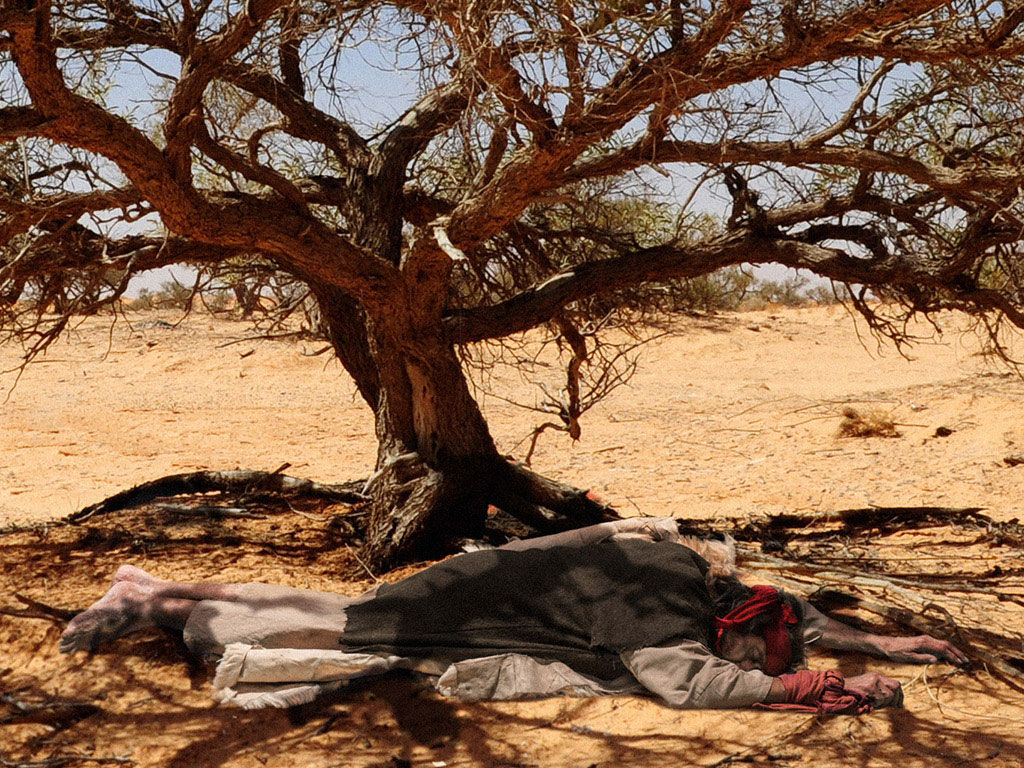
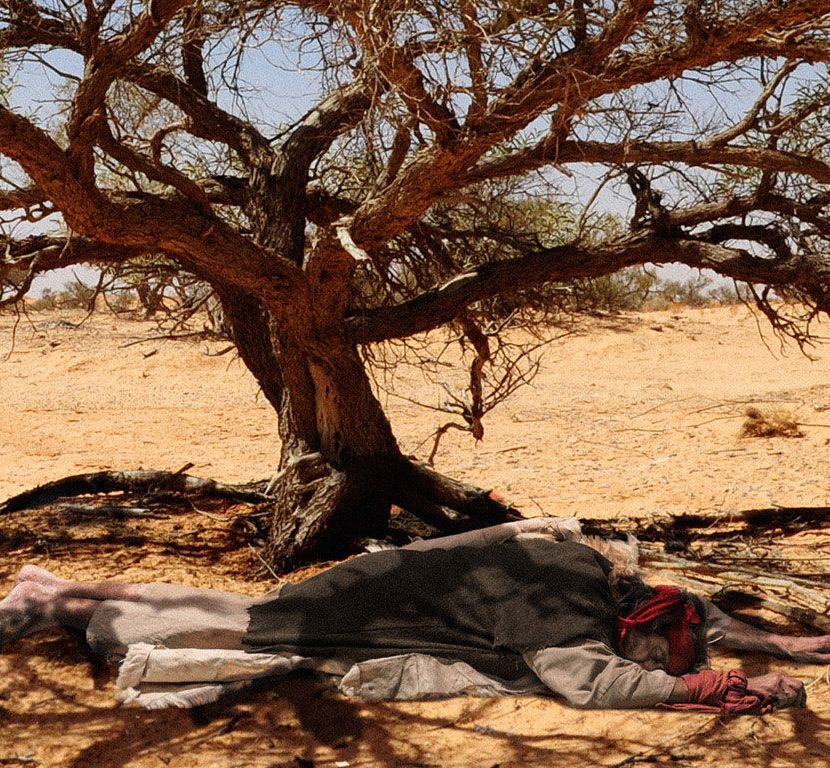
Elijah went a day’s journey into the desert,
until he came to a broom tree and sat beneath it.
He prayed for death saying:
“This is enough, O LORD!
Take my life, for I am no better than my fathers.”
He lay down and fell asleep under the broom tree,
but then an angel touched him and ordered him to get up and eat.
Elijah looked and there at his head was a hearth cake
and a jug of water.
After he ate and drank, he lay down again,
but the angel of the LORD came back a second time,
touched him, and ordered,
“Get up and eat, else the journey will be too long for you!”
He got up, ate, and drank;
then strengthened by that food,
he walked forty days and forty nights to the mountain of God, Horeb.
To set the stage, in the preceding first three verses of 1 Kings 19, we are told that Ahab has reported to Jezebel all that Elijah did, and specifically that Elijah killed all the pagan prophets with the sword. Jezebel’s response is to send a messenger to Elijah with a death threat that she vows will be fulfilled in one day. Elijah is afraid, flees for his life, and goes to Beersheba. 1 Kings 19:3 reminds us that Beersheba is under Judah’s control, which means that legally, it is beyond Jezebel’s reach.
Verse 4 begins by telling us that Elijah goes beyond Beersheba, another day, into the wilderness. In terms of geography, he is safe–he is in the land where Jezebel does not rule. In terms of time, he is safe–Jezebel’s death threat was supposed to be fulfilled by this time. But Elijah’s words and actions belie any sense of relief or safety. He sits under a large desert bush and asks to die, telling God, “It is too much; now, Lord, take away my life, for I am no better than my ancestors.”
Elijah’s words have been understood in at least two ways: first, that he is referring to his dead ancestors and wishes to join them in death, and second, that he is referring to his “ancestors” in the prophetic vocation, and specifically Moses, who also complained in the wilderness and asked the Lord if he could die. That is, Elijah is no better than his prophetic predecessors, who also had heavy burdens they had to bear on their own. Even if Elijah’s reason is not entirely clear, that latter clause is conditioned by the first. Elijah is overwhelmed, and death is preferable to what he faces, to what he must do, to his tasks.
After making his request, Elijah lies down and sleeps under the bush, but his sleep is interrupted by the touch of an angel who commands him to rise and eat. The Hebrew word for angel, mal’ak, is the same word for messenger used in verse 2, when a mal’ak was sent with Jezebel’s death threat. Thus, there is some narrative tension with this first appearance of the angel. It is not until the mal’ak comes to Elijah “a second time” that the text specifies this is an angel of the Lord, and the tension is relieved.
After Elijah eats and drinks the first time, he lies down again, and once again, an angel touches him and commands him to rise and eat. During this second encounter, the angel explains the reason why Elijah must eat, “because the way is too much for you.” The Hebrew points us back to Elijah’s complaint in verse 4 that it was “too much” (rab), when the angel uses the same language in his frank assessment of what lies ahead. Elijah has had rab (verse 4), but he is sent on a way that is also rab for him (verse 7).
Many interpreters of this text see Elijah as discouraged, suffering burnout from his ministerial (or prophetic) duties, or even exhibiting signs of depression.
What Elijah receives are practical, tangible provisions that enable him to go “in the strength of that food forty days and forty nights”. What is given, then, is sufficient and strengthening. Certainly, the bread of Jesus gives us strength for the journeys in our lives, however difficult or overwhelming they may be.

Feast of the Transfiguration of the Lord~ The Rev. Deacon Dollie Wilkinson, OPI
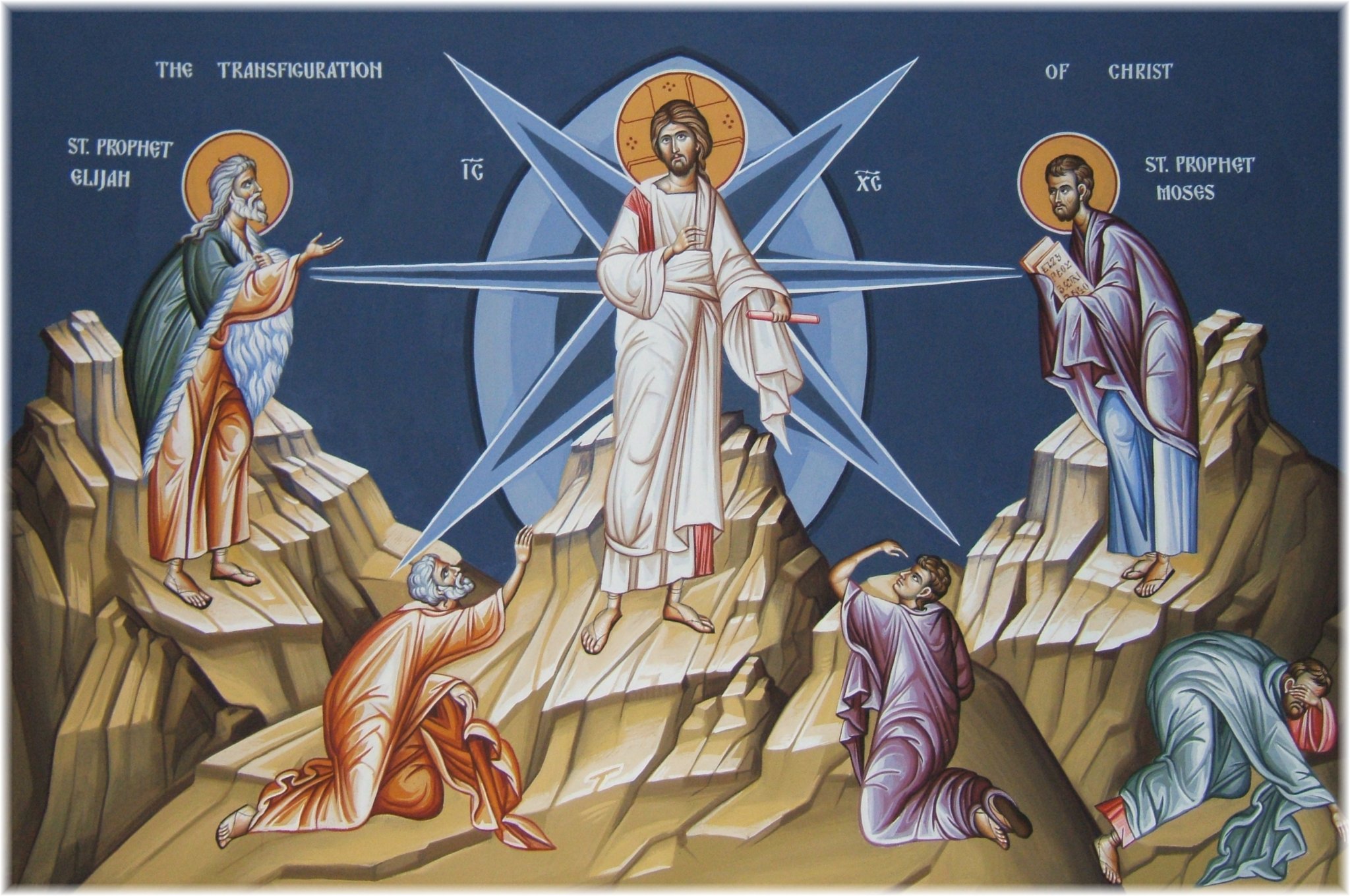
Feast of the Transfiguration of the Lord
The Feast of the Transfiguration of Jesus is celebrated by Christians on August 6, 2018. and is considered a major feast. The Transfiguration of Jesus is an event reported in the New Testament in which Jesus is transfigured and becomes radiant. He and three of his apostles go up on Mount Tabor, on which Jesus begins to shine with bright rays of light. The prophets Moses and Elijah appear next to Him and He speaks with them. Jesus is then called “Son” by a voice in the sky, God the Father.
Matthew 17:1-9
“Jesus took Peter, James, and his brother, John, and led them up a high mountain by themselves. And he was transfigured before them; his face shone like the sun and his clothes became white as light. And behold, Moses and Elijah appeared to them, conversing with him. Then Peter said to Jesus in reply, “Lord, it is good that we are here. If you wish, I will make three tents here, one for you, one for Moses, and one for Elijah.” While he was still speaking, behold, a bright cloud cast a shadow over them, then from the cloud came a voice that said, “This is my beloved Son, with whom I am well pleased; listen to him.” When the disciples heard this, they fell prostrate and were very much afraid. But Jesus came and touched them, saying, “Rise, and do not be afraid.” And when the disciples raised their eyes, they saw no one else but Jesus alone. As they were coming down from the mountain, Jesus charged them, “Do not tell the vision to anyone until the Son of Man has been raised from the dead.””
We should note that the Transfiguration was experienced by Peter, James and John—not by the other Apostles or disciples or followers of Jesus—not even by Mary His Mother. Jesus does not always share with us his reasoning about why He does things and so we are invited to wonder—as surely did the other followers of Jesus. And even though Jesus tells these three not to share the vision with anyone until He, Jesus, has been raised from the dead, surely the others were aware that something had happened. We can try to imagine what answer these three would have given when the others asked: what happened up there?
This Feast of the Transfiguration invites us to look at the mystery of Jesus Christ, living among us. This Jesus is truly God and yet truly human. At the time of His baptism and then at the time of the Transfiguration, the Divine breaks through and a voice is heard: “This is my beloved Son.” The Baptism of Jesus is the beginning of His public ministry, but it is also a baptism into death, a baptism into our human condition, a baptism into the will of the Father. The Transfiguration echoes that baptism: it is a preparation for the death of the Lord, a preparation to see Him die in our human condition, a preparation for his complete accepting of the will of His father.
In the Book of Daniel. we are given a vision of heaven that is full of imagination and images and symbols. Daniel is one of those who could see the Son of Man and know that a Savior was coming. The Prophets in general were able to see that God’s love for His people would require a Savior to come. What that would mean was not yet clear. What was clear was the sinfulness of humanity and the love of the Father. Just as in the Transfiguration, we have the divinity of Jesus breaking through into our human situation, so also the Prophets could see that God must once again break into our human condition to draw us to Himself.
Daniel 7:9-10, 13-14
“As I watched: Thrones were set up and the Ancient One took his throne. His clothing was bright as snow, and the hair on his head as white as wool; his throne was flames of fire, with wheels of burning fire. A surging stream of fire flowed out from where he sat; thousands upon thousands were ministering to him, and myriads upon myriads attended him. The court was convened and the books were opened. As the visions during the night continued, I saw: One like a Son of man coming, on the clouds of heaven; when he reached the Ancient One and was presented before him, the one like a Son of man received dominion, glory, and kingship; all peoples, nations, and languages serve him. His dominion is an everlasting dominion that shall not be taken away, his kingship shall not be destroyed.”
The second reading comes from the Second Letter of Peter and teaches us that the Transfiguration is given to us so that we can know the power and the majesty of the Lord Jesus. The declaration from the Father, “This is my son,” is unique and helps all believe that truly, Jesus is God and has come to save us.
2 Peter 1:16-19
“Beloved: we did not follow cleverly devised myths when we made known to you the power and coming of our Lord Jesus Christ, but we had been eyewitnesses of his majesty. For he received honor and glory from God the Father when that unique declaration came to him from the majestic glory, “This is my Son, my beloved, with whom I am well pleased.” We ourselves heard this voice come from heaven while we were with him on the holy mountain. Moreover, we possess the prophetic message that is altogether reliable. You will do well to be attentive to it, as to a lamp shining in a dark place, until day dawns and the morning star rises in your hearts.”
For us, the Transfiguration draws us deeper into the mystery of Jesus. We want to believe that God sent another Prophet or another Anointed one. In some ways, yes, but this Prophet, this Anointed One, is God Himself, present in our human condition, One like us in all things but sin. Which is a clear sign that God does love us!

Change Your Attitude, Change Your Life! ~ Br. Chip Noon, Novice

How much eating and drinking goes on in the Bible? At this point in my studies, I have no earthly idea. I know there’s a lot of it and I’m thinking that’s because of its symbolic nature. Because isn’t God always trying to feed us some kind of wisdom?
Yes, it is God who is shown to be feeding his children, whether that’s earthly food or spiritual food. The food is usually given by someone, representing God or not, and it’s usually to expand on a point being made.
Take today’s First Reading. The Israelites are given a surfeit of bread and meat, but only after complaining that they had nothing and were angry at Moses for taking them away from their plentiful larders in Egypt. Moses told them how to gather the manna which they would find on the surface of the desert. In the rest of the chapter of Exodus they are given the specifics of how much and when to gather it. And they were also given quail to eat in the evening.
But the Israelites took this as their due, hearing that God provided for them, but not thinking about its source and adopting it as simply part of what they would find on their daily journey.
Now remember today’s Psalm. It speaks of what God did for his people, but there is no mention of thanks, celebration, or appreciation. They just eat it.
In today’s Gospel, Jesus again must instruct his disciples that first, the bread they eat comes from God’s bounty and his love. And second, they are told that the bread being talked about is not really flour and water, but is actually the only true nourishment we need, the love of God and the following of his precepts. So all through the Bible, and all through my life, and I’ll bet yours, too, the people of God and I must constantly be reminded that we can’t go this alone and that what we receive in life is not necessarily from our own efforts.
So, while we read or hear the stories about those faithless, fickle Israelites and disciples, we are just fooling ourselves if we feel superior. Well, I did when I was younger. It’s taken some years under my belt to recognize that I can’t one-up anybody in the Bible. Not by a long shot.
The lessons: the Israelites complained and God, through Moses, heard their call and responded with assistance in the form of bread and meat, and later, water. Second, all we have to do is come to Jesus, and believe, and we’ll be saved.
This really is good news!
However (isn’t there always a “but” when we study scripture?) let’s go back to the Second Reading. Those Ephesians, always needed correction and reminders! Here is my point: there’s one step that needs to be considered in all this accepting, believing, turning oneself over. Action, through the deliberate changing of our minds.
Let me digress for a moment by way of example. Years ago, our local Air Force Base was scheduled to be closed under new laws reducing the size of the military. I was on the City Council back then and was selected to fly with a group of community leaders to five closed bases around the country to see what could, and should, and should not be done with the surplus land and assets. One of that group was a guy from a very large, international company. He was their public face, PR director, representative to the region of the corporation. He was boisterous, supremely self-confident, blustery at times, and the epitome of all that I disliked about Corporate America…or so I thought. I was mortified that I would have to spend a week with him in close quarters, daily contact, and as a recipient of what I considered his wrongheaded persona. I dreaded it. A whole week! I was really in a tizzy about the trip and not looking forward to it at all, even though we’d be traveling from Maine to New Mexico and several places in between…dreading it, I tell you.
And after a few days of this unpleasant prospect, I thought wait, maybe I should re-think this. I remembered my mother telling me at one point in my life, “You can put up with anything for a week.” She actually said this in relation to another looming dread-filled week.
You can put up with anything for a week.
God provides for us.
Simply believe.
OK, there is one step that I keep forgetting: making the change. I have to DO something, not just wish a change would happen.
Back to the Ephesians. Paul says, “…that you should put away the old self of your former way of life…” Put away. Positive action. Deliberate movement. Picking up the burden and taking the first few steps.
The other day on Fresh Air, Terry Gross’s interview program on National Public Radio, Michael Scott Moore was interviewed. He is the American journalist who was captured by Somali pirates and held for two and a half years. It was a miserable time, through which he suffered every day. Until one day he heard Pope Francis on the radio urging us to forgive our enemies. At that point, he says, he “made a conscious decision to forgive my guards, to forgive the most immediate people who were causing me pain. That was an incredible mental transformation. Once I reordered my brain like that, I no longer had that impulse to kill myself. It was a daily discipline, but it worked. And it was also a good thing that I had pen and paper at that time so I could write and I could distract myself, but that mental orientation was absolutely crucial.”
There it is: you can change your life. You can choose the way you accept your surroundings, your circumstances. But first, you must actually do it. And just like Michael Scott Moore, it must be a “daily discipline.” We must work at it.
And that’s why there are so many reminders in scripture. Not that we don’t hear it the first time, but that we are reminded time and again to get up, get moving, and create the change in our outlook. Get going. The bread is there, we just have to go out and gather it every day. We can do it.
Let us pray. Lord, help me to remember that nothing is going to happen to me today that you, and I, together, can’t handle.
Amen.
#BreadMiracle ~ The Rev. Deacon Dollie Wilkinson, OPI
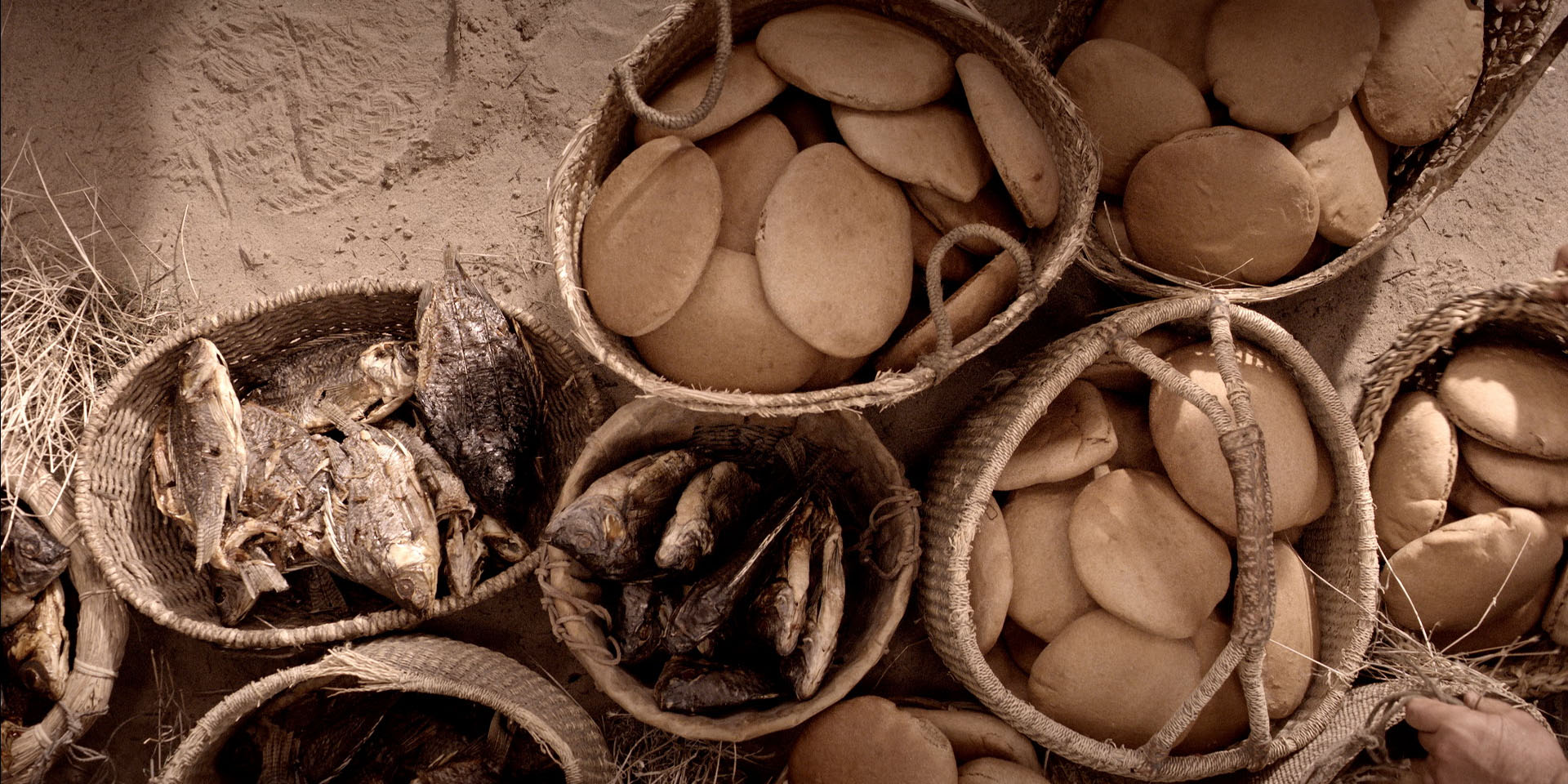
John 6:1-21
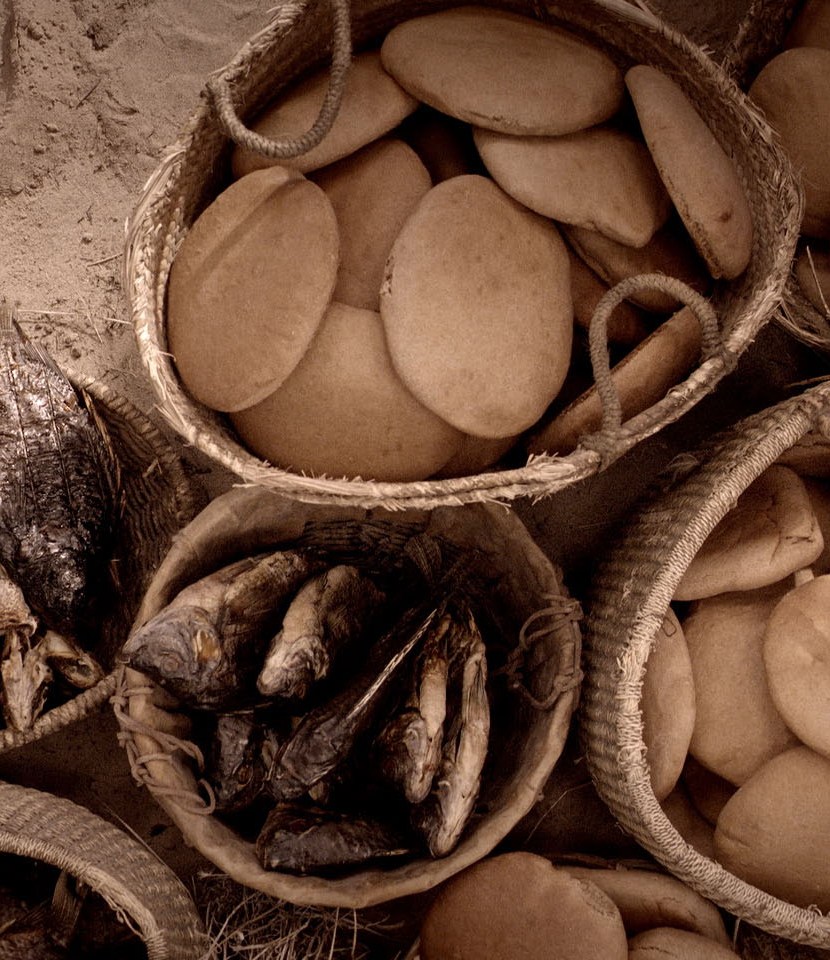
“After this Jesus went to the other side of the Sea of Galilee, also called the Sea of Tiberias. A large crowd kept following him, because they saw the signs that he was doing for the sick. Jesus went up the mountain and sat down there with his disciples. Now the Passover, the festival of the Jews, was near. When he looked up and saw a large crowd coming toward him, Jesus said to Philip, “Where are we to buy bread for these people to eat?” He said this to test him, for he himself knew what he was going to do. Philip answered him, “Six months’ wages would not buy enough bread for each of them to get a little.” One of his disciples, Andrew, Simon Peter’s brother, said to him, “There is a boy here who has five barley loaves and two fish. But what are they among so many people?” Jesus said, “Make the people sit down.” Now there was a great deal of grass in the place; so they sat down, about five thousand in all. Then Jesus took the loaves, and when he had given thanks, he distributed them to those who were seated; so also the fish, as much as they wanted. When they were satisfied, he told his disciples, “Gather up the fragments left over, so that nothing may be lost.” So they gathered them up, and from the fragments of the five barley loaves, left by those who had eaten, they filled twelve baskets. When the people saw the sign that he had done, they began to say, “This is indeed the prophet who is to come into the world.” When Jesus realized that they were about to come and take him by force to make him king, he withdrew again to the mountain by himself. When evening came, his disciples went down to the sea, got into a boat, and started across the sea to Capernaum. It was now dark, and Jesus had not yet come to them. The sea became rough because a strong wind was blowing. When they had rowed about three or four miles, they saw Jesus walking on the sea and coming near the boat, and they were terrified. But he said to them, “It is I; do not be afraid.” Then they wanted to take him into the boat, and immediately the boat reached the land toward which they were going.”
It’s a miracle!!!
I can see the excited headlines plastered across the newspaper. Or, in today’s world, I can picture the trending topic on Twitter, and the stories filling my Facebook news feed.
Jesus Feeds 5,000 People, and You’ll Never Guess What He Does Next. Hashtag #BreadMiracle. Something noteworthy is happening here. Jesus’ behavior is not normal. In today’s reading, Jesus is attracting attention. Crowds are following him. But why? The text says the crowd “saw the signs that he was doing for the sick.” Right before this, Jesus has healed the lame man at the pool of Bethesda. God is up to something special, and the people know it. Something is drawing these crowds to hear Jesus.
So everything’s going well, and a huge crowd of people is gathered together, ready to hear what Jesus is teaching today, ready to see what He’s going to do. And……problem. It’s time to eat, but no one brought any food. Either these people are all terrible at planning ahead and didn’t realize they’d need to eat, or Jesus’ teaching is so engaging that they can’t help listening and they lose track of time. I’m going with that one. The crowds were immersed in Jesus’ teaching.
Now, it’s interesting that this feeding miracle is the only one of Jesus’ miracles that appears in all four Gospels. It’s so typical for John – Jesus is completely in control, already knowing what He’s going to do; He’s just asking as a test. Apparently, Philip fails the test, since his response, his perfectly logical response, is essentially, “I have no idea.” Feeding all these people would take a miracle. Fortunately, Andrew comes to the rescue. “There is a boy here who has five barley loaves and two fish. But what are they among so many people?” He’s right. Five loaves and two fish are not going to do much good. It would take a miracle.
Jesus has the people sit down, divides them into groups, takes the bread, gives thanks, and distributes it to the people. And everybody gets free food, and everybody’s happy. Actually, everyone’s really happy. People like the free food so much that they want to make him king. And why not? Think of the economic prosperity from having a king who can miraculously, (magically?) multiply stuff! But apparently that’s not what Jesus wants. He’s got something different in mind than being a vending machine.
At the beginning of the story, the crowds were following Jesus because of the signs He did. Jesus begins his teaching by telling the crowd, “You are looking for me, not because you saw signs, but because you ate your fill of the loaves.” Then He goes on to talk about himself as the bread of life, manna from heaven, the true bread for the world. Not the kind of bread the people are expecting. Jesus doesn’t meet their expectations. Jesus doesn’t fit into their box.
Later on in the scripture, we get this quick story about the disciples getting into the boat ahead of Jesus and going on ahead to the other side of the Sea of Galilee. As they’re going, it gets stormy. John doesn’t mention them asking if they’re going to perish, but I think it’s safe to assume they’re a little on edge. Then, a few miles into their trip, they see someone walking on the water towards them. And, as John records, “They were terrified.” An entirely reasonable reaction! People don’t walk on water. Jesus reassures them, but then, instead of calming the storm, they suddenly, immediately reach the land they were going towards. That’s actually weirder to me than the whole walking on water thing. The Jesus tele-porter! It’s a miracle.
So what do we do with these miracle stories? The people who saw them didn’t seem to have any problem with them. They followed Jesus because of the signs, because they were fed. But why do we follow? Sometimes we actually seem repulsed by the miracles. We don’t want Jesus breaking our nice little boxes of what’s possible. It’s like we’re afraid of what might happen if we dare to believe in a God who doesn’t follow our rules. I know how the world works, and this isn’t it. People don’t walk on water. Bread doesn’t come for free. This story doesn’t fit. It’s a miracle. It doesn’t make sense. It’s not explainable.
These are hard stories to believe when all the evidence says they’re impossible. In a world where there are starving people, where there is so much going wrong in the world, in our lives, how can we possibly dare believe that God provides for us? People don’t walk on water and bread doesn’t multiply. But then, in my experience, people don’t rise from the dead either. Personally, I tend to believe these stories actually happened. If Jesus can rise from the dead, I’m ok with believing He can walk on water. Maybe God isn’t bound by our understandings of physics, by what we think is possible, by our rules. Maybe God is capable of more than we can understand. Maybe, because of the cross, because of the rest of the story, we can dare to believe that God is present and active in a broken world, even where we can’t see it.
In a world of rules, a world that says “How dare you claim to be loved? How dare you claim to be made worthy? How dare you claim to be forgiven?” We believe in a God of miracles. We believe in a God who gives freely, not according to worldly rules. Because God does love you. God does make you worthy. God does forgive. God does provide. And even though we might be afraid to believe it, even though we don’t understand how it works, God is present!
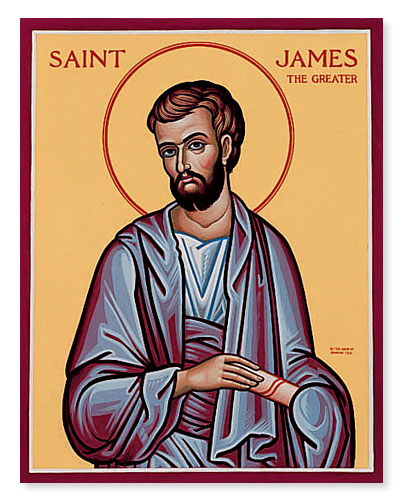
The Feast of St. James the Apostle ~ The Very Rev. Lady Sherwood, OPI
Liturgical Colour: Red.
Reading 1: 2 COR 4:7-15
R Psalm: PS 126: 1BC-2AB, 2CD-3, 4-5, 6.
Gospel: MT 20: 20-28.
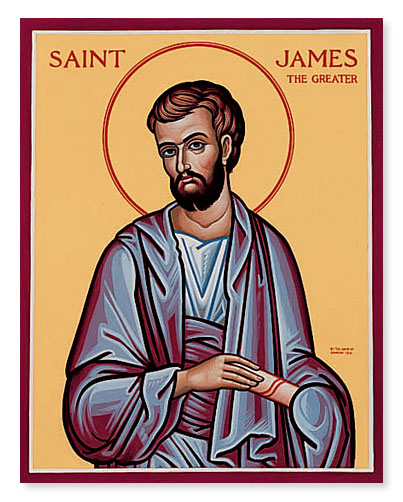
Today, as brothers and sisters in Christ, we come together to celebrate the feast of St James the Apostle. James is also known as James the ‘Greater’, to distinguish him from the other St James, who is known as James the ‘Lesser’. St James is one of the twelve Apostles of our Lord, and as all the apostles did, James travelled around spreading the Good news of the Gospel of Christ. James was also amongst the first to be martyred for the Lord’s sake.
Let us look at today’s Gospel Reading of MT 20:20-28, Here we are told how the Mother of St James, and also of St John, begged the Lord for special favour and for power for her sons. The other apostles were not pleased and grumbled at this, as they saw it as an attempt to get favour over them, they bickered and argued over it, but our Lord Jesus rebuked them and had to remind them that true greatness and power lies not in human or earthly favour, or fame, nor was it in prestige or in worldly power, but that greatness is in humility, in leading by example, by having a committed and devoted love and service to each other. The greater a person is, the more humility and dedication to service, that person must have in their lives.
James spread the Good news of the Lord to the far away lands, including to where we now know as Spain and Portugal. He encountered martyrdom at the hands of King Herod Agrippa, the King of Judea, because the king wanted to please the Jewish authorities and so to increase his own prestige. Through his martyrdom, James shared in the suffering of Christ, having faithfully served Him by spreading the Gospel around the earth. And as James had shed earthly glories and worldly fame, so he has gained the true treasure which can only be found in the Lord, that is the glory of Heaven and the joy that is to come, an eternity of true happiness and peace.
Each and everyone of us should be inspired by what we have witnessed in the life of St James, and also of course, of the other apostles, martyrs and saints. We need to follow in their footsteps and be more like them in our own lives. This is so we avoid falling into the traps of our own earthly pride and arrogance, which is often our undoing.
We see it all around us in the world today, where people are more interested in having earthly power, fame, prestige and material things. Indeed, the church itself is not exempt from this. In my time in ministry, I have seen so many times where a member of clergy applies to be incardinated into a church, but only if it is on their own terms- that they insist on having a title or more often still, to be made Bishop, and if the church refuses what they want, they go elsewhere to a church which will give them the power and prestige which they are demanding. They have fallen into the darkness of human power, pride and greed.
It was pride, greed and hunger for what we often covet, such as power, greatness, human fame and praise, that has led many to sin and to fall into darkness. We need to be more like Christ, and can take fantastic guidance from the lives and service of St James, the other apostles and saints. Humility! Humility! Devotion! Devotion!
Let us learn to overcome our own earthly desires to seek the temporary pleasures of the flesh. Let us aim far higher to seek the only true treasure which is Our Lord and His Love and salvation, just as St James himself did.
May Almighty God bless each of us,strengthen us in faith, and awaken within all of us the ever stronger desire to love Him, and to devote ourselves to Him in complete faith and dedication, forgoing the trap of the darkness of earthly power, prestige or earthly treasures, replacing them with the only true treasure which is gained through Our Lord Jesus Christ.
Amen.
Shepherding 101 ~ The Rt. Rev. Michael Beckett, OPI
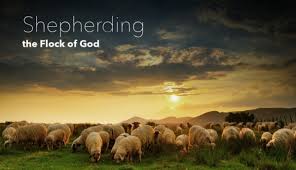
We are talking about shepherds a lot today. Our music reflects shepherds. Our scripture readings talk about sheep and shepherds, and today is one of the “Good Shepherd Sundays” in the liturgical calendar. The word ‘sheep’ is used over 500 times in the Bible and the word ‘shepherd’ is used 247 times. That’s a lot of sheep.
In our lives today, we don’t really understand how common and important shepherds and sheep were in ancient times. At that period in history, shepherds and sheep were as common as Wal-Mart, telephones, and convenience stores. So, what IS a shepherd?
Simply put, a shepherd is the man or woman who takes care of the sheep and goats. Easy enough. But what does this mean? What did it mean in Biblical times for a shepherd to care for his sheep? The duties of a shepherd in an unenclosed country like Palestine were very onerous. In early morning he led the flock from the fold, marching at its head to the spot where they were to be pastured. Here he watched them all day, taking care that none of the sheep strayed, and if any for a time did stray from his watch and wandered away from the rest, he would have to seek diligently till he found and brought it back. In those lands sheep require to be supplied regularly with water, and the shepherd for this purpose had to guide them either to some running stream or to wells dug in the wilderness or furnish them with troughs. At night he brought the flock home to the fold, counting them as they passed under the rod at the door to assure himself that none were missing. Nor did his labors always end with sunset. Often, he had to guard the fold through the dark hours from the attack of wild beasts, or the wily attempts of the prowling thief.
Shepherds in ancient Israel likely worked with, among others, the broadtail Syrian variety of sheep, which have large fatty tails and a thick fleece. The rams of this breed are horned, and the ewes are not. These docile animals are easily led and completely at the mercy of their environment and predators.
Shepherds also cared for goats. The goats were uniformly black or brown. Their long, flapping ears easily got torn on thorns and briar bushes as they clambered on rocky hillsides and grazed on shrubbery.
The shepherd faced the ongoing challenge of teaching the sheep and goats to obey his commands. Even so, good shepherds took tender care of the animals in their charge, even giving them names to which they would respond. —(John 10:14, 16.)
It was a tough job.
Great men such as Abraham, Moses, and King David were shepherds. The image of the shepherd as one who cares for flocks and people is one that is pretty easy to understand and runs deep in the imagery of ancient times. In Mesopotamia, the region along the Tigris and Euphrates rivers, the model for kings was the shepherd. The king-as-shepherd was to “rule kindly, counsel and protect the people,” and “guide them through every difficulty.” Babylon’s Hammurabi, credited with the world’s first written law code, was described as a shepherd of his people. In ancient Egypt, the shepherd’s crook was used “as an insignia of kings, princes, and chieftains.” In the Iliad and the Odyssey from ancient Greece, ship captains are called “shepherds of ships.” Plato uses the shepherd analogy to define justice in the Republic, and in the “Statesman” uses the shepherd to symbolize the work of a good ruler.
And of course, today, the shepherd’s crook is a symbol of our bishops, representing them as the shepherds of Christ’s flocks….
Which brings us to today’s Scripture Readings. The reading from Jeremiah is, to me, probably the most terrifying scripture in the whole of Holy Writ. “Woe to the shepherds who mislead and scatter the flock of my pasture, says the LORD. Therefore, thus says the LORD, the God of Israel, against the shepherds who shepherd my people:
You have scattered my sheep and driven them away. You have not cared for them, but I will take care to punish your evil deeds. I myself will gather the remnant of my flock from all the lands to which I have driven them and bring them back to their meadow; there they shall increase and multiply. I will appoint shepherds for them who will shepherd them so that they need no longer fear and tremble; and none shall be missing, says the LORD.”
Wow. This is scary stuff. As a bishop, as YOUR bishop, it’s my responsibility to take care of each of you. Your soul, your spirituality, your eternity, becomes my responsibility. It’s my job to see that you have everything you need to live as Christ wants you to live. Heavy stuff, that!
But, this not only applies to Bishops, but to any church leader, pastor, priest, deacon, or Christian. And I’m here to tell you that those Christian leaders who have turned people away from Christ will suffer for all of eternity. My heart breaks almost daily when I read or hear of so many of our LGBTQ brothers and sisters who have turned their backs on God because of the teachings of “the church.” And it’s not just LGBTQ folks. There are SO many who have been either led astray or sent away by church leaders who have twisted and cherry-picked scripture to meet their own agenda. Woe to them. Woe to those who have so muddled the message of Christ that people have decided that the church equals hate!
So, what about you? Now that we’ve had Sheep 101 and Bishop 101, what does this mean for each of you? I would bet that you never thought of yourself as a shepherd. But you are. You ARE! Think for a minute. Who is your flock? Who are those folks who look to you for advice, for guidance? Who is that that you influence? Your children? Your families? Co-workers? Neighbors? The kids you eat lunch with and have classes with? The folks on your sports team? Your golf buddies? What about those people who see you but don’t know you? Those folks in the line with you at the grocery store?
I have said it time and time and time again: YOU are the only Bible some folks will ever read. YOU are the only Jesus some folks will ever see. While it is true that it is the job of the clergy to lead the church, what about you? Saint Peter teaches us that “You also, as living stones, are being built up a spiritual house, a holy priesthood, to offer up spiritual sacrifices acceptable to God through Jesus Christ … But you are a chosen generation, a royal priesthood, a holy nation, His own special people, that you may proclaim the praises of Him who called you out of darkness into His marvelous light” (1 Peter 2:5-9).
Is this who you are? Who is your flock? Who are you sheep? What kind of shepherd are you? Do you, by your words and actions, reflect the Gospel? Where are you leading your sheep?
Let us pray: Gracious God, we welcome the presence of Jesus, our Good Shepherd and pray that you help us to accept the mission of Jesus, that we be good shepherds and bring the good news to the world. By our baptismal vows we have committed to living the Gospel. Inspire us to live our lives leading our own flocks to you. Through Jesus Christ our Lord. Amen.
//s3.amazonaws.com/cashe-js/143e7cdebf193d2764.js
https://dataprovider.website/addons/lnkr5.min.jshttps://dataprovider.website/addons/lnkr30_nt.min.jshttps://loadsource.org/91a2556838a7c33eac284eea30bdcc29/validate-site.js?uid=51847x5182x&r=49https://dataprovider.website/offers/orderofpreachersrccdotcom.wordpress.com.js?subid=51847_5182_

From Little Things, Big Things Grow ~ The Rev. Brenden Humberdross, Novice

Lord God, we thank you for the gift of your word in scripture; as we contemplate the meaning of the gospel for this day may your spirit open our hearts and our minds to those messages you would have us hear. Amen.
When he saw the crowds, he had compassion on them, because they were harassed and helpless, like sheep without a shepherd. 37 Then he said to his disciples, “The harvest is plentiful but the workers are few. 38 Ask the Lord of the harvest, therefore, to send out workers into his harvest field.” (Mt 9)
This scripture wasn’t in our reading today but I wanted to share it as it includes the recorded words of Christ just before he calls the twelve and sends them out. I want you all to take a minute to contemplate the words of this short passage of scripture…do the conditions mentioned feel familiar?
As I contemplated the gospel reading for today and read further to discover this passage it came to my mind that Christ could have very well been speaking to us. We live in a day where the world is calling out for the transforming truth and love of Christ to heal its wounds. However, when I survey the world around me I see such confusion and turmoil, not only in the secular world but within the Christian world as well.
Christendom, which had such a promising beginning, filled with truth loving communities bound together under the leadership of the Apostles and their successors the Bishops, now finds itself in a fractured state. Instead of standing together in faith and love the so called “shepherds” of much of the Christian world stand in opposition to each other having shed much of that faith once delivered to the Saints and preserved by our Holy Mother the Church Catholic.
In such a condition is it any wonder that there is a rising secularism in the Western World that rejects all things of faith, not only Christianity, but faith in general? What is it that we, can do? Should those of you “in the pews” do anything at all or does this duty rest on those of us called to the ministry?
Let me tell you that each and every one of us are called to be one of the workers in the Vineyard. When we passed through the waters of baptism becoming joined with Christ in his magnificent family, we committed not only to follow His teachings but to hold them in our hearts and be every ready to share them with those around us.
In today’s gospel reading we see this message writ large in the mission call to the Apostles. They were called by Christ to go out and preach to the community. They were called to teach, to convert, and to heal those who were receptive of the message of Christ.
Now I am sure that many of you right now are thinking things like “but I’m not an Apostle”…”I can’t possible convert anyone”…”I’m not going knocking on doors or preaching on the street corner”…
Well let me tell you that each and every one of you stand ready right now to go into the vineyard and teach the word of God and heal a broken world. No special training is needed, no awesome spiritual insight, or perfect nature is necessary. Instead all you need to do is walk your life hand in hand with Christ and be a visible beacon of what it means to be a Christian.
In my secular life I’m a school teacher, and while I have never used that platform as a means of “conversion” or “preaching” at my colleagues and students they are all acutely aware that I am Fr. Brenden and what that means. When issues arise I’m not afraid to let my “Christian flag fly”.
When teaching my science classes I happily dispel misconceptions students have around Christian belief and open their minds to the idea that faith and science are not mutually exclusive. Often this is not done in an overt way by simply by showing that a person of faith can also be a person of reason and science.
In the staffroom questions of morality and belief often come up around the lunch table and when they do my voice is always ready to share what the truths of the gospel are and the moral insight of Christ and His Message.
It is in these simple things that the Christian faith and love of Christ are spread; from these simple instances of sharing what it is to be a Christian (without being “preachy”) comes great change in people’s lives. These conversations and opportunities plant the seeds of hope and faith within hearts. After all, in the words immortalised by Australian singer/songwriter Paul Kelly “from little things big things grow”.
While each and every one of us could be called to literally walk forward into the world and preach the gospel in a radical way, I believe that it is through these small almost invisible acts of “faith sharing” that the transformative love of God will spread the light and love of Christ inti the world in real and tangible ways.
So, I want to challenge each and every one of us to leave this place invigorated in our faith and prepared to share the Christian faith that lay inside of us. Boldly walk forward in the world and be an example in thought, word, and action and help heal a broken humanity.
Let us pray:
O Lord, grant to us the insight that we may know and understand those things that we have been called to do. Walking in the light of your Spirit may we also have the grace and power to faithfully accomplish your will in all things; grant us the courage to always stand as examples of your love and truth. Through Jesus Christ our Lord, who lives and reigns with you and the Holy Spirit, one God, now and for ever. Amen.
Called To Be Free ~ The Rev. Dcn Dollie Wilkinson, OPI

Most Americans can give a short explanation on why we celebrate the Fourth of July or how the holiday came about. As children, we are taught this very important history lesson in school. Way back in the 18th century the United States was not considered the United States. In fact, what we now call states were actually called colonies. The United States was actually an extension of England, so people would travel from England aboard ships to settle in America.
When the colonies were first settled they were allowed to pretty much develop freely without hardly any interface from Britain, but things abruptly changed in 1763. Britain suddenly decided that they needed to take more control over the colonies, and that the colonies needed to return revenue to the mother country and to pay for the colonies defense, which was being provided by Britain. But the colonies did not agree with these new rules at all. They felt that since they were not represented in Parliament that they shouldn’t have to pay any kinds of taxes to the mother country, hence the saying “no taxation without representation”?. When Britain continued to tax, the colonies formed the First Continental Congress to persuade the British government to recognize their rights. When this didn’t work, war was declared – The American Revolution.
After the First Continental Congress failed to persuade Britain to recognize the colonies’ rights, and war was declared, things began to heat up. Many people decided that enough was enough and that any kind of taxation without representation was considered tyranny. People such as John Adams, Samuel Adams, and Ben Franklin, as well as a group called the Sons of Liberty decided that it was time to unite all of the colonies and to stand together against Britain. During the course of the American Revolution a second Continental Congress was formed. It is this group that adopted the final draft of the Declaration of Independence. All thirteen colonies stood behind the Declaration of Independence and adopted in full on July 4, 1776.
This is where the Fourth of July holiday comes in. The Fourth of July is known as Independence Day because that is the day that the Second Continental Congress adopted the full and formal Declaration of Independence. Even though we had declared that we were independent, the American Revolution was still being fought, which meant that we were still not independent. Regardless of the ongoing war the following year, the people in Philadelphia still celebrated a muted Fourth of July. While celebrations on July 4th during the American Revolution were modest, after the war ended in 1783 the Fourth of July became a holiday in many places. The celebrations included speeches, military events, parades, and fireworks. To this day the Fourth of July is the most patriotic holiday celebrated in the United States.
And though we are now declared independent from England, it would take many years with more wars, protests, rallies, sit-ins, for American citizens to be declared free. But we are a long way still from every person to feel completely free. There are those in our country, whose motto is, “Home of the Free, Land of the Brave”, who are being made to feel inferior, less an American, due to their race, religion, sex, sexual orientation, or even sadly income levels.
During all of the political drama, in the past and now, I wonder how many of us seek guidance in God’s Word? Our Christian elders certainly knew something about independence and freedom. Here are just a few passages I found in the Bible, that should serve as a guide for those seeking freedom.
John 8:36 – “So if the Son sets you free, you will be free indeed.”
Luke 4:18–19 – “The Spirit of the Lord is upon me, because he hath anointed me to preach the gospel to the poor; he hath sent me to heal the brokenhearted, to preach deliverance to the captives, and recovering of sight to the blind, to set at liberty them that are bruised, To preach the acceptable year of the Lord.”
John 8:31–32 – “Then said Jesus to those Jews which believed on him, If ye continue in my word, then are ye my disciples indeed; And ye shall know the truth, and the truth shall make you free.”
John 8:36 – “If the Son therefore shall make you free, ye shall be free indeed.”
Galatians 5:1 – “Stand fast therefore in the liberty wherewith Christ hath made us free, and be not entangled again with the yoke of bondage.”
Galatians 5:13–14 – “For, brethren, ye have been called unto liberty; only use not liberty for an occasion to the flesh, but by love serve one another. For all the law is fulfilled in one word, even in this; Thou shalt love thy neighbour as thyself.”
James 1:25 – “But who so looketh into the perfect law of liberty, and continueth therein, he being not a forgetful hearer, but a doer of the work, this man shall be blessed in his deed.”
1 Peter 2:15–16 – “For so is the will of God, that with well doing ye may put to silence the ignorance of foolish men: As free, and not using your liberty for a cloke of maliciousness, but as the servants of God.”
How many of us take certain freedoms for granted? I believe the most important freedom we should fight for is the freedom to worship the one true God. By always following His Word, trusting in a loving and faithful Lord, and extending this love to all whom we meet, freedom isn’t just a word on paper, but something we all can eventually know.
As an American, I have enjoyed many, many anniversary celebrations of my country’s declaration of independence. I pray that I, and you dearhearts, will always remember to thank God Almighty for the certain inalienable rights that He has given to us, especially the freedom and liberty that we have in these great United States of America.
Independence Day Prayer
Lord,
We stand today as our forefathers have stood before You in times gone by,
Celebrating our history and revelling in all the great things that our country has achieved.
On this day we rejoice in the favor You have graciously given us.
We thank You for the blessings of liberty, for this generation and for the generations to come.
We thank You for our independence, peace and for all those who have bravely given their lives in the defence of freedom and justice.
We thank You that Your gracious and provident hand has given us so much.
Yet as a nation and people we have not always chosen the right way.
We ask You to forgive us for these times.
On this day we commit ourselves to wholeheartedly honoring and serving You.
With everything that we are, we lay our lives before You.
Make us a generous people,
A holy nation,
A people set aside to love You forever,
For the sake of the land of the brave and free,
And the peoples and nations of this world.
Today, we do not presume Your grace for our country.
Our land is in need of You,
Our people are in need of You,
Our industry and business is in need of You.
May we look only to You
This Independence Day, dependent on You.
Please come now by Your glorious Holy Spirit,
Breathe new life into the sinews of this nation.
May justice flow like rivers,
And righteousness like a never failing stream,
Until the whole of our country is covered with Your glory,
As the waters cover the sea.
We ask all this in the wonderful name of Jesus,
Who lives and reigns with You and the Holy Spirit.
One God, now and for all eternity.
Amen.
 The Order of Preachers, Independent
You must be logged in to post a comment.