
Category: Lesson
Shepherds? “THOSE” People? ~ The Rt. Rev. Michael Beckett, OPI
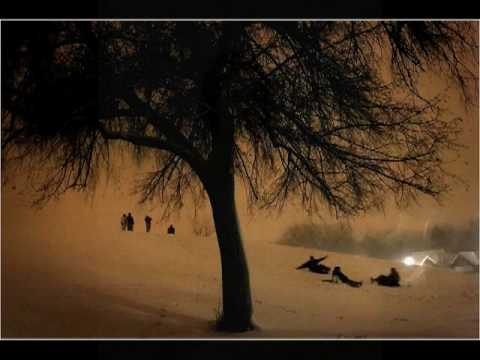
8And there were in the same country shepherds abiding in the field, keeping watch over their flock by night. 9And, lo, the angel of the Lord came upon them, and the glory of the Lord shone round about them: and they were sore afraid.
10And the angel said unto them, Fear not: for, behold, I bring you good tidings of great joy, which shall be to all people. 11For unto you is born this day in the city of David a Saviour, which is Christ the Lord.
12And this shall be a sign unto you; Ye shall find the babe wrapped in swaddling clothes, lying in a manger. 13And suddenly there was with the angel a multitude of the heavenly host praising God, and saying,
14Glory to God in the highest, and on earth peace, good will toward men.
15And it came to pass, as the angels were gone away from them into heaven, the shepherds said one to another, Let us now go even unto Bethlehem, and see this thing which is come to pass, which the Lord hath made known unto us. 16And they came with haste, and found Mary, and Joseph, and the babe lying in a manger.
17And when they had seen it, they made known abroad the saying which was told them concerning this child. 18And all they that heard it wondered at those things which were told them by the shepherds.
19But Mary kept all these things, and pondered them in her heart. 20And the shepherds returned, glorifying and praising God for all the things that they had heard and seen, as it was told unto them. Luke 2:8-20 King James Version (KJV)
After 2000 years of Christmas sermons, in hundreds of languages, in different countries throughout the world, and by way of innumerable faith traditions, is there anything new or original left to be said about Christmas, and what it means, that hasn’t been said before? Perhaps not. However, like re-reading that favorite book for the 17th time, or watching that favorite movie or television show for the 358th time, even when you know exactly what comes next, what the very next word is going to be, often we find a new meaning or a new slant on something that is as tried and true as Christmas itself.
And so it is with me this year. This Gospel reading recalls the story of the angels bringing the news of Christ’s birth to the shepherds. Now, we all know that story. We’ve heard it many times over, and those of us who cherish “A Charlie Brown Christmas” will always, in some ways, hear Linus quoting from Luke, no matter who is reading that passage of the Bible to us. We know the story. We SEE the story in every Nativity scene we pass by. There is almost always a shepherd near the manger carrying a lamb on his shoulders and another lamb or sheep to be seen somewhere hanging around. It’s always seemed to me that the sheep and the shepherds were just THERE, minor players in a Christmas play, the “extras” assigned to the kids who didn’t quite measure up to the roles of Mary or Joseph; they enter stage left, ooh and aah over the baby, and exit stage right, singing “Go tell it on the mountain”, singularly unimportant and taking secondary roles to the more illustrious wise men (who in reality weren’t there at all) and most definitely playing supporting roles to the Holy Family, or just standing around as so much scenery, contributing to the mood and filling up the bare spots in the Nativity scene. I overheard a conversation recently that made me really think about the shepherds. While visiting some friends, their cat jumped into the midst of the family crèche and knocked over the obligatory shepherd. It was chipped. The younger daughter of the family was somewhat distressed, and to make the little girl feel better, the mother said to her, “Don’t worry about it, Honey. It’s just the shepherd. He’s not all that important.” I didn’t think much about it at the time, but when reading the Scripture appointed for today, it struck me. Not all that important? But weren’t they? Who WERE these shepherds? Why were they there in the first place? Why did THEY get the news of Christ’s birth in such a spectacular way? Who were they that they should be eyewitnesses of God’s glory and receive history’s greatest birth announcement?
In Christ’s day, shepherds stood on the bottom rung of the Palestinian social ladder. They shared the same unenviable status as tax collectors and dung sweepers. Only Luke mentions them. When the twelve tribes of Israel migrated to Egypt, they encountered a lifestyle foreign to them. The Egyptians were agriculturalists. As farmers, they despised shepherding because sheep and goats meant death to crops. Battles between farmers and shepherds are as old as they are fierce. The first murder in history erupted from a farmer’s resentment of a shepherd. Smug religious leaders maintained a strict caste system at the expense of shepherds and other common folk. Shepherds were officially labeled “sinners”—a technical term for a class of despised people.
Into this social context of religious snobbery and class prejudice, God’s Son stepped forth. How surprising and significant that God the Father handpicked lowly, unpretentious shepherds to be the first to hear the joyous news: “It’s a boy, and He’s the Messiah!” What an affront to the religious leaders who were so conspicuously absent from the divine mailing list. Even from birth, Christ moved among the lowly. It was the sinners, not the self-righteous, He came to save. So is it really all that surprising that the first announcement of Christ’s birth was to the lowly shepherds on Bethlehem’s hillsides?
Consider the events leading up to Christ’s birth. Mary was barely 15. Christ was born to an unwed mother, Mary, a servant girl; Mary the young woman who delivered while only betrothed to Joseph. He was born in a stable, a cave! A holy God being born to a couple no different than immigrants, far from home and in a strange city, in a place where animals were kept. A couple who couldn’t even find a place to stay, turned out of every inn! It’s all too bizarre.
Yet this is the God we experience. This is our claim; This is the meaning of his very name: Immanuel, meaning “God with us” — with us not just in nice times, but most especially in the times of our lives when we are in the caves, and stables of our lives, when we are turned out of the places we’d like to be, when we are at the lowest of low points, when we are out in the dark, and in the cold like the shepherds.
Our God, the God who comes to us in the person of Jesus Christ, is the God of the oppressed, the repressed, the depressed; the God of the sad, the grieving, the sorrowful; the God of the lonely, the lowly, the poor, the God of the Shepherds; the God of the despised, the destitute, the dejected. Our God is the God of Abraham, Isaac, and Jacob, the God who stood with the enslaved Hebrews in Egypt, who led them out of Egypt to a promised land of freedom. Our God is the God of widows and orphans and stranded travelers. Our God is the God who doesn’t stay neat and tidy and spotless, but comes and stands beside us in our times of deepest need, who comes among us as the child in the dirty manger and the God of the shepherds on the hillside. The God we’re speaking of dares to join the unsuccessful, the failures, the dispossessed, and the downtrodden; the God of the Shepherds.
Wherever there is suffering, our God is there. He stands with Zacchaeus, the despised tax collector, and with Bartimaeus, the blind beggar. He is with us when we face cancer, chemotherapy, and radiation treatments. He is with us when we face amputations, operations, loneliness, the loss of a loved one, or even death itself. The God of the manger and the Shepherd is Immanuel, God with us. At our deepest times of loss and need, in the dirtiest and most embarrassing parts of our lives, God is with us, His rod and His staff, they comfort us. It is God who glues us back together when we become, like that figure in my friends’ Nativity scene, chipped, flawed, and much less than perfect.
And it is up to us, to demonstrate the love of God, the God of the lowly, the downtrodden, to the world. We, like the shepherds in the Christmas story, are to be the ones who are to proclaim the good news “which shall be to all people” to all the people of the world. It is our responsibility as Christians to be the instruments through which God can work in this world. As was most famously stated more than four centuries ago by Saint Theresa of Avila:
Christ has no body but yours,
no hands, no feet on earth but yours,
Yours are the eyes with which he looks with compassion on this world,
Yours are the feet with which he walks to do good,
Yours are the hands, with which he blesses all the world.
Yours are the hands, yours are the feet,
Yours are the eyes, you are his body.
Christ has no body now but yours, no hands, no feet on earth but yours,
Yours are the eyes with which he looks with compassion on this world.
Christ has no body now on earth but yours.
My very favorite Christmas carol, “In the Bleak Midwinter,” includes the lines, “What, then, shall I bring him, empty as I am? If I were a shepherd, I would bring a lamb. If I were a wise man I would do my part. What can I give Him? I can give Him my heart.”
Won’t you, this Christmas, give Him your heart? Won’t you, like the shepherds in the children’s plays of the Christmas story, be one to “go tell it on the mountain, over the fields and everywhere” that Jesus Christ is born? Amen.
Rejoice!!! The Very Rev. Lady Sherwood, OPI
R 1 : IS: 61:1=2A, 10=11
R Psalm: LK 1: 46=48, 49=50, 53=54 (R: IS 61:10B)
R 2: 1 THES 5: 16=24 (R: IS 61:10B)
Gospel: JN 1: 6=8
Liturgical colour: Violet/Rose.
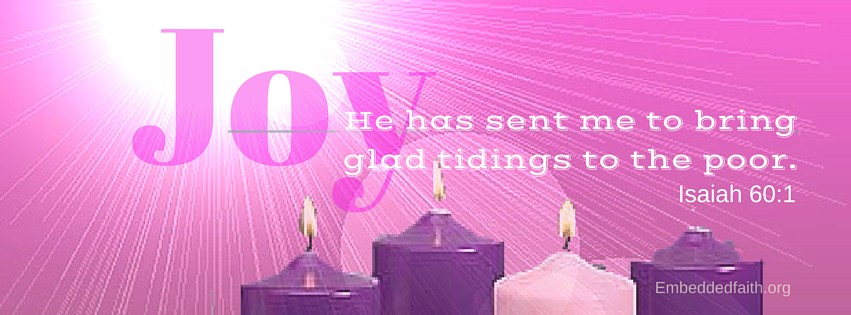
Today we come together to celebrate the Third Sunday of Advent, also called ‘Gaudette Sunday’. This is when we come together to REJOICE as we await in hope and anticipation the coming of our Saviour. ‘Gaudette’ originally comes from the vulgate translation (Phil 4:4) of ‘Gaudette in Domino Semper’, and which means “Rejoice in the Lord always”, and as such the theme we focus on today is Rejoicing and joy!
We are half way through our observance of Advent and we REJOICE because we know that the coming of our Lord and Saviour is now less than two weeks away. Today we light the Rose/pink candle on our advent wreaths to signify and to remind us that this a time to REJOICE.
In our Liturgy of the Word today, we clearly hear St Paul (in the conclusion of his first letter to the Thessalonians), telling us important Do’s and Don’ts, let us look at these:
Do: “REJOICE always. PRAY without ceasing. In all circumstances GIVE THANKS.
Dont’:” Do not quench the Spirit. Do not despise Prophetic utterances.”
Our Liturgy and Holy scriptures today are all about REJOICING!!
This can be seen both in the message of the Prophet Isaiah (today’s first reading), and also in our Holy Gospel reading today of St. John the Baptist, and also of St. Paul, to remind us of the ever presence among us of the One Lord, the one and true source of our Joy: Jesus Christ!!
We all know how very easy it can be among all the hustle and bustle of the preparations of our Christmas celebrations to forget to recognise that Jesus is present and in the midst and indeed is the true reason for our Christmas preparations and celebration. This is why today is so important. It is an invite to us and for us to REJOICE always, to PRAY without ceasing, and to GIVE THANKS!! Why is this important? Because we have SEEN THE Light and we truly recognise Christ’s presence among us.
Let us not be mistaken, Jesus is NOT only present in the Baby of Bethlehem born of Mary; NOT only present as the crucified Lord nailed to the cross dying for our sins; NOT only present as the Risen Lord outside the empty tomb on Easter Sunday, nor only with the Apostles in that upper room on Easter Sunday night.
The Risen Lord Jesus Christ, Our Lord and Saviour, truly IS PRESENT, among us, yes, right here and right NOW, speaking to our hearts and Spirit through the Holy scriptures, and giving himself to us ALWAYS in the Holy Eucharist which we share.
May we truly REJOICE! May the blessing told to us by St. Paul (second reading), truly be a blessing to each and every one of us, as we continue our Advent journey and preparation for the coming of Our Lord and Saviour: ” May the God of peace make us perfectly holy: and may we entirely=Spirit, soul and body =be preserved blameless for the coming of Our Lord Jesus Christ.”
Let us pray with joy and rejoicing in our hearts:
O God, who sees how your people faithfully await the feast of the Lord’s Nativity, enable us, we pray, to attain the joys of so great a salvation and to celebrate them always with solemn worship and glad rejoicing.
Through Our Lord Jesus Christ, your Son, who lives and reigns with you in the unity of the Holy Spirit, one God, for ever and ever. Amen.

Make a Change! The Memorial of St. John of the Cross ~ Fr. Shawn Gisewhite, Novice

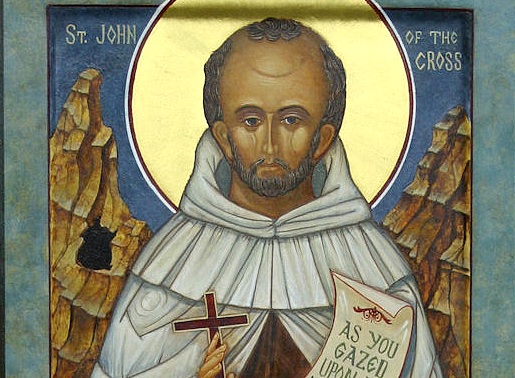
St. John of the Cross, born Juan de Yepes y Alvarez, in Spain in 1542, was a Spanish mystic, Carmelite Friar, influential poet and major figure of the Counter Reformation. He was educated in Biblical Studies, Theology and Philosophy and chose at an early age to pursue a Religious calling. In 1563 he joined the Carmelite Order and was ordained a Priest in 1567.
St. John of the Cross was a follower of Theresa of Avila. He later became her Priest Confessor. He and Theresa were on a mission to reform the Carmelite Order. To restore the Order to the more strict observance that earlier followers were required to adhere to. Because of these waves of reform, St. John was kidnapped and held in prison in a cell barely large enough for him to lay down in. He was fed bread and water and his only possessions were a prayer book and an oil lamp to read it by. He was taken out into the town square once a week where he was publicly whipped and then returned to his tiny cell. Through all of this, his faith remained strong and he found solace in writing poetry. After 9 months, John managed to escape from prison and rejoined Theresa and her Nuns in Toledo. He spent the remainder of his life traveling and establishing new Carmelite Houses throughout Spain until his death in 1591.
As we read and reflect on the life, ministry and death of St. John of the Cross, we can’t but help to see the need for reform in our own time. Not just in the Church, but in our Country, in our society and in our own lives. As the year 2017 rapidly comes to and end, and we look forward to the start of a new year, we must pause to reflect on all that has happened. 2017 saw, in our Nation, division, hatred, prejudice, turmoil, death, destruction, a watering down of Church teachings and the decline of society.
In the Church, we saw traditional Christian doctrine replaced by a more watered down and “socially acceptable” set of beliefs. Beliefs that Jesus is no longer the only path to Heaven. That Hell does not exist. That salvation is no longer necessary. Sin is no longer sin. Forgiveness is no longer needed because sin does not exist. God is no longer The God….the one and only. He (or she) is now defined by human characteristics and within the confines of human rationalization. We now are able to decide who and what God is based on who and what we want God to be in order to meet our own views or agenda. I attended a Bible Study earlier this year at an Episcopal Church where each participant described for us the “version” of God they worship. My version, the God who has existed before the dawn of time, was viewed as out dated, judgmental and not “hip.” Yes….you heard me! My God was not “hip!”
In our society we saw racism rear its ugly head once again. Blood was shed on our streets. A war broke out between the police and the public. Misguided youth rioted in towns across America; burning down buildings, destroying property and assaulting anyone in their path of destruction. Leaders in our Government on both sides of the aisle, instead of standing up for what was right and leading us by example, used these travesties to push their political agendas. We saw the Nation torn apart by one of the most hostile, disgusting and rigged elections in American history. Politicians, vying for the role of Leader of the Free World, acted in ways that should embarrass us as a Nation and as a People for many years to come. All of this fanned and fueled by a dishonest media. Now as we come to the close of 2017, we are plagued by a storm of sexual harassment allegations. From Hollywood to the Senate, hundreds of victims are coming forward to share their story.
If now is not the time for reform, I don’t know when is! Just as St. John of the Cross set out to reform the Carmelite Order, we too should do all we can to usher in reform in both the Church and in our society. Reform is not easy and often leads to hardship or even punishment for those who champion it. Fear of arrest and imprisonment, just as St. John endured, is indeed a valid fear. Maybe it’s a fear of losing your job or losing your friends. I have seen many within the Episcopal Church speak out against the ever growing heresy within her walls, only to then be thrown out of the Church as a result. I have seen friends lose friends over the election and even one passed over for a promotion because his beliefs are too “traditional.” But do not be discouraged. Find within yourself and within the Holy Scriptures the strength and the courage to speak out. To champion reform. To be the lonely voice crying, shouting, over the crowd. Preach reform, teach reform, and above all, strive to reform yourselves first and foremost. As the late Michael Jackson said, “if you want to make the world a better place, just look in the mirror and make a change.”
Prepare Ye the Way of the Lord! ~ Br. Jake Vogel, Postulant
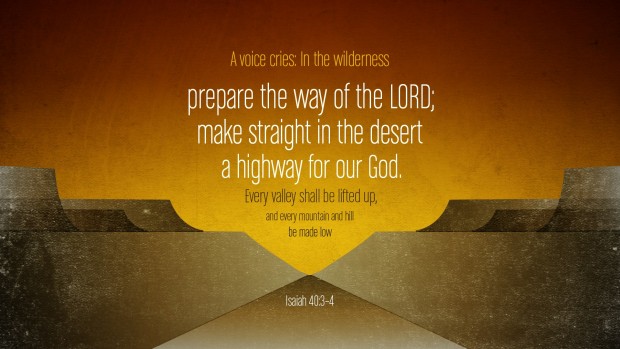
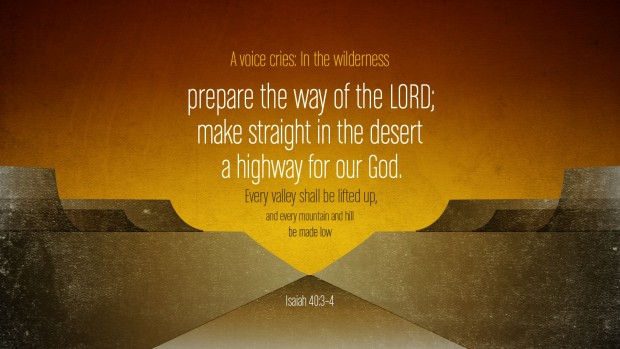
Often during the Advent season with all the shopping, baking, gift wrapping, cleaning, and preparing for guests, etc… I feel that we forget what this season is truly all about. During this season we are called to prepare the way in our hearts for the coming of our Savior but we often get too distracted instead by preparing our shopping agenda.
Some Christians may be surprised to find that from as early as the late 3rd century if not earlier, Advent was seen as a ‘mini Lent’; a time to prepare ourselves body and soul for the Nativity of the Lord. Christians were not only encouraged but expected to give alms to the poor and fast to prepare for Jesus’ coming to the earth. As John the Baptist encouraged his people to repent for their sins through baptism to make way for the Messiah. So are we called to put aside the commercialism of the pre-Christmas season and take time to make way in our lives and souls for the awesome beauty that is the nativity of our Lord and Savior, Jesus the Christ.
Humility is another important aspect or theme of this season that some Christians seem to forget. We get upset about receiving the wrong gift or not receiving one at all after giving someone else a gift; YouTube is laden with spoiled children throwing temper tantrums because they didn’t receive exactly what they wanted. The true gift we receive this season John the Baptist tells us he is, “not worthy to stoop and loosen the thongs of his sandals. I have baptized you with water; he will baptize you with the Holy Spirit.” The true gift we receive during Christmas is the man who gives up his life to save us from our sins, not the newest video game or latest and greatest smartphone.
So as this season in the US is preceded by a time to give thanks for all the things we do have, maybe we need to carry over that feeling of thanks and humility into the Advent season. Even if fasting or long hours in prayer is not your thing, try to focus on giving to those who genuinely need help and maybe volunteer at the local shelter or try to attend every Sunday in Advent and see where you local parish could use your help as for us in the religious communities this can often be the busiest times of the year and help from parishioners is always a blessing.
During this season I am often reminded of one of my favorite carols, “Good King Wenceslas”, in which a king sees a homeless man gathering fuel for a fire, when he asks his squire where the man lives he decides to bring the man food and wine and logs to help the poor man. It is a beautiful story but the part that always rings out loudest to me during this season is, “therefore Christian men be sure wealth or rank possessing, he who now shall bless the poor shall himself find blessings.” Sometimes it is hard in a commercially over-saturated culture like that of the USA to ‘stop and smell the roses’ or stop in to the church around the corner and light a candle and spend some time in prayer but as it was important for John to prepare the way for his people so long ago, I encourage you to take some time this Advent to prepare your heart and soul to experience the beauty and majesty of the birth of our Lord.
Heavenly Father,
During this holy time of Advent help us to prepare ourselves to experience the true meaning of this season as John the Baptist your faithful servant prepared his people.
We ask this in the name of the Father, the Son, and the Holy Spirit.
Amen.
Being Prepared, Gifts, and The Feast of St. Nicholas ~ Br. Chip Noon, Novice
December 6th is the feast day of Saint Nicholas. In Western Christendom it is celebrated on this day. In the east, on December 19th. And in the Netherlands, on the 5th. Well what is it about those Dutch?
Traditionally, this was a day that Saint Nicholas would bring little gifts to good boys and girls. Those who were not good got coal or ashes.
Many legends have grown up around the Saint’s life, including gift-giving, bringing murdered children and men back to life, the protection of a ship during a violent storm, and the giving of the Emperor’s wheat to the town of Myra and the miracle of its replenishment in the hold of the ship.
The idea of gift-giving is present throughout all these and other miracles.
We find the same idea throughout today’s Readings, don’t we? Rich food and choice wines given to the Lord’s people; repose, refreshment, a groaning table, and hundreds of loaves of bread and fish for everyone.
All are freely given, and gratefully taken.
But let me back up a little to Saint Nicholas. The precious little gifts given by the Saint and his helpers used to fit into a sabot, or wooden shoe, or into a stocking hung either in the chimney or on the mantel. They were reminders of the Saint, and lessons for the year: be good, or you won’t get them next year. Also, these gifts were given secretly to the children, who awoke to the presents.
A charming, traditional celebration of generosity and grace.
But then somehow, all this gift-giving got transferred to Christmas, even though the Three Wise Men came with their gifts on January 6th. And a wonderful tradition it is, this exchange of presents on Christmas morning among family members. I still remember the excitement of Christmas Eve when I was a child.
But as with many of our national and global celebrations, somehow it got out of hand. Now we get 4 or 5 catalogues a day in our mailboxes, we are bombarded on every radio and TV show with suggestions for gifts, almost every printed piece of paper stamps the holiday into our minds, people are fighting over how to greet others during the season, and whole industries rely on one day after Thanksgiving to salvage their businesses for the next year.
Now I don’t want to harangue you with all of this. I know it’s preaching to the choir. Let me just point out again the significance of the readings as they focus on gift-giving. In all these cases, God is giving his people something. They didn’t have to do anything, just be there. “He guides me in right paths for his name’s sake.” That’s it. Just be alive and God’s gifts are given to you.
And it’s not just gifts. Courage is given, tears are wiped away, peace and restful times, food and wine and oil, and for some of us, restoration of sight, limbs made whole, disease vanquished…all freely given. “My heart is moved with pity for the crowd, for they have been with me now for three days and have nothing to eat.”
Wait, there’s something in what Jesus just said, “…for they have been with me…” It turns out they were not people along the way who were hungry, they were people who were following Jesus, listening to him, learning from him, believing him.
And there were a lot of them. Five thousand, in fact. They were following him. So it must have been a bit of work, moving that many people from town to town, village to village. And to be honest, it couldn’t have been exactly an easy trek. Just moving one carful of kids can be an ordeal, can’t it?
So here we see what today’s Alleluia is about. That little section of the Mass that often carries all the weight of the readings:
Behold, the Lord comes to save his people;
Blessed are those prepared to meet him.
“…prepared to meet him.”
Well. How is it that Saint Nicholas gives the children little presents? What’s the catch? They must be good throughout the year. And what is it that Jesus asks of us for his presents? We must be prepared to meet him.
So it’s not exactly the case that all we have to do is exist for God’s grace. There’s a little work involved…a little… “For my yoke is easy, and my burden is light.” We must just be ready to meet the bridegroom. Watch and wait, and prepare your mind and spirit.
So no, we don’t have to move mountains, clean out the stables, scour the seabed. All we have to do is be prepared for his coming, like a thief in the night.
All these gifts will be given to us, if only we believe, and get ourselves ready, and wait patiently for the Lord.
So as we celebrate this Advent season, let us do a little preparation for the coming of Christ. Let us ready ourselves and be ready to welcome him.
Lord, help us this year to be prepared for your coming. Help us to put the old year behind, and look forward to the new one that you bring. Help us to get ready for your gifts.
Amen.
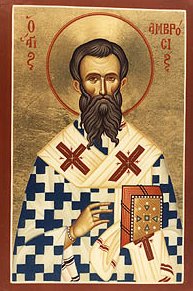
The Feast of St. Ambrose~Br. Chip Noon, Novice

O Come, O Come Emmanuel~The Season of Advent~The Rt. Rev. Michael R. Beckett, OPI
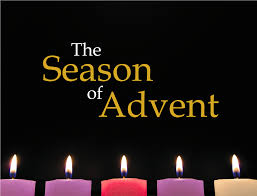
Within the calendar year, there is another year: the great cycle of the liturgical year, revolving around the life and ministry Christ. Each season of the liturgical year has its own particular focus, feasts, words, and colors, giving us an opportunity to reflect on the meaning of the coming of Jesus, his life, and his commission to His people to be a light to the world. Since the 900s, Advent has marked the beginning of the church year, and is a season of great anticipation, preparation, and excitement, traditionally focusing on the Nativity of the Christ Child, when Jesus came as our Savior. During Advent, we as Christians also direct our thoughts to His second coming as judge.
The word Advent is from the Latin adventus, meaning “coming,” and is celebrated during the four weeks of preparation for Christmas. Advent always contains four Sundays, beginning on the Sunday nearest the feast of St. Andrew the Apostle, (November 30) and continuing until December 24. It blends together a penitential spirit, very similar to Lent, a liturgical theme of preparation for the Second and Final Coming of the Lord, called the Parousia, and a joyful theme of getting ready for the Bethlehem event. Thus, Advent is far more than simply marking a 2,000 year old event in history. It is celebrating a truth about God, the revelation of God in Christ whereby all of creation might be reconciled to God. That is a process in which we participate, and the consummation of which we anticipate. Scripture readings for Advent reflect this emphasis on the Second Advent, including themes of accountability for faithfulness at His coming, judgment of sin, and the hope of eternal life.
In this double focus on past and future, Advent also symbolizes the spiritual journey of individuals and a congregation, as they affirm that Christ has come, that He is present in the world today, and that He will come again in power. That acknowledgment provides a basis for holy living, arising from a profound sense that we live “between the times” and are called to be faithful stewards of what is entrusted to us as God’s people. As the church celebrates God’s Incarnation in the physical presence of Jesus Christ, and anticipates a future consummation to that history for which “all creation is groaning , awaiting its redemption,” it also confesses its own responsibility as a people commissioned to “love the Lord your God with all your heart” and to “love your neighbor as yourself.”
We celebrate with gladness the great promise of Advent, yet knowing that there is also a somber tone as the theme of final judgment is added to the theme of promise. This is reflected in some of the Scripture readings for Advent, in which there is a strong prophetic tone of accountability and judgment of sin. This is also faithful to the role of the Coming King who comes to rule, save, and judge, the world.
Because of the dual themes of judgment and promise, Advent is a time of preparation that is marked by prayer. While Lent is characterized by fasting and a spirit of penitence, Advent’s prayers are prayers of humble devotion and commitment, prayers of submission, prayers for deliverance, prayers from those walking in darkness who are awaiting and anticipating a great light (Isaiah 9).
Historically, the primary color of Advent is Purple. This is the color of penitence and fasting as well as the color of royalty to welcome the Advent of the King. The purple of Advent is also the color of suffering used during Lent and Holy Week. This points to an important connection between Jesus’ birth and death. The nativity, the Incarnation, cannot be separated from the crucifixion. The purpose of Jesus’ coming into the world, of the “Word made flesh” and dwelling among us, is to reveal God and His grace to the world through Jesus’ life and teaching, but also through his suffering, death, and resurrection. To reflect this emphasis, originally Advent was a time of penitence and fasting, much as the Season of Lent, and so shared the color of Lent.
In the four weeks of Advent ,the third Sunday came to be a time of rejoicing that the fasting was almost over (in some traditions it is called Gaudete Sunday, from the Latin word for “rejoice”). The shift from the purple of the Season to pink or rose for the third Sunday reflected this lessening emphasis on penitence as attention turned more to celebration of the season.
In recent times, however, Advent has undergone a shift in emphasis, reflected in a change of colors used in many churches. The penitential aspect of the Season has been almost totally replaced by an emphasis on hope and anticipation. Many churches now use blue to distinguish the Season of Advent from Lent. Royal Blue is sometimes used as a symbol of royalty. Some churches use Bright Blue to symbolize the night sky, the anticipation of the impending announcement of the King’s coming, or to symbolize the waters of Genesis 1, the beginning of a new creation. Some churches, including some Catholic churches, use bluish violet to preserve the traditional use of purple while providing a visual distinction between the purple or red violet of Lent.
The Advent wreath is a popular symbol of the beginning of the Church year in many churches. It is a circular evergreen wreath with five candles, four around the wreath and one in the center. The circle of the wreath itself reminds us of God, His eternal being and endless mercy, which has no beginning or end. The green of the wreath speaks of the hope that we have in God, the hope of newness, of renewal, of eternal life.
The four outer candles represent the period of waiting during the four Sundays of Advent, which themselves symbolize the four centuries of waiting between the prophet Malachi and the birth of Christ. The center candle is white and is called the Christ Candle. It is traditionally lighted on Christmas Eve or Christmas Day. The central location of the Christ Candle reminds us that the incarnation is the heart of the season, giving light to the world.
The light of the candles becomes an important symbol of the season. The light reminds us that Jesus is the light of the world that comes into the darkness of our lives to bring newness, life, and hope. It also reminds us that we are called to be a light to the world as we reflect the light of God’s grace to others (Isa 42:6). The progression in the lighting of the candles symbolizes the various aspects of our waiting experience. As the candles are lighted over the four week period, it also symbolizes the darkness of fear and hopelessness receding and the shadows of sin falling away as more and more light is shed into the world. The flame of each new candle reminds the worshippers that something is happening, and that more is yet to come. Finally, the light that has come into the world is plainly visible as the Christ candle is lighted at Christmas, and worshippers rejoice over the fact that the promise of long ago has been realized.
As we enter this holy time of the year, we ask you to join with us in preparing for the coming of the Christ with joy, with anticipation, with prayer, and with love for all mankind. Amen.
We wish you a blessed and holy Advent.
The Order of Preachers, Independent
Saint Andrew ~ The Rev. Dcn. Dollie Wilkinson, OPI

When he was younger, my husband loved to fish. While I don’t have the patience for this sport, I can understand the thrill of catching something with a simple string and a worm. Though now I can just go to the supermarket and buy whatever meat I wish, including fish, in St. Andrew’s time, fishing was one of the few ways to provide food for your family. So if you didn’t catch much that day, your family went hungry. Yet, St. Andrew was tasked with not only providing a meal for his family, but along with his brother Peter, providing a more filling fare for so many more people.
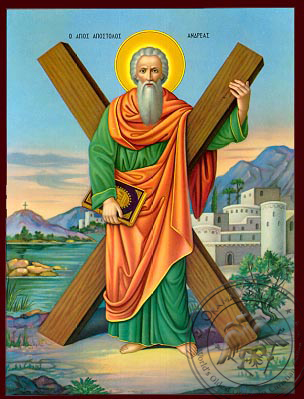
November 30th is the Feast of St Andrew the Apostle, who is also the patron saint of Scotland. Andrew was the older brother of the Apostle Peter and the two of them were fishing when Jesus approached them and said that He would make them “fishers of men”. Following Christ’s crucifixion, Andrew traveled around preaching the Good News (some sources say as far as Kiev and Veliky Novgorod in Russia) before he was crucified on an X-shaped cross in Patras, Greece. Andrew is the patron saint of fishermen and singers, as well as Scotland, Ukraine, Romania, Russia and Patras. The saltire, or St Andrew’s Cross, is used on the flag of Scotland.
St. John the Baptist was on the banks of the Jordan with two disciples when he saw Our Lord passing. He pointed to Him and said: ‘Behold the Lamb of God.’ Andrew and the other disciple followed Our Lord and remained with Him that day. Andrew at once recognized Jesus as the Messiah, and hastened to introduce his brother Peter to Him (John 1:41). Andrew told Simon Peter: “We have found the Messiah.” And he brought Peter to Our Lord. When Christ beheld him, He said, “Thou art Simon, the son of Jonas: thou shall be called Cephas, that is, rock.” And so, St. Andrew had the glory of presenting to Our Lord St. Peter, upon whom the Church would be built.
“As Jesus was walking by the Sea of Galilee, He saw the two brothers, Simon who is now called Peter, and his brother Andrew, casting a net into the sea; they were fishermen. He said to them, ‘Come after me, and I will make you fishers of men.’ At once they left their nets and followed him” (Matthew 4:18-20).
As in the case of all the apostles except Peter and John, the Gospels give us little about the holiness of Andrew. We do know he had a great love for the cross. As soon as he saw the cross on which he would be crucified, he saluted it with these words: “O most beautiful cross that was glorified by carrying the body of Christ! Glorious cross, sweetly desired, ardently loved, always sought, and finally prepared for my heart that has so long awaited you. Take me, o cross! Embrace me. Release me from my life among men. Bring me quickly and diligently to the Master. Through you He will receive me, He, Who through you has saved me.”
He remained two days hanging on the cross, preaching to the people. These were his last words before he died: “Lord, eternal King of glory, receive me hanging from the wood of this sweet cross. Thou who art my God, whom I have seen, do not permit them to loosen me from the cross. Do this for me, O Lord, for I know the virtue of Thy Holy Cross.”
St. Andrew not only accepted the crosses given him during his life, but he looked for them. This is clear when he said that he had “always sought” sacrifice. Then, in the hour of his martyrdom he had that marvelous reaction – he said that his “heart had long awaited” the crucifixion. Which one of us can say a thing like that? What a sublime courage St. Andrew had in saying these words, which, however, came to his lips naturally and with complete serenity because he had always lived in preparation for that. Our Lord said that there is no greater friend than one who would give his life for the other. No one can give a greater proof of friendship with Our Lord than to desire the cross like St. Andrew did.
The Solemnity of Christ the King ~ The Very Rev. Lady Sherwood, OPI

Reading 1: EZ 34:11-12, 15=17.
R Psalm: PS 23: 1=2, 2=3, 5=6.
Reading 2: 1 COR 15: 20=26, 28.
Gospel: MT 25: 31=46.
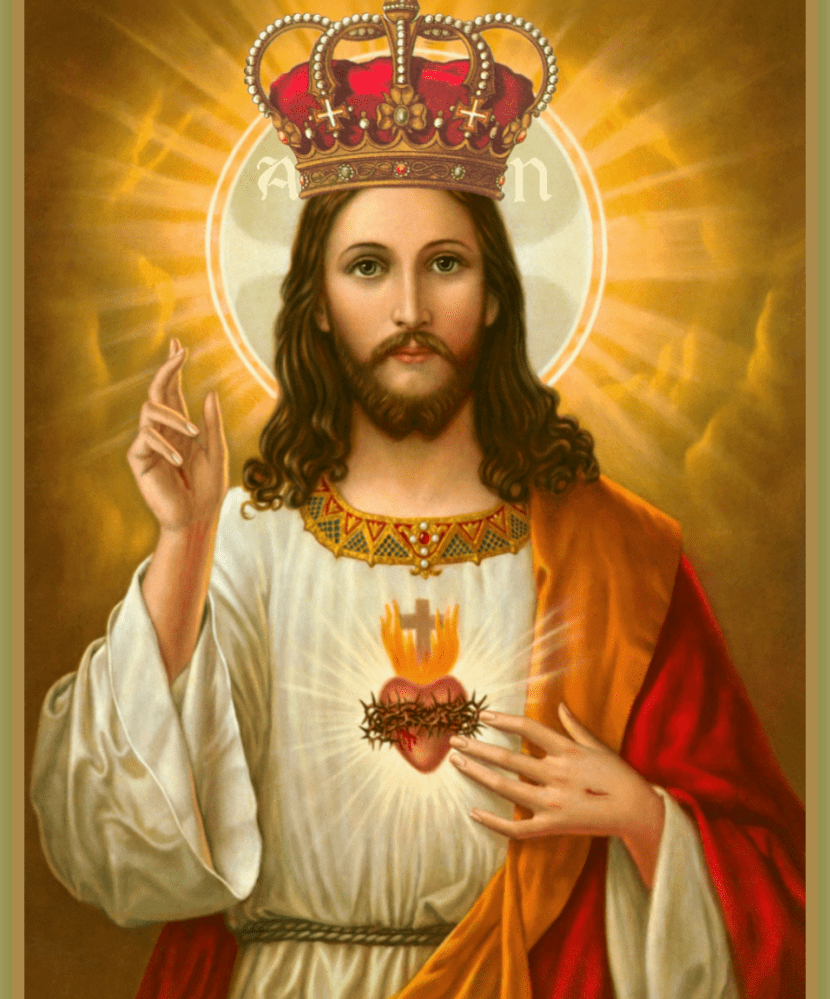
Today we come together to honour Our King and Our saviour, Our Lord Jesus Christ. Our Lord Jesus is the One and true King of all heaven and earth. There is no=one who Jesus is not the ruler of, whether the person be an Earthly King or Queen, a President or a Prime minister of a country, Jesus still is ruler and King of all. Earthly kingdoms and offices of power are just that, earthly.
Jesus has His true Kingship of all, not by elections or earthly processes, but by election of God. From his resurrection from the dead and from his installation in heaven at God’s right hand. When our dear Lord rose from the dead, after paying for all our sins upon the cross, God the Father exalted Him and gave him a “name which is above every name, that at the name of Jesus, every knee shall bow.” and this includes everyone, ourselves, and all the rulers of the earth. Jesus lives today and rules over us from his heavenly Kingdom with the Father. Jesus doesn’t rule with evil or hate, or with earthly wants, policies and pride, but rules with love, mercy and forgiveness and who loves and accepts each of us where we are as long as we love him. We have a King that loves us so much that he suffered human death upon the cross for all of our sins, so that we could have a chance of eternal life with Him. What a wonderful Lord and King we have indeed!
Lord Jesus, you are the King of Kings!!
Let us pray:
O Divine Saviour and King of all, transform us into that which is pleasing to yourself. May our hands be your hands. Grant that every faculty of our being may serve only to glorify you. Above all, transform our Spirit, our will, and our affections so that they become those of you, our Lord and King. We pray that you destroy all within us that is not of you, our King of all. May we live in you, by you, and for you. Amen.

In All Things Give Thanks ~ Br. Chip Noon, Novice

“Come, let us sing to the Lord, and shout with joy to the Rock who saves us.
Let us approach him with praise and thanksgiving and sing joyful songs to the Lord.”
These words from Psalm 95 are prayed most days in the Liturgy of the Hours at the Invitatory. Today on this Thanksgiving Holiday, we want to approach the Lord with praise and thanksgiving, even though it seems to many that there is precious little to be thankful for…if we pay attention to the news. Discord, strife, unrest, pain and suffering, all seem to be crowding out the good and the just which we celebrate today.
In today’s Responsorial Psalm, we can read it as ironical, or we can focus on the last line and read it prayerfully: “You have dominion over all, In your hand are power and might: it is yours to give grandeur and strength to all.” Is it too much to ask our Lord that he give us grandeur and strength today, this day of Thanksgiving? In these times?
Of course, Brother Noon (I say to myself) if you paid attention to the First Reading, you’d realize that in your own life, you have nothing to compare with the tribulations of the congregation of Israel in the times before Judas Maccabeus. The destruction of the their homeland, exile, desecration of the sacred alter of worship, war and pillage were real trials, not just those we read about in our Bibles.
And then I remember that this day is also the Memorial of Saint Andrew Dung-Lac, Priest, and Companions, Martyrs. Really…what is so bad in my personal life compared to this?
Yes over the past several months I have been besieged by several trials, physical, emotional, family problems. Yes, they absorbed me almost to distraction. And yes, I am beginning to see the light now. But who was there for me?
First, let me recite today’s Allaluia: “My sheep hear my voice, says the Lord; I know them and they follow me.”
God was there for me, even though my prayer life was in shambles. God was there for me. Coming out of the pain and fog of my affliction, I finally recognized that. That time, as it is now, was a time of thanksgiving. I was following the Lord only through his gentle guidance.
And so it should be in these times, and especially on this day.
Whether we are aware or not, we are under the Almighty’s watchful eye and, yes, he give us strength every day. Sometimes, as in my case, we are unaware and inappreciative. No matter. Once you are in the fold, there’s usually no getting out.
Which leads me to today’s Gospel. And to a little more negativity.
Already we’re hearing about why Native Americans don’t celebrate Thanksgiving, the ongoing false battles of the War on Christmas, people complaining about Christmas decorations up before Thanksgiving, and the eternal (or so it seems) tussle over how to greet people during the holidays. Such negativity. Such strife amidst a special time of year.


You must be logged in to post a comment.