
Category: Lesson
Blessed Reginald
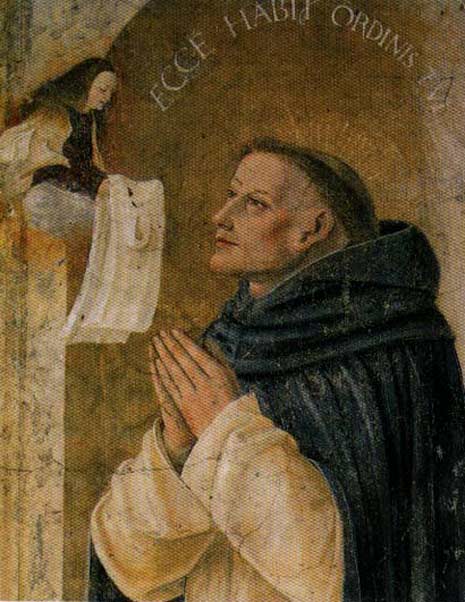
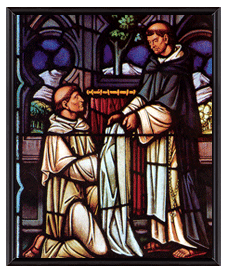
In calling the subject of this sketch Reginald of Saint Gilles, as he himself admits, Father Touron only follows the custom of his day, which was established by Anthony of Sienna, a native of Guimaraens, Portugal, Anthony stated in his Chronicles that Reginald was born at Saint Gilles, a small town in the Department of Gard, southern France. Most later writers think this honor more probably belongs to Orleans, and therefore give our blessed the name of Reginald of Orleans. In so designating him, we follow these authors rather than Touron, who also says that some are of the opinion that the early Friar Preacher first saw the light of day at Orleans. Mortier (I, 96) gives the year 1183 as the date of his birth.(1)
Few of the early members of the Order are mentioned so often, or in terms of such high praise, as Blessed Reginald. No doubt the historians take their cue from Blessed Jordan of Saxony, who knew him personally. Albeit, it is certain that he was one of the most distinguished among Saint Dominic’s first disciples. He sanctified his great learning and rare talent by prayer and an insatiable zeal for the salvation of his fellowman. Renowned canonist and forceful, eloquent preacher though he was, he gloried only in being an ambassador of Christ and a harvester of souls. Doubtless these qualities helped to bring Reginald and Dominic together so quickly and to unite them so closely.
Our future Friar Preacher was sent to the University of Paris in early manhood, where he not only met with signal success in his studies, but also (in 1206) obtained the doctor’s degree with applause. Then he taught canon law for some five years in his alma mater, being considered one of the bright lights of the institution. The high esteem which all showed him did not cause him to be any the less a man of God. His great devotion to the Blessed Virgin stood him in good stead; for, we are told, it acted as a safeguard against the snares of pride, luxury, and ambition. He gave much time to meditation on things divine. One of his pronounced traits was love for the poor; another was humility. Whilst kind to others, he practised great austerity with himself. Thus we are not surprised to learn that his progress in virtue was as rapid as that which he made in knowledge; or that, when the post of dean for the canons at Saint Aignan’s, Orleans, became vacant, all eyes were turned towards the model professor as the best man for the place.
The canons elected Reginald their dean without delay. One of the things which specially recommended him for the position was the fact that he did not desire it. Just when he received this promotion we do not know. But (on page 82 of his Antiquities of the Church and Diocese of Orleans — Antiquities de 1’Eglise et Diocese d’Orleans) Francis Lemaire says that the subject of our sketch was dean of Saint Aignan’s in 1212. Here he found himself bound to the service of God and His altar by new bonds, which gave a fresh impulse to his zeal to walk in the path of justice and to carry on his good works.
History tells us that the life of our dean was most edifying. It was hidden, as the apostle expresses it, in that of Christ our Lord. His charity towards those in need was almost boundless. He showed himself a model in all things. Yet he felt that something more was demanded of him. He feared the malediction which our Lord placed on the rich, reflected on the number of those who die impenitent after lives spent in sin, or without a knowledge of God’s justice, and trembled lest he should be condemned for burying the talent given him. Without any suspicion of the designs of heaven on him, the holy man longed to dispose of all he possessed and to go about the world poor and preaching Christ crucified. This he believed was his vocation; and he doubled his prayers and penances that he might learn the divine will.
At this juncture, providence came to Reginald’s assistance. The Right Rev. Manasses de Seignelay, bishop of Orleans, determined to visit Rome and the Holy Land. As the prelate was a close friend of the young dean, and enjoyed his enlightened conversation, he requested Reginald to accompany him on this journey. The subject of our sketch readily accepted the invitation, for it would give him an opportunity of satisfying his devotion at the places rendered sacred by the tread of our Lord and the blood of His martyrs.
The two travelers arrived in the Eternal City shortly before Easter, or in April, 1218. In a conversation with Cardinal Ugolino di Segni Reginald spoke of his ardent desire to imitate the apostles, and to go from place to place as a poor ambassador of Christ preaching the Gospel. As yet, however, he did not know how he was to put his wish into execution. His eminence (later Gregory IX) then proceeded to tell the pious dean that the way was already open to him; that a new religious order had just been instituted for that very purpose; and that its founder, who was renowned for his miracles, was actually in Rome, where he preached every day with marvelous effect. Filled with joy at the prospect of realizing his design in the near future, Reginald made haste to meet the harvester of souls, of whom he had been told. Charmed with Dominic’s personality and sermons, he determined to become one of his disciples without delay.
Indeed, the attraction between the two holy men was mutual. Meantime, however, Reginald became so ill that the physicians despaired of his life. In this extremity Dominic had recourse to his usual remedy, prayer; and in a few days his new friend was again in perfect health. In their piety both attributed the miraculous cure to the intercession of the Mother of God. Jordan of Saxony assures us that the Blessed Virgin appeared to Reginald in his sickness, told him to enter the new Order, and showed him the distinctive habit which the Friars Preacher should wear. Until this time they had dressed like the Canons Regular of Osma, of whom Dominic had been a member. Practically all the historians tell us that, in consequence of Reginald’s vision, the saint now adopted the garb which his followers have worn ever since, and that the former dean of Saint Aignan’s was the first to receive it from his hands.
Reginald was clothed in the religious habit immediately after the recovery of his health. At the same time, or very shortly afterwards, he made his profession to Dominic. However, this new allegiance did not prevent his journey to the Holy Land; for the saint permitted him to continue his way with Bishop de Seignelay. On his return to Italy from Jerusalem, perhaps in the middle fall of 1218, Dominic, who was still at Rome, sent the former dean to Bologna, which he reached in December. The high opinion which the patriarch had conceived of Reginald is shown by the fact that he appointed him his vicar (some say prior) over the incipient convent in that university city.
More than one thing evidently contributed to this immediate promotion to leadership. The house in Bologna had been started in the spring of the same year. While the first fathers stationed there were very cordially received, and were given Santa Maria della. Mascarella for a convent by Bishop Henry di Fratta, they found it hard to make the rapid headway which both they and Dominic evidently desired to see in the noted educational center. Reginald’s reputation, ability, eloquence, and experience at the University of Paris, it was felt, would combine with his rare virtue to bring about this desideratum. Nor were these expectations disappointed.
Hardly, indeed, had the former dean of Saint Aignan’s arrived at his destination, before the entire city was flocking to hear him preach. The effect of his sermons was marvellous. Hardened sinners gave up their evil ways; inveterate enemies buried their differences of long standing; the religion and moral tone of the people changed notably for the better. None seemed able to resist the attraction of the orator’s personality, or the persuasion of his burning eloquence. All felt that a new Elias had come among them. He held the place, as it were, in the palm of his hand. No one could doubt but that he had found his vocation.
Reginald drew the clergy as well as the laity; those of the university, whether professors or students, as well as the citizens. His example quickened the zeal of his confrères, for he preached every day-sometimes twice or even thrice. Vocations to the Order were so frequent that, within a few weeks, Santa Maria della Mascarella was overcrowded. They came from every walk in life. The university contributed a large number of both students and masters, some of whom were among the brightest lights of the institution with worldwide fame.
Bishop di Fratta and the papal legate, Cardinal Ugolino di Segni, were so pleased with the good effected by Reginald and his Friars Preacher that they gave him the Church of Saint Nicholas of the Vines, in order to enable him to receive more subjects. This was in the spring of 1219. Here a much larger convent was built at once. Rudolph of Faenza, the zealous pastor of Saint Nicholas, not content with surrendering his church to the Order, also received the habit from our blessed Reginald that he might join in the harvest of souls. He helped to erect the Convent of Saint Nicholas, now known as Saint Dominic’s, to which the community was transferred as soon as ready for occupation.
In his government of the large Bolognese community Blessed Reginald combined great charity and gentleness with a wise strictness. He did not suffer even slight transgressions to go uncorrected. Yet he was so skillful in his management of men and in his administration of punishment that his confrères, for they knew he ever acted for their good, held him in even greater affection than those not of the Order. All regarded him as a true man of God seeking to lead them to heaven. His every word, his very silence, bespoke virtue. With profound humility and a rare spirit of recollection he joined an extreme personal austerity.
The days the holy man spent in preaching to the people and spiritual conferences to his religious. The nights he gave largely to prayer. God blessed his efforts. Scarcely nine months had he been superior. Within that brief time Saint Nicholas’ had become not merely a large community; it was a famed sanctuary of prayer, the zeal of whose members recalled that of the apostles. Far and wide they bore the message of salvation with wonderful effect.
Such was the status, in point of size, discipline, and labors, in which Saint Dominic found the Bolognese institution on his arrival in the city, after his return from Spain, via Prouille, Toulouse, and Paris. This was late in the summer of 1219. The patriarch’s heart rejoiced at the sight of what had been accomplished. At Paris, owing to a strong opposition, the crooked paths had not yet been straightened, nor the rough ways made smooth. If, thought Dominic, Reginald had done so well in Bologna, why would he not be invaluable to Matthew of France in ironing out the difficulties at Paris. Besides, the saint had determined to make the Italian city the center of his own spiritual activities. So off to the French capital the subject of this sketch now went. His departure was keenly regretted by the community which he had governed so happily. But the voice of God spoke through the Order’s founder, and all bowed in humble submission. To Reginald’s brief sojourn in those far-flung days is due, in no small measure, the bond of regard that has ever since existed between the citizens of Bologna and the Friars Preacher.
Reginald’s arrival in Paris was a source of great joy to his confrères there — especially to the superior, Matthew of France. The newcomer bad been one of the university’s most beloved professors, and had had the only Friar-Preacher abbot as a pupil. Much was expected of his virtue, personality, and eloquence. Unfortunately, these hopes were realized only in part. As he had done in Bologna, so in Paris he began to preach incessantly. Together with this apostolate, he taught at the Convent of Saint James, whilst he relaxed not in the least his penances, or his nightly vigils.
Zeal for the salvation of souls, all the writers assure us, simply consumed the holy man. Enormous numbers flocked to his sermons. Vocations to the Order increased. Many came from among the students at the university. But such labors and mortification were too much for his strength. His health began to fail, and kindly Matthew of France ventured to warn him that he should be more moderate. Yet, as no positive order was given, the relaxation was not sufficient. http://www.willingshepherds.org/Dominican Saint February.html – 8 Possibly Matthew afterwards intervened more sternly. However, it was too late. The fire of life had burned out, and Reginald surrendered his pure soul to God in the first days of February, 1220. In his death the Friars Preacher nearly everywhere mourned the loss of one whom they considered, next to its founder, the strongest support of their new Order.
Had he lived, Reginald would most likely have succeeded Saint Dominic as Master General. In the language of Jordan of Saxony, Reginald lived a long life in the span of a few years. He spent less than two years in the Order; yet he left a memory that still seems fresh after a lapse of more than seven centuries. One of the things which continued to be denied the fathers by the ecclesiastical circles of Paris, at the time of his death, was the right of burial for the community in their Church of Saint James. Accordingly, his remains were laid to rest in that of Our Lady of the Fields (Notre Dame des Champs). The faithful soon began to visit and pray at his grave. Several miracles were reported. When, between 1605 and 1608, his body was taken up to be placed in a shrine, it was found to be incorrupt. This served to increase the devotion towards the man of God.
A few years later (1614), Our Lady of the Fields became the property of the Carmelite Sisters. Thus the tomb of Saint Dominic’s early disciple, because in their cloistered church, ceased to be visited by the people at large, who had been accustomed to seek his intercession for nearly four hundred years. The holy sisters, however, held him in the deepest veneration, and poured out their hearts in prayer before his sacred remains. In 1645, they had Father John Francis Senault, general of the Oratorians, write his life. His relics remained in this secluded place, ever an object of devotion for Christ’s cloistered spouses, until they were desecrated and destroyed by the villains of the terrible French Revolution.
Fortunately, as is proved in the process of his beatification, devotion to Reginald had become too deeply rooted to be annihilated by even such a catastrophe. This was particularly the case in the Order of Preachers, whose members had ever cherished an undying affection and veneration for him. In 1875, Pius IX, after a thorough examination of the matter by the Sacred Congregation of Rites, approved his cult, and granted the divine office and mass of Reginald to the Friars Preacher and the dioceses of Paris and Orleans. http://www.willingshepherds.org/Dominican Saint February.html – 9 February 12 was set aside as his feast, but in late years it has been transferred to the seventeenth day of the same month.
Born: at Saint-Gilles, Languedoc, France, c. 1183
Died: 1220
Canonized: Pius IX confirmed his cult in 1875.
Blessed Bernard Sammacca
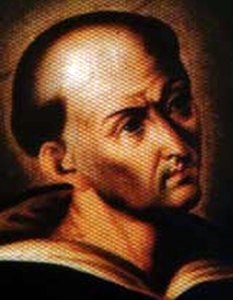
Born in Catania, Sicily; died 1486; cultus approved 1825. Born of wealthy and pious parents, Bernard was given a good education. In spite of this good training, he spent a careless youth. Only after he was badly injured in a duel was he brought back to his senses. His long convalescence gave him plenty of time to think, and once he was able to go out of the house, he went to the Dominican convent of Catania and begged to be admitted to the order.
Bernard, as a religious, was the exact opposite of what he had been as a young man. Now he made no effort to obtain the things he had valued all his life, but spent his time in prayer, solitude, and continual penance. There is little recorded of his life, except that he kept the rule meticulously, and that he was particularly kind to sinners in the confessional. Apparently, he did not attain fame as a preacher, but was content to spend his time in the work of the confessional and the private direction of souls.
One legend pictures Bernard as having great power over birds and animals. When he walked outside in the gardens, praying, the birds would flutter down around him, singing; but as soon as he went into ecstasy, they kept still, for fear they would disturb him. Once, the porter was sent to Bernard’s room to call him, and saw a bright light shining under the door. Peeking through the keyhole, he saw a beautiful child shining with light and holding a book, from which Bernard was reading. He hurried to get the prior to see the marvel.
Bernard had the gift of prophecy, which he used on several occasions to try warning people to amend their lives. He prophesied his own death. Fifteen years after his death, he appeared to the prior, telling his to transfer his remains to the Rosary chapel. During this translation, a man was cured of paralysis by touching the relics (Benedictines, Dorcy).
Born: Catania, Sicily (year unknown)
Died: 1486
Canonized: Leo XII confirmed cultus in 1825
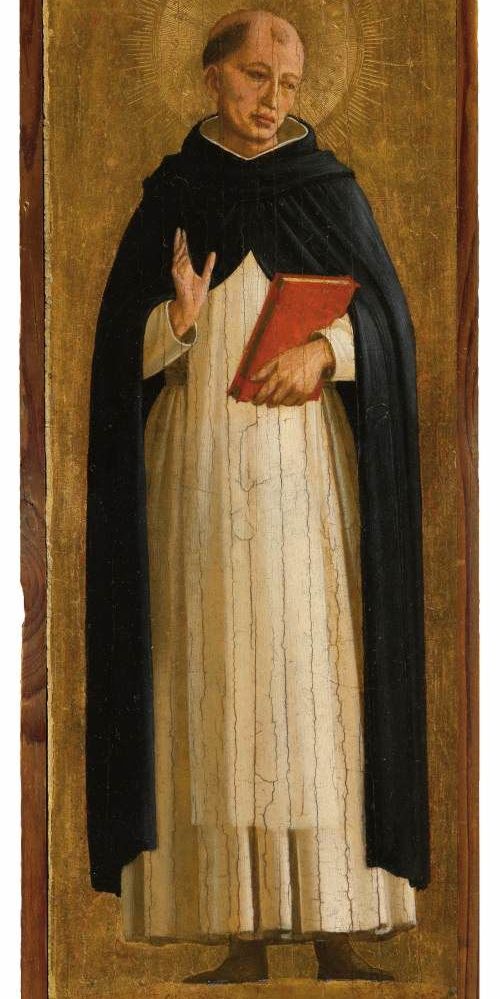
Blessed Jordan of Saxony
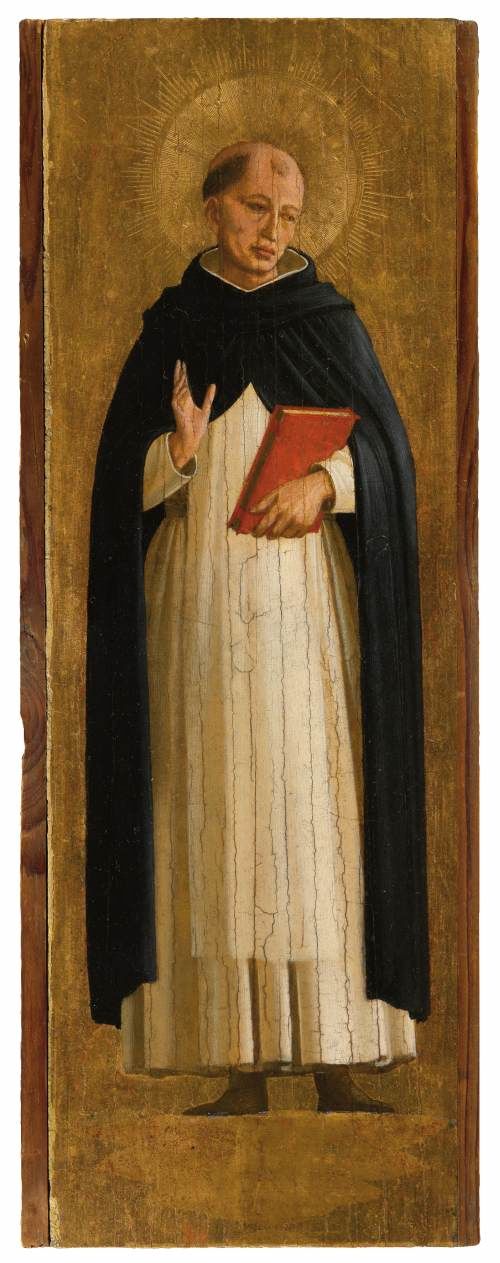
Men prayed for strength to resist Jordan’s burning eloquence, and mothers hid their sons when Master Jordan came to town. Students and masters warned each other of the fatal magnetism of his sermons. The sweetness of his character and the holiness of his life shone through his most casual words in a flame that drew youth irresistibly to the ideal to which he had dedicated his own life. In his 16 years of preaching, Jordan is said to have drawn more than a thousand novices to the Dominican Order, among whom were two future popes, two canonized saints (e.g., Albert the Great), numerous beati, and countless intellectual lights of his dazzling century.
Of Jordan’s childhood, nothing is known, except that he was born of a noble family. He was drawn to the order in 1220 by the preaching of Blessed Reginald, the beloved son of Dominic, brought back from death by Dominic’s and Our Lady’s prayers. Jordan was at that time about 30, a student at the University of Paris, and his reputation for sanctity had preceded him into the order.
He had worn the habit for only two months when he was sent to Bologna as a delegate to the first general chapter of the order. The following year he was elected provincial of Lombardy, Italy, and on the death of Saint Dominic, succeeded him as master general.
The Order of Preachers was only six years old when Jordan became master general. He carried out the yet untried plans of Dominic, who had hurried off to heaven when many of his dreams were just beginning to open out into realization, and still more vistas beckoned beyond. Under him the new order advanced apace, spreading throughout Germany and into Denmark. Jordan will always be remembered for his work in increasing the manpower of the order, but his contribution to its quality should never be forgotten.
He added four new provinces to the eight already in existence; he twice obtained for the order a chair at the University of Paris and helped found the University of Toulouse; and he established the first general house of studies of the order. He was a spiritual guide to many, including Blessed Diana d’Andalo; and somewhere in his busy lifetime he found time to write a number of books, including a life of Saint Dominic.
Jordan was regarded as a menace by the professors of universities where he recruited novices. He emptied classrooms of their most talented students, stole their most noted professors. Young men by the hundreds besieged the order for admittance. Some were mere children, some famous lawyers and teachers, and some were the wealthy young bearers of the most famous names in Christendom. One and all, they were drawn to a life of perfection by this man who preached so well, and who practiced what he preached with such evident relish.
All the old writers speak of the kindness and personal charm of Jordan. He had the ability to console the troubled and to inspire the despondent with new hope. At one time, a discouraged student was busily saying the Office of the Dead when Master Jordan sat down beside him and began alternating verses with him. When he came to the end of Psalm 26, Jordan said the verse with emphasis: “Oh, wait for the Lord!” Wherewith the sorrows of the young man departed. Another student was rid of troubled thoughts by the mere imposition of Jordan’s hands. To bring peace to the brothers who were being annoyed by the devil, Jordan established the beautiful custom of singing the Salve Regina after Compline each night.
Jordan was shipwrecked and drowned when returning from a pilgrimage to the Holy Land (Benedictines, Dorcy).
Born: 1190 at Padberg Castle, diocese of Paderborn, Westphalia, old Saxony; rumoured to have been born in Palestine while his parents were on a pilgrimage, and named after the River Jordan, but this is apparently aprochryphal
Died: Drowned 1237 in a shipwreck off the coast of Syria while on a pilgrimage to the Holy Land
Beatified: 1825 (cultus confirmed) by Pope Leo XII
Canonized: University of Santo Tomas Faculty of Engineering
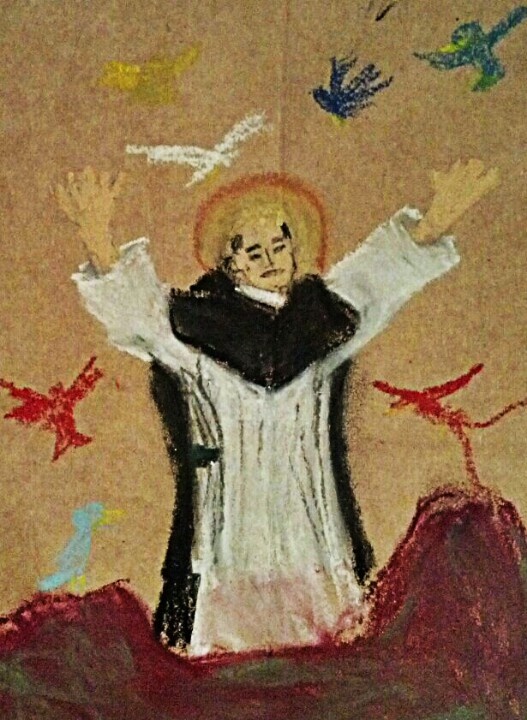
Blessed Nicholas Palea
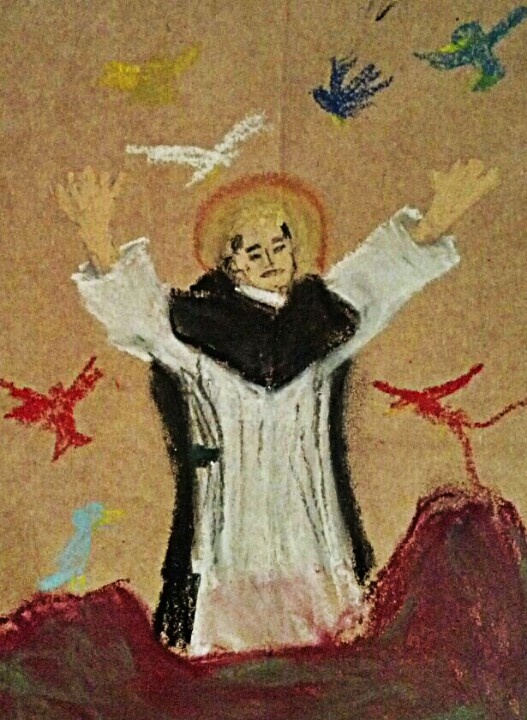
Born of a noble Neapolitan family, Nicholas was named for the great wonder-worker who had once lived in the kingdom. At 8 he was already practicing austerities. He would not eat meat, even on feast days, because he had been favored by a vision of a young man of great majesty who told him to prepare for a lifetime of mortifications in an order that kept perpetual abstinence.
Sent to Bologna for his studies, he met Saint Dominic and was won by him to the new order. He was the companion of Saint Dominic on several of the founder’s journeys to Italy, and warmed his heart at the very source of the new fire which was to mean resurrection to so many souls.
Saint Nicholas of Bari had been noted for his astounding miracles, and his young namesake began following in his footsteps while yet a novice. When on a journey with several companions, he met a woman with a withered arm. Making the Sign of the Cross over her, he cured her of the affliction.
At one time, as he entered his native Bari, he found a woman weeping beside the body of her child, who had been drowned in a well. He asked the woman the name of the child, and being told it was Andrew, he replied, “After this, it’s Nicholas. Nicholas, in the name of our Lord Jesus Christ, arise!” The little one revived, alive and well. The child of his sister Colette, mute from birth, brought her famous uncle a basket of bread. “Who sent the bread, child?” Nicholas asked her. “My mother,” she replied, and from then on she was cured.
As provincial of the Roman province, Nicholas was wise, prudent, and kind. He established priories in Perugia in 1233 and Trani in 1254. He received many novices and did much of his work among the young religious. Once he was called to the assistance of a novice who had been deceived by the devil and would not go to confession. He showed the young man the true state of his soul and undid the work of the evil one.
Nicholas earned great fame as a preacher. On one occasion, when he was preaching in the cathedral of Brescia, two irreverent young men began disturbing the congregation and soon made such a commotion that Nicholas could not make himself heard. Nicholas left the cathedral to a neighboring hill and there called to the birds to come to listen to him. Like the birds in the similar story of Saint Francis, flocks of feathered creatures fluttered down at his feet and listened attentively while he preached. At the end of the sermon they flew away singing.
After a lifetime of preaching and miracles, Nicholas, forewarned of is death by a visit from a brother who had been dead many years, went happily to receive the reward of the faithful. Miracles continued to occur at his tomb and through his intercession. Among these was the miracle by which life was given to a baby born dead. His parents had promised to name the baby Nicholas if the favor were granted, and to their great joy their child lived (Benedictines, Dorcy).
Born: Giovinazzo near Bari, Naples (year unknown)
Died: died in Perugia, Italy, in 1255
Beatified: Leo XII confirmed his cult in 1828
Representation: In art, Saint Nicholas is presented as a Dominican with a birch and a book (Roeder). He is venerated in Giovinazzo and Perugia, Italy (Roeder).
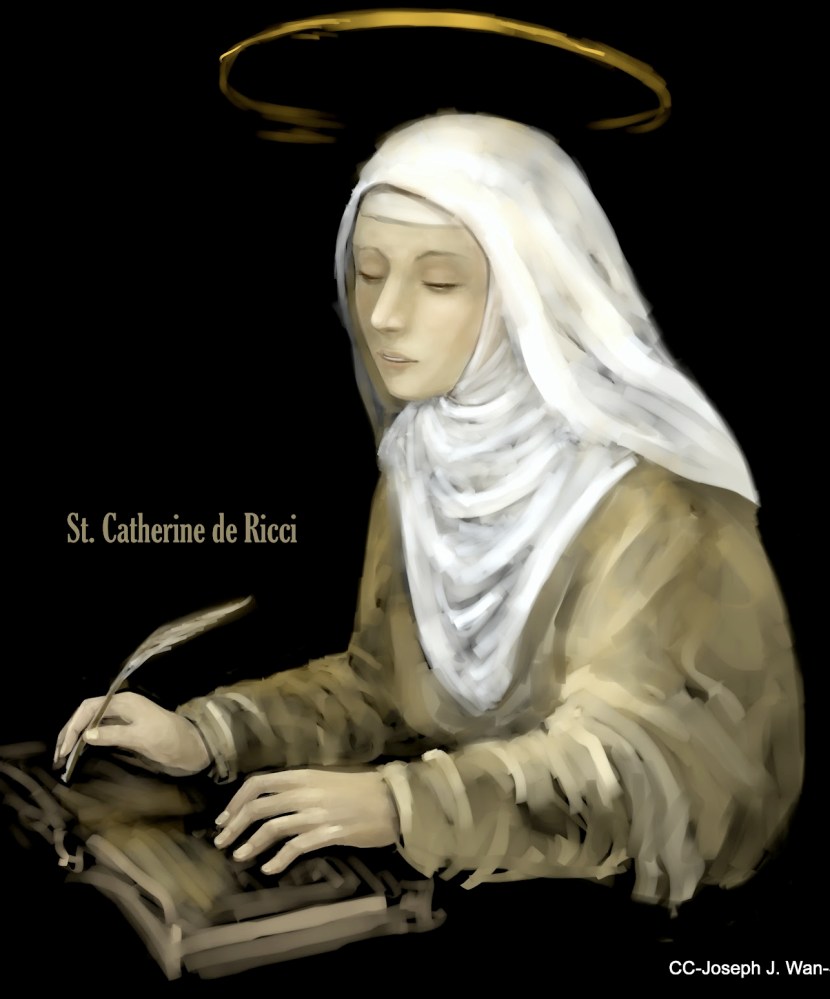
Saint Catherine of Ricci

Alexandrina dei Ricci was born of a patrician family, but Catharine Bonza died leaving her motherless in her infancy. She was trained in virtue by a very pious godmother. The little girl took Our Lady as her mother and had for her a tender devotion. The child held familiar conversations with her guardian angel, who taught her a special manner of saying the rosary and assisted her in the practice of virtue.
As soon as Alexandrina was old enough to go away from home (age 6 or 7), she was sent to the convent school of Monticelli, where her aunt, Louisa dei Ricci, was the abbess. Besides learning her lessons for which she was sent, the little girl developed a great devotion to the Passion. She prayed often before a certain picture of Our Lord, and at the foot of a crucifix, which is still treasured as “Alexandrina’s crucifix.” Returning from the monastery when her education was completed according to the norm for girls, she turned her attention to her vocation.
In her plans to enter a monastery of strict observance, she met with great opposition from her father Peter. She loved the community life that had allowed her to serve God without impediment or distraction. She continued her usual exercises at home as much as she was able, but the interruptions and dissipations that were inseparable from her station, made her uneasy.
Finally, Peter allowed her to visit St. Vincent’s convent in Prato, Tuscany, which had been founded by nine Third Order Dominicans who were great admirers of Savonarola. Alexandrina begged to remain with them; however, her father took her away, promising to let her return. He did not keep his promise, and the girl fell so ill that everyone despaired of her life. Frightened into agreement, her father gave his consent; Alexandrina, soon recovering, entered the convent of Saint Vincent.
In May 1535, Alexandrina received the habit from her uncle, Fr. Timothy dei Ricci, who was confessor to the convent. She was given the name Catherine in religion, and she very happily set about imitating her beloved patron. Lost in celestial visions, she was quite unaware that the sisters had begun to wonder about her qualifications for the religious life: for in her ecstasies she seemed merely sleepy, and at times extremely stupid. Some thought her insane. Her companions did not suspect her of ecstasy when she dozed at community exercises, spilled food, or broke dishes.
Neither did it occur to Sister Catherine that other people were not, like herself, rapt in ecstasy. She was about to be dismissed from the community when she became aware of the heavenly favors she had received. From then on there was no question of dismissing the young novice, but fresh trials moved in upon her in the form of agonizing pain from a complication of diseases that remedies seemed only to aggravate. She endured her sufferings patiently by constantly meditating on the passion of Christ, until she was suddenly healed. After her recovery, she was left in frail health.
Like Saint John of Egypt and Saint Antony, Catherine met Philip Neri in a vision while he was still alive and in Rome. They had corresponded for a long time and wanted to meet each other but were unable to arrange it. Catherine appeared to Philip in a vision and they conversed for a long time. Saint Philip, who was also cautious in giving credence to or publishing visions, confirmed this. This blessed ability to bilocate, like Padre Pio, was confirmed by the oaths of five witnesses. Also like those desert fathers, Antony and John, she fasted two or three times weekly on only bread and water, and sometimes passed an entire day without taking any nourishment.
Like Saint Catherine of Siena, she is said to have received a ring from the Lord as a sign of her espousal to him–a mysterious ring made of gold set with a diamond, invisible to all except the mystic. Others saw only a red lozenge and a circlet around her finder.
Sister Catherine was 20 when she began a 12-year cycle of weekly ecstasies of the Passion from noon each Thursday until 4:00 p.m. each Friday. The first time, during Lent 1542, she meditated so heart-rendingly on the crucifixion of Jesus that she became seriously ill, until a vision of the Risen Lord talking with Mary Magdalene restored her to health on Holy Saturday.
She received the sacred stigmata, which remained with her always. In addition to the five wounds, she received, in the course of her Thursday-Friday ecstasies, many of the other wounds which our Lord suffered. Watching her face and body, the sisters could follow the course of the Passion, as she was mystically scourged and crowned with thorns. When the ecstasy was finished, she would be covered with wounds and her shoulder remained deeply indented where the Cross had been laid.
Soon all Italy was attentive and crowds came to see her. Skeptics and the indifferent, sinners and unbelievers, were transformed at the sight of her. Soon there was no day nor hour at which people did not come, people in need and in sin, people full of doubt and tribulation, who sought her help, and, of course, the merely curious. Because of the publicity that these favors attracted, she and her entire community asked our Lord to make the wounds less visible, and He did in 1554.
Her patience and healing impressed her sisters. While still very young, Catherine was chosen to serve the community as novice- mistress, then sub-prioress, and, at age 30, she was appointed prioress in perpetuity, despite her intense mystical life of prayer and penance. She managed the material details of running a large household well, and became known as a kind and considerate superior. Catherine was particularly gentle with the sick. Troubled people, both within the convent and in the town, came to her for advice and prayer, and her participation in the Passion exerted a great influence for good among all who saw it. Three future popes (Cardinals Cervini later known as Pope Marcellus II, Alexander de Medici (Pope Leo XI), and Aldobrandini (Pope Clement VIII)) were among the thousands who flocked to the convent to beseech her intercession.
Of the cloister that Catherine directed, a widow who had entered it observed: “If the world only knew how blessed is life in this cloister, the doors would not suffice and the thronging people would clamber in over all the walls.”
A contemporary painting of Catherine attributed to Nardini (at the Pinacoteca of Montepulciano) shows a not unattractive, though relatively plain woman. Her eyes protrude a bit too much and her nose is too flared to account her a classic beauty, but she possessed high cheekbones, dark hair, widely spaced eyes, and full lips. Her mein is that of a sensitive woman who has experience pain and now has compassion.
Catherine’s influence was not confined within the walls of her convent. She was greatly preoccupied by the need for reform in the Church, as is apparent from her letters, many of them addressed to highly-placed persons. This accounts, too, for her reverence for the memory of Savonarola, who had defied the evil-living Pope Alexander VI and been hanged in Florence in 1498. Saint Catherine was in touch with such contemporary, highly-orthodox reformers as Saint Charles Borromeo and Saint Pius V.
After Catherine’s long and painful death in 1589, many miracles were performed at her tomb. Her cultus soon spread from Prato throughout the whole of Italy and thence to the whole world. The future Pope Benedict XIV, the “devil’s advocate” in Catherine’s cause for canonization, critically examined all relevant claims. As in the case of her younger contemporary, Saint Mary Magdalene de’Pazzi, canonization was not granted because of the extraordinary phenomenon surrounding her life, but for heroic virtue and complete union with Christ (Attwater, Benedictines, Bentley, Dorcy, Encyclopedia, Farmer, Husenbeth, Schamoni, Walsh).
Born: April 23rd 1522 at Florence, Italy
Died: February 2, 1590 at Prato, Italy
Beatified: November 23, 1732 by Pope Clement XII
Canonized: June 29, 1746 by Pope Benedict XIV
Patronage: bodily ills; illness; sick people; sickness

Relationship Over Law ~ Br. Mark Dickson-Patrick, Novice

Reading 1 – Sirach 15:15-20
If you choose you can keep the commandments, they will save you; if you trust in God, you too shall live; he has set before you fire and water to whichever you choose, stretch forth your hand.
Before man are life and death, good and evil, whichever he chooses shall be given him. Immense is the wisdom of the Lord; he is mighty in power, and all-seeing. The eyes of God are on those who fear him; he understands man’s every deed. No one does he command to act unjustly, to none does he give license to sin.
Responsorial Psalm – Psalm 119:1-2, 4-5, 17-18, 33-34
(1b) Blessed are they who follow the law of the Lord!
- Blessed are they whose way is blameless, who walk in the law of the LORD. Blessed are they who observe his decrees, who seek him with all their heart.
R. Blessed are they who follow the law of the Lord!
You have commanded that your precepts be diligently kept. Oh, that I might be firm in the ways of keeping your statutes!
R. Blessed are they who follow the law of the Lord!
Be good to your servant, that I may live and keep your words. Open my eyes, that I may consider the wonders of your law.
R. Blessed are they who follow the law of the Lord!
Instruct me, O LORD, in the way of your statutes, that I may exactly observe them. Give me discernment, that I may observe your law and keep it with all my heart.
R. Blessed are they who follow the law of the Lord!
Reading 2 – 1 Corinthians 2:6-10
Brothers and sisters: We speak a wisdom to those who are mature, not a wisdom of this age, nor of the rulers of this age who are passing away. Rather, we speak God’s wisdom, mysterious, hidden, which God predetermined before the ages for our glory, and which none of the rulers of this age knew; for, if they had known it, they would not have crucified the Lord of glory.
But as it is written: What eye has not seen, and ear has not heard, and what has not entered the human heart, what God has prepared for those who love him, this God has revealed to us through the Spirit. For the Spirit scrutinizes everything, even the depths of God.
Gospel – Matthew 5:17-37
Jesus said to his disciples: “Do not think that I have come to abolish the law or the prophets. I have come not to abolish but to fulfill. Amen, I say to you, until heaven and earth pass away,
not the smallest letter or the smallest part of a letter will pass from the law, until all things have taken place. Therefore, whoever breaks one of the least of these commandments and teaches others to do so will be called least in the kingdom of heaven. But whoever obeys and teaches these commandments will be called greatest in the kingdom of heaven. I tell you, unless your righteousness surpasses that of the scribes and Pharisees, you will not enter the kingdom of heaven.
“You have heard that it was said to your ancestors, You shall not kill; and whoever kills will be liable to judgment. But I say to you, whoever is angry with his brother will be liable to judgment;
and whoever says to his brother, ‘Raqa,’ will be answerable to the Sanhedrin; and whoever says, ‘You fool,’ will be liable to fiery Gehenna. Therefore, if you bring your gift to the altar, and there recall that your brother has anything against you, leave your gift there at the altar, go first and be reconciled with your brother, and then come and offer your gift. Settle with your opponent quickly while on the way to court. Otherwise your opponent will hand you over to the judge, and the judge will hand you over to the guard, and you will be thrown into prison. Amen, I say to you,
you will not be released until you have paid the last penny. “You have heard that it was said, You shall not commit adultery. But I say to you, everyone who looks at a woman with lust has already committed adultery with her in his heart. If your right eye causes you to sin, tear it out and throw it away. It is better for you to lose one of your members than to have your whole body thrown into Gehenna. And if your right hand causes you to sin, cut it off and throw it away. It is better for you to lose one of your members than to have your whole body go into Gehenna. “It was also said, Whoever divorces his wife must give her a bill of divorce. But I say to you, whoever divorces his wife – unless the marriage is unlawful – causes her to commit adultery, and whoever marries a divorced woman commits adultery. “Again you have heard that it was said to your ancestors, Do not take a false oath, but make good to the Lord all that you vow. But I say to you, do not swear at all; not by heaven, for it is God’s throne; nor by the earth, for it is his footstool; nor by Jerusalem, for it is the city of the great King. Do not swear by your head, for you cannot make a single hair white or black. Let your ‘Yes’ mean ‘Yes,’ and your ‘No’ mean ‘No.’ Anything more is from the evil one.”
“It is better to be feared than to be loved.” These words by Niccolo Macchiavelli describe clearly his theory of the duties of a leader. He believed that a leader was to impart rules on his or her subjects, and to impart fear into them that they might follow the rules that he or she had put in place. This, Macchiavelli believed, was the pinnacle of true leadership.
This was seen as true, too, in the Old Testament understanding of God. Throughout the Old Testament, we see the Jews following the law which had been put in place for the Jewish people, in order that they might live according to the commands of God. Faithful Jews followed the Law, took their sacrifices to the Temple, honored the priests and the Sabbath, according to the letter of the Law of God.
In our Gospel for this 6th Sunday in Ordinary Time, we hear Jesus, considered by many in the ruling priestly class to be a radical in His understanding (or seeming misunderstanding) of the Law of God, teaching His disciples and us today a very important lesson. We hear Jesus taking very important prescriptions of the Law, and does He abolish them? No! He takes them even further, taking the word or letter of the Law to its heart. Jesus makes it clear that following God and living in accord with His commands is not about following the letter of the Law, but about living in relationship with one another. We see this very clearly in the Gospel. Jesus says “You have heard that it was said, ‘You shall not commit adultery’…” This was the prescription of the Law. Instead of dropping this prescription, He instead says “But I say to you, everyone who looks at a woman with lust has already committed adultery with her in his heart.” Why is that so? It is because in the very act of looking with lust that the person has tainted the way in which he RELATES with her, not only in his mind, but in his actions. Jesus is talking about relationship.
There are many today who believe still that if they follow the letter of the Law, of a Law that was given to them either from a church authority or from within themselves, they will find true salvation. Nonsense! Legalism breeds scrupulosity, and scrupulosity breeds sin. We look at the spirit of the law which leads us to our ever-loving, all-powerful God, who loves us and sees us as His own.
In looking at the spirit of the law, Jesus reminds us that God desires a relationship, and that the living out of the Gospel message is a living out of a radical relationship with God and with our fellow men and women. He desires us to treat one another with respect, and not do anything sinful which might ruin the way in which we relate with one another.
God does not desire us to be afraid of Him, but rather that we come to Him Who can do all, Who knows every fiber of our being. He asks that we seek and serve Him in others in everything that we do. God desires to be loved, not feared.
Let us stay true to the Gospel message, in living out our relationship with God and one another. Let us keep ourselves and our relationships pure, that we might work together for the bringing about of the Kingdom of God. Let us love one another as God loves us, for we are His beloved children.
Defending the Faith – Memorial of Saint Paul Miki and Companions, Martyrs – Br. Michael Marshall, Novice
First Reading – Genesis 1:1-19
In the beginning, when God created the heavens and the earth,
the earth was a formless wasteland, and darkness covered the abyss,
while a mighty wind swept over the waters.
Then God said,
“Let there be light,” and there was light.
God saw how good the light was.
God then separated the light from the darkness.
God called the light “day,” and the darkness he called “night.”
Thus evening came, and morning followed–the first day.
Then God said,
“Let there be a dome in the middle of the waters,
to separate one body of water from the other.”
And so it happened:
God made the dome,
and it separated the water above the dome from the water below it.
God called the dome “the sky.”
Evening came, and morning followed–the second day.
Then God said,
“Let the water under the sky be gathered into a single basin,
so that the dry land may appear.”
And so it happened:
the water under the sky was gathered into its basin,
and the dry land appeared.
God called the dry land “the earth,”
and the basin of the water he called “the sea.”
God saw how good it was.
Then God said,
“Let the earth bring forth vegetation:
every kind of plant that bears seed
and every kind of fruit tree on earth
that bears fruit with its seed in it.”
And so it happened:
the earth brought forth every kind of plant that bears seed
and every kind of fruit tree on earth that
bears fruit with its seed in it.
God saw how good it was.
Evening came, and morning followed–the third day.
Then God said:
“Let there be lights in the dome of the sky,
to separate day from night.
Let them mark the fixed times, the days and the years,
and serve as luminaries in the dome of the sky,
to shed light upon the earth.”
And so it happened:
God made the two great lights,
the greater one to govern the day,
and the lesser one to govern the night;
and he made the stars.
God set them in the dome of the sky,
to shed light upon the earth,
to govern the day and the night,
and to separate the light from the darkness.
God saw how good it was.
Evening came, and morning followed–the fourth day.
Gospel – Mark 6:53-56
After making the crossing to the other side of the sea,
Jesus and his disciples came to land at Gennesaret
and tied up there.
As they were leaving the boat, people immediately recognized him.
They scurried about the surrounding country
and began to bring in the sick on mats
to wherever they heard he was.
Whatever villages or towns or countryside he entered,
they laid the sick in the marketplaces
and begged him that they might touch only the tassel on his cloak;
and as many as touched it were healed.
Not until I was in seminary in Chicago, did I learn about a little bit of the history of Christianity in Japan; as I became a little familiar because of a course on world mission. Yet I had not encountered someone from Japan who is a Christian until seminary. In fact, prior to seminary, when I thought of religion in Japan, the beautiful pagodas and temples with ornate flower gardens stuck out in my mind. These structures are traditionally places of worship for the Shinto and Buddhist religions, so the idea of Christianity in Japan never crossed my mind. Nor did I ever think I would meet a Japanese Christian, but I met Toshio who was a fellow seminarian and a member of a different religious order than the one to which I belonged; and I truly wish I could have talked with him more about Christianity in Japan because there is more history than I ever learned in that world mission course, but never got the chance to learn more from him.
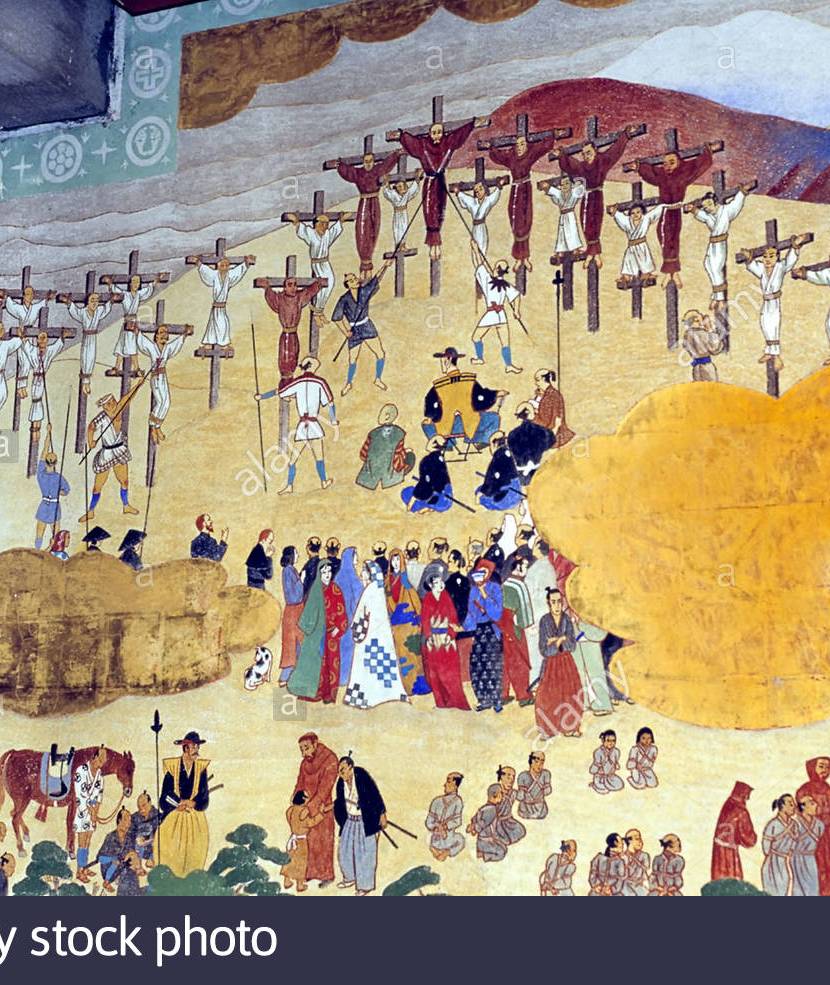
When doing some research about Saint Paul Miki and the other Martyrs, I learned that Christianity in Japan dates back to the mid-16th century with Saint Xavier bringing Catholicism to Japan. Initially, Christianity was rather well received in Japan because the government felt it would assist in the trade with Spain and Portugal, as well as limit the power that the Buddhist monks had within society. Unfortunately, this support did not last long because the government saw how the Spanish gained control of the Philippines through colonialization, and the local government had no real power. Practicing Christianity in Japan was banned in the 17th century and if anyone refused to give up their faith would be executed. In turn, Christianity became an underground religion until the return of missionaries in the 19th century. During the time of the persecution over 200 people were killed in a forty year span, and they came from various walks of life; some laity including children, while others were diocesan priests or belonged to the Jesuit, Franciscan, and Dominican religious orders.
Even though there were a large number of Japanese Christian martyrs who were beatified in 1867 and 1981, Saint Paul Miki and his companions belong to a group of 26 martyrs who were canonized by Pope Pius IX in 1862. What makes Paul Miki special is that he was the first Japanese Christian to belong to any religious order – the Jesuits. Along with the other 25, he was crucified one month prior to his ordination.
As we see in the reading from Genesis, God has started to create things of this Earth and each has its specific purpose. We do not get to see the part of the Creation story where God creates humans, but we are part of that story. EVERYTHING, including humans, has a purpose intended of us by God. We are to be stewards of Creation, and be evangelists of the Gospel. These are part of our mission, regardless if others reject and persecute us for our faith; just as the Japanese government persecuted Christians and those defending their faith were executed for not abandoning the faith.
Saint Paul Miki and his companions mirrored the Gospel reading. As missionaries, they ministered to the people of Japan, doing whatever had been called of them by God. We see in the Gospel that people from all over sought care and healing from Jesus. We know how the story ends, yet Jesus had His purpose; he was on Earth to preach the Good News of God, even until death on the cross.
We as Christians today, do not face a banning of our faith by our governments, yet there are times in which we need to stand up for our faith because of persecution of non-believers. We may even be attacked by other Christians because of certain beliefs about social issues. It may seem so easy to just give in and “follow the masses” to avoid the persecution, but we need to defend the faith and hold to our principles when they teach the Gospel. The life and mission Saint Paul Miki and all of the Christian martyrs is the example we should look to in our everyday Christian life.
Father, provide us with the strength and courage to defend the faith every day of our lives, especially when it seems so easy to just give in to avoid persecution. This we ask through Christ, Our Lord. Amen.

Salt, Light, and Us ~ The Rev. Dcn. Scott Brown, OPI

Gospel
MT 5:13-16 Jesus said to his disciples:”You are the salt of the earth. But if salt loses its taste, with what can it be seasoned? It is no longer good for anything but to be thrown out and trampled underfoot. You are the light of the world. A city set on a mountain cannot be hidden. Nor do they light a lamp and then put it under a bushel basket; it is set on a lampstand, where it gives light to all in the house. Just so, your light must shine before others, that they may see your good deeds and glorify your heavenly Father.”
Ready? OK – here goes!
In Jesus’ first parable he compares us to salt. “You are the salt of the earth, but if salt loses its taste, with what can it be seasoned?” This means that although salt has many uses, its primary use is as a seasoning to enhance the flavor of other foods. Jesus is telling us here that we are the seasoning that enhances the rest of the world. People put salt on watermelon and tomatoes, however they very seldom ever say “That watermelon makes that salt taste great.” The job of salt is to make you realize how great the salt is, but how great the salted food is.
Some other uses of salt:
1: Antiseptic to cleanse wounds. We can be the antiseptic for the world and cleanse the wounds of those who are hurting, broken or damaged. The only problem with using salt as an antiseptic is that it can be painful. Hence the phrase “pouring salt in an open wound”. Salt has a bite to it, but sometimes that is what we need to help us heal from the infection of sin.
2: Preservative to keep foods fresh. As Christians, we can be the preservative of our faith. By preserving our faith, we keep it attractive so that others are not put off by it and are drawn to it.
3: Fertilizer to condition soil and help crops grow healthy and strong. Jesus would want us to cultivate or faith as if it were a crop that farmers grow for sustaining life. One of the myths that surround fertilizers is that the salts they contain are “harsh” on the biology of the soil. The reality is that salt is essential to all of life. Either too much or too little can harm.
4: Catalyst: cat·a·lyst (Websters definition)
noun
a substance that increases the rate of a chemical reaction without itself undergoing any permanent chemical change.
- a person or thing that precipitates an event.
We should be the catalysts that Jesus wanted us to be. We should precipitate events that direct souls to our Lord.
Can you live without salt? This is the answer from the Johns Hopkins website:
No, life cannot exist without salt. It’s the sodium in salt that causes most of the problems. The human body can’t live without some sodium. It’s needed to transmit nerve impulses, contract and relax muscle fibers (including those in the heart and blood vessels), and maintain a proper fluid balance.
In verse 14-16 Jesus says, “You are the light of the world. A city set on a mountain cannot be hidden. Nor do they light a lamp and then put it under a bushel basket.” This one is very simple – we are to spread the light of His love to the rest of the world. Sin is dark and keeps the world smothered in darkness. Jesus commands us to cover up that dark sin with the light of his love and forgiveness. The world is lost and without direction without the light of Jesus’s love. Imagine this – you are blindfolded and taken to a place you have never been before. When the blindfold is removed, you find yourself in a totally dark room, but you don’t know what else is in the room. There could be furniture, but you don’t know for sure. There could be stairs, but you don’t know for sure. There could be windows, but you don’t know for sure because you can’t see anything. You are going to have a hard time moving around safely and confidently because you can’t see where you are headed, or what is in front of you. You are given instructions to find your way out of the dark room. This would be a daunting task since you have no idea where the door is, where anything is. Imagine the chaos as you bump into furniture and chairs, as you trip over small objects. As you are feeling your way around the dark room, you find what feels like a flashlight and switch it on. The dark room is the world full of sin, and the we as Christians are the flashlight. Once the flashlight is switched on we have a path to follow and we know where all the obstacles are.
“A city set on a hill cannot be hidden” In Jesus’ day there was no air conditioning. The only air conditioning they had was the breeze. Anybody who has ever lived in West Virginia knows that when you live in a valley there is no breeze, but when you put your single wide on the top of the hill you always have a nice breeze blowing. They built their cities on top of the hills for this reason, and because cities are on hills are easier to defend than ones built in valleys. Jesus’ point, however, is not a city’s defense, but its visibility because of its elevated position. Most cities in Jesus’ day were constructed largely of white limestone and placed on a hilltop to reflect the bright sun rays, allowing visibility from miles away. At night, the white marble mirrored both the moonlight and burning lamps, acting as a beacon for directing travelers toward the city. Similarly, as disciples our light ought to make it easier for people to find their way to God. We are a city set on a hill that should be elevated and easily visible so that all the world can see the Jesus in us.
“Nor do they light a lamp and then put it under a bushel basket; it is set on a lampstand, where it gives light to all in the house. Just so, your light must shine before others, that they may see your good deeds and glorify your heavenly Father.” This needs little explanation but I will try to elaborate as much as I can here. You wouldn’t turn on a lamp in a dark room and then cover it with a basket and block out the light. That would be a waste of time, energy, and electricity. In Jesus’ day lamp oil was very expensive and was not to be wasted, much like electricity today. So, what Jesus meant was that we should be beacons of His love in all that we do. Don’t hide the fact that we are Christians, proclaim it in everything we do and everywhere we go. In our daily lives at work, in school, and in our social situations we should be showing our God off to everyone we meet.
Lord: in your mercy please show us how to be better Christians, brighter lights of your love, and cities with open and welcoming gates. Show us how to remove the basket from our lights so that our beams may shine farther and brighter. In Jesus name, Amen.
The Presentation of the Lord ~ Br. Chip Noon, Novice
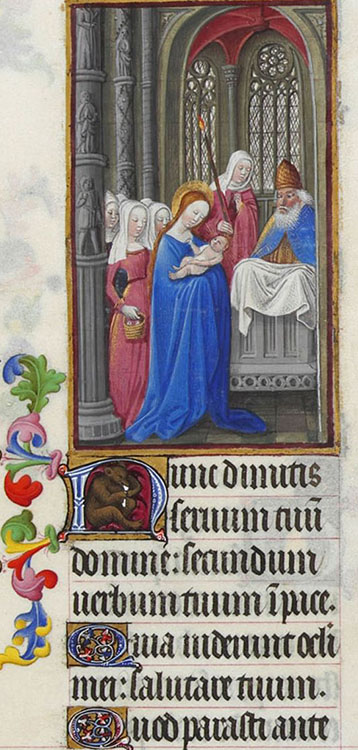
©Photo. R.M.N. / R.-G. Ojéda
Lord, now let your servant depart in peace…
In today’s feast, we have a recently born baby being recognized as the Light of the World by a man who will soon depart this life. And we have the first real acknowledgment of the end of the old order and the beginning of the new.
How is this?
Jesus was presented in the temple on this day, 40 days after his birth, in fulfillment of the Mosaic law as we read in Exodus 13:13–16: “Every firstborn of man among your sons, you shall redeem.” This act was supposed to occur on the 31st day after the birth, but for various reasons the Church Fathers attributed it to the 40th day. The first born was to be “redeemed.” That is, through the payment of 5 shekels, the firstborn male child was to be freed from his obligation to serve the Lord as a priest, according to ancient Hebrew practice.
You’ll have to read about the Golden Calf and the refusal of the Tribe of Levi to participate in this abomination to get the full meaning of this idea.
But here, we have Mary and Joseph obliged by the Law of Moses coming to Jerusalem to present their son in the temple. Which is contrary to what the author of Hebrews tells us in today’s second reading:
…therefore, he had to become like his brothers and sisters
in every way,
that he might be a merciful and faithful high priest before God
to expiate the sins of the people.
So even though Jesus had been redeemed from priestly functions shortly after his birth, we now know him as a priest, one who redeemed us from our sin by becoming a sacrifice himself. Why did he become a high priest? Wasn’t he redeemed from this obligation by the ceremony celebrated today?
The Feast of the Presentation of the Lord acts as a crossroads for us and for the world. It is foretold in today’s second reading from Malachi: “But who will endure the day of his coming? And who can stand when he appears….Then the sacrifice of Judah and Jerusalem will please the Lord.” It is where Simeon realizes that God’s promise to him that he would not come to the end of his days before seeing the Messiah, who is a newborn baby just starting his life, has been fulfilled. And Anna, also in the temple that day, prophesies the redemption of Jerusalem. And the law is upended since the redeemed firstborn of Mary and Joseph is actually a high priest in the line of Melchizedek. And the world is made new now and forever, as we read in 2 Corinthians 5:17: “Therefore, if anyone is in Christ, the new creation has come: The old has gone, the new is here!”
And by this, I think St. Paul means that with each person coming to Jesus, there is a new creation and a further erosion of the old order.
So although all this is not realized until the establishment of the Eucharist and the Resurrection, it is here, on this feast day, The Presentation of the Lord in the temple that the funnel of the old world closes down to its narrowest point and the trumpet of the new creation sounds out the clarion call for us all: “Repent! The Kingdom of God is at hand.”
Let me go back to Simeon’s idea that Jesus was to be a sign that will be contradicted. Listen to Psalm 24 from today:
Lift up your heads, O ye gates; and be ye lift up, ye everlasting doors; and the King of glory shall come in.
Who is this King of glory? The LORD strong and mighty, the LORD mighty in battle.
Lift up your heads, O ye gates; even lift them up, ye everlasting doors; and the King of glory shall come in.
Who is this King of glory? The LORD of hosts, he is the King of glory.
On the one hand, we have Jesus, gentle and mild. On the other, Jesus the lord of armies. If this isn’t a contradiction, what is?
My brothers and sisters, this will also have to wait for another sermon. Along with references to Candlemas and Groundhog Day which are also celebrated today.
But finally, we know that Jesus was taken back to Nazareth by his mother and father and there he grew in wisdom and strength. In one month we will enter the Lenten season. Then we shall know the real meaning of the end of today’s second reading:
Because he himself was tested through what he suffered,
he is able to help those who are being tested.
Lord, help us to recognize our salvation which you have prepared in our sight. Help us to revel in his glory and bring that light to the rest of our world.
Amen.

Blessed Are the Peacemakers! ~ Dcn. Dollie Wilkinson, OPI

Last week was marked by a momentous occasion. A new, and very controversial president was sworn in. I cannot remember any past President being the target of so much hate. His family (including his children) has also been the targets of rumors, innuendos, and blasting from the media. While I do not agree with his policies, his plans for our country, or his stance on many key issues, I cannot reconcile the behavior and hateful words that have been shared on social media. Even a few of my fellow clergy have gone so far as to spread messages of hate. But this is not the message we get from the teachings of Jesus Christ. In His Sermon on the Mount (Matthew 5:1-12), He offers to reassure His disciples that though they face hardships and trials, theirs is the kingdom of heaven.
5:1 When Jesus saw the crowds, he went up the mountain; and after he sat down, his disciples came to him.
5:2 Then he began to speak, and taught them, saying:
5:3 “Blessed are the poor in spirit, for theirs is the kingdom of heaven.
5:4 “Blessed are those who mourn, for they will be comforted.
5:5 “Blessed are the meek, for they will inherit the earth.
5:6 “Blessed are those who hunger and thirst for righteousness, for they will be filled.
5:7 “Blessed are the merciful, for they will receive mercy.
5:8 “Blessed are the pure in heart, for they will see God.
5:9 “Blessed are the peacemakers, for they will be called children of God.
5:10 “Blessed are those who are persecuted for righteousness’ sake, for theirs is the kingdom of heaven.
5:11 “Blessed are you when people revile you and persecute you and utter all kinds of evil against you falsely on my account.
5:12 Rejoice and be glad, for your reward is great in heaven, for in the same way they persecuted the prophets who were before you.
As we read through these teachings of Jesus to His disciples, we learn much about what is not only awaiting us in the future, but also what we can expect now. For those who have lost hope, like so many did after the recent election, we are reassured that the kingdom of heaven (God’s love and comfort), is with us right now (“Blessed are the poor in spirit, for theirs is the kingdom of heaven.”). Jesus then goes on to describe the blessings for those who are sad, who are humble in spirit, who may be down on their luck, who always tries to do whats right, and who always strives to treat others fairly. While not promising riches or fame, Jesus is offering something more precious.
In this time of turmoil in our country, Jesus teaches us to be peacemakers. “Blessed are the peacemakers, for they will be called children of God. Blessed are those who are persecuted for righteousness’ sake, for theirs is the kingdom of heaven.” (Matthew 5:9-10). We are also cautioned to hold our tongue ( “Blessed are you when people revile you and persecute you and utter all kinds of evil against you falsely on my account). Though we may disagree with the policies and practices of the new President, we should not use this time as an opportunity to spread poison, whether in our speech or through our actions.
Instead of spreading hate, we should be spreading hope. Instead of pushing people away (because we may disagree with their ideals), we should be pulling people in to our faith, teaching them about the love of Christ. Instead of teaching our children its ok to hate someone because of the color of their skin, their sex, their choice of partner, or their religion, we should be setting an example of love for all human kind. Peace begins with us, the children of God.
A Prayer for Our Country:
Almighty God,
bless our nation
and make it true
to the ideas of freedom and justice
and brotherhood for all who make it great.
Guard us from war,
from fire and wind,
from compromise, fear, confusion.
Be close to our president and our statesmen;
give them vision and courage,
as they ponder decisions affecting peace
and the future of the world.
Make me more deeply aware of my heritage;
realizing not only my rights
but also my duties
and responsibilities as a citizen.
Make this great land
and all its people
know clearly Your will,
that they may fulfill
the destiny ordained for us
in the salvation of the nations,
and the restoring of all things in Christ.
Amen
 The Order of Preachers, Independent
You must be logged in to post a comment.