
Category: Lesson
Moved By Mercy – 31st Sunday in Kingdomtide ~ Br. Michael Marshall, Novice
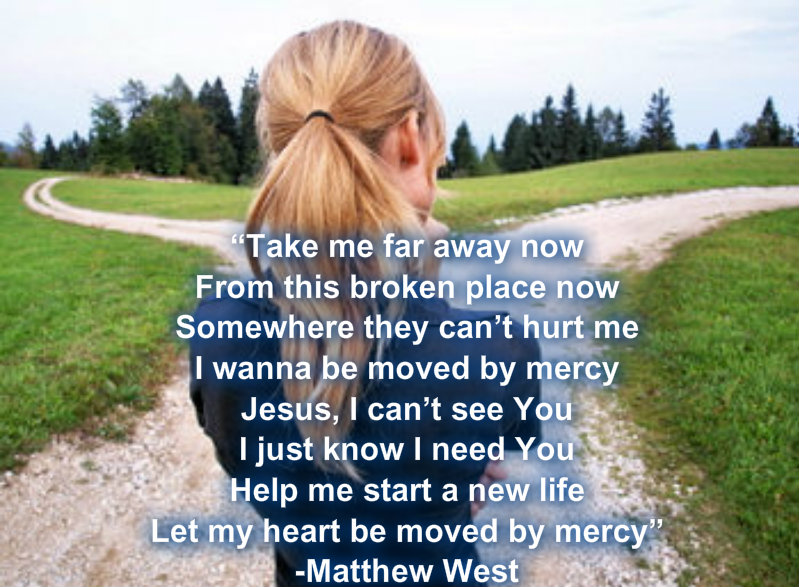
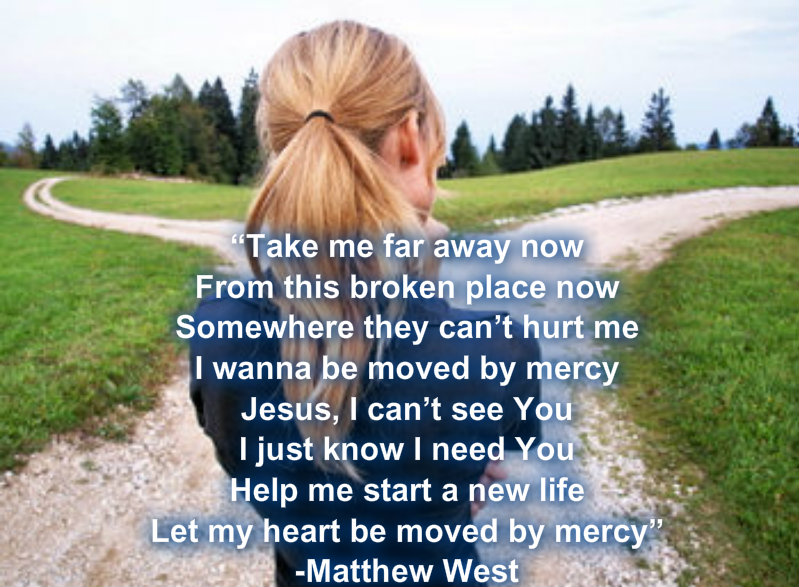
There is a song by Matthew West titled, “Moved By Mercy” in which some lyrics are applicable to today’s readings. In the song, Matthew West coveys that there is a dialogue between a young woman and Jesus, and he tells her that things of the past no longer have to haunt her because she has reached out and asked for mercy. Her plea is stated as follows:
“Take me far away now
From this broken place now
Somewhere they can’t hurt me
I wanna be moved by mercy
Jesus, I can’t see You
I just know I need You
Help me start a new life
Let my heart be moved by mercy.”
Jesus responds by saying:
All the hurt that you hide behind that door
I’m not gonna let it hurt you anymore.
And so later in the song the woman says:
“For so long I felt so unworthy.”
Jesus again responds with:
“I’m the one who began a good work in you
And I’m the one who is gonna see it through,
I’ll see you through.”
As well as:
“But in My arms all your shame is moved by mercy
So here I stand, a child undeserving
Take My hand and let your heart
Be moved by mercy.”
Lyrics: Matthew West
© Sony/ATV Music Publishing LLC, Warner/Chappell Music, Inc.
We see in the Reading from the Book of Wisdom that the author writes:
“But you spare all things, because they are yours, O LORD and lover of souls, for your imperishable spirit is in all things! Therefore you rebuke offenders little by little, warn them and remind them of the sins they are committing, that they may abandon their wickedness and believe in you, O LORD!”
And we see in the Gospel that Jesus looks up at Zacchaeus because he wants to establish a relationship while staying in his home. Zacchaeus is a tax collector, who the town’s people see as a sinful person. Even though it is not explicitly stated in the Gospel Reading, we understand that this relationship has more to do with ministry rather than needing a place to stay while in Jericho. As the town’s people are upset because Jesus wants to stay in Zacchaeus’ home, Zacchaeus understands this purpose; which again is not explicitly stated. Zacchaeus then asks for mercy for what he has committed against God and toward the town’s people by saying:
“Behold, half of my possessions, Lord, I shall give to the poor, and if I have extorted anything from anyone I shall repay it four times over.”
And Jesus shows mercy toward Zacchaeus by saying: “Today salvation has come to this house because this man too is a descendant of Abraham. For the Son of Man has come to seek and to save what was lost.”
How do the story of the young woman and the Readings apply to us??? Well, it is quite simple and straightforward! Unlike Jesus, we were born into the world not free of sin. That does not mean we sin the minute we come out of our mother’s womb, but rather we sometimes get caught up in things of this world which go against God. We follow the bad example of others, even if we know it is wrong. That is simply part of being human, as much as our baptism has washed away our sins. But when we do sin, we go to the Sacrament of Reconciliation to ask for forgiveness. But ultimately what this sermon is about is how we need to truly change our ways and not just ask for mercy, but to follow through with living a pure and holy life after asking for mercy. Just because we ask for mercy, and receive it, does not mean we can go on living with the mentality of “Well, God will forgive me” and return to our old ways. Because we asked for mercy, and we have been granted that mercy, we must strive to not turn back. The priest even says to us, “Your sins have been pardoned, and therefore go forth and sin no more.”
Father, when we ask for mercy, may we truly remember to truly live a holy and pure life because we asked for the mercy. This we ask through Christ, Our Lord. Amen.
What’s Your Passion? The Feast of Sts Simon and Jude ~ The Rev. Lady Sherwood, OPI
Today’s Holy Gospel reading : LK 6:12-16
Jesus went up to the mountain to pray, and he spent the night in prayer to God. When day came, he called his disciples to himself, and from them he chose Twelve, whom he also named Apostles:
Simon, whom he named Peter, and his brother Andrew, James, John, Philip, Bartholomew, Matthew, Thomas, James the son of Alphaeus, Simon who was called a Zealot, and Judas the son of James, and Judas Iscariot, who became a traitor.
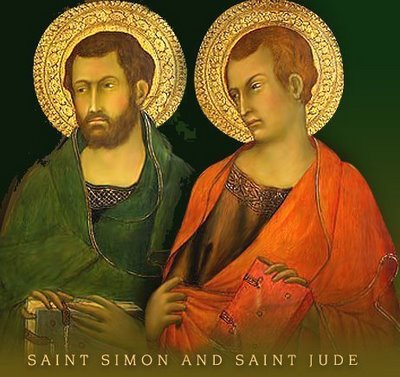
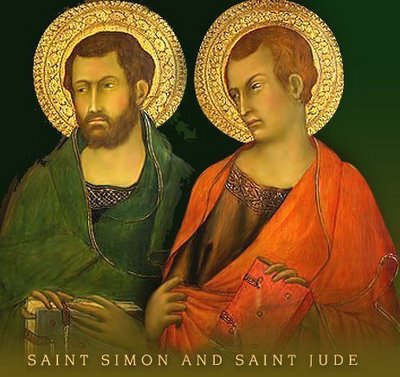
Our Lord Jesus Christ spent all night in prayer to his Father as he knew he was about to undertake the vast task of choosing the Apostles who would be the ones to deliver his Holy Word to the world and this was obviously far from an easy task. Today, we come together to celebrate the Feast day of two of these Apostles that our Lord chose, namely that of St. Simon (called the Zealot) and of St. Judas (the son of James who we also call St. Jude). The disciples were guaranteed to fall out with each other because they were such different characters.
Although the Holy scriptures don’t really tell us about Simon and Jude, we should remember that it does say quite a lot about the disciples as a group, and that includes Simon and Jude. So we can say that Jesus chose them to be his disciples after a night in prayer and they responded readily, allowing their lives to be turned upside down; they lived with Jesus for three years; they saw the miracles; they heard his teaching; they had their moments of confusion and their moments of wonder; they fled when Jesus was arrested; they were present in the upper room when he revealed himself as risen from the dead; they saw him ascend into heaven; they were filled with the Holy Spirit at Pentecost; they faced persecution from the religious authorities; they became leaders in the early church in Jerusalem.
Today’s gospel scripture had some difficult things to say about what the disciples were to face as a result of their love of Jesus: they would be hated and they would be persecuted for his sake. That was certainly true of Simon and John. Jesus describes them in the gospel as people who were to testify in the power of the Holy Spirit because were with him from the beginning of his public ministry.
Tradition tells us that both Simon and Jude ended up in Persia where they were martyred around AD 65, Simon (gruesomely) was sawn in two.
So what are we passionate about within our lives? Most of us want to be faithful to God day by day and who have things about which we are passionate. Our faith should be our one and main passion. In the midst of ordinary life, what is God calling us to do with our passions? Are we willing to follow Simon and Jude in forsaking everything for the sake of the gospel? That affects decisions about our whole lives: careers, money, time. Students and young people: what are we going to do with our lives? What gifts and passions has God given to each of us that we can use to proclaim the gospel? I’m a strong believer that God works with rather than against our gifts, so if we have skills and interests these should be used to serve God. But God opens up all sorts of unexpected doors, as he did for Simon and Jude who probably never dreamed of going beyond their local area. So we should ask ourselves how we can offer our gifts and passions to God in his service. For those of us who have made decisions that shape our lives, are we open to God asking us, even late in life, to do something new?
Following his death, St. Jude’s body was brought to Rome and left in a crypt in St. Peter’s Basilica. Today his bones can be found in the left transept of St. Peter’s Basilica under the main altar of St. Joseph in a tomb he shares with the remains of the apostle Simon the Zealot.
Pilgrims came to St. Jude’s grave to pray and many reported a powerful intercession, leading to the title, “The Saint for the Hopeless and the Despaired.” Two Saints, St. Bridget of Sweden and St. Bernard, had visions from God asking them to accept St. Jude as “The Patron Saint of the Impossible.”
Humble Grace ~ The Rev. Dcn. Dollie Wilkinson, OPI
As I read through this week’s Bible readings, I am reminded of an old saying my Grandmother would quote, “The meek shall inherit the earth” (Matthew 5:5). In studying the following passages, we are reminded that “Then everyone who calls on the name of the Lord shall be saved” (Joel 2:32). Those whom He calls, will not only be saved, but shall also carry His message to the rest of the people, for in their meekness and humbleness, they shall be rewarded. In reading Paul’s letter to Timothy hints at this fact. That he has endured persecutions of all kinds that have generated wear and tear on his body, mind and soul, traipsing all over the Roman world preaching the gospel of Jesus Christ. Paul has had many encounters defending the gospel but he realizes that the race was all worth it. He says, “I have fought the good fight, I have finished the race, I have kept the faith.”
2 Timothy 4:6-8, 16-18
“As for me, I am already being poured out as a libation, and the time of my departure has come. I have fought the good fight, I have finished the race, I have kept the faith. From now on there is reserved for me the crown of righteousness, which the Lord, the righteous judge, will give me on that day, and not only to me but also to all who have longed for his appearing. At my first defense no one came to my support, but all deserted me. May it not be counted against them! But the Lord stood by me and gave me strength, so that through me the message might be fully proclaimed and all the Gentiles might hear it. So I was rescued from the lion’s mouth. The Lord will rescue me from every evil attack and save me for his heavenly kingdom. To him be the glory forever and ever. Amen.”
Though Paul did everything required of him, all for the glory of Jesus Christ, we are cautioned by the following parable to guard ourselves against boastfulness.
Luke 18:9-14
“He also told this parable to some who trusted in themselves that they were righteous and regarded others with contempt: “Two men went up to the temple to pray, one a Pharisee and the other a tax collector. The Pharisee, standing by himself, was praying thus, ‘God, I thank you that I am not like other people: thieves, rogues, adulterers, or even like this tax collector. I fast twice a week; I give a tenth of all my income.’ But the tax collector, standing far off, would not even look up to heaven, but was beating his breast and saying, ‘God, be merciful to me, a sinner!’ I tell you, this man went down to his home justified rather than the other; for all who exalt themselves will be humbled, but all who humble themselves will be exalted.” “
We are reminded here that it is not they who seemingly flaunt their righteousness that God calls, but those who may at first appear to be the least deserving of us to receive God’s blessing and grace. “ Then afterward I will pour out my spirit on all flesh; your sons and your daughters shall prophesy, your old men shall dream dreams, and your young men shall see visions. Even on the male and female slaves, in those days, I will pour out my spirit. “ (Joel 2:28-29).
In the parable as told in Luke, we are cautioned to always remember that though we may follow the rules set down by man, or by a certain Church, or even our local pastor, it is no guarantee that we will have a place in Heaven. It is what is truly in our heart, whether we be saint or sinner, prostitute or preacher, homeless vagrant or humble Sister, that assures us the blessings and grace of our loving Father.

Do It Anyway: The Feast of St. Luke ~ Br. Michael Marshall, Novice

There are moments in our lives when our boss entrusts us with a new task which has not been part of our ordinary job duties. Because this task is new to us, it may seem overwhelming at first and we just want to throw our hands up in the air and tell our boss it cannot be done. And there may be times when we demand recognition for taking on the task and expect praise for putting effort into actually accomplishing what was asked of us; and when we do not receive recognition and praise, it leaves us feeling discouraged. But it is important to press on and do our jobs well regardless because that is our responsibility. It might sound a little strange, but being and living as a fully active Christian is much like our work environment. We can see this being the case in early Christianity through the Readings for today.
We see in the Gospel, that Jesus is commissioning his disciples to go out and preach the Good News. Jesus’ instructions indicate that the task will not be easy, and that not everyone will be receptive of the message; yet still put forth the effort at all cost, giving adequate attention to each household. Imaging the disciples thinking about what has just been entrusted to them; some might have been excited, while others might have felt a little hesitant. Yet they all did it!
In Paul’s Second Letter to Timothy, we read about Paul’s lamenting of feeling abandoned by his peers, other than Luke, and pleading to Timothy to bring other disciples for the mission to the Gentiles. Paul also asks Timothy to bring a cloak and papyrus rolls – important items to continue to carry out the mission entrusted to the disciples. As Paul continues to write to Timothy, he states that he has not thrown his hands up in the air, and knows he has been able to press on to fulfill the mission because of the guidance of the Lord.
So… How does this apply to us today??? Scripture is not pertinent to only a specific period in time, but rather is very relevant for ALL generations. Jesus’ Commissioning was not only for his direct disciples, but is also directed toward us. We may not be walking on foot from town to town and entering houses like the early Christian disciples did, but we are to reach out and preach the Good News. But, how do we do this if we do not enter a household??? This task is as simple as the wonderful saying by Saint Francis of Assisi – “Preach the Gospel always, when necessary use words.” It is as simple as loving our neighbor speak or paying it forward at a restaurant, but we must never be shy to speak of Jesus when it deems necessary. There are instances in which we want to mind our “P’s and Q’s” because we might think it is not our place to remind someone of WWJD, BUT sometimes we have to verbally preach! It might fall upon deaf ears, yet it just might also hit home with some people, so we need to keep pressing on and do our job as our boss has asked of us.
Father, may we understand that we have been asked of a great task as followers of Jesus, regardless of how difficult the task is. He has commissioned us, just as he commissioned his disciples, to preach the Good News. Let us answer this call. This we ask through Christ, Our Lord. Amen!

The Feast of Our Lady of the Rosary ~ Mark Patrick, Aspirant
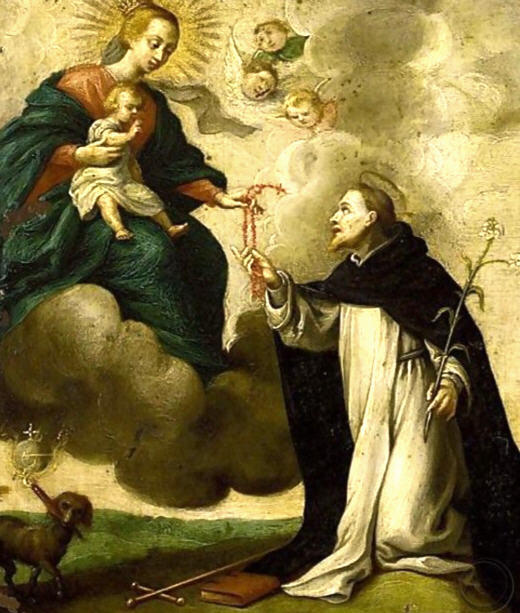
Today the Church honors the Blessed Mother of Our Lord under the title of Our Lady of the Rosary. This great feast, up until the 16th century, was a day to honor Our Lady of Victory. The feast was changed to Our Lady of the Rosary by Pope St. Pius V following a naval victory which helped to secure Europe against the invasion of the Muslim Turks. Pius attributed that great victory of the “Catholic Powers” – Genoa, Spain, and the Papal States – to the intercession of the Blessed Virgin Mary, who was invoked that day by a great campaign across the whole of Europe to pray the Rosary for the cause. Crew members on more than 200 ships prayed the Rosary to prepare for the battle, and Christians across the European continent joined in. The significance of the title of Our Lady of the Rosary is a very important one, as it reminds us Christians of the strength and great blessing we are given in the recitation of the Rosary. It reminds us that Our Lady is ever interceding on our behalf to her Son. That she is also known as Our Lady of Victory is also important for us, as it reminds us that through her intercession, Our Lady helps us to have victory over the battles of our lives.
The Rosary is especially important to us as Dominicans. Tradition holds that, in the year 1214 Saint Dominic, the founder of the Order of Preachers, was in anguish because he was failing in his attempt to convert the Albigensian Cathar heretics. St. Dominic attributed this to the deepness and gravity of sinfulness of the heretics and the poor example of Catholics. He went alone in to the forest and wept and prayed continuously for three days to appease the anger of Almighty God. He flogged his body and scourged his flesh. From the fasting, pain, and exhaustion, he passed in to a coma.
Dominic experienced an apparition of Blessed Mother Mary while in the coma, which forever links Saint Dominic and the Rosary. The Immaculate Mary with three angels appeared and asked St. Dominic, “Dear Dominic, do you know which weapon the Blessed Trinity wants to use to reform the world?” Dominic’s response was Blessed Mary knew better than he because she is a part of our salvation.
Mary responded, “I want you to know that, in this kind of warfare, the battering ram has always been the Angelic Psalter* which is the foundation stone of the New Testament. Therefore if you want to reach these hardened souls and win them over to God, preach my Psalter.”
Shortly after this apparition he preached the Holy Rosary to the unconverted Albigenisan heretics. To modify the Paternoster (150 Our Father’s) and in compliance with the instruction in the apparition, the design of the Saint Dominic Rosary came in to being. He set apart fifteen mysteries of the rosary, grouped them in to three sets of five decades each.
In our Gospel reading for today, Jesus is confronted by the crowd who said that he was casting out demons by demonic works. Jesus responds by saying “If it is by the finger of God that I drive out demons, then the Kingdom of God has come upon you.” He states that one who is strong and well prepared can guard his own house, and he then goes on to tell a parable, a story to his disciples, about the importance of remaining strong against attack and of maintaining strength of heart and of faith, in order to resist things that are evil. He says that when an unclean spirit is cast out, it comes back ever stronger than before, and even brings friends with it, “and the last condition of that man is worse than the first.”
How true it is that sometimes we tend to feel as though just when we overcome some ordeal, whether it be physical, emotional, mental, or spiritual, and we are relieved when it is over, and we let down our guard, that something yet worse and yet stronger over us takes hold and starts to wreak its own havoc within us or in our life situation. We become unprepared because we have stopped praying, stopped seeking the will of God, stopped listening to His Word and direction for our lives.
What a great resource that we have in the Blessed Mother, Our Lady of the Rosary, Our Lady of Victory to strengthen us, to intercede for us on our behalf. We have this blessing in the prayer of the Rosary, an invaluable tool and weapon in our fight against evil in the world and beyond it. When I was a Roman Catholic seminarian, a gentleman once told us seminarians as we were about to pray the Rosary, “Gentleman, get out your weapons. It’s time to pray the Rosary.” The fight we fight is truly spiritual, and the Rosary and our Blessed Mother help to give us the strength to fight without weakness.
Let us trust in the Lord, and talk to Our Mother, who leads us to her Son. Let us allow her to pray for our strength, that our spiritual armor might be built up for the building up of the Kingdom of God, and that we might fight the assault of the enemy. Amen.
Living the Life of Faith ~ The Rev. Lady Sherwood, OPI

Gospel reading: Luke 17:5-10
5 The apostles said to the Lord, “Increase our faith!”
6 He replied, “If you have faith as small as a mustard seed, you can say to this mulberry tree, ‘Be uprooted and planted in the sea,’ and it will obey you.
7 “Suppose one of you has a servant plowing or looking after the sheep. Will he say to the servant when he comes in from the field, ‘Come along now and sit down to eat’? 8 Won’t he rather say, ‘Prepare my supper, get yourself ready and wait on me while I eat and drink; after that you may eat and drink’? 9 Will he thank the servant because he did what he was told to do? 10 So you also, when you have done everything you were told to do, should say, ‘We are unworthy servants; we have only done our duty.’”
In today’s Gospel reading, we hear the disciples asking Jesus to increase their faith. I am sure most of us at some point in our lives have asked similarly.
If I had only more faith, we say if things are difficult in our lives. We say things such as, “if only I had more faith, maybe that person wouldn’t have got Ill, or wouldn’t have died” or “if I had more faith, I wouldn’t suffer like this or have that in my life, or I would be a better person”. I admit, there have been times when I have thought exactly as the disciples did in today’s Gospel reading.
However, living by faith is not something that comes in sizes or in measurable quantities. It is not a bargaining chip that we can use to gain favour or our own personal wants from God.
Faith is a true loving relationship that we have with Our Lord and is something which we must live fully each and every day of our lives. Living a faithful life does not mean that we will not suffer hardships and pain within our lives. The righteous are not exempt from suffering, just because a person may be ill or poor does not make them a sinner. We must not confuse wealth with approval of God or illness with sin (see Matt 9:21=22 and Jn 9:2=3).
It is living as one with God in all our daily words and deeds and doing it to our utmost with all that we are. Living a faithful life doesn’t even mean that we have to always agree with everything that our Lord tells us, but that out of love we learn to live as one to the best of our ability.
A good example is if we look at a good marriage or partnership, the two out of love for each other, live as one, they are faithful to each other in all things even if they may not always agree with each other.
Living a faithful life, is living to the best of our ability as Our Lord would live, we are all one in Christ and should strive to live this fully within our daily lives.
It is Loving each other, accepting each other and forgiving each other. It is walking with each other on this path of life and helping our brothers and sisters who stumble along the way.
We know that God will only do what is good for us as his children and that he has plans only for our good as the following scriptures clearly tell us:
And we know that in all things God works for the good of those who love him, who have been called according to his purpose (Rom 8:28).
For I know the plans I have for you” declares the LORD, “Plans to prosper you and not to harm you, plans to give you hope and a future (Jer 29:11).
A true example of living the life of faith can clearly be seen in the story of Job. The story of the life of Job is one of faith, endurance, and of patience winning out against amazing odds.
Job was subjected to three tests=the first was to accept without sinning, the loss of his possessions and offspring (Job 1:6=22). The second was to endure the destruction of his health without blaming anything on God (Job 2:1=10). The third test was to endure false accusation. Most people would respond to the trials of Job by blaming these evils on God’s inaction, but Job showed humility in the sight of God. He tore his robe, shaved his head, and fell down and worshipped God and throughout all his trials Job never resorted to sinning against God. Job’s life and his faith is an excellent example to all of us as Christians.
Thank You, Lord, for the measure of faith You have given me. I refuse to be moved by outward circumstances, but only by what Your Word says. I will trust in the Lord with all my heart and I will not lean upon my own understanding (Proverbs 3:5). Thank You for saving me! Ephesians 2:8 says, “it is by free grace (God’s unmerited favour) that you are saved (delivered from judgement and made partakers of Christ’s salvation) through [your] faith. And this [salvation] is not of yourselves [of your own doing, it came not through your own striving], but it is the gift of God…”. All of the precious gifts You have given me: salvation, healing, prosperity, etc., are connected to my faith, and it’s impossible to please You without it. I will keep Your commandments, walk in love, stay in the Word and live by faith!

Rich Man, Poor Man~ The Rev. Deacon Dollie Wilkinson, OPI

When I was younger, living in a small town in West Virginia, we were considered poor. Like most of my friends’ parents, even though my Mom and Dad worked full time, we lived paycheck to paycheck. This meant that usually the money ran out before the end of the month. Though our bills were usually paid, there were some months that maybe the electric bill wasn’t paid, or we would get a cut off notice for the water. I remember many months where we would make an impromptu visit to the Salvation Army pantry, to pick up canned goods, dried beans, and if we were lucky, a canned ham. Being a child, and because most of my closest friends’ parents, or grandparents, also did this, I never thought much of it. It was only when I got older, going to junior high school, then high school, that I realized not everyone lived this way. I just assumed everyone wore hand-me-downs, and ate left-overs more than one day a week.
Now as an adult, I realize how poor we were. Though we didn’t have much money, we had plenty of things money couldn’t buy – family, love, contentment, joy, fun, friendship. But of course being a child, I did envy those children who would come back from Christmas break, bragging about the presents they got or where they spent their holiday vacation. When my daughters were growing up, I tried to give them all the material things I lacked as a child – newest, most popular toy, latest fashion in clothes, and any food stuff or snacks they wanted. While also providing them with a loving and safe home, I wished to make sure they never felt deprived, that they never went hungry, that they never wanted for anything (within reason and budget, of course). Now that they are adults, with good paying jobs, they can provide for themselves.
But as adults, we sometimes are like children – so we still want the newest, most popular toy, latest fashion in clothes, and any food stuff or snacks we crave. There isn’t anything wrong with this, as long as we understand that there must be a limit to our material possessions. That just like a child who understands limits, what he or she can or cannot do, or can or cannot have. As adults, especially as children of God, we must recognize that material wealth does have its limits. And that the value that we put on material possessions will hinder us from leading a life of goodness and faith. This is what we are cautioned about in 1 Timothy 6:6-19:
“Of course, there is great gain in godliness combined with contentment; for we brought nothing into the world, so that we can take nothing out of it; but if we have food and clothing, we will be content with these. But those who want to be rich fall into temptation and are trapped by many senseless and harmful desires that plunge people into ruin and destruction. For the love of money is a root of all kinds of evil, and in their eagerness to be rich some have wandered away from the faith and pierced themselves with many pains. But as for you, man of God, shun all this; pursue righteousness, godliness, faith, love, endurance, gentleness. Fight the good fight of the faith; take hold of the eternal life, to which you were called and for which you made the good confession in the presence of many witnesses. In the presence of God, who gives life to all things, and of Christ Jesus, who in his testimony before Pontius Pilate made the good confession, I charge you to keep the commandment without spot or blame until the manifestation of our Lord Jesus Christ, which he will bring about at the right time–he who is the blessed and only Sovereign, the King of kings and Lord of lords. It is he alone who has immortality and dwells in unapproachable light, whom no one has ever seen or can see; to him be honor and eternal dominion. Amen. As for those who in the present age are rich, command them not to be haughty, or to set their hopes on the uncertainty of riches, but rather on God who richly provides us with everything for our enjoyment. They are to do good, to be rich in good works, generous, and ready to share, thus storing up for themselves the treasure of a good foundation for the future, so that they may take hold of the life that really is life.”
In Timothy, we are not told to always go around and be poor. Rather we are cautioned that if we have wealth, if we have a comfortable life with plenty of food on the table, clothed in the latest fashion, or surrounded by nice things, to not be boastful, To share with others as we can, to also “pursue righteousness, godliness, faith, love, endurance, gentleness”. While having nice things is not a sin, worshiping these things above God is. So we must use these material blessings from our heavenly Father to help others, to do good works. How do we do that? Volunteer your time in a soup kitchen, or animal shelter. Donate money to help orphanages overseas, or a local church charity. Offer to cut your neighbors grass, or sit with an elderly friend. Though you may not have wealth, you can still be rich. For as long as you do good works, it is in this richness that you “ may take hold of the life that really is life.”
Got Stuff? ~ The Rev. Lady Sherwood, OPI
Are we true Stewards of God?
Gospel LK 16:1-13
Jesus said to his disciples, “A rich man had a steward who was reported to him for squandering his property. He summoned him and said, ‘What is this I hear about you? Prepare a full account of your stewardship, because you can no longer be my steward.’ The steward said to himself, ‘What shall I do, now that my master is taking the position of steward away from me? I am not strong enough to dig and I am ashamed to beg. I know what I shall do so that, when I am removed from the stewardship, they may welcome me into their homes.’ He called in his master’s debtors one by one. To the first he said, ‘How much do you owe my master?’ He replied, ‘One hundred measures of olive oil.’ He said to him, ‘Here is your promissory note. Sit down and quickly write one for fifty.’ Then to another the steward said, ‘And you, how much do you owe?’ He replied, ‘One hundred kors of wheat.’ The steward said to him, ‘Here is your promissory note; write one for eighty.’ And the master commended that dishonest steward for acting prudently. “For the children of this world are more prudent in dealing with their own generation than are the children of light. I tell you, make friends for yourselves with dishonest wealth, so that when it fails, you will be welcomed into eternal dwellings. The person who is trustworthy in very small matters is also trustworthy in great ones;and the person who is dishonest in very small matters is also dishonest in great ones. If, therefore, you are not trustworthy with dishonest wealth, who will trust you with true wealth? If you are not trustworthy with what belongs to another, who will give you what is yours? No servant can serve two masters. He will either hate one and love the other, or be devoted to one and despise the other. You cannot serve both God and mammon.”
In today’s Gospel we are hearing the Parable of the dishonest Steward. Each of us are also stewards to the Lord our God. A steward is a person who manages property or money for the true owner. We are all stewards because God created all and is the true owner of all. Are we true and honest stewards of God within our lives, or are we like the steward in the Gospel reading today? How many times do we see the possessions and resources we have been charged with as our own? How many times do we use these for our own human purposes instead of in the way that God who truly owns them, has entrusted us to use them for his glory?
Everything upon the earth belongs to God our heavenly Father, not only material things and resources, but also all of our brothers and sisters, who God also created.
In truth we are all less than worthy stewards because we each fall short of the Glory of God. We are called to love each other as God loves us, to feed and clothe the poor and to the spread the true word of the salvation of God to all upon his earthly Kingdom. Do we love all as we ought? Do we use all that has been entrusted to us to teach, feed and nourish the children of God as our Father asks of us, or do we wallow in materialism and Greed? We cannot serve two masters, both God our Father and earthly wealth and possessions. We shall all be brought to account for our way of undertaking the stewardship that we have been given. Let us pray to our heavenly Father to ask for his guidance in being the true stewards that he has called each of us to be:
Heavenly Father,
You are an amazing God—steadfast in your love, abundant in your mercy, and wise in your actions. You are a wonderful creator God who has provided a magnificent creation with abundant resources for us to enjoy. We recognize our sinfulness and thank you for your mercy and grace extended to us through Jesus on the cross.
Your word tells us in James 1:5 that those who ask for wisdom in faith will receive it. Today, we pray for wisdom and for understanding in how to best steward the resources you have given while demonstrating love toward our fellow brothers and sisters.
Lord, we desire to be good stewards. We do not want to waste resources or use them selfishly with sinful desires of personal gain. Yet, we understand that the second greatest commandment is to love others as ourselves. As we create policies that help us protect the environment and use our resources wisely, please grant us wisdom that we will not value the created earth over humans created in your image. Please allow us wisdom to create policies and practices that allow for human flourishing all across the globe.
Allow us to align our priorities with yours in valuing the souls for which you died more than the resources we steward. Allow us to have a greater passion for the Gospel and spreading the Good News that changes lives than we have for making sure the earth never changes. God grant us wisdom to know when to speak and when to act so that we live in such a way as to glorify you with all of our words and our deeds, and may your name be exalted among every tribe and tongue. In Jesus name we pray through the power of the Holy Spirit.
Amen.
Our Lady of Sorrows ~ The Rev. Dcn Dollie Wilkinson, OPI
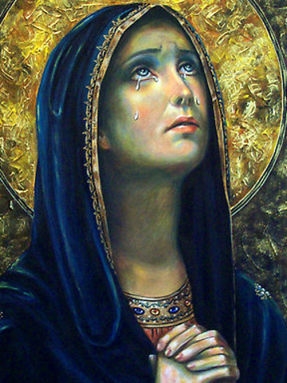
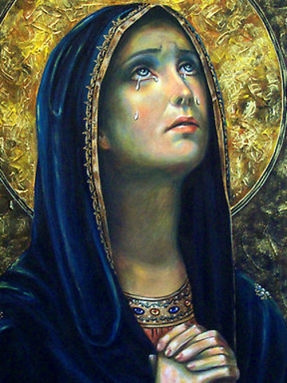
Devotion to the Seven Sorrows of Our Lady has its roots in Sacred Scripture and in Christian piety, which always associates the Blessed Mother with her suffering Son. Today’s feast was introduced by the Servites in order to intensify devotion to Our Lady’s Sorrows. In 1817 Pius VII — suffering grievously in exile but finally liberated by Mary’s intercession — extended the feast to the universal Church.
This feast dates back to the 12th century. It was especially promoted by the Cistercians and the Servites, so much so that in the 14th and 15th centuries it was widely celebrated throughout the Catholic Church. In 1482 the feast was added to the Missal under the title of “Our Lady of Compassion.” Pope Benedict XIII added it to the Roman Calendar in 1727 on the Friday before Palm Sunday. In 1913, Pope Pius X fixed the date on September 15. The title “Our Lady of Sorrows” focuses on Mary’s intense suffering during the passion and death of Christ. “The Seven Dolors,” the title by which it was celebrated in the 17th century, referred to the seven swords that pierced the Heart of Mary. It is dedicated to the spiritual martyrdom of Mary, Mother of God, and her compassion with the sufferings of her Divine Son, Jesus. In her suffering as co-redeemer, she reminds us of the tremendous evil of sin and shows us the way of true repentance. As Mary stood at the foot of the Cross on which Jesus hung, the sword of sorrow Simeon had foretold pierced her soul.
Below are the seven sorrows of Mary:
1. At the prophecy of Simeon: “You yourself shall be pierced with a sword – so that the thoughts of many hearts may be laid bare.” (Luke 2:35).
2. At the flight into Egypt; “Get up, take the child and his mother, and flee to Egypt.” (Mt 2:13).
3. Having lost the Holy Child at Jerusalem; “You see that your father and I have been searching for you in sorrow.” (Luke 2:48).
4. Meeting Jesus on his way to Calvary; (Luke 23:27-31; John 19:17)
5. Standing at the foot of the Cross; “Near the cross of Jesus there stood His mother.” (John 19:25).
6.The body of Jesus being taken from the Cross; (Psalm 130; Luke 23:50-54; John 19:31-37) 7. The burial of Jesus; (Isaiah 53:8; Luke 23:50-56; John 19:38-42; Mark 15:40-47)
Prior to the Second Vatican Council, there were two feasts devoted to the sorrows of Mary. The first feast was insitituted in Cologne in 1413 as an expiation for the sins of the iconoclast Hussites. The second is attributed to the Servite order whose principal devotion are the Seven Sorrows. It was instituted in 1668, though the devotion had been in existence since 1239 – five years after the founding of the order.
Symbols: heart pierced with a sword; heart pierced by seven swords; winged heart pierced with a sword; flowers: red rose, iris (meaning: “sword-lily”), cyclamen.
Patron: people named Dolores, Dolais, Deloris, Dolorita, Maria Dolorosa, Pia, and Pieta.
St. Madeleine Sophie’s Prayer to Our Lady of Sorrows
O, Mary, Mother who has known deepest sorrow and deepest love,
moved by profound gratitude for the innumerable gifts
you have poured out on this little Society,
we come together today as Province and Society
to acknowledge what we owe to your motherly protection,
and to the goodness of your Mother’s heart,
wounded by the sight of your suffering children everywhere.
Continue your work in and for us, dear Mother.
Love gave you the cross,
grant that the cross may give us love.
May there never be for Religious of the Sacred Heart of Jesus,
any other cross than the cross of Jesus.
May we have the courage
to bear His cross;
both the sufferings of His passion
and the remembrance of His woundedness for others,
so that in ministering to the wounded and torn of our world,
we may find in His cross
less the pain and suffering He experienced
than the height and depth of His love and compassion
for the Poor and Suffering of our world.
We ask this in and for Christ Jesus our Lord.
Amen!
Here are seven graces the Blessed Virgin Mary grants to souls who honor Her daily by saying seven Hail Marys and meditating on Her tears and Dolors. The devotion was passed to us by Saint Bridget.
-
I will grant peace to their families.
-
They will be enlightened about the divine mysteries.
-
I will console them in their pains and I will accompany them in their work.
-
I will give them as much as they ask for as long as it does not oppose the Adorable Will of my Divine Son or the sanctification of their souls.
-
I will defend them in their spiritual battles with the infernal enemy and I will protect them at every instant of their lives.
-
I will visibly help them at the moment of their death, they will see the face of their mother.
-
I have obtained (this grace) from my Divine Son, that those who propagate this devotion to my tears and sorrows, will be taken directly from this earthly life to eternal happiness since all their sins will be forgiven and my Son will be their eternal consolation and joy.
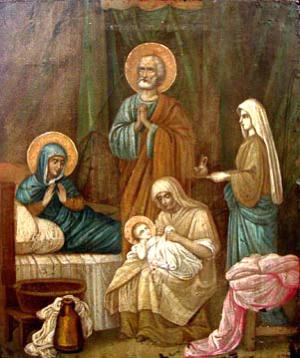
Life-For the Purpose of God – The Nativity of the Blessed Virgin ~ The Rev. Lady Sherwood, OPI

Today we celebrate the nativity of the Mother of Our Lord Jesus Christ and our heavenly mother.
All parents are filled with such joy at the birth of their children. We try to bring them up to be the best which they can be in the world. Our heavenly Father who created us and who knows each of us before our birth is no different. He also is filled with joy at our birth and wants the best for us.
God already has plans for each of our lives and for exactly which role we shall fill within his kingdom on earth.
Some may eventually become Bishops, priests, ministers of the word or professed religious. For others, it may be growing up to work in the care profession, to be a Dr or nurse, carer and so on,or to teach our future adults in schools, colleges or universities. They may be in support roles such as social or charitable work. Whatever the role the Father has planned for us, all are valuable and necessary for his Kingdom on earth.
But just imagine if you can, that in this case, we have St Joachim and St Anne, who were both unable to bear children. Imagine the joy here when, because of their faith, they were given their daughter Mary. What such a special gift and blessing!!
However, not just St Joachim and St Anne were blessed by the birth of Mary, as indeed we all have been blessed!
God chose that Mary would grow up to become the Mother of Our Lord Jesus Christ, when he came down to earth as one of us. It is Mary who loved and nurtured Our Lord and who suffered so much incomprehensible sorrow and heartbreak when Jesus gave himself to be crucified for the atonement of our sins.
Through this most blessed role, Mary became our Mother in heaven who is there interceding with her Son on our behalf.
This innocent new baby, Mary, grew up so full of faith and gave herself totally and freely to the will of God our Father. When the angel Gabriel came to her to proclaim that she would bear a son and that he would be the Son of the Most High, Mary replied, “I am the Lord’s servant” May your word to me be fulfilled”.(LK 1:38 NIV)
Such Faith and devotion!
We can all learn so much in our lives from the life and faith of Mary. Her life clearly shows us how we should accept in true faith the plans that God our Father has for our lives, so that like Mary, we may be instruments of his glory.
With this in our hearts and minds, let us pray:
God Our Father, give your chosen people your help and strength. The birth of the Virgin Mary’s Son was the dawn of our salvation. May our celebration of her nativity bring us closer to lasting peace and may the virtues that she modelled develop in our lives,to love you and our neighbours more perfectly. Grant this we pray, through Christ our Lord.
Amen.
 The Order of Preachers, Independent
You must be logged in to post a comment.