
Category: Member Posts
The Gift of Faith~Br Milan Komadina
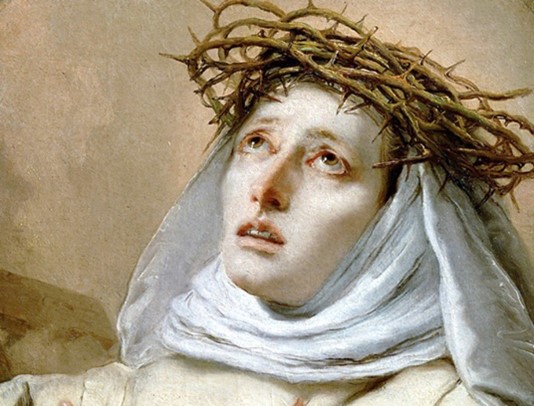
The Feast of St. Catherine of Siena
Our faith is a gift. The older I grow the more sure I become about the fact that our own faith is a gift. And that we do not believe just like that. Or traditionally, if our parents were Christians and we were taught about Christianity as kids and later we decided to become more devoted to our faith when we already have the roots in our family education. There are many people that were born in Christian families and they declare themselves Christians but they never go to church. They never pray to God and they never read Bible. Could we truly tell that a person is a Christian who is only baptized and raised in Christian environment? Being Christian means of course being baptized and have the certificate that we belong to certain denomination but it is not enough. A Christian could someone become even without being baptized because a Christian we should become by our faith. And a baptism should come after as a visible result of what had previously happened. When we first met Jesus in our hearts, declared Him as our savior, accept his sacrifice, repent and get the free grace and salvation and then we become true Christians. What I would like to emphasize, as I consider that very important is that being Christian includes to believe in Christ and being aware of the mercy which is gifted through faith. The salvation is through faith. Baptism we could arrange at the local church and easily we could become baptized members of one church. But faith – we cannot arrange. We cannot as nonbelievers order in the local church and buy our faith for the rest of our lives or for the certain period of time. Because faith is a gift and cannot be scheduled, arranged or booked as a slot for baptism. Here we come to one sentence that has stolen my attention in today’s reading. John 6:60-69
”On hearing it, many of his disciples said, “This is a hard teaching. Who can accept it?” Aware that his disciples were grumbling about this, Jesus said to them, “Does this offend you? Then what if you see the Son of Man ascend to where he was before! The Spirit gives life; the flesh counts for nothing. The words I have spoken to you—they are full of the Spirit and life. Yet there are some of you who do not believe.” For Jesus had known from the beginning which of them did not believe and who would betray him. He went on to say, “This is why I told you that no one can come to me unless the Father has enabled them.” From this time many of his disciples turned back and no longer followed him. “You do not want to leave too, do you?” Jesus asked the Twelve. Simon Peter answered him, “Lord, to whom shall we go? You have the words of eternal life. We have come to believe and to know that you are the Holy One of God.”
Versus number 65 says that NO ONE can come to Jesus unless the Father has enabled them. In everyday Christian life we can experience really special moments. Sometimes we wake up in the morning happy and grateful to be alive, then we do our cross and start singing psalms or Christians songs, or we pray and worship, sometimes we read the Bible feeling every single word of the text and being touched we cry while reading God’s Word. Sometimes we feel holy and away from human lusty desires and we feel like our mind is really pure. Other days we have a big desire to study Bible, read about Jesus or preach the Gospel. But do we sometimes question why we are doing all these? Why we have the desire not to sin? Why we have the gift of tears while reading Gospel and why we feel empathy when we see other people suffer? Why we have inner engine to move us stand for the prayer in the morning? This is the seal of Holy Spirit working in us. This is the gift and this is free gift. As we are saved by grace through our faith now we bring fruits of this faith. But all those fruits are grown in the Holy Spirit.
In Psalm 51:15, king David prays: “O Lord, open my lips, And my mouth shall show forth Your praise.” When I was Orthodox Christian I learnt that in case when we cannot pray (due to lack of motivation) we should read this psalm and it helps. Or at least to repeat several times this sentence. So that the Lord may open our mouth and let us pray. All good things that we are doing we are doing them with God’s help because everything good comes from God. Our faith is a gift, our salvation is a gift, and our presence in the Unified Old Catholic Church is a gift. And it is very important not to be proud because everything that we have is a gift from God. I invite you all to live by faith and to believe in this mercy and to remember that no one can come to Jesus unless the Father has enabled him.
And since today we commemorate St. Catherine of Siena I would like to share a couple of sentences about her life. St. Catherine of Siena, TOSD (Italian: Caterina da Siena; 25 March 1347 – 29 April 1380) was an Italian member of the Third Order of Saint Dominic in the Roman Catholic Church. She was a mystic, activist, and author who had a great influence on Italian literature and on the Catholic Church. Canonized in 1461, she is also a Doctor of the Church. Born and raised in Siena, she wanted from an early age to devote herself to God, against the will of her parents. She joined the “mantellates”, a group of pious women, primarily widows, informally devoted to Dominican spirituality. She died on 29 April 1380, exhausted by her rigorous fasting. Urban VI celebrated her funeral and burial in the Basilica of Santa Maria sopra Minerva in Rome. Devotion around Catherine of Siena developed rapidly after her death. Pope Pius II canonized her in 1461; she was declared a patron saint of Rome in 1866 by Pope Pius IX, and of Italy (together with Francis of Assisi) in 1939 by Pope Pius XII. She was the second woman to be declared a “Doctor of the Church,” on 4 October 1970 by Pope Paul VI – only days after Teresa of Ávila. In 1999 Pope John Paul II proclaimed her a (co-)patron saint of Europe.
St. Catherine of Siena pray for us!
Be Like Mark: The Feast of St. Mark the Evangelist~The Rev Dcn Scott Brown, OPI

Today we celebrate St. Mark the Evangelist. So who was he and why do we celebrate him? The short answer is, we really don’t know. According to Wikipedia, we have this:
According to William Lane (1974), an “unbroken tradition” identifies Mark the Evangelist with John Mark, and John Mark as the cousin of Barnabas. However, Hippolytus of Rome in On the Seventy Apostles distinguishes Mark the Evangelist (2 Tim 4:11), John Mark (Acts 12:12, 25; 13:5, 13; 15:37), and Mark the cousin of Barnabas (Col 4:10; Phlm 1:24). According to Hippolytus, they all belonged to the “Seventy Disciples” who were sent out by Jesus to disseminate the gospel (Luke 10:1ff.) in Judea.According to Eusebius of Caesarea (Eccl. Hist. 2.9.1–4), Herod Agrippa I, in his first year of reign over the whole of Judea (AD 41), killed James, son of Zebedee and arrested Peter, planning to kill him after the Passover. Peter was saved miraculously by angels, and escaped out of the realm of Herod (Acts 12:1–19). Peter went to Antioch, then through Asia Minor (visiting the churches in Pontus, Galatia, Cappadocia, Asia, and Bithynia, as mentioned in 1 Peter 1:1), and arrived in Rome in the second year of Emperor Claudius (AD 42; Eusebius, Eccl, Hist. 2.14.6). Somewhere on the way, Peter encountered Mark and took him as travel companion and interpreter. Mark the Evangelist wrote down the sermons of Peter, thus composing the Gospel according to Mark (Eccl. Hist. 15–16), before he left for Alexandria in the third year of Claudius (AD 43).
According to the Acts 15:39, Mark went to Cyprus with Barnabas after the Council of Jerusalem.According to tradition, in AD 49, about 19 years after the Ascension of Jesus, Mark travelled to Alexandria and founded the Church of Alexandria – today, the Coptic Orthodox Church, the Greek Orthodox Church of Alexandria, and the Coptic Catholic Church trace their origins to this original community. Aspects of the Coptic liturgy can be traced back to Mark himself. He became the first bishop of Alexandria and he is honored as the founder of Christianity in Africa.
According to Eusebius (Eccl. Hist. 2.24.1), Mark was succeeded by Anianus as the bishop of Alexandria in the eighth year of Nero (62/63), probably, but not definitely, due to his coming death. Later Coptic tradition says that he was martyred in 68.Isn’t it fitting that the readings for today are all about pride and being humble and submitting to God’s will. We have an example of that in St. Mark. Here you go:
1 Peter 5:5-14 New International Version5 In the same way, you who are younger, submit yourselves to your elders. All of you, clothe yourselves with humility toward one another, because, “God opposes the proud but shows favor to the humble.”6 Humble yourselves, therefore, under God’s mighty hand, that he may lift you up in due time. 7 Cast all your anxiety on him because he cares for you. 8 Be alert and of sober mind. Your enemy the devil prowls around like a roaring lion looking for someone to devour. 9 Resist him, standing firm in the faith, because you know that the family of believers throughout the world is undergoing the same kind of sufferings. 10 And the God of all grace, who called you to his eternal glory in Christ, after you have suffered a little while, will himself restore you and make you strong, firm and steadfast. 11 To him be the power for ever and ever. Amen. 12 With the help of Silas,[b] whom I regard as a faithful brother, I have written to you briefly, encouraging you and testifying that this is the true grace of God. Stand fast in it. 13 She who is in Babylon, chosen together with you, sends you her greetings, and so does my son Mark. 14 Greet one another with a kiss of love. In verses 5,6, and 7 Peter wants us to know that God wants us to clothe ourselves in humility because as Proverbs 3:34 says: God gives grace to the humble and opposes the proud. St. Augustine said: “It was Pride that changed angels into devils, it is humility that makes men as angels.” What is Pride? Pride is the excessive belief in one’s own abilities that interferes with the individual’s recognition of the grace of God. Its has been called the sin from which all other sins arise. Pride is also known as Vanity. It is certainly good to have pride in one’s country, community, and in oneself, but when taken too far these virtues become sins. Trust in God, realize that we are nothing and God is everything. Realize that God is in charge, not us. Trust in God, not yourself because we are proud when we trust in ourselves. When we humble ourselves in these ways, we are worthy of Gods grace. In verses 8-11 Peter tells us to be clear minded, alert during hardships and difficult times as this is when Satan is posed to attack. When we are weak, fearful, and in doubt is when the Devil is at his strongest. He is like a lion on the prowl devouring everything he can. If you knew that a deadly lion had escaped from a zoo and was wandering around your neighborhood, you would not be standing in your front yard. N., you would be inside with your doors and windows locked. Resist him and stand firm in your faith. Know that others are resisting him with you. In conclusion verses 12-14, Peter wants us to take away these points: • Prepare your minds for action, and do not conform to the passions of this world. • Know that you are God’s holy people, chosen, precious, and valuable. • Live honorably, and resist the Devil. • Don’t be surprised that you suffer for the name of Jesus. People will be surprised that you do not act like them. • Don’t be ashamed of that suffering. Place your trust in God who judges justly, just like Jesus did. • Humble yourselves because God gives grace to the humble, not to those who trust in themselves during hard times.
Let us all live so as to follow the example of St Mark. Let us pray:O Almighty God, who hast instructed thy holy Church with the heavenly doctrine of thy Evangelist Saint Mark: Give us grace, that, being not like children carried away with every blast of vain doctrine, we may be established in the truth of thy holy Gospel; through Jesus Christ our Lord. Amen.
I Told You So! ~ The Rt. Rev. Michael Beckett, OPI

Do you remember when we were kids and our parents would tell us to not do that thing because if we did, we would cause all manner of problems AND get into trouble? And because we were us, we went right ahead and did that thing and we caused all manner of problems and got into trouble. And our parents said, “I told you so.”
And, poor Scott. Sometimes I feel so bad for him. He has it rough. You see, he lives with me. And one of my very, very, very favorite things to say to him is, “I told you so.” (Scott is much smarter and a heckuva lot wiser than I am, but do you think I’d let HIM know that? Uh unh. I ain’t doin’ it.)
And of course, there are those (infrequent, oh so very infrequent!) times Scott gets to say to me, “I told you so.” (I hate that.)
So why do we not listen? Why do we not accept what we are told? Why must we, in our self-centeredness, have to learn the hard way that what God says, He means? Or do we ever learn? As many of you know, Jeremiah 29:11 and Romans 8:28 are two of my very favorite verses of Scripture. Both of them give us assurance that God has things well in hand and that we really don’t need to worry about things. And God has proved himself over and over and over and over ad infinitum in my life. He has cared for me when I had nothing else. He has shown Himself faithful and true and proved to me that I have no need to worry. So WHY do I worry? Why can I not get it through my head that I have no need to worry, I have no need to doubt? I would dare say that many of you have had similar experiences.
Whatever the answer to that question is, we are in good company. Over and over and over again, throughout the Hebrew and Christian scriptures both, we continually hear God tell us, “Have I not told you… I told you….” In the Gospel reading for today, when Cleopas and another disciple are on their way to Emmaus, Jesus appears to them and teaches them and says to them (are you ready?) “I told you so.” (Well, actually, according the NIV He said, “How foolish you are, and how slow to believe all that the prophets have spoken! Luke 24:25) They recognized Jesus and he disappeared and then they hightailed it back to Jerusalem, straight to the disciples. And as they were telling the disciples what had happened, Jesus appeared to them all. They were, of course, amazed, frightened, excited!!!!! And what did Jesus say? He said, “I told you so.” (NIV: “These are my words that I spoke to you while I was still with you, that everything written about me in the law of Moses and in the prophets and psalms must be fulfilled.” Luke 24:44) Now, these weren’t your every day, run of the mill, ordinary disciples. These were THE DISCIPLES; hand-picked by Jesus, his closest companions. They who had witnessed miracles firsthand. And they had trouble getting with the program and believing. But ya know, Jesus then gave them yet another chance, kinda started from the beginning again, and did a reteach. (NIV: Then he opened their minds to understand the Scriptures. And he said to them, “Thus it is written that the Christ would suffer and rise from the dead on the third day and that repentance, for the forgiveness of sins, would be preached in his name to all the nations, beginning from Jerusalem. You are witnesses of these things.” Luke 24:45-48)
How awesome is that? Even after all the things the disciples had seen, had witnessed, had had first- hand experience with, Jesus taught them yet again. And so it is with us. When we truly desire to increase our faith, when we truly seek another chance to learn the lessons that Christ teaches us, He will always, always give us another chance to try again. It is up to us to continually open ourselves to learning those lessons. The hymnist, Clara H. Scott certainly had the words right when she wrote in 1895:
Open my eyes, that I may see
Glimpses of truth Thou hast for me;
Place in my hands the wonderful key
That shall unclasp and set me free.
Silently now I wait for Thee,
Ready my God, Thy will to see,
Open my eyes, illumine me,
Spirit divine!
Open my ears, that I may hear
Voices of truth Thou sendest clear;
And while the wave notes fall on my ear,
Everything false will disappear.
Silently now I wait for Thee,
Ready my God, Thy will to see,
Open my ears, illumine me,
Spirit divine!
Open my mind, that I may read
More of Thy love in word and deed;
What shall I fear while yet Thou dost lead?
Only for light from Thee I plead.
Silently now I wait for Thee,
Ready my God, Thy will to see,
Open my mind, illumine me,
Spirit divine!
Open my mouth, and let me bear,
Gladly the warm truth everywhere;
Open my heart and let me prepare
Love with Thy children thus to share.
Silently now I wait for Thee,
Ready my God, Thy will to see,
Open my heart, illumine me,
Spirit divine!
It is my hope and prayer that each of us open ourselves to learn the lessons that God teaches us, and that we do our utmost to learn, and to live those lessons. Amen.
Show Me~ The Rt. Rev. Michael Beckett, OPI

If you were going to be famous for one thing, what would it be? I can think of a host of reasons for which I’d like to be famous. Curing cancer. Discovering how to teleport. Ending world hunger. I suppose the list goes on. There are folks who are famous, or infamous, for doing that one thing that they prolly shouldn’t oughta have done. Typhoid Mary. Mrs. O’Leary and her cow. Jim Jones. Brutus. Whoever designed the Ford Pinto.
And Doubting Thomas. Thomas the Apostle—often referred to as “Doubting Thomas”—was one of the twelve main disciples of Jesus Christ. In the Gospel of John, Thomas famously doubted Jesus’ resurrection, telling the other disciples, “Unless I see the nail marks in his hands and put my finger where the nails were, and put my hand into his side, I will not believe” (John 20:25).
Jesus then appeared and offered to let him do just that.
So our boy, Thomas, is most noted for one thing, and one thing only. He doubted that Jesus had been resurrected, and wanted proof. He had to see it to believe it. Just for the heck of it, I’m gonna share with you some “fun facts” about Thomas: Thomas is mentioned a total of eight times between the four gospels and Acts. Most of what we learn about him comes from the Gospel of John—the only book of the New Testament that gives him any specific role. And dig this: In three of the times Thomas is mentioned, the Bible notes that he was called “didymos,” a Greek word meaning “twin,” which was often used as a name. Unless your name is Thomas, it may surprise you to learn that the modern name “Thomas” comes from the Aramaic word tĕʾomâ, which means . . . twin.
Yup. The Apostle Thomas doesn’t even have an actual name in the Bible. Poor guy! Everyone literally just refers to him as “the twin.” Interestingly, tĕʾomâ is just a description in Aramaic—it doesn’t appear to be used as a name—but didymos was used as both a description and a name. And The Bible never mentions who Thomas’ twin is.
So there ya have it, St. Thomas the Apostle in a nutshell. Now, let’s talk about this “doubting” thing he had goin’ on. The bummer here, for Thomas anyway, is that, again, he’s known as the “doubter.” But, y’all, he wasn’t the only one! Remember when Mary Magdalene and company went to the tomb last week, found it empty, and ran back to tell the disciples that Jesus was risen? Did they believe her. Big ol’ nope. The thing about Thomas though, is he got a “special appearance” by Jesus Himself: Though the doors were locked, Jesus came and stood among them and said, ‘Peace be with you!’ Then he said to Thomas, ‘Put your finger here; see my hands. Reach out your hand and put it into my side. Stop doubting and believe.’
Thomas said to him, ‘My Lord and my God!’
Then Jesus told him, ‘Because you have seen me, you have believed; blessed are those who have not seen and yet have believed.’” —John 20:24–29
So, where does that leave us? There’s this: Give a man a fish, and you feed him for a day. Teach a man to fish, and you feed him for a lifetime. And when I was in teacher training many years ago, it was hammered into our heads, “Show, don’t tell.” And “If you want a behavior, teach it.”
Same thing goes for our lives and showing the world what and who Jesus is. Jesus ain’t gonna pop up wherever we are and say, “Yo, look! Here I am!” We have to do that. Us. You’ve heard me say it at least a zillion and one times: You are the only Jesus some folks will ever see and the only Bible some folks will ever read. We spread the Good News by living as Jesus has commanded us to. (Remember that “mandate” thing I talked about on Maundy Thursday?) We love. Regardless of sex. Regardless of gender, or gender identity. Regardless of sexual preference. Regardless of politics. Regardless of anything else that might separate us. There is no one on this planet who God doesn’t love. There is no one on this planet who Jesus didn’t die for. Period. Love. One. Another.
During this Eastertide, let us all examine our hearts, our lives, our attitudes. We, all of us, need to check ourselves, ask ourselves, “Is what I’m doing/saying/being something that Jesus would say/be proud of/want?” If the answer is even a tiny little negative, then maybe/perhaps/probably we need to do a bit of changing of our ways. Again, you are the only Jesus some folks will ever see, the only Bible some folks will ever read. We gotta do better. We have to show the world.
Let there be no doubt about that.
Fear Not!~Br Milan Komadina

I would like to start this sermon with a very beautiful orthodox prayer that Christians in eastern traditional churches sing on the occasion of Ester and it goes:
Christ is risen from the dead, trampling down death by death, and on those in the tombs bestowing life! (Greek: Christos anesti ek nekron, thanato thanaton patisas, ke tis en tis mnimasin, zoin charisamenos)
I remember the time when I was living in an orthodox monastery as a novice. We had a special time of joyfulness during the Easter season since Easter is the most joyful Christian holiday and it brings the purpose to each human since we know that through Easter Jesus had given us everlasting forgiveness and everlasting life. When I was just a kid I used to live in one building where there were around 20 or 25 apartments. On a daily basis I was meeting neighbors greeting them on my way to school and back home. Then I remember the period of life when a few very old neighbors passed away. It was shock for me. I asked parents where did they go and they told me that they went to heaven. When I further asked if they could ever come back home from heaven the answer was no. I remember the biggest shock when one day I heard that an 18-year old beautiful girl from my building suddenly died. This very early period of time was the time when I as a kid raised awareness of death and gained knowledge that we are not eternal and we will all die sooner or later. What is interesting I didn’t have a fear of death at that time. I remember I was even curious about it. I even tried with a few friends to do a (I must emphasize NON-Christian) ritual of inviting ghosts of neighbors who passed away in order to ask them about their death experiences and find out more about what comes after. I did that because at that time as a very young curious kid I didn’t know that all those answers I could find in the Bible. As we grow we become more connected to this world and materialism. And even though it sounds a bit ironic the older we grow the bigger fear of death we raise.
Fear of death! Should Christians have that fear? I remember that somewhere I read when I was studying about phobia that the fear of death thanatophobia is one of the biggest fears which people have. There is a definition of it stating that thanatophobia is an extreme fear of death or the dying process. You might be scared of your own death or the death of a loved one. Psychotherapy can help most people overcome this disorder but I would like to add here that the biggest psychotherapy for thanatophobia is faith in what Jesus has promised us – we who believe will never die.
Jesus Has Risen (Matthew 28:1-10)
After the Sabbath, at dawn on the first day of the week, Mary Magdalene and the other Mary went to look at the tomb. There was a violent earthquake, for an angel of the Lord came down from heaven and, going to the tomb, rolled back the stone and sat on it. His appearance was like lightning, and his clothes were white as snow. The guards were so afraid of him that they shook and became like dead men. The angel said to the women, “Do not be afraid, for I know that you are looking for Jesus, who was crucified. He is not here; he has risen, just as he said. Come and see the place where he lay. Then go quickly and tell his disciples: ‘He has risen from the dead and is going ahead of you into Galilee. There you will see him.’ Now I have told you.” So the women hurried away from the tomb, afraid yet filled with joy, and ran to tell his disciples. Suddenly Jesus met them. “Greetings,” he said. They came to him, clasped his feet and worshiped him. Then Jesus said to them, “Do not be afraid. Go and tell my brothers to go to Galilee; there they will see me.”
Every person someone questions what is the meaning of life. Especially when we lose someone who we love. Christians believe that the death is just a temporal separation and we are sure that we are already saved by grace and that we already live in Jesus and Jesus in us. And though He is Eternal and he destroyed death we are also eternal in Christ through faith. That is the beauty of our faith and that is why it is so special and full of hope. When I was younger I was occasionally investigating about other religions and teachings but I found that our let us call it religion is the most optimistic, the most secure and the fullest with eternal and perfect love.
Let us rejoice because the Death is beaten. The everlasting life is gifted and our Jesus is alive and he will come again in His Glory. Happy Easter! I am greeting you all with eastern Christian greeting – Christ is risen! Christ is risen indeed.
Silence. Stillness~ The Very Rev Lady Sherwood
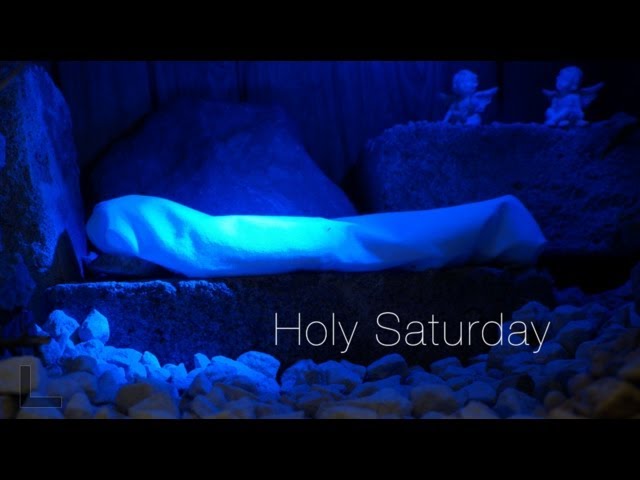
Many people tend to ignore and skip the Church’s remembrance of Holy Saturday. No one, however, gets to ignore and skip the reality of Holy Saturday within life. Holy Saturday is that time like no man’s land which lies between Good Friday and Easter Sunday. The tragedy of the sacrifice for us all by Our Lord’s crucifixion is past but the glories of our Lord’s resurrection are not yet here. We are neither here nor there. We are stuck in the middle. What was is no more and what will be is not yet clear or known to us. It may well feel as if there is no where to go and nothing to do.
Holy Saturday comes to us in many different ways but it always seems to involve death; the death of our Lord Jesus, the death of a loved one, the death of a relationship, the death of hopes and dreams. In the church calendar Holy Saturday is one day which we observe once per year. But this is often not so in life. Those of you who have suffered the death of a loved one know that you do not move from Good Friday to Easter Sunday in just one day. Holy Saturday can last months, years, or even an entire lifetime. Holy Saturday calls us to the tomb. Where else is there to go?
That’s where Mary Magdalene and the other Mary are today. Joseph of Arimathea took Jesus’ body wrapped it in a clean linen cloth, laid it in the tomb, rolled a great stone to the door of the tomb, and went away. He left. Some will do that in the Holy Saturday of life. They will close up the tomb and walk away as if there is nothing there, no possibilities for anything new. The two women, however, Mary Magdalene and the other Mary, are sitting opposite the tomb. They are silent. There is not much to say on Holy Saturday. What can be said? There are no easy or satisfactory answers.
Holy Saturday is a day of silence and stillness, waiting and wondering, remembering and hoping. Perhaps that is what faithfulness looks like on Holy Saturday. There is not much to do except be present to the reality of what is, to sit opposite the tomb.
Where is Our dear Lord Christ on Holy Saturday? Reread the Apostles’ Creed. Remind yourself that on this day “He descended to the dead” or as another translation says, “He descended into hell.” Holy Saturday is when Christ descends into the hell of our life, breaking the bonds of death, and setting the captives free.
Holy Saturday is a difficult day. We so much want joy to replace sorrow. That’s not what Jesus does. Instead, sorrow is transformed into joy, the tomb becomes a womb, and death gives birth to new life. Christ’s triumph is not apart from death but is within death. Christ is trampling down death by death and giving life to those in the tombs.
The two women of Holy Saturday will become the first people Jesus greets on Easter Sunday. So we must trust in this silence and in this waiting. We must be still. Remembering, wondering, hoping and Praying. It is Holy Saturday and Our Lord and Saviour who loves us all is at work.
Let us pray:
O Lord Jesus Christ, for our sins you endured the cross and the grave, and on the third day you rose again from the tomb.
Just as you have cleansed us from our sins by your blood, and as we are buried with you in baptism, so by your grace, let us share in your resurrection; through your mercy,
O our God, you are blessed and live and govern all things, now and forever. Amen.
What Now? ~ The Rt Rev Michael Beckett, OPI

Many of us wear a crucifix around our necks to proclaim our faith, as do many of our Catholic brothers and sisters. Many of our Protestant brothers and sisters wear a cross. Churches throughout the world are marked by a cross. When we pray, we “cross” ourselves. The cross is the universal symbol of Christianity. What’s up with that?
Crucifixion was, at one time, one of the most common methods of capital punishment used. Lots and lots and lots of unfortunate men and women were crucified. We believe that Jesus was totally innocent of the crimes for which he was executed. Of course, there are many men and women who have been executed for crimes which they did not commit. Some view Jesus’ crucifixion as an honorable sacrifice made by gifted teacher. Others would point to the cross as a failure of Jesus to demonstrate His power. Like the thief who mocked Jesus saying, “If you are the Messiah then get us down from here,” critics view the cross as an insignificant death. They see Jesus as one of many who rebelled against the Roman Empire and suffered the consequences.
So what makes Jesus crucifixion so different? Why does a world religion focus so much on the cross? Is it that important? Volumes and volumes of books have been written on that subject. Wars have been fought over the cross. The hymnist wrote: “In the cross of Christ I glory,” and we, as Christians, are called to proclaim the cross, right???
Ummm….not so much.
Proclaiming the cross means nothing……(Yes, I can hear you gasp and I can see your blood pressure rising. Let me finish the sentence.)…..without proclaiming the resurrection.
Many contemporary Christians assume the cross has always been the focal point of Christian faith. They view the cross as the touchdown and the resurrection as the extra point. Certainly, the cross is vital to our faith, for it was the means through which Jesus atoned for our sins. But listen to Paul’s words: “If Christ has not been raised, our preaching is useless and so is your faith . . . if Christ has not been raised then you are still in you sins” (1 Cor. 15:14, 17). If Christ had not been raised, then he would have been no better than Dismas (the “good” thief) or anyone else who has ever been executed.
On Easter we turn our attention to the resurrection. While every Sunday worship service is a testimony that Jesus rose from the dead, Easter provides a wonderful opportunity to consider the significance of the resurrection to our faith. An interesting aspect of early Christian history is that the resurrection, not the cross, was the central theme of Christian preaching.
The early believers saw themselves as “witnesses to the resurrection” (Acts 1:15-16). Peter and John created an uproar because they were preaching about Jesus and the resurrection (Acts 4:1-2). The Bible says with great power the apostles testified to the resurrection (Acts 4:33). Several years after the crucifixion while preaching in Athens, Paul preached the “good news about Jesus and the resurrection” (Acts 17:18).
The resurrection proclaims the deity of Christ. His death on the cross may have accomplished our redemption as He paid for the sins of the world, but it did not prove to the world that Christ was God in the flesh. Saint Paul declared that the resurrection proved that Jesus was the Son of God (Rom. 1:4). In this text of First Corinthians 15, we read that Christ conquers all enemies and destroys all dominion, and hands the kingdom over to God the Father (vv. 24-27). Everything is under the authority of Christ because of the resurrection.
But the tomb is empty, and Jesus is alive. He is the Holy Son of God who is worthy to receive glory, honor, and praise! Jesus died for your sins and rose again to prove His sacrifice was not in vain. He is alive to declare to you and to the world that you are a unique creation of God with significant role to play in His kingdom. You are one of those precious souls who are too many to name, but considered to be the fruit or blessing of the resurrection. The resurrection is an invitation to receive what Christ has prepared for you. His offer of eternal life is a gift that must be received. What have you done with your invitation? Jesus is alive and calling for you to receive Him today. Will you be made alive to spend eternity with the risen Savior?
Will you proclaim the cross? Sure. But let us even more loudly proclaim the resurrection. Let all that we do, all that we say, proclaim that JESUS IS ALIVE!!!
Amen
Sharing Your Gifts~Br. Christian Ventura, Novice
In the Name of Almighty God: ✠ Father, Son, and Holy Spirit.
Amen.
There is an old monastic joke that goes as follows–:
“There are only three things that God doesn’t know:
1. How many Franciscan Friars there are;
2. What in the world the Jesuits are doing;
And 3. What a Dominican Friar is saying when they’re preaching”.
And as for most Dominicans on the day of the Annunciation, (or the day after, in this case) it is hard to not fall into this stereotype, as we are often quick to get excited whenever we have an opportunity to preach on the Blessed Virgin Mary. Afterall, our habits are white to represent our protection under the mantle of our Blessed Mother, (and also because it was the cheapest material at the time), but we don’t lead with that.
We also carry a 15-decade rosary on the left side of our cincture to remind us to take up prayer instead of a sword. And if you didn’t already know, the modern rosary prayed by many today is believed to come from a Marian visitation to St. Dominic in his petition for peace during a time of death and despair. This 5-decade rosary is an abbreviated version inspired by the original 150 beaded Marian psalter given to St. Dominic.
But we aren’t the only monastics to wear a rosary as part of our habit. The Franciscans share this practice, as do many nuns, brothers, and monks of various other orders as well. Although this is usually due to a shared desire to represent our cinctured obedience to almighty God in our vocation(s).
Likewise, you’ll note that the Canticle of Mary or the Magnificat also has its roots in early monasticism. When we pray “my soul proclaims the greatness of the Lord, my spirit rejoices in God my savior” during evening prayer, we join the voices of the benedictine monks in the monastery who have chanted it during evening vespers since the 6th century.
The veneration of Mary the God bearer as influenced by early monasticism is an integral part of our history as Christians, and we know it to begin as early as the story of the Annunciation. Where, an Angel of God visits our mother and says “hail, full of grace, the Lord is with thee: blessed art thou among women”.
But aside from the angelic imagery of this breathtaking event, what personally strikes me the most is Mary’s faithful consent to God in her special vocation. She says “behold the handmaid of the Lord, be it done unto me according to thy word”.
Imagine a world where we all said yes to our callings from God. And even better yet, imagine a world where we supported everyone and their special calls. And no, not necessarily a call to be a monk or a nun, but rather our call to be a brother, a sister, a friend, mother, a beloved child of God. Our call to take up our cross, our call to be imitators of the Word made flesh that dwelt among us.
I urge you to take a moment to think about: what is God calling you to? What experiences, both good and bad, have placed you here– right where you need to be?
And, how can you say “yes!”? Lent is a phenomenal time to discern our own special vocations and deepen our relationship with God: where we fast from our own will to make room for God’s.
How are you called to share your special gifts and talents to help make it on earth as it is in heaven? Are you called to be a teacher, a healer, or a musician? Has God asked you to leverage your career in healthcare, law, hospitality, or leadership to help love your neighbors? Are you an artist? Do you cook? What are you really good at doing, and how can you use it to help bring peace, comfort, or joy to others?
Lent is a time to embrace our callings from God not in spite of our flaws, but partly because of them. Whatever God is calling you to, know that he is calling you in the fullness of who you are now, with the vision of who you will become.
Through the intercession of our Blessed Virgin Mary , Mother of God, may you come to hear your call and find confidence to say “yes”, and may our Loving Father help you bring it to fruition.
The Annunciation~Br Milan Komadina
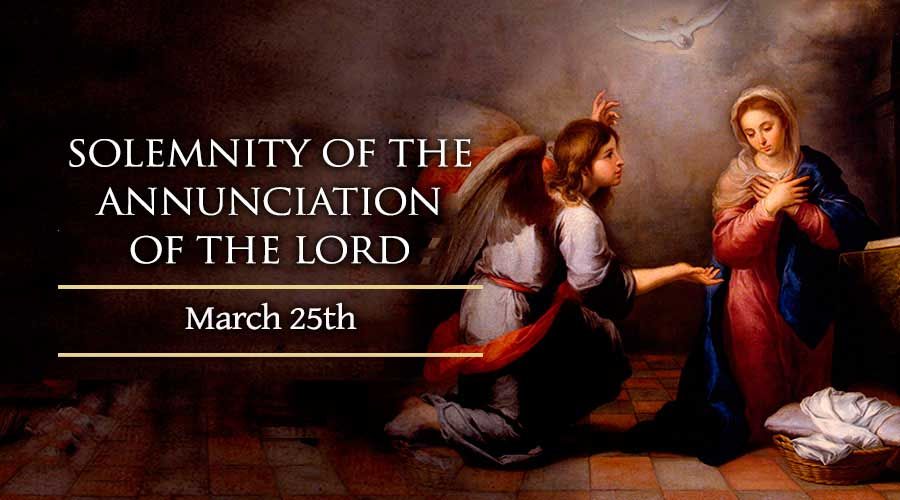
The Annunciation (from Latin annuntiatio), also referred to as the Annunciation to the Blessed Virgin Mary, the Annunciation of Our Lady, or the Annunciation of the Lord, is the announcement by the archangel Gabriel to Mary that she would conceive and bear a son through a virgin birth and become the mother of Jesus Christ, the Christian Messiah and Son of God, marking the Incarnation. Gabriel told Mary to name her son Immanuel, meaning “God is with us”. In the Old Testament we could read the prophecy in Isaiah 7/13,14 saying: The moment that will change World’s history was announced in the Old Testament. Today we remember this moment by reading the New Testament and the fulfilment of this prophecy in Luke 1/26,38:
“Then Isaiah said, “Hear now, you house of David! Is it not enough to try the patience of humans? Will you try the patience of my God also? Therefore the Lord himself will give you a sign: The virgin will conceive and give birth to a son, and will call him Immanuel.“
The moment that will change the World’s history was announced in the Old Testament. This prophecy was fulfilled in the coming centuries as we remember this moment by reading the New Testament Luke 1/26,38:
”In the sixth month of Elizabeth’s pregnancy, God sent the angel Gabriel to Nazareth, a town in Galilee, to a virgin pledged to be married to a man named Joseph, a descendant of David. The virgin’s name was Mary. The angel went to her and said, “Greetings, you who are highly favored! The Lord is with you.” Mary was greatly troubled at his words and wondered what kind of greeting this might be. But the angel said to her, “Do not be afraid, Mary; you have found favor with God. You will conceive and give birth to a son, and you are to call him Jesus. He will be great and will be called the Son of the Most High. The Lord God will give him the throne of his father David, and he will reign over Jacob’s descendants forever; his kingdom will never end.” “How will this be,” Mary asked the angel, “since I am a virgin?” The angel answered, “The Holy Spirit will come on you, and the power of the Most High will overshadow you. So the holy one to be born will be called the Son of God. Even Elizabeth your relative is going to have a child in her old age, and she who was said to be unable to conceive is in her sixth month. For no word from God will ever fail.” “I am the Lord’s servant,” Mary answered. “May your word to me be fulfilled.” Then the angel left her. ”
The time of lent is the time when we abstain from meat and delicious food. But it is also a good time for practice of humility. As we read in the chapter above, Mary was full of humility. She carefully accepted angel’s words and she was ready to serve God. When we talk about Mary we may talk also about humility because she was a great example of it. I found tree tips for practicing humility and I hope that those will be very useful to all of us as we try our best to practice it.
- Do not interrupt when someone is voicing a concern. Instead of formulating a defense in your mind when confronted about a situation and jumping in with an excuse, simply apologize and move forward to mend the relationship. Give the other person their due apology without excuses.
- Be more aware of the needs of others. It is human nature to firstly look after our own physical, spiritual, or emotional needs. Self-preservation is a human instinct that must be tamed lest we act to the detriment of others.
- Be ready to put the needs of others ahead of your own and act with charity. Practice voluntary patience. Stand at the end of the line. Let other drivers go ahead of you at an intersection. Take the smallest piece or the last piece of the pie. Delayed satisfaction will help us train ourselves in patience, self-denial, and humility.
Lent is about connecting with Jesus in a deeper way and experiencing spiritual growth, you can try something new this year by forming a new habit rather than giving up an old one. Here are additional five ways you could participate in the Lenten season this year: 1. Read the Bible daily 2. Pray throughout the day. 3. Give money to a cause or local organization. 4. Do random acts of kindness. 5. Find your place to serve at church or with a local organization. My prayer for today is that we all may serve God in a perfect way as Mary did and to let the Holy Spirit come in our hearts.
Are You Blind?~The Rt.Rev. Michael Beckett, OPI

Y’all, I only have one more pair of contacts before I have to get new ones. That means, eye exam, new prescription, and hassle. Of course, I’m really thankful that contacts and glasses exist, because I am blind as a bat without my glasses or contacts. Without my glasses, I really am legally blind. Ugh.
In the Gospel for today, we read of Jesus and a blind man. Picture it: Jerusalem in A.D. 32 or so; Jesus is bee-bopping along with his disciples, and they see a blind dude and the disciples say, “What is up with this? Who sinned, this man or his parents, that he was born blind?”
And Jesus answered, “Neither he nor his parents sinned; it is so that the works of God might be made visible through him.” And what did Jesus do, you ask? He made a bit of mud with spit and dirt and applied it to the blind dude’s eyes, told him to go wash it off, and BOOM, the guy could see! Pretty kewl, huh?
Well, WE think so, but the Pharisees? Not so much. They were pretty bummed because they thought, like many evangelicals today do, that bad stuff happens to bad people, or that bad stuff happens coz God punishes folks who don’t toe the line, and, they say, “It says so in the Bible.”
Ummmmmm…….no. And not just ‘no,’ but NO. First of all, God does not ‘give’ us the terrible, horrible, no good, very bad things that happen in our lives. Life happens. Crap happens. People make poor choices. Natural disasters occur. We get sick. Nowhere does Holy Writ support the claim that any of these things is God’s doing. What kind of God would we worship if he, indeed, sent us all the trials and tribulations and suffering and horror for which He is blamed? When “bad” things happen to any of God’s children, God is grieved and suffers with us, and this was experienced most vividly in the hurt and suffering of Jesus Christ for all humanity. Any “bad” thing which happens is never the last word. Rather, God is the deepest and last word, and that word is love and eternal life with God.
The Bible clearly teaches that God does not cause us to suffer. For example, the Bible says that when we go through trials, it would be a mistake to say: “I am being tried by God.” Why? Because “with evil things God cannot be tried, nor does he himself try anyone.” (James 1:13) In other words, God never causes the trials we face or the suffering that follows. To do so would be wicked, but “God does not act wickedly.” (Job 34:12.)
If God does not cause us to suffer, then who or what does? Sadly, humans are often victimized by other imperfect humans. (Ecclesiastes 8:9) Additionally, we may face calamities because of “unexpected events”—that is, because of simply being in the wrong place at the wrong time. (Ecclesiastes 9:11) The Bible teaches that ultimately “the ruler of this world,” Satan the Devil, is responsible for human suffering, for “the whole world is lying in the power of the wicked one.” (John 12:31; 1 John 5:19) It is Satan—not God—who causes people to suffer.
God is aware of our suffering. From the very start of human suffering, not a single teardrop has gone unnoticed by our loving Father, whose “watchful eyes” see everything. (Psalm 11:4; 56:8) For example, when his worshippers in ancient times were being oppressed, God said: “I have certainly seen the affliction of my people.” But was he only vaguely aware of their pain? No, for he added: “I well know the pains they suffer.” (Exodus 3:7) Many people have found comfort in that truth alone—the thought that God is aware of everything we suffer, even the trials that we or others may not be aware of or fully understand. (Psalm 31:7; Proverbs 14:10.)
God feels for us when we suffer. Our Heavenly Father is not only aware of human suffering but also deeply moved by it. For example, God was sincerely troubled when his ancient worshippers faced trials. “During all their distress it was distressing to him,” says the Bible. (Isaiah 63:9) Although God is vastly superior to humans, he feels empathy for those who suffer—as if their pain were in his heart! Indeed, “Our Heavenly Father is very compassionate and merciful.” (James 5:11) Additionally, Our Heavenly Father helps us to bear our suffering. (Philippians 4:12, 13.)
We must also remember that our Lord Jesus knows what it is to suffer, to mourn. He wept at the grave of Lazarus, he wept over Jerusalem, and he suffered horrifically during His Passion.
God will end all human suffering. According to the Bible, God will bring an end to the suffering of every human on the planet. By means of His Heavenly Kingdom, God will drastically change the human condition—for the better. Regarding that time, the Bible promises that God “will wipe out every tear from their eyes, and death will be no more, neither will mourning nor outcry nor pain be anymore. The former things have passed away.” (Revelation 21:4) What about those who have already died? God will bring them back to life here on earth so that they too can enjoy life free from suffering. (John 5:28, 29) Will anyone be plagued by painful memories of past suffering? No, for Our Heavenly Father promises: “The former things will not be called to mind, nor will they come up into the heart.” (Isaiah 65:17.)
So there’s that. Now, Jesus said that God would be glorified through Blind Dude’s gift of sight. It was a miracle! Whilst Jesus isn’t around in the flesh these days to make mud and lay on hands, our God has granted us the miracles (yes plural) of modern medicine. And I would imagine many of us have experienced a ‘miracle’ or two in our lives. I know I have, more than once. And for those blessings and miracles, we give thanks to God.
But we have to ask, in what ways are WE blind, spiritually speaking? What do we will ourselves not to see? The homeless? Inequality? Inequity? The poor? People who are “other” than we ourselves? I am reminded of a hymn by Clara H. Scott, “Open My Eyes That I May See.”
Open my eyes that I may see glimpses of truth thou hast for me. Place in my hands the wonderful key that shall unclasp and set me free. Silently now I wait for thee, ready, my God, thy will to see. Open my eyes, illumine me, Spirit divine!
Amen.
 The Order of Preachers, Independent
You must be logged in to post a comment.