
Category: Sermon
I Will Follow Him~The Rt Rev Michael Beckett, OPI

After Daddy’s mesothelioma diagnosis was deemed critically terminal, one of his great comforts was chewing gum. He went through at least a pack a day. I’ll never forget this conversation between he and Momma when Daddy was in the hospital:
Daddy: Did I ask you to bring me some gum?
Momma: Yes, Honey.
Daddy: Did you bring me some gum?
Momma: Yes, Honey.
Daddy: Then why ain’t I achewin’ it?
And we all laughed, Momma gave Daddy his gum, he began “achewin’ it” and all was as right as it could be under the circumstances.
The Responsorial Psalm appointed for today comes from Psalm 25. Here it is:
R. Teach me your ways, O Lord.
Your ways, O LORD, make known to me; teach me your paths, Guide me in your truth and teach me, for you are God my savior.
R. Teach me your ways, O Lord.
Remember that your compassion, O LORD, and your love are from of old. In your kindness remember me, because of your goodness, O LORD.
R. Teach me your ways, O Lord.
Good and upright is the LORD; thus he shows sinners the way. He guides the humble to justice and teaches the humble his way.
R. Teach me your ways, O Lord.
And the Gospel for today comes from Mark 1: As he (Jesus) passed by the Sea of Galilee, he saw Simon and his brother Andrew casting their nets into the sea; they were fishermen. Jesus said to them, “Come after me, and I will make you fishers of men.” Then they abandoned their nets and followed him. He walked along a little farther and saw James, the son of Zebedee, and his brother John. They too were in a boat mending their nets. Then he called them. So they left their father Zebedee in the boat along with the hired men and followed him.
Now, you ask me, what in the world does Daddy’s gum have to do with those scriptures? I’m gonna tell ya. Momma was prepared. She had done Daddy’s bidding, but just hadn’t quite followed through with it yet. How many of us are like that when it comes to doing our Lord’s bidding? Like the Psalmist, we have all of us asked “Teach me your ways, O Lord.” But have we followed through?
In the Gospel reading for today, we read of Jesus calling Simon, Andrew, James and John to follow him. And they did. We have many of us been called to follow Christ. And we do. Mostly??? Sort of??? Kind of??? In a round about way???
In the past few weeks, how many of us have said/posted/read/agreed with things that would most definitely not be considered Christ-like? How many of us have let our personal political beliefs get in the way of acting like the “little Christ” we are called to be? Sure we can disagree, often vehemently, but under no circumstances can we allow ourselves to allow those differences of opinions to get in the way of our witness for our Lord. (You gotta remember that even Peter and Paul argued, but they didn’t let that stand in the way of building Christ’s Kingdom.)
Let us not forget that in many cases, we are the only Bibles that many folks will ever read, and we are the only Jesus that some folks will ever see. It is up to us to see the Jesus in everyone, regardless of political belief, race, creed, color, sexual orientation, whether we cheer for Duke or for Clemson, or anything thing else that can be used to divide us. We are all of us HIS people, the sheep of HIS pasture, and we have far more in common than we do the things that divide us, if we truly identify as HIS.
As Christians, have we lost our focus of what is truly important? Regardless of politics, of whether we are ‘blue’ or ‘red’ or ‘rainbow,’ we are to remain focused on the one thing that really matters in this world and the next: Spreading and sharing the love of and for our Lord and Savior Jesus Christ. No matter who sits in the Oval Office, our job, our mission, our focus, has not changed and will not change: We are called to love and to serve the Lord with gladness and singleness of heart. We are called to care of each other, regardless of our politics. We are commanded to ‘bless those who persecute us’ and we are called to ‘pray for our enemies.’ We are called to feed the hungry, clothe the naked, house the homeless. (Matthew 25:31-46).
I think we all of us are familiar with the song, “Let There Be Peace on Earth.” And what is the next line? Yep. “And let it begin with me.” Isn’t it time we lived up to that? What are we doing to bring about change? To bring about equality? To bring about that healing this country so desperately needs?
It is up to each of us to conduct ourselves in a manner fitting our faith. Look at what you say. Look at what you post. If you were accused of being a Christian, would your timeline bear witness to the fact?
In the movie “Sister Act” the nuns sing another song that we’re all familiar with. “I Will Follow Him.”
I must follow him, ever since he touched my hand I knew that near him I always must be And nothing can keep him from me He is my destiny. (Songwriters: Arthur Altman / Franck Pourcel / Jacques Plante / Norman Gimbel / Paul Mauriat)
So, having said all of the above, shouldn’t we, like the nuns, like Peter and James and John and Andrew and Paul actually do what we are called to do?
Follow Him. In every word that we speak. Follow Him. In every post that we make. Follow Him. In every action we take. Follow Him. Amen.
The Feast of The Epiphany~The Rt.Rev. Michael Beckett, OPI

Today we mark the end of the Christmas season – the Day of Epiphany. We celebrate this day to reflect on the visit of the Magi – the wise men – to Jesus and the giving of their gifts. We reflect on the meaning of this visit of those wise ones to see Jesus.
Epiphany is about Jesus and his message being available and relevant to people of every age and race. Jesus isn’t just a Jewish prophet with an exciting message, but God made present amongst us and available to all of us to worship and follow. God’s love reaches beyond the everyday barriers of race and class; something the Magi didn’t quite get at first.
So Who Were the Magi?
We don’t know much about the Magi from Scripture. All Saint Matthew tells us is that they were “Magi from the East”. Some translations have “Wise men from the East”. The word in Greek refers to priests of the Zoroastrian religion. They came from Persia, the countries now known as Iran and Iraq, and they saw meaning in the movement of the stars. Their visit fits an Eastern pattern of great births being accompanied by momentous events in the sky. Certainly we know of a comet in 11BCE in Gemini with its head towards Leo, seen by many as a symbol of Judah. We also know of planetary conjunctions in both 7BCE and 6 BCE which would have added to a sense that momentous happenings were on the way. The Magi would have noticed these things and taken them seriously. But who were they?
One commentator, Brian Stoffregen puts it like this;
“Originally in Persia, Magi were dream- interpreters. By Jesus’ time, the term referred to astronomers, fortune-tellers, or star-gazers. They were horoscope fanatics – a practice condemned by Jewish standards. We might compare them to people in fortune – telling booths, or people on the “psychic hotline” or other “occupations” that foretell the future by stars, tea leaves, Tarot cards etc. They were magicians, astronomers, star-gazers, pseudo-scientists, fortune tellers..”
Another writer, Nathan Nettleton, puts it like this;
“They were the speakers of the sacred words at the pagan sacrifices. At worst, the term referred to a magician or sorcerer, or even a deceiver. Magi were people whose activities were repeatedly condemned and prohibited throughout the scriptures and were completely anathema to the people of Israel.”
Whilst in English we get the words “magic” and “magician” from Magi, the Zoroastrian religion forbade sorcery. They clearly were looking for a new king and had found meaning in the movement of the planets and stars which led them to come to Israel to greet the new-born king. They journeyed from their homes in Persia to Bethlehem in search of this baby. Instead of angels and visions, we have the image of the Magi following a sign in the skies – in nature – and for a long period of time. The magi see the intentions of God in the skies. This is not new: Psalm 19 tells us that the heavens themselves declare who God is, and that his handiwork is seen in created nature. “We observed his star at its rising”. The magi know that there is something significant happening.
When did they come?
The Gospel of Saint Luke doesn’t mention the Magi and holds that the Holy Family returned to Nazareth after the presentation of Jesus at the Temple where he was circumcised. It’s probable that Saint Luke didn’t know of this episode in Jesus’ early life. Saint Matthew seems to place the visit of the Magi some time after Jesus’ birth. The Holy Family are in a “house” not in the
stable of the inn. Herod kills all the newborn boys under the age of two years. So it’s likely that the Holy Family had stayed for some time in Bethlehem and the Magi came some time after Jesus’ birth, perhaps as long as two years after.
WHY did they come?
Clearly, the Magi were searching. The Magi recognized much of the truth of Jesus, who he was and what he would become. The magi had a general idea of this God and this King of the Jews, but they didn’t really know who or what they were looking for. Bono and U2 were criticized some years ago by some supposedly orthodox Christians when they produced a song entitled, “I still haven’t found what I am looking for.” I can’t see the problem with that especially given the spiritual depths in many of their songs. You see, the example of the Magi was that they were searchers, not really knowing what or who they were looking for. They didn’t claim to have it all but they saw their lives as a journey of discovery. And in that they are an example to us. We don’t know it all. But if we like them are prepared to be diligent seekers, then like them we may be graced by God’s light, by our Epiphany. When the wise men finally found Jesus, we are told that their first response was joy – “they were overwhelmed with joy”. That is what happens when we find Jesus. This is what awaits us at the end of the journey. Next, they paid him homage – they worshiped him and acknowledged Him as King. After the joy comes the worship. That means acknowledging Jesus as King. Jesus as the center. Jesus as Lord. And then, after joy and after worship, comes offering of their gifts. In response to who Jesus is and the joy He gives, we offer ourselves and our gifts to Him.
So my message for today is to dare, like them, to take the risk of seeking, and God may well bless us with our own Epiphanies which transform us as doubtless the Magi were transformed by what must have been a surprising experience for them as they knelt before the infant Jesus.
So how do you find Jesus? Maybe you can start out like the Magi – with a general idea of God, and a general idea that He is guiding you. Like the Magi, we need to turn to the scriptures. If you don’t read them, you will never really get the specific directions that God is trying to give you. Approach them with the right spirit, the right purpose. Ask for help along the way – the church, God’s people, are meant to help you along that way. The wise men knew when they needed to ask someone else for help. And pray. Ask God. When you find Jesus, rejoice. After all, He is God. Put Him in the center of your life. Ask yourself whether what you are doing honors him a King. Offer to him what you have, who you are.
Where can this Jesus be found? He is with you now. Won’t you seek Him? Won’t you recognize Him? Won’t you let Him fill YOUR life with joy? Amen.
Suffering, Growing and Living in Faith ~ The Feast of St. Elizabeth Ann Seton~The Very Rev Lady Sherwood, OPI
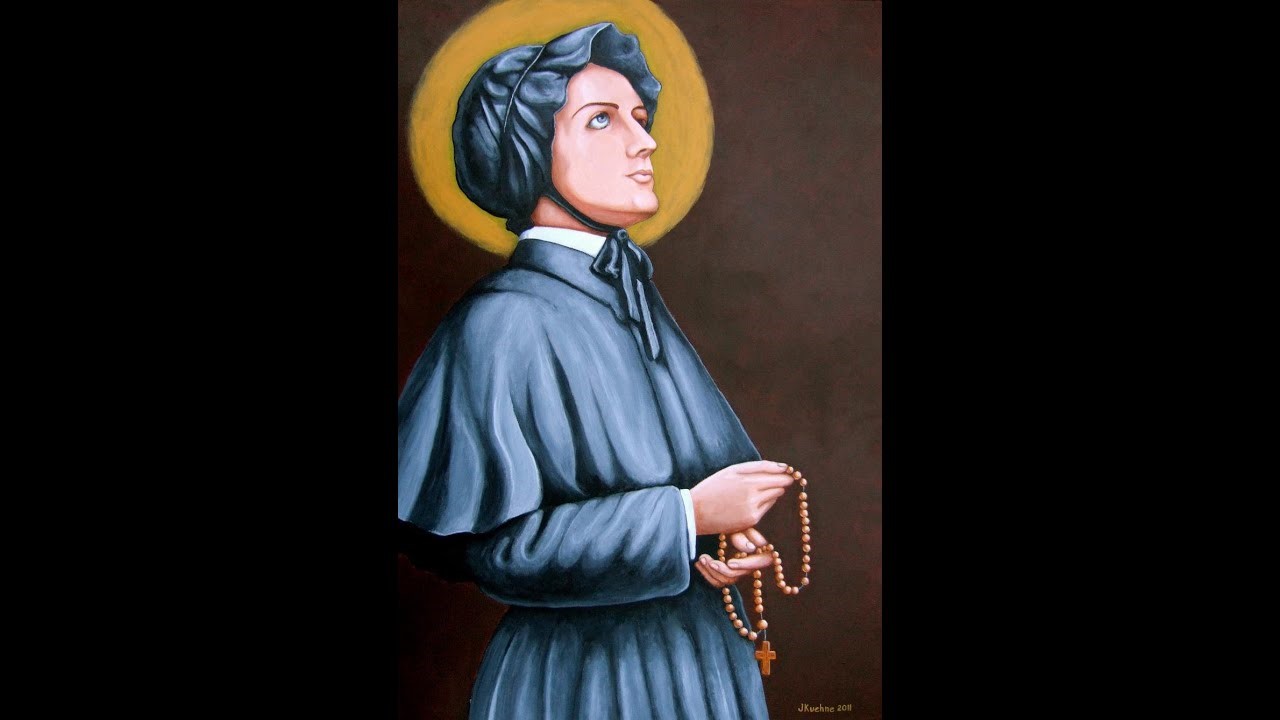
Today we come together as the church to commemorate the Memorial of Saint Elizabeth Ann Seton who is my name saint within the Order of preachers Independent, due to our Prior (and Presiding Bishop) feeling there are similarities between the life of St. Elizabeth Ann Seton and that of my own life
Throughout all of Biblical history and even still in our current times, we sometimes come across people who have endured much within their lives and who, regardless of this, remain strong and devout within their faith. Today we remember St Elizabeth, whom is one such person from whose life, heart and devotion, we can take inspiration within our own spiritual life.
Elizabeth was the first native-born citizen of the United States to be Canonized to sainthood.
Elizabeth was born as Elizabeth Ann Bayley in New York city on the 28th August in the year 1774, and she was a child of the Revolutionary war. She was raised Episcopalian which was the faith of her parents.
Elizabeth married at the tender young age of only nineteen years old, to a man named William Magee Seton. He was a young but wealthy merchant and together they parented a total of five children.
Elizabeth had a very deep devout faith and concern for the poor even as a very young woman and she shared this devotion with her sister-in-law, who was Rebecca Seton, and with whom she became very close friends. Together, Elizabeth and Rebecca undertook various missions for the poor and for the needy of their region and they adopted the name of the ‘Protestant Sisters of Charity` for their mission works.
Elizabeth’s life changed after only the short time of four years of marriage and her life became rather burdensome in nature. Elizabeth and her husband were left with the responsibility for seven half-brothers and sisters of William’s father when he died in the year 1798.
Elizabeth suffered even further in the year 1801, when her own father with whom she had a very close relationship, especially since the loss of her mother at aged only three, himself passed into the care of the Lord.
Then yet again she suffered after only another two years, when both her husband’s business and his health failed. Filing for bankruptcy, Elizabeth and her husband sailed to Italy to help his health and to try to revive his business.
Whilst in Italy, Elizabeth suffered even further, as William’s condition worsened. He was quarantined and subsequently died of Tuberculosis in December of 1803. Elizabeth remained in Italy for several months after his death and during this time, was more fully exposed to the Catholic faith.
Elizabeth returned to New York city in June of 1804, only to suffer yet again with the loss of her dear friend and sister-in=law, Rebecca Seton, in the very next month.
At only the young thirty years of age, Elizabeth had endured the loss of so many who were close to her and she seemed to have the weight of the world upon her shoulders. Even so, throughout all this, Elizabeth still remained fervent in her faith.
The months ahead were life-changing for Elizabeth and she seemed ever more drawn to the Catholic faith and to the Mother Church, much to the horror of her friends and her remaining family who were firmly Protestant.
Elizabeth Ann Seton was received into the Catholic Church on the 4th March 1805. Her conversion cost her dearly in the areas of her friendships and in the support from her remaining family.
Elizabeth relocated to the Baltimore area and there she established a school for girls. She also founded a religious community along with two other young women and she took vows before the Archbishop Carroll as a member of the Sisters of Charity of St Joseph. From this time forward, Elizabeth was known as Mother Seton and she left a legacy of care and education for the poor. She even established the first free Catholic school of the nation.
In so many ways, the journey into the Catholic faith, helped Elizabeth to much more appreciate and to embrace her faith even more profoundly. Elizabeth was willing to endure all things to follow Christ. In her journal, she even wrote, ‘If I am right Thy grace impart still in the right to stay. If I am wrong Oh, teach my heart to find the better way’.
Many of us who have chosen the Catholic faith have experienced some setbacks and have had to endure issues with relationships, but for this brave and devout woman of faith, the cost was even greater.
Elizabeth died aged only 46 on January 4th 1821 from Tuberculosis and she was Canonized on September 14th 1975.
On this your special day, St Elizabeth Ann Seton, Pray for all of us who follow your pathway of faith. Pray that we likewise to yourself will say yes and will accept all that will come to us in the years ahead, and to allow our earthly endurance to further our faith in our Lord Jesus Christ.
Amen.
The Feast of the Holy Family~The Rev. Frank Bellino,OPI

A young soldier once wrote to his father, complaining of his many duties and the demands of the military life, even rising in the early hours to begin the day. His father was not impressed, and replied: ‘My boy, your mother and I must get up three or four times a night to calm a crying baby [they had just had their fourteenth child], and that is less romantic than your physical training. (Howard Twilley)
Many of the abilities and abilities we possess as adults and probably never comprehend are due to our parent’s unrelenting sacrifice. Brushing teeth, tying laces, riding bikes: nobody is born with these abilities – someone has had to endure boredom of the highest level, repeating the same old thing repeatedly and again for our sake. How bored my mother must have been spending night after night throwing me in the air whenever I managed to read a word correctly (I had stubbornly refused to start reading), but it worked, and I was soon reading without any encouragement.
Every one of us has the benefit of numerous acts of generosity and sacrifice. That is what it means to be part of a family, to be a part of a community where people give themselves freely so others can grow and develop. I exist against a hidden backdrop of generation after generation, a story of formation in human life of which I am a part of the chain.
Jesus, as the genealogies in the Gospels of Matthew and Luke remind us, is a part of a family story, he exists against a backdrop of generation formation, of sacrifice and generosity. In the Gospel, we see Jesus’ immediate family situation shifted to the limit through anxiety and fear of loss.
Mary and Joseph have searched for three days and three nights for Jesus, and when they find him in the Temple his words must have cast a shadow over the life they lived together: ‘Did you not know that I must be in my Father’s house.’ The child given to them to raise, to sacrifice for, is destined to be the sacrifice of liberation for the whole human race. Jesus’ destiny is to give everything back to the source of creation, so that it may be renewed and recreated. He tells us that the backdrop of all things is the patient generosity of the Father, who will sacrifice even his own Son so that we may have a life.
Therefore, the holy family is a family learning to live backwards. The child is often the image of the parents, but in this family, Mary is in the image of her Son: without sin she is a mirror for the newness of what God is doing in Christ, and Joseph – like us a sinner – is called to let that image be formed in him patiently, through the graces of the Holy Spirit working within him.
This family, called to form and raise a boy, is a school where the adults are established through knowing and loving the child. The Gospel contrasts the scribes in the Temple, amazed at the wisdom of the boy Jesus, as so many will be amazed at his words in his earthly ministry – an amazement so compatible with taking offence, rejecting Jesus, putting him to death. Those entrusted with teaching Israel will not desire to learn, will not be able to see.
Mary, we are told, kept all these things in her heart. Mary’s humility allows her to be taught by her own child, and so she can become more deeply in the image of the one who is the true image of the Father. Going back to Nazareth Jesus is obedient to Mary and Joseph and grows in stature. The holy family is a place of passing on the story of human life, of the old transforming into the young. Moreover, this family is a place where the young shape the old, where the heart must grow older as it contemplates the face of Christ.
As much of what we do is passing on, passing on the benefits of human life and human life to those who will come after us. Whether it is our savings, the future good of the planet, or a love for great literature, human beings seek to convey it to others. But not everything is passing away into the future. The child born of Mary has come to renew humanity, to bring it back to life in the freshness of God’s Holy Spirit through the merciful patience of the Father.
Keeping the Faith: The Feast of St. Stephen the Martyr~The Very Rev Lady Sherwood, OPI
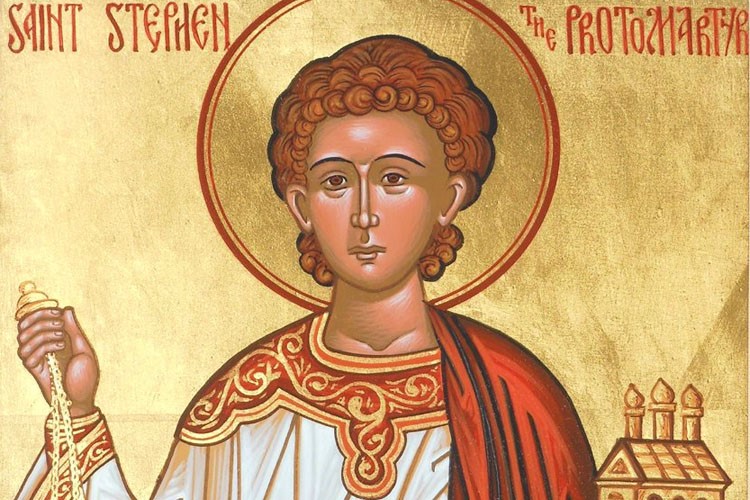
My Dearest brothers and sisters in Christ! We have just celebrated both Christmas eve, and only yesterday, we celebrated Christmas day itself, the Wonderful feast of the birth of Jesus, Our Lord and Saviour. We have reflected upon the little newborn babe in the crib, we have sung carols such as “silent night” and “Hark the Herald Angel’s Sing”, as well as other hymns and Carols, and no doubt festive non religious merry Christmas tunes of all varieties as well, and we have heard about the tidings of peace, joy and salvation to all the world. And suddenly today, in stark contrast, we are clothed in blood-red vestments, we hear of the bloody death of Stephen, and of Jesus’ warnings of persecution, death, and hatred for his name’s sake. So, Is there a connection between Christmas and the first Holy martyr Stephen? How are we to make sense of this dramatic sudden contrast? Does it mean we shouldn’t take the beauty and the peace of Christmas too seriously? Does it mean that Christmas is merely a wonderful story, but that the reality is indeed extremely different…?
Not at all!! The long tradition of the Church in celebrating the memorial of St. Stephen the day after Christmas does not serve to demote Christmas in any way whatsoever, but to continue it, to strengthen it, and to manifest more clearly in our hearts the important meaning of the Christmas celebration. Jesus became mankind, he became born as an earthly child, so to in in his adult earthly years, to sacrifice himself for us and for our salvation. He wanted as he wants today and always, for us to give him his rightful place within our hearts. So after Christmas, the birth of the small Jesus, we contemplate also the birth of the Church, because Our Lord was and is the Church, he was the church as a child.
Now when Jesus comes to dwell in our hearts, that cannot remain without effect upon us. When Our Lord and Saviour, who can do all things dwells within us, he transforms our hearts, and thus makes a difference in our attitudes towards one another and toward life. St. Stephen’s life is an excellent example of this. As one of the first deacons he had a double task. He was assigned to the service of the tables, to the “service of love” to the poor, so that the Apostles would have more time for their preaching. But Stephen also had the gift of preaching, and so he would also perform the ministry of truth. Stephen, trusting in Jesus, devoted himself whole-heartedly to the tasks entrusted into him. He was stoned to death because his preaching of Jesus as the Son of God was considered blasphemy. Now, we might think that if Stephen, had been far more considerate of the understanding and passion of his Jewish brothers for the oneness of God, and had spoken more carefully about Jesus, that he would not have been stoned, that maybe he could have continued to preach about Jesus, and that by doing this,he could have done more good….
But St. Stephen make no compromises concerning the truth. He proclaims the Jesus who revealed himself and the one truth whom he had come to know. But he does not proclaim this truth by way of any violence or hatred, but in instead in the acts of love and self-giving. Until the last moment he forgives the men who kill him. As Jesus prayed for those who killed him, so St. Stephen prayed, “Lord, do not count this sin against them!” And his witness, his death was fruitful for us as members of the Church. The remembrance of this witness, for example, probably helped Saul later to accept Christ’s message as the truth, and to later become the great Apostle Paul.
St. Stephen is an excellent example to us of true and unwavering faithfulness to Jesus, an example of holding fast to the truth in love. This is an example of the way we all should and want to go within our lives. This path of truth and salvation is not always easy. It is not always easy to avoid deviating from the correct path in one way or another. Sometimes one hears that faithful Christians, in order to be tolerant of others, must abandon the claim to truth, that they must not proclaim or hold the faith as truth or even as true, for that to some, may lead to intolerance and to hatred. But the example of St. Stephen shows us clearly that the world needs the witness of the truth, and that it is possible to preach this truth with steadfast conviction and yet without any violence or hate, but in the acts of love and self-giving.
Let us pray to Jesus, who came into this world as a child for our sakes, that we have the courage and the wisdom to profess our faith in our family life, in our workplaces, in our society, wherever we are, in a convinced and convincing loving manner, as St. Stephen did. Amen.
Prepare! Advent 2~The Rev. Frank Bellino, OPI
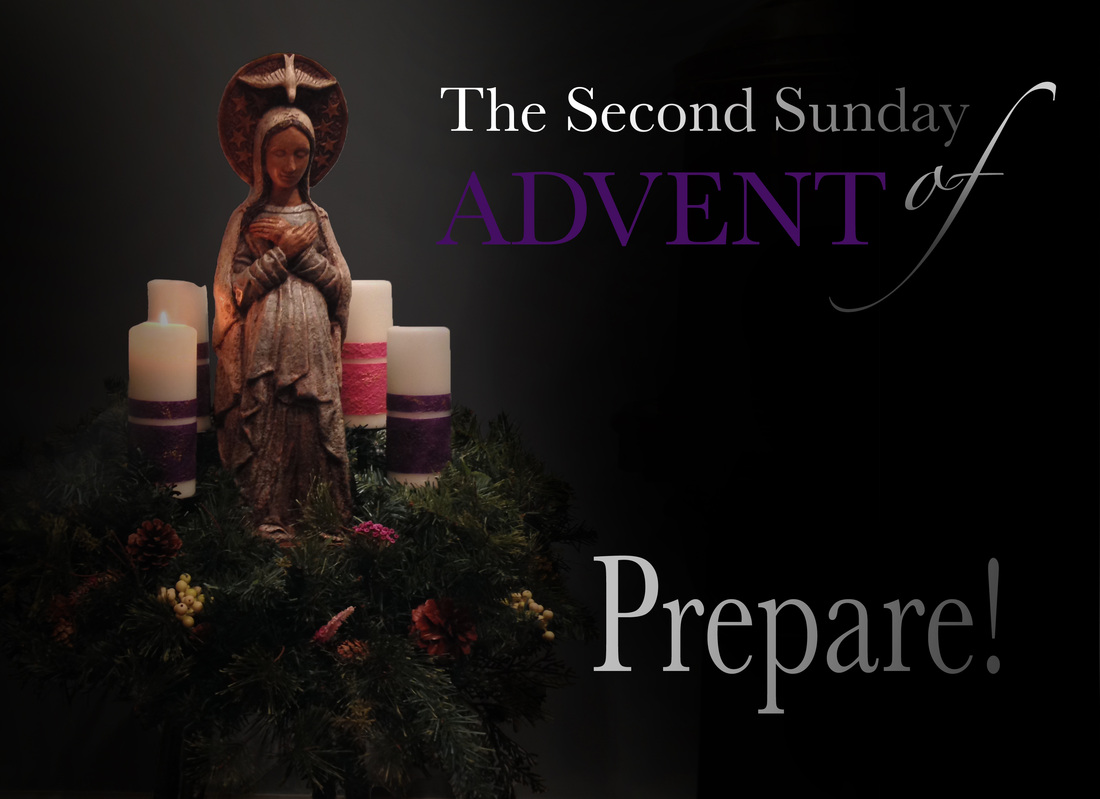
One of my greatest pleasures is working at an elementary school. In a talking with some kids at the school a few of the 1st graders (7 yr.-olds), I asked them what they were doing to prepare for the Coming of Baby Jesus.
One child answered: “I’m preparing the Nativity Scene in our house” …
Another said: “I helped Dad and Mom decorate the Christmas tree.”
I told them that all these things are quite alright but there is something more important than the exterior preparations…What then would that be?
An adorable girl replied: “Portándome bien y siendo buena” (By behaving myself well and being a good girl). – “Very good!” I exclaimed. (The teacher translated for me)
The best answer, however, came from one of the Spanish speaking little ones, who said: “PREPARANDO MI CORAZÓN PARA QUE JESÚS ESTÉ CONTENTO” (BY PREPARING MY HEART, SO THAT JESUS MAY BE HAPPY) …. [yesss!!!]… Out of the mouth of the babes…
External preparations form part of the season of Advent: they help create the Christmas atmosphere of joy and expectation. A lot of people, moms especially, are much busier these days –poor moms…I salute you for your self-giving– planning the meals, shopping for gifts, planning for office Christmas parties, sending Christmas cards (although this nice gesture is becoming less common nowadays), …etc., and all these amid the current economic situation! All these are part of Advent season but then and still, not the most important…
Let us convince ourselves of the utmost importance of our interior preparation to celebrate the 1st Coming of Our Lord: preparing our heart so that Jesus would be happy, as the little girl said with all the simplicity and truth which can only come from a child.
I read a narrative which involved the now St. John Paull II. It was in the Advent Season of 1980 when Pope John Paul II met with thousands of children from different parishes of Rome. He began his teaching by asking:
– “How are you preparing yourself for Christmas?”
– “With prayer”, the kids answered.
– “Very well, with prayer”, said the Pope, “but also with Confession. You have to go to Confession in order to receive Our Lord in communion. Will you, do it?”
– Those thousands of kids answered in a loud chorus: “Yes, we will do it!”
– “Yes, you have to do it”, the Pope told them. And in a low volume: “The Pope will also go to confession in order to worthily receive the Child Jesus”.
Let us not be afraid “to clean the house inside out” by opening our soul to his grace asking forgiveness for our sins in the sacrament of Confession if we are not in the state of grace or if we haven’t gone for a long time I assure you that a well-done Confession, in spite of the initial shame, is worth all the effort for it is only when our soul is in the state of grace shall Jesus have “a place in our inn (Matthew 2:7)” and shall we will recover the profound happiness of being once more friends of God. Besides, it is the best gift we could give to Baby Jesus and to ourselves as well!
Let us also warmly invite and encourage our relatives and friends to do the same during this season of Advent, always respecting their freedom. With this, will bring joy not only to their soul but most importantly and most of all, to God. “Just so, I tell you, there will be more joy in heaven over one sinner who repents than over ninety-nine righteous persons who need no repentance (Luke15:7).”
Mother Mary, Help of Christians, Refuge of Sinners; St. Joseph, Teacher of Interior Life, pray for us so we and a lot of people may prepare in our heart a place for the Child Jesus by frequenting the Sacrament of Confession, of Divine Love, Mercy, and Joy, and so welcome your Son in our life.
Santa Who? The Feast of St. Nicholas~The Rt Rev Michael Beckett, OPI

Today is a holiday, y’all! And a rather important one, at that! Today is one of those days that are included in the much misaligned greeting, “Happy Holidays!” Yep, today, 6 December is one of those “forgotten holidays” that get lost in the lead up to Christmas or has been taken over by the confusion and blending of holidays. And by now, I’m sure, if you’ve managed to read this far, that you are wondering what in the world I’m talking about….. You know that Christmas song, “Jolly Old St. Nicholas”???? Well y’all, today we concentrate on ol’ St. Nick himself, who was, as far as we know, neither jolly, old, or an elf. Let that sink in for a sec.
Today we celebrate the Feast of St. Nicholas, aka the person upon which our dear Santa Claus was modeled. Now, just who was this guy? I know you’ve seen pictures and figures of St. Nicholas dressed like a bishop, carrying a crozier and he looks nothing like our Santa. What’s up with that? Imma tell ya.
The true story of Santa Claus begins with Nicholas, who was born during the third century in the village of Patara. At the time the area was Greek and is now on the southern coast of Turkey. His wealthy parents, who raised him to be a devout Christian, died in an epidemic while Nicholas was still young. Obeying Jesus’ words to “sell what you own and give the money to the poor,” Nicholas used his whole inheritance to assist the needy, the sick, and the suffering. He dedicated his life to serving God and was made Bishop of Myra while still a young man. Bishop Nicholas became known throughout the land for his generosity to those in need, his love for children, and his concern for sailors and ships.
Under the Roman Emperor Diocletian, who ruthlessly persecuted Christians, Bishop Nicholas suffered for his faith, was exiled and imprisoned. The prisons were so full of bishops, priests, and deacons, there was no room for the real criminals—murderers, thieves and robbers. After his release, Nicholas attended the Council of Nicaea (from which we get the Nicene Creed) in AD 325. He died December 6, AD 343 in Myra and was buried in his cathedral church, where a unique relic, called manna, formed in his grave. This liquid substance, said to have healing powers, fostered the growth of devotion to Nicholas. The anniversary of his death became a day of celebration, St. Nicholas Day, December 6th.
Now, how did St. Nicholas transform into Santa Claus? It’s in the language. The Dutch brought St. Nicholas to the US with them. Yep, in Dutch, St. Nicholas is “Sinterklaas.” Get it? Pretty awesome how languages work!
For those of you who are interested, there is a very rich history that one can find of the process in which this holy man, St. Nicholas, became our Santa Claus. Google is an awesome thing!
So, I wish you a very blessed and happy Feast of St. Nicholas today!
Get Ready! Advent 1~The Rt Rev Michael Beckett, OPI

Our trees are up, our halls are decked, and the house is relatively clean. I mean, maybe we’re not quite ready for Charles and Camilla to visit, but I’d not be embarrassed if, say, William and Catherine or Joe and Jill popped in. For all practical purposes, we are ready for Christmas.
What about y’all? Shopping done? Decorating finished? Parties planned? What does “being ready for Christmas” really mean?
Today is the First Sunday in Advent. I’m about certain that every one of us has seen an “Advent Calendar.” Those cute little things that count down until Christmas. Whilst they can be fun and exciting, they really have nothing to do with “Advent” though. Not really even close. So, one might ask, “What is Advent?” And, as is my custom, I’m gonna tell ya.
Since the 900s, Advent has marked the beginning of the church year, and is a season of great anticipation, preparation, and excitement, traditionally focusing on the Nativity of the Christ Child, when Jesus came as our Savior. During Advent, we as Christians also direct our thoughts to His second coming as judge.
The word Advent is from the Latin adventus, meaning coming,” and is celebrated during the four weeks of preparation for Christmas. Advent always contains four Sundays, beginning on the Sunday nearest the feast of St. Andrew the Apostle, (November 30) and continuing until December 24. It blends together a penitential spirit, very similar to Lent, a liturgical theme of preparation for the Second and Final Coming of the Lord, called the Parousia, and a joyful theme of getting ready for the Bethlehem event.
Advent is a time of preparation that is marked by prayer. Advent’s prayers are prayers of humble devotion and commitment, prayers of submission, prayers for deliverance, prayers from those walking in darkness who are awaiting and anticipating a great light (Isaiah 9).
So whilst we are preparing our homes for Christmas, should we not also be preparing our hearts and minds? We all of us know that Christmas is on 25 December, and that’s when we celebrate Jesus’s birth. What we don’t know, however, is when Jesus is coming back.
In the Gospel appointed for today, Jesus says to his disciples:
“As it was in the days of Noah, so it will be at the coming of the Son of Man. In those days before the flood, they were eating and drinking,
marrying and giving in marriage, up to the day that Noah entered the ark. They did not know until the flood came and carried them all away.
So will it be also at the coming of the Son of Man. Two men will be out in the field; one will be taken, and one will be left. Two women will be grinding at the mill; one will be taken, and one will be left. Therefore, stay awake! For you do not know on which day your Lord will come.
Be sure of this: if the master of the house had known the hour of night when the thief was coming, he would have stayed awake and not let his house be broken into. So too, you also must be prepared, for at an hour you do not expect, the Son of Man will come.”
As we go about “getting ready” for Christmas, let us not forget what we are really ‘getting ready” for. I invite each of you to have a most blessed, holy, and prayerful Advent. Amen.
The Feast of Our Lord Jesus Christ King of Universe~Br. Milan Komadina
The war in Ukraine is still going on. It has been almost two years since the first
Russian bombs fell down on the Ukrainian ground. Many people were killed, civilians,
children, women and men, young and old… Now there is another war happening
parallel. Palestinian terrorist organization attacked Israel. Then Israel started defense.
Unfortunately now we see that the defense turns into big destruction where many
innocent people are killed. There are victims on both sides. It is really sad that wars are
happening in the world. But also there are many sad destinies in many countries
worldwide in countries where people do not have war. There are many poor people,
people who are hungry, thirsty, people who do not have enough money for every day
needs. People who do not have normal clothes or do not even have a place to live. Our
responsibility is to help everyone if we could help. In today’s reading in Matthew 25:31-
46 we read about the Final Judgment. And we can found out what would for Jesus be
the most important. He will not ask us if we lit many candles or brought the most
beautiful flowers into the church, He would not ask us if we prayed 10 or 100 or 1000
rosaries, He would not even ask us if we had only one or multiple sexual partners. I am
giving these examples because it seems that today’s churches pay much more attention
to sexual life of their believers which is wrong than providing support to people. What
Jesus will ask us is how we were treating others? People around us – those who are
hungry and thirsty not only for material food but also hungry and thirsty for friendships,
hugs, understanding, listening and talking. We don’t even need to be baptized or
believers to provide what will Jesus ask us about. And who would be justified? A non-
believer who never went to church but spent his entire life in helping people in need,
feeding them and providing them all that they need? Or the person who was properly
baptized, properly confirmed, who read Bible 1000 times and were very often a church
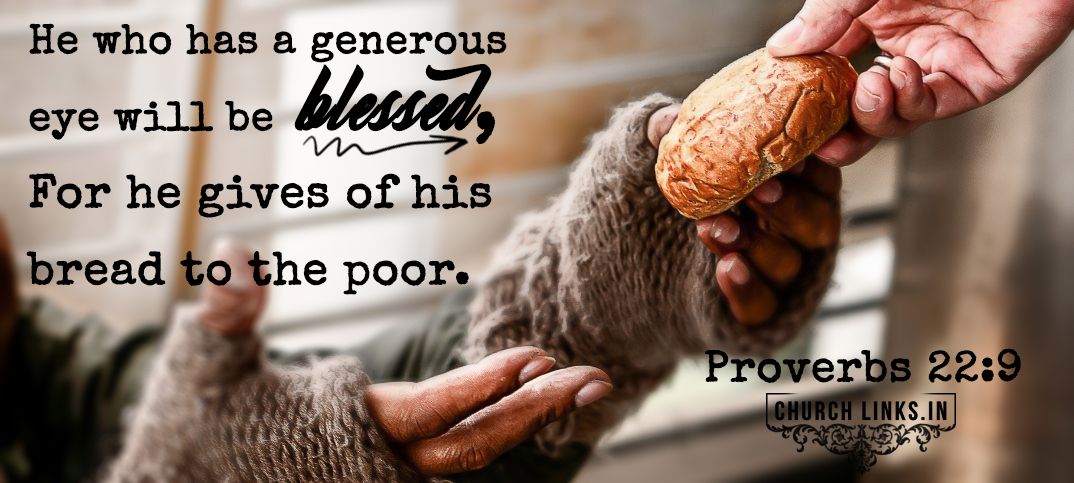
visitor if that person was not generous. Generosity will be required from us. Because
Jesus is in all people who suffer. And the way we treat them Jesus will treat us too. My
prayer for all of us is to live in accordance to what we read in today`s Gospel of Matthew
25:31-46. To provide always mercy to others, mercy in love, hugs, understanding,
support, money and donations of any kind and to try to be full with empathy as Jesus
was. To Him be glory forever. Amen.
Matthew 25:31-46
31 “When the Son of Man comes in his glory, and all the angels with him, then he will sit on his glorious throne. 32 Before him will be gathered all the nations, and he will separate people one from another as a shepherd separates the sheep from the goats. 33 And he will place the sheep on his right, but the goats on the left. 34 Then the King will say to those on his right, ‘Come, you who are blessed by my Father, inherit the kingdom prepared for you from the foundation of the world. 35 For I was hungry and
you gave me food, I was thirsty and you gave me drink, I was a stranger and you welcomed me, 36 I was naked and you clothed me, I was sick and you visited me, I was in prison and you came to me.’ 37 Then the righteous will answer him, saying, ‘Lord, when did we see you hungry and feed you, or thirsty and give you drink? 38 And when did we see you a stranger and welcome you, or naked and clothe you? 39 And when did we see you sick or in prison and visit you?’ 40 And the King will answer them, ‘Truly, I say to you, as you did it to one of the least of these my brothers, you did it to me.’
41 “Then he will say to those on his left, ‘Depart from me, you cursed, into the eternal fire prepared for the devil and his angels. 42 For I was hungry and you gave me no food, I was thirsty and you gave me no drink, 43 I was a stranger and you did not welcome me, naked and you did not clothe me, sick and in prison and you did not visit me.’ 44 Then they also will answer, saying, ‘Lord, when did we see you hungry or thirsty or a stranger or naked or sick or in prison, and did not minister to you?’ 45 Then he will
answer them, saying, ‘Truly, I say to you, as you did not do it to one of the least of these, you did not do it to me.’ 46 And these will go away into eternal punishment, but the righteous into eternal life.”
Giving Thanks In Times of Trouble~The Rt Rev Michael Beckett, OPI

Thanksgiving was my mother’s favorite holiday, and today will be full of memories of her, my father, and memories of holidays past. This Thanksgiving will also be a first for many of my friends as they struggle with broken relationship, broken health, and broken dreams, and grief. With all of the things going on in this world today, in this country today, some, many, might ask, for what do we have to be thankful? As I sit and ponder the losses and struggles of the past, and the tragedies and difficulties of the present, I am reminded by St. Paul that we are to “in everything give thanks; for this is God’s will for you in Christ Jesus.”
Giving thanks is, in troubled times, quite a difficult thing to do. However, we are taught that throughout our trials and tribulations, we should, nonetheless, give thanks.
Ephesians 5:20 says we are to be “giving thanks always for all things unto God and the Father in the name of our Lord Jesus Christ.” Trouble may bring a correcting ministry.
Romans 8:28 teaches us that “All things work for the good for those who love the Lord and are called according to His purpose. “ Even though we often wonder what good can come of some of the situations with which we are faced, we learn through Holy Scripture that good WILL come of our troubles.
Hebrews 12:6 says, “For whom the Lord loveth He chasteneth, and scourgeth every son whom He receiveth.” And Hebrews 12:11 tells us, “Now no chastening for the present seemeth to be joyous, but grievous: nevertheless afterward it yieldeth the peaceable fruit of righteousness unto them which are exercised thereby.”
Troubles bring us to Jesus so that we might depend more upon Him. The apostle Paul had a thorn in his flesh and he said, “For this thing I besought the Lord thrice, that it might depart from me. And He said unto me, My grace is sufficient for thee: for My strength is made perfect in weakness. Most gladly therefore will I rather glory in my infirmities, that the power of Christ may rest upon me” (2 Corinthians 12:8-9). If your trouble causes you to depend more upon God, can’t you realize why we are to thank Him for it?
Trouble may bring a confirming testimony. Paul knew much sorrow and he said, “Blessed be God, even the Father of our Lord Jesus Christ, the Father of mercies, and the God of all comfort; Who comforteth us in all our tribulation, that we may be able to comfort them which are in any trouble, by the comfort wherewith we ourselves are comforted of God” (2 Corinthians 1:3-4). If you didn’t have tribulation, you wouldn’t need comfort and God so graciously gives that comfort.
Trouble may bring an increasing maturity. God’s Son was without sin, but not without suffering. James 1:4 says, “But let patience have her perfect work, that ye may be perfect and entire, wanting nothing.” The word “perfect” does not mean sinless, it means mature. The word “patience” means endurance. You’re not going to be mature until you learn patience. And the only way that you can learn patience is to have something to endure. You don’t sharpen an axe on a pound of butter.
Trouble may bring excelling glory. 1 Peter 4:12-14 says, “Beloved, think it not strange concerning the fiery trial which is to try you, as though some strange thing happened unto you: But rejoice, inasmuch as ye are partakers of Christ’s sufferings; that, when His glory shall be revealed, ye may be glad also with exceeding joy. If ye be reproached for the name of Christ, happy are ye; for the spirit of glory and of God resteth upon you: on their part He is evil spoken of, but on your part He is glorified.” How would you like the Spirit of glory and of God to rest on you? How would you like to undergo a fiery trial? But, you see, it is the fiery trial that brings the Spirit of glory upon you. Acts 6:5 describes Stephen as “a man full of faith and of the Holy Ghost.” While he was being stoned, the Bible says that his face shone like the face of an angel (see Acts 6:15). If your trouble causes you to know God’s glory, shouldn’t we thank Him for it?
Trouble may bring baffling mystery, and this is really hard for me at times. Isaiah 55:8-9 says, “For My thoughts are not your thoughts, neither are your ways my ways, saith the LORD. For as the heavens are higher than the earth, so are My ways higher than your ways, and My thoughts than your thoughts.” God will give you enough to know to obey Him. Friend, there are some things we may not understand and we don’t have to understand them in order to thank God, because God is good.
And most important of all, we find that trouble will bring eternal victory. Romans 8:18 says, “For I reckon that the sufferings of this present time are not worthy to be compared with the glory which shall be revealed in us.” Paul was not saying the glory offsets the sufferings. Instead, he was saying that there’s no comparison. What a day that will be when He turns every tear to shouts of joy! And then we understand that He has not forsaken us.
Now since all of these things are true, then can we not give thanks in everything? I give thanks for the lives of those I have lost, that my life was blessed by their presence in my life. I give thanks for the wisdom and knowledge that troubled times have taught me. I give thanks for the Grace of Jesus Christ who has made it possible for me to deal with life at its worst. I give thanks for the multitude of blessings in this life: my husband, my friends, my health, home, critters, and for each of you.
In all things, give thanks. No matter what your circumstances and trials, this Thanksgiving, truly, truly give thanks.
I wish you all a most blessed and happy Thanksgiving.
+Michael, OPI
 The Order of Preachers, Independent
You must be logged in to post a comment.