
Category: Sermon
Behold the Truth~The Rev Frank Bellino,OPI
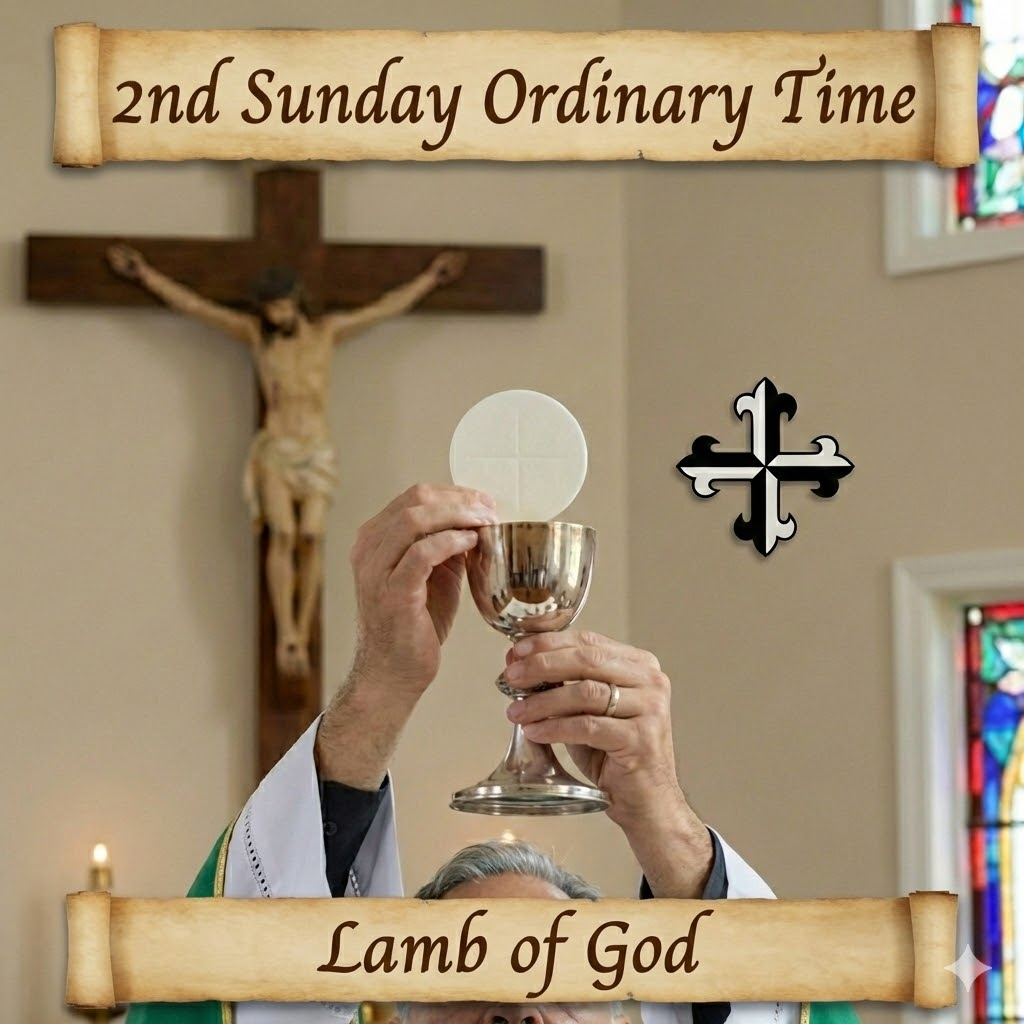
My brothers and sisters, if you look around the sanctuary today, you will notice a distinct shift. The poinsettias are gone, the crèche has been packed away for another year, and the gold and white vestments of Christmas have been folded up. Today, I stand before you in green as we enter what the Church calls “Ordinary Time.” However, I want to warn you against a common mistake: “Ordinary” in the life of the Church does not mean boring, nor does it mean routine. The word comes from ordinal, meaning “counted time.” It is the season where we count the days we walk alongside Jesus in the midst of our daily lives. And frankly, there is nothing “ordinary” about the Gospel we just heard.
We find John the Baptist standing by the River Jordan, surrounded by crowds buzzing with anticipation. They are looking for a Messiah, a conqueror, perhaps a King who will kick out the Romans—the “Lion of the Tribe of Judah.” Yet, when John sees Jesus coming toward him, he doesn’t announce a Lion; he says, “Behold, the Lamb of God.” Imagine the confusion of those listening. A lamb isn’t a conqueror; a lamb doesn’t have claws or fangs. A lamb is vulnerable, gentle, and most importantly to the Jewish listeners standing there, a lamb is sacrifice. In one sentence, John the Baptist flips the world’s expectations upside down, telling them that God isn’t coming to conquer by force, but by sacrificing Himself—taking away the sin of the world not by destroying sinners, but by bearing the weight of the sin Himself.
As a Dominican, a member of the Order of Preachers, I have a deep love for John the Baptist because he is the model for all of us. If you look at classic religious paintings of John, artists almost always depict him the same way: with an elongated finger pointing away from himself and directly at Jesus. He doesn’t say, “Look at me, I’m the prophet,” or “Look how well I baptize.” He simply says, “Behold Him.” In the text today, John even admits, “I did not know him.” Think about that—they were cousins, yet John admits that he didn’t truly know who Jesus was until the Spirit opened his eyes. That is a lesson for us at St. Michael’s; we may have grown up with Jesus, but we always need the Holy Spirit to open our eyes a little wider, to see Him not just as a historical figure, but as the Lamb present right now.
In a few moments, I will stand at this Altar to do exactly what John did. I will take the consecrated Host, elevate it for you all to see, and echo those words across two thousand years: “Behold the Lamb of God, behold him who takes away the sins of the world.” When we reach that moment in the Mass, remember that it is not a ritual repetition; it is a reality. We are pointing to the fact that Christ is here, not as a memory, but as a real presence.
So, here is your mission for this first week of Ordinary Time. We live in a world that is obsessed with “selfies”—look at me, look at my life, look at my opinions. The Christian is called to be the anti-selfie. We are called to be like John. When people look at your life—how you treat your employees, how you love your family, how you handle a crisis—do they see you, or do they see the One you are pointing to? Let us walk into this green season with the humility of the Baptist, unafraid to point a finger at the presence of God in our midst and say to a broken world: “Look. There He is. There is the Lamb who can make you whole.”
In the name of the Father, and of the Son, and of the Holy Spirit. Amen.
Why Was Jesus Baptized?~The Rev Frank Bellino,OPI
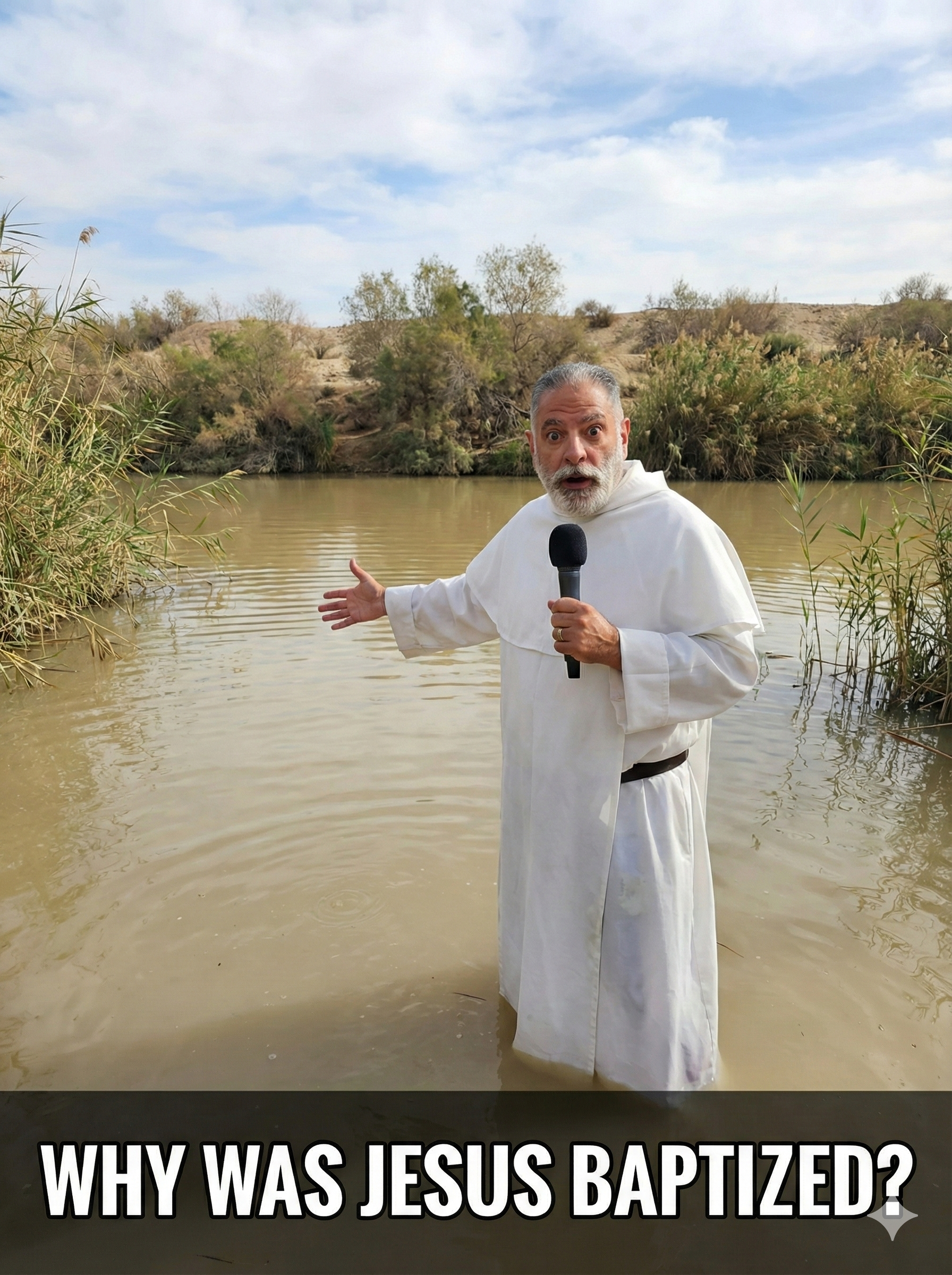
My brothers and sisters, as Dominicans, we are seekers of Veritas—Truth. And today, the liturgy presents us with a paradox that demands we look past the surface and gaze into the deep Truth of God. We must ask the hard theological question: Why was Jesus baptized?
We know that John’s baptism was a ritual of repentance for the forgiveness of sins. But Jesus is the Word made Flesh, the sinless Lamb of God. He has no past to clean up, no darkness to wash away. So, why did the All-Holy God wade into that muddy water?
The Truth is this: He did not go down into the water to be sanctified by it; He went down to sanctify the water for us. St. Thomas Aquinas teaches us that in this moment, Christ touched the waters of the earth and made them holy, preparing them to be the vehicle of our salvation. He enters the river not to stand above us on a pedestal of moral superiority, but to stand next to us in our humanity.
This is the heart of the Gospel we preach here in the Unified Old Catholic Church. Jesus stands shoulder-to-shoulder with sinners, tax collectors, and soldiers. He enters the “mud” of human existence. And this sets the standard for our community. We are not called to be judges sitting on high; we are called to be brothers and sisters in the river. We do not judge the “mud” on our neighbor’s feet; we stand with them in solidarity, pointing them toward the hope of grace.
When Jesus emerged from the water, the heavens were torn open, and the Father spoke: “You are my beloved Son.” In that moment, the Trinity was fully revealed—Father, Son, and Spirit. For us, this reveals our ontological reality—our true being. In a world that is obsessed with temporary labels—what you do for work, how much is in your bank account, your rank, or your political party—Baptism brands you with an eternal mark.
Dominic, our father, preached that we must know who we are to know what we must do. Before you are a parent, a worker, or a retiree, you are a Beloved Child of God. That is a status that cannot be earned by human effort, and it is a Truth that cannot be lost by human failure. It is the bedrock of your soul.
However, we must remember that Baptism is not a graduation ceremony; it is a commissioning. The Holy Spirit descended as a dove not merely to comfort Jesus, but to empower Him for the mission. The Spirit is the breath of the Preacher. We are not baptized to keep this Truth to ourselves. We receive the grace of God so that we may hand it on to others.
Today, the Christmas decorations will come down. We will return to “Ordinary Time,” and the vestments will turn green. But for the Christian, for the follower of Truth, there is no such thing as an “ordinary” day. We are called to be extraordinary preachers of the Gospel in ordinary places—in our homes, in our workplaces, and in our city.
Go from here, contemplating the love of the Father, and hand that love on to everyone you meet.
Aha!: The Feast of the Epiphany~The Rt Rev Michael Beckett, OPI
Y’all………Today is a big day! The Sunday closest to 6 January is the day the Church celebrates Epiphany, which marks the end of the Christmas season and reflects on the visit of the Magi, or wisemen, to the baby Jesus. Our good friends, the dictionary makers, define “epiphany” as a sudden, profound moment of insight or realization, often a spiritual or philosophical breakthrough, where a deeper truth about something is revealed, changing one’s perception. In more simple terms, it’s an “aha!” moment, or when one realizes something that’s pretty profound, pretty life changing.
“So,” you ask, “what does this have to do with the wisemen or three kings, or whoever?” Imma tell ya. Those wisemen were the first folks outside of the Nativity story to recognize Jesus as Someone Important. So important that they traveled for quite some time, over long distances, to reach Jesus, and in doing so, let the world know that Jesus was Somebody.
Y’all remember when our dear friend, Ebeneezer Scrooge, had his own personal Epiphany? Like, BOOM!, a big realization and life change! He went from being mean and hateful and dreadful to being kind and loving and generous. That’s what Epiphany is and does.
Epiphany is about Jesus and his message being available and relevant to people of every age and race. Epiphany is about God made present amongst us and available to all of us to worship and follow. Epiphany is about God’s love and how that love reaches beyond the everyday barriers of race, class, sexuality, political party, or anything else that separates us from each other.
Simply put and bottom line, is that Epiphany is all about realizing that no matter who we are, what we are, we need to become more. More loving. More caring. More forgiving. More Christlike. Jesus himself clues us in to what Epiphany is all about:
Jesus tells us in John 13:34-35, “A new commandment I give to you, that you love one another: just as I have loved you, you also are to love one another. By this all people will know that you are my disciples, if you have love for one another.”
We, all of us, need to have this kind of Epiphany every day of our lives. Every. Day. We need to remind ourselves, every day, of who we claim to serve, of how we are supposed to conduct ourselves, of how our own epiphanies have changed us and our lives. Of the qualities we are required to show: Justice. Mercy. Kindness. Forgiveness. Love. Regardless of anything else that might separate us, divide us, or causes us to see people as “other.” There is no one on this planet who God doesn’t love. There is no one on this planet who Jesus didn’t die for. Period. Love. One. Another.
And maybe, just maybe, because of the epiphanies in our lives, we can help others to have their own. Amen.
The Feast of St Elizabeth Ann Seton~The Very Rev Lady Sherwood,OPI
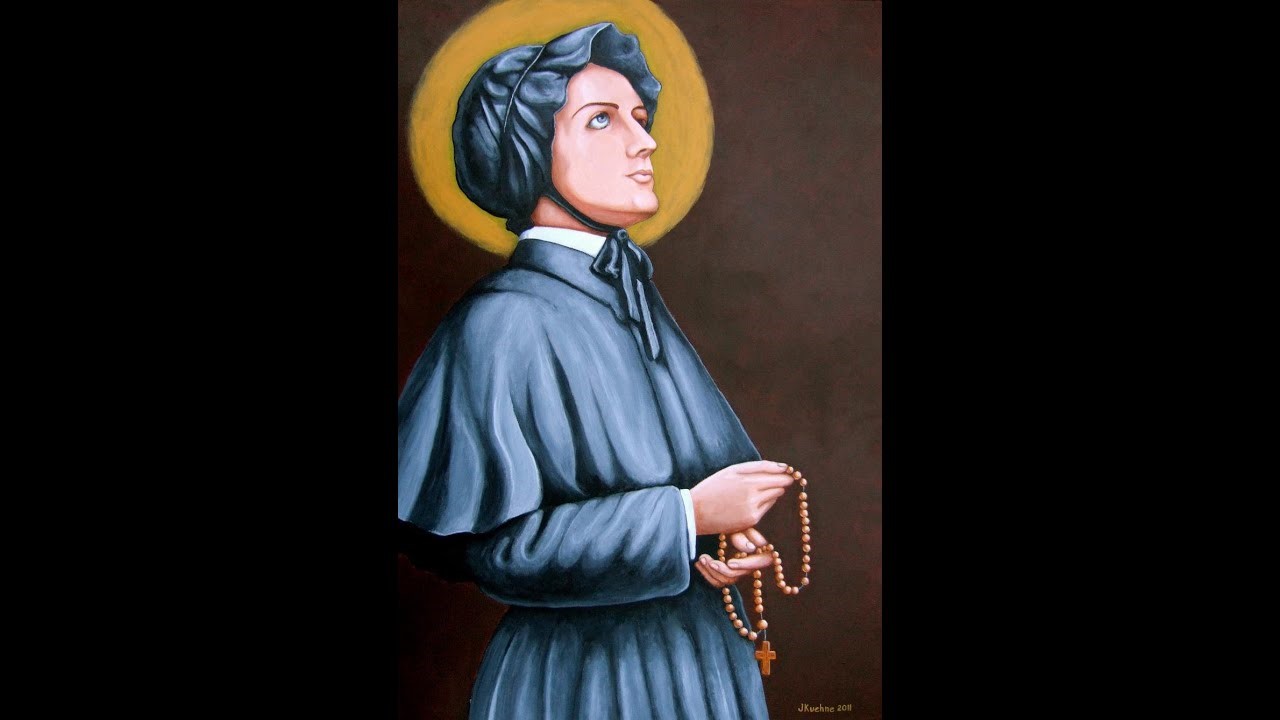
Today we come together as the Church, to commemorate the Memorial of my Dominican Order Name
Saint, that being St. Elizabeth Ann Seton.
This particular Saint was given as my order Name Saint because my Bishop noticed there seemed to be
many similarities between the life of St Elizabeth Ann Seton and the life of myself. We both share the
fact that we have both overcome many life traumas and adversities, but yet, we both always have
remained strong of faith regardless of the things life has thrown at us.
Mother Seton founded the first American religious community for women, named the sisters of charity,
and so she was a keystone of the American Catholic church. Mother Seton also opened the first
American parish school, and the first American Catholic orphanage. All this, she had accomplished by
the age of 46, whilst also raising her own five children.
Mother Seton is a true daughter of the American Revolution, she was born on Aug 28th 1774, which was
only two years prior to the declaration of Independence.
By both birth and marriage, Mother Seton was linked to the first families of New York and enjoyed the
rich fruits of high society, but this situation wasn’t to last.
Mother Seton suffered the early deaths of both her mother in 1777, and of her baby sister in 1778, but
far from letting it get her down, she faced each new ‘holocaust’ as she called it, with a hopeful
cheerfulness.
At only aged 19, she married a handsome wealthy businessman named William Magee Seton and they
had five children together. But William’s business failed, and he died of Tuberculosis when Elizabeth was
aged 30, leaving her widowed, penniless and with five young children to support. Many of her family
and friends rejected her when she converted to the Catholic faith in March 1805.
As a means to support her children, mother Seton opened a school in Baltimore which always followed a
religious community pathway and her religious order of the sisters of charity was officially founded in
1807.
The thousands of letters of Mother Seton reveal the development of her Spiritual life from that of a
person of Ordinary goodness, to one of heroic sanctity. She suffered many great trials within her life yet
with her strong faith, she overcame them all. Trials of sickness, of misunderstanding, the deaths of her
loved ones (mother, baby sister, husband, and even two of her own children), and the heartache of
having a wayward son.
St Elizabeth Anne Seton died on January 4th 1821, she became the first American=born citizen to be
beatified in 1963, then Canonized in 1975. She is buried in Emmitsburg in Maryland.
Let us pray:
O Father, the first rule of our dear Saviour’s life was to do your will. Let His Will of the present moment
be the first rule of our daily life and work, with no other desire but for it’s complete accomplishment.
Help us to follow it faithfully, so that doing your Will may be pleasing in your sight.
Amen.
The Feast of St John~The Very Rev Lady Sherwood,OPI
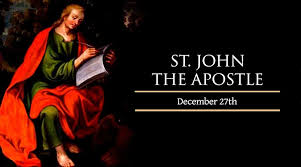
Today, we come together as the church to commemorate St John the Apostle.
But, who was John the Apostle?
Who is this disciple whom Jesus loved so very much? Is he a secretive person that does not want to
identify himself to us? Our dear Lord Jesus chose him, he was a fisherman, and was called the son of
Zebedee, the brother to James. He also wrote the gospel of John and the Epistles of I, II, and III, John and
Revelation.
The famously known portrait which was painted by Leonardo DaVinci which shows the disciples sitting
next to Jesus, and the one closest to Jesus in this portrait is John as he is shown to be leaning on the
shoulder of Jesus which is symbolic of his love for Jesus. This comes from the Bible “Now there was
leaning on Jesus bosom one of his disciples whom Jesus loved. (John 13:23) Then verse 25, says, “He
then lying on Jesus’ breast said unto him, Lord, is it I?” John never mentions his name in the gospel but
we believe this to be him.
Again, at the crucifixion of Jesus, John is there next to the Blessed Mother Mary. identified as ‘the
disciple whom Jesus loved. (JN 19:26) At the resurrection, he is identified as the disciple whom Jesus
loved. (20:2) Then next, on the fishing trip with the other disciples, he is mentioned as ‘the other
disciple.” (21:7,20,24) Why, is his name never mentioned? He was giving honour to our Lord Jesus only,
John knew this wasn’t about himself!
So Who is this John, the Disciple? They called him “The Son of Thunder”. The Big Fisherman! The man
with a Big heart, a loving heart for people. Whatever he did, John always did it wholeheartedly! He was
not one to ask questions like the other disciples would do. He never critized. He was always straight
forward and precisely to the point! They described him as being a deep thinker, he was the silent
disciple. He was determined to always do what was the correct thing. Most of all, John was the
spokesperson like Peter also became later in his ministry. He was in his wholehearted believing, the
greatest friend to the Lord Jesus.
John had an intense deep love for Jesus. HE LOVED JESUS SO VERY MUCH! And he loved his brothers just
as much in the Kingdom of God. They described John as being courageous and bold in his love for Jesus.
In a quiet way, he served his Master with all his body and soul. The love of Jesus was totally within his
heart and this deep love is what energized him each and every single day. John was intense, he was
sincere, he was unselfish as he wrote his gospel and his epistles, and also revelation.
An eagle would be the best way in which to describe John. He was Soaring high, but with eyes looking
out for the young who needed to learn to fly and who also needed to be fed. He spoke the truth and in
love for the followers of Jesus. When he was with Jesus for 3 years, He was easily teachable and was
very much impressed by the love Jesus showed to him and he couldn’t wait to tell the whole world
about the Love of Jesus. He may have been the silent disciple but he will never forget those last days of
Jesus’s life upon on the earth, because his experience of this made him one of the strongest of all of
Jesus’s disciples.
Jesus looked to John to care for Mary, his Mother. But Peter was about to fail Jesus, but Jesus needed
John to look after Peter as well. He did not say to John ‘feed my sheep’ because John would do it
automatically anyway. Whilst the other disciples scattered at the cross, not John! It was John who had
the visions of Jesus, who told us in writing and it is John who is still standing in the end!
CONCLUSION: A friend told the story of his son when he was down in the basement and was carrying his
books up the stairs. His son wanted to also help him, so the son walked in front with some books as well.
And of course, half way up the boy tripped and fell backwards and safely into his dad’s arms. So now
they both went up the stairs together and were so relieved that nothing serious happened! Jesus walked
behind John and numerous times rescued him. To become known as “The Disciple Whom Jesus Loved”
leaning on the bosom of Jesus. Amen.
Standing Firm~The Feast of St Stephen, the First Martyr~The Very Rev Lady Sherwood,OPI

Standing Firm: St. Stephen the First Martyr
Today, the day after we have celebrated the joyous birth of Our Lord and Saviour, and after all the
enjoyment of festive food and the giving of gifts which we traditionally do at Christmas, and with this
being the first time many of us have been able to have any joyous type of occasion this year amid all the
covid19 pandemic situation, we now come in total contrast to that of the celebrations of Christmas day,
to the Feast of St. Stephen who was the first Martyr to die for his faith in Our Lord.
Throughout the Old Testament we see time and time again, of the faithful being persecuted and often
even killed by those without faith. But it’s not just an Old Testament phenomenon. This is what humans
can do in their natural and unredeemed state. We as humans don’t like our sins to be pointed out to
us. We manage to make ourselves believe that we’re really not all that bad. We work hard to justify our
sins and failings. We find the really, really sinful people in history—men such as Nero or Stalin—and we
tend to compare ourselves to them and actually start to feel pretty good about where we stand before
God because we don’t believe our sins are as bad as those of such people. And that’s when one of
God’s faithful workers comes along—someone who, while by no means perfect, is living a life renewed
by grace and who is indwelt by the Holy Spirit—and suddenly all the illusions we’ve built up about our
own goodness are shattered and we get angry. Like Cain, instead of acknowledging our sins and instead
of repenting, we torment, persecute, and sometimes even kill God’s people when they show us up.
Jesus weeps over Jews, knowing that they will continue to kill those whom he sends as his messengers.
They won’t stop at only Jesus’s messengers, but they will indeed kill our Lord and Saviour himself soon
also They won’t heed the warnings. But brothers and sisters, Jesus warns us—the faithful—too. To his
disciples he says:
Blessed are those who are persecuted for righteousness’ sake, for theirs is the kingdom of heaven.
Blessed are you dear brothers and sisters when others revile you and persecute you and utter all kinds
of evil against you falsely on the Lord’s account. Rejoice and be glad, for your reward is great in heaven,
for so they persecuted the prophets who were before you.
Jesus prepares us for the fact that as we joyfully follow him, and joyfully do the work of his kingdom,
and as we witness the great Christmas joy we’ve found in the manger and at the cross—as we live a life
of joy before our King—we will face persecution from the world. To submit ourselves to that seems
nonsensical. How can we find joy in persecution? We find it there, because when we make Christ our
Lord, he gives us that eternal perspective we’ve been hearing about all throughout Advent. Suddenly
the things of this world are so much less important. Our focus is on Jesus and on building his kingdom.
Our focus is on being witnesses of his new life and taking his Good News to the world. And that change
in perspective means that if we can effectively communicate the Gospel to others whilst being
tormented or with the risk of even being killed, well then, so be it. Our joy in living in and sharing Christ
is greater than our joy in the things of this world—even in life itself, because we know that our share in
eternal life is so much greater than anything this world could ever possibly give. But it’s not just about
joy. It’s about love too. That’s another theme that is carried throughout the season of Advent. We saw
Love Incarnate in the manger yesterday. And now because God has so changed our perspective by
loving us, we start loving as he did— if we are indeed true children of God and his faithful servants, we
simply can’t help it! And it’s not just that we love God’s Church or that we love our brothers and sisters
in Christ, but that we even love our enemies and do good to those who persecute us. That’s the hardest
command of all for us to obey, but the reason it’s so hard is because we haven’t been perfect in love
ourselves. The closer we grow to Christ, the better able we’ll be to live it. But it’s also true that the
better we live it, the closer we will be to Christ! It is a never ending circle.
However, we fully know that Living that way is hard. We so often get bogged down in matters of this
world. We focus more on life here than we do on life in the Kingdom of Heaven. . We fall back into
living in fear instead of living in faith. The witness of St. Stephen should focus our eyes on our Lord and
Saviour and on living the life he has given us. No one knows for sure why this feast falls on the day after
Christmas, but one thing I’ve realised is that it’s easy to be excited about grace and to live as Christmas
people on Christmas Day. But dear brothers and sisters, as humans we’re incredibly fickle, and the next
day many forget about being Christmas people and go back to living in fear and in faithlessness. We
forget our witness. How often do you come to worship God on a Sunday morning, getting excited about
grace, and yet even as you drive home someone on the road does something that makes you angry and
you forget all about grace; or you get bad service while you’re out having lunch, and you forget all about
grace; or you get a bad news the next morning about your job, and you forget all about grace. The
Church reminds us today that being Christmas people requires real commitment on our part and that as
much as it’s joyful work, it’s extremely hard work and work that requires truth and devout faith in the
promises of God.
The story of Stephen actually begins in Acts Chapter 6. He was among the group of seven men
appointed the first deacons by the apostles. They were the servant-ministers of the Church in
Jerusalem. Stephen was excited about his work. Acts 6:8 tells us:
Stephen, full of grace and power, was doing great wonders and signs among the people.
He was doing what he was supposed to do as a Christmas person and he attracted attention. The
problem was that he attracted the attention of Jews who didn’t like what he was doing. Now, I say “the
problem”. That just shows how our perspective isn’t fully where it should be. We see it as a “problem”
when we face persecution. We forget that God is sovereign and that he’s working everything out for the
good of his people and the spread of his kingdom. Persecution is hard and painful, but it’s still “good”.
Remember, Jesus tells us that we find blessing in it. So it was a “problem” that the Jews were upset by
what Stephen was doing, but it wasn’t really a problem. God was still in control. We need to keep that
in mind in our own lives: Christians don’t have “problems”, we have “opportunities” to exercise our
faith.
And Stephen knew that, even as these angry men dragged him before the Sanhedrin and produced all
sorts of false witnesses who attested that he was as a blasphemer. He was on trial and it wasn’t going in
his favour. And yet even as these men told lies about him, St. Luke tells us that Stephen sat there with
the face of an angel—he was peaceful even in the face of condemnation. The one other place in
Scripture we hear a description like this is of the face of Moses after he had been with God. Stephen
was close to his Saviour and was experiencing the “peace of the Lord”.
In fact, when the high priest gave Stephen a chance to defend himself, what did Stephen do? He didn’t
try to explain away the things he had said and done that he got him into trouble in the first place. No.
He took the opportunity to preach the Gospel to the whole Sanhedrin! He addressed them and started
with Abraham and told the story of redemption down through Joseph and Moses. He told them the
stories of their fathers who were rescued from slavery in Egypt and then again how God cared for them
in the wilderness and drove out their enemies in Canaan to give them a home—and he stressed how all
these things were made possible by God and were his gifts. And as he told the story, he noted how over
and over the people rejected God—gladly claiming the great things he gave them, but never truly
receiving God himself. And with that Stephen brings them right down to Jesus and he says:
You stiff-necked people, uncircumcised in heart and ears, you always resist the Holy Spirit. As your
fathers did, so do you. Which of the prophets did your fathers not persecute? And they killed those who
announced beforehand the coming of the Righteous One, whom you have now betrayed and murdered,
you who received the law as delivered by angels and did not keep it. (Acts 7:51-53)
He doesn’t pull any punches. He tells them that in rejecting Christ, they’re doing the same things that
their fathers had done before them in rejecting the grace of God and in being disobedient. We don’t
have time this morning to read Stephen’s full sermon, but I urge you to read through it—Acts
7—sometime this next week. This was a man who was full of passion for his Lord. He was full of passion
to share the Good News, even when he was in the lion’s den. What strikes me is how what Stephen
does here runs counter to so much of what the Church today tells us to do in terms of evangelism.
We’re told today not to be confrontational; we’re told not to talk too much about sin—or not to talk
about it all—because that might turn people off; we’re told to focus on the positive; we’re told to
witness the Gospel with our lives and that we might get into trouble sharing it with our mouths. Look at
what Stephen does! Not only does he live the Gospel, but he speaks it out loud and clear! He confronts
these men right for being the religious hypocrites they are. Stephen didn’t just sit there, quietly and say
to himself: “I’m not going to bother with these guys. I’d just be casting my pearls before swine.” No, he
shared the Good News with them and he did it peacefully and joyfully. And he did it because he was
living in the grace and love of Christmas. He knew that these men might never come to know the
Saviour but for his witness, but he also knew that if they were truly reprobate, their rejection of his
Gospel sermon would simply confirm to them and to the world their rejection of the Saviour, and God
would have greater glory in their condemnation. God’s Word never returns void. Stephen knew that.
St. Luke continues the story and tells us their response:
Now when they heard these things they were enraged, and they ground their teeth at him. But he, full
of the Holy Spirit, gazed into heaven and saw the glory of God, and Jesus standing at the right hand of
God. And he said, “Behold, I see the heavens opened, and the Son of Man standing at the right hand of
God.” But they cried out with a loud voice and stopped their ears and rushed together at him. Then
they cast him out of the city and stoned him. And the witnesses laid down their garments at the feet of a
young man named Saul. And as they were stoning Stephen, he called out, “Lord Jesus, receive my
spirit.” And falling to his knees he cried out with a loud voice, “Lord, do not hold this sin against them.”
And when he had said this, he fell asleep. (Acts 7:54-60)
We might read that story and think, “Wow. Stephen certainly had a bad day!” Our eyes are blind to
God at his work. Stephen took a faithful stand for his Lord, and even as they got ready to drag him out
to be stoned, God granted him a vision of his own glory and of Jesus enthroned beside him. Stephen’s
“bad day” was a good day for the Church, because on that day God set Stephen before the rest of us as
a witness—a lesson as to what it means to be Christmas people—people of his grace and his love and his
power. He showed himself to Stephen so that Stephen could show himself and his faith in Christ to the
rest of us.
But Stephen’s story does more than just encourage us to share the Good News and to stand firm in our
faith. He reminds us what it means to witness the Gospel in our deeds. Stephen had that vision of the
Lord Jesus before his eyes, and so even as these evil men started hurling stones at him, he responded
with Christlike love. When Jesus was hanging on the cross, do you remember what he prayed? He said,
“Father, forgive them, for they know now what they do.” To the last Jesus was concerned with the souls
and with the eternal state of the people around him—even his enemies. He was an evangelist to the
end, even when there were no more words to say to his persecutors and murderers, he was praying for
them. And Stephen, with his eyes on Jesus, does the same. There was nothing left to say to these men
and there was nothing left for him to do, and so he prayed for them: “Lord, do not hold this sin against
them.”
Luke tells us that St. Paul was there that day. He was holding coats so that people could do a better job
throwing rocks at Stephen. Of course, this is when he was known as Saul—before he met Jesus on the
Damascus Road and had his life changed forever. The next verse, 8:1, tells us that Paul approved of
Stephen’s execution. What we don’t know is what impact Stephen’s loving and gracious response had
on Paul’s future conversion. But Luke certainly included this detail for a reason.
Brothers and sisters, Stephen reminds us that we need to be living as Christmas people, not just on
Christmas, but each and every day. But he also shows us very dramatically what it means to live in the
life and grace of Christmas—especially in light of St. Luke’s note that Paul was there that day. We never
know who is witnessing us and how those around us may, or may not, be impacted for the Gospel by
what we say and what we do and by how we deal with the circumstances of life. Who would have
thought on that day that Saul of Tarsus—Hebrew of Hebrews and member of the Sanhedrin, the man
who hunted down Christians and brought them to trial before the Jewish authorities—who would have
thought that Stephen’s witness of love and grace that day might change the whole course of Church
history as Saul later became Paul, the apostle to the gentiles.
And lastly, Stephen teaches us something about the extreme nature of grace and love and forgiveness.
These men were more than just run-of-the-mill enemies. These weren’t just men who didn’t like him or
were just angry with him. These were men who saw him as a threat to their existence and wanted to kill
him—who did kill him. Stephen didn’t reciprocate their anger. No, he saw them as Jesus saw them:
sinful men whom he loved and who would face eternal damnation without the Gospel of love and grace.
Stephen knew the love that overcomes a multitude of sins and he knew it because he had experienced it
himself through Jesus Christ. St. John reminds us that anyone who claims to love God, but hates his
brother is a liar—that you can’t have experienced the redeeming love of God and still hold grudges and
hate in your heart against those who have wronged you. Friends, to hold a grudge, to resent the sins of
others, to fail to show a forgiving spirit, is to be self-righteous—it’s to ignore what God had done for
you! Stephen could look on these angry men with love, precisely because he had himself experienced
the love of Christ and God’s forgiveness—and he knew that there was nothing these men could do to
him that was as bad as even his own smallest offences against God. God had forgiven him so
much—and he realise that so well—that it was a “small” thing for him to forgive these men and to show
them love. Lest we think that Jesus and John are just speaking in hyperbole when they tell us to love our
enemies, St. Stephen shows us how the love of Christ really does work out in our lives—or at least how it
should, if we truly claim to love God and to have experienced his grace and forgiveness.
So remember today: We are a Christmas people, living in the grace and love of God. But remember too
that God calls us to be Christmas people every day of our lives and not just in the Christmas season..
The joy of Christmas is something that should permeate every aspect of our lives that we might be
witnesses, even to our enemies and even to those who would kill us, of the love and grace that God has
shown us through his Son. And so we pray, “Grant, O Lord, that in all our sufferings for the testimony of
your truth we may look up steadfastly to heaven and see by faith the glory that is to be revealed and,
filled with the Holy Spirit, may learn to love and pray for our persecutors as St. Stephen your first martyr
prayed for his murderers to you, blessed Jesus, where you stand at the right hand of God to help all who
suffer for you, our only mediator and advocate.
The Wood of the Manger, The Wood of the Cross The Rev Frank Bellino,OPI

We gather here in the middle of the night, surrounded by darkness, to celebrate the Light of the World. It is a beautiful tradition. But as we sit here, let’s start with a bit of honesty—something we Dominicans call Veritas.
If we were to look at the historical records, the meteorological charts of ancient Judea, or the shepherding schedules of the first century, we would likely find that Jesus was not born on a cold night in late December. Shepherds don’t keep flocks in open fields in the dead of winter. It’s likely He was born in the spring or perhaps the autumn during the Feast of Tabernacles.
So, why are we here on December 25th?
We are here because in the 4th Century, Pope Julius I decided. He looked at a world that was celebrating the return of the sun—the pagan winter solstice—and he said, “No. We do not worship the sun; we worship the Son of God.” He planted the flag of Christ right in the middle of the darkest time of the year to say: The Light has conquered the darkness.
But here is the important part: The date is liturgical. The event is reality.
It does not detract from the truth one bit. Whether it happened in April, October, or December, the fact remains: The Infinite God became a finite infant. The Creator entered His creation. The Word became Flesh.
However, we must be careful not to get stuck in the sentimentality of the scene. We look at the Nativity set, the peaceful animals, the glowing baby, the silent night—and it feels cozy. It feels safe.
But if we look closer, we realize that His birth means absolutely nothing without the Cross.
Archbishop Fulton Sheen once said that every other person who ever came into this world came into it to live. Jesus Christ is the only person who came into this world to die. His death was the goal of His life.
From the very first moment He drew breath in Bethlehem, He was marching toward Calvary.
He was placed in a manger, a feeding trough for animals, signifying that He would become Bread for the world—the Eucharist.
He was wrapped in swaddling clothes, bands of cloth that looked suspiciously like the burial shrouds that would wrap Him in the tomb.
And most importantly, He was laid on wood.
The wood of the manger prefigures the wood of the Cross. You cannot have Bethlehem without Golgotha. You cannot have the Crib without the Crucifix. If He had just been born a great teacher, a great philosopher, or a nice man, we wouldn’t be here tonight. We are here because that Baby is the Victim who would pay the price for my sins and for yours.
So, with that heavy reality in mind, what does Jesus want us to take away from this night?
He doesn’t want a birthday cake. He doesn’t want us to just feel warm and fuzzy for an hour and then go back to our lives.
He wants us to realize why He came.
He saw us in our mess. He saw us in our addiction to sin. He saw us lost in the darkness of our own making. And He didn’t send a representative; He came Himself. He “got a guy”—and that guy was Himself.
What He wants from us tonight is surrender. He wants us to look at the manger and see the Cross, and say, “Lord, if You went to these lengths—from the glory of heaven to a dirty stable, all the way to a Roman cross—just to save me… then the least I can do is give You my life.”
He wants us to leave this church different than we walked in. He wants us to carry the Light out those doors. The world is still dark, just like it was under Caesar Augustus. It needs Light. It needs Truth. It needs you to be the carrier of that Light.
Tonight, let us not just admire the Baby. Let us adore the Savior. Let us embrace the Cross that allowed us to be here.
A Blessed Christmas to you all.
In the name of the Father, and of the Son, and of the Holy Spirit. Amen.
Born In A Barn? ~The Rt Rev Michael Beckett,OPI

Y’all…. Christmas is upon us! In a little under a week the big day arrives! Presents will be opened, special meals will be eaten, and holiday joy will abound…..Or that’s the picture that many folks paint…or wish they had….or work toward. Often the “reason for the season” gets lost in all the holiday hoopla. Now, granted, in the festive decorations for Christmas, there is quite often found a creche or nativity scene. The one we’re using this year is white unglazed porcelain, and we got it our first year together for next to nothing at Fruth Pharmacy. Interestingly enough, I found the same, now “vintage” set online for certainly WAY more than “next to nothing.” Who knew? I sure didn’t! But one thing I do know, that first Christmas was FAR removed from the pretty white unglazed porcelain one that we have.
By this time way back when, when Mary, Joseph, and the donkey were making their 90 mile or so trek to Bethlehem. For us, 90 miles is nothing. Back then? Not so much. They hadda walk…Mary was WAY pregnant, and the world of Mary and Joseph was a difficult and dangerous place, one whose harsh conditions were not fully chronicled in the Gospel accounts of their travails. Writers of the gospels of Matthew and Luke “are so laconic about this because they assume the readers of the time would know what it was like,” said James F. Strange, a New Testament and biblical archeology professor at the University of South Florida in Tampa. Today, he added, “we have no idea how difficult it was.”
But what about after their trek was done and they actually got to Bethlehem? Was there really “no room in the inn”, or were things, perhaps, a tad different? Since Joseph had to go to his “hometown” so to speak, they were probably expecting to stay with family. Luke never mentions an inn. He says that there was “no guest room.” We only assume he means the inn is full, but that’s not what Luke wrote. In the Greek he uses the word kataluma, which refers to a room attached to a family home for honored guests or travelers. Luke uses the same Greek word in chapter 22 when Jesus asks for an “upper room” to celebrate the Passover.
There is a word for an inn: pandocheion. Luke uses that word in the story of the Good Samaritan in Luke 10. If Luke had meant there was no room in the inn, he would have used that word. He’s saying that when Joseph and Mary arrived, none of the family had an open guest room in their house. Maybe no one in Joseph’s family even had a guest room. Maybe they were all lodging other travelers, or family elders (who would have had more claim to a guest room than a young couple).
The typical small town family home in Judea didn’t have barns, but the house had a bottom floor room for the animals, with a short set of steps leading up to the main room where the family lived. This way animals could be led into the house at night, where they were safe, and their body heat helped to keep the house warm. Feeding troughs, or mangers, were stone basins either standing next to or built into a connecting wall, where food scraps could be swept into them. If Mary and Joseph were staying with family, but the family had no space in the guest room for them, the next most logical place would be the area where the animals were kept. Warm, close, safe, and kinda, maybe, sorta convenient.
Ha! When we were kids and left the door open or did something other than what we should have known not to do, momma was wont to say, “You weren’t born in a barn!” Can you imagine Mary, a tad exasperated with young Jesus, saying…..”You weren’t born in a….oh, never mind. Just close the door.”
But anyway, whilst they were there in Bethlehem, the time came for “Mary to be delivered.” The verbiage indicates that sometime after they arrived Mary went into labor. Luke doesn’t give a timeframe, but neither does he imply it was an emergency. They probably had time to get settled. And, there’s no reason to believe Joseph helped deliver the baby. Chances are slim that Joseph was even present during the birth; no self-respecting Jewish family would allow any man to be around, or let a young woman have her first child without the aid of other women. It would have made Joseph “unclean”, and he would have been ushered out, and then ushered back in to name the baby after both Mary and Jesus were cleaned up. Birth is kinda messy, ya know.
So whilst we make our final preparations for Christmas, let’s do our best to remember that Mary and Joseph and Jesus were real, live, human beings with real, live, often dangerous, inconvenient, and troublesome problems. They didn’t have it easy. What truly matters to us, our should matter to us, is how they overcame those problems. How they submitted those problems, and their lives, to living as God expected them to. They are, and will remain, examples for all of us to follow. Amen and a Blessed Christmas to you all.
Image credit: Born In A Barn | School Nativity | Out of the Ark Music
The Joy of Seeing the Truth: Advent III~The Rev Frank Bellino,OPI
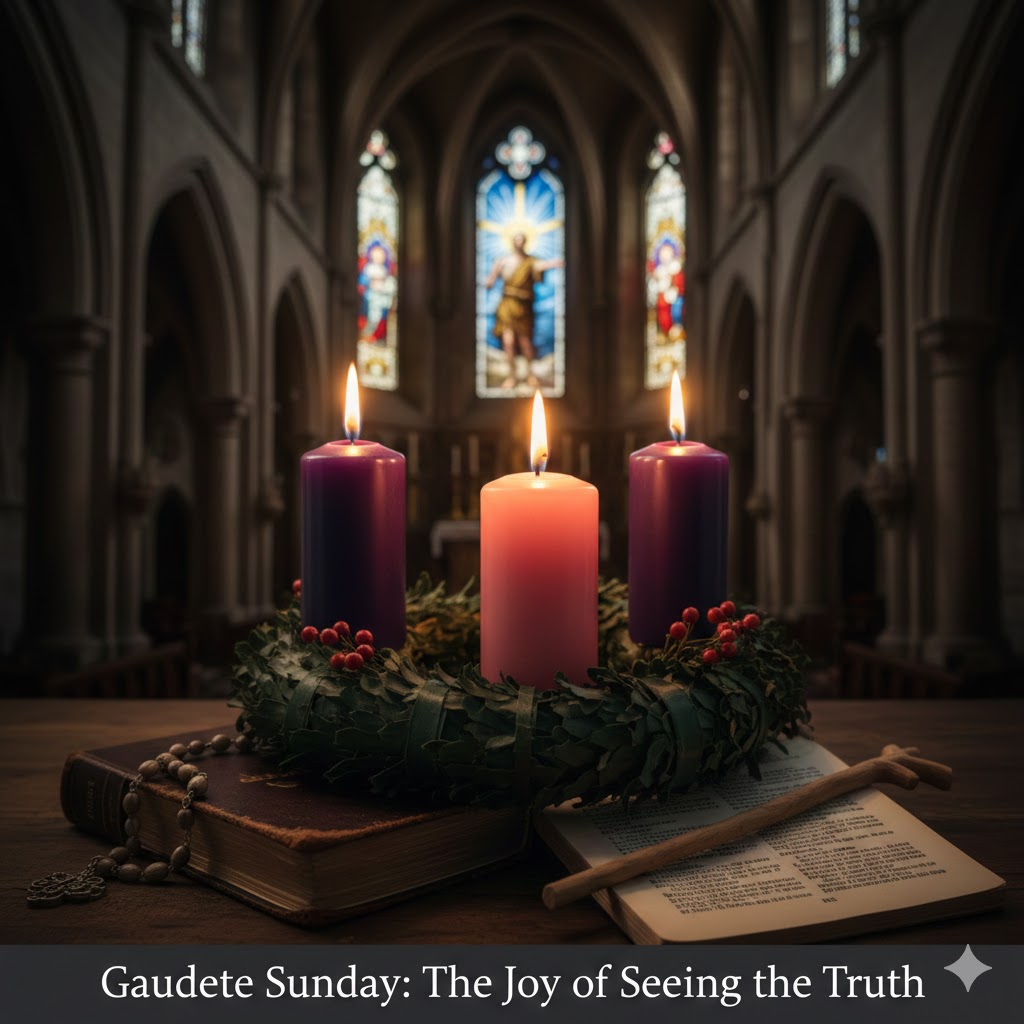
We light the rose candle today—Gaudete Sunday—because the Lord is near, and our deep, abiding joy is rooted not in fleeting happiness, but in the certainty of our hope. Yet, the Gospel reminds us that even the greatest prophet, John the Baptist, the powerful voice crying in the wilderness, struggled. He was confined, suffering, and sends his disciples to ask Christ the fundamental, agonizing question of truth: “Are you the one who is to come, or should we look for another?” This question, asked from the prison of his doubt, teaches us that faith engages intellectual struggle; the Dominican quest for Veritas begins with the honesty of a difficult question. If the one who prepared the way can doubt, how much more must we, the faithful, admit to our own moments of uncertainty?
Christ’s reply, however, is the very substance and meat of the Gospel. He does not offer a simple declaration, but points to the evidence of God’s tangible action, fulfilling the prophecy of Isaiah: “Go and tell John what you hear and see: the blind regain their sight, the lame walk… and the poor have the good news proclaimed to them.” The joy of Advent is found in recognizing that the desert of prophecy is blossoming into the garden of the Church. Christ is telling John and telling us: Look at the facts. Look at the transformed lives. This evidence—this testimony of grace—is our anchor. It proves that the Truth is not an abstract concept but a living Person, manifested in acts of mercy and the saving power of the preached Word. The certainty of this Truth then empowers us.
This assurance demands the virtue of patience, as Saint James urges in the second reading: “Be patient, therefore, brothers, until the coming of the Lord. See how the farmer waits for the precious fruit of the earth.” As the Order of Preachers, we understand this patience is tied to our vocation: we preach the Word and trust in God’s timetable for the spiritual harvest. The true Gaudete joy is not found when our trial is over, but in the certainty that Christ’s Word is infallible, and our temporary suffering prepares us for His eternal glory. This promise brings profound peace and transforms our anxious waiting into active, productive hope.
So, how does this apply to your life right now? You, too, are a traveler, a pilgrim on a road marked by both joy and inevitable doubt. Perhaps you feel like John the Baptist, waiting in a personal “prison” of anxiety, illness, or unresolved problems. The Gospel tells you that your response to doubt is not to abandon faith, but to look for the signs of Christ’s presence right where you are. Has Christ helped you forgive a great wrong, offered you unexpected comfort, or inspired you to perform a costly kindness? These are the real-life miracles—the deaf hearing, the blind seeing—happening in your everyday life. Your life, like that of Mary and Joseph who were travelers on a road of uncertain promise, is a testament to the fact that God meets us precisely in our doubt. Let the rose color remind us that Christ has already come, is here now in the Word and Sacrament, and is certainly coming again. Go forth and live this joyful Truth by being a sign of Christ’s presence to every weary traveler you meet!
Prepare: Advent 2~The Rev Frank Bellino,OPI
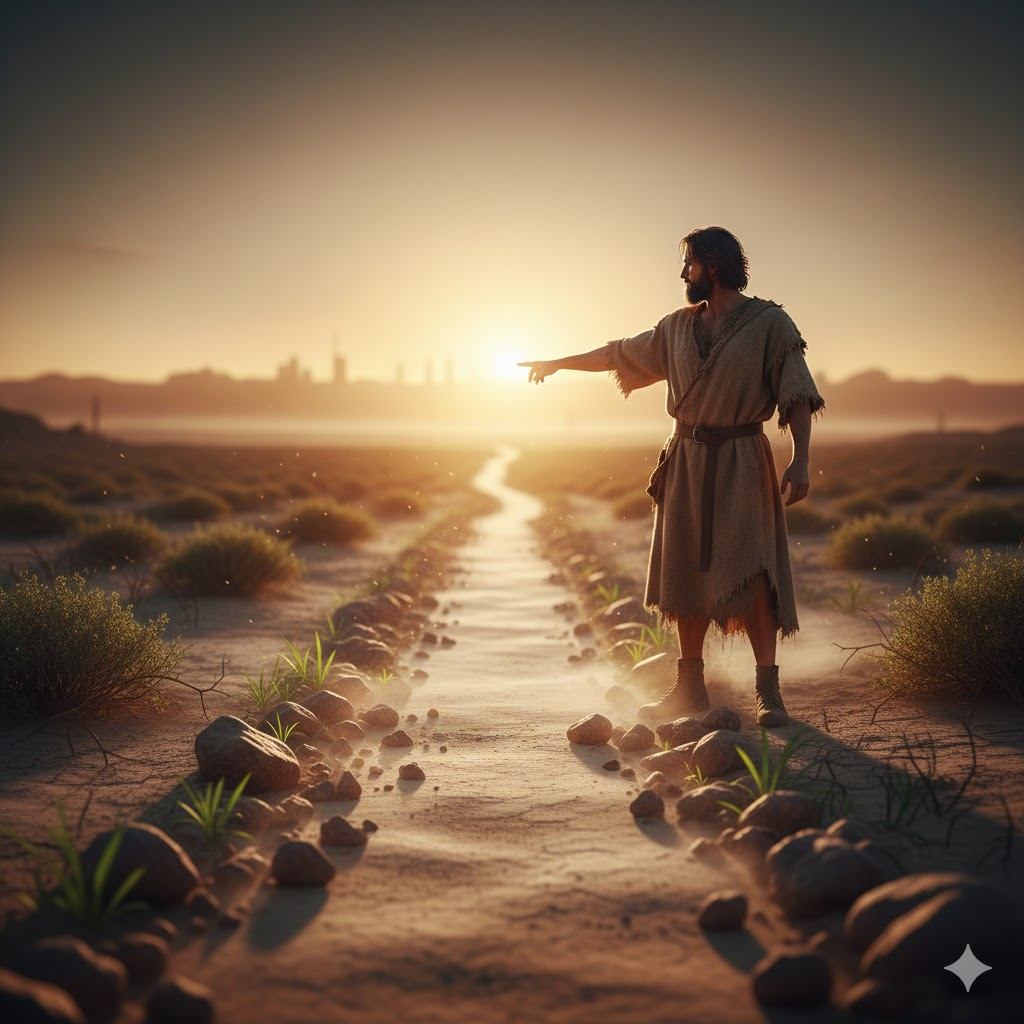
We find ourselves two weeks into Advent, a season the Church calls holy preparation. But for many of us, preparation is simply the relentless, daily state of being a hard-working American. Our life is a constant tension: preparing for the next bill, preparing for a medical expense that could shatter the budget, and preparing our children for a world that feels more uncertain every day. This stress, this endless worry, this anxiety, this is the real-life wilderness in which we struggle to find God.
As Dominicans, we are called to bring the penetrating light of Truth (Veritas) into this darkness. Our task today is to see how the Scripture speaks directly to our reality, offering us a foundation that cannot be shaken by the economy or by fear.
The prophet Isaiah speaks to a people whose security has been utterly cut down, reduced to nothing more than a lifeless stump of Jesse. They had no reliable foundation left. Does that not perfectly capture our fear when we see our wages stagnate while every cost of living—housing, groceries, childcare—climbs higher and higher? Our human foundation, that comfortable feeling of being “securely middle-class,” often feels just as dead as that stump.
But Isaiah gives us the ultimate object of our contemplation: true security lies not in the next budget plan or a stable interest rate, but in the shoot that springs from that stump. This Messiah is endowed with the Spirit of Counsel and Might—the perfect Wisdom of God. This calls us to re-evaluate what we are building our lives on. When financial anxieties create friction at home, or when the pressure of work threatens to steal our family time, we must contemplate this liberating Truth: Our ultimate well-being is not secured by a perfect 401k, but by a perfect God who promises a reign of ultimate peace and justice. Our hope is in the Christ who stands above the wilderness we currently inhabit.
And how do we enter into this reign? By heeding the uncompromising Voice in the Wilderness—John the Baptist, whose message is the exact antidote to our ceaseless anxiety: “Repent, for the kingdom of heaven is at hand!”
For the hard-working person, repentance is not just about avoiding some far-off, “big” sin. It is about clearing out the spiritual and emotional debt that burdens our soul as much as any credit card. John demands “fruit worthy of repentance.” What is this fruit for us? It is making a profound turn-around from the consumerist lie that tells us we need more—a bigger, newer, better version of everything—and that our worth is measured by our income. This lie is what drains our peace and drives our exhaustion. The fruit of repentance is stopping the endless, anxious striving and instead, giving our dedicated time and full attention to our family, our children—the true assets God has given us—instead of giving our exhaustion and worry to them after a long day. This is the real, gritty work of making straight the path: clearing the internal clutter that prevents Christ from reigning at the very center of our lives.
Yet, this transformation is not done in isolation. St. Paul reminds us in Romans that our strength and endurance is found in the encouragement of the Scriptures and in our community. The anxiety of our middle-class life is often suffered in secret. We are conditioned to hide our struggles and maintain the appearance of success. But the Dominican call to live the Truth in community means we cannot afford isolation.
Paul prays that we may “accord in welcoming one another, as Christ welcomed you, for the glory of God.” Our unity must be practical. We welcome one another by sharing the truth of our struggle, by refusing to judge the neighbor whose finances are strained, and by recognizing that every person in this parish is carrying a weight. Our community, therefore, must be a place of refuge, where the burden is eased by spiritual solidarity, and where we use the Truth of Christ’s welcome to break down the walls of status and striving that silently divide us.
My brothers and sisters, we are called to be the voice and the hands of Christ in this demanding age. Let the Root of Jesse be your foundation, offering the only security that will never be devalued by inflation. Let the Voice of John drive you to repentance that brings rest to your soul, not just rules to your conscience. And let the call of Paul inspire a unity in this parish that reminds the anxious world of what it means to be truly rich—rich in hope, rich in truth, and rich in one another.
Amen.
 The Order of Preachers, Independent
You must be logged in to post a comment.