
Category: Sermon
Getting Ready~The Rt. Rev. Michael Beckett, OPI
Our trees are up, our halls are decked, and the house is relatively clean. I mean, maybe we’re not quite ready for Charles and Camilla to visit, but I’d not be embarrassed if, say, William and Catherine or Joe and Jill popped in. For all practical purposes, we are ready for Christmas.
What about y’all? Shopping done? Decorating finished? Parties planned? What does “being ready for Christmas” really mean?
Today is the First Sunday in Advent. I’m about certain that every one of us has seen an “Advent Calendar.” Those cute little things that count down until Christmas. Whilst they can be fun and exciting, they really have nothing to do with “Advent” though. Not really even close. So, one might ask, “What is Advent?” And, as is my custom, I’m gonna tell ya.
Since the 900s, Advent has marked the beginning of the church year, and is a season of great anticipation, preparation, and excitement, traditionally focusing on the Nativity of the Christ Child, when Jesus came as our Savior. During Advent, we as Christians also direct our thoughts to His second coming as judge.
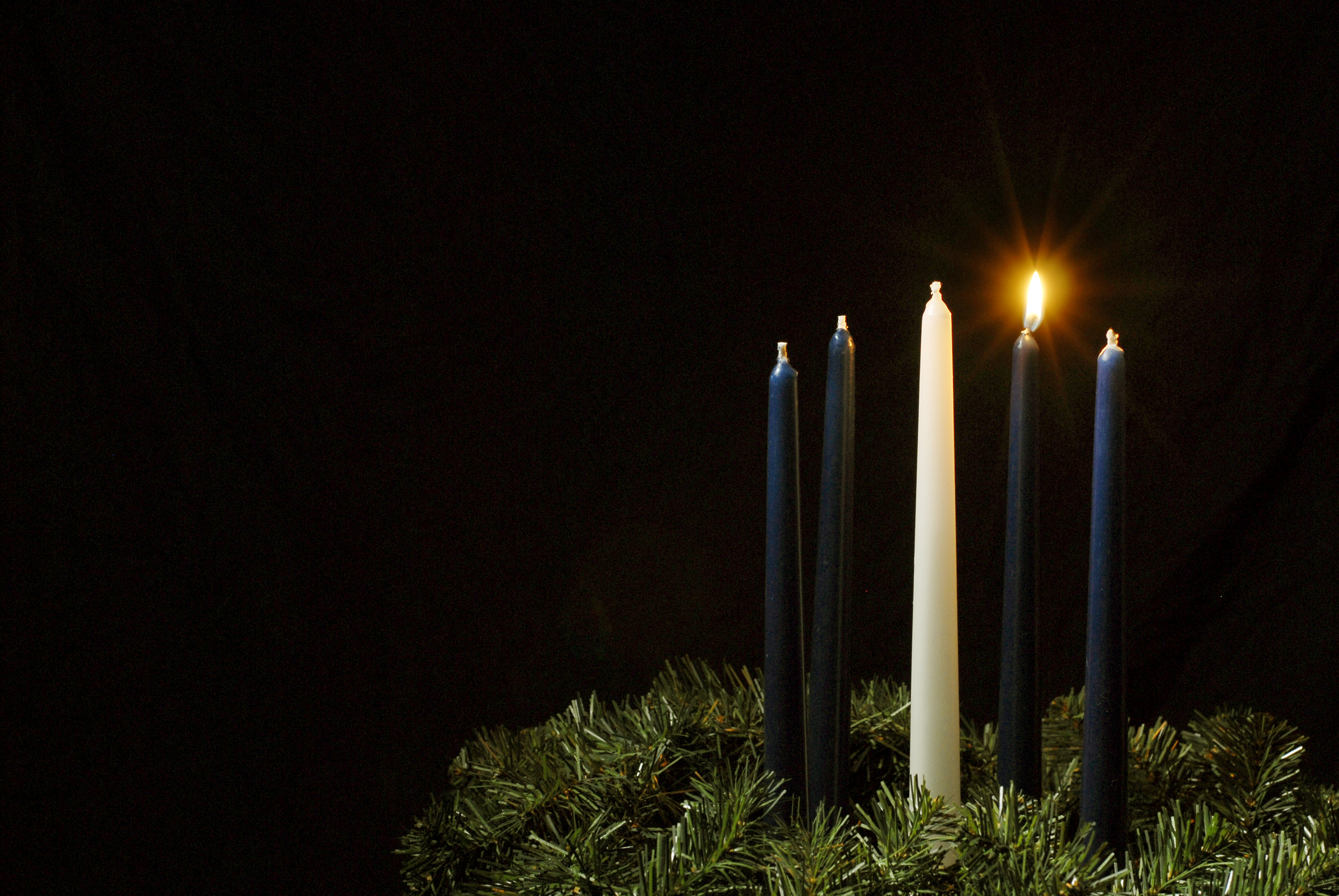
The word Advent is from the Latin adventus, meaning coming,” and is celebrated during the four weeks of preparation for Christmas. Advent always contains four Sundays, beginning on the Sunday nearest the feast of St. Andrew the Apostle, (November 30) and continuing until December 24. It blends together a penitential spirit, very similar to Lent, a liturgical theme of preparation for the Second and Final Coming of the Lord, called the Parousia, and a joyful theme of getting ready for the Bethlehem event.
Advent is a time of preparation that is marked by prayer. Advent’s prayers are prayers of humble devotion and commitment, prayers of submission, prayers for deliverance, prayers from those walking in darkness who are awaiting and anticipating a great light (Isaiah 9).
So whilst we are preparing our homes for Christmas, should we not also be preparing our hearts and minds? We all of us know that Christmas is on 25 December, and that’s when we celebrate Jesus’s birth. What we don’t know, however, is when Jesus is coming back.
In the Gospel appointed for today, Jesus says to his disciples:
“As it was in the days of Noah, so it will be at the coming of the Son of Man. In those days before the flood, they were eating and drinking,
marrying and giving in marriage, up to the day that Noah entered the ark. They did not know until the flood came and carried them all away.
So will it be also at the coming of the Son of Man. Two men will be out in the field; one will be taken, and one will be left. Two women will be grinding at the mill; one will be taken, and one will be left. Therefore, stay awake! For you do not know on which day your Lord will come.
Be sure of this: if the master of the house had known the hour of night when the thief was coming, he would have stayed awake and not let his house be broken into. So too, you also must be prepared, for at an hour you do not expect, the Son of Man will come.”
As we go about “getting ready” for Christmas, let us not forget what we are really ‘getting ready” for. I invite each of you to have a most blessed, holy, and prayerful Advent. Amen.
All Hail The King of The Universe!~The Very Rev. Lady Sherwood, OPI
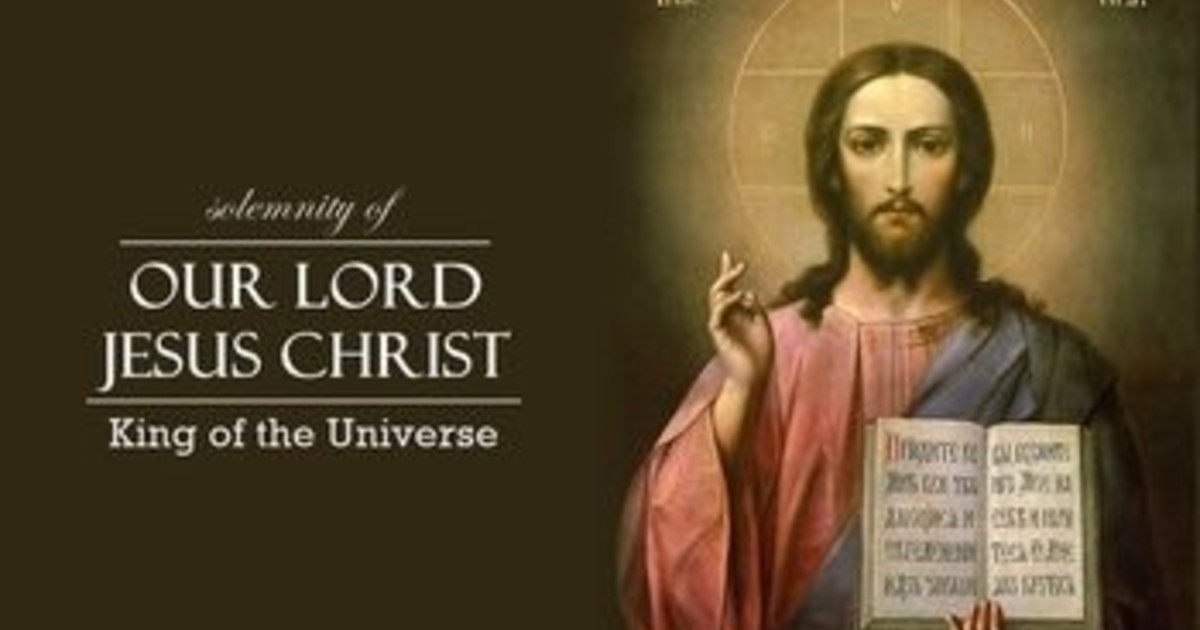
Today, at the end of the Liturgical year and the start of the Advent and Christmas seasons, when we focus on the coming of Our dear Lord and Saviour, we come together to celebrate the Solemnity of Our Lord Jesus Christ, King of the Universe.
Whilst indeed, Our Lord Jesus Christ is the only and true King of all the Universe, there are many who still don’t tend to see him as the King he is, because they picture Earthly Kings, with all their pomp, riches, earthly powers, and with all the ceremonies that come along with the ‘Earthly King’ role.
Our Lord, Our Saviour, and Our King is truly the King of all the Universe, higher than any and all kings past, present, or future ever shall be. Yet, Our Lord and King, came not into the World with earthly Kingly riches, nor with any earthly office pomp and ceremony. Jesus never needed all the ceremonial pomp of power such as golden crowns, luxurious flowing garments, or military parades to show his Kingship. On the contrary, He came to us in the world in the most humbling of ways, born in a stable and was laid in a manger which was where the food for the oxen and cattle would be placed, and he remained humble all the way until his earthly death for us at the crucifixion.
Let us look at Today’s Holy Gospel Reading of Lk 23: 35=43:
35 The people stood watching, and the rulers even sneered at him. They said, “He saved others; let him save himself if he is God’s Messiah, the Chosen One.” 36 The soldiers also came up and mocked him. They offered him wine vinegar 37 and said, “If you are the king of the Jews, save yourself.” 38 There was a written notice above him, which read: this is the king of the jews. 39 One of the criminals who hung there hurled insults at him: “Aren’t you the Messiah? Save yourself and us!” 40 But the other criminal rebuked him. “Don’t you fear God,” he said, “since you are under the same sentence? 41 We are punished justly, for we are getting what our deeds deserve. But this man has done nothing wrong.” 42 Then he said, “Jesus, remember me when you come into your kingdom.” 43 Jesus answered him, “Truly I tell you, today you will be with me in paradise.”
In today’s Gospel reading we meet Jesus on the cross paying for the sins of the world, and the two thieves who hung on crosses at either side of him who were there to pay the penalty of their crimes. Jesus was being mocked and sneered at by the rulers and the soldiers in full view of the gathered and watching crowd.
Today we reflect on the Kingship of Christ in relation to the Three Crosses of Calvary, the Cross of Rejection, the Cross of Reception and the Cross of Redemption.
We begin with the cross of Rejection, a cross upon which hangs a man who is dying in sin. On this cross, is a thief who by his actions towards Jesus, represents those who still refuse to repent, even after having experienced the love of God. Even now, hanging from his cross, this man rejects the Divine grace of Christ our Lord and King, and joins in the brutal vocal attack on him. This thief, the soldiers and the vast majority of the watching crowds, failed to recognise Jesus the promised King, who had come down to earth amongst us to be a Shepherd and to serve rather than to be served, and who ultimately would give his life for the price of all of our sins.
Next, we have the cross of Reception which holds a man who is dying to sin. The difference with this thief to the previous one, is that he allows Divine Grace to enable him at the end to see the vast difference between good and evil. Knowing he deserved to suffer, he was moved by the quiet Majesty of our Lord and King, and completely unifies with him, trusting in his power over both life and death, and asking Jesus to remember him when he comes into his Kingdom. Jesus grants his request, telling him, “today, you will be with me in paradise.”
Finally, we come to the cross of Redemption. This cross holds our Lord and King who is dying for sin=for the sins of the world. Jesus defeated the kingdom of darkness and death through the cross of Redemption and has regained for us the chance of eternal salvation and paradise, that was lost by the sin of mankind. Our dear Jesus, suffered death in agony for us and for our salvation, whilst always showing the grace and majesty of what he truly was, is and ever shall be Our Lord and King!!
Let us pray:
Almighty, everlasting God, Who in Thy beloved Son, King of the Universe, hast willed to restore all things anew; grant in Thy Mercy that all the families of nations, rent asunder by the wound of sin, may be subjected to His most gentle rule. Who with Thee lives and reigns world without end. Amen
Politics and Jesus~The Rt. Rev. Michael Beckett, OPI
Well, y’all, and hoowee! We here in the States have survived another election day, and coincidingly, a brutal election season. I don’t believe that, in my 64 years on this planet, have I ever seen such overwhelming vitriol and mudslinging. The television has been full of political ads and commentary, insults, and hate. We have been inundated by political ads telling us how dreadful the opponents are. The candidates’ faces and words have been broadcast via radio, TV, social media, and printed media. Millions of dollars have been spent on this onslaught of political verbiage, and people shared, reshared, tweeted, retweeted all of it.
And people are passionate about what they’ve said. They really and truly and honestly believe in whichever candidate they support, and they want the world to know it. Some of these folks have even politicize their religious beliefs. Especially those of the Christian Nationalist ilk. Bearing that in mind, how interesting is it that in the Gospel appointed for today, we hear these words of Jesus:
“See that you not be deceived, for many will come in my name, saying, ‘I am he,’ and ‘The time has come.’ Do not follow them! (Luke 21:8)
(Yes, I have listed this verse out of context, coz Jesus was talking about the “end times,” which is a whole different sermon, but bear with me for a sec.) What if all those (us) who have been so passionate about our political beliefs switched gears and actually worked for our Lord as if He were running for office? What if we replaced the candidates’ names with the name of Jesus? What if we loved each other the way Jesus loves us? Can you imagine a country where all of us were as on fire for Christ as we seem to be over these politicians and their messages? Can you imagine where this country would be? Can you imagine what would be accomplished if, instead of political rallies, we had “Jesus rallies?” Why do we not bother? Why do we not fill our churches the way we fill arenas and convention centers?
The psalmist advises: Do not put your trust in princes, in human beings, who cannot save. (Psalm 146:3 NIV)
Jesus has taught us to “Go into all the world and preach the gospel to all creation.” Mark 16:15.
Isn’t it time to get our priorities straight? As Christians, have we lost our focus of what is truly important? Regardless of politics, of whether we are ‘blue’ or ‘red’ or ‘rainbow,’ we are to remain focused on the one thing that really matters in this world and the next: Spreading and sharing the love of and for our Lord and Savior Jesus Christ. No matter who sits in the Oval Office, no matter which side of the aisle our folks sit, our job, our mission, our focus, has not changed and will not change: We are called to love and to serve the Lord with gladness and singleness of heart. We are called to care of each other, regardless of our politics. We are commanded to ‘bless those who persecute us,’ and we are called to ‘pray for our enemies.’ We are called to feed the hungry, clothe the naked, house the homeless. (Matthew 25:31-46).
And above all else, we are to remember Jesus’s words from John 13:34: “A new command I give you: Love one another. As I have loved you, so you must love one another.”
In all of our political posturing, let us not forget that in many cases, we are the only Bibles that many folks will ever read, and we are the only Jesus that some folks will ever see. It is up to us to see the Jesus in everyone, regardless of political belief, race, creed, color, sexual orientation, whether we cheer for Duke or for Clemson, or anything thing else that can be used to divide us. We are all of us HIS people, the sheep of HIS pasture, and we have far more in common than we do the things that divide us, if we truly identify as HIS.
In the words of the 18th century hymnist, Catharina von Schlegel:
Be still, my soul; thy God doth undertake
To guide the future as He has the past.
Thy hope, thy confidence, let nothing shake;
All now mysterious shall be bright at last.
Be still, my soul; the waves and winds still know
His voice who ruled them while He dwelt below.
Finally, won’t you pray with me?
Bless us, O Divine Father, to find unity with each other, to work together to deliver your word, O Lord, for we know man shall not live by bread alone but by every word that proceeds out of the mouth of God. May we be a blessing to others, as we strive to be more like Jesus, Loving Father; kind, caring, compassionate, loving, giving, forgiving and humble. Father God, teach us to be good role models to the people around us, so that when they see you and your love within us, they would want to know you more and more. God grant us the patience to work together, bring us all together as a family. Let us work together with understanding and compassion in our hearts. Let us not be rude or arrogant towards one another, as we light the way to your heavenly kingdom; through Jesus Christ our Lord, Who lives and reigns with You and the Holy Spirit, One God for ever and ever. Amen.
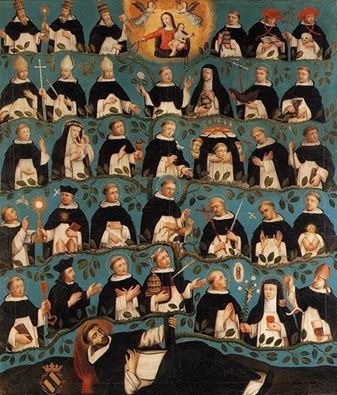
The Feast of All Dominican Saints~The Rev. Dcn. Scott Brown, OPI
Blessed are the pure in heart, for they shall see God. Mt 5:8
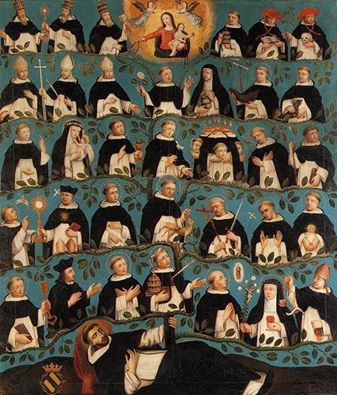
Today we celebrate the Feast of All the Saints of the Dominican Order.
We come together as one Dominican Family today to celebrate not only Our Saints, but also our many Blesseds, Holy Friars, Nuns, Sisters, and Laity who have lived over the past 800 or so years.
We are so privileged to celebrate them as they provide us with an example by which we follow in our religious lives, by their wonderous fellowship in their communion and in their much-needed aid to us by their intercessions to God on our behalf. We celebrate all of those Dominicans who were faithful in their lives lived with great prayer, silence, and penance, those who have educated thousands of souls, and Third Order members who have sanctified the world.
We celebrate in thanks to God on this important feast day for our Order and turn to the examples of our Saints, their lives, and their intercessions for us to that they may guide us on our spiritual journey.
Our Spiritual Father, Saint Dominic left us a wonderous legacy of teaching and preaching by word and example of how we should live our lives. It is, then, joyous and encouraging that so many of our Dominican brothers and sisters have been beatified and canonized.
How fitting that the Gospel appointed for today includes these words spoken by Our Lord:
…..but those who are deemed worthy to attain to the coming age
and to the resurrection of the dead neither marry nor are given in marriage. They can no longer die, for they are like angels; and they are the children of God because they are the ones who will rise. That the dead will rise even Moses made known in the passage about the bush,
when he called out ‘Lord,’ the God of Abraham, the God of Isaac, and the God of Jacob; and he is not God of the dead, but of the living,
for to him all are alive.” (Lk 24: 34-38)
Let us pray then in the example we have been taught to ask our dear saints to intercede for us, and to thank our God for all the saints of our Dominican Order and for the fruits of our order to be pleasing in his sight by joining in the Dominican Order Litany of Saints:
God, the heavenly Father have mercy on us.
God, the Son, Redeemer of the world have mercy on us.
God, the Holy Spirit have mercy on us.
Holy Trinity, one God have mercy on us.
Holy Mary pray for us.
Saint Mary Magdalen pray for us.
Holy Father Dominic pray for us.
Holy Father Dominic pray for us.
Holy Father Augustine pray for us.
Holy Father Francis pray for us.
Blessed Jane of Aza pray for us.
Blessed Reginald pray for us.
Blessed Bertrand pray for us.
Blessed Mannes pray for us.
Blessed Diana pray for us.
Blessed Jordan of Saxony pray for us.
Blessed John of Salerno pray for us.
Blessed William and Companions pray for us.
Blessed Ceslaus pray for us.
Blessed Isnard pray for us.
Blessed Guala pray for us.
Blessed Peter Gonzalezpray for us.
Saint Zdislava pray for us.
Saint Peter of Verona pray for us.
Blessed Nicholas pray for us.
Saint Hyacinth pray for us.
Blessed Gonsalvo pray for us.
Blessed Sadoc and Companions pray for us.
Blessed Giles pray for us.
Saint Margaret of Hungary pray for us.
Blessed Batholomew of Vincenza pray for us.
Saint Thomas Aquinas pray for us.
Saint Raymond of Penyafort pray for us.
Blessed Innocent V pray for us.
Blessed Albert of Bergamo pray for us.
Saint Albert the Great pray for us.
Blessed John of Vercelli pray for us.
Blessed Ambrose pray for us.
Blessed Cecilia pray for us.
Blessed Benvenuta pray for us.
Blessed James of Varazze pray for us.
Blessed James of Bevagna pray for us.
Blessed Jane of Orvieto pray for us.
Blessed Jordan of Pisa pray for us.
Saint Emily pray for us.
Blessed James Salomonio pray for us.
Saint Agnes of Montepulciano pray for us.
Blessed Simon pray for us.
Blessed Margaret of Castello pray for us.
Blessed Augustine Kazotic pray for us.
Blessed James Benefatti pray for us.
Blessed Imelda pray for us.
Blessed Dalmatius pray for us.
Blessed Margaret Ebner pray for us.
Blessed Villana pray for us.
Blessed Peter Ruffia pray for us.
Blessed Henry pray for us.
Blessed Sibyllina pray for us.
Blessed Anthony of Pavonio pray for us.
Saint Catherine of Siena pray for us.
Blessed Marcolino pray for us.
Blessed Raymond of Capua pray for us.
Blessed Andrew Franchi pray for us.
Saint Vincent Ferrer pray for us.
Blessed Clara pray for us.
Blessed John Dominic pray for us.
Blessed Alvarez pray for us.
Blessed Maria pray for us.
Blessed Peter of Castello pray for us.
Blessed Andrew Abellon pray for us.
Blessed Stephen pray for us.
Blessed Peter Geremia pray for us.
Blessed John of Fiesole pray for us.
Blessed Lawrence of Ripafratta pray for us.
Blessed Anthony della Chiesa pray for us.
Saint Antoninus pray for us.
Blessed Anthony Neyrot pray for us.
Blessed Margaret of Savoy pray for us.
Blessed Bartholomew of Cerverio pray for us.
Blessed Matthew pray for us.
Blessed Constantius pray for us.
Blessed Christopher pray for us.
Blessed Damian pray for us.
Blessed Andrew of Peschiera pray for us.
Blessed Bernard pray for us.
Blessed Jane of Portugal pray for us.
Blessed James of Ulm pray for us.
Blessed Augustine of Biella pray for us.
Blessed Aimo pray for us.
Blessed Sebastian pray for us.
Blessed Mark pray for us.
Blessed Columba pray for us.
Blessed Magdalen pray for us.
Blessed Osanna of Mantua pray for us.
Blessed John Liccio pray for us.
Blessed Dominic Spadafora pray for us.
Blessed Stephana pray for us.
Saint Adrian pray for us.
Blessed Lucy pray for us.
Blessed Catherine Racconigi pray for us.
Blessed Osanna of Kotor pray for us.
Saint Pius V pray for us.
Saint John of Cologne pray for us.
Blessed Maria Bartholomew pray for us.
Saint Louis Bertrand pray for us.
Saint Catherine de Ricci pray for us.
Blessed Robert pray for us.
Blessed Alphonsus and Companions pray for us.
Saint Rose pray for us.
Saint Dominic Ibanez and Companions pray for us.
Blessed Agnes of Jesus pray for us.
Saint Lawrence Ruiz and Companions pray for us.
Saint Martin de Porres pray for us.
Blessed Peter Higgins pray for us.
Blessed Francis de Capillas pray for us.
Saint Juan Macias pray for us.
Blessed Terence pray for us.
Blessed Ann of the Angels pray for us.
Blessed Francis de Posadas pray for us.
Saint Louis de Montfort pray for us.
Blessed Francis Gil pray for us.
Saint Matteo pray for us.
Blessed Peter Sanz and Companions pray for us.
Saint Vincent Liem pray for us.
Saint Hyacinth Castaneda pray for us.
Blessed Marie pray for us.
Blessed George pray for us.
Blessed Catherine Jarrige pray for us.
Saint Ignatius and Companions pray for us.
Saint Dominic An-Kham and Companions pray for us.
Saint Joseph Khang and Companions pray for us.
Saint Francis Coll pray for us.
Blessed Hyacinthe Cormier pray for us.
Blessed Pier Giorgio pray for us.
Blessed Bartolo pray for us.
Blessed Michael Czartoryski pray for us.
Blessed Julia Rodzinska pray for us.
Sister Dollie Wilkinson, pray for us.
All holy Dominican brothers and sisters pray for us.
Lamb of God, who takes away the sins of the world, spare us, O Lord.
Lamb of God, who takes away the sins of the world, graciously hear us, O Lord.
Lamb of God, who takes away the sins of the world, have mercy on us.
Let us pray.–
God, source of all holiness, you have enriched your Church
with many gifts in the saints of the Order of Preachers.
By following the example of our brothers and sisters,
may we come to enjoy their company
for ever in the Kingdom of our Lord Jesus Christ,
Your Son, who lives and reigns with You
and the Holy Spirit, one God, for ever and ever.
Amen.
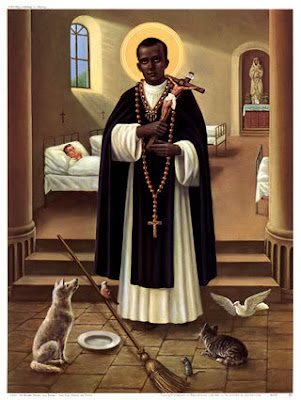
St Martin De Porres-A Saint of Humility for All~The Very Rev. Lady Sherwood, OPI
My dearest brothers and sisters in Christ,
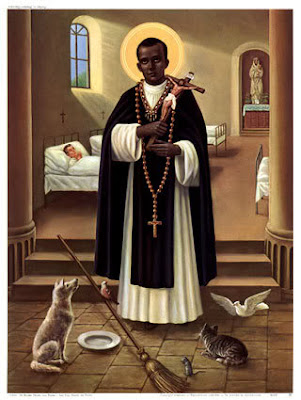
Today, we commemorate a saint who was a simple man of prayer who did many menial tasks such as sweeping floors in a Dominican friary.
There are stories that this man had the ability to be in two places at the once, levitating and exuding light whilst praying, and of having the ability to walk through locked doors, as well as having powers as a healer.
This Saint went on to become the patron saint of hairdressers, race relations, innkeepers, African-Americans, public schools, interracial harmony, Peru, people of mixed race, social justice and more.
This gifted man is non other than St. Martin de Porres, and it is his feast day which we commemorate as the church today.
Let us take a look at the life of this Saint:
St. Martin de Porres was born in Lima, Peru, in 1579 to a Spanish father and a freed black slave.
“His father rejected St. Martin for his dark skin and because of that, his childhood was one of poverty. He experienced everything the poor went through— he suffered hunger, starvation, rejection, and abandonment.
“Most who grow in poverty can become bitter with the world, but God had graced St. Martin at an early age. He allowed Christ’s love to change his heart. His poor background enabled him to relate to others. Even as a child, he would give his scarce resources to beggars whom he saw as less fortunate than himself.
“He reflected Christ the humble servant, Christ who came to serve and not to be served. That is what made St. Martin de Porres unique. His whole life was an attitude of humility.”
He was apprenticed to a barber at age 12.
“At that time, being a barber meant not just cutting hair, It also meant medicine, doctoring, treating wounds and fractures, prescribing medicine, like a doctor and pharmacist would do.
Martin became so good that people left his master and went to him instead. He became very successful and made great wealth, but he gave it all to the poor.”
In his mid-teens, St. Martin felt the call to religious life with the Dominicans, but did not deem himself worthy of becoming a priest or a brother.
He joined the Dominicans as a third order lay person, performing menial tasks, like sweeping and cleaning.
“It wasn’t long before the Dominicans realised the person they had in their midst, and St. Martin was asked by the Dominicans to join the order.
“St. Martin de Porres surrendered to God with complete humility. When you surrender to God, when you are humble, you allow divine providence to provide the means to become holy.”
After decades of serving with the Dominicans in various capacities, St. Martin de Porres died on Nov. 3, 1639.
Let us pray:
Oh God Our Father, Who has given us in Thy Humble Son, our Lord Jesus Christ, the model of all virtue and perfection, grant to us the virtue of humility. We think so little of Thee because we are so full of self. We cannot love Thee more until humility shows us our own nothingness and makes us rejoice in our complete dependence upon Thee.
You have given to the world a glorious apostle of humility, St Martin de Porres. Guide us by his example and strengthen us through his intercessions in our efforts to conform our hearts to the humble Heart of Thy Crucified Son.
Renew, O Lord, in these days, when pride and forgetfulness of Thee are so widespread, the wonders which You performed through Thy humble servant, Martin de Porres, during his lifetime. We pray that all the world may know of St Martin and of the surpassing value of the virtue of humility. Through the same Christ our Lord. Amen.
The Feast of All Souls~Dcn Igor Kalinski, IPI
DOMINICAN HERMITAGE & ORATORY of St’s Peregrine and Sebastian in Gevgelija, Republic of Macedonia, Europe
I lost one very good intimate friend, two years ago, I lost my dad 17 years ago, my grandparents, my gran grandparents, some school friends too, many neighbors and relatives during my 44 years life on this earth.
This Memorial of ALL SOULS Day, is a day of reflection, day to open and search my family photo albums, the archives, days when I ask some of the oldest members in our family, to refresh their memory with my million questions and details about members of our household that are gone and I want to hear stories about them.
I want to provoke in my family and relatives and friends too to think about our beloved people that are in Heaven.
We will all go in Heaven one day, and what’s hold me in the Divine hope is the Scriptures verses that all are fell in sleep, waiting for the sound of the trumpet.
Some people are sad of the missing of their late beloved friends and family, some reflect on this day with gratitude, some with sadness.
I want us to encourage that its one in a year dedicate memorial for each and every one missing person, for all those who don’t even have a grave mark, those brave soldiers who fought for us today living in peace.
For all those not yet canonized in the church bureaucratic policy but are saints cos each soul living in God’s presence is holy, saved and a saint too.
This is a feast for millions and billions of souls, that only God knows them perfectly by name and origin.
I am thankful for this memorial that exist and for many many who are gone due of covid illness.
This is a memorial day for all of our deceased members of OPI and UOCC, I will mention dear deaconess Dollie, and bishop elect venerable Philip Gerboc, so deeply loved and deeply missed and never forgotten.
We all die, we will suddenly all fell in God’s sleep, to rest until He comes soon again to raise all who patiently believed and hoped for better life in heaven.
Today is a feast of all my family and friends that are gone for all of these years.
The Church is one and holy, one on earth preaching and sharing holy sacraments, the other is the Church in Heaven celebrating God with all martyrs, deceased ancestry, they in Heaven are worshiping, singing, and interceding for the petitions and needs of the Church on earth.
I will say, all souls of God from the beginning of the world until today that are in Heaven saved with the blood of Jesus are holy intercessors for us.
I light the candle and bring some flesh flowers in my oratory’s altar, offering my prayers of thanksgiving for their lives on earth.
The Feast of All Saints~Br. Milan Komadina, Novice

Let us learn something more about All Saints and about some traditions that are popular worldwide on this day. On the Solemnity of All Saints, November 1, the Church celebrates those Christians who achieved spiritual maturity. It is a day to venerate all the holy men and women who have been canonized by the Church. The first evidence for the November 1 date of celebration and of the broadening of the festival to include all saints as well as all martyrs occurred during the reign of Pope Gregory III (731–741), who dedicated a chapel in St. Peter’s, Rome, on November 1 in honor of all saints. On November 1st each year, people flock to their family plots in cemeteries across the country. They also use this holiday to hold a family reunion where groups of an extended family gather together. The day is filled with music and food. There is also prayer and religious traditions. There was also a superstition that All Souls’ night was a time when the dead revisited their homes, therefore some people would leave lit candles outside their homes to help to guide the deceased souls. Meals and wine were also left out as refreshments for them. Much like Halloween in other countries, All Souls’ Day is marked by the consumption of impressive quantities of sugar – particularly in the form of frutta martorana, beautiful marzipan sweets in the shape of fresh fruits and vegetables, and ossa dei morti, almond biscuits.
Today in Revelation 7:9-10 we read the following sentence: `After this I looked, and there before me was a great multitude that no one could count, from every nation, tribe, people and language, standing before the throne and before the Lamb. They were wearing white robes and were holding palm branches in their hands. And they cried out in a loud voice: “Salvation belongs to our God, who sits on the throne, and to the Lamb.”` People from every nation, tribe and language will be standing before the throne and before the Lamb (Jesus). Every person is welcome to serve God and to become holy. God does not make distinction between people or discriminate based on one`s nationality. Here, in Germany I can see many foreigners on the streets. There are many Ukrainian refugees, people from Balkan countries, people from North African countries and other migrants. But not all of them have the same status. In finding a job, using the rights and in everyday life knowing local language is a must, plus bearing the EU citizenship opens many doors. People from third world country have many difficulties in acquiring their visa and also surviving in this country. Similar situation is in many countries worldwide. The language matters, the origin matters, the tribe matters. With Heavenly Jerusalem it will be different. No visa would be needed, no new language course and so on. The only visa for resident permission for eternal stay with God will be our faith in Jesus.
In John 3:1-3 it is written: `See what great love the Father has lavished on us, that we should be called children of God! And that is what we are! The reason the world does not know us is that it did not know him. Dear friends, now we are children of God, and what we will be has not yet been made known. But we know that when Christ appears, we shall be like him, for we shall see him as he is. All who have this hope in him purify themselves, just as he is pure` We are all called children of God and we should all considered each other like brothers and sisters. This is why we also pray to saints. Since today in All Saints Day we also remember all saints it is good to talk about the beauty and blessings of prayers to saints. In some Christian denominations people do not pray to saints fearing that it could look like worshiping them and we know that there is only one God and only God should be worshipped. But what we really do when we pray to saints we ask them to pray to God together with us. It is similar as when we ask our friend from the church to pray for us. Mostly all prayers that we pray to saints end with `pray for us` and this is the right prayer. We can pray and to angels as well. They are all servants of the Lord and we can as them to pray God for us, too.
Here is a beautiful prayer for All Saints Day:
Dear God, thank you for the example of the Saints. I desire to join in their company, worshiping you forever in Heaven. Please help me follow their footsteps, and yours, Jesus Christ. Please help me to conform myself to Your image, seeking Your will in all things, as the Saints did. Please help me to devote myself, and all that I do, to Your glory, and to the service of my neighbors. Amen.

On Bedtime Stories and Sycamore Trees ~ Br. Christian Angelo Ventura, Novice

May we speak the Word and hear it; through the intercession of St. Dominic
and in the ✠ Name of the One who Was, and Is, and is to come. Amen.
To begin, today’s Gospel tells of the story of Zacchaeus, who climbed the sycamore tree in order to see Jesus. Perhaps you are familiar with the children’s song:
Zacchaeus was a wee little man and a wee little man was he. He climbed up in a sycamore tree for the Lord he wanted to see. And as the Saviour passed that way, He looked up in the tree. And He said, ‘Zacchaeus, you come down, for I’m going to your house today.’
Whenever I happen to listen to this excerpt of Luke’s Gospel, I am always reminded of the curious tale of Jack and his beloved beanstalk. Quite frankly, it was my least favorite children’s book, with the Very Hungry Caterpillar taking first place for me, likely due to its friendlier plot. Although I reflect on the former, perhaps, due to the theme of elevating oneself to treacherous heights to get a glimpse of the unknown, out of pure awe and ungovernable curiosity. I mean, how true is this theme in our personal lives? On our own, we are short-handed, and sometimes endeavor on using intermediates to set us on to new heights.
Although unlike Mr. Fee-Fi-Fo-Fum, our Loving Saviour, Christ, does not seek to grind our bones to make his bread. Rather, in today’s Gospel, He calls Zacchaeus by name to come down and feast on the Bread of Life in the company of the Lord Himself and His disciples.
As Halloween approaches in particular, many people innocently entertain mystics and fortune tellers out of a curious impulse to tap into the divine. Maybe it is to seek comfort during hardship or spiritual advice for the path forward. And, while historical Christianity has long condemned the practices of divination as the crime of the century, what is most interesting to me is the spark of curiosity that pushes people to seek in the first place. The “principle spark”, if you will.
Is God constantly calling us to seek a fruitful relationship with Him, abundant in love and mercy? We ought to believe so! In fact, we know this to be very true, that our God is so eager to be in regular relationship with us. I particularly like the way Jesuit priest Fr. James Martin puts it, “the thing you are seeking is causing you to seek it”.
I urge us, in our daily examen, to pause and reflect on what it is that we are truly seeking. Zacchaeus was a corrupt tax collector that defrauded many for his riches before he sincerely turned to Christ by the workings of the Holy Spirit. It begs asking how we are filling our voids, maneuvering our curiosities, and climbing on to our sycamore trees when Jesus stands right there in the foreground before us saying…
“take, eat”(Matthew 26:26).
When He says…
“Do not be afraid…
I have called you by name, you are mine” (Isaiah 43:1).
Whatsoever it is that we are truly seeking; can it only be remedied by the gracious love of our loving Father in heaven? Well, we ought to believe so! Even in our unworthiness, He is steadfast to embrace us wherever we are in our journey with Him.
I am reminded of when the Centurion exclaimed “Lord I am not worthy that you should enter under my roof, but only say the word and my servant shall be healed” (Luke 7: 6-7).
And so, my brothers and sisters, make haste to come down from your sycamore trees, for the Lord is already here to stay at your house and has come to seek and save the lost.
Amen.

Praying From the Heart~Br. Milan Komadina

There is one parable in the Bible in Luke 18:9-14, where Jesus talked about the Pharisee and the Tax Collector. At that time Pharisees were people who were considered to be very educated and very religious. They had a large knowledge about the books from the Old Testament (especially God`s Law given through Moses). Average people considered them as those who should be very close to God. On the other hand there were tax collectors and this group of people were considered as very bad people and people who were far away from God. Those people normally did not know a lot about God`s Law and religious rituals. I would like to read again this parable because we could learn something very important from this story and it could be applicable for our everyday life. Take a look:
To some who were confident of their own righteousness and looked down on everyone else, Jesus told this parable: “Two men went up to the temple to pray, one a Pharisee and the other a tax collector. The Pharisee stood by himself and prayed: ‘God, I thank you that I am not like other people—robbers, evildoers, adulterers—or even like this tax collector. I fast twice a week and give a tenth of all I get.’“But the tax collector stood at a distance. He would not even look up to heaven, but beat his breast and said, ‘God, have mercy on me, a sinner.’ “I tell you that this man, rather than the other, went home justified before God. For all those who exalt themselves will be humbled, and those who humble themselves will be exalted.
I remember some situations when I was visiting Christian shops, both online and offline. When I lived in Serbia I used to go to Orthodox Christian shops where I could buy many icons, crosses, rosaries, incense or myrrh, candles of pure fax and surely many books. Among them I had my favorite two types of books and those were prayer books and books about saints and holy father`s messages. At the time when I used to live in a monastery I was spending sometimes 3 to 4 hours reading and reading prayers and praying rosaries. But many times something interesting was happening at the time of reading prayers. My thoughts were going here and there and my focus was away. So it was like praying 3 or 4 hours and actually praying for much less period of time. Why I am talking about this example is because I believe that this is happening to everyone. When we pray from prayer books and we think that we actually pray but we do not. I remember I read about some pieces of advice from Christian books. And they were mainly focused on the quality of our prayer not its quantity. God is a real person and our real heavenly father and he wants us to truly talk to him. Rosaries and written prayers are beautiful but they should include our minds and our hearts without that inclusion our `blank` word saying is just like rapping and hipping and hopping. Can be fun, but useless. I remember that I read in some Christian book when I lived in monastery that even one short sentence said from the heart with a pain and desire that God will hear us can be more powerful than reading thousands of Our father without our hearts and minds involved in the prayer. In this reading we had this parable between tax collector and Pharisee. Tax collector did not know any prayer, he did not have any prayer books or religious tools like rosaries or candles. The only thing that he offered to God was his true repentance and his heart. And from the bottom of his heart he prayed `Have mercy upon me, a sinner`. God knows our hearts and he wants our hearts. Religious rituals, prayers from the books, songs, rosaries, candles and incense can help us in our prayer practice. But let us all rather pray like tax collector and avoid praying like Pharisee because God is aiming our hearts rather than regularities, forms, books, etc.
A prayer can be anything we do in the name of Jesus. Feeding the hungry, donating something to those in need, helping a friend, a colleague, showing mercy and love. In my life I am sad to say that many times I saw people who were praying a lot but did not display love and respect or mercy toward the other people. And I was always sad about that. They do similar things like Pharisees. They have the form of religious practice but deep inside they are empty. We should be good and just. It is written in Sirach 35:14-18 about the importance of being just with other people.
Do not offer him a bribe, for he will not accept it; He will not show partiality to the poor; but he will listen to the prayer of one who is wronged. He will not ignore the supplication of the orphan, or the widow when she pours out her complaint. Do not the tears of the widow run down her cheek.
Sometimes we may feel that God is not listening to our prayers. But it is that God always has a plan for all and each one of us. Nothing is happening with no reason and purpose. Let us learn to trust God and learn to pray from the heart. Blessed be the Lord.
Why Pray?~The Rev. Frank Bellino, OPI
What’s the difference between prayer in church and prayer in a casino? In a casino, you really mean it.
Prayer is so woven into the fabric of what it is to live as a Christian that perhaps sometimes we forget to ask that simple question: “why do we pray?”. And if we forget to ask why we pray, then there must be a danger that one day we may simply forget to pray altogether.
This Sunday’s scripture readings can help answer the question “why do we pray?” at several levels.
At a very basic level we pray because we recognize that by ourselves, we are powerless. Moses recognizes that the attack of the Amalekites is a real danger to the people of Israel: by themselves they may not have the wherewithal to resist, and their escape from Pharaoh will have been in vain. They have no military strategy or secret weapon to save them. Moses turns instead to constant prayer “from the rising of the sun to its setting” (Ps 112[113]:3). He does so having faith in God, knowing that Israel’s “help is in the name of the Lord” (Ps 120[121]:2).
So too with the widow in the gospel: she has nobody to defend her rights; only by constant “prayer” – not in this case to God, but to the unjust judge – can she hope for justice.
It is right that we should, in humility, recognize our powerlessness and be constant in bringing our needs before the Lord. But if that were all there were to prayer, we would have to say that the more powerful somebody is, the less he or she would need to pray. Perhaps this is why the unjust judge, entrusted with considerable power and authority, has “neither fear of God nor respect for man” (Lk 18:4). Why bother praying for divine assistance if you already have the military might or the political clout or the money to defend yourself and others against aggressors and injustices?
There is a clue at the end of the gospel passage: after telling us how God will see justice done swiftly in answer to our constant prayer, Christ adds, “But when the Son of Man comes, will he find any faith on earth?” (Lk 18:8)
It seems he will find lots of praying going on, at least from those who recognize their powerlessness; but will he find any faith?
We might initially think that a strange question. If people are praying to God, surely, they have faith in him? But in the gospels even the demons know that God exists, and they implore him to act in certain ways. In that very basic sense, you could even say that they pray to God; though we could not say that the demons have “faith”.
What Christ asks of us is not merely that we should pray insistently for our own needs and for justice to all – though certainly we must pray for that. He asks us to have faith: that is, he calls us to believe in God and his word, and freely to commit our whole selves to him.
Prayer isn’t about persuading God to do what we want, however noble that may be; it is about inviting God to mold us in faith into what he wants for us. Prayer can’t change God; it should change us.
Through our prayer our faith is nourished and deepened: and that is one reason why Christian traditions of prayer – whether liturgical or private – focus on the scriptures. Praying with the scriptures, using words given to us by God, we enter more deeply into “the wisdom that leads to salvation through faith in Christ Jesus” (2 Tim 3:15); we learn more profoundly the holiness to which our Lord calls us.
As Christians we have Christ himself as our model: God made man was himself a man of insistent prayer during his life, and ultimately on the cross, pleading for us and alongside us for our redemption. Ancient Christian tradition sees Moses’ prayer with arms extended as prefiguring the cross (cf. Justin Martyr, Dialogue with Trypho, 97). The self-emptying of the cross is the point around which all the scriptures and all history turn, and it must be the focus of our prayer as we look to answer Christ’s call to follow him.
Why do we pray? To be like Christ and to be with Christ, now and forever.


You must be logged in to post a comment.