
Category: Sermon
Are You Ready? Advent 1~The Rt Rev Michael Beckett,OPI
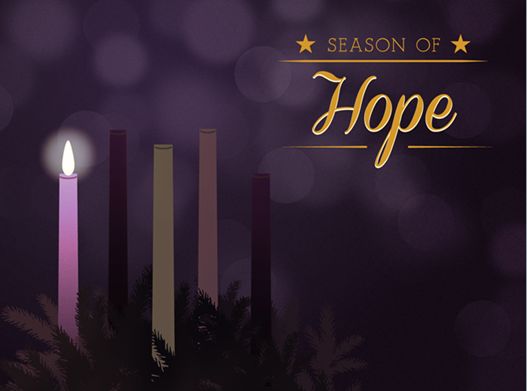
Our trees are up, our halls are decked, and the house is relatively clean. I mean, maybe we’re not quite ready for Charles and Camilla to visit, but I’d not be embarrassed if, say, William and Catherine popped in. For all practical purposes, we are ready for Christmas.
What about y’all? Shopping done? Decorating finished? Parties planned? What does “being ready for Christmas” really mean?
Today is the First Sunday in Advent. I’m about certain that every one of us has seen an “Advent Calendar.” Those cute little things that count down until Christmas. Whilst they can be fun and exciting, they really have nothing to do with “Advent” though. Not really even close. So, one might ask, “What is Advent?” And, as is my custom, I’m gonna tell ya.
Since the 900s, Advent has marked the beginning of the church year, and is a season of great anticipation, preparation, and excitement, traditionally focusing on the Nativity of the Christ Child, when Jesus came as our Savior. During Advent, we as Christians also direct our thoughts to His second coming as judge.
The word Advent is from the Latin adventus, meaning coming,” and is celebrated during the four weeks of preparation for Christmas. Advent always contains four Sundays, beginning on the Sunday nearest the feast of St. Andrew the Apostle, (November 30) and continuing until December 24. It blends together a penitential spirit, very similar to Lent, a liturgical theme of preparation for the Second and Final Coming of the Lord, called the Parousia, and a joyful theme of getting ready for the Bethlehem event.
Advent is a time of preparation that is marked by prayer. Advent’s prayers are prayers of humble devotion and commitment, prayers of submission, prayers for deliverance, prayers from those walking in darkness who are awaiting and anticipating a great light (Isaiah 9).
So whilst we are preparing our homes for Christmas, should we not also be preparing our hearts and minds? We all of us know that Christmas is on 25 December, and that’s when we celebrate Jesus’s birth. What we don’t know, however, is when Jesus is coming back.
In the Gospel appointed for today, Jesus says to his disciples:
“As it was in the days of Noah, so it will be at the coming of the Son of Man. In those days before the flood, they were eating and drinking,
marrying and giving in marriage, up to the day that Noah entered the ark. They did not know until the flood came and carried them all away.
So will it be also at the coming of the Son of Man. Two men will be out in the field; one will be taken, and one will be left. Two women will be grinding at the mill; one will be taken, and one will be left. Therefore, stay awake! For you do not know on which day your Lord will come.
Be sure of this: if the master of the house had known the hour of night when the thief was coming, he would have stayed awake and not let his house be broken into. So too, you also must be prepared, for at an hour you do not expect, the Son of Man will come.”
As we go about “getting ready” for Christmas, let us not forget what, and more importantly, WHO, we are really ‘getting ready” for. I invite each of you to have a most blessed, holy, and prayerful Advent. Amen.
Jesus Christ: Our Eternal King!~The Rev Lady Sherwood,OPI
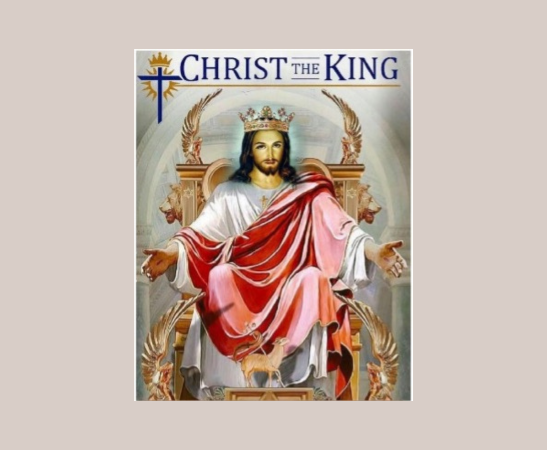
My dearest Brothers and sisters in Christ, may you be blessed on this, the Solemnity of Jesus Christ, King of the Universe! This is the last Sunday of the Church year. This is the time when we focus ourselves on the final and glorious things which are to come! It also means that next Sunday, we celebrate the First Sunday of the Advent Liturgical season.
When we are stating that Jesus is the king, we are meaning several things by this. Firstly, Jesus is our Shepherd. As our Shepherd He desires to lead us personally as a loving father would with his children. He wants to enter into our lives personally, intimately and carefully. He never wants to impose Himself upon us, rather, He is constantly offering Himself to us as our guide. The difficulty with this is that it’s very easy for us to reject this kind of kingship. As King, Jesus desires to lead every aspect of our lives and lead us in all things. He desires to become the absolute ruler and monarch within our lives and also of our very hearts and souls. He wants us to come to Him for everything and to become dependent upon Him always. But He will not impose this sort of kingship upon us. Our Lord Jesus wants us accept him freely and without reservation. Jesus will only govern our lives if we are freely willing to surrender ourselves over completely to him.. When we allow this to happen, His Kingdom begins to become established firmly within us! And also through us in this worldly realm.
Jesus wishes for His Kingdom to be established in our world. First and foremost this takes place when we become His sheep and thus become His instruments to help convert the world. However, as King, He also calls us to establish His Kingdom by seeing to it that His truth and law is respected within all of our society. It’s Christ’s authority as King that gives us the authority and duty as Christians to do all we can to fight worldly injustices and to bring about a respect and a love for every human person. All shall ultimately gain its authority from Christ alone since He is the one and only Universal King.
But many still within our world do not recognize Him as the King, so what should we do about these people? Should we “impose” God’s law upon those who do not believe? The answer is both yes and no. First, there are some things we cannot impose. For example, we cannot force people to go to Mass each Sunday. This would hinder a person’s freedom to enter into this precious gift willingly. We know Jesus requires it of us for the good of our souls, but it must still be embraced freely. However, there are some things that we must “impose” upon others. The protection of the, poor and vulnerable must be “imposed.” The freedom of conscience must be written into our laws. The freedom to practice our faith openly (religious liberty) within any institution must be “imposed” also. And there are many other things which could be listed here. What’s vital to point out is that, at the end of all time, Jesus will be returning to Earth in all His glory and He will then establish His permanent and unending Kingdom. At that time, all peoples will see God as He is. And His law will become one with our worldly law. Every knee will bend before our great King and all will know His truth. At that time, true justice will reign and every evil will be corrected. What a glorious day that will be!
We should reflect, today, upon our own embrace of Christ as our King. Does He truly govern our lives in every way? Do we allow Him to have complete control over our lives? When this is done freely and completely, the Kingdom of God is established in our lives. Let Him reign so that we can be converted and, through us, others can come to know Him as Lord of all also!
Lord, You are the sovereign King of the Universe. You are Lord of all. Come reign in our lives and make our souls Your holy dwelling place. Lord, come transform our world and make it a place of true peace and justice. May Your Kingdom come! Jesus, we trust in You.
Reconciliation~The Rev Frank Bellino,OPI
My dear brothers and sisters in Christ, especially here at St Michael’s, we witness one of the most powerful and, yes, perhaps most jarring moments of the Gospel: Jesus, armed with a whip of cords, overturning the tables in the Temple. This is not the gentle Jesus we often picture. This is Jesus consumed by a holy and righteous zeal, fulfilling the words of the psalm: “Zeal for your house will consume me” (Jn 2:17).
What is Jesus Angry At? The Cleansing of Priorities
When we hear this passage, we often focus on the physical act of “cleansing the Temple.” But let’s look closer at why this had to happen. The merchants and moneychangers were performing necessary services; they provided animals for sacrifice and changed currency for pilgrims. The problem wasn’t the service itself; the problem was corruption and the priority. They had allowed the noise of commerce and the pursuit of profit to drown out the voice of God. They had turned the sacred place—the only place where Gentiles could come to pray—into an obstacle course for those seeking God. They made their own gain more important than true worship.
My friends, this is the challenge for our society today. We live in a world saturated by noise and the relentless pursuit of material gain. We are tempted daily to turn the holy spaces of our lives into a “marketplace.” Whether it’s letting social media, financial anxiety, or political ideology consume the quiet space meant for prayer, or allowing selfish ambitions to crowd out the call to charity, we risk turning our hearts—which are the true sanctuary—into something less than the Father’s House of Prayer.
The True Temple: Jesus Christ and You
The most important part of this entire encounter comes when Jesus speaks of the ultimate destruction and rebuilding: “Destroy this temple, and in three days I will raise it up.” The people, naturally, thought He meant the stone and mortar of Herod’s magnificent Temple. But the Gospel tells us He was speaking of the temple of His body.
This is the great, foundational truth of our faith: Jesus Christ is the new, eternal, and perfect place of encounter between God and humanity. The Old Temple’s purpose was to point to Him. With His Death and Resurrection, the veil was torn, and the way to the Father was opened. He is the path!
But the story doesn’t end there. St. Paul reminds us: “Your body is a temple of the Holy Spirit” (1 Cor 6:19). Because we are baptized into Christ’s Body, we, too, are now living stones of a spiritual temple. This is why we, as a Catholic community, must protect the sacred spaces of our lives—our parish, our homes, and our consciences—from becoming markets for the world’s passing fancies.
🔑 Our Response: Finding the Path to Heaven
So, how do we respond to this Gospel message to help us find the path to Heaven?
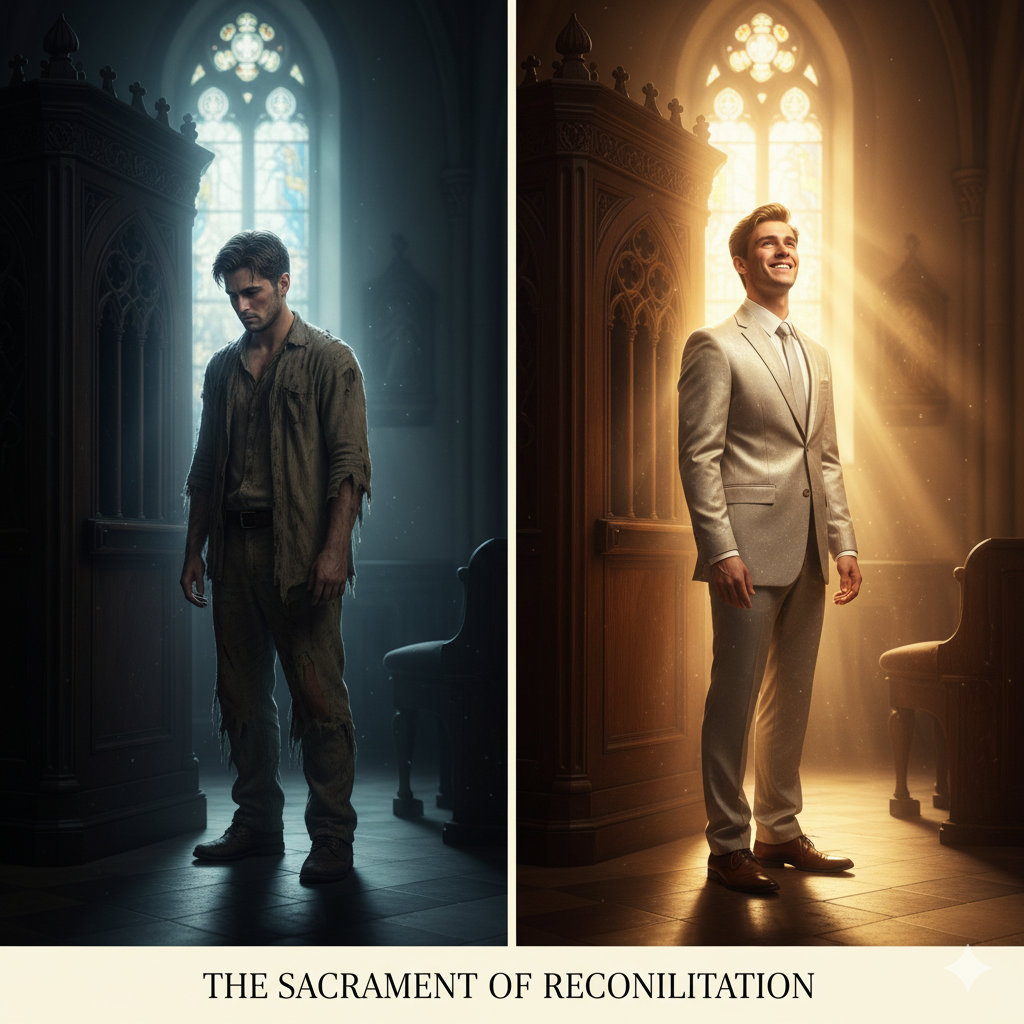
Embrace the Cleansing: We must, in a sense, invite Jesus into our own hearts with that whip of cords. What noise, what distraction, what idol, what form of greed or pride has taken up residence in the sanctuary of your soul? The path to Heaven requires courageous self-examination and a sincere reception of the Sacrament of Reconciliation. Let the refining fire of the Holy Spirit drive out everything that is unholy, just as Jesus drove out the corruption.
Prioritize the True Worship: We must make Jesus Christ the absolute priority of our lives. This means coming to the Eucharist not out of mere habit or social duty, but with the fervent desire to be united with the risen Lord, the True Temple. It means making time for daily prayer, where we can listen to God’s voice, not the world’s clamor.
Live with Resurrection Hope: Jesus’s final promise—to raise up the Temple in three days—is our hope. The path to Heaven isn’t found in a perfect life, but in a life rooted in faith in the Risen Christ. Even when we fail, even when our personal temple is damaged, we trust in the power of Christ’s resurrection to rebuild us, to restore our dignity, and to lead us home.
Let us ask the Lord for that consuming zeal that drove Him to purify the Temple, so that our lives, both individually and as a parish family, may truly be a house of prayer dedicated entirely to His glory.
Amen.
Who Are These? The Feast of All Souls~The Rt Rev Michael Beckett,OPI
Y’all…….Those of you who have hung around with me for more than a minute know that I’m all about some words. They fascinate me. And I play LOTS of Words With Friends and Word Solitaire and other word games. When I was teaching I was all about spelling and grammar and vocabulary (words, meanings, and how to effectively use them.)
Here of late, there has been one word that seemingly has been on a recurring loop in my head; the word “dumbfounded.” Interestingly enough, the word ‘dumbfounded’ comes from a blend of ‘dumb’ and ‘confounded’, and we know that this word first came into use in the mid 1600s and meant ‘amazed, surprised, caught off guard. The word ‘dumb’ as we know it today comes from the Old Norse ‘dumbr’, the Gothic ‘dumbs’ which meant ‘mute’, the Dutch ‘dom’, and the German ‘dumm’, the latter two of these would be translated into ‘stupid.’
And I have certainly been struck mute, been confused, and made speechless by some of the things I’ve seen and heard lately. I am dumbfounded by folks who one day ask for prayer, who proudly and happily post about following Jesus, and then the next day (sometimes the next 15 minutes) post or say something that completely negates and is in direct conflict with, everything that Jesus taught and stood for. They’re all about bringing ‘religion’ back into schools and posting the 10 Commandments everywhere, but completely ignore the “not bearing false witness” part and post dis-and mis-information and flat out lies. And they do it happily and proudly. They excitedly promote those in authority who publish pictures of their “prayer groups” but who trample on the Gospel. They denigrate those who they feel are “less than” and completely ignore the words our Lord spoke in Matthew, yet happily say they are all about Jesus, want to bring folks to Jesus, and say “Come to church with us!.” For me, personally, this saddens and terrifies me, and it should them. They, in their ignoring what Jesus has said, completely ignore His words in Matthew 18:6: “If anyone causes one of these little ones—those who believe in me—to stumble, it would be better for them to have a large millstone hung around their neck and to be drowned in the depths of the sea.”
Conversely, today is the Feast of All Souls, (closely akin to All Saints which was yesterday,) wherein we honor all of those devout folks who have gone on before us. One of the Scriptures that is associated with today comes from the Book of Revelation:
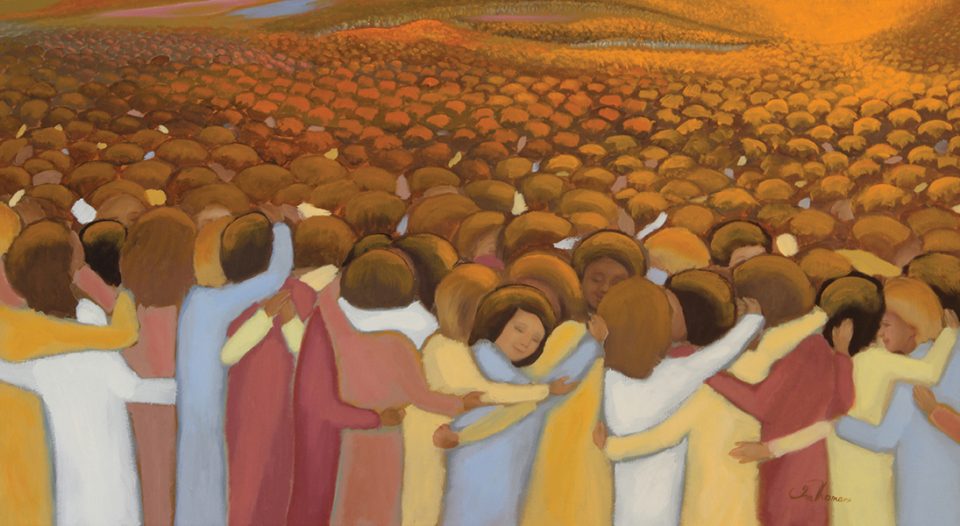
I had a vision of a great multitude, which no one could count, from every nation, race, people, and tongue. They stood before the throne and before the Lamb, wearing white robes and holding palm branches in their hands. They cried out in a loud voice: “Salvation comes from our God, who is seated on the throne, and from the Lamb.” All the angels stood around the throne and around the elders and the four living creatures. They prostrated themselves before the throne, worshiped God, and exclaimed: “Amen. Blessing and glory, wisdom and thanksgiving, honor, power, and might be to our God forever and ever. Amen.”
Then one of the elders spoke up and said to me, “Who are these wearing white robes, and where did they come from?” I said to him, “My lord, you are the one who knows.” He said to me, “These are the ones who have survived the time of great distress; they have washed their robes and made them white in the Blood of the Lamb.”
Well now. Just who ARE these folks in white robes? Their anonymity teaches us that sainthood is not reached through great achievements or rare acts of bravery. Sainthood comes from simply loving God and doing our best to live our lives in a way consistent with Jesus’ commandment. I would dare say that none of the saints actually set out to be saints. They simply loved God and lived their lives to follow Him.
Revelation goes on to remind us that giving our lives over to God will not protect us or insulate us from hardship. Living in, for, with, and through God, however, will make sure that we can and will endure whatever “great distress” comes our way. In this passage of Revelation, John is speaking specifically of those who have given their lives for their faith. Whilst there is talk about a “War on Christianity,” in reality, it is very unlikely that any of us will be called upon to sacrifice our lives for our faith.
Our challenge, then, is to actually LIVE for Christ, rather than to die for Christ. Jesus does ask to lay down our lives for Him. Peter said to the Lord, “I will lay down my life for Your sake,” and he meant it (John 13:37). Has the Lord ever asked you, “Will you lay down your life for My sake?” (John 13:38). It is much easier to die once than to lay down your life day in and day out with the sense of the high calling of God. We are not made for the bright-shining moments of life, but we have to walk in the light of them in our everyday ways. For thirty-three years Jesus laid down His life to do the will of His Father. “By this we know love, because He laid down His life for us. And we also ought to lay down our lives for the brethren” (1 John 3:16).
If we are true followers of Jesus, we must deliberately and carefully lay down our lives for Him. It is a difficult thing to do, and thank God that it is, for great is our reward. Salvation is easy for us, however, because it cost God so much. But the exhibiting of salvation in our lives is difficult.
God saves a person, fills him with the Holy Spirit, and then says, in effect, “Now you work it out in your life, and be faithful to Me, even though the nature of everything around you is to cause you to be unfaithful.” And Jesus says to us, “…I have called you friends….” Remain faithful to your Friend and remember that His honor is at stake in your bodily life. We are called to remain faithful, despite the reasons the world gives us to not, despite the politics, despite the crowd pressure, despite the differences in our lives.
Who are these dressed in white robes? It is my prayer to be counted among them. What about you? Amen.
The Gospel of True Happiness~The Rev Frank Bellino,OPI
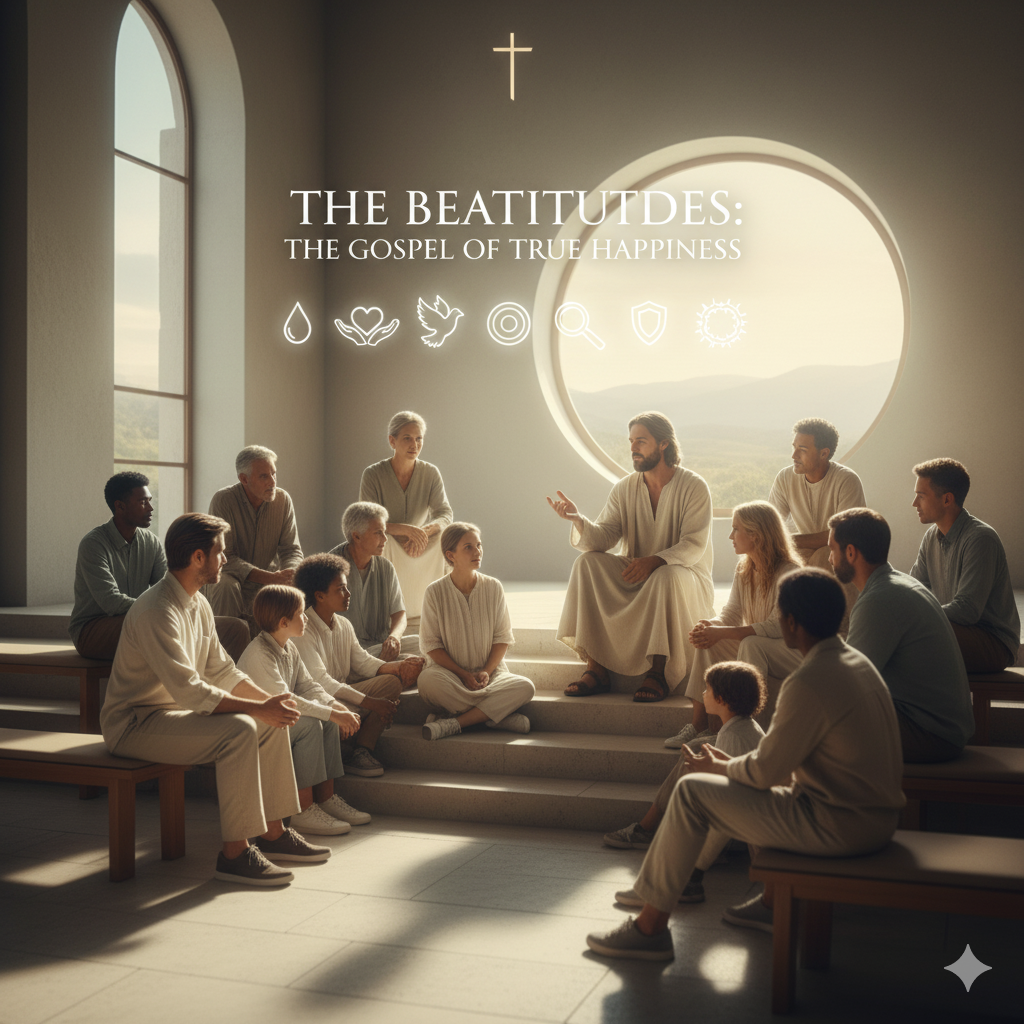
My brothers and sisters in Christ, we hear today the words of Jesus that open the Sermon on the Mount—the Beatitudes. These are not just beautiful poetry; they are the core, the very Constitution, of the Kingdom of Heaven.
We look for happiness in the world. The world tells us: “Blessed are the rich, the powerful, the famous, the comfortable.” Jesus, however, sits on that mountain and turns the world’s wisdom completely upside down. He shows us the true path to beatus, to blessedness, to the only happiness that lasts.
As a Dominican Parish Priest, I see the Beatitudes not as a list of virtues to struggle with, but as a portrait of Jesus Christ Himself and a blueprint for our communal life in the Church.
The World’s Illusion vs. God’s Grace: The Beatitudes challenge the fundamental modern delusion that we can be self-sufficient. When Jesus says, “Blessed are the poor in spirit, for theirs is the kingdom of heaven,” he is calling us to humility—to recognize that everything we are, everything we have, is a gift from God. In an age of immense material wealth and self-pride, our poverty of spirit is our total and complete reliance on God’s grace. It is the beginning of all other virtues, because without it, we are trying to build the Kingdom of Heaven with our own, weak hands.
A Passion for Righteousness: In the modern clamor of voices and causes, Jesus calls us to a single, focused desire: “Blessed are those who hunger and thirst for righteousness, for they will be satisfied.” This is a burning desire for God’s truth and justice to reign in our lives and in the world. This is not passive longing; this is the Dominican zeal for truth, a drive that compels us to study, pray, and preach the Gospel, actively working to right the wrongs of this world, both social and spiritual.
The Path of Mercy and Peace: Our call is to be peacemakers and merciful. In an online world built on quick judgment and anonymous cruelty, the pure in heart and the merciful are the counter-cultural witnesses. “Blessed are the merciful, for they will be shown mercy.” This is the Divine Economy: the measure with which you forgive and show compassion to others is the measure God will use for you. Our response to injustice is not condemnation, but active efforts toward reconciliation, always remembering the grace shown to us in the Sacrament of Reconciliation.
What is Jesus truly looking for in our response? He is looking for congruence—that our hearts match our actions. He is calling us to three specific responses:
Acknowledge our Need: Jesus wants us to truly live the first beatitude. He wants us to say, “I cannot do this alone.” He is calling us to drop the mask of capability and confess our absolute need for His salvation, especially through the Eucharist and the Sacraments.
Live the Paradox: Jesus is looking for us to embrace the paradoxical life. When you are wronged, be meek (strong and gentle). When you see sin and injustice, mourn and let that sorrow move you to action. When you are ridiculed for your faith—perhaps for standing up for the Church’s teachings—He says, “Rejoice and be glad, for your reward will be great in heaven.” Jesus wants us to choose the cross, knowing it leads to the crown.
Be a Witness: Above all, Jesus wants us to embody these beatitudes in our everyday roles—in our families, our workplaces, and our service to the community. Whether you are a retired officer, a disabled veteran, or an owner of a travel business—every vocation is an opportunity to be a visible sign of this blessed life. Your life is meant to be a practical sermon.
The Beatitudes are the path to becoming a true saint—not just for the formally canonized, but for all of us. They are a daily invitation to join Jesus on the mountain, to see the world from His perspective, and to receive the graces needed to live this glorious, paradoxical life.
Let us commit today to choose humility over pride, mercy over judgment, and peacemaking over conflict. Let us ask the Holy Spirit to transform our hearts, so that by living these Beatitudes, we may truly be the blessed children of God, and one day, see God face-to-face.
In the name of the Father, and of the Son, and of the Holy Spirit. Amen.
The Feast of Sts. Simon and Jude~The Very Rev Lady Sherwood,OPI
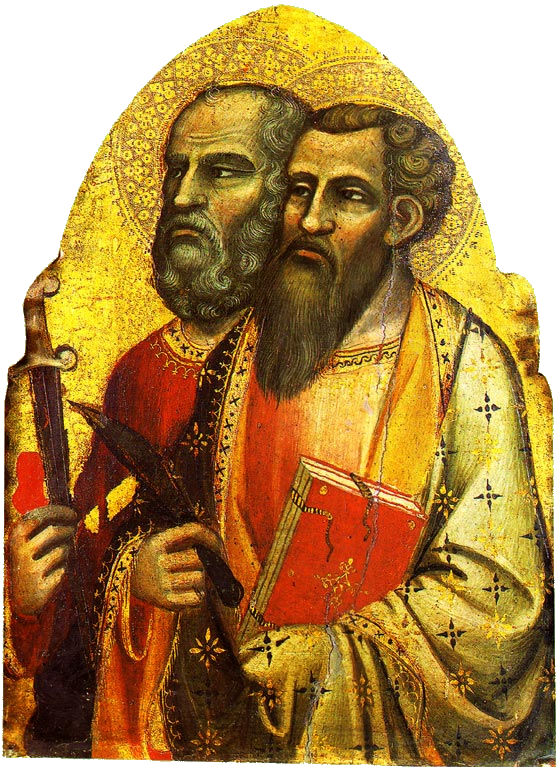
My dearest Brothers and Sisters in Christ:
Today we come together as the church to celebrate the joint feast day of two Saints, those being Sts Simon and Jude. Not much really is known about either of these saints apart from the fact that they were called by Jesus to be among his band of disciples and were later named amongst the Apostles.
Let us firstly take a look at what is known about Saint Simon:
Simon was a simple Galilean, a brother of Jesus, as the ancients called close relatives in those times, including such as uncles and first cousins. He was one of the Saviour’s four first cousins, together with James, Jude and Joseph. These were all sons of Mary, the wife of Alpheus, or Cleophas, both names being a derivative of the Aramaic Chalphai. According to tradition Cleophas was the brother of Saint Joseph, Jesus earthly father. All the sons of this family were raised at Nazareth, close neighbours of the Holy Family.
All were called by Our Lord to be Apostles: pillars of his Church. Saint Mark tells us that Simon was born in Cana, the place, according to Saint John, of Jesus’ first miracle. Some traditions identify Simon as the bridegroom at that wedding and suggest that he became a disciple as a direct response to witnessing that miracle, a miracle that was, after all, performed, at the request of Mary, to get the newly-weds out of a somewhat embarrassing predicament.
Saint Simon is not mentioned anywhere in the New Testament except to be included in the lists of the Apostles’ names.
Tradition has it that Saint Simon preached in Mauretania (an area which approximated to present day north-west Africa and southern Spain), in Egypt and in Libya, leaving behind him the fertile hills of Galilee, where he had been engaged in cultivation of the vineyards and olive gardens. He later rejoined his brother Jude in Persia (modern day Iran) where they laboured and died together, probably martyred, hence the change to a red altar frontal in their honour on this their feast day. At first the Persian king respected them, for they had manifested power over two ferocious tigers that had terrorised the land. With their king, sixty thousand Persians became Christians, and churches rose over the ruins of the idolatrous temples. However, when they visited other parts of the Persian kingdom unconverted, pagan hordes commanded them to offer sacrifices to the Sun god. They prayed for mercy and offered their lives to the living God but the idolaters fell on the two Apostles and massacred them, while they blessed God and prayed for their murders.
Now let us take a look at Saint Jude:
Saint Jude is also known by a variety of other names. He is called Lebbaeus in Matthew chapter ten and Thaddaeus in Mark chapter three.
In the backs of our Bibles, we find The Epistle of Jude. It is a short work of only one chapter containing just 25 verses. Here we are warned against corrupt influences that have crept into the church.
St. Jude is often and popularly referred to as the patron saint of desperate or lost causes, the one who is asked for help when all else fails. Possibly due to prayers for intercession, to be asked of the other Apostles first. Hence, Jude has come to be called ‘the saint of last resort’, the one whom we ask only when desperate.
What, then, can we in today’s world learn from the lives of these two relatively unknown Apostles? Firstly, they, like the rest of the twelve, ‘forsook all and followed Jesus. Can we be accused of doing that? Could we, and should we, give up some of our modern comforts and privileges and live our lives more like our Lord? Secondly, if tradition tells us, St Simon was the recipient of Jesus’ first miracle. We should be reminded that, even two thousand years later, that miracles still happen. We must always be aware that the Holy Spirit is at work in the world and he does not always do things in the way in which we would have him do them.
Thirdly, judging by his epistle, Saint Jude proved to be an avid supporter of gospel truths.
So then, are we truly passionate enough about the tenets and doctrines of our faith? Do we hold fast to the creedal affirmations of the Church?
Both Sts Simon and Jude, spent their lives preaching the gospel to a very pagan world and it is believed that they died a martyr’s death for their faith. We may not be called to be martyrs like they were (hopefully), but we shall be called to make other sacrifices. Are we ready to suffer for the sake of our Lord and Saviour Jesus Christ?
Let us, thank God for the lives of his Apostles Saint Simon and Saint Jude.
Brothers and sisters now Let us pray:
Father,
you revealed yourself to us
through the preaching of your apostles Simon and Jude.
By their prayers,
give your Church continued growth
and increase the number of those who believe in you.
Through our Lord Jesus Christ, your Son,
who lives and reigns with you
in the unity of the Holy Spirit,
One God, for ever and ever.
Amen.
The Power of Persistent Prayer~The Rev Frank Bellino,OPI
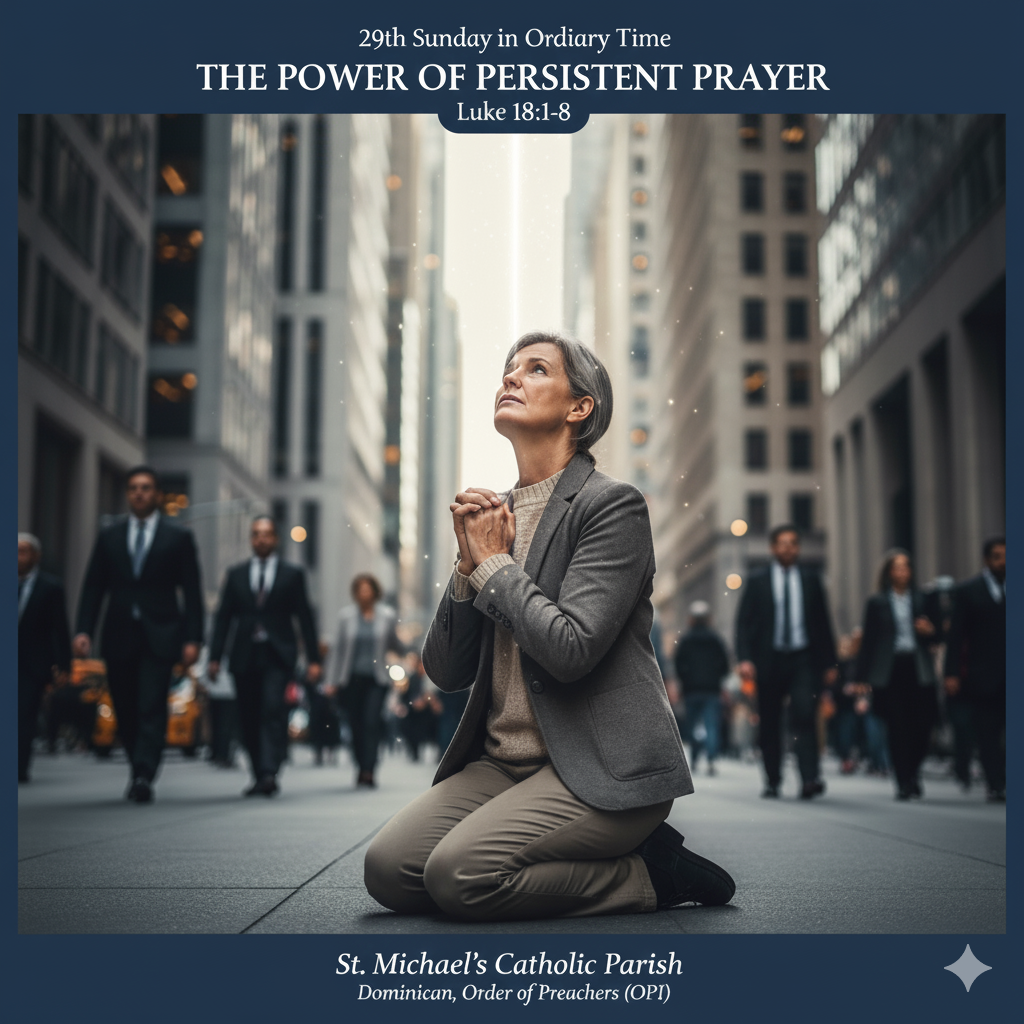
Today, the 29th Sunday in Ordinary Time, we gather to hear the Word of the Lord, and it is a powerful word—one that challenges our habits and refocuses our hope. We turn to the Gospel of Luke, chapter 18, the Parable of the Persistent Widow and the Unjust Judge.
But before we dive into this reading, let us pause for just a moment. This past Saturday, October 18th, was the Feast Day of the great Evangelist, St. Luke himself—the very man whose meticulous pen gifted us this powerful parable and the entire Gospel we are meditating upon throughout this year.
Recalling the Evangelist: St. Luke
St. Luke, the “beloved physician” and a companion of St. Paul, was more than just a careful historian; he was the Evangelist of Mercy. He is the one who took pains to gather the stories that reveal the deep compassion of Jesus: the story of the Good Samaritan, the overflowing joy of the father welcoming the Prodigal Son, and, significantly, the many places where Jesus lifts the forgotten and the marginalized, especially women. It is from Luke that we receive the Magnificat—Mary’s great song of justice that proclaims how God “has cast down the mighty from their thrones and lifted up the lowly.” St. Luke’s life of loyalty to St. Paul and his passion for recording the truth of God’s mercy is, in itself, a perfect model of the perseverance Jesus calls for today.
The Gospel: Luke 18:1-8 and the Dominican Call
Jesus introduces this parable with an unmistakable intention: He “told his disciples a parable about the necessity for them to pray always without becoming weary.”
The parable presents us with a harsh contrast. On one side is a judge who “neither feared God nor respected any human being.” On the other is a widower figure in the ancient world who was utterly powerless, vulnerable, and alone. Her only defense, her only strength, was her persistence. She kept coming to the judge, day after day, demanding justice against her adversary.
The unjust judge finally caves, not because his heart changes, but because he says, “Because this widow keeps bothering me I shall deliver a just decision for her lest she finally come and strike me.” He acts out of sheer, weary self-interest.
And here is the pivot, the heart of the message: If this corrupt, selfish judge grants justice because of sheer persistence, will not God—who is infinitely good and utterly just—secure the rights of his chosen ones who cry out to him day and night?
For us, the family of Saint Dominic, the Order of Preachers (OPI), this Gospel calls us to embody our four pillars in two immediate, profound ways:
1. Our Response to the Gospel: Persistent Prayer
This parable is an urgent call for us to live the Dominican vow of Prayer. It is a command to be contemplatives in our busy world, to talk to God not just in moments of panic, but in a sustained, daily relationship.
If you have grown tired, discouraged, or feel that your prayers go unanswered, Jesus gives you the widow as your model. God’s answer may be delayed—not because He is weary of us, but because our spiritual growth, and the working of His will in a fallen world, takes time. Our persistence is not meant to change God’s mind; it is meant to change our own heart, transforming our superficial desires into an unshakeable trust in His perfect will and perfect timing.
2. Our Response to the Gospel: Justice in the World
The widow was crying out for justice. Her prayer was not about comfort, but about correcting a profound wrong. This connects our persistent prayer directly to the Dominican mission of Preaching the Truth and establishing justice.
We, who are so blessed by God, are called to be advocates for those in our community who feel forgotten, powerless, and denied their due—the modern-day “widows.” We cannot pray persistently for justice in our personal lives while ignoring the cries of the poor, the marginalized, and the oppressed in our community and in our world. Our contemplation must bear fruit in a commitment to social action, to being the voice that persistently challenges the “unjust judges” of our time—those systems and prejudices that diminish the dignity of human life.
We must pray, and pray, and pray again—for our family, for our community, and for the conversion of the world, knowing that our God will see that justice is done for His chosen ones speedily.
The Final Challenge
Jesus concludes with a profound, almost frightening question: “But when the Son of Man comes, will he find faith on earth?”
This is the ultimate challenge of the parable. Will the pressures of the world—the delays, the discouragements, the weariness—cause our faith to evaporate? Or will we be like the persistent widow? Will we, in our constant, tireless cry for God’s justice, demonstrate that the answer to His question is a resounding, confident Yes, Lord, You will find faith on earth!
Let us leave this place today with the conviction to be tireless in our prayer and relentless in our pursuit of justice, embodying the spirit of St. Luke and the heart of the Gospel.
Amen.
The Feast of St Luke, Evangelist~The Very Rev Lady Sherwood,OPI
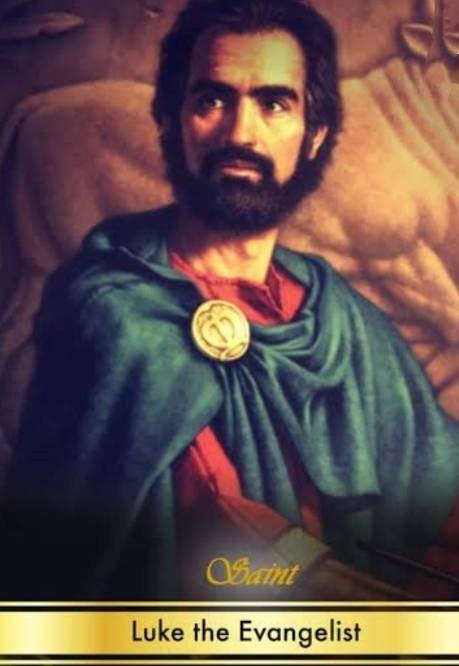
My dearest Brothers and sisters in Christ, Today we come together as the church to commemorate St. Luke the Evangelist, Patron saint of Physicians.
Luke, from his perspective, records for us in his Gospel writings, the life of Jesus=from His birth at Bethlehem, through His ministry and His many healings. How Jesus heals the blind, the deaf, and the lame.
Luke tells us of the peace which Jesus speaks to all, because Jesus is indeed the peace and healing of God, then in human form. That is why in Luke 10, Jesus tells the 72, to say, “Peace be with this house”, as he sends them out as apostles of his peace.
Jesus gives us spiritual healing and peace which forgives our sins, and which reconciles us with God, our Heavenly Father, by His death upon the cross for us.
Jesus is truly the physician of our Soul. He knows all too well, that we are sick with sin, but it deters him not. Each and every one of us, is precisely why He came to earth to be amongst us, the reason he lived with us upon the earth, and why he suffered, bled, was tortured, and died for all our sakes.
Jesus came down from Heaven to our world, to take from us our dark sickness of sin and of death, and to heal us, to bring us true life and salvation. He took all upon himself for us upon the cross, our sickness and death, died with the Lord, to all who truly believe, love and follow Him. We are forgiven, we are healed, we are saved, we are at peace.
If we truly examine our lives, we will see our constant need for healing of the sins of this world. As with the body, if we are sick, we see our dr for diagnosis and treatment, that’s why today, we give thanks to God for His servant, Luke, the Evangelist. It’s Luke’s role to bring Jesus, His healing and peace to each of us through the living and active word of God.
The word of God is the scalpel of Jesus our physician and saviour. With total precision, Jesus’ laws cuts us and ‘kills’ the sickness of the human condition, so that he can heal us, and give us true life.
Each of the commandments of Jesus is a precise incision of his law. We have failed to fear, love, and trust God above all else as we ought to do. We have failed to use God’s name as we should, and to call upon him as our Father, as his children when in every trouble or need, or to give him worthy thanks and praise. We have ignored God’s Holy word and preaching, we have not loved our neighbour, or helped to eased their needs. We have been bad stewards of earthly material things such as money, or possessions. We have failed in giving kindness and forgiveness to our brothers and sisters.
So indeed, our human sickness of sin is dire=without Jesus as our Lord, our Saviour, and physician, the diagnosis is terminal.
But Jesus is merciful, he does not delight in punishment. Jesus our physician of our soul, cuts with His law in order to heal us with His Gospel. The Lord heals the broken hearted and binds up their wounds (PS 147:3). Jesus has kept on our behalf, all those commandments, which we have failed to truly follow.
If we want to call our doctor, we pick up the phone, and wait for an appointment to become available. But Jesus as our physician for our souls, is contactable 24 hrs per day, every single day with no exception. He is contactable easily anytime, day or night, by the important communication of prayer.
So let’s end today with the simplest but most important prayer of all, to our Saviour and physician of our soul:
Lord Jesus Christ, Son of God, have mercy on me, a sinner.
Amen.
Gratitude~The Rev Frank Bellino,OPI
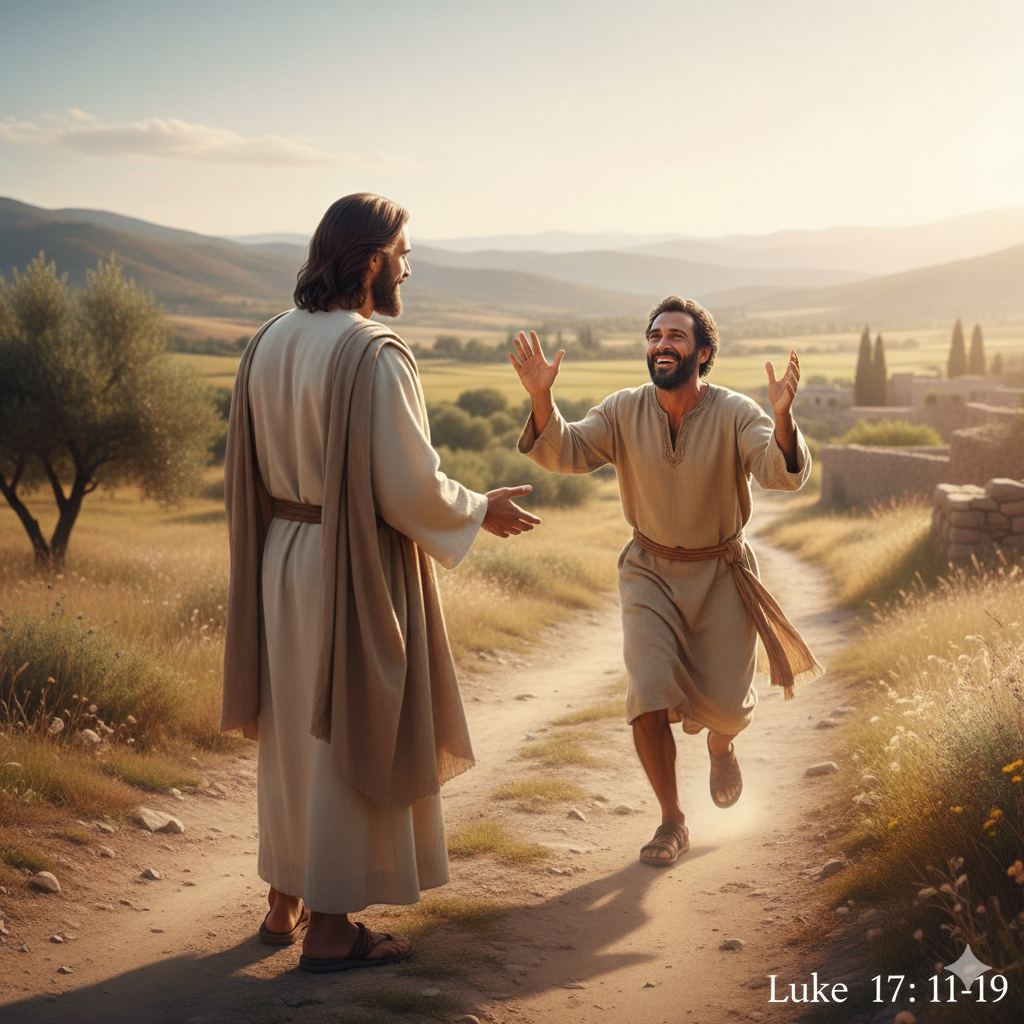
My brothers and sisters in Christ, we hear today a familiar story—the healing of the ten lepers. A quick reading might tempt us to see this as a simple lesson in good manners: nine men were rude, and one was polite. But this Gospel, proclaimed today as we journey through Ordinary Time, is far more than an etiquette lesson. It is a profound instruction on what it means to be saved.
The Cry for Mercy
The story begins with ten men—Jew and Samaritan, united only by their tragic isolation. They are lepers, standing apart, forced by law and disease to shout their misery. Their shared cry is simple and desperate: “Jesus, Master! Have pity on us!” They are the living embodiment of our own spiritual condition. Like them, we stand at a distance, afflicted by the contagion of sin, separated from God and one another.
Jesus’s response is immediate, but it requires an act of faith. He tells them, “Go show yourselves to the priests.” The healing is not instantaneous. They are asked to obey, to walk toward the required ritual, while still diseased. It is only as they went that they were cleansed. Their healing was a gift, given not because of their perfect understanding, but because of their active obedience in faith.
The Missing Nine vs. The Returning One
All ten received the miracle; all ten had their lives restored. But only one stopped short of his destination—the priest—and turned back. And who was this one? St. Luke, ever mindful of the outcast, tells us: He was a Samaritan, a social, religious, and political enemy of the other nine.
The nine, understandably, rushed toward the re-entry—to family, to home, to work, to society. They got the gift, and they ran off to enjoy it. They received the physical blessing. But their hurry, their spiritual amnesia, caused them to miss the Giver in favor of the gift.
The Samaritan, the “foreigner,” does something different. He returns, glorifying God in a loud voice, and falls prostrate at Jesus’s feet, giving thanks. This is not mere gratitude; this is worship.
And here is the crucial moment, the point of the whole passage: Jesus asks, “Ten were cleansed, were not? Where are the other nine? Has none but this foreigner returned to give thanks to God?” Then, to the Samaritan, He says, “Stand up and go; your faith has saved you.”
Gratitude as True Salvation
My friends, the nine were healed; the one was saved.
The Greek word Jesus uses for the Samaritan’s action is related to Eucharist—the very act of thanksgiving we celebrate right now. It is the recognition that gratitude is the highest form of faith.
In our world today, we are often like the nine. We are consumers of grace. We pray in distress, God answers with a blessing—health, a job, safety, the forgiveness of sin—and we race off to enjoy the restored life. We treat God like an ATM: we make a withdrawal when we need it, and then we forget the Source.
This Gospel calls us to be the Samaritan. It calls us to the counter-cultural, transformative act of intentional gratitude in an age of entitlement.
When you rush through your morning, do you pause to acknowledge the gift of the new day?
When a prayer is answered, do you take the time to return to the altar, in prayer and deed, to glorify the Giver?
When you look at your life, do you recognize that everything—your breath, your talent, your very existence—is an unearned grace?
The Samaritan was saved because his gratitude was a posture of the soul. It was his complete acknowledgment of dependence on Jesus, which deepened his relationship with God far more than his physical cleansing.
Furthermore, his identity as a foreigner reminds us that true faith is often found on the margins. We must look for Christ in the places we least expect—in the faces of the poor, the marginalized, and those whom society, or even our own prejudices, would label as “outsiders.”
So let us, as we approach the altar to receive the Eucharist—the ultimate act of thanksgiving—resolve to return to the Lord not just in moments of petition, but in a lifelong act of radical, humble gratitude. May our faith be the faith of thanksgiving, so that we too may hear Christ’s voice saying, “Go; your faith has saved you.” Amen.
Faith, Duty, and the Humble Heart~The Rev Frank Bellino,OPI

My Brothers and Sisters in Christ, grace and peace be with you.
Today, on this 27th Sunday in Ordinary Time, we hear a challenging and profound Gospel from Luke (17:5-10). It is a teaching from our Lord that speaks directly to the demands of Christian discipleship in any age, including our own. This passage gives us two key lessons: a lesson on the power of faith and a difficult lesson on the true meaning of humility in service.
The Power of a Mustard Seed
The Gospel opens with the Apostles, feeling overwhelmed by Jesus’s recent teaching—especially the radical command to forgive a brother who wrongs us seven times in a single day. They respond with an honest cry: “Lord, increase our faith!” (Luke 17:5).
They felt inadequate. They thought they needed a super-sized faith to handle such a monumental task.
Jesus’s reply is a masterful re-orientation. He uses the image of the tiny mustard seed and the uprooting of a deeply-rooted mulberry tree. He is telling them, and us: You don’t need more faith; you need to trust the power of the small faith you already possess.
The issue isn’t the quantity of your belief; the issue is the quality of the object of your belief. The power lies not in the size of the seed, but in the power of the soil and the God who makes it grow.
For Today’s Society
In our modern world, we often feel like the Apostles. We look at the great “mulberry trees” of our time—the deep roots of violence, division, injustice, and personal sin—and we cry out, “I don’t have enough faith to change this!”
Jesus’s message to us is to stop waiting for a heroic, once-in-a-lifetime burst of spiritual power. Start acting with the small, genuine faith you have right now. The call of a disciple today is to:
Forgive the person who hurt you yesterday.
Serve that one neighbor who needs a helping hand.
Pray that one consistent prayer for justice or peace.
That is the mustard seed in action. Don’t worry about moving the mountain; worry about using the faith God has already given you to take the next faithful step.
The Humility of the Unprofitable Servant
Jesus immediately follows the lesson on faith with the challenging parable of the slave returning from the field. After a long day, the master does not thank him or release him to eat; he orders the servant to prepare dinner and wait on him first. Jesus asks: “Does he thank the servant for doing what was commanded?” (Luke 17:9). The implied answer is no.
The lesson ends with this difficult line: “So should it be with you. When you have done all you have been commanded, say, ‘We are unprofitable servants; we have done what we were obliged to do.” (Luke 17:10).
This is not a teaching about poor labor practices. It is a teaching about attitude and discipleship.
For Today’s Society
This parable is a powerful counter-cultural message to a world obsessed with merit, recognition, and reward. It is a necessary check against spiritual pride.
Service is Not a Transaction: God owes us nothing for our obedience. Our service is not a transaction for which we earn a bigger heavenly paycheck or special thanks. It is simply the expected duty of a child of God, a creature responding to the goodness of the Creator.
The Mark of Humility: As Christians, whether we are a priest, a parent, a teacher, or a travel advisor, we must resist the temptation to believe God needs us or that our good works somehow make us superior. When we serve, when we give, when we forgive—even when we do mighty things in Christ’s name—our final word must be, “I only did my duty.”
This humility sets us free. It frees us from the need for external praise, it frees us from becoming resentful when our work goes unnoticed, and it frees us to be what we are truly called to be: faithful, humble instruments in God’s hands.
So let us pray today for the grace to use the small, powerful faith we have, and the humility to be tireless, yet joyful, servants of the Lord.
Amen.
 The Order of Preachers, Independent
You must be logged in to post a comment.