
Category: Sermon
Quid Pro NO~The Rev Frank Bellino,OPI
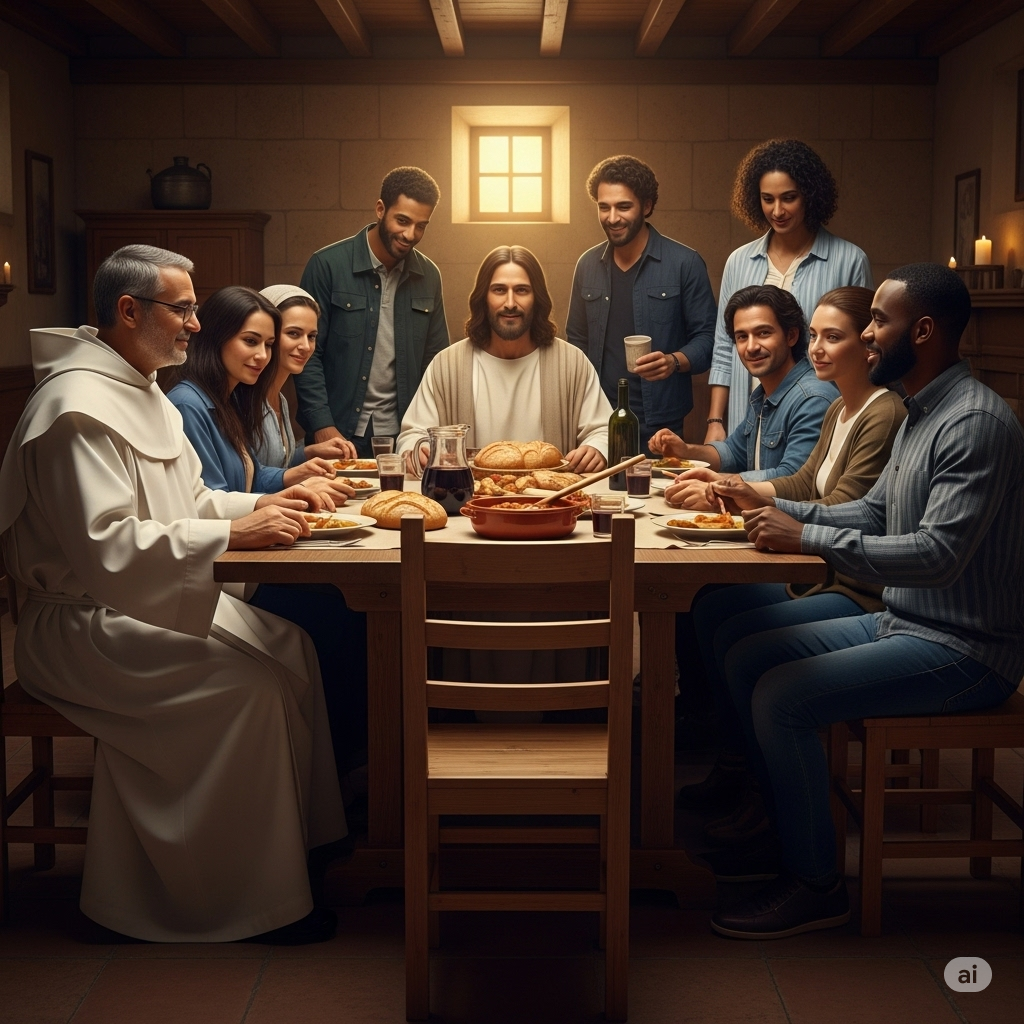
Today’s Gospel, from Luke’s fourteenth chapter, is a classic Jesus story. It’s not about a big miracle or a grand sermon. It’s a snapshot of an everyday moment: Jesus is having dinner at the home of a leading Pharisee. But as always, Jesus turns a simple social gathering into a profound spiritual lesson.
He’s watching the guests, and he notices something we’ve all seen, and probably even done. They’re all jockeying for the best seats. They’re trying to figure out who’s the most important person in the room so they can sit next to them. This isn’t just about finding a place to eat; it’s about social status, about being seen, about proving your worth. Doesn’t that sound familiar?
We might not be fighting for the best seat at a banquet table, but we do it all the time. We chase after likes on social media, we seek promotions at work for the title, we want to be seen with the “right” people. We want to be the one who’s honored, to be praised and recognized.
But Jesus tells us, “Do not recline at table in the place of honor.” He’s warning us that a prideful heart can lead to public shame. Instead, he says, take the lowest place. Humble yourself, and if you are to be exalted, let it be by the host—let it be by God. After he gives this advice to the guests, he turns to the host and gives him an even more radical challenge. The host, like all hosts, invited his friends, his relatives, his rich neighbors. He invited people who could repay him with a reciprocal invitation.
It’s the way the world works—a transactional relationship. “I scratch your back, you scratch mine.” But Jesus tells him, “When you hold a banquet, invite the poor, the crippled, the lame, the blind.” And here’s the kicker: “You will be blessed, because they have no way of repaying you.”
Brothers and sisters, this is the core of our faith. This is the radical hospitality of Jesus Christ. He’s not just giving a lesson on manners. He is calling us to fundamentally change our way of living. We’re all hosts in some way, whether we’re hosting a party, or simply opening our hearts and our communities to others. Who is on our guest list?
Are we only inviting people who look like us, talk like us, or can benefit us? Jesus wants us to break that cycle. He wants us to be like God, who pours out his love on us not because we’ve earned it or can repay it, but simply because he is love.
We are all here at this Mass, at this table, as invited guests. We don’t deserve this great banquet, yet here we are. This is a gift, and a call to action.
So, as we prepare to receive our Lord in the Eucharist, let’s ask ourselves: Where are we seeking honor in our lives? And how can we better embody the humility of Christ by serving those who have no way of repaying us? Let us pray for the grace to not only open our homes but to open our hearts to the poor, the marginalized, and the forgotten.
Faith and Ministry:The Passion of St John the Baptist~The Very Rev Lady Sherwood,OPI
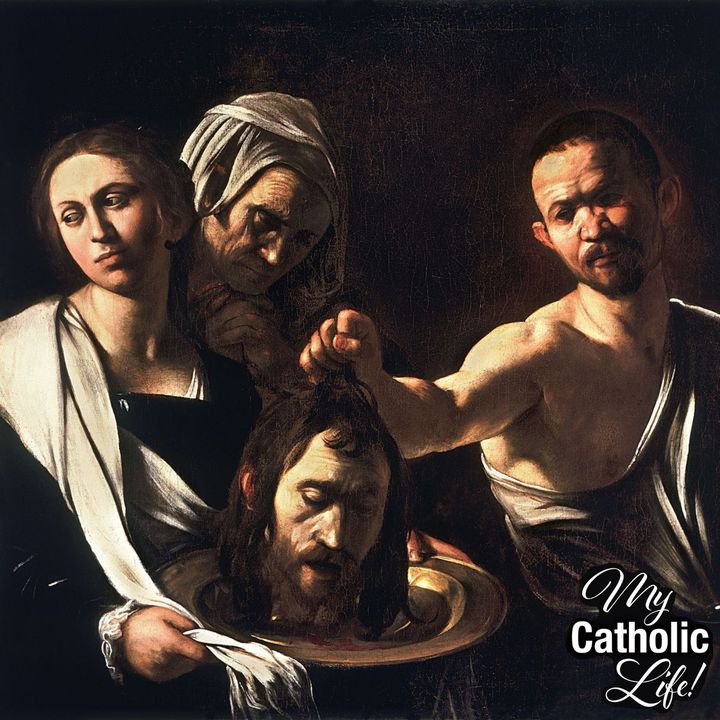
Dearest brothers and sisters in Christ, Today we come together to honour the Passion of St John the Baptist. The life of St. John the Baptist was indeed a very dramatic and eventful one. It definitely could never have been classed as boring or mundane that’s for sure!! Even in his mother’s womb, he leapt with joy when Mary greeted Elizabeth on the occasion of the Visitation. At John’s birth, there was an amazing occasion= that being of the choosing of his name which was that which restored the power of speech of his father Zechariah, and which also left the astonished local people wondering who he would he grow up to be. John’s appearances at the river Jordan preaching repentance and baptising people earned him the reputation of “the Baptist” and he was even the one who baptised our Lord Jesus himself in the River Jordan.
John indeed had an extremely illustrious ministry. Yet in essence, he was a prophet and his greatest action as a prophet was to point out to all that Jesus was indeed the Lamb of God. And as a prophet, he had fulfilled his ministry mission by proclaiming the ways of the Lord to all, and pointing out to them, their sin and their evil ways, and calling for their repentance and for their conversion. St. John the Baptist paid the consequence for pointing out Herod’s sin, as for doing this, he was captured and was imprisoned in Herod’s fortress and was beheaded. If the life of John the Baptist was dramatic and illustrious, his death was equally extremely dramatic, and it was also a death which was extremely gruesome in it’s nature.
John’s death by being beheaded, reveals the true character of the person of Herod, of Herodias, of her daughter, and also of all the guests that were present, as they did nothing and said nothing to stop the heinous act. For a great prophet like St. John the Baptist who had such a dramatic and illustrious life and ministry, his death was so humiliating, yet indeed, so terrible of nature.
Yet, today, we the Church come to honour him. Over and above all else, we honour him for his faithfulness to God and also for his great courage in the acceptance and fulfilment of his mission of being God’s prophet. Even for us, in all the drama of our lives, whether in times of spills and thrills, or whether in times of being mundane and monotonous, what counts for us will be our faithfulness to God. Because in the end, it will be the depth and strength of our faithfulness to God that mattered. This mattered to St. John the Baptist. It also matters to God and it should indeed be what matters to us!
The life and ministry of John the Baptist, and his willingness to die for his faith and devout service to God, is an excellent example of how our lives as Christians, and as children of God should be. There is much we can take from John the Baptist and can and should, live by such within our own lives.
Let us pray:
O God, who willed that St John the Baptist
should go ahead of Your Son
both in his birth and in his death,
grant that, as he died a Martyr for truth and justice,
we, too, may fight hard
for the confession of what You teach.
Through our Lord Jesus Christ, Your Son,
who lives and reigns with You
in the unity of the Holy Spirit,
one God, for ever and ever.
Amen.
The Fire of Faith and the Cost of Discipleship~The Rev Frank Bellino,OPI

Brothers and Sisters in Christ,
In the Gospel of Luke, Jesus delivers a message that can be startling to our modern ears: “I have come to cast fire upon the earth, and how I wish it were already kindled!” and “Do you think that I have come to give peace on earth? No, I tell you, but rather division.”
These words challenge the comfortable, domesticated image of Jesus we sometimes hold. This fire is not a fire of worldly war, but the transformative and purifying fire of the Holy Spirit. It is a fire that tests our faith, burns away our apathy, and demands a radical commitment to God’s kingdom. It is a divine fire meant to refine us, not to destroy us.
The division Jesus speaks of is a natural consequence of this fire. When we embrace the Gospel, we are choosing a path that may lead us away from the values and priorities of the world, and sometimes, even from those closest to us. Our faith can create a schism—not because we seek to divide, but because our convictions are so profound that they set us apart.
As Dominicans, our call is to be both bearers and kindlers of this fire. We are the Order of Preachers, commissioned to proclaim the Truth of the Gospel with our lives and our words. This is a profound and serious responsibility. We are called to be beacons of light in a world that can be steeped in darkness, and that often means standing for truth, justice, and love even when it is unpopular.
This commitment can, and often does, cause a quiet division. We may find ourselves at odds with our families, our colleagues, or our friends over matters of faith and morals. It is in these moments that we must remember the words of our Lord. Our primary allegiance is to Him. Our peace is not the absence of conflict, but the unwavering certainty of being in His presence.
This passage is a powerful reminder that our faith is not a passive or private affair. It is an active, public, and sometimes disruptive force that demands a choice. Let us pray for the courage to embrace this fire, to live our faith so authentically that it becomes a light for the world, and to find our ultimate peace in Christ alone.
The Feast of our Holy Father, St. Dominic~The Rev Frank Bellino,OPI
My dear brothers and sisters in Christ,
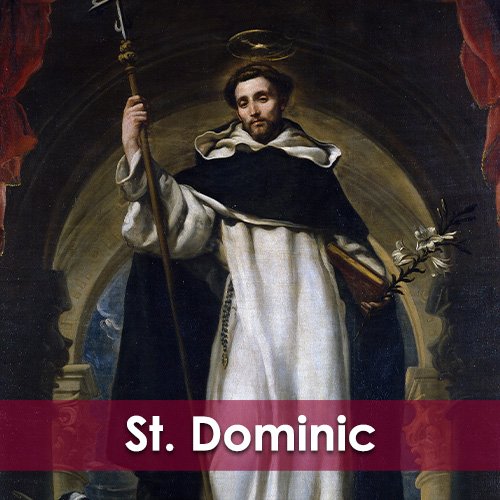
Today, as we gather, our hearts and minds turn to a towering figure in our Church’s history: Saint Dominic de Guzman, whose feast we celebrate. Born in 12th-century Spain, Dominic lived in a time of great intellectual ferment and spiritual challenge, much like our own. He was a man consumed by a singular passion: the salvation of souls and the proclamation of God’s truth. As we reflect on his life and virtues, we will discover that St. Dominic is not merely a historical figure, but a profound inspiration and a relevant guide for us in today’s complex world.
Who was this remarkable saint? Dominic was a canon regular who, on a journey through southern France, encountered the widespread Albigensian heresy. This dualistic belief system denied the goodness of creation, the Incarnation of Christ, and the value of human life. Dominic quickly realized that the prevailing methods of combating this error were ineffective. He saw that the heretics, though misguided, lived lives of apparent austerity, which contrasted sharply with the often-wealthy lifestyle of some Church leaders.
Inspired by the apostolic life, Dominic chose a radical path: to preach the Gospel with intellectual rigor, profound poverty, and fervent prayer. He gathered a small band of followers, and with papal approval, founded the Order of Preachers – the Dominicans – a mendicant order dedicated to Veritas, to Truth, and to the salvation of souls through preaching.
Let us consider some of the virtues that shone so brightly in St. Dominic, and how they speak to us today:
First, and perhaps most central, was his zeal for souls and his unwavering commitment to Truth. Dominic literally wept for sinners, driven by an ardent desire for everyone to know and embrace the saving truth of Christ. In an age rife with misinformation, relativism, and competing narratives, Dominic’s passion for Veritas is a powerful beacon. He understood that true freedom and authentic human flourishing are found only in the truth. Today, we are called to be seekers and proclaimers of truth, not with arrogance or condemnation, but with the same compassionate zeal that characterized Dominic, engaging in dialogue and persuasion, just as he did with the innkeeper who became his first convert.
Second, Dominic embodied profound poverty and simplicity. He sold his precious, hand-annotated books to feed the starving, famously declaring that he could not study on “dead skins” when people were dying of hunger. He traveled barefoot, embraced austerity, and insisted that his friars live simply, depending on God’s providence. In our consumer-driven society, where material possessions often define worth and happiness, Dominic’s radical detachment challenges us. His example reminds us that true richness lies not in what we accumulate, but in our relationship with God and our solidarity with the poor. His spirit calls us to examine our own priorities and to live with greater freedom from worldly attachments, advocating for justice for the marginalized, as Dominicans continue to do today on issues of economic inequality, racism, and human dignity.
Third, St. Dominic placed immense emphasis on study and intellectual formation. He established houses of study near the great universities of his time, like Paris and Bologna, ensuring that his preachers were not only fervent but also well-educated in theology and contemporary issues. In our rapidly changing and intellectually diverse world, an informed faith is more crucial than ever. Dominic teaches us that faith and reason are not opposed but balancing. We are called to deepen our understanding of our faith, to engage with the world’s questions, and to articulate the Gospel message intelligently and persuasively.
Finally, Dominic’s life was rooted in deep prayer and contemplation. He famously said he would “speak only of God or with God.” His active ministry flowed from his profound union with Christ in prayer. He spent countless hours in vigil, often weeping, interceding for the world. In our fast-paced, often noisy lives, Dominic reminds us of the indispensable need for quiet contemplation. It is in prayer that we encounter the living God, receive strength, and discern His will. From this wellspring of prayer, we are then empowered to “pass on the fruits of contemplation” (contemplata tradere) to a world desperately in need of Christ’s light.
My brothers and sisters, St. Dominic’s legacy is not confined to the pages of history. His virtues – zeal for truth, radical poverty, intellectual pursuit, and profound prayer – are not relics of a bygone era. They are urgent calls to action for us, here and now.
May we, like St. Dominic, be consumed by a passion for the salvation of souls, courageously proclaiming the truth of Christ in word and deed. May we embrace simplicity and work for justice in a world fractured by inequality. May we dedicate ourselves to lifelong learning, deepening our faith with both heart and mind. And above all, may our lives be rooted in constant prayer, so that, like Dominic, we may truly be “hounds of the Lord,” setting the world ablaze with the fire of God’s love.
St. Dominic, pray for us. Amen.
Stuff…and Nonesense~The Rev Frank Bellino,OPI

Today, our Gospel comes to us from Luke, chapter 12, verses 13 to 21, a passage we commonly known as the Parable of the Rich Fool.
The scene opens with a man in the crowd, interrupting Jesus’ teaching. What’s on his mind? Not a profound spiritual question, but a family dispute over money. “Teacher,” he says, almost demanding, “tell my brother to divide the inheritance with me.” Think about that for a moment. How often do we, too, approach God with our earthly concerns, our material desires, before we ever truly consider what He might genuinely desire for us?
Jesus, in His infinite wisdom, sees past the immediate request to the deeper spiritual complaint. He wisely refuses to be drawn into a worldly squabble, reminding the man, and us, “Man, who appointed me a judge or an arbiter between you?” Then, pivoting from that specific incident to a universal truth, He delivers a profound warning: “Watch out! Be on your guard against all kinds of greed; life does not consist in an abundance of possessions.”
This isn’t merely a warning against outright materialism, against being a collector. It’s caution against a far more subtle and pervasive mindset. It’s a call to vigilance, to be on our guard against the sinister creep of materialism that can subtly, almost invisibly, reorder our priorities. Here in 2025, we are immersed in a culture that incessantly whispers, and often shouts, the exact opposite message: “Life does consist in an abundance of possessions. Happiness is found in more, in newer, in shinier things.”
To truly drive this point home, Jesus tells the parable of the rich man. His land yields an abundant harvest—a clear blessing from God, let’s be clear. But how does this rich man respond to such a gift? His first thought, and indeed his only thought in the parable, is entirely self-centered: “What shall I do? I have no place to store my crops.” His solution is simple, logical, and entirely focused on one thing: accumulation. Tear down the old barns, build bigger ones, store all his surplus grain. And then comes the chilling self-congratulation, spoken to himself: “You have plenty of grain laid up for many years. Take life easy; eat, drink and be merry.”
Think about this man for a moment. He’s not depicted as overtly evil. He hasn’t stolen or defrauded anyone. He’s just a man who worked his land, and it prospered. Yet, Jesus calls him a “fool.” Why? Because in all his meticulous planning, in all his foresight regarding his earthly goods, he has completely forgotten the ultimate reality: the brevity and fragility of life, and the ultimate accountability to God. (I have never seen a U-Haul behind a hearse) He makes no mention of sharing his abundance, of using his blessing for the good of others, or even of acknowledging the divine source of his prosperity. His entire universe revolves around “I” and “my.”
In our own time, we see this played out in countless ways. The relentless pursuit of career advancement at all costs, the accumulation of designer goods, the pressure to always have the latest technology, the constant striving for a larger house or a more impressive car. We meticulously plan our retirements, our investments, our vacations – and to a degree, this is prudent. But like the rich fool, do we sometimes plan as if life on this earth is an end in itself? Do we accumulate, genuinely believing that our security and happiness can be found solely in what we possess?
Then comes the stark revelation, the punch that cuts through all his grand plans: “But God said to him, ‘You fool! This very night your life will be demanded from you. Then who will get what you have prepared for yourself?’” All his careful planning, all his grand intentions for a life of ease, are instantly, utterly, rendered meaningless. His wealth, so painstakingly gathered, is now utterly useless to him.
This, my friends, is the timeless truth that cuts through the noise of 2025. We live in an age of unprecedented material comfort for many, yet puzzlingly, also an age of profound anxiety. We are constantly bombarded with messages that equate our worth with our net worth, our happiness with our possessions. But Jesus reminds us, with uncompromising clarity, that this is a dangerous illusion. Our lives are not our own; our time on this earth is a gift, and it is finite.
The parable concludes with the Lord’s powerful summary: “This is how it will be with whoever stores up things for themselves but is not rich toward God.”
So, what does it mean, then, to be “rich toward God”? It means understanding that true wealth isn’t measured in earthly currency, but in spiritual currency. It means recognizing that everything we have—our talents, our resources, our time—is a gift to be stewarded, not hoarded. It means using our blessings to serve God and neighbor, to truly build up His kingdom here on earth. It means prioritizing compassion over consumption, generosity over greed, and eternal values over ephemeral trends.
As Dominicans, we are called to contemplate the truth and to preach it. The truth revealed in this parable is challenging, yes, but profoundly liberating. It frees us from the tyranny of endless acquisition and the gnawing fear of not having enough. It calls us, each one of us, to examine our hearts: What are we truly building our lives upon? Is it the shifting sands of material possessions, or the firm foundation of faith and good works?
Let us pray, then, for the grace to be truly rich toward God. To use the gifts, He has so abundantly given us, not for our own selfish indulgence, but for His glory and for the good of our brothers and sisters. For in so doing, we lay up treasures in heaven, where neither moth nor rust destroys, and where thieves do not break in and steal. And that, my friends, is the only true and lasting security.
Amen.
Choosing the Right Priorities: Memorial of Sts Martha, Mary and Lazarus~The Very Rev Lady Sherwood,OPI
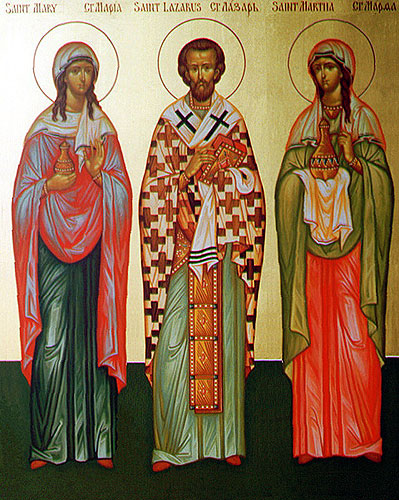
Today my brothers and sisters in Christ, we come together as the church to commemorate the memorials of three siblings, these being Sts Martha, Mary and Lazarus.
Mary, Martha, and Lazarus were very close friends with our Lord Jesus and were also his followers. Together they hosted Jesus in their home on more than one occasion. Yet, on one such visit from Jesus, they Martha and Mary chose two very different actions, and the way that Jesus reacted to their choices is a very valuable lesson for us today. Let’s review the story (Luke 10:38-42):
Martha is worried
Martha was rushing around here and there, serving and doing her best to make everything good enough for their beloved friend and guest. And where was Mary when Martha needed a hand? She chose to sit at Jesus’ feet, listening to his words as He spoke.
It’s pretty easy to imagine how that made Martha feel. I can imagine she felt very Irritated, and deeply frustrated, perhaps even resentful. Why should she be doing all the work? Wasn’t it only right for Mary to be helping out also? In fact, Martha felt so justified in her indignation that she went and talked to Jesus about it. “Lord, do You not care that my sister has left me to serve alone? Therefore tell her to help me,” she said to Him.
But, instead of backing her up in her demand, Jesus rebuked her! “Martha, Martha, you are worried and troubled about many things. But one thing is needed, and Mary has chosen that good part, which will not be taken away from her.”
This must have felt like a slap in the face for Martha from her dearest friend and Lord. Here she was, doing everything in her power to be hospitable and make it good for him whilst Mary just sits there, and what she was doing was the right thing?
Does this situation Sound familiar at all?
Getting our priorities right
It can become all too easy for us to get totally wrapped up in all the things we need to do and the things that need to be accomplished that we lose sight of what the most important thing actually is. Isn’t it possible that we can get too wrapped up in the cares of life? Jesus makes this even more clear in the parable He told about the sower. “He who received seed among the thorns is he who hears the word, and the cares of this world and the deceitfulness of riches choke the word, and he becomes unfruitful.” Matthew 13:22.
The highest priority in our lives needs to be choosing the good part, as Mary did: to learn of Jesus so that we can become like Him. It’s a love and devotion to Him that makes everything else of secondary importance. It is to seek the riches of wisdom and understanding that are in Him. If we don’t do this, how can we follow Him, how can we be His disciples? A disciple learns of the Master.
This is not an excuse to be lazy, and not take responsibility for anything. That is another trap entirely. We are to be doers of the Word, and not hearers only! (James 1:22) But what we do has to be led by the Spirit, whose voice we learn to hear by choosing the good part. There is no blessing in running our own lives based on our human understanding of what is important. Mary understood that she needed to learn more of her Master and to seek the things that have eternal value. It’s when we do that that we can be a blessing, because then all of our works are Spirit-driven. Love causes us to listen, to learn, and to keep His commandments. (1 John 5:3)
We need to take heed to yourself.
We can be in severe danger of falling into the same trap that Martha fell into. We can be so troubled by what we perceive as negative behaviour in other people, and become so self-righteous in our own good works that we start to judge others for not doing the same as what we are doing. Satan is the one who is behind these kinds of thoughts. He whispers to us lies and accusations, and deceitfulness, trying to create as much conflict and strife for us as he possibly can muster up. His only aim is to lead people as far in the opposite direction of doing good works, as he possibly can – his mission is to lead us away from our Lord Jesus. To listen to him and agree with satan leads to all kinds of unrest and trouble and worry. We need to slam the door on his deceitfulness!
“Take heed to yourself and to the doctrine. Continue in them, for in doing this you will save both yourself and those who hear you,” it’s written in 1 Timothy 4:16. Only that will do us any good in life. The wrong choice that Martha made wasn’t that she was serving and doing good. It was that in her work she had demands and criticism on Mary, rather than doing what Jesus taught herself! If we are living before the face of God, we have no cause to look around at what others are doing and feel that we have a right to pass judgement on them. We live in obedience to the Spirit’s promptings in our own lives, and what others do is none of our business. We don’t know how He is leading others.
Let’s rise above all the noise and all the unholy pursuits of this world and seek those things which have true eternal value. Like Mary, let’s find that fellowship with our Lord and Master and with those who follow Him so that we can learn of Him and become like Him. Through the Word of God, fellowship, and prayer we become rich in our spirit, and God will give us everything we need in abundance.
“Finally, dearest brethren, whatever things are true, whatever things are noble, whatever things are just, whatever things are pure, whatever things are lovely, whatever things are of good report, if there is any virtue and if there is anything praiseworthy—meditate on these things.” Philippians 4:8.
Let us pray:
Saints Martha, Mary, and Lazarus, you were close friends of Jesus and welcomed him into your home. Please pray for us, that we may grow in faith, hope, and love, and that we may be open to Jesus’ presence in our lives. May we be inspired by your example to serve others, to listen to God’s ord, and to experience the joy of spiritual renewal.
Amen.”
Just Ask?~The Rev Frank Bellino,OPI

Grace, mercy, and peace be with you all, from God our Father and the Lord Jesus Christ.
Today, as we gather for this 17th Sunday in Ordinary Time, our readings invite us into a profound reflection on prayer, persistence, and the boundless generosity of our God. We hear the familiar story of Abraham bargaining with God in Genesis, the spiritual liberation recounted in Colossians, and most powerfully, Jesus teaching his disciples how to pray in Luke’s Gospel. As your Dominican priest, a son of St. Dominic, who himself was steeped in prayer and preaching, these readings strike deeply at the heart of our spiritual lives.
But let’s be honest. For many of us, hearing these ancient texts might lead to a natural question: “What does this mean for us, some 2,000 years after it was written? How does this apply to my life, right here, right now, in San Antonio, Texas, in 2025?”
Let’s begin with Luke’s Gospel. The disciples ask Jesus, “Lord, teach us to pray.” And Jesus gives them what we now call the Our Father. This isn’t just a formula; it’s a blueprint for relationship. He then tells them parables – the persistent friend knocking at midnight, and the father who gives good gifts to his children. “Ask and you will receive; seek and you will find; knock and the door will be opened to you.”
This teaching on prayer isn’t about manipulating God, or about God being reluctant. Rather, it reveals the nature of a loving Father who wants to give us good things. The persistence isn’t for God’s benefit, but for ours. It trains us in humility, in dependence, in faith. It teaches us to discern what is truly good, and to trust that God’s answer is always for our ultimate well-being, even if it’s not exactly what we initially asked for.
Consider Abraham, boldly negotiating with God for the righteous in Sodom. This is not irreverence; it is profound intimacy. Abraham knows God’s justice, but he also trusts in God’s mercy and willingness to listen to the cries of His servant. This same God, the God of Abraham, is the God who listens to us, His children. This ancient story teaches us that our prayers, even when they seem audacious, are welcomed by a God who desires conversation and relationship.
And then, Colossians reminds us that we have been “buried with him in baptism, in which you were also raised with him through faith in the working of God, who raised him from the dead.” It declares, “and even when you were dead in transgressions… he brought you to life with him, having forgiven us all our transgressions.” This is the ultimate answer to our prayers, the ultimate good gift: redemption, forgiveness, and new life in Christ. This radical act of God’s love underpins all our petitions; it reminds us that we approach a God who has already given us everything.
So, what does this mean for us, here in 2025?
First, in a society inundated with instant gratification, these readings call us to cultivate the virtue of patience and persistence in our spiritual lives. We live in a world of quick fixes, where we expect immediate responses to our texts, emails, and online orders. Prayer is not a vending machine. It’s a relationship that deepens over time, through consistent effort, through showing up even when we don’t feel like it, and through trusting in God’s timing, not our own. Are we as persistent in our prayer life as we are in pursuing our earthly desires? Do we give God the same time and attention we give our social media feeds?
Second, these readings challenge us to re-examine the content of our prayers. Jesus teaches us to pray for daily bread, for forgiveness, for deliverance from evil, and for the coming of God’s Kingdom. This is not just about personal needs, but about alignment with God’s will, about seeking justice, mercy, and the spread of His reign on earth. In a world often marked by self-interest and division, our prayers should be expansive, embracing our families, our community, our nation, and indeed, the entire world. Do we pray for the conversion of hearts, for an end to violence, for peace in our city and across the globe, for those struggling with mental health, for the marginalized and the forgotten?
Third, these passages remind us of God’s unfathomable generosity in an often-cynical world. We are living in times of economic uncertainty, social unrest, and rapid change. It’s easy to become disheartened, to feel that resources are scarce, or that goodwill is in short supply. Yet, our God is the God of superabundance. He gives us the Holy Spirit, the ultimate good gift. He has already given us His Son. If God has given us these immeasurable gifts, how much more will He listen to our earnest petitions for what is good and necessary? This truth should infuse our lives with hope and inspire us to be generous ourselves, reflecting God’s giving nature to those around us.
As a community, St. Michael’s, let us take these lessons to heart. Let us pray with persistence, not as if we are twisting God’s arm, but as a demonstration of our faith and trust. Let us broaden the scope of our prayers beyond ourselves, interceding for a world desperately in need of God’s light and love. And let us always remember the boundless generosity of our Father, who delights in giving good gifts to His children.
For when we ask, seek, and knock with a sincere heart, God always answers, always opens, always gives. And the greatest gift He gives us is more of Himself.
May God bless you all.
In the name of the Father, and of the Son, and of the Holy Spirit. Amen.
The Feast of St Mary Magdalene~The Rev Frank Bellino,OPI

My dear brothers and sisters in Christ,
Today, as we gather to celebrate the Feast of Saint Mary Magdalene, my heart is particularly full. For those of us in The Order of Preachers Independent, she is our beloved patron saint, a beacon of faith and perseverance. And for me, personally, Mary Magdalene has been a profound inspiration, long before I ever joined this holy order.
In today’s Gospel, we hear of Mary Magdalene, a woman often misunderstood yet profoundly loved by Christ. Her story is one of unwavering devotion, a story that unfortunately, for centuries, was obscured by a grievous error. For too long, a wrongful label, tragically perpetuated by a Pope, cast her as a “sex worker.” This singular, incorrect designation fueled wild rumors and misconceptions, diminishing her true significance in the early Church. It’s crucial for us to understand that this was a human mistake, a historical misattribution that does not align with the scriptural accounts of her life. Mary Magdalene was not the sinful woman; she was a woman of means who supported Jesus and his disciples, a devoted follower who stood at the foot of the cross when others fled.
It is true that Mary Magdalene, the one depicted in the Gospels, whom we honor today. She is rightly celebrated as the “Apostle to the Apostles,” a title she earned through her extraordinary fidelity and courage. While the male disciples were still grappling with fear and confusion, Mary Magdalene, driven by an unyielding love, did not sleep in. After the horror of the crucifixion, as soon as it was permissible, she went to the tomb. Imagine her grief, her broken heart, yet her determination to show one last act of devotion to her Lord.
She probably faced ridicule from the Roman centurions guarding the tomb. Perhaps they scoffed at her tear-stained face, her solitary vigil. But something, or someone—the Holy Spirit—was urging her to make history. And she said “yes.” She said “yes” to that inner prompting, “yes” to her deep love, “yes” to the unknown.
And because of that “yes,” because of her unwavering presence at the tomb, she was granted the most sublime privilege: she was the very first person to see the Risen Christ! Not Peter, not John, but Mary Magdalene. And not only did she witness the Resurrection, but Christ himself commissioned her to spread the good news. She became the very first evangelist, the first to proclaim, “I have seen the Lord!” She ran back to the disciples, her heart bursting with joy, to share the incredible, life-altering news.
What an example she is for us, especially for us Dominicans, members of The Order of Preachers Independent. Our calling is to preach the truth, to seek out those who are marginalized or misunderstood, and to proclaim the Good News of Jesus Christ with courage and conviction. Her importance to our church, The Order of Preachers Independent, lies precisely in this apostolic zeal and her unwavering pursuit of truth amidst misrepresentation. She embodies the spirit of inquiry and the courage to challenge falsehoods, which are hallmarks of our Dominican charism. Just as she sought the Risen Christ and proclaimed His truth against all odds, we are called to seek and preach the Truth of the Gospel, particularly to those who have been overlooked or misrepresented. Mary Magdalene teaches us that true apostleship isn’t about status or gender, but about a heart aflame with love for Christ, a willingness to go where others fear to tread, and the courage to speak the truth, even when it challenges prevailing narratives.
Let us ask Saint Mary Magdalene, the Apostle to the Apostles, our patron, to intercede for us. May her steadfast faith inspire us to seek Christ with an unquenchable desire, to embrace our own call to evangelization, and to courageously proclaim His resurrection in our words and deeds. May we, like her, always say “yes” to the whisper of the Spirit, making history in our own small ways for the glory of God.
Amen.
Who Ya Hangin’ With?~The Rt Rev Michael Beckett,OPI

Y’all………..Here lately there has been a lot of folks saying things like, “Play stupid games, win stupid prizes,” and “Hang with the dogs, yer gonna get fleas.” And ya know, that sentiment has been around since time began. Long about 406 BC, Euripides said, “Every man is like the company he is wont to keep.” Aesop, that teller of fantastic fables said, “A man is known by the company he keeps.” And from the Book of Proverbs we have, “He that walketh with wise [men] shall be wise. (Prov 13:20). And then, from good ol’ Paul’s first letter to the Corinthians, “Do not be deceived: ‘Bad company corrupts good morals.” (1 Cor. 15:33)
So who ya hangin’ with? I know in my heart of hearts that all of us want to be accepted by those around us. It’s just who we are, and we are a social bunch. I figure that’s why the Social Media industry is a multi-billion dollar thing. But how far are we willing to go to be a part of this or that group? Whatcha gotta do to be accepted into the “it” group, the most popular clique?
And maybe the group said to you, “Well, this is what you gotta do to be accepted,” and gave you a list of things you needed to work on. And, surprising as it may be, even God is like that. It’s a pretty rare thing for me to skip the Gospel reading appointed for the day and jump into the Psalm, but today we are experiencing that rare thing and so here we are. Today we get to get up close and personal with Psalm 15, written by everyone’s favorite shepherd turned king, David.
A psalm of David
LORD, who may abide in your tent?*
Who may dwell on your holy mountain?*
Whoever walks without blame,
doing what is right, speaking truth from the heart;
Who does not slander with his tongue, does no harm to a friend, never defames a neighbor;
Who disdains the wicked, but honors those who fear the LORD;
Who keeps an oath despite the cost,
Who lends no money at interest, accepts no bribe against the innocent. Whoever acts like this shall never be shaken.
It takes no brilliant mind (which is a good thing, coz we know I ain’t that smart) to figure out what good ol’ Dave is sayin’ to us here. If you wanna hang out in God’s tent/house/mansion/before the throne, then you gotta “straighten up and fly right,” as my momma used to say. David explores the qualities of someone worthy to dwell in God’s presence. He outlines a path of integrity, truthfulness, and righteous conduct, emphasizing actions like speaking truthfully, treating neighbors well, and upholding commitments. Ultimately, he suggests that those who live by these principles will be steadfast and secure in their relationship with God, not easily moved by life’s challenges.
From the Hebrew scriptures to the Epistles we are told, over and over again, just how we should conduct ourselves. We are taught in Paul’s letter to the Galatians that things like love, joy, peace, patience, kindness, goodness, faithfulness, gentleness, and self-control are the fruits of the Spirit (Galatians 5:22-23).
And from his letter to the Ephesians: Brothers and sisters: Do not grieve the Holy Spirit of God, with which you were sealed for the day of redemption. All bitterness, fury, anger, shouting, and reviling must be removed from you, along with all malice.
And be kind to one another, compassionate, forgiving one another as God has forgiven you in Christ. So be imitators of God, as beloved children, and live in love, as Christ loved us and handed himself over for us as a sacrificial offering to God for a fragrant aroma. (Eph 4:30—5:2)
I know, believe me do I know, in this age and period in our lives, how very difficult this is. But we must persevere. In the past few weeks, how many of us have said/posted/read/agreed with things that would most definitely not be considered Christ-like? How many of us have let ourselves believe political statements that get in the way of acting like the “little Christ” we are called to be? How many of us support, often vehemently, opinions and people are the antithesis of everything a Christian is called to be? How many of us hang out with those kinda people?
It is up to us to see the Jesus in everyone, regardless of political belief, race, creed, color, sexual orientation, nationality, legal status, or anything thing else that can be used to divide us. It is our job/duty/responsibility to remember that we are all of us HIS people, the sheep of HIS pasture, and we have far more in common than we do the things that divide us, if we truly identify as HIS. We are to remain focused on the one thing that really matters in this world and the next: Spreading and sharing the love of and for our Lord and Savior Jesus Christ. We are called to love and to serve the Lord with gladness and singleness of heart. We are called to care of each other, regardless of our politics. We are commanded to ‘bless those who persecute us’ and we are called to ‘pray for our enemies.’ We are called to feed the hungry, clothe the naked, house the homeless. (Matthew 25:31-46).
It’s been said, “When people show you who they are, believe them,” and “What you see is what you get.”
What do folks see when they look at you? Who are you showing folks that you are? And so, I gotta ask, who ya hangin’ with?
Amen
Bein’ Neighborly~The Rev Frank Bellino,OPI

Today’s Gospel reading, Luke 10:25-37, presents us with one of the most powerful and
enduring parables Jesus ever told: the story of the Good Samaritan. As we reflect on
this passage here at St. Michael’s Catholic Parish, a part of the Unified Old Catholic
Church, let us consider how this ancient narrative speaks profoundly to our lives in
today’s complex world.
The passage begins with a seemingly innocent question from a lawyer: “Teacher, what
shall I do to inherit eternal life?” It’s a question many of us might ask, seeking the surest
path to salvation. Jesus, ever the master teacher, turns the question back to the lawyer,
“What is written in the law? How do you read?” The lawyer correctly answers, quoting
Deuteronomy and Leviticus: “You shall love the Lord your God with all your heart, and
with all your soul, and with all your strength, and with all your mind; and your neighbor
as yourself.”
“You have answered correctly,” Jesus affirms. “Do this, and you will live.” But the lawyer,
perhaps wanting to justify himself, or to find a loophole, presses further: “And who is my
neighbor?”
This is the pivotal question, and it’s as relevant today as it was two thousand years ago.
In a world increasingly defined by divisions – political, social, economic, racial, and
religious – the question of “who is my neighbor?” is at the forefront of many hearts. Do
we limit our definition of “neighbor” to those who look like us, think like us, or worship
like us?
To answer this, Jesus tells the parable. A man is going down from Jerusalem to Jericho,
a dangerous road prone to robbers. He is attacked, stripped, beaten, and left half-dead.
Along comes a priest, a man of God, whose duty it would seem, is to show compassion.
But he passes by on the other side. Then a Levite, another religious official, also passes
by on the other side. Perhaps they feared ritual impurity, or perhaps they simply didn’t
want to get involved. Their priorities, whatever they were, overshadowed the immediate
human need before them.
But then, a Samaritan appears. Now, it’s crucial to remember the context: Samaritans
and Jews were bitter enemies. They despised each other. Yet, it is this Samaritan, this
outsider, this “other,” who sees the wounded man and is “moved with compassion.” He
doesn’t ask about man’s religion, his ethnicity, or his social status. He doesn’t debate
whether the man is truly his “neighbor.” He simply acts.
He bandages the man’s wounds, pouring oil and wine on them – acts of healing and
comfort. He puts the man on his own animal, takes him to an inn, and cares for him.
The next day, he gives the innkeeper two denarii, a significant sum, and tells him, “Take
care of him; and whatever more you spend, I will repay you when I come back.”
After telling this story, Jesus asks the lawyer, “Which of these three, do you think,
proved neighbor to the man who fell among robbers?” The lawyer, unable to even utter
the word “Samaritan,” admits, “The one who showed mercy to him.” And Jesus’ final
instruction echoes through the ages: “Go and do likewise.”
What does this profound story tell us about today’s world?
First, it redefines “neighbor.” Our neighbor is not just the person next door, or in our
pew, or in our social circle. Our neighbor is anyone, anywhere, who is in need. It
challenges us to look beyond the labels, the prejudices, and the divisions that humanity
constantly creates. In a world of increasing global connectivity, our “neighborhood” has
expanded dramatically. News of suffering, injustice, and poverty reaches us from every
corner of the globe. The parable compels us to consider how we respond to these
distant cries, as well as to the needs right in front of us.
Second, it calls us to radical compassion. The Samaritan didn’t just feel bad for the
man; he acted. Compassion moved him to inconvenience himself, to spend his
resources, and to risk his own safety. In a society that can often encourage
individualism and self-preservation, Jesus calls us to a selfless love that prioritizes the
well-being of others, even strangers, even enemies. This is particularly poignant today,
when many are quick to judge or dismiss those in need, rather than extending a helping
hand.
Third, it challenges our own prejudices. The priest and the Levite, figures of religious
authority, failed. The despised Samaritan excelled. This reminds us that true
righteousness is not found in religious titles, or in strict adherence to ritual, but in the
practical outworking of love and mercy. It pushes us to confront our own biases and ask
ourselves if we, like the priest and Levite, are sometimes passing by those in need
because of ingrained prejudices or a fear of stepping out of our comfort zones.
Finally, “Go and do likewise” is a direct and unambiguous command. It is not an
invitation for theological debate, but a call to action. It means getting involved, reaching
out, and actively participating in alleviating suffering and bringing healing to a broken
world. As followers of Christ, this parable
is our marching orders. It means volunteering, donating, advocating for justice, and
simply being present for those who are hurting.
My brothers and sisters, in a world often marked by indifference, division, and
selfishness, the parable of the Good Samaritan is a beacon of hope and a powerful
challenge. May we always remember that our “neighbor” is anyone in need, and may
we have the courage, the compassion, and the unwavering commitment to “go and do
likewise.”
Amen.
 The Order of Preachers, Independent
You must be logged in to post a comment.