
Category: Sermon

Gifts

What you are is God’s gift to you.
What you become is your gift to God.
During this time of the year, many of our thoughts turn to gifts: giving and receiving, what we want to give, what we want to receive, what will please those we love, the shopping, the ordering, the wrapping, the general hustle and bustle of the Christmas season centering around gifts ad infinitum, donating to the people with the red kettles and bells so the less fortunate can have gifts…..
And then there’s the practice of ‘re-gifting,’ passing along that unwanted or unusable gift that we were given, to someone else, so that they will have SOMETHING, and so that they too, can possibly pass that pink and orange and green plaid scarf along, re-gifting it themselves to someone else who won’t use it either….and sometimes by some freak chance that unwanted item comes back to us several years later….and not much too worse for the wear…. And is re-gifting, as amusing (and cheap) as it may seem, necessarily a bad thing?
Why all this focus on gift-giving and gift-receiving at this time of year? The union of Christmas and gift giving was a gradual one; actually, the full story of the bright packages beneath the tree, like most of our Christmas customs, begins in the days before the birth of Christ. In ancient Rome, gifts were exchanged during the New Year’s celebrations. At first these gifts were simple, such as a few twigs from a sacred grove and small items of food. Many gifts were in the form of vegetables in honor of the fertility goddess Strenia. During the Northern European Yule, (yep, the yuletide season is a pagan thing) fertility was celebrated with gifts made of wheat products, such as bread and alcohol.
Like many of the old and pagan customs, exchanging gifts was difficult to get rid of even as Christianity spread and gained official status. Early church leaders tried to outlaw the custom, but the people cherished it too much to let it go. St. John Chrysostom urged no compromise with heathen abominations, but he, too, failed in this tenacity of hanging on to the tradition of gift giving. Since there was no general agreement about the exact date of the birth of Jesus, it must have seemed helpful to have it supersede the Saturnalia, so the rebirth of the sun became instead the birth of the Son of God, and the church leaders looked for a Christian justification for the practice of all this gift giving. This justification was found in the Magi’s act of bearing gifts to the infant Jesus, and in the concept that Christ was a gift from God to the world, bringing in turn the gift of redemption and everlasting life.
What you are is God’s gift to you.
What you become is your gift to God.
Wikipedia defines a gift as the transfer of something without the expectation of receiving something in return. Although gift-giving might involve an expectation of reciprocity, a gift is meant to be free. By extension the term “gift” can refer to anything that makes the other happier or less sad, especially as a favor, including forgiveness and kindness.
God’s gifts to us are free and clear. He has given us the gift of His Son, Our Lord and Savior Jesus Christ. He has given us the gift of eternal life: “For the wages of sin is death, but the gift of God is eternal life in Christ Jesus our Lord.” Romans 6:23 (NIV); The gift of salvation: “For it is by grace you have been saved, through faith—and this is not from yourselves, it is the gift of God.” Ephesians 2:8 (NIV); And the gifts that are unique to each of us: “We each of us have our own individual gifts: But each of you has your own gift from God; one has this gift, another has that.” 1Corinthians 7:7 (NIV)
Besides the obvious gift of His Son, and the forgiveness that we receive through Him whom we receive by faith, what other gifts has God given specifically to you? What talents have you received? What blessings have been given to you?
We learn about the 7 Gifts of the Spirit in Isaiah 11:2-3: “2 The Spirit of the LORD will rest on him— the Spirit of wisdom and of understanding, the Spirit of counsel and of might, the Spirit of the knowledge and fear of the LORD— 3 and he will delight in the fear of the LORD. He will not judge by what he sees with his eyes, or decide by what he hears with his ears;” (NIV)
And more importantly, what are you doing with those gifts? What are you giving back to God? What are you “becoming” as you use your gifts and talents? Which of the gifts that you have been given are you “regifting?” In other words, when we’ve received a gift from God, do we share that gift with others? Do we “regift?” We are told in 1 Peter 4:10, “Each one should use whatever gift he has received to serve others, faithfully administering God’s grace in its various forms.” (NIV) Jesus himself addresses this very thing in the parable of the talents in Matthew 25:14-30. By using our gifts, they multiply and we bring others to know God, and by recognizing what we have been given and using them for God’s glory, we are giving back to God.
What is the most precious thing we can give to God? The most precious gift we can give is what God wants the most. God wants us to make the fervent attempt to repent, get right with Him, and not lead a double life, trying to follow two contradictory paths, but living our lives according to His will. God simply wants us to give ourselves to Him. This is the best gift we can give! Our gift to Him is how we respond to the gifts He has given us which are the gifts of life and of grace. We can best do this when we are headed in His direction, following His precepts with a grateful, willing heart and mindset, and by striving to be the best that we can be by becoming what it is that He wants us to be.
Barbara Streisand sings in “The Best Gift:”
The best gift
That I ever got
Didn’t really weigh a lot
It didn’t have a ribbon ’round
And it sometimes made a terrible sound
The best of all it seems to me
It wasn’t ‘neath the Christmas tree
And yet, I guess I’d have to say
That it made all the other presents twice as gay
The best gift that I’ve ever known
I’d always wanted most to own
Yet in my dreams of sugar and spice
I never thought it could be so nice
The best gift that I ever get
Was sometimes dry and sometimes wet
Was usually pink but oftentimes red
As it lay so innocently in it’s bed
The best gift of the year to me
The one I hold most dear to me
A gift that simply drove me wild
Was a tiny new born child…
As we celebrate the birth of THE tiny newborn Child, God’s greatest and best Gift to us, let us strive to make ourselves the best gift we can give to others, and to God. Amen.

Patience is a Virtue, Advent II ~ Rev. Archdeacon Sr. Dollie Wilkinson, OPI

Patience-the capacity to accept or tolerate delay, trouble, or suffering without getting angry or upset.
After a recent conversation with my granddaughter, where she declared, “I get Christmas first!”, because of course being only three, she could not imagine being patient in waiting for Christmas. To the very young, the actual word “patience”, has very little meaning. But in 2 Peter 3:8-15a, we are cautioned to do just that.
“But do not ignore this one fact, beloved, that with the Lord one day is like a thousand years, and a thousand years are like one day. The Lord is not slow about His promise, as some think of slowness, but is patient with you, not wanting any to perish, but all to come to repentance. But the day of the Lord will come like a thief, and then the heavens will pass away with a loud noise, and the elements will be dissolved with fire, and the earth and everything that is done on it will be disclosed. Since all these things are to be dissolved in this way, what sort of persons ought you to be in leading lives of holiness and godliness, waiting for and hastening the coming of the day of God, because of which the heavens will be set ablaze and dissolved, and the elements will melt with fire? But, in accordance with His promise, we wait for new heavens and a new earth, where righteousness is at home. Therefore, beloved, while you are waiting for these things, strive to be found by Him at peace, without spot or blemish; and regard the patience of our Lord as salvation. So also our beloved brother Paul wrote to you according to the wisdom given him.”
Here we are cautioned to be patient, in waiting on the Lord’s mercy and favor. Just as the Lord is patient with us, so too should we be patient in waiting on His promises. How often have we prayed, expecting a quick answer to what seems to us an imminent dilemma? But as Peter states, “ with the Lord one day is like a thousand years, and a thousand years are like one day”. Meaning, what to us may seem like a dire concern, to the Lord, it is crucial only if it aides in bringing His children to salvation.
So many times I have heard the trite saying, “Patience is a virtue”. But what does this mean, and where does this saying come from?
“The first known publishing of the quote “Patiences is a virtue” comes from the poem “Piers Plowman” written between the years 1360 and 1387. Typical of texts from the 14th century, authorship can be debated though literary historians normally attribute most of the text to William Langland. However, there are multiple versions of this poem written at different times with sections believed to be authored by different, unknown people. “Piers Plowman” is a poem about a man, the poet and first narrator, in search of Catholicism and faith according to medieval standards. He does this by having dream visions after falling asleep. The poem is allegorical, meaning the characters are symbolic and also satirical. However, the allegory isn’t vague or abstract. The various characters include Truth (God), Wrong (Devil), Holy Church, Thought, Wit, Study, Conscience, Liar, Reason, Dowel (do well), Dobet (do better) and Dobest (do best) and others, including the seven deadly sins. Later, the characters are lead on a quest by Piers Plowman who also becomes the narrator. The Plowman is chosen as the guide due to his seemingly innocent and truthful nature.”
So in the allegorical poem by William Langland, we learn patience is a critical virtue,
highly prized by our Lord, “ regard the patience of our Lord as salvation.” And thus the key to our salvation. But in our fast paced, hurry up world, how can we practice patience? Are we just like the child, eager for Christmas day, the frenzied opening of presents? Or can we do as our Father commands us, practicing patience, knowing the ultimate gift isn’t found under an evergreen tree. But in the patient, loving presence of our heavenly Father. And is this not the bestest gift of all?!!!
He Sees You When You’re Sleeping… 1 Advent ~ Br. Michael Marshall, Novice

Every year before Midnight Mass on Christmas Eve, I sit in the pew waiting for the excitement of the birth of the Christ Child. The anticipation builds until the fanfare of trumpets announces the great “Joy to the World, our Savior’s come!” the great climax of the Advent Season. But, what IS Advent? What does it mean?
The Season of Advent, the 4 week period before Christmas, is a season of preparation, and the beginning of the church year. Each of the four Sundays mark a step closer to the Christmas celebration. Many people think of Advent as the four weeks of countdown, during which a candle is lit on the Advent wreath each Sunday, a purple candle representing each Sunday until the Third Sunday, which is known as Gaudate Sunday. But Advent is SO much more than that!
The Advent season is a time of examining how we have been living as a follower of Jesus. As well, it is a time of reflection. I have learned that Advent is a time of charity and love. I do not mean we just throw a couple quarters in the Salvation Army kettles as we pass by when Christmas shopping because we feel guilty if we do not, but it is a season of giving of ourselves. Christ has told us that we are called to love our neighbor unconditionally. Don’t you think the beginning of the church year is a good place to start doing so?
In The Gospel reading for today, Jesus is sharing with his disciples that they will not know when the Lord will return. “…you do not know when the Lord of the house is coming, whether in the evening, or at midnight, or at cockcrow, or in the morning.” (Mark 13:35) One might wonder why the Gospel for this Sunday was chosen, since it refers to the Second Coming instead of the birth of the Savior. The message of Advent is not just about being ready for that one time and final event, but is also about always being ready when called upon in time of need.
As children, this message was shown to us in a different way. Throughout the “commercialized” Christmas season, which has, in many ways, seemingly replaced Advent, there are many carols and other songs about Christmas. When we read the Gospel for today, we find something very familiar to one of the most classic children’s Christmas songs, “Santa’s Coming to Town.”
“He sees you when you’re sleeping
He knows when you’re awake
He knows if you’ve been good or bad
So be good for goodness sake!
Ohh! You better watch out!”
Yes, the song is about a jolly, chubby old man in a red suit, but the message of Jesus is definitely in the song. Not everyone has children, but all of us once were, and we can be children at heart. We KNOW this song! We can think of this catchy song to remind us of what Jesus is saying what we should be doing during the Advent season. Let us remember that that we do “not know when the Lord of the house is coming,” and that we should always and in every way, be prepared for the coming of the king, far before we sing “Joy to the World” on Christmas morning.
Good Sheep and Baaahd Goats???
Ezekiel 34:11-16, 20-24
34:11 For thus says the Lord GOD: I myself will search for my sheep, and will seek them out. 12 As shepherds seek out their flocks when they are among their scattered sheep, so I will seek out my sheep. I will rescue them from all the places to which they have been scattered on a day of clouds and thick darkness. 13 I will bring them out from the peoples and gather them from the countries, and will bring them into their own land; and I will feed them on the mountains of Israel, by the watercourses, and in all the inhabited parts of the land. 14 I will feed them with good pasture, and the mountain heights of Israel shall be their pasture; there they shall lie down in good grazing land, and they shall feed on rich pasture on the mountains of Israel. 15 I myself will be the shepherd of my sheep, and I will make them lie down, says the Lord GOD. 16 I will seek the lost, and I will bring back the strayed, and I will bind up the injured, and I will strengthen the weak, but the fat and the strong I will destroy. I will feed them with justice. 20 Therefore, thus says the Lord GOD to them: I myself will judge between the fat sheep and the lean sheep. 21 Because you pushed with flank and shoulder, and butted at all the weak animals with your horns until you scattered them far and wide, 22 I will save my flock, and they shall no longer be ravaged; and I will judge between sheep and sheep. 23 I will set up over them one shepherd, my servant David, and he shall feed them: he shall feed them and be their shepherd.
24 And I, the LORD, will be their God, and my servant David shall be prince among them; I, the LORD, have spoken.
Psalm 95:1-7a
95:1 O come, let us sing to the LORD; let us make a joyful noise to the rock of our salvation! 2 Let us come into his presence with thanksgiving; let us make a joyful noise to him with songs of praise! 3 For the LORD is a great God, and a great King above all gods. 4 In his hand are the depths of the earth; the heights of the mountains are his also. 5 The sea is his, for he made it, and the dry land, which his hands have formed. 6 O come, let us worship and bow down, let us kneel before the LORD, our Maker! 7a For he is our God, and we are the people of his pasture, and the sheep of his hand.
Ephesians 1:15-23
1:15 I have heard of your faith in the Lord Jesus and your love toward all the saints, and for this reason 16 I do not cease to give thanks for you as I remember you in my prayers. 17 I pray that the God of our Lord Jesus Christ, the Father of glory, may give you a spirit of wisdom and revelation as you come to know him, 18 so that, with the eyes of your heart enlightened, you may know what is the hope to which he has called you, what are the riches of his glorious inheritance among the saints, 19 and what is the immeasurable greatness of his power for us who believe, according to the working of his great power. 20 God put this power to work in Christ when he raised him from the dead and seated him at his right hand in the heavenly places, 21 far above all rule and authority and power and dominion, and above every name that is named, not only in this age but also in the age to come. 22 And he has put all things under his feet and has made him the head over all things for the church, 23 which is his body, the fullness of him who fills all in all.
Matthew 25:31-46
25:31 “When the Son of Man comes in his glory, and all the angels with him, then he will sit on the throne of his glory. 32 All the nations will be gathered before him, and he will separate people one from another as a shepherd separates the sheep from the goats, 33 and he will put the sheep at his right hand and the goats at the left. 34 Then the king will say to those at his right hand, ‘Come, you that are blessed by my Father, inherit the kingdom prepared for you from the foundation of the world; 35 for I was hungry and you gave me food, I was thirsty and you gave me something to drink, I was a stranger and you welcomed me, 36 I was naked and you gave me clothing, I was sick and you took care of me, I was in prison and you visited me.’ 37 Then the righteous will answer him, ‘Lord, when was it that we saw you hungry and gave you food, or thirsty and gave you something to drink? 38 And when was it that we saw you a stranger and welcomed you, or naked and gave you clothing? 39 And when was it that we saw you sick or in prison and visited you?’ 40 And the king will answer them, ‘Truly I tell you, just as you did it to one of the least of these who are members of my family, you did it to me.’ 41 Then he will say to those at his left hand, ‘You that are accursed, depart from me into the eternal fire prepared for the devil and his angels; 42 for I was hungry and you gave me no food, I was thirsty and you gave me nothing to drink, 43 I was a stranger and you did not welcome me, naked and you did not give me clothing, sick and in prison and you did not visit me.’ 44 Then they also will answer, ‘Lord, when was it that we saw you hungry or thirsty or a stranger or naked or sick or in prison, and did not take care of you?’ 45 Then he will answer them, ‘Truly I tell you, just as you did not do it to one of the least of these, you did not do it to me.’ 46 And these will go away into eternal punishment, but the righteous into eternal life.”
What a lot of sheep in the scriptures for today! In spite of what many people think, West Virginia is not made up totally of backwoods hillbillies who have farm animals running in and out of their houses. In fact, West Virginia DOES have some major metropolitan areas. I’ve lived in one of those metropolitan areas my entire life. It is for that reason I never really “got” the parable of the sheep and the goats. Yes, I was in 4-H, and no, I didn’t raise any kind of critter for the County Fair. The amount of knowledge I have about most farm animals comes to me second hand from reading books and watching television. I have no experience with sheep or goats, and what I know about them could really fit into a thimble.
I know that we get wool from sheep, and some people get milk from goats. Female sheep are called ewes, male sheep are rams, and baby sheep are lambs and are cute. Lambs show up on cue in the spring around Easter time, and Jesus is the Lamb of God. One serves mint jelly when serving lamb. When someone is called a “lamb” it is considered to be a compliment. Goats have horns and beards and are said to be stubborn. A female goat is a nanny, a male a buck, and a baby a kid. Sheep and goats can mate and produce (usually sterile) offspring. There are pigmy goats (cute too), and fainting goats (weird.) Sheep and goats are often in the same fields and herds, being watched by a shepherd.
Because of my lack of knowledge of animal husbandry, I had to do some research when commenting on the scriptures appointed for Christ the King Sunday. From my childhood on, it has always seemed to me that the goats in the Scriptures got the raw end of the deal, and I wanted to find out just why this is. I mean, what’s wrong with the goats? This is what I learned:
Sheep are gentle, quiet, animals and do not give their shepherds a lot of problems. They are not aggressive; they are very docile animals. The word “docile” as described in the Webster’s dictionary means, “easily managed or handled, readily trained or taught.” Sheep love to follow the shepherd, and can often be quite affectionate.
Goats, on the other hand, tend to be more independent, are rather aggressive and quarrelsome, and goats are pushy, self-sufficient, and headstrong. They rear and butt in order to establish dominance. Goats will easily revert back to their wild conditions if given the chance. Goats are naturally smelly animals.
Overall, a goat’s reputation is less than positive. Even goat metaphors are negative. For instance, “Look at the old goat” refers to an old fool or dirty old man. “You get my goat!” applies to a person who irritates another. The nursery rhyme, “Mary had a little lamb, its fleece was white as snow; and everywhere that Mary went, the lamb was sure to go” gives a positive view of the little lamb, but when the gypsy girl, Esmeralda, in The Hunchback of Notre Dame, has a pet goat that performs tricks, the people want to hang the girl because they presume she’s using witchcraft. The Jewish Heritage Online magazine reports: While goat’s milk was reported to have some medicinal benefits, goats were regarded as “armed robbers who would jump over people’s fences and destroy their plants.” The ancient rabbis were said to have told this story:
There was once a certain pious person who suffered from heart trouble, and the physicians said the only hope for his recovery was for him to drink warm milk every morning. A cow was not available to this fellow but his family was able to come up with a goat. After some days the sick man’s colleagues came to visit him, but as soon as they noticed the goat they turned back and said: An armed robber is at the house of this man, how can we come to see him? They then sat down and inquired into their friend’s conduct, but they did not find any fault in him except this sin of the goat….
Anyway you look at it; goats tend to be seen in a negative way.
So what about the shepherd? The shepherd is the man or woman who takes care of the sheep and goats. It’s that simple, and even I knew that. Christ as shepherd is a pretty easy analogy to understand. We are his flock and he takes care of us. What I didn’t realize or know is that the analogy runs deep in the literature of the ancient world. In Mesopotamia, the region along the Tigris and Euphrates rivers, the model for kings was the shepherd. The king-as-shepherd was to “rule kindly, counsel and protect the people,” and “guide them through every difficulty.” Babylon’s Hammurabi, credited with the world’s first written law code, was described as a shepherd of his people. In ancient Egypt, the shepherd’s crook was used “as an insignia of kings, princes, and chieftains.” In the Iliad and the Odyssey from ancient Greece, ship captains are called “shepherds of ships.” Plato uses the shepherd analogy to define justice in the Republic, and in the “Statesman” uses the shepherd to symbolize the work of a good ruler. And of course today, the shepherd’s crook is a symbol of our bishops, representing them as the shepherds of Christ’s flocks.
Having learned all of this, what then, does the parable of the sheep and the goats mean for us? How do we apply this to our lives? Remember, all the nations are gathered before the judge, before the throne of the Son of Man, before the King, THE Shepherd, and the Shepherd separates them
– the right from the left, the sheep from the goats,
and he judges them
– and those on the right are saved, and those on the left are
condemned.
The judgment is made on the basis of the compassion, the love, or the
lack of it, that is shown by those who are gathered before the throne of judgment.
“I was hungry and you gave me food, I was thirsty and you gave me drink, I was a stranger and you took me in” the Son of Man tells those on his right. To those on his left he says the exact opposite. “I was naked” he tells them, “and you did not give me clothing, I was sick and in prison and you did not visit me.”
Awesome words these. Words of great clarity. Words with a powerful message for those who have ears to hear it.
Yet, in the end, despite our knowledge of the story and of its message, the message about the vital importance of our acts of sharing and caring, especially with those who are numbered among the least of us – the poor, the hungry, the imprisoned, despite our knowledge of this parable there are elements to it that are not often talked about, or if talked about which are glossed over.
I speak of course, about the surprise expressed by the sheep and the goats when they hear the Son of Man say – “I was hungry and you fed me. I was thirsty and you gave me drink.” or “I was naked and you did not clothe me” and “I was in prison and you did not visit me”
Why is that? Why are they surprised?
What is it that both the sheep and the goats seem to be missing when they perform their good works – or when they fail to?
I think that they are missing a sense of how the sacred penetrates and is interwoven in the ordinary – indeed in the less than the ordinary, in those places – those persons – that we might consider far from holy – far from being a part of Christ, much less Christ embodied.
Remember the words that Jesus uses.
He doesn’t talk about how blessed are we when we visit our friends who are sick, or how wonderful it is when we give good things to our family members and our fellow believers, or how nice it is when we clothe the folks who are just like us.
No. Jesus talks about the least among us – the least within this world, those whom conventional wisdom might even regard as accursed,
– the poor,
– the thirsty,
– the sick in the wards and in the deserts and jungle floors,
-those who are in prison
– perhaps sex offenders
– perhaps murderers
– perhaps only those who have stolen so that their families may eat.
We don’t know. But we do know that they are the least amongst us. Those persons whom we might think don’t count. Those people whose opinions we might regard as unimportant or invalid, because of their age – or their sex, their gender identity, their socio-economic status, educational level, or sexual orientation. Those people whose cries we might ignore because of their race.
And that the Son of Man, that Jesus the Christ, claims to be among them – indeed IN them. And that is surprising is it not – at least to most of us? In fact, it might even be considered to be outrageous.
There is no question raised in this parable of what creed either the sheep or the goats had believed; or whether they had sworn allegiance to one whom the Bible calls the Son of Man – the Good Shepherd – the King of Kings and the Lord of Lords.
There is only the surprise that this exalted one – who is – in fact – Christ Jesus himself – has been present in every person they had ever met, and most especially, in the needy ones and the least important ones – the ones that Jesus calls “the least.”
And that judgment is based on whether we treat this king, this son of man, present in these the least, well; or ignore him in his suffering and his want and his need.
That is – to say the least – a bit disconcerting. We sometimes think that religion is about believing “stuff”, and that if we believe the right “stuff” we are safe.
But it seems not to be so. Rather our faith seems to be about awareness,
about having our eyes opened to the real world, and responding compassionately to it. Whether or not we are “aware” that the Christ is there.
The parable is calling to us to see the Christ in the squalling child who is getting in our way, and to hear God in the voice of the beggars who so often come and sit with us on Sunday in their dirty and smelly clothes – waiting for a chance to get a free lunch. The parable is calling us to see the Christ in those who irritate us, who have done us wrong. In those whom we don’t particularly care for. The parable is alerting us to the importance of compassion and to the fact that the Son of Man is present in the needy of our world, that Christ is present in each and every human being with whom we come into contact, regardless of who they are, how they act, how they have treated us, or what they believe.
To encounter the least of the brothers and sisters of the Son of Man, however, we don’t need to go to Calcutta, or the Sudan or to one of the
overcrowded prisons in our land do we?? Aren’t there many who are marginalized, many whom we are regarded of little significance of not being equal to those close to us right here amongst us – here in our hometowns, in our parishes, or even in our own families?
Remember the first and the greatest commandment – the one about how we are to love God with all our heart, soul, strength and mind?
Consider what John the Divine, John the Apostle, the disciple of Christ says about that love in his First Letter. He writes in Chapter three, verse seventeen:
If anyone has material possessions and sees his brother in
need, but has no pity on him, how can the love of God be in
him?
and again in the 4th chapter, verses 20 and 21:
Anyone who does not love his brother, whom he has seen,
cannot love God, whom he has not seen. And he has given us
this command: Whoever loves God must also love his brother.
The sheep – those on the right – have shown love for their brothers and sisters, and in doing so they have shown love to God, and so they enter the kingdom prepared for them. Their faith is alive – even if they have not grasped the fullness of it. Even if they have not recognized how the Son of Man is everywhere about them. One might say the law has been written on their hearts and guided their actions, if not their thoughts and words.
But think of it. Think of the fullness of it. If our eyes were opened to the depth of the real world and not the shallow world of conventional wisdom, then we would see God present in everyone and everything, especially in the needy and the least important ones.
And that would be even more transforming, – not only for the sheep, for those who are doing good, and for those to whom they are showing the compassion of God, – but also for the goats, for those who may have the right creed and doctrine but who may have judged the least among us as not being deserving of their love and care, as not being people in whom the Holy One dwells.
What a priceless thing if the sheep are not surprised – by the presence of the Son of Man in everyone – and in joy remind those who may risk being judged as goats that all people are wonderfully made and all need to be treated as we would treat the Son of Man.
Provocative isn’t it? It raises a thousand questions in your minds I am sure.
How far should we go in our caring? Whom should we care for – and whom, if any, should we not care for? How can we prioritize our caring so that the truly needy get what they need while those who would suck us dry do not. Or should we even worry about that?
I can’t answer these questions for you. It is something that each of us needs to struggle with on a case-by-case, day by day basis.
But I can tell you that Christ is all around us. That Christ is in the least among us. In the single welfare mothers – and the AIDS patients, and in the prisoners in our jails and in the homeless upon our streets.
Think about this one last time with me. Think of it some 2000 years ago when the Son of Man – the one who is King of King and Lord of Lords, wandered as a poor preacher in a poor land, having no home to call his own, much less a throne of righteousness.
Think of when the Son of Man was tried for blasphemy and flogged 39 times as a common criminal and then was hung on a cross to die as one who was accursed. Think about how the Son of Man came among us – that first time – as we prepare for his coming with Advent starting next week. Think about the circumstances of his life and his death.
The prophet Isaiah, some 700 years before the birth of Christ puts it
this way:
He had no form or majesty that we should look at him,
nothing in his appearance that we should desire him. He was
despised and rejected by others; a man of suffering and
acquainted with infirmity; and as one from whom others hide
their faces he was despised – and we held him of no account.
Where is Christ to be found today? Where is the Son of Man? He is most certainly here among us, and in you my brothers and sisters. But he is also here in ways we do not so easily grasp.
I understand the surprise of those sheep on the right of the Son of Man – and of the goats on the left. I understand because it is so easy to not see him in those who are reckoned to be the least among us. I understand because I have some decisions to make.
Do I want to be a sheep or a goat? I most definitely want to be a sheep, and I can think I am a sheep, but literally act like a goat. Am I feeding the hungry? Giving drink to the thirsty? Taking in a stranger? Clothing the naked? Visiting the sick and imprisoned? Recognizing the Christ in every person? Respecting every person? Looking for the good in every person? If I am not, then who am I? Clearly the goat, not the sheep.
If we think we are sheep, we should be acting like sheep. We have all talked and talked about serving Christ in some way, but like goats we often have gone our own way, too caught up in our own needs and desires. The buck stops here (pun intended!)
As we celebrate Christ as King, and prepare for Christ’s coming during the season of Advent, the beginning of the liturgical year, let us make a new (liturgical) year’s resolution, to love and care for our fellow human beings, to treat every person with whom we come into contact with dignity and respect, to serve our Lord with gladness, to exorcise our individual goats, and to truly become the sheep of Christ’s pasture. Amen.

Show Me Thy Glory ~ The Rev. Dcn. Sr. Dollie Wilkinson, OPI
 Have you ever argued with your boss at work, demanding better pay or possibly better working conditions? If you are a parent, how many times has your child come to you, complaining about their chores, or maybe what they are having for dinner, or most definitely, asking why they cannot spend more time playing with friends? Or how many complaints do you imagine our President hears in a day? Well, this is what is happening here in Exodus 33:12-23. Moses had a difficult job assignment that he was given by the Lord. His duty was to lead a rebellious, self-centered, stubborn people through a desert to the promised land. To get this job accomplished, Moses needed a close relationship with the Lord. Now, when we come to chapter 33, Moses has just received the 10 Commandments and the Law from the Lord. He was gone for 40 days and nights while he received the Law’ and while he was away, the people made a golden calf, began to worship it as a god, and committed terrible sins of immorality. When Moses came down from the mountain, he saw what they were doing and threw down the stone tablets containing the Law and broke them. The Lord became angry with the people and He refused to go with them into Canaan, Exodus 33:1-3. Moses responded by reminding the Lord that the Israelites are God’s people and that if the Lord didn’t go with them, then Moses isn’t going either. So Moses and the Lord discuss the matter and God decides to go with them and to bring them into the land of promise.
“Moses said to the LORD, “See, you have said to me, ‘Bring up this people’; but you have not let me know whom you will send with me. Yet you have said, ‘I know you by name, and you have also found favor in my sight.’ Now if I have found favor in your sight, show me your ways, so that I may know you and find favor in your sight. Consider too that this nation is your people.” He said, “My presence will go with you, and I will give you rest.” And he said to Him, “If your presence will not go, do not carry us up from here. For how shall it be known that I have found favor in your sight, I and your people, unless you go with us? In this way, we shall be distinct, I and your people, from every people on the face of the earth.” The LORD said to Moses, “I will do the very thing that you have asked; for you have found favor in my sight, and I know you by name.” Moses said, “Show me your glory, I pray.” And He said, “I will make all my goodness pass before you, and will proclaim before you the name, ‘The LORD’; and I will be gracious to whom I will be gracious, and will show mercy on whom I will show mercy. But,” He said, “you cannot see my face; for no one shall see me and live.” And the LORD continued, “See, there is a place by me where you shall stand on the rock; and while my glory passes by I will put you in a cleft of the rock, and I will cover you with my hand until I have passed by; then I will take away my hand, and you shall see my back; but my face shall not be seen.””
When these things happened, it put Moses in a place of discouragement and doubt. He needed something from the Lord if he was to continue to lead these people, and so he asked the Lord to show him His glory. Moses has nerve, there is no doubt about it. He’s not afraid to use the Lord’s own words against Him. In effect, he is telling the Lord, “Look, you tell me, ‘Lead this people,’ but you don’t let me know whom you’re going to send with me. You tell me, ‘I know you well and you are special to me.’ If I am so special to you, let me in on your plans. That way, I will continue being special to you. Don’t forget, this is your people, your responsibility.” Pretty persuasive argument, don’t you think?!
As a parent, a boss, the President, or church leader, sometimes decisions need to be made that may not always go over well with those entrusted in our care. Of course, none of us have ever been given an assignment quite like the one Moses received, but we have been called to follow the Lord and to represent Him in this world. At times, this task becomes difficult and discouraging, and we need something from the Lord. Something we cannot do on our own, something that will recharge our spiritual batteries and that will rekindle the old flames of excitement and passion for the Lord. And once again, the Lord understood Moses’ plea, and sends him a sign of His Glory – “I will make all my goodness pass before you, and will proclaim before you the name, ‘The LORD’; and I will be gracious to whom I will be gracious, and will show mercy on whom I will show mercy.” Exodus 33-17
Moses asked for a sign from the Lord, and thus receives God’s Glory. Often times we wish we could be so fortunate, to be given a sign that we do indeed find favor with the Lord, that our presence matters. A clear sign that we are on the right path, following His commandments. As Moses learned, it does not hurt to ask. And though we may not receive such a stupendous showing of God’s favor and mercy, I do feel that if we just listen, look around with an open heart and mind, the signs of the Lord’s Glory, will most definitely present themselves.
Ready? Set! What?????? ~Br. Michael Marshall, Postulant

Gospel Matt 22:1-14
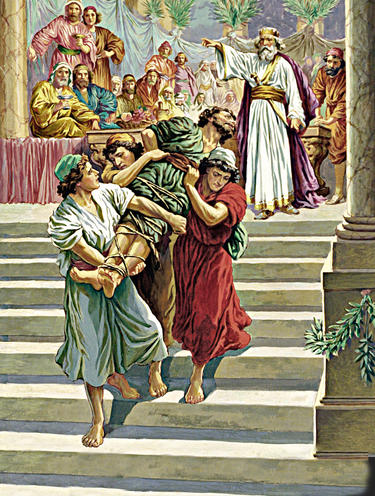
1 Jesus again in reply spoke to the chief priests and elders of the people in parables, saying, 2 “The kingdom of heaven may be likened to a king who gave a wedding feast for his son.
3 He dispatched his servants to summon the invited guests to the feast, but they refused to come. 4 A second time he sent other servants, saying, ‘Tell those invited: “Behold, I have prepared my banquet,
my calves and fattened cattle are killed, and everything is ready; come to the feast.”’ 5 Some ignored the invitation and went away, one to his farm, another to his business. 6 The rest laid hold of his servants,
mistreated them, and killed them. 7 The king was enraged and sent his troops, destroyed those murderers, and burned their city. 8 Then he said to his servants, ‘The feast is ready, but those who were invited were not worthy to come.
9 Go out, therefore, into the main roads and invite to the feast whomever you find.’ 10 The servants went out into the streets and gathered all they found, bad and good alike, and the hall was filled with guests.
11 But when the king came in to meet the guests, he saw a man there not dressed in a wedding garment. 12 The king said to him, ‘My friend, how is it that you came in here without a wedding garment?’
But he was reduced to silence. 13 Then the king said to his attendants, ‘Bind his hands and feet, and cast him into the darkness outside, where there will be wailing and grinding of teeth.’ 14 Many are invited, but few are chosen.”
A young man entered college to fulfill his dream of becoming an architect, and initially he succeeded in his studies. He really enjoyed college, and made many friends during the first semester. Even though he was only a freshman, he was invited to many parties. Because of attending parties, the second semester ended up not going so well. He was more into socializing with friends instead of studying, and what studying he did was short of cramming. On the day of a mid-term exam, he scurried out of bed to get to there on time. The syllabus stated if a student was late for an exam, the exam would have to be made up with a percentage of the score deducted from 100% based upon the amount of time late. He barely made it to the exam before the materials were passed out.
He figured he would be able to pass the exam because he had showed up to at least half of the class sessions and took decent notes. For this exam he did not study for the exam thinking he could answer the questions based on what he thought he remembered from his notes and other things from the lectures when attending class. Unfortunately, most of the questions on the exam had to deal with material he missed when not attending class. Only a third of the questions pertained to the material in his notes. He recognized those questions, but had not studied enough to answer every question correctly. Needless to say, he failed the exam, and flunked out of college.
The most important events in life take being prepared for them. The Gospel reading from Matthew speaks to being prepared. The man in the street invited to the wedding feast shows up without a wedding garment, which is required to attend the wedding celebration. The man was not prepared for the wedding feast, therefore put back on the street. The college student did not devote the proper amount of time to studying for his courses, and his lack of preparedness resulted in failing exams and flunking out of college after only one year.
Unlike the person in the street and the college student, it is not always easy to be prepared for situations in life, but we should try to be. Not every situation is like an exam. We might be thrown into a situation which catches us off guard, yet when we have the “know how” we will be able to achieve what is supposed to happen. Let’s take the example of someone driving down the road and a tire goes flat. People generally do not check their tires for leaks every time they get into their car to go somewhere, and even if they did they might run over a nail to cause a tire to go flat. So now a tire has gone flat… The “know how” would be understanding how to remove the tire to put on the spare or temporary tire. Learning how to do that would at least be some preparation because the problem would be addressed easier. If the person did not know how to change the tire out for the spare, they would have to get help from someone else or possibly be stranded. Someone with the knowledge of how to change a tire should recognize the person needs help and change the tire for them.
What are you doing to prepare yourself? Have you studied for your exam? Have you checked your tires? Are you ready, prepared, and able to go out into the world and be a witness for Our Lord? Are you dressed in your wedding garments?
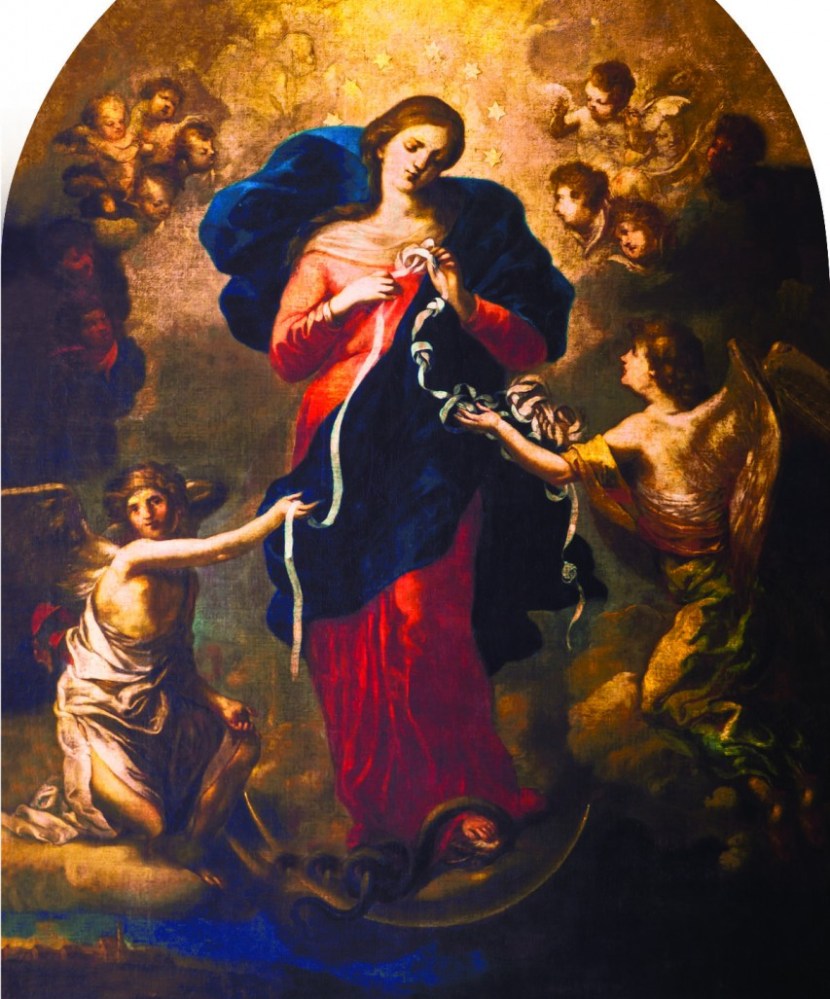
Got Knots? The Feast of Our Lady, Undoer of Knots ~ Br. Dominic Ferrante, Novice
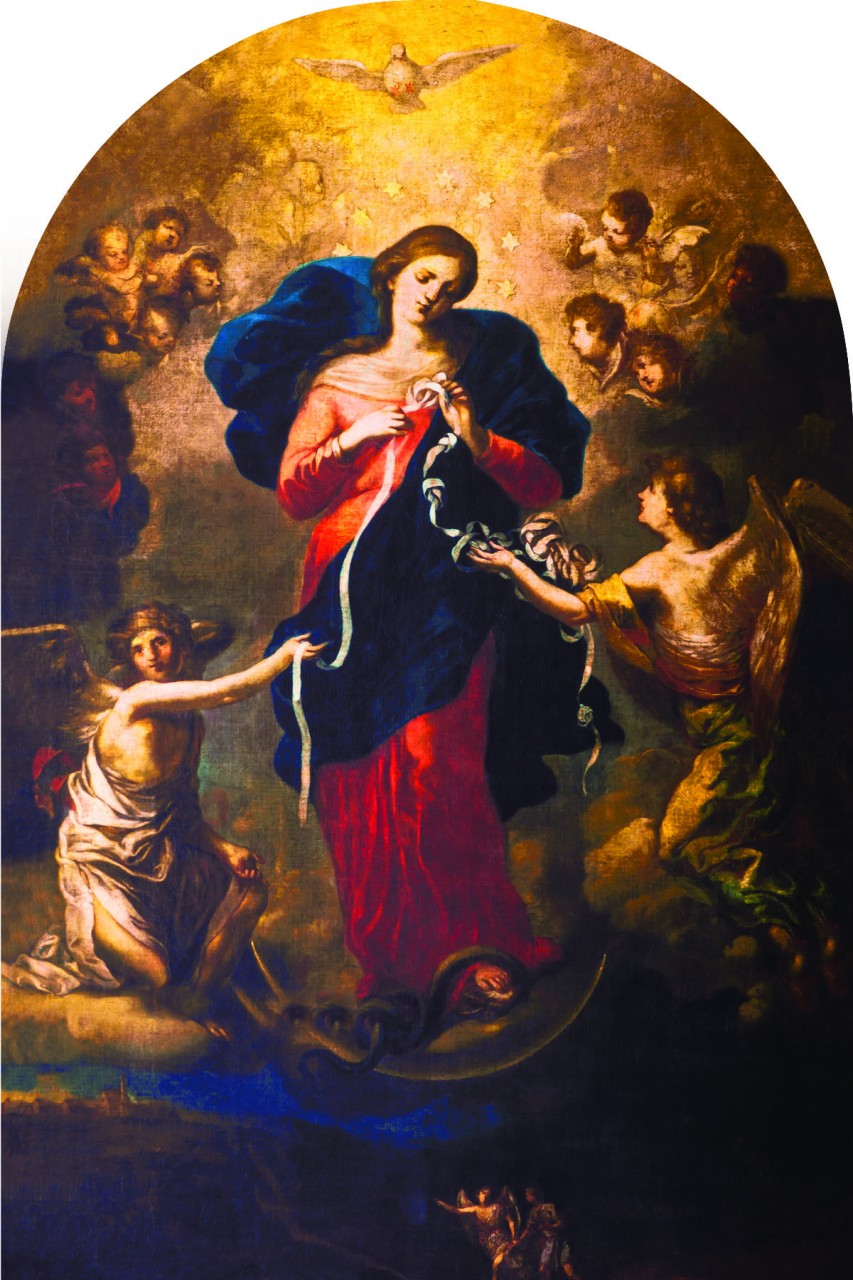

Pop Quiz Time! ~ Sister Dollie Wilkinson, OPoc
 In a recent conversation with my husband one morning, while we were discussing what to fix for dinner, the thought never occurred to me that there would be no food to fix that evening. Despite food stuff in my cabinet and freezer, I knew that a quick trip to the store would surely provide items that I could turn in to a tasty meal. But what if there were no pantry staples, no meats, or no fresh fruits or vegetables in my fridge? What if I had no money to buy items at the store, or there were no stores around, and all my neighbors or friends also had no food to eat or share? Sounds almost like a plot for an apocalypse movie, where mankind has suffered a crisis, and the modern conveniences we once took for granted were gone. Now also imagine that everything you own, you must carry on your back. Men, women, children…….no one is spared from this hardship. And you are told this is for your salvation, as a means to end suffering and save your people. After walking for a few days, with very little food, would you grumble and complain? This is just what the Israelites did in Exodus 16:2-15:
“The whole congregation of the Israelites complained against Moses and Aaron in the wilderness. The Israelites said to them, “If only we had died by the hand of the LORD in the land of Egypt, when we sat by the fleshpots and ate our fill of bread; for you have brought us out into this wilderness to kill this whole assembly with hunger.” Then the LORD said to Moses, “I am going to rain bread from heaven for you, and each day the people shall go out and gather enough for that day. In that way I will test them, whether they will follow my instruction or not. On the sixth day, when they prepare what they bring in, it will be twice as much as they gather on other days.” So Moses and Aaron said to all the Israelites, “In the evening you shall know that it was the LORD who brought you out of the land of Egypt, and in the morning you shall see the glory of the LORD, because he has heard your complaining against the LORD. For what are we, that you complain against us?” And Moses said, “When the LORD gives you meat to eat in the evening and your fill of bread in the morning, because the LORD has heard the complaining that you utter against him–what are we? Your complaining is not against us but against the LORD.” Then Moses said to Aaron, “Say to the whole congregation of the Israelites, ‘Draw near to the LORD, for he has heard your complaining.'” And as Aaron spoke to the whole congregation of the Israelites, they looked toward the wilderness, and the glory of the LORD appeared in the cloud. The LORD spoke to Moses and said, “I have heard the complaining of the Israelites; say to them, ‘At twilight you shall eat meat, and in the morning you shall have your fill of bread; then you shall know that I am the LORD your God.'” In the evening quails came up and covered the camp; and in the morning there was a layer of dew around the camp. When the layer of dew lifted, there on the surface of the wilderness was a fine flaky substance, as fine as frost on the ground. When the Israelites saw it, they said to one another, “What is it?” For they did not know what it was. Moses said to them, “It is the bread that the LORD has given you to eat.”
Kind of an ungrateful lot, them Israelites! They were led out of Egypt, so they would be saved. And here they are complaining because they don’t have enough to eat. Are we not the same though? How many of us go about our day, whining and complaining over something which turns out to be minor? I know that I do, until I stop and realize how many blessings there are in my life. So, did Moses’ people stop, and praise the Lord for all they have to be grateful for? No, just the opposite. They whined to Moses, saying maybe it would have been better to stay in Egypt, where at least they had food. But our Father, in His infinite mercy, heard their complaints and told Moses, “I am going to rain bread from heaven for you, and each day the people shall go out and gather enough for that day.”. So though the people did not bring their petitions to the Lord, he heard their cries and provided food enough for them to eat, but only for one day. Why just the one day? To test the Israelites, to see if they were ready to follow and obey His commandments. So the Lord sent birds in the evening, and manna in the morning,
“In the evening quails came up and covered the camp; and in the morning there was a layer of dew around the camp. When the layer of dew lifted, there on the surface of the wilderness was a fine flaky substance, as fine as frost on the ground. When the Israelites saw it, they said to one another, “What is it?” For they did not know what it was. Moses said to them, “It is the bread that the LORD has given you to eat.””
So why did God test these people? Remember when you were in school? What was the most dreaded part of your day? I’m guessing for many of you, it was knowing you had a test that day. For me, I always detested having a pop quiz. You know that test that teachers like to randomly give you, with no warning and thus no way to study and prepare for. Well, this is what the Lord is doing for the people Moses led out of Egypt. He gave them a pop quiz……a test of faith. How many of us could have passed that test? If we go back to the movie scenario, and you find yourself wandering in the wilderness, no food, very little water, and the only things you own you carry on your back, would you complain to each other, or would you have a strong enough faith to seek help from the Lord?
Every day of your life is a pop quiz from God! We wake in the morning, some with an agenda set in stone, others with a more flexible schedule. And because we are human, inevitably there are going to be problems and issues that trouble our day. How do we handle these perplexing problems? We could complain to a co-worker, a friend (I do this one quite a lot), or a family member, or…….we could take our worries and troubles to the Lord in prayer. We may not be wandering in the wilderness, but we are still our Father’s children. He will take care of us, if we only have the courage to ask.
Jesus’ Cross: Barbaric Baggage or Blessed Beacon? ~ Br. Jay Van Lieshout, Postulant
 Symbols: since the dawning of human society, we have used symbols to convey thoughts, ideas and concepts. We have developed a whole system by which we can pass on ideas and information from person to person, from generation to generation: spoken language where complex patterns of sounds recreate the stories and emotions of our daily lives, the written word where lines and squiggles are phonic representations and signals of rhythm and inflection. We humans have filled our universe with the echoes of our history, our knowledge, our emotions, our joys, our pain, our hate and our love; from sounds fading into the ether to our graffiti marks in the hard surfaces of our environment or on leaflets of skin and cellulose. But still the greatest and most powerful, and often the simplest, of all human symbols is the image. Whether it is a handprint on the wall of a subterranean cavern to say “I was here”, or an emoticon of a smiling face, recognition is immediate and the attached emotions are clear and powerful.
For Christians, the most powerful of all symbols is a simple set of two lines intersected to form a cross. Simple, elegant in design and filled with emotion; one simple icon that conveys more in a single flash of viewing than has been scribbled in 2000 years; or is it? During his homily for the Feast of the Exultation of the Holy Cross, the Arch Bishop talked about a new offshoot of Christian teaching in which the cross is stripped of much of its power and is relegated to nothing more than a barbaric symbol of execution; no more fulfilling of prophecy, no more sacrificial lamb of salvation, no more looking to the cross, being healed and given life- just a symbol of meaningless death and the potential death of a symbol.
Needless to say I was appalled and my mind filled with screams of “what about” this or that; for a moment I felt like Peter staring at Jesus after hearing one of His parables. Once the dust settled it was time to contemplate, to stare at the cross and ask “ok, so why should you be so important to a Christian, why should you be so venerated, why should you be such a powerful symbol of our faith?”
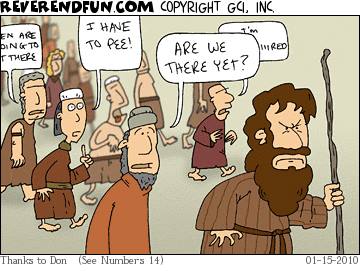
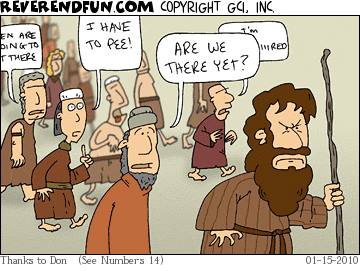
Our journey begins with the Old Testament reading for the feast. A typical Moses in the wilderness story, God is leading the Israelites to the promised land, Moses is co piloting, the masses are in the proverbial back seat whining “I’m hungry, I’m thirsty, she’s touching me, it’s hot, are we there yet, when are we gonna get there?” God the Father gets mad, sends some venomous snakes, cleans house and then tells Moses to make a bronze serpent, put it on a pole and if anyone gets bitten, they are to look at the serpent and live. Seemingly another old story which doesn’t really fit anywhere so let’s just attached to one of the Sundays and hope no one notices. But is it really just that? Instant message from God: “ Think Symbols”.
This recount of the journey of the Israelites is more than just a simple story if you think in terms of the symbolic. We have the people of God wandering the desert looking for the Promised Land, the Eden here on earth where the people and God live in harmony. This is a straight forward enough analogy of our daily spiritual journey where each of us seeks to be closer to God and find the joy and freedom from our transgressions. There is Moses, God’s man on Earth, trying to teach and lead God’s people to this Earthly Eden, a man with power and knowledge who is often at his wits end on what to do with this stubborn flock of well meaning but unruly sheep. Then there are the serpents, a symbol for yetzer ha-ra,, the Hebrew version of Satan, the provocateur sent by God, but unlike the modern Christian view of Satan, this is a minion under God’s control, it is the ambition in each human and hot desire in each of us, the DRIVE with which we can do great things for the good of all as God so desires, or by which we can do evil and so turn away from God; it’s our choice for He has given us free will. And lastly there is the Serpent on a Stick (it almost sounds almost like some ancient fast food delicacy), a Hebrew version of the caduceus, the rod of Alcepius, the Greek god of healing, seen in most medical offices today, and for the Hebrew a symbol which when looked upon restores life to the bitten.
The stage is set, the symbols defined, it’s time for lights, camera, and action! Moses is attempting to lead his people along the path of righteousness; back to God, to the promised ancestral homeland, to Eden on earth, all the while God the Father is watching the trials and tribulations from a good distance. Enter stage left, yetzer ha-ra whose venomous bit leads some people astray and they become lost, confused, crazed. God then tells Moses to erect a standard, a serpent on a pole for the people to see. Some people choose to turn their back to this desert lighthouse, they wander away and by their actions separated from God and die. Others who look on this symbol, this beacon from God are healed, are redirected toward the right path, returning to God and the life that the Father gives to his people; they have been saved. And cut. And thus the message has been delivered, turn your eyes from God, choose sin and die or look to God, see His light, follow the path of righteousness and LIVE.
And so let us return our focus on the cross, this symbol of Christianity; how does veneration of the cross of Christ relate to Moses’ serpent on a stick? Like Moses, Jesus was sent by the Father to guide His people back along the path of righteousness; Moses’ standard had been destroyed, the people were wandering like lost sheep. Yetzer ha-ra had filled their hearts with ambition and they ran about in a frenzied state as if they had been bitten by venomous vipers. Jesus called out to these sheep and some saw and heard his call and so followed Him out of the wilderness, others ignored his call and wandered farther and farther away, only to fall prey to the poison and die. Now Jesus knew there still were other lost sheep who did not hear his call; and He also knew that the sound of his voice would echo and fade into the ether with time. So God the Father told him to erect a standard that would stand for all time as a beacon to guide the lost sheep back to His flock. I sign post to the Promised Land where the flock may safely graze on the fine grasses of Eden. A sign where the fires of yetzer ha-ra are soothed with a healing balm of love so great that the ultimate gift of a life for the life of another life is given. And so Jesus does as His Father willed, and willingly was nailed to a post, was erected and hung for all to see His choice to yetzer ha-ra’s temptations: to shed his blood and give his life so that all who look to him may be healed and LIVE.
So is veneration of the cross important to the followers of Christ or is it just a remnant of some barbaric medieval church tradition? The cross is a reminder of our free will, of our choices in life, of our transgressions we have committed, of those we might commit and of the grace of God given to use when we repent and not only seek forgiveness, but give it in equal and overflowing measure. The cross is the symbol of what we need to be reminded of each and every minute of each and every day. To me the spirit of the cross is best reflected by the words of Kierkegaard “Father in Heaven! Hold not our sins up against us but hold us up against our sins so that the thought of You when it wakens in our soul, and each time it wakens, should not remind us of what we have committed but of what You did forgive, not of how we went astray but of how You did save us!” The cross, like the brass serpent on a pole IS the fundamental symbol of Christ’s mission, of God’s gift to His people, the perfect example of how we are to live, a statement that we are so loved that Christ gave his life so that we might look to him and find life everlasting! So I ask each and everyone one of you, should we as Christians, bitten by yetzer ha-ra, look to the cross as THE symbol of our faith? Verily I tell you only if you wish to LIVE!

A Holy Cross~by Fr. Bryan Wolf
 Today we celebrate The Exaltation of the Holy Cross. Symbolic of the discovery of the Cross upon which Christ was crucified by St. Helena in 326, today is a holy day which transcends many Christian denominations. Catholics, Anglicans, Lutherans, and Eastern Orthodox among others, proclaim the significance of the Holy Cross. For Christians the Cross becomes the symbol in which to reconcile ourselves to God. The Catholic practice of “making the sign of the Cross” itself becomes a prayer. Indeed, there is no other more recognizable symbol of Christianity than the Cross. From car bumper stickers, to jewelry, to cemetery markers and gravestones; even to ornate and sublime churches of every kind- we can easily know who is Christian. Is this becoming a problem?
In the beginning of Christianity many suffered for their belief and faith in Christ. Many became martyrs, and eventually, saints. Throughout history, even to modern times, many have been persecuted for their Christian faith. During World War II, more than 2600 Catholic priests were executed in the Dachau Nazi Concentration Camp alone. Rebel organizations throughout Central America have used the kidnapping and execution of vowed religious as a means of intimidation. Coptic Christians in Egypt have recently witnessed their churches being damaged, looted and burned. Most recently extremist there paraded three captured nuns from a Franciscan school they burned, like prisoners of war. So dire are the circumstances in Egypt, that for the first time in 1600 years this past August, prayers and Mass were suspended at the Virgin Mary Monastery for fear of violence.
Now horrifically, the world is confronted by ISIL. Before I continue, I need to convey a little research here. This Islamic terrorist organization, is just that- a terrorist organization. It is not representative of Islamic peoples or the message of their founding prophet Muhammad; for even he considered Jesus a fellow prophet of God and Muhammad preached peace. First known as ISIS (The Islamic State of Iraq and Syria), they desire now to be referred to as ISIL- the Islamic State of Iraq and the Levant (the Levant being an old French term which refers to all the lands of the Eastern Mediterranean region.) – or to be simple known as The Islamic State. Their means of influence are barbaric and brutal; so much so that even al-Qaeda, as reported by The Washington Post, has distanced themselves and severed political ties. According to the Human Rights Watch, “they (ISIL) stand to a global jihadist principle for the purification of Islamic and Muslims lands, even to the point of excess for their defense.”
“Open Doors”, a world wide Christian organization based in The Netherlands, tracks Christian persecution throughout the world. Releasing their 2014 list of countries in which Christians are at risk of biased attacks all, except for North Korea, are in Islamic countries. At the top of the list- Syria, Iraq, Iran, Afghanistan, Yemen, Egypt and Sudan. To dispel the appearance of a “holy war against Christians” ISIL itself maintains “Christians have options”, as reported by Catholics Online. “To avoid death, Christians may convert to Islam or pay a jizya.” A Jizya, is a monetary tax under Islamic law which allows “infidels” (someone who does not profess Islam) to remain in an Islamic country. Usually their homes are marked with a red cross, which itself can bring violence.
Without dispute, we have all witnessed the violence and brutality of late. From the barbaric beheading of journalists to the marched execution of Syrian soldiers in the desert. There indeed does seem to be a holy war brewing. Or more exactly in the words of a Bishop friend of mine, “an unholy war”.
What does this all have to do with The Exaltation of the Holy Cross? It is a stark reminder of what may need be endured for our Christian faith. Each day we must affirm our faith and evangelize for our faith. To live by and profess the message of our Lord, Jesus Christ. Whether it is in the face of radical Islamic extremists or radical Christian extremists, such as the Westboro Baptist Church. There are fundamental extremists in all denominations who have lost the basic message of their religions- God is peace.
At all peril, we must hold true to the message of the Cross. We must carry our own individual crosses, as Christ carried his before us, (and he helps us carry ours now.) There is indeed a war brewing. A war in which we will be challenged to the foundation of our faith. We pray for God’s mercy and peace. We pray for God’s justice. Indeed, we may find ourselves being God’s instrument of intervention for those who are persecuted and oppressed. For today, it is becoming more apparent that that is the reality behind The Holy Cross.
“Onward Christians soldiers, marching as to war. With the Cross of Jesus, going on before.”
“Blessed are those who are persecuted because of righteousness, for theirs is the kingdom of heaven. Blessed are you when people insult you, persecute you and falsely say all kinds of evil against you because of me. Rejoice and be glad, because great is your reward in heaven; for in the same way the prophets were persecuted who were before you.” Matthew 5:10-12
 The Order of Preachers, Independent
You must be logged in to post a comment.