
Category: Uncategorized
He Washed Feet~The Rt Rev Michael Beckett,OPI
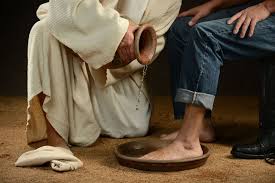
Y’all…..Ever fallen down a rabbit hole on the Internet? For whatever reason t’other day, I did just that. The question was asked on Reddit, “What would you do today if you knew you’d die tomorrow?” The answers were as many and varied as the folks who answered that question. Some of them were pretty tragic, some of them hysterical, and some were just odd. But funny thing though, as we are in the midst of Holy Week, Jesus Himself answered that question, without submitting an answer to Reddit. See, today is Maundy Thursday, the day before Good Friday. Jesus knew that he would be crucified the next day, and reckon wonder what did he do?
He washed feet.
In the gospel we read that Jesus had gone to Jerusalem for Passover and gathered his twelve disciples at the dinner table. He knew that by the end of the night one of them would betray Him to the authorities, one of them would deny Him three times, and all of them would leave him alone in his hour of greatest pain. And yet there He was breaking the bread and pouring the cup, eating with them, and blessing them. And he washed their feet.
Ya see, way back in Biblical times, especially in dusty, and hot regions like the Middle East, walking in sandals made foot washing necessary. This was done as a courtesy shown to guests upon arrival to wash away dirt and refresh them. It was what the proper host offered right off the bat when someone came to their house. It was the proper thing to do. Now, of course the host didn’t do the actual washing. Nope. It wasn’t socially acceptable, ya know. Washing feet was generally handled by servants, or the lowest ranked person in the household. It was considered such a menial, demeaning job that it was sometimes deemed inappropriate for even a Jewish slave to do it.
But Jesus had some points to make, so he washed feet.
The disciples must have been stunned at this act of humility—that Jesus, their Lord and Master, should wash the feet of His disciples. Washing feet was probably more properly their work, but no one had volunteered for the job, so Jesus kinda taught them a lesson. We often forget that Jesus came to earth not as King and Conqueror but as the suffering Servant of Isaiah 53. As He revealed in Matthew 20:28, He came “not to be served but to serve, and to give his life as a ransom for many.” The humility expressed by Jesus’ s act with a towel and basin foreshadowed His ultimate act of humility and love on the cross.
See, He knew that He was not about to be thanked or praised, but killed, and mocked, and tortured. Why? Because in the end, the goodness, the kindness, and the compassion He had brought were more of a threat to the Roman authorities and clergy of his day than any weapon or army. (Sound familiar?) Jesus so radically upset the status quo that they decided to get rid of him so that things might return to the way they had been before Him, when there were no “radicals,” no “troublemakers,” no “problem children,” and most certainly none of that “woke nonsense.”
Jesus wanted the ones who knew who He was, what He had done, those who would be his witnesses to His life and teachings after He was gone, to know how to tell others to keep moving forward after He was gone.
He washed feet.
He gave a demonstration and a commandment. And this is where the word “Maundy” comes from. A little research reveals that the word Maundy comes from the Latin for mandatum, or “mandate” in our current English. Jesus said, “I give you a new commandment, that you love one another. Just as I have loved you, you also should love one another. By this everyone will know that you are my disciples, if you have love for one another.”
Now, here we are a couple thousand years later, still Jesus’s disciples, and still under the mandate that he issued. His commandment, His mandate; Love one another as I have loved you. This is the only way we can separate ourselves from the modern day Romans. We must continue to be Jesus’s disciples, continue to practice what he preached, and to love each other even when anger might be expected of us.
This is a message all Christians need to be reminded of, over and over again.
Now, this doesn’t mean that we just randomly wash folks’ feet. In today’s society, that would be considered odd at best. However, we do need to let others know that this is how Christ said other people would know us: by how we love one another. Following Christ’s teachings and mandate’s makes us Christians. That’s what Christ wants us to be known for.
So how do we wash feet today? House the homeless. Feed the hungry. Comfort the sick. Love the least, the lost, and the forgotten. Work for peace. Work for truth. Love the unlovable. Stand up for the downtrodden, the poor, welcome the stranger.
Again, “maundy” means mandate. Mandate means “this is something you gotta do, period, you ain’t got no choice.” Love one another. Regardless of sex. Regardless of gender. Regardless of politics. Regardless of anything else that might separate us. There is no one on this planet who God doesn’t love. There is no one on this planet who Jesus didn’t die for. Period. Love. One. Another.
Loving God, Who continues opens the door, Who meets us at every table, Who breaks bread and drinks wine alongside us, Who came not to have his feet washed, But to wash our feet, How often do we focus on the smallest parts of your teaching?
We hear your directions to us, But we only follow you to the degree that suits us. You call us to wash one another’s feet, But how far does your instruction go?
Are we to humble ourselves before our families? Our friends? Our pew mates? Our fellow congregation members? That seems reasonable.
What about the man who lives on the street? What about the woman who cleans our house? What about the person whose political beliefs offend us? That causes us to hesitate.
Are we like Peter, Begging to have not only our feet, But our hands and head washed? When we can wash the feet of a stranger, Will we be willing to follow you then? Like Peter, will we deny you?
Teach us to love others as Christ loves us. Embolden and empower us by your love to live out these mandates of our faith: To wash the feet of others. To serve rather than be served. To give without needing to receive. Give us grace when we fall short. Make us ready, In our hearts and our minds, To follow your son, Jesus Christ, In word and action, In love and service.
Help us to see and feel your presence alongside us As we imperfectly seek to follow Jesus in all we do, Give us courage to begin anew when we inevitably stray.
Through Jesus Christ our Lord, who first taught us the way, Amen.
The Rev Savannah Demuynck
The Looming Shadows~The Very Rev Lady Sherwood,OPI
As we move deeper into Holy Week, the atmosphere shifts. On this Holy Wednesday, the Gospels set a sobering scene. Jesus, sitting with His closest friends, reveals a heavy truth: one of them will betray Him, and another will deny Him. The cozy intimacy of the table is pierced by the reality of human weakness and the approaching cross.
It is easy to look at Judas or Peter and distance ourselves from their failures. Yet, this day invites us to examine our own hearts. How often do we profess love for Christ only to let convenience or fear dictate our actions? Holy Tuesday asks us to sit in the tension of our own frailty and rely entirely on His grace.
Let us pause in the quiet of this day to reflect, realign, and pray.
Lord Jesus, We see the shadow of the cross growing longer today. We recognize the times we have turned away from You in our thoughts, words, and actions. Forgive our betrayals and our silent denials. As we walk through this sacred week, anchor our hearts in Your unwavering love. Give us the courage to stand by You, even when the night grows dark. Amen.
The Feast of Sts Michael, Gabriel and Raphael…Archangels~The Very Rev Lady Sherwood,OPI
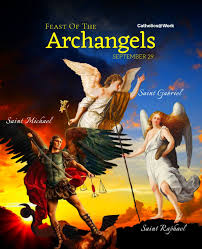
Today we gather as a church to honour and commemorate the Feast of the Archangels, Michael, Gabriel and Raphael, the Archangels of God’s Heavenly Hosts. We only know the names of these three, even though there are believed to be seven Archangels if not more. Let us take a look at what we know from the Holy Scriptures about these three Archangels of God. As St. Michael is the Prince of the heavenly hosts, let us begin with him.
St Michael:
His name means “Who is like God”. (This is a rhetorical question, as obviously means nobody is like God as God is the highest there ever was or ever can be).
St. Michael is mentioned by his name in three books of Holy Scripture:
In Daniel, he is described as “one of the chief princes” in the heavenly hierarchy (Dan. 10:13). He is also described to Daniel as “your prince” (Dan. 10:12). The meaning of this phrase is later clarified, and Michael is described as “the great prince who has charge of your people” (Dan. 12:1). He is thus depicted as the guardian angel of Israel. These same passages also refer to Michael doing battle against the spiritual forces at work against Israel.
In Jude 9, Michael is said to have contended with the devil over the body of Moses. On this occasion, we are told, “he did not presume to pronounce a reviling judgment upon him, but said, ‘The Lord rebuke you.’”
In Revelation, Michael and his angels are depicted fighting the devil and casting them out of heaven (Rev. 12:7-8). He is also commonly identified as the angel who binds the devil and seals him in the bottomless pit for a thousand years (Rev. 20:1-3), though the name “Michael” is not given on this occasion.
St. Gabriel:
His name means “God is my warrior” (meaning, essentially, “God is my defender”).
St. Gabriel is mentioned in two books of Holy Scripture:
In Daniel, he is assigned to help Daniel understand the meaning of a vision he has seen (Dan. 8:16). Later, while Daniel is in a prolonged period of prayer, Gabriel comes to him (Dan. 9:21) and gives him the prophecy of “seventy weeks of years” concerning Israel’s future (Dan. 9:24-27).In Luke, he appears to Zechariah the priest and announces the conception and birth of John the Baptist (Luke 1:13-19). Later, he appears to the Virgin Mary and announces the conception and birth of Jesus Christ (Luke 1:26-33).
St. Raphael:
His name means “God heals.”
St. Raphael is mentioned in only book of Scripture: Tobit.
In Tobit, the blind Tobit and the maid Sarah, whose seven husbands have been killed by the demon Asmodeus, pray to God.
The prayer of both was heard in the presence of the glory of the great God. And Raphael was sent to heal the two of them: to scale away the white films of Tobit’s eyes; to give Sarah the daughter of Raguel in marriage to Tobias the son of Tobit, and to bind Asmodeus the evil demon, because Tobias was entitled to possess her (Tob. 3:16-17).
Raphael thus becomes a travelling companion of Tobias, posing as a relative named Azarias son of Ananias (Tob. 5:12). He eventually binds the demon, enabling Tobias to safely marry Sarah, and provides the means for Tobit to be healed of his blindness.
Afterward, he reveals his true identity, saying:
I am Raphael, one of the seven holy angels who present the prayers of the saints and enter into the presence of the glory of the Holy One (Tob. 12:15).
These Archangels serve the will of God by protecting , guarding and healing us at God’s request. God has ensured his children always have the full protection not only of God himself, but also from all the hosts of heaven. Our Father loves and protects his children, only ensuring all is best for them. Let us give our thanks and praise for the wonderful gift of His Archangels, and of all the hosts of heaven to our God and heavenly Father.
Let us end with the prayer of St Michael:
St. Michael the Archangel, defend us in battle.
Be our defense against the wickedness and snares of the Devil.
May God rebuke him, we humbly pray,
and do thou, O Prince of the heavenly hosts,
by the power of God, thrust into hell Satan, and all the evil spirits,
who prowl about the world
seeking the ruin of souls.
Amen.
Merely Ambition, or Sincere True service? The Feast of St James the Apostle~The Very Rev Lady Sherwood,OPI
We all know of those certain types of people in life, you know, the ones who have very high ambitions in their lives. These ambitions can have such a vast and diverse range and can be ambition of anything from wanting to win the jackpot in the lottery, or maybe it’s about them obtaining that certain perfect job they’ve always wanted. Maybe their ambition is for material assets such as owning a top-class speedy sports car, or maybe its an enormous luxurious mansion with floor upon floor of endless rooms and with it’s own personal swimming pool and vastly extensive grounds filled with flower gardens, ponds and rivers and woodland for those country walks. Maybe it’s about being wealthy with endless funds and the best of material possessions. Even within some churches, I myself have personally witnessed many times sadly, those clergy members whose only ambition is to gain a Bishop title and rank when no other ministry position or role is good enough for them, not because they are truly called to Bishopric ministry as most I’ve witnessed have hardly bothered at all about true ministry and true service, because they have merely the ambitions of power and status, ambitions of ‘Lording it over people’ but sadly not truly being interested in the least in actually serving God or his people. Such ambition as this I term as ‘having mitre fever!’ This type of ambition is merely self serving and being egotistical, and ought to have no place in Christ’s church because ministry is about service and Bishops are supposed to be the servant to the servants, not Lording it over them just for the sake of it! But as in all areas of life, we get those with such ambitions, although, thankfully, it isn’t everyone who has ambitions of such types and magnitude.
Whilst to have some ambition in our life is definitely a good thing, if you are setting goals for yourself or perhaps for an organisation, it is when those ambitions lose their balance and ignores the consequences which will entend for others, that ambition can and does become very toxic and corrupt.
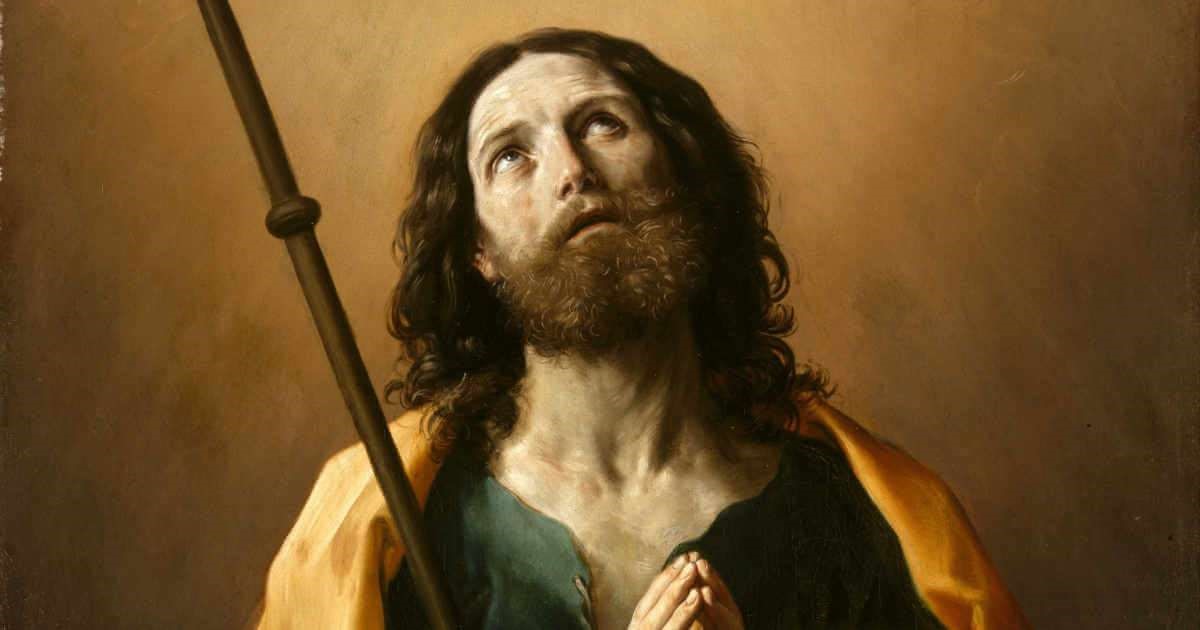
We have an excellent example of over ambition in our Gospel today from Matthew (MT 20:20=28), James and his brother John, who together with Peter are the three favoured apostles, who approached Jesus together with their mother. According to Matthew, it was indeed their mother who asks Jesus to promise her sons would get the highest places in His heavenly Kingdom. Jesus responds directly to James and John and Jesus recognising the possibility of corruption in their ambition, Jesus puts a stop to it by asking them, “Can you drink the chalice that I am going to drink?” Without truly understanding what they had agreed to, they replied that they could. Jesus knowing full well what awaited them, concurred with their agreement. Just like a good parent will give their teenage children a realistic picture of what to expect in Adult life, Jesus tells them that indeed they will have much to suffer.
James the Apostle that we celebrate today, became the first Martyr amongst the apostles. Jesus knew that ambition wasn’t a bad thing in itself, and he didn’t wish to extinguish his apostles enthusiasm, indeed it’s an enthusiasm about eternal life, it’s a goal that each and every one of is should indeed strive to have as great things are rarely achieved without both enthusiasm and suffering. Jesus just needed to refocus their ambition, so that they would truly understand not just the goal of eternal life, but also the true nature of the pathway that is required to achieve this goal. Jesus knowing that the Apostles could possibly succumb to the temptations of personal ambition, gave the Twelve apostles a lecture about power and authority to remind them that authority in the kingdom must not imitate the authority that is ever so present in the world.
Jesus tells them that their role as his apostles =the first shepherds of His church, was not to rule but instead was to serve. Jesus didn’t only tell them to serve only each other and the lowly of the world, but offers himself as an example -revealing to them that he will go so far as to sacrifice his very life for the sake of all humanity. “The Son of Man did not come to be served but to serve and to give his life as a ransom for the many”. Jesus is telling James, John and the other apostles that the ambitious are blessed, but that their ambition must not be driven by self=assertion, but by self=extinction. This message also goes the same for us today, that we always act with Thanksgiving and praise :Thanksgiving because all that we have, all that we are, all that we achieve =all of this is solely given to us by the Grace of God, and praise because all that we do must be for the Glory of God and not for ourselves.
Let us pray :
O Gracious God,
We remember before you today thy servant and Apostle James, the first amongst the Twelve to suffer martyrdom for the name of Jesus Christ ; and we pray that you will pour out upon the leaders of your Church that Spirit of self=denying service by which alone they may have true authority amongst thy people, through the same Jesus Christ our Lord,
Who lives and reigns with you and the Holy Spirit, One God, for ever and ever.
Amen.
The Feast of St Barnabas, the Son of Encouragement~The Very Rev Lady Sherwood, OPI
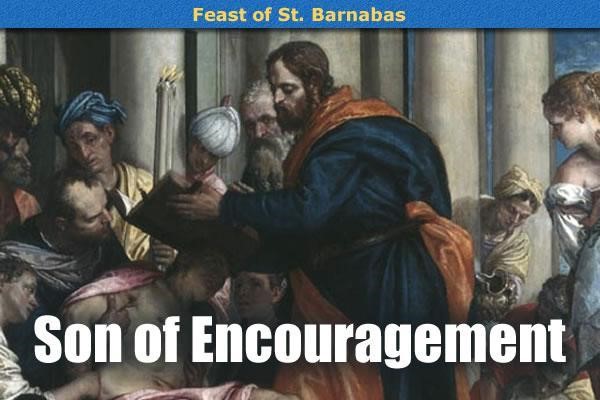
The Book of Acts tells the story of a man called Barnabas, which translates to, “son of Encouragement. We come together as the church today to commemorate his Feast day.” Barnabas’ gift of encouragement shows us five ways in we can encourage others in the world today.
Firstly, Barnabas encouraged others by practicing stewardship.
In Acts 4:36, We read that Barnabas sold his property and then he gave all the profits from that sale to the Church. He decided to meet the needs of others with the resources which God had blessed him, no matter what the personal cost was to himself. Encouragers like Barnabas understand that each and every person has something they are able to give. Encouragers find needy people and enrich them, whether it’s by their money, by giving of their time, or by their service.
Secondly, Barnabas encouraged others by extending the hand of friendship.
After the Apostle Paul’s conversion, Barnabas was despised by his old colleagues, and was feared by his new brothers and sisters in Christ. He was a man who needed a friend; Barnabas found him and became a friend to this very lonely new disciple. A lot of new Christians need somebody to find and to befriend them. We must seek out the lonely and the neglected and the vulnerable, put our outstretched arms around them, and bring them into the Lord’s fold.
Thirdly, Barnabas encouraged others by building partnerships with others.
In Acts 11, the Gospel was spreading quickly, and new believers were sprouting up everywhere. There were some concerns that some of them were not truly sincere. But Barnabas’s encouragement validated and affirmed those who were misunderstood by others.
Fourthly, Barnabas encouraged others by developing leaders within the Lord’s church.
He found the hidden gifts and talents within the new followers of the Lord and he helped them to develop these gifts and talents. Our churches are full of very talented people with abilities vast array of blessed abilities which are waiting to be discovered and to be developed. But it takes a person who encourages such as “Barnabas” to find them.
Finally, Barnabas encouraged others by rebuilding relationships.
After the disciple Mark ran away from his calling, Barnabas sought him out and gave him a second chance. This young disciple went on to write the Gospel of Mark. Thank God for the encouragers in our churches and in our world, who see second chances in us when no one else seems to be able to.
We should apply the examples given to us in the life of Barnabas within our own lives today.
Barnabas was indeed a good man, who was filled with the Holy Spirit; it was God who acted within Him. We can all be encouragers like Barnabas. We need to ask God the Father to fan the Holy Spirit within us to meet the needs of others, to befriend the lonely, to affirm the misunderstood, to develop disciples, and to offer people second chances.
Let us pray:
St. Barnabas, you who were known as the ‘son of encouragement,’ We ask for your intercession. Help us to find strength and perseverance in our faith, especially when we feel discouraged or weary. May we be like you, a source of comfort and hope to others, and may we have the courage to stand up for what is right. Help us to be a beacon of light and love in this world. Pray for us, that we may live a life of faith and devotion, just as you did.
Amen.”
Guest Post: A Child and Disciple of God~The Rt. Rev. James Francis Dominic

What does it mean to be considered a child of God? And to be a disciple of God.
Many times, in life, we grow up thinking that our heritage is what defines us and makes us who we are. We look at our surname and think it is how we identify. That our surname, if well known in the local community, is all we need to get through life. The history of my father is … and his father is … and so, due to my family tree I should be seen as …. And that’s partly correct for some things in life.
And I believe that is what we see here in our text today. The Jewish people in our text for today believed that since they were of the lineage of Abraham, they automatically were children of God. There was nothing that they had to do in life to secure their place at God’s table. But in the beginning of this text Jesus says “…If you hold to my teaching, you are really my disciples. Then you will know the truth, and the truth will set you free.” (vs 31,32)
What the people of the text failed to see was that if they continued to live a life focused on their heritage and where they came from and not look at how they lived their daily lives and who they served they became slaves to the sins of the world.
Like them, we too must focus on who we serve and who we become a slave to. It is so easy to get caught up in the activities that we see happening in the world around us. And yes we need to admit that sometimes we loose track of God and often put God on the backburner as we focus on what brings us joy and happiness from the world’s point of view. When we do that, getting caught up in the world, we become slaves to the world because we have put our worldly and earthly ambitions before our godly ambitions, making us slaves of sin. Jesus says in verse 34; “Very truly I tell you, everyone who sins is a slave to sin”. But when we look for the voice of God in everything we do and put God at the forefront of who we are and show we live our lives we are no longer slaves to the world, but servants of Christ.
Amen.
Understand the Journey~The Rev. Frank Bellino, OPI

Second Sunday of Lent is already upon us. Do you know where the word Lent comes from? In the old English world, the word “Lenten” meant “springtime”. And I think it is safe to say that, here in San Antonio, we are ready for some springtime! In Latin, Lent, however, means something altogether different. The word for this season is Quadragesima, denotes a season of preparation by fasting and prayer, to imitate the forty day example of Christ. A little historical fact, Lent used to begin on the first Sunday of Lent, also called Quadragesima Sunday after the Gospel reading for that weekend of Jesus fasting in the desert for forty days and ended as the Triduum began the evening of Holy Thursday. When we count the days from the first Sunday of Lent to Holy Thursday, it adds up to forty, including the Sundays. Over time, however, there was a discussion that the Sundays during Lent should not be fast days. When asked about fasting on the Sundays during Lent, tradition says, Solemnities, even during the Season of Lent, ought to still be seen as a feast days. Sundays are considered Solemnities after all, are the Lord’s Day, and a day of rest. Beginning the count for Lent on the first Sunday of Lent, and Sundays are not followed as days for fasting, this would equal fewer than forty days of fasting before Easter. In order to make the forty days as Jesus did, they allowed the Sundays to be removed as days of fast and we now start Lenten fasting on Ash Wednesday and when you do the Catholic math it remains the traditional forty days.
I mention this little bit of history since the second Sunday of Lent is also a good time to check in with ourselves on how we are doing with our Lenten promises. Did we eat the Filet-O-Fish instead of the Big Mac on Friday? Inquiring minds want to know. And how are we doing with what we gave up for Lent for that matter? Was it chocolate, alcohol, whatever? You see, as lightweight as our Lenten practices seem to be nowadays, I think it is helpful to consider what Quadragesima would have been like if you lived in medieval times. St. Thomas Aquinas proposed that no food would be allowed at all on Ash Wednesday and Good Friday. On the other days of Lent, food would only be allowed after 3 PM (the hour of our Lord’s death on the cross). And, no animal flesh was allowed at all, neither were eggs or dairy, and Sundays were not free days from the fast either. St. Thomas Aquinas believed in the most extreme fasting during Lent. I think for the people living in medieval times, the severity of this kind of fasting was meant to be life changing, life altering, helping Christians to embrace the seriousness of their baptismal identity as a People of God. Lent was supposed to be understood as a time for transformation. Someone who saw that kind of fast would certainly undergo a makeover by Easter Sunday, as well as their waist to say the least. I am not suggesting that we bring back that kind of Lenten fasting. Nevertheless, obviously though we see the season of Lent, the most important is the love we put into it in the first place.
If you think that fasting in medieval times was serious business, check out how covenants were made in the time of Abraham in our first reading from Genesis. Covenants were meant to be truly life-changing events as well. The Lord promises Abraham that his descendants would be like the number of stars in the heaven and offers the land before him as his possession.
Abraham wants to seal this deal and so God asks him to bring a three-year-old heifer, a three year-old she-goat, a three-year-old ram, a turtledove, and a young pigeon. Genesis says, “Abram brought him all these, split them in two, and placed each half opposite the other”. You see, that’s how the deals were done in those days, you would meet among the split animals to make the agreement which was a way of indicating, if I break my word may what happened to these animals happen to me. These kinds of covenants in those days were meant to be life altering events that helped move a person or tribe from one reality to a new reality based upon the agreement being made. These covenants were meant to be truly transformative. As we know, the Chosen People in the Old Testament broke one covenant after the other with God, which makes Jesus’ choice to die on the cross in atonement for our sins all the more remarkable.
All of these observations are meant to help us understand our Gospel reading from St. Luke about the transfiguration of Jesus. Here we are on Mount Tabor, Jesus is transfigured before Peter, John and James, foreshadowing the glory of the resurrection. Jesus is also seen conversing with Moses and Elijah, signifying to the disciples that Jesus is the fulfillment of both the Law and the Prophets. However, there’s something really unique about St. Luke’s version of the transfiguration. You see, in Luke’s Gospel it says, “And behold, two men were conversing with [Jesus], Moses and Elijah, who appeared in glory and spoke of his exodus that he was going to conduct in Jerusalem.” The reference to exodus here is unique to St. Luke’s Gospel and is meant to help us connect the exodus of the Jews from Egypt to the Promised Land, to what Jesus conducts for us by his passion, death and resurrection. You see the exodus from Egypt was a transformative event for the Chosen People. They went from a state of being slaves to inheriting the land God promised to Abraham. The process for that transformation took the Hebrews a lot longer than forty days. It took forty years for that transformation to unfold, and it took centuries more before God was ready to offer a new exodus to the human race through his only Son our Lord.
This new exodus presented to us, through the passion, death and resurrection of Jesus, offers us a path from the tyranny of sin and death to the glory of the resurrection and eternal life with God. This ultimate transformation that Christians seek is what St. Paul is referring to in our second reading from Philippians when he says, “Brothers and sisters: Our citizenship is in heaven”. Think about how radical St. Paul’s message is, “Our citizenship is heaven, and from it we also await a savior, the Lord Jesus Christ. He will change our humble body to conform with his glorified body by the power that enables him also to bring all things into obedience to himself.” (“Philippians 3:21)
My family, the second Sunday of Lent invites us to accept this season as time for a radical change. Our Lenten rituals of fasting, prayer, and almsgiving are meant to help us with this while we make our pilgrimage to Holy Week. We can ask ourselves this week, what areas in my life need radical transformation? In what ways can I allow this season of Lent to transform my heart to be more like Jesus? These are good questions to ask as we continue our pilgrimage into the desert with our Lord. During this season of Lent, the level of transformation God will bless us with will depend largely on our response.
Guest Post: The Feast of St Agatha~The Rev Seminarian Peri Jude Radecic
Hebrews 12:14. “Pursue peace with everyone. Pursue sanctity, without which no one shall see God.”
We are blessed with the opportunity to reflect on the powerful messages found in our reading and the inspiring life of St. Agatha, whose feast day we celebrate. These messages offer us insights into living a life of faith and holiness, even amidst challenges and rejection. In the Gospel of Mark 6:1-6, Jesus returns to Nazareth. The people in Nazareth have known Jesus since he was a child. His hometown listens to Him teach in the synagogue and many are astonished by His wisdom. Yet their astonishment quickly turns to skepticism. They ask, “Is now this the carpenter, the son of Mary?” The question they ask reveals their struggle to reconcile the Jesus they knew with the profound teacher before them. Their familiarity blinds them to His divine mission. Since Jesus did not fit the people’s notion of who he is, they resisted his ministry, even though they were amazed. As a result, Jesus could do no mighty work back home, except to heal a few sick people. Their lack of faith in who Jesus had become limits the blessings they could have received. Hearing the word of God and being amazed is not the same as faith. Do we limit the blessings we could be receiving from God because we allow familiarity and skepticism of God to cloud our vision of the miracles he can perform for us every day?
Turning to Hebrews 12:14-17, 11-15, we are urged to “pursue peace with everyone, and holiness without which no one will see the Lord.” The readers of this letter were faced severe persecution for their faith and were tempted to abandon Christianity. The writer encourages the reader to endure discipline and to strive for a life that reflects God’s holiness. This call to perseverance is not easy, but it is essential for our spiritual growth and the spiritual growth others. Today, we also honor St. Agatha, a young Christian martyr, whose life exemplifies the messages from Mark and Hebrews. Agatha lived in 3rd century Sicily, part of the Roman Empire. She was born into a rich, noble Christian family and was well educated. She was known for her virtue and beauty. At the age of 15, she felt a call and dedicated herself as a consecrated virgin for Jesus. Becoming a consecrated virgin was seen as a special way to show your love to Jesus. She would eventually go onto become a deaconess. A young politician becomes obsessed with Agatha and she rejects him. He tortures her in humiliating and disfiguring ways. Despite the trials and suffering she endured, she remained steadfast in her commitment to Christ, even in her martyrdom. Her courage and unwavering faith in the face of adversity serve as a powerful testament to the strength that comes from a life rooted in holiness and trust in God.
As we reflect on the Feast of St. Agatha and our readings today, we are called to examine our own lives. Are we, like the people of Nazareth, allowing doubt and familiarity to hinder our faith? Or are we, like St. Agatha, embracing the challenges of living a holy life, trusting that God is with us every step of the way? Today, let us strive to cultivate a heart open to God’s presence, ready to see His hand at work in both the ordinary and extraordinary moments of our lives. May we pursue peace and holiness, drawing strength from the examples of Jesus and the saints who have gone before us. May we open our hearts to look deep, beyond the surface of prayer to find the reality of God’s plan for us. May we recognize God, not just in the familiar moments of our life but in the extraordinary ways Jesus has guided and blessed us. We pray for the grace to accept the truth of His plan right before our eyes. Amen.
Joy!~The Rev. Frank Bellino, OPI
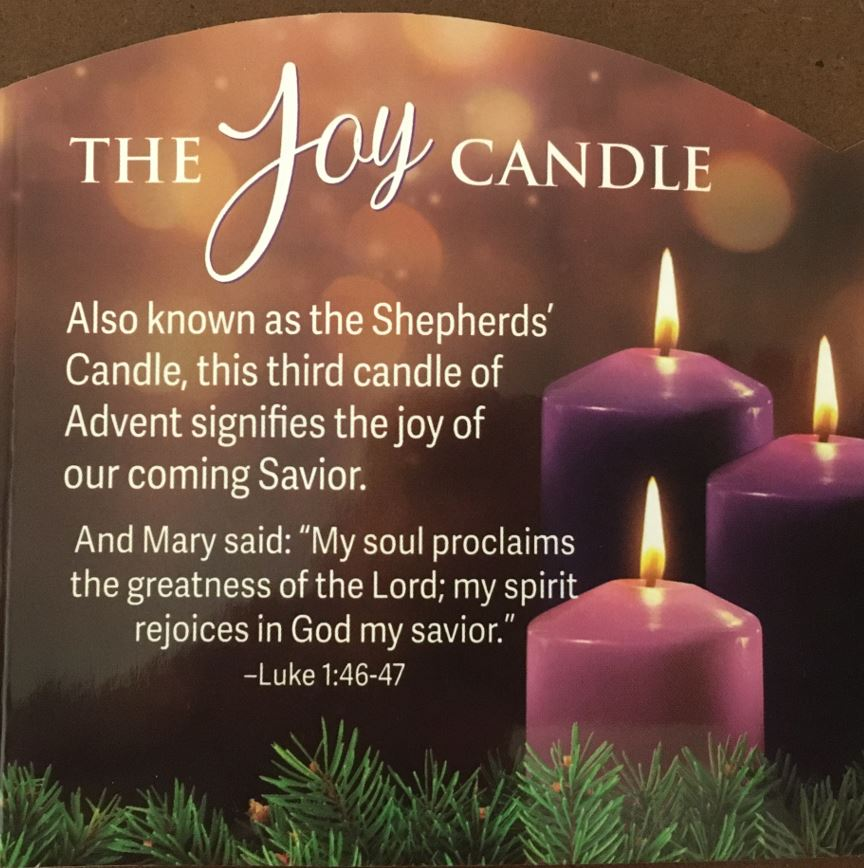
What kind of things do you enjoy? Everyone will have things that come to mind in answer to that question, but I suspect for most of us they will be experiences of some kind or other which make us feel good, from playing sport to reading books to seeing our family happily spending time together. That is the primary meaning of enjoyment, and it’s not surprising that those are the kinds of answers we give. It’s what makes some of the other senses of ‘enjoyment’ sound a bit strange. After all, we can talk about enjoying good health, or even enjoying someone’s 50th Wedding Anniversary, where it’s clear we’re not talking about an emotional response to pleasant experiences.
We wouldn’t describe our attitude to the second situation as one of joy – perhaps quiet contentment at best – but then, maybe that’s because, in the grand scheme of things, we have not lived the trials and the joys and disappointments in a long marriage. What these different senses of enjoyment can provide us with, however, is that the meaning of joy is connected to our response to something good that is present.
Thus, in today’s first reading, Zephaniah calls on the daughter of Zion to shout for joy because ‘the Lord, the king of Israel, is in your midst’ (Zeph 3:15). It is the news of God’s present amongst his people that is to be for them the source of joy. In the responsorial “psalm” too (in fact, a passage from the prophet Isaiah), the people of Zion are to ‘sing and shout for joy, for great in your midst is the Holy One of Israel’ (Is 12:6).
The question that springs to mind is why joy at God’s presence should be the theme of the liturgy of this Third Sunday of Advent, or Gaudete (‘Rejoice’) Sunday, as it’s known. Of course, from the perspective of 2024 we know that the Incarnation, God’s coming to dwell among us, is something that has already happened, but isn’t Advent meant to be a time of anticipation, of learning that longing for the Messiah before we get to celebrate the fulfilment of that longing at Christmas? Wouldn’t hope – our attitude to a good which we do not yet enjoy – be a more obvious theme for this season?
A first answer might be that these passages of Scripture speaking of joy at God’s presence among his people are both from the Old Testament. In the case of Isaiah, the words form part of a prophecy: they are what the people ‘will say in that day’ (Is 12:3) when the shoot comes forth from the stock of Jesse (cf. Is 11:1). The words of Zephaniah come amid his prophecy of the day of the Lord. As we prepare to celebrate that day when the Word of God took flesh and dwelt amongst us, we call to mind the joy which the prophets foretold with anticipation as the response of God’s people to his coming to redeem them.
More than simply preparing us for Christmas, though, Advent also reminds us of the in-between situation we find ourselves in, after Christ’s first coming but awaiting his second coming, redeemed by his saving Incarnation, Death and Resurrection, but awaiting the full working out of all that that entails for humanity and for the whole of creation. We rejoice at his presence in the Sacraments and in the Holy Spirit given to the Church, even as we wait and hope to hear those words, ‘well done, good and faithful servant … enter into the joy of your master’ (Mt 25:21). In the reading we heard from St Paul’s letter to the Philippians, he instructs them always to rejoice even as he reminds them the Lord is at hand (Phil 4:4,5). It is what God has already given to us, what already now we can rejoice in, that enables us to prepare with hope for that day on which, as St John the Baptist’s words in the Gospel remind us, he will ‘gather the wheat into his barn; but the chaff he will burn in a fire that will never go out’ (Lk 3:17).
On this Sunday, when the priest’s rose-colored vestments mix the darkness of penitential purple with festive white, that color expresses the joy which is already ours even as we still recognize the struggles and fears of this life in anticipation of that fullness of joy which God’s coming among us teaches to await ‘with blessed hope’ (Titus 2:13).
The Feast of St Luke, Evangelist~The Very Rev Lady Sherwood, OPI

Today we come together as the church to commemorate St. Luke the Evangelist, Patron saint of Physicians. Luke, from his perspective, records for us in his Gospel writings, the life of Jesus=from His birth at Bethlehem, through His ministry and His many healings. How Jesus heals the blind, the deaf, and the lame.
Luke tells us of the peace which Jesus speaks to all, because Jesus is indeed the peace and healing of God, then in human form. That is why in Luke 10, Jesus tells the 72, to say, “Peace be with this house”, as he sends them out as apostles of his peace.
Jesus gives us spiritual healing and peace which forgives our sins, and which reconciles us with God, our Heavenly Father, by His death upon the cross for us.
Jesus is truly the physician of our Soul. He knows all too well, that we are sick with sin, but it deters him not. Each and every one of us, is precisely why He came to earth to be amongst us, the reason he lived with us upon the earth, and why he suffered, bled, was tortured, and died for all our sakes.
Jesus came down from Heaven to our world, to take from us our dark sickness of sin and of death, and to heal us, to bring us true life and salvation. He took all upon himself for us upon the cross, our sickness and death, died with the Lord, to all who truly believe, love and follow Him. We are forgiven, we are healed, we are saved, we are at peace.
If we truly examine our lives, we will see our constant need for healing of the sins of this world. As with the body, if we are sick, we see our dr for diagnosis and treatment, that’s why today, we give thanks to God for His servant, Luke, the Evangelist. It’s Luke’s role to bring Jesus, His healing and peace to each of us through the living and active word of God.
The word of God is the scalpel of Jesus our physician and saviour. With total precision, Jesus’ laws cuts us and ‘kills’ the sickness of the human condition, so that he can heal us, and give us true life.
Each of the commandments of Jesus is a precise incision of his law. We have failed to fear, love, and trust God above all else as we ought to do. We have failed to use God’s name as we should, and to call upon him as our Father, as his children when in every trouble or need, or to give him worthy thanks and praise. We have ignored God’s Holy word and preaching, we have not loved our neighbour, or helped to eased their needs. We have been bad stewards of earthly material things such as money, or possessions. We have failed in giving kindness and forgiveness to our brothers and sisters.
So indeed, our human sickness of sin is dire=without Jesus as our Lord, our Saviour, and physician, the diagnosis is terminal.
But Jesus is merciful, he does not delight in punishment. Jesus our physician of our soul, cuts with His law in order to heal us with His Gospel. The Lord heals the broken hearted and binds up their wounds (PS 147:3). Jesus has kept on our behalf, all those commandments, which we have failed to truly follow.
If we want to call our doctor, we pick up the phone, and wait for an appointment to become available. But Jesus as our physician for our souls, is contactable 24 hrs per day, every single day with no exception. He is contactable easily anytime, day or night, by the important communication of prayer.
So let’s end today with the simplest but most important prayer of all, to our Saviour and physician of our soul:
Lord Jesus Christ, Son of God, have mercy on me, a sinner.
Amen.
 The Order of Preachers, Independent
You must be logged in to post a comment.