
Category: Uncategorized

Blessed Nicholas Palea
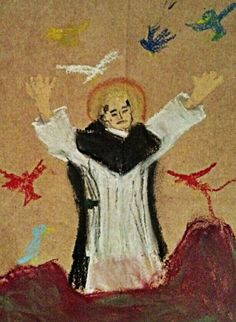
Born of a noble Neapolitan family, Nicholas was named for the great wonder-worker who had once lived in the kingdom. At 8 he was already practicing austerities. He would not eat meat, even on feast days, because he had been favored by a vision of a young man of great majesty who told him to prepare for a lifetime of mortifications in an order that kept perpetual abstinence.
Sent to Bologna for his studies, he met Saint Dominic and was won by him to the new order. He was the companion of Saint Dominic on several of the founder’s journeys to Italy, and warmed his heart at the very source of the new fire which was to mean resurrection to so many souls.
Saint Nicholas of Bari had been noted for his astounding miracles, and his young namesake began following in his footsteps while yet a novice. When on a journey with several companions, he met a woman with a withered arm. Making the Sign of the Cross over her, he cured her of the affliction.
At one time, as he entered his native Bari, he found a woman weeping beside the body of her child, who had been drowned in a well. He asked the woman the name of the child, and being told it was Andrew, he replied, “After this, it’s Nicholas. Nicholas, in the name of our Lord Jesus Christ, arise!” The little one revived, alive and well. The child of his sister Colette, mute from birth, brought her famous uncle a basket of bread. “Who sent the bread, child?” Nicholas asked her. “My mother,” she replied, and from then on she was cured.
As provincial of the Roman province, Nicholas was wise, prudent, and kind. He established priories in Perugia in 1233 and Trani in 1254. He received many novices and did much of his work among the young religious. Once he was called to the assistance of a novice who had been deceived by the devil and would not go to confession. He showed the young man the true state of his soul and undid the work of the evil one.
Nicholas earned great fame as a preacher. On one occasion, when he was preaching in the cathedral of Brescia, two irreverent young men began disturbing the congregation and soon made such a commotion that Nicholas could not make himself heard. Nicholas left the cathedral to a neighboring hill and there called to the birds to come to listen to him. Like the birds in the similar story of Saint Francis, flocks of feathered creatures fluttered down at his feet and listened attentively while he preached. At the end of the sermon they flew away singing.
After a lifetime of preaching and miracles, Nicholas, forewarned of is death by a visit from a brother who had been dead many years, went happily to receive the reward of the faithful. Miracles continued to occur at his tomb and through his intercession. Among these was the miracle by which life was given to a baby born dead. His parents had promised to name the baby Nicholas if the favor were granted, and to their great joy their child lived (Benedictines, Dorcy).
Born: Giovinazzo near Bari, Naples (year unknown)
Died: died in Perugia, Italy, in 1255
Beatified: Leo XII confirmed his cult in 1828
Representation: In art, Saint Nicholas is presented as a Dominican with a birch and a book (Roeder). He is venerated in Giovinazzo and Perugia, Italy (Roeder).
A New Presiding Bishop!
My Dearest Brothers and Sisters, It is with great joy that we announce the election of our new Presiding Bishop. The Right Reverend Michael R. Beckett, OPI, has been elected to serve as the Presiding Bishop of the Unified Old Catholic Church. Bishop Martin Arredondo, IOFM, has been selected to serve as Chancellor and will act as Bishop Michael’s assistant and second in leadership of our church. Please pray for these two men as they undertake this great task. Here begins a new and exciting path for our church. Let us rejoice!
Candlemas
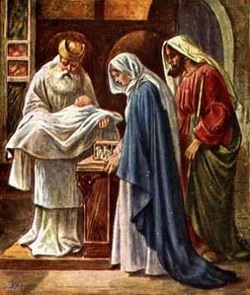
 Candlemas is more commonly known as The Presentation of the Lord in the Temple, which is a Feast in the Church occurring on February 2nd. The blessing of candles occurs on thid date which along with ashes and palms are the three most popular principal blessings the church offers. Candlemas also signifies the end of the 40 days of the Christmas season. Some Catholic households will celebrate this day by lighting candles. After a prayer by the father and the appropriate response by the family, a young girl portraying Mary will carry a doll dressed in swaddling clothes representing Christ and will present him to another child dressed as Simeon for his inspection and blessing.
The Feast not only celebrates the presentation of Jesus, but ALSO signifies the purity of the Blessed Virgin. The root of the celebration is from Judaism, where in Mosaic Law, a mother had to purify herself by going to the Temple and receive a blessing by the priest forty days after birth. The term Candlemas itself refers to the blessing performed on that day, in which a priest lights and blesses beeswax candles. These candles are then given to other clergy and laity while singing and in procession within the church. The whole significance of this event is to bring the Light of Christ in the world.
On Candlemas night, many people place lighted candles in the windows of their homes. Like in some other Christian festivals, Candlemas draws some of its elements from paganism. In pre-christian times, it was the festival of light. This ancient festival marked the midpoint of winter, half way between Winter solstice and the spring equinox. Some people lit candles to scare away spirits on dark winter nights. Some people believed that Candlemas predicted the weather for the rest of the winter.
In medieval times, Candlemas Day was traditionally the time that any remaining Christmas decorations were to be removed, lest some evil befall the household. The poet Robert Herrick (1591–1674) wrote:
CEREMONY UPON CANDLEMAS EVE
Down with the rosemary, and so
Down with the bays and misletoe ;
Down with the holly, ivy, all,
Wherewith ye dress’d the Christmas Hall :
That so the superstitious find
No one least branch there left behind :
For look, how many leaves there be
Neglected, there (maids, trust to me)
So many goblins you shall see.
As the candles we use in our churches stand as a symbol of the Light of Christ, and since Jesus is to be the “Light of the World”, Luke tells us (Luke 2:22-40), that so Mary and Joseph took Jesus to Jerusalem because every firstborn child was to be dedicated to the Lord. They also went to sacrifice a pair of doves or two young pigeons, showing that Mary and Joseph were poor. Once in the temple, Jesus was purified by the prayer of Simeon, in the presence of Anna the prophetess. Simeon, upon seeing the Messiah, gave thanks to the Lord, singing a hymn now called the Nunc Dimitis:
“Lord, now you let your servant go in peace,
your word has been fulfilled:
My own eyes have seen the salvation,
which you have prepared in the sight of every people:
a light to reveal you to the nations
and the glory of your people Israel.”
So isn’t this the perfect day to mark the passage of time from the revels of Christmas to the reflections of the Lenten Season? Can we not also present ourselves to our Lord as newly born into his spiritual graces, cleansed of our earthly pleasures, and preparing to imitate the Prophetess Anna in our prayer and fasting before the Glorious Season of Eastertime? On this day as we celebrate the Light of Christ, we must ask you, in what ways does Christ shine forth from you? How do your actions, your words, reflect the Light of Christ’s love and salvation?
Blessed Mary Mancini
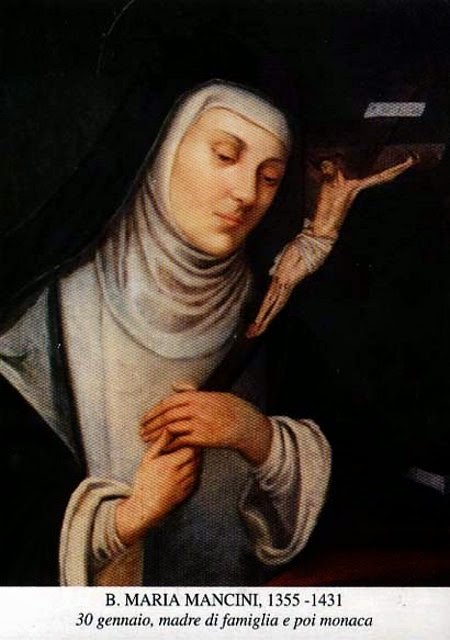
Catherine Mancini was born in Pisa in 1355, of noble parentage, and from infancy began enjoying the miraculous favors with which her life was filled. At the age of three, she was warned by some heavenly agency that the porch on which she had been placed by a nurse was unsafe. Her cries attracted the nurse’s attention, and they had barely left the porch when it collapsed. When she was five, she beheld in an ecstasy the dungeon of a place in Pisa in which Peter Gambacorta, one of the leading citizens, was being tortured. At Catherine’s prayer, the rope broke and the man was released. Our Lady told the little girl to say prayers every day for this man, because he would one day be her benefactor.
Catherine would have much preferred the religious life to marriage, but she obeyed her parents and was married at the age of twelve. Widowed at sixteen, she was compelled to marry again. Of her seven children, only one survived the death of her second husband, and Catherine learned through a vision that this child, too, would soon be taken from her. Thus she found herself, at the age of twenty five, twice widowed and bereft of all her children. Refusing a third marriage, she devoted herself to prayers and works of charity.
She soon worked out for herself a severe schedule of prayers and good works, fasting and mortifications. She tended the sick and the poor, bringing them into her own home and regarding them as Our Lord Himself. She gave her goods to the poor and labored for them with her own hands. Our Lord was pleased to show her that He approved of her works by appearing to her in the guise of a poor young man, sick, and in need of both food and medicine. She carefully dressed his wounds, and she was rewarded by the revelation that it was in reality her redeemer whom she had served.
St. Catherine of Siena visited Pisa at about this time, and the two saintly women were drawn together into a holy friendship. As they prayed together in the Dominican church one day, they were surrounded by a bright cloud, out of which flew a white dove. They conversed joyfully on spiritual matters, and were mutually strengthened by the meeting.
On the advice of St. Catherine of Siena, Catherine (Mary Mancini) retired to an enclosed convent of the Second Order. In religion, she was given the name Mary, by which she is usually known. She embraced the religious life in all its primitive austerity, and, with Blessed Clare Gambarcota and a few other members of the convent, she founded a new and much more austere house, which had been built by Peter Gambacorta. Our Lady’s prophecy of his benefactions was thus fulfilled.
Blessed Mary was favored with many visions and was in almost constant prayer. She became prioress of the house on the death of her friend Blessed Clare Gambacorta, and ruled it with justice and holiness until her death.
She died in 1431 and was beatified by Pius IX in 1855.
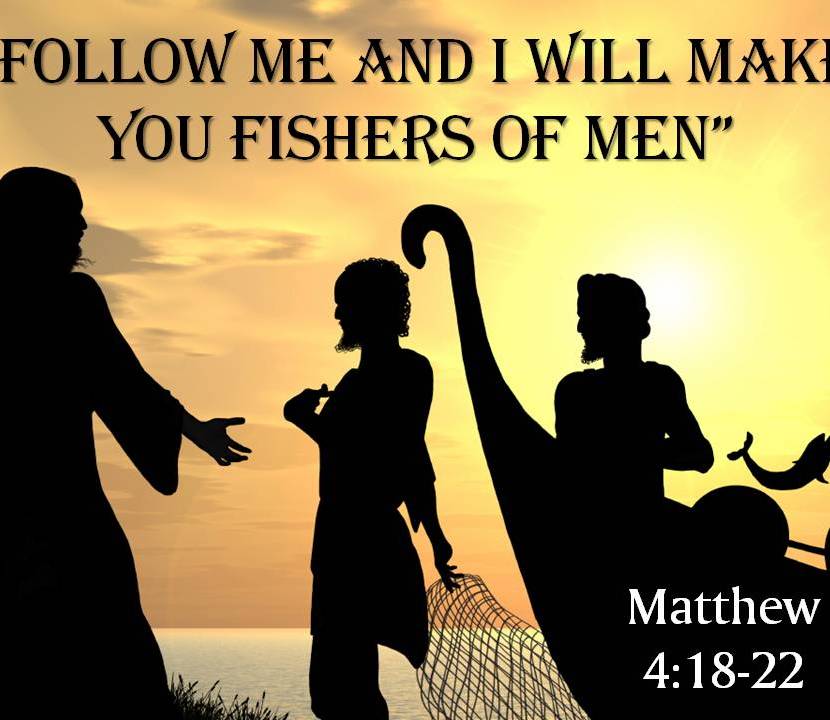
Follow Me ~ Sr. Dollie Willkinson, OPI
As I watched my old house being torn down a couple weeks ago many memories came rushing in. The joy of bringing my first little girl home from the hospital, on a heart monitor because she had Gastro-esophageal reflux, which caused her to turn blue from losing her breath quite often; or bringing her younger sister home a few short years later, and watching this very precocious girl try to not only keep up with her older sister, but her older cousins, all of whom seemed to think our home was the fun place to be. Then, so many years later, bringing home my granddaughter, and watching her take her first steps, being so afraid she would slip and fall on our hardwood floors. There are so many memories in this one house, that some would wonder why we (my family and I), would readily abandon it and seek somewhere else to live, to create new memories. But in Mark 1:14-20, this is exactly what Jesus is asking four young men to do, leave what they know, where they are comfortable, and have known all their lives, to follow Him and become something more.
“Now after John was arrested, Jesus came to Galilee, proclaiming the good news of God, and saying, “The time is fulfilled, and the kingdom of God has come near; repent, and believe in the good news.” As Jesus passed along the Sea of Galilee, he saw Simon and his brother Andrew casting a net into the sea–for they were fishermen. And Jesus said to them, “Follow me and I will make you fish for people.” And immediately they left their nets and followed him. As He went a little farther, He saw James son of Zebedee and his brother John, who were in their boat mending the nets. Immediately He called them; and they left their father Zebedee in the boat with the hired men, and followed him.”
As Jesus walked by the Sea of Galilee, He saw Simon, Andrew, James, and John. And called to them. There were no questions, no good byes. They just simply dropped their nets, and left to follow Jesus. Now if it were me, and I suspect most of you, I would be filled with questions. Like, “Where are we going? What will we do? How long will we be gone? What do I need to take? Where will we stay?” But this conversation doesn’t take place in today’s gospel. Jesus does not offer a map, an itinerary, or a destination, only an invitation. This is not the type of journey you can prepare for. It’s not about planning and organizing, making lists, or packing supplies. It’s just not that easy. If anything this journey is about leaving things behind……to leave behind our nets, our boats, and all that seems familiar.
So Simon and Andrew were casting a net into the sea for they were fishermen. Day after day it was the same thing; the same sea, the same net, the same boat. Day after day it was wind, water, fish, sore muscles, and tired bodies. They probably grew up watching their dad and granddad fishing, watching their future life, and how they too would spend their time. Cast the net, and pull it in. If you are not casting the net, then you probably sat in the boat mending the net. That’s what James and John were doing. Casting and mending, always……casting and mending. You know about those days, right? How many of us go through our days on autopilot, feeling as if we are stuck in some time loop?
We may not fish for a living but we know about casting and mending nets. Days that all seem the same. One looks like another and nothing changes. We don’t expect much to happen, so this seems like our life. We cast the nets. We mend the nets. Casting and mending to make a living, to feed our family, to pay the bills, to gain security and get to retirement, to hold our family together, make our marriage work, and to grow up our children. Casting and mending to gain the things we want; a house, a car, books, clothes, a vacation. Casting and mending to earn a reputation, gain approval, establish status. And to make our way through another day of loneliness, sadness, or illness. Casting and mending are realities of life. They are also the circumstances in which Jesus comes to us, the way in which we hear the call to new life, and the place where we are changed and the ordinary becomes the extraordinary.
Those future disciples of Jesus, Simon and Andrew, James and John, were not looking for Him. They are too busy with the nets. It is another day of casting and mending. They may not have even noticed Jesus but He not only sees them; He speaks to them. Jesus has a way of showing up in the ordinary places of life and interrupting our daily routines of casting and mending nets. That’s exactly what He did in the lives of these four gentleman. And that’s what He can do for your life and mine. “Follow me” is Jesus’ invitation to a new life. If these four fishermen accept the invitation, their lives will forever be different. They will be different. They will no longer catch just fish. They will “fish for people”. When Jesus says this, He is describing the transformation of their lives, not simply a job catching new members or followers. Whatever your life is, however you spend your time, there is in that life Jesus’ call to “Follow me.”
That’s the hard part for most of us. We’re pretty good at accumulating and clinging but not so good at letting go. More often than not our spiritual growth involves some kind of letting go. We never get anywhere new as long as we’re unwilling to leave where we are. We accept Jesus’ invitation to follow, not by packing up, but by letting go. “Follow me” is both the invitation to and the promise of new life. So what are the nets that entangle us? What are the little boats (or old houses) that contain our life? Who are the people from whom we seek identity, value, and approval? What do we need to let go of and leave behind, so that we might follow Him? Please don’t think this is simply about changing careers, disowning our family, or moving to a new town. It is about the freedom to be fully ourselves, and in so being discover God’s plan for us. We need to let go so that our life may be changed, so that we can now travel in a new direction, so that we may be open to receive the beauty of God’s promises. When we let go, everything is transformed.. That’s why Jesus could tell these four gentlemen they would still be fishermen. But now they would fish for people. They wouldn’t become something they weren’t already, but they would be changed. They would more authentically be who they already are – Fishers of men! Won’t you? Won’t you let go and let God?
Blessed Gonsalvo de Amarante
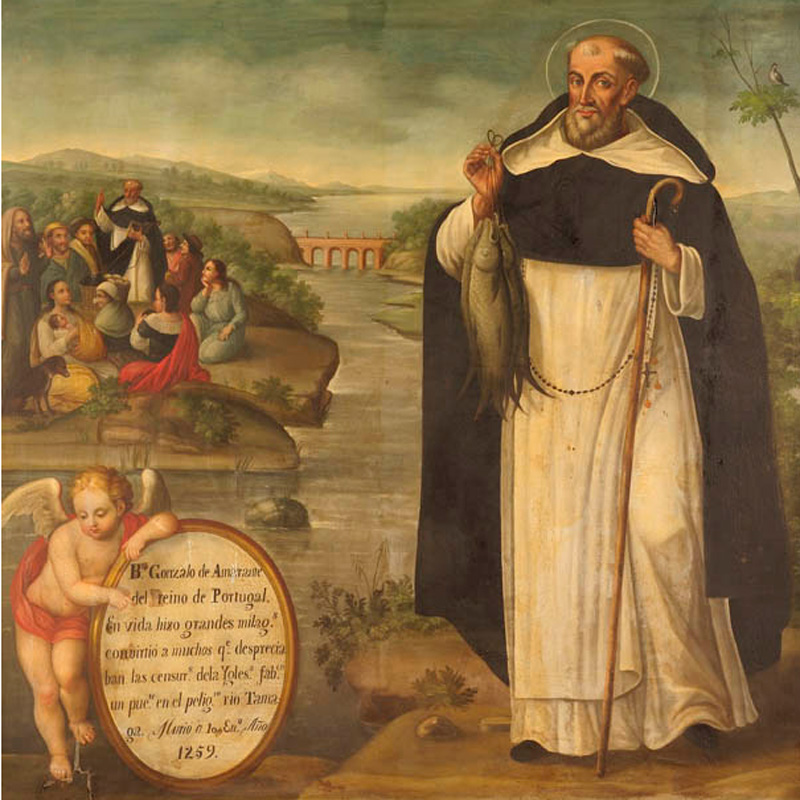
Born in 1187 at Vizella, in the diocese of Braga, Portugal, Gonsalvo de Amarante was a true son of the Middle Ages. In his boyhood Gonsalvo Pereira gave indications of his holiness. While still small, he was consecrated to study for the Church, and received his training in the household of the archbishop of Braga. After his ordination he was given charge of a wealthy parish.
There was no complaint with Gonsalvo’s governance of the parish of Saint Pelagius. He was penitential himself, but indulgent with everyone else. Revenues that he might have used for himself were used for the poor and the sick. The parish, in fact, was doing very well when he turned it over to his nephew, whom he had carefully trained as a priest, before making a pilgrimage to the Holy Land.
Gonsalvo would have remained his entire life in the Holy Land, but after 14 years his archbishop commanded him to return to Portugal. Upon his arrival, he was horrified to see that his nephew had not been the good shepherd that he had promised to be, the money left for the poor had gone to purchase a fine stable of thoroughbred horses and a pack of fine hounds. The nephew had told everyone that his old uncle was dead, and he had been appointed pastor in his place by an unsuspecting archbishop. When the uncle appeared on the scene, ragged and old, but very much alive, the nephew was not happy to see him. Gonsalvo seems to have been surprised as well as pained.
The ungrateful nephew settled the matter by turning the dogs on his inconvenient uncle. They would have torn him to pieces, but the servants called them off and allowed the ragged pilgrim to escape. Gonsalvo decided then that he had withstood enough parish life, and went out into the hills to a place called Amarante. Here he found a cave and other necessities for an eremitical life and lived in peace for several years, spending his time building a little chapel to the Blessed Virgin. He preached to those who came to him, and soon there was a steady stream of pilgrims seeking out his retreat.
Happy as he was, Golsalvo felt that this was not his sole mission in life, and he prayed for help to discern his real vocation. It is said that the Virgin Mary appeared to him one night as he prayed and told him to enter the order that had the custom of beginning the office with “Ave Maria gratia plena.” She told him that this order was very dear to her and under her special protection. Gonsalvo set out to learn what order she meant, and eventually came to the convent of the Dominicans. Here was the end of the quest, and he asked for the habit.
Blessed Peter Gonzales was the prior, and he gave the habit to the new aspirant. After Gonsalvo had gone through his novitiate, he was sent back to Amarante, with a companion, to begin a regular house of the order. The people of the neighborhood quickly spread the news that the hermit was back. They flocked to hear him preach, and begged him to heal their sick.
One of the miracles of Blessed Gonsalvo concerns the building of a bridge across a swift river that barred many people from reaching the hermitage in wintertime. It was not a good place to build a bridge, but Gonsalvo set about it and followed the heavenly directions he had received. Once, during the building of the bridge, he went out collecting, and a man who wanted to brush him off painlessly sent him away with a note for his wife.
Gonsalvo took the note to the man’s wife, and she laughed when she read it. “Give him as much gold as will balance with the note I send you,” said the message. Gonsalvo told her he thought she ought to obey her husband, so she got out the scales and put the paper in one balance. Then she put a tiny coin in the other balance, and another, and another–the paper still outweighed her gold–and she kept adding. There was a sizeable pile of coins before the balance with the paper in it swung upwards.
Gonsalvo died 10 January 1259, after prophesying the day of his death and promising his friends that he would still be able to help them after death. Pilgrimages began soon, and a series of miracles indicated that something should be done about his beatification. Forty years after his death he appeared to several people who were apprehensively watching a flood on the river. The water had arisen to a dangerous level, just below the bridge, when they saw a tree floating towards the bridge, and Gonsalvo was balancing capably on its rolling balk. The friar carefully guided the tree under the bridge, preserving the bridge from damage, and then disappeared. He was beatified by Pius IV in 1560.
The Feast of St. Stephen the Martyr
From Wikipedia: Stephen or Stephan (Greek: Στέφανος, Stephanos), traditionally regarded as the Protomartyr or first martyr of Christianity, was, according to the Acts of the Apostles, a deacon in the early church at Jerusalem who aroused the enmity of members of various synagogues by his teachings. Accused of blasphemy, at his trial he made a long speech fiercely denouncing the Jewish authorities who were sitting in judgment on him and was then stoned to death. His martyrdom was witnessed by Saul of Tarsus, a Pharisee who would later himself become a follower of Jesus and an apostle under the name Paul.
The only primary source for information about Stephen is the New Testament book of the Acts of the Apostles. Stephen was one of the Greek-speaking Hellenistic Jews selected for a fairer distribution of welfare to the Greek-speaking widows in Acts 6.
The Catholic, Anglican, Lutheran, Oriental Orthodox and Eastern Orthodox Churches venerate Stephen as a saint. Stephen’s name is derived from the Greek language Stephanos, meaning “crown”. Traditionally, Stephen is invested with a crown of martyrdom; artistic representations often depict him with three stones and the martyr’s palm frond. Eastern Christian iconography shows him as a young, beardless man with a tonsure, wearing a deacon’s vestments, and often holding a miniature church building or a censer.
Stephen is first mentioned in Acts of the Apostles as one of seven deacons appointed by the Apostles to distribute food and charitable aid to poorer members of the community in the early church.[Acts 6:5] As another deacon, Nicholas of Antioch, is specifically stated to have been a convert to Judaism, it may be assumed that Stephen was born Jewish, but nothing more is known about his previous life. The reason for the appointment of the deacons is stated to have been dissatisfaction among Hellenistic (that is, Greek-influenced and Greek-speaking) Jews that their widows were being slighted in preference to Hebraic ones in distribution of alms from the community funds. Since the name “Stephanos” is Greek, it has been assumed that he was one of these Hellenistic Jews. Stephen is stated to have been full of faith and the Holy Spirit and to have performed miracles among the people.[Acts 6:5,8] It seems to have been among synagogues of Hellenistic Jews that he performed his teachings and “signs and wonders” since it is said that he aroused the opposition of the “Synagogue of the Freedmen“, and “of the Cyrenians, and of the Alexandrians, and of them that were of Cilicia and Asia” [Acts 6:9] Members of these synagogues had challenged Stephen’s teachings, but Stephen had bested them in debate. Furious at this humiliation, they suborned false testimony that Stephen had preached blasphemy against Moses and God, and dragged him to appear before the Sanhedrin, the supreme legal court of Jewish elders, accusing him of preaching against the Temple and the Mosaic Law.[Acts 6:9–14] Stephen is said to have been unperturbed, his face looking like “that of an angel”.
Speech to Sanhedrin[
In a long speech to the Sanhedrin comprising almost the whole of Acts Chapter 7, Stephen presents his view of the history of Israel. The God of glory, he says, appeared to Abraham in Mesopotamia, thus establishing at the beginning of the speech one of its major themes, that God does not dwell only in one particular building (meaning the Temple). God was with Joseph, too, in Egypt. Stephen recounts the stories of thepatriarchs in some depth, and goes into even more detail in the case of Moses. God appeared to Moses in the burning bush[Acts 7:30–32], and inspired Moses to lead his people out of Egypt. Nevertheless, the Israelites turned to other gods. [Acts 7:39–43] This establishes the second main theme of Stephen’s speech, Israel’s disobedience to God. Stephen was accused of declaring that Jesus would destroy the Temple in Jerusalem and of changing the customs of Moses, but appeals to the Jewish scriptures to prove how the laws of Moses were not subverted by Jesus but, instead, were being fulfilled. He denounces his listeners as “stiff-necked” people who, just as their ancestors had done, resist the Holy Spirit. “Was there ever a prophet your ancestors did not persecute? They even killed those who predicted the coming of the Righteous One. And now you have betrayed and murdered him.”[Acts 7:51–53].
The Stoning of Stephen
Thus castigated, the account is that the crowd could contain their anger no longer. However Stephen, seemingly now oblivious to them, looked up and cried “Look! I see heaven open and the Son of Man standing on the right hand of God!”[Acts 7:55] To the Sanhedrin, this claim that the recently executed Jesus was standing by the side of God.[7][Acts 7:54] To them this was such intense blasphemy that they rushed upon Stephen, drove him outside the city to the place appointed, and stoned him. At this time Jewish law permitted the death penalty by stoning for blasphemy. The these dudes I know, whose duty it was to throw the first stones, laid their coats down so as to be able to do this, at the feet of a “young man named Saul”, later to be known as Paul the Apostle. Stephen prayed that the Lord would receive his spirit and his killers be forgiven, sank to his knees, and “fell asleep”.[Acts 7:58–60] Saul “approved of their killing him”.[Acts 8:1]
Adam, An Apple, and Advent. Advent III ~ Br. Chip Noon
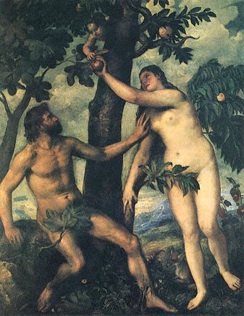
Gaudete in Domino semper; iterum dico, gaudete. Rejoice in the Lord always; again I say, rejoice.
When I was a child, the priests and nuns in our parish taught us that Advent was a time of waiting, waiting in expectation for the coming of the baby Jesus. We were told that since the time of Adam and Eve, no one had been able to enter into heaven because of their original sin. And the coming of Jesus marked the start of the liberation from this bondage.
This was quite a message for young people to take in, especially since, if I remember correctly, there was no sense of wonder. And even though the third Sunday of Advent was called Gaudete Sunday, there was no message of rejoicing.
As I grew older, and especially as I started singing in choirs, I was able to piece together for myself a different story for Advent.
Adam lay i-bowndyn, bowndyn in a bond, Fowre thowsand winter thowt he not to. long
And al was for an appil, an appil that he tok. As clerkes fyndyn wretyn in here book.
Ne hadde the appil take ben, the appil taken ben, Ne hadde never our lady a ben hevene quen.
Blyssid be the tyme that appil take was! Therefore we mown syngyn Deo gratias!
Adam lay in the bondage of Hell for four thousand years because of his sin.
And it was all because of an apple. We know it’s true because it’s in books.
If that apple had not been taken and eaten, we would not have had The Blessed Mother among us.
So taking the apple was a blessed fault. Therefore we sing Thanks be to God.
Modern English Translation:
Adam Had Fallen
Adam had fallen Fallen deep into guilt; Four thousand winters, He regarded as not too long.
And all was for an apple, An apple that he took, That scholars find Written in a book.
Had he never taken the apple, The apple not taken, Never would Our Lady Have been a Heavenly Queen.
Blessed be the time, The apple was taken So that we may sing: Thanks to the Lord
This is the hymn that has made the greatest impact on me: Let us sing and rejoice and give thanks to the Lord for our salvation and for the humble acceptance of the word of God by Mary, his mother.
The readings today all exhort us to rejoice. “I rejoice heartily in the Lord.” “The Lord has done great things for us, and we rejoiced.” “My spirit rejoices in God my Savior.” “Brothers and sisters, rejoice always. Pray without ceasing.”
Advent is a time of reflection, expectation, and preparation. Like Lent, it is a penitential season, solemn in its observance, with a hushed reverence for what is to take place. And as in Lent, there is a Sunday set aside for lifting us out of the solemn observance and into the joy that awaits us. Laetare, Gaudete! The Lord Is Nigh!
In our time, after two thousand years, we know more and more that not only is the Lord near, but He is here among us.
This was John the Baptist’s message, found in today’s Gospel: “There is one among you whom you do not recognize.” Yet even more, today we know, deep within us, that he is here among us…and within us. Not only do we walk daily with the Lord, but each person we meet, each day, has the Lord within.
So when we turn today at Mass and give each other the kiss of peace, let us rejoice, for we are touching the Lord. Let our souls proclaim the greatness of the Lord.
Lord, help us to rejoice in your presence. Help us to await your coming with reverence and with joy. And as we continue on our Advent journey, help us to bring the good news to all we meet, with courage, conviction, and happiness. We ask this in Jesus’ name. Amen.
A New Novice!!!
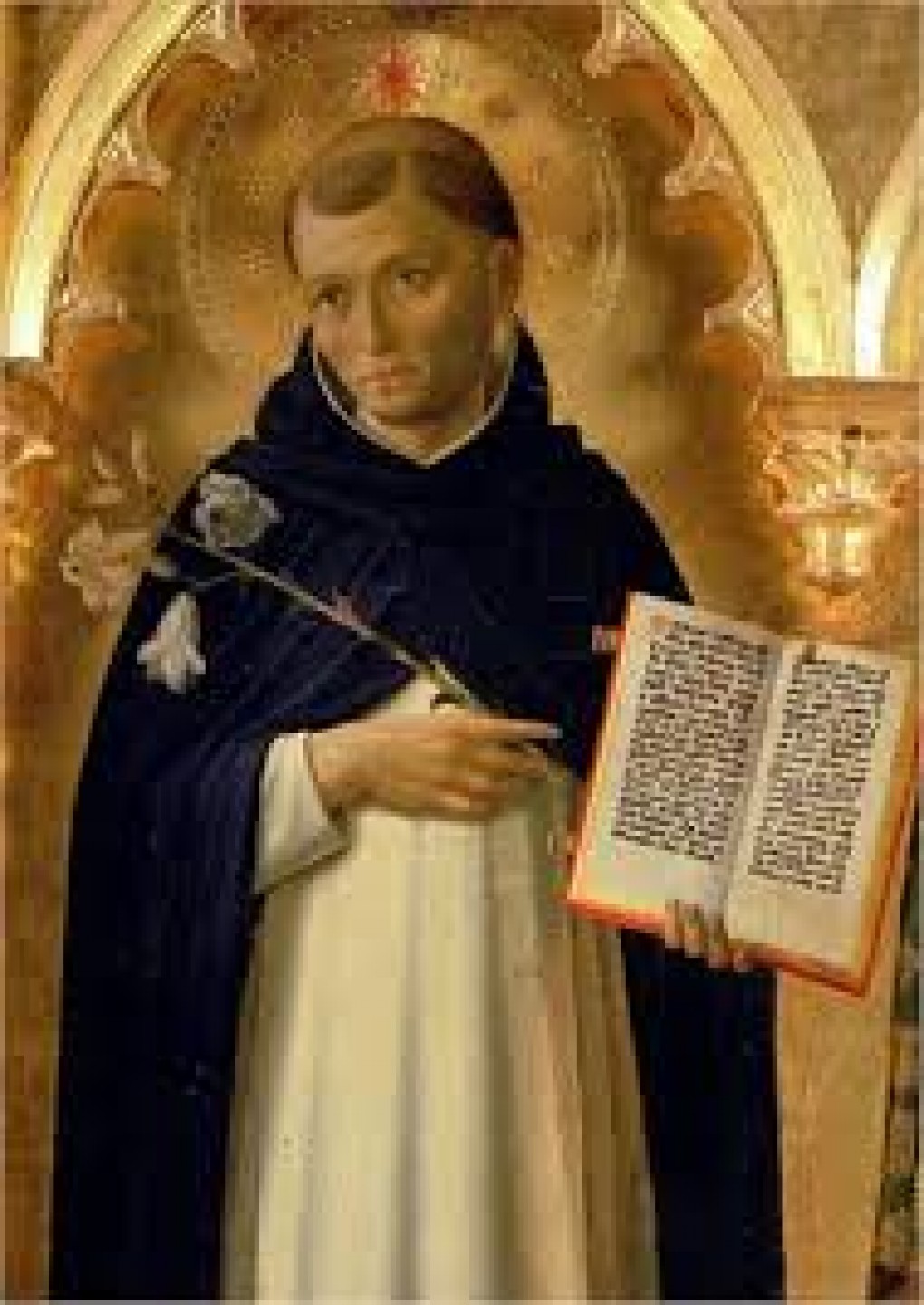
It is with great happiness that we have the privilege of announcing that our dear Brother Michael Austin Marshall has successfully completed his studies for the Postulancy of the Order of Preachers, Independent, and has been admitted to the Order as a Novice. We ask your continued prayers for our dear brother, as he strives to become the best Dominican he can be, and to serve the Lord in all aspects of his life. Br. Michael will continue with his studies, daily interactions with the members of the Order, and work towards his Simple Profession.
Are You Ready??? ~ The Rev. Lady Sherwood, OPI

Concerning times and seasons, brothers and sisters, you have no need for anything to be written to you. For you yourselves know very well that the day of the Lord will come
like a thief at night. When people are saying, “Peace and security, ” then sudden disaster comes upon them, like labour pains upon a pregnant woman, and they will not escape.
But you, brothers and sisters, are not in darkness, for that day to overtake you like a thief. For all of you are children of the light and children of the day. We are not of the night or of darkness.
Therefore, let us not sleep as the rest do, but let us stay alert and sober. 1 Thes. 5: 1 – 6
As it tells us in 1 THES 5:1-6,, we know the that the Lord shall indeed come again and that as “Children of the light” we must stay “alert and sober”. We are not in darkness and should not let that day take us by surprise ,as it indeed shall for all those still in darkness and without the Lord truly in their lives. We must ensure then that we are fully prepared for the day of the Lord’s return in Glory. We need to remain watchful as the Lord’s children, so how is it that we truly can be prepared?
We need to be aware of our thoughts in our daily lives -(2 Cor 10:5). Many of us as humans seem to find it difficult to bring our thoughts into the “obedient captivity of God”. When we encounter evil or negative thoughts, we must fight against and rebuke them, instead filling all our thoughts with only the things that are good in the sight of God (Phil. 4:8).
We must be aware of all the unholy things which we may hear in the world, especially all the things that are against God, or are hateful or discriminatory in nature to our brothers and sisters. And “we must apply our hearts to instruction and our ears to words of knowledge”-(Prov. 23:12).
We must watch the way in which we speak in our lives because each of us at some point in our lives has spoken, even accidentally , in a way that has caused upset, hurt, or pain to others and this will be all taken into account on the Lord’s return. ” Everyone will have to give account on the day of judgment for every empty word they have spoken. For by your words you will be acquitted, and by your words you will be condemned.” (Matt. 12:36-37).
We must watch our actions and our works, ensuring that they are done only for God, with all our hearts and make sure that they are works that are Gloryifying to Him (Col. 3:23; I Cor. 10:31) Our works and actions speak far louder than words, so our works will be “heard” even more than our words. It is important that both work hand in hand for the Father’s Glory.
All of these things are vital if we are truly to be prepared for the return of the Lord. Let us correct any of these ways in which we are not fully prepared, ensuring that in His loving Grace and mercy, we may then live and serve him in eternity to his Glory.
With these things in mind, If the Lord returned today or tomorrow, would you be ready???
 The Order of Preachers, Independent
You must be logged in to post a comment.