
Category: Uncategorized
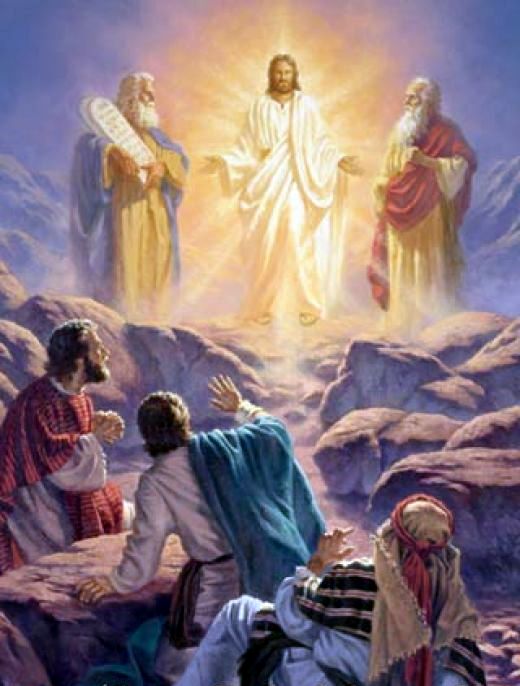
Signs and Proof: Transfiguration ~ Br. Chip Noon, Novice
 This is my Son, my beloved, with whom I am well pleased; listen to him.”
You want a sign? You need proof? All right, I’ll give you a sign.
I can imagine Jesus at least thinking these words, since what he was teaching was so hard for his followers and the rest of the population to understand. In fact, in the previous chapter of Mark (today’s Gospel comes from Mark Chapter 9) we read:
11 The Pharisees came forward and began to argue with him, seeking from him a sign from heaven to test him.
12 He sighed from the depth of his spirit and said, “Why does this generation seek a sign? Amen, I say to you, no sign will be given to this generation.”
But how natural for us to want a sign! We who sometimes don’t even believe the truth when it stares us in the face! And we, who have so much scientific resources at our disposal to get proofs, evidence, facts, still wonder at the most basic phenomena of our world.
So it is no wonder then that Jesus’ followers, and especially those whom he threatened with his teachings, would feel at sea, far from the shore of certainty, surrounded by the waters of faith…and in a leaky boat as well.
So it seems to me that taking pity on Peter, James, and his brother John, Jesus decided to give these three a sign to ease their doubts…not erase them, but to ease them.
2 After six days Jesus took Peter, James, and John and led them up a high mountain apart by themselves.b And he was transfigured before them,
3 and his clothes became dazzling white, such as no fuller on earth could bleach them.
4 Then Elijah appeared to them along with Moses, and they were conversing with Jesus.
Moses and Elijah. Even their recognition by the disciples is a wonder, since how would they know who these figures were? There were no pictures, nor did they have nametags. So here is a proof that is in itself hard to understand. But Moses represented the departure from the old way of life, and Elijah represented the ascent into heaven, ascending as he did in a flaming chariot.
“Don’t tell anybody about this.” And what was this “rising from the dead” Jesus spoke about.
I don’t know about you, but this event, the Transfiguration, still warms my heart. I’ve asked for proof, and here I read about a miraculous occurrence involving dazzling light, the voice of God, and two other witnesses from the past. It still gives me comfort.
Yes, I want proof. Yes we all want proof. But Peter tells us that it won’t come immediately. Here are his words for us:
Moreover, we possess the prophetic message that is altogether reliable.
You will do well to be attentive to it,
as to a lamp shining in a dark place,
until day dawns and the morning star rises in your hearts.
There is God again, telling me that day will dawn, and the morning star will rise in my heart. Just this image is enough proof for me. I can float in the sea of faith knowing that my boat is not leaking.
Lord, we who are doubters seek your loving consolation. Help us to continue to look for the morning star, and guide our hearts along the path of peace and love.

“Perfect in Weakness” ~ Sister Dollie Wilkinson, OPI

Our reading today comes from 2 Corinthians 12:2-10:
“I know a person in Christ who fourteen years ago was caught up to the third heaven–whether in the body or out of the body I do not know; God knows. And I know that such a person–whether in the body or out of the body I do not know; God knows–was caught up into Paradise and heard things that are not to be told, that no mortal is permitted to repeat. On behalf of such a one I will boast, but on my own behalf I will not boast, except of my weaknesses. But if I wish to boast, I will not be a fool, for I will be speaking the truth. But I refrain from it, so that no one may think better of me than what is seen in me or heard from me, even considering the exceptional character of the revelations. Therefore, to keep me from being too elated, a thorn was given me in the flesh, a messenger of Satan to torment me, to keep me from being too elated. Three times I appealed to the Lord about this, that it would leave me, but he said to me, “My grace is sufficient for you, for power is made perfect in weakness.” So, I will boast all the more gladly of my weaknesses, so that the power of Christ may dwell in me. Therefore I am content with weaknesses, insults, hardships, persecutions, and calamities for the sake of Christ; for whenever I am weak, then I am strong.”
In this second letter to the Corinthians, Paul is at first trying to explain why the people should listen to him, and follow his lead, in becoming children of a loving Father. He starts at first by boasting, but quickly realizes that that is not the right way to go. In the process, he learns a couple of valuable lessons. A couple of crucial lessons that are still relevant today.
The Lesson of Humility:
“My grace is sufficient for you, for my power is made perfect in weakness.”
Paul had to learn two lessons. The first was the the lesson of humility. Paul had to learn that grace had to replace ego. This was difficult for Paul. We live in a culture that prizes strength. It was no different in Paul’s time. In spite of this fact, Paul said, “My authority comes because of my weakness.” Paul had revelations from God in which he was taken up into paradise. Paul could have said, “Look at all of these revelations I’ve had. These are my authority.” No, he said he would boast only of his weaknesses. He was a very learned man. He demonstrated great intellectual skills so God gave Paul an infirmity. He called it his thorn in the flesh. Scholars have expended a great deal of time, ink and paper speculating on the nature of the ailment but are not even close to an agreement. Some think it was an inflammation of his eyes that caused swelling, others contend that it was severe headaches or even malaria. While we do not know the precise infirmity we do know that Paul’s opponents used it against him. They argued that if he had enough faith or was truly called to be an apostle, God would have healed him.
Physical health is often used as a sign of God’s blessings. How many times have you heard someone remark, “Why doesn’t God heal me?” “What have I done to deserve this?” We assume that if we live a good life we will be free from chronic physical ailments or that spiritual maturity can be measured by good health. This argument may appear ridiculous to hear now, but how often do we think about this in moments of frustration. Or how often do we use some form of disability or physical ailment as a reason for not doing what we feel God has called us to do? I know, I do….for example, I have hand tremors. How many times have I let this neurological ailment prevent me from doing things? More often than I can count.
God had given Paul a vision so incredible that words could not describe it. Anyone who has had such a mystical experience would be tempted to brag about it. Paul’s thorn prevented that because the severe pain or the physical disfigurement reminded him each day that he was still just a mortal man. He had to rely on the grace of God, not on his good looks or skillful speaking to accomplish God’s work.
Sometimes, fear is what’s holding us back from becoming a better Christian, or from taking a more active role within the church. We are reluctant to try something new because we are afraid of failing. Or we are embarrassed by the quality of our work compared to someone elses. In the back of our mind we are saying that unless we can do an excellent job, then we will not risk doing the project. Of course there are some jobs that this attitude is indeed important. We do not want a NASA scientist doing a less than a precise job on the design and construction of the Space Station. We do not want our doctor saying when writing the prescription for our medication to make us feel better, “Now was that dosage 15mg or 150mg or 1500mg.” Nor do we want to hear the teller at the bank make a mistake in adding up our bank deposit. Those professions require an exactness. But God does not expect that every person will produce an award winning performance in every task, job, project or ministry.
Sometimes, its just showing up, and trying your best, that truly reveals how gifted you really are. You may not be able to teach Sunday School like a trained school teacher, but if you can share your love for Jesus who cares if you follow the lesson plan. You may not be able to heal the sick or say elegant prayers, but if you can just sit with someone who is sick and hold their hand no one will fault you. You may not be able to pound a nail in straight or climb onto the roof, but if you can mix up fruit drinks and serve sandwiches during a Habitat for Humanity project, then you will be just as important as the people doing the hard labor.
The Lesson of Weakness:
“my power is made perfect in weakness.”
We may consider ourselves inexperienced, unpolished, and unskilled. We may consider ourselves unqualified to serve God in the church because of our past or even a present that is not consistent with the teachings of Christ. We may consider ourselves unprepared because of a lack of education. We all have our weaknesses. We all have “flaws” but whatever we lack God can take it and make it into our source of strength.
Our weaknesses can lead to strength. Our weaknesses, struggles, and shortcomings, though they are painful and may be embarrassing, can keep us from that awful smugness and arrogance and open us to God. I myself have found that my own personal experiences and struggles, whether as a mom, wife, grandmother, and a Sister in the Church, have better allowed me to help others. If someone is talking to me on a matter with which they’re dealing, and if I can say, “Maybe I haven’t struggled with exactly that same thing, but, I have dealt with something similar”, then that recognition is my credential, not the college degree or formal training. A person can have all that and come off as pompous. I don’t think people are very helpful when they feel like they have not experienced the usual sufferings of life. When a person can say, “I understand that. I have experienced something similar”, a person may then go on to say, “My power really does come from God.” Paul is saying here that it is his personal weaknesses, including the thorn gifted to him by God, that reveals his greatest strengths. In this he feels justified in boasting, as should we all. For it is in being our most humble, and human, that brings us into a closer relationship with our heavenly Father.

Blessed Gregory & Blessed Dominic
Very little is known about these two Dominican preachers. Their legend tells us that they evangelized the mountainous Somontano region of Moorish Spain near Barbastro, Aragon. One day they were caught in a storm as they traveled from one village to another. The storm loosed the rocks of the cave in which they had sought shelter and they were buried in a landslide. The bells of Perarúa rang out of their own accord, indicating that something remarkable was afoot, and villagers, who ventured out after the storm, found the cave surrounded by lights and angelic music. Digging into the rubble, they found the two Dominicans crushed to death. Miracles surrounded their burials and their tombs at Besians in the diocese of Barbastro, where pilgrims came to pray, especially against the danger from storms. Formerly on Rogation days, and in times of drought, their relics were carried in procession.
Born: 11th Century
Died: Martyred about 1300
Beatified: Pius IX approved their cult in 1854
Blessed Villana, Matron

Blessed Villana was the daughter of Andrew de’Botti, a Florentine merchant, and was born in 1332. When she was thirteen she ran away from home to enter a convent but her attempts were unsuccessful and she was forced to return. To prevent any repetition of her flight, her father shortly afterwards gave her in marriage to Rosso di Piero. After her marriage she appeared completely changed; she gave herself up to pleasure and dissipation and lived a wholly idle and worldly life. One day, as she was about to start for an entertainment clad in a gorgeous dress adorned with pearls and precious stones, she looked at herself in a mirror. To her dismay, the reflection that met her eyes was that of a hideous demon. A second and a third mirror showed the same ugly form.
Thoroughly alarmed and recognizing in the reflection the image of herself sin-stained soul, she tore off her fine attire and, clad in the simplest clothes she could find, she betook herself weeping to the Dominican Fathers at Santa Maria Novella to make a full confession and to ask absolution and help. This proved the turning point of her life, and she never again fell away. Before long Villana was admitted to the Third Order of St. Dominic, and after this she advanced rapidly in the spiritual life. Fulfilling all her duties as a married woman, she spent all her available time in prayer and reading. She particularly loved to read St. Paul’s Epistles and the lives of the saints. At one time, in a self-abasement and in her love for the poor, she would have gone begging for them from door to door had not her husband and parents interposed. So completely did she give herself up to God that she was often rapt in ecstacy, particularly during Mass or at spiritual conferences; but she had to pass through a period of persecution when she was cruelly calumniated and her honor was assailed.
Her soul was also purified by strong pains and by great bodily weakness. However, she passed unscathed through all these trials and was rewarded by wonderful visions and olloquies with our Lady and other saints. Occasionally the room in which she dwelt was filled with supernatural light, and she was also endowed with the gift of prophecy. As she lay on her deathbed, she asked that the Passion should be read to her, and at the words “He bowed His head and gave up the ghost”, she crossed her hands on her breast and passed away. Her body was taken to Santa Maria Novella, where it became such an object of veneration that for over a month it was impossible to proceed with the funeral.
People struggled to obtain shreds of her clothing, and she was honored as a saint from the day of her death. Her bereaved husband use to say that, when he felt discouraged and depressed, he found strength by visiting the room in which his beloved wife had died.
Born: 1332 in Florence, Italy
Died: December of 1360 of natural causes; body taken to Santa Maria Novella; the Fathers were unable to bury her for a month due to the constant crowd of mourners
Beatified: March 27 1824 (cultus confirmed) by Pope Leo XII
Lent I ~ Br Michael Marshall, Novice

Lent is often referred to as the season of the desert. We have been taught this because Jesus goes out into the desert for 40 days, in preparation for his ministry, and the 40 days of Lent reflect that. When we think of a desert, we usually think of a dry, barren landscape. But yet, Lent it is not necessarily a season of the desert, for Lent is not meant to be dry and barren. Lent is meant to be more of a season of preparation, even a season of purgation of what needs changed within us. In the First Letter from Peter in today’s readings, () Peter speaks about a cleansing and renewal through baptism and believing in Jesus will lead us closer to God. He refers back to what occurred between Noah and God after the Great Flood; where God established a new covenant with humanity. This new covenant that God speaks of refers to the coming of His son Jesus Christ, without actually specifically mentioning Jesus.
In writing about the devastation of the flood, the author of Genesis tells us the flood was a forty day and forty night event, one which also brought about a cleansing of the wickedness taking place on the earth. This cleansing brought about renewal for humanity to move forward with God in a closer relationship. The cleansing was a preparation for that relationship with God.
According to the Gospel of Mark, we learn that, when God put the fulfillment of the new covenant into place, Jesus did not just jump right into his ministry. Jesus had to prepare himself for his life of ministry; this preparation was his time spent in the desert for forty days. He then was ready to preach the fulfillment through preaching the gospel.
So as was stated earlier, the season of Lent is a time of cleansing and preparation for us. It is a time of examination of things that we need to change within us to bring us closer to God. We do not sit for forty days, and do nothing while waiting for Easter. Lent is not a time when merely do find something to give up so we can say we gave something up, but rather a time when we recognize what we need to do grow in our relationship with God. It is our job to understand that God did his part to establish the new covenant, with us, and in return do our part through doing something to cleanse what needs cleansed. To become closer to God, what are YOU going to do the remainder of this Lent, a season of preparation?
Blessed Bernard Sammacca

Born in Catania, Sicily; died 1486; cultus approved 1825. Born of wealthy and pious parents, Bernard was given a good education. In spite of this good training, he spent a careless youth. Only after he was badly injured in a duel was he brought back to his senses. His long convalescence gave him plenty of time to think, and once he was able to go out of the house, he went to the Dominican convent of Catania and begged to be admitted to the order.
Bernard, as a religious, was the exact opposite of what he had been as a young man. Now he made no effort to obtain the things he had valued all his life, but spent his time in prayer, solitude, and continual penance. There is little recorded of his life, except that he kept the rule meticulously, and that he was particularly kind to sinners in the confessional. Apparently, he did not attain fame as a preacher, but was content to spend his time in the work of the confessional and the private direction of souls.
One legend pictures Bernard as having great power over birds and animals. When he walked outside in the gardens, praying, the birds would flutter down around him, singing; but as soon as he went into ecstasy, they kept still, for fear they would disturb him. Once, the porter was sent to Bernard’s room to call him, and saw a bright light shining under the door. Peeking through the keyhole, he saw a beautiful child shining with light and holding a book, from which Bernard was reading. He hurried to get the prior to see the marvel.
Bernard had the gift of prophecy, which he used on several occasions to try warning people to amend their lives. He prophesied his own death. Fifteen years after his death, he appeared to the prior, telling his to transfer his remains to the Rosary chapel. During this translation, a man was cured of paralysis by touching the relics (Benedictines, Dorcy).
Born: Catania, Sicily (year unknown)
Died: 1486
Canonized: Leo XII confirmed cultus in 1825
Blessed Jordan of Saxony

Men prayed for strength to resist Jordan’s burning eloquence, and mothers hid their sons when Master Jordan came to town. Students and masters warned each other of the fatal magnetism of his sermons. The sweetness of his character and the holiness of his life shone through his most casual words in a flame that drew youth irresistibly to the ideal to which he had dedicated his own life. In his 16 years of preaching, Jordan is said to have drawn more than a thousand novices to the Dominican Order, among whom were two future popes, two canonized saints (e.g., Albert the Great), numerous beati, and countless intellectual lights of his dazzling century.
Of Jordan’s childhood, nothing is known, except that he was born of a noble family. He was drawn to the order in 1220 by the preaching of Blessed Reginald, the beloved son of Dominic, brought back from death by Dominic’s and Our Lady’s prayers. Jordan was at that time about 30, a student at the University of Paris, and his reputation for sanctity had preceded him into the order.
He had worn the habit for only two months when he was sent to Bologna as a delegate to the first general chapter of the order. The following year he was elected provincial of Lombardy, Italy, and on the death of Saint Dominic, succeeded him as master general.
The Order of Preachers was only six years old when Jordan became master general. He carried out the yet untried plans of Dominic, who had hurried off to heaven when many of his dreams were just beginning to open out into realization, and still more vistas beckoned beyond. Under him the new order advanced apace, spreading throughout Germany and into Denmark. Jordan will always be remembered for his work in increasing the manpower of the order, but his contribution to its quality should never be forgotten.
He added four new provinces to the eight already in existence; he twice obtained for the order a chair at the University of Paris and helped found the University of Toulouse; and he established the first general house of studies of the order. He was a spiritual guide to many, including Blessed Diana d’Andalo; and somewhere in his busy lifetime he found time to write a number of books, including a life of Saint Dominic.
Jordan was regarded as a menace by the professors of universities where he recruited novices. He emptied classrooms of their most talented students, stole their most noted professors. Young men by the hundreds besieged the order for admittance. Some were mere children, some famous lawyers and teachers, and some were the wealthy young bearers of the most famous names in Christendom. One and all, they were drawn to a life of perfection by this man who preached so well, and who practiced what he preached with such evident relish.
All the old writers speak of the kindness and personal charm of Jordan. He had the ability to console the troubled and to inspire the despondent with new hope. At one time, a discouraged student was busily saying the Office of the Dead when Master Jordan sat down beside him and began alternating verses with him. When he came to the end of Psalm 26, Jordan said the verse with emphasis: “Oh, wait for the Lord!” Wherewith the sorrows of the young man departed. Another student was rid of troubled thoughts by the mere imposition of Jordan’s hands. To bring peace to the brothers who were being annoyed by the devil, Jordan established the beautiful custom of singing the Salve Regina after Compline each night.
Jordan was shipwrecked and drowned when returning from a pilgrimage to the Holy Land (Benedictines, Dorcy).
Born: 1190 at Padberg Castle, diocese of Paderborn, Westphalia, old Saxony; rumoured to have been born in Palestine while his parents were on a pilgrimage, and named after the River Jordan, but this is apparently aprochryphal
Died: Drowned 1237 in a shipwreck off the coast of Syria while on a pilgrimage to the Holy Land
Beatified: 1825 (cultus confirmed) by Pope Leo XII
Canonized: University of Santo Tomas Faculty of Engineering
Walls ~ Br. Chip Noon, Novice
Today is the Memorial Day of Blessed Jordan of Saxony, who was born in 1190 and died in 1237. This Dominican was Master General of the Order when it was only six years old, succeeding Dominic upon his death. It was said that men prayed for strength to resist Jordan’s burning eloquence, and mothers hid their sons when Master Jordan came to town. Students and masters warned each other of the fatal magnetism of his sermons. The sweetness of his character and the holiness of his life shone through his most casual words in a flame that drew youth irresistibly to the ideal to which he had dedicated his own life. In his 16 years of preaching, Jordan is said to have drawn more than a thousand novices to the Dominican Order, among whom were two future popes, two canonized saints, numerous beati, and countless intellectual lights of his dazzling century.
He drew people to him. He healed the sick and distressed. He spread the Word. He was magnetic.
In today’s first reading from Leviticus, we learn how the ancient Isrealites treated lepers…and other outcasts…driving them away, branding them, and therefore, they thought, keeping themselves safe.
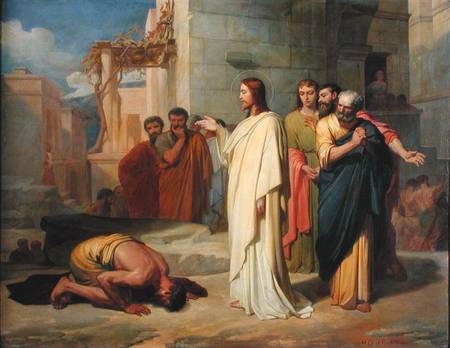
Then in the Gospel, we witness Jesus stretching out his hand to touch a leper and make him clean. Jesus often touches outcasts, the sick, the sinners. Interestingly, we then see Jesus choosing to remain outside of towns, staying in deserted places, just as lepers were forced to do under the Levitical code, because the crowds drawn to him were too large.
Under the old Law, certain people and groups were forced out of society. Under the Law that Jesus “fulfilled,” he places himself in the same category as the outcasts, lepers, sinners.
But his law is love, and his message is peace, as we hear in the carol “O Holy Night.”
How are we to reconcile these conflicting messages? They are reconciled in the second reading from First Corinthians:
Brothers and sisters, Whether you eat or drink, or whatever you do, do everything for the glory of God.
Avoid giving offense, whether to the Jews or Greeks or the church of God,just as I try to please everyone in every way,
not seeking my own benefit but that of the many, that they may be saved. Be imitators of me, as I am of Christ.
And that is how Blessed Jordan of Saxony finds his place among the words of Good News spread by Jesus and the Apostles. He is truly an imitator of Christ, as was Paul; he is truly a magnet as was Our Lord.
Simply by demonstrating that he loved the Lord our God with his whole heart, his whole soul, and his whole strength, and that he loved his neighbor as himself, he drew hundreds, thousands to Jesus, and to the new Order of Preachers. He went outside the walls, where he found the halt, the lame, the distressed, and he gave them peace.
Lord, help us to imitate Christ by going outside the walls. Help us to see the Lord in everyone we meet, the low and the high, the humble and the proud. And help us to do as Blessed Jordan did: draw others to a life of perfection
Blessed Nicholas Palea
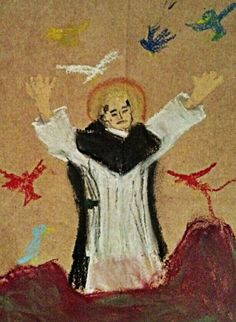
Born of a noble Neapolitan family, Nicholas was named for the great wonder-worker who had once lived in the kingdom. At 8 he was already practicing austerities. He would not eat meat, even on feast days, because he had been favored by a vision of a young man of great majesty who told him to prepare for a lifetime of mortifications in an order that kept perpetual abstinence.
Sent to Bologna for his studies, he met Saint Dominic and was won by him to the new order. He was the companion of Saint Dominic on several of the founder’s journeys to Italy, and warmed his heart at the very source of the new fire which was to mean resurrection to so many souls.
Saint Nicholas of Bari had been noted for his astounding miracles, and his young namesake began following in his footsteps while yet a novice. When on a journey with several companions, he met a woman with a withered arm. Making the Sign of the Cross over her, he cured her of the affliction.
At one time, as he entered his native Bari, he found a woman weeping beside the body of her child, who had been drowned in a well. He asked the woman the name of the child, and being told it was Andrew, he replied, “After this, it’s Nicholas. Nicholas, in the name of our Lord Jesus Christ, arise!” The little one revived, alive and well. The child of his sister Colette, mute from birth, brought her famous uncle a basket of bread. “Who sent the bread, child?” Nicholas asked her. “My mother,” she replied, and from then on she was cured.
As provincial of the Roman province, Nicholas was wise, prudent, and kind. He established priories in Perugia in 1233 and Trani in 1254. He received many novices and did much of his work among the young religious. Once he was called to the assistance of a novice who had been deceived by the devil and would not go to confession. He showed the young man the true state of his soul and undid the work of the evil one.
Nicholas earned great fame as a preacher. On one occasion, when he was preaching in the cathedral of Brescia, two irreverent young men began disturbing the congregation and soon made such a commotion that Nicholas could not make himself heard. Nicholas left the cathedral to a neighboring hill and there called to the birds to come to listen to him. Like the birds in the similar story of Saint Francis, flocks of feathered creatures fluttered down at his feet and listened attentively while he preached. At the end of the sermon they flew away singing.
After a lifetime of preaching and miracles, Nicholas, forewarned of is death by a visit from a brother who had been dead many years, went happily to receive the reward of the faithful. Miracles continued to occur at his tomb and through his intercession. Among these was the miracle by which life was given to a baby born dead. His parents had promised to name the baby Nicholas if the favor were granted, and to their great joy their child lived (Benedictines, Dorcy).
Born: Giovinazzo near Bari, Naples (year unknown)
Died: died in Perugia, Italy, in 1255
Beatified: Leo XII confirmed his cult in 1828
Representation: In art, Saint Nicholas is presented as a Dominican with a birch and a book (Roeder). He is venerated in Giovinazzo and Perugia, Italy (Roeder).
A New Presiding Bishop!
My Dearest Brothers and Sisters, It is with great joy that we announce the election of our new Presiding Bishop. The Right Reverend Michael R. Beckett, OPI, has been elected to serve as the Presiding Bishop of the Unified Old Catholic Church. Bishop Martin Arredondo, IOFM, has been selected to serve as Chancellor and will act as Bishop Michael’s assistant and second in leadership of our church. Please pray for these two men as they undertake this great task. Here begins a new and exciting path for our church. Let us rejoice!


You must be logged in to post a comment.