
Category: Uncategorized
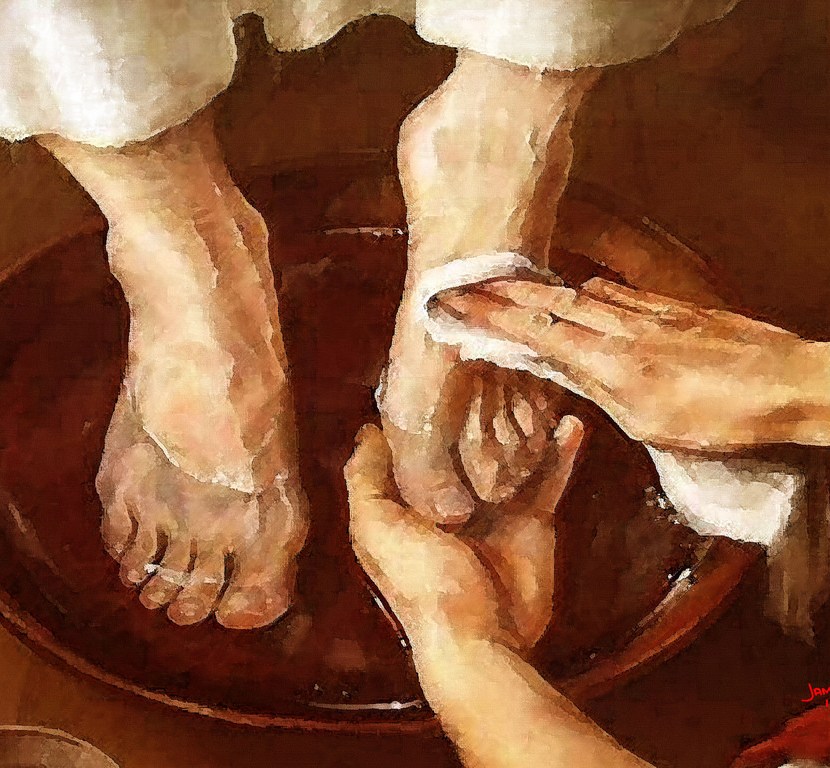
Washing Feet ~ Br. Chip Noon, Novice
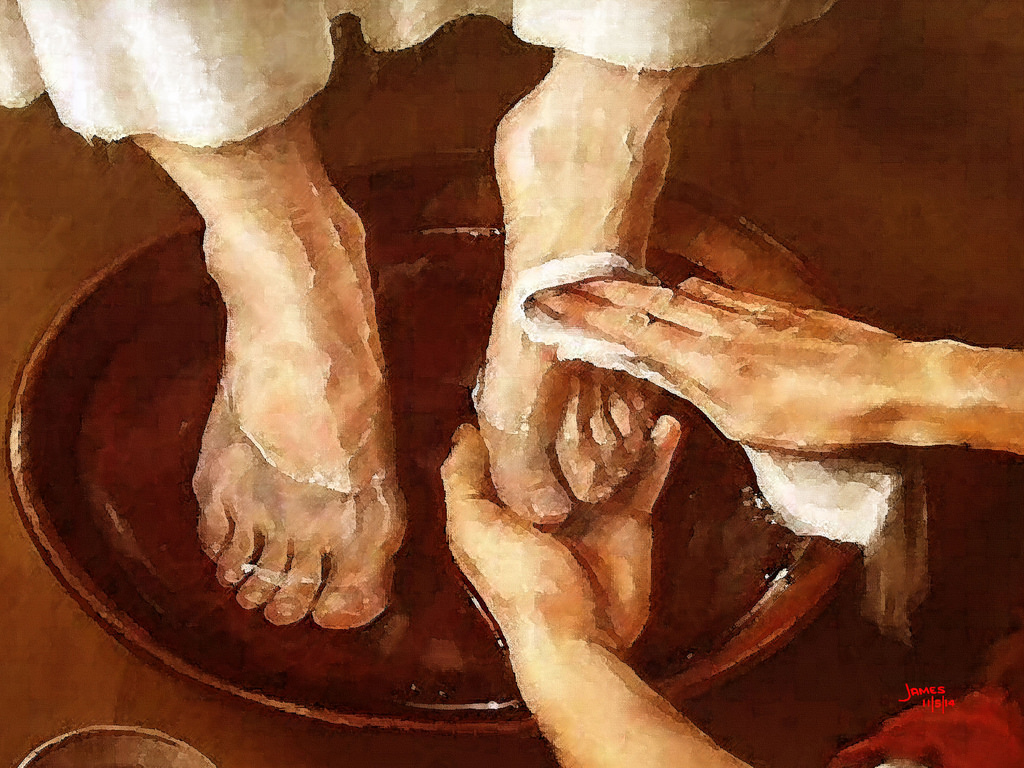
“Ecce Agnus Dei, ecce qui tollit peccata mundi. Beati qui ad cenam Agni vocati sunt” (Behold the Lamb of God, behold him who takes away the sins of the world. Blessed are those called to the supper of the Lamb).
The first reading for the Mass of the Lord’s Supper is from Exodus. In it we find explicit instructions the Lord gives to Moses about what became known as The Feast of the Passover. The Lord also says:
“This day shall be a memorial feast for you, which all your generations shall celebrate with pilgrimage to the LORD, as a perpetual institution.”
And St. Paul quotes Jesus in the second reading: “This is my body that is for you. Do this in remembrance of me.”
In the same way also the cup, after supper, saying, “This cup is the new covenant in my blood. Do this, as often as you drink it, in remembrance of me.”
The Verse Before the Gospel in today’s mass is from John 13: I give you a new commandment, says the Lord: love one another as I have loved you.
Holy Thursday is sometimes called Maundy Thursday, Maundy coming from the Latin word mandare, to command. Today we learn about three commandments: one from God to the Hebrews in the Old Testament about the Passover Feast and the sacrificial lamb, and the other two from Jesus who commands us to love one another and celebrate the Eucharist in his memory. And in Jesus’ command to love one another, we hear the echo of his first command to his disciples: “Love the Lord your God with all your heart and with all your soul and with all your mind.”
So who gives commands? The boss, the general, the supervisor, the police…in this case, it’s God. But what, besides the Eucharist is an important part of this story? God reminds everyone that he is going to be sacrificed to save them from their sins, and then proceeds to wash the feet of his disciples! The master becomes the servant and tells us that we should all be servants to our neighbors.
Of course, then there is a discussion about who among them is considered to be the greatest, they being the rude bunch of disciples that they are. Jesus says to them:
“The kings of the Gentiles lord it over them; and those who exercise authority over them call themselves Benefactors. But you are not to be like that. Instead, the greatest among you should be like the youngest, and the one who rules like the one who serves. For who is greater, the one who is at the table or the one who serves? Is it not the one who is at the table? But I am among you as one who serves.”
It seems to me that the whole of the establishment of the Eucharist embodies this idea of servanthood, along with the bread and wine. Sometimes we just forget this part of our Lord’s last day as a free man.
But maybe we ought to reflect upon that significant act, washing feet, and the reminder by Jesus that he is “among [us] as one who serves.”
“Do this in remembrance of me.” Eat the bread, drink the wine, serve our fellows. That reminder is not an integral part of the mass, but perhaps it should be. Wouldn’t a weekly or daily reminder at the feast of the Eucharist that we are all to act as servants, wouldn’t that reminder be a transformative event in our lives? After all, we are just dust, and will return to dust. But living for, and being remembered as servants of, our fellows…isn’t that a greater honor than being the boss, or first at the table? Being like Jesus. Isn’t that the greatest honor of all?
Lord, as we approach the time of your passion, help us to remember every day that you came to us as a servant and gave your life for us on the cross, so that at daybreak on Easter, we can rejoice in your resurrection as your friends. Amen.

Jesus In The Bookstore ~ The Rev. Deacon Dollie Wilkinson, OPI

While out and about today, running errands and having lunch with my daughter, we decided to stop in a local coffee shop/bookstore. I happened to notice a gentleman sitting at a table, not with a cup of coffee in front of him, but with a small cart which seemed filled with random bags and other things. He also had a couple tote bags sitting on the floor beside him. While I do not know his story, I just assumed he was homeless, or maybe an individual who was down on his luck.
What circumstances led to this person being in the bookstore? Because it was rather chilly out, I assumed maybe he was just looking for a warm place to sit awhile, before deciding on how he would spend the rest of the day, and night. While I cannot imagine what challenges this man faces, I often wondered what circumstances led to him being without a place to live, or even to spend the night.
Then I began to think about Jesus, who traveled quite a bit, spreading his Father’s message of hope, love, of grace. Did He spend time in public places like this? We know He did, as well as visiting in people’s homes. Such as He did in the home of Lazarus, as described in John 12:1-8:
“Six days before the Passover Jesus came to Bethany, the home of Lazarus, whom he had raised from the dead. There they gave a dinner for him. Martha served, and Lazarus was one of those at the table with him. Mary took a pound of costly perfume made of pure nard, anointed Jesus’ feet, and wiped them with her hair. The house was filled with the fragrance of the perfume. But Judas Iscariot, one of his disciples (the one who was about to betray him), said, “Why was this perfume not sold for three hundred denarii and the money given to the poor?” (He said this not because he cared about the poor, but because he was a thief; he kept the common purse and used to steal what was put into it.) Jesus said, “Leave her alone. She bought it so that she might keep it for the day of my burial. You always have the poor with you, but you do not always have me.” “
We know Jesus was warmly welcomed, maybe because He was already known by most of the people in the home. But we also know that there were those (such as Judas Iscariot), who did not believe in treating Jesus as the blessed Savior He was. Of course Judas ends up betraying Jesus, but at this time, we are unsure why he feels it a waste to use the good perfume or oil, to bathe Jesus’ feet. But Mary does so anyway. Jesus recognizes this, and states this same oil will also be used for his burial.
Now, imagine Jesus in our time. Just as the homeless person I noticed today, He would probably have been seen as such. Of course Jesus carried very little with Him, but if the gentleman I saw today, showed up at your door, would you welcome him in to your home? Would you use your best china, serve Him your favorite dishes? Would you be comfortable with Him wishing to use your bathroom, maybe even to take a shower? If this homeless person knocked at your door, would you be like Martha and serve Him a delicious meal, open your finest bottle of wine, and maybe even call a few friends over to share this wonderful occasion? Or would you turn Him away, too quickly judging Him by His appearance, deciding that He isn’t worth the time or effort?
I imagine many folks who saw the homeless gentleman in the bookstore today, would have quickly walked passed him without much thought, too busy with their own concerns. But what if he were Jesus, and He was just resting a bit before continuing on His travels, spreading His message of salvation, of love and hope? Would you be like Mary, and quickly rush to wash this man’s feet, or offer your most expensive oil or perfume, so He may refresh himself? I often wonder what would happen if Jesus walked among us today. Would we even recognize Him? We know many in the gospels did not, but many more did. Would we welcome Him in to our homes, our businesses, our schools? Would we gladly share everything we owned, knowing like Mary, that all we have is because of our blessed Savior?
Just as we are remind of in Matthew 25:40, ““The King will reply, ‘Truly I tell you, whatever you did for one of the least of these brothers and sisters of mine, you did for me.’ “ We must always remember that though Jesus, the Son, does not walk among us today as a man, He still walks among us. Just as Mary and Martha did so many years ago, we need to always welcome Him in to our homes, our lives. Giving Him the best we have to offer, giving Him our all.

And Now, For a Change… ~ The Rev. Dcn. Dollie Wilkinson, OPI

As we first entered the Lenten season, the focus almost always seemed to be about change. Questions such as, “What am I to give up for Lent?” or even, “What task or new habit can I incorporate in to my daily life?”. As we all know, change, though scary at times, is almost always good. Just as the change that came over Jesus in Luke 9:28-36.
“Now about eight days after these sayings Jesus took with him Peter and John and James, and went up on the mountain to pray. And while he was praying, the appearance of his face changed, and his clothes became dazzling white. Suddenly they saw two men, Moses and Elijah, talking to him. They appeared in glory and were speaking of his departure, which he was about to accomplish at Jerusalem. Now Peter and his companions were weighed down with sleep; but since they had stayed awake, they saw his glory and the two men who stood with him. Just as they were leaving him, Peter said to Jesus, “Master, it is good for us to be here; let us make three dwellings, one for you, one for Moses, and one for Elijah” — not knowing what he said. While he was saying this, a cloud came and overshadowed them; and they were terrified as they entered the cloud. Then from the cloud came a voice that said, “This is my Son, my Chosen; listen to him!” When the voice had spoken, Jesus was found alone. And they kept silent and in those days told no one any of the things they had seen.”
Peter, John and James witnessed a rare sight, the Transfiguration or change, of Jesus. Just as we experience change during these days of Lent, so did Jesus on top of the mountain. But what I find interesting is that these men still recognized Jesus as, well, Jesus. Though He was clothed in “dazzling white”. He was the same teacher, and friend, that these gentlemen had always known. They recognized Him still, and were humbled by the change that manifested in Him at the time.
Often times we fear change because we wonder, “Will my friends and family still love me?”. Or those around us may even question the changes, fearing this new person we have become, will not be as welcoming to those around us. But Jesus changed, and did Peter, John or James flee in fear? No, actually after Peter witnessed Jesus speaking with Moses and Elijah, he wanted to literally roll out the welcome mat. Not entirely understanding what was happening, but trusting Jesus, Peter wanted to build a dwelling for all three. He was so excited to be a witness to this special occasion, he sought some way to preserve the moment. If such an occurrence happened now, I can almost guarantee every one of us would want to do the same. But instead of constructing tents, we would quickly be updating our status on Facebook, or posting like a gazillion pics on Instagram. Or just as likely, our fingers would quickly be flying across our keyboards, sending out Tweets about what an awesome time we had hanging out with Jesus.
So, we know Peter, John and James had this life-changing experience on the mountain. They witnessed Jesus’ Transfiguration, as well as a booming voice in the cloud declaring exactly who Jesus is, and are instructed to listen to Him. When I first became a Christian, and was walking on wobbly stones in my faith, I often asked God, “Give me a sign, show me you are You”. Well as you can imagine, that didn’t happen. And honestly, if it had, I wouldn’t be so sure that I could have even believed my own eyes. Yet, don’t we all strive too witness the true face of God, to see with our own eyes that He really is just who He says He is, and can do what He unequivocally declares to be done? Yet as we read in the Bible, true visitations by our heavenly Father are rare. But, He is still just as real to us today as He was so long ago on top of that mountain.
As we use this time to manifest changes in ourselves, as we strive to develop a deeper relationship with our blessed Father, let us never forget that He is right here with us. He is sitting at the kitchen table as you sip that first cup of coffee. He is standing in the check out line at the store. He is in the car on our daily commute home in the evening. And, He is there when we finally decide to put our daily cares to rest, and before we close our eyes at night, whispering “Thank you God for another day.”.
Transfiguration Prayer:
Lord,
You met with Moses on the top of a mountain,
And when he descended his face was shining
And in your power he brought your laws to a needy people.
You met with Christ on top of a mountain
And he was transformed with brightness
And descended with renewed strength.
Lord, we want to meet with you and be transformed by you
And to bring your transformation to the world around us.
Help us to bring your presence to the lives of those burdened with sickness or pain,
And those weighed down with confusion or grief.
Bring your healing touch to those lives today,
And let us support those we know in need with a constant friendship.
Help us to bring your change to a troubled society,
Where people are unsure of so much and where change comes so fast.
Give us the grace to understand people’s problems and anxieties
And the strength to tackle difficult issues head on.
Help us to work together to transform a needy world,
Whether through giving or educating or leading by example.
Give us the wisdom to see through big and complex issues
And the love that will keep us going when problems are overwhelming.
Help us to always be a beacon for you,
Individually and together.
We don’t stand on any lofty mountain
But we have a God who is changing us every day
And through whom we can reach out to change a broken world.
Be with us today Lord and help us take whatever step is next for us.
We ask this through the power of your love.
Amen
Blessed Alvarez of Cordova
Blessed Alvarez is claimed by both Spain and Portugal. He received the habit in the convent of Saint Paul in Cordova in 1368, and had been preaching there for some time in Castile and Andalusia when Saint Vincent Ferrer began preaching in Catalonia. Having gone to Italy and the Holy Land on a pilgrimage, Alvarez returned to Castile and preached the crusade against the infidels. He was spiritual advisor to the queen-mother of Spain, Catherine daughter of John of Gaunt, and tutor to her son John II. Alvarez had the work of preparing the people spiritually for the desperate effort to banish the Moors from Spain. He also opposed the Avignon pope Peter de Luna.
Blessed Alvarez is probably best remembered as a builder of churches and convents, an activity which was symbolic of the work he did in the souls of those among whom he preached. He founded, in one place, a convent to shelter a famous image of Our Lady, which had been discovered in a miraculous manner. Near Cordova he built the famous convent of Scala Coeli, a haven of regular observance. It had great influence for many years. His building enterprises were often aided by the angels, who, during the night, carried wood and stones to spots convenient for the workmen.
The austerities of Alvarez were all the more remarkable in that they were not performed by a hermit, but by a man of action. He spent the night in prayer, as Saint Dominic had done; he wore a hairshirt and a penitential chain; and he begged alms in the streets of Cordova for the building of his churches, despite the fact that he had great favor at court and could have obtained all the money he needed from the queen. He had a deep devotion to the Passion, and had scenes of the Lord’s sufferings made into small oratories in the garden of Scala Coeli.
On one occasion, when there was no food for the community but one head of lettuce left from the night before, Blessed Alvarez called the community together in the refectory, said the customary prayers, and sent the porter to the gate. There the astonished brother found a stranger, leading a mule; the mule was loaded with bread, fish, wine, and all things needed for a good meal. The porter turned to thank the benefactor and found that he had disappeared.
At another time, Blessed Alvarez was overcome with pity at a dying man who lay untended in the street. Wrapping the man in his mantle, he started home with the sufferer, and one of the brothers asked what he was carrying. “A poor sick man,” replied Alvarez. But when they opened the mantle, there was only a large crucifix in his arms. This crucifix is still preserved at Scala Coeli.
Blessed Alvarez died and was buried at Scala Coeli. An attempt was made later to remove the relics to Cordova, but it could not be done, because violent storms began each time the journey was resumed, and stopped when the body was returned to its original resting place.
Founded Escalaceli (Ladder of Heaven), a Dominican house of strict observance in the mountains around Cordova; it became a well known center of piety and learning. Alvarez spent his days there preaching, teaching, begging alms in the street, and spending his nights in prayer. In the gardens of the house he set up a series of oratories with images of the Holy Lands and Passion, similar to modern Stations of the Cross.
A bell in the chapel of Blessed Alvarez, in the convent of Cordova, rings of itself when anyone in the convent, or of special not in the order, is about to die (Benedictines, Dorcy).
There are many wonderful stories attached to Alvarez, which include:
|
||
|
||
|
||
|
||
|
Born: Born about the middle of the 14th century in Cordova, Spain
Died: 1420
Beatified: Cultus confirmed September 22 by Benedict XIV in 1741
Book Review: The Other Wise Man by Henry Van Dyke ~ The Rev. Lady Sherwood, OPI
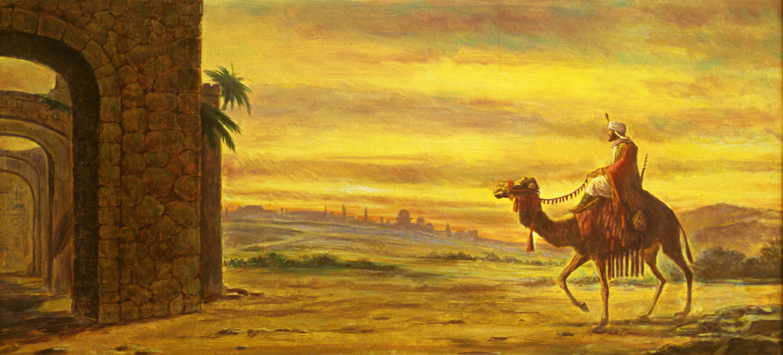
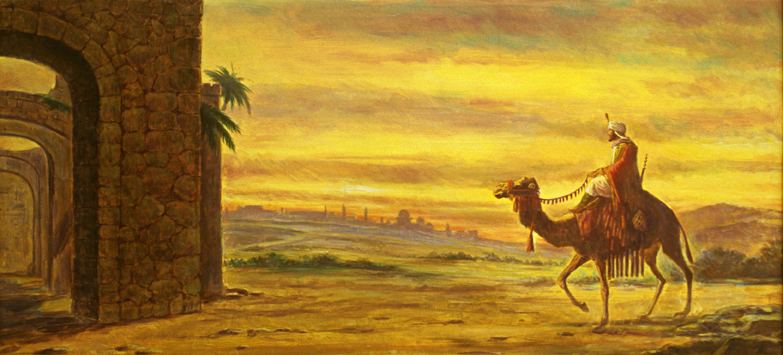
“The Other Wise Man,” a short story by Henry Van Dyke, is an interesting and worthwhile read.
Firstly, the various detailed and colourful descriptions used within its writing made it easy to mentally visualize the surroundings of each scene as the story unfolds.
Secondly, and most importantly, it takes us on the journey of this fourth magi, who desperately sought to pay homage to the newly born King of Kings.
Although this Magi may not have got to pay homage to the Christ Child in the way he had expected when he first set out on his journey, through the many acts of selfless love which he showed to the people in need that he encountered, he clearly met and paid homage to the heavenly King whom he was seeking. Van Dyke reinforces the belief that the Lord is there in every needy person, and when the “Other Wise Man” loved them in the love of the lord and helped them, he was giving that love and homage to the heavenly King he sought.
The actions of this Magi are a wonderful example of the way we as Christians should live our lives, by putting our own agenda to one side and following the Lord’s agenda and loving each other, helping those who are in need by showing them the true love of the Lord by our actions.
St. Stephen the Martyr

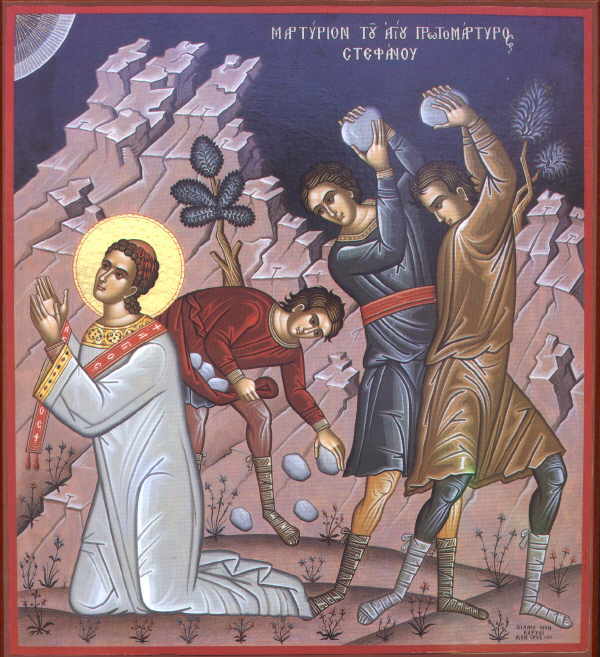
Stephen traditionally venerated as the Protomartyr (first martyr) of Christianity and according to the Acts of the Apostles, he was one of the first seven deacons in the early church at Jerusalem and it is stated that he had the face of an angel. Stephen aroused the enmity of members at various synagogues because of his teachings. He was accused of blasphemy and was tried. At his trial, Stephen made a long speech denouncing the Jewish authoritie who were sat in judgement of him and he was sentenced and stoned to death. His martyrdom was witnessed by Saul of Tarus who was a Pharisee who himself would later become a follower of Jesus Christ.
The only primary source of information about St. Stephen is to be found in the New Testament book of Acts of the Apostles and in Acts 6, he is mentioned as one of the Greek=speaking Hellenistic Jews who was chosen to fairly distribute welfare to the Greek=speaking widows.
Stephen is stated to have been full of both faith and the Holy Spirit and to have also performed miracles among the people (Acts 6:58).
Stephen’s name means crown and he was the first of Jesus’s disciples to receive the martyrs crown.
St.Stephen the Martyr has feast day on December 26th.
Let us pray:
O Great St. Stephen, the scriptures tell us that your face was like angel’s as you witnessed to the truth of Christ
Please ask the Most Holy Trinity to fill my soul and the souls of all my brothers and sisters throughout the world with a deep hunger for the truth that comes from the heart of Jesus, and also with the loving courage to embrace and profess the truth even amid difficulties, confusion and persecution.
May the serenity and peace which were yours at the hour of your stoning be ours as well as we wait in hope for the coming of the Lord Jesus Christ who lives and reigns for ever and ever. Amen.

Christ is Our Peace! ~ Br. Michael Marshall, Novice

Reading 1: Micah 5:1-4a
whose origin is from of old, from ancient times. Therefore the Lord will give them up, until the time when she who is to give birth has borne,
and the rest of his kindred shall return to the children of Israel. He shall stand firm and shepherd his flock by the strength of the LORD,
in the majestic name of the LORD, his God; and they shall remain, for now his greatness shall reach to the ends of the earth; he shall be peace.
Responsorial Psalm: Psalm 80:2-3, 15-16, 18-19
O shepherd of Israel, hearken, from your throne upon the cherubim, shine forth. Rouse your power, and come to save us.
R. Lord, make us turn to you; let us see your face and we shall be saved.
Once again, O LORD of hosts, look down from heaven, and see; take care of this vine, and protect what your right hand has planted
the son of man whom you yourself made strong.
R. Lord, make us turn to you; let us see your face and we shall be saved.
May your help be with the man of your right hand, with the son of man whom you yourself made strong. Then we will no more withdraw from you;
give us new life, and we will call upon your name.
R. Lord, make us turn to you; let us see your face and we shall be saved.
Reading 2: Hebrews 10:5-10
but a body you prepared for me; in holocausts and sin offerings you took no delight. Then I said, ‘As is written of me in the scroll,
behold, I come to do your will, O God.’“First he says, “Sacrifices and offerings, holocausts and sin offerings, you neither desired nor delighted in.”
These are offered according to the law. Then he says, “Behold, I come to do your will.” He takes away the first to establish the second.
By this “will,” we have been consecrated through the offering of the body of Jesus Christ once for all.
Gospel: Luke 1:39-45
Mary set out and traveled to the hill country in haste to a town of Judah, where she entered the house of Zechariah and greeted Elizabeth.
When Elizabeth heard Mary’s greeting, the infant leaped in her womb, and Elizabeth, filled with the Holy Spirit, cried out in a loud voice and said,
“Blessed are you among women, and blessed is the fruit of your womb. And how does this happen to me, that the mother of my Lord should come to me?
For at the moment the sound of your greeting reached my ears, the infant in my womb leaped for joy. Blessed are you who believed that what was spoken to you by the Lord
would be fulfilled.”
***************************************************************
God’s Providence is a course of history, wisely and gently, but powerfully and securely without violating free will. Even though people make their own choices, God still is at work in this world, slowly setting things right; guiding a way to peace. Christmas was not THE beginning, but a NEW beginning for the relationship between God and humanity; so this is why the prophet Micah tells us in today’s First Reading that the Messiah, the Christ, will “be our peace.” I PERSONALLY would say that peace is synonymous with love and joy, which are two other aspects of the Advent season. I use the word aspect very loosely because peace is not just an aspect but also an action and emotion conveyed toward another person. We love somebody, and we spread joy among our neighbors.
Because Christ is “our peace”, we have to strive to spread that peace no matter how hard it may be, especially during this time of terrorist attacks. It is easy to pass judgment and display hate toward people of one religion based upon a small number of radical individuals, but that is not what peace is about. But since we are preparing for Christmas, I want to use another example related to the time before Christmas. The “commercialism” of Christmas can be crazy, and peace is often forgotten at the shopping mall. We often take merchandise off the shelf and replace it with the peace we are supposed to share with others as we await Christmas. The “hot ticket item of the year” gets fought over, and sometimes stolen out of cars after being purchased because there were no more in the store. People get into fights over parking spaces or places in line at checkout. But putting peace on the shelf in place of the item to be purchased is not what Advent is about!
OK, SO WHAT IS PEACE ALL ABOUT? WHAT IS ADVENT ALL ABOUT? HOW ARE WE TO ‘SPREAD PEACE?’ HOW ARE WE TO PREPARE FOR ADVENT? ANSWER THESE QUESTIONS…..
How are you going to finish out this Advent Season as you prepare for Christmas? Are you going to react negatively to the terrorist? Are you going to get upset because what you wanted to buy is gone off the shelf? Or are you going to spread peace by helping others, smiling, or even wish someone an early “Merry Christmas”?
Announcement! The Feast of All Dominican Saints
On Saturday, the Order of Preachers, Independent will be celebrating the Feast of All Dominican Saints, with The Dominican Mass broadcast from The Chapel of St. Dominic’s by the Sea on “Veritas,” our broadcast channel at our normal times. The link will, of course, be posted on our Facebook page. Do please make an effort to tune in!
Memorial of Saints John de Brébeuf and Isaac Jogues, Priests, and Companions ~ Br. Chip Noon, Novice

“Empowered by faith.” That is how Paul describes Abraham in today’s first reading. That is the idea that moves all of Paul’s writings.
Faith is also the motivator in today’s Responsorial Psalm from Luke: “Blessed be the Lord, the God of Israel; he has come to his people and set them free.”
And Faith is what Jesus is talking about in today’s Gospel parable, that faith in things, the things of this world, is death, while faith in what matters to God is life.
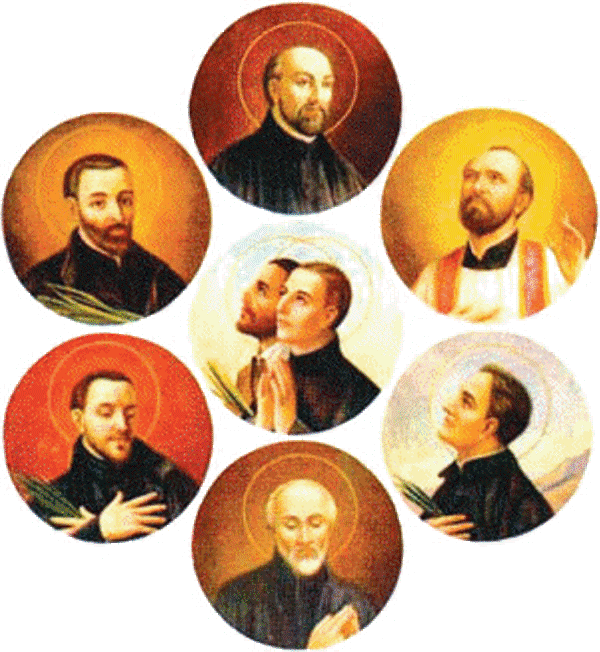
Today is the memorial of the North American Martyrs, St. René Goupil (1642), St. Isaac Jogues (1646), St. Jean de Lalande (1646), St. Antoine Daniel (1648), St. Jean de Brébeuf (1649), St. Noël Chabanel (1649), St. Charles Garnier (1649), and St. Gabriel Lalemant (1649) who were Jesuit missionaries working among the Wendats on the northern shore of Lake Ontario and Georgian Bay.
One question I always think about on martyr’s memorial days is what kind of faith did they have that allowed them willingly to sacrifice themselves in the face of death and dismemberment? St. John de Brébeuf wrote, “On receiving the blow of death, I shall accept it from your hands with the fullest delight and joy of spirit. For this reason, my beloved Jesus, and because of the surging joy which moves me, here and now I offer my blood and body and life.” Surely St. John knew very well the vicious and prolonged tortures inflicted by the northern indigenous peoples on their captives. And yet, he is willing to undergo these tortures for the sake of his Lord.
And St. Isaac Jogues, who was brutally tortured and then ransomed, willingly returned from France to Canada to work among his people…and to undergo torture again and then death.
And Paul says, “For to me, to live is Christ and to die is gain.” He saw his voyage to Rome in chains as a triumphant journey.
Where do they get that kind of faith? Do I have it? How can I get it? These questions have gone through all of our minds at one time or another. But as we hear from our prior and our brothers and sisters in the Order, we must not compare.
But how can we not compare in the face of such faith and bravery?
Let me, struggling with this as I am, go back to today’s Gospel.
“Take care to guard against all greed,
for though one may be rich,
one’s life does not consist of possessions.”
Now I acknowledge that I can willingly forgo greed, am not rich, and do not desire a cornucopia of worldly possessions. But am I storing up the riches that matter to God?
That is what Jesus is talking about…what matters to God. And isn’t he saying that what matters to God is faith and love? And don’t all of today’s readings indicate that faith is what really matters and motivates us when we accept it?
So if we have that kind of faith, and love of God, then why would we need to cling to our “stuff” and our lives? Essentially, today’s messages are, in my opinion, closest to what the Buddha spoke of when he preached “detachment.” A willingness to give up our need for earthly things and comforts, and the faith to acknowledge that this life we lead is a way-station and not the final destination.
Zechariah is praying this at the Visitation: “he has set us…free to worship him without fear, holy and righteous in his sight all the days of our life.”
When we have faith like this we are free…not from pain, nor troubles, nor joys, nor wealth…but free from our attachment to that which does not point us to God, that which distracts us from God. It is a comforting, still place in our souls when we experience it. And we all have, if only fleetingly, so we know it exists. We know in our hearts that it is home. And we who seek this faith, and who profess this faith, also know that it is a seed which, watered by contemplation and prayer, continues to grow within us and around us.
Lord, help us to remember that nothing is going to happen to us today that you and we, together, cannot handle. Amen.

Are You In The Game 100%??? – Br. Michael Marshall, Novice

Mark 10:35-45
James and John, the sons of Zebedee, came to Jesus and said to him,
“Teacher, we want you to do for us whatever we ask of you.”
He replied, “What do you wish me to do for you?”
They answered him, “Grant that in your glory
we may sit one at your right and the other at your left.”
Jesus said to them, “You do not know what you are asking.
Can you drink the cup that I drink
or be baptized with the baptism with which I am baptized?”
They said to him, “We can.”
Jesus said to them, “The cup that I drink, you will drink,
and with the baptism with which I am baptized, you will be baptized;
but to sit at my right or at my left is not mine to give
but is for those for whom it has been prepared.”
When the ten heard this, they became indignant at James and John.
Jesus summoned them and said to them,
“You know that those who are recognized as rulers over the Gentiles
lord it over them,
and their great ones make their authority over them felt.
But it shall not be so among you.
Rather, whoever wishes to be great among you will be your servant;
whoever wishes to be first among you will be the slave of all.
For the Son of Man did not come to be served
but to serve and to give his life as a ransom for many.”
A man goes off to college with a plan to study civil engineering, as much as his original desire was to be an architect. He was not accepted into architecture programs, so he felt civil engineering was the closest to architecture. He finds himself intrigued with the design and planning aspects of the program, but was not able to handle the math and science coursework so essentially gives up; and is at the point of nearly flunking out of college so he scrambles to find a major in which he would be able to remain in college. The man finds that urban planning is a great path which allows him to use his interest in design without the math and science, so he pursued a degree in urban planning.
As this man is studying, his time outside of the classroom leads him to discover Catholicism, and his faith deepens. He had the opportunity to take an elective course which was on the spirituality of Thomas Merton, and this sparked something within as to find a way to integrate ministry with urban planning. The integration did not come about until his first attempt of graduate school, and the man saw how urban economic development can go hand in hand with turning around a blighted neighborhood with the help of churches. As much as his advisor and the department faculty were interested in the idea, the man did not pass the comprehensive exam in order to finish his thesis.
He felt the tug to pursue priesthood, and after a few rejections he entered a religious order which felt he would be a good fit based upon his studies. In the end, things did not work out, but the priesthood calling was still there. Along a winding path of ministry and hurdles and discouragement which almost led the man to give up, came another opportunity to answer the call. There was a renewed zeal, even though more roadblocks were placed in front of him. The man began to question why the roadblocks were there, and started to withdraw from ministry while still saying he felt called. This statement of saying he was called is like James and John asking Jesus if they could sit at his right and left, while this man was not fully “in the game”, when Jesus point blank tells James and John that it takes more than wanting to be next to him; that there is a commitment and consequences to what they want.
The man realized that being called meant taking action instead of withdrawing from things, and searched for where he would be able to be of ministry. He found a new Church home, and another order. His desire to serve God returned, and was making progress toward ordination until personal issues in his life started taking over. His studies were put on the back burner, and he lost motivation. Great emotional pain set in, so he sought out hedonistic activities to ease the pain. It became a downward spiral of self-serving, instead of desiring to serve others; which Jesus strongly says that following him means to be of service to other regardless of all the consequences that shall result. The man said he was called to priesthood, but was not putting the effort into what it takes. Eventually the light bulb came on when reading the Gospel for today. He is going to get back on the ball and start doing what it takes…
Following Jesus takes more than saying that you are called, it takes more than popping in on Masses online, it takes more than chatting with the Bishop. It takes continual growth as a person, becoming the person God intends you to be because you put forth the effort. What is it that is stopping you from becoming the person God wants you to be? What are the things you hang on to that prevent you from fulfilling God’s will in your life? The question is: Are you “in the game” 100% to serve the Lord? Reflect upon that and decide.
 The Order of Preachers, Independent
You must be logged in to post a comment.