Blessed James Benefatti

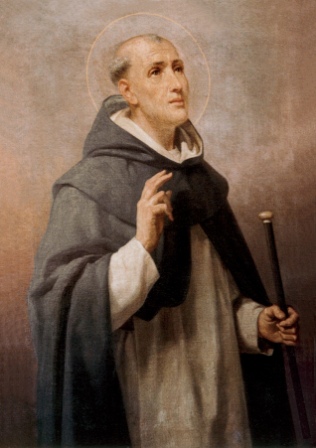
james

Blessed James Benefatti, James is known as the Father of the Poor.  He was a Dominican at Mantua, Italy in 1290, and was a  Doctor of theology and a priest. He was also a friend and brother friar of Nicholas Boccasino who later became Pope Benedict XI, and for whom James held several support offices including papal legate.  He was the Bishop of Mantua in 1303, and noted for his devotion to the poor. James rebuilt his cathedral and refurbished churches and was appointed Papal legate for Pope John XXII.  He died 19 November 1332 at Mantua, Italy of natural causes.  His body was found incorrupt when exhumed both in 1480 and 1604.  He was beatified in 1859 by Pope Pius IX.

Thanksgiving and Lemonade ~ Br. Chip Noon, Novice

la102840_1107_lemonade_vertToday in the Alleluia of the Mass, Paul tells us: “In all circumstances give thanks, for this is the will of God for you in Christ Jesus.”

…In all circumstances…

This echoes Job: “Shall we accept good from God, and not trouble?”

Years ago, I was talking to a man whose house had been invaded and his wife and daughter killed before his eyes. He survived a terrible beating. It was a long discussion, because I could not understand him, his serenity, his forgiveness. “How could you not want revenge?” I asked.

Without any pretense or air of saintliness, he said, “Because if I think like that, my whole life is a waste. I am thankful for the memories and for what I have.”

I must confess, I left that guy with strong feelings of confusion and anger. How could he possibly forgive those who so violated his soul and his life?

“In all circumstances give thanks, for this is the will of God for you in Christ Jesus.”

It was many years before I could understand what that man was saying, the way he was urging me to think. But finally, on an intellectual level, I got it. And then through prayer I even began to understand emotionally and spiritually.

Until I didn’t. “Lord I believe. Help thou mine unbelief.”

Isn’t it easy to be thankful for the good things we have? One of the symbols of the American Thanksgiving is the cornucopia. The Horn of Plenty. Our friends, our children, our spouses, our family, our homes, our food, our comfort. All these we are grateful for and we give thanks for.

Yet after we get up from the groaning board, put away the dishes and leftovers, then we may go into our television room and watch the news of refugees struggling just to stay alive, of starving children in many places around the world – including our own country – of bombs and earthquakes and floods and…and…

And we give even more fervent thanks for what we have and for our own good fortune.

And now, bless the God of all,
who has done wondrous things on earth;
Who fosters people’s growth from their mother’s womb,
and fashions them according to his will!
May he grant you joy of heart
and may peace abide among you;
May his goodness toward us endure in Israel
to deliver us in our days.

Today’s first reading from Sirach is so comforting to us. Yet the Book of Sirach contains passages that has little compassion for women or slaves, and advocates distrust and possessiveness over women, and the harsh treatment of slaves.

Even in such a comforting reading, the echoes of evil are present.

And in the second reading from Corinthians,

He will keep you firm to the end,
irreproachable on the day of our Lord Jesus Christ.
God is faithful,
and by him you were called to fellowship with his Son, Jesus Christ our Lord.

Here we are reminded that many saints were martyred because of their beliefs. They remained “firm to the end,” and end which was often horrible and shameful.

And then in the Gospel, Jesus is telling the thankful leper that his faith has saved him. He does not mention the curing of leprosy, he says, “Stand up and go; your faith has saved you.” Not, “now you are healed” but “your faith has saved you.”

The man whose family was murdered, the man I could not fathom, had faith…”if I think like that, my whole life is a waste.”

Faith. Thanksgiving. Peace.

Bad things happen to good people, as Rabbi Kushner said almost 30 years ago. Bad things. Even on Thanksgiving Day. Even on Christmas.

Faith. Thanksgiving. Peace.

Well, as that man told me, why make our lives a waste? Should we focus on the bad? Should we blame our lives on the bad? Should we despair?

God has given us free will. Life is up to us. How we live it is up to us. So we can accept life as it is given us, the good and the bad, and we can make a decision. We can throw our hands up and despair, but what does that get us?

Or, we can accept what life throws at us and have faith. We can trust in God, not to protect us always from the bad, but to give us the comfort to know that no matter what happens, our goal is our salvation, our life in the company of the saints.

Life does indeed give us lemons. Let’s make lemonade this Thanksgiving.

Saint Catherine of Alexandria

catherine

Saint Catherine of Alexandria.   According to the traditional story, Catherine was the daughter of Costus, a pagan governor of Alexandria, where she was born.  She is said to have announced to her parents that she would only marry someone who surpassed her in beauty, intelligence, wealth, and social status. This has been interpreted as an early foreshadowing of her eventual discovery of Christ. “His beauty was more radiant than the shining of the sun, His wisdom governed all creation, His riches were spread throughout all the world.” Though raised a pagan, she converted to Christianity in her late teens. It is said that she visited her contemporary, the Roman Emperor Maximinus Daia, and attempted to convince him of the moral error in persecuting Christians. She succeeded in converting his wife, the Empress, and many pagan philosophers whom the Emperor sent to dispute with her, all of whom were subsequently martyred. Upon the failure of the Emperor to win Catherine over, he ordered her to be put in prison; and when the people who visited her converted, she was condemned to death on the breaking wheel, an instrument of torture. According to legend, the wheel itself broke when she touched it, so she was beheaded.

According to Christian tradition, angels carried her body to Mount Sinai, where, in the 6th century, the Eastern Emperor Justinian established Saint Catherine’s Monastery, Mount Sinai, the church being built between 548 and 565 in Saint Catherine, Egypt, on the Sinai peninsula. Saint Catherine’s Monastery survives, a famous repository of early Christian art, architecture and illuminated manuscripts that is still open to visiting scholars. The historian Harold T. Davis says that Catherine’s story dates only from the 10th century AD, and that “assiduous research has failed to identify Catherine with any historical personage”; Davis suggests that the invention of Catherine may have been inspired by the story of the martyred pagan philosopher Hypatia of Alexandria. She did certainly form an exemplary counterpart to Hypatia in the medieval mindset; and it has been suggested that she was invented specifically for that purpose. Like Hypatia, she is said to have been highly learned (in philosophy and theology), very beautiful, sexually pure, and to have been brutally murdered for publicly stating her beliefs. The story of Catherine is placed a hundred years before Hypatia’s death, but there are no contemporary sources for her life.

Because of the fabulous character of the account of her martyrdom and the lack of reliable documentation, the Roman Catholic Church in 1969 removed her feast day from the Calendar. But she continued to be commemorated in the Roman Martyrology on November 25. In 2002, her feast was restored to the General Roman Calendar as an optional memorial.

The 1908 Catholic Encyclopedia describes the historical importance of the belief in her as follows:

Ranked with St Margaret and St Barbara as one of the fourteen most helpful saints in heaven, she was unceasingly praised by preachers and sung by poets. It is believed that Jacques-Benigne Bossuet dedicated to her one of his most beautiful panegyrics and that Adam of St. Victor wrote a magnificent poem in her honour: Vox Sonora nostri chori, etc. In many places her feast was celebrated with the utmost solemnity, servile work being suppressed and the devotions being attended by great numbers of people. In several dioceses of France it was observed as a Holy Day of Obligation up to the beginning of the seventeenth century, the splendor of its ceremonial eclipsing that of the feasts of some of the Apostles. Numberless chapels were placed under her patronage and her statue was found in nearly all churches, representing her according to medieval iconography with a wheel, her instrument of torture. Meanwhile, owing to several circumstances in his life, Saint Nicholas of Myra was considered the patron of young bachelors and students, and Saint Catherine became the patroness of young maidens and female students. Looked upon as the holiest and most illustrious of the virgins of Christ after the Blessed Virgin Mary, it was natural that she, of all others, should be worthy to watch over the virgins of the cloister and the young women of the world. The spiked wheel having become emblematic of the saint, wheelwrights and mechanics placed themselves under her patronage. Finally, as according to tradition, she not only remained a virgin by governing her passions and conquered her executioners by wearying their patience, but triumphed in science by closing the mouths of sophists, her intercession was implored by theologians, apologists, pulpit orators, and philosophers. Before studying, writing, or preaching, they besought her to illumine their minds, guide their pens, and impart eloquence to their words.  At the  beginning of the fifteenth century, it was rumored that she had spoken to Joan of Arc and, together with St. Margaret, had been divinely appointed Joan’s adviser.

Called to be a King – Solemnity of Christ the King – Br. Michael Marshall, Novice

Saint Ignatius Loyala Roman Catholic Church

Reading 1: Daniel 7:13-14

As the visions during the night continued, I saw one like a Son of man coming, on the clouds of heaven; when he reached the Ancient One and was presented before him,
the one like a Son of man received dominion, glory, and kingship; all peoples, nations, and languages serve him.  His dominion is an everlasting dominion that shall not be taken away,
his kingship shall not be destroyed.

Reading 2: Revelation 1:5-8

Jesus Christ is the faithful witness, the firstborn of the dead and ruler of the kings of the earth.  To him who loves us and has freed us from our sins by his blood,
who has made us into a kingdom, priests for his God and Father, to him be glory and power forever and ever. Amen.
Behold, he is coming amid the clouds, and every eye will see him, even those who pierced him.  All the peoples of the earth will lament him.
Yes. Amen.  “I am the Alpha and the Omega,” says the Lord God, “the one who is and who was and who is to come, the almighty.”

Gospel: John 18:33b-37

Pilate said to Jesus, “Are you the King of the Jews?”  Jesus answered, “Do you say this on your own or have others told you about me?”  Pilate answered, “I am not a Jew, am I?
Your own nation and the chief priests handed you over to me.  What have you done?”  Jesus answered, “My kingdom does not belong to this world.  If my kingdom did belong to this world,
my attendants would be fighting to keep me from being handed over to the Jews.  But as it is, my kingdom is not here.” So Pilate said to him, “Then you are a king?”
Jesus answered, “You say I am a king.  For this I was born and for this I came into the world, to testify to the truth.  Everyone who belongs to the truth listens to my voice.”

When growing up, I often heard the song “King of Kings, Lord of Lords” at church. Today, there are many versions of the song ranging from subdued Gospel to Contemporary Christian Rock. It is a song of praise and worship acknowledging the splendor of the Kingship of Christ. The Scriptures for today also emphasize that Kingship, especially in the Gospel of John where Jesus makes it clear that his kingdom does not exist on Earth.

Even though the Scriptures are about the Kingship of Christ, I would like to shine some light on this subject from a different angle, an angle how this applies to us directly. In the Book of Revelation we read, “To him who loves us and has freed us from our sins by his blood,
who has made us into a kingdom, priests for his God and Father…” At our baptism, after the water is poured over our head, we are sealed with the oil of chrism as the priest anoints us as he or she uses the words “priest, prophet, king.” This statement is our baptismal call! What do I mean? Jesus came to proclaim God’s love and preach how God wants humanity to live, before He was crucified. We are called to be witnesses of that message by the mere fact that we are part of that Kingship of Christ through our ministry; how we love our neighbor and how we reach out to those in need.

This Sunday celebration is about proclaiming that Christ is King, but it is so much more. It is a reminder for us to be like Jesus in our actions.   It is a reminder as we prepare to enter Advent; the season of waiting for our King to come into this world. If we are not living out our baptismal call, what are you going to do to change? Will you become like that king which you are called to be in ministry?

The Presentation of Mary ~ The Rev. Dn. Sr. Dollie Wilkinson, OPI

Maurpresmary   

 As most of you know, I have a four-year old granddaughter, who is one of the most precious things in my life. Every day she comes up with a new saying, funny action, or some random thoughts that only a young child could think up. She is a delight to her Mom, and family,and for most people who meet her. I cannot think what it would be like if she suddenly went away for several years. The loss would be too much to bear. Yet we learn this is exactly what Mary did. I can only imagine how her parents felt, even if what they were doing was in service to the Lord.

     Today the Church celebrates the memorial of the Presentation of Mary. Many of the celebrations in honor of Mary are squarely based on Gospel texts. St. Luke tells of her acceptance of God’s invitation to be the mother of the Savior at the Annunciation. We know of her maternity and of her faithfulness to her son, Jesus, even, as St. John reports, standing at the side of His cross. But the Evangelists tells us nothing about Mary’s early life. The inspired Word makes no mention of the event celebrated each year on November 21st, her Presentation in the Temple. This devotion is testified by a tradition that comes from a century after her life. The Presentation of Our Lady in the Temple is told in the Apocryphal text, the Protoevangelium of James, which may be dated around the year 200 AD.

     This book offers a colorful account of many aspects of Mary’s early life. Her father, Joachim, tells Anna his wife that he wishes to bring their child to serve in the Temple of the Lord in Jerusalem. Anna gets him to wait until the child is three years old, before having her live away from her parents. When the day arrived, a group of chaste Hebrew girls accompany Mary to the Temple, with their lamps burning. There the priest receives her, blesses her, and kisses her in welcome. He proclaims, “The Lord has magnified your name in all generations. In you, the Lord will manifest His redemption to the children of Israel.” Mary was placed on the third step of the Temple, where she “danced with joy and all the house of Israel loved her.” The story goes on to describe how she continued in the Temple, living in the service of the Lord, while her parents returned home, glorifying God. The focus of the book is clear: from her earliest childhood Mary was completely dedicated and given over to God. It is to this beautiful apocryphal account that we owe the Feast of the Presentation of Our Lady.

     Here is a young child, who at the tender age of 3, welcomed the chance to live in service to the Lord, away from her parents. How many children do you know today who would do this? I almost know my granddaughter wouldn’t, especially if she learned there were no TV. But Mary was no ordinary child, as evidenced by the first thing she did upon entering the Temple. She “danced with joy”, knowing she was in the presence of our blessed Father.

      In the 6th century the Emperor Justinian built a splendid church dedicated to Mary in the Temple area in Jerusalem. This basilica was dedicated in 543 but was destroyed by the Persians within a century. Several church Fathers such as Germanus, Patriarch of Constantinople (+730) and his contemporary John Damascene, preached homilies on this feast, referring to Mary as God’s special flower which was being nurtured for better things. “She was planted in the House of God, nourished by the Holy Spirit and kept her body and soul spotless to receive God in her bosom. He who is all-holy rests among the holy.”

      In the Eastern Church the Presentation is one of the twelve great feasts of the liturgical year, as it celebrates the same belief that we in the West have focused on through the feast of the Immaculate Conception: Mary’s unique holiness. It appears that by the ninth century at least, the Presentation was treasured in the monasteries of southern Italy influenced by the Byzantine tradition. For this reason the day is dedicated to those who belong to contemplative religious orders, and the Pope said in a prior speech, “It’s a good opportunity to thank the Lord for the gift of so many people who, in monasteries and hermitages, dedicate themselves to God in prayer and silent work”. It is recorded that it was celebrated in Avignon, France in 1373. Its wider acceptance in the West was slow and only in the year 1472 did Pope Sixtus IV extend its celebration to the universal Church.

Prayer for the Presentation of Mary:

     Almighty and ever living God,Today we honor the memory of the Blessed Virgin Mary, whose hidden life brings light and warmth to the Church in every place. Her presentation in the temple at Jerusalem reveals her as a temple where God truly lives among us. May Mary’s example give us the strength to radiate that light and warmth to the Church, and help us to be dwelling places of God’s joyful presence on earth. We ask this in the name of Jesus Christ our Lord who lives and reigns with you and the Holy Spirit, now and forever.

Amen.

Book Review:The All-Inclusive Christ by Witness Lee ~ The Rev. Lady Sherwood, OPI

51J8S8E2AWL._SX303_BO1,204,203,200_

The All Inclusive Christ, by Witness Lee,  is a must read for anyone who truly wishes to have a fuller relationship with Our Lord Jesus Christ.  This book is both very eye- opening and thought provoking.

It takes us on a wonderfully descriptive journey through the New Testament in the style of the good land and links it with the Gospels and the writings of Paul and shows us in depth of the many parts of Christ, and that to truly have a fuller and true relationship with him, we must live and relate to him and all these wonderful parts in every aspect of our lives. Jesus is the very valleys, hills and mountains of our lives. He is our constant refreshment through being the streams,  fountains and deep waters of our lives.  He is our food upon which we continually feed in him and t+e the food with which we feed all those that we serve.  This book gives plenty of examples of the All inclusive Christ in action in every stage of our lives. There is no situation however bad it may be, that cannot be lived with joy if we apply the All inclusive Christ to each and every single part of our lives.

Blessed Lucy of Narni

LUcy

Blessed Lucy of Narni was the eldest of eleven children of Bartolomeo Broccadelli and Gentilina Cassio. When she was only five years old, she had a vision of the Virgin Mary. Two years later, she had another vision, this time of the Virgin Mary accompanied by Saint Dominic. Dominic is said to have given her the scapular at this time. When she was twelve years old, Lucy made a private vow of chastity, and determined to become a Dominican nun.

Circumstances, however, changed to make doing so difficult.  The next year her father died, leaving her in the care of an uncle. This uncle determined that the best course of action he could take would be to get Lucy married as quickly as possible.

He made several attempts to do so. One of these included holding a large family party. He had invited the man he had chosen as Lucia’s husband to the party, with the intention of having the couple publicly betrothed. He however had not informed Lucia of his intentions. The suitor made an attempt to put a ring on Lucia’s finger, only to be slapped repeatedly for his efforts by Lucia.

A later attempt involved Count Pietro de Alessio of Milan, an acquaintance of the family. Lucia was actually quite fond of him, but felt her earlier vow to become a nun made the possibility of marriage impossible. The strain Lucia felt as a result of the conflicting feelings made her seriously ill. During this time, the Virgin Mary and Saint Dominic again appeared to her, this time accompanied by Catherine of Siena. They reportedly advised Lucia to contract a legal marriage to Pietro, but to explain that her vow of virginity would have to be respected and not violated. Pietro agreed to the terms, and the marriage was formalized.

In 1491 Lucia became Pietro’s legal wife and the mistress of his household, which included a number of servants and a busy social calendar. Despite her busy schedule, Lucia made great efforts to instruct the servants in Christianity and soon became well known locally for her charity to the poor.

Pietro observed Lucia’s behavior, and occasional quirks, quite indulgently. He never objected when she gave away clothing and food nor when she performed austere penances, which included regularly wearing a hair shirt under her garments and spending most of the night in prayer and acting to help the poor. He also seemed to have taken in stride the story he was told by the servants that Lucia was often visited in the evenings by Saint Catherine, Saint Agnes, and Saint Agnes of Montepulciano who helped her make bread for the poor.

However, when one of the servants came up to him one day and told him that Lucia was privately entertaining a handsome young man she appeared to be quite familiar with, he did react. He took up his sword and went to see who this person was. When he arrived, he found Lucia contemplating a large crucifix. The servant told him that the man he had seen Lucia with looked like the figure on the crucifix.

Lucia left one night for a local Franciscan monastic community, only to find it closed. She returned home the following day, stating that she had been led back by two saints. That was enough for Pietro. He had her locked away for the bulk of one Lenten season. She was only visited by servants who brought her food. When Easter arrived, however, she managed to escape from Pietro back to her mother’s house and on 1494 May 8 became a Dominican tertiary. Pietro expressed his disapproval of this in a rather dramatic form, by burning down the monastery of the prior who had given her the habit.

In 1495 Lucia went to Rome and joined a group of Third order Dominican tertiaries. The next year she was sent to Viterbo and here she found she was frequently the object of unwanted attention. It was here, on February 25, 1496 that she is reported to have received the stigmata. Lucia did her best to hide these marks, and was frequently in spiritual ecstasy. The house had a steady stream of visitors who came to speak to Lucia, and, often, just look at her. Even the other nuns were concerned about her, and at one point called in the local bishop who watched Lucia go through the drama of the Passion for twelve hours straight.

The bishop would not make a decision on Lucia, and called in the local inquisition. Reports here vary, some indicating that he referred the case directly to the Pope, who is said to have spoken with her and, with the assistance of Columba of Rieti, ultimately decided in her favor, telling her to go home and pray for him. Other sources question the accuracy of these reports.

At that time Pietro also came to her, making a final plea to persuade Lucia to return with him as his wife. She declined, and Pietro left alone. He would himself later become a Franciscan monk and a famous preacher.

When Lucy returned to the convent in Viterbo, she found that the Duke of Ferrara, Ercole d’Este I, had determined to build a convent in Ferrara and that, having heard of her, he determined that she would be its prioress. In summer of 1497, he invited her to be the founder of this new monastery. Lucia herself, the Dominican order, and the Pope all agreed quickly to the new proposal. The municipal council of Viterbo, however, objected, not wanting to lose Lucy. Lucia had been praying for some time for a way to create a new convent of strict observance, and agreed to go to the new convent.


Lucia’s departure precipitated a conflict between Ferrara and Viterbo which would continue for two years. Viterbo wanted to keep the famous mystic for themselves, and the duke wanted her in Ferrara. After extensive correspondence between the parties, on April 15, 1499 Lucia escaped secretly from Viterbo and was officially received in Ferrara on May 7, 1499. Thirteen young girls immediately applied for admission to her new community; the construction of the monastery began in June and was completed two years later, in August 1501. It contained 140 cells for sisters and the novices, but to fill it with suitable vocations proved to be very difficult. Lucia expressed the wish to have there some of her former friends from Viterbo and Narni. Duke Ercole, in September 1501 sent his messenger to Rome asking for the help of the pope’s daughter Lucrezia Borgia, who was preparing to marry Duke’s son Alfonso. She collected all eleven candidates Lucia had indicated and sent them, as a special wedding present to Lucia and to the Duke, a few days ahead of her bridal party. She herself solemnly entered Ferrara on February 2, 1502.

The Duke petitioned the local bishop for some help for Lucia in governing her new community, and he sent ten nuns from another community to join Lucia’s convent. Unfortunately, these ten nuns were members of the Dominican second order, who were canonically permitted to wear black veils, something Lucia and the members of the Dominican third order community were not allowed to do.

Tensions were heightened when one of these veiled outsiders, Sister Maria da Parma, was made the prioress of the convent on September 2, 1503. When Duke Ercole died on January 24, 1505 the new prioress quickly found Lucia to be guilty of some unrecorded transgression, most probably of the support for the Savonarolan church reform, and placed her on a strict penance. Lucia was not allowed to speak to any person but her confessor, who was chosen by the prioress. The local provincial of the Dominican order would also not permit any member of the order to see Lucia. There are records that at least one Dominican, Catherine of Racconigi, did visit her, evidently by bilocation, and that Lucia’s earlier visitation by departed saints continued. In response to Lucia’s insistent prayer her stigmata eventually disappeared, which caused some of the other nuns to question whether they had ever been there at all. When Lucia finally died, in 1544, many people were surprised to find that she had not died years earlier.

Then suddenly everything changed. When her body was laid out for burial so many people wanted to pay their last respects that her funeral had to be delayed by three days. Her tomb in the monastery church was opened four years later and her perfectly preserved body was transferred to a glass case. When Napoleon in 1797 suppressed her monastery the body was transferred to the Cathedral of Ferrara; and on 1935 May 26 – to the Cathedral of Narni.

Lucia was beatified by Pope Clement XI on March 1, 1710


Be Prepared ~ Brother Johnpaul Casmir Ezeobinwa, Postulant

keep-calm-and-be-prepared-21

The first reading which is taken from the book of Daniel 12 vs 1-3:

In those days, I Daniel,
heard this word of the Lord:
“At that time there shall arise
Michael, the great prince,
guardian of your people;
it shall be a time unsurpassed in distress
since nations began until that time.
At that time your people shall escape,
everyone who is found written in the book.

“Many of those who sleep in the dust of the earth shall awake;
some shall live forever,
others shall be an everlasting horror and disgrace.

“But the wise shall shine brightly
like the splendor of the firmament,
and those who lead the many to justice
shall be like the stars forever.”
The first reading of today is a reminder of the last day, the events of the last day, the things that will take place on the last day when Michael, the guardian of the people of God, shall arise.  The Michael here being referred to is the Archangel Michael. The phrase, “those who sleep in the dust of the earth shall awake,”  invariably means some who are sleeping in the Lord shall awake in glory because they lived their life so well. “Upon those found guilty shall face everlasting horror and disgrace but the wise and righteous shall shine like the early morning star,”
is a reminder that we should have it at the back of our mind that there is a judgement day, this day awaits anybody that fails to keep the laws of the most high God.

The psalmist also reminds us that God is our inheritance, we should should set the Lord first in all that we do.  Once we put God first in all we do, He will never abandon us, He will always be on our side so that we will not face horror.

The second reading:  Brothers and sisters:
Every priest stands daily at his ministry,
offering frequently those same sacrifices
that can never take away sins.
But this one offered one sacrifice for sins,
and took his seat forever at the right hand of God;
now he waits until his enemies are made his footstool.
For by one offering
he has made perfect forever those who are being consecrated.

Where there is forgiveness of these,
there is no longer offering for sin.

In the second reading of today, we are told about the sacrifice of Christ, a selfless sacrifice, sacrifice that takes the sins of humankind away. Here, we can see that every priest offers sacrifice daily but Christ offered the greatest sacrifice by shedding His blood for the remission of sins. The sacrifice that makes us whole. The sacrifice of Christ has no comparison, Christ offered the sacrifice and was perfect forever in the glory of God the Father.

The Gospel:  Jesus said to his disciples:
“In those days after that tribulation
the sun will be darkened,
and the moon will not give its light,
and the stars will be falling from the sky,
and the powers in the heavens will be shaken.

“And then they will see ‘the Son of Man coming in the clouds’
with great power and glory,
and then he will send out the angels
and gather his elect from the four winds,
from the end of the earth to the end of the sky.

“Learn a lesson from the fig tree.
When its branch becomes tender and sprouts leaves,
you know that summer is near.
In the same way, when you see these things happening,
know that he is near, at the gates.
Amen, I say to you,
this generation will not pass away
until all these things have taken place.
Heaven and earth will pass away,
but my words will not pass away.

“But of that day or hour, no one knows,
neither the angels in heaven, nor the Son, but only the Father.”

In today’s gospel periscope, it is reminding us about the end time, the signs which will show that the son of man is at the door post, the Bible makes it clear that so many things will happen as a clear sign that the coming of the son of God is almost at hand. Looking at what is happening on earth, war everywhere,  nation fighting against nation, father against children and children against father.

Brothers and sisters let us know that the length of our lives on earth does not count, but rather what counts is how we lived our life.  Did we live our life to please God or to please our fellow human beings? Let us get ready to account for the precious life that given to us, by living it well. Heaven is real, heaven is our permanent home.
Therefore my beloved one, let us strive for our salvation, let us prepare ourselves to meet the master of the universe, the creator.

GLORY TO JESUS.

Saint Albert the Great

11_15_albert3

Saint Albert the Great was born sometime between 1193 and 1206, to the Count of Bollstädt in Lauingen in Bavaria.  Contemporaries such as Roger Bacon applied the term “Magnus” to Albertus during his own lifetime, referring to his immense reputation as a scholar and philosopher.  Albertus was educated principally at Padua, where he received instruction in Aristotle’s writings. A late account by Rudolph de Novamagia refers to Albertus’ encounter with the Blessed Virgin Mary, who convinced him to enter Holy Orders. In 1223 (or 1221) he became a member of the Dominican Order, against the wishes of his family, and studied theology at Bologna and elsewhere. Selected to fill the position of lecturer at Cologne, Germany, where the Dominicans had a house, he taught for several years there, at Regensburg, Freiburg, Strasbourg and Hildesheim. In 1245 he went to Paris, received his doctorate, and taught for some time as a master of theology with great success. During this time Thomas Aquinas began to study under Albertus.

In 1254, Albertus was made provincial of the Dominican Order, and fulfilled the arduous duties of the office with great care and efficiency. During his tenure he publicly defended the Dominicans against attacks by the secular and regular faculty of the University of Paris, commented on St. John, and answered what he perceived as errors of the Arabian philosopher Averroes.

In 1260, Pope Alexander IV made him Bishop of Regensburg, an office from which he resigned after three years. During the exercise of his duties he enhanced his reputation for humility by refusing to ride a horse—in accord with the dictates of the Dominican order—instead walking back and forth across his huge diocese. This earned him the affectionate sobriquet, “boots the bishop,” from his parishioners. After his stint as bishop, he spent the remainder of his life partly in retirement in the various houses of his order, yet often preaching throughout southern Germany. In 1270, he preached the eighth Crusade in Austria. Among the last of his labors was the defense of the orthodoxy of his former pupil, Thomas Aquinas, whose death in 1274 grieved Albertus. After suffering a collapse of health in 1278, he died on November 15, 1280, in Cologne, Germany. His tomb is in the crypt of the Dominican church of St. Andreas in Cologne, and his relics at the Cologne Cathedral.

Albertus was beatified in 1622. He was canonized and proclaimed a Doctor of the Church in 1931 by Pope Pius XI. St Albert’s feast day is celebrated on November 15.

Blessed John Licci

Beato_Giovanni_Liccio

Blessed John Licci, born to a poor farmer, his mother died in childbirth. His life from then on, all 111 years, was a tale of miracles.  His father, who fed the baby on crushed pomegranates, had to work the fields, and was forced to leave the infant alone. The baby began crying, and a neighbor woman took him to her home to feed him. She laid the infant on the bed next to her paralyzed husband – and the man was instantly cured. The woman told John’s father of the miracle, but he was more concerned that she was meddling, and had taken his son without his permission. He took the child home to feed him more pomegranate pulp. As soon as the child was removed from the house, the neighbor’s paralysis returned; when John was brought back in, the man was healed. Even John’s father took this as a sign, and allowed the neighbors to care for John.

A precocious and emotional child, John began reciting the Daily Offices before age 10. While on a trip to Palermo, Italy at age 15, John went to Confession in the church of Saint Zita of Lucca where his confession was heard by Blessed Peter Geremia who suggested John consider a religious life. John considered himself unworthy, but Peter pressed the matter, John joined the Dominicans in 1415, and wore the habit for 96 years, the longest period known for anyone.

He founded the convent of Saint Zita in Caccamo, Italy. Lacking money for the construction, John prayed for guidance. During his prayer he had a vision of an angel who told him to “build on the foundations that were already built.” The next day in the nearby woods he found the foundation for a church called “Saint Mary of the Angels,” a church that had been started many years before, but had never been finished. John assumed this was the place indicated, and took over the site.

During the construction, workmen ran out of materials; the next day at dawn a large ox-drawn wagon arrived at the site. The driver unloaded a large quantity of stone, lime and sand – then promptly disappeared, leaving the oxen and wagon behind for the use of the convent. At another point a well got in the way of construction; John blessed it, and it immediately dried up; when construction was finished, he blessed it again, and the water began to flow. When roof beams were cut too short, John would pray over them, and they would stretch. There were days when John had to miraculously multiply bread and wine to feed the workers. Once a young boy came to the construction site to watch his uncle set stones; the boy fell from a wall, and was killed; John prayed over him, and restored him to life and health.

John and two brother Dominicans who were working on the convent were on the road near Caccamo when they were set upon by bandits. One of the thieves tried to stab John with a dagger; the man’s hand withered and became paralyzed. The gang let the brothers go, then decided to ask for their forgiveness. John made the Sign of the Cross at them, and the thief‘s hand was made whole.

One Christmas a nearby farmer offered to pasture the oxen that had come with the disappearing wagon-driver. John declined, saying the oxen had come far to be there, and there they should stay. Thinking he was doing good, the layman took them anyway. When he put them in the field with his own oxen, they promptly disappeared; he later found them at the construction site, contentedly munching dry grass near Father John.

While he did plenty of preaching in his 90+ years in the habit, usually on Christ’s Passion, he was not known as a great homilist. He was known, however, for his miracles and good works. His blessing caused the breadbox of a nearby widow to stay miraculously full, feeding her and her six children. His blessing prevented disease from coming to the cattle of his parishioners.  A noted healer, curing at least three people whose heads had been crushed in accidents, he was Provincial of Sicily, and Prior of the abbey on several occasions.